


NIL
FSU football Mike Norvell, Michael Alford addressing new structure

Updated Jan. 5, 2026, 6:01 p.m. ET
- Florida State football leadership will meet with the media to discuss the program’s future.
- Topics will include a front office restructure, NIL, and revenue sharing.
- The program is undergoing a “comprehensive review” after a 7-17 record over the last two seasons.
- FSU is actively recruiting from the transfer portal, including former Florida quarterback DJ Lagway.
Florida State football head coach Mike Norvell, Athletic Director Michael Alford and new Deputy AD and General Manager of Player Personnel John Garrett will meet with local media on Monday, Jan. 5.
The trio is expected to talk about the Seminoles’ front office restructure, Name, Image and Likeness (NIL) and revenue sharing, among other topics related to the FSU football program.
The Seminoles are hosting multiple transfer portal visitors, including former Florida quarterback DJ Lagway on campus as the program looks to restructure its roster following two dismal seasons that ended with a combined 7-17 record.
Norvell, whose job was under pressure during the season, will be back for a seventh season in charge of the program, and he promised a “comprehensive review” of the program that would change how the Seminoles operated. One of those changes is the hire of Garrett and Taylor Edwards as director of football and player acquisition.
Alford hired an outside consultant, Jake Rosenberg, to give a review of the program and help the Seminoles position themselves to best compete in the modern era of college athletics.
The Tallahassee Democrat will provide live updates from the discussion.
Live updates from Michael Alford, John Garrett and Mike Norvell press conference
Decision-making, leadership key to FSU’s next quarterback
Garrett said that what FSU wants in a quarterback goes beyond the intangibles they have, and they need to be mentally tough, make tough decisions and be a leader.
He said the “fun part” of recruitment is getting to know a player and finding out their fit within the program beyond their physical skill set.
Garrett said being an “accurate thrower of the ball” is the key physical trait that any quarterback needs to have.
Garrett describes new player recruitment structure
Garrett said there is constant evaluation going on with staff members assigned to certain regions of the country. Staffers will watch tape, communicate with high school coaches and talk with recruiting liaisons on a weekly basis to help evaluate and find the “best” fit for the Seminoles.
On the portal, Garrett called it a “mad dash” and something a program has to get ahead of when doing evaluations of players and who to bring in. He said the recruitment process is similar to prep evaluations, but done in a quicker timeline.
Alford describes the timeline for “review” and making changes to the FSU front office
Alford said that the decision to make these changes to the personnel staff has been something that has been discussed for a long time, and that after further analysis on what Norvell’s responsibilities were and how much he had to do, they felt it was right to make the changes now.
He said for an accurate “review,” the program had to wait for the season to end, because it’s where a “fair review” can take place.
Norvell, Garrett praise collaboration, ‘checks and balances’ critical to FSU’s success
“Everyone’s enthused,” Garrett promises that the Seminoles have the right “team” in place to build the right roster for FSU football.
Garrett said the staff is here to help Norvell make the most informed decision on the program. He said Norvell allows everyone to have a say on what is being discussed. Garrett said that collaboration allows all the different perspectives within the staff to have a say on what the program does.
Norvell said “checks and balances” is “critical” in modern-day college football.
Norvell said there won’t be a player brought into the program that everyone doesn’t agree upon.
On negotiations, Norvell said he doesn’t want to be the one negotiating with the players. He said his job is to coach and develop the players.
Norvell praised the work of Garrett and Edwards when discussing negotiations and helping bring players together.
Norvell labels college football as being in a “unique” position
On the transfer portal, Norvell said that working alongside Garrett and Edwards has been good through the first few days of the transfer portal.
He said there has been constant collaboration and that the staff has been very receptive to evaluations and decisions about who to target and what needs the program has.
Norvell called the state of college football “unique.” He said the program is going to find the “right people” to push FSU forward. He said he’s got a lot of confidence in what he and Garrett can do together when building FSU’s future.
Norvell says the new personnel department was a “necessity.”
Norvell said there was an aligned vision and constant collaboration throughout the restructuring of the program’s personnel.
“I’m excited for what this thing will mean, and how it will operate,” Norvell said.
Norvell said the willingness to allow the changes from everyone in the program will allow FSU to be taken to the “next level.”
Michael Alford opens the discussion by speaking on the program review
Alford said that FSU used both resources, both inside and outside the Seminoles program, to evaluate the operations of FSU.
John Garrett will lead recruiting efforts, retention and long-term decisions, while Norvell will have the final say on all decisions within the program. Garrett called it a “wonderful opportunity.”
FSU football players in the transfer portal
- DL Darryll Desir, Jan. 5
- DL Mandrell Desir, Jan. 5
- DL Amaree Williams, Jan. 5
- P Mac Chiumento, Jan. 1
- DL KJ Sampson, Dec. 31
- OL Ty Hylton, Dec. 30
- OL Lucas Simmons, Dec. 29
- RB Gavin Sawchuk, Dec. 28
- OL Manasse Itete, Dec. 28
- DB Ashlynd Barker, Dec. 28
- WR Jayvan Boggs, Dec. 27
- DE James Williams, Dec. 27
- QB Brock Glenn, Dec. 25
- WR Elijah Moore, Dec. 22
- QB Jaylen King, Dec. 17
- TE Randy Pittman, Dec. 16
- LB Omar Graham, Dec. 16
- DL Jaden Jones, Dec. 16
- RB Kam Davis, Dec. 16
- DB Cai Bates, Dec. 15
- WR Camdon Frier, Dec. 12
- DB Smoke White, Dec. 10
- DB Edwin Joseph, Dec. 10
- WR Willy Suarez, Dec. 10
- RB Jaylin Lucas, Dec. 10
- DT Jamorie Flagg, Dec. 10
- TE Luke Douglas, Dec. 10
- OT Mario Nash Jr., Dec. 9
- DT L.A. Jessie Harrold, Dec. 6
- DT Tyland Coleman, Dec. 9
- LB Jayden Parrish, Dec. 5
Liam Rooney covers Florida State athletics for the Tallahassee Democrat. Contact him via email at LRooney@gannett.com or on Twitter @__liamrooney.
Continue Reading
Jan. 8, 2026, 9:20 a.m. PT
ATLANTA — Ahead of the College Football Playoff semifinal matchup between No. 5 Oregon football and No. 1 Indiana, the sometimes prickly and often witty and snappy personalities of head coaches Dan Lanning and Curt Cignetti shined Jan 8 at the College Football Hall of Fame down the road from Mercedes-Benz Stadium.
The coaches traded barbs about friendly competitions throughout the week, like signing footballs before the press conference, and discussed the transfer portal, affairs surrounding collegiate athletics and the upcoming Peach Bowl Jan. 9 in Atlanta.

The college football transfer portal opened on Jan. 2, and things have already gone wild.
In fact, on the very first day of the transfer portal being open, over 4,500 Division I football players entered their names. This portal window will close by Jan. 16, so we’re not yet halfway home.
There have absolutely been winners and losers, though. Let’s start with the winners and go from there.
Winners so far in the college football transfer portal
Indiana Hoosiers
There’s a trend happening in college football among the programs that have seemingly figured out the NIL and transfer portal era: bringing in established quarterbacks for a one-year run.
That’s what the Indiana Hoosiers did with Fernando Mendoza, and now they’re doing the same thing with TCU transfer quarterback Josh Hoover, who threw for 3,472 yards and 29 touchdowns compared to 13 interceptions this season.
Michigan State’s top wide receiver, Nick Marsh, also transferred to Indiana, as did Turbo Richard, who was Boston College’s leading rusher this past season.
Curt Cignetti may be building a powerhouse for years to come.
Texas Tech Red Raiders
The Texas Tech Red Raiders are another college program that has embraced the NIL and transfer portal era, and they’re building yet another transfer class that could be considered among the best in the nation.
The top quarterback target this cycle was Cincinnati’s Brendan Sorsby, and the Red Raiders threw the bag at him to bring him in via the portal.
Sorsby threw for 2,800 yards and 27 touchdowns compared to five interceptions this past season for the Bearcats. The Red Raiders are hoping he can be the quarterback that puts them over the top.
Penn State Nittany Lions
The Penn State Nittany Lions have a new head coach in Matt Campbell, and it’s no surprise that the former Iowa State Cyclones head coach is bringing a ton of his old players with him to Happy Valley.
In fact, Penn State has already landed 23 players in the portal, 20 of whom have come from Iowa State.
That includes quarterback Rocco Becht, who threw for 2,584 yards and 16 touchdowns compared to nine interceptions.
Losers so far in the college football transfer portal
Iowa State Cyclones
If Penn State is a winner in the portal because the Nittany Lions poached a ton of players from Iowa State, then it stands to reason that the Cyclones are one of the losers worth mentioning
Again, 20 players followed Campbell out the door, but in all, new Iowa State head coach Jimmy Rogers is going to have to replace 50-plus players (and perhaps counting) who have bolted into the transfer portal.
North Texas Mean Green
The North Texas Mean Green finished 12-2 this season and played in the American Conference title game.
It was a banner year for North Texas, but the new reality for Group of Five schools is that good years will lead to a ton of poaching.
Head coach Eric Morris was tabbed as Mike Gundy’s replacement at Oklahoma State. Following him were star quarterback Drew Mestemaker, star running back Caleb Hawkins and star wide receiver Wyatt Young.
Mestemaker led college football with 4,379 passing yards this season, and he was tied for second place with 34 passing touchdowns. Hawkins rushed 231 times for 1,434 yards and 25 touchdowns. Young caught 70 passes for 1,264 yards and 10 touchdowns.
Losing those three players, in particular, will cripple North Texas in 2026.
Auburn Tigers
The Auburn Tigers have had a tough go of things, even after hiring Alex Golesh from USF to be the new head coach.
Many felt that freshman quarterback and former five-star Deuce Knight was the future of the program, but he entered the transfer portal and is now one of the top quarterbacks available.
The Tigers also lost sophomore wide receiver Cam Coleman to Texas, who caught 56 passes for 708 yards and five touchdowns this season.

College football’s version of the Final Four is here and there are no signs of Alabama, Ohio State, Georgia, Michigan, LSU, Texas, Penn State, Notre Dame or Oklahoma. Instead, the last group still standing consists of Ole Miss, Indiana, Oregon and Miami and three of the four teams didn’t even qualify for their conference championship games.
What’s going on here?
As it turns out, NIL and the transfer portal, that some contend are destroying the game, have only created more contenders. There is more parity than ever before. Programs without much of a football history are on the brink of making some.
Indiana is a renowned basketball school, but with access to the transfer portal and the ability to invest in players, the Hoosiers are winning in football. No. 1 Indiana not only beat No. 2 Ohio State to win its first outright Big Ten championship since 1945, but they also routed No. 9 Alabama in the Rose Bowl for their first bowl victory in 34 years. Quarterback Fernando Mendoza also became the first Hoosier in history to win the Heisman Trophy.
When have you ever heard of a top football target saying ‘No’ to Ohio State, Michigan and Penn State and ‘Yes’ to Indiana? It’s happening right before our eyes.
Ole Miss is still without an SEC title since 1963, but empowered by today’s new rules, the Rebels amassed enough talent to eliminate league heavyweight Georgia from the playoffs — even while their former head coach Lane Kiffin watched from his new job at LSU.
Oregon, with its rich banker — Phil Knight, founder of Nike, has never won a football national championship. Miami has won five national titles, but none since 2001 and they haven’t won a conference championship since 2003.
With rosters constructed around NIL and the transfer portal, all four programs are not only playing for a shot to be No. 1 this month, but they are fortified to hang around for a while. The blue bloods no longer have a monopoly on the nation’s best players.
For other examples of how the rule changes have leveled the playing field, just look at No. 4 Texas Tech, No. 14 Vanderbilt and No. 12 BYU. The Red Raiders may have bought their way out of obscurity, but in short time and with an excellent head coach, Texas Tech is likely to finish the season ranked higher than No. 13 Texas and No. 7 Texas A&M and begin next year the same way.
Vanderbilt lost its bowl game to Iowa, but before that, the Commodores (10-2) went to Knoxville and blew out Tennessee 45-24. They beat the Vols with better players — something unseen around the Volunteer State before NIL and the transfer portal. It’s not just football. Vandy is the only program in the nation that is still undefeated in both men’s and women’s basketball.
BYU was playing as a football independent when both the transfer portal (2018) and NIL (2021) were approved by the NCAA. At the time, the fear was whether the Cougars could or would even try to survive.
Two major developments followed. First, BYU was invited to join the Big 12 beginning in the 2023 season. Second, school leaders and its fan base committed to do what was necessary to be competitive, and the Board of Trustees concurred so long as athletics remained self-funded and true to the university’s core values.
How is that working out?
Men’s basketball is currently 13-1, ranked No. 9 in the country and showcasing freshman AJ Dybantsa — the projected top pick in next year’s NBA draft. Last season, BYU reached the Sweet 16 in the NCAA Tournament for the first time since 2011. To keep it going, the Cougars quickly extended head coach Kevin Young’s contract.
Football is a combined 22-4 over the last two seasons with victories over ranked P4 opponents in both the Alamo Bowl and Pop-Tarts Bowl. More people watched the Cougars on television in those two games than any previous BYU broadcast in the modern era.
The Cougars extended head coach Kalani Sitake’s contract to 10 years and the following day, Sitake signed the program’s highest-rated recruiting class in history.
Truth be told, NIL and the transfer portal aren’t stumbling blocks for BYU at all. In fact, they are just the opposite — more like fertilizer for what the Cougars are growing. The ability to attract talent to the embedded culture, with the resources to support them, gives every team on campus a chance to succeed.
BYU doesn’t get or keep every player or coach, but they get enough and their all-important investor — Cougar Nation is all-in. Wherever BYU goes, the loyal crowds follow.
NIL and the transfer portal don’t function perfectly and still need some national oversight, but when it comes to the Cougars, they are tailor-made to keep them competitive just as they have helped Indiana, Miami, Oregon and Ole Miss, who are about to give college football a refreshingly new national champion.
Dave McCann is a sportswriter and columnist for the Deseret News and is a play-by-play announcer and show host for BYUtv/ESPN+. He co-hosts “Y’s Guys” at ysguys.com and is the author of the children’s book “C is for Cougar,” available at deseretbook.com
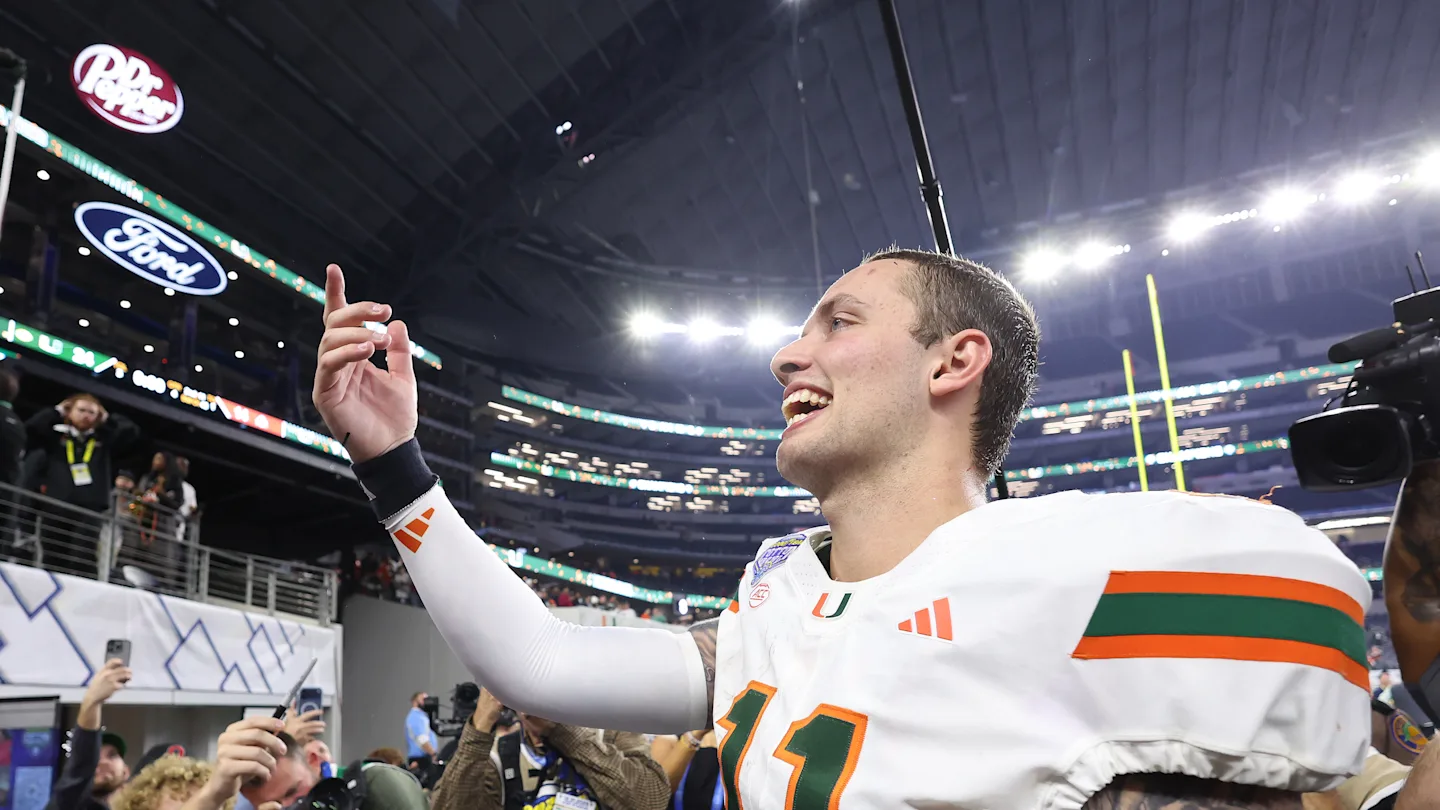
As the transfer portal and NIL continue to lead the way in daily college football news and fan conversation, I will raise the unpopular opinion that both have elevated the game we love to a new level. There is a certain excitement every day since the portal officially opened, with big names jumping into the portal and finding new opportunities.
The days of only non-starters jumping to other schools are a thing of the past, and the financial opportunities offered by schools have given star players reason to leave schools they normally never would have ever left. You see, starting quarterbacks finding new opportunities when they clearly would be the starter at the school they left had they stayed.
We are way past the days of boosters handing out bags of cash to possible recruits or transfers under the table, and it has made the game better for all. I am still not sure why players making legal money is looked upon in a worse light by so many than players getting cash in brown paper sacks that could lead to long bowl bans.
For those who say players getting paid and being able to transfer freely has ruined the game, I will just point to the final four teams left in the college football playoff. Three of the four teams left are looking to win their first national championship in school history, and the fourth is becoming relevant again for the first time in nearly two decades.
The transfer portal and money being able to be spent on a more even basis have allowed the rise of Indiana and Ole Miss. It allowed Texas Tech to win its first conference championship in school history and a bye in this year’s playoff. Honestly, without the new systems in place, none of these schools would realistically have a chance to sniff a football national championship.
The Hurricanes have started making noise again on the gridiron after falling on hard times, and their return to being within two games of their sixth national championship is due to NIL and the portal. And honestly, even Oregon has been a contender for a while; they are in a better position than they ever have been.
Yes, there are some issues that need to be looked at, especially with the portal dates or maybe how many times a player can transfer, but right now, college football seems to have gained more of a national appeal. As teams that have never been good before, like the Hoosiers, it gives more programs hope if they can get some financial backing. Sure, the normal blue bloods will still have a leg up, like Alabama or Ohio State, but the gap between them and others has decreased greatly.
NIL and the portal have made it harder for blue-blood programs to stockpile players for multiple seasons before they see the field. Today’s players seem to care less about the name on the jersey and pick schools more based on possible financial gain and playing immediately. Also, certain star players being able to make big money in college, like Cam Ward last year or his successor Carson Beck, have the ability to stay in college for another year instead of for sure going to the NFL before being out of eligibility. It is a much different world compared to when many of us became college football fans, but the sport is in a good place, no matter what some will say.
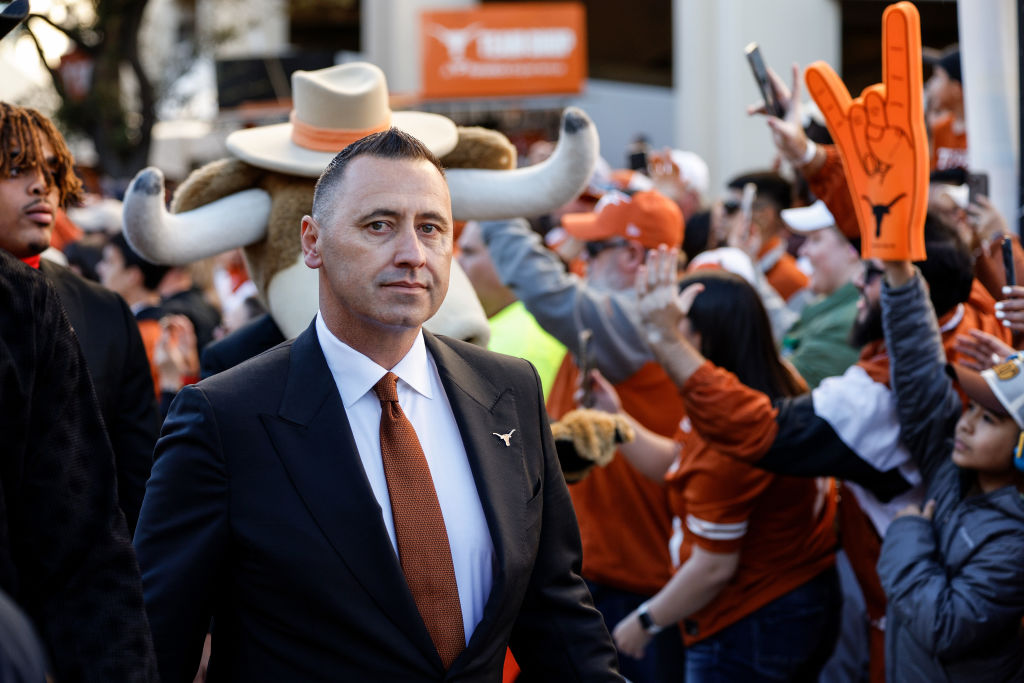
Ain’t no fun when the rabbit’s got the gun.
Mark the date down on your calendars, ladies and gentlemen: January 8, 2026. Also known as the day Hell froze over.
No, it has nothing to do with the Rapture or dogs and cats living together. It’s actually something far more unlikely.
It seems that Texas Longhorns fans (yes, THOSE Texas Longhorns) are not down with the NIL “pay for play” era of college football.
READ: Washington, Demond Williams Saga Set To Get Ugly
And honestly, in a vacuum, I would say I can’t blame them.
I haven’t exactly minced words when it comes to how I feel about the modern era of my favorite sport, but the fact that Texas fans are now NIL haters is laughable.
Oh, man! It ain’t no fun when the rabbit’s got the gun now, is it?
Of all the schools in this great country and this great sport, Texas being the one to cry poor and want a change to the rules is hysterical.
This is the same program that started the season number one in the AP Poll and had one of the most expensive rosters in the country… and bragged about it, too.
This is the same team that just a few years ago was flexing its armada of Lamborghinis on recruiting trips, basically thumbing their nose at anyone who didn’t have six-figure sports cars sitting in their stadiums for high school prospects to sit in.
You can’t hide money, that’s for sure.
Oil money is a different kind of rich, as many college fans are learning thanks to Texas Tech’s recent run of dominance on the field and in the transfer portal.
Hell, even Houston is starting to make a run at some high-priced prospects in the portal.
Texas has unlimited funds, so they shouldn’t be hating the game nor the player.
As one of the Texas fans posted on X, this might be a GM or even a Sarkisian problem.
I don’t think the money at The University of Texas all of a sudden dried up. This definitely reeks of something different.
Whatever the problem is, the Longhorns better get it figured out fast, because they are getting lapped by teams in their conference and in their state.
And no amount of changes to the current landscape of college football will help with whatever they have going on in Austin.

It’s easy to take shots at the leaders of college athletics for letting their industry spiral to the point of all-consuming dysfunction, but give them credit for one thing.
They have managed to come up with arguably the worst business model on earth.
Advertisement
Here’s how it works:
• Have an open bidding system for coaches and athletes, regulated by no one, that allows them to change jobs at will regardless of the length of their contracts and in fact encourages them to exert their leverage to obtain better deals every year.
• Do not pay the players for their ability to play football because that would make them employees. Rather, pay for their “marketing rights,” which avoids the employment conversation but complicates legal recourse in contractual disputes and ultimately leaves schools more vulnerable to chicanery and broken promises.
• Create a system that supposedly regulates payroll costs and ensures competitive balance by requiring a third-party clearinghouse to approve deals that don’t conform to their rules, only to then instruct said clearinghouse to ignore most of the rules they wrote because they’d probably lose a lawsuit.
Advertisement
• Ask your most successful and loyal customers, the donors, to continue shoveling money at those players for no real benefit other than the fleeting enjoyment of watching them play, not knowing if they’ll be worth watching play in the first place. Then, after those players decide to play the leverage game again, ask your richest fans to deliver an even bigger pile of money for a new set of players who will be gone in a year.
Take a bow, college sports. This is true brilliance at work.
While the College Football Playoff and March Madness always provide compelling theater, including a highly anticipated set of semifinals Thursday and Friday, the inner workings of college sports have never looked more unpleasant, disorganized and utterly doomed to be an anvil of failure hanging around the neck of those in charge.
We have roughly one-third of college football players in the transfer portal.
Advertisement
We have quarterbacks commanding $4 million and $5 million deals — essentially the equivalent of an NFL rookie salary for the No. 11 overall pick — that aren’t even guaranteed stars.
We have schools who begged for rules and guardrails to bring sanity and structure to the ecosystem using marketing companies to create financial packages for players, allowing them to exceed the revenue-share cap they negotiated just last year in the House v. NCAA settlement.
We have a situation at Washington where quarterback Demond Williams signed a revenue-sharing agreement to stay at the school, then turned around and announced he wanted to go into the transfer portal because he likely got a whiff of even bigger money somewhere else (cough, LSU, cough). Stay tuned to see how that one gets sorted out!

Demond Williams Jr.’s fight with Washington is just one of many problems with the current state of affairs in college sports. (Kevin Terrell/Getty Images)
(Kevin Terrell via Getty Images)
We have a college basketball product that is wide open for players who were professional athletes playing in the NBA G League or Europe, including former NBA draft picks. Good luck to the NCAA’s attorneys when someone who has signed an NBA contract in the past inevitably wants to come back to college for a big payday and gets denied eligibility because that’s an arbitrary bridge too far.
Advertisement
We have the NCAA throwing its hands up in the air on most of this stuff, waiting for Congress to pass legislation that gives it legal protection to enforce its rules. Given that the congressional lobbying effort hasn’t borne fruit since former NCAA president Mark Emmert started it more than six years ago, good luck getting that to the finish line now that we’re in another midterm election year and there are various domestic and international crises that will likely command most of their time.
Oh, and as bad as it looks based on stuff that’s public, the environment is so much more chaotic and distrustful behind the scenes.
Here’s an example.
A power conference administrator passed along a document signed on Dec. 3 — national signing day for high school recruits — that looked like an NIL deal between Tennessee’s Volunteer Club and a recruit that had flipped to the Vols that day.
Advertisement
But the reason the contract had been floating around among outraged administrative types was that the contract offering $85,000 worth of stipends, a paid apartment in Knoxville and $25,000 to pay the agent’s fees — while requiring nothing in return — was allegedly signed by the athlete’s grandmother.
Tennessee’s competitors felt it was a blatant attempt to circumvent the revenue-sharing cap. The document was sent to the NCAA, the SEC and the College Sports Commission, which is now the responsible party for policing this stuff. Nobody knew quite what to make of it.
Sources connected to the deal told Yahoo Sports the document was written in error by an inexperienced agent who didn’t know if a minor was allowed to sign a contract in that state and terminated it later in the day. Yahoo Sports has reviewed copies of the termination letter and a more standard NIL agreement with the player dated Dec. 5.
The point here is not that anybody did anything wrong. But it does provide a look into the inner workings of a business that is so unregulated that it would allow for such a mistake to happen in the first place while at the same time being such a believable story of potential cheating that other schools were actively trying to sic the CSC enforcement staff on Tennessee.
Advertisement
And, again, it’s worth emphasizing that the entire point of the House settlement and the creation of the CSC was to put entities like the Volunteer Club out of business and prevent these kinds of deals, or at the very least, construct a solid wall between recruiting activity and money flowing through booster-funded collectives.
After millions in legal fees, the power conferences couldn’t even get that part right once the lawyers started pushing back and accusing them of colluding to restrict earnings.
So what do you have now? A system of talent procurement where some people are abiding by the rules, some are finding loopholes to do what they believe they can defend in court and others are completely ignoring the rules while daring a weakened NCAA/CSC to come get them.
And because it’s so vague who’s paying players through revenue share and who’s promising payments through third parties that may or may not entirely be within the rules, coaches and administrators at a lot of schools feel that their only choices are to use the flimsiness of the system to their advantage or be taken advantage of.
Advertisement
Nobody should want this.
But it is the product of many choices over many years made by university presidents, athletic administrators and NCAA leadership to avoid confronting the reality that they need to tear the amateurism model down to its studs and start over.
It’s now clear they would rather have this chaos than the thorny work of building a system that pays players fairly, treats them as professionals and makes everyone accountable to the contracts they sign through collective bargaining.
It’s just one more choice, and both paths are hard. There would be real challenges trying to build that system for college sports, but as we can plainly see now, there are no magic solutions as things stand.
Advertisement
Every time they try to fix a leak, six more spring up from the bottom of the boat. So each year they just accept sinking a little deeper into the abyss, hoping for a bottom that never seems within sight.

Sports5 minutes ago
Jolana Smidlova signs pro contract in Czech Republic

Sports21 minutes ago
Men’s Volleyball Opens 2026 Season With Two Games In California
NIL35 minutes ago
Oregon’s Lanning, Indiana’s Cignetti talk Peach Bowl, CFP in Atlanta

Sports36 minutes ago
This Week in ACC Indoor Track & Field

Sports37 minutes ago
Coyote volleyball’s annual banquet set for January 31

Motorsports42 minutes ago
Stroud Safety Names John Gentry Chief Revenue Officer

Sports52 minutes ago
San José State’s Charles Ryan selected as USTFCCCA Vice President for a 2026-28 term – SJSU Athletics – Official Athletics Website

Sports53 minutes ago
Chavez Named to All-LSWA Second Team

Sports1 hour ago
Women’s Empowerment Spotlight | Gwen Wolkow

Motorsports1 hour ago
National Fire Protection Association and Martinsville Speedway Join Forces for the NASCAR O’Reilly Auto Parts Series Spring Race – Speedway Digest

Rec Sports1 hour ago
Lakers’ JJ Redick reflects on ‘resilience’ and loss a year after Los Angeles wildfires
Sports1 hour ago
Where Wisconsin Badgers volleyball stands after winter transfer window

Rec Sports1 hour ago
UW-La Crosse aims to break attendance record Saturday during Bubba’s Youth Day honoring coach Moran Lonning’s son

NIL2 hours ago
Winners and losers in the 2026 college football transfer portal

Sports2 hours ago
Track & Field Opens Home Slate with Gamecock Opener – University of South Carolina Athletics

Motorsports4 weeks ago
SoundGear Named Entitlement Sponsor of Spears CARS Tour Southwest Opener

NIL4 weeks ago
DeSantis Talks College Football, Calls for Reforms to NIL and Transfer Portal · The Floridian

Sports4 weeks ago
#11 Volleyball Practices, Then Meets Media Prior to #2 Kentucky Match

Rec Sports3 weeks ago
Stempien to seek opening for Branch County Circuit Court Judge | WTVB | 1590 AM · 95.5 FM

Motorsports4 weeks ago
Nascar legal saga ends as 23XI, Front Row secure settlement

Sports4 weeks ago
Maine wraps up Fall Semester with a win in Black Bear Invitational

Motorsports3 weeks ago
Ross Brawn to receive Autosport Gold Medal Award at 2026 Autosport Awards, Honouring a Lifetime Shaping Modern F1

Rec Sports3 weeks ago
Princeton Area Community Foundation awards more than $1.3 million to 40 local nonprofits ⋆ Princeton, NJ local news %

NIL3 weeks ago
Downtown Athletic Club of Hawaiʻi gives $300K to Boost the ’Bows NIL fund

Motorsports4 weeks ago
Sunoco to sponsor No. 8 Ganassi Honda IndyCar in multi-year deal

Rec Sports4 weeks ago
WNBA’s Caitlin Clark, Angel Reese and Paige Bueckers in NC, making debut for national team at USA camp at Duke

Motorsports4 weeks ago
North Florida Motorsports Park led by Indy 500 Champion and motorsports legend Bobby Rahal Nassau County, FL
Motorsports4 weeks ago
NASCAR, 23XI Racing, Front Row Motorsports announce settlement of US monopoly suit | MLex

Sports4 weeks ago
Woods, Ogunribido Named CCIW Women’s Indoor Track & Field Student-Athletes of the Week

Sports3 weeks ago
Beach Volleyball Unveils 2026 Spring Schedule – University of South Carolina Athletics





-
 Rec Sports3 weeks ago
Princeton Area Community Foundation awards more than $1.3 million to 40 local nonprofits ⋆ Princeton, NJ local news %
-

 Sports2 weeks ago
Badgers news: Wisconsin lands 2nd commitment from transfer portal
-

 Rec Sports6 days ago
Five Youth Sports Trends We’re Watching in 2026
-

 Sports3 weeks ago
Is women’s volleyball the SEC’s next big sport? How Kentucky, Texas A&M broke through
-

 Rec Sports3 weeks ago
NBA, Global Basketball Community Unite for World Basketball Day Celebration
-
 Sports2 weeks ago
Kentucky VB adds an All-American honorable mention, loses Brooke Bultema to portal
-
Rec Sports3 weeks ago
Inside the NWSL’s first combine: Can the league create a more robust pathway for American talent development?
-

 Motorsports3 weeks ago
NASCAR, IndyCar, and F1 Share These Race Days in 2026
-
 NIL3 weeks ago
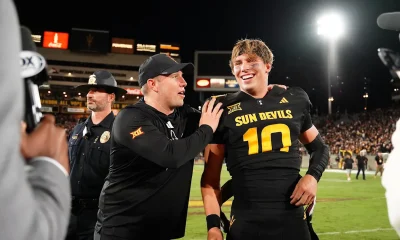
$2.1 million transfer portal QB predicted to join College Football Playoff team
-

 Motorsports2 weeks ago
Dr. Patrick Staropoli Lands Full-Time O’Reilly Ride with Big Machine Racing