
Technology
Gaming Hardware Market Outlook 2026: Industry Share, Trends,

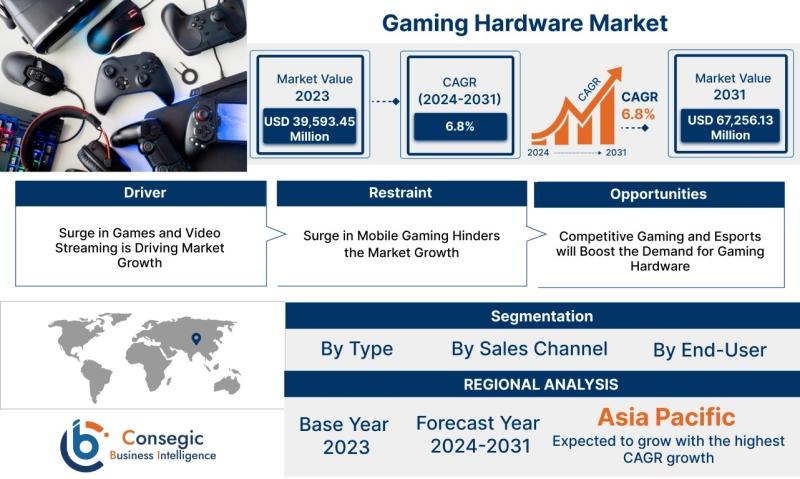

gaming hardware market
“
The global gaming hardware market is a dynamic and rapidly expanding sector, fueled by a confluence of factors including increasing disposable incomes, the rising popularity of esports, and continuous technological advancements in graphics processing, display technologies, and input devices. The demand for immersive and high-fidelity gaming experiences has driven significant investment in powerful gaming PCs, advanced consoles, and sophisticated peripherals like virtual reality (VR) headsets, specialized controllers, and high-performance audio equipment. The market’s growth is further propelled by the accessibility of gaming content through digital distribution platforms and subscription services, making it easier than ever for consumers to access a vast library of games. Technological advancements are at the heart of this evolution. The ongoing development of more powerful GPUs, faster processors, and advanced memory solutions allows for the creation of increasingly realistic and engaging game worlds. The integration of features like ray tracing, variable refresh rates, and high dynamic range (HDR) further enhances the visual fidelity and responsiveness of games. The gaming hardware market also plays a significant role in addressing global challenges. For example, the demand for more energy-efficient gaming hardware is driving innovation in power management and thermal design, contributing to the development of more sustainable computing solutions. Furthermore, the skills and technologies developed in the gaming industry, such as virtual reality and simulation, are being applied in other sectors such as healthcare, education, and training. Ultimately, the gaming hardware market is a vital component of the broader entertainment ecosystem, driving innovation, creating economic opportunities, and contributing to the development of technologies that have applications far beyond the realm of gaming.
Get the full PDF sample copy of the report: (TOC, Tables and figures, and Graphs) https://www.consegicbusinessintelligence.com/request-sample/1427
Market Size:
The global gaming hardware market is experiencing substantial growth, with estimations projecting continued expansion in the coming years. Factors such as increasing adoption of gaming consoles, rising popularity of e-sports, and technological advancements are fueling this growth.
Definition of Market:
The gaming hardware market encompasses the physical components and equipment required to play video games. This market is defined by a diverse range of products, services, and systems designed to enhance the gaming experience.
Key terms related to this market include:
Gaming Accessories: Peripherals like headsets, keyboards, mice, controllers, and other devices that augment the gaming experience.
Gaming Consoles: Dedicated gaming systems that connect to a display and provide a platform for playing games.
Gaming PCs & Laptops: High-performance computers specifically built or configured for playing games.
Virtual Reality (VR) Headsets: Devices that immerse players in virtual environments for a more interactive gaming experience.
Augmented Reality (AR) Devices: Devices that overlay computer-generated images onto the real world, enhancing the gaming experience.
Streaming Services: Platforms that allow users to stream games directly to their devices without needing to download them.
Esports: Organized competitive video gaming events, often involving professional players and teams.
The gaming hardware market is constantly evolving, driven by technological advancements and changing consumer preferences. The development of more powerful hardware, coupled with the rise of digital distribution and esports, is shaping the future of this dynamic market.
Get Discount On Report @ https://www.consegicbusinessintelligence.com/request-discount/1427
Market Scope and Overview:
The scope of the gaming hardware market is vast, encompassing a wide range of technologies, applications, and industries. It includes the design, manufacturing, and distribution of gaming consoles, gaming PCs and laptops, virtual reality (VR) and augmented reality (AR) devices, and a diverse array of peripherals such as gaming headsets, keyboards, mice, and controllers. The technologies driving this market are constantly evolving, with innovations in graphics processing, display technologies, and input devices leading to more immersive and realistic gaming experiences. The market also intersects with various other industries, including software development, content creation, and esports. The gaming hardware market caters to a diverse range of consumers, from casual gamers to professional esports players, and is influenced by factors such as demographics, disposable income, and cultural trends.
The gaming hardware market plays a crucial role in the larger context of global trends. It is a major driver of innovation in computing and display technologies, with advancements in these areas often finding applications in other industries. The market also contributes significantly to the global entertainment industry, generating billions of dollars in revenue and providing entertainment for millions of people. Furthermore, the rise of esports has transformed gaming into a spectator sport, attracting large audiences and creating new economic opportunities. The gaming hardware market is also playing an increasingly important role in education and training, with VR and AR technologies being used to create immersive learning experiences. As technology continues to evolve, the gaming hardware market is poised to play an even greater role in shaping the future of entertainment, education, and other industries.
Top Key Players in this Market
Logitech (Switzerland) Razer Inc. (U.S) A4TECH (Taiwan) Nintendo (Japan) Sony Group Corporation (Japan) HTC Corporation (Taiwan) Venom (UK) NVIDIA (U.S) Corsair Memory, Inc. (U.S) Dell Inc. (U.S) Anker (China)
Market Segmentation:
The gaming hardware market can be segmented based on various factors:
By Category:
Gaming Accessories: This segment includes peripherals like headsets, keyboards, mice, and controllers, enhancing the overall gaming experience and contributing to market growth through their essential functionality and constant innovation.
Gaming Consoles: Dedicated gaming systems that offer a streamlined and user-friendly gaming experience, driving market growth by appealing to a broad audience.
Gaming PCs & Laptops: High-performance computers designed for gaming, contributing to market growth by offering advanced features and customization options.
By Sales Channel:
Online Retail: Online platforms provide accessibility and convenience for purchasing gaming hardware, driving market growth through their wide reach and competitive pricing.
Retail store : Retail stores provide physical accessibility and convenience for purchasing gaming hardware, driving market growth through physical interaction.
Authorized Resellers: These channels offer a reliable source for purchasing genuine products and contribute to market growth by ensuring product authenticity and after-sales support.
Distributors: These channel facilitate the reach of hardware to vendors to sale the product.
Custom PC Builders: These specialists cater to gamers seeking personalized gaming rigs, driving market growth by offering tailored solutions.
Enterprise: This channel supply for the companies where gaming requirements are present.
By End-User:
Professional Gamers: This segment demands high-performance equipment for competitive play, fueling market growth by requiring cutting-edge technology.
Content Creators: Streamers and YouTubers require powerful hardware for creating gaming content, contributing to market growth by demanding high-quality equipment.
Programmer: Game developers need high performance hardware for game development and contributes to market growth.
Others: Casual gamers contribute significantly to market growth through their demand for accessible and affordable gaming hardware.
Market Drivers:
Technological Advancements: Continuous advancements in processing power, graphics cards, display technology (e.g., high refresh rates, HDR), and storage solutions (e.g., SSDs) drive demand for newer, more capable gaming hardware.
Esports Popularity: The growing popularity of esports is driving demand for high-performance gaming hardware among both professional players and aspiring competitors.
Increasing Disposable Income: As disposable incomes rise in developing countries, more consumers can afford gaming hardware.
Game Development & Graphics: Gaming developers needs better hardware to develop more immersive gaming experiences.
Growing gaming audience : The younger generation likes the gaming and this market grow more
Innovations : Advancement in product designs with better user friendly experience
Market Key Trends:
Rise of Cloud Gaming: Cloud gaming services are reducing the need for high-end gaming hardware, allowing users to stream games to their devices.
VR and AR Gaming: Virtual reality and augmented reality gaming are gaining traction, driving demand for VR headsets and AR devices.
Customization and Personalization: Gamers are increasingly seeking customizable and personalized gaming hardware, such as custom-built PCs and personalized peripherals.
Wireless Technologies: Wireless technologies, such as low-latency Wi-Fi and Bluetooth, are becoming more prevalent in gaming peripherals.
Increased Focus on Ergonomics: Gaming hardware manufacturers are focusing on ergonomics to improve comfort and reduce strain during long gaming sessions.
Better connectivity : More bandwidth for better gaming and less interuption
Market Opportunities:
Expansion in Emerging Markets: Untapped potential in emerging markets with growing disposable incomes and increasing internet penetration.
Development of VR/AR Gaming Content: Creating compelling VR/AR gaming experiences to drive adoption of VR/AR hardware.
Cloud Gaming Partnerships: Collaborating with cloud gaming providers to offer seamless gaming experiences across different devices.
Innovations in Input Devices: Developing new and innovative input devices, such as haptic feedback controllers and eye-tracking systems.
Focus on Sustainability: Creating more energy-efficient and environmentally friendly gaming hardware.
Adopting the AI in Gaming
Market Restraints:
High Initial Costs: The high cost of high-end gaming hardware can be a barrier to entry for some consumers.
Supply Chain Disruptions: Global supply chain disruptions can impact the availability and cost of gaming hardware components.
Competition from Other Forms of Entertainment: Gaming hardware faces competition from other forms of entertainment, such as streaming services and social media.
Compatibility Issues: Compatibility issues between different hardware components and software can be a challenge for gamers.
Rapid Technological Advancements: The rapid pace of technological advancements can make gaming hardware obsolete quickly.
Market Challenges:
The gaming hardware market, while experiencing robust growth, faces a multitude of challenges that could potentially hinder its future trajectory. One of the most pressing challenges is the persistent issue of supply chain disruptions. Global events, geopolitical tensions, and even natural disasters can significantly impact the availability of key components, such as semiconductors, memory chips, and display panels. These disruptions not only lead to shortages of gaming hardware but also drive up prices, making it more difficult for consumers to access the latest and greatest gaming technology. Furthermore, the increasing complexity of gaming hardware presents another significant challenge. As games become more demanding and visually stunning, the hardware required to run them smoothly becomes increasingly sophisticated. This necessitates advanced engineering and manufacturing processes, which can be costly and time-consuming. Ensuring that gaming hardware is compatible with a wide range of games and software platforms also requires extensive testing and collaboration between hardware and software developers.
Another challenge facing the gaming hardware market is the growing competition from alternative gaming platforms and services. Cloud gaming, for example, allows users to stream games to their devices without the need for expensive gaming hardware. This poses a direct threat to the traditional gaming hardware market, as consumers may opt to subscribe to a cloud gaming service rather than invest in a high-end gaming PC or console. Mobile gaming is also a major competitor, with a vast library of games available on smartphones and tablets. While mobile games typically have lower graphical fidelity than PC or console games, they are often more accessible and affordable, making them an attractive option for casual gamers. Moreover, the gaming hardware market is facing increasing scrutiny regarding its environmental impact. The production and disposal of gaming hardware can generate significant amounts of electronic waste, which can be harmful to the environment. Developing more sustainable gaming hardware solutions, such as using recycled materials and improving energy efficiency, is a critical challenge for the industry.
Finally, the gaming hardware market is subject to constant technological disruption. New technologies, such as VR, AR, and artificial intelligence (AI), are constantly emerging and transforming the gaming landscape. Adapting to these new technologies and integrating them into gaming hardware can be a challenging but necessary endeavor. Failing to embrace these technological advancements could lead to stagnation and a loss of competitiveness in the market. To overcome these challenges, gaming hardware manufacturers need to invest in research and development, strengthen their supply chains, collaborate with software developers, and adopt more sustainable business practices. By addressing these challenges head-on, the gaming hardware market can continue to thrive and deliver innovative and engaging gaming experiences to consumers around the world.
Market Regional Analysis:
The gaming hardware market exhibits distinct regional dynamics influenced by factors such as economic development, cultural preferences, and technological infrastructure. North America and Europe have traditionally been major markets, characterized by high disposable incomes and a strong gaming culture. These regions are early adopters of new technologies and tend to favor high-end gaming hardware. Asia-Pacific is emerging as the largest and fastest-growing market, driven by the increasing popularity of esports, rising disposable incomes, and a large youth population. China and South Korea are particularly important markets in this region, with a strong preference for PC gaming and esports. Latin America and the Middle East & Africa are also experiencing growth in the gaming hardware market, albeit at a slower pace. These regions are characterized by a growing middle class and increasing internet penetration, which are driving demand for gaming hardware. However, factors such as limited disposable income and a lack of well-developed gaming infrastructure can pose challenges in these regions.
Each region also exhibits unique cultural preferences and consumption patterns. For example, PC gaming is more popular in some regions, while console gaming is more prevalent in others. The types of games that are popular also vary across regions, with some regions favoring strategy games, while others prefer action or sports games. Understanding these regional nuances is crucial for gaming hardware manufacturers to tailor their products and marketing strategies to specific markets. The regulatory environment also plays a role in shaping the gaming hardware market in different regions. Government policies related to gaming, such as censorship laws and taxes on gaming hardware, can impact the market’s growth potential. Therefore, gaming hardware manufacturers need to be aware of the regulatory landscape in each region and adapt their business practices accordingly.
Frequently Asked Questions:
Q: What is the projected growth rate of the gaming hardware market?
A: Market reports predict a strong growth rate, driven by rising esports, technological advancements, and increasing disposable incomes.
Q: What are the key trends shaping the gaming hardware market?
A: Key trends include the rise of cloud gaming, VR/AR gaming, customization options, and wireless technologies.
Q: What is the most popular type of gaming hardware?
A: Gaming PCs and laptops are popular for their high performance and customization, while gaming consoles offer a streamlined experience.
“
Contact Us:
Consegic Business intelligence Pvt Ltd
Baner Road, Baner, Pune, Maharashtra – 411045
(US) (505) 715-4344
info@consegicbusinessintelligence.com
sales@consegicbusinessintelligence.com
Web – https://www.consegicbusinessintelligence.com/
About Us:
Consegic Business Intelligence is a data measurement and analytics service provider that gives the most exhaustive and reliable analysis available of global consumers and markets. Our research and competitive landscape allow organizations to record competing evolutions and apply strategies accordingly to set up a rewarding benchmark in the market. We are an intellectual team of experts working together with the winning inspirations to create and validate actionable insights that ensure business growth and profitable outcomes.
We provide an exact data interpretation and sources to help clients around the world understand current market scenarios and how to best act on these learnings. Our team provides on-the-ground data analysis, Portfolio Expansion, Quantitative and qualitative analysis, Telephone Surveys, Online Surveys, and Ethnographic studies. Moreover, our research reports provide market entry plans, market feasibility and opportunities, economic models, analysis, and an advanced plan of action with consulting solutions. Our consumerization gives all-inclusive end-to-end customer insights for agile, smarter, and better decisions to help business expansion.
Connect with us on:
LinkedIn – https://www.linkedin.com/company/consegic-business-intelligence/
YouTube – https://www.youtube.com/@ConsegicBusinessIntelligence22
Facebook – https://www.facebook.com/profile.php?id=61575657487319
X – https://x.com/Consegic_BI
Instagram – https://www.instagram.com/cbi._insights/
This release was published on openPR.


“Phygital” sports combine traditional athletic competition with its digital counterpart in a unified format that requires competitors to excel in both dimensions. Teams begin the challenge in the digital round before facing off again in the physical arena, with victory determined by the combined results of both performances.
This model reflects the growing convergence of technology and real-world performance, offering a new and immersive form of sporting competition.
More than 850 athletes from 60 countries will participate, representing clubs, emerging talents, and new faces across 11 phygital sports disciplines.
Faisal Al Bannai, Adviser to the UAE President for Strategic Research and Advanced Technology Affairs and Secretary-General of the Advanced Technology Research Council, said:
“Digital sport is not merely a new format; it embodies the mindset of a new generation.
Bridging physical excellence and digital mastery
Abu Dhabi is proud to host this edition of the Games of the Future 2025, providing an environment that brings together physical excellence and digital mastery. Our goal is to empower youth, accelerate innovation, and build communities around the technologies that will shape the future.”
The 2025 edition comes with strong global momentum, bringing together elite athletes from across the phygital sports ecosystem—competitors who demonstrate exceptional physical performance alongside advanced digital skills.
The event will feature professional athletes, esports stars, and rising phygital talents, promising outstanding competitions that showcase the best of both the physical and digital worlds. The championship reflects the rapid transformation of sport in an increasingly interconnected world, positioning the 2025 edition as a pivotal milestone in the global evolution of this growing sector.
Abu Dhabi prepares to deliver an exceptional edition
The draw has determined the opening group-stage matchups across the various disciplines, setting the stage for the first competitive narratives that audiences will follow. As the event progresses, full competitive pathways will unfold, with clubs vying for qualification and top positions in the finals, which will feature a total prize pool of USD 5 million.
In parallel with the tournament, Abu Dhabi will host the Phygital Sports Summit on 17 December 2025. The summit will serve as an intellectual platform bringing together global experts, athletes, innovators, and decision-makers to discuss the evolution of hybrid sports. Its comprehensive program includes keynote addresses, panel sessions, and in-depth discussions on the intersection of sport and technology, human–AI integration, the future of youth engagement, athlete health in hybrid environments, and the sustainable legacy of phygital sports.
Summit sessions will be moderated by Amy Jane Gillingham, Mohamed Al Hosani, and Sabine Sassen, with participation from senior representatives of Phygital International, partners of the Games of the Future, and leading global figures shaping both the digital and physical sports movements.
Distinguished guests expected to attend include H.E. Dr. Ahmad Belhoul Al Falasi, UAE Minister of Sports, and a high-level international delegation featuring H.E. Ilham Aliyev, President of the Republic of Azerbaijan; H.E. Rawan bint Najeeb Tawfiqi, Minister of Youth Affairs of the Kingdom of Bahrain; Sheikha Deena bint Rashid Al Khalifa, Adviser for Planning and Development at Bahrain’s Ministry of Youth Affairs; and Dr. Osman Aşkın Bak, Minister of Youth and Sports of the Republic of Türkiye.
Sport of the next generation

Entertainment has always played a vital role in society, and the ways we access and enjoy it have changed drastically over time. Today, as online platforms, streaming services, and digital applications gain traction, businesses are rethinking their strategies in this evolving landscape.

Innovations in entertainment technology touch everything from live sports to gaming and betting, as seen at bet777, demonstrating how rapidly shifting trends impact the industry as a whole.
From analog to digital: the transformation of entertainment
The transition from analog to digital technology marks one of the most significant changes in entertainment history. In the past, physical media such as vinyl records, VHS tapes, and CDs were the norm. With the rise of digital formats, accessibility and distribution underwent a revolution. Digital streaming made it possible for consumers to access content instantly, eliminating the limitations of geography and physical storage. This convenience not only changed how audiences consume media but also how creators and companies distribute and monetize their content.
As digital solutions expanded, new forms of entertainment began to emerge. Video games, interactive apps, and online casinos grew in popularity, shifting the focus from passive viewing to active participation. The proliferation of high-speed internet and smartphones further fueled this transformation, enabling entertainment anywhere, anytime. Companies operating in this environment had to adapt quickly to user expectations of on-demand, personalized experiences. This ongoing evolution continues to blur the line between creators, distributors, and consumers, changing the entire value chain.
Streaming services and the shift in business models
The introduction of video and music streaming platforms led to fundamental changes in business models across the sector. Subscription services replaced one-time purchases, shifting the focus to long-term customer retention and recurring revenue streams. This not only increased competition among platforms but also gave rise to exclusive content and original productions as key differentiators. The bargaining power shifted to content creators and platforms able to attract large subscriber bases, while traditional broadcasters and physical retailers had to reinvent or risk becoming obsolete.
This transition has also extended to other segments such as live sports, eSports, and iGaming. Businesses are investing in digital infrastructure and user experience, offering everything from artificial intelligence-driven recommendations to interactive live events. The ability to collect and analyze user data allows companies to tailor offerings directly to their audiences, driving engagement and loyalty. Simultaneously, regulatory challenges and data security concerns have emerged, demanding new approaches to compliance and consumer protection in digital entertainment.
Immersive technology and the business of innovation
The latest chapter in entertainment technology is defined by immersive experiences such as virtual reality (VR), augmented reality (AR), and advanced streaming features. As these technologies find mainstream adoption, businesses are leveraging them to create new ways to engage users. For example, VR concerts, AR-enhanced sports statistics, and immersive gaming environments offer fresh revenue opportunities and deepen the user’s connection with content.
To stay competitive, entertainment companies must constantly invest in innovation and understand emerging trends. Cloud gaming and interactive betting platforms exemplify how technology influences entertainment choices and opens up lucrative business channels. The integration of social features, mobile-first strategies, and cross-platform compatibility are now prerequisites for success. As the landscape continues to evolve, keeping pace with technology and user preferences will be crucial for organizations aiming to thrive in the future of entertainment.

Kennedy Ntire, Gaming Manager at the Grand Palm Casino, has worked in iGaming for over 15 years so has a strong understanding of what makes players keep coming back for more.
In the video above, he explains why Light and Wonder are the leader of the pack in iGaming innovation and have a unique way of entertaining and captivating both new and experienced players.
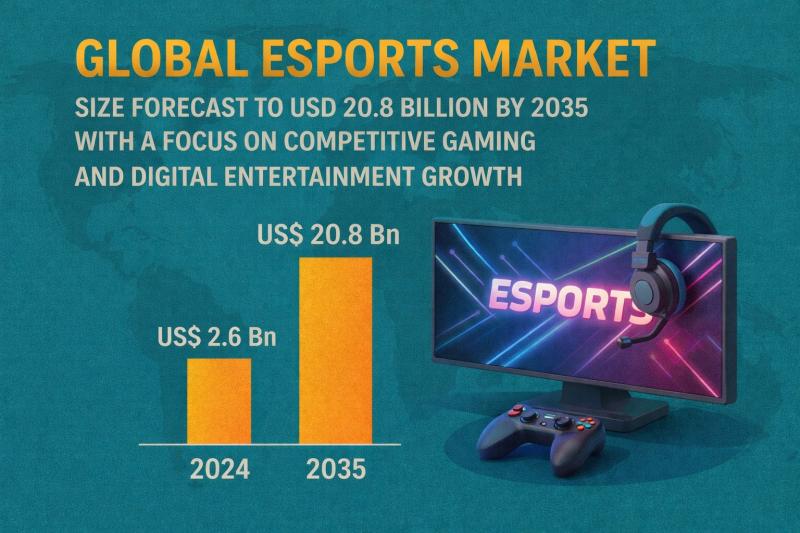
Global Esports Market Size Outlook 2035
Global Esports Market Size Outlook 2035
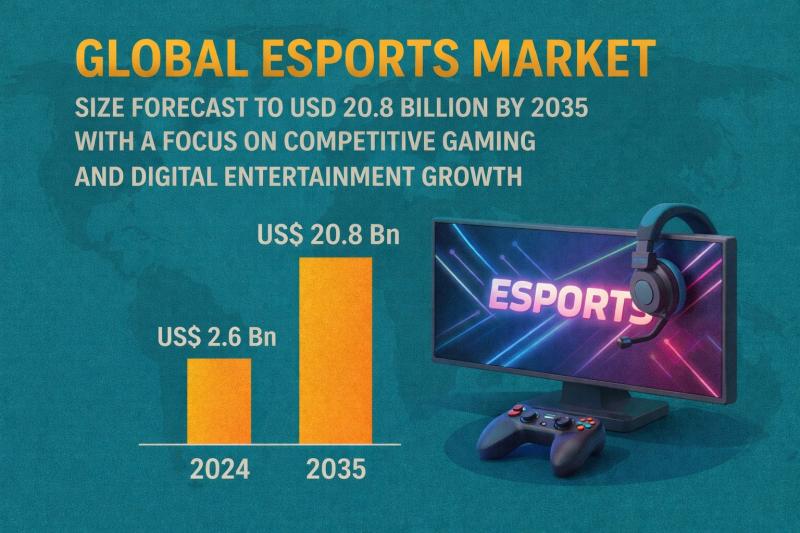
The global Esports market was valued at US$ 2.6 billion in 2024. It is projected to grow at a CAGR of 20.9% from 2025 to 2035, reaching US$ 20.8 billion by 2035. This rapid growth is driven by the surging popularity of competitive gaming, increasing digital connectivity, corporate sponsorships, and expanding live streaming platforms worldwide.
👉 Get your sample market research report copy today@ https://www.transparencymarketresearch.com/sample/sample.php?flag=S&rep_id=54564
Market Overview
Esports refers to competitive gaming at professional levels, where players compete individually or in teams in popular games like League of Legends, Dota 2, Fortnite, Call of Duty, and Overwatch. The market spans across tournaments, leagues, streaming platforms, sponsorships, advertising, and merchandise sales.
Factors contributing to market expansion include:
• Rising internet penetration and smartphone adoption, especially in Asia-Pacific
• Increased viewership via streaming platforms like Twitch, YouTube Gaming, and Facebook Gaming
• Growing corporate investments and sponsorships
• Expansion of Esports tournaments, leagues, and collegiate competitions
• Enhanced engagement through virtual reality (VR) and augmented reality (AR) gaming experiences
North America and Europe are leading markets due to mature gaming ecosystems, while Asia-Pacific is the fastest-growing region driven by a huge gamer population and strong tournament culture.
Key Market Growth Drivers
1. Rising Popularity of Competitive Gaming
Competitive gaming is attracting millions of fans globally, creating a robust ecosystem for tournaments, streaming, and merchandise sales.
2. Growth of Digital Streaming Platforms
Platforms like Twitch, YouTube Gaming, and Trovo are expanding the reach of Esports, enabling real-time engagement and monetization through subscriptions, ads, and donations.
3. Corporate Sponsorships and Advertising
Brands are increasingly investing in Esports teams, tournaments, and influencer marketing, enhancing revenue opportunities and market growth.
4. Technological Advancements
• VR/AR integration for immersive experiences
• Advanced graphics, AI, and game engines enhancing competitive gameplay
• Cloud gaming enabling accessibility without high-end hardware
5. Expanding Professional Leagues and Tournaments
Major tournaments like The International (Dota 2), League of Legends World Championship, and Fortnite World Cup are boosting Esports viewership and attracting global sponsorship.
Analysis of Key Players – Key Strategies
Leading Esports companies focus on technology innovation, strategic partnerships, player acquisition, and global expansion.
1. Player and Team Management
• Investment in professional teams, player training, and coaching
• Acquisition of top-tier players to enhance competitive performance
2. Strategic Partnerships and Sponsorships
• Collaboration with gaming hardware, software, and media companies
• Partnerships with brands for event sponsorships and advertising campaigns
3. Platform Expansion
• Enhancing streaming platforms with interactive features, chat, and monetization options
• Developing mobile apps and cloud-based gaming services
4. Regional Growth
• Expansion into Asia-Pacific and Latin America to capitalize on large gamer populations
• Increasing tournaments in emerging markets to boost fan engagement
Analysis of Key Players in the Esports Market
Leading companies in the global esports market are investing in technological innovations, strategic partnerships, and product diversification to strengthen their market presence and stay ahead in the rapidly evolving competitive gaming industry. Their initiatives aim to enhance gaming experiences, improve precision in competitive play, and expand audience engagement globally.
Key players in the esports market include
• Bandai Namco Entertainment
• Valve Corporation
• PGL
• Overwatch League
• NVIDIA
• Microsoft
• Faceit
• Tencent
• Riot Games
• Epic Games
• Sony Interactive Entertainment
• Take Two Interactive
• Activision Blizzard
• Electronic Arts
• Other Prominent Players.
These companies are profiled in the esports market research report based on company overview, financial performance, business strategies, product portfolio, business segments, and recent developments.
👉 Discuss Implications for Your Industry Request Sample Research Report PDF@ https://www.transparencymarketresearch.com/sample/sample.php?flag=S&rep_id=54564
Key Developments in the Esports Market
• April 2025: Nintendo showcased its esports initiatives during the Nintendo Switch 2 Direct event, introducing new IPs and enhancing Splatoon with esports features such as improved matchmaking and live streaming integration. These efforts aim to strengthen Nintendo’s position in the competitive gaming market through strategic partnerships and global audience engagement.
• March 2025: Gameloft launched a new mobile esports platform for Asphalt 9: Legends, focusing on community-driven tournaments and competitive play. The platform features regular in-app events, live streaming, and player rewards, designed to expand the mobile esports ecosystem and attract a larger audience.
Market Challenges & Opportunities
Challenges
1. High Competition and Saturation
The rapid growth of gaming content and tournaments increases competition for viewership and sponsorships.
2. Regulatory and Legal Issues
Issues like laws, online content regulations, and copyright concerns can affect market expansion.
3. Monetization Challenges
Smaller tournaments and emerging platforms may struggle with sustainable revenue generation.
4. Hardware and Connectivity Requirements
High-performance gaming requires advanced hardware and stable internet, limiting access in some regions.
Opportunities
1. Mobile Esports Expansion
Mobile gaming is driving Esports adoption in Asia-Pacific, Latin America, and the Middle East, creating new revenue streams.
2. Integration of VR/AR
Immersive experiences through VR/AR can attract more viewers and participants.
3. Corporate Sponsorship and Advertising
Expanding partnerships with non-endemic brands in fashion, automotive, and consumer goods sectors.
4. Collegiate and Amateur Esports
Development of school and college leagues can create future professionals and increase fanbase.
Investment Landscape and ROI Outlook
The Esports market offers high growth potential and attractive ROI due to its rapid adoption, global fanbase, and multi-stream revenue model.
Investment Strengths
• Expanding fanbase across platforms, regions, and age groups
• Diverse revenue streams from sponsorships, media rights, merchandising, and ticket sales
• Emerging opportunities in mobile Esports, VR/AR integration, and collegiate leagues
• Supportive infrastructure and increasing internet penetration worldwide
ROI Outlook
With a CAGR of 20.9% through 2035, investments in tournaments, streaming platforms, team ownership, and gaming technology are expected to yield high returns. Early entry into emerging markets and mobile Esports offers a competitive advantage.
Market Segmentations
By Game Genre
• MOBA (Multiplayer Online Battle Arena)
• FPS (First-Person Shooter)
• Battle Royale
• Sports Simulation
• Fighting and Others
By Platform
• PC
• Console
• Mobile
• Cloud Gaming
By Revenue Source
• Sponsorship and Advertising
• Media Rights
• Merchandising and Ticketing
• Streaming Platforms
• Publisher Fees
By Region
• North America
• Europe
• Asia-Pacific
• Latin America
• Middle East & Africa
👉 To buy this comprehensive market research report, click here to inquire@ https://www.transparencymarketresearch.com/checkout.php?rep_id=54564<ype=S
Why Buy This Report?
✔ Detailed market forecast to 2035
✔ Comprehensive analysis of growth drivers, challenges, and opportunities
✔ Competitive landscape and key player strategies
✔ Segmentation by game genre, platform, revenue source, and region
✔ Insights into emerging trends such as mobile Esports, VR/AR, and collegiate leagues
✔ Strategic recommendations for investors, developers, and brands
FAQs
1. What is the projected Esports market size by 2035?
It is expected to reach US$ 20.8 billion by 2035.
2. What is the CAGR from 2025-2035?
The market is projected to grow at a CAGR of 20.9%.
3. Which region dominates the Esports market?
Asia-Pacific is emerging as the fastest-growing region due to high gamer population and mobile gaming adoption.
4. What are the main revenue sources?
Sponsorships, advertising, media rights, streaming subscriptions, merchandising, and ticket sales.
5. What are key market trends?
Growth in mobile Esports, VR/AR integration, streaming platforms, and collegiate leagues are shaping market trends.
More Trending Research Reports-
• Enterprise Connectivity and Networking Market – https://www.transparencymarketresearch.com/enterprise-connectivity-and-networking-market.html
• A2P SMS Market – https://www.transparencymarketresearch.com/global-a2p-sms-market.html
About Us Transparency Market Research
Transparency Market Research, a global market research company registered at Wilmington, Delaware, United States, provides custom research and consulting services. The firm scrutinizes factors shaping the dynamics of demand in various markets. The insights and perspectives on the markets evaluate opportunities in various segments. The opportunities in the segments based on source, application, demographics, sales channel, and end-use are analysed, which will determine growth in the markets over the next decade.
Our exclusive blend of quantitative forecasting and trends analysis provides forward-looking insights for thousands of decision-makers, made possible by experienced teams of Analysts, Researchers, and Consultants. The proprietary data sources and various tools & techniques we use always reflect the latest trends and information. With a broad research and analysis capability, Transparency Market Research employs rigorous primary and secondary research techniques in all of its business reports.
Contact Us
Transparency Market Research Inc.
CORPORATE HEADQUARTER DOWNTOWN,
1000 N. West Street,
Suite 1200, Wilmington, Delaware 19801 USA
Tel: +1-518-618-1030
USA – Canada Toll Free: 866-552-3453
Website: https://www.transparencymarketresearch.com
Blog: https://tmrblog.com
Email: sales@transparencymarketresearch.com
This release was published on openPR.

The gaming and eSports industries have grown far beyond simple entertainment. Today, they represent a complex ecosystem where competition, social engagement, and technology intersect. Fans don’t just play—they spectate, strategize, and participate in online communities that feel immersive and dynamic.
Competitive gaming has influenced not only game design but also how digital platforms structure engagement. Leaderboards, progression systems, and interactive features once reserved for video games now appear across entertainment, social, and even educational platforms. This approach keeps users invested and encourages continuous interaction.
Platforms like spacehills.de are perfect examples of this trend. While focusing on gaming and eSports experiences, the platform integrates community-driven features, gamified interactions, and real-time engagement tools that resonate with pop-culture and tech-savvy audiences. Users find themselves drawn into a system that feels familiar yet innovative, combining the thrill of competition with interactive platform design.
The Mechanics Behind Engagement
Gamification remains one of the strongest drivers of user engagement in modern digital spaces. Borrowed from video games, these mechanics transform standard interactions into meaningful experiences. Users enjoy clear goals, rewards for skill or participation, and tangible progress that mirrors in-game achievements.
Core Gamification Elements
- Achievement tracking – recognizing user milestones
- Progression bars and levels – visually representing growth
- Daily or weekly challenges – encouraging consistent engagement
- Reward systems – motivating repeated interactions
By leveraging these mechanics, platforms create a sense of investment and personal growth, even outside traditional gaming contexts.
eSports Influence on Platform Design
The structure and intensity of eSports competitions have heavily influenced digital platform design. Just as tournaments require skill, strategy, and adaptability, interactive platforms aim to provide layered experiences that challenge and reward users in meaningful ways.
Key Design Features Inspired by eSports
- Real-time updates – keeping users informed and engaged
- Interactive dashboards – allowing immediate response and action
- Community integration – fostering connection among players
- Performance metrics – tracking progress and achievements
These elements ensure that users feel involved and motivated, replicating the engagement loop found in competitive gaming.
Social Interaction and Community Building
A defining feature of modern gaming and eSports culture is community. Whether it’s clan systems, guilds, or Discord channels, shared experiences amplify engagement. Digital platforms that integrate social features replicate this environment, creating a sense of belonging and collaboration.
Community-Driven Features
- Forums and chat systems for discussion and collaboration
- Leaderboards to encourage friendly competition
- Collaborative challenges or events
- Transparent systems that reward fair play
Strong communities increase retention and make platforms more attractive to both new and experienced users.
Strategy, Skill, and Decision-Making
Gaming and eSports emphasize strategy and skill, which naturally translate into interactive platforms. Users are drawn to experiences that reward decision-making, resource management, and tactical thinking. This dynamic creates depth and keeps users engaged over time.
Strategic Engagement Elements
- Risk versus reward decisions
- Progression-based challenges
- In-game or in-platform resource management
- Analytical decision-making feedback
By incorporating these elements, platforms encourage thoughtful participation rather than passive consumption.
Technology Driving Immersion
Technological advancements have enabled platforms to support high-performance, real-time interaction similar to competitive gaming environments. Cloud computing, low-latency servers, and responsive design ensure that users experience smooth, immersive engagement.
Tech Features Enhancing User Experience
- Mobile-optimized and responsive interfaces
- Low-latency real-time updates
- Secure user accounts and transactions
- Scalable architecture to handle peak traffic
These features make platforms feel modern, reliable, and aligned with user expectations shaped by gaming and eSports experiences.
Personalized Experiences and Adaptive Systems
Modern platforms increasingly rely on data to provide personalized experiences. By monitoring user behavior, preferences, and engagement patterns, platforms can dynamically adapt content, challenges, and rewards to each individual.
Benefits of Personalization
- Tailored challenges and events
- Customized interfaces and dashboards
- Adaptive difficulty and content progression
- Enhanced user satisfaction and retention
This approach mirrors personalized gameplay experiences in video games, where user choices and performance influence outcomes.
The intersection of eSports, gaming, and digital platform design demonstrates how interactive experiences are evolving. Platforms like spacehills.de illustrate how combining community, gamification, and technological innovation creates compelling environments for users, where engagement, strategy, and social interaction coexist seamlessly.
Do You Want to Know More?
Technology
Superbet Group Becomes Super Technologies, Shaping the Future of Digital Entertainment Ecosystems

Our website uses cookies, as almost all websites do, to help provide you with the best experience we can.
Cookies are small text files that are placed on your computer or mobile phone when you browse websites.
Our cookies help us:
– Make our website work as you’d expect
– Remember your settings during and between visits
– Offer you free services/content (thanks to advertising)
– Improve the speed/security of the site
– Allow you to share pages with social networks like Facebook
– Continuously improve our website for you
– Make our marketing more efficient (ultimately helping us to offer the service we do at the price we do)
We do not use cookies to:
– Collect any personally identifiable information (without your express permission)
– Collect any sensitive information (without your express permission)
– Pass personally identifiable data to third parties
– Pay sales commissions

Virginia Tech Helmet Lab Releases First Independent Safety Ratings for Youth Hockey Helmets

Las Vegas police seek possible victims of man accused of sexual assault

Recalled So Delicious frozen dessert items may contain small rocks, FDA says

‘Beloved’ sports reporter among two found dead as police investigate apparent murder-suicide

Ankored Partners with Players Health to Streamline Youth Sports Compliance

Stars Stay, Others Head to Portal

Annual National Girls & Women in Sports Day Event Set for February 7

Bernalillo County Assessor says Class Action Suit is the Result of Misrepresentation

Beloved referee who officiated youth sports for 30 years dies on court during basketball game
Games of the Future 2025 Offers $5M Prize Pool

Texas A&M’s KC Concepcion has ‘not made a decision’ regarding future

Brent “Bundy” Krakau Obituary | The Arkansas Democrat-Gazette

Arby’s Joins Forces with JR Motorsports and Dale Earnhardt Jr. in Massive Multi-Year Deal

The evolution of entertainment technology and its business impact – EUbusiness.com

Josh Pate defends Joel Klatt amid G5 backlash, proposes second tier to College Football Playoff

First Tee Winter Registration is open

Fargo girl, 13, dies after collapsing during school basketball game – Grand Forks Herald

CPG Brands Like Allegra Are Betting on F1 for the First Time

F1 Las Vegas: Verstappen win, Norris and Piastri DQ tighten 2025 title fight

Volleyball Recaps – November 18

Sycamores unveil 2026 track and field schedule

Two Pro Volleyball Leagues Serve Up Plans for Minnesota Teams

Utah State Announces 2025-26 Indoor Track & Field Schedule

Redemption Means First Pro Stock World Championship for Dallas Glenn

Jo Shimoda Undergoes Back Surgery

Texas volleyball vs Kentucky game score: Live SEC tournament updates

Bowl Projections: ESPN predicts 12-team College Football Playoff bracket, full bowl slate after Week 14

SoundGear Named Entitlement Sponsor of Spears CARS Tour Southwest Opener

How this startup (and a KC sports icon) turned young players into card-carrying legends overnight

Robert “Bobby” Lewis Hardin, 56

 NBA Legend Michael Jordan to Join NBC Sports as Special Contributor
 Why a rising mid-major power with an NCAA Tournament team opted out of revenue-sharing — and advertised it
 Falcons mailbag
 Portal Update – Basketball and Gymnastics Take Hits
 has always dreamed in Mercurial. Now his initials are on the boots.
The new Kyl…
has always dreamed in Mercurial. Now his initials are on the boots.
The new Kyl…
-
 Motorsports3 weeks ago
Redemption Means First Pro Stock World Championship for Dallas Glenn
-
 Motorsports3 weeks ago
Jo Shimoda Undergoes Back Surgery
-
 NIL2 weeks ago
Bowl Projections: ESPN predicts 12-team College Football Playoff bracket, full bowl slate after Week 14
-
 Motorsports7 days ago
SoundGear Named Entitlement Sponsor of Spears CARS Tour Southwest Opener
-
 Rec Sports3 weeks ago
How this startup (and a KC sports icon) turned young players into card-carrying legends overnight
-
 Rec Sports2 weeks ago
Robert “Bobby” Lewis Hardin, 56
-

 NIL3 weeks ago
Indiana’s rapid ascent and its impact across college football
-

 Motorsports3 weeks ago
Pohlman admits ‘there might be some spats’ as he pushes to get Kyle Busch winning again
-
Sports2 weeks ago
Wisconsin volleyball sweeps Minnesota with ease in ranked rivalry win
-

 Motorsports3 weeks ago
What stands behind Ford’s commitment to becoming ‘the Porsche of off-road racing’