Cincinnati transfer QB Brendan Sorsby to visit Texas Tech on Friday, report says
2026 NCAA football transfer portal: Tracking moves for Texas Tech, SMU, other area schools

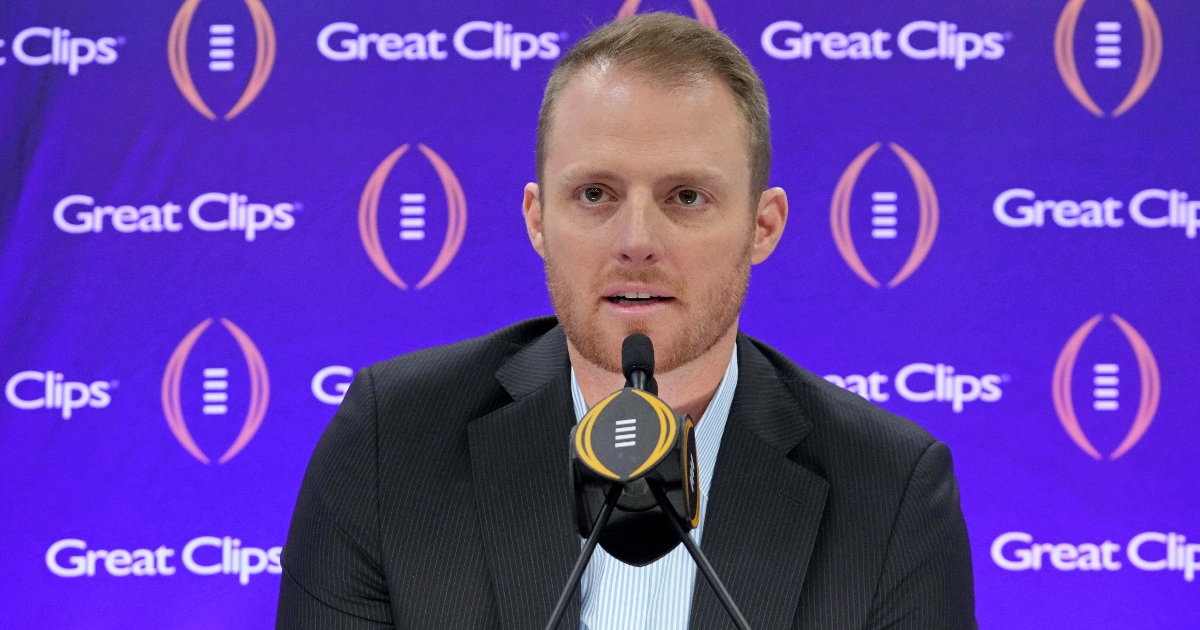
While there’s still little known about President Donald Trump‘s commission on college sports — even co-chair Nick Saban remains in the dark — one of Saban’s former Alabama players has some interesting suggestions on how the still-yet-to-be-determined working group could address what’s currently ailing college football.
ESPN analyst Greg McElroy recently addressed the presidentially-mandated commission and proposed an array of fixes the commission could attempt to address both the NCAA Transfer Portal and NIL, as well as growing concern between the haves and have-nots within the sport. McElroy’s first fix is to reduce the time the transfer portal is open to a single month — May, specifically.
“I think if we were to limit the amount of time the portal was open, that’d calm things down quite a bit. … I think having the portal opened in the month of May is the best thing for the sport,” McElroy said on last week’s episode of his Always College Football podcast. “… But if we were to open it on May 1st and close it on May 31st, it would do a few different things for us. One, it’d keep college football in the news. … Think about how much traction we’d get in May if players were leaving one place and going to another. … Two, … I think if we move the portal window to May, there would be a renewed emphasis for programs across the country to put a higher priority on the high school talent that could join their roster in January, go through Spring, go through Winter workouts, go through Summer, and hopefully be ready to play come Fall. I want to see more focus on high school players getting opportunities as opposed to players on their fourth school in five years.”
McElroy also suggested the single, post-Spring portal window would limit the sheer number of portal entries and, as such, limit coaches from “poaching off other rosters” because by May, most coaches will likely have a better hold on what their roster will look like in the Fall. According to On3’s latest numbers, of the 4,000-plus players that have entered the portal since the end of the 2024 season, only a little more than 2,400 have committed to new homes — with roughly two out of every five transfers still in the portal.
According to McElroy, the later portal window would also limit emotional decisions being made immediately after the season, citing his own career as an example. Had the portal been around when he was at Alabama, McElroy admitted he would have entertained leaving following the late 2006 firing of former coach Mike Shula. Of course, had McElroy done that, he would have missed out on playing under Saban, who was hired away from the Miami Dolphins more than a month later in early January 2007.
“Had I jumped in the portal, would I have been able to play for Nick Saban and lead Alabama to a national championship as their starting quarterback in 2009? Probably not,” McElroy said. “I would have made an emotional decision that I would’ve regretted for the rest of my life. … I think moving the portal from May 1st to May 31st would be an amazing move for college football, and I think this commission could potentially do that.”
With the portal problem potentially solved, McElroy turned his attention to NIL, suggesting the commission develop universal contract language in NIL deals that wouldn’t allow schools to take advantage of favorable state laws. If that’s not possible, McElroy is hopeful the commission could help establish buyout language that would let schools recoup money should a player opt to leave before fulfilling the full term of their NIL agreements.
“It doesn’t have to be a massive hurdle for these players to move from school to school, but there’s a little one,” McElroy explained.
Last but not least, McElroy also proposed creating subsidies for less lucrative programs, like those from the Group of Six or even lower levels, many of whom are contemplating whether or not they can still field a football program in the day and age of NIL.
“We need to figure out a way to subsidize those schools,” McElroy said. “And if that means taking just a sliver of the College Football Playoff revenue, then by all means let’s do it.”
Of course, based on the current state of college athletics, where Florida State and North Carolina sued the ACC because they weren’t receiving equitable revenue compared to that of similar Big Ten or SEC teams, it’s unlikely any of the Power Four leagues would agree to such financial giveaways.
Nevertheless, McElroy clearly had some potential game-changing ideas, many of which might even be given serious consideration by the commission. But whether or not the presidential commission has any power to actually implement any of McElroy’s proposals without facing the threat of anti-trust litigation is unclear, especially given the working group is still in its infancy.
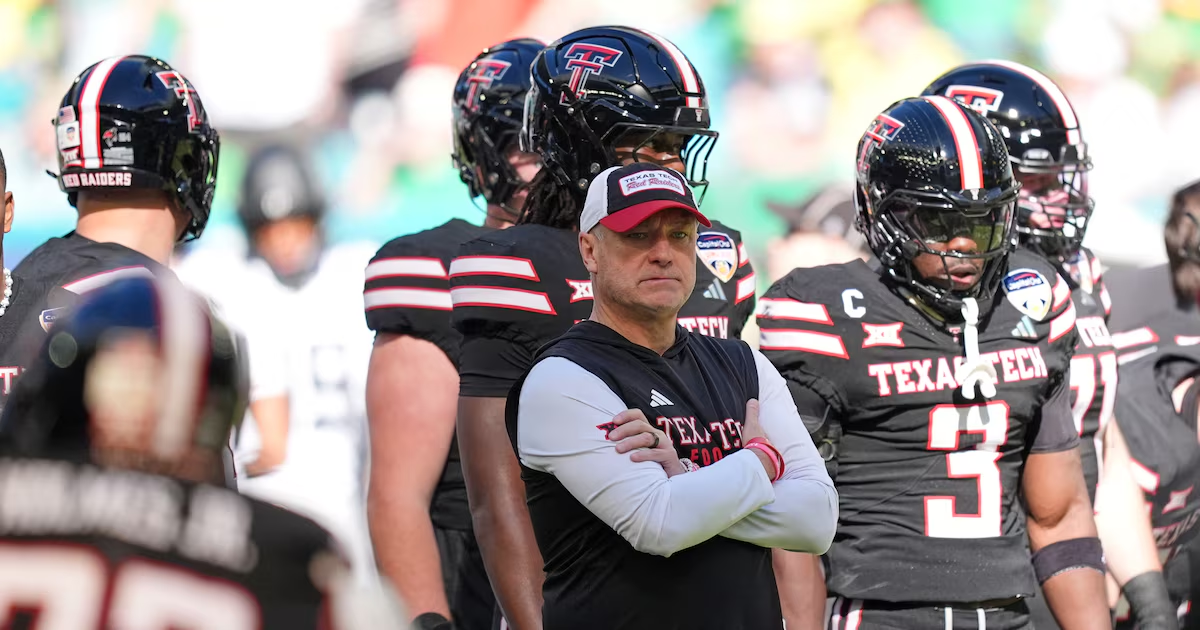
Here are five burning questions for Texas Tech football this offseason…
Texas Tech football outgrew the talent of its quarterback in one offseason. Behren Morton was a perfect fit for the Texas Tech program that existed in his four years prior, but head coach Joey McGuire’s unwavering loyalty to Morton may have cost this year’s team a shot at the national championship.
Morton will be graduating now, so the checkbooks are open for general manager James Blanchard to find a new QB1.
As of Friday, Blanchard and other Texas Tech athletes’ only public interest has been in Cincinnati quarterback Brendan Sorsby. Blanchard reposted Sorsby’s transfer portal announcement, and within an hour, 12 Texas Tech football players had commented on his post.
Sorsby is rated the No. 1 quarterback available in the portal by On3. He is regarded as a potential first-round pick if he enters the NFL draft, but the money college programs are expected to offer will surpass a rookie contract.
Other names to watch are Florida’s DJ Lagway and Arizona State’s Sam Leavitt.
Texas Tech will lose five premier starters on defense to exhausted eligibility: DT Lee Hunter, ILB Jacob Rodriguez, OLB David Bailey, OLB Romello Height and S Cole Wisniewski.
Those five made up 337 total tackles, 29 sacks and 15 forced fumbles in 2025.
Texas Tech will hit the portal to fill a handful of the upcoming defensive holes, but the Red Raiders will retain a handful of players who can step up. Rodriguez’s counterpart, linebacker Ben Roberts, is atop that list.
Between the Big 12 Championship and the Capital One Orange Bowl, Roberts had three interceptions. He also had a career-high 16 tackles in Thursday’s loss.
Roberts and budding linebacker/safety John Curry will man the interior linebacker spots in 2026 alongside at least one portal addition.
USC transfer running back Quinten Joyner tore his ACL on Aug. 18 before taking a regular season snap with Texas Tech. He had not been named the primary back, but his name was circulated in game strategy more frequently than Cameron Dickey and J’Koby Williams.
Dickey and Williams had strong freshman campaigns in their minimal snaps played, but McGuire didn’t know their full capabilities yet. So, before Joyner’s injury, he intended to run a three-headed system with no true starter.
McGuire remained content to run a 1A and 1B system with Dickey and Williams following the injury. It panned out perfectly. Dickey was a 1,000-yard rusher, and Williams thrived as a runner, receiver and kick returner.
Heading into 2025, they were all high-reward, experimental running backs, but one of the three may not be satisfied to play another season as a rotational player. None have entered the transfer portal as of Friday, but Dickey and Williams’ 2025 tape could warrant a payday and a guaranteed starter tag at multiple P4 programs.
The Micah Hudson saga has been nothing short of a rollercoaster. From becoming Texas Tech’s first five-star recruit to being used sparingly as a freshman to then transferring to Texas A&M and back to Lubbock a semester later, Hudson has yet to have his opportunity.
He reportedly struggled to grasp the playbook during his freshman season, which warranted his minimal usage. Then, when he returned to Texas Tech, the talent was too good for him to be anything more than a rotational piece.
Hudson has pledged his loyalty to McGuire and Texas Tech, so his name will be amongst the replacements for starters Caleb Douglas and Reggie Virgil. It’s reasonable to assume Texas Tech grabs one or two receivers from the portal, but Hudson is in a prime position to earn reps over the offseason.
His most recent snaps came against West Virginia in the season finale, when he had two touchdowns in the waning moments of a blowout win.
Texas Tech hung its hat on brotherhood this season. The talent was there at certain positions, but the culture McGuire built was a pillar of Texas Tech’s team-wide success.
However, Height noted in the locker room following Texas Tech’s 23-0 College Football Playoff loss that some players weren’t “locked in.”
No one was named, but there was evident frustration from defensive players with their offensive teammates. All of which is expected in the hour after a season-ending defeat, but if McGuire can’t reroute that energy into pushing for a title next season, it will hinder them.
Texas Tech is no longer the longshot team. There will be a huge shift in how team culture is established, going from the perennial middle-of-the-pack program to a place where the floor is now a playoff win.
Find more Texas Tech coverage from The Dallas Morning News here.
Jan. 2, 2026, 11:53 a.m. ET
Does anyone know where the College Football Playoff quarterfinals and semifinals are actually played and why they’re still called bowl games? Better yet, does anyone care?
The Cotton Bowl isn’t even played at the Cotton Bowl? The “bowl” era is gone, replaced by a tournament designed to maintain the names of the most well funded and connected. Indeed, four teams actually play in two bowl games every year. The other 36 exist only for traditions, pageantry, “rewarding” teams (yes, even 5-7 teams) with a 13th game and, of course, money. The best players opt out for fear of injury and many more for the transfer portal which didn’t even open until Jan. 2 when almost every bowl was already played. Without television money, most bowls would cease to exist.
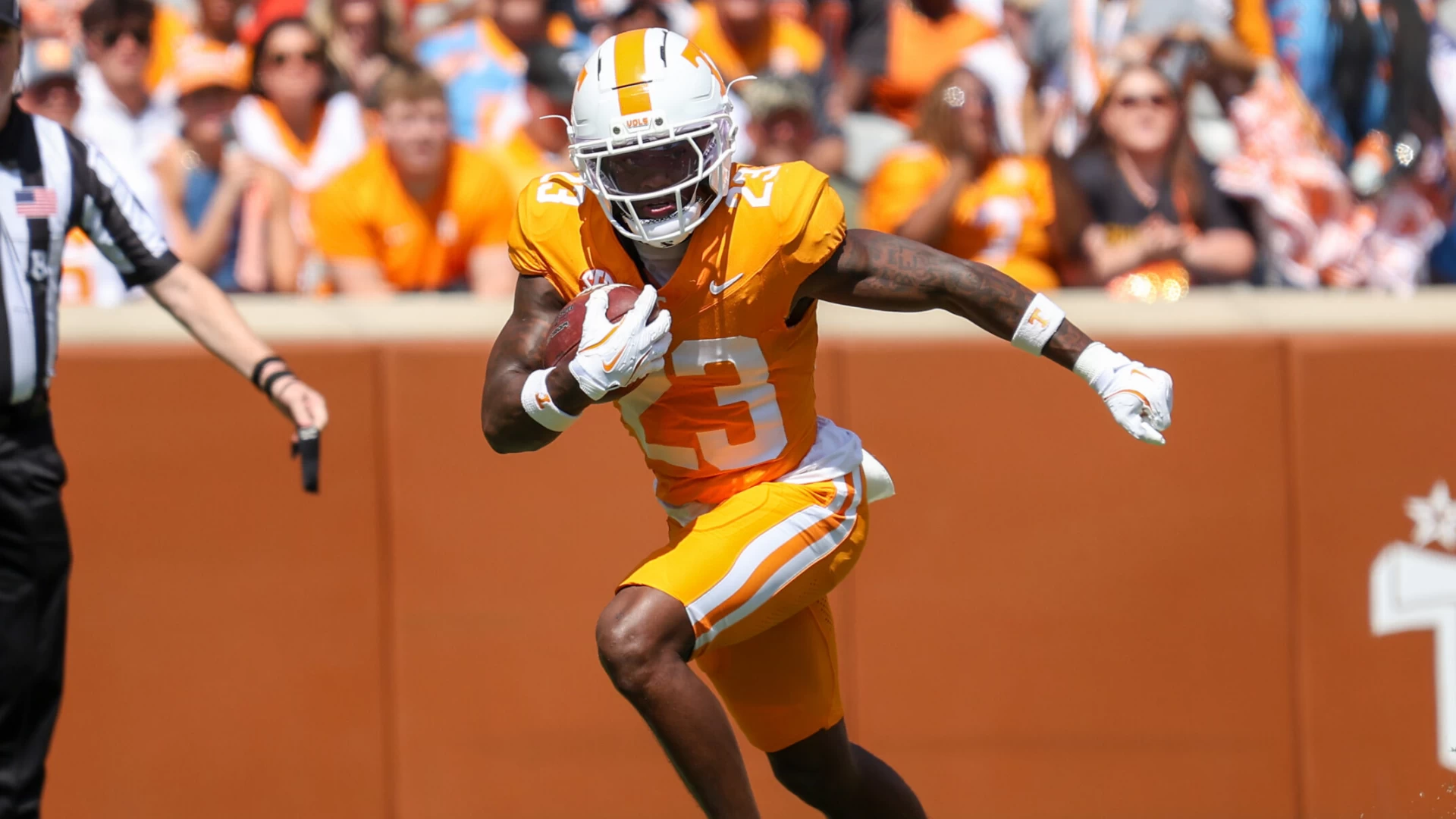
Forecasting landing spots for the top 50 transfer-portal stars as teams hunt immediate impact, plug roster holes, and reshape their 2025 contenders for 2025 now.
Have all the intel you need? Free, actionable information is just one click away! Sign up for our daily newsletter, SportsGrid Daily.
Cam Coleman immediately becomes the top player in the transfer portal after making his intent to split from Auburn clear. The former five-star has totaled 1,306 receiving yards and 13 touchdowns in two seasons with the Tigers, proving to be one of the lone bright spots for the struggling SEC squad. Coleman will have several contenders interested in his services, and with a robust market to choose from, expect the talented wideout to land a top NIL deal.
Prediction: LSU
Chaz Coleman adds his name to the transfer portal after spending this past year as a true freshman at Penn State. The six-foot-four pass rusher racked up eight total tackles, one sack, a pass defense, and a forced fumble in a limited role with the Nittany Lions. Coleman will have an abundance of suitors on the market, with several contenders willing to make a big push for his services.
Prediction: South Carolina
Sam Leavitt becomes arguably the top prospect in the transfer portal after announcing his decision to depart from Arizona State one season after leading the Sun Devils to a Big 12 Championship. In two seasons at ASU, Leavitt has totaled 44 touchdowns and only three interceptions, proving to be one of the best quarterbacks in the nation. Expect Leavitt to have an abundance of top contenders pursuing him with the chance to land a major NIL deal in the portal.
Caleb Hawkins took the nation by storm as a freshman this past season at North Texas, rushing for 1,434 yards and 25 touchdowns in the Mean Green’s offense. The six-foot-two running back not only proved to be a highlight waiting to happen, but he made it clear that he can be the bell cow in an explosive offense. With his intent to enter the transfer portal announced, Hawkins will immediately become a top target for several contending teams.
Prediction: Texas Tech
Dylan Raiola’s decision to enter the transfer portal comes just weeks after Nebraska fired offensive line coach Donovan Raiola, who is also the star quarterback’s uncle. The writing was on the wall for the former five-star to depart from the program following the move, especially when factoring in the back-to-back lackluster seasons for the Cornhuskers through Raiola’s first two years. The dynamic quarterback will have several suitors as he’s a marquee name on the market.
Prediction: Oregon
Brendan Sorsby began his college career at Indiana, where he spent two seasons before transferring to Cincinnati. The dual-threat quarterback put his name on the map this past year, leading the Bearcats to the best season in recent years, while combining for 36 total touchdowns (27 passing and nine rushing). Sorsby may not be a team’s top option with the names above him available, but he’ll undoubtedly be in the mix to land with a contender, especially if they miss out on the top three names.
Prediction: Texas Tech
DJ Lagway becomes a significant addition to the transfer portal after announcing his intent to seek a fresh start following yet another underwhelming season at Florida. The former five-star recruit seemed committed to the Gators, even after the departure of head coach Billy Napier, but clearly, plans have changed following the team’s season. Now, the Texas native is among the top players available and will be a considerable priority target for several contending programs.
Prediction: LSU
Nick Marsh immediately becomes the top wide receiver available on the open market after announcing his intention to enter the transfer portal when the window officially opens. The six-foot-three wideout has played the last two seasons at Michigan State, where lackluster quarterback play has restricted him from showcasing his potential. Now, after a head coaching change, Marsh tries his hand at a fresh start, where he’s likely to be pursued by multiple top teams.
Prediction: Miami
Boo Carter committed to Tennessee as a top prospect out of high school, and now, after two seasons with the Volunteers, the former top recruit has announced his plan to enter the transfer portal when the cycle officially opens. With 25 total tackles, three pass defenses, three forced fumbles, and a sack on the season, the defensive gem is set to become the most coveted player in the portal.
Prediction: Georgia
Drew Mestemaker adds his name to the list of talented quarterbacks available in the transfer portal after a breakout season at North Texas. The Texas native finished his first season as a starter, tossing for 4,129 passing yards, 31 touchdowns, and seven interceptions. Now, he finds himself in the portal, where he’ll immediately become a top target for QB-needy teams.
Prediction: Indiana
Byrum Brown finds himself in the transfer portal after a breakout season at USF. The dual-threat quarterback finished the season with 42 touchdowns (28 passing, 14 rushing) and only seven interceptions, leading the way for the Bulls. Following the head coaching change at South Florida, Brown has opted to hit the portal and test his value on the open market.
Prediction: Auburn
Mateen Ibirogba enters the transfer portal after a breakout season at Wake Forest. The defensive lineman totaled 21 tackles, two sacks, and a forced fumble, proving to be a disruptor in the Demon Deacons’ defensive line in limited opportunities. Expect Ibirogba to be a considerable addition wherever he lands.
Prediction: Alabama
Carius Curne becomes not only one of the top available offensive linemen in the transfer portal, but one of the top players on the market after announcing his decision to depart from LSU. The former five-star’s decision comes as a result of the coaching change in Baton Rouge and will now add to the holes head coach Lane Kiffin will be looking to fill. Expect Curne to find a new home quickly.
Prediction: Georgia
Jayce Brown announced his decision to enter the transfer portal after spending the last three seasons at Kansas State. The six-foot wideout put together a solid season for the Wildcats this past year, reeling in 41 receptions for 712 yards and five touchdowns. Looking to prove how impactful he can be in an elite offense, Brown hits the portal and will have several suitors to choose from.
Prediction: Florida
Hollywood Smothers becomes one of the most explosive offensive weapons to enter the transfer portal after announcing his intention to depart from NC State. The running back posted a career year as a starter for the Wolfpack this season, rushing for 939 yards and six touchdowns. Expect Smothers to have a robust market for his services.
Prediction: South Carolina
Jayden Woods committed to Florida as a top recruit out of high school. The edge rusher took no time to make an impact on the field, racking up 27 total tackles, 3.5 sacks, one interception, a pass defense, and a forced fumble during his freshman season with the Gators. Now, with the head coaching change in Gainesville, the defender hits the portal, where he’ll become a top target for several teams.
Prediction: Missouri
Entering the 2025 season, Rocco Becht was viewed as a potential candidate to watch, aiming to put himself among the nation’s top-tier quarterbacks after finishing his 2024 campaign with 25 touchdowns and only nine interceptions, while also proving to be a dangerous dual-threat, rushing for eight touchdowns. Instead, the Florida native put together his worst season with the Cyclones since taking the starting job three years ago, finishing with 24 total touchdowns (16 passing, 8 rushing) and nine interceptions. Nonetheless, following head coach Matt Campbell’s departure from the Cyclones, Becht enters the portal, where he becomes a top available QB in the portal with the chance for a bounce-back season in 2026.
Prediction: Penn State
Wendell Gregory enters the portal after impressing during his time with the Oklahoma State Cowboys this past season. The versatile linebacker showcased his pass-rushing ability, totaling 12 tackles for loss and four sacks throughout his 2025 campaign. Now, he heads to the portal.
Prediction: Georgia Tech
Omarion Miller becomes another versatile pass catcher to enter the transfer portal. The wideout proved to be a reliable offensive weapon as a starter in Colorado’s offense this season, which should bode well for him to have a robust market when the portal window officially opens.
Prediction: LSU
Devan Thompkins flashed plenty of upside this past season as a rotational piece of the defensive line at USC. The defender put together a career year, totaling 31 tackles, three sacks, two pass defenses, and one forced fumble. Hoping to prove how impactful he can be with a larger role, Thompkins hits the portal.
Prediction: Oregon
Terrell Anderson enters the portal after spending the last two seasons at NC State. Coming off a breakout year, where the six-foot-two pass catcher reeled in 39 receptions for 629 yards and five touchdowns, the wideout put plenty of film together that will entice programs seeking a high-upside offensive weapon that could be a cheaper option in the portal. That said, keep an eye on Anderson’s market as it develops quickly.
Prediction: South Carolina
Jontez Williams joins the wave of outgoing Iowa State players to hit the portal following the departure of former head coach Matt Campbell. The corner has the upside to be an immediate impact player in the right defensive system, and based on the flashes he’s shown on film, he should have no trouble finding an opportunity to prove that.
Prediction: Florida State
Wyatt Young emerged as not only one of the most reliable big-play weapons for North Texas this past season, but in the nation as a whole. The six-foot wideout finished the year with 70 receptions for 1,264 yards and 10 touchdowns, proving to be a go-to target for the Mean Green’s explosive offense. Adding his name to the transfer portal, Young will have a robust market with several contending teams interested in adding him to their wide receiving room.
Prediction: Texas Tech
Peyton Lewis committed initially to Tennessee as a top-five running back recruit out of high school. In two seasons with the Volunteers, the six-foot-one playmaker has shown flashes of his high upside and has proven to be a red-zone weapon, rushing for seven touchdowns in his limited carries. Still, with only 629 rushing yards through two years in Knoxville, Lewis has announced his decision to enter the portal, where he’ll immediately become one of the top running backs on the market.
Prediction: Virginia Tech
Kenny Minchey announced his decision to enter the transfer portal, and he immediately became one of the most interesting names in it. After losing the starting job to CJ Carr at Notre Dame, the former top recruit will look for a fresh start, and considering the quarterback-needy teams across the nation, he’ll likely have an abundance of options to choose from.
Prediction: Arizona State
Adam Trick emerged as a premier pass rusher this past season at Miami (OH), where he totaled 59 tackles, 8.5 sacks, four pass defenses, three forced fumbles, and an interception. The Ohio native enters the portal and will have the opportunity to prove how impactful he can be on a top team.
Prediction: Nebraska
Marquise Davis committed to Missouri as a top recruit out of high school, but after finding a limited role in the Tigers’ offense as a freshman, the running back opted to try his hand at a change of scenery. Searching for a sizable role elsewhere, expect the dynamic offensive weapon to have several suitors to choose from.
Prediction: Florida State
Steven Soles committed to Kentucky as a highly touted recruit out of high school, but in two seasons with the Wildcats, the versatile edge rusher has yet to carve out a sizable role in the team’s defense. Still, racking up 3.5 sacks and two forced fumbles in a limited role is exactly why teams will jump at the opportunity to add the versatile defensive lineman in the transfer portal. That said, keep an eye on Soles moving forward.
Prediction: Vanderbilt
Brody Foley becomes a top tight end target on the transfer portal after a breakout season at Tulsa this past year. The six-foot-six tight end hauled in 37 receptions for 528 yards and seven touchdowns with the Golden Hurricanes, proving to be a legit redzone threat in the team’s offense. Expect Foley to have a robust market to choose from when the portal officially opens.
Prediction: Oklahoma
Jay Crawford committed initially to Auburn as a top recruit out of high school. In two seasons with the Tigers, the Georgia native has shown flashes of how impactful he can be, but in a minimal role in the team’s defense. Hoping to find an expanded role in a defensive secondary, Crawford becomes a top defensive playmaker available in the portal.
Prediction: Georgia Tech
Javion Hilson committed to Missouri as a highly touted recruit with high expectations. Following a lackluster freshman season with the Tigers, the six-foot-four edge rusher has announced his decision to enter the transfer portal, where he’ll immediately be a coveted player for several teams looking to improve their pass rush. Keep an eye on Hilson to find a home quickly when the portal window officially opens.
Prediction: Florida State
Cam Edwards immediately becomes a top running back option in the transfer portal after a monster season at UCon,n rushing for 1,132 yards and 14 touchdowns. The Connecticut native looks to use his breakout campaign to boost his chances of joining a contender in the transfer portal, and based on his ability to be a dynamic offensive weapon, several teams will be more than willing to add him to their offense ahead of the 2026 season.
Nick Del Grande will generate significant interest in the transfer portal when he officially enters the portal. The Coastal Carolina lineman has proven to be a versatile asset in the Chanticleers’ offense, and with the ability to step in and make a significant impact right away, keep an eye on Grande to be a top target for several programs.
Prediction: South Carolina
Evan Dickens transferred to Liberty ahead of this past season following a lackluster freshman year at Georgia Tech. The running back put together a breakout season for the Flames, rushing for 1,339 yards and 16 touchdowns. Expect Dickens to prioritize fit for his next stop.
Prediction: Ole Miss
Khmori House transferred to North Carolina after his freshman season at Washington. Using a change of scenery to his advantage, the linebacker put together a career year, totaling 79 tackles, one sack, one forced fumble, an interception, and one pass defense. Hoping to use his breakout season to his advantage, House enters the portal looking to join a contending program.
Prediction: Texas
Dylan Edwards began his career at Colorado before transferring to Kansas State after his freshman season. In two seasons with the Wildcats, the running back has rushed for 749 yards and seven touchdowns. Now, he’ll become a coveted backfield option in the portal.
Prediction: Notre Dame
Makhi Frazier adds his name to the list of outgoing players set to depart from Michigan State this coming offseason. The dynamic running back rushed for 116 carries and 520 yards this past season, while averaging 4.5 yards per carry. Expect Frazier to be a top target for several contenders.
Prediction: Texas A&M
Colton Joseph immediately becomes one of the top quarterbacks available in the portal after a career year at Old Dominion. Totaling 21 touchdowns and only 10 interceptions, while leading one of the most explosive offenses in the Group of Five, Joseph looks to prove his worth on a new squad.
Malcolm Simmons initially committed to Auburn out of high school as a top recruit. In two seasons with the Tigers, the Alabama native has racked up 908 receiving yards and five touchdowns, showing flashes of his ability to be a dynamic offensive weapon. Looking for a fresh start that allows him to find a sizable role in a new system, Simmons heads to the portal.
Prediction: Alabama
Perry Thompson committed to Auburn as a top recruit out of high school, but after two lackluster seasons to start his tenure with the Tigers, the wideout has announced his intent to enter the transfer portal. Looking to prove how impactful he can be in the right offensive system, Thompson will be another SEC product prioritizing fit and opportunity over money.
Prediction: Missouri
Edwin Joseph has spent the last three seasons at Florida State, where he’s quietly developed into a reliable impact player for the Seminoles. The Florida native has his sights on competing for a championship, and following yet another lackluster year for FSU, Joseph will attempt to do that elsewhere.
Prediction: Miami
Aidan Chiles is a former top recruit who initially committed to Oregon State out of high school. The quarterback transferred to Michigan State, hoping to prove why he was a highly touted recruit. In two seasons with the Spartans, Chiles totaled 23 passing touchdowns and 14 interceptions. Now, he hits the portal looking to hit the restart button once again, looking to land in an offensive system that better suits his skillset.
Prediction: Oklahoma State
Ashton Stamps spent the last three seasons at LSU, where he’s shown flashes of the potential he entered college with. The six-foot corner has the size, instincts, and versatility to be a lockdown defender, but he’ll look to prove that elsewhere following his departure from the Tigers.
Prediction: Ole Miss
Mister Clark proved to be a reliable secondary defender this past year at FIU, where he racked up 59 total tackles, 13 pass defenses, three interceptions, and a forced fumble. The corner is expected to enter the transfer portal and will likely have several contending programs aggressively pursuing him.
Prediction: Miami
CJ Baxter’s decision to enter the transfer portal puts him among the top offensive weapons available in the portal. The Florida native put together a strong freshman season at Texas, but after an underwhelming sophomore campaign with the Longhorns, Baxter is set to seek an opportunity elsewhere.
Prediction: Georgia
Michael Smith committed to South Carolina as a coveted prospect out of high school. Still, after struggling to carve out a consistent role on the offense, the versatile pass catcher has decided to pursue a change of scenery. Smith will likely be a top target for several contenders this offseason.
Prediction: Florida
Noah King initially committed to Kansas State out of high school before transferring to Colorado before ever playing a snap for the Wildcats. Hoping he could land an immediate role in the Buffaloes’ secondary. The corner quickly found out that the grass isn’t always greener. Now, he finds himself back in the transfer portal looking for the chance to prove why he was recruited as a top prospect.
Prediction: Kansas State
Grant Seagren joins the list of talented players expected to enter the transfer portal. The Oklahoma State product has the size to be an anchor on the offensive line in the proper role, and as he looks to find the best fit for him outside of Oklahoma State, he’ll likely have a handful of options to choose from.
Prediction: Oklahoma
Antonio Coleman committed to Auburn as a highly recruited prospect out of high school. After struggling to find the field throughout his freshman season with the Tigers, the defensive lineman has decided to use the coaching change as an excuse to hit the portal and seek a sizable role elsewhere.
Prediction: Missouri
Brendon Haygood committed initially to Missouri as a top recruit out of high school. Still, after struggling to find a sizable role as a freshman, the shifty running back has opted to enter the transfer portal. With several years of eligibility remaining and the talent to be a premier backfield option, Haygood will have several suitors to choose from.
Prediction: Kansas State
Stay ahead of the game and elevate your sports betting experience with SportsGrid.
Updated Jan. 2, 2026, 9:00 a.m. ET
MIAMI GARDENS — At long last, perhaps all sides of Miami’s messy 2021 coaching divorce have finally found validation for their new beginnings.
As Oregon football head coach Dan Lanning stood astride the champions’ stage at Hard Rock Stadium on New Year’s Day to bask in a historic Orange Bowl shutout of Texas Tech, he did so a redemptive standard-bearer of college football’s millennial generation of head coaches.

The University of Georgia Athletic Association (“UGAA”) is drawing a line in the sand: contracts between athletic departments and student-athletes are binding and enforceable, even when players exercise their right to transfer. This move could set a powerful precedent for how NIL agreements are enforced across college sports.
UGAA recently filed an Application to Compel Arbitration against former linebacker Damon Wilson II in the Superior Court of Athens-Clarke County. In its Application, UGAA alleges that Wilson breached an agreement between UGAA’s predecessor-in-interest, Classic City Collective, Inc., and Wilson (the “Agreement”) for a license to use Wilson’s name, image, and likeness (“NIL”) in exchange for the payment of fees to Wilson.
Wilson played for UGA during the 2023 and 2024 football seasons. Wilson and Classic City Collective executed the Agreement on December 21, 2024, a few weeks before UGA appeared in the 2024 College Football Playoff. On December 25, 2024, Classic City Collective paid Wilson $30,000 as the first installment under the Agreement. Subsequently, on January 6, 2025, Wilson notified UGA of his intention to enter the NCAA Transfer Portal, and later that month, withdrew from the football team and from the University. Classic City Collective assigned its rights under the Agreement to UGAA.
UGAA alleges that Wilson breached the Agreement when he notified UGAA of his intention to transfer, withdrew from the football team, and withdrew his enrollment at UGA. Under the terms of the Agreement, any one of these actions entitled UGAA to terminate the Agreement and seek liquidated damages equal to all remaining licensing fees. That adds up to $390,000, the remaining fees under the Agreement after the initial payment of $30,000 to Wilson.
On its face, this case is a straightforward breach‑of‑contract dispute. But beneath the surface, this case could impact NIL deals across collegiate sports — players can move freely, but deals may carry real financial consequences when they do.
Student-athletes at power-conference schools now benefit from three money streams, including school revenue sharing, NIL deals, and scholarships. Although these revenue streams expand student-athletes’ opportunities to monetize their NIL, they concurrently increase exposure to legal liability for breaches of NIL agreements.
Now that UGAA has set this precedent, more cases of this nature will surface. With that forecast in mind, student-athletes and their advisors should weigh the student-athlete’s exposure before entering the transfer portal, factoring in potential exit costs, timing, and dispute-resolution terms embedded in their contracts. Even more, advisors should counsel student-athletes in the negotiations of their NIL agreements to ensure the student-athlete’s interests in freely transferring are protected.



Ross Brawn to receive Autosport Gold Medal Award at 2026 Autosport Awards, Honouring a Lifetime Shaping Modern F1


Nike Signs 10 LSU Athletes to NIL deals


Stempien to seek opening for Branch County Circuit Court Judge | WTVB | 1590 AM · 95.5 FM


Princeton Area Community Foundation awards more than $1.3 million to 40 local nonprofits ⋆ Princeton, NJ local news %


Kentucky AD explains NIL, JMI partnership and cap rules

Downtown Athletic Club of Hawaiʻi gives $300K to Boost the ’Bows NIL fund


PRI Show revs through Indy, sets tone for 2026 racing season


Young People Are Driving a Surge in Triathlon Sign-Ups


Teesside youth discovers more than a sport

Three Clarkson Volleyball Players Named to CSC Academic All-District List