

Michigan will play in one final football game in 2025, as the Wolverines will take on the Texas Longhorns in the Citrus Bowl on New Year’s Eve (3 p.m., ABC).
NIL
Has private equity broken into college athletics? – Deseret News

The specter of private equity money has loomed as a possibility for funding college athletics programs for a while now.
Big 12 commissioner Brett Yormark floated the possibility of private equity entering the college sports world last summer and he was only one of multiple conference commissioners to do.
Earlier this year, the Big Ten was reported by Sportico to have taken “preliminary bids from private equity firms.”

Special Collector’s Issue: “1984: The Year BYU was Second to None”
Get an inclusive look inside BYU Football’s 1984 National Championship season.
The concept of hedge funds getting involved in college athletics has seemed to be an eventuality, the only question being when it would happen.
Wrote Forbes contributor Joe Moglia in April, “The latest shockwave to hit college football may come from private equity. As billions of dollars in TV revenue have flooded into Power Four football and top players are able to bring in six- and seven-figure name, image, likeness (NIL) deals, it’s impossible to ignore the fact that college football is a business. Big business.
“These are professional student-athletes, and the teams are major sports franchises,” he continued. “But, at the same time, it’s an industry that is being heavily disrupted. In other words, college football is a ripe hunting ground for hedge funds and private equity.”
With the approval of the House settlement, part of which allows schools to pay upward of $20.5 million to student-athletes directly, athletic departments are in need of an influx of funds, and private equity has plenty of them. So it should be of little surprise that private equity has indeed found its way into college athletics.
Sports Business Journal reported early Monday morning that Elevate, a “global agency network” that supports “over 1,000 ambitious brands across sports, entertainment, consumer products, and retail,” has created a $500 million initiative to invest in college sports, backed by private equity firm Velocity Capital Management and the Texas Permanent School Fund.
The purpose of the initiative? To “provide a new funding source for collegiate athletics programs pursuing capital-intensive projects like facility upgrades and renovations,” write Ben Portnoy and Chris Smith.
Per SBJ, Elevate has already come to terms to fund two unnamed Power Four conference programs, with the expectation to come to terms with three to six additional programs before the 2025 season begins in late August.
What’s more, the plan is for Elevate to become a “multi-billion-dollar platform” that invests across college sports in the long term.
Why is private equity interested in college athletics?
The simple answer to this question is the potential for profit.
College athletics is a multibillion-dollar industry that is ever growing.
Per ESPN, the NCAA generated nearly $1.3 billion in revenue in 2022-23, which was up from $1.14 billion the previous year. Most of that revenue (close to 70%) comes from the men’s NCAA Tournament.
College football, meanwhile, brings in an inordinate amount of money to programs.
At the top, as of last year, according to USA Today, programs like Ohio State, Texas, Alabama, Michigan and Georgia all had revenues exceeding $200 million. Of course, expenses were nearly as high, which is where private equity comes in.
The idea is that private equity firms can make athletic departments even more profitable. One way would be by eliminating waste. Multimillion-dollar coaches’ salaries and buyouts have been mentioned as an area rife for change.
“No one with any business sense would allow a major executive to lose repeatedly and then walk away with a multi-million dollar bonus buyout, but this is something that happens regularly in Power Four football. Agents run circles around most athletic directors when it comes to things as basic as employment contracts,” Moglia writes.
Private equity could also get involved “by directly investing in athletic departments, investing in the fan experience, both in and outside of the stadium, or through adding revenue streams outside of the existing network,” Alfie Crooks wrote for Buyout Insider, the idea being that college athletics haven’t been marketed as well as they could be by conferences and the NCAA.
“College athletics remains a relatively untapped market. Its combination of passionate fan bases, strong brand loyalty and long-term income potential makes it an appealing target for investment,” Brian Anderson writes for Sports Business Journal.
There is not an expectation — yet, anyway — that private equity could purchase ownership stakes in college athletic departments/programs, but the potential for that exists in the long run.
Right now, private equity would likely “favor the private credit model because they can better control the exact monetary amount paid out each year,” Bryan Shapiro writes for Duane Morris Sports Law.
Schools, on the other hand, would likely prefer a “traditional private equity model because it allocates risk between the athletic department and investors equally — i.e., if the program increases in value, both entities are rewarded, and on the flip side, if the program decreases in value, the school is not required to pay a specific monetary amount to the investors, which would greatly injure the program and school overall,” Shapiro writes.
What could be the impact of private equity in college sports?
This question has been posed many times over the last few years and various attempts have been made to answer it.
The simplest answer is that an immediate influx of money to departments and programs that otherwise wouldn’t have access to those funds could bring rapid parity to college sports, football especially.
Think lower-tier Power conference schools that rarely, if ever, have been in contention at the top of their leagues legitimately competing alongside the likes of Alabama, Georgia, Ohio State, Michigan and Oregon.
It has already started to happen a bit with the rise of NIL — who can forget Vanderbilt’s 2024 season, during which the Commodores upset the Crimson Tide? — but private equity investment could lead to even more parity.
There is a potential downside, though, and that is the further movement of college athletics away from what it has been for 100-plus years.
Private equity will likely prioritize profits first and foremost and that could lead to some serious changes.
“In all likelihood, the first university to sign a major deal will likely be a smaller Power Four football program,” Moglia writes. “While the biggest programs will have no problem paying players and putting together big NIL packages, smaller schools will likely struggle to be competitive. This is the opening that a firm needs. They’ll approach one of these smaller programs with an offer of $150 million (or more) for 51% of the say in how they run their football program.
“For an AD with little business experience trying to put together a winning program, this will look like a good deal,” he continued. “Cash up front to build a team and a promise from the guys in suits to juice revenue in the future. The problem, of course, is that as soon as this deal is done, revenue growth will become the only priority. The investors won’t balk at putting in their own athletics director and putting profits ahead of players, education, fans and the institution. That’s a horrible, horrible long-term decision for the university, but it’s entirely plausible.”
In a lot of ways, what private equity and college athletics will look like together is as uncertain as the future of college sports in general. And it could be years before any real repercussions are felt from an influx of private equity money into college athletics.
After a few years of speculation that private equity would get involved in college sports, it appears it is now a reality.
Continue Reading
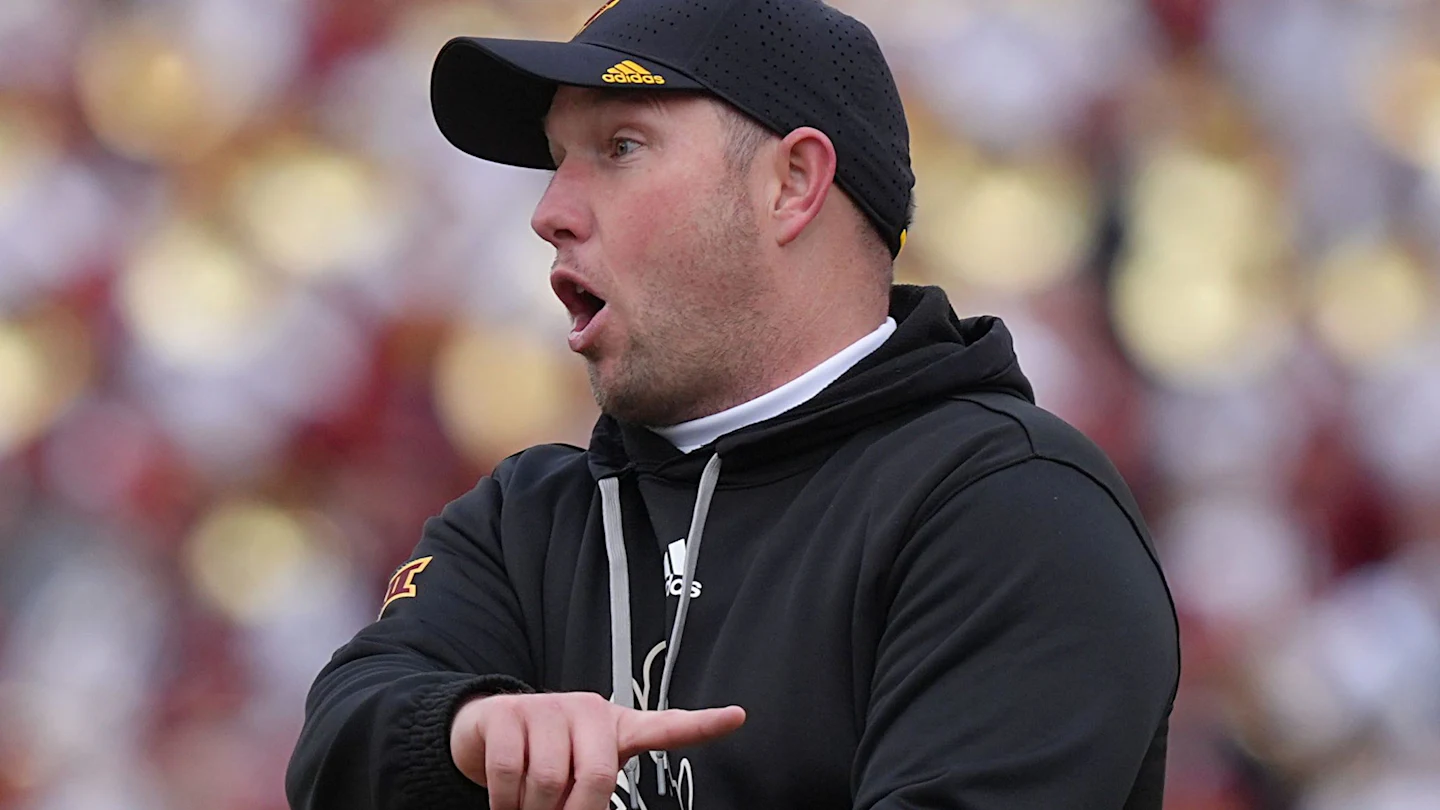
TEMPE — Fan support. Improving facilities. Competent head coaches. Nearly all of the factors that the Arizona State Sun Devils need to maintain quality athletic programs are in place.
Kenny Dillingham, Bobby Hurley, Molly Miller, volleyball coach JJ Van Niel, and many others have displayed marked moments of success during their respective tenures. Baseball, swim and dive, and volleyball have broken attendance records in the last year. The indoor practice facility for the football program appears to be well on the way to being constructed.
One thing that is missing is consistent support from within the sphere of NIL.
Arizona State was late in entering the “arms race” that name image and likeness has created – it has shown in recent years as well.
While the Sun Devils were able to accomplish things such as winning Big 12 titles in football (2024) and volleyball (2025), there are still limitations at the moment – this season of giving opens the door for individuals to make a difference that can shape the future of Arizona State athletics.
Dillingham Gets Honest About NIL Efforts
Dillingham was candid when speaking about the program’s NIL efforts last Saturday when interacting with media following reports that he had agreed to an amended contract with the university.
“Can we get people who aren’t involved, who maybe didn’t go to Arizona State who did go to Arizona State and are far away? Can we get the Phil (Mickelson) involved, like, get these guys involved in our program, the Jon (Rahm), can we get people back involved in this program, that and get them involved in a level that everybody knows, man, these guys love Arizona state.”
While the efforts the program has made since Graham Rossini took over as AD in May of 2024, they are still behind in many ways and surely could use a donor in a similar vein of Mickelson or Rahm.
This is a plan of attack that has proved to work in the past – as a high six-figure donation by program alum James Harden in 2024 likely funded the basketball program handsomely and was a big part in being able to keep stars such as Jayden Quaintance happy.
The effort didn’t work out long-term, but it shows that when the infrastructure is supported by passionate and influential fans – there are avenues any given program can take to reach the state of consistent contention
Read more on why the Arizona State men’s basketball team will exceed expectations in the 2025-26 season here, and on why the bright future of the football program isn’t dimmed by the loss to Arizona here.
Please let us know your thoughts when you like our Facebook page when you click right here.
Please follow us on X when you click right here, as well as @khicks_21 for nonstop Arizona State coverage!
Throughout the month of December, college football players everywhere are making life-altering decisions about their future. Many are even releasing well-crafted announcements over social media regarding whether they intend to remain with their current program to seek greener pastures elsewhere.
Some upper classmen are even declaring their intention to enter next April’s NFL Draft or announcing postseason all-star game invites. And let’s not forget about National Signing Day on the first Wednesday of the month.
SUBSCRIBE to the On3 NIL and Sports Business Newsletter
At the same time, college football coaches are having often difficult and frank conversations with their current roster, while at the same time formulating a plan of attack ahead of Jan. 2nd, when the NCAA Transfer Portal opens for two full weeks.
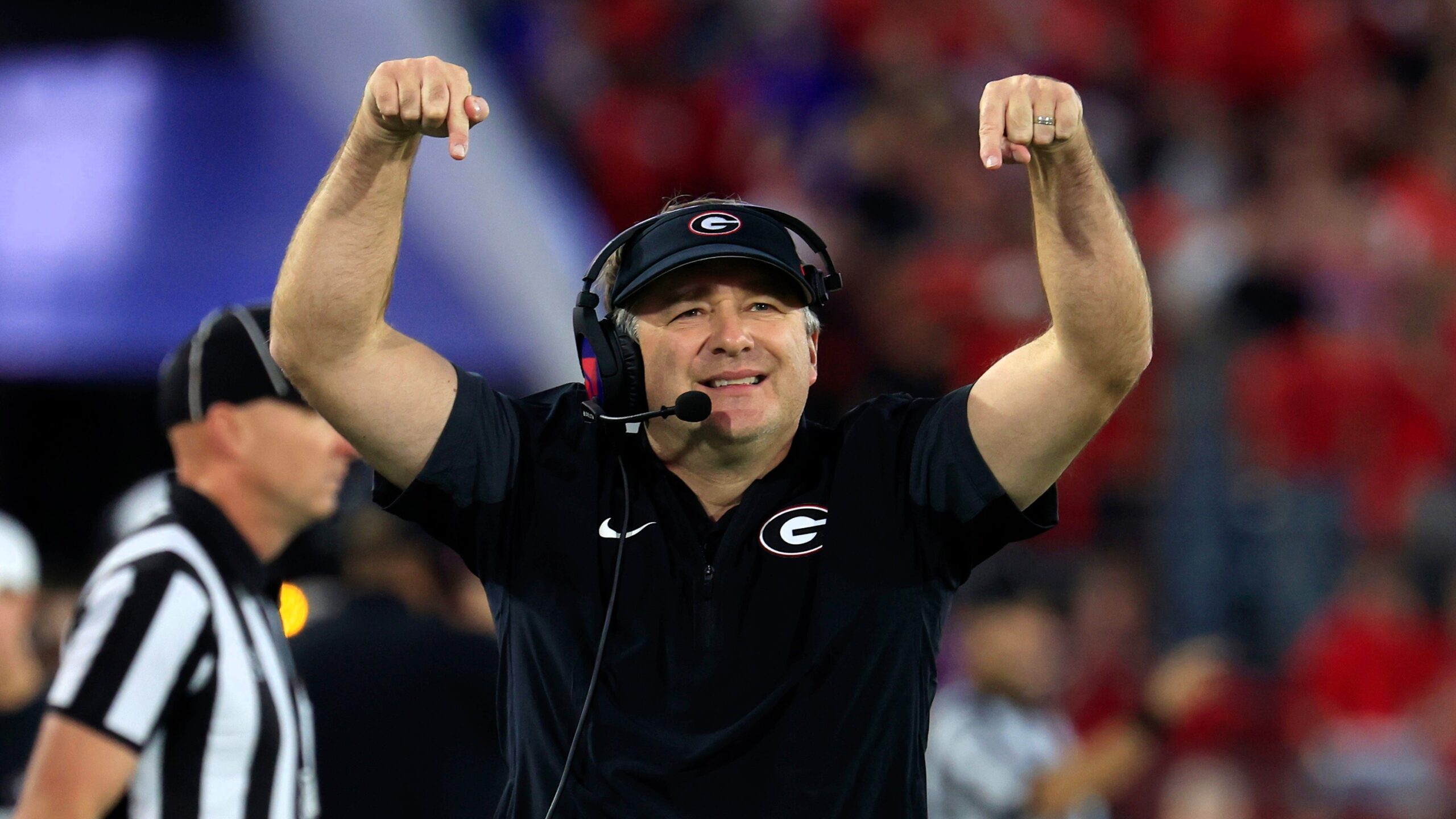
It’s happening all over, … well, except in Athens apparently, where No. 3 Georgia (12-1) is busy preparing for a return to New Orleans for the College Football Playoff‘s Sugar Bowl national quarterfinal against No. 6 Ole Miss (12-1). Kickoff is set for 8 pm ET, New Year’s Day inside the Caesars Superdome. When asked about how he’s splitting his time between bowl prep and roster management at a recent press conference, UGA head coach Kirby Smart flipped the script regarding what he’s telling Bulldogs players that might approach him with concerns about their future.
“We’re focused on this team. I think it’d be remiss to say we’re focused on roster management. We’re not focused on it. We’re focused on prep and getting better,” Smart said Monday. “And for a while it’s been intrinsically looking at ourselves and asking each player: ‘Did you come here to develop? Did you truly come here to develop?’ Because if you did, all your buddies are out there right now, everybody’s announcing what they’re doing, announcing that I’m going into the portal, announcing that I’m re-signing. How about you announce that you’re getting better and you’re going to practice and actually do what (for the prior) 20 and 30 years college football players did before you, which was practice in December – when they’re on good teams – and get better.
“Because if you’re going to play somewhere else, you know what you need to do? You need to get better. If you’re going to play here, you know what you need to do? You need to get better,” Smart continued. “If you want to go to the National Football League and play, this is your last chance to get better. Because they’re not going to give you much opportunity, they’re going to cut you or keep you based on how you do, and they don’t get to practice in pads so many days. So development occurs in December for us, and that’s what we’ve been focused on.”

South Carolina fans received an early Christmas present this week when superstar quarterback LaNorris Sellers and star pass rusher Dylan Stewart both inked new rev-share/NIL deals with the Gamecocks to return for the 2026 season. Sellers announced his plan to return on Monday on X/Twitter, while Stewart confirmed his return Tuesday on Instagram.
And while South Carolina’s Shane Beamer undoubtedly welcomed both back with open arms, the fifth-year Gamecocks head football coach shot down a Tuesday night report from Columbia’s SportsTalk Media Network suggesting the price tag for the two Gamecocks stars was “in the neighborhood of $5 million from the school’s rev share total.”
SUBSCRIBE to the On3 NIL and Sports Business Newsletter
“Sounds to me like you need some much better sources,” Beamer reponded on X/Twitter on Christmas Eve. “This isn’t even remotely close to being true. #AnythingForClicks #Merry Christmas”
Sellers has been one of the top dual-threat quarterbacks in college football the past two seasons, combining on 5,915 total yards and 43 touchdowns as South Carolina’s starter in 2024-25. That included more than 2,700 yards and 18 touchdowns in a difficult 2025 season that saw Beamer part ways with offensive coordinator Mike Shula in early November. Beamer has since hired former Arkansas, FSU and TCU offensive coordinator Kendal Briles as the Gamecocks’ new OC ahead of Sellers’ third season as QB1.
“He’ll be the first to tell you he needs to play better, and we’ve got to coach him better,” Beamer said earlier this month, according to On3’s Gamecock Central. “We’ve got to be better around him, and we all have to be accountable. He understands that. … (And) all indications I’ve had from LaNorris are that he wants to be here. … He knows that the job is not finished, and there’s a lot of excitement about ’26, and he and a lot of our other players that are returning feel that same way.”
Meanwhile, the 6-foot-5 and 250-pound Stewart has totaled six forced fumbles, 11 sacks, 22.5 tackles for loss and 56 total tackles in 24 career games across his first two seasons in Columbia. Stewart is a former Five-Star Plus+ signee in the 2024 recruiting class as the nation’s No. 3 EDGE rusher and No. 17 overall player, according to the Rivals Industry Ranking.
“They’re extremely excited about what this team could be in 2026, and they’re a big part of that. There’s no question,” Beamer said on National Signing Day earlier this month. “I know there’s no sense of, ‘I’m not really sure South Carolina’s where I want to be.’ It’s them making the best decisions for them and their families and their futures.”
DeBoer spent one year as Tom Allen’s offensive coordinator, helping Indiana reach its first Florida-based January bowl game (at a time when that still carried greater meaning) in 2019.
And Cignetti spent four years as part of Nick Saban’s first Alabama staff, coaching wide receivers and coordinating recruiting for the program Cignetti eventually helped win a national championship.
But they’ve both distinguished themselves in their profession through their willingness to climb the coaching pyramid: From outside Division I, through lower levels as either a head coach or coordinator, all the way up to the sport’s biggest stage.
“Knowing coach Cignetti and — you referred to it — his path, nothing but respect for how he’s done it, how he’s gotten to this spot,” DeBoer said.
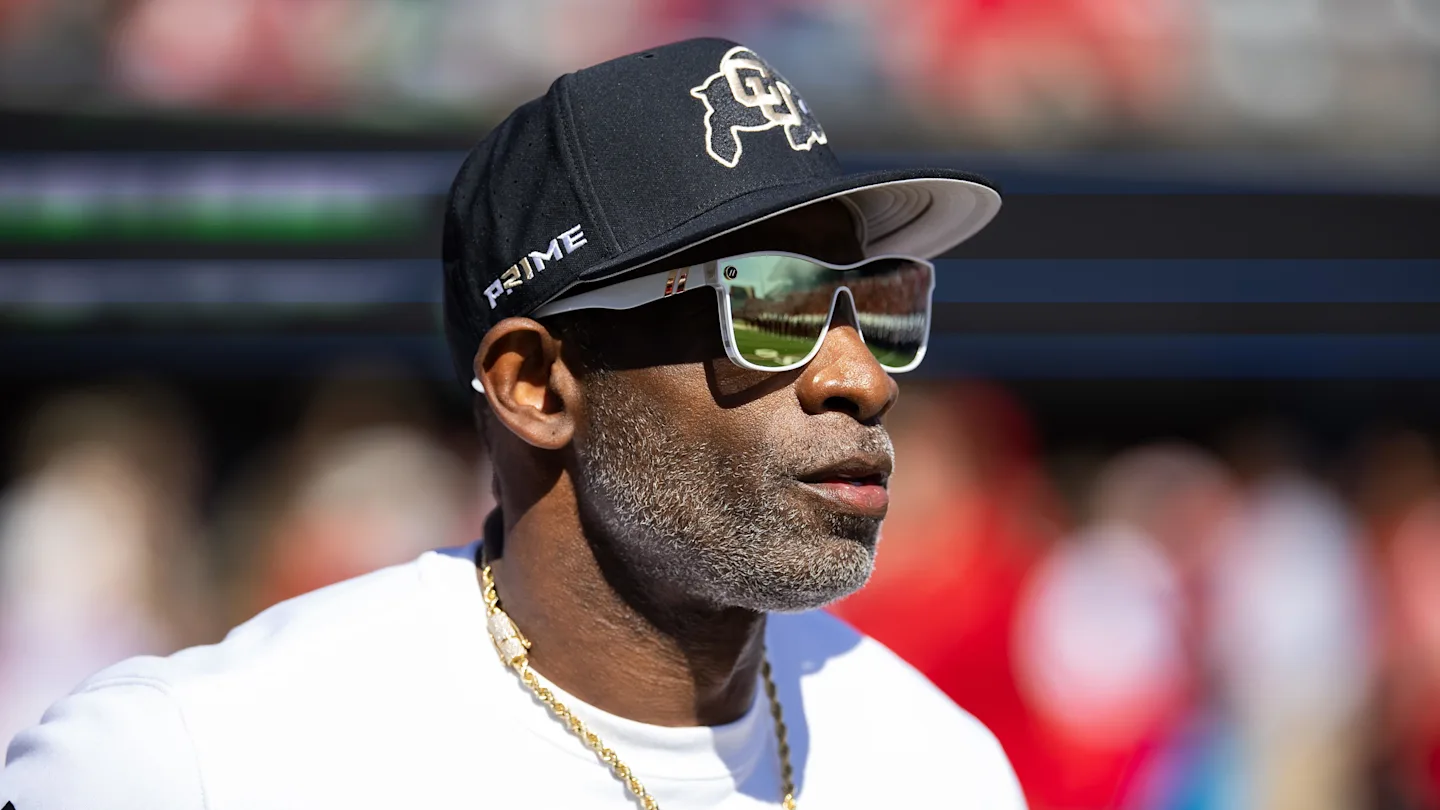
The Colorado Buffaloes are facing a mass exodus through the NCAA Transfer Portal. One reason that players enter the portal in the current college football landscape is due to Name, Image, and Likeness (NIL) deals.
The current Colorado Buffaloes players with the highest NIL Valuation according to On3 are notable when evaluating who will be on the team next season.

Colorado Players With Highest NIL Valuation
- Jordan Seaton: $1.7M
- Julian Lewis: $1.1M
- Omarion Miller: $570K
- Jehiem Oatis: $390K
- Tawfiq Byard: $358K
- Dre’lon Miller: $321K
- Noah King: $315K
- Christian Hudson: $312K
- Carde Smith: $311K
- Zarian McGill: $119K
NIL valuations are not how much players are earning, but On3’s way of measuring a player’s projected annual value. It combines roster value and NIL value.

One of the most significant aspects of the top 10 Colorado players is that only two are set to return to the team in 2026: offensive tackle Jordan Seaton and quarterback Julian Lewis. Offensive lineman Zarian McGill is also in the top 10, but is headed to the NFL in 2026.
The remainder of the top 10 in NIL valuation have announced their intention to enter the portal. With the number of players set to leave the team, the Buffaloes will lose several highly valued players.
MORE: Deion Sanders Reportedly Hires Familiar Name As Colorado Running Backs Coach
MORE: Why Shedeur Sanders Will Bounce Back From Late-Season Struggles
MORE: Insider Reveals Biggest Reason Behind Colorado’s Transfer Portal Mass Exodus
SIGN UP FOR OUR NEWSLETTER HERE
Jordan Seaton Highest NIL Valuation On Colorado
Seaton has the highest NIL valuation and is one of the most critical players on the Buffaloes. Seaton has been with the program for two years, both of which have been dominant. He missed three games due to a foot injury, but allowed just two sacks and five quarterback hurries over 328 pass protection snaps.
Seaton will be entering his third year with the program, which will likely be his last, as he could declare for the NFL draft after the 2026 season.

After a 3-9 season, it was possible Seaton would enter the portal, but he is expected to return to the Buffaloes in 2026. Seaton will play a prominent role in Colorado’s offense next season, with Lewis set to be the team’s week 1 starter. As Colorado looks to take a step forward, having an elite player on the offensive line who is also a veteran on the team will be crucial.
Julian Lewis Ready To Lead The Buffaloes
Lewis is preparing for a big year with the Buffaloes after developing throughout the 2025 season. He was a big pickup in the 2025 recruiting class, initially committed to the USC Trojans before flipping to Colorado.
Lewis started in three games this season, his first being against the West Virginia Mountaineers on Nov. 8. Colorado coach Deion Sanders decided to redshirt Lewis, which meant the quarterback did not play in the final game of the season.

“I’ve made a decision that JuJu is going to redshirt,” Sanders told the media when announcing the decision. “That’s my decision. I want what’s best for the kid, what’s best for his family, what’s best for this wonderful university that has given me the tremendous opportunity and given him the opportunity. I think for the program, it’s best for everyone, but mainly it’s great for him.”
Lewis passed for 589 yards, four touchdowns, and no interceptions. The Buffaloes hired offensive coordinator Brennan Marion, who helped turn programs around by fixing the offense. With Marion and Seaton’s return, Lewis is set up for success in 2026 and beyond.
Though four games are a small sample size, the young quarterback has a high ceiling. He made some big throws, and with Marion, Lewis has the chance to take off in 2026.
RECOMMENDED ARTICLES
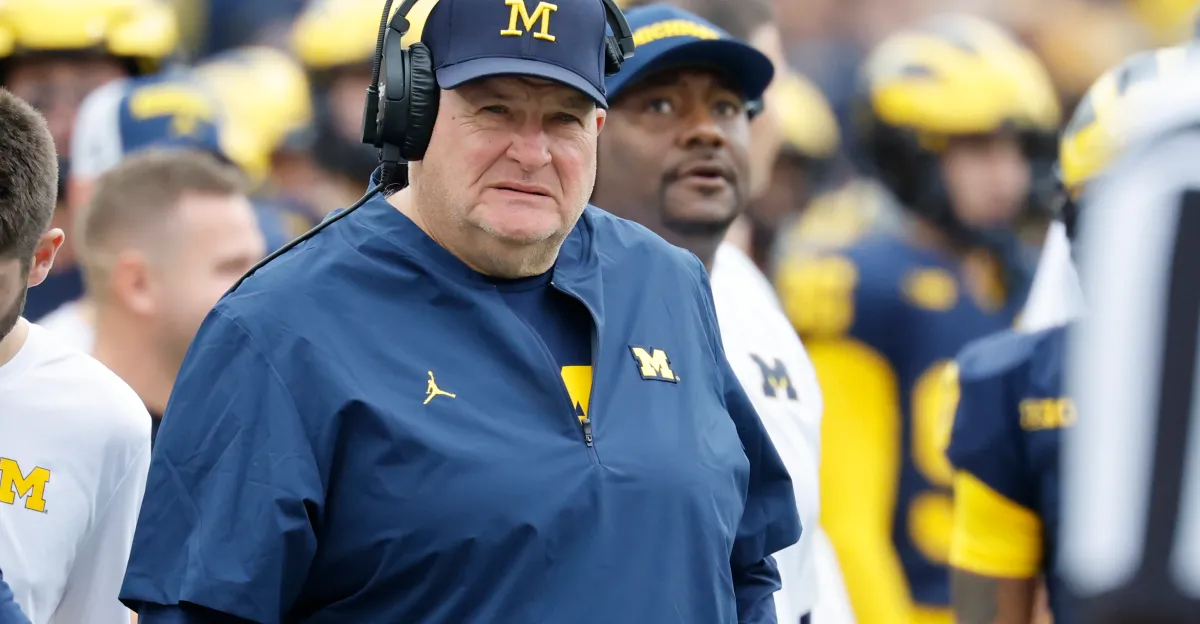
The team will be without at least three players, as Derrick Moore, Jaishawn Barham and Giovanni El-Hadi are all skipping the game to prepare for the NFL Draft. Speaking to the media on Monday, interim head coach Biff Poggi didn’t think anyone else on the team would opt out of the game. However, his tune changed quite a bit just two days later, as he speculated on a Texas-based podcast called “The Stampede” that he may be down even more guys than that.
Players on the team were sent home to be with family for Christmas earlier this week, but Poggi doesn’t know how many of those players will come back on Friday when the team is slated to leave for Orlando.
“I think there’s a really good chance that we’re going to have many more opt outs for the game, unfortunately, because we’re in such a stat of flux,” Poggi said. “And when they get to the business side of it, they think, ‘Well, we don’t have a coach,’ or, ‘We’ve had this situation with our former coach, there’s investigations and all these things, I don’t know who’s going to coach me. Why do I want to play in that game?’ So I can see some of that happening, too. And I would tell you on (December) 26th, we’re probably going to have a significantly different roster than we had yesterday when we sent them home.”
Poggi also mentioned how he thinks “most of the guys opting out need to play … they need the film, and they need to play well,” and that “team the way you and I knew it is gone now. And now it is strictly a financial and a business decision, and the head coach and the position coaches really are not players in that discussion.”
In other words, the decisions the players are making are based on what their families and agent are telling them, and they are not consulting with their coaches one bit. And in other words — players are doing what’s in their best interest.
As a former hedge fund manager, Poggi should understand risk management and trying to generate the best returns possible. That’s why Poggi said he doesn’t want to “be the guy that talks them into (playing a bowl game), and then something happens.” So while he understands why the players are doing what they are doing, he isn’t exactly onboard with how the decisions are being made.
There’s a lot to digest in this podcast, and I think the main takeaway for me is that Poggi is not made to be a head coach in college football. And that’s fine — he’s been very successful and has made a lot of money doing other things. And if he wants to continue making an impact in the lives of young adults, he can still do that, but he should by no means be doing that in the position of head coach at the University of Michigan.
And if you need one more quote as far as why Poggi should not be considered any longer for this position — and this is a real quote, by the way — here you go:
“I would ask one thing, and I’m being very serious — you need to pray for us,” Poggi said. “Because we are going through things that no young kid should have to go through … just when you hit your knees tonight, you don’t have to pray that we win, I know that ain’t gonna happen, just pray that the good lord will give me the right wisdom to do this the way it needs to be done.”
Update: Some people are interpreting this as Biff saying he knows the Texas podcasters wouldn’t pray for Michigan since they’re playing in the bowl game, while others are interpreting it as Biff saying they won’t win the game. If he meant the former, I do sincerely apologize, but the way I initially interpreted it while listening to the podcast, it sounded like he was saying the latter, especially given other comments he’s made about how he was hoping to not play against Texas because they’re a good team.
With it being the holiday season, Coach Poggi, I will give you what you are requesting and I will pray for you and the players to get through this. You’re right — no young person should have to endure the things that they have endured over the last couple weeks. I can’t imagine being in college and having all that happen at once.
However, to go on an opponent’s podcast and air Michigan’s dirty laundry publicly is not something an interim head coach should be doing. Whether you realize it or not, you have given the players that are on the fence a reason to not come back for the bowl game (and beyond that).
If this podcast appearance didn’t eliminate Biff from consideration, I don’t know what will. But under no circumstances should he be legitimately be considered for this job any longer.
Merry Christmas, and thank God for Dusty May, Kim Barnes Arico and Brandon Naurato.

Sports5 minutes ago
Badgers news: Wisconsin adds top setter in 2026 freshman class

Sports21 minutes ago
A 2026 wishlist for Arizona Wildcats athletic programs

NIL25 minutes ago
NIL Funds Are at Top of Arizona State’s Christmas Wishlist

Sports37 minutes ago
Tennessee volleyball signs Georgia State transfer

Sports52 minutes ago
Gators Perform Well in Classroom During Fall 2025 Term

Sports1 hour ago
Syracuse.com winter girls volleyball rankings (through Week 4): 2 new teams enter top 10

NIL1 hour ago
Kirby Smart gives fiery response to question about conversations with players on future

Rec Sports2 hours ago
Area kids ‘Shop with a Cop’ for Christmas

Rec Sports2 hours ago
What gifts should local coaches ask Santa for to help their teams?
Technology2 hours ago
Games of the Future Abu Dhabi 2025 Rewrites the Playbook for Sports with Phygital Innovation

NIL2 hours ago
Shane Beamer blasts report surrounding cost of deals signed by LaNorris Sellers, Dylan Stewart

Motorsports2 hours ago
Vineland Trash and Recycling Collection Fee Set to Increase

Rec Sports2 hours ago
Delmarva Christian swim teams confident at the break

Rec Sports3 hours ago
Orange Holiday Basketball Classic begins Friday with girls and boys divisions –

Rec Sports3 hours ago
Chris Fratalia Steps Aside As Wellington Wolves President

Rec Sports4 weeks ago
Fargo girl, 13, dies after collapsing during school basketball game – Grand Forks Herald

Sports4 weeks ago
Utah State Announces 2025-26 Indoor Track & Field Schedule

Motorsports2 weeks ago
SoundGear Named Entitlement Sponsor of Spears CARS Tour Southwest Opener

Motorsports4 weeks ago
Jo Shimoda Undergoes Back Surgery

Motorsports4 weeks ago
Redemption Means First Pro Stock World Championship for Dallas Glenn

Sports4 weeks ago
Texas volleyball vs Kentucky game score: Live SEC tournament updates

NIL4 weeks ago
Bowl Projections: ESPN predicts 12-team College Football Playoff bracket, full bowl slate after Week 14

Rec Sports3 weeks ago
Black Bear Revises Recording Policies After Rulebook Language Surfaces via Lever

Rec Sports4 weeks ago
Robert “Bobby” Lewis Hardin, 56

Motorsports2 weeks ago
Donny Schatz finds new home for 2026, inks full-time deal with CJB Motorsports – InForum

Rec Sports4 weeks ago
How this startup (and a KC sports icon) turned young players into card-carrying legends overnight

Rec Sports3 weeks ago
How Donald Trump became FIFA’s ‘soccer president’ long before World Cup draw

Sports3 weeks ago
Men’s and Women’s Track and Field Release 2026 Indoor Schedule with Opener Slated for December 6 at Home

NIL4 weeks ago
Indiana’s rapid ascent and its impact across college football

Rec Sports2 weeks ago
David Blitzer, Harris Blitzer Sports & Entertainment





-
 Motorsports2 weeks ago
SoundGear Named Entitlement Sponsor of Spears CARS Tour Southwest Opener
-
 Motorsports2 weeks ago
Donny Schatz finds new home for 2026, inks full-time deal with CJB Motorsports – InForum
-
 Rec Sports3 weeks ago
How Donald Trump became FIFA’s ‘soccer president’ long before World Cup draw
-
 Rec Sports2 weeks ago
David Blitzer, Harris Blitzer Sports & Entertainment
-
 Motorsports3 weeks ago
JR Motorsports Confirms Death Of NASCAR Veteran Michael Annett At Age 39
-
Sports3 weeks ago
Elliot and Thuotte Highlight Men’s Indoor Track and Field Season Opener
-
Sports3 weeks ago
West Fargo volleyball coach Kelsey Titus resigns after four seasons – InForum
-
 Motorsports2 weeks ago
Rick Ware Racing switching to Chevrolet for 2026
-

 NIL2 weeks ago
DeSantis Talks College Football, Calls for Reforms to NIL and Transfer Portal · The Floridian
-
 Sports2 weeks ago
#11 Volleyball Practices, Then Meets Media Prior to #2 Kentucky Match