
NIL
Have college sports lost their spirit?


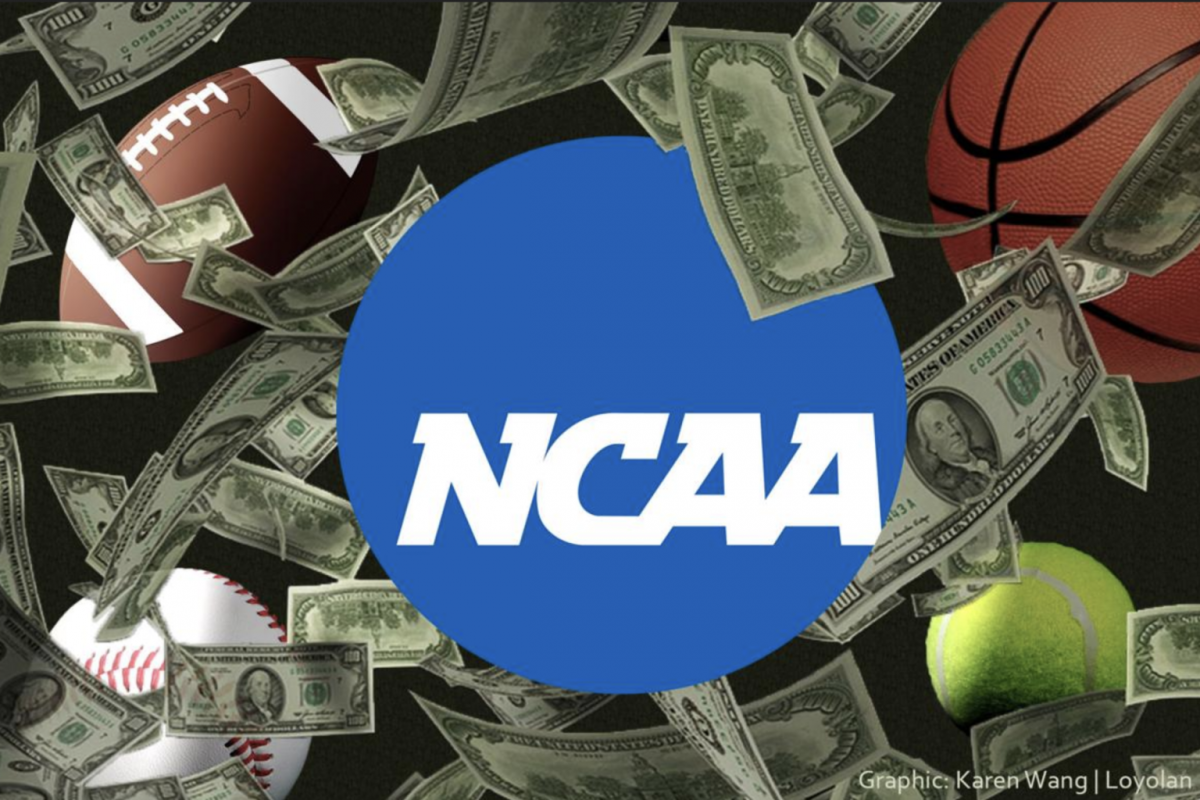
NCAA money graphic made by Karen Wang. Retrieved from jimstoneconsulting.com.
For the majority of its time as an organization, the National Collegiate Athletic Association (NCAA) has operated as an amateur league. College sports were a place where athletes who wanted to continue their academic career while still dedicating time to sports thrived.
Whether the organization likes it or not, the three new developments of the transfer portal, name, image and likeness (NIL) and the latest NCAA settlement, have launched college sports into a new era. These changes have not only disrupted the integrity of what college athletics used to stand for, but have also turned the NCAA into a miniature professional league, replacing the amateur structure that once defined it.
In October of 2018 the NCAA transfer portal had its debut. Previously, when athletes wanted to transfer schools they had to sit out a season, making the decision to leave much more serious and thoughtful. Now players who are unhappy with their current situation have the opportunity to auction themselves off to any school that will take them and play that very same year.
With the roll out of NIL, transferring is now seen as an investment rather than a personal or academic move. Universities with donors willing to pay top price for talent are instantly granted the opportunity to build super teams. One of the most prominent examples of this is third-year South Carolina quarterback LaNorris Sellers who said that he was once offered an $8 million NIL deal to transfer to another team.
While these offers allow for athletes to make professional money while pursuing an education, the integrity of collegiate sports dwindles. Watching a hometown team build up their roster and finally win after years of hard work is not a story that is often told anymore. If a team struggles one season, players are beginning to have no issue leaving for a school with a more successful record. Loyalty is being bought out by NIL, and the transfer portal is the vessel that is allowing it to happen.
At the conclusion of the 2024-2025 men’s basketball season, every single one of Baylor’s players who didn’t age out of college entered the transfer portal. The Baylor Bears team that will debut next year is going to be a completely different basketball team. The disintegration of an entire team begs the question, is massive turnover truly what is best for players and fans of the game?
The Bears are a perfect example of why the transfer portal and NIL need to be regulated. College athletics has turned into a high stakes bidding war with NIL deals acting like free agency contracts. Unfortunately, with the passing of the new 2.8 billion NCAA settlement, players switching teams for better financial offers is only going to get worse. This new settlement will allow for Division I schools to pay their athletes a certain wage per hour on top of scholarships and NIL deals.
One of the perks of playing at the Division I level is having partial or full ride scholarships. Ever since NIL has come into the mix, big name athletes are pulling in millions of dollars under their name, image and likeness. This new settlement allows for more money to be poured into the pockets of these elite athletes. While this appears to be a good thing, the influx of money coming into college sports has turned a league focused on education, experience and exposure into a system where the schools with the deepest pockets attract the most talent.
What’s more concerning is that the system for paying college athletes is currently virtually unregulated. If a university chooses to give wages only to its star players, where does that leave the rest of the team? And what’s to stop a school from directing all its funds to the football program while leaving other sports, like basketball, out in the cold? This kind of behavior from universities invites many other potential lawsuits over inequality, shifting the focus away from the game itself and turning collegiate athletics into a battleground over finances and fairness.
Paying Division I athletes opens the door for other divisions to start demanding payment too. If laws are passed that require all universities to pay their athletes, then Division I might be the only level of college sports that survives. Most Division II and III schools rely on fundraising and summer camps just to afford new equipment and jerseys.
If these programs are already stretching their budgets just to cover basic expenses, they definitely aren’t ready to start handing out paychecks. Assuming that college sports keep heading in this direction, the NCAA risks transforming from a place of providing opportunities for student-athletes to an exclusive club for elite talent.
As a college athlete myself I understand the desire to get paid for the countless hours poured into being a student-athlete. It’s a lot of hard work and dedication, however at the end of the day it is something that we sign up for. College sports were always meant to be for the love of the game but now it seems like just another way for people to cash in.
At the Division III level my teammates and I receive zero scholarship, limited opportunities for NIL deals, and no payment for the hours dedicated to our sport. Yet we all come back every year, not for money, but simply because we love what we do. This type of behavior is what makes college sports what they are. Without loyalty, the ability to overcome hardships and the love of the game, the collegiate sports scene will lose everything it’s known for.

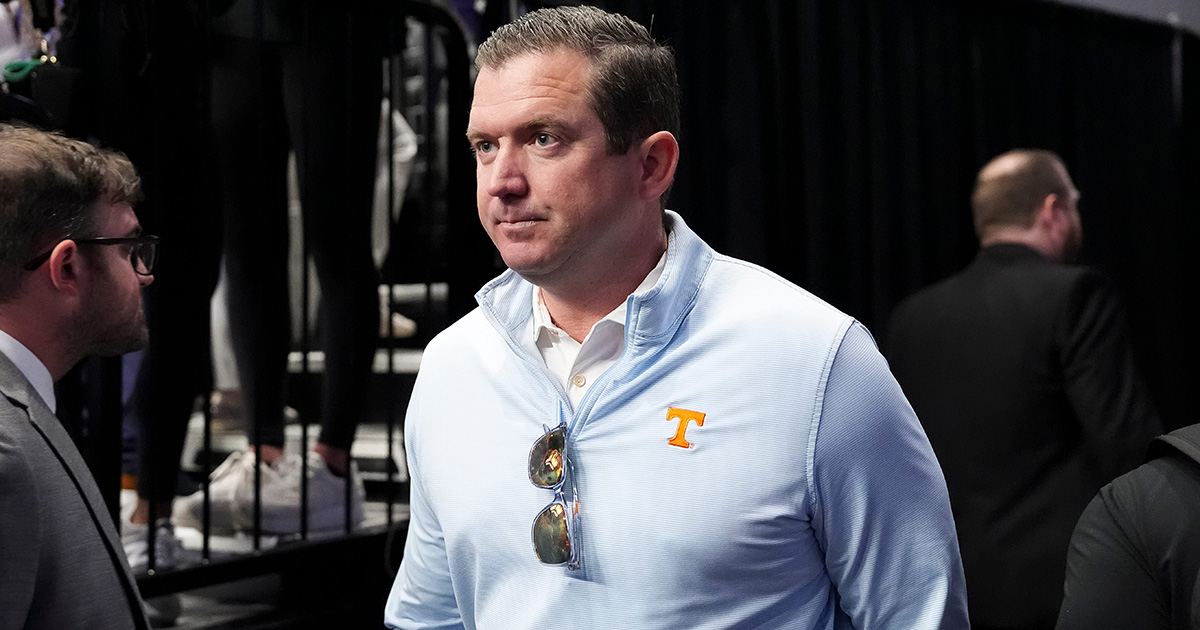
The Transfer Portal has yet to open, but there are already players announcing they’ll be entering. Oftentimes, that’s as coaches tamper with other rosters and offer improved NIL or revenue-sharing deals. Now, Tennessee Volunteers athletic director Danny White believes he has a solution.
White took to Twitter on Wednesday. There, he quoted a post from Dan Wolken of Yahoo Sports, saying, “Everyone in college sports knows the solution, they just don’t have the stomach (yet) to execute it.” Wolken himself was responding to a complaint from Missouri head coach Eli Drinkwitz regarding tampering. That solution, which White wanted to highlight, is collective bargaining with the players.
SUBSCRIBE to the On3 NIL and Sports Business Newsletter
This,” Danny White wrote. “There is a pathway to build a much healthier environment for college athletics within the current laws of our country – it’s called collective bargaining. It will be complicated, hard, and likely not perfect, but it’s far past time that we roll up our sleeves and do the work.”
Collective bargaining is relatively common in the United States and in professional sports. In essence, it’s when representatives, usually a union, negotiate on behalf of a group of employees with the employer. They do so to come up with legally binding agreements on contracts, wages, hours, working conditions, and other considerations.
This would be a seismic shift for college sports because of the reality that collective bargaining fundamentally involves employees. That’s a status that colleges and the NCAA have been very tentative to give to student-athletes.
There are a few benefits to collective bargaining. In particular, as the NCAA has lost court battles, forcing it to allow things like NIL and unlimited transfers, this would be a legal agreement that would set some rules in stone. For instance, the maximum that a program spends, how often players can transfer, and multi-year contracts could all be negotiated.
Danny White is far from the only one who has suggested that collective bargaining could help college sports and tampering, in particular. When the Transfer Portal was cut down to one window, former player Chase Daniel called it smart and called for collective bargaining. ESPN’s Rece Davis did the same, calling for collective bargaining to end tampering.
Separately, 23 different Power Four GMs backed collective bargaining in a closed-door Athletes.org meeting in August. That group, which didn’t have any names attached, “agreed in unison” that it would be the best path forward for college sports.
For his part, Danny White has been out in the open, pushing for major changes in college sports before. In the past, he’s shared a proposal to establish a national organization to employ and unionize athletes. Of course, those changes still appear to be a long way away.
NIL
Big 12’s Brett Yormark says college athletics needs legislation that’s stalled in Congress :: WRAL.com

ARLINGTON, Texas (AP) — Big 12 Commissioner Brett Yormark says legislation currently stalled in Congress is needed to regulate college athletics and put a stop to what he essentially calls uncapped spending for name, image and likeness in football.
“Let me be clear about this,” Yormark said Saturday before the Big 12 championship game between No. 5 Texas Tech and 11th-ranked BYU at the home of the Dallas Cowboys. “The House of Representatives must do what is right for over 500,000 student-athletes and pass the SCORE Act. We must protect their future, their well-being and their fair treatment. They deserve action and not excuses.”
An effort backed by the NCAA, the U.S. Olympic organization and the White House faltered in Congress this past week, with opponents raising concerns over the wide-reaching power it gives the governing body of college sports and its most powerful programs.
The NCAA and Division I conferences portray the legislation as codifying the rules created by the multibillion-dollar lawsuit settlement that allows college players to be paid, providing clarity that supporters say is long-needed.
House Republican leaders had planned to push the bill to a final vote this past week. But those plans were abruptly scrapped after a procedural vote to advance the bill nearly failed.
Yormark said he supports the revenue-sharing model that is part of the settlement and agrees with those who believe NIL spending on top of the $20.5 million could be destabilizing for college sports.
UCF coach Scott Frost said on national signing day this week he thinks college football is “broken” because of unregulated spending on players.
In 2017, Frost led the Golden Knights to a 13-0 record without a bid in the College Football Playoff, which included four teams at the time, before getting fired in the middle of a fifth unsuccessful season at Nebraska, his alma mater. UCF, which was in the American Conference for Frost’s first stint but has since joined the Big 12, went 5-7 in his return this year.
“I will be spending time with the commissioners next week on some of the challenges and issues that face collegiate athletics, and we’re working through them,” Yormark said. “But I want you to understand that nothing’s broken in this system. And I respect Scott. But nothing’s broken. It’s all about progress, not perfection. There is no perfection in any industry, but there is progress, and we’re making great progress.”
Yormark is ready for 16-team playoff
Yormark said he believes in the playoff model with five automatic bids, even if it might cost the Big 12 a second team this season. That scenario also fits his opinion that the CFP needs to be 16 teams — with 11 at-large bids — instead of the current 12.
“I believe that on a percentage basis, when there’s 136 FBS (bowl subdivision) schools, the number 12 is too low,” Yormark said. “We need more access for all the right reasons. And I’m very consistent about that.”
Yormark indicated he doesn’t think the playoff will expand for 2026, even with an extra eight weeks to try to reach an agreement. The new deadline is Jan. 23.
“I can tell you we’re working on it, but we can’t rush it,” Yormark said. “A lot goes into it. It’s not just about picking a number. You also have to look through a filter and say what are the unintended consequences of those decisions, which is what the commissioners and myself are working on. I’m not overly optimistic we’re going to be able to change anything for next year. But we’re in the lab.”
___
Get poll alerts and updates on the AP Top 25 throughout the season. Sign up here and here (AP News mobile app). AP college football: https://apnews.com/hub/ap-top-25-college-football-poll and https://apnews.com/hub/college-football
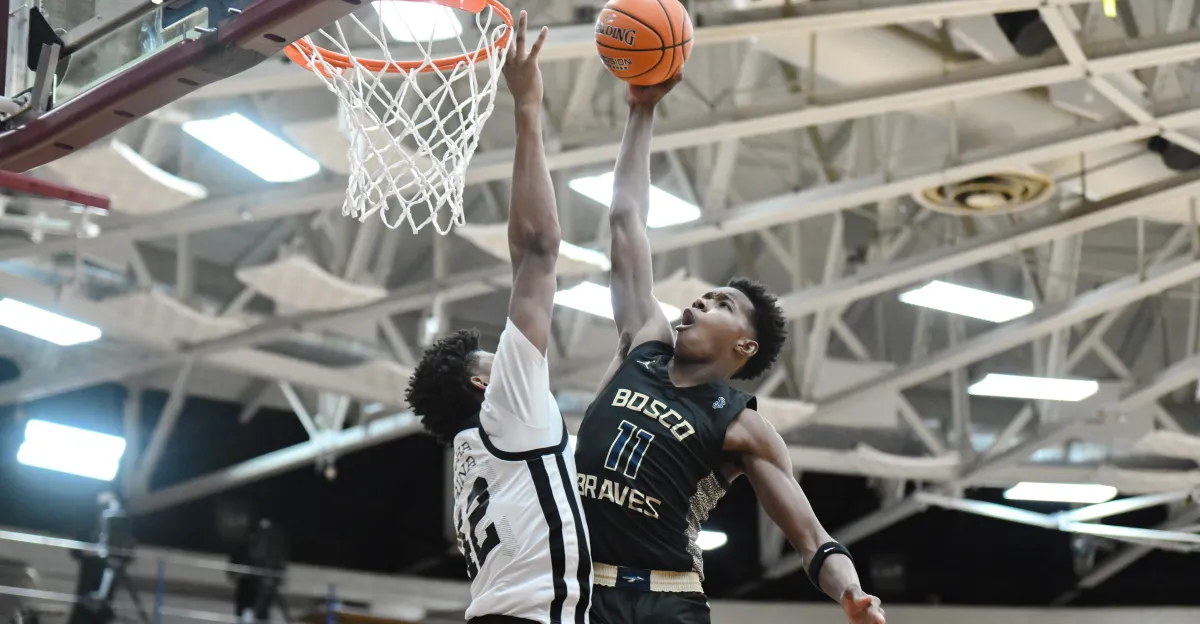
Collins, a 6-foot-8, 200-pound forward from Bellflower, California, is widely regarded as one of the premier frontcourt prospects in the country. His blend of athleticism, scoring ability, and defensive versatility made him a major priority for Kentucky head coach Mark Pope and his staff as they work to build future recruiting classes.
According to Jacob Polacheck of KSR, Collins’ recruitment is being heavily influenced by NIL structure and contract details, a growing trend at the top of the recruiting landscape. That reality was addressed publicly earlier this month by Kentucky athletic director Mitch Barnhart during Will Stein’s introductory press conference as the Wildcats’ new football head coach.
Barnhart pushed back strongly against the perception that Kentucky is at an NIL disadvantage, saying, “Enough about ‘have we got enough?’ We’ve got enough.” He also emphasized that Kentucky will not compromise its standards to land recruits. “We’ve got to do it the right way,” Barnhart said. “We’re not going to break the rules. That’s flat-out.”
While Kentucky no longer holds a crystal ball prediction for Collins, the Wildcats are not out of the race. However, his recruitment now appears far more fluid, underscoring the increasingly complex balance between elite talent, NIL expectations, and long-term program philosophy in modern college basketball.
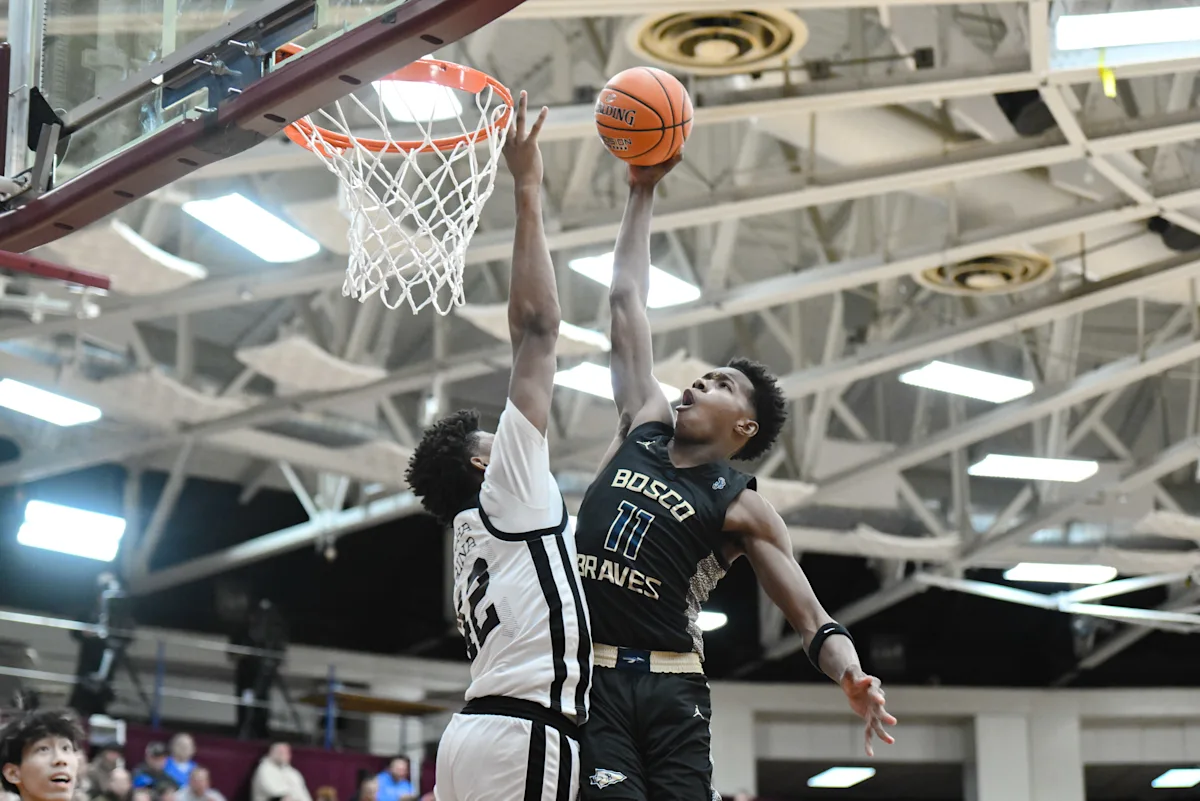
Kentucky Basketball suffered a notable recruiting setback this week as 247 Sports national analyst Travis Branham removed his crystal ball prediction for the Wildcats to land class of 2026 5-star power forward Christian Collins. Branham originally placed the prediction in early November, fueling optimism that Collins could commit to Kentucky as the early national signing period approached. That announcement never came, and momentum has since cooled.
Collins, a 6-foot-8, 200-pound forward from Bellflower, California, is widely regarded as one of the premier frontcourt prospects in the country. His blend of athleticism, scoring ability, and defensive versatility made him a major priority for Kentucky head coach Mark Pope and his staff as they work to build future recruiting classes.
Advertisement
According to Jacob Polacheck of KSR, Collins’ recruitment is being heavily influenced by NIL structure and contract details, a growing trend at the top of the recruiting landscape. That reality was addressed publicly earlier this month by Kentucky athletic director Mitch Barnhart during Will Stein’s introductory press conference as the Wildcats’ new football head coach.
Barnhart pushed back strongly against the perception that Kentucky is at an NIL disadvantage, saying, “Enough about ‘have we got enough?’ We’ve got enough.” He also emphasized that Kentucky will not compromise its standards to land recruits. “We’ve got to do it the right way,” Barnhart said. “We’re not going to break the rules. That’s flat-out.”
While Kentucky no longer holds a crystal ball prediction for Collins, the Wildcats are not out of the race. However, his recruitment now appears far more fluid, underscoring the increasingly complex balance between elite talent, NIL expectations, and long-term program philosophy in modern college basketball.

Less than two months after announcing his intention to run for lieutenant governor in Alabama, former three-time national champion Crimson Tide quarterback AJ McCarron has announced he will exit the race.
McCarron is seeking to rededicate himself to football, an effort that will require “100% of my focus, commitment, and attention that I was to give to the office of lieutenant governor, so it is time to end my campaign,” he said in a statement.
A historic career at Alabama
McCarron led the Crimson Tide to back-to-back BCS national championships in 2011 and 2012 and was part of the national title team as a redshirt player in 2009.
A native of Mobile, the quarterback became the first player at his position to win consecutive BCS titles and also received several of college football’s more prestigious awards, including the Maxwell, Johnny Unitas Golden Arm, and Kellen Moore Awards.
As a junior, McCarron established an Alabama record with 30 touchdown passes in a season, and broke Greg McElroy’s former record with 3,063 passing yards in a season during his senior campaign in 2013.
McCarron finished his Alabama career with a 36-4 overall record, completing almost 67 percent of his passes with 77 touchdowns and 15 interceptions.
McCarron in the NFL
The quarterback emerged as a fifth-round selection in the 2014 NFL Draft by the Cincinnati Bengals, playing as a backup for four years.
McCarron spent the next four seasons as a reserve first with the Oakland Raiders, followed by a stint with the Houston Texas, and finally the Atlanta Falcons.
From there, he played in the XFL with the St. Louis Battlehawks, a franchise that then moved to the United Football League.
McCarron’s political ambitions
The former quarterback star was running as a Republican for the second-highest office in his home state, a move he said was inspired by the murder of conservative political activist Charlie Kirk.
“Alabama’s conservative and cultural values are under attack from every direction,” McCarron said in his announcement for office.
“That’s why Charlie Kirk’s assassination affected so many of us so deeply. His example convinced me to get off of the sidelines, get into the game, and stand tall for our conservative beliefs.”
McCarron currently serves as a college football commentator as part of The Dynasty podcast, which he presents with fellow Alabama alum Trent Richardson and Crimson Tide broadcaster Chris Stewart.
More college football from SI: Top 25 Rankings | Schedule | Teams
Follow College Football HQ: Bookmark | Rankings | Picks
Dec. 17, 2025, 1:41 p.m. ET
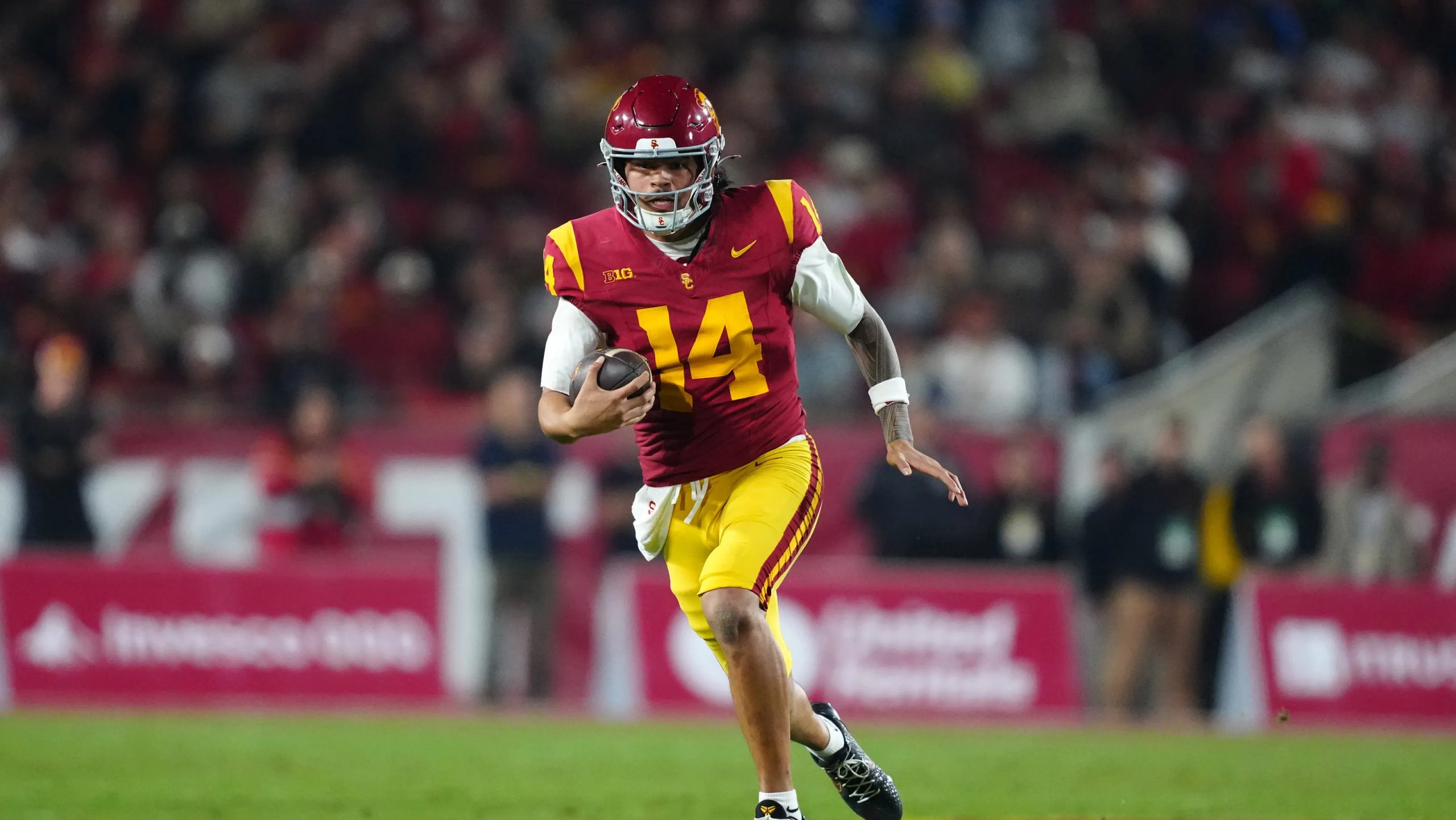
USC will get its starting signal-caller back in 2026.
On Tuesday, the program announced that quarterback Jayden Maiava has signed a new NIL deal to return to the Trojans next season. Maiava, who previously played at UNLV, would have had a significant transfer portal market and also ranked as a top-10 quarterback prospect in the 2026 NFL draft, per ESPN’s Mel Kiper.
Maiava started 11 games at UNLV in 2023 before transferring to USC, where he ultimately lost the starting job to Miller Moss ahead of the 2024 season. However, amid subpar play from Moss, coach Lincoln Riley made a change as he started the final four games.
Though his numbers during that stretch weren’t stellar, he did guide the Trojans to a 3-1 finish to the season.
Riley opted not to take a transfer quarterback this offseason and stuck with Maiava, who started all 12 games in a 9-3 season. He took a major leap, completing 66.2% of his passes for 3,431 yards, 23 touchdowns and eight interceptions.
Maiava also ran for six touchdowns this fall.
He became one of the Big Ten’s top quarterbacks this season, and for the first time since Riley’s second year at USC with Caleb Williams, the Trojans will have a proven, incumbent starting quarterback back in 2026.
Contact/Follow@College_Wire on X and@College_Wires on Threads. Like our page on Facebook to follow ongoing coverage of college sports news, notes, and opinions.

Louisell Named AVCA All-American – James Madison University Athletics

No. 3 Volleyball Faces No. 1 Pittsburgh in Final Four – Texas A&M Athletics

Ironton Auto Body Challenge Set For Indoor Auto Racing

Cape Girardeau’s new youth sports complex takes shape as turf installation begins

Tennessee AD Danny White calls for collective bargaining to fix college sports

No. 3 Volleyball earns three AVCA All-America honors
Women’s Basketball Battles In Front Of Youth Day Crowd

A First Look at the TLTC Innovation Hub

Big 12’s Brett Yormark says college athletics needs legislation that’s stalled in Congress :: WRAL.com

EXEC: Youth Sports Participation Challenged by Escalating Costs, Income Disparity

Four Members of Pack Volleyball Earn Academic All-District Honors

Republicans say sports could stem school, gun violence as Democrats push back

Catherine Burke Brings Depth at Middle Blocker for Demon Deacons Volleyball

Baylor’s Ezekiel one of three finalists for The Bowerman
Three-Time National Champion Sits Atop Women’s Volleyball Postseason Poll

First Tee Winter Registration is open

Fargo girl, 13, dies after collapsing during school basketball game – Grand Forks Herald

CPG Brands Like Allegra Are Betting on F1 for the First Time

F1 Las Vegas: Verstappen win, Norris and Piastri DQ tighten 2025 title fight

Volleyball Recaps – November 18

Sycamores unveil 2026 track and field schedule

Two Pro Volleyball Leagues Serve Up Plans for Minnesota Teams

Utah State Announces 2025-26 Indoor Track & Field Schedule

Redemption Means First Pro Stock World Championship for Dallas Glenn

Jo Shimoda Undergoes Back Surgery

Texas volleyball vs Kentucky game score: Live SEC tournament updates

Bowl Projections: ESPN predicts 12-team College Football Playoff bracket, full bowl slate after Week 14

SoundGear Named Entitlement Sponsor of Spears CARS Tour Southwest Opener

How this startup (and a KC sports icon) turned young players into card-carrying legends overnight

Robert “Bobby” Lewis Hardin, 56

 NBA Legend Michael Jordan to Join NBC Sports as Special Contributor
 Why a rising mid-major power with an NCAA Tournament team opted out of revenue-sharing — and advertised it
 Falcons mailbag
 Portal Update – Basketball and Gymnastics Take Hits
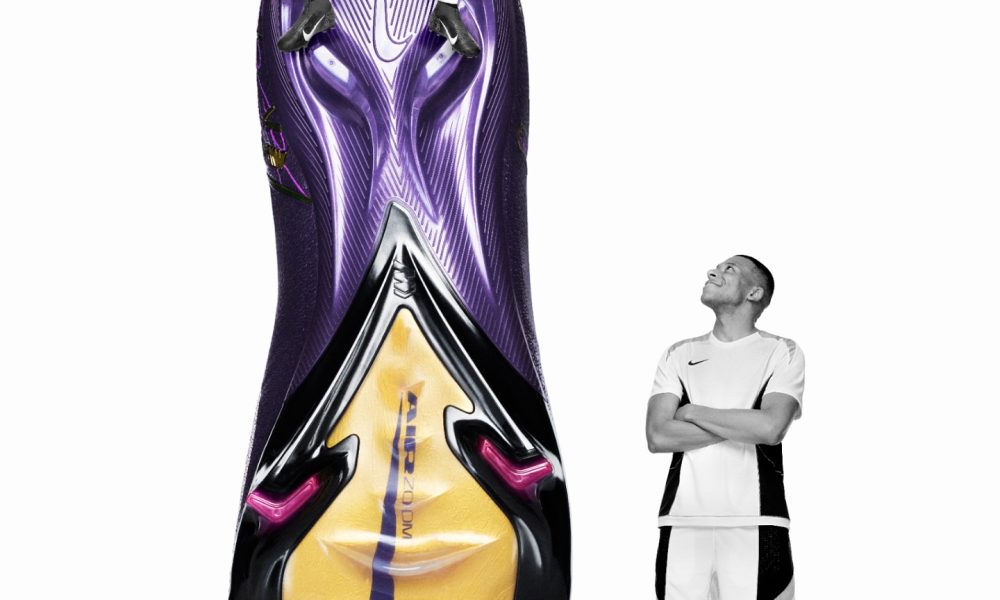 has always dreamed in Mercurial. Now his initials are on the boots.
The new Kyl…
has always dreamed in Mercurial. Now his initials are on the boots.
The new Kyl…
-
 Motorsports3 weeks ago
Jo Shimoda Undergoes Back Surgery
-
 Motorsports1 week ago
SoundGear Named Entitlement Sponsor of Spears CARS Tour Southwest Opener
-
 NIL2 weeks ago
Bowl Projections: ESPN predicts 12-team College Football Playoff bracket, full bowl slate after Week 14
-
 Rec Sports3 weeks ago
How this startup (and a KC sports icon) turned young players into card-carrying legends overnight
-
 Rec Sports3 weeks ago
Robert “Bobby” Lewis Hardin, 56
-
 NIL3 weeks ago
Indiana’s rapid ascent and its impact across college football
-

 Motorsports3 weeks ago
Pohlman admits ‘there might be some spats’ as he pushes to get Kyle Busch winning again
-
Sports3 weeks ago
Wisconsin volleyball sweeps Minnesota with ease in ranked rivalry win
-

 Motorsports1 week ago
Donny Schatz finds new home for 2026, inks full-time deal with CJB Motorsports – InForum
-

 Motorsports3 weeks ago
Increased Purses, 19 Different Tracks Highlight 2026 Great Lakes Super Sprints Schedule – Speedway Digest