
NIL
Historic House v. NCAA settlement gets final approval, allowing schools to pay college athletes

By Ralph D. Russo, Stewart Mandel and Justin Williams
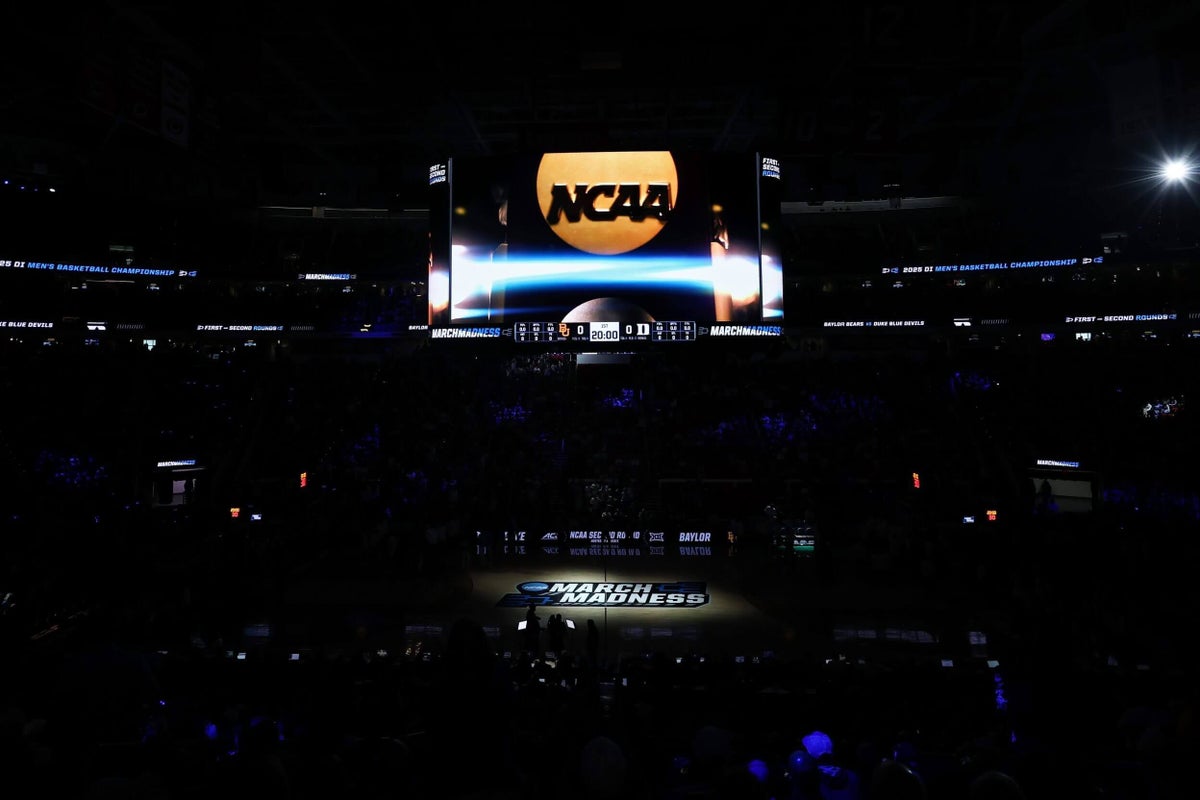
A federal judge Friday granted final approval of the House v. NCAA settlement, a watershed agreement in college sports that permits schools to directly pay college athletes for the first time.
The settlement, which resolves a trio of antitrust cases against the NCAA and its most powerful conferences, establishes a new 10-year revenue sharing model in college sports, with athletic departments able to distribute roughly $20.5 million in name, image and likeness (NIL) revenue to athletes over the 2025-26 season. Previously, athletes could earn NIL compensation only with outside parties, including school-affiliated donor collectives that have become instrumental in teams’ recruiting.
The NCAA and the power conferences (ACC, Big 12, Big Ten, Pac-12 and SEC), as defendants in the settlement, also agree to pay nearly $2.8 billion in damages to Division I athletes who were not allowed to sign NIL deals, dating back to 2016. The damages will be paid out over 10 years, with most of the money expected to go to former power-conference football and men’s basketball players.
Universities can begin directly sharing revenue with college athletes starting July 1.
Judge Claudia Wilken of the Northern District of California, who previously ruled against the NCAA in the O’Bannon and Alston cases, granted approval roughly a year after parties agreed to settlement terms and nearly two months after a final approval hearing on April 7, when Wilken heard testimony from more than a dozen objectors. Lawyers for both the plaintiffs and defendants noted that the number of objections and opt-outs in the settlement represent a tiny fraction of the nearly 400,000 athletes in the certified class.
However, some of those objectors delayed approval, largely citing the settlement’s new roster limits. These limits, which replace sport-by-sport scholarship limits, cap the maximum roster size per team while allowing for every roster spot to receive a scholarship. Schools can offer scholarship funds — partial or full — as they see fit, which creates more potential opportunities. But as schools preemptively prepared to comply with those new limits, they removed roster spots for thousands of walk-ons, particularly in football, and partial scholarship athletes in non-revenue sports.
In late April, Wilken offered an ultimatum, instructing the settlement parties to revise the terms in a way that mitigated any lost roster spots as a result of schools preparing for the new roster limits, or she would deny the whole agreement. Settlement lawyers responded with an amendment that allows for voluntary “grandfathering” of any athletes who lost roster spots as a result of the roster limits, a status that will follow those athletes through the remainder of their eligibility, whether they return to their original school or transfer elsewhere.
The initial House v. NCAA case — brought by plaintiffs Grant House, a former Arizona State swimmer, and Sedona Prince, then an Oregon women’s basketball player — was filed in June 2020. It challenged NCAA policy at the time that prohibited athletes from being compensated for the commercial use of their NIL rights or from sharing in the revenue generated from NCAA and conference television contracts. The case was later consolidated with two similar suits, Carter v. NCAA and Hubbard v. NCAA.
The cases had not gone to trial. The NCAA and Power 5 conferences, fearful a verdict might result in much higher damages, agreed to a settlement in May 2024. Wilken granted preliminary approval in October 2024.
The NCAA’s traditional amateurism model, in which athletes could not receive any compensation beyond a scholarship, began to crumble in 2014 when Wilken ruled against the NCAA in a suit brought by former UCLA star Ed O’Bannon, who objected to his image being used in an EA Sports video game without his permission. Wilken ruled for the plaintiffs, but after an appeals court struck part of her decision, the only tangible effect was that schools began offering cost-of-attendance stipends.
The next major case, Alston v. NCAA, made it to the Supreme Court, where the justices ruled 9-0 against the NCAA. Often mischaracterized as a case about NIL, Alston’s main impact was that it allowed schools to provide athletes $5,980 a year in academic expenses. However, the lopsided decision left the NCAA vulnerable to additional legal challenges regarding rules that limited compensation, and it was delivered on June 21, 2021, nine days before numerous state laws allowing NIL payments were set to go into effect. The NCAA quickly scrapped most of its intended restrictions on NIL.
In the years since, many athletes have entered into deals with local companies and struck lucrative endorsement deals with national brands like Gatorade and New Balance, as intended. But a far more common practice involves boosters using purported NIL deals to lure recruits or players from the transfer portal to their favorite school. The NCAA’s enforcement division initially sought to punish schools that used NIL as a form of “pay for play” or recruiting inducement, but when the University of Tennessee came under fire in early 2024, the state’s attorney general sued, and a judge issued an injunction prohibiting the NCAA from enforcing those rules.
The amount of money being spent in the NIL arena has skyrocketed since 2021. Last year, Ohio State athletic director Ross Bjork said the Buckeyes football team — which later won the national championship — was earning $20 million in NIL. CBS Sports recently reported that a number of men’s basketball rosters have already topped $10 million for next season.
To this point, collectives supporting specific schools have ruled the market, but administrators are hoping the House settlement will curtail that influence. In addition to schools being allowed to make NIL deals themselves, the new model also requires all outside NIL deals of more than $600 to go through a clearinghouse that will determine whether the payments are for a valid business purpose and reflect fair market value. Meanwhile, the settlement establishes an enforcement arm that will penalize schools that go over the $20.5 million cap. All of this will be overseen by the newly established regulatory body, called the College Sports Commission, which is in the process of shifting considerable oversight and control of college sports away from the NCAA and to the power conferences.
The NCAA’s Division I Board of Directors recently approved a series of proposals, pending settlement approval, that will strike 153 rules from the association’s handbook and clear the way for the settlement terms to be implemented.
The settlement represents a significant shift in college sports, but it will not mark the end of the NCAA’s legal challenges. Among numerous ongoing cases, Johnson v. NCAA was filed in 2019 in Pennsylvania and seeks to have athletes classified as employees who are entitled to minimum wage compensation. The NCAA’s efforts to dismiss the case have thus far been denied. Revenue sharing and third-party NIL constraints could also invite additional lawsuits on the basis of Title IX, antitrust violations and conflicts with state laws.
NCAA and power conference stakeholders continue to pursue antitrust exemptions in the form of Congressional intervention, in hopes of codifying the settlement and its effectiveness moving forward. President Donald Trump has explored a new commission focused on the issues facing college sports, led by former Alabama head coach Nick Saban and billionaire Texas Tech board chair Cody Campbell, though it is paused as members of Congress pursue legislation.
(Photo: Jared C. Tilton / Getty Images)

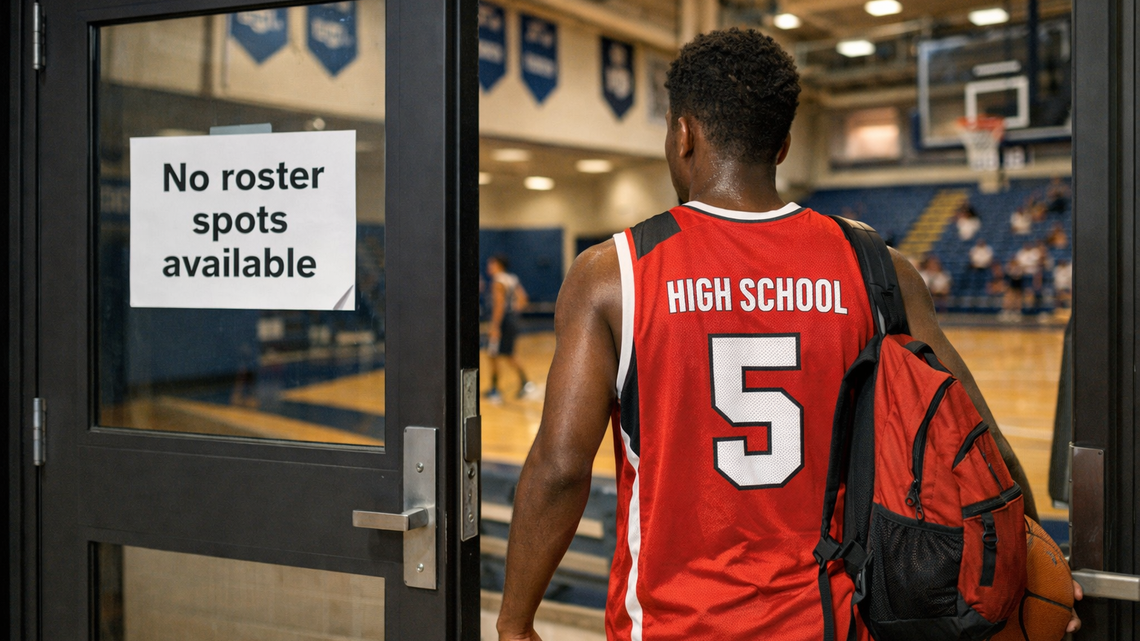
If the road to college basketball scholarships was not already difficult for high school players, the NCAA’s decision to allow NBA G League athletes to enter or re-enter college basketball has created another obstacle. One of the most impactful rulings of 2025, the policy arrives at a moment when NIL and the transfer portal have already reduced access to scholarships and roster spots. By granting G League players immediate eligibility, the NCAA further dilutes opportunities for first-time college athletes.
G League to College: The Precedent Is Already Set
The first notable example of this shift was Thierry Darlan. Darlan spent two seasons in the G League, appearing in 58 games. He suited up for Ignite during the 2023–2024 season and later joined the Delaware Blue Coats in 2024–2025. He was not on the fringe of the league. Instead, he emerged as a legitimate contributor and started roughly half of his games.
Despite that professional experience, Santa Clara granted Darlan eligibility for the West Coast Conference. Because Santa Clara carries a limited national profile, his return to college basketball drew little attention.
That changed when the NCAA restored eligibility for London Johnson at a true “blue blood,” the University of Louisville. Johnson’s case sparked national outrage and forced the college basketball world to confront a new reality. Players could now return to NCAA competition after playing in the NBA G League. The trend continued in November when BYU signed Abdullah Ahmed, a former player for the G League’s Westchester Knicks.
James Nnaji Pushes the Boundary Even Further
Baylor’s signing of James Nnaji brought the issue into sharper focus. Nnaji was selected 31st overall in the 2023 NBA Draft and later became part of an NBA trade in 2025. His move back to college basketball showed just how far the boundaries had shifted.
NCAA Responds as Backlash Grows
As concerns mounted, NCAA President Charlie Baker addressed the issue publicly.
“The NCAA has not and will not grant eligibility to any prospective or returning student-athletes who have signed an NBA contract,” Baker said. “As schools increasingly recruit individuals with international league experience, the NCAA is exercising discretion in applying the actual and necessary expenses bylaw. This ensures that prospective student-athletes with experience in American basketball leagues are not at a disadvantage compared to their international counterparts. Rules have long permitted schools to enroll and play individuals with no prior collegiate experience midyear.”
High School Players Were Already Losing Ground
Even before these rulings, opportunities for high school athletes were shrinking. The transfer portal now functions like free agency. As a result, Division I coaches-including those at HBCUs-often prioritize experienced transfers over developing high school talent. A brief review of HBCU Division I rosters highlights the impact.
Transfer Numbers Tell the Story
According to Real GM, a basketball tracking service, 99 MEAC players transferred from other institutions. In the SWAC, that number rises to 161. Together, those 260 roster spots no longer exist for high school athletes. Football numbers paint an even starker picture.
NIL Is the Driving Force
So what draws these players back to college? NIL.
The financial landscape has changed dramatically. In many cases, college athletes now earn more through NIL than NBA G League players earn through salaries. High-profile exceptions exist, such as Bronny James, whose endorsement portfolio-often linked to his father, NBA legend LeBron James-sets him apart.
BYU star AJ Dybantsa reportedly earns $4 million this season. Texas Tech’s JT Toppin is also positioned for a $4 million payday. When combined with what Duke’s Cooper Flagg earned last season, NIL compensation now exceeds typical NBA rookie salaries and far surpasses G League pay.
The Illusion of a Safety Net
NIL rumors have also fueled speculation about college athletics as a financial safety net. One widely circulated but unconfirmed report suggested Ohio State supporters planned to offer wide receiver Marvin Harrison Jr. more money than he would earn as a first-year NFL player. The goal was to keep him in school.
Harrison ultimately declared for the 2023 NFL Draft and was selected fourth overall by the Arizona Cardinals in 2024.
HBCUs Feel the Same Pressure
HBCUs face the same challenges and must “keep up with the Joneses.” The first nationally televised SWAC matchup of the season illustrated that reality. Bethune-Cookman defeated Florida A&M 87–83 in a high-level contest loaded with transfers.
Bethune-Cookman’s Arterio Morris, a transfer from Texas, scored 20 points. Florida A&M’s Jaquan Sanders, a transfer from Hofstra, led all scorers with 22. Most key contributors in the game came from the transfer portal.
Of the 28 total players on both rosters, only eight came directly from high school. That number even includes prep school players, who are not always truly straight out of high school. Florida A&M’s roster consists of roughly one-third high school players. Bethune-Cookman’s roster sits closer to one-quarter.
A Broader Concern Across College Sports
Across all sports, coaches increasingly worry that athletes prioritize NIL opportunities over skill development. Many cite this shift as a factor in the retirement of one of college football’s greatest coaches, Nick Saban.
After a historic run at Alabama, Saban stepped away from the program. During a roundtable discussion in Washington, D.C., led by U.S. Senator Ted Cruz, Saban explained his frustration.
“All the things that I believed in for all these years, 50 years of coaching, no longer exist in college athletics,” Saban said. “It was always about developing players. It was always about helping people be more successful in life.”
What Comes Next?
Baker closed by emphasizing that while the NCAA has lost control in several legal battles, it does not plan to concede this one.
“I will be working with DI leaders in the weeks ahead to protect college basketball from these misguided attempts to destroy this American institution.”
So what’s next? Perhaps LeBron James-who never played college basketball-and Bronny James-who left early and spent time in the G League-will enroll at the University of Arizona to play alongside Bryce.
At this point, what would stop them?
The post The NCAA further fails high schoolers with G League Rulings appeared first on HBCU Gameday.
HBCU Gameday
This story was originally published January 4, 2026 at 12:08 PM.

Getty
The college football transfer portal is heating up with a wave of early moves.
One star quarterback from the College Football Playoff has already found a new home after entering the transfer portal. As the final four teams battle for the national championship, the rest of the country is focused on the college football transfer portal.
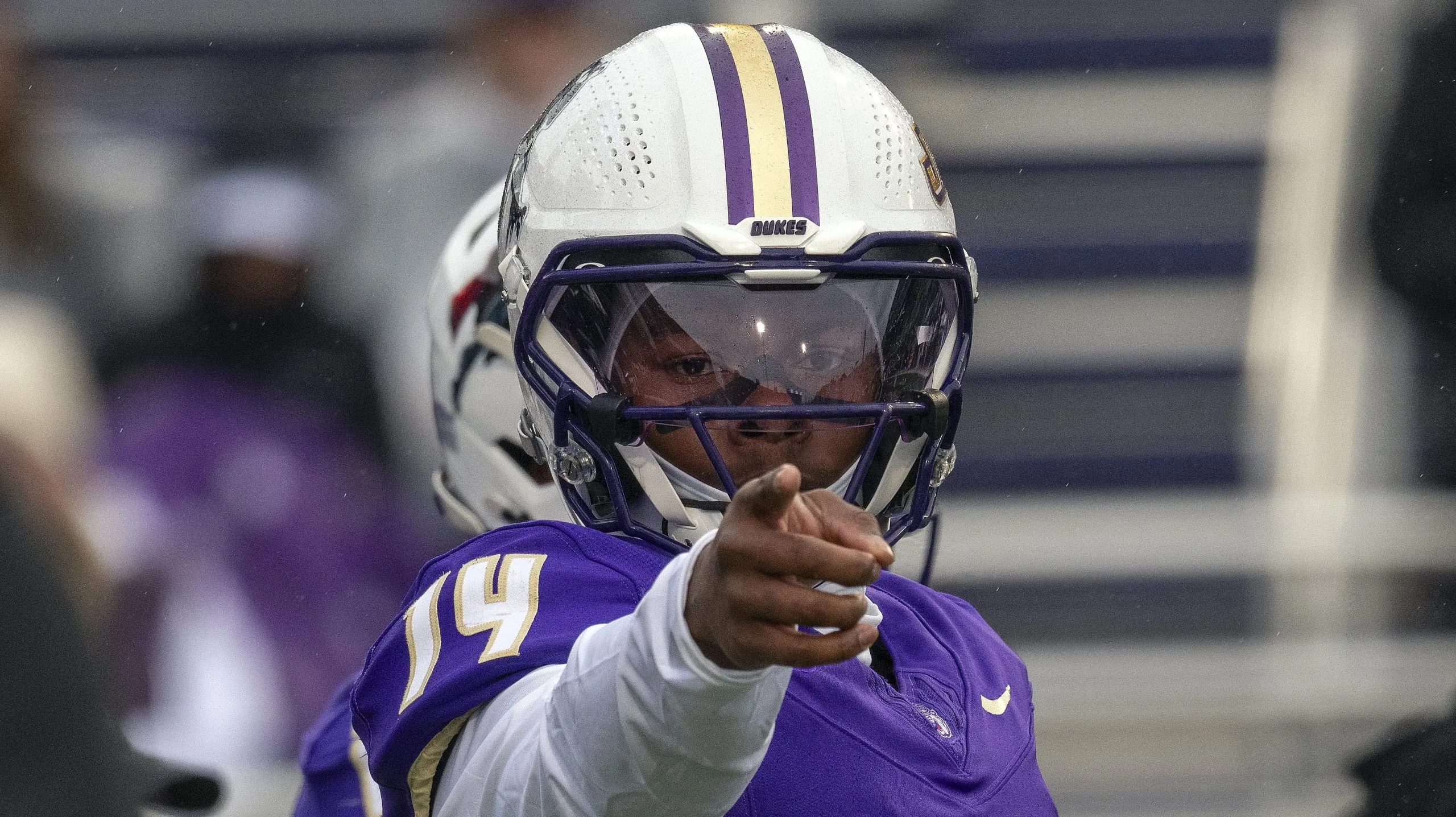
Fresh off a career season, former James Madison quarterback Alonza Barnett entered the portal and found a new team in a matter of days. Barnett is headed to the Big 12 announcing his decision to join UCF where the dual-threat signal-caller is the early favorite to be the Knights starter. The quarterback is expected to replace Tayven Jackson.
Barnett threw for 2,806 yards, 23 touchdowns and eight interceptions while completing 58.4% of his passes in 14 appearances for JMU in 2025. The quarterback also added 589 rushing yards and 15 touchdowns on the ground as well.
Beyond impressive stats, Barnett led James Madison to a Sun Belt championship as JMU crashed the College Football Playoff party. Barnett was named the Sun Belt Player of the Year in 2025.
Here’s what you need to know about the latest college football news.
New UCF QB Alonza Barnett Is Projected to Have a $321,000 NIL Value
NIL deals are not made public, but Barnett’s value is projected at $321,000, per On3. During Scott Frost’s first season in his second stint at UCF, the Knights struggled with volatility at quarterback. After transferring from Indiana, Jackson failed to provide consistent play at the position in 2025.
“Quarterback is no different than other positions,” Frost said on December 10, 2025, per On3’s Brandon Helwig. “In a perfect world, we’re developing them all in-house. We didn’t have the opportunity to do that much last year because I got here after Signing Day. So this is really our first step in trying to recruit some building blocks at several positions, quarterback certainly being one.
“If you were experiencing this every day and seeing the drama and the price tags that go along with transfer quarterbacks, it’d certainly benefit us to have a homegrown one. I love the two guys that we got. We’re going to pour into them and try to build somebody that we can keep for a while.”
Transfer Portal Rumors: Arizona State’s Sam Leavitt & Cincinnati’s Brendan Sorsby Among the Top QBs Searching for New Teams
Amid star quarterbacks like Arizona State’s Sam Leavitt and Cincinnati Brendan Sorsby in the portal generating buzz, Barnett has flown a bit under the radar. Barnett gives UCF a dynamic dual-threat quarterback that Frost covets in addition to having College Football Playoff experience, even if James Madison’s CFP game against Oregon did not go as planned.
The quarterback may not have consistently played elite competition at James Madison, but the signal-caller performed well against the best team’s on JMU’s schedule. Barnett threw for 273 yards and two touchdowns against Oregon in the College Football Playoff. The dual-threat quarterback also added 45 rushing yards and TD on the ground.
Jonathan Adams is a veteran sports contributor covering the NFL, NBA and golf for Heavy.com. His work has been prominently featured on NFL.com, Yahoo Sports, Pro Football Talk, CBS Sports, Bleacher Report and Sports Illustrated. More about Jonathan Adams
More Heavy on College Football
Loading more stories
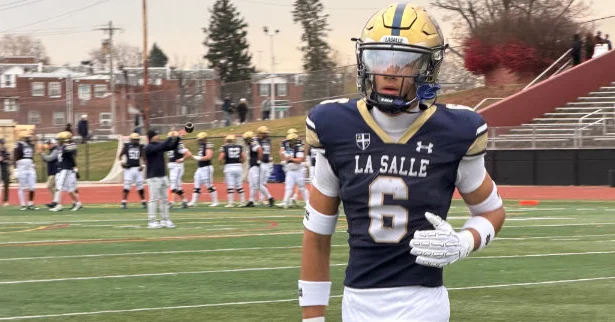
Notre Dame safety signee Joey O’Brien is one of six members of Under Armour’s first NIL squad, the athletic apparel brand announced on Instagram on Sunday.
O’Brien represents one of four players in the incoming Fighting Irish class who earned five-star status, according to the 247Sports Composite rankings. The 6-foot-4, 185-pound defensive back will arrive in South Bend, Ind., as the No. 31 overall prospect and No. 2 safety in the country.
Last fall, he suited up for La Salle College High School in Wyndmoor, Penn., where he dominated on both sides of the ball. He had snagged 86 receptions for 1,247 yards and 18 receiving touchdowns and a 2-point conversion.
On defense, O’Brien had registered 49 tackles (1.0 for a loss), four interceptions, including a 94-yard pick-six, 11 passes defended, two forced fumbles and a fumble recovery. Additionally, he blocked a punt on special teams.
“We’ve continued to add size at the defensive back position,” Notre Dame general manager Mike Martin said about the position group. “We talked about some [like] Joey O’Brien’s just long, rangy, unique ability to sort of get his hands on the ball and take the ball away…
“Not to backtrack, but Joey O’Brien [played] receiver and setting records on the offensive side. I think [he] recently broke Marvin Harrison’s receiving record, something crazy like that.”
Notre Dame has had its own partnership with UA since 2014, which will continue at least until the 2030s. The University finalized a 10-year contract extension with the brand in August 2023.
“10 more years of partnering with the Fighting Irish and supporting student-athletes both on AND off the field,” Under Armour wrote on social media at the time.
O’Brien isn’t the only Fighting Irish football player whose had his own apparel deal.
In 2025, Notre Dame Heisman Trophy finalist Jeremiyah Love signed a deal with New Balance. Recently, Jordan Faison, Kyle Hamilton, Michael Mayer, Audric Estimè, Benjamin Morrison and Riley Leonard have all inked contracts with Rhoback.
UA signed five other players to its first NIL squad:
- Ryder Lyons, BYU QB Signee
- Zion Lee, Maryland EDGE Signee
- Jireh Edwards, Alabama S Signee
- Easton Royal, 2027 Texas Tech WR Commit
- Eric McFarland, 2027 Four-Star WR Prospect
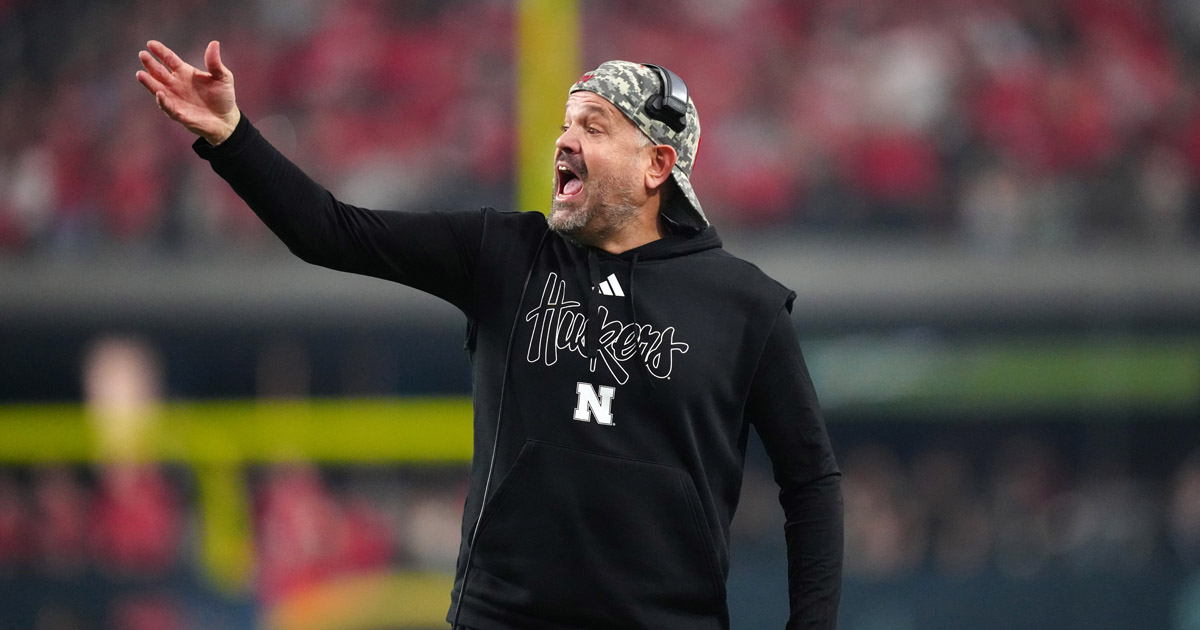
Former San Diego State linebacker Owen Chambliss visited Nebraska on Saturday and it sounds like that could be the only trip he takes.
I mentioned on Friday that there was a good chance Chambliss would be one and done and could commit to the Huskers shortly after his visit.
I continue to hear that’s the case and went ahead and put in a commit prediction for Nebraska to land the talented linebacker. Texas is one school to watch for but in talking to a source close to his recruitment, a commitment to the Huskers is now imminent.
Chambliss is one of the top linebackers available in the transfer portal. He’s currently rated the No. 130 player overall and the No. 6 linebacker in the transfer portal rating.
Chambliss is coming off a big year for the Aztecs where he totaled 109 tackles, 10 for loss, four sacks, one interception and five passes defended.
He has developed in to the, ‘jack of all trades,’ kind of player we saw in high school where he routinely lined up as an edge rusher, outside linebacker, inside linebacker and safety and was recruited all three positions.
Chambliss has his former defensive coordinator from San Diego State, Rob Aurich, now at Nebraska and thats huge for him.
He has a strong comfort level with Aurich, knows the defense and feels he’s the coach who can continue to develop him and get him to the NFL.
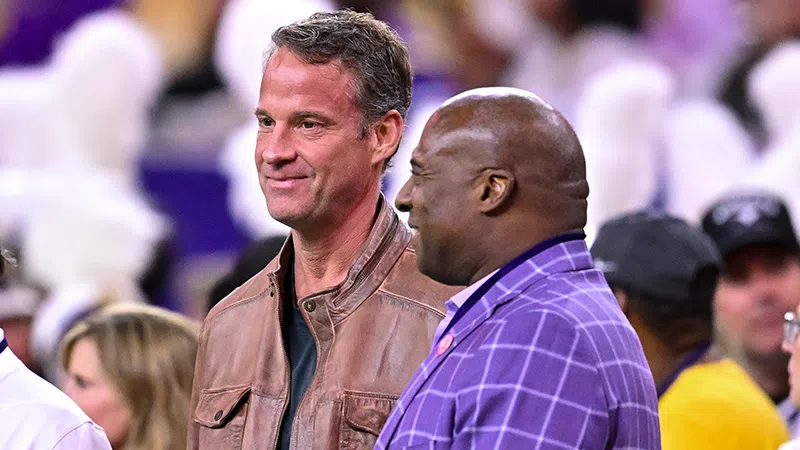
By Chris Marler
In the chaos of the transfer portal, NIL and coaching carousel drama, it’s becoming clear that some long held truths in college football no longer apply.
Truth No. 1 – Don’t get caught up in rankings and “big” names.
Star rankings and blue chip recruits have been the name of the game for a long time in college football. The highest ranked recruits generate the most buzz, and it’s human nature to love the shiny, expensive things, especially in college football.
Racking up five-star studded class after five-star studded class for your depth chart worked beautifully in the pre-portal era. We are no longer in a time where waves of elite recruits are waiting their turn on the depth chart, though.
While it’s awesome to sign the top prospects available out of high school or the portal, losing out on a player like Sam Leavitt or a former five-star isn’t the end of the world. So, as rumors about the No. 1 overall player in the country potentially going to Kentucky continue to swirl, there is no reason to worry if you’re LSU.
In fact, there is no better example of why that isn’t the end of the world than LSU. Look no further than Lane Kiffin’s success with a DII quarterback, and LSU going 7-6 with an $18 million roster.
Truth No. 2 – The drama isn’t over yet.
The day that college football season ends is usually the most depressing day of the year, besides that first Sunday where it gets dark at like 4:30 p.m.. I dread the end of the season every year, but I cannot wait for this drama with the LSU-Ole Miss coaching staffs to end.
What is happening now isn’t sustainable. Offensive coordinator Charlie Weis Jr. has traveled to New Orleans for the Sugar Bowl, back to Baton Rouge for recruiting and meetings and back to Oxford for Fiesta Bowl prep. That’s all in a 72 hour window.
As noted Saturday, Charlie Weis Jr. went from New Orleans after the Sugar Bowl, to Baton Rouge for LSU meetings, to Oxford for Ole Miss Fiesta Bowl prep, back to Baton Rouge for LSU recruiting and is expected back in Oxford for more game prep.https://t.co/KvaJhxRoz6
— Ross Dellenger (@RossDellenger) January 4, 2026
At this point, I can only imagine they’re just meeting every other Tuesday in a McDonald’s parking lot like my parents did. Nothing says resentment and contentious agreement like a Happy Meal and McFlurry, coach!
The Lie – Lane Kiffin is just hoping for the best for everyone.
Can we just stop with this charade that Lane Kiffin is actively hoping for the best for everyone. This whole “I just hope both sides have fun” schtick is ridiculous. I am not blaming Kiffin, and I genuinely don’t even disagree with most of the decisions he’s made throughout this process, regardless of the theatrics involved.
Divorce is messy, and this is no different.
I firmly believe that Lane Kiffin wanted Ole Miss to win against Tulane and Georgia. I also believed he wanted them to win up until the point that he realized they may actually do it. It’s really simple to pretend you have genuine goodwill towards something, someone or some team (you used to coach), when deep down you never thought they’d succeed without you in the first place.
Maybe that’s just me overreacting and reading too much into it. I’m not inside Kiffin’s head and maybe my assessment of the situation is completely off base. If it is, fine. Either way, I think the general feeling from everyone at this point is wishing that both sides would completely part ways and stop making this somehow even messier at every turn.
I’m not sure what the exact therapy buzzword is for that level of disingenuous gaslighting, but I’ll let you know when I meet with Dr. Frankie on Tuesday.
Happy as can be. “Let them and Love them all” https://t.co/J3jI4bdKm8
— Lane Kiffin (@Lane_Kiffin) January 3, 2026
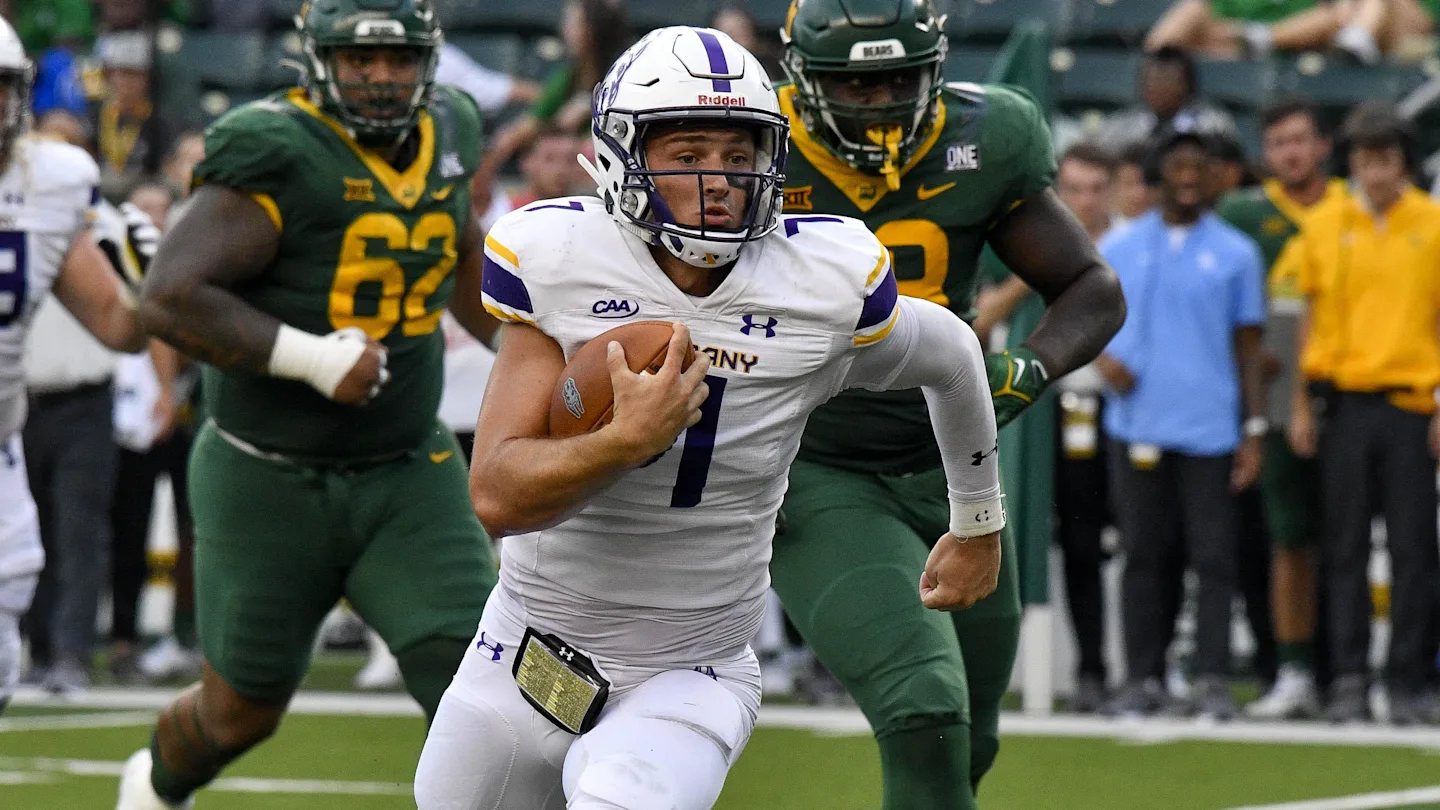
A quarterback with nearly 7,000 career passing yards has elected to enter the college football transfer portal in search of what will be his fifth school heading into the 2026 season.
North Texas quarterback Reese Poffenbarger has entered his name into the NCAA transfer portal looking for a new school next year, according to CBS Sports.
Over the last four seasons, the quarterback has been on three different rosters after redshirting his first year at Old Dominion in 2021.
His best performance to date
Poffenbarger had his two best overall outings in the 2022 and 2023 seasons when suited up for Albany, where he transferred to the FCS ranks.
He was named the starter at Albany after competing with two other candidates for the position and established a school record with 412 passing yards in a game against Fordham.
That year, Poffenbarger finished with one yard shy of 3,000 yards with 24 touchdowns and was named the Colonial Athletic Conference Offensive Rookie of the Year.
He led Albany to the FCS playoff semifinal round the following season, and elected to transfer away after leading the FCS with 36 passing touchdowns and 3,603 passing yards.
The quarterback finished as the school’s touchdown passing record-holder in his time with the program.
Where he’s been lately
Poffenbarger transferred to Miami ahead of the 2024 season, ultimately serving as the backup to Cam Ward, himself a transfer to the school who went on to lead college football’s top-ranked passing attack that year.
From there, Poffenbarger transferred to the Group of Five ranks, landing at North Texas, where he competed for and ultimately lost the starting quarterback job to eventual NCAA passing leader Drew Mestemaker.
What he’s done on the field
In his career, Poffenbarger boasts a 14-12 overall record in 26 starts across 32 total games, passing for 6,669 yards with 60 touchdowns and 17 interceptions.
He rushed for an additional 342 yards and eight more touchdowns.
Poffenbarger’s best outing came with Albany in the 2023 season, going 11-4 overall with 3,614 yards with 36 touchdowns and 13 interceptions, rushing for 6 touchdowns.
How the college football transfer portal works
The new 15-day transfer portal window from Jan. 2-16 and the elimination of the spring transfer period has condensed the timeline for players and programs to make their moves.
The NCAA Transfer Portal is a private database that includes the names of student-athletes in every sport at the Division I, II, and III levels. The full list of names is not available to the public.
(CBS)
Read more from College Football HQ

The NCAA further fails high schoolers with G League Rulings

Player of the Year Star QB Bolts College Football Playoff Team for Big 12

Tritons Complete North American Challenge

Tyler’s McLean, Hallsville’s Farrell earn Class 5A all-state third-team volleyball honors

Blugolds Downed by #6 Roanoke 26-15

Notre Dame’s Joey O’Brien Joins Under Armour’s First NIL Squad

Beach Sweep Calgary, Defeat Alberta On Final Day Of North American Challenge

Men’s Volleyball Completes Sweep of NJIT

Kazakhstan Shines on Global Stage: Landmark Sport Achievements in 2025

No. 2 Hawai‘i men’s volleyball shows no rust in sweeping NJIT

Nebraska predicted to land defensive player from transfer portal

Two Truths and a Lie: LSU and the transfer portal

College football quarterback with 6,600 career passing yards enters transfer portal

Car Thief Crashes Into Oakland Youth Boxing Club and Flees the Scene, Damaging Historic Ring

No. 8 transfer WR sets official visits with two major college football programs

SoundGear Named Entitlement Sponsor of Spears CARS Tour Southwest Opener

Donny Schatz finds new home for 2026, inks full-time deal with CJB Motorsports – InForum

David Blitzer, Harris Blitzer Sports & Entertainment

DeSantis Talks College Football, Calls for Reforms to NIL and Transfer Portal · The Floridian
Elliot and Thuotte Highlight Men’s Indoor Track and Field Season Opener

JR Motorsports Confirms Death Of NASCAR Veteran Michael Annett At Age 39

#11 Volleyball Practices, Then Meets Media Prior to #2 Kentucky Match

Rick Ware Racing switching to Chevrolet for 2026

Colleges ponying up in support of football coaches, programs
West Fargo volleyball coach Kelsey Titus resigns after four seasons – InForum

Maine wraps up Fall Semester with a win in Black Bear Invitational

Nascar legal saga ends as 23XI, Front Row secure settlement

Ross Brawn to receive Autosport Gold Medal Award at 2026 Autosport Awards, Honouring a Lifetime Shaping Modern F1

Temple Begins Indoor Track & Field Season at UPenn This Weekend

Sunoco to sponsor No. 8 Ganassi Honda IndyCar in multi-year deal





-
 Motorsports3 weeks ago
Ross Brawn to receive Autosport Gold Medal Award at 2026 Autosport Awards, Honouring a Lifetime Shaping Modern F1
-
 NIL3 weeks ago
Downtown Athletic Club of Hawaiʻi gives $300K to Boost the ’Bows NIL fund
-
 Rec Sports2 weeks ago
Princeton Area Community Foundation awards more than $1.3 million to 40 local nonprofits ⋆ Princeton, NJ local news %
-
 NIL3 weeks ago
Kentucky AD explains NIL, JMI partnership and cap rules
-
 Sports3 weeks ago
Three Clarkson Volleyball Players Named to CSC Academic All-District List
-
 Sports3 weeks ago
Young People Are Driving a Surge in Triathlon Sign-Ups
-

 Sports3 weeks ago
Beach Volleyball Unveils 2026 Spring Schedule – University of South Carolina Athletics
-
 NIL3 weeks ago
Why the NIL era will continue to force more QB transfers
-
 NIL3 weeks ago
College football program loses 25 players to transfer portal
-

 Sports2 weeks ago
Badgers news: Wisconsin lands 2nd commitment from transfer portal