Rec Sports
Home From School: The Beverly Village for Living Arts Opens in a Repurposed Middle School

The letters over the front doors of the imposing brick building on Sohier Road in Beverly spell out “Briscoe Middle School,” but it has been more than seven years since students last walked the halls. Today, the former place of learning has been transformed into a housing complex where low-income elders—some of whom once attended the school—and local artists live, create, and build community.
“It’s a pretty awesome reuse,” says Andrew DeFranza, executive director of Harborlight Homes, a Beverly-based affordable housing nonprofit that is a partner in the site.


The reimagined property, now known as the Beverly Village for Living and the Arts, officially celebrated its completion with a ribbon-cutting ceremony in early July, but the project has its roots in conversations that began years ago.
Preserve and Repurpose
The three-story, 150,000-square-foot building, a striking edifice of brick and stone, opened as a school in 1923 and over the years became an integral part of the fabric of Beverly. Local stakeholders were adamant, when the school closed its doors in 2018, that they didn’t want to see it razed and replaced. “People made it clear they wanted it to stay up,” says DeFranza, whose child was in the last sixth-grade class to attend the school.

Harborlight Homes, in partnership with Beacon Communities, came up with a plan to preserve and repurpose the building: The school would be transformed into housing for low-income residents ages 55 and older, as well as live-work studios for area artists. But the goal was never just about affordable housing units. From the beginning, the planners wanted the space to reflect the building’s rich past and extend its legacy of creating community connections.
Indeed, the final design goes to great lengths to hold on to the school’s history. Lockers still line the hallways and most of the moldings are original. The towering windows were replaced to meet modern efficiency standards, and the new windows precisely replicate the originals, down to how many panes each is divided into.

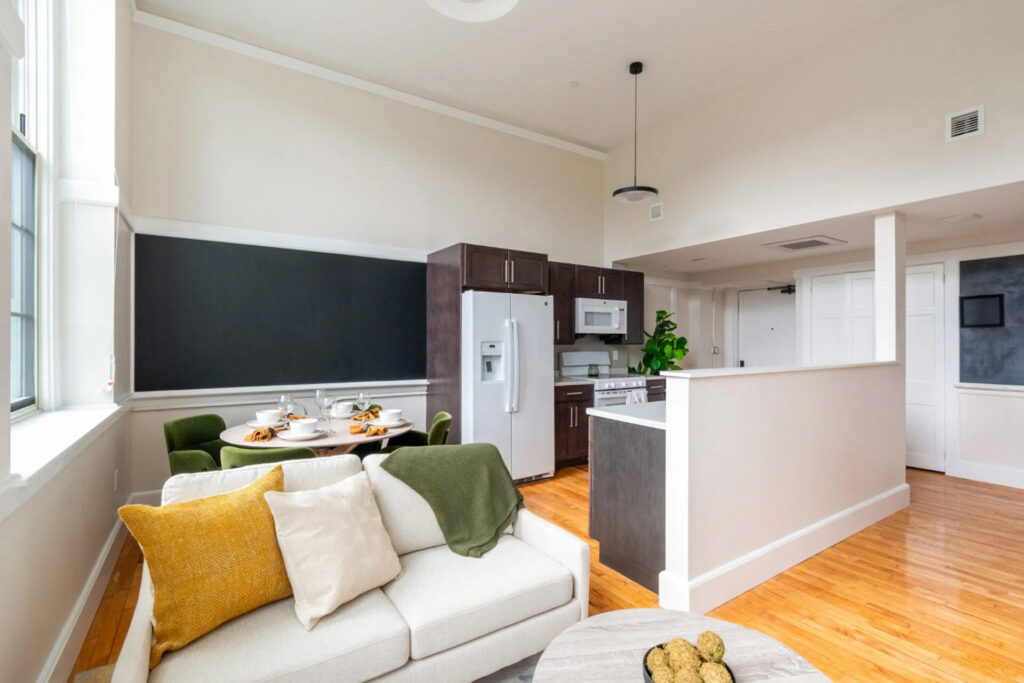
Individual units—there are 85 affordable studios and one-bedrooms for seniors, and six market-rate artists’ spaces—were designed to retain architectural and functional details, including blackboards and teachers’ storage cabinets, giving each apartment its own character. “That’s what makes the building unique: Every unit is different,” says senior property manager Keyla Camilo.
Community Spaces
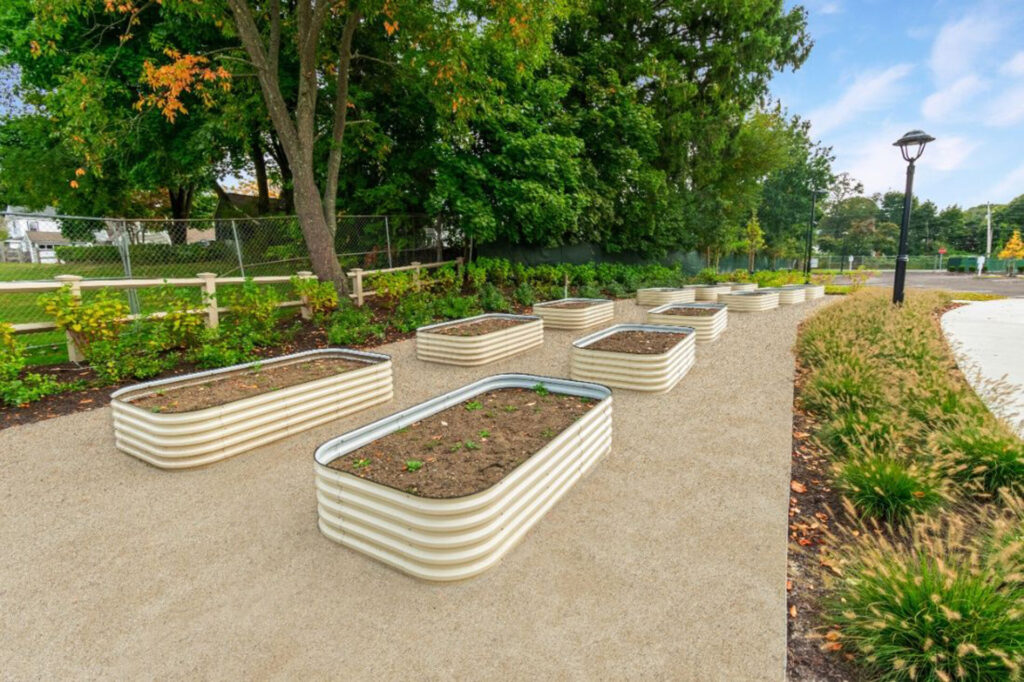
Throughout the building, common spaces encourage connection and socializing among residents. There’s a fitness center and a yoga room that Camilo says sees a lot of activity. The popular library hosts a puzzle club, a book club, and a cooking club for the culinarily inclined to swap recipes. Behind the building, a patio and community garden create more spaces for community.
Other elements of the space welcome in the rest of the community. The school’s playing field was kept intact and is still used for youth sports, and an adjacent dog park serves residents and neighbors alike. The auditorium, originally designed with high coffered ceilings intended to emulate Boston’s Symphony Hall, has been restored, and will be used by the North Shore Music Theatre for educational programming.
There were, of course, challenges in overhauling a hundred-year-old building to modern standards. To meet city building codes and state requirements for affordable housing status, the construction needed to adhere to strict sustainability guidelines. That meant replacing the “battle-axe of a boiler” with natural gas for heating water and heat pump systems for heating and cooling, DeFranza says. It was particularly difficult to find ways to get inside walls and add insulation without damaging the original tiles and finish work.

“Satisfying sustainability and historical codes was tough, but we succeeded,” DeFranza says.
Seventeen of the affordable units are available to tenants earning no more than 30 percent of the area median income—about $40,000 for a two-person household—and the remaining 68 are open to households with incomes below 60 percent of the median.

The first tenants began moving in in October 2024. By the middle of March this year, the building was 100 percent occupied. And DeFranza is looking forward to many more years of thriving community in the restored space. “For 100 years it served kids,” he says, “and for the next 100 years it will serve seniors and the public.”
livebeverlyvillage.com