
Connect with us
https://yoursportsnation.com/wp-content/uploads/2025/07/call-to-1.png

NIL

Houston Stifles K-State in Opening Round

Published

on


ARLINGTON, Texas – Three Houston relievers combined for eight scoreless innings Wednesday night, as the 11th-seeded Cougars defeated No. 6 seed K-State, 9-2, ending the Wildcats run at the 2025 Phillips 66 Big 12 Championship at Globe Life Field.
 
Houston, which earned its first Big 12 Conference tournament win, improves to 30-24 on the year and will face third-seeded TCU Thursday at 7:30 p.m. on ESPNU. K-State (31-24) will learn its NCAA Tournament fate on Monday, May 26 at 11 a.m. via the 2025 NCAA Selection Show, which can be seen on ESPN2.
 
“We come to these tournaments to try and win them and play well,” head coach Pete Hughes commented. “We got off to a really good start, and obviously, we couldn’t build on anything from there.”
 
“We had the chance to answer a five-run inning in the second, and we started building an inning that allows you to get back into the game with a hit by pitch and a walk and we ran the bases poorly. So, we squandered a great opportunity to get back in, and that kind of set the tone for the game,’ Hughes added.
 
Cougars’ starter Paul Schmitz surrendered two runs in the opening frame and scattered two hits before handing the ball over to Andres Perez. The right-handed reliever held the Cats to just two hits in his four innings of work with four strikeouts on his way to earning the win (3-1), while Brady Fuller was credited the save.  
 
Left-hander Jacob Frost was tagged for the loss, dropping his record to 1-4, as the St. Louis, Mo., product was spotted for five runs in the second.
 
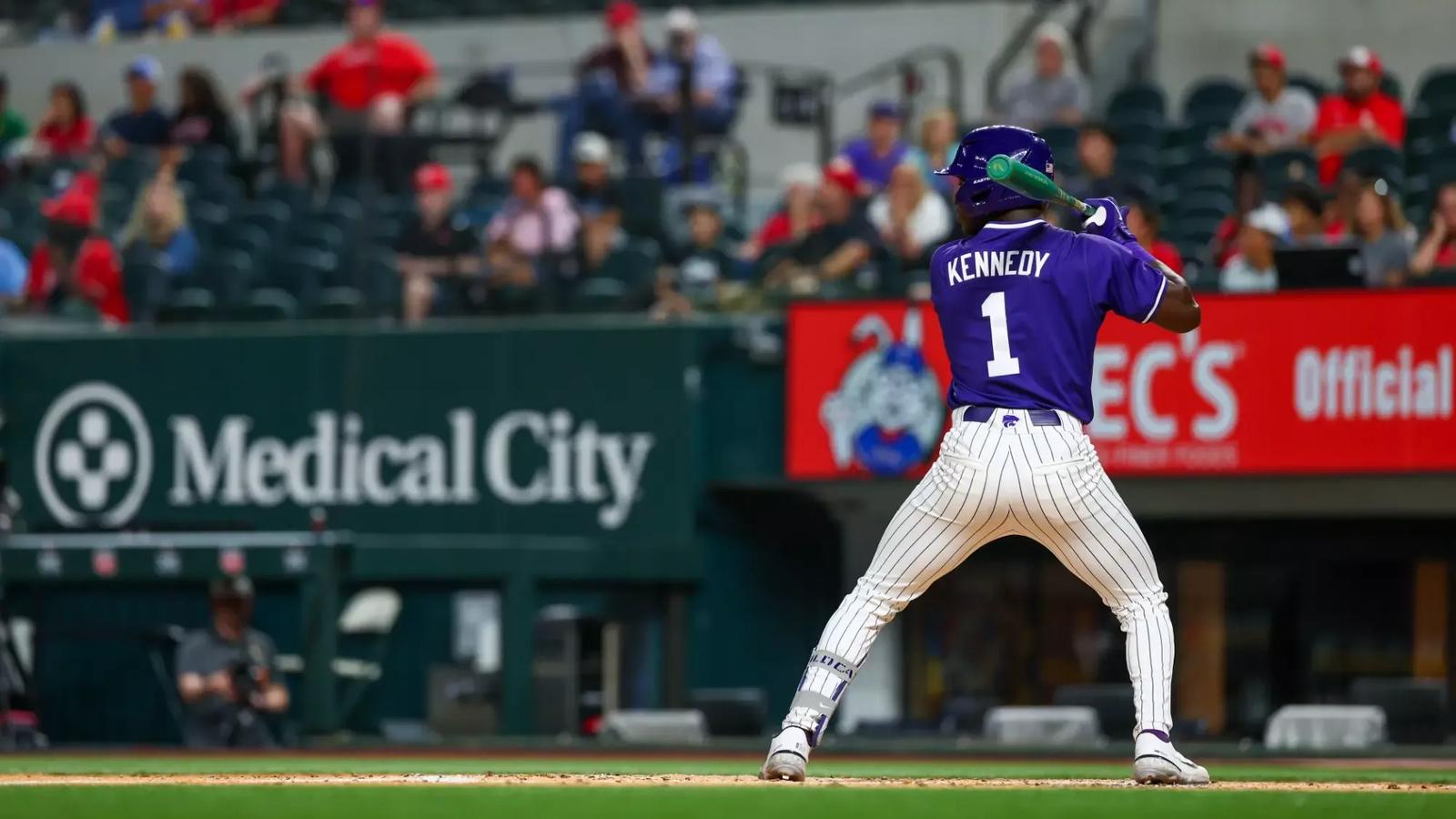
Five different players recorded a hit for K-State, with Dee Kennedy driving in both runs in the first.
 
HOW IT HAPPENED
After holding the Cougars in the top half of the first  inning, K-State jumped out to a 2-0 lead behind a two-run single by Kennedy.
 
Maximus Martin was issued a walk before a single from Keegan O’Connor and hit by pitch loaded the bases to bring Kennedy to the plate. The Cats’ third baseman flared a 2-2 pitch into center field to spot Schmitz for the runs.
 
Houston immediately answered with five runs in the second, leading K-State to make a call to the pen and bring James Guyette to the hill. The right-hander forced a grounder to second to stop the damage.  
 
After two scoreless innings, the Cougars scored four runs over a three-inning stretch to put the game away, leveling the season series with the Wildcats, 2-2.
 
INSIDE THE BOX

  • Houston scored nine runs on 11 hits, committed one error, and stranded nine runners on base.
  • K-State scored two runs on five hits with two errors and leaving eight runners on base..
  • Frost was tagged for the loss after allowing five runs, all earned, in 1 2/3 innings of work.
  • Five different Wildcats had a hit.  
  • Perez (3-1) picked up the win in relief, limiting K-State to two hits over four scoreless innings.
  • Fuller earned the save after firing three scoreless innings.   
  • Houston utilized four pitchers in the victory.
  • K-State hit .200 (3-for-15) with runners on base and .143 (1-for-7) with men in scoring position while Houston was 7-for-25 (.280) with runners on and 6-for-14 (.429) in scoring position.
  • Houston drove in three runs with two outs, while K-State had two.

 TEAM NOTES

  • The Cats are 22-29 when playing in the Big 12 Tournament, and 8-11 under Hughes.
  • K-State leads the all-time series, 7-4, with a 5-3 edge in games played in Texas.
  • Wednesday’s contest marked the first meeting between the two teams in postseason play. 


Link

Continue Reading
Click to comment

Leave a Reply

Your email address will not be published. Required fields are marked *

NIL

Missouri DE Damon Wilson II countersues Georgia, setting up a potentially major NIL legal battle

Published

on


A messy player-school NIL dispute just got messier.

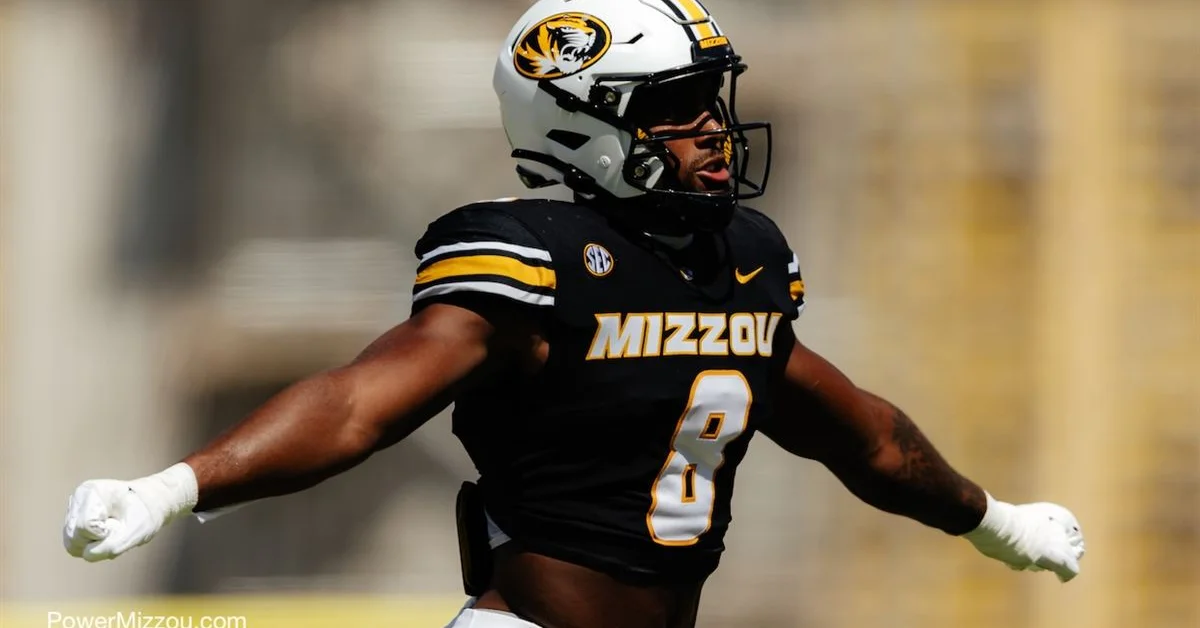
Less than a month after Georgia sued Damon Wilson II for transfer damages, Missouri’s star pass rusher filed a countersuit against Georgia, setting up a potentially precedent-setting NIL legal battle between an athlete and school.

“Recent court decisions have changed the landscape of college football and paved the way for NIL payments,” Bogdan Susan, one of Wilson’s attorneys, told PowerMizzou.com. “What has not changed is that college football players still have only four years of competition to realize their potential and try to achieve their dreams of playing in the NFL. A lot of trust is put into the colleges and coaching staffs. Coaches are not limited to four years of competition. The University of Georgia has been playing football for over 133 years. Damon has four years to play and he spent half of that time at Georgia. Decisions to transfer are not always about money. Stopping a young man from pursuing his dreams by forcing him to pay money that he has not received is just wrong.”

Wilson filed a 42-page complaint in Boone County, Mo. on Tuesday morning, an action first reported by The Athletic, alleging a civil conspiracy involving Georgia and its collective  for trying to “penalize Wilson for his decision to transfer.” The defendants named in the suit are the University of Georgia Athletic Association, the Classic City Collective and former Classic City CEO’s Matt Hibbs and Taylor Potts.

The suit alleges Georgia didn’t immediately put Wilson’s name in the transfer portal last January and also lied about his buyout, telling multiple unnamed Power 4 programs that they’d owe Georgia $1.2 million if Wilson transferred to their school. 

“UGAA’s actions signal that it is stuck in its old ways. The era of universities exerting total control over the career trajectories and rights of their student-athletes has been dead for nearly half a decade. Nonetheless, UGAA has demonstrated that, left to its own devices, it will attempt to exploit every loophole to deprive student-athletes like Wilson of the ability to reap the benefits of full and fair competition for their NIL rights. 23. No longer willing to endure UGAA’s harassment campaign and ready to hold UGAA and CCC accountable for their tortious interference with his business expectations when he entered the portal and chose to transfer, their breach of the Term Sheet’s Confidentiality Agreement, and UGAA’s efforts to tarnish his reputation as he pursues his lifelong dream of playing in the NFL, Wilson brings this action.”

Wilson’s claim hinges largely on the document signed by the player, the Classic City Collective and Hibbs and Potts. The involved parties signed a term sheet. Wilson’s suit claims the term sheet is not binding.

“The Term Sheet stated that it ‘preced[es]’ a ‘full License and Option Agreement,’ and specifically provided: ‘In the event the parties agree to this Term Sheet, then they shall work cooperatively to set forth these terms in a full legal contract including all the standard provisions of NIL licensing agreements.’ The Term Sheet further stated that Wilson ‘should seek legal counsel before finalizing the full License and Option Agreement.'”

The suit claims that Wilson, as part of a group of Georgia players, “without counsel present and with UGAA employees telling him that time was of the essence.” The suit alleges not only that Wilson signed the term sheet under pressure, but that the full binding contract was never presented, much less signed.

“The parties thus never executed a legally binding agreement containing any of the provisions in the Term Sheet,” the suit states.

The suit further claims that UGAA and the Classic City Collective violated the term sheet’s confidentiality agreement “by disclosing one or more of the Term Sheet’s provisions to sympathetic news outlets and affiliates to tarnish Wilson’s reputation.” 

This is believed to be the first time a school and an athlete have taken each other to court over an NIL issue. The resolution could depend on whether or not Wilson’s NIL agreement with Georgia’s collective was a binding contract.

The UGAA lawsuit against Wilson recently filed seeks liquidated damages of $390,000. Wilson’s countersuit claims those funds are not liquidated damages, but instead penalties for transferring from Georgia. 

“A penalty provision masquerading as a “liquidated damages” provision is unenforceable,” the filing reads. “It makes no effort to reasonably quantify damages that are difficult to ascertain, and it serves only to penalize Wilson for his decision to enter the transfer portal.”

Wilson’s suit also alleges defamation against UGAA, referencing a statement from Chief Marketing Officer Steven Drummond made to ESPN: “When the University of Georgia Athletic Association enters binding agreements with student-athletes, we honor our commitments and expect student-athletes to do the same.”

The suit clams “UGAA’s statement implies that Wilson is dishonest in his business dealings and his profession, impairing his ability to enter into future NIL agreements, and harms his reputation.”

Wilson was one of the top edge defenders in the SEC in 2025, recording 9 sacks, tied for third-most in the SEC, and 49 total pressures, second-most in the SEC. He is currently expected to play for Missouri in the Taxslayer Gator Bowl on Saturday. He has not declared his intent for next season. He has until January 14 to enter his name into the NFL Draft as an underclassman. 

This story will be updated as more information becomes available.

Cody Goodwin covers the Missouri Tigers for PowerMizzou and 247Sports. Follow him on Twitter/X at @codygoodwin.

PowerMizzou.com publisher Gabe DeArmond contributed to this report.


Link

Continue Reading

NIL

Georgia, Ex-Football Player Suing Each Other in NIL Dispute

Published

on


Georgia, Ex-Football Player Suing Each Other in NIL Dispute


Link

Continue Reading

NIL

Georgia football: Missouri LB Damon Wilson II sues Bulldogs

Published

on


Missouri linebacker Damon Wilson II is suing the University of Georgia’s athletic association and its Classic City Collective, which he says is attempting to “punish” him through a “coordinated campaign” for his decision to transfer. Earlier this month, Georgia sought $390,000 in damages citing a clause in Wilson’s NIL contract after his departure to another SEC program.

The lawsuit initiated what appears to be a landmark case in college football, which now includes the plaintiff fighting back with his own legal documents. Highlighting a 42-page complaint filed Dec. 23 in Boone County, Missouri, Wilson’s attorneys claim Georgia tried to sabotage their client’s potential destinations after employees “falsely” told “at least three programs that — if Wilson left Georgia and joined their programs — Wilson would be subject to a $1.2 million buyout.”

The complaint claims Georgia “continued to assert similar demands in an effort to harass Wilson and impair his on-field performance for a conference rival” throughout the 2025 regular season.

Wilson signed a new deal with Georgia’s NIL collective in December 2024 during the College Football Playoff, but entered the transfer portal and moved to Missouri weeks later. While documents show Georgia paid Wilson $30,000 under the terms of the new deal before his departure, the athletic department states Wilson owed a $390,000 lump sum within 30 days of his exit.

The contract was a 14-month agreement worth $500,000, which was set to be paid in monthly $30,000 increments. Georgia would have also paid Wilson two $40,000 retention bonuses at the end of the NCAA transfer portal windows. The exit clause states that Wilson would owe a lump-sum payment worth the total he would have received if he remained with the program through the duration of the contract.

“The era of universities exerting total control over the career trajectories and rights of their student-athletes has been dead for nearly half a decade,” Wilson’s complaint said. “Nonetheless, UGAA has demonstrated that, left to its own devices, it will attempt to exploit every loophole to deprive student-athletes like Wilson of the ability to reap the benefits of full and fair competition for their NIL rights.”

The previous term sheet signed by Wilson, his representation argues, was not a “legally binding document” as Georgia states. 

“CCC failed even to present Wilson what it promised in the Term Sheet — a “full License and Option Agreement,” the lawsuit said. “The parties thus never executed a legally binding agreement containing any of the provisions in the Term Sheet.”

Wilson appeared in 26 games at Georgia from during the 2023 and 2024 seasons and projected to be an impact starter prior to his decision to leave the program.

Georgia’s NIL collective’s two now-former CEOs — Matt Hibbs and Tanner Potts — were named in the lawsuit. Wilson seeks a “fair and reasonable amount of damages” for “financial and reputational harm he has suffered” in the aftermath of playing at Missouri this season. 


Link

Continue Reading

NIL

University of Missouri football player countersues University of Georgia

Published

on


A University of Missouri athlete countersued his former university on Tuesday.

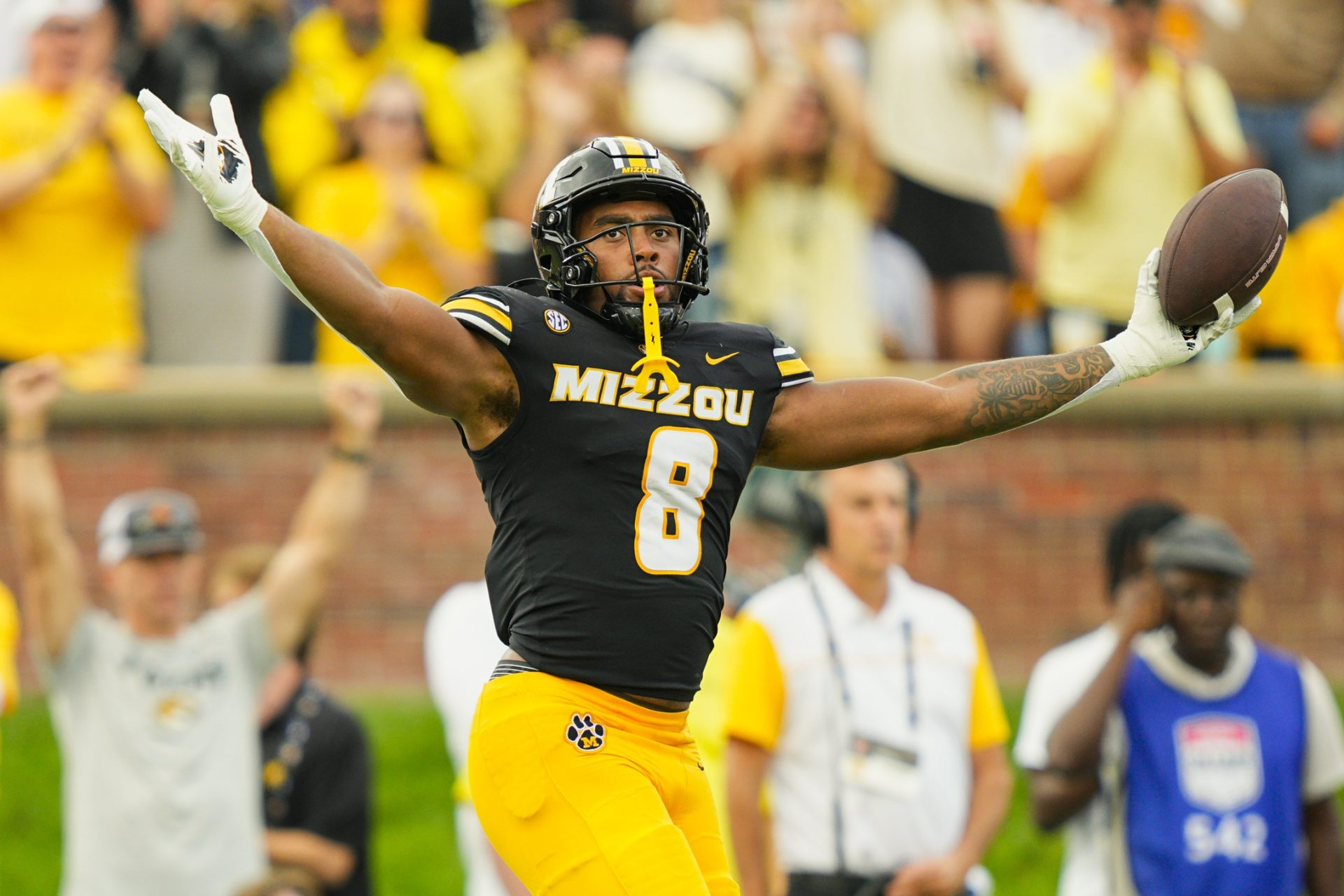
Mizzou Football’s defensive end, Damon Wilson II, is countersuing the University of Georgia for damages regarding Name, Image and Likeness (NIL) money.

The lawsuit comes after the University of Georgia Athletic Association (UGAA) sued Wilson for allegedly violating a Term Sheet that he had signed in December 2024 during the College Football Playoffs.

The paperwork was presented to him by the Classic City Collective, Inc. (CCC), a supporter-funded platform used by UGAA to license student-athletes’ NIL rights, according to court records.

Wilson’s legal counsel argued that the signed Term Sheet was never a legally binding contract, as the documentation included the line, “In the event the parties agree to this Term Sheet, then they shall work cooperatively to set forth these terms in a full legal contract, including all the standard provisions of NIL licensing agreements.”

His attorney further noted that the CCC never presented him with what was promised in the Term Sheet or used it as a base to create a full legal License and Option Agreement contract.

Court documents reported that four days after Wilson signed the Term Sheet, and no legally binding contract was created, finalized or signed, CCC sent him $30,000 on Christmas Day.

Approximately one week later, Georgia’s season ended in a loss and the defensive end entered the transfer portal, eventually deciding to transfer to the University of Missouri to expand his opportunities of getting exposed to the NFL.

Less than three weeks later, CCC issued a termination notice to Wilson following his transfer announcement, which included a claim that would have required him to pay “all remaining License Fees that would have otherwise been payable under” the Term Sheet, which was a total of $390,000.

The lawsuit accused UGAA of violating the confidentiality agreement by publicly disclosing the full, signed Term Sheet to news outlets, on the public docket and by contacting at least three major college football programs to falsely claim that if Wilson left Georgia, then he would be subject to a 1.2 million buyout.

“UGAA’s actions signal that it is stuck in its old ways. The era of universities exerting total control over the career trajectories and rights of their student-athletes has been dead for nearly half a decade,” read the lawsuit. “Nonetheless, UGAA has demonstrated that, left to its own devices, it will attempt to exploit every loophole to deprive student-athletes like Wilson of the ability to reap the benefits of full and fair competition for their NIL rights.”

The petition stated that Wilson will not endure harassment from the UGAA and hold them accountable for interfering with his “business expectations when he entered the portal and chose to transfer, their breach of the Term Sheet’s Confidentiality Agreement and UGAA’s efforts to tarnish his reputation as he pursues his lifelong dream of playing in the NFL.”


Link

Continue Reading

NIL

Report: Notre Dame agreement with College Football Playoff led to USC not continuing rivalry

Published

on


Turns out, the rivalry between Notre Dame and USC was close to being saved earlier this season. According to Ryan Kartje of The Los Angeles Times, the two programs almost announced a 2026 game had been scheduled. However, the agreement Notre Dame put together with the College Football Playoff changed things for the Trojans.

“USC and Notre Dame were close to announcing a continuation of their rivalry earlier this season, a source told @latimes,” Kartje said via X. “USC was ready to compromise and play the ’26 game in November But then USC learned of ND’s agreement w/ the CFP to have a guaranteed spot if in the top 12.

“In light of Notre Dame’s agreement re: CFP, which USC hadn’t been aware of, USC reversed course on its plan to compromise and insisted that the ND game be played in Week Zero in 2026. A source said they felt ND’s agreement was ‘a material advantage’ that could disadvantage USC.”

Notre Dame athletic director Pete Bevacqua revealed this agreement, also called an MOU, with the CFP after this past Selection Sunday. If the Irish are placed inside the top-12 moving forward, they are guaranteed a spot in the field. The same is true if the CFP expands to 14 teams, as Notre Dame would need to be ranked inside the top 13.

If the MOU were in effect this season, Notre Dame would have gotten into the field over Miami despite being ranked lower. Miami also held the head-to-head matchup, jumping Notre Dame at the last possible moment. This scenario playing out against USC was apparently a concern for administration in Los Angeles.

“Had Notre Dame had its new agreement with the CFP committee in place in 2025, the Irish would’ve gotten in over Miami, who beat them earlier in the season,” Kartje said via X. “That scenario was a concern to USC.”

Now, for just the second time since World War II, there will not be a game between Notre Dame and USC. It’s one of the more storied rivalries in college football despite the two never sharing a conference. We are not too far away from 100 games between them, sitting at 93 after the 2025 edition took place in South Bend.

Notre Dame already has a game on the ’26 and ’27 schedule to replace USC. A home-and-home series will take place with BYU, a team they could have played in the Pop-Tarts Bowl in a few days.


Link

Continue Reading

NIL

More than the game: How NIL is reshaping opportunity for Hawaiʻi athletes | Hawai’i Hustle

Published

on


HONOLULU (Island News) — When conversations turn to Name, Image and Likeness in college sports, the focus often lands on eye-popping numbers and national stars.

This year’s Heisman Trophy winner, Indiana quarterback Fernando Mendoza, reportedly earned more than two million dollars through NIL deals — a figure that has become shorthand for how dramatically the college athletics landscape has changed.

But far from the national spotlight, NIL is quietly reshaping opportunity in a very different way.

At the University of Hawaiʻi, athletes are discovering that NIL isn’t only about endorsements or social media reach. It’s about identity, adaptability, and learning how to navigate a world where athletic performance and personal story now intersect.

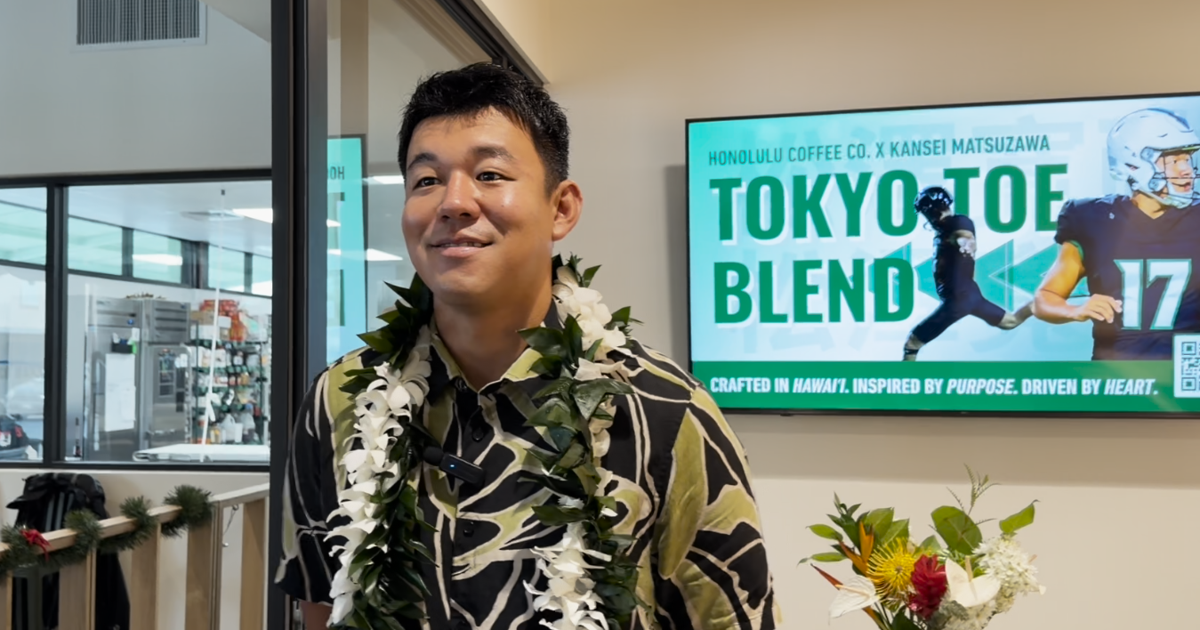
For kicker Kansei Matsuzawa, that intersection arrived unexpectedly.

Matsuzawa came to Hawaiʻi from Japan to play football, improve his English, and test himself at the highest level of college athletics. Branding and marketing were never part of the plan. Yet in today’s NIL era, those skills have become part of the education.

“As a business… I can apply to the business side,” Matsuzawa said, reflecting on what he’s learned through the process.

That lesson took shape through an NIL partnership with Honolulu Coffee Company, a collaboration rooted not in star power, but in storytelling. The result was the Tokyo Toe Blend, a coffee inspired by Matsuzawa’s journey from Japan to Hawaiʻi and the precision and discipline required of a kicker — details that mirror both his athletic and personal path.

For Honolulu Coffee, the partnership represented a shift in how businesses think about college athletes.

“As we really started to think about his story… and the University of Hawaiʻi athletics this year too,” said Erica Mounsey, the company’s chief operating officer. “We think this is just the beginning of many partnerships to come in the future.”

Rather than chasing national recognition, the company leaned into authenticity — choosing an athlete whose background aligned with its values and local customer base. In the evolving NIL marketplace, that approach is becoming increasingly important. Consumers respond not just to names, but to narratives that feel real and connected to place.

Those same changes are being felt inside athletic departments.

At UH, NIL has introduced a new layer of complexity to college sports — one that requires creativity, coordination, and a long-term view of athlete development beyond competition.

“We’re thinking about, okay, is there… we gotta be thinking about all at the same time,” said Matt Elliott, UH’s athletic director. “We’re putting together packages… a lot of creative problem solving.”

That problem solving reflects a broader reality: athletes are now brands, universities are strategic partners, and local businesses are part of the ecosystem. Success depends not on one viral moment, but on relationships built thoughtfully and sustainably.

For Mounsey, that mindset defines the future of NIL in Hawaiʻi.

“Anything’s possible… with a goal in mind,” she said.

As NIL continues to evolve nationwide, Hawaiʻi’s athletes are navigating it in a uniquely local way — balancing culture, community, and opportunity. For Matsuzawa, the experience has expanded his understanding of what it means to be a student-athlete.

The kicks still matter. So do the wins and losses. But increasingly, so does the knowledge gained off the field — lessons in storytelling, adaptability, and self-advocacy that will carry far beyond college football.

In Hawaiʻi, NIL isn’t just changing the game.

It’s changing what athletes take with them when the game ends.


Tradition drives Hawaiian Pie Company through its peak season


Link

Continue Reading

Most Viewed Posts

Trending