
NIL
How Adam Breneman Wants to Change College Football, at Penn State and Beyond

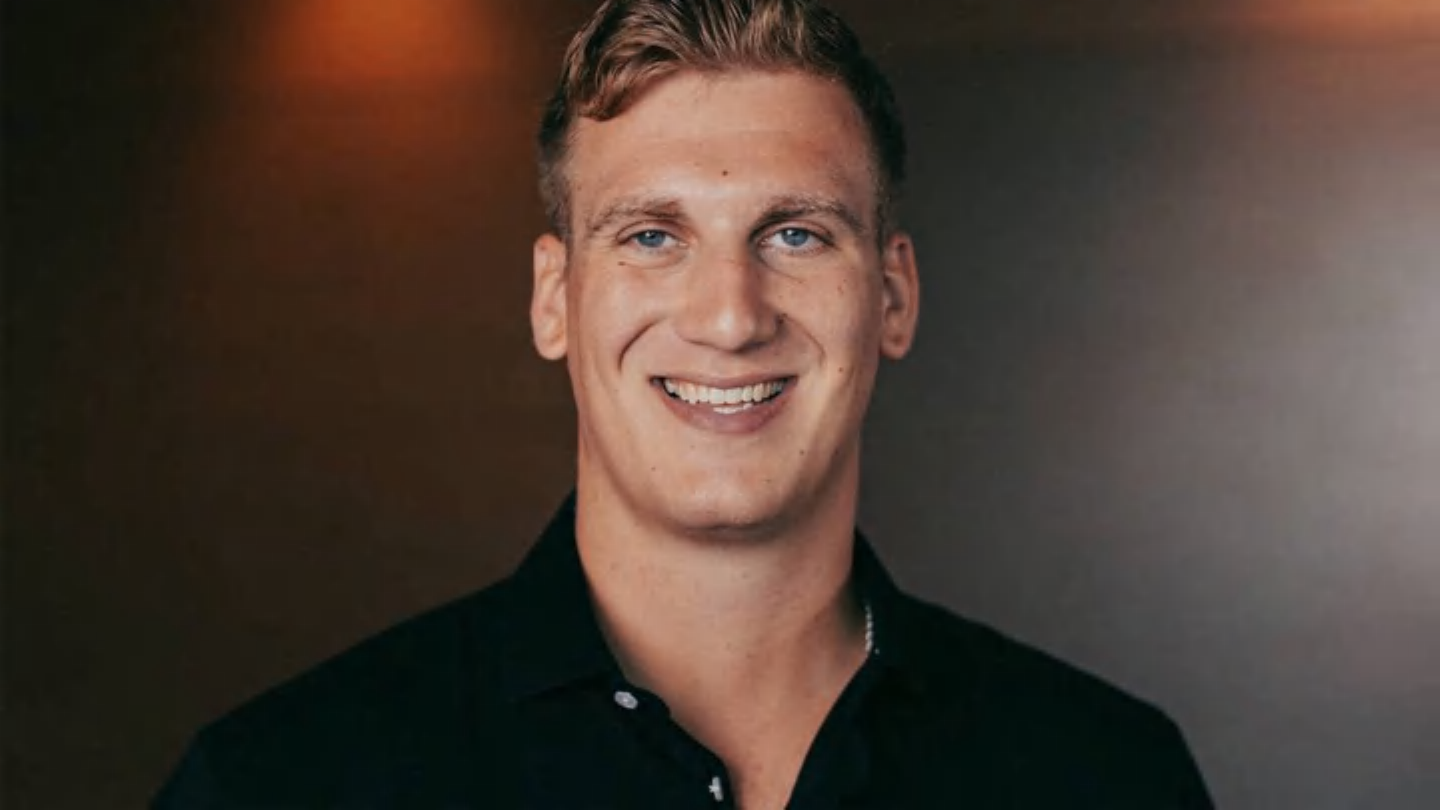
Adam Breneman views Penn State football now through a uniquely personal lens. Though the foundation remains recognizable (Breneman played for Bill O’Brien and was recruited by Joe Paterno), Penn State’s program is far different than the one he knew in the 2010s. Principally regarding this.
“I think the biggest thing that’s changed recently is just, clearly, there’s been a commitment to do whatever it takes to win at the highest level at Penn State,” Breneman said in a recent interview. “And I don’t think that Penn State had that for a while.”
The former Penn State and UMass tight end and Arizona State assistant coach now is a leading young voice in college football media. Breneman, 30, co-founded The College Sports Company, a media enterprise, and is involved with its Penn State brand, State Media.
Breneman interviews the game’s top coaches and players for his podcast, Next Up With Adam Breneman, and has turned social media into a powerful personal platform. Recently, Breneman sat down with Penn State on SI to discuss his twisting career, his relationship with Penn State and his ideas for creating athlete-driven media.
Here’s Part 2 of that interview. Check out Part 1 here.
Question: How is the Penn State football program different than the one you played for?
Adam Breneman: I think the biggest thing that’s changed recently is just, clearly, there’s been a commitment to do whatever it takes to win at the highest level at Penn State. And I don’t think that Penn State had that for a while. I feel like for a long time, Penn State, for a lot of good reasons, had a certain way of doing things. It was, Penn State was different than everybody else. It was maybe more old-school at times, and you have all these pieces that were a little bit outdated, like the facilities and things like that. But if you recruit the right kind of people, those things didn’t matter at Penn State.
In today’s college football, things have changed completely. You need money, you need to compete, you need to keep up in order to win at the highest level. And [athletic director] Pat Kraft and the president [Neeli Bendapudi] and coach [James] Franklin, everyone has invested in what it takes to win at the highest level. If the expectation is that you’re going to beat all these teams, you’d better have the resources that they all have. And I think now, for the first time in a while at Penn State, there’s the resources that it takes to win at the very highest level of college football.
Now it’s time to go do it, as they have in the past, but time to win a national championship. I think now the resources are there. I mean, look at the hire of [defensive coordinator] Jim Knowles and what it took to get that done. Think about keeping all those players on their roster and not having them transfer or go to the NFL. It doesn’t happen without big-time financial resources. That’s a big change that has happened recently at Penn State.
Question: What’s different about the Lasch Football Building from when you played?
Breneman: Everything’s brand new in that thing. Every time you go, there’s new construction being done. Everything is state of the art. There’s sleep rooms, and there’s recovery rooms, and there’s a quarterback-specific training room. There’s just so many things that are really good for players. The facility was good when we when were there, but it’s even better now. And I think that’s a testament to all the resources it takes to win.

Question: How do you try to contribute to that through State Media and The College Sports Company?
Breneman: Our belief is that athletes want to be part of content and want to contribute on social media. If I would have done that when I was playing football, I would have gotten laughed out of the room. But now it’s common, and everyone wants to do it. We wanted to give athletes a place to do that. I think on top of it, every school and collective needed to find ways to make new money, to drive new revenue to pay the players. And we thought that creating a media network, and having these shows and assets that brands and donors can put money behind, was a great way to do that.
So that’s when we started The College Sports Company and State Media. We have networks at Louisville, South Carolina, Tennessee, BYU, schools all over the country. And really the goal is to create great content for the fans, to show the fans a different side of current and former players and to build up the program and the brand. But most importantly, it’s to drive new revenue for the players.
Question: How are you driving revenue for players?
Breneman: We operate like any other media company, where we are selling sponsorships and advertising, a lot of times to local businesses and donors. And then we have deals at each school where a certain amount, usually the vast majority, of the money goes directly to the athletes who are part of everything. So it’s a great way for schools to find ways to use donor money to find new advertisers and for us to find national advertisers. We believe it’s the future of college sports, and the schools and the NIL collectives that really think like media companies and operate like them will be the ones that are successful in driving the most revenue.
Question: How has growth gone with State Media?
Breneman: State Media has been great. We’ve done close to seven figures in revenue, and we have some media networks that are doing north of a million dollars a year in revenue. It’s pretty early, and we’re still kind of adjusting and adapting. We’re working out some new partnerships at Penn State, which I think will help us from a scaling and access and revenue standpoint. So it’s really good. We are excited about it and we think the future is pretty bright. And the cool thing is that the players and the former players are really into it and excited to be part of it.
Question: How has Penn State received the idea?
Breneman: We operate like any other media company would at Penn State. We obviously have kind of unique access but we still get approval for things we’re doing and still run things by the [athletic communications department]. We comply by that standard. I mean, really almost everything we’re doing is extremely positive about the school, obviously. But the one unique thing is, the way we operate is really outside of the direct university partnership so that we can really participate in NIL directly. There are a lot of rules around NIL and who can be part of it. So we’re a separate entity. We’re a for-profit company. We are outside of the athletic department, but we obviously work closely with the school and have a direct partnership with the NIL collective [Happy Valley United].
Question: Who has been your best Penn State interview so far?
Breneman: Coach Franklin has been great. I’ve done two interviews with him, and I think in both he’s been very candid and transparent. I’ve had a lot of people saying, ‘Hey, I haven’t really seen coach Franklin that open and honest before,’ which I think is really cool. And I know Coach enjoys doing it. I thought [offensive coordinator] Andy Kotelnicki was a great interview. He was exciting and entertaining, but I always enjoy talking to the players too. They’re fun.
Question: What has been most illuminating about your interviews with coach Franklin?
Breneman: One of the fun things we talked about is the time when he got to Penn State, when he was still dealing with sanctions. He alluded to how he didn’t know what he was walking into. He didn’t quite get the full story during the interview process of what was going on as they were selling him the job. And I thought he was pretty open about that.
We talked about some of the adversity. He talked about 2016 and the crowd chanting, ‘fire Franklin’ as he walked off the field [at halftime of the Minnesota game]. And then they turn around and win the Big 10 Championship. I thought was really cool. I asked him in my last interview, ‘Do you ever think that the fans will fully appreciate what you’ve done here in your 10 years?’ And he said, ‘No, but no one gives a s—.’ I think it was his exact quote. So I thought that was a pretty neat answer.
More Penn State Football

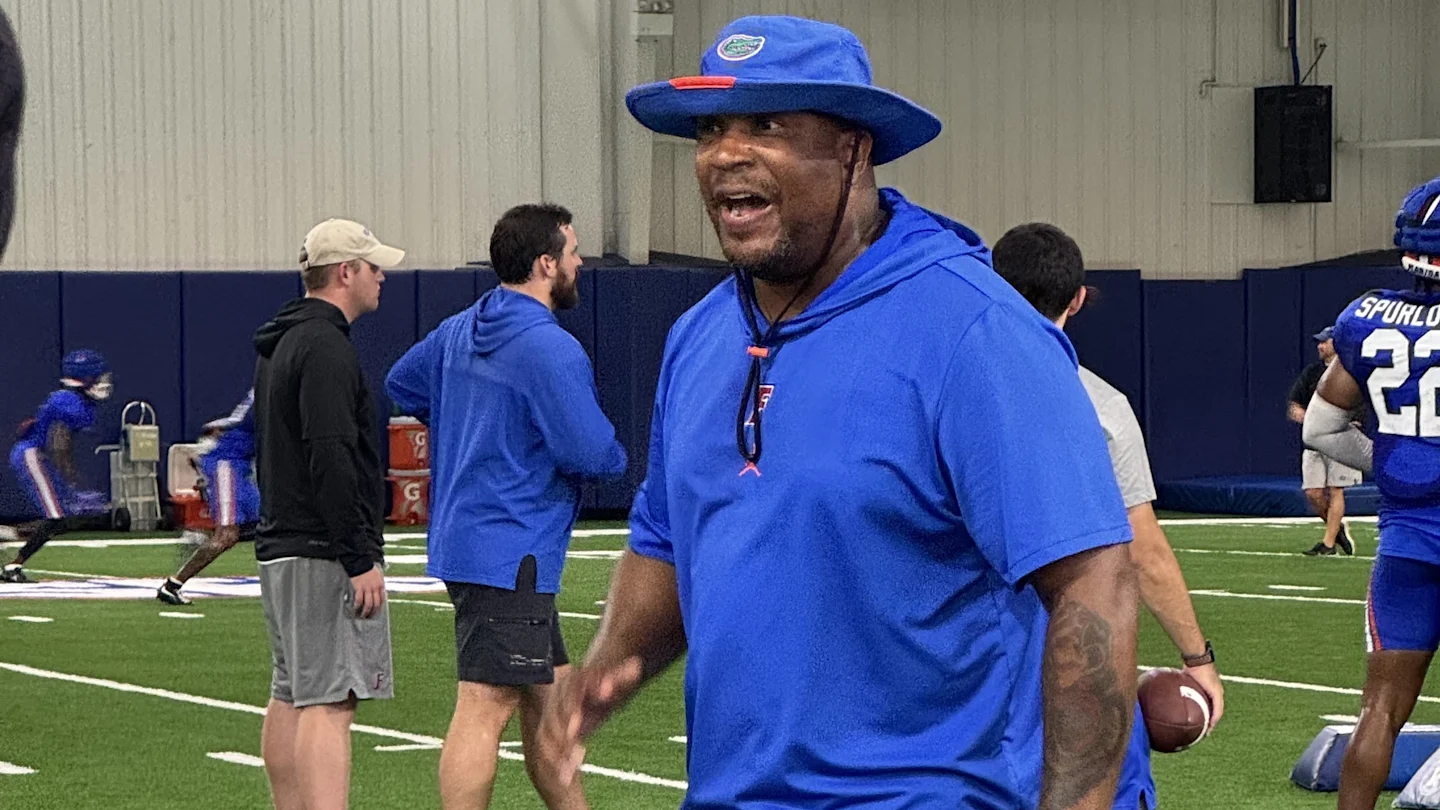
If there had been one assistant coach most Gator fans would have liked to stick around on Jon Sumrall’s new staff, it would have been running back coach Jabbar Juluke. During his time with the Gators, the running back room was deep and felt like one of the biggest strengths of the team. It didn’t seem to matter who Juluke trotted out there; all of Florida’s running backs seemed ready and capable of rushing for 100 yards at a moment’s notice.
But alas, Juluke didn’t stick around on Florida’s new staff, and it is his new home he just got hired at that also opens up question marks about whether Florida’s best player is going to follow him to that new home.
Jabbar Juluke hired at Texas
Texas has hired Juluke to be its running backs coach and as its associate head coach for the 2026 season. Juluke had been a target to land at Kentucky before opting for Texas.
Given how Sumrall has been assembling his staff, Gator fans should feel confident that someone notable is going to come in and fill his shoes. But given that the modern era is what it is, the immediate fear among Gator fans is whether or not running back Jadan Baugh is going to follow Juluke to Austin.
Sumrall made sure to highlight Baugh during his introductory press conference, and for good reason. After Baugh’s monster game against FSU, he ended the 2025 season as the first Florida running back since 2015 to eclipse 1,000 yards in a season. He also became the first Florida running back since Emmitt Smith to eclipse 1,000 yards in under 200 carries as an underclassman. Baugh’s 266 yards against FSU were also the 2nd most in a single game in Florida history, only behind Smith’s 316-yard performance in 1989 against New Mexico.
There is no official indication of which way Baugh might be leaning or if going to Texas has even crossed his mind. But this is the modern era of college football, where NIL and the transfer portal mean nothing can be taken for granted.
And so, until we get an update on Baugh’s plans, Gator fans will be taking notice of their former running backs coach’s new home.
NIL
What college football coaches say about recruiting, roster management means more in NIL, transfer portal era

Nearly everything that head college football coaches do comes with purpose. Whether it is the lack of answering a question (with a ramble that flips to different subjects), a rant on NIL representatives or even the most mundane things like a weekly schedule, it is calculated.
That is why paying attention to what coaches say, and how it can be interpreted, is worth looking into and understanding, especially in this volatile transfer portal climate.
So when West Virginia coach Rich Rodriguez opined about the Mountaineers’ depth in the secondary and their need to add more players when the spring transfer portal window opens, there are varied ways to view it.

The settlement of a class-action lawsuit against the NCAA and its most powerful conferences this year was supposed to cap the amount of money schools could pay athletes and establish stricter guidelines for name, image and likeness payments.
But the introduction of direct revenue sharing with athletes and new reporting requirements hasn’t stopped increased spending, according to coaches, athletics directors and general managers. Even President Donald Trump noted the high price for college talent recently in the Oval Office, and it’s not clear that anyone — in the pursuit of championships and on-field glory — can help themselves.
“Loopholes have won the day,” NC State football coach Dave Doeren said Wednesday.
The result is a continuing financial race across college athletics, especially football and men’s basketball, with seemingly no end to increasing costs at a time when the NCAA has abandoned or been forced to abandon its amateurism rules under a barrage of legal challenges and moves toward a professional model. Programs and conferences are working with private equity and trying to find new revenue streams amid the financial challenges.
Meanwhile, athletes are in their fifth year of being able to profit from their names, images and likenesses (NIL). And looser transfer rules implemented at the same time have enabled the movement of athletes akin to free agency in professional sports.
“Let’s make no doubt about it: We’re in a professional era,” University of North Carolina football general manager Michael Lombardi told reporters during a press conference this month.
The settlement in House v. NCAA — named for lead plaintiff Grant House, a former Arizona State swimmer — led to direct revenue-sharing between schools and athletes. And it came with a cap: $20.5 million per school to be divided as they see fit among programs and athletes.
The number equaled 22% of average athletic revenue across teams in the four biggest, most powerful conferences and brought total spending on athletes to roughly 50% of revenues, including scholarships, travel, food and other expenses.
House and other athletes sued college sports’ governing body and the NCAA’s major conferences — the ACC, Big Ten, Big 12, Pac-12 and SEC. The athletes argued that they deserved damages for not being allowed to monetize their NIL as the NCAA has allowed since 2021. They also wanted future broadcast revenue to be classified as NIL, opening the door to potential revenue sharing. The major conferences and the NCAA make the majority of their revenue through selling broadcast rights for football and men’s basketball. After several years, the dispute wound up with a proposed settlement.
The NCAA and member schools have pushed for federal legislation to allow them to codify some of the settlement and thwart some legal challenges, but that effort hasn’t produced a bill able to pass either chamber.
NIL spending
In addition to revenue sharing, the settlement allowed for outside compensation for the use of athletes’ names, images or likeness, but any deal above $600 would have to go through a new system, called NIL Go, designed to weed out abuses through the new College Sports Commission.
More than 12,000 deals for a total value of $87.5 million have been cleared by NIL Go as of Nov. 1, according to the College Sports Commission. Almost 400 deals worth $10 million haven’t been cleared since the launch of NIL Go on June 11. In October, more than 3,300 deals were cleared worth about $25 million – an average of $7,418 per deal.
The College Sports Commission initially said that NIL collectives — groups created to raise money to pay players for individual schools — wouldn’t meet the group’s “valid business purpose” criteria, a move designed to stop pay-to-play payments masquerading as contracts requiring nominal work or appearances. Within weeks, the commission reversed course, meaning NIL could continue to function as it has in addition to the new revenue sharing.
Collectives rushed to beat the implementation of the coming revenue-sharing cap by frontloading deals for athletes for the 2025-26 academic year so they wouldn’t count against that figure.
Texas Tech, which will play in this season’s College Football Playoff, is the most public example with billionaire boosters helping spend more than $28 million on its roster, including $7 million on its defensive line. Virginia, which reached the ACC title game, got at least $20 million from an anonymous donor to upgrade its football roster.
“You get what you pay for sometimes – most of the time,” said Doeren, who is completing his 13th season at NC State and is among the longest tenured coaches in major college football. “So that’s what people are doing to rebuild. Some of the schools have more than others. I don’t understand how we can say there’s a cap though, if there’s not.”
UNC paid $4 million over two years for quarterback Gio Lopez, a transfer from South Alabama, ESPN reported. Duke reportedly paid $8 million over two years for quarterback Darian Mensah, a transfer from Tulane who was the top passer in the ACC for Duke, which won its first outright ACC title since 1962. NC State quarterback CJ Bailey will likely have lucrative offers this offseason from teams in need.
Trump said NIL “is a disaster for sports.”
“You can’t pay a quarterback $14 million to come out of high school,” Trump said. “They don’t even know if he’s going to be a very good player. Colleges cannot afford to pay the kind of salaries you’re hearing out there.”
Salaries, particularly for high school players, haven’t reached that amount yet. But Trump suggested that colleges won’t be able to stop.
“They’re going to get wiped out, including ones that do well in football,” he said.
There is plenty of evidence to suggest schools won’t stop. LSU reportedly guaranteed new coach Lane Kiffin $25 million annually for his roster. Other schools, too, have promised their coaches millions for talent acquisition and retention, above and beyond the revenue-sharing cap.
“Tell me the numbers and the plan for what the money is for the players because that’s everything in that area to me,” Kiffin said at his introductory press conference, claiming he was unaware of his $13-million a year salary. “Not what I make, what they make, to understand how you can build this.”
Arms race
Officials from across the country are paying attention to reports of millions for rosters — and trying to square that with the new rules.
“The numbers you’re hearing and the numbers we know that are out there don’t compute with the cap number,” Notre Dame athletics director Pete Bevacqua said at a press conference last week. “I think we have to be honest and forthright with ourselves and have a set of rules that are realistic and reflect what’s happening, reflect major college football in 2025 and beyond.”
The revenue-sharing cap is $20.5 million, but the first $2.5 million of additional athletic scholarships across the department is supposed to count against the cap, something that could change moving forward. The cap goes up 4% annually.
North Carolina allocated $13 million to football, $7 million to men’s basketball, $250,000 to baseball and $250,000 to women’s basketball, roughly accounting for how the department generates its revenue. Bevacqua said some schools allocate up to $16 million of the cap to football.
“I think the cap’s too low, and I think if we keep operating under this rule of where the cap is, most major programs are going to have a heck of a time going backwards because you read the same news reports that I do,” Bevacqua said. “You read and know about the same roster numbers for NIL and compensation that I do. Instead of making pretend that doesn’t exist, let’s deal with it and come up with a set of rules that can be followed and then hold people’s feet to the fire.”
Before revenue sharing, programs were committing dollars that had been raised — or needed to be raised. Direct revenue sharing brought some certainty as to where the $20.5 million would come from. But the “above the cap” spending comes from outside dollars.
NC State’s OnePack NIL Collective, a group that helps fund NIL payments for Wolfpack, raises money by selling membership packages to fans and supporters, who get access to a variety of perks including newsletters, gear, autograph sessions and personalized tours from athletes.
North Carolina has adopted a corporate model, seeking to partner with companies to funnel more money toward its players. Sponsorship money that comes directly to the athletic department would count toward the revenue-sharing cap, Lombardi explained, while a corporate sponsorship deal with a player wouldn’t.
“Part of this job is still fundraising because the teams that you’re competing against – the Clemsons, the Florida States, the Virginias – they’re operating on a different level,” said Lombardi, who traveled to Saudi Arabia before the football season to meet with a potential donor for the UNC program.
“Everybody has a different level of financial money and you’ve got to be able to be competitive within that environment. Texas, Texas A&M, the Southeastern Conference schools, everybody gets $20.5 million. How it gets divided up is different, but everybody else is out fundraising through corporate dollars, which will then be allowed to go to the players.”
New model
As of 2021, players, at last, could get money to sign autographs, appear in commercials or for the sale of their jerseys. The market, quickly and predictably, expanded into talent acquisition and retention. In 2025, it is an accepted part of recruiting for high school players and college transfers.
Lombardi said every freshman signing with schools is getting a revenue share contract and that each comes with an acquisition cost in a highly competitive environment. UNC brought in 38 freshmen as part of its 39-man early signing day class in December.
“You can argue the order, but what’s your academic curriculum and what’s your NIL situation are two questions that got to get answered,” Lombardi said. “Maybe the second one goes first.”
Lombardi said the Tar Heels under coach Bill Belichick, who won six Super Bowl titles in the NFL but is new to the college game, needed time to get up and running to compete against others who have had a plan for several years.
They’re not alone. Coaches, general managers and programs have to figure out what numbers are real and what they can do within their own budget.
The transfer portal, which Lombardi has equated to NFL free agency, opens Jan. 2, though many players have already announced their intent to transfer and schools, no doubt, have lined up deals with them.
“It’s a mess right now,” Doeren said. “You just got to do the best you can. I know, as a program — [athletics director] Boo [Corrigan] and I’ve met — we’re going to do everything we can to be as aggressive as we can in this space.”
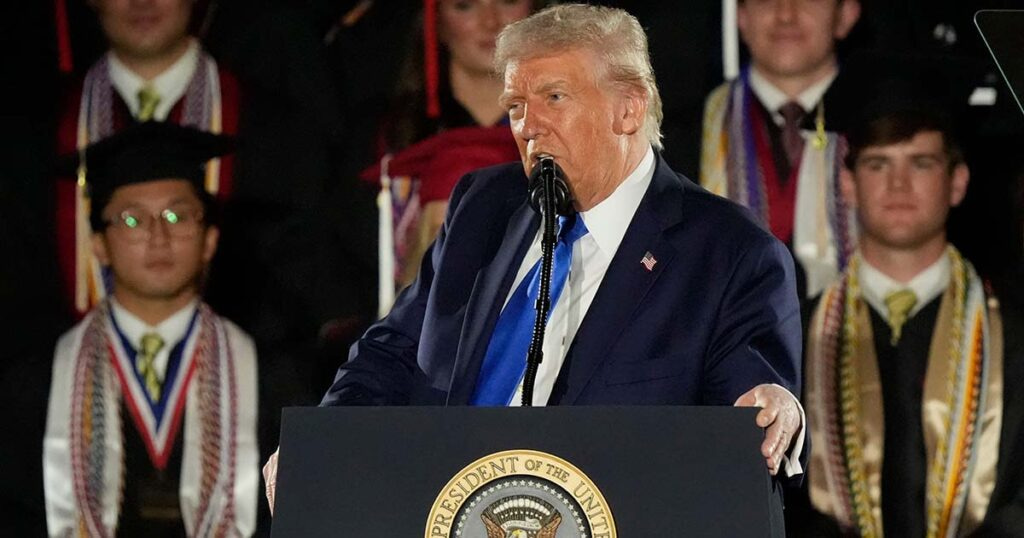
Speaking from the Oval Office on Friday while honoring the “Miracle on Ice” 1980 U.S. men’s hockey team, President Donald Trump called NIL a “disaster” in college sports. He also further signaled his willingness to get involved.
Trump has been vocal about settling the landscape in college athletics. He signed an executive order earlier this year called “Save College Sports” to prohibit third-party, pay-for-play payments and directs the Secretary of Labor and the National Labor Relations Board to clarify that athletes are amateurs and not employees.
Advertisement
SUBSCRIBE to the On3 NIL and Sports Business Newsletter
But as dollars continue to fly through NIL and revenue-sharing, Trump called for a “strong salary cap” and said colleges are putting themselves in tough financial shape as a result. He stressed the need for action and reiterated he’d step in, if necessary.
“You’re going to have these colleges wipe themselves out, and something ought to be done,” Trump said. “And I’m willing to put the federal government behind it. But if it’s not done fast, you’re going to wipe out colleges. They’re going to get wiped out, including ones that do well in football.
Advertisement
“They can’t pay $12 million, $14 million, $10 million, $6 million for players. They won’t be able to stop. There’ll always be that one player, they only have that player, they’re going to win the national championship. And they’ll have 100 colleges thinking the same thing. Colleges cannot afford to play this game. It’s a very bad thing that’s happening.”
Donald Trump: Schools ‘putting too much money into football’
President Donald Trump’s assessment of college athletics centers around Olympics sports, which he has said multiple times are caught in the middle of the current landscape. He said Friday schools have been cutting those non-revenue sports, calling them “training grounds” for the Olympics. For example, UTEP dropped women’s tennis while Grand Canyon cut men’s volleyball ahead of the House settlement.
As things currently stand, Trump argued schools are starting to divert more dollars toward football. As a result, other sports could be impacted.
Advertisement
“I think that it’s a disaster for college sports,” Trump said of NIL. “I think it’s a disaster for the Olympics. We’re losing a lot of teams. Colleges are cutting their, they would call them, sort of the lesser sports. They’re losing them at numbers nobody can believe. And they were really training grounds, beautiful training grounds. Hard-working, wonderful young people. They were training grounds for the Olympics, and a lot of these sports that were training so well would win gold medals because of it. Those sports don’t exist because they’re putting all that money into football.
“And, by the way, they’re putting too much money into football because colleges don’t make – even the most successful universities don’t make that much money. … I think the NIL is a disaster for sports. It’s horrible for the Olympics. I think it’s actually horrible for the players. And you’re losing all of these great sports. They’re not college football.”

At least in Utah, going to bowl games remains a very big deal.
The college football bowl season is undergoing an assault, with plenty of teams opting out of invitations to play in the postseason. The reasons vary, but the movement is tracking and threatening the bowl business.
But locally, the bowl train is heading down the track. The bowl thoughts are positive, and events remain as anticipated fun, a reward and an opportunity to shine.
It’s carnival time. Break out the travel plans.
Utah, BYU, and Utah State are locked in. It’s game time, show time, a rally point in December.
The 10-2 Utes can’t get enough of this season after the 2024 funk. The offense is rolling, Kyle Whittingham must be celebrated and this is his final game in Uteville.
For the Crimson faithful, this is a season that needs milking. Las Vegas is just a few Maverick and 7-Eleven stops away, and Dec. 31 is plenty of time to plan. Plus, Utah will kick Nebraska from Allegiant Stadium back to the corn fields.
In Logan, Bronco Mendenhall has the Aggies playing in the Famous Idaho Potato Bowl in Boise Dec. 22. This is a celebration of Mendenhall’s remarkable, gutsy entry back into Utah and a team that made impressive strides.
How can players, coaches and fans not want to see their Aggies take on future Pac-12 opponent and 6-6 Washington State and give this season one more run?
In Provo, Kalani Sitake got his contract extended. This means more support for his assistants, continuity for returning players and a time to salute their “player’s coach.”
It’s also a chance to get 12 wins and shoulder that chip after the College Football Playoff snub. They see this as Alamo Bowl and Colorado Part 2.
The biggest opt-out is Notre Dame. Shunned by the CFP committee, the Fighting Irish made a very public statement by refusing to play BYU in the Pop-Tarts Bowl in Orlando. It was a shot at ESPN, essentially telling the network “We’re not letting you make money (an estimated $50 million) off our brand when you snubbed our royal keisters.”
Big 12 brothers Iowa State (8-4) and Kansas State (7-5) are eligible for bowls, but declined. ISU lost head coach Matt Campbell to Penn State and players voted for health and safe practice reasons to decline. Similarly, K-State just had head coach Chris Klieman retire and uncertainty with staff, recruiting and health led the program to decline.
Both teams will be fined $500,000 for this decision.
Teams with 5-7 records were approached to go bowling, but many declined, including Baylor, UCF and Kansas.
That makes five Big 12 teams that turned away bowl invitations.
This places a cloud over the entire bowl industry when teams refuse to come and party in your cities, accept your gifts and use the event as a positive experience for the team and fans.
It’s a commentary more on the possible gloom settling around many teams in December because of the transfer portal, players bound for the NFL opting out and NIL money simply making the risk of injury or bad performance not worth it.
Players have their coin. They don’t need another PlayStation or Xbox.
NIL hasn’t caused a complete collapse (the delayed 2026 portal window helped stabilize many rosters), but it amplifies devaluation in the expanded CFP era.
Non-playoff bowls are increasingly seen as optional, with opt-outs rising from individual players to entire teams. If unchecked, this threatens the bowl system’s long-term viability, especially for mid-tier games.
In the future, we may see many NIL/revenue share deals that include contracts requiring bowl participation. Bowl organizers have discussed NIL incentives including direct payments to players to boost appeal, but most lower-tier bowls lack the budget to do that.
Critics argue NIL erodes tradition, turning bowls into “glorified scrimmages,” while supporters say it empowers players in a monetized sport.
Locally, Whittingham, Sitake and Mendenhall have all spoken in the past how important the extra practices for a bowl are for a team. They provide an extra period of time to develop players and foster competition.
Bowls also provide an event that many seniors deserve because some, if not most, will never play football again. It is also a chance to win another game and add to the momentum gained during the season as programs head into offseason workouts, the weight room and recruiting.
It would seem defections to the portal loom as a legitimate threat for many teams as they see their rosters depleted and their priority is loading up not with players directly out of high school but seasoned Division I athletes who have been through training programs and the next level and can step in and fill the gaps.
This, sadly, is the state of college football today. Bowl games, outside the CFP, are becoming endangered events.
Big 12 participating bowl teams (Texas Tech will play either Oregon or James Madison in the Orange Bowl on January 1 as part of the CFP):
Dec. 27 — Pop Tarts Bowl, BYU vs. Georgia Tech
Dec. 27 — Texas Bowl, Houston vs. LSU
Dec. 30 — Alamo Bowl, TCU vs. USC
Dec. 31 — Sun Bowl, Arizona State vs. Duke
Dec. 31 — Las Vegas Bowl, Utah vs. Nebraska
Jan. 2 — Holiday Bowl, Arizona vs. SMU
Jan. 2 — Liberty Bowl, Cincinnati vs. Navy

During an interview on UK’s radio network, Kentucky athletic director Mitch Barnhart stressed that his department is on solid footing in the ever-changing college sports landscape.
“We will have to continue to make sure that we’re within the framework that we can be effective, and that we’re giving our coaches and our student-athletes the best opportunity,” Barnhart said in a taped interview with Kentucky radio broadcaster Tom Leach. “We are incentivized at a high level, because there’s no one (who) wants to win more than our coaches, no one wants to win more than our student-athletes and our fans. Why in the world would we do anything but give ourselves the best chance to do that?”
Barnhart’s comments — which came prior to the men’s basketball game against Indiana in Rupp Arena — came amidst continued discourse about how UK is positioned in the current college sports landscape.
Barnhart, who has been the athletic director in Lexington since 2002, has been the subject of fan angst on numerous fronts. This includes Kentucky’s investment in name, image and likeness resources, the revenue-sharing budget and the school’s multimedia-rights partnership with JMI Sports, which is set to run through 2040. Kentucky and JMI Sports agreed to a new partnership deal over the summer.
“There’s other schools doing it very similar to what we’re doing,” Barnhart said. “Whether that is through their multimedia rights partner, they’re bringing some of their collectives in house, absolutely they are. There is no one size fits all. I think that’s what everyone wants to assume, is there’s only one way. There is not only one way. There’s multiple ways to do this thing, and we think this is effective for us.”
Barnhart added that he believes UK has the ability to adapt to the current landscape based on its partnership with JMI.
“It also gave us an ability to be flexible in terms of the BBNIL as we go forward in that suite of opportunities for our young people,” Barnhart said. “So they’ve got real time opportunities that they came in, JMI came in, and said ‘Here’s some revenues on top of what we generally create. And these will be specific for our student athletes to be able to access those in the NIL world.’”
These criticisms have come while major changes have occurred to UK’s football program and as the men’s basketball team has floundered to begin its season.
On Dec. 1, UK fired former football coach Mark Stoops after 13 seasons. The Wildcats moved swiftly to replace him, hiring Oregon offensive coordinator Will Stein — a former quarterback at Louisville who grew up a Kentucky fan — later that same day.
On the basketball front, second-year head coach Mark Pope is off to a 6-4 start this season, with an 0-4 record against high-major opponents. Kentucky isn’t included in this week’s Associated Press Top 25 rankings for the first time under Pope’s leadership. Earlier this year, the Herald-Leader reported that the payroll number for the UK basketball team is around $22 million.
Following Stein’s introductory press conference Dec. 3, Barnhart was asked by the Herald-Leader about the football program’s revenue-sharing budget.
“We’re confident in what we’re doing,” Barnhart said in an animated response. “People have asked that question 19 different ways, from all the stuff that’s been going on, and it’s exhausting. Enough. Enough about, ‘Have we got enough?’ We’ve got enough. We’re working at it just like everyone else is working at it. We’re no different.”
Kentucky hasn’t disclosed how it’s splitting the $20.5 million it’s allowed to distribute to athletes between football, men’s basketball and other non-revenue sports. This has led to speculation about what those monetary breakdowns are.
Additionally, Kentucky’s multimedia rights partnership with JMI sports has come under fan scrutiny this week. JMI Sports is responsible for negotiating name, image and likeness endorsement deals for UK athletes, among other duties.
This aspect, specifically, has been a talking point due to Pope’s lack of recruiting results with top high school players. Kentucky basketball doesn’t have a commitment from the 2026 recruiting class. A pair of five-star high school seniors — small forward Tyran Stokes and power forward Christian Collins — were thought to be on the doorstep of committing to the Wildcats prior to the November early signing period.
Both players remain uncommitted. Pope’s program is one of only two SEC schools, along with Georgia, yet to land a commitment from the 2026 high school class.
Near the end of his weekly press conference Friday afternoon, Pope turned a question about his thoughts on adding a “general manager” position to his staff into a defense of the JMI deal.
“We have this incredible partnership with JMI that’s enabled us to do so much. They’re doing incredible work for us,” Pope said. “The way Mitch has kind of worked this and led this… I have a whole team of people that are working contracts, working possibilities.”
“One of the complicated things right now is that there’s not a clear interpretation of exactly what the rules are,” Pope added. “… We’ll make sure that we always air on the side of doing this legal. Which is a guessing game, because nobody knows exactly what’s legal right now. There’s just a million different parts of this.”
Barnhart was on the NCAA committee tasked with implementing the components that a federal judge approved in the House Settlement, which allowed schools to directly pay athletes. This included the creation of a clearinghouse to approve NIL deals and ensure they met fair market value and were for legitimate business purposes.
Barnhart acknowledged that, sometimes, UK student-athletes aren’t able to use UK’s logos and other marks in outside NIL deals. But he also pointed to national NIL opportunities that have come the way of student-athletes during major events like March Madness. An example of this was earlier this year when former UK basketball player Amari Williams struck up a deal with Weetabix, a British breakfast food.
“I think it shows our ability to move where we need to move, and adapt when we need to adapt,” Barnhart said. “I think there’s a lot of programs out there who would have loved to have the opportunity to do what we have done.”
Barnhart also addressed the thinking that Kentucky’s NIL opportunities are restrictive to student-athletes.
“Are there things that when they come to the University of Kentucky — and they take opportunity, they take revenues from the revenue share or from the NIL — yes, there are some responsibilities they have to us, and that’s part of this deal. That’s that’s no different here than it is anywhere else in the country,” Barnhart said. “But at the end of the day, yeah, we are going to try and have people work with our folks first, if we can, and if that’s something that doesn’t work, and they want to go do some other things, they have the opportunity to do that.”
Pope also used his lengthy response Friday to praise JMI Sports president Paul Archey and Kim Shelton, who is the senior vice president of NIL Strategy and the executive director of UK NIL for JMI Sports.
Shelton — a former UK soccer player who recently served as the CEO of Lexington Sporting Club — also previously spent nearly a decade at JMI Sports in roles such as vice president of sponsorship sales, chief revenue officer and president of UK Sports and Campus Marketing.
“We’ve got great people that have done an amazing job in the JMI world of providing us resources for our program, and they are concerned,” Barnhart said. “It doesn’t benefit them to restrict us or to hurt our program or not give us the best chance to put the best roster we can on the court or on the field or wherever that happens to be.”

Cameron Drummond
Lexington Herald-Leader

Luzerne County Sports Hall of Fame donates to Special Olympics, YMCA – Wilkes-Barre Citizens’ Voice

With Florida’s top assistant gone to Texas, one portal domino hangs in the air

Analysis: Reshaped Third Circuit Raises Stakes of Second Amendment Legal Fights [Member Exclusive]

Five Unforgettable Things Revealed During the NASCAR Trial

What college football coaches say about recruiting, roster management means more in NIL, transfer portal era

Sport, Culture & Heritage Unite in Abu Dhabi

Cetilar makes it two for two in Sepang

The Rise of Master Eli: Inspiring Young Champions at Pinoy Taekwondo Center

Barranquilla Sets Its Sights on Hosting Colombia’s Formula 1 Grand Prix

NASCAR Charters: A Game-Changer for Teams

Cap? What cap? Spending on players growing even after NCAA settlement :: WRAL.com

Women’s Basketball Hits Century Mark in 119-35 Win Over Bob Jones

VB Preview: Regional Final vs. #6 Texas A&M – University of Nebraska

“I Just Remember Walking Into the Shower One Time”: Dan Orlovsky Calls Calvin Johnson the Most Physically Gifted Athlete of All Time

Metropolitan State University of Denver wins first NCAA Volleyball Division II National Championship

First Tee Winter Registration is open

Fargo girl, 13, dies after collapsing during school basketball game – Grand Forks Herald

CPG Brands Like Allegra Are Betting on F1 for the First Time

Volleyball Recaps – November 18

F1 Las Vegas: Verstappen win, Norris and Piastri DQ tighten 2025 title fight

Two Pro Volleyball Leagues Serve Up Plans for Minnesota Teams

Utah State Announces 2025-26 Indoor Track & Field Schedule

Sycamores unveil 2026 track and field schedule

Jo Shimoda Undergoes Back Surgery

Redemption Means First Pro Stock World Championship for Dallas Glenn

Texas volleyball vs Kentucky game score: Live SEC tournament updates

Robert “Bobby” Lewis Hardin, 56

How this startup (and a KC sports icon) turned young players into card-carrying legends overnight

Bowl Projections: ESPN predicts 12-team College Football Playoff bracket, full bowl slate after Week 14

Pohlman admits ‘there might be some spats’ as he pushes to get Kyle Busch winning again

 NBA Legend Michael Jordan to Join NBC Sports as Special Contributor
 Why a rising mid-major power with an NCAA Tournament team opted out of revenue-sharing — and advertised it
 Falcons mailbag
 Portal Update – Basketball and Gymnastics Take Hits
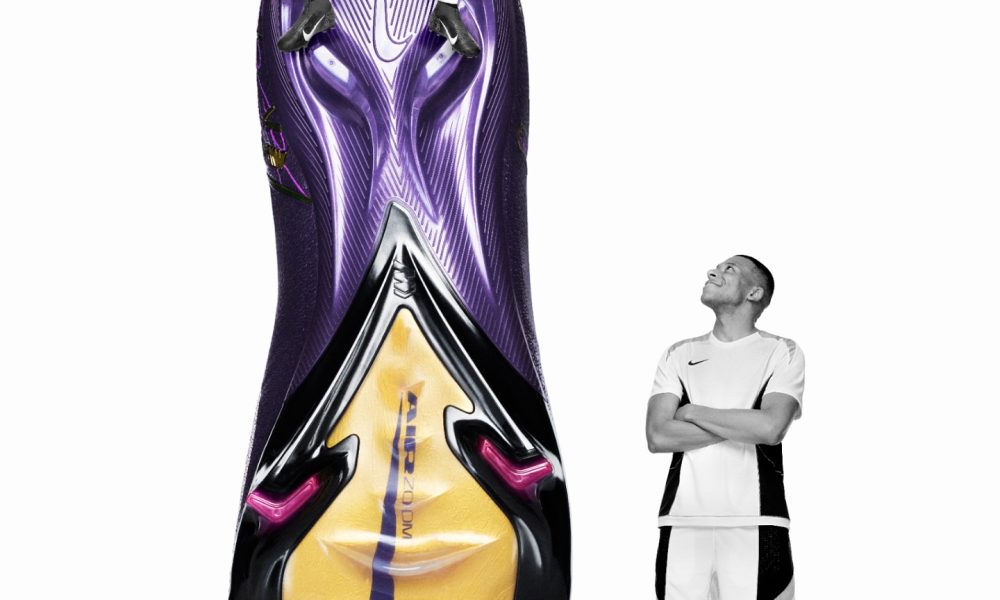 has always dreamed in Mercurial. Now his initials are on the boots.
The new Kyl…
has always dreamed in Mercurial. Now his initials are on the boots.
The new Kyl…
-
 Rec Sports3 weeks ago
Fargo girl, 13, dies after collapsing during school basketball game – Grand Forks Herald
-
 Motorsports3 weeks ago
CPG Brands Like Allegra Are Betting on F1 for the First Time
-
 Sports3 weeks ago
Two Pro Volleyball Leagues Serve Up Plans for Minnesota Teams
-
 Sports3 weeks ago
Utah State Announces 2025-26 Indoor Track & Field Schedule
-
 Sports3 weeks ago
Sycamores unveil 2026 track and field schedule
-
 Motorsports2 weeks ago
Jo Shimoda Undergoes Back Surgery
-
 Motorsports2 weeks ago
Redemption Means First Pro Stock World Championship for Dallas Glenn
-
 Sports3 weeks ago
Texas volleyball vs Kentucky game score: Live SEC tournament updates
-
 Rec Sports2 weeks ago
Robert “Bobby” Lewis Hardin, 56
-
 Rec Sports2 weeks ago
How this startup (and a KC sports icon) turned young players into card-carrying legends overnight