NIL
How KU, K-State and Mizzou plan on remaining competitive in NIL

KANSAS CITY, Mo. (KCTV) – College athletics’ recent revolution started with a lawsuit.
In 2020, Arizona State swimmer Grant House and TCU basketball player Sedona Prince sued the NCAA, claiming the organization unlawfully restricted their ability to profit off their name, image & likeness, now commonly referred to as NIL.
When the door opened to NIL in 2022, college sports, as it had been known for 150 years, was forever altered.
“We knew it was coming,” said K-State Athletic Director Gene Taylor. “We’d heard about the lawsuits. We knew we probably were not going to win a lawsuit.”
But while Taylor and other university administrators knew it was coming, it was still a shock to the system.
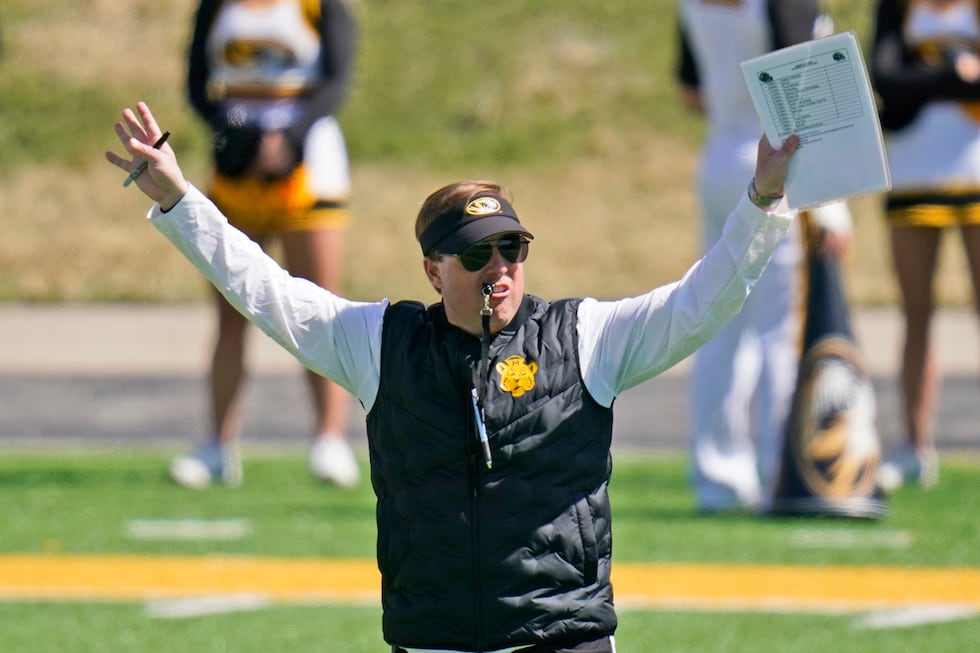
“There’s no rules and regulations,” Missouri head football coach Eli Drinkwitz told KCTV in May 2023. “Without rules and regulations, the worst part of society usually jumps in on it. I think you’re starting to see that play out. It’s a race to the bottom in my opinion.”

This summer, the court’s final ruling on the House v. NCAA lawsuit provided college sports with a new set of rules. Beginning July 1, athletic departments were allowed to pay student-athletes directly, leading many programs to hire general managers for their football and men’s basketball programs.
“I’m excited because it’s going to bring I think some normalcy and some parameters around what we’re doing,” said Jason Booker, who serves as KU’s Deputy Athletics Director of External Affairs and Revenue Generation.
“For the first time, we kind of have some guardrails,” said Brad Larrondo, Mizzou’s Assistant AD and Director of Football External Relations & Recruiting.
Under the settlement, universities can implement revenue sharing with their student-athletes. That development joins the previously accepted unlimited transfer rules through the ever-swirling transfer portal and student-athletes profiting off NIL, as they have for several years.
That raises all sorts of questions about what NIL is.
For local athletes like Kansas State quarterback Avery Johnson, it’s meant doing TV commercials that air across the Sunflower State. Johnson’s NIL portfolio has included deals with Robbins Motor Company (which provided him a purple Dodge Charger), the Maize Unified School District, and Bev Hub (which released a custom soft drink), just to name a few.

Recently, Johnson starred in a commercial that served as a public service announcement for the Kansas Department of Transportation’s “Drive to Zero” campaign.
At Missouri, Tiger football players Joshua Manning and Josiah Trotter returned to their alma mater, Lee’s Summit High School, to shoot a commercial.
“We’re going to be in a cold tub talking,” Manning said. “Freezing!”
“Yeah, it was freezing, I ain’t going to lie,” said Trotter.
Kansas center Flory Bidunga entered the transfer portal following his freshman season with the Jayhawks before renegotiating NIL deals and orchestrating a return to Lawrence. Jayhawk quarterback Jalon Daniels has also cashed in on being one of the faces of KU’s football turnaround.


But it’s not just the men’s athletes cashing in. K-State women’s basketball guard Taryn Sides recently did a commercial with the Kansas Lottery.
“I haven’t seen it yet,” Sides said, “we just did it this past week.”
“S’Mya Nichols is a great one,” Booker said. “Kansas City kid, she’s got a lot of deals because she’s Kansas City and Kansas City brands want to be engaged with her.”
And these NIL deals are critical because while revenue sharing is capped at $20.5 million for a year, there’s no limit on NIL deals as long as a national clearinghouse rules that they follow “fair market value.”
“The clearinghouse has to approve that as a valid business purpose,” Larrondo said, “and that the range of compensation fits within fair market value.”
While the schools aren’t authorized to set up NIL deals, they can hire outside agencies to help their athletes attract business opportunities. That leaves the Jayhawks, Wildcats and Tigers in a race to find great deals for their athletes. Nowadays, the best players choose the school that has the best NIL deal, not the best facilities.
“Gosh recruiting has changed,” Kansas head basketball coach Bill Self said. “How nice your football stadium is when guys are sitting there isn’t going to be a determining factor on a decision. Just like Allen Fieldhouse won’t be a determining factor with their guys.
“There’s more important things for players and agents and families’ minds.”
Recently, KU megadonor David Booth gave the University an unprecedented $300 million donation. While $75 million of it was designated toward kick-starting funding for Phase Two of KU’s Gateway Project, much of it will be available to help KU be competitive in the revenue-sharing era.
“He and his family’s generosity has been remarkable,” Self said. “This gift will put our athletic department in a position to operate in a way that two years ago we were thinking, ‘How do we get to where we want to go?’ Now, there’s a clear path.”


Can the local schools compete with universities located in the country’s biggest markets? Taylor says absolutely.
“I believe truly that our athletes can get just as good of deals — when you look at the L.A. market, there’s a lot of competition in the L.A. market,” Taylor said. “You’re not the star of the show because you’ve got NBA, you’ve got NFL franchises. We are the star of the show here in the state of Kansas and I think our athletes will benefit from that.”
KU’s Jason Booker points to the commercial success of Kansas City athletes.
“If you look at Patrick Mahomes, (Travis) Kelce, Bobby Witt Jr., they’re all getting great endorsement deals, right?’ Booker said. ”When your brand becomes big enough, people are going to find you.”
Fans of Kansas, Kansas State and Missouri will have to hope he’s correct, because like it or not, to win on the field, schools must be able to win in NIL.
Copyright 2025 KCTV. All rights reserved.