
As BYU freshman A.J. Dybansta scored bucket after bucket against the UConn men’s basketball team earlier this month, some fans may have wondered why the Huskies couldn’t have brought Dybansta, a Massachusetts native, to Storrs.
NIL
How much does UConn pay its men’s basketball players? A lot.


The Connecticut Huskies are introduced before an NCAA men’s basketball game against the Columbia Lions at Harry A. Gampel Pavilion on November 10, 2025 in Storrs, Connecticut. (Photo by Joe Buglewicz/Getty Images)

The answer: Maybe they could have… for the right price.
Article continues below this ad
Dybansta and his family reportedly asked for $5 million, possibly more, from any program serious about recruiting him. Whether the five-star forward would have fit the Huskies on the court, signing him would have eaten up much of the program’s budget for bringing in new players and retaining its existing ones.
And so Dybansta wound up at BYU, keying a second-half comeback in what wound up a narrow UConn win.
This year, UConn’s athletic department will spend about $20 million in what is effectively salary for its athletes, not counting any endorsement deals players may receive.
In the era of NIL — or name, image and likeness — a competitive college basketball team doesn’t come cheap. The recruiting outlet 247 Sports reports at least eight men’s college basketball programs are spending $10 million or more on their rosters this season, and CBS Sports recently named 10 programs said to be in that range.
Article continues below this ad
UConn isn’t believed to be at the top tier of spenders but likely isn’t too far behind. CBS Sports reports based on industry sources that the Huskies were part of a group that could spend $8 million, or possibly more, if necessary to build a roster.
Multiple sports attorneys, consultants and other experts interviewed by CT Insider said that figure sounds about right for the No. 3 nationally-ranked team in the country.
“For those that are in the upper echelon really pushing to compete, I think that’s probably where you need to be,” said David Weber, a University of Oregon law professor who has closely studied NIL in college sports.
Where does the money come from? Under a recent legal settlement, schools are now permitted to pay players directly from their own budgets, though in practice the money often comes from wealthy supporters who are invested in a program’s success.
Article continues below this ad
In Connecticut and elsewhere, public policy has aided this surge of cash. As part of the state budget adopted this year, lawmakers created a new tax credit for donations to UConn athletics, maxing out at $500,000 per taxpayer and $5 million total.
Connecticut Speaker of the House Matt Ritter, D-Hartford, said Tuesday the program wasn’t intended specifically to help UConn pay players but acknowledged that is part of the budget calculation for any athletic department.
“I think legislators are trying to find ways to capitalize on (UConn’s) popularity, their ability to raise private funds,” said Ritter, a UConn Law alum and proud fan of the Huskies’ basketball teams.
Earlier this year, UConn athletic director David Benedict told CT Insider the school planned to pay athletes the maximum allowed under the rules of a recent legal settlement, currently $20.5 million. It’s unclear exactly how much of that money will go toward each specific program, though Benedict said in April that every UConn athlete would receive at least some payment.
Article continues below this ad
Through a spokesperson, Benedict declined to be interviewed for this article or to answer written questions about NIL and revenue sharing at UConn.
For decades, athletes, advocates, school administrators, sports commentators and even politicians argued fiercely about whether college players should be paid or whether a scholarship was appropriate compensation for the millions they generated for schools.
Today, that argument is over. Pay-for-play is here, and the only question for schools like UConn is how to manage it.
A new era of college sports
Over the past five years, college sports have changed seismically, first with new rules permitting athletes to profit from their name, image and likeness, then with a new revenue-sharing model that took effect this summer.
Article continues below this ad
Schools paying players went from strictly forbidden to technically against the rules but functionally commonplace to fully allowed and encouraged under the recent House v. NCAA settlement.
UConn, for its part, has worked to keep up at every step of the process, adopting an NIL policy, partnering with a third-party platform called Opendorse to help manage NIL, establishing a new collective to facilitate deals for athletes and pursuing additional revenue streams to prepare the school to funnel more money toward top players.
To compete for top athletes, experts say, schools must maintain a multi-pronged approach to NIL. Opendorse breaks down NIL spending into three categories:
- Merchandise sales, autographs, sponsorship deals, video game licenses and other traditional endorsement opportunities. This category will generate nearly $300 million for athletes this school year, according to Opendorse.
- Money given to booster groups supporting college sports programs. Whereas these collectives previously paid players directly, moving forward they are expected to function more as marketing operations.
- Direct payments from schools to athletes. This now accounts for the bulk of athletes’ income, totaling about $1.5 billion this school year, according to Opendorse.
Article continues below this ad
Because the House settlement caps direct spending to athletes at $20.5 million per athletic department, schools must choose which programs to prioritize financially. Opendorse reports athletic departments across the NCAA’s 10 football conferences spend an average of $13.1 million on football players, $4.3 million on men’s basketball players, $1.6 million on women’s basketball players and $1.5 million on all other athletes.
With direct payments capped, endorsements play an important role as well in attracting athletes, particularly in sports where revenue-sharing money is harder to come by. Azzi Fudd, Paige Bueckers and other UConn women’s basketball players, for example, have endorsed a number of a products in recent years, including national brands like Gatorade, Bose, Chipotle and Nerf.
Though many of those major deals were likely negotiated independent of UConn, in other cases a school or its NIL collective might seek to arrange endorsements for athletes, which don’t count under the $20.5 million annual revenue-sharing cap.
“If you have a (program) that feels like we’re not getting enough from the cap, that might lead them to explore other opportunities,” said Braly Keller, director of collegiate services and insights at Opendorse.
Article continues below this ad
Hundreds of current and former UConn athletes — including 10 active members of the Huskies’ women’s basketball team and nine members of the men’s team — are currently listed on Opendorse for anyone to solicit for social media posts, videos, appearances, autographs and more.
Want a volleyball player to post something on social media for you? That’ll cost you somewhere between $10 and $22, depending who it is. Want the football team’s backup quarterback to appear at your event? That’s $80. A video from, say, basketball player Carolina Ducharme? That’s $59.
Meanwhile at the NIL Store, a platform for athletes to sell their own branded gear, you might find a Fudd-branded sherpa blanket for $99.99, a Skyler Bell hoodie for $64.99 or an Alex Karaban “holiday festive” T-shirt, for $39.99, among dozens of other items.
In October, the NIL Store announced UConn had four of the five best-selling women’s college basketball players over the past month.
Article continues below this ad
For top athletes, though, experts say revenue from those T-shirts and Instagram posts is fairly trivial next to the real money coming directly from schools.
“It’s a nice little extra for some athletes, but it’s not where the bulk of the money is coming from,” said Weber, from the University of Oregon. “The bulk of the money is still coming into these programs from the collectives, the boosters, that are providing the vast majority of the NIL value to athletes.”
An advantage for UConn?
In a way, experts say, UConn and other basketball-first schools could have an advantage in the revenue-sharing era.
Article continues below this ad
Bill Carter, an NIL consultant and professor at multiple universities, estimates many power-conference schools spend at least 80% of their $20.5 million revenue-sharing budget on football, leaving only about $4 million dollars to spread across all other sports. As a result, he said, men’s and women’s basketball coaches at those schools are boxed out of the market for top-ranked (and highly paid) stars.
UConn, on the other hand, has a mid-major football program that likely only pays a few million dollars for its roster. This creates financial challenges for UConn, which lacks the massive payout schools in major conferences receive, but it also leaves plenty of cash for the basketball programs to spend under the revenue-sharing cap.
Of course, whereas some basketball-focused schools might go all-in on men’s hoops, UConn is seeking to sustain a national powerhouse women’s team as well. Top-ranked women’s recruits don’t typically generate quite the same bidding war as top-ranked men’s prospects, experts say, but nonetheless may cost a school hundreds of thousands of dollars a season, if not more.
If a typical school, according to Opendorse, spends $1.6 million on its women’s basketball roster, a titan like UConn almost certainly commits far more than that.
Article continues below this ad
Other UConn programs likely receive at least nominal revenue-sharing money as well. In the interest of spreading the revenue around, Benedict pledged earlier this year, before the House settlement was finalized, that every UConn athlete would receive at least some payment.
“We’re going to do the absolute best we can for all of our sports,” the UConn athletic director said at the time. “It is our plan that we would do something for every student-athlete at UConn.”
Though it’s unclear if UConn has followed through on that promise — the school declined to say this week — Carter called the idea “really cool and probably pretty progressive.”
“Even if they’re doing $1,000 to (each player), that’s a meaningful amount of money to most student athletes,” he said.
Article continues below this ad
State government’s role
When possible, Connecticut’s legislature has sought to aid UConn in maintaining competitive sports programs, whether through allocating funds to renovate facilities or through passing a bill legalizing NIL even before the NCAA permitted it under its rules.
Earlier this year, lawmakers slipped a provision into their 745-page budget bill creating a new tax credit for gifts to UConn, with the understanding the program would be used for athletics. The idea, which never received a public hearing and drew little attention amid the broader budget conversation, came at a time when UConn’s athletic department has doubled down on fundraising in attempt to keep up with major-conference schools.
Under the new program, taxpayers who donate to UConn athletics or agree to endorsements or sponsorships with the school can receive a tax credit equal to 50% of their contributions, up to $500,000 a year. A $1 million gift to the athletic department, for example, would reduce someone’s state tax bill by $500,000.
Article continues below this ad
The program is capped at $5 million per calendar year, meaning it may generate up to $10 million annually for UConn athletics.
“This innovative program creates a win-win opportunity for our supporters and our athletic programs,” Benedict said in a statement in September. “As the landscape of collegiate sports continues to evolve and become increasingly competitive, this tax credit program provides our loyal fans, corporate partners and interested businesses with a meaningful way to help UConn continue competing at the highest level while receiving significant financial benefits.”
Ritter, the Connecticut Speaker of the House, said the idea for the program emerged out of conversations with UConn athletics administrators about the current college sports landscape and the school’s desire to remain competitive across numerous sports even without a big-money football program.
“Look, UConn does not have the same revenue from a conference perspective right now that other schools have,” Ritter said. “This hopefully leverages the ability to raise private funds.”
Article continues below this ad
Helping UConn athletics through a tax credit instead of an increase to the school’s block grant, Ritter said, satisfies legislators “who’d like to be helpful but are also mindful of all the other priorities in the state budget.”
What would he say to someone wondering why the state offers special tax credits for donations to UConn athletics but not for, say, donations to a soup kitchen?
“A competitive UConn means a competitive state,” Ritter said. “So yes, you can always pit priorities versus one another. But am I proud to help our flagship university? Yes, and I’ll never be apologetic about that.”
Weber, from the University of Oregon, wasn’t surprised to learn of Connecticut’s new tax credit. He cited other states that have passed other measures intended to benefit their local schools, such as a Missouri law allowing high school athletes to profit from NIL only if they commit to in-state public universities.
Article continues below this ad
“When you have this patchwork of 50 different states and 50 different sets of laws, you’re going to get individuals who are trying to create the most advantage for their home institutions possible,” he said.
Title IX and other unsettled questions
Several major questions still loom over the revenue-sharing landscape.
One concerns Title IX, the federal statute that, among other things, requires schools spend equally on men’s and women’s sports. To this point, elite colleges have proceeded as though Title IX does not apply to revenue sharing, paying far more to men’s athletes than to women’s athletes, while knowing legal challenges could change that in the future.
Article continues below this ad
“That is a situation that is still most unresolved, whether or not Title IX should govern these NIL payments,” Weber said. “Right now, every university — at least every one that I’m aware of — has taken the approach that Title IX does not apply to these NIL direct compensation payments.”
As a result, says Darren Heitner, a Florida-based sports attorney, even the best women’s basketball players probably earn about as much as “the fifth best player or the backup point guard” on a men’s team.
The argument against Title IX applying to revenue-sharing payments, experts say, is that schools aren’t discriminating against athletes on the basis of their gender, they’re simply responding to market forces.
Carter, who teaches classes on NIL at Boston College and the University of Vermont, offers what he describes as a minority opinion in his field: that it’s obviously wrong to pay male athletes more than female athletes.
Article continues below this ad
“I cannot believe we’re seriously having a discussion as to whether Title IX should be applied,” he said. “Of course it should be applied.”
Though UConn almost certainly does not pay female athletes as much as male athletes, its focus on women’s basketball means it’s likely a bit closer than most other schools. If courts rule that Title IX applies to revenue sharing, UConn would likely be better positioned than competitors to adapt, though the Huskies could also then face more competition for top recruits.
Another unresolved question concerns what exactly constitutes a “real” NIL deal. Though all endorsement deals are required under the House settlement to serve a “valid business purpose,” schools looking to evade the revenue-sharing cap may seek to arrange dubious sponsorships for athletes as a way of funneling them extra money.
“That’s a conversation that is occurring on every college campus every single day,” Heitner said. “It’s non-stop.”
Article continues below this ad
The newly formed College Sports Commission will be responsible for monitoring and approving NIL agreements, but it remains to be seen how effective the commission will be at snuffing out illegitimate deals. Asked in April how he expected revenue-sharing to play out, UConn women’s basketball coach Geno Auriemma said he expects schools to push the boundaries as far as they can.
“You think anybody in their right mind is going to stick to 20.5?” Auriemma said. “That might be what’s on the books. But that ain’t going to be the final number.”
Further complications are almost certain to arise over the coming months and years. All the experts interviewed for this article agreed the college sports landscape is far from settled, that changes will likely continue and schools will have to adapt further.
And whereas some observers figured the spending cap would reduce the amount of money for athletes, it now appears the implementation has led to more money paid to players, as major-conference schools see $20.5 million as effectively the cost of business.
Article continues below this ad
“I’m not seeing any signs of slowdown,” Heitner said. “The only thing that the settlement may be doing is causing people to be more creative about how money flows to the players.”
Includes previous reporting from Mike Anthony, David Borges and Maggie Vanoni.

Continue Reading
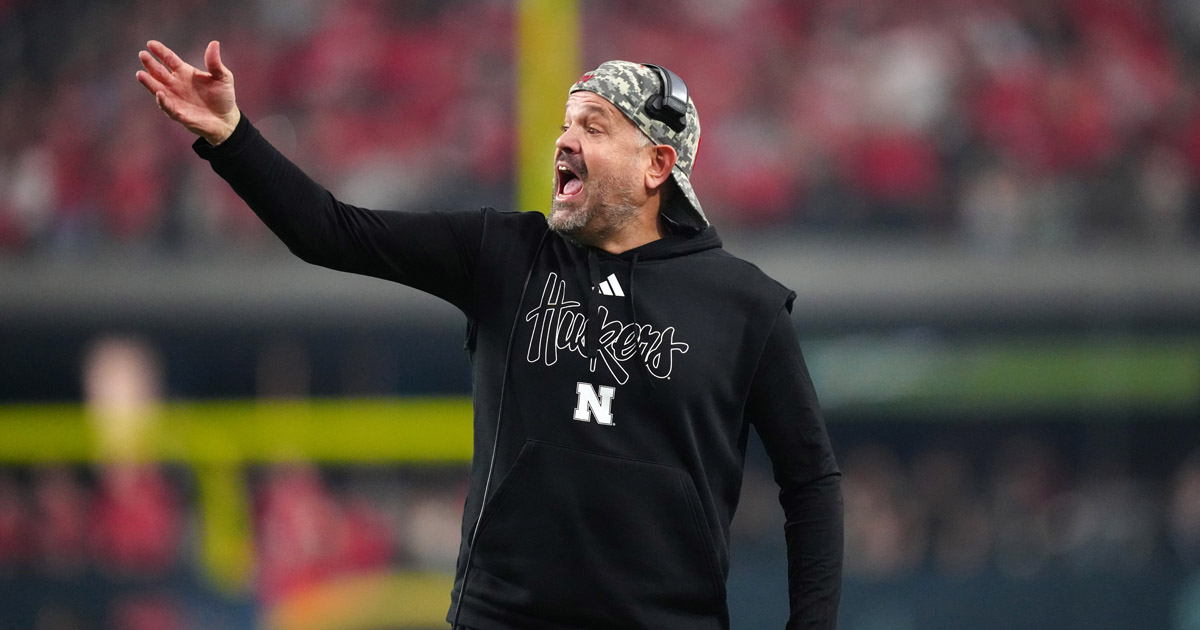
Former San Diego State linebacker Owen Chambliss visited Nebraska on Saturday and it sounds like that could be the only trip he takes.
I mentioned on Friday that there was a good chance Chambliss would be one and done and could commit to the Huskers shortly after his visit.
I continue to hear that’s the case and went ahead and put in a commit prediction for Nebraska to land the talented linebacker. Texas is one school to watch for but in talking to a source close to his recruitment, a commitment to the Huskers is now imminent.
Chambliss is one of the top linebackers available in the transfer portal. He’s currently rated the No. 130 player overall and the No. 6 linebacker in the transfer portal rating.
Chambliss is coming off a big year for the Aztecs where he totaled 109 tackles, 10 for loss, four sacks, one interception and five passes defended.
He has developed in to the, ‘jack of all trades,’ kind of player we saw in high school where he routinely lined up as an edge rusher, outside linebacker, inside linebacker and safety and was recruited all three positions.
Chambliss has his former defensive coordinator from San Diego State, Rob Aurich, now at Nebraska and thats huge for him.
He has a strong comfort level with Aurich, knows the defense and feels he’s the coach who can continue to develop him and get him to the NFL.
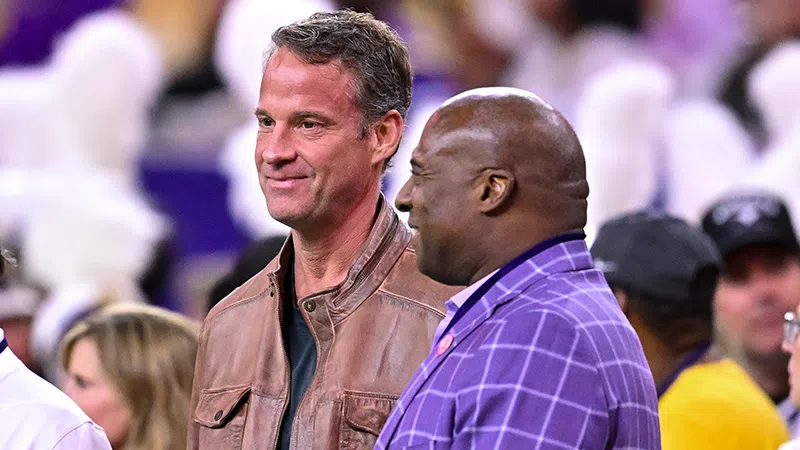
By Chris Marler
In the chaos of the transfer portal, NIL and coaching carousel drama, it’s becoming clear that some long held truths in college football no longer apply.
Truth No. 1 – Don’t get caught up in rankings and “big” names.
Star rankings and blue chip recruits have been the name of the game for a long time in college football. The highest ranked recruits generate the most buzz, and it’s human nature to love the shiny, expensive things, especially in college football.
Racking up five-star studded class after five-star studded class for your depth chart worked beautifully in the pre-portal era. We are no longer in a time where waves of elite recruits are waiting their turn on the depth chart, though.
While it’s awesome to sign the top prospects available out of high school or the portal, losing out on a player like Sam Leavitt or a former five-star isn’t the end of the world. So, as rumors about the No. 1 overall player in the country potentially going to Kentucky continue to swirl, there is no reason to worry if you’re LSU.
In fact, there is no better example of why that isn’t the end of the world than LSU. Look no further than Lane Kiffin’s success with a DII quarterback, and LSU going 7-6 with an $18 million roster.
Truth No. 2 – The drama isn’t over yet.
The day that college football season ends is usually the most depressing day of the year, besides that first Sunday where it gets dark at like 4:30 p.m.. I dread the end of the season every year, but I cannot wait for this drama with the LSU-Ole Miss coaching staffs to end.
What is happening now isn’t sustainable. Offensive coordinator Charlie Weis Jr. has traveled to New Orleans for the Sugar Bowl, back to Baton Rouge for recruiting and meetings and back to Oxford for Fiesta Bowl prep. That’s all in a 72 hour window.
As noted Saturday, Charlie Weis Jr. went from New Orleans after the Sugar Bowl, to Baton Rouge for LSU meetings, to Oxford for Ole Miss Fiesta Bowl prep, back to Baton Rouge for LSU recruiting and is expected back in Oxford for more game prep.https://t.co/KvaJhxRoz6
— Ross Dellenger (@RossDellenger) January 4, 2026
At this point, I can only imagine they’re just meeting every other Tuesday in a McDonald’s parking lot like my parents did. Nothing says resentment and contentious agreement like a Happy Meal and McFlurry, coach!
The Lie – Lane Kiffin is just hoping for the best for everyone.
Can we just stop with this charade that Lane Kiffin is actively hoping for the best for everyone. This whole “I just hope both sides have fun” schtick is ridiculous. I am not blaming Kiffin, and I genuinely don’t even disagree with most of the decisions he’s made throughout this process, regardless of the theatrics involved.
Divorce is messy, and this is no different.
I firmly believe that Lane Kiffin wanted Ole Miss to win against Tulane and Georgia. I also believed he wanted them to win up until the point that he realized they may actually do it. It’s really simple to pretend you have genuine goodwill towards something, someone or some team (you used to coach), when deep down you never thought they’d succeed without you in the first place.
Maybe that’s just me overreacting and reading too much into it. I’m not inside Kiffin’s head and maybe my assessment of the situation is completely off base. If it is, fine. Either way, I think the general feeling from everyone at this point is wishing that both sides would completely part ways and stop making this somehow even messier at every turn.
I’m not sure what the exact therapy buzzword is for that level of disingenuous gaslighting, but I’ll let you know when I meet with Dr. Frankie on Tuesday.
Happy as can be. “Let them and Love them all” https://t.co/J3jI4bdKm8
— Lane Kiffin (@Lane_Kiffin) January 3, 2026
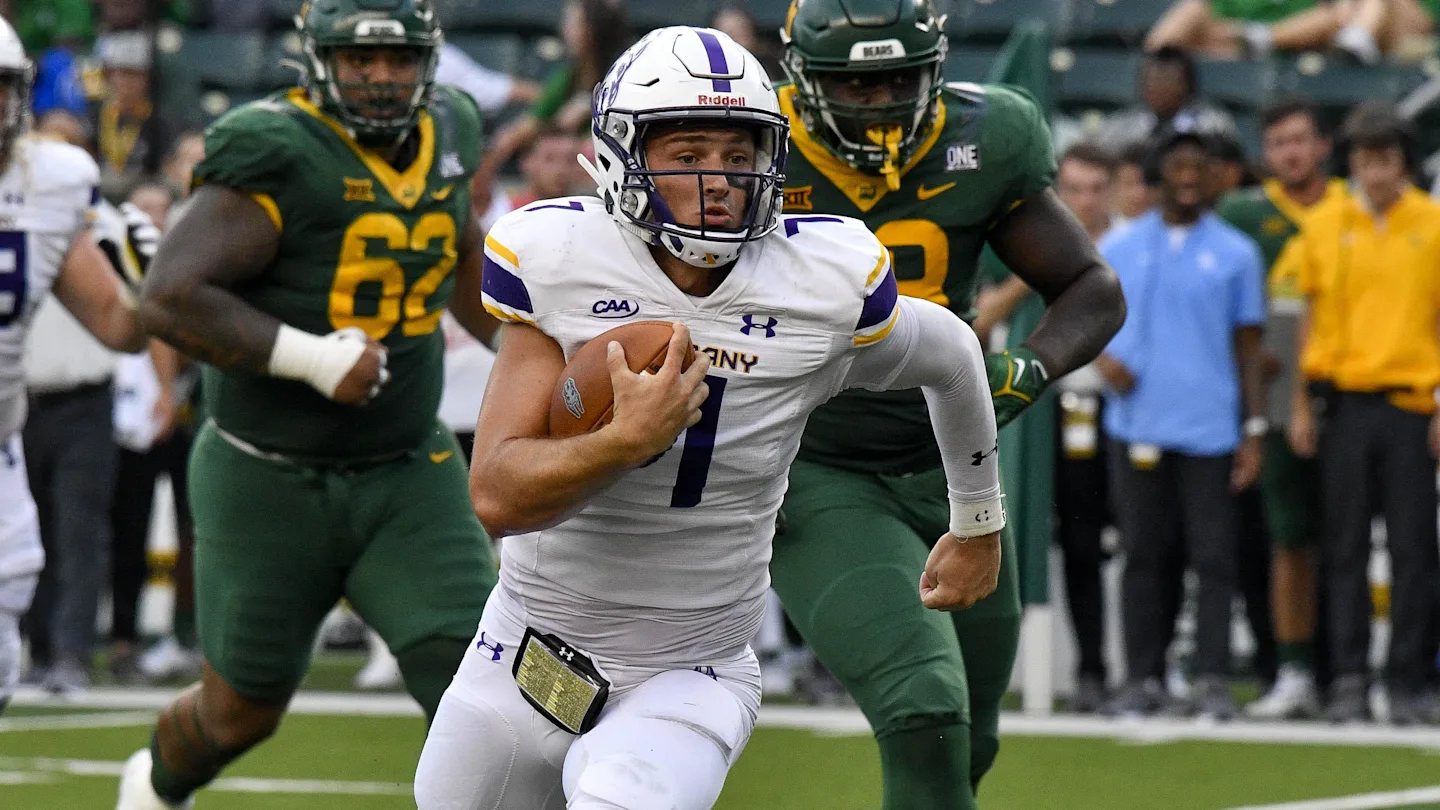
A quarterback with nearly 7,000 career passing yards has elected to enter the college football transfer portal in search of what will be his fifth school heading into the 2026 season.
North Texas quarterback Reese Poffenbarger has entered his name into the NCAA transfer portal looking for a new school next year, according to CBS Sports.
Over the last four seasons, the quarterback has been on three different rosters after redshirting his first year at Old Dominion in 2021.
His best performance to date
Poffenbarger had his two best overall outings in the 2022 and 2023 seasons when suited up for Albany, where he transferred to the FCS ranks.
He was named the starter at Albany after competing with two other candidates for the position and established a school record with 412 passing yards in a game against Fordham.
That year, Poffenbarger finished with one yard shy of 3,000 yards with 24 touchdowns and was named the Colonial Athletic Conference Offensive Rookie of the Year.
He led Albany to the FCS playoff semifinal round the following season, and elected to transfer away after leading the FCS with 36 passing touchdowns and 3,603 passing yards.
The quarterback finished as the school’s touchdown passing record-holder in his time with the program.
Where he’s been lately
Poffenbarger transferred to Miami ahead of the 2024 season, ultimately serving as the backup to Cam Ward, himself a transfer to the school who went on to lead college football’s top-ranked passing attack that year.
From there, Poffenbarger transferred to the Group of Five ranks, landing at North Texas, where he competed for and ultimately lost the starting quarterback job to eventual NCAA passing leader Drew Mestemaker.
What he’s done on the field
In his career, Poffenbarger boasts a 14-12 overall record in 26 starts across 32 total games, passing for 6,669 yards with 60 touchdowns and 17 interceptions.
He rushed for an additional 342 yards and eight more touchdowns.
Poffenbarger’s best outing came with Albany in the 2023 season, going 11-4 overall with 3,614 yards with 36 touchdowns and 13 interceptions, rushing for 6 touchdowns.
How the college football transfer portal works
The new 15-day transfer portal window from Jan. 2-16 and the elimination of the spring transfer period has condensed the timeline for players and programs to make their moves.
The NCAA Transfer Portal is a private database that includes the names of student-athletes in every sport at the Division I, II, and III levels. The full list of names is not available to the public.
(CBS)
Read more from College Football HQ

One of the top offensive weapons on a Big Ten team and one of the highest-ranked players at his position in the college football transfer portal is in play and two notable programs are already making overtures as the 2026 cycle heats up.
Former Rutgers wide receiver Ian Strong is in the NCAA transfer portal coming off a very productive season, and has already set two official visits as he scouts a new school, according to On3 Sports.
Who is interested in the wideout?
Notre Dame is at the front of the line for the wide receiver, and is scheduled to meet him on campus for an official visit some time this week, according to the report.
The wide receiver position is an area of some need for the Fighting Irish looking ahead to the 2026 season with one notable player on the way out.
Malachi Fields, himself a transfer from Virginia last offseason, led Notre Dame in total receiving production in 2025, but is set to exit the program and enter the NFL Draft.
And while there are other notable receiving targets currently on the roster for quarterback CJ Carr, most notably Jordan Faison, the Fighting Irish are said to be in the market for another go-to wide receiver talent for their offense next season.
Where has Strong been?
A notable ACC hopeful undergoing a notable coaching change and returning a potentially-elite quarterback in 2026 is in the market for the wide receiver.
California recently hosted Strong on an official visit, which took place on Sunday, according to the most recent reporting.
Head coach Tosh Lupoi earned a major re-commitment in December when star quarterback and former five-star prospect Jaron-Keawe Sagapolutele confirmed his decision to return as QB1 for the Golden Bears in 2026.
Now he needs a go-to target, and Strong is a player who would theoretically fit the bill, and would potentially give the Cal offense an instant upgrade.
What Strong has done on the field
Rutgers played one of the most productive passing offenses in the Big Ten this past season, and Strong’s performance at wide receiver was one of the reasons why.
The 6-foot-3, 210-pound wideout, the former top prospect from the state of New York, had 111 receptions for 1,668 yards and 12 touchdowns over the last three seasons.
This past season saw Strong’s best effort as he finished with 52 grabs for 762 yards and five touchdowns, all career-highs in a Rutgers offense that was top 25 nationally in passing output.
Strong is listed as the No. 8 transfer wide receiver in the 2026 college football transfer portal cycle, according to the On3 Sports national player rankings.
Read more from College Football HQ

Indiana has an experienced veteran in the stable at quarterback for 2026.
Texas Christian transfer Josh Hoover is headed to Bloomington based on multiple Sunday reports.
For his career the Heath, Texas product projects to have the most passing yards (9,629) and touchdown passes (71) of any player returning to college football next season.
The 6-foot-2 and 200-pound Hoover has been with TCU each of the last four seasons, taking a redshirt year in 2022. Since he took over as the starter in October 2023, the team went 19-12, including 17-8 in the last two years. He led the Horned Frogs to nine wins in 2024 and eight this season.
He was originally committed to Tom Allen and the Hoosiers out of high school before flipping his decision late in the cycle following the 2021 season.
Hoover has one year of eligibility remaining.
As a redshirt freshman in 2023, Hoover started the final six games of the season. He completed 62.1% of his throws for 2,206 yards with 15 touchdowns and nine interceptions.
In 2024 Hoover completed 66.5% of his passes for 3,949 yards with 27 touchdowns and 11 interceptions.
This season he completed 65.9% of his throws for 3,472 yards with 29 touchdowns and 13 interceptions.
Hoover was sacked 18 times in 2025 and 16 times in 2024.
Like Indiana, TCU ran a lot of RPO offense with Hoover as the starter under offensive coordinator Kendal Briles, who has left for South Carolina. In that system Hoover showed he is a capable runner too. Over the last three years he has rushed for 267 yards (before sack adjustment) with eight touchdowns.
More transfer portal information:
For complete coverage of IU football recruiting, GO HERE.
The Daily Hoosier –“Where Indiana fans assemble when they’re not at Assembly”
Related
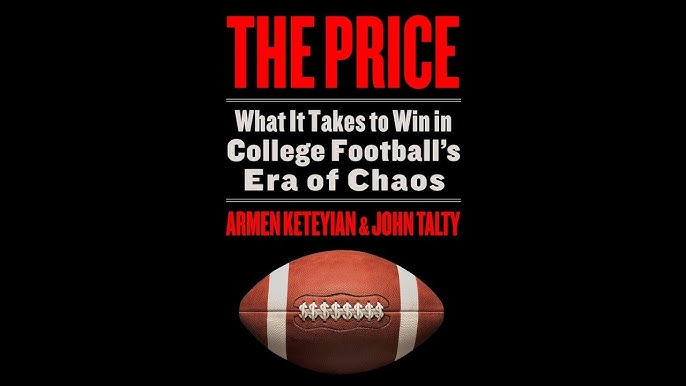
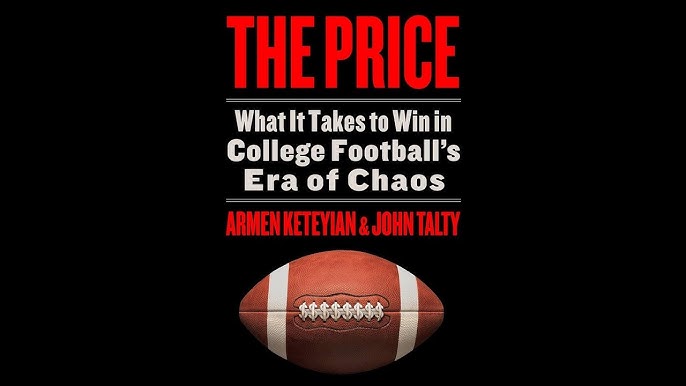
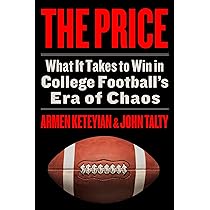
The Price: What It Takes to Win in College Football’s Era of Chaos was released in August of 2024. It is written by Armen Keteyian and John Talty. This book is a tell all and deep inside look at this new era of college football that covers NIL, the transfer portal, NCAA and recruiting scandals. In addition, heated conflicts between coaches, and all of the above.
COVID-19 pretty much started the beginning of the new era of college football. During that time, was when NIL started to become a thing in the state of California and was heavily discussed nationally. Also, the transfer portal started to rise rapidly.
Clemson Tigers head coach Dabo Swinney mentions, “There’s no rules, no guidance, no nothing. It’s out of control. It is not sustainable. It’s an absolute mess and a train wreck, and the kids are going to be the ones who suffer in the end.”
Coaches weren’t the only ones feeling the effects of this new era. One high-level crisis management consultant who has a lot of connections and clients in college football mentioned, “The unhappiness and dissatisfaction level are off the charts. I’m going to project eighty percent of my presidential clients, commissioner clients, AD clients, and my coaches are miserable.”
Coach Nick Saban
On May 18, 2022, Alabama head coach and all-time great Nick Saban started a war when he claimed Texas A&M bought every player on their team. He even double downed on the claim, saying he did not buy one player. But, he also continued to say he might have to in the future because more and more people are doing it.
Saban previously lobbied for Stephen A Smith and Paul Finebaum to call out Texas A&M as a high ranking Alabama source said “using NIL as a recruiting inducement is a clear violation of NCAA rules on NIL.” However, allegedly Saban’s claim is a little hypocritical as he was doing the same thing when he coached at LSU years before NIL was even legal.
Former Tigers running back Elice Parker, was paid by Saban. Saban also mentioned, if anybody cheats you’re fired, but can’t control what the boosters do.
Once Saban got to Alabama and NIL started up, he and the Crimson Tide did not handle NIL well. The program and staffers acknowledged when Saban ever left or retired, they would be screwed. While Saban was head coach, in 2022, Saban refused to pay a marquee transfer $1 million dollars. A sports agent mentioned, if NIL did not exist, they would’ve had three more five stars in their recruiting class. Saban struggled bringing in guys cause of NIL. As well as, players inability to sit and wait for their opportunity like in years past during the dynasty.
He was angry with Kiffin that he’s never had a coach he couldn’t control or get to do his way. Even though the two had a lot of success together, Saban did not like the fact that Kiffin was egotistical.
Coach Jim Harbaugh, “The Michigan Man”
The Michigan man is none other than former Michigan quarterback and head coach Jim Harbaugh. Harbaugh’s infamous “nobody” speech started originally from his dad making him and his brother John walk to school while dribbling a basketball. Both brothers were very competitive at every sport they played which helped them get to where they were today.
Harbaugh got himself into some trouble at Michigan. As a result, he debated leaving and going back to the NFL taking a job as head coach of the Denver Broncos. However, he declined due to his loyalty to college football and for seniors JJ McCarthy, Blake Corum, Zak Zinter, and Kris Jenkins.
Harbaugh while at Michigan, wanted to take advantage of one of the better states in the country in top high school talent in New Jersey. He hired Chris Partridge to help him recruit some top New Jersey. It worked well as they landed some future NFL players such as Jabrill Peppers and Rashan Gary.
Harbaugh had a very interesting path to coaching as he started off as an assistant coach at Western Kentucky for eight years. Then, he became a quarterbacks coach in the NFL for the Oakland Raiders. Then, he got to be a head coach for the first time back in college for the San Diego Toreros. After, he earned his chance to be a head coach at the NFL with the San Francisco 49ers. With the 49ers, he made it to the Super Bowl. But eventually, he ended up at his alma mater.
The Michigan Man II
At one point, Harbaugh was struggling early in Ann Arbor. He was failing to compete for national championships and struggled against rival Ohio State. He thought, he was going to get fired. In efforts to save his job, he got a younger staff, landed JJ McCarthy. As a result of those things, he was able to win four straight against their arch rival.
In terms of NIL and recruiting, 2021 was their best season in the NIL era. They raised between $15 and $25 million dollars.
Investigators would after being unsuccessful to find out the truth, would threaten people with their jobs to get them to tell the truth or remember the situation. If not, they could lose their job and/or be suspended. After six months of investigating, Harbaugh was suspended four games.
Another scandal that happened in Ann Arbor, Michigan was the Connor Stallions situation. Stallions would pay 65 total people including his friends to use their phones and film other teams. He also, dressed up as a staffer with a visiting pass. Stallions later resigned and told people coach Harbaugh had nothing to do with it. Harbaugh was suspended three games but they didn’t find any evidence for him being involved, just was guilty by association.
Despite all of the scandals and suspensions, as well as flirting with the NFL, Harbaugh led the Wolverines to a national championship. Harbaugh after feeling the NCAA was against him and with investigations still going, he finally took a NFL head coaching job with the Los Angeles Chargers.
EA Lawsuit
Former student-athlete Ray Dennison was the reason the term “student-athlete” became a thing. After his death, students were only compensated for books, tuition, and housing.
Sonny Vaccaro co-founded the Dapper Dan Roundball Classic which was the first high school all star game. From there, he worked with Nike and got sponsorships with coaches. As well as 21-year-old Michael Jordan to join. This was one of the first public sponsorships for a collegiate athlete. After being fired from Nike, Vaccaro landed Kobe Bryant a five million dollar deal with Adidas in high school.
Ed O’Bannon, a former collegiate basketball player at UCLA, was not paid for his name, image, or likeness in the NCAA March Madness 09 video game. As a result, O’Bannon and others sued the NCAA and EA Sports. NCAA was leaving over $8 million dollars a year by not allowing EA to license NIL. “The names and likeness are rigged into the games now by illegal means”
End of EA video games
The NCAA and EA eventually lost the lawsuit. The NCAA paid out 20 million dollars to former division one football and basketball players during the video games in 2014. EA paid out $40 million dollars to athletes and shut down their collegiate games in 2014. I was not until July 2024, where a college football video game came back. Players were compensated as well as a copy of the game.
Schools now paid “full cost of attendance” in addition to full scholarships. Otherwise meaning, student-athletes had their tuition, room and board, textbooks, and meal plans paid for.
California Senate Bill 206 “Fair pay to play act” college athletes legalize NIL watered down version in 2019 signed but wouldn’t be in effect until 2023. Even though NIL didn’t become a thing nationally until 2021, California was the first state to create some sort of NIL laws in 2019. But as a result, the NCAA threatened to ban California schools from NCAA sporting events.
Florida joined California with a similar law but put it into effect in 2021. NIL on July 1, 2021 almost didn’t happen as the NCAA nearly let states operate their own way. 27 states had their own rules which offered unfair advantages.
Saban’s Mentors
Kirby Smart is the Georgia Bulldogs head coach and arguably the best active head coach in college football. But before being the powerhouse he is now, he started as an assistant learning from the best in Saban. Many have been successful on their own after learning from and leaving Saban, but undoubtedly, Smart is the most successful.
Smart finally got to beat his former mentor in a national championship. Originally, Saban was happy for him. But then, he started making up excuses and mentioning he didn’t have his best roster due to injuries.
Saban would often demonstrate he could be rather difficult to work with at times. He would be laser focused on winning even if it meant overworking his staff or ignoring life changing events such as 9/11. Saban would even call his staff multiple times on Christmas and when his staff members or himself were on vacation. He was so competitive, he even tried to block defensive back Maurice Smith from transferring to Georgia before the SEC got involved.
Jimbo Fisher’s $76 million dollar buyout from Texas A&M in November 2023 was the largest in sports history. Fisher during his time at FSU did not see eye to eye with the athletic director or the president of the school (John Thrasher). He’d constantly complain to Thrasher and go into his office asking for helicopters, better referees, and better facilities.
Fisher was always jealous of Saban and wanted to claim his successes including the RPO’s and a more balanced offensive approach. But, Saban didn’t even utilize until Lane Kiffin was with him and after. On Fisher’s best A&M recruiting class, he was accused of spending between $25 and $30 million dollars.
Calling Collectives
The TCA Group founded (The Collective Association) which represents and defends collectives. Also, pushes back on the narrative they were at fault for college football’s problems. They are there to show and demonstrate why collectives are good for college sports and how they are beneficial to recruiting. The NCAA and college administrators didn’t realize when introducing NIL the power boosters had. Their powerful because of their impact in landing recruits.
When the time was right, job offers would be even made to the parents of a top recruit. They would receive a paycheck, health benefits, and a pension even if they weren’t qualified for the role. Schools would go to great lengths, even unfair or illegal ways, just to land top talent and be competitive in football. Cheating has always happened in college football. Some examples of this are, 1987 SMU, and Alabama in 2002 paying players. Also, Ole Miss in 1995 got a TV ban and 4 years of probation for boosters offering cars and cash to recruits. In the late 50’s people would put money in players helmets as compensation. Even in college basketball, schools like North Carolina were in trouble for creating fake classes.
In 2021, the Florida Gators created the first NIL Collective. At the time, it only featured autographs and Q&A’s for fans over Zoom. Tennessee and Texas A&M quickly followed.
Calling Collectives II
John Ruiz, a Coral Gables based lawyer, got Nijel Pack to transfer to the U for $800,000 for two years. Many starting players at Miami grew frustrated with football head coach Mario Cristobal and staff about making way less than people lower on the depth chart.
In this new era of college football, if you weren’t spending millions of dollars on your roster and facilities, you were already behind. Top contenders are supposed to spend at least $7 million to have a natty contender roster. In the SEC, teams would generally spend $5 mil for bowl eligible, $7 or $8 million for 7 or 8 wins, and $10 or more million to contend for a title.
NIL matters so much nowadays in this era, that players and coaches will leave strictly for a larger check. Ole Miss head coach Lane Kiffin nearly left for Auburn cause of a larger NIL budget, until Kiffin got a $10 million dollar raise. His star running back Quinshon Judkins nearly entered the transfer portal after his freshman year. But eventually, was convinced to stay after agreeing to a six-figure deal. But that was not good enough, as he transferred to Ohio State just a year later. His transfer earned seven figures to truly show, money talks.
Fighting For Opportunity
Washington Huskies head coach Jedd Fisch definitely has one of the more unique and interesting paths to football and where he is now. He grew up in New Jersey, playing tennis. He became infatuated with football by his mom’s boyfriend who was a high school football coach.
Fisch then attended the University of Florida. His roommate was none other than future Executive Vice President and General Manager of the Philadelphia Eagles Howie Roseman. Fisch, a young and hungry college student would keep showing up to Gators head coach Steve Spurrier’s office. He would also leave notes until he got an opportunity.
He also went to some coaching greats in Sean McVay and Bill Belichick for advice, before taking the head coaching job at the University of Arizona. Fisch focused on upgrading facilities at Arizona after $14 million dollars upgraded facility. Some of the upgrades include a pool table, new offices and meeting rooms for coaches, expanded weight room, players lounge, and barbershop. However, even with all of those nice upgrades, he had to compete with the Wildcats basketball team for donor money.
Fighting for Opportunity II
He was able to earn some NIL money in 2022, Arizona had 22nd best recruiting class. That also put them first in the PAC-12. Impressively, he did it without spending a dollar on NIL but rather promising the opportunities to podcast and sell your jersey. That class landed stars such as Jacob Manu, Noah Fifita, and Tetairoa McMillan.
After a 5-7 season, Fisch was able to get every scholarship player $18,000 and the opportunity to earn another $6,000 and a laptop for good grades. Every walk-on player also got paid, as they earned $12,500. However, he still dealt with losses as he lost All-PAC-12 wide receiver Dorian Singer to conference rival USC for $250,000.
Fisch would go see McMillan’s family in Hawaii often to let him know important he was to the team and to essentially re-recruit him. He wanted to keep him happy and remind him of his important role so he wouldn’t transfer for larger amounts of money. The pitch worked as he kept his star player. Post spring ball in 2023, 6,350 football players entered the transfer portal.
Maryland tried to operate their own “Moneyball” system in efforts to compete with some of the bigger programs. Before revenue sharing, the Big Ten powerhouses got to spend between $10 and $15 million. Meanwhile, the lower end schools spent around $2.5 million. Maryland was closer to the lower end, hence the Macy’s comparison.
Paying For Athletes + Recruiting System
One of the first ways athletes received compensation in the NIL era was online through MyNILpay.com. It was a Venmo like website where people could directly pay athletes. Over 500,000 athletes ranging from D1 to DIII were on the website.
Locksley said Maryland is like Macy’s cause it’s stuck in no man’s land. They’d lose elite talent to Bama, LSU, and Arkansas and also lose nine depth players to Charlotte.
Taulia Tagovailoa and his dad kept constantly asking for more NIL money. If not he’d contemplate transferring. It was rumored he would transfer to Miami to be closer to his older brother Tua. Him and another teammate would only play in a bowl game if they got $500k.
NIL Resources
On3 was founded by Shannon Terry and took over Rivals in 2000. On3 is a website database that allows anybody to see anything ranging from NIL valuations and contracts to high school and transfer portal recruiting. It was later acquired by Yahoo in 2008. Two years later he founded 247Sports and then he sold to CBS Sports in 2016. Then five years later he started On3.
In the summer of 2023, five-stars cost $165,000 to $350,000. Meanwhile, it would cost $375,000 for a top-10 high school QB.
Julian Sayin’s parents stayed away from the NIL Market including agents and financial advisors. However, in the summer of his junior year, he signed with Athletes First which is the largest NFL agency. They represent guys like Aaron Rodgers and Dak Prescott.
Early 2000s, most SEC schools including Alabama tried to buy top defensive linemen out of Memphis and were in trouble.
Former AAC commissioner, Mike Aresco mentioned he doesn’t understand why it’s called NIL when it’s really pay to play and pay to recruit. Saban landed a freshman NIL deal where every player earned $25,000.
NIL Impacting People’s Lives
88.5% of NIL activities start on social media. Livvy Dunne, a former gymnast at LSU had a NIL value of $3.4 million and would get $500k from On3 just for posting on social. However, there were some downsides as Dunne mentions having security and recommends keeping your life private. She also mentions on the documentary “The Money Game: LSU” that while in college, she attended class online due to safety and security reasons.
Florida State was fined $1.7 million, disassociate from a collective, and their OC was suspended three games for the first ever NIL violation and lawsuit.
Conference Realignment + TV Rights
Maryland moved from ACC to the BIG 10 strictly cause of money and left the rivalries with UNC and Duke for Iowa and Purdue. Washington and Oregon each accepted a $30 million dollar offer to join USC and UCLA in going to the Big Ten. Since then, at least 11 schools left to join the Big 12, Big Ten, or ACC. The PAC 12 as many knew was gone.
TV rights (7 years more than $8 billion from ESPN, CBS, and NBC for the Big 10)
⁃ 10 years, 3 billion from ESPN/Disney just for SEC’s game of the week
University of Arizona President Bobby Robbins wanted to compete against the SEC by proposing a mega conference of the PAC-12 merging with the ACC, and Big 12. USC was against other schools like Baylor and TCU joining the PAC-12. Colorado joining the Big 12 cost the PAC-12 deals with ESPN, FOX NBC CBS. Oregon and Washington join the Big 10 and Washington did because of disagreeing with Apple deal about streaming only (mainly head coach Kalen DeBoer).
Cal and Stanford went to the ACC while, Arizona, Arizona State, and Utah were heavily pursued by the Big 12 before joining. Oliver Luck convinced Oregon State and Washington State to not leave the PAC-12 an to try and save it due to more money directly going to them and its rich history. Big Ten didn’t take Cal or Stanford cause all they care about is tv ratings and not academics.
Agent + Top QB? Dynamic Duo? Utter Disaster?
20 year old SMU student Jackson Zager is also the NIL sports agent for Arizona State quarterback Jaden Rashada. Rashada was offered a 4 year, $13.85 million dollar contract to play for the Florida Gators. He would’ve been making more than NFL QB Brock Purdy. The deal went away because Gator Guard and Gator Collective couldn’t raise the money.
Rusty Hardin, a famous Houston area litigator who works with Zager is prepared to sue Billy Napier for the largest lawsuit since NIL became a thing for “fraudulently induces Jaden into signing national letter of intent.” Zager and Rashada met at IMG Academy despite Zager being two years older and Rashada only going there for a month. As a college freshman, Zager started JTM Sports with former teammate Tommy Thomson and landed their first client, Illinois State quarterback Zack Annexstad.
Rashada’s Downfall?
Since Rashada lives in California, he could earn NIL in high school and he reached out to Zager to team up. Eddie Rojas, a former Gators pitcher launched the first NIL collective. Although, Rashada chose Miami’s $9.5 million over Florida’s 10 million and committed to U Miami before crying and calling Zager once the numbers got released. After a renegotiated contract, Rashada flipped his commitment to Florida for $13 million with $8 million coming from Gator Guard and a $500,000 signing bonus.
Florida terminated the deal a day after the $500,000 dollar wire never went through. Napier told Rashada to sign the letter of intent and even bribed him with a million dollars to do which is illegal. Rashada was upset when he wasn’t being paid what he was and wanted to sue. His agent said stick at Florida despite being screwed and Rashada said no an asked for his release from Florida which was granted January 17th. Rashada only had two options, his dads Alma mater in Arizona state or national championship runner-up TCU and he chose Arizona State with zero NIL money.
Now, fast forward to present time, and Rashada has played for Arizona State, Georgia, and now Sacramento State.
Overall, if you are a college football fan and are opinionated one way or the other about sports business and NIL, it is definitely worth the read. There are also tons of other information the book goes into detail about that was fascinating.
Latest Article
To check out my latest article, click here.
*******************************************************


NIL4 minutes ago
Nebraska predicted to land defensive player from transfer portal

NIL57 minutes ago
Two Truths and a Lie: LSU and the transfer portal

NIL2 hours ago
College football quarterback with 6,600 career passing yards enters transfer portal

Rec Sports3 hours ago
Car Thief Crashes Into Oakland Youth Boxing Club and Flees the Scene, Damaging Historic Ring

NIL3 hours ago
No. 8 transfer WR sets official visits with two major college football programs

NIL4 hours ago
IU football adds TCU QB Josh Hoover out of the transfer portal – The Daily Hoosier

NIL5 hours ago
The Price: What It Takes To Win in College Football’s Era of Chaos

Sports5 hours ago
Lake Fenton volleyball leads our Fall Top 10 Teams list

Sports5 hours ago
Women’s Basketball Resumes League Play Hosting Oakland on Monday

Sports5 hours ago
Funeral arrangements announced for 15-year-old Amarillo girl killed on New Year’s Day

NIL5 hours ago
Can I say it now. College football is losing me as a fan.

NIL6 hours ago
Why college football fans should care about the transfer portal

Rec Sports6 hours ago
Fargo Youth Initiative finds new home with Fargo Public Schools – InForum

NIL7 hours ago
$2.1 million QB weighs 2026 NFL Draft decision after College Football Playoff loss

NIL8 hours ago
The NCAA further fails high schoolers with G League Rulings

Motorsports4 weeks ago
SoundGear Named Entitlement Sponsor of Spears CARS Tour Southwest Opener

Motorsports4 weeks ago
Donny Schatz finds new home for 2026, inks full-time deal with CJB Motorsports – InForum

Rec Sports4 weeks ago
David Blitzer, Harris Blitzer Sports & Entertainment

NIL4 weeks ago
DeSantis Talks College Football, Calls for Reforms to NIL and Transfer Portal · The Floridian
Sports4 weeks ago
Elliot and Thuotte Highlight Men’s Indoor Track and Field Season Opener

Motorsports4 weeks ago
JR Motorsports Confirms Death Of NASCAR Veteran Michael Annett At Age 39

Sports3 weeks ago
#11 Volleyball Practices, Then Meets Media Prior to #2 Kentucky Match

Motorsports4 weeks ago
Rick Ware Racing switching to Chevrolet for 2026

NIL4 weeks ago
Colleges ponying up in support of football coaches, programs
Sports4 weeks ago
West Fargo volleyball coach Kelsey Titus resigns after four seasons – InForum

Sports3 weeks ago
Maine wraps up Fall Semester with a win in Black Bear Invitational

Sports4 weeks ago
Temple Begins Indoor Track & Field Season at UPenn This Weekend

Motorsports3 weeks ago
Ross Brawn to receive Autosport Gold Medal Award at 2026 Autosport Awards, Honouring a Lifetime Shaping Modern F1

Motorsports3 weeks ago
Nascar legal saga ends as 23XI, Front Row secure settlement

Motorsports3 weeks ago
Sunoco to sponsor No. 8 Ganassi Honda IndyCar in multi-year deal





-
 Motorsports3 weeks ago
Ross Brawn to receive Autosport Gold Medal Award at 2026 Autosport Awards, Honouring a Lifetime Shaping Modern F1
-

 Rec Sports3 weeks ago
Stempien to seek opening for Branch County Circuit Court Judge | WTVB | 1590 AM · 95.5 FM
-
 NIL3 weeks ago
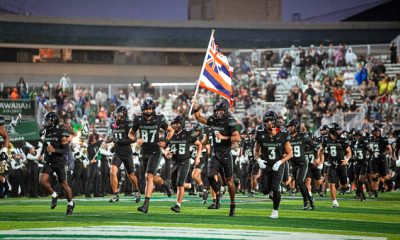
Downtown Athletic Club of Hawaiʻi gives $300K to Boost the ’Bows NIL fund
-
 Rec Sports2 weeks ago
Princeton Area Community Foundation awards more than $1.3 million to 40 local nonprofits ⋆ Princeton, NJ local news %
-
 NIL3 weeks ago
Kentucky AD explains NIL, JMI partnership and cap rules
-
 Sports3 weeks ago
Three Clarkson Volleyball Players Named to CSC Academic All-District List
-
 Sports3 weeks ago
Young People Are Driving a Surge in Triathlon Sign-Ups
-

 Sports3 weeks ago
Beach Volleyball Unveils 2026 Spring Schedule – University of South Carolina Athletics
-
 NIL3 weeks ago
Why the NIL era will continue to force more QB transfers
-
 NIL3 weeks ago
College football program loses 25 players to transfer portal