A graphic illustrating a basketball sitting in a hoop surrounded by the names of major collegiate athletic conferences, repeated NIL text and money. NIL deals are impacting student-athletes’ priorities, influencing decisions on professional goals and financial opportunities. ILLUSTRATED BY HENNA JEONG/THE STATESMAN
In the 2025 NCAA Division I men’s basketball tournament, also known as “March Madness,” the Elite Eight consisted of the top seed from all four regions, with the second seed from three of the four regions and third-seeded Texas Tech.
For the first time since the tournament expanded to 32 teams in 1975, the Sweet Sixteen featured teams only from the Power Five conferences, which include the Atlantic Coast Conference (ACC), Big Ten Conference (Big Ten), Big 12 Conference (Big 12), Pacific-12 Conference (Pac-12) and Southeastern Conference (SEC).
March Madness, particularly on the men’s side, has long been defined by Cinderella stories and unforgettable upsets, where lower-seeded teams — often hailing from mid-major leagues — defy the odds and capture the hearts of fans nationwide. This unpredictability has been the tournament’s allure: a thrilling ride where anything is possible.
In the past decade, there have been two remarkable Cinderella runs. In 2022, 15th-seeded Saint Peter’s from the Metro Atlantic Athletic Conference reached the Elite Eight, stunning second-seeded Kentucky (SEC), seventh-seeded Murray State and third-seeded Purdue (Big Ten), respectively, en route.
In 2018, 11th-seeded Loyola Chicago — then representing the Missouri Valley Conference — and the iconic Sister Jean survived and advanced all the way to the Final Four, downing sixth-seeded Miami (ACC), third-seeded Tennessee (SEC), seventh-seeded Nevada and ninth-seeded Kansas State (Big 12), respectively, on the way.
With the absences of Cinderellas and a general lack of upsets in this year’s March Madness, it is time to examine a possible correlation to the most significant shift in collegiate athletics since the Peacocks’ miraculous run: NIL.
What is NIL and how does it specifically benefit Power Five schools?
NIL, which stands for “name, image and likeness,” refers to an individual’s legal entitlement to control the commercial use of their personal brand. Historically, college athletes were prohibited from capitalizing on their fame financially, effectively forfeiting their NIL rights when they committed to collegiate sports programs. However, nearly four years ago, a combination of NCAA regulatory changes and state legislation reinstated these rights, empowering student-athletes to enter into lucrative sponsorship agreements.
Power Five schools, with their expansive resources, extensive media visibility and well-established networks, are uniquely positioned to attract high-value opportunities. While student-athletes are currently not allowed to be paid by their schools, this could change soon as well. The NCAA’s Division I Board of Directors has approved proposed changes contingent on the landmark $2.8 billion House v. NCAA settlement — a consolidated lawsuit brought by athletes challenging restrictions on their ability to profit from NIL. If finalized, the plan would allow schools to distribute up to $20.5 million annually to student-athletes.
At the end of 2024, CNBC unveiled a list of the 75 wealthiest college sports programs. Among the schools listed, only six were not members of the Power Five conferences. All six of these institutions ranked 67th or higher in the ranking and came from just three leagues: the American Athletic Conference (AAC), the Mountain West Conference and the Big East Conference.
Since the introduction of NIL in 2021, recruiting for Power Five schools has become decidedly easier, surpassing their previous advantages. These programs possess an unparalleled ability to attract elite recruits, primarily due to their capacity to offer financial stakes that smaller institutions simply cannot match. This process is further facilitated by influential boosters, alumni and local businesses, whose elevated assets are especially concentrated within Power Five schools; this provides an additional competitive edge in the hunt for top-tier recruits and the biggest names in the transfer portal.
How has NIL impacted the current state of the transfer portal, which legendary basketball figure Dick Vitale describes as the “wild west”?
The NCAA transfer portal, established in 2018, serves as a compliance tool designed to streamline and manage the process for student-athletes transferring between member institutions. Its primary purpose is to provide greater transparency and allow athletes to publicly express their intent to switch schools.
The men’s basketball portal has reached an unprecedented level of relevance and activity in its current state. Even before the 2025 Final Four kicked off, several highly-coveted players — often seeking better financial opportunities these days — had not only entered the portal but already committed to new schools. While in many of these cases, student-athletes are making moves from one Power Five program to another, there are exceptions involving mid-major programs, with the move often negatively impacting them.
A prominent example of a player from a prosperous mid-major program being poached by a Power Five school is Johnell Davis. The combo guard spent four seasons at Florida Atlantic University (FAU) of the AAC, where he played a pivotal role in the program’s most successful campaign ever in 2022-23. Davis was the leading scorer for an Owls team that made an unexpected run to the Final Four as a ninth seed. After FAU returned to March Madness the following year, Davis transferred to Arkansas to play for legendary coach John Calipari this past season.
While transfers for a player’s fifth year are not uncommon, Davis’ move came amidst a broader exodus from FAU. The Owls suffered the exits of their other four starters and their sixth man coming into this campaign, with two of those players exiting through the transfer portal while the others graduated after the departure of head coach Dusty May, who took over Michigan’s program after six seasons with FAU. Consequently, the Owls, who posted a remarkable 60-13 combined record across the 2022-23 and 2023-24 campaigns, saw a dramatic decline this year, finishing with an 18-16 record.
The advent of the transfer portal, hinged on the rise of NIL, has made it extremely challenging for mid-majors to experience sustained success. Since the implementation of NIL, there has been a noticeable shift in student-athletes’ priorities, with many seemingly opting to sacrifice playing time at more historically prestigious programs and potentially jeopardizing their professional prospects in exchange for higher financial incentives.
From an individual standpoint, this decision is understandable, particularly for those not pursuing a professional basketball career. However, on a broader scale, this trend contributes to a growing disparity in talent across the NCAA, exacerbating an ever-widening gap that threatens to further destabilize the competitive balance in collegiate basketball.
What is the NCAA’s Division I Basketball Performance Fund, and how does it contribute to the growing discrepancy between Power Five schools and mid-majors?
The NCAA earns most of its annual revenue from two main sources: television and marketing rights, and championship tournaments. For the 2024 fiscal year, the organization generated $1.38 billion, with a major portion coming from March Madness. The men’s basketball tournament alone accounted for more than $900 million.
Last year, the NCAA distributed its revenue across nine areas, including allocating $171,242,775 to the “Basketball Performance Fund.” According to the organization’s website, this fund is “distributed to Division I conferences and independent schools based on their performance in the men’s basketball tournament over a six-year rolling period.”
Leagues earn “units” based on how far their teams advance in the NCAA Tournament. Each unit is valued at $340,000 and is paid out over six years, increasing by 3% annually. Reaching the championship game — which requires five wins — earns a conference five units, or approximately $1.7 million. Thanks to Florida and Houston making the finals in the 2025 edition of March Madness, the SEC and Big 12, respectively, secured about $11 million to be paid out over time.
While Power Five institutions typically distribute large payouts directly to their member schools, mid- and low-majors rely on unit revenue to fund their operations. Even a decade ago before NIL’s arrival, more prosperous leagues were already dominating these earnings. Between 2009 and 2013, just six of all the Division I conferences — which were 32 at the time — captured 64% of all profits distributed through the Basketball Performance Fund.
The NCAA does also allot money through the “Equal Conference Fund,” which distributes funds “equally among Division I basketball-playing conferences that meet athletic and academic standards to play in the men’s basketball tournament.” However, the Equal Conference Fund totaled just $54,797,687 in 2024 — a 68% decrease compared to the Basketball Performance Fund.
Where does Stony Brook stand within this issue’s realm?
The Coastal Athletic Association (CAA) — Stony Brook’s current conference — is widely regarded as a low-major. Among the 31 Division I men’s basketball conferences, the CAA ranked 15th in the 2024-25 Rating Percentage Index as compiled by TeamRankings.com. Four of the five Power Five conferences occupy the top five in these rankings. Meanwhile, the Pac-12 finds itself in a period of transition following the departure of eight teams in response to the conference’s inability to secure a lucrative media rights deal capable of competing with the financial powerhouses of the Big Ten and SEC, which would have led to reduced revenue for those programs.
Stony Brook Athletics has just two third-party organizations facilitating NIL opportunities for its student-athletes: The 1957 Club and the CR97 Fund, the latter of which solely supports the men’s basketball team. While the financial impacts of these initiatives remains unclear since NIL deals are private transactions and not publicly disclosed, they may have contributed to the Seawolves’ most high-profile transfer acquisition since the inception of NIL: guard Joe Octave.
For his graduate year, Octave — a 2023-24 Third-Team All-Patriot League selection for Holy Cross — chose Stony Brook, which was in desperate need of experienced talent after losing four starters to graduation and its sixth man to the portal. That sixth man, center Keenan Fitzmorris, was financially lured away by Northwestern. The big man played just 9.2 minutes per game this past season for the Big Ten team, which finished with the fourth-worst record in conference play within the Power Five league.
Unfortunately for the Seawolves, things also did not work out on their end with Octave. A lower-body injury sidelined him for the team’s final 11 regular season games as well as the 2025 CAA Championship, where Stony Brook was eliminated in the First Round. Even when Octave was healthy, his shooting struggles were evident. While he averaged a respectable 13.3 points per game, it came with career-low shooting percentages from the field (.351) and three-point range (.208).
Octave’s absence paved the way for some revelations, most notably guard C.J. Luster II and forward Andre Snoddy, who emerged as the Seawolves’ standout performers during the 2024-25 campaign. However, the two are now on their way out. Luster II has transferred to the University of North Carolina Wilmington, the CAA’s reigning champion and one of the conference’s leaders in NIL initiatives alongside Charleston. Conversely, Snoddy is currently in the transfer portal despite having already exhausted his eligibility, aligning himself with a wave of athletes in a similar limbo. They remain hopeful that ongoing litigation will compel the NCAA to revise its eligibility regulations, although the organization maintains that no such discussions are currently taking place.
Not aided by the aforementioned departures, Stony Brook finds itself in a significantly disadvantageous position, both now and in the foreseeable future. The program is in the midst of a rebuild after enduring its worst season in 17 years, grappling with both internal challenges surrounding coaching and player development along with the NCAA’s ever-evolving landscape. The institution’s limited NIL influence severely hampers its ability to attract the talent — whether from the transfer portal or incoming freshman — needed to spark a turnaround and regain competitive relevance.
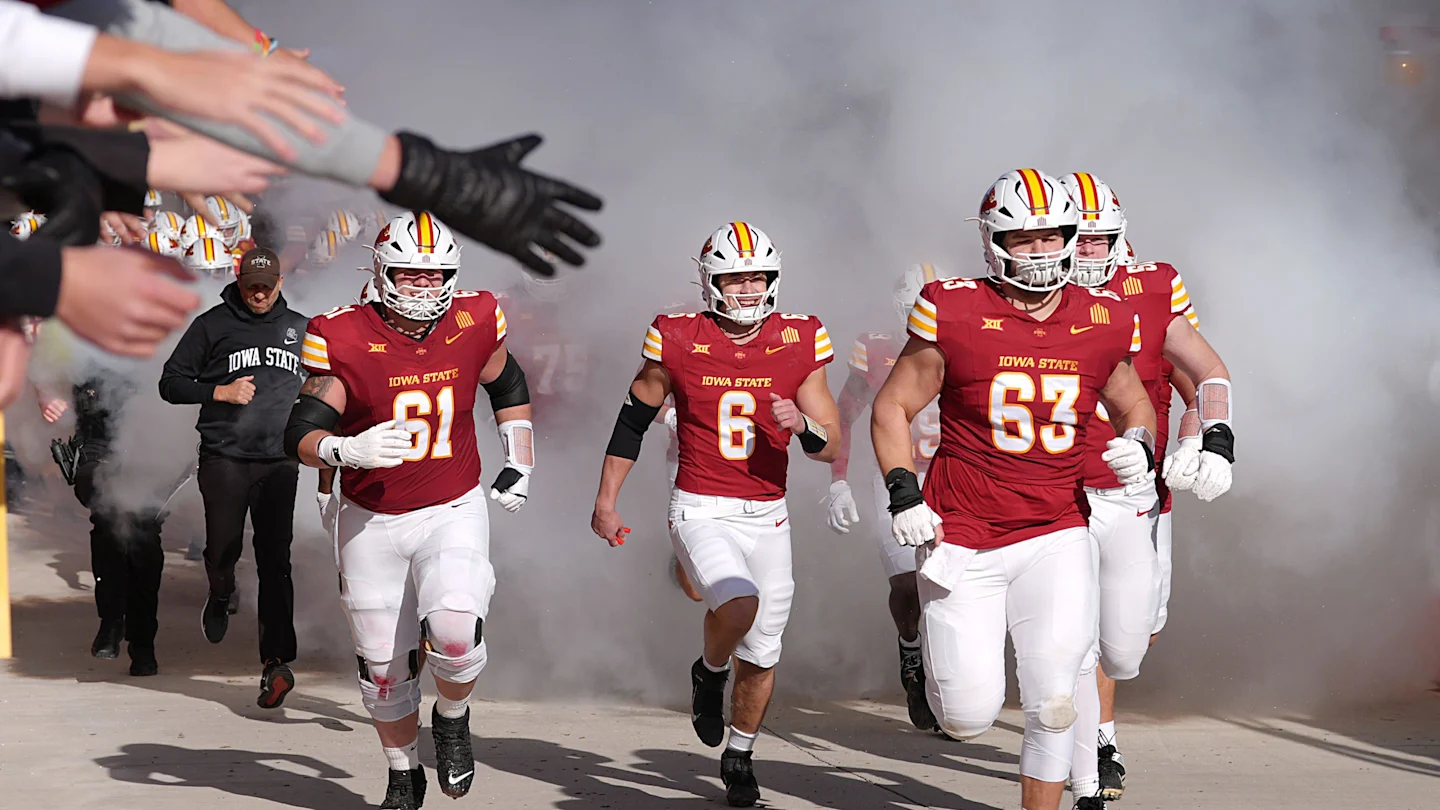
Iowa State finished the 2025 campaign with a winning record (8–4 overall, 5–4 in the Big 12), highlighted by a five-game win streak to start the season, but an uneven finish set the stage for major staff turnover.
On December 8, head coach Matt Campbell was officially named Penn State’s head coach, departing Ames after 10 seasons as the program’s winningest coach (72–55 overall).
Iowa State moved quickly, naming Jimmy Rogers as head coach on December 6.
Rogers comes from Washington State, where he led the team to a 6–6 record in the 2025 season, and previously held assistant and defensive coordinator roles at South Dakota State and Florida Atlantic.
Since the coaching change, multiple Cyclones have entered the transfer portal, most recently wide receiver Chase Sowell on Monday.
He becomes the 41st player from Iowa State to enter the portal and the 16th starter, according to analyst Josh Pate.
NEW: Iowa State WR Chase Sowell plans to enter the NCAA transfer portal.
Sowell totaled 500 receiving yards and 2 touchdowns this season.https://t.co/kSYG7dZ8sR pic.twitter.com/pvDDRTrDHy
Sowell was Iowa State’s second-leading receiver in 2025, tallying 32 catches for 500 yards and two touchdowns, after spending two seasons at East Carolina (2023–2024) and one at Colorado (2022).
Since Campbell’s departure, several other high-impact players have announced their intentions to enter the transfer portal, including starters QB Rocco Becht, RB Carson Hansen, TE Ben Brahmer, and WR Brett Eskildsen, as well as multiple defensive backs and linemen.
As Pate noted on his podcast, top cornerbacks Jontez Williams and Jeremiah Cooper have also announced their intention to enter the transfer portal and are currently ranked sixth and seventh among available players.
Iowa State Cyclones quarterback Rocco Becht (3) passes during the second half against the Oklahoma State Cowboys | William Purnell-Imagn Images
The departures remove several established starters and depth, including the starting QB, lead rusher, lead receiver, and multiple starters on both sides of the ball, creating an urgent rebuild task for Rogers and his new staff.
Practically, that means accelerated recruiting/portal work, accelerated opportunity for younger players, and a likely short-term performance reset.
Read More at College Football HQ
Major college football program linked to 1,800 yard RB in transfer portal
No. 1 transfer portal player heavily linked to major college football program
$2.6 million QB ranked as No. 1 transfer in college football
25-touchdown RB shares farewell note after entering college football transfer portal
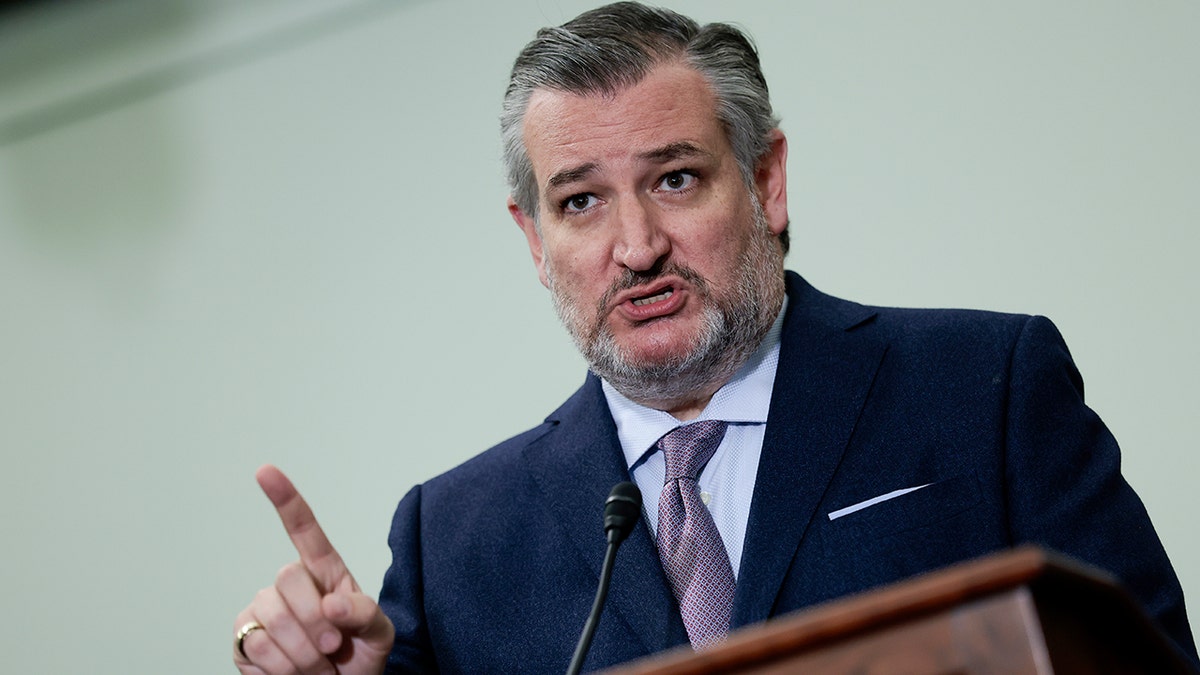
Sen. Ted Cruz, R-Texas, has been trying for years now to get more regulations around name, image and likeness (NIL) deals in college sports, saying back in 2023 that the landscape was “in peril.”
Now, in 2025, Cruz sees college football specifically as a “disaster.”
Cruz responded to a post on X, which called the “current college football landscape…unsustainable.”
CLICK HERE FOR MORE SPORTS COVERAGE ON FOXNEWS.COM
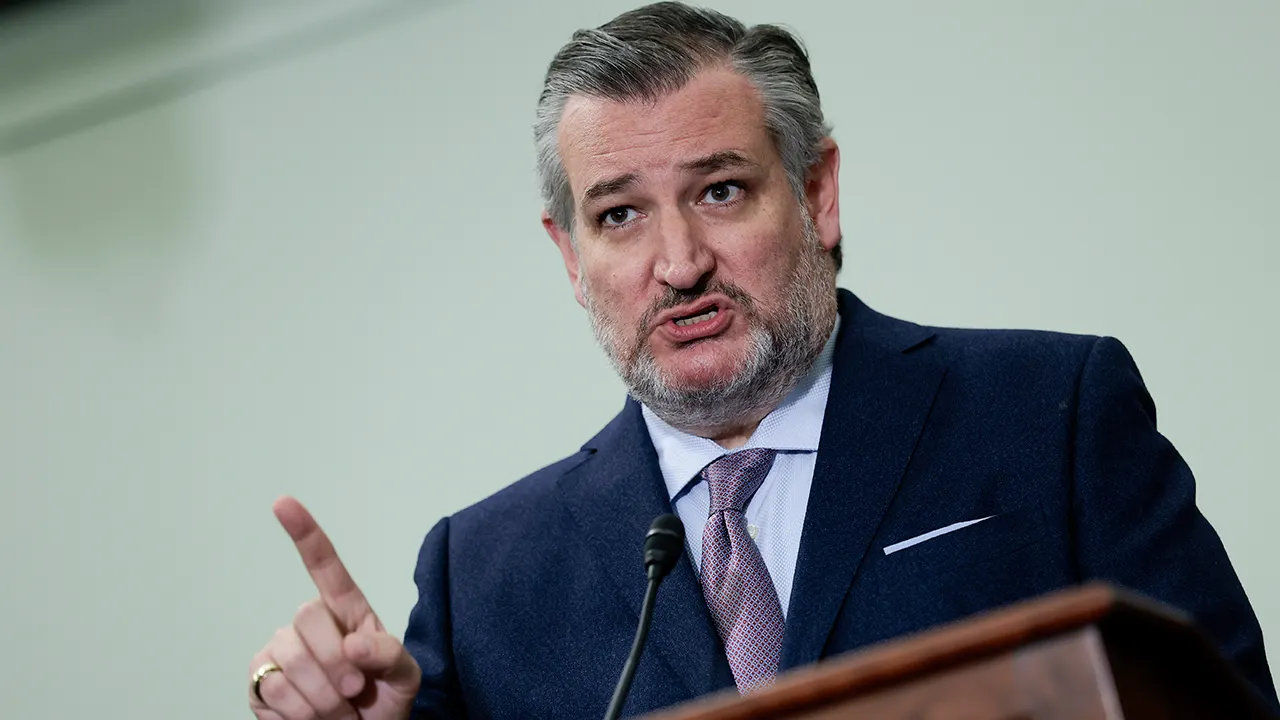
Sen. Ted Cruz, R-Texas, arrives to a hearing in the U.S. Capitol on Dec. 17, 2025, in Washington, D.C. The Federal Aviation Administration hearing with the Senate Committee on Commerce, Science, and Transportation, Subcommittee on Aviation, Space, and Innovation focused on evaluating progress, ensuring accountability and results.(Heather Diehl/Getty Images)
The post pointed out that the Iowa State Cyclones, who just lost longtime head coach Matt Campbell to the vacant Penn State Nittany Lions job, only has 17 players remaining on their roster for next season. Among those players, only one was a starter.
Essentially, the Cyclones will have to field an entirely new roster and team and hope they can jell heading into 2026.
SCORE ACT RECEIVES SUPPORT FROM OVER 20 CONSERVATIVE GROUPS AS NIL REFORM FIGHT REVS UP
Cruz slammed the fact the NCAA allows this.
“An absolute crisis,” he wrote on X. “Congress NEEDS to act. For months, I’ve been working night & day to try to bring Republicans and Democrats together to save college sports.
“If we fail to do so, it will be an utter tragedy. And it’s happening right before our eyes.”
Cruz introduced a bill in 2023, two years after NIL was born, in hopes that tighter regulations would help college sports nationwide. Instead, we’ve seen programs paying for top players through NIL deals, while the transfer portal has allowed players to move from school to school each year.
Cruz is one of the top lawmakers in support of the Student Compensation and Opportunity through Rights and Endorsements (SCORE) Act, which would give the NCAA a limited antitrust exemption in hopes of protecting the organization from potential lawsuits over eligibility rules and would prohibit athletes from becoming employees of their schools.”
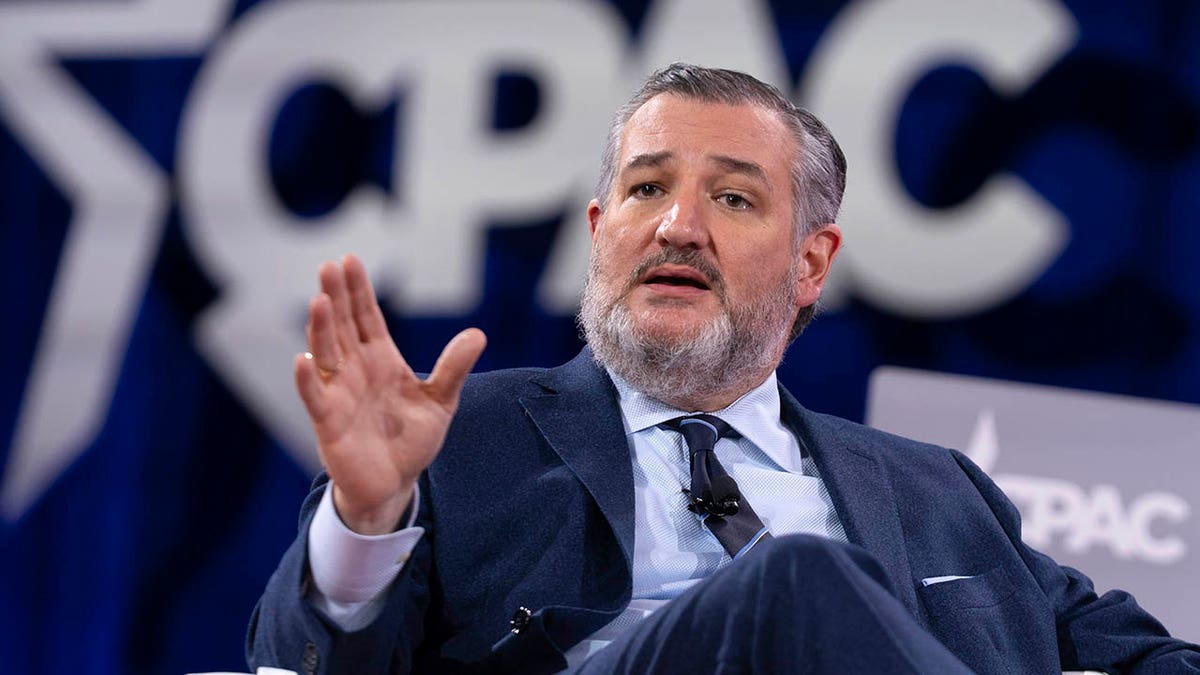
FILE – Sen. Ted Cruz, R-Texas, speaks at the Conservative Political Action Conference, CPAC, at the Gaylord National Resort & Convention Center, Feb. 20, 2025, in Oxon Hill, Maryland.(Jose Luis Magana/AP Photo)
“The SCORE Act is the free market, individual liberty, limited government fix to the ‘name, image, and likeness (NIL)’ issue in college athletics,’” a letter addressed to House Speaker Rep. Mike Johnson, R-La., read earlier this month.
The groups in favor of the SCORE Act said the bill is the “common-sense way” to establish rules and preempt confusing state laws in the NIL era.
“H.R. 4312 prohibits trial lawyers from suing under federal or state antitrust law. It also provides that athletes receiving NIL compensation need not be employees of these universities, protecting them from compulsory unionization. This means student-athletes can be treated as small business owners, not unionized workers,” the letter added.
The conservative groups framed the SCORE Act as being a better plan than the “Student Athlete Fairness and Enforcement (SAFE) Act,” which has mostly been backed by Democrats. The SCORE Act has at least scored some bipartisanship support in the House.
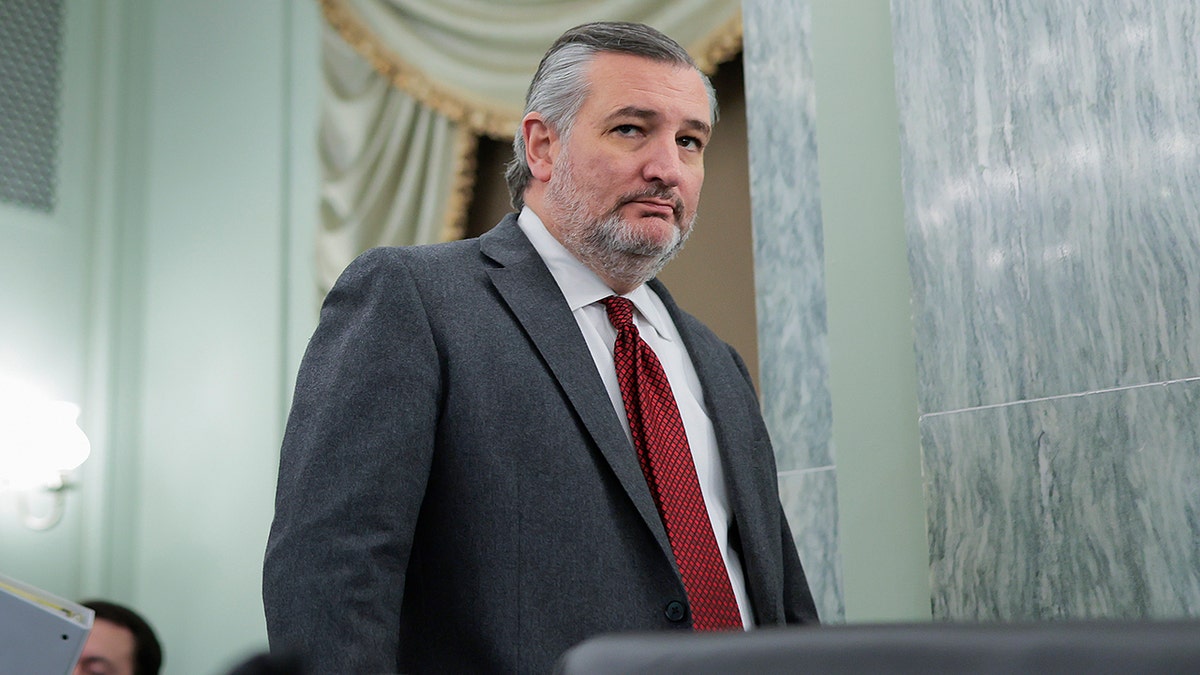
Sen. Ted Cruz (R-TX) holds a press conference with families who lost loved ones in the January 29, 2025, DCA plane crash on Dec. 15, 2025, at the U.S. Capitol in Washington, DC. The bipartisan press conference addressed the National Defense Authorization Act (NDAA) language, which changes military airspace policy.(Heather Diehl/Getty Images)
CLICK HERE TO GET THE FOX NEWS APP
The SCORE Act also calls on schools to share revenue, per terms of the House settlement to the tune of 22% “if such rules provide that such pool limit is AT LEAST 22 percent of the average annual college sports revenue of the 70 highest-earning schools.”
Finally, the SCORE Act prohibits schools from using student fees to fund NIL payments.
Fox News’ Ryan Gaydos and the Associated Press contributed to this report.
Follow Fox News Digital’s sports coverage on X and subscribe to the Fox News Sports Huddle newsletter.
Scott Thompson is a sports writer for Fox News Digital.
Texas football HC Steve Sarkisian details crazy state of NIL, transfer portal appeared first on ClutchPoints. Add ClutchPoints as a Preferred Source by clicking here.
Even big programs like Texas struggle to keep up with the current state of NIL and the college football transfer portal. After five years with the Longhorns, head coach Steve Sarkisian admits he sometimes struggles to stay up to date.
Advertisement
Sarkisian, who is now in his third decade as a head coach, leads one of the most-funded organizations in college football at Texas. He still recognizes that there is often a “bottom dollar” that he cannot reach, which can often complicate his offseasons.
“We got to have our list of needs, our list of wants, and our list of luxuries, and then what’s the dollar sign next to all that?” Sarkisian told reporters ahead of the 2025 Citrus Bowl. “And then what’s the bottom dollar from an organizational standpoint. The idea that I can sit up here in 2025 and talk about money and players, it’s pretty crazy. I’m probably going to be on the phone with an agent today that’s gonna throw a number at me that I’m going to be like, ‘Good luck. I hope you get it. If you don’t, call us back, but I can’t do that number.’”
NCAA programs are hit hardest in the offseason, when every player essentially becomes a free agent. The college transfer portal is particularly active in football, with schools rostering more athletes on the gridiron than any other sport.
Advertisement
That process has already hit Sarkisian and Texas hard in the 2025-2026 offseason. The Longhorns have already lost several key players to the portal, namely leading rusher Quintrevion Wisner.
Texas is also currently responsible for the highest-paid NIL athlete in college sports, with quarterback Arch Manning making an estimated $5.3 million in 2025-2026. Manning is reportedly taking a pay cut to remain in Austin for his redshirt junior season, but he is still set to make a pretty penny in 2026-2027.
Related: Ole Miss football rumors: Officials allege tampering with Lane Kiffin, 6 assistants going to LSU
Related: Penn State RB Kaytron Allen declares for NFL Draft
FAYETTEVILLE — The University of Arkansas athletic department’s evolving investment in the name, image and likeness realm is expanding on the cusp of the new year.
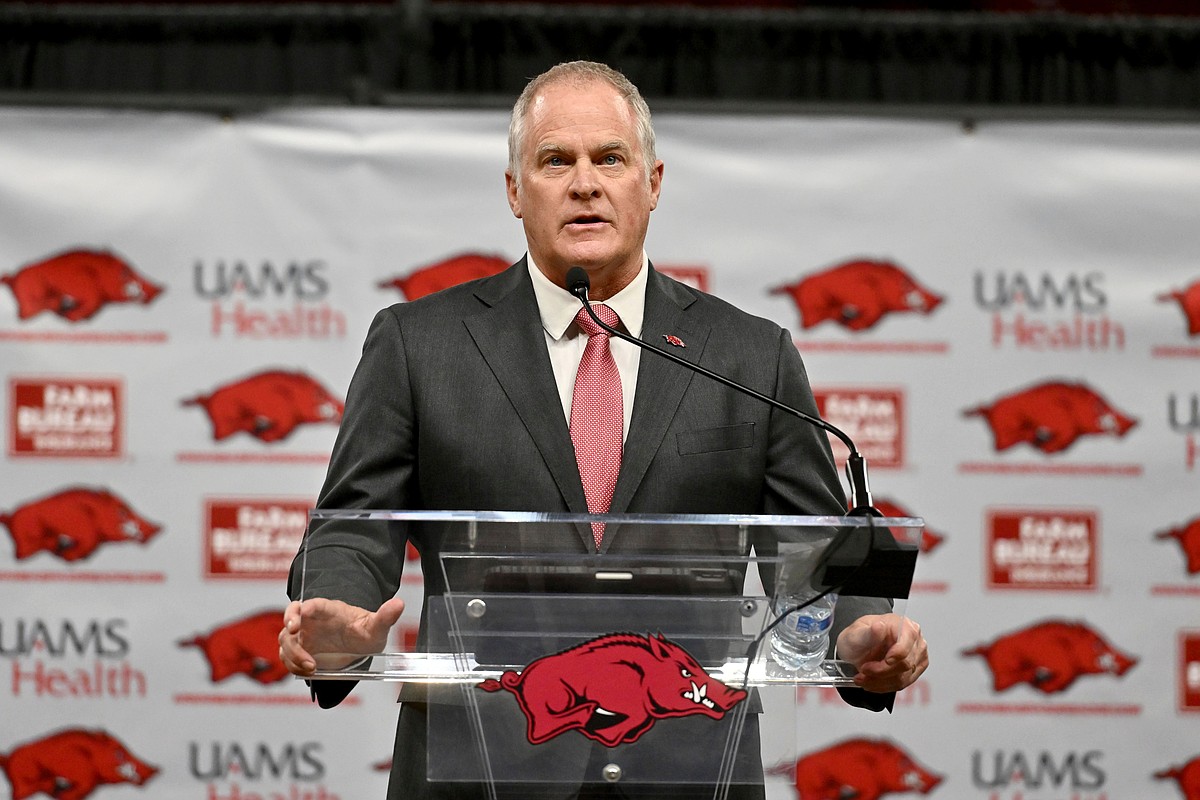
The Razorbacks announced Tuesday a new partnership with TheLinkU, which the department hopes will facilitate and streamline operations in the NIL space beyond the school’s revenue-sharing commitment with its roster of athletes.
The announcement came about 2 1/2 months after Arkansas ended its relationship with Blueprint Sports. That move was an outgrowth from the House v. NCAA settlement that allowed participating schools to dole out about $21.5 million per year to athletes through revenue sharing. Arkansas assumed all NIL agreements July 1 following the settlement.
According to a UA release on the partnership with TheLinkU, the agreement “will power the NIL efforts of the Arkansas Front Office to generate legitimate above-the-cap revenue for Arkansas athletes.”
The UA also announced in a release that TheLinkU platform will provide “immediate opportunities for local businesses, brands and donors to engage Arkansas Athletics to partner with athletes” in multiple ways.
“Our partnership with TheLinkU makes us better in a number of ways very quickly,” UA Athletic Director Hunter Yurachek said in a statement. “This helps our student-athletes with legitimate NIL opportunities — both locally and nationally — while also giving our fans and donors the opportunity to easily support our teams or specific athletes.”
TheLinkU was started in 2022 by a group including former University of Houston quarterback Austin Elrod, who is the company’s chief executive officer.
According to the UA release, TheLinkU provides a portfolio of more than 30 national brands and businesses in the realm of technology, finance, apparel and consumer goods.
The outfit also is expected to “simplify the process of working with athletes to promote their businesses,” according to the release.
“We are incredibly excited to partner with Arkansas Athletics to build upon the momentum surrounding Razorback student-athletes,” Elrod said in a statement. “Arkansas possesses all the necessary elements to be elite in the NIL era: a passionate fan base, a powerful statewide brand and a connection to some of the world’s most successful businesses.
“Our NIL Ecosystem, led by our national partnership network, brings significant revenue opportunities that benefit student-athletes while providing alumni, fans and business leaders with meaningful ways to participate in the success of the program. Throughout this partnership, we will bring a relentless work ethic that focuses on adding real value to the Razorback network and community.”
Texas Longhorns head football coach Steve Sarkisian still has one more game to play in his 2025 season, but like every other program in the country, he has to recruit for 2026 and beyond at the same time.
That process has obviously changed now across all college athletics after the introduction of name, image, and likeness (NIL) deals, which has turned recruiting into a financial game.
But one of the many holes in the system, at least in the eyes of Sarkisian, is the lack of regulation surrounding the agents these athletes hire to negotiate those NIL deals before heading off to school.
CLICK HERE FOR MORE SPORTS COVERAGE ON FOXNEWS.COM
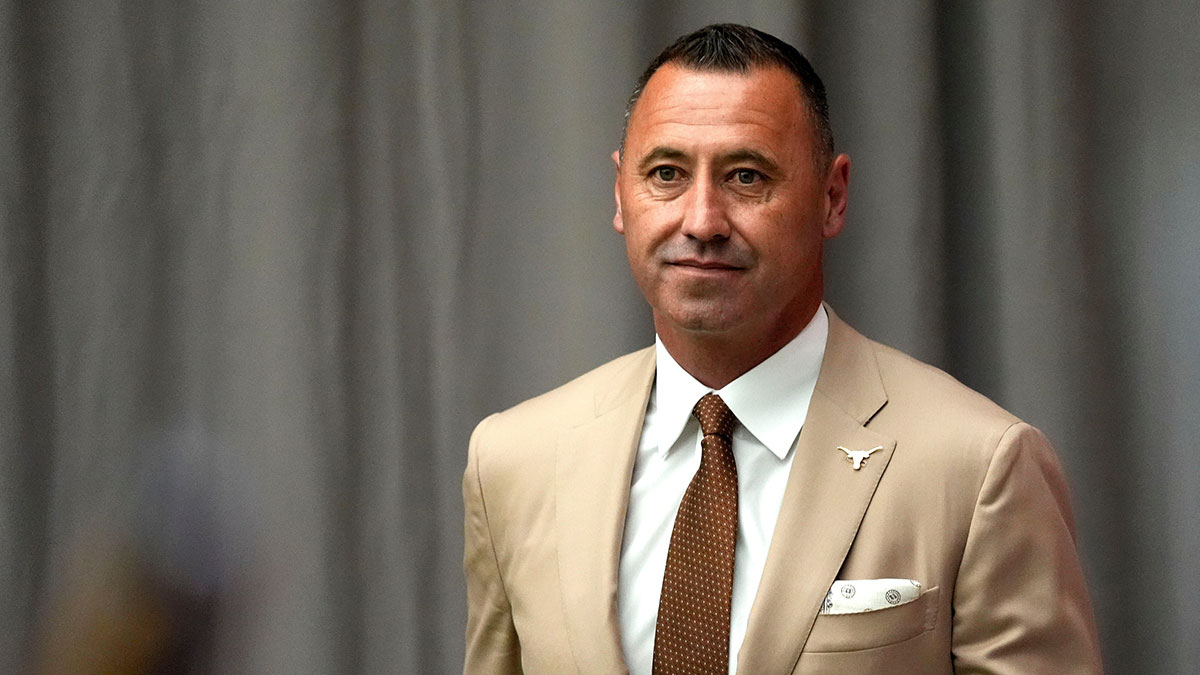
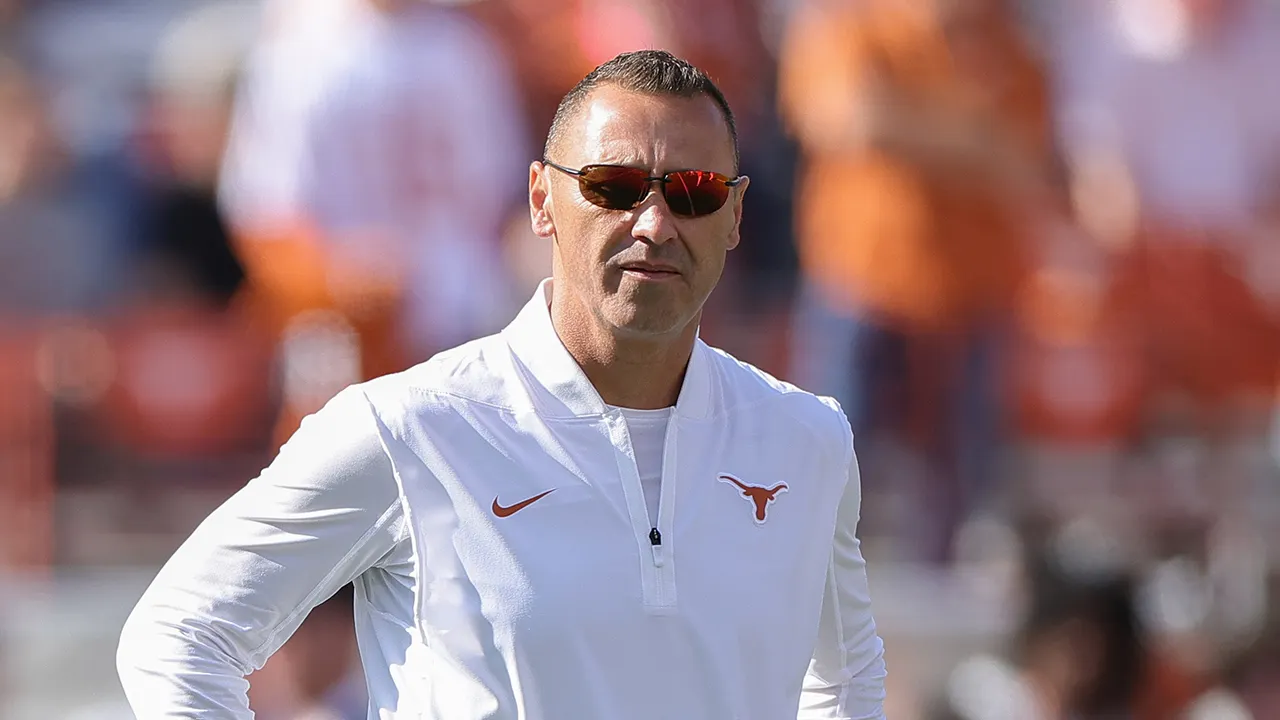
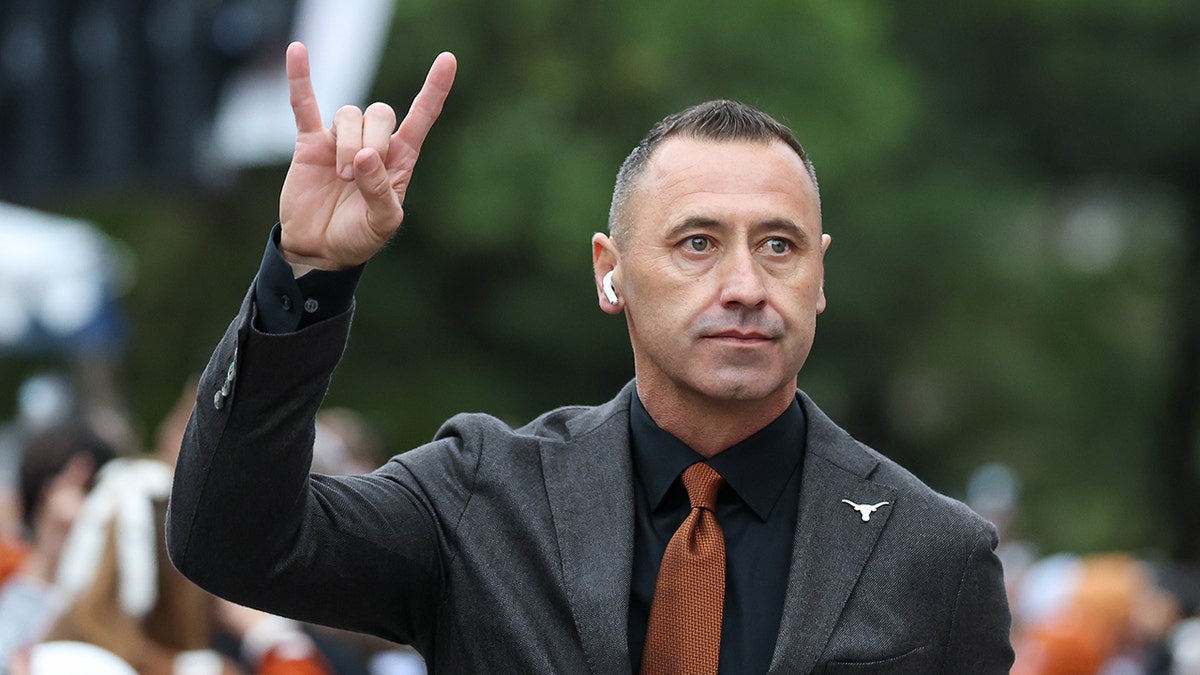
Head coach Steve Sarkisian of the Texas Longhorns holds Horns Up as he walks into the stadium before the SEC football game between Texas Longhorns and Texas A&M Aggies on Nov. 28, 2025, at Darrell K Royal-Texas Memorial Stadium in Austin, TX.(David Buono/Icon Sportswire)
Before the Longhorns take on the Michigan Wolverines in the Cheez-It Citrus Bowl, Sarkisian discussed that aspect of recruitment, suggesting some of the agents are not even qualified to be negotiating deals that could be millions.
“Which agent are you dealing with? There’s some agents who are rational and then there’s some where it’s their first time ever being an agent,” Sarkisian told reporters, per OnTexasFootball. “I don’t even know if they’re licensed to be agents, and all of a sudden, they get to be agents because we have no certification process in college football, where the NFL you have to be certified. In college football, it might be their college roommate their freshman year who’s their agent right now.”
Sarkisian was asked about what Texas is looking to do this offseason to replace some key players, including running back Quintrevion Wisner, who entered the transfer portal. Wisner made the announcement of the move this past Friday, joining CJ Baxter and Rickey Stewart Jr. as Texas running back transfers.
While Sarkisian explained how the team needs other be strategic, identifying what they need versus what they want, as well as looking at the “luxuries” they have on the roster, he also made sure to mention the high school recruiting class for 2026 that needs to be looked at.
Head coach Steve Sarkisian of the Texas Longhorns speaks during SEC Football Media Days at Omni Dallas Hotel on July 17, 2024 in Dallas, Texas. (Tim Warner/Getty Images)
Either way, Texas continues to peruse the transfer portal, and Sarkisian knows he’s going to have to continue having phone conversations with “agents” moving forward.
“Again, I think there’s nothing wrong with that,” Sarkisian said after reflecting on how financials have come into play when it comes to building a college roster. “We’ve just got to tighten it up. Hopefully, we can get there sooner rather than later, because again, I’m probably going to be on the phone with an agent today who’s going to throw a number at me that I’m going to be like, ‘Good luck, I hope you get it. If you don’t, call us back. But I can’t do that number.’”
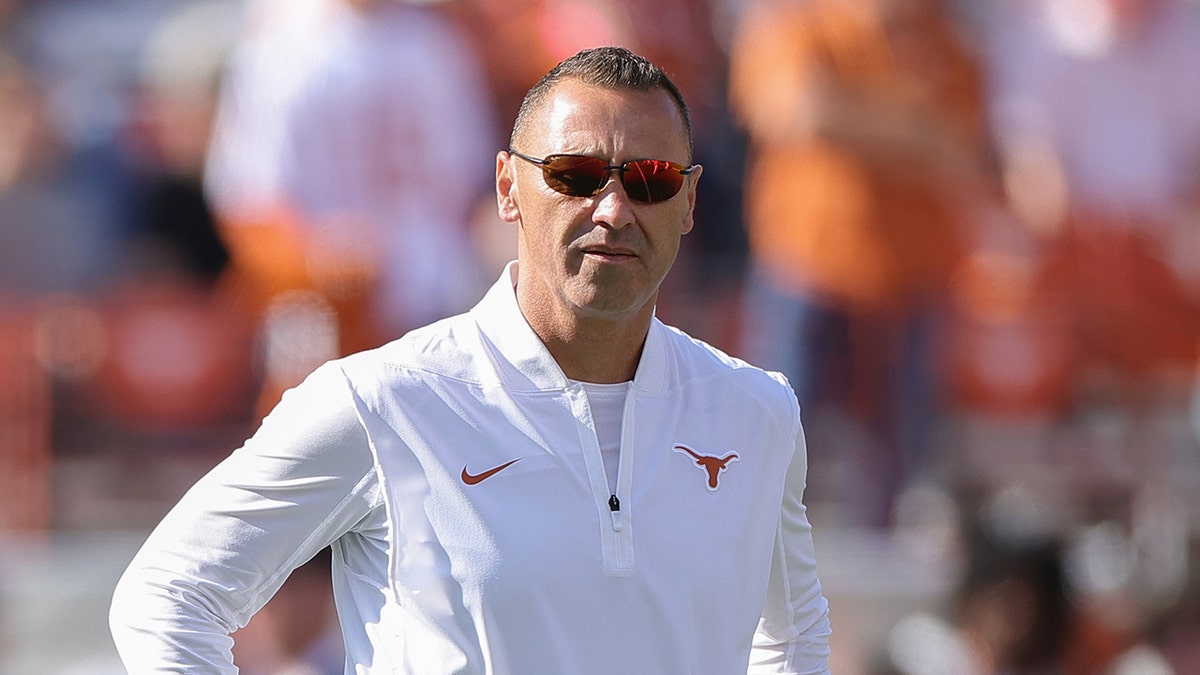
Head coach Steve Sarkisian of the Texas Longhorns on the field prior to a game against the Arkansas Razorbacks at Darrell K Royal-Texas Memorial Stadium on Nov. 22, 2025 in Austin, Texas.(Alex Slitz/Getty Images)
CLICK HERE TO GET THE FOX NEWS APP
Unlike other lower-level programs, the University of Texas has some tremendous NIL funds to work with. In fact, the highest-paid NIL athlete in college football is their quarterback, Arch Manning, who will remain with the squad heading into 2026. He’s hoping to finish strong in his first bowl game start on New Year’s Eve.
Texas led the way with a massive NIL budget for the 2025 season, ranking higher than any team in college football at $22.2 million, according to 247 Sports.
Follow Fox News Digital’s sports coverage on X and subscribe to the Fox News Sports Huddle newsletter.
Scott Thompson is a sports writer for Fox News Digital.
Colorado finished a disappointing 2025 campaign after the program’s 2024 surge, falling to 3–9 (1–8 Big 12) one year after a 9–4 season and No. 23 final AP ranking under third-year head coach Deion Sanders.
Adding insult to injury, the Buffaloes are now set to lose numerous players, with 24 players expected to enter the transfer portal when the window opens on Friday.
The most surprising name on the list, however, is true freshman cornerback Noah King, who entered the transfer portal earlier this month.
King was a four-star prospect from Hamilton, Ohio, with 247Sports ranking him as the No. 26 cornerback in the 2025 class.
He arrived at Colorado in April 2025 after a brief enrollment at Kansas State, transferring just months after signing with the Wildcats on December 4, 2024.
Prior to his commitment to Kansas State, King held more than a dozen Power Four offers, including Kentucky, Nebraska, West Virginia, Marshall, and Oregon State.
With King set to test the market, multiple outlets have mentioned Indiana as a program monitoring his situation or viewed as a logical fit.
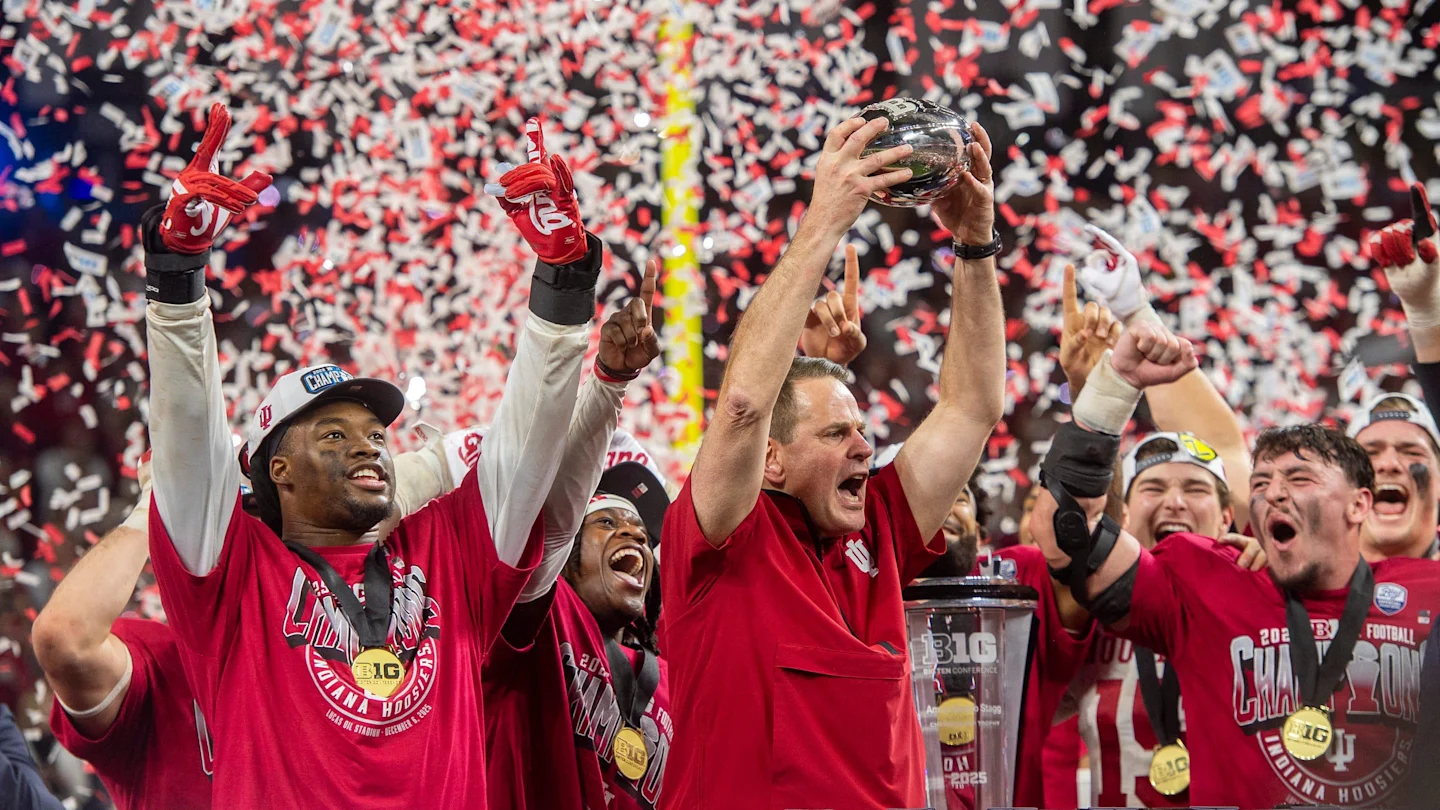
The Hoosiers celebrate after the Indiana versus Wiscsonsin football game at Memorial Stadium. | Rich Janzaruk/Herald-Times / USA TODAY NETWORK via Imagn Images
Head coach Curt Cignetti has rapidly transformed Indiana since his hire on November 30, 2023.
In 2024, he engineered one of the program’s quickest turnarounds, delivering a then-program-record 11-win season, Indiana’s first College Football Playoff berth, and national coach-of-the-year recognition.
Building on that momentum, the Hoosiers completed an undefeated 13–0 regular season in 2025, captured the Big Ten title, and entered the College Football Playoff as the No. 1 seed — a rise fueled by targeted transfer additions, improved recruiting, and a physical, high-tempo identity Cignetti installed.
One of those transfer additions was Heisman-winning quarterback Fernando Mendoza, who completed 71.5% of his passes for 2,980 yards, 33 touchdowns, and six interceptions.
Under Cignetti and Mendoza, Indiana now has a legitimate chance to compete for a national title, with a CFP quarterfinal matchup set for Thursday against No. 9 Alabama in the Rose Bowl (4:00 p.m. ET on ESPN).
If the Hoosiers advance, they would face the winner of the No. 4 Texas Tech–No. 5 Oregon matchup in the CFP semifinals, with a potential national championship game on January 19 looming.
As an Ohio native, Bloomington represents a logical fit for King due to the Midwest pull, and after redshirting his first year at Colorado, he would have a clearer path to playing time.
Indiana’s recent success, defensive back development, and growing NFL attention make it an attractive landing spot for a young, highly recruited cornerback seeking to develop and compete for championships.
Read More at College Football HQ
College football program loses 16 starters to transfer portal
$2 million college football QB predicted to have ‘untapped potential’ after entering transfer portal
College football’s leading passer announces transfer portal departure in farewell note
Major college football program linked to 1,800 yard RB in transfer portal