
NIL
How Notre Dame became a more durable national title contender for college football’s new era

Editor’s note: This article is part of the Program Builders series, focusing on the behind-the-scenes executives and people fueling the future growth of their sports.
SOUTH BEND, Ind. — Six months after Notre Dame played for a national championship, Pete Bevacqua turned the floor over to Marcus Freeman. The athletic director greenlit the head coach to ask for anything he wanted.
Flanked by deputy athletic director Ron Powlus and general manager Mike Martin at a sitdown in mid-July, Bevacqua wanted to know how the football program could make national title runs more frequently than once per decade. He wanted to know what Notre Dame required to win it all for the first time in 37 years, the longest gap between titles in school history.
But what could Freeman want? Notre Dame’s indoor practice facility has been here barely longer than he has. Its stadium renovations aren’t quite a decade old. Shields Hall, the future 150,000-square-foot home of the football operations center, will open next year. Notre Dame just re-signed with NBC at a dollar figure high enough to keep the program independent yet competitive with power-conference foes pulling in north of $50 million per year. Freeman already has an eight-figure contract extension of his own. And the College Football Playoff keeps rewriting its rules in Notre Dame’s favor, giving it access to a first-round bye and potentially better at-large odds if the field expands.
“We have what we need,” Bevacqua said. “Are you gonna play in the national championship game every year? No. Unfortunately, there’s too many good teams. But we’re gonna keep knocking on that door.
“We have to win national championships in football.”
Bevacqua opens meetings by talking about Notre Dame winning a national title, which last happened before he was a freshman student from Connecticut. To administrators, donors and trustees, that’s no small change in messaging for a program that has historically gotten in its own way. Ten years ago, school president Rev. John Jenkins was profiled in the New York Times, stating Notre Dame would opt out of big-time college football if the sport moved toward a pay-for-play model. As Jenkins spoke, bulldozers were already working on the $400 million renovation to Notre Dame Stadium, dubbed the Campus Crossroads Project.
Notre Dame was slow in adopting pathways for players to enroll a semester early because the administration was concerned about the practice’s impact on freshman orientation. Now the school is comfortable changing its academic calendar to accommodate the College Football Playoff.
Former athletic director Jack Swarbrick said Notre Dame would never have taken its football and gone home, but the school was right to attempt to lead the sport away from its current state of barely regulated name, image and likeness money. It failed. But it was worth a try.
“Wherever the bar moved to, we were gonna move,” Swarbrick said. “You advocate for the position you’d like to see occur, but in the background you’re always saying we’re not gonna let Notre Dame football fail.”
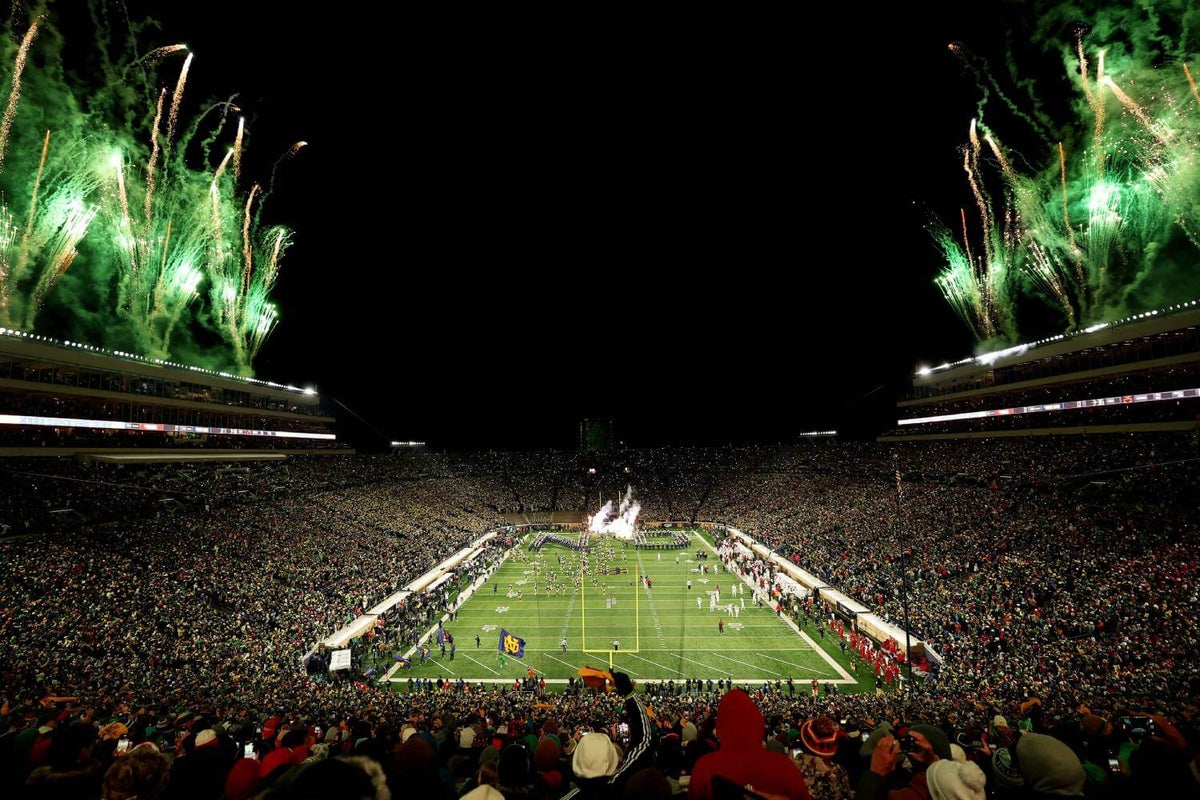
Yet avoiding failure is not the same thing as winning a national title. There’s catching lightning in a bottle for one season, and then there’s pouring the foundation on something more durable. That starts with Notre Dame’s holy trinity of football buildings: a renovated stadium, an indoor practice facility and a new operations center. Two of those projects are done, and the third could be by the time Notre Dame opens Freeman’s fifth season as head coach at Lambeau Field against Wisconsin in 2026.
They are all part of the reason Notre Dame believes it can now produce College Football Playoff runs in perpetuity. According to The Athletic’s CFP projections, the Irish have the fourth-best odds to make the 2025-26 Playoff at 73 percent, higher than preseason No. 1 Texas. It might seem like Notre Dame has everything to hold its reservation at college football’s adult table for the long run — acknowledging that every coach wants more NIL funding.
But faith in where Notre Dame football is headed doesn’t require a Hail Mary anymore, and every little bit still helps.

Notre Dame owned the national spotlight for the debut of the 12-team Playoff and hopes to be back on that stage in December. (Trevor Ruszkowski / Imagn Images)
The Mendoza College of Business sits off the southwest corner of Notre Dame Stadium and is under construction, like much of the campus. Overhead, the building is shaped like a capital H. When it’s done, it will look more like a capital A. Considering the school’s profile around Notre Dame, the alphabetical metaphor probably fits.
Namesake Tom Mendoza is an ardent supporter of the football program and helped start Notre Dame’s NIL collective with Brady Quinn. Business remains one of the most popular majors, both around the campus and within the football team. When the school started a sports analytics program four years ago, it did so with athletes’ schedules in mind. Then the faculty made sure the football staff knew about it. When Freeman took the head coaching job, one of his early meetings was a fireside chat with Mendoza College dean Martijn Cremers. But Cremers didn’t come to the football facility to talk in front of the team. Freeman went to the business school to talk in front of the student body.
“If you went in a laboratory and designed the perfect coach for Notre Dame, it would be Marcus Freeman,” Bevacqua said. “He’s become not just the football coach at Notre Dame, he’s become such a part of this university and this campus.”
The path by which Notre Dame positioned itself to keep competing for championships didn’t start in the business school, but it can be explained there. Among the theories taught and employed at Mendoza is the Flywheel Effect, popularized in the book “Good to Great” by Jim Collins. Without knowing it, Notre Dame football has made this theory an operating principle.
As Collins describes it, imagine a massive wheel mounted on an axle. The job is to get this heavy wheel to spin at a high speed. One push won’t do it. Not two. Not 10. Maybe not 100. But once the wheel spins with force, it creates its own momentum. It won’t be stopped by minor obstructions (i.e. injuries, staff turnover, even losses). There’s no way to know which push was most important in the flywheel reaching this self-sustaining velocity. It’s just obvious when it gets there.
The Notre Dame football flywheel is spinning, both inside the program and beyond its walls.
As Freeman has grown into the job, the admissions office has become more of a partner with the football program, both in high school recruiting and the transfer portal. Irish coordinator salaries have almost tripled in the past six years. NIL is no longer a roadblock to player acquisition or retention; in general, the Irish don’t lose talent they want to keep and rarely miss on portal targets they’re desperate to sign. When Freeman needed a new strength coach a year ago, Notre Dame funded an NFL hire. When injuries rocked the Irish roster last season, the program didn’t seem to miss a beat. When Bevacqua extended Freeman last December, days before the first-round game against Indiana, he paid him like a coach expected to make the national title game. When Freeman needed a new running backs coach last winter, he pulled Penn State’s Ja’Juan Seider, the only position coach in college football with a group better than the Irish.
When Notre Dame football needs resources, it doesn’t go wanting.
Some of this started under Brian Kelly, who professionalized the program to the point it could take a chance on a first-time head coach. Swarbrick got Notre Dame into the right rooms in the construction of the College Football Playoff. Bevacqua got it on the right golf courses, counting Donald Trump, Roger Goodell and Greg Sankey as playing partners this summer. When Notre Dame needed to meet the school’s 100-75 fundraising rule for Shields Hall — before breaking ground on a large capital project, 100 percent of the money must be committed and 75 percent must be in hand — the development office went into warp drive before the end of Jenkins’ presidential term on June 1, 2024. Dirt moved with six weeks to spare.
Freeman didn’t start this wheel spinning, but he helped it achieve inexorable momentum last winter by beating Georgia and Penn State in a seven-day span. The Sugar Bowl was Notre Dame’s first major bowl win in 31 years. The Orange Bowl felt like something bigger, the program’s most significant win since the 1993 Game of the Century against Florida State.
“The Georgia win changed everything,” said Mendoza, who watched the Orange Bowl alongside Tony Rice, Notre Dame’s last national championship-winning quarterback, and Tim Brown, its last Heisman Trophy winner. “Notre Dame used to think it could win. Maybe it knew it could win. Now it expects to win. Marcus can sell playing for a national championship and everything else that comes with it at Notre Dame. The kids feel it. The players we’re attracting feel it.”

The Sugar Bowl win over Georgia ‘changed everything,’ said business school namesake Tom Mendoza. (Geoff Burke / Imagn Images)
Freeman stood at the 50-yard line on a Saturday night in mid-June as Notre Dame hosted 21 official visitors. A dozen of the recruits were already committed. Nine were still up for grabs.
Before Freeman talked, the players and their parents — a group that included NFL alumni Larry Fitzgerald, Thomas Davis and Jermichael Finley — watched a video on the stadium’s screen showing the parents of former players, including Riley Leonard’s, talking about the Notre Dame experience.
Within a month, eight of the uncommitted prospects had picked Notre Dame. By the end of summer, the Irish had landed 11 of the 12 uncommitted prospects they’d hosted for official visits, including two 247Composite five-stars in cornerback Khary Adams and tight end Ian Premer.
The biggest reasons why Notre Dame believes it can keep knocking on the CFP door are still in high school. With 27 commitments for 2026, Freeman is on track to sign the program’s highest-rated recruiting class in 13 years. The Irish are yet to suffer a decommitment after watching 18 walk over the previous three cycles.
“You go into the semifinals game and you’re losing starters, putting backups in,” Freeman said, “but if you don’t have the depth that you can put somebody in and get the job done, then all of a sudden that becomes a hole and it becomes a deficiency and you lose.”
Notre Dame could have fumbled away the goodwill of last season when general manager Chad Bowden left for USC in February. From the start of the CFP to the start of spring practice, Notre Dame landed two commitments, both on the offensive line, hardly a position that requires a recruiting full-court press.
Notre Dame also lost presumptive recruiting director Caleb Davis to San Diego State. When Freeman tabbed Mike Martin from the Detroit Lions to become general manager — after an aggressive pursuit of James Blanchard from Texas Tech — they rebooted the recruiting operation alongside new director of recruiting Carter Auman, who graduated from Notre Dame during Freeman’s first offseason as head coach.
Organization picked up. For all Bowden’s energy, he had a habit of giving little warning of what he needed and when he needed it. That start-up approach, move fast and break stuff, had worked. It also felt like the Irish were due for something new. After last season, the program was no longer a startup. It wanted to be a Fortune 500 company. So it had to act like one.
There are no leprechaun costumes or gold boomboxes anymore. There’s talk of branding and generational wealth, ideas floated about how Notre Dame can become business partners with its players. When Martin sets up calls for professors, alumni or former players with prospects, he produces one-page overviews that include other schools in play, GPA, and parents’ professions. They arrive in advance.
There’s even a text chain for prospects’ moms. The entire operation feels buttoned up.
“It’s getting the talent,” Bevacqua said. “Fingers crossed, knock on wood, we are firing on all cylinders right now with recruiting.”
And National Signing Day is still four months away.
Televisions line the second floor of Notre Dame’s indoor practice facility, a gathering space that overlooks the field below. During the second week of August camp, the screens replay Notre Dame’s run through the CFP, with highlights of wins against Indiana, Georgia and Penn State. Everyone knows how it all ended against Ohio State. The longest season in school history still lingers around here, as much as Freeman would prefer it didn’t.
“They’re valuable lessons that you learn from last year, but I continue to remind them: 2024 has nothing to do with this 2025 team,” Freeman said. “Yes, let’s utilize the lessons. Let’s utilize some of those good and bad things that we learned from last year, but you do that no matter what the previous experience was. They understand that.
“We try to stop talking about that ‘24 year.”
Good luck with that.
The last time Notre Dame made the national championship game, the hangover was harsh. So was the realization the Irish weren’t as close to the mountaintop as they appeared before kickoff of that 42-14 loss to Alabama. Kelly interviewed with the Philadelphia Eagles, starting quarterback Everett Golson got suspended after spring practice and the program was out of the title chase by late September. Notre Dame ended that 2013 season against Rutgers in the Pinstripe Bowl.
The Ohio State game felt different. So did everything leading up to it. But when it came time for Notre Dame’s title shot, the team on the other sideline still had the most talent.
“I would point to depth as the No. 1 difference now,” Swarbrick said. “Our first D-line was really good that year. Alabama’s third D-line was really good. It was all the difference in the world.
“Sport always exposes your weaknesses. If your nutrition program isn’t right, if your strength conditioning program isn’t right, if recruiting doesn’t produce the quality of player and the depth, it always gets exposed. And I think the program is as solid across the board as any time in my memory.”
Notre Dame will begin its difficult encore at No. 10 Miami on Sunday night of Labor Day weekend. It will have the national stage to itself, with a first-time starting quarterback and a new defensive coordinator. The Irish added five potential starters in the transfer portal. Behind the practice fields, Shields Hall continues to go up, windows added, bricks laid. The facility stretches an entire block.
For the first time in a long time, Notre Dame enters a season where winning a national title doesn’t feel like a rote talking point. The Irish are betting favorites to return to the CFP and win double-digit games. If they get there, Freeman can lean into last season’s experiences. So can his roster. Whether he wants to talk about it in August or not.
“To win a national championship in any sport, you gotta be good; we’re good,” Bevacqua said. “You gotta stay healthy. And no matter how good you are, you’re gonna have to get lucky a couple of times. But I really feel we’re positioned to keep knocking on that door.
“There is no secret, no doubt, no hesitation that we want to win national championships in football.”
The wheel keeps spinning.
Program Builders is part of a partnership with Range Rover Sport. The Athletic maintains full editorial independence. Partners have no control over or input into the reporting or editing process and do not review stories before publication.
(Photo: Michael Reaves / Getty Images)

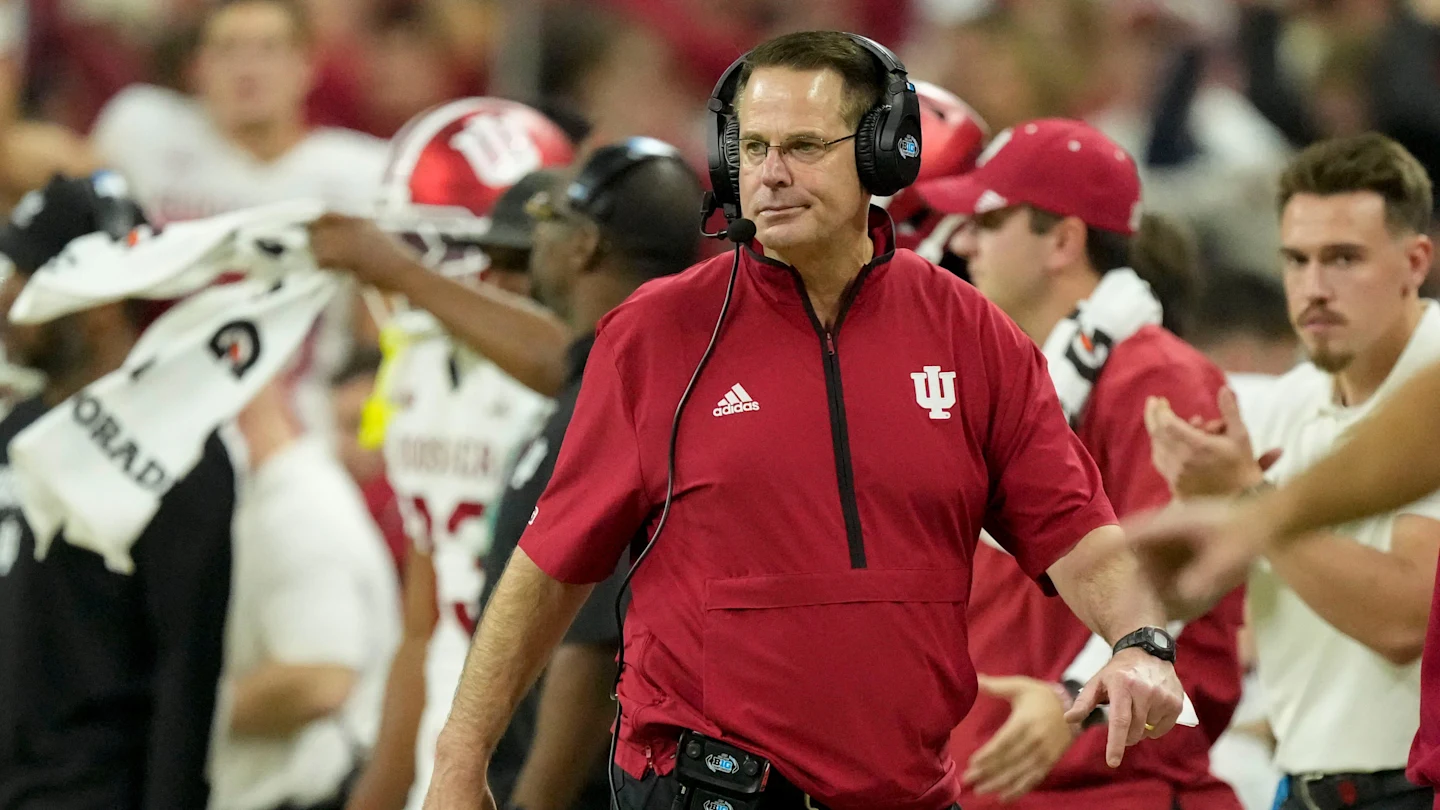
Indiana’s meteoric ascent to the top of college football has transformed the Hoosiers into a prime destination for transfer quarterbacks, and for a brief moment, that attention turned toward a familiar face.
Cincinnati signal-caller Brendan Sorsby, who spent his first two seasons at Indiana before moving on, formally entered the transfer portal on December 15 after a productive 2025 campaign with the Bearcats.
In 2025, Sorsby produced 2,800 passing yards, 27 touchdown passes, and five interceptions, plus 580 rushing yards and nine rushing scores.
Across his collegiate career, he has totaled 7,208 passing yards, 60 passing touchdowns, 1,305 rushing yards, and 22 rushing touchdowns, positioning him as one of the top dual-threat quarterbacks currently available in the transfer portal.
He is also one of the market’s most valuable quarterback assets, with an estimated NIL valuation of approximately $2.4 million and reports indicating that suitors have discussed packages exceeding $4 million.
Recent reports have tied Sorsby to several Power-5 suitors, notably Texas Tech and, in initial rumor threads, a potential reunion with the Hoosiers.
However, “Hoosier Tailgate” host Shannon “Coach Griff” Griffith pushed back on the speculation during a December 20 episode, suggesting that Indiana would not view Sorsby as a realistic target.
“I do not think Sorsby is anybody that Indiana would have any interest in,” Griff said. “I don’t necessarily think Sorsby is better than, other than playing, Alberto (Mendoza). I just don’t think that’s something that I can see them getting back in. He’s kind of linked to Texas Tech.”

The Hoosiers finished the 2025 campaign undefeated, captured the Big Ten title, and entered the College Football Playoff as the No. 1 seed.
Their offense was driven by Fernando Mendoza (2,980 yards, 33 TDs, six INTs), who swept national awards (Davey O’Brien, Maxwell, and the Heisman) and is widely discussed as a top prospect for the 2026 NFL Draft.
Head coach Curt Cignetti’s program has proven adept at integrating transfer quarterbacks, with both Fernando Mendoza (Cal) and Kurtis Rourke (Ohio) finding success after joining the Hoosiers.
For Sorsby, the portal still offers multiple paths, including a high-value college package or an NFL evaluation, but commentary from influential IU voices, such as Griff, has effectively taken a straightforward reunion scenario off the table.
Read More at College Football HQ
- Major college football program loses 15 players to transfer portal
- College Football Playoff team has ‘significant interest’ in 4,000-yard QB
- College football quarterback enters transfer portal after 4,000-yard season
- No. 1 ranked transfer portal player predicted to join College Football Playoff team

TUSCALOOSA, Ala (WIAT) – University of Alabama offensive lineman Parker Brailsford’s childhood experiences inspire him to help Tuscaloosa’s underserved youth.
Brailsford is an Arizona native, who has made a name for himself in the world of college football. But when he takes off the helmet and pads, his focus shifts to something else.
“Being able to give back to kids that don’t have – that’s something that fulfills me,” Brailsford said. “It’s my purpose.”
Brailsford took 10 children and their families from the Boys and Girls Club Christmas shopping on Monday.

Each child received a $100 Target gift card. All together it was $1,000 of NIL money.
“He just gave her a turkey for Thanksgiving, and now he’s taking her Christmas shopping,” Toniko Bryant said. “I’m very thankful because he doesn’t have to do that.”
Brailsford understands he doesn’t have to – but he wants to.
“As a kid, we didn’t have a lot but we had enough,” Brailsford said.
During Brailsford’s infancy years he was adopted.
“I never was in the foster care system, but one of my friends was,” Brailsford said.
Brailsford’s formative years were a stark contrast to what he saw other children experience. His parents gave him support and stability, while other children moved from home to home.
At the same time, his mother took him to homeless shelters and food pantries to volunteer. There he saw how poverty affects anyone of all ages, races, and gender.
“Sometimes you get caught in the what you’re living in right now – you think there’s not a place for you,” Brailsford said.
Brailsford found his place on the field, but his purpose is to help children find theirs.

“This is something God put on his heart,” John Nero said. “I appreciate every bit of it, not just for Oshae but for all the other kids.”
Brailsford relates to many of the children he serves. Whether it’s adoption, financial hardships, or empathizing with experiences his friend encountered years ago.
While Brailsford’s success in football gives him the financial resources and name recognition to coordinate outreach events, this is just the beginning even if his football career comes to an end.
“I’m working on my social work degree right now because I really want to be able to help kids, anyway I can,” Brailsford said.
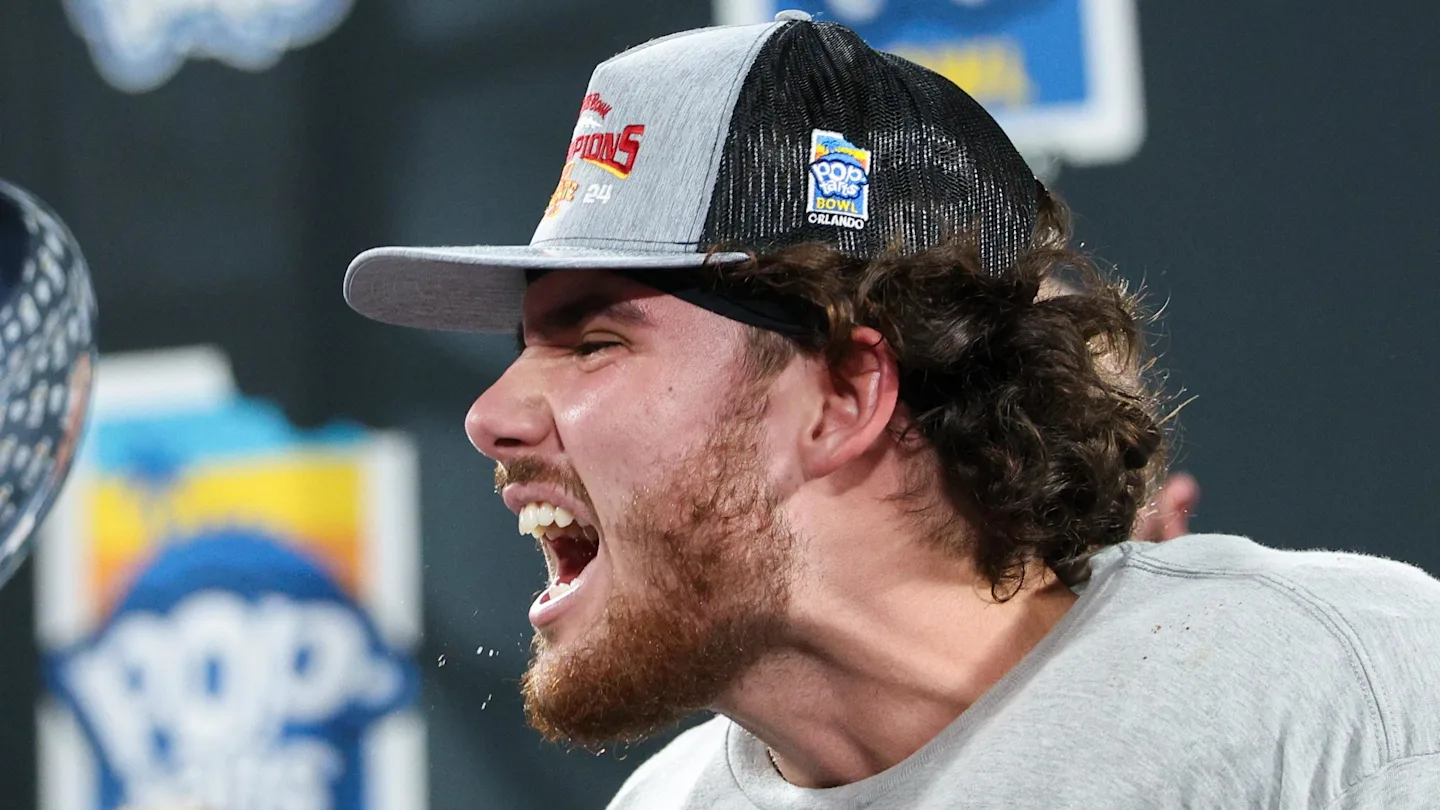
The college football offseason landscape shifted dramatically this week as one of the nation’s most productive quarterbacks officially signaled his intent to explore new options. This decision comes immediately after a major coaching carousel change in which his longtime mentor left their shared Big 12 Conference program for a prestigious opening in the Big Ten Conference.
The move immediately sparked speculation regarding a potential reunion that could reshape the competitive balance of the upcoming season.
Analysts are already connecting the dots between the veteran signal-caller and his former head coach’s new destination. The quarterback boasts a reputation for delivering in high-pressure fourth-quarter moments and possesses the type of high-floor reliability that championship contenders covet. His entry into the transfer database essentially resets the market for teams in desperate need of a veteran presence under center to stabilize a transition.
Media personalities have wasted little time identifying a frontrunner for his services. The prevailing sentiment suggests that the existing bond between the player and the coaching staff makes one specific landing spot nearly inevitable unless a drastic shift occurs.
This specific transfer recruitment is expected to be swift given the deep ties and the immediate need for a starter to lead the coach’s new program.
Connection between Rocco Becht and Penn State is undeniable
During a recent episode of Josh Pate’s College Football Show, the host addressed the developing situation regarding Iowa State Cyclones quarterback Rocco Becht. The redshirt junior holds a $1.4 million NIL valuation according to On3 and has entered the transfer portal following the departure of his head coach. Pate views the link to the Penn State Nittany Lions as logical, given the recent hiring of Iowa State Cyclones head coach Matt Campbell in Happy Valley.
“Rocco Becht is in the portal. This is not a shock,” Pate said. “He is a Matt Campbell guy. Campbell goes to Penn State, quarterback goes in the portal. You’ve got to think Penn State’s going to play a major factor here.”

Becht leaves Ames as one of the most decorated passers in school history. He accumulated over 9,200 career passing yards and 64 touchdowns while winning 26 games as a starter. His 2025 campaign was hampered by a shoulder injury that required offseason surgery. He still managed to throw for 2,584 yards despite the physical setback. Pate emphasized the mental attributes that make Becht an attractive target for the Nittany Lions.
“He is an excellent player in fourth-quarter moments,” Pate stated. “If you add Rocco Becht there, there is no crash-and-burn season unless he gets hurt. So you get a high floor, but a very next-level mentality too. He kind of thinks more like an NFL guy.”
Forever A Cyclone❤️🌪️🌪️❤️ pic.twitter.com/chHf7fjh0j
— Rocco Becht (@RoccoBecht) December 20, 2025
The transition would be seamless for Becht. He would reunite with Campbell as well as offensive coordinator Taylor Mouser and quarterbacks coach Jake Waters. This familiarity is crucial as Becht rehabilitates his shoulder ahead of the 2026 season.
“He’s a coach’s kid and a friend of the program, Anthony Becht, by the way,” Pate added. “I would say Penn State (is the leader) until otherwise noted there.”
The NCAA Transfer Portal officially opens for all players to enter on Jan. 2.
Read more on College Football HQ

The 2025 college football coaching carousel is one for the history books — and it’s not even over yet! As of late December, 30 FBS college football teams have hired new head coaches for the 2026 season, including six from the SEC and several more from the other power conferences.
Now that almost all of the jobs have been filled, ESPN writer Bill Connelly took the time to grade each and every hire made by an FBS program, assigning anywhere from an A+ to a C — a fairly friendly scale, even to the No. 30 hire on the list, which we won’t spoil. You can view the whole thing right here.
In Mr. Connelly’s seminar on How To Properly Conduct A Coaching Search, A’s were aplenty as eight students (meaning: FBS schools) earned an A or better in his book for the hire of their new head football coach. Those are the following…
Eight coaches earn an A grade
*Alphabatized by school
Jim Mora | Colorado St.
Jon Sumrall | Florida
Mark Carney | Kent St.
Lane Kiffin | LSU
Charles Huff | Memphis
Eric Morris | Oklahoma State
Matt Campbell | Penn St.
James Franklin | Virginia Tech
That list represents several of the biggest hires of the 2025 college football coaching cycles but also has a couple of underrated names as well. Plus, Kentucky’s Will Stein and UCLA’s Bob Chesney were mentioned as hires on the A-/B+ cusp. The one that earned an A+ grade, though? Perhaps you guessed, but it was Lane Kiffin picked as the prized sea bass.

“We won’t overthink this one,” Connelly wrote on the LSU hire of Lane Kiffin away from Ole Miss, noting that the process was certainly over-dramatic. “But in his past nine years as a head coach, he has won double-digit games six times and he engineered the Rebels’ best three-year run in 60-plus years. He checks almost every box for a school that can afford to hire a guy who checks lots of boxes.”
The LSU coaching transition featured a dispute and eventual promised payout of a $50+ million buyout to Brian Kelly, then included the public interference of the Louisiana Governor, the firing of the LSU athletic director and the offer of a massive contract to Lane Kiffin to poach him from an SEC rival. Yet, with the dust still settling, the Tigers appear set up to go for glory in the latter half of the 2020s.
Per ESPN and Bill Connelly, Lane Kiffin is the No. 1 hire of the college football season.
More on College Football HQ
The Battle For The Jeweled Shillelagh is no more.
The slow death of beloved traditions in college football continues, as another all-time rivalry has gone the way of the dinosaurs.
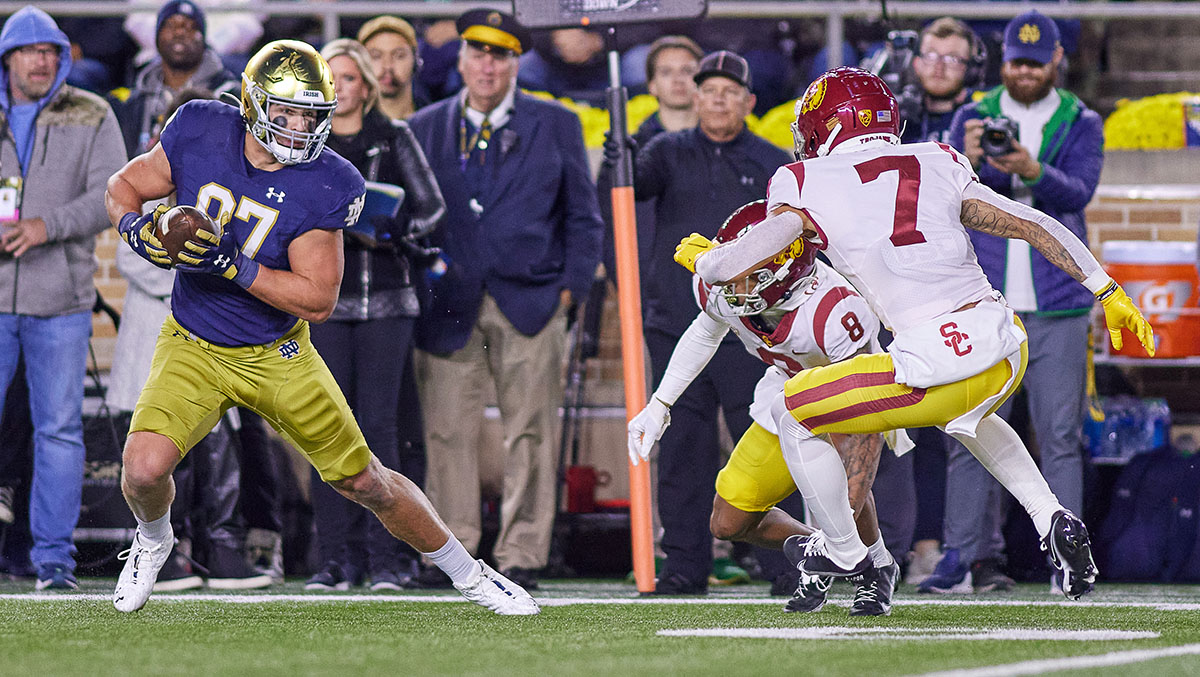
The Notre Dame Fighting Irish and USC Trojans have played each other every year since 1946 (except for the COVID year in 2020), but it appears that meeting will no longer be an annual or even a semiregular one.
A lot of blame has been thrown back and forth on social media regarding who is at fault here, with USC fans saying Notre Dame is scared to play them, while Irish fans think the Trojans are trying to punish the Irish for not being in a conference and trying to “skate by” on making their own schedule.
Regardless of who is actually at fault, this one still stings all the same.
USC and Notre Dame have given us some of the most memorable games of all-time, with the “Bush Push” of 2005 being one of the most iconic games of this century. The two programs are also some of the most tradition-rich in college sports, so the fact that they haven’t renewed their rivalry is a tough pill to swallow.
This has been rumored for some time, but now that it’s finally happened, it just represents another death knell in our once beautiful sport.
NIL, an unregulated transfer portal, an ever-expanding playoff system, and even the death of bowl season. They’re all crushing the traditions that make college football so unique.
The Trojans and the Irish ending their storied matchup isn’t the only casualty of the new era of college football, it’s just the latest.
The Big Ten sacrificed great regional rivalries for a budding superconference — giving us their disgraceful “Rivalry Series” in the process — and it looks like the Battle For The Jeweled Shillelagh is their next victim.
The more this sport succumbs to its lust for a paycheck, the more I’m considering taking up hiking on Saturdays in the fall, or, at the very least watching the FCS.
At least that league hasn’t been perverted by the almighty dollar yet.
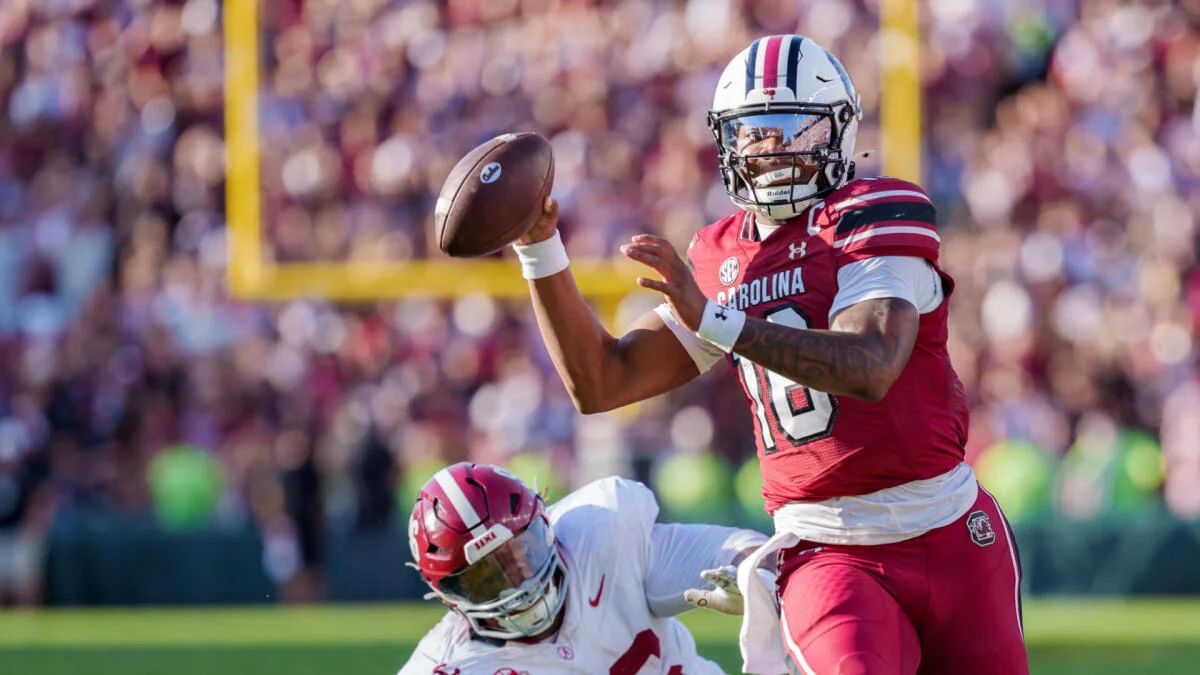
The metrics — near the bottom of the SEC in as many categories as you could count — were enough to make your stomach churn and there was nothing available over-the-counter to aid Shane Beamer and his team’s recovery.
After flying home from a road loss to Ole Miss earlier this season, South Carolina’s fifth-year coach severed ties with offensive coordinator Mike Shula, signaling change that commenced a string of events highlighted this month by the arrival of Kendal Briles as the Gamecocks’ new offensive director, two additional staffers and LaNorris Sellers’ pivotal return at quarterback.
Sellers announced Monday he was “running it back” with the Gamecocks, putting an end to questions there were other programs in the mix.
With Beamer’s potential tenure-defining decision, the Briles-Sellers pairing means South Carolina is scheduled to press the issue offensively for the first time since the Steve Spurrier era, the height of the program’s success. And with the ink finally drying on Sellers’ updated terms, the Gamecocks’ offseason outlook is considerably more positive than it looked after the season ended with a disheartening loss to Clemson that slapped South Carolina with a 4-8 final record to end a season that began with so much hope.
“This job is not for on-the-job training,” Beamer said on his OC hire this month. “When you talk about someone that has done it in this league and done it in other conferences at a high level, has done it with multiple personnel, different styles of quarterbacks, it’s really impressive. Offensively, explosive, wants to run the ball.
“Go back in 2021-2022, his offense in Arkansas was one of three offenses in the entire nation that averaged over 230 yards a game, rushing and passing. They protect the quarterback, which we need to do a better job of. We need to do a better job of protecting the football and being explosive, and he certainly can do that.”
For teams in schematic transition like the Gamecocks, figuring out the quarterback situation was the first step in getting the ball rolling toward putting together an early two-deep and determining where else this program needed help in the talent department.
Behind Sellers’ decision to stay
Multiple sources told CBS Sports during Sellers’ conversations with South Carolina about re-signing that the quarterback’s return would impact roster construction and how this team looks in 2026. Sellers isn’t the type to give ultimatums, but he at least needed to know who he would be working alongside next fall and what the plan was for the offensive line and strengthening that unit moving forward.
There was significant worry, at least from inside the program, that the Palmetto State native could leave this cycle for another program. During the negotiation process, Sellers wanted assurances — more than fair for a player who was sacked 42 times as a sophomore and would’ve likely been a first-round pick in April had South Carolina not been historically bad offensively this season.
Beamer needed to get his offensive coordinator hire right, plain and simple. Sellers could have tested the market. At the end of the season, it was believed by national sources that Sellers had three options: Stay, go pro, or transfer.
Beamer said last week that conversations between Sellers and Briles were positive and he felt strongly about the return of his top offensive player despite nothing being finalized in terms of an NIL and revenue share-based contract until now. Sellers’ decision to stay put for next season reset the quarterback transfer market, giving way to players like Florida’s D.J. Lagway and Nebraska’s Dylan Raiola making themselves available this cycle, among others.
Figures will not be released, but CBS Sports was told through a source that Sellers’ 2026 contract far exceeds his previous deal, which was $1.7 million for 2025.
Last summer, Sellers’ father told The Athletic that his son fetched an NIL offer from an interested team worth $8 million for two years. That matched the reported figure ex-Tulane signal caller Darian Mensah agreed to at Duke. This offer surfaced after Sellers became just the third freshman in FBS history to throw for 2,500 yards and rush for 500 yards, joining Johnny Manziel and Jalen Hurts.
“He was offered all kinds of crazy numbers,” Norris Sellers said in May 2025. “I told him he could say, ‘I’m gonna stay or I’m gonna go.’ By my two cents: It was to get into college on a scholarship, play ball, get our degree and go on about our business. This NIL deal came later. We didn’t come here to make money. We came here to get our education, play ball. And with schools calling, we’re not gonna jump ship because they’re offering more than what we’re getting. If it ain’t broke, don’t fix it.
“You’re 19. You don’t need ($8 million). You’re in a great spot. There were several talks, but it never really crossed his mind (to leave). It’s a challenge with colleges offering younger guys that kind of money. Who’s gonna say no to $8 million for two years? They’re gonna be swayed if you don’t have the right people in your corner.”
Since that sizable offer last offseason, CBS Sports has learned Sellers’ family and representation has taken a more “NFL mindset” ahead of his final college season and confidence that he would develop into a Day 1 draft pick for 2027 was the most pressing matter in this decision with terms secondary.
Transformation offensively in Columbia
The Gamecocks endured major decline across several categories this season under the direction of Shula offensively, leading to multiple staff changes from Beamer and the decision to bring an entirely new scheme to the program under Briles.
The historic regression in 2025 offensively nearly cost Beamer his job. Reported to be among the initial candidates for the Virginia Tech vacancy from sources at both programs, Beamer reaffirmed his commitment to South Carolina and called the Gamecocks his “dream job” before saying he planned on sticking around to help the program get things back on track.
After the loss in Oxford against Ole Miss dropped South Carolina to 3-6, the belief from sources inside the program was Beamer would get the remainder of the season and the first half of the 2026 campaign before being evaluated as long as significant changes were made offensively. Part of that was due to Beamer’s raise and extension signed last January that raised his buyout by nearly $20 million.
Athletic director Jeremiah Donati confirmed Beamer’s safety a few weeks later prior to the finale against Clemson. The slate’s been wiped clean for Briles, who brought offensive line coach Randy Clements with him from TCU and had a say in signing off on the hire of Penn State’s Stan Drayton as South Carolina’s new running backs coach.
Even marginal improvements should mean the Gamecocks are a bowl-team again in 2026, at minimum, which should increase the runway for Beamer after moving to a nine-game conference schedule. Negative factors like bad offensive line development, head-scratching third-down decisions and seemingly no sense of game flow snap to snap should be behind South Carolina since Beamer made on-field results with these new additions as a priority.
Sellers is close with Appalachian State coach Dowell Loggains, who called plays during the quarterback’s first two seasons on campus after coming over from Arkansas. That included Sellers’ redshirt year in 2023 when he was the understudy of Spencer Rattler, whose 19 touchdown passes that season is the most in a single campaign at South Carolina since Jake Bentley’s 27 in 2018. Loggains and Briles previously worked under Sam Pittman with the Razorbacks where K.J. Jefferson was a successful multi-year starter behind center.
Sellers is an ideal fit for Briles’ scheme and almost a carbon copy of Jefferson from a size standpoint, albeit a bit more lean. The expectation is South Carolina’s 2026 attack will mirror much of how Arkansas looked in 2022 when the Razorbacks finished second in the SEC in rushing with much of that total going through their quarterback in Briles’ third season as OC.
At his best, Sellers would be a more polished and physically-gifted version of Jefferson under Briles, but that will depend on how quickly he familiarizes himself with the scheme and where to go with the football.
Too often during the 2025 season, Sellers looked unsure of himself from the pocket and lacked confidence, perhaps a product of Shula’s pro-style, overly-complicated ideas. When Sellers was able to freelance somewhat under Loggains in 2024, he was one of college football’s most prolific playmakers over the second half of the season and nearly led the Gamecocks to their first playoff appearance.
Briles noticed those abilities on film before moving his family from Texas to South Carolina, he said.
“I’m not going to go out there and ask him to do something he’s not great at, so we’re going to build the offense around him and the rest of the personnel and do the things that he’s really good at,” Briles said during his introductory press conference. “So we want him to be comfortable. He’s out there with people running full speed at him, probably in a bad attitude, and trying to get after him. So we’re going to do the things that he feels really comfortable with, and I’m excited to work with him. He seems like a great kid.”
***
One aspect of Sellers’ game that was significantly hampered this season by play-calling and scheme was his prowess as a run-threat. He was hand-cuffed by Shula’s directives and painted as a pocket-passer when Sellers was not comfortable in that role. Processing was a struggle at times, this coming after South Carolina’s former OC said during the spring his plan for Sellers was to enhance his abilities as a runner while keeping him upright.
Sellers finished second on the team in rushing with 166 carries for 674 yards and seven touchdowns as a first-year starter in 2024 compared to 270 yards and five scores this season, more than half of that production coming in wins over Kentucky and Coastal Carolina.
Getting back to what Sellers does best — gutting opposing defenses with his arm and legs — is paramount for Briles and this new-look scheme to find success.
The following statistical projection was provided to CBS Sports by Matrix Analytical, an analytics company that has assisted in several coaching searches around college football this cycle through the use of data models, statistical projections and measurable efficiencies.
Matrix Analytical
Offensive PPA (Predicted Points Added) is a per play statistic, commonly used in determining overall success rate for play-callers. A positive PPA means the play improved the team’s scoring chances and is a measure of points added (or lost) on each play compared to the predicted value. These categories from a unit-wide standpoint are expected to significantly rise under Briles for the Gamecocks as well as this team’s passing game situation.
Most assume the Air Raid is pass-heavy, but it’s moreso dependent on personnel and Briles’ interpretation of this offense does not mean the Gamecocks are going to throw it 40 times a game. It’s different, obviously, from Lane Kiffin’s run-to-set-up-pass spread he perfected at Ole Miss, but it still flows through the quarterback’s decision-making ability and Briles will have a proven, mobile player back there setting things up.
Sellers should have confidence in what South Carolina returns from its wideout room, too. While no announcement has been made, multiple sources tell CBS Sports top-threat Nyck Harbor (30 catches, 618 yards, six TDs) is expected to re-sign and the Gamecocks are in good hands with Vandrevius Jacobs, Jayden Sellers and Donovan Murph, too.
For the most part, Briles’ offense from a wideout standpoint is not sum-of-its-parts based like we’ve seen in recent years at South Carolina, sans former first-rounder Xavier Legette. Each of the past two seasons at TCU and going back to Briles’ tenure at Arkansas, there were three, clear go-to players at the position with targets, catches, yards and touchdowns essentially revolving around three players. He utilizes the tight end as well and Brady Hunt is back for the Gamecocks.
Wide receiver is one position group where the Gamecocks would like to add a ‘high-end’ weapon in the transfer portal to accompany the rest of what’s returning under assistant coach Mike Furrey, who called plays during three games this season as interim OC following Shula’s firing.
***
Peering deeper into the additions of Clements and Drayton, that duo could be more consequential than the Briles signing for the Gamecocks. Clements comes to South Carolina widely-regarded as top-tier considering Beamer’s decision to push interim offensive line coach Shawn Elliott back to his original tight ends spot.
With more than two decades of college experience at the line of scrimmage, Clements helped usher the most remarkable era in Baylor history during Art Briles’ tenure as coach as the leader up front for the Bears. Clements was the offensive line coach and run game coordinator during three straight double-digit win seasons from 2013-15 and later joined Briles for one year at Houston in 2018 before assisting Kiffin at Ole Miss in 2020 and Mack Brown at North Carolina thereafter.
Drayton helped develop developed Ezekiel Elliott and J.K. Dobbins at Ohio State, where he coached units that ranked No. 1 in Rush Success Rate and No. 1 in Power Success, via Matrix Analytical’s metrics. Drayton, who worked at Mississippi State with Beamer in 2004, spent this season at Penn State. Nittany Lions running back Kaytron Allen and Nicholas Singleton combined for 1,852 yards and 28 touchdowns on the ground.
Drayton’s brief stay at Penn State came after a three-year, unsuccessful tenure as Temple’s head coach. Speaking with those inside the industry for background on this story, the blame was placed elsewhere on Drayton’s run-game imbalance and overall struggles with the Owls.
“That data is misleading,” one source said. “(Those) issues were program-wide resource constraints, not coaching deficiency.”
Where Clements and Drayton should bring the most substantial, immediate help is protecting Sellers and generating some semblance of discipline in the run game. South Carolina’s rushing offense ranked 120th this season at 111.9 yards per game, second-worst among Power programs in third-down conversion rate (31.8%) and 133rd in total sacks allowed (43).
Beamer’s confidence level draws Brian Kelly parallels
Here’s the thing about Beamer: no one knows this program better or is more confident the 2026 campaign will look nothing like the warts of this past season. His recent bold declaration that South Carolina would be a playoff team is gutsy considering the financial impact drops considerably when it’s time for Donati to re-evaluate and assess around this time next year.
“I hate that we’ve gone through this,” Beamer said after South Carolina’s 28-14 loss to Clemson to end November. “I hate it for the seniors that don’t come back. But I can one billion percent promise you this. When we have a hell of a season in 2026 and when I’m doing this press conference after the Clemson game next year and we finished a regular season because of the success that we’re going to have next season, I know we will.
“We’re going to look back at this season and say, ‘it sucked going through it, but because of what we went through in ’25, it led us to what we just did in ’26.'”
To Beamer’s credit and moreso his point despite a 4-8 finish, this was a team that nearly knocked off several elite opponents this season despite anemic numbers offensively. The Gamecocks led fourth-ranked Alabama as a three-touchdown underdog late in the fourth quarter before Germie Bernard’s two touchdowns in the final 2.5 minutes gave the Crimson Tide a 29-22 victory and torched Texas A&M for 30 first-half points on the road before losing in historic letdown fashion.
In all, South Carolina went 0-4 against four playoff teams with an average margin of loss at 10.7 points per game.
Beamer’s guarantee is similar to what former LSU coach Brian Kelly said last November when he guaranteed the Tigers would reach the national championship game in 2025 after his regular-season finale win against Oklahoma. Like Beamer’s Gamecocks, LSU was a preseason top-15 team with playoff aspirations before failing to meet expectations and finishing unranked.
“We’re taking receipts and we’ll see you at the national championship (in 2025),” Kelly said, unknowingly scripting his eulogy that would come to fruition in October after the Tigers pulled the plug on his tenure.
Beamer’s name will be near the top of most preseason hot-seat lists next summer, though the situation at South Carolina is more akin to turning the knob on the thermostat compared to the three-alarm fire that was unfolding in Baton Rouge early this season following LSU’s loss to Ole Miss.
The Tigers exhausted resources and went all-in on a portal-infused roster after re-signing its star quarterback, Garrett Nussmeier, which is exactly the plan for the Gamecocks with Sellers in tow when the free-agency window officially opens on Jan. 2.
Balance in transfer portal
This is the second pivotal transfer cycle for Darren Uscher, South Carolina’s director of player personnel and recruiting who was hired last summer. He’s tasked with ensuring the salary numbers for next year’s roster fit relative to NIL/revenue share standards and establish first observations on potential portal targets that may assist the team.
The Gamecocks’ 2025 portal class was ranked 15th overall by 247Sports, but didn’t include as many impactful players as the previous group, which featured former SEC Defensive Player of the Year Kyle Kennard, running back Rocket Sanders and linebacker Demetrius Knight.
Beamer said last week while he hadn’t given player deadlines on making a decision on next season following exit meetings, he reiterated his desire for knowing “ASAP” and the program would not “sit around and wait forever” on yes or no’s with the portal opening next month.
In other words, the Gamecocks are trying to figure out how much money they need to earmark for retention and the balance of what’s going toward a new crop of signees from the transfer market. Beamer’s plan is to attack portal where he deems fit with difference-makers. Depth is built through South Carolina’s already-established roster.
“It’s not like we need to go outside (and get) 40 portal guys and flip this roster,” Beamer said earlier this season. “We don’t.”
While the Gamecocks need reinforcements on Briles’ side of the football, the defense loses a significant portion of its production as well, including several starters in the secondary. Safety Jalen Kilgore and cornerback Brandon Cisse both have declared for the NFL Draft as potential first-rounders and there are other positions of need there, notably edge and linebacker.
South Carolina’s play defensively this season under Clayton White gave the Gamecocks a fighting chance in several games despite the offense’s dreadful numbers. South Carolina led the SEC in takeaways and ranked fifth in red zone defense, accolades that went relatively unnoticed considering the unfortunate spotlight elsewhere.
If Beamer and his recruiting staff can fill a few notable holes in the roster, it’s going to make the situation much more conducive to success for Sellers and his three new coaches.

Thomas Annunziata signs ARCA Menards Series deal with Nitro Motorsports

Major college football team reportedly does not have ‘any interest’ in $2.4 million QB

One family, two superstars: Inside the Luna household

Wizards and Under Armour to Provide Athletic Shoes to 6,500 DC Students Through 2026

Bill Castner, Sr., fabled Toms River baseball leader, dies at 73

Free Christmas tree recycling begins in Allen County Friday

University of Alabama football player uses NIL money to spread Christmas cheer

Tomashek named GLIAC Offensive Player of the Week

$1.4 million QB predicted to follow departing coach to college football powerhouse
SCAC Announces 2025 Fall All-Sportsmanship Teams

RICHARDSON NAMED TO ACADEMIC ALL-LEAGUE TEAM

Una Vajagic becomes first Badger Volleyball starter to transfer after national semifinal run | Sports

Tigers Picked Fourth in EIVA Preseason Poll

Only one college football coaching hire earned an A+ grade

Barth Named to Summit League Volleyball All-Academic Team

First Tee Winter Registration is open

Fargo girl, 13, dies after collapsing during school basketball game – Grand Forks Herald

CPG Brands Like Allegra Are Betting on F1 for the First Time

F1 Las Vegas: Verstappen win, Norris and Piastri DQ tighten 2025 title fight

Sycamores unveil 2026 track and field schedule

Utah State Announces 2025-26 Indoor Track & Field Schedule

Two Pro Volleyball Leagues Serve Up Plans for Minnesota Teams

SoundGear Named Entitlement Sponsor of Spears CARS Tour Southwest Opener

Jo Shimoda Undergoes Back Surgery

Bowl Projections: ESPN predicts 12-team College Football Playoff bracket, full bowl slate after Week 14

Redemption Means First Pro Stock World Championship for Dallas Glenn

Texas volleyball vs Kentucky game score: Live SEC tournament updates

Robert “Bobby” Lewis Hardin, 56

Black Bear Revises Recording Policies After Rulebook Language Surfaces via Lever

How this startup (and a KC sports icon) turned young players into card-carrying legends overnight





-
 Motorsports2 weeks ago
SoundGear Named Entitlement Sponsor of Spears CARS Tour Southwest Opener
-
 Rec Sports3 weeks ago
Black Bear Revises Recording Policies After Rulebook Language Surfaces via Lever
-

 Motorsports2 weeks ago
Donny Schatz finds new home for 2026, inks full-time deal with CJB Motorsports – InForum
-

 Rec Sports2 weeks ago
How Donald Trump became FIFA’s ‘soccer president’ long before World Cup draw
-
 Rec Sports2 weeks ago
David Blitzer, Harris Blitzer Sports & Entertainment
-
 Motorsports2 weeks ago
JR Motorsports Confirms Death Of NASCAR Veteran Michael Annett At Age 39
-
Sports2 weeks ago
Elliot and Thuotte Highlight Men’s Indoor Track and Field Season Opener
-
 Motorsports2 weeks ago
Rick Ware Racing switching to Chevrolet for 2026
-
Sports2 weeks ago
West Fargo volleyball coach Kelsey Titus resigns after four seasons – InForum
-
 Sports2 weeks ago
Temple Begins Indoor Track & Field Season at UPenn This Weekend