A large, global brand needs to keep innovating its approach to remain fresh, and continuously improve how it works with partners and events to stay part of the culture and top-of-mind with consumers.
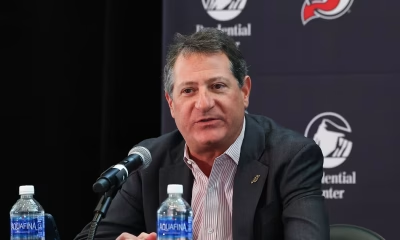
It’s about “how you create a whole ecosystem around that passion point,” said Eric Kacker, VP of North America Operating Unit EPICS (Entertainment, Partnerships, Influencers, Culture & Sports) of The Coca-Cola Company.
Coca-Cola likes to experiment, and find new approaches with its sports and entertainment partners, treating every partnership renewal as a fresh start, said Kacker. He spoke at the keynote session of the Brand Innovators Culture and Entertainment Summit, held recently on the sidelines of the Major League Baseball All-Star Game in Atlanta.
Marketing’s goal is not a one-time sampling, but to turn Coke products into a “weekly” part of the fan’s rituals, where consumers regularly reach for the product. The way to build that ritual is to tap into an “ecosystem of passion points,” through global, national and local partnerships, ranging from the Olympic Games to the athletic programs of 200 of the nation’s colleges and universities. “We’re constantly thinking about what’s the next evolution to reach that consumer,” Kacker said.
Coca-Cola saw the potential for sports events early, when its then president Robert Woodruff “had the great premonition that anytime people gather, Coca-Cola should be present” and bet on the 1928 Amsterdam Olympics. “Essentially, he set up pop-up sampling stations,” so athletes around the world would taste its product. Looking ahead to the next 18 months, Kacker said Coca-Cola is looking forward to its sponsorships of the FIFA World Cup in North America next year, and the 2028 Olympic Games in Los Angeles.
But when a brand has done something this long, it’s easy to become complacent, Kacker said. That’s why Coca-Cola takes a “kaizen” approach to partnerships, he said, referring to the Japanese term for continuous improvement. “That is something that we bring to our product, to our marketing and especially to our partnerships,” he said.
“The goal is to always get a little bit better,” said Kacker. A few guiding principles help keep that momentum: value-generation, cultural impact, diverse passion points and a “glocal” approach.
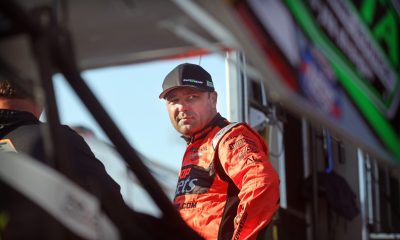
Firstly, efforts have to generate value to fans, retail customers and bottling partners. As an example, Kacker noted Coke’s NASCAR partnership, where Coke has 80 programs locally through the year that include local retail presence in race markets, that drives store traffic and builds awareness and excitement for the NASCAR event.
Additionally, partnerships have to have cultural impact; Coke already has 99% household recognition, so “a logo slap is not what we’re looking for,” he said.
“We don’t want to just sign a deal with someone and they post a couple of times with us and then they move on to the next brand,” said Kacker. “The goal is to have a long-standing relationship.”
Much of Coca-Cola’s 139-year history is tied to its longtime partnerships, said Kacker.
Coca-Cola signed its first celebrity deal in the 1890s, with “the Beyoncé of her time,” actress Hilda Clark. In 1903, it followed by signing athletes to promotional deals. “I like to think of us as the original influencer marketer,” Kacker said.
The brand embraces the concept of “partnerships without expiration dates,” which create so much value that “the thought of breaking up would be unbearable,” he said.
Partnerships also have to factor in the diversity of interests in the fandom. “Our team is the keeper of passion-point marketing,” Kacker said.
The lines between sports, entertainment, culinary passion points are all blurring, said Kacker. He cited research that shows the average American is interested in 14 different passion points, from baseball to music, and no one is interested only in one or the other
Being present across a multitude of passion points is an advantage that Coca-Cola leans into, Kacker explained. As part of its “Kaizen-ing” of its efforts, Coca-Cola’s team is always looking for ways to cross-pollinate its efforts, said Kacker.
“We like to go big across a few different passion points,” he said, “knowing that no one is myopically interested in only one thing.” And the work is also a year-round effort, because “fandom knows no season,” said Kacker.
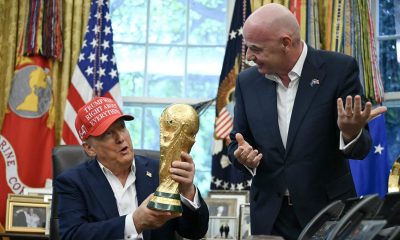
Lastly, Coca-Cola embraces a “glocal” approach, which values local events as much as a global opportunity like the Olympic Games. As an example, he noted that Coca-Cola sponsored the FIFA World Cup Tour that took the soccer trophy to 51 markets around the world in 127 days because fans sometimes can’t even afford to go to a game. The tour generated more than 6,600 news stories and 76 million organic impressions.
“We believe a brand is a promise, wrapped in an experience, inside a memory,” said Kacker. “The art becomes how do we do that more often than not, weekend after weekend, market after market?”