
NIL
How Penn State overcame collective chaos and got its money right for a 2025 title push


STATE COLLEGE, Pa. — In the early days of college sports’ name, image and likeness era, some of the most prominent Penn State supporters — business leaders, wealthy donors, famous former members of the football program — were working to bring the Nittany Lions up to speed with the competition.
Just not all together.
As Big Ten rivals Michigan and then Ohio State won national titles, Penn State was still getting its NIL house in order, consolidating funds, streamlining operations, aligning its power players and making Happy Valley an appealing and lucrative place for top talent to come — and stay.
Penn State’s issues were not uncommon. A lot of schools learned a lot about themselves after the NCAA changed its rules regarding athletes being paid for endorsement and sponsorship deals in the summer of 2021.
First off, boosters and fans needed to understand and accept that, yes, players are now being paid and that’s OK.
Second, while donor-fueled NIL collectives were popping up all over to facilitate the payment of those players, more was definitely not merrier. Supporters of a particular school needed to be coordinated and collaborative to best serve the teams and players they were trying to fund.
“When you go to any school in the country and you find multiple collectives, it’s because they didn’t trust each other and they believe they could do it better than the other one could,” said Rob Sine, a Penn State alum and CEO of Blueprint Sports, a company that helps operate dozens of NIL collectives.
Complicating matters for Penn State were lingering fault lines among influential people within the Nittany Lions community that have tended to flare up when the school was faced with questions of how best to move the football program forward in the post-Joe Paterno era.
“It was kind of like a meeting of the five families,” Sine said, using a “Godfather” reference to describe bringing two Penn State collectives together. “There was not a lot of trust out of the gate.”
But in June of 2023, Success with Honor and Lions Legacy Club merged to become Happy Valley United. Less than a year and half later, the new entity was functioning well enough to help head coach James Franklin assemble one of the best teams in college football.
Quarterback Drew Allar, running backs Nick Singleton and Kaytron Allen and defensive tackle Zane Durant were among more than a half-dozen Nittany Lions who weighed staying in college for another year against starting NFL careers.
While those decisions aren’t all about money, the financial component is important. Happy Valley United was able to ensure that players did not feel as if they had to sacrifice to play another season for the Nittany Lions.
“Penn State having a baseline of money that we can help make that happen is great. We needed to get to a point where we had the baseline so it isn’t kids making a decision of money or no money,” said Rich Stankewicz, a former Penn State football player in the mid-1990s and director of operations for Happy Valley United. “It’s no longer that decision.”
No. 3 Penn State faces its first major test in a season of high expectations Saturday against No. 6 Oregon, a rematch of last season’s Big Ten championship won by the Ducks and a potential inflection point in the College Football Playoff race. It’s a chance to show why the money — and the university-wide effort to organize it — was important.
Every school was feeling its way around to some degree when the NCAA rule changes arrived in the summer of 2021, and myriad state laws muddled the picture even further.
Collectives went from nonexistent to everywhere seemingly overnight.
They played different roles at different schools, but it is fair to say Oregon’s Division Street — founded by Nike co-founder Phil Knight and other former Nike executives in September 2021 — was way out in front of the pack. At Oregon, the new way of doing business was embraced, professionalized and weaponized by coach Dan Lanning and the Ducks, who have stacked rosters with highly rated high school recruits and transfers.
Many other schools were slower to adapt, including Penn State.
“When NIL was first announced, for many it was a dirty word,” Stankewicz said. “The idea we would compensate players was, ‘Oh my goodness. The horror of it. This is the end of college football as we know it.’”
Franklin realized NIL was the next college football arms race.
“The first teacher to step up in any of these settings to talk about NIL was Coach Franklin,” Sine said. “It was tremendous. He would get up there and say, ‘Look, we need you.’
“He would always talk about Columbus, Ohio, and talk about the numbers he was hearing coming out of (Ohio State). He was very interested in what was happening around the country and being able to show, if you want to get to a program that is going to win more than 10 games and get to the point where we’re in the CFP on an annual basis, we have to have your support. We have to have this infrastructure built out.”
Of the three Penn State-affiliated NIL collectives launched in 2022 — maybe even four, if you want to count a venture led by quarterback Sean Clifford right after he was done playing for the Nittany Lions — two stood out.
First to market was Success with Honor, which had the backing of some of Penn State’s biggest donors: Ira Lubert, a member of the National Wrestling Hall of Fame and a driving force behind the school’s powerhouse wrestling program; Anthony Misitano, the founder of PAM Health rehabilitation hospitals; and Rich Sokolov, who has been a high-ranking executive at some of the country’s largest real estate investment firms.
Former Penn State assistant football coach Jay Paterno, Joe’s son, helped get Success with Honor off the ground, along with attorney Anthony Lubrano, another longtime member of the school’s board of trustees. The goal was to work with Penn State athletes from all sports.
Meanwhile, former Penn State linebacker Mike Mauti was among those who believed football — which generates much of the revenue that funds all 31 varsity sports at the school — needed to be prioritized. Sine said a call he received from former Penn State star running back Ki-Jana Carter led to the creation of Lions Legacy Club, a football-focused collective, a few months later.
“And it created this idea that all the money should go to football first,” Paterno said. “And the reality is there are alums who played lacrosse, fencing or tennis, who may not necessarily care about football.”
Lions Legacy’s model targeted corporate sponsorships and partnered with West Shore Home, a remodeling and renovation company founded by Penn State graduate B.J. Werzyn. West Shore Home is also the company that struck a deal with Penn State earlier this year for naming rights to the Beaver Stadium field — another move that didn’t sit well with some Penn Staters.
“Just from a pure communication and efficiency standpoint, it didn’t make sense to have our base split,” said athletic director Pat Kraft, who was hired by Penn State in July 2022.
Again, multiple collectives competing against each other was an issue all over the country, including at Penn State’s main competition for Big Ten supremacy. At Penn State, though, some of the key figures involved have been bumping heads for years. In April 2023, Mauti and board of trustees member Brandon Short, another former Penn State linebacker who played for Joe Paterno, endorsed opponents of Jay Paterno and Lubrano in a trustees election.
Mauti, whose father and brother also played for Joe Paterno, said in April of 2023 that Jay Paterno and Lubrano had been standing in the way of investments into facilities and NIL and not working in the best interest of the football program.
Onward State, a Penn State student-run online news organization, quoted Mauti as saying, “[Paterno’s] input on this matter is toxic, and [his] relevancy has expired in this era of collegiate athletics.”
Paterno downplays any animosity, noting that as a trustee he needed to step away from the collective. He said he had no issue with combining the two entities.
“I said, ‘Look, I don’t care. I’m happy. You guys want to merge, merge,’” Paterno told The Athletic.
Stankewicz acknowledged there were “hiccups and bumps” along the road to bringing the two sides together.
“There are egos involved. These are high-powered people involved in all of the groups: industry heads, high-profile former athletes, high-profile former coaches,” Stankewicz said. “The No. 1 thing for everyone is they care about Penn State. So many passionate opinions because they care about Penn State.”
Stankewicz credits Kraft with helping bridge the divide and tapping into that commonality: They all wanted Penn State to be successful, and the best way to achieve that was to have one collective.
After the merger, it was a sprint to get the collective operating efficiently enough to help Penn State football compete at the highest level.
Ohio State’s athletic director Ross Bjork notably said about $20 million was spent on the Buckeyes’ 2024 national championship roster. Coaches and college sports administrators say the price tag for the most talented rosters this season easily exceeds that.
But it wasn’t just a matter of raising enough money to be able to spend with the best in the country; the entire operation needed to run smoothly to gain the trust of the athletes putting NFL millions on hold.
Sine pointed to Penn State tight end Tyler Warren, who had a stay-or-go decision to make after the 2023 season similar to what many of his teammates faced after 2024.
Warren and his family had a good idea of his draft prospects and their financial implications, Sine said. He was probably more likely to be taken on Day 2 than in the first round. Contracts for second-round picks range from just under $10 million down to about $6.5 million over four years.
Warren returned, had a monster season and was drafted 14th overall in April by the Colts.
“That wouldn’t have happened if there wasn’t the infrastructure in place to be able to understand: Payments are going to happen on time. Here’s how we’re going to stagger them throughout the year. It’s going to be a 12-month contract. Here’s what you can expect, when you can expect it. If you have questions about cars, if you have questions about taxes,” Sine said, going through a laundry list of what is presented to players.
Durant, a defensive tackle from the Orlando, Fla., area, said weighing a rookie contract against an NIL deal is only part of the equation.
“Because, initially, you’re a kid going into the real adult life when you leave college,” said Durant, who was projected as a third or fourth-rounder in the last draft. “So you’re going into the real-world problems of all those different things. When you (go back) to college, in the last year they could teach you how to manage that stuff with the money that we’re getting from NIL. So it could help us prepare for the next level.”
With schools now able to directly pay athletes through a revenue sharing system and rules being implemented that could lead to more NIL deals being done in house, the future of collectives is unknown.
But when Penn State needed one — and just one — it came together just in time.
“Penn State won is who won,” Sine said.
(Photo: Isaiah Vazquez / Getty Images)

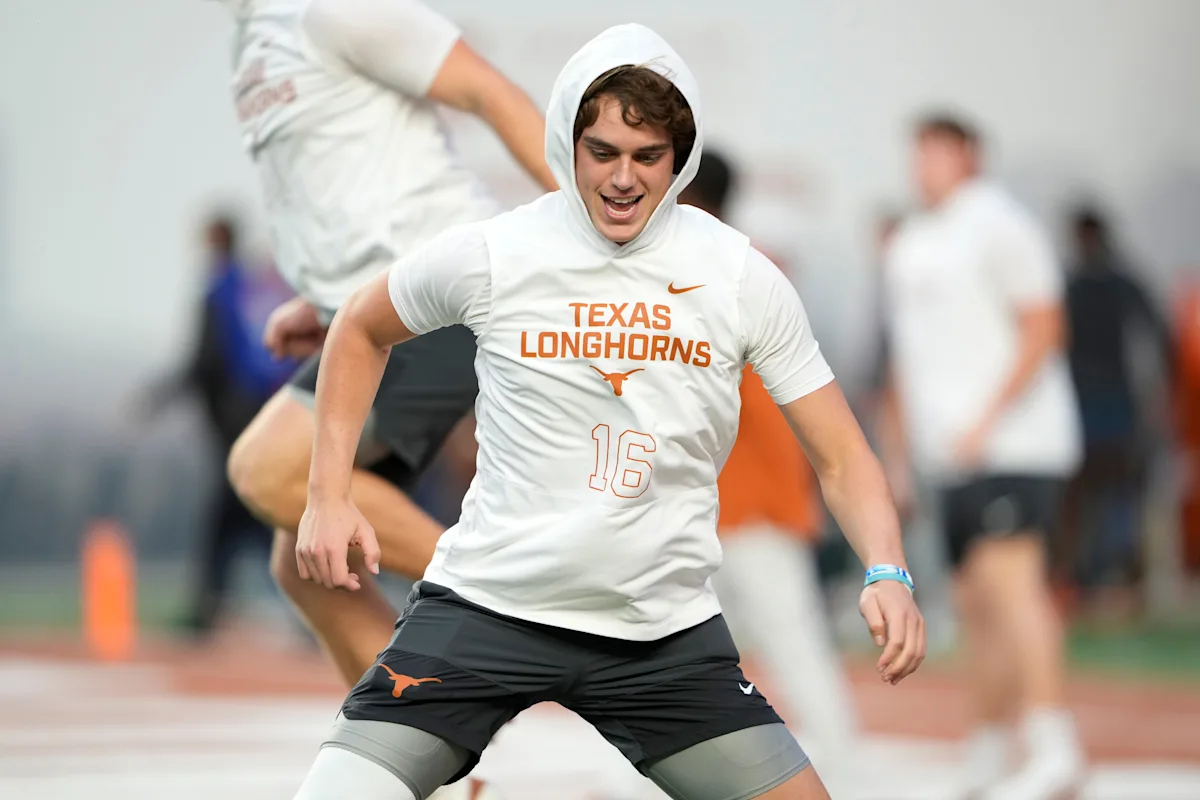
There are plenty of examples of a star in pro sports taking less money in order to help the overall roster. But it isn’t something that’s hit college football yet … until now, thanks to Arch Manning. Manning has asked to take a reduced portion of the Longhorns’ direct payout pool.
Manning’s aim at taking less NIL funds is to help improve the roster around him. Just like Patrick Mahomes, who regularly gives up millions to help the Kansas City Chief’s roster. Tom Brady did it with New England. Dirk Nowitzki, Tim Duncan, LeBron James, Kevin Durant, Jalen Brunson, Aaron Rodgers and Ben Roethlisberger have all helped the rosters around them by taking less.
Advertisement
In the pros, there are salary caps to negotiate. While college has no salary cap (yet), there is a finite amount in the NIL house pool. Texas can only spend what it has available. And while that pool is one of the biggest in the nation, Texas still follows a budget.
No doubt, Manning will be hoping the Texas coaching staff uses some of the freed up football revenue sharing funds on the offensive line. The line struggled in front of Manning all season and certainly inhibited his development early in the season.
Two offensive linemen are gone after the Citrus Bowl and Texas might lose a third. Left tackle Trevor Goosby was named first-team All-SEC is now contemplating going pro. Running back Jadan Baugh from Florida is also on Texas’ radar. The talented RB won’t be cheap.
Of course, it’s not like Manning will starve. The redshirt sophomore has one of the highest NIL valuations in nation. Manning has NIL deals with Red Bull, Panani, Uber and Warby Parker. Manning made north of $3.5 million in NIL deals in 2025, according to the Houston Chronicle.
Advertisement
With a big name that attracts major brands, Manning doesn’t need his big deals supplemented. But most college athletes are paid by the common pool of funds. Manning frees up some of that money for transfers.
This article originally appeared on Longhorns Wire: Manning Pay Cut: Texas QB asks for less NIL money to help boost roster
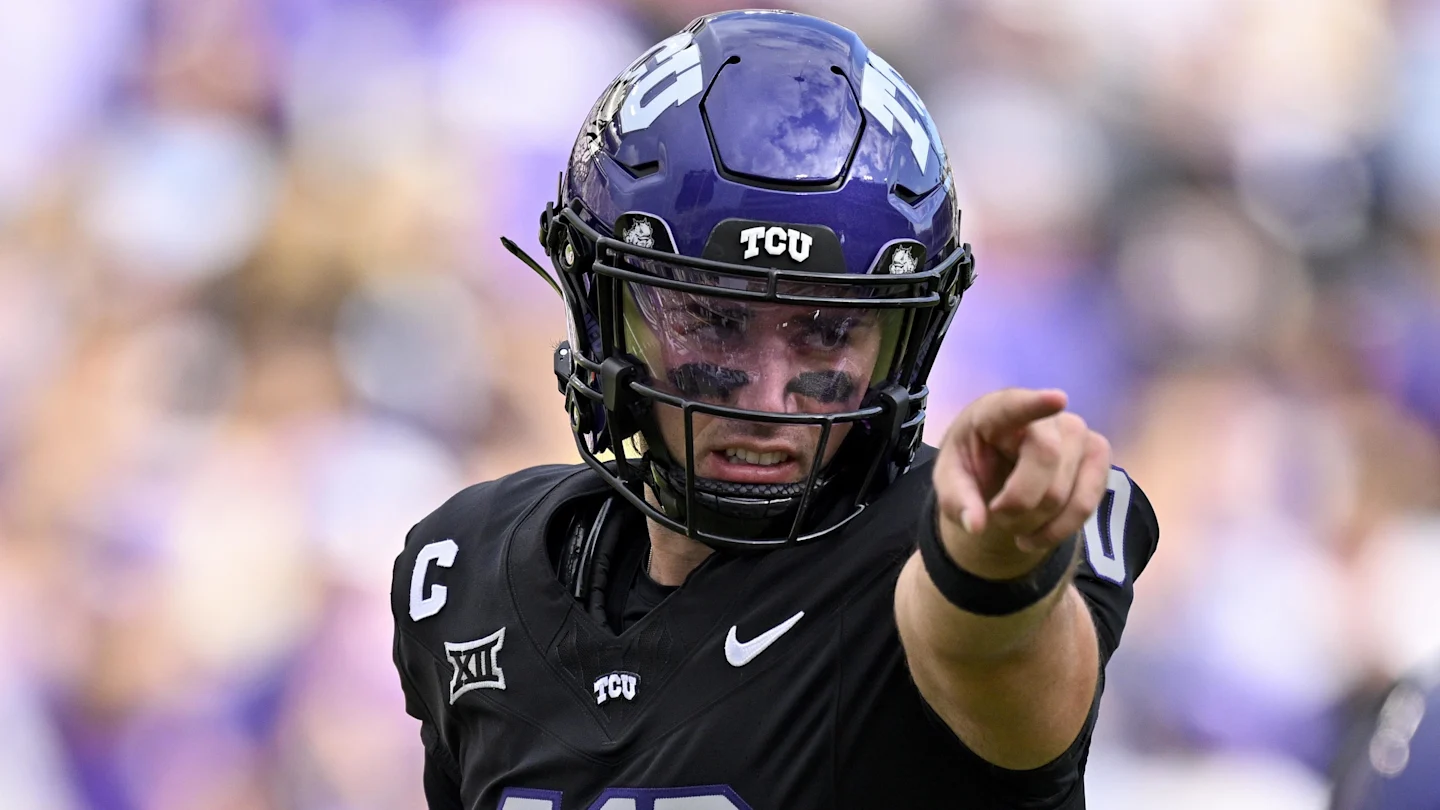
The NCAA Transfer Portal claimed another big name on Thursday night.
TCU star quarterback Josh Hoover has announced he intends to move on from the program. Hoover spent the last four seasons with the Horned Frogs, taking over as the starter midway through the 2023 campaign and putting up big numbers in each of the last two years.
In 36 career games, Hoover has completed 771/1183 passes for 9,629 yards with 71 touchdowns to 33 interceptions. He added eight more scores on the ground. There’s a very real likelihood that Hoover’s the most productive quarterback returning to the sport in 2026.
Hoover ranks in the top 5 in TCU program history in touchdown passes and total offense. He’s expected to be a coveted option in the portal.
Where are five landing spots that make sense for Hoover?
Indiana Hoosiers

Back in the College Football Playoff with a different starter for the second consecutive season, Indiana has put together one of the most impressive runs in the sport since Curt Cignetti took over the program.
The undefeated Hoosiers produced their first Heisman Trophy winner in school history last weekend as star quarterback Fernando Mendoza ran away with the award. Mendoza has another season of eligibility remaining, but is projected to be a top selection in the 2026 NFL Draft.
Indiana has already been linked to Hoover, per CBS Sports’ Chris Hummer.
Miami Hurricanes

Miami has lived in the transfer portal over the past few years, investing plenty of time and money into building a contender for Mario Cristobal. The moves finally worked out in 2025 as a massive financial commitment to secure Carson Beck from Georgia helped power the Hurricanes to the playoffs.
Though the conclusion of the 2024 season was a disappointment, former Miami quarterback Cam Ward was developed into the No. 1 pick in the most recent NFL Draft. Beck will likely get a shot at the professional level as well.
With little proven depth on the roster, it makes sense to bring in another experienced quarterback like Hoover to keep the Hurricanes on the right track. Miami has proven it’s willing to pay up.
Oregon Ducks

Oregon is a known quarterback factory, sending former stars such as Marcus Mariota and Justin Herbert to the NFL. That hasn’t changed since Dan Lanning took over the program in 2022.
The Ducks have had a quarterback drafted in back-to-back years, with Bo Nix going in the first round in 2024 and Dillon Gabriel being selected within the top-100 picks in 2025. Lanning could do it again next April with Dante Moore, who is nearing the end of a career year.
If Moore does leap to the professional level, Hoover would be a solid fit. Nix, Gabriel, and Moore all began their college careers at different schools and later transferred to Oregon, a similar path Hoover is embarking on.
Texas Tech Red Raiders

Suiting up for a playoff contender is pretty cool. Having a chance to win championships and staying home in the process might be even cooler.
Texas Tech has firmly entrenched itself as a program to reckon with in the modern age of the sport. The Red Raiders have plenty of money, and they’ve shown they’re willing to use it to pull in elite talent from the transfer portal and high school ranks.
With Behren Morton exhausting his eligibility following the playoff run, Texas Tech has to decide if it wants to turn the program over to another transfer or a homegrown talent like Will Hammond.
Either way, Hoover is from Texas and he’s already in the state.
Houston Cougars

An outlier among four other programs that have a chance to win it all, Houston is on the come-up. The Cougars haven’t been shy about writing checks, evidenced by the program signing five-star quarterback Keisean Henderson during the Early Signing Period.
Redshirt junior starter Conner Weigman does have one season of eligibility remaining and has stated he intends to return next season. Decisions are quick to change in this era, so never say never.
Would Houston bring in Hoover while Henderson develops for a season? Or should the program stick with Weigman as a veteran leader for Henderson?
Weigman just joined the program as a transfer last year. He was fine, but unspectacular this fall, and an upgrade could help the Cougars break their ceiling.
Read more on College Football HQ
• $45 million college football head coach reportedly offers Lane Kiffin unexpected role
• Paul Finebaum believes one SEC school is sticking by an ‘average’ head coach
• SEC football coach predicts major change after missing College Football Playoff
• Predicting landing spots for the Top 5 college football transfers (Dec. 17)

South Carolina Upstate Spartans (8-6) at Youngstown State Penguins (7-5, 2-1 Horizon League)
Youngstown, Ohio; Saturday, 1 p.m. EST
BOTTOM LINE: Youngstown State hosts South Carolina Upstate after Cris Carroll scored 31 points in Youngstown State’s 80-77 overtime loss to the Robert Morris Colonials.
The Penguins are 4-0 on their home court. Youngstown State scores 80.2 points and has outscored opponents by 10.9 points per game.
The Spartans are 2-5 on the road. South Carolina Upstate is fifth in the Big South scoring 79.6 points per game and is shooting 46.2%.
Youngstown State averages 10.4 made 3-pointers per game, 3.8 more made shots than the 6.6 per game South Carolina Upstate gives up. South Carolina Upstate has shot at a 46.2% rate from the field this season, 3.3 percentage points greater than the 42.9% shooting opponents of Youngstown State have averaged.
TOP PERFORMERS: Carroll averages 3.0 made 3-pointers per game for the Penguins, scoring 16.4 points while shooting 48.6% from beyond the arc. Rich Rolf is averaging 10.8 points over the last 10 games.
Mason Bendinger is scoring 16.1 points per game and averaging 3.1 rebounds for the Spartans. Carmelo Adkins is averaging 1.9 made 3-pointers over the last 10 games.
LAST 10 GAMES: Penguins: 6-4, averaging 81.3 points, 33.6 rebounds, 15.2 assists, 9.1 steals and 3.3 blocks per game while shooting 49.6% from the field. Their opponents have averaged 67.7 points per game.
Spartans: 5-5, averaging 75.4 points, 33.5 rebounds, 14.1 assists, 6.1 steals and 5.0 blocks per game while shooting 43.9% from the field. Their opponents have averaged 73.2 points.
___
The Associated Press created this story using technology provided by Data Skrive and data from Sportradar.
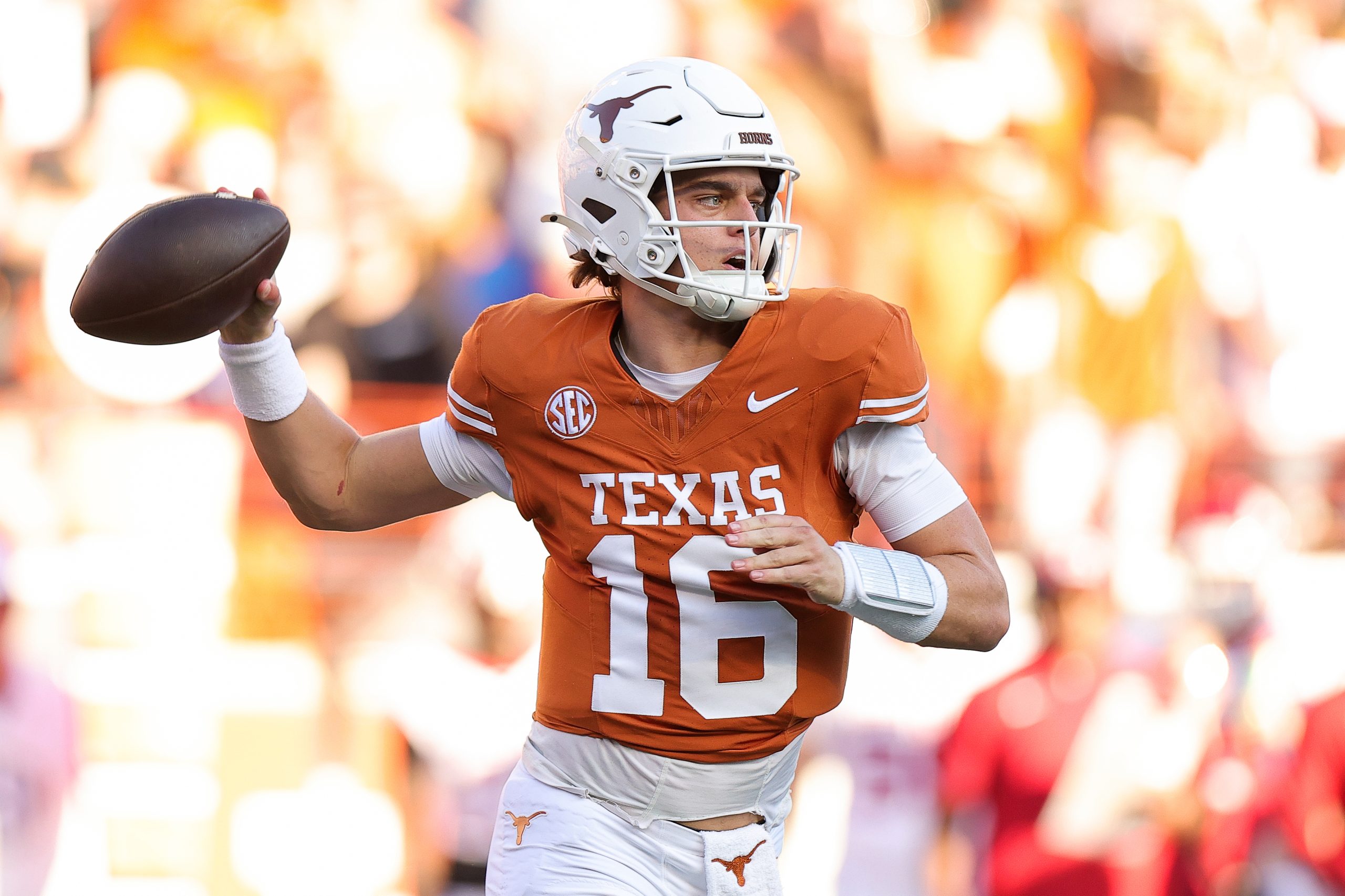
In a college football world where NIL numbers keep climbing, Arch Manning is going the other way.
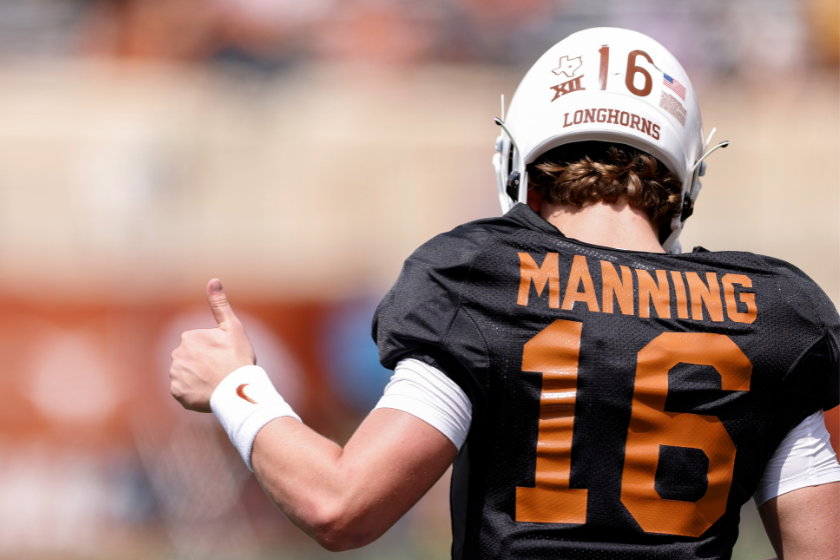
Photo by Tim Warner/Getty Images
The Texas quarterback has agreed to take a reduced share from the Longhorns’ revenue-sharing pool for the 2026 season, according to Justin Wells of Inside Texas. Manning was entitled to a full portion of the program’s revenue cap but opted to scale it back in an effort to give Texas more flexibility to strengthen its roster.
It is a move that stands out in the current landscape. It is also one Manning can afford to make.
Manning remains one of the most marketable players in college football and has a long list of endorsement deals that will continue to pay handsomely. Even with less money coming directly from the school, he is still expected to earn millions in 2026.
This is not the first time he has shown restraint, either. Manning has consistently been selective with his NIL opportunities since arriving in Austin.
The timing matters. The 2026 season is widely expected to be Manning’s last at Texas before he makes the jump to the NFL. From that perspective, the decision is straightforward. He wants the best possible team around him for one more run at a national championship.
Manning has already demonstrated his commitment to the program. He waited his turn behind Quinn Ewers for two seasons without entertaining a transfer and now is willing to sacrifice a portion of his compensation for the good of the roster.
On the field, the growth showed. After a shaky start in 2025, Manning finished with 2,942 passing yards and 24 touchdowns. Texas rebounded from a 3-2 opening to win six of its final seven games, punctuated by a decisive win over Texas A&M.
It is not a common move. It is a very Arch Manning one.

Ahead of the College Football Playoff opener, Malachi Toney added a notable NIL deal. The Miami wide receiver has inked a partnership with apparel company Hellstar.
Toney is Hellstar’s first NIL athlete, the Los Angeles-based brand said in an Instagram post. He became a crucial part of the Hurricanes’ offense during the regular season, helping lead the program to a College Football Playoff appearance as the last team in the field.
SUBSCRIBE to the On3 NIL and Sports Business Newsletter
It was part of a decorated freshman year for Toney, who’s emerging as one of the top young stars in the sport. Repped by NETWORK, he has a $878,000 On3 NIL Valuation.
“We are so proud to announce our first Hellstar Sports College Athlete NIL signing – Malachi Toney,” Hellstar wrote in its announcement. “We had the privilege to coach @malitoney10 while he was apart of our high school 7 on 7 program, so now seeing him shine on the collegiate level we couldn’t be more proud.
“We will continue to do our part to help these young athletes stay on the right path, and shine their light to the rest of the world. From Liberty City to the stars!”
It’s the latest notable NIL deal for Toney amid his freshman season. He also secured a partnership with Leaf Trading Cards in October.
More on Malachi Toney’s freshman season
Through his freshman year at Miami, Malachi Toney emerged as a top target for Carson Beck. He led the Hurricanes with 84 receptions for 970 yards, and his seven touchdown catches put him atop the ACC. Toney also added 89 rushing yards this year, as well as a rushing touchdown against Louisville.
Those numbers helped Toney become an On3 True Freshman All-American this year. In addition, he was a central figure in Miami’s run to the College Football Playoff.
“Toney’s quickness and playmaking instincts make him dangerous after the catch. He accounted for 350 yards after the catch with an average depth of target of 6.6, according to Pro Football Focus,” On3 | Rivals’ Charles Power wrote. “Whether working out of the slot or moving around the formation, the South Florida native has proven nearly impossible to contain. His playmaking ability was pivotal to Miami’s playoff push as he became the focal point of the Hurricanes’ passing attack.
“Given his play as a true freshman, it’s safe to say the Fort Lauderdale American Heritage product will enter next season as one of college football’s premier wide receivers. Toney’s performance as a true freshman is even more impressive considering that he should still be in high school, having reclassified into the 2025 cycle late in the recruiting process.”
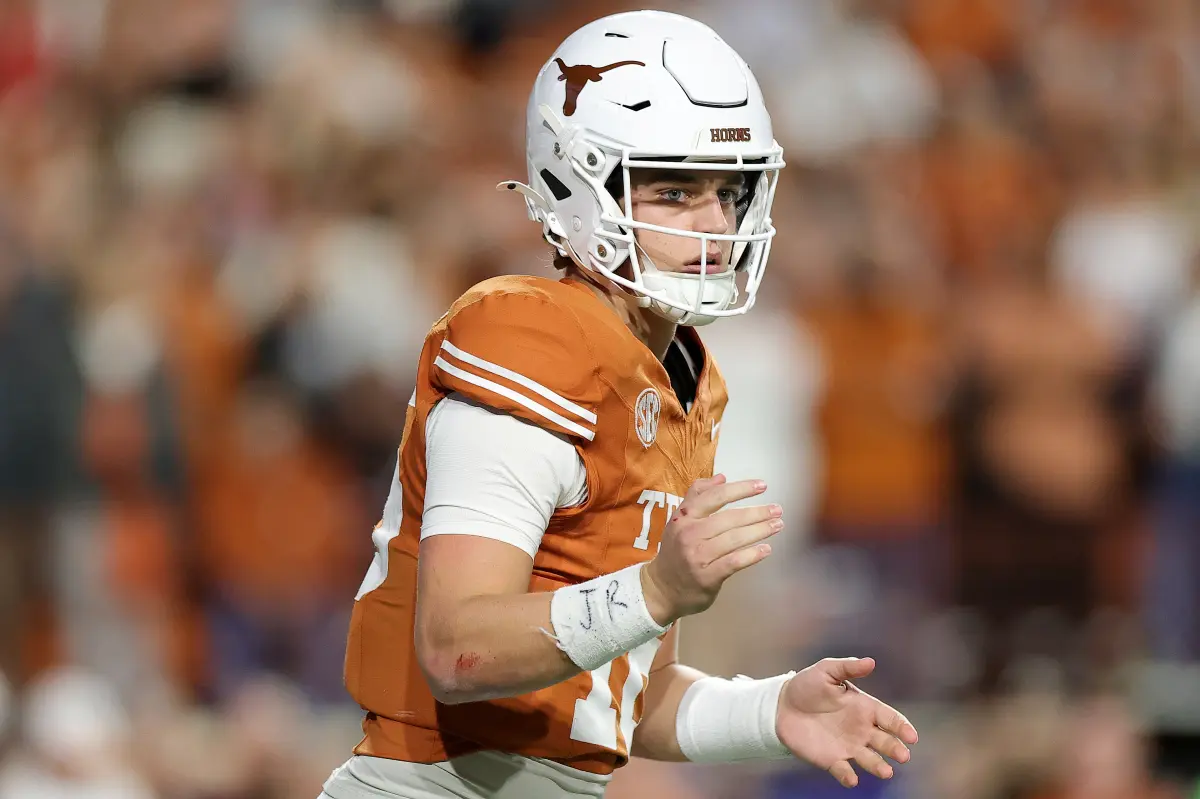
Arch Manning is taking a pay cut.
The Texas quarterback agreed to take a reduced share of the team’s revenue-sharing pool “as part of an effort to help the Longhorn football program do whatever it takes to support a 2026 championship run,” according to On3’s Justin Wells.
The savings “could be used on transfer portal talent or as part of retention efforts” for the Longhorns, per Wells.
This season, athletic programs were capped at $20.5 million in revenue-sharing, although that number is likely to increase next season and beyond.

Manning, the nephew of NFL icons Peyton and Eli Manning and the grandson of legendary quarterback Archie, is one of the most marketable athletes in college sports.
On3 currently gives Manning an NIL valuation of $5.3 million, which leads all student-athletes.
Although he is getting less money from Texas, Manning still holds NIL deals with brands like Red Bull, Uber and EA Sports, among others.
However, Manning sometimes struggled in a season that started with Heisman hype and the Longhorns ranked No. 1 in the nation.
Texas finished the season 9-3 and out of the College Football Playoff, a disappointing midseason loss against a poor Florida team all but ended their chances of being in the 12-team field.
Manning’s season was underwhelming as well, throwing for 2,942 yards with 24 touchdowns and seven interceptions.
The news comes after Manning’s father, Cooper Manning, told ESPN earlier this week that his son would return to the Longhorns in 2026 for his junior season despite previously mulling entering the 2026 NFL Draft.
“Arch is playing football at Texas next year,” Cooper said.
Texas finished No. 13 in the end of season rankings and will be on the sidelines for the College Football Playoff, which kicks off on Friday.

TOYOTA GAZOO Racing Unveils 2026 Season Plans

Curb Records and Motorsports manager reflects on Biffle’s legacy

Arch Manning takes NIL pay cut to boost 2026 Texas Football roster

Top 5 transfer portal landing spots for TCU quarterback Josh Hoover

A wave of resignations is hitting Maine high school basketball

Chisago County Press

New youth prison funding approved in Fitchburg to replace Lincoln Hills | News

MSU tribal communities partner to bring holiday spirit to local Native youth | MSUToday

Expandable eSports Laptop Models : Lenovo Legion Pro Rollable

South Carolina Upstate visits Youngstown State after Carroll’s 31-point outing

NBA news: Nets honor Australia Hanukkah attack victims, light menorah

New York Liberty and Ant International’s Alipay+ Announce Multiyear Partnership Focused on Empowerment, Sustainability and Youth Development

Brooklyn Park Area Drumline and Dance Team Gives Area Youth Positive Outlet

Nets Center hosts Brooklyn basketball youth clinic

Special Olympics Completes Georgetown University Innovation Hub Fellowship to Advance Young Athletes App

First Tee Winter Registration is open

Fargo girl, 13, dies after collapsing during school basketball game – Grand Forks Herald

CPG Brands Like Allegra Are Betting on F1 for the First Time

F1 Las Vegas: Verstappen win, Norris and Piastri DQ tighten 2025 title fight

Sycamores unveil 2026 track and field schedule

Two Pro Volleyball Leagues Serve Up Plans for Minnesota Teams

Utah State Announces 2025-26 Indoor Track & Field Schedule

SoundGear Named Entitlement Sponsor of Spears CARS Tour Southwest Opener

Jo Shimoda Undergoes Back Surgery

Redemption Means First Pro Stock World Championship for Dallas Glenn

Bowl Projections: ESPN predicts 12-team College Football Playoff bracket, full bowl slate after Week 14

Texas volleyball vs Kentucky game score: Live SEC tournament updates

Robert “Bobby” Lewis Hardin, 56

How this startup (and a KC sports icon) turned young players into card-carrying legends overnight

Indiana’s rapid ascent and its impact across college football




-
 Motorsports1 week ago
SoundGear Named Entitlement Sponsor of Spears CARS Tour Southwest Opener
-
 NIL3 weeks ago
Bowl Projections: ESPN predicts 12-team College Football Playoff bracket, full bowl slate after Week 14
-

 Motorsports2 weeks ago
Donny Schatz finds new home for 2026, inks full-time deal with CJB Motorsports – InForum
-
 Rec Sports2 weeks ago
How Donald Trump became FIFA’s ‘soccer president’ long before World Cup draw
-

 Rec Sports2 weeks ago
Black Bear Revises Recording Policies After Rulebook Language Surfaces via Lever
-
 Sports3 weeks ago
Men’s and Women’s Track and Field Release 2026 Indoor Schedule with Opener Slated for December 6 at Home
-

 Motorsports3 weeks ago
Michael Jordan’s fight against NASCAR heads to court, could shake up motorsports
-
 Rec Sports2 weeks ago
David Blitzer, Harris Blitzer Sports & Entertainment
-
 Motorsports2 weeks ago
JR Motorsports Confirms Death Of NASCAR Veteran Michael Annett At Age 39
-
 Motorsports2 weeks ago
Rick Ware Racing switching to Chevrolet for 2026