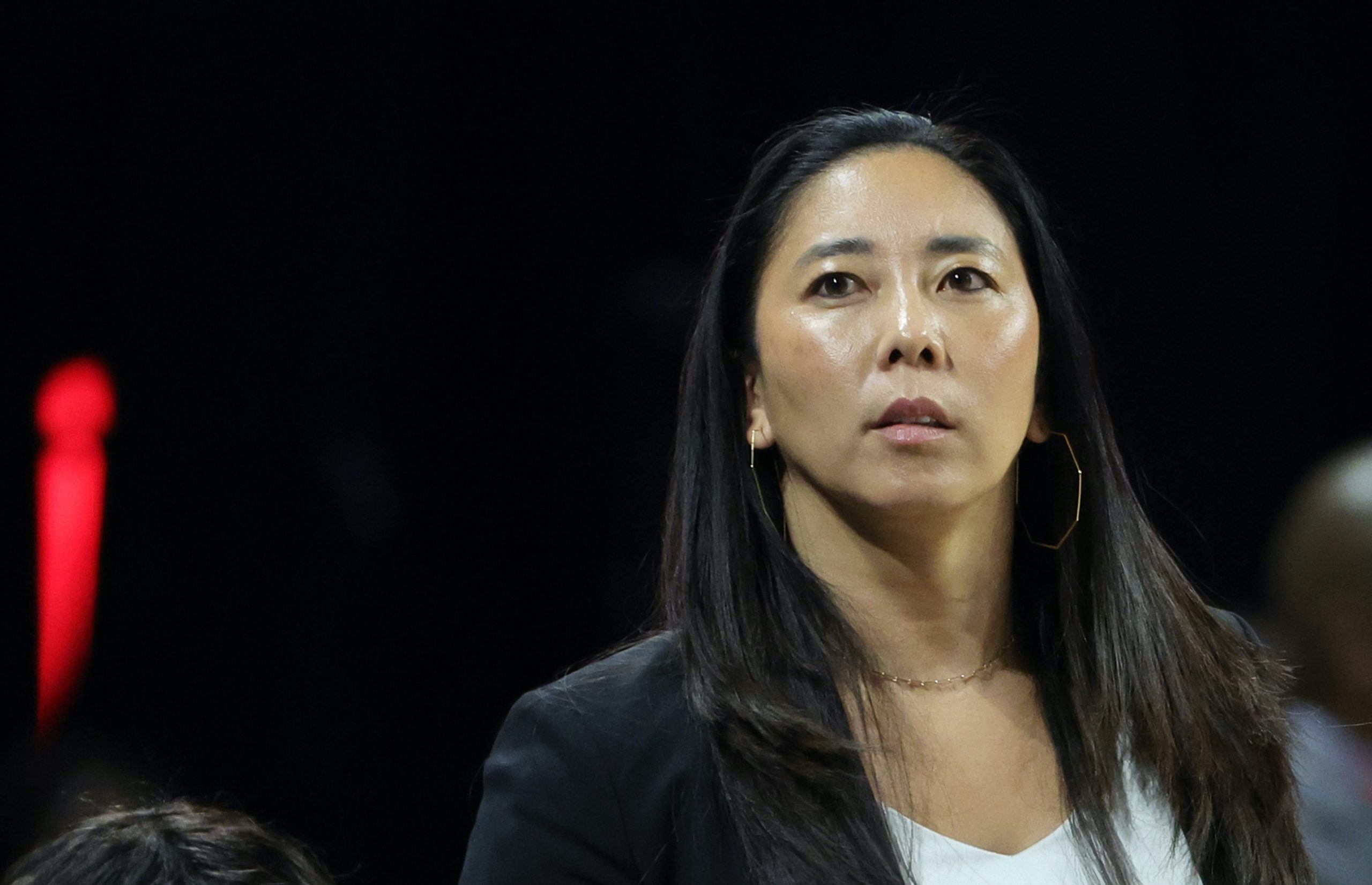
Natalie Nakase is many things: a 5-foot-2 former walk-on who became the starting point guard for UCLA, a WNBA champion as an assistant coach with the Las Vegas Aces, and “a unifier,” as Golden State Valkyries general manager Ohemaa Nyanin put it in an introductory presser last October. When the Valkyries play their season opener in San Francisco this Friday, Nakase will add to that list, becoming the first head coach of the franchise, and the first Asian-American head coach in WNBA history. She is a third-generation Japanese American from Southern California, raised by a basketball-loving father who kept his daughters in the gym the way some parents bring their children to church.
Basketball has been an integral part of Japanese-American communities on the West Coast since the early 1900s. Shaped by forcible internment during World War II, Japanese-American basketball leagues (colloquially known as the “JA leagues”) flourished for decades as a way to cultivate second- and third-generation talent, and still operate to this day. The use of digital archives dating back to the 1940s, as well as interviews with relatives and members of the JA league community, can demonstrate how the story of Natalie Nakase is the story of Japanese-American basketball. Go through her family history, and you’ll find competition and resilience that transcends the sport itself.
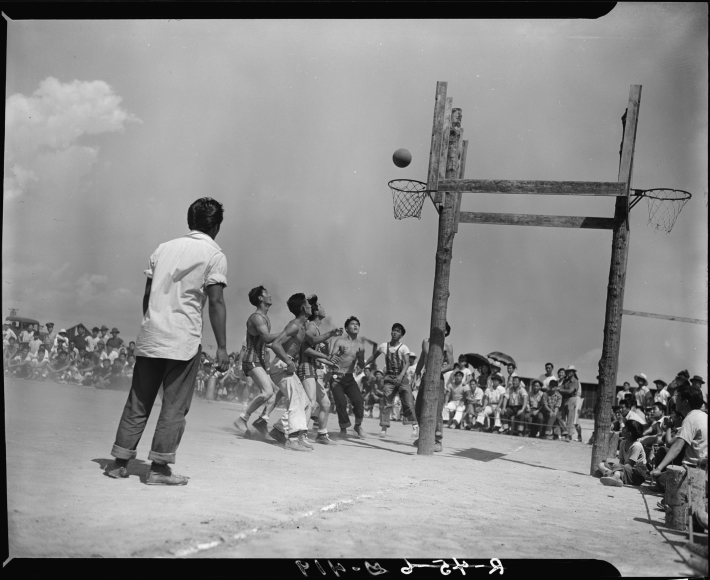
To conclude the 1943 basketball season at Rohwer Relocation Center, in the southeastern corner of Arkansas, the boys and girls “inter-Center” all-star games took place on a Sunday afternoon. Rohwer’s all-stars faced off against opponents from nearby Jerome Relocation Center. All the players were incarcerated in prison camps. They competed on an outdoor dirt court, built atop a strip of drained swampland, surrounded by mud, ringed by barbed wire fences and guarded by military police.
A basketball game at Rohwer Relocation Center in Arkansas.Photo via National Archives
Until recently, the young basketball players of Rohwer had never stepped foot in Arkansas. They were almost all from California, growing up amidst the brown plains of Lodi or the city blocks in downtown Los Angeles. West Coast kids and Nisei (second generation) took to the sport in an era marked by discrimination, when many Japanese Americans were systematically banned from buying or owning property, not to mention exclusion from organized athletics. Perhaps, the thinking went, by mastering a homegrown sport, the Nisei would be more warmly received by their fellow Americans.
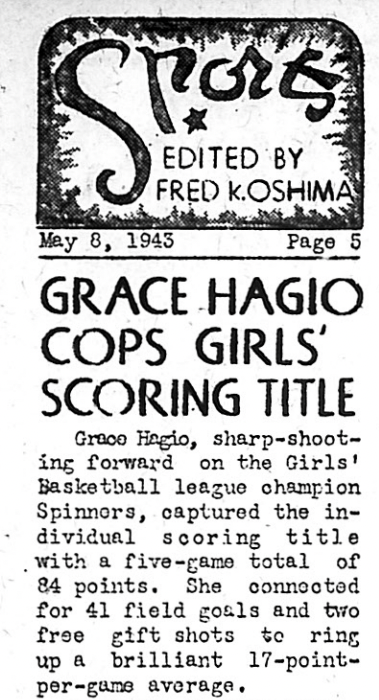
At the start of the 1940s, many Nisei were building flourishing basketball careers. Rohwer’s Tosh Ihara was a standout freshman on UCLA’s 18-6 “lightweight” team during the 1940-41 school year, while Grace Hagio led the Stockton Busy Bees to defeat all Northern California rivals in the Young Women’s Buddhist Association, outscoring opponents 477-228, according to archival records. Hagio, known by her nickname “Yoshi” in her hometown, was a dominant offensive presence as a forward on the Busy Bees, while the team competed across the western U.S.
Newspaper clipping: The Rohwer Outpost via Densho
But no amount of skill on the court could counter the wave of anti-Japanese hysteria that overtook the country during World War II. President Franklin D. Roosevelt became increasingly preoccupied by the perception of Japanese Americans as a potential military threat—despite intelligence from reports, ordered by Roosevelt himself, finding no serious threat to the country. Following Japan’s surprise attack on Pearl Harbor in December of 1941, Roosevelt invoked the Alien Enemies Act of 1798, widely credited as paving the way for the impending incarceration of Japanese Americans. (The beats of this process may sound familiar to those paying attention to the current presidential administration.) Despite opposition from numerous high-ranking government officials, Roosevelt signed Executive Order 9066 in February of 1942. What followed was the forced removal of over 120,000 people of Japanese descent on the West Coast, including American citizens and young Nisei hoopers from Washington, Oregon, and California, detained and sent to prison camps in remote areas of the country.
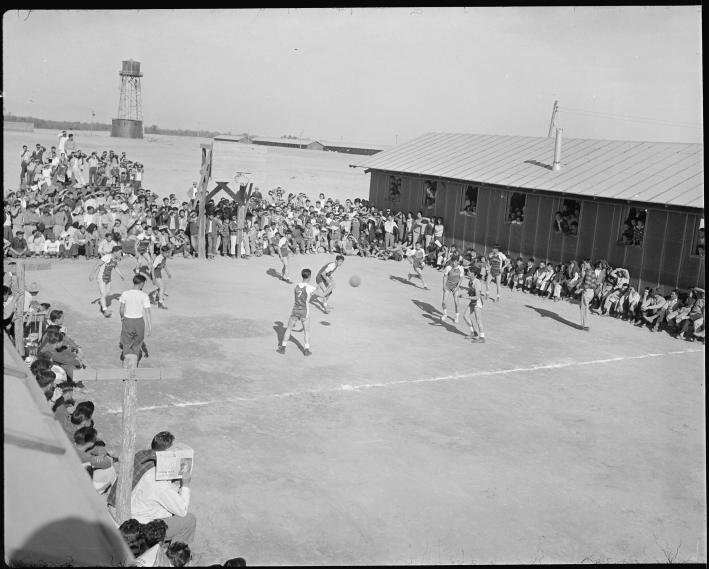
Athletics, including the increasingly popular sport of basketball, were an essential outlet for Japanese Americans who endured incarceration, as documented by the local newspapers published in each camp.Using digital archives provided by the nonprofit organization Densho, I found clippings and articles full of details about the Nisei athletes’ dedication to the sport. At Poston Relocation Center in Arizona, residents evaded the burning 100-degree weather by hooping at night, cutting down cottonwood trees as poles for floodlights. All-star “quintets” received special permission to travel beyond camp for showdowns against local high schools; at Heart Mountain Relocation Center in Wyoming, the all-star boys basketball team practiced outdoors in freezing weather before traveling to a nearby Mormon town to take on future regional champions Lovell Westward High School. And at Rohwer, where the 1942-43 basketball season was troubled by terrible weather and a contaminated water supply that had to be boiled before drinking, the all-stars defeated their rivals from Jerome. As Bradford Pearson wrote inThe Eagles of Heart Mountain, which tells the story of that camp’s undefeated high school football team, some of the camps were built on former swampland so easily overrun by floods and poisonous snakes that landowners had abandoned it long ago. The land wasn’t much better for basketball courts.
A basketball game at the Poston Internment Camp in Arizona.Photo via National Archives
Around the same time as that Rohwer all-star game, a young woman named Takayo Maeda arrived at the Arkansas camp. Months earlier, she’d been separated from her husband Kenichi and infant son, held back at the Santa Anita Assembly Center in California to give birth alone to her second-born son. According to her eldest son’s account, published in 2022, she and other internees were forced to live in converted horse stables. Finally, Takayo was sent by the War Relocation Authority via train, unaware that she was headed to be with the rest of her family in the prison camp. With her was her baby, Shigeo “Gary” Nakase.
Decades later, on the way to a basketball tournament in Tennessee with his daughter, Gary Nakase drove through the site of what had been Rohwer Relocation Center. According to Natalie, he didn’t talk much about his family’s experience at the camp, or of the fact that he was born into incarceration at the Santa Anita Assembly Center in October of 1942. “He doesn’t speak about it unless we ask,” Natalie said in a 2019 interview. “From the small pieces that my dad did tell us, my grandfather had everything taken away from him and had to start over from scratch.”
Kenichi Nakase and Takayo Maeda’s return to California in 1945 was difficult; they struggled to rebuild amidst anti-Japanese sentiment whipped up from the war, and moved between farm towns as both parents worked the fields. According to Gary’s brother, Frank Nakase, the family settled in 1954 in the suburban city of Whittier, near Los Angeles. The family swelled to the size of a small hoop squad itself, with five more children born after Gary for a total of seven.
“I think my dad always tried to protect us [from] the struggles that he went through,” Natalie told me. “I think that’s why my dad never brought that up, and then if pain ever came to us, he was like, ‘No, don’t pay attention to it.’ My dad was iconic, man.”
In that same post-war period, the JA leagues expanded. New leagues with roots in the camps formed across the West Coast, largely revolving around Buddhist centers and churches, with raucous showdowns between rival cities, from Seattle to San Jose to Los Angeles.
At a time when girls basketball, if offered in schools or physical education programs at all, was subject to highly restrictive rules, the JA leagues actually welcomed women to the court. For her book When Women Rule the Court: Gender, Race, and Japanese American Basketball, Dr. Nicole Willms interviewed Ed Takahashi, a local businessman from Los Angeles who was in charge of the youth leagues for the Japanese Athletic Union in the late 1960s. “What I did was, I changed the rules,” Takahashi told Willms. “Instead of… where you had three girls on defense and three girls on offense and they could never cross the line, and you had two dribbles and you had to pass, I changed it to boys’ rules.” According to Willms’s analysis,gender exclusion and gendered hierarchy in the JA leagues were often “subdued in favor of asserting a Japanese-American identity.” This meant a more promising environment for the women’s game, particularly in Southern California.
“I stuck with the Asian leagues,” recalled Colleen Matsuhara, who played at Sacramento State and was an assistant coach for the Los Angeles Sparks in 1998-99. As a teenager, Matsuhara quit her high school team for better opportunities in the JA leagues, where she competed with a sense of survival. “Very deep in the subconscious, at least for me,” Matsuhara told me, “is that I was outraged when my parents told me about camp. Like, they [had] to come back and start from the ground up. You can’t take anything for granted.”
As the Nakase family entered the 1960s, their Nisei kids developed a passion for basketball, primarily led by Gary, a hyperactive teen who constantly wanted to play. “He was the one who wanted to get a basketball hoop and put it up on the garage,” said Frank Nakase, who admired his older brother’s basketball talent. “I recall him being able to touch the rim with his hands with a running start. He was very quick and very fast, and really a crafty player.”
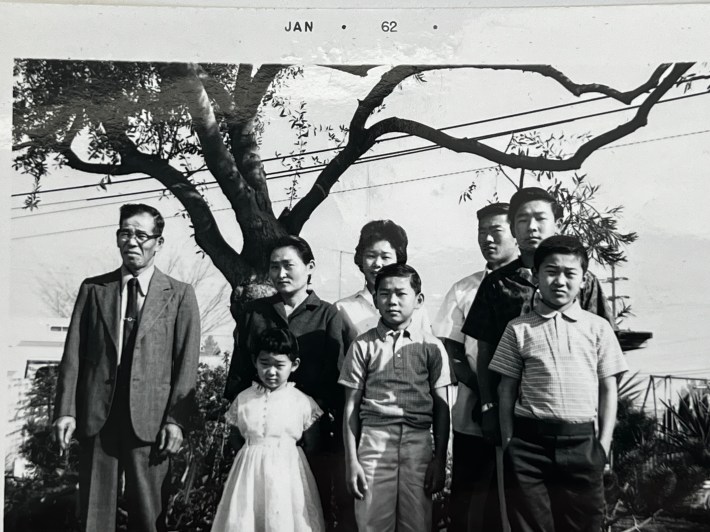
Gary Nakase (third from the right) poses with the rest of his immediate family in their backyard in Whittier, Calif.Photo courtesy of Frank Nakase
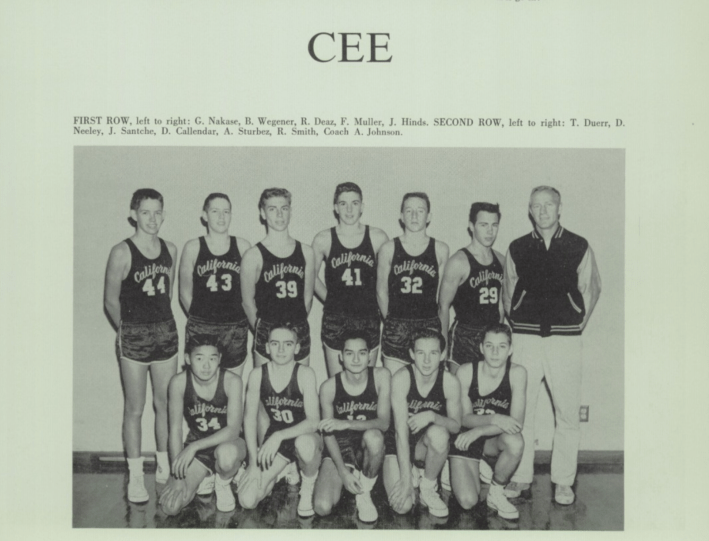
As a senior at California High School in Whittier, Gary is pictured on the boys basketball “Cee” team in 1960, one of the few Asian-American players to compete at his school. “At that time, being a Japanese person and a minority, you’re easily overlooked,” Frank Nakase told me. “I’m sure he could have played varsity, but because of his size he was overlooked.”
Gary Nakase (No. 34) on his high school’s “Cee” team.Photo: California High School Yearbook (1960)
By the time the JA leagues reached their prime in the 1970s—with a reported 162 Japanese-American teams in the Bay Area alone for the 1973-74 season—Gary was deeply involved in Orange County’s local recreational leagues. After graduating from California Polytechnic State University with a horticulture degree and meeting his wife Debra in a coed volleyball league, Gary ran a successful landscaping business, spending much of his free time playing and promoting recreational sports.
Later in life, Natalie learned from one of Gary’s relatives that her father got his renowned work ethic from Kenichi. “When I went to Japan, I was able to meet one of my dad’s second or third cousins,” she said. “He only spoke Japanese with very little English, but what I got from him was that my grandfather was the hardest worker he’s ever known. I’m like, ‘OK, no wonder that my dad is who he is. No wonder I am who I am.’ Because it’s come through our bloodline.”
The community around Gary also benefited from his dedication. “The father of adult sports, Japanese-American sports here in Orange County,” said Jesse James, who met Nakase as a friend and mentor in the mid-1970s. The two men, along with close friends Tom and Ben Morimoto, were both tight-knit and fiercely competitive with one another. And in a meeting in 1981, according to James, the men created the Orange Coast Sports Association, a youth sports organization that still exists to this day.
Around that same time, Gary hoped to have a son, so he could coach him from a young age. “I was supposed to be Nathan,” Natalie told the San Francisco Chronicle. Then he had a third daughter.
Nicola, Norie, and Natalie Nakase grew up in basketball gyms, watching their father play in the JA leagues. Gary’s close-knit group of friends continued their love of basketball; now with their own kids, the competition changed. “They didn’t really care about how much money they made,” Nicola, the oldest of the three, told me, remembering the intensity of the youth leagues. “But they did compare us based on how well their kids did in sports.”
Their obsession was distinctly Japanese. “Traditionally, like Asian culture, you would think you should be studying, becoming a doctor, becoming a lawyer, right?” Nicola said. “But not the Japanese Americans, two generations in. No, you’re gonna play basketball.”
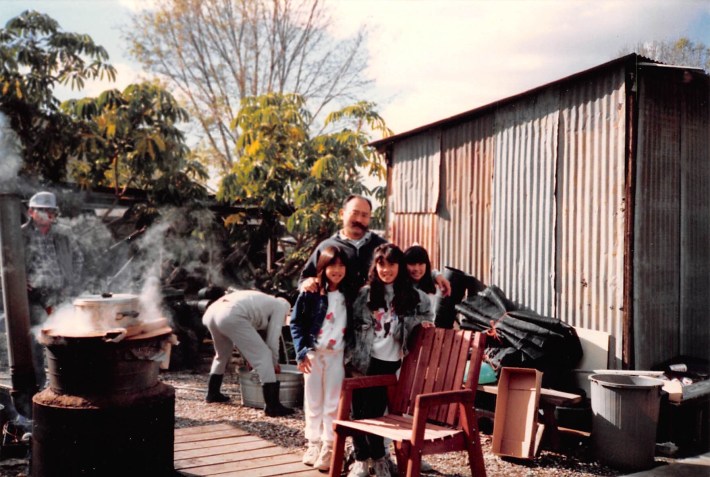
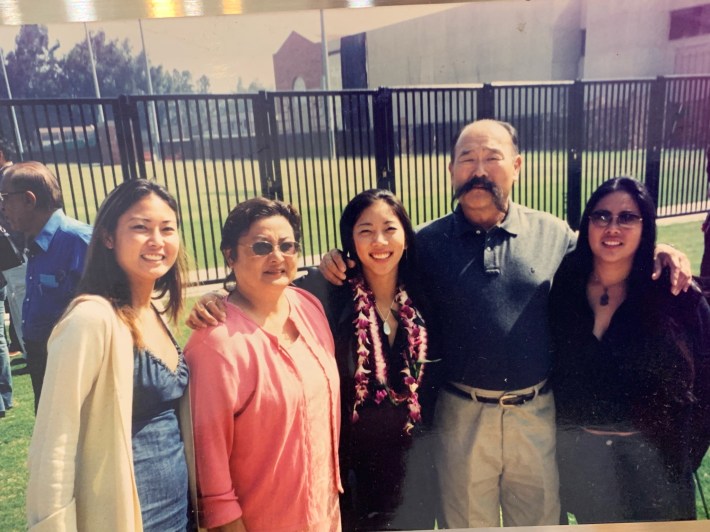
Gary Nakase with his three daughters.Photo courtesy of Norie Nakase
As Gary’s youngest, Natalie was different from her sisters. “More so than athletic,” James said. At three years old, he said, she was “swimming underwater like a darn fish.” Natalie was a lot like her father: unable to sit still, and a sponge for his love of basketball. “We had tons of VHS tapes of games, you know, instructional tapes from old college coaches that he recorded,” Nicola remembered. “[Our dad] was obsessed with learning different techniques and different things, and then making us do it.” And Natalie, far more than her two sisters, loved it.
“All I knew was playing basketball every single day because he played,” Natalie told reporters in her Valkyries introduction. “He made us play every single day. That’s all we knew. Because he was passionate about the sport, I became passionate about the sport.” Gary’s youngest daughter trained with him every Sunday.
“When most people say ‘I’m going to church,’ I was like, ‘Oh, I’m going to basketball practice,’” Natalie told Willms in 2008. “Everyone always said, ‘Do you go to church?’ And I was like, ‘Well, I go to basketball church, is that considered the same thing?’ I just called it that because it was every Sunday morning.’”
Gary fully invested in Natalie’s basketball career. He started Natalie in the JA leagues early, always having her play with kids a couple grades ahead of her. While he found success with his nursery business, using skills passed down from his own parents’ agricultural expertise, Gary hired various coaches for his daughters: strength and conditioning, dribbling, and shooting, repeated compulsively with the goal of mastering the game.
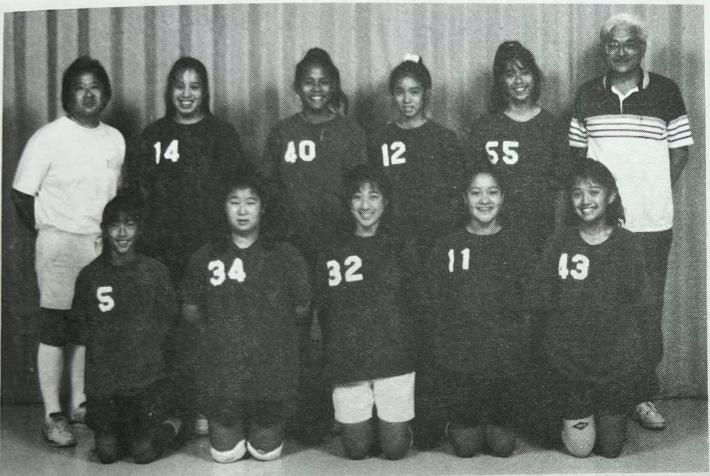
Natalie Nakase (No. 5) on her JA league team for the 1991-92 season.Photo courtesy of Norie Nakase
Through middle school, while Natalie was often the tiniest player, she also became the most “relentless and fearless” on the court, according to her oldest sister. “Other teams’ parents would cheer for her, which was really funny because she would be like the smallest person on the court, but she would just be very feisty,” Nicola said, remembering Natalie’s time in AAU. “They just liked the way she played, so they would be cheering for her too … she would get a lot of fans just because she was so energetic.”
As a point guard at Marina High School in Huntington Beach, Natalie Nakase led the team to its first CIF-SS title in 1998, earning Orange County Player of the Year. She drew some attention from recruiters—including Colleen Matsuhara while she was the head coach at UC Irvine—but Natalie had become dead set on playing at UCLA. At her height, she faced an uphill battle. “She was too short, and she was Japanese,” James said. “So she had two things against her.” Nonetheless, Natalie held firmly to her self-belief, cultivated by her father Gary.
Natalie began her career at UCLA in 1998 by walking on to the women’s basketball team, then redshirted her freshman season after tearing her ACL in a summer league game. By her senior year, she became the starting point guard and team captain. With a player bio describing her at the time as “a coach on the floor,” she became a source of pride among Asian-American communities in Southern California (even if she was often mistaken for a gymnast or tennis player on campus). After a brief professional stint, Natalie began her coaching career overseas, rising through the ranks of the Los Angeles Clippers to become a player development/assistant coach, before she joined the Las Vegas Aces for back-to-back championships in 2022 and 2023.
Jon Ferrey/Allsport via Getty Images
The throughline of Natalie’s success was her father’s lessons. “My philosophy is going to be tough love, same as how my dad raised me,” Natalie told reporters after the Valkyries’ preseason victory over the Phoenix Mercury. “Strict. Stern. Truth teller.” Like many other Japanese-American families, the Nakases passed basketball down as resilience. With the history of incarceration, discrimination and hysteria not as distant as we’d like to think, generations of Nisei and Sansei (third generation) athletes made Japanese-American basketball leagues a focal point of their communities. This is the culture that shaped Natalie Nakase, whose new challenge is to lead the WNBA’s latest expansion team, with minimal roster depth and everything to prove. Once again, the only option is to start over.
She’ll have to do so without her father Gary, who died in 2021. “For those that just don’t know my background: My dad, who also was my best friend, he passed away a couple years ago,” Natalie said in her introductory Valkyries presser. “And so he was always my first phone call. Whether it was life or basketball, that was my first phone call.”
Her voice trembled slightly as she continued, speaking to her obsession with winning. “What drives me is, again, like my dad taught me when I was young: ‘You always gotta be the best.’ And so I almost feel like he has trained me in a way, or he’s raised me, to be where I am today.”
Major cities in Tennessee are reimagining their public riverfronts as vibrant community spaces.
By Cary Estes on December 23, 2025
Agency Landscape and Design
River City Company launches a visionary plan for the Chattanooga riverfront, showcased in the rendering.
When Tennessee native Anna Mae Bullock – better known as Tina Turner – famously sang about “rollin’ on the river,” she was referring to the Mississippi River, which runs along the western edge of the state.
But the Mighty Mississippi makes up only a small portion of the more than 60,000 miles of waterways flowing throughout Tennessee. And increasingly, this natural resource is being further enhanced through public-private partnerships designed to make many of the Tennessee riverfronts even more attractive and accessible. This, in turn, is expanding recreational opportunities and boosting local economies.
“It really speaks to a statewide commitment to investing in the quality of life in Tennessee,” says Patrick Osborne, planning and design director of the Tennessee RiverLine project. “The state is embracing the value of outdoor recreation. Projects like these reflect a broader movement, where Tennesseans see their waterways as assets to be celebrated and protected.”
Memphis River Parks Partnership
The City of Memphis has a front-row view to the watery wonder that is the Mississippi River. But easy access from downtown Memphis to the river has long been limited.
That began to change in 2017 with the formation of the Memphis River Parks Partnership. The goal was to convert 5 miles of mostly underused river parks into a connected network of public spaces, with multiple access points to Beale Street and other popular downtown destinations.
“It is meant to draw people together in one place that is beautiful and peaceful,” says Paul Chandler, CEO of the Memphis River Parks Partnership. “The intent is to unify our city and enhance relationships that might have never been developed without this park system.”
The centerpiece is the renovation of 31-acre Tom Lee Park, which opened in 2023 and receives approximately 2 million visitors annually. Chandler expects the park to become even more popular in 2026 with the scheduled opening of the Memphis Flyway, a 40-foot-high observation deck that will extend 218 feet over the Mississippi River.
“When the sun sets across that huge body of water, the view from the Flyway is going to be really spectacular,” Chandler says.
Evolving Chattanooga’s Riverfront
The City of Chattanooga made major enhancements to its Tennessee River frontage in the early 2000s with the 21st Century Waterfront plan. Now, Chattanooga’s economic development engine – the River City Co. – is bringing additional improvements to the area through the Evolving Our Riverfront Parks plan, with work scheduled to begin in 2026.
“Our goal is to add strategic features and amenities to allow for year-round daily use and enjoyment of the waterfront,” says River City Co. President and CEO Emily Mack. “We’re focusing on people-centered design and providing places of enjoyment for our community.”
Proposed changes include improvements to the riverfront pier, the creation of additional river access points, landscaping with more shade trees, two new restaurants, two new recreational spaces with playgrounds and more public restrooms.
“This is an opportunity to provide a destination for people to gather and connect with the community and with nature,” Mack says. “It will help support our existing riverfront events, which are huge to the local economy. It will also serve as an economic catalyst for our downtown businesses. This is going to have an incredible ripple effect throughout our city.”
Tennessee RiverLine
The long-term goal for Tennessee RiverLine is to be a 652-mile, 1.2 million-acre river park.
Knoxville Is Part of Tennessee RiverLine
The most expansive project of them all, the Tennessee RiverLine, began as an idea by a student in the University of Tennessee School of Landscape Architecture to create a connected system of recreational opportunities along the Tennessee River.
Now, work is underway to make this vision a reality; the long-term goal is to form a 652-mile, 1.2 million-acre river park, stretching from Knoxville to Paducah, Kentucky.
“It’s a regional vision for how our communities connect with the Tennessee River and adjacent public lands,” Osborne says. “Our focus is on planning and designing river access sites, parks, recreation opportunities and the supporting infrastructure.”
The key to the project’s success, Osborne says, is through the RiverTowns Program, in which RiverLine officials work directly with local community leaders. There are currently 12 communities in Tennessee that have signed up to be part of the program.
“This is a generational project that is moving forward in phases, primarily through our RiverTowns Program,” Osborne says. “We’re helping each of these towns identify and prioritize projects that help improve river access and highlight restorative recreation practices. We want to ensure that the river is accessible, healthy and celebrated for generations to come.”
Tennessee Focuses on Outstanding Parks, Too
The most popular outdoor attraction in Tennessee is easily Great Smoky Mountains National Park, which received more than 12 million visitors in 2024. But if you want to be a little more low-key than Smoky, there are also 60-plus state parks across the state.
The offerings range from the nearly 30,000-acre Fall Creek Falls State Park near Spencer to the 11-acre Bicentennial Capitol Mall State Park in Nashville. Scott’s Gulf Wilderness State Park in Sparta features the 110-foot-tall Virgin Falls, which requires a 4-mile hike to reach. It is one of more than 80 waterfalls that can be found within Tennessee’s state parks.
Tennessee added several state parks in 2025. Though it was a division of an existing outdoor attraction, the Hiwassee/ Ocoee Scenic River State Park was split into two separate parks to provide more dedicated resources to each area. The Ocoee River was the site of the 1996 Olympic whitewater slalom events, and the 2.5-mile course remains popular with paddlers.
Head of the Crow State Park and Fiery Gizzard State Park near Monteagle were both carved out of the already existing South Cumberland State Park.
Even more state parks are on the way. The current 950-acre Devil’s Backbone State Natural Area, which is just off Natchez Trace Parkway near Gordonsburg, is set to receive official state park status soon too.
Tennessee bird watching is also exceptional, with over 400 documented species, including residents and migrants. The Cumberland Mountains are vital, hosting the highest global concentration of the near-threatened cerulean warbler’s breeding pairs. Additionally, successful reintroduction efforts mean the majestic bald eagle is now observable statewide.
LAFAYETTE — LaFayette Parks and Recreation now has early-bird registration open for spring baseball and softball, ending on Dec. 31. The early-bird registration fee is $60, and regular registration is $75 — regular registration ends on Jan. 31. Upon registering $40 is due, and the remaining fee must be paid by Jan. 31.
“A lot of our kids actually trended toward going to Valley to play, and I think Roanoke as well — so we’re trying to bring those kids and families back to our program so we can actually grow our own program inside of LaFayette,” said LaFayette Diamond Youth Baseball Coordinator Jamarcus Walton. “This is the first year where we’re actually trying to incorporate the softball aspect into our program as well… We’re looking for volunteer coaches to coach any level, and we’re also looking for players to fill out all those rosters — hopefully, this year, we can have more than one team in each age group.”
Walton said there are many ways the community can get involved in helping the LaFayette Parks and Rec baseball and softball programs grow and serve local children, including sponsoring an athlete, a business sponsorships and donating funds for new bats.
“Currently, we’re in need of sponsorships, because I was just informed at the district meeting that we have to change over to USA bats — so that’s gonna be a big difference this year for the entire Diamond Youth Program in the state of Alabama,” Walton said. “So we’re going to definitely need some sponsorships in order to help the city purchase [those] — that’s for the entire 6U up to the 12U level as well. So hopefully we can get all that done. I have a lot of faith in this program, it’s grown tremendously since we first brought it back.”
With a desire to provide a space for activity, Walton said he hopes access to youth sports will support community growth and provide a space for children to have fun.
“I feel like youth sports are the one thing that drives the community,” he said. “And as you can see, without youth sports, your community sort of dwindles away. You have different families leaving the area, transition to other places that have these programs in place — but if we can bring all these extracurricular activities to our own city — I feel like that help us retain, of course, our citizens, but also help us grow and expand. LaFayette lately has been trending down the population, but we’re trying to bring the youth sports in order to bring those families back to our communities, so we actually drive success.”
Walton said for young children, co-ed T-ball is offered for ages three and four, and for ages five and six they can enjoy modified coach pitch style. Baseball and softball teams are offered for ages seven and eight which will have coach pitch double, and nine and 10 which will start kid pitch, as well as kid pitch for ages 11 and 12. The age cut off to participate is on May 1, as long as children do not turn 13 they can still play in the 12U age group.
“At the end of the day, everything revolves around the kids,” he said. “Youth sports, it’s all about the kids. So we’re trying to find ways to get more revenue and money [in the program] to do more for the kids, so we can have different cookouts and stuff like that for the kids as well. [We want] to give them something different to do [other] than just staying at home and going to school every day.”
For more information, visit Parks & Recreation of LaFayette on Facebook.
HURLOCK, Md – The town of Hurlock now has a Salvation Army red kettle to help raise funds for families in need this holiday season. The kettle is set up at Hurlock Gas and Deli on South Main Street, thanks to the efforts of an employee at the store.
T.J. Higgins, who works at Hurlock Gas and Deli, says the idea started when he approached Hurlock’s mayor, Earl Murphy, about bringing a kettle to the town.
“I reached out to our newly elected mayor,” Higgins said. “He said that he was open to any and all ideas. I knew the holiday season was coming up, and I just said to him, you know, what about the Salvation Army? They don’t have a presence here. You see them in Cambridge. We see them in other areas. What about here in Hurlock?”
From there, coordination with the Salvation Army helped bring the iconic red kettle to town just in time for the holidays. Higgins added that the kettle is meant to encourage everyone to chip in, no matter the size of the donation.
“Everybody sees the red kettle,” Higgins said. “They know what it looks like. They hear that bell. Sometimes it goes to the wayside in the background. But basically, it’s just about giving. It gives the community and strangers, citizens the opportunity to chip in whatever they can to help those that really need it the most.”
Troy Paul of the Salvation Army says the kettle gives the community a chance to directly support local families.
“Every dollar that’s donated here stays local,” Paul said. “So if you donate to a red kettle or donate to the Salvation Army, everything stays right here in Hurlock.”
Darrell Hurston of Elite Youth Sports, whose group volunteered at the kettle, says it’s also a chance to teach kids about giving back.
“One thing we try to teach our kids is, integrity and discipline and, and community service,” Hurston told WBOC. “Right? So this is part of that. You can’t get any more community service than the Salvation Army.”
The Salvation Army red kettle in Hurlock will remain in place through Christmas Eve. Volunteers are still needed to help ring the bell and collect donations, offering neighbors one more opportunity to support their community during the holiday season.
Evva Starr has heard thousands of pitches from student journalists over the years as the faculty adviser to Common Sense, Thomas S. Wootton High School’s newspaper.
“I get excited whenever there’s something new,” Starr, the Rockville school’s English department resource teacher, says with a laugh. She remembers how her ears perked up last school year when Nathan Zweig, a junior in her newspaper class, proposed an article about Fliff, an app that bills itself as a free play-for-fun sportsbook. Underage use of sports betting apps in the halls of local high schools is widespread, students and school faculty say. Recent legalization, word-of-mouth, promotions on social media, and ease of access have contributed.
“That was the first time I’d ever heard of Fliff. I thought, ‘Cool. Great. Something different,’ ” recalls Starr, 52, of Potomac. “Then Nathan explained Fliff to me. Now that I understand it, I think it’s terrible.”
Fliff is one of many sports betting apps and is considered among the most popular for underage betting. This app uses virtual currency and follows a sweepstakes model, which means no purchase is needed to play. That distinction separates Fliff from more traditional online gambling sites. Signing up is easy on the colorful, flashy app. Tiny print says players must be 18, but no age verification is required. In other states, the minimum age may be older. Players can quickly earn badges and loyalty rewards, and climb leaderboards betting on an array of daily sporting events across the country and around the globe from college football to professional tennis, English Premier League soccer, NBA games and mixed martial arts.
Unlike underage drinking or substance misuse, online gambling can be almost invisible without the telltale red flags, such as garbage cans filled with beer bottles and hard seltzer cans or the acrid smell of marijuana.
“Fliff is all around me. Every day, kids at lunch are on their phones, talking about what bets are going to hit,” says Zweig, 17, of Potomac. “I have friends who don’t follow sports, but they still bet. They say it’s not real gambling, but eventually some kids will go to apps like BetMGM or DraftKings. It’s hooking people.”
Some Wootton students, however, including senior Justin Heller, 17, of Rockville, disagree.
“Well, people see it different ways. I think it’s helpful because it shows you in the end that everyone ends up losing money. It gives you free money to learn with, play with,” Heller says. “It’s taught me something definitely—to be smart with my own money and not bet it away.”
Starr green-lighted Zweig’s pitch, and soon after he published an opinion column highlighting the many risks and few rewards of underage sports betting.
In 2022, about one in seven Montgomery County high school students had gambled on something in the previous 12 months, according to the Maryland Department of Health’s Youth Risk Behavior Survey, conducted every other year. The actual numbers may be higher now, based on comments from more than 25 students, educators and parents interviewed by Bethesda Magazine.
“Most parents have no idea how widespread it is,” says Joe Cassidy, head baseball coach at Walt Whitman High School in Bethesda since 2003. “Parents think their kids are just sports crazy or athletes or psyched about a game. But are they really excited about the Braves playing the Pirates when they can’t name a single player on either team?”
Gambling is prohibited in Montgomery County Public Schools (MCPS). It is banned at school-sponsored events and on school property. MCPS did not respond to multiple requests for comments for this story.
“There don’t seem to be any real protections to prevent children from using the platform. Self-reporting age is a nonfactor,” says Starr, an MCPS teacher for 25 years. “My perspective is this could be onboarding them to a lifetime of addictive behaviors, not just gambling.”
In simple terms, according to the National Institutes of Health, addiction sets in when a substance, such as alcohol, “ … hijack[s] the pleasure/reward circuits in your brain and hook[s] you into wanting more and more.”
As with substance-use disorders, people with gambling disorder may also exhibit withdrawal, depression and anxiety, according to the Mayo Clinic and the Cleveland Clinic. The Cleveland Clinic reports that “gambling at a young age is … a risk factor for developing gambling disorder” later in life.
“There is a lot of crossover with video games. The easy access and fast pace keep triggering the brain. Kids don’t think about video games and loot boxes as gambling, but they are by definition,” says Heather Eshleman, prevention manager at The Maryland Center of Excellence on Problem Gambling within the University of Maryland School of Medicine in Baltimore. “I’ve seen a definite increase in the number of high schools reaching out to us since sports betting was legalized.”
Boys are far more likely than girls to engage in sports betting, says Stanley Tamale, a licensed professional counselor who practices in Montgomery County. Many of Tamale’s clients are young adult males between the ages of 19 and 24 who started gambling when they were in high school.
“Online sports betting is like a fishing rod. People have figured out the psychology of how to reach teens. Teens, especially boys, are risk-takers. They seek peer approval and acceptance,” says Tamale, 46. “But their brains are not fully developed until they are 25. The 16-, 17-, 18-year-old brain is so vulnerable.”
Tamale and other counselors encourage their clients to resist peer pressure and to be savvy consumers, skeptical of any free stuff, such as virtual currencies. “I tell my clients to think of those pop-ups as scam calls. Don’t be duped. You’re smarter than that. Don’t fall for the advertising. If it’s too good to be true, then it is.”
However, a confluence of factors—including illegal offshore betting sites, payment apps and slick mobile betting platforms—make that a lot easier said than done for adolescents eager to get some fast cash.
“Social media is a big factor in it: who will win, by how many points, how many total bases? Every day, TikTok videos promote the best parlays,” Zweig says. “If you get lucky and combine a bunch of games, then you can win. I have a friend who bet a dollar and picked seven games for a parlay [on Fliff]. He won 130 bucks.”
A parlay links together bets on a sequence of athletic events across teams and athletes, potentially earning a much larger payout than an individual wager. Picture this: the Ravens win, then the Commanders win by a touchdown and, finally, Nikola Jokić scores 25 points for a Nuggets victory.
Some students believe apps such as Fliff could offer valuable lessons to teenagers who gamble.
“I think for some people it’s teaching kids to gamble. Like any other video game, you can spend a lot of time on it. It depends on the person for sure,” says Vikram Mishra, 17, of Rockville, who’s also a senior at Wootton. “It’s not necessarily a bad thing, but you have to make sure you have control over yourself when you’re using it.”
Coach Cassidy, 54, of Clarksburg, chats regularly with his players about the downfalls of gambling.
“I tell my players their system won’t work. I say they may give you a free dollar, but it’s Monopoly money. They’ve got your real money. Now, with AI and all these algorithms, they run millions of simulations. The odds against you are even higher,” he says with a sigh. “ ‘Guys,’ I tell them, ‘It’s stacked against you. You’re going to lose.’ ”
Sports betting exploded after the U.S. Supreme Courtallowed states to legalize it in 2018. Last year, according to the American Gaming Association, sports gambling raked in $13.71 billion in revenue, an increase of more than 25% over 2023. It marked the fourth consecutive year of eye-popping growth. The association estimates $3 billion was wagered on March Madness games alone.
Maryland legalized sports betting in 2021. Players must be 21, have a Social Security number, and be physically present in the state when betting online. The apps track the user’s location in real time.
In D.C., players only need to be 18 to bet on Daily Fantasy Sports sites such as PrizePicks and Underdog. These sites allow individuals to use real money to place bets on specific athletes, not teams, and how they will perform in a game. These platforms offer set payouts and promotions in dollars. Given the lower age requirement, they are especially popular with young men in high school. But unlike Fliff, these sites deal in dollars, not virtual currencies.
“It’s an unfair playing field, especially for boys,” says state Sen. Bryan Simonaire (R-Dist. 31) of Anne Arundel County. “Most people can gamble responsibly, but you might be part of the small percentage who get addicted. We just don’t know who they are. I want to target them and help them.”
For Simonaire, it’s personal. His father, he says, became addicted to gambling after casinos were built near his house in Arizona. He lost $1 million, says Simonaire. “The casino was 10 minutes away. He got into the habit of going. It became an addiction as opposed to entertainment,” he says. “Now we have internet gambling with instantaneous access and nonstop advertising. The ads draw kids into it.”
In 2020, Simonaire introduced a bill related to schools teaching about the risks of gambling, but it stalled during the pandemic. Earlier this year, Simonaire worked with a coalition of individuals and organizations, including The Maryland Center of Excellence on Problem Gambling, to introduce a bill in the Maryland General Assembly to revise the state’s Youth Suicide Prevention School Program and make students aware of the link between gambling and suicide. It passed unanimously.
Simonaire says it’s up to local school districts to determine how to implement the bill. He hopes students will see gambling included in the list of risk factors, along with substances such as alcohol, opioids and marijuana, by the spring. “We have a responsibility to fund education, and we’re doing it a lot through gambling,” he says. “We also have a responsibility to help students not get addicted to gambling.”
Fifteen percent of the state’s gambling revenue goes toward the Blueprint for Maryland’s Future, which promises to increase the education budget by $3.8 billion annually for 10 years, starting in 2021. Between July 2024 and January 2025, nearly $59 million from sports betting was directed to public education.
“I am not an alarmist,” says Steve Goodman, 50, a professor in Georgetown University’s Sports Industry Management graduate program and a sports industry veteran. “For parents, I think the first step is to be aware it’s out there. Then, understand the potential mental health piece and the money piece. Are kids betting money they don’t have?”
Goodman, who lives in Bethesda and has two sons who graduated from Whitman, adds, “Sports betting is so fast and so easily done. It’s easy to hide. Even if parents do check phones, kids can bury their apps.”
The Maryland Center of Excellence on Problem Gambling highlights two main characteristics of problem gambling. The first is the inability to control the amount of time or money spent on betting. The second is the resulting negative consequences, including emotional, financial, personal and legal problems.
“To parents, I would say, ‘Keep an eye on your teens.’ There is often a difference between someone spending more time on their phone versus hiding their phone,” Tamale says. “People hide their behavior when they have a problem. It will be the same with teens and gambling. They will hide it, and parents might not find out until a young man is in trouble financially.”
Talking is often a first step toward treating potential gambling problems.
“Teenagers are good at hiding stuff, but they’re also good at telling you stuff, if you pay attention,” Cassidy says. “Online betting is the same as a drug. It’s the rush of winning, chasing the loss, chasing the high. I equate this to smoking in the ’60s. They sort of knew it was bad, but they kept that to themselves. I don’t know how you put this genie back in the bottle. It’s just going to get worse.”
Meg Drennan is a freelance journalist who has written for Education Week, The Chronicle of Higher Education and NPR. She focuses on health and wellness stories and has a Master of Public Health degree from Johns Hopkins. She lives in Bethesda with her family.
The Maryland Center of Excellence on Problem Gambling offers an online self-evaluation tool to help individuals determine if they have an issue. The center also offers resources for counseling and peer groups, and a help line. The Montgomery County Department of Health and Human Services does not have any programs designed specifically to address gambling disorder.
If you or someone you know needs help with gambling, call 800-GAMBLER (800-426-2537) or visit 1800gamblerchat.org for free, confidential support 24/7.
This appears in the November/December 2025 issue of Bethesda Magazine.
Pittsburgh Steelers coach Mike Tomlin doesn’t condone the actions that led to wide receiver DK Metcalf’s two-game suspension by the NFL following an in-game altercation with a fan, but added Metcalf has his full support during the appeals process.
The league punished the two-time Pro Bowler by forcing him to sit out the first-place Steelers’ final two games and fining him for taking a swipe at Detroit Lions fan Ryan Kennedy in the second quarter of what became Pittsburgh’s 29-24 victory.
Tomlin said Metcalf shared his side of the story with him, but declined to get into specifics. “He did explain to me why he did what he did, and I certainly don’t condone the behavior, but I support DK,” Tomlin said.
“I won’t discuss what he and I discussed,” Tomlin added. “I think I’ve been pretty clear there.”
Former NFL wide receiver Chad Johnson said on a podcast late Sunday night that Metcalf told him Kennedy used a racial slur and verbally disparaged Metcalf’s mother, an allegation that Kennedy denied through his attorneys on Monday.
Tomlin cited Metcalf’s appeal hearing and what he described as “legal ramifications,” though he did not define what those might be. An email to the attorneys representing Kennedy by The Associated Press was not immediately returned.
Metcalf remained in the game and finished with four receptions for 42 yards. Kennedy left his seat to meet with stadium security at Ford Field but was allowed to return.
Asked if the Steelers have any in-game protocols in place to try and mitigate interactions such as the one between Metcalf and Kennedy, Tomlin said, “We certainly may, but I might not be privy to it because my eyes and attention is (on) what’s going on on the field” and made it a point to credit the team’s “top notch security group.”
Tomlin would not elaborate on what his reaction was to seeing the video of the confrontation, though he acknowledged what he called the rise in “volatile rhetoric” in sports at all levels.
“Not only (in) our business, (but) college, youth sport parents,” he said. “I think it’s just a component of sport that’s developed and developed in a big way in recent years, and it’s unfortunate.”
There were reports that when Metcalf played for Seattle, he reported Kennedy to team personnel when the Seahawks visited Detroit. Tomlin did not speculate when asked if there’s anything more teams can do to protect players in those situations.
“Me speaking on it and speaking on it in detail and particularly expressing my opinion regarding things doesn’t help the circumstance in any way,” he said.
Metcalf’s suspension means Pittsburgh (9-6) will be without its top pass catcher as it tries to lock up the AFC North title on Sunday in Cleveland. His absence means Roman Wilson, who has been a healthy scratch the past two weeks as the Steelers have opted to go with experienced veterans Marquez Valdes-Scantling and Adam Thielen, will likely get an opportunity to return to the lineup.
Tomlin did not rule out the return of star outside linebacker T.J. Watt, who has missed each of the past two games while recovering from surgery to repair a partially collapsed lung sustained during a dry needling treatment. Tomlin said Watt has been in the team facility lately and is “hopeful” Watt will be cleared to practice.
The Steelers need to win one of their final two games or have Baltimore lose one of its final two games to win a division title for the first time since 2020. The longtime rivals are scheduled to meet in Pittsburgh in Week 18.
Reporting by The Associated Press.
Want great stories delivered right to your inbox? Create or log in to your FOX Sports account, and follow leagues, teams and players to receive a personalized newsletter daily!
FOLLOWFollow your favorites to personalize your FOX Sports experience
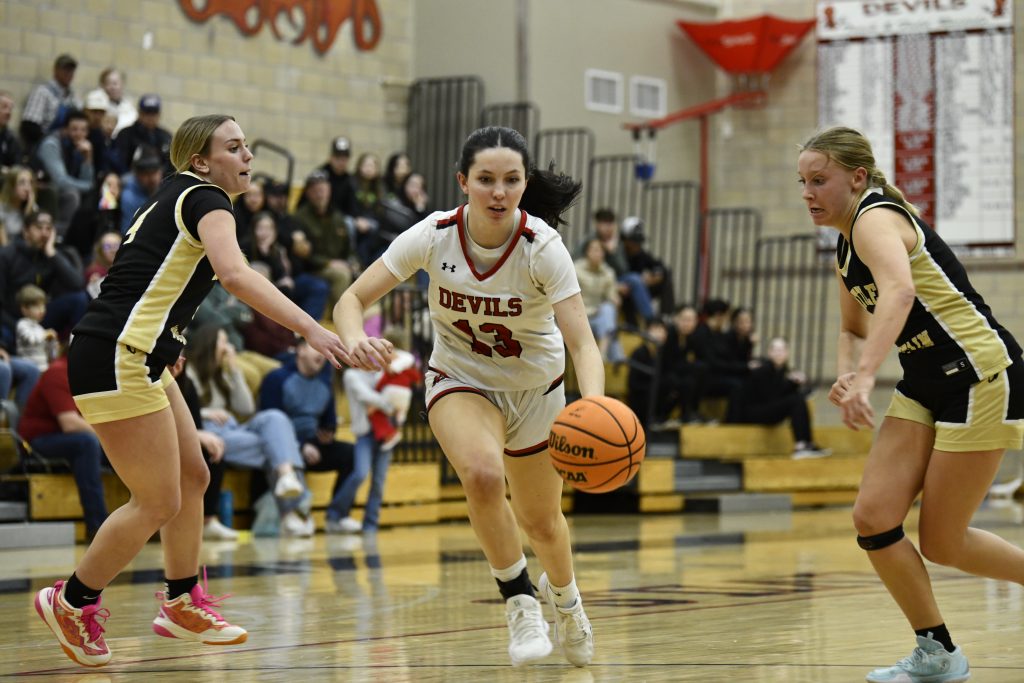
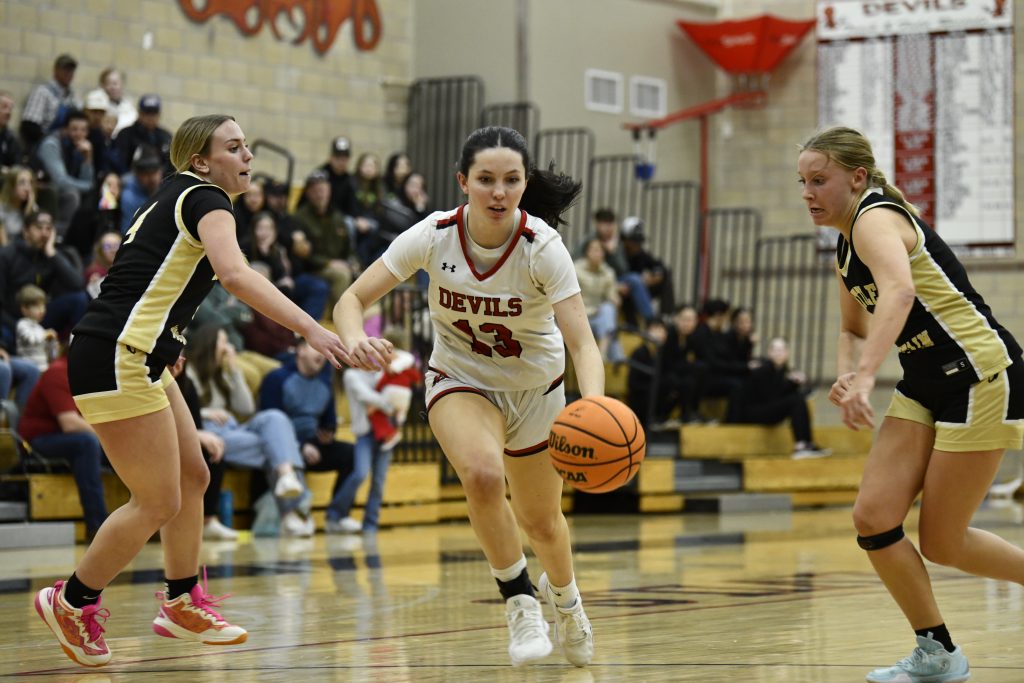
Eagle Valley senior Lily Brueck is one of two returners who logged significant minutes on last year’s league championship squad. Juan Pena/Courtesy photo
After saying goodbye to the eight seniors who led Eagle Valley to one of its best seasons ever, head girls basketball coach Vinny Cisneros said one of the main storylines this winter will be how quickly the new bunch builds chemistry and capitalizes on meaningful experience.
“Our group is young and has very little varsity experience,” Cisneros stated in contrasting the 2025-26 squad to last year’s group, which captured the program’s first 5A Western Slope League title and won a game in the first round of the state tournament. “Last year’s championship team spent three years playing together at the varsity level. This team needs to build on-floor chemistry and learn how to compete at the varsity level.”
Eagle Valley graduated Western Slope player of the year Addison Mandeville from a squad that captured the school’s first league title and advanced to the state tournament. The Devils are currently off to a 4-4 start to the 2025-26 season.Rex Keep/Courtesy photo
Eagle Valley closed last year’s regular season on a five-game win streak, ultimately finishing 13-12 overall and 5-1 in conference play; the lone blemish being a one-point loss to Summit. The team graduated its top-3 leading scorers and rebounders. Addison Mandeville — who now plays soccer for Metro State University in Denver — averaged nearly 10 points and 3.4 steals a game en route to earning league player of the year honors. They also lost center Abby Talbot’s 9.6 points and 7.3 boards a contest and Zakia Shreeve’s length and speed on both ends of the court. Current seniors Ella Webster and Lily Brueck were the only returners who logged significant minutes last winter. Over the off-season, Cisneros said the squad ran its usual gamut of summer team camps, including one at Western University and the Gold Crown Foundation camp in Lakewood.
After starting the year 1-4, Eagle Valley has found its groove in the final weeks before Christmas. The Devils won three in a row, including 20-point victories over Steamboat Springs and Grand Junction Central and a 49-16 win over Moffat County before falling to Grand Junction 56-44 on Saturday. Freshman Hannah Miano and senior Ella Webster have led the way offensively, with both players averaging double digit points through the first eight contests. Miano has also been pulling down 6.6 rebounds per game as well.
Against the Tigers, Miano drilled three triples for a 15-point outing. Cisneros said Terra Hasley and Brueck have anchored the defense all year. Hasley had nine points and nine boards to go along with two blocks and two steals on Saturday and Brueck dished out five assists and a pair of blocks as well.
Support Local Journalism
“Despite the loss, we finished December playing our best basketball of the young season,” Cisneros remarked. “We’re a young team trying as quickly as we can to develop chemistry and varsity experience. Our defense is the cornerstone of our identity and we are starting to find our offensive rhythm.”
Eagle Valley opens up league play on Jan. 26 against Summit before traveling to Edwards to face Battle Mountain on Jan. 29.
“Every league game is huge. Our league is only four teams, and every game means a lot towards winning a league title,” said Cisneros, whose expectations remain high going into 2026. “Despite our sub-500 start, I expect us to continue to improve (through) the early parts of January leading up to league play, where we intend to defend our league championship.”