When Tennessee swim and dive graduate Griffin Hadley arrived at the University of Tennessee, he entered a college athletics landscape that was already in flux.
The NCAA had just passed its name, image, and likeness (NIL) policy, allowing college athletes to make money from their brand. Swimmers were just trying to make sense of these changes.
Now, four years later, Hadley has graduated, but the chaos of NIL remains, and the UT swim team in particular tries to adjust to a new series of changes stemming from the House v. NCAA settlement.
This lawsuit allows schools like Tennessee, which opt into the deal, to start paying athletes a piece of the school’s athletic department revenue. The House v. NCAA also enforces a roster cap, which limited swimming and diving to only 30 athletes, with the SEC now proposing to lower caps even further, dropping the men’s cap down to 22.
These changes bring great concern for Hadley, who worries this will only create a divide between Olympic sports and the sports that are deemed to be ‘revenue-generating.’
“As far as Olympic sports go, Olympic sports are gonna start fighting for their life,” Hadley said.
With the new era of NIL and revenue sharing, UT swimming and diving is a unique place as a high-performing team at an ‘Everything School,’ but a non-revenue-generating Olympic sport in the era of the House settlement. Hadley, fellow graduate and 2024 Olympian Jordan Crooks, and former swim and dive strategic information director Josh Lively believe in the future of this team, but recognize that the financial realities of college athletics pose new challenges for programs like this.
Revenue sharing at Tennessee
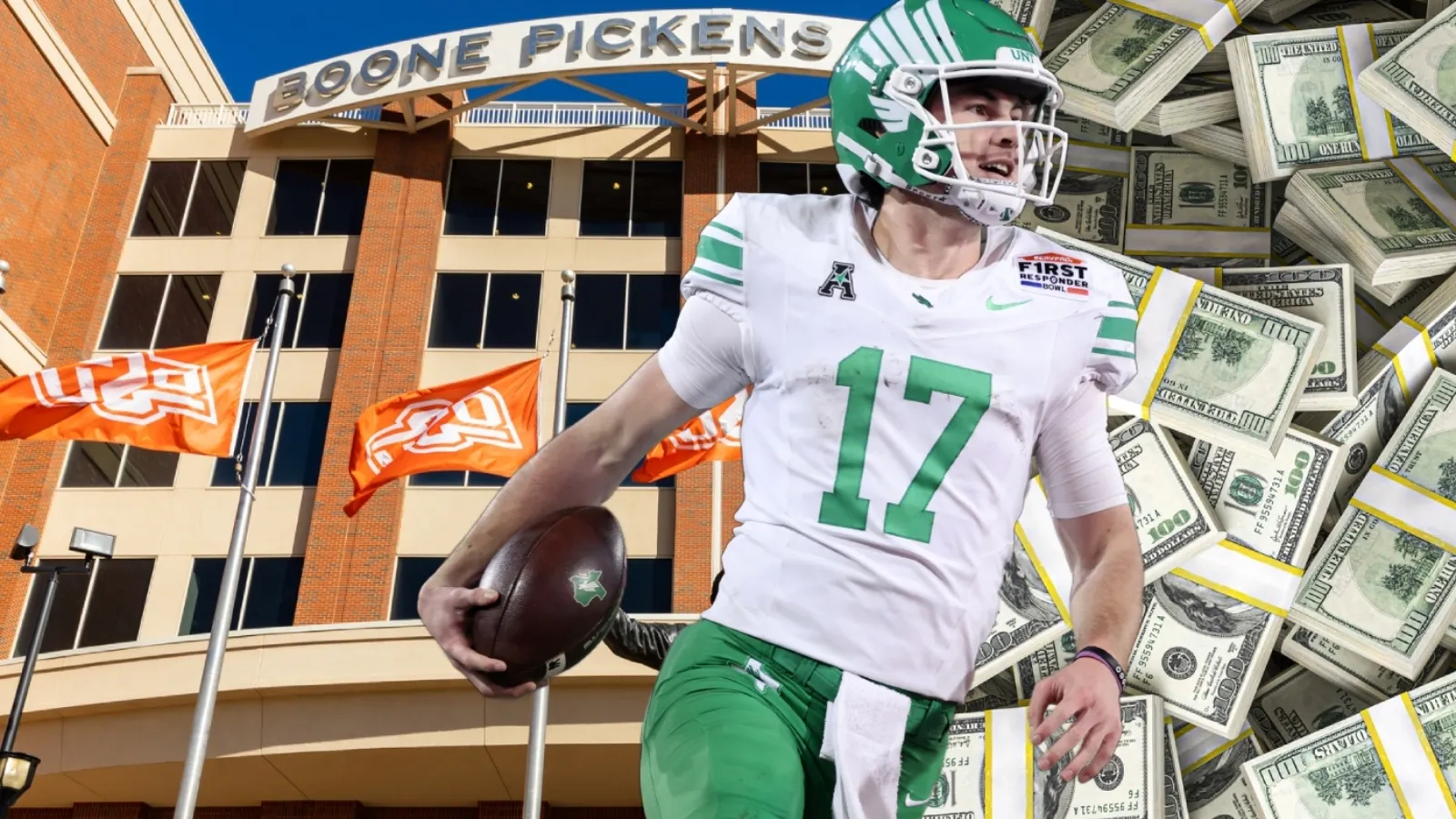
The House settlement allows UT to allocate up to 18.5% of the school’s athletic revenue to athletes. Tennessee has chosen to divide this money, a total of $215,469,808, across all 16 NCAA-sanctioned sports.
During an October press conference, Tennessee’s Athletic Director Danny White shared the specifics of this revenue-share split. The football team receives 75% of the share, men’s basketball receives 15%, women’s basketball receives 5% and the last 5% is left to “other.”
The other comes out to about $900,000, he noted.
Based on those percentages and budget reports, during the 2024-2025 season, the football team received $162,539,638 in revenue, men’s basketball received $35,316,920, and women’s basketball received $4,352,348, according to Tennessee athletic public records. Swim and dive earned a percentage of the 5% left, which came out to $370,687 for the combined teams.

White said that these numbers are “consistent with the House settlement.”
While swimming & diving’s numbers remain low, despite both the men’s and women’s teams finishing top-five nationally in both of the last two seasons, Lively is still impressed that White allocated any money to swimming and diving. Opting to rev share with those programs, Lively said, emphasizes White’s commitment to the ‘Everything School’ tagline at Tennessee.
“Danny specifically has been all in on day one of ‘We’re gonna be an everything school. We’re gonna try to give everyone a piece of the pie when it comes to rev share,’” Lively said. “And he has never wavered from that.”
UT sports studies professor and NIL expert Dr. Adam Love said Olympic sports like swimming have always faced an uphill battle for equitable funding and support, even on campuses like Tennessee’s, where swimming and diving are still getting some portion of the revenue-sharing pie.
“There are certainly inequities that exist when it comes to NIL rights,” Love said. “But to emphasize, those are also long-running inequities where there is a long struggle for Olympic sports seeking to carve out a little bit more of the pie.”
One way athletes bring in revenue is through storytelling, both at the individual and team level. But on an SEC campus largely dominated by football, capturing audience attention can be challenging.
Lively’s job was to help sell a story of the swimming and diving team that inspired audience care. He wrote press releases for the program, managed media requests and ran the team’s social media account.
While his job now falls to Bryant Avery, these athletes have also taken it upon themselves to tell their own stories through social media in an effort to spread the word about the team’s success and generate individual side income through brand deals and social media advertising. UT even links to athletes’ Instagram accounts on the official school roster as a way to drive more traffic to those athletes’ profiles.
JB Bowling, Tennessee’s chief NIL officer, said that UT is committed to helping athletes capitalize on their experience as student-athletes at Tennessee in the NIL era.
“The ability to leverage their hard work to build a personal brand and potentially earn money is a tremendous advantage for students at schools like the University of Tennessee,” Bowling said in an email. “The benefits of NIL agreements go beyond immediate financial gains; they also include valuable connections with companies and brands that can lead to further opportunities after their athletic careers.”
Gui Caribe leads the men’s team in followers with 44.5K, while Mizuki Hirai leads the women’s team with 8,949 followers as of Nov. 17, 2025. Their content serves as an additional marketing arm for themselves and their program.

“It’s hard to showcase people multiple times, let alone consistently enough to be like ‘OK, let me help you build your brand up,’” Lively said.
Olympian Crooks would be one of the most obvious social media and NIL stars amongst the team, but Crooks says he, like Hadley, doesn’t have a ton of interest in social media or NIL. He finds it overwhelming, especially given everything else that he has going on as a student-athlete.
“It was just very confusing to me, and I wanted to just focus on my sport and be able to have a great four years in that aspect,” Crooks said. “I just didn’t really understand it, so I left it alone.”
Crooks finished his career at UT as a four-time NCAA champion, two-time SEC Swimmer of the Year and an 11-time conference champion. He credits some of his success to the fact that he chose not to have the distraction of NIL. Instead, Crooks focused solely on his sport and his studies while being on scholarship.
That was enough for him.
Investing in building a personal brand in the NIL is extra labor that some athletes choose to engage with, according to Love, but others like Crooks recognize that they aren’t interested in allocating time to such efforts.
“When I talk to people that have those kinds of followings, they often talk about how it takes a lot of time and effort to build that kind of brand and then develop content that’s gonna keep a large group of followers engaged,” Love said. “So certainly some people have benefited tremendously financially at least from being able to profit from NIL, but of course it’s also given rise to other conflicts, other complications both for student athletes and for athletic departments to deal with.”
These complications could include time management strains, interpersonal conflicts with teammates over brand deals and revenue, or other financial and personal stressors, situations that Crooks chose to avoid, despite the potential to generate revenue from his brand by pursuing such opportunities.
Future
During Hadley and Crooks’ careers, the men’s swim team progressed from an 18th-place finish to three top-10 finishes nationally. Meanwhile, the women’s team placed inside the top 10 all four years, climbing as high as No. 4
While Crooks and Hadley appreciate the investment UT has made into swimming and diving as part of its commitment to an “Everything School,” they still worry about the potential implications of this changing landscape on the future of the sport.
Bowling is more reassuring.
“NIL will always be a part of the landscape, but I don’t believe it will be the primary factor shaping the future of Olympic sports,” Bowling said. “Providing resources and creating opportunities will be crucial, and we will work to maximize those opportunities for our sports. However, we believe that a significant aspect of the future of our sports will continue to be the overall support we offer and the excellence of our coaches.”
Swimming and diving is objectively part of UT’s future in the House settlement plan, and 21st-year swimming and diving head coach Matt Kredich does have $370,687 in revenue sharing to play with on the recruiting trail and within his team.
Kredich is leading a stronger team, athletically and financially, than he ever has before, but Hadley knows as well as any Vol that so much can change in the college landscape in four years.
“This is the modern day of college athletics, and non-revenue and Olympic sports have to respond. It’s up to us,” Hadley said.