
Technology
Huawei Watch 5 Review: On a Health Kick

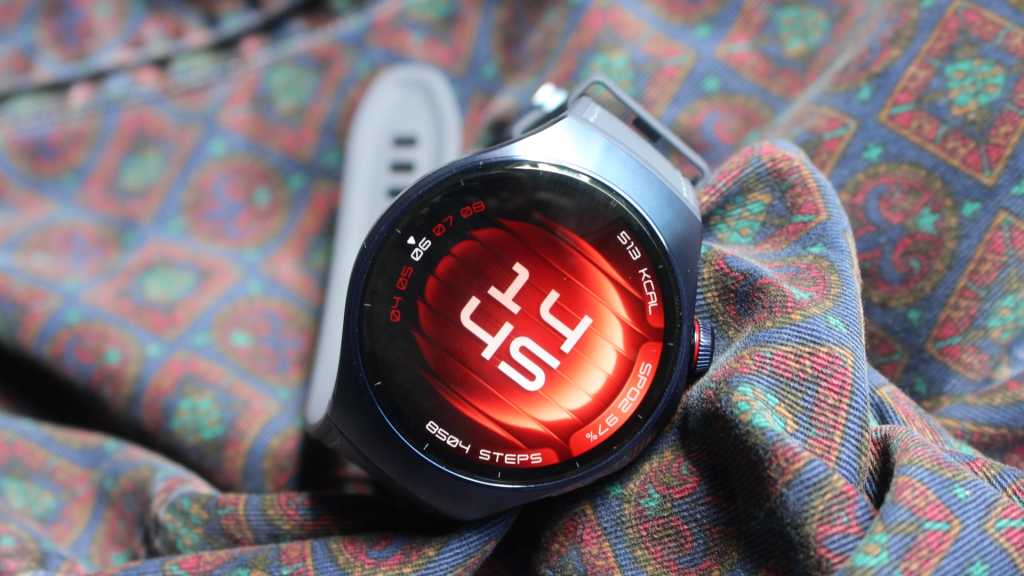
Expert’s Rating
Pros
- Two sizes
- Attractive and durable design
- Lots of new health insights
- Improved battery life
Cons
- Health data can be overwhelming
- Questionable placement of sensor in some scenarios
- Some software quirks
Our Verdict
The Huawei Watch 5 is a smartwatch that now feels like it’s shifted to become more health watch. There’s lots to like, yet still needs some work in certain areas to make it truly one of the best smartwatches you can buy.
Price When Reviewed
This value will show the geolocated pricing text for product undefined
Best Pricing Today
The Huawei Watch 5 is the latest instalment in Huawei’s flagship smartwatch series as the Chinese company continues to swell the ranks with connected timepieces as it makes a more concerted push to innovate with all things wearable.
The Watch 5 lands nearly two years after the Watch 4 series, announced alongside the Watch Fit 4 series. It continues the trend of promising a high-grade look, strong health, fitness and smartwatch features with a battery that won’t run out after a couple of days.
A new sensor bolsters the Watch 5’s health tracking abilities, along with new display technology, all while giving you a bit more battery life to play with.
Once again, it’s sitting at a price – from £399 – that puts it in the same category as the Apple Watch Series 10, Google Pixel Watch 3 and Samsung Galaxy Watch 7.
On paper, the Watch 5 has the specs and features to make sure it’s still competing with the best, but should you buy it over those rivals? Let’s find out.
Design & Build
- Two case size options
- Available in steel or titanium
- New side-mounted sensor
The Watch 5 comes in two case size options. There’s your pick of 42- or 46mm sizes and the option of stainless steel or a lighter, yet still very tough, titanium finish.
That means, unlike its predecessor, there’s now a significantly smaller model that sits more in line with the sizing applied to Huawei’s cheaper Watch GT 5. That’s good news if you found the previous watch a bit too hefty.
Huawei uses spherical sapphire glass, giving the display a curvier look and elevating the already likeable design

Mike Sawh
That’s matched up with a strap that’s thankfully easily removable with a simple button press. I had the 46mm, grey-purple titanium case paired with a similarly coloured composite strap, which has a leather effect to give off the impression it’s more formal than it appears.
I’d say the larger version doesn’t exactly scream unisex and is a design not far removed from the Watch 4 Pro.
Down the right side of the watch case lies a rotating crown with a flatter physical button a bit further down. Sandwiched in between that lies Huawei’s new sensor technology (more on that later), which is made up of an ECG electrode, pressure and PPG sensors.
At the rear is the other PPG sensor and is where you’ll drop the proprietary charging disc cradle onto when you need to power it up again.

Mike Sawh
The Watch 5 is waterproof up to 50 metres depth, making it safe for swims and showers and also meets the EN13319 standard to make it suitable for free diving up to 30 metres.
In the pool, it disables the screen to prevent accidentally activating it and offers good screen visibility underwater.
Screen & Audio
- Now curvier LTPO display
- Built-in speaker and microphone
- eSIM support
The Watch 5 packs a bright, high-quality touchscreen display with a smaller bezel, giving you more screen to play with.
It also uses version 2.0 of the LTPO display technology Huawei started to add to its smartwatches in recent years and means the display can provide smoother visuals and can even have a positive influence on battery performance by automatically adjusting the refresh rate.

Mike Sawh
Huawei uses spherical sapphire glass, giving the display a curvier look and elevating the already likeable design, though it introduces some glare when outside.
When you want to swipe and tap, it’s pleasingly responsive and another sign that Huawei is putting a pretty impressive display technology on your wrist.
You get a microphone and speaker that, along with eSIM support, meaning you can ditch your phone when you want to handle calls or stream music via Huawei’s own music app.
I’d say the speaker setup certainly prioritises volume over giving you supreme sound quality, but it does a good enough job to make using its voice and audio-enabled features worthwhile.
Software & Features
- Latest version of HarmonyOS
- Now supports gesture controls
- AppGallery and Petal mapping offered
It’s no major surprise to discover that the Watch 5 runs on the latest version of Huawei’s HarmonyOS operating system and continues to be compatible with iPhones and Android phones.
iPhone users will once again miss out on some features, like the music player.
The user interface is clean and fills that curvy screen nicely

Mike Sawh
On the watch, the experience is strong. The user interface is clean and fills that curvy screen nicely. The notification support works well and is well optimised and it’s always useful that you have the choice of how apps are presented on the main app screen too.
For the music player, audio needs to be synced over from the Huawei Health app and is easily done if you’ve got some files on your phone to send over – if it’s not an iPhone.
Other basic smartwatch staples are covered, like letting you view your calendar, weather forecasts and there’s a good array of watch faces to pick from. Huawei Wallet offers a place for your transport passes and uses the built-in NFC and Bluetooth.
You have access to Huawei’s AppGallery app store directly from the watch, though a browse shows this still can’t rival the Apple App Store or Google Play Store in terms of offering big-name apps.

Mike Sawh
Huawei also offers a couple of useful gesture controls letting you slide and double tap your fingers to use for the music playback, handling calls or switching off alarms. It doesn’t take too long to master them and adds another potentially useful method of control when you can’t get to that touchscreen.
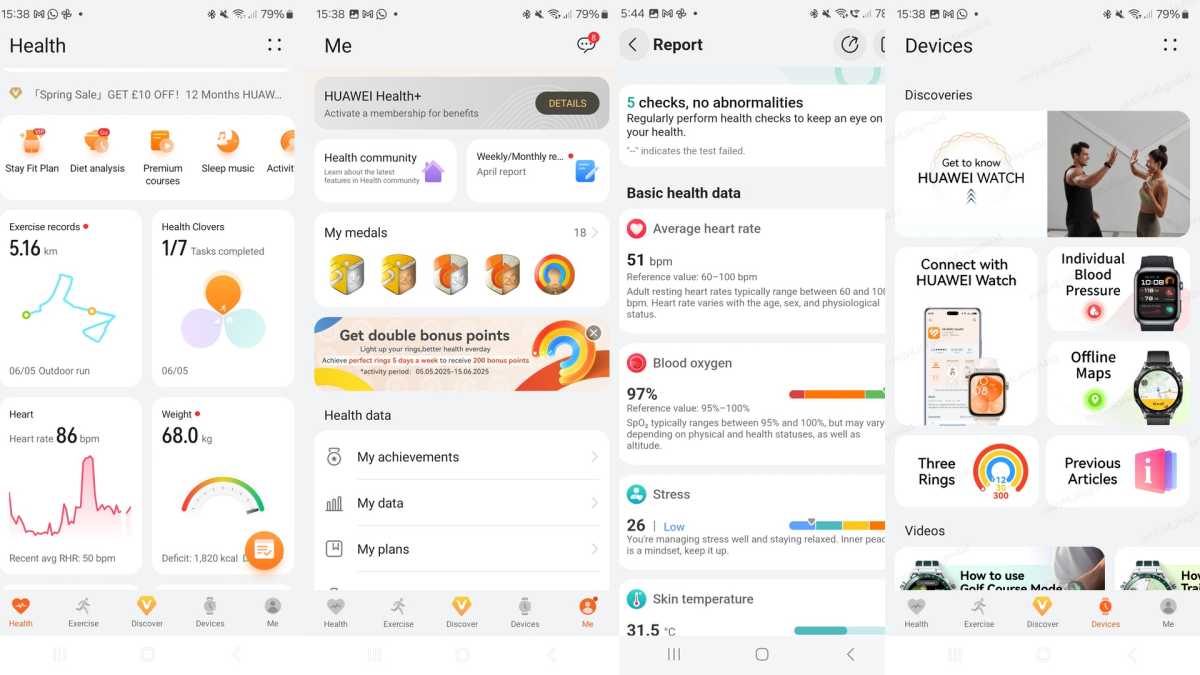
Off the watch, it feels like Huawei’s companion app has got busier somehow and seems to have picked up a lot more bloatware, which makes getting to the places you actually care about a bit overwhelming with the amount that’s crammed onto the screen.
Sometimes, less is more.
Fitness & Tracking
- New X-Tap sensor technology
- Over 100 sport modes
- Offers full colour maps
For the Watch 5 it’s clear where Huawei has sought to make huge strides and that’s through increasing its health tracking powers.
This is led by its new multi-sensing X-Tap technology

Mike Sawh
This is led by its new multi-sensing X-Tap technology, which is made up of a pressure, ECG electrode and PPG sensor that aims to boost signal quality for capturing biometric data by reducing the type of interference that can be caused from monitoring from the rear sensor where hair and different skin tones can impact on accurate readings.
What that means in feature terms is that you can use that sensor for ECG readings, on-the-spot SpO2 readings, monitor for arterial stiffness and boost Huawei’s Health Glances feature.
It gives you an increased 9 indicators to better notify you if something doesn’t seem quite right. It should be said, though, that not all of these health metrics are regulatory-approved, like the arterial stiffness detection.
Mike Sawh
One thing you need to deal with is having to agree to the individual terms for each feature to start using them, which could be solved by doing this once from the app. The placement of the sensor is an interesting one, especially if you choose to wear something alongside the watch, which can make using it a bit more awkward.
I’ve been taking measurements of blood oxygen, heart rate and metrics like skin temperature during my testing and the results look good on the whole when compared to other smartwatches and a pulse oximeter.
My main concern is that with the increase in health tracking, the communication and presentation of that data on and off the watch needs to be great and while it is in places, it can also often feel overwhelming to take everything in.
I’ve always found Huawei’s sports tracking to be solid on the whole and it’s no different with the Watch 5.

Mike Sawh
All of the good fitness and sports tracking stuff remains from the Watch 4, including over 100 sports profiles, including running, cycling, swimming (pool and open water) and there is a free diving profile as well as a triathlon mode.
You get Huawei’s latest dual-band GPS to boost outdoor tracking accuracy and the ability to view offline maps. There are training insights on hand, like letting you glance at your current training load, see VO2 Max estimates, recommended recovery time and having your running ability scored as well.
I’ve always found Huawei’s sports tracking to be solid on the whole and it’s no different with the Watch 5.
GPS performance matched up well against a Garmin and Apple Watch, while heart rate data for most activities wasn’t wildly off until upping the intensity tended to see it struggle to keep up with the sudden spikes and drops in heart rate compared to a Polar heart rate monitor chest strap.
Sleep tracking is data-rich and well presented both in the app and on the watch. You’ll be able to see sleep scores, sleep stages and enable monitoring breathing during sleep, with access to music in the app to help you drift off.
The data felt largely in line with rival sleep trackers I tested it against, with the odd tendency to overestimate overall sleep duration, though that might be a welcome placebo.
Battery Life & Charging
- Up to 4.5 days (46mm)
- Ultra-long battery life mode available
- New dual battery mode
The 46mm version of the Huawei Watch 5 I tested is capable of running up to 4.5 days or 3 days if you opt for the 42mm due to its smaller battery.
There’s also a battery saver mode that disables Bluetooth and Wi-Fi connectivity along with some other core features to push battery to anywhere from 7-11 days depending on what size model you get.
It’s a mode that’s not as limiting as it might sound and does help to keep you tracking activity and health metrics for long enough to make it a mode worth enabling over grabbing the charger.
I started out using it without the screen set to always-on mode and managed to get four days before I was prompted to move to the battery saver mode. You can set the watch to automatically change battery modes when it drops below 15%.

Mike Sawh
When I enabled the always-on display mode, daily battery drop was around 30% a day, which works out to 3 days. It never felt like the battery was dropping in a really dramatic fashion, unless using the always-on display mode.
If you can live without that, the battery performance is more than respectable. Especially compared to most other smartwatches at this price.
When it does get low, there’s a fast charging mode that gets you from 0-100% in 90 minutes. You have to deal with a proprietary charging cradle as is often the case, but at least it’s a good quality one that does secure firmly to the Watch 5’s caseback.
Price & Availability
The Huawei Watch 5 officially goes on sale today (15 May) and prices start at £399, rising to £599.
Like the previous instalment, this is a smartwatch that’s going to be a tricky one to get hold of in the US, where Huawei is still at loggerheads with the US government.
The cheapest Watch 5 model sticks to the same launch price as the Huawei Watch 4. How much you pay depends on the size and finish you opt for.
There are four versions of the 42mm Watch 5, all with a stainless steel construction. The 46mm Watch 5 is also available in four looks, with three offered in titanium and one in stainless steel. Basically, going bigger and titanium sees you paying out the big bucks.
If you take that base price, it puts it in the same cost category as smartwatches like the Apple Watch Series 10 ($399/£399) and the Google Pixel Watch 3 ($349/£399).
See our list of the best smartwatches to see our top picks.
Should you buy the Huawei Watch 5?
The Huawei Watch 5 is a smartwatch that’s never felt more like a health watch.
As Huawei makes big breakthroughs with health monitoring, as showcased on the Huawei Watch D2, its other smartwatches like this one seek to benefit from the more concerted push to let you tap more into your health metrics.
The problem is that it feels like the shift has seen Huawei overlook some areas that help to make a great smartwatch – nailing the staples like payments, music features and app support – along with some other software quirks that still exist from previous watches.
The Huawei Watch 5 is a good all-rounder and offers improvements in various areas. As a complete package, though, Huawei has taken its flagship down a path that will make it great for some and not so appealing for others.
Specs
- Stainless steel or titanium finishes
- 42mm and 46mm case sizes
- LTPO 2.0 touchscreen display
- Spherical sapphire glass
- HarmonyOS 5.0
- Rear and side mounted health sensors
- e-Sim functionality
- Built-in GPS
- Free offline mapping
- 3-4.5 days battery life
- ECG and PPG sensors


India’s gaming industry is rapidly evolving into one of the largest and most dynamic markets in the world. Driven by the increasing adoption of smartphones, affordable internet, and a tech-savvy youth population, gaming is becoming a mainstream form of entertainment. With mobile gaming leading the charge, the India gaming market is also witnessing significant growth in esports, cloud gaming, and immersive technologies like augmented reality (AR) and virtual reality (VR).
Unlocking New Realms: The Evolution and Key Opportunities in India’s Gaming Sector
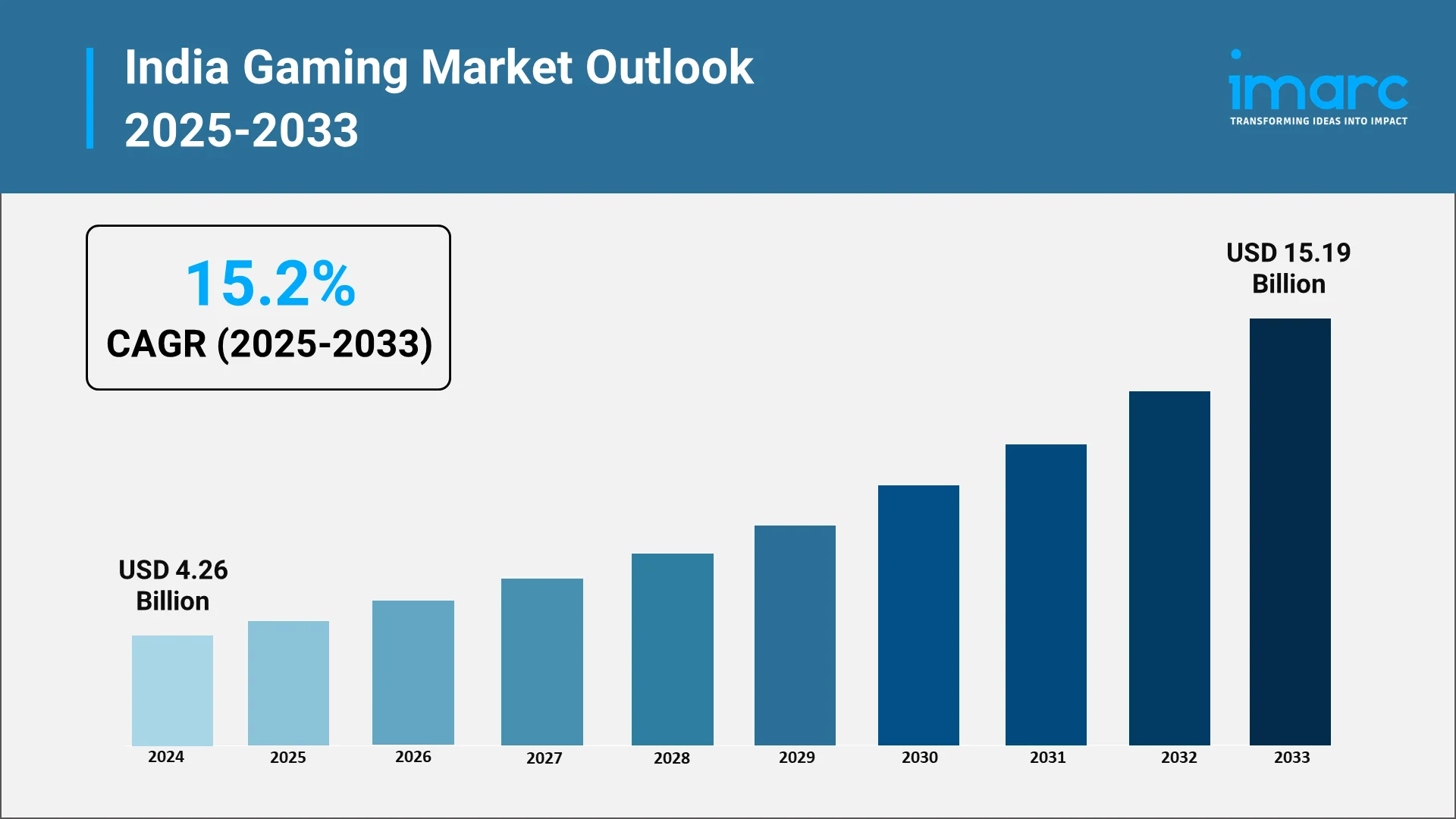
The gaming sector is transitioning from a specialized sector to a dynamic and swiftly growing market, fueled by the rising use of smartphones, accessible internet, and a young, tech-oriented demographic. The rise of mobile gaming is at the heart of this transformation, with millions of people in India engaging in gaming on their smartphones daily. With the nation’s gaming industry growing, a variety of gamers, covering mobile, console, and PC platforms, are shaping the industry. Quantifying this rapid expansion, the IMARC Group reported that the gaming market size in India reached USD 4.26 Billion in 2024.
The primary opportunities ahead are in the rising need for localized content, as developers are concentrating on designing games that connect with Indian cultural and regional tastes. This presents substantial potential to reach a broader audience, especially in tier-2 and tier-3 cities. Moreover, the growth of esports, cloud gaming, AR, and VR technologies offers new opportunities for expansion. With the growing investment and support from both the government and private sectors, there is significant potential to establish India as a worldwide center for gaming development and creativity.
With the market’s maturation, the advancement of monetization strategies, enhanced infrastructure, and stronger regulations will continue to contribute to the increase in India gaming market share, unlocking untapped potential and fostering global competitiveness.
Explore in-depth findings for this market, Request Sample
Game On: Current Trends and Market Drivers Shaping India’s Gaming Future
According to IMARC Group’s projections, the India gaming market is projected to grow at a CAGR of around 15.2% from 2025 to 2033, reaching USD 15.19 Billion by 2033. The growth will be supported by the following factors:
- Smartphone and Internet Penetration
India’s increasing number of affordable smartphones, coupled with the expansion of high-speed internet access, is significantly broadening the market reach. As rural and non-metro areas gain improved connectivity, companies can target new user segments beyond urban centers. This growing accessibility enables casual, on-the-go gaming, contributing to a surge in user numbers and expanding the market. As of March 2024, India had 954.40 million total internet subscribers, with 398.35 million rural subscribers. Furthermore, by April 2024, 95.15% of India’s 644,131 villages were equipped with 3G/4G mobile connectivity, underscoring the increasing digital penetration across the country and creating vast opportunities for gaming expansion in rural areas.
- Monetization Evolution: In–App, Subscription & Cloud
The monetization models in the gaming market in India are evolving beyond basic in-app purchases. Traditional in-app purchases are being complemented by subscription models, cloud streaming, and cross-platform play, providing new revenue streams and catering to players seeking more flexibility and value. This shift allows gaming companies to offer premium experiences while enhancing player lifetime value. A prime example of this trend is Nvidia’s announcement in 2025 that its GeForce NOW cloud gaming service will launch in India, offering high-end gaming experiences on various devices. Premium members can access over 4,500 games, including popular titles like Borderlands 4 and Call of Duty: Black Ops 7, solidifying cloud gaming’s potential in India.
- Esports Partnerships and Innovation
A key factor driving the growth of the market is the increasing investment in esports partnerships and innovation. Realme’s collaboration with Krafton India as the official smartphone partner for the BattleGrounds Mobile Series (BGIS) 2025 and BGMI Pro Series (BMPS) 2025 highlights this trend. By using its GT 7 Pro for the tournaments, Realme is directly supporting both professional and grassroots players. This partnership not only boosts esports visibility but also strengthens the gaming ecosystem in India. As esports continues to gain traction, such collaborations enhance the gaming experience and contribute to market expansion.
- Localized Product Offerings and Market Tailoring
The growing availability of localized products tailored to the needs of Indian gamers is positively influencing the market. Acer’s announcement in 2025 to launch “Make in India” gaming laptops is a prime example. By customizing its Aspire/ALG, Nitro, and Predator series for the Indian market, Acer is addressing the performance, pricing, and usage patterns unique to Indian gamers. This move not only supports the rising demand for gaming PCs across casual, competitive, and creator segments but also taps into the rising interest in AI-ready devices, contributing to the rapid expansion of India’s gaming ecosystem.
The rise of accelerator programs and funding initiatives is helping local developers access advanced technology, mentorship, and global networks. The adoption of AI tools is particularly transformative, enhancing game development, player experiences, and monetization strategies. These AI-driven innovations improve gameplay mechanics, automate processes, and offer personalized content, making Indian games more competitive globally. A prime example is Meta’s India-focused Gaming Accelerator, launched in 2025, which supports 20–30 emerging studios with AI tools like Llama, along with mentorship and investor access to scale their games for global markets.
The Game Plan: Conquering Challenges and Unlocking New Opportunities
The Indian gaming industry encounters challenges like regulatory ambiguity, with many states lacking clear rules for online gaming, creating confusion for developers and players. The country’s vast and diverse population also requires significant investment in localization and culturally relevant content. Additionally, piracy and data security concerns remain persistent threats.
Despite these obstacles, the rapid increase in internet access and smartphone adoption, particularly in tier-2 and tier-3 cities, presents a large untapped market. Mobile gaming is becoming popular because of affordable smartphones and data plans, while localization offers a chance to engage diverse user bases. The growing momentum of the India Mobile Gaming Market further highlights how digital engagement is expanding across demographic groups. Esports and online competitions are also gaining traction, creating new opportunities for competitive gaming and sponsorships.
Masters of the Game: Who’s Leading India’s Gaming Industry
Major figures in the market are progressively concentrating on broadening their reach and enhancing user interaction by utilizing mobile-first approaches and integrating localized content. These firms are focusing on creating games that align with local tastes, providing content in various languages and crafting gameplay that reflects India’s rich cultural diversity. Numerous developers are investigating fresh monetization strategies, such as in-app purchases, subscription models, and live events, while incorporating social and multiplayer elements to promote community engagement. To remain competitive, they are significantly investing in technology like AI and cloud gaming to improve user experiences and provide smooth cross-platform play. Directly illustrating the investment in technology like cloud gaming to improve user experiences and provide smooth cross-platform play, Xbox launched cloud gaming in India for Game Pass subscribers in 2025, allowing high-end games to stream on mobiles, tablets, and PCs.
.webp)
The Game Changers: How Investment and Government Support Are Elevating the Gaming Sector
The gaming market in India is influenced by government-backed initiatives and a clear regulatory framework that foster innovation and growth. These programs support game design, development, and talent, attracting both local and global investments. The regulatory system ensures fair practices and transparency, building market trust and safeguarding user interests.
- Government-backed programs are essential in driving innovation and creating a vibrant gaming ecosystem in India. By supporting game design, development, and talent nurturing, these initiatives provide infrastructure, networking, and industry collaboration that attract both local and global investments. They also focus on cultivating local talent, ensuring the sector’s sustainability and competitiveness. The government’s commitment is evident in major initiatives like the Create in India Challenge and the AVGC-XR Mission, launched in 2025, which aim to foster original creation and collaboration across gaming, animation, VFX, and immersive technologies. These efforts strengthen India’s creative economy and position the country as a global hub for AVGC-XR innovation.
- A coherent regulatory system is vital for driving the gaming market in India. By establishing clear rules and categories for different game types, such as esports and online gaming, the framework ensures transparency and fair practices, fostering trust among investors and participants. This organized approach enhances market security for both developers and users, promoting sustainable growth. In 2025, the Ministry of Electronics and Information Technology (MeitY) addressed the need for such a framework with the release of the Draft Promotion and Regulation of Online Gaming Rules under the PROG Act. This created India’s first unified framework, with the Online Gaming Authority overseeing compliance, classification, and registration.
Leveling Up: IMARC’s Playbook for Navigating India’s Thriving Gaming Market
IMARC Group empowers stakeholders in India’s gaming industry with data-driven insights to succeed in one of the world’s fastest-growing entertainment markets. Our research and consulting services help clients identify untapped opportunities, navigate market uncertainties, and drive innovation in game design, marketing, and retail strategy.
- Market Insights: Track trends shaping India’s gaming market, including the rise in mobile gaming, increasing demand for esports, and the growing popularity of educational and strategy-based games. We also explore the emergence of local developers and the expanding gaming ecosystem.
- Strategic Forecasting: Predict future developments in the integration of digital and physical gaming experiences, the growth of online gaming platforms, evolving user preferences, and the impact of regional content and culturally relevant game narratives.
- Competitive Intelligence: Analyze strategies and offerings from leading game publishers and emerging startups, including how they are redefining gaming experiences with local themes, storytelling, and sustainable production practices.
- Policy and Regulatory Analysis: Understand trade regulations, intellectual property protection, licensing, and safety compliance standards crucial to the production and distribution of games in India.
- Tailored Consulting Solutions: Benefit from customized advice on market entry strategies, distribution models, branding, and game localization. IMARC’s expertise supports businesses in developing scalable, client-centric growth strategies in an expanding gaming ecosystem.

The New Nevada Gaming Board Chairman knows the importance of getting technology OK’d quickly, signaling a clear focus on modernizing how gaming innovations move from development to casino floors. This approach reflects an understanding that technology now plays a central role in the gaming industry and that regulatory systems must evolve to keep Nevada competitive while maintaining its high standards.
New Chairman Knows the Importance of Approving Technology
Gaming technology is advancing at a rapid pace, from new slot machine platforms to cashless systems and enhanced security tools. When approvals take too long, Nevada risks seeing new products debut elsewhere first. The New Nevada Gaming Board Chairman knows the importance of getting technology approved quickly because delays can affect manufacturers, casino operators, and ultimately the state’s position as a leader in regulated gaming.
Industry Experience Shaping Regulatory Priorities
Leadership matters in regulatory agencies, especially in industries as complex as gaming. The new chairman brings experience that bridges regulation and technology, offering insight into how long approval timelines can impact innovation. This background helps explain why the New Nevada Gaming Board Chairman knows the importance of getting technology OK’d quickly, not as a shortcut, but as a way to make processes more efficient and predictable.
How Faster Approvals Benefit Nevada’s Gaming Industry
Timely technology approvals help casinos remain competitive and allow players to experience the latest advancements sooner. When Nevada can approve new gaming systems without unnecessary delays, it strengthens relationships with manufacturers and reinforces the state’s reputation as the global standard for gaming regulation.
Maintaining Integrity While Moving Faster
Speed does not mean sacrificing oversight. Nevada’s gaming regulators are still responsible for ensuring fairness, security, and compliance. The emphasis is on refining internal processes, improving communication, and reducing bottlenecks. This balanced approach explains why the Nevada Gaming Board Chairman knows the importance of getting technology approved quickly while continuing to uphold strict regulatory safeguards.
What This Means for the Future of Gaming Regulation
Looking ahead, a more responsive approval process could encourage greater innovation within Nevada’s gaming sector. Developers may be more inclined to launch new technologies in the state, and operators can adapt more quickly to player expectations.
By aligning regulatory efficiency with technological progress, Nevada positions itself to remain both a trusted regulator and an innovation-friendly environment in an increasingly competitive global gaming market.
Looking for Legal Guidance in Gaming?
If you follow SCCG content and have inquiries about your gaming business, connect with Lazarus Crystal Law Firm—formed by SCCG Management and Lazarus Legal to unite top-tier gaming law with commercialization and market-entry strategy.
Our Areas of Expertise Include:
• Nevada and multi-state gaming licensing
• Regulatory compliance and audit services
• International market entry and cross-border advisory
• Gaming M&A legal due diligence
• Tribal gaming legal and strategic support
• iGaming and sports betting regulatory guidance
Follow us on LinkedIn: Lazarus Crystal Law Firm


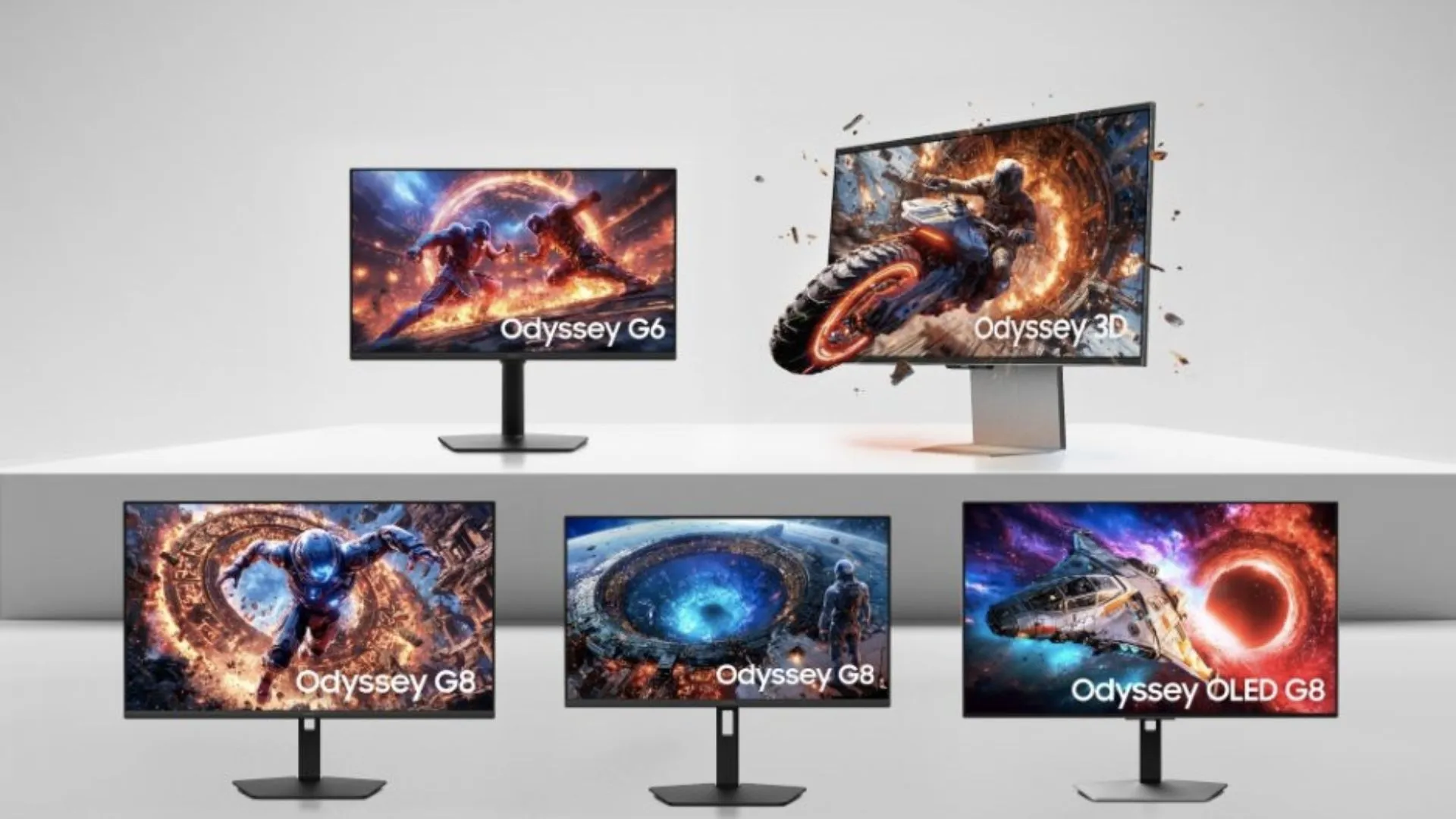
Samsung Electronics has unveiled its new most advanced Odyssey gaming monitor lineup. The lineup includes five new models that push the boundaries of resolution, refresh rates, and immersive visual performance.
Led by Samsung’s first 6K 3D Odyssey G9, the 2026 lineup debuts world-first display technologies for gamers and creators, including the next-generation Odyssey G6 and three new Odyssey G8 models.
First 6K glasses-free 3D monitor
“With this year’s Odyssey lineup, we’re introducing display experiences that simply weren’t possible even a year ago,” said Hun Lee, Executive Vice President of the Visual Display (VD) Business at Samsung Electronics.
“From the industry’s first 6K glasses-free 3D monitor to breakthrough 1,040Hz speed, we designed these monitors to meet the ambitions of today’s gamers and deliver a level of immersion that fundamentally changes how content looks and functions on screen.”
The 32-inch Odyssey 3D (G90XH model) debuts the world’s first 6K display with glasses-free 3D, introducing a new way to experience games on a monitor. Powered by real-time eye tracking, it adjusts depth and perspective in response to the viewer’s position, creating a layered sense of dimension for smooth, uninterrupted gameplay without the need for a headset, according to a press release.
PC gamers can enjoy high-quality expanded lineup
With 6K resolution, a 165Hz refresh rate boosted to 330Hz through Dual Mode, and 1ms response time, fast action stays sharp and smooth, according to Samsung.
The company claims that PC gamers can enjoy a high-quality expanded lineup of supported titles with optimized 3D effects developed in collaboration with game studios. Featured games such as The First Berserker: Khazan, Lies of P: Overture, and Stellar Blade will offer added dimensionality, enhancing terrain, distance, and object separation beyond standard 2D gameplay.
The South Korean company has also highlighted that the 27-inch Odyssey G6 (G60H model) gaming monitor advances competitive gaming with the world’s first 1,040Hz gaming monitor through Dual Mode and native QHD support up to 600Hz, delivering esports-level motion clarity to help players track targets and see fine details during high-speed movement.
When needed, the Odyssey G6 can boost performance in an instant, providing ultra-sharp resolution so viewers can experience breathtaking worlds and ultra-high speeds that fuel competitive adrenaline. With support from both AMD FreeSync Premium and NVIDIA G-Sync Compatible, the Odyssey G6 ensures that every frame is smooth, every color pops, and every moment feels responsive.
The Odyssey G8 series is expanding in 2026 with three distinct models, each offering a different balance of resolution and speed. Leading the lineup, the 32-inch Odyssey G8 (G80HS model), the industry’s first 6K gaming monitor, delivers native 165Hz performance with Dual Mode that supports up to 330Hz in 3K mode.
The 27-inch Odyssey G8 (G80HF model) offers a sharper 5K option with native support up to 180Hz, and Dual Mode boosts to 360Hz in QHD for smoother motion.
For users who want deeper contrast, the 32-inch Odyssey OLED G8 (G80SH model) pairs a 4K QD-OLED panel with a 240Hz refresh rate, Glare Free viewing, 300-nit brightness, and VESA DisplayHDR True Black 500 certification. Its DisplayPort 2.1 (UHBR20) supports up to 80 Gbps of bandwidth for seamless HDR and VRR playback, according to Samsung.
The complete Odyssey 2026 lineup will be on display at CES 2026 in Las Vegas from January 6-9.
Technology
Games of the Future Abu Dhabi 2025 Rewrites the Playbook for Sports with Phygital Innovation
Published on
December 25, 2025
By: Tuhin Sarkar
The Games of the Future Abu Dhabi 2025 have closed an unforgettable chapter in the evolution of phygital sports. Hosted under the patronage of His Highness Sheikh Mohamed bin Zayed Al Nahyan, President of the UAE, the event marked an unparalleled fusion of physical and digital competition. Over six action-packed days, Abu Dhabi hosted more than 850 participants from 60+ countries, with fierce battles across 11 disciplines including Phygital Football, Phygital Basketball, esports, Phygital Fighting, drone racing, and VR gaming.
Games of the Future Abu Dhabi 2025 was not just a sporting event; it was a vision of the future. It set a global standard for what sports can look like in the digital age, where technology and human skill come together to create immersive and multi-dimensional experiences. The competition showed the world that the future of sports isn’t confined to a physical arena, but seamlessly integrates both the physical and digital.
The Champions of Tomorrow: Phygital Sports Takes Centre Stage
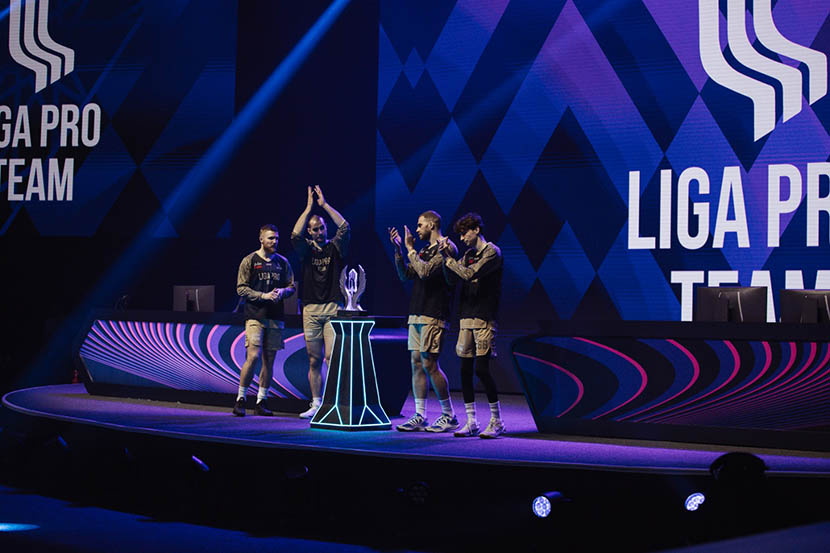
The Games of the Future Abu Dhabi 2025 featured 11 disciplines that blended traditional sports with futuristic technologies, including Phygital Football, Phygital Basketball, esports, Phygital Fighting, and Phygital Shooter. These unique formats tested competitors in both the physical and digital realms. For example, Phygital Football powered by ADNOC saw the México Quetzales – Armadillos FC clinch the Phygital Football title, defeating Troncos FC 2-4 in a thrilling final that captivated crowds throughout the week. Likewise, in Phygital Basketball, the LIGA PRO TEAM triumphed in a 29-23 victory over Moscowsky.
Other high-stakes competitions included Phygital Fighting.FATAL FURY: City of the Wolves, where Kuznya dominated, winning all four of their matches. Meanwhile, xGoat emerged victorious in the Phygital Shooter.CS 2 final, overcoming Dontsu Esports 2-0 in an intense digital shootout.
In the drone racing category, Drone Racing One wowed spectators by completing 50 laps of a challenging circuit, showcasing the high-tech thrill of phygital racing.
A Digital Revolution: The Rise of VR Gaming and Esports
Beyond traditional sports, Games of the Future Abu Dhabi 2025 brought esports and VR gaming into the spotlight. The esports events featured top teams and intense matches across a variety of games, including MOBA Mobile.MLBB and MOBA PC.Dota 2. In a thrilling final, ONIC defeated Aurora Gaming in the Mobile.MLBB championship, while teamWin overcame Vikings 2-0 in Dota 2.
The Battle Royale tournament, featuring Fortnite, saw Kami + Swizzy crush their opponents ZYRO + RAPID in the final. In VR gaming, the HADO competition proved to be one of the most exciting events, where Team Rock claimed the victory.
The digital revolution didn’t stop there—Phygital Dancing.Just Dance was an engaging crowd favorite, with Ivan “myakekcya” Vlasov taking home the crown. These events proved that esports and VR gaming are no longer just niche interests but are now integral parts of mainstream competition.
The Future is Phygital: Tech and Sport in Perfect Harmony
Games of the Future Abu Dhabi 2025 perfectly illustrated how technology and sports are converging to form an entirely new ecosystem. With events such as Phygital Football, Phygital Basketball, and drone racing, the Games were a showcase of the groundbreaking possibilities that arise when sports embrace digital innovations. Technology was not merely an accessory at this event—it was the cornerstone upon which the competitions were built.
With immersive experiences that brought together digital avatars, VR environments, and physical action, the event revealed a new way of experiencing and consuming sports. It also showcased how athletes and fans alike can now engage with sports in ways that were unimaginable just a decade ago.
Abu Dhabi Leads the Way: A Global Hub for Next-Generation Sports
As the host city, Abu Dhabi solidified its position as a global leader in the future of sports. This landmark event wasn’t just about showcasing phygital sports, but also about demonstrating the UAE’s commitment to innovation and technology. The event was a triumph of vision, execution, and global collaboration, bringing together athletes, clubs, and partners from around the world.
In his remarks, Saif Al Noaimi, CEO of Ethara, remarked on the complexity of delivering an event on such a grand scale: “Delivering an event of this scale and complexity required close coordination across multiple disciplines, venues, and partners. The Games of the Future Abu Dhabi 2025 showcased competitive excellence, but also operational innovation and audience engagement at the highest level.”
Similarly, Nis Hatt, CEO of Phygital International, praised the event’s impact: “What we saw over six days was not just competition, but the emergence of a global ecosystem where sport, esports, technology, and innovation coexist on one stage. Abu Dhabi set a new benchmark for scale, delivery, and ambition.”
A Glimpse into the Future: The Global Impact of Phygital Sports
The success of Games of the Future Abu Dhabi 2025 is not just about the event itself. It signals a transformative shift in how we view and experience sports in the 21st century. By embracing phygital sports, the UAE is not just shaping the future of competition, but also setting the stage for the next generation of athletes, fans, and sports industries.
The Phygital Sports Summit, which took place during the event, provided a platform for discussing the future of sports, technology, and innovation. The summit brought together industry leaders, athletes, and tech visionaries to discuss the convergence of physical and digital realms. The dialogue held here will help define the future trajectory of phygital sports and shape the policies that govern it.
Looking Ahead: The Future of Phygital Sports is Now
The Games of the Future Abu Dhabi 2025 wasn’t just a flash in the pan; it was a statement. The event demonstrated how sports and technology can work in harmony, paving the way for the next generation of competition. As Abu Dhabi continues to innovate and lead the way in phygital sports, the rest of the world is watching closely, eager to follow in the footsteps of this global hub for next-generation sports and entertainment.
As Stephane Timpano, CEO of ASPIRE, pointed out, “The success of this edition shows what is possible when vision, technology, and execution align.” The Games of the Future Abu Dhabi 2025 will undoubtedly serve as a springboard for even bigger, more ambitious events in the years to come, setting a new standard for what’s possible in the world of sports.

Technology
The Games of the Future Abu Dhabi 2025 Closes Landmark Edition, Setting New Benchmark for Phygital Sports


GOTF 1

Concludes GOTF.2

Concludes GOTF .3
ABU DHABI, UNITED ARAB EMIRATES, December 25, 2025 /EINPresswire.com/ — The Games of the Future Abu Dhabi 2025 powered by ADNOC concluded on Tuesday after six days of elite competition, innovation, and global participation, marking a milestone moment in the evolution of phygital sports.
Held under the patronage of His Highness Sheikh Mohamed bin Zayed Al Nahyan, President of the UAE, the landmark event brought together more than 850 participants from over 60 countries and featured 11 disciplines, spanning Phygital Football, Phygital Basketball, esports, Phygital Fighting, Phygital Shooter, Phygital drone racing, and VR Game.HADO. Across arenas, stages, and digital battlegrounds, the event showcased how technology and sport are converging to shape the future of competition.
During the globally-watched event, champions were crowned in each discipline, delivering their own defining moments and reinforcing the unique multi-sport identity of the Games of the Future.
Phygital Football powered by ADNOC and Phygital Basketball.3on3 FreeStyle brought to you by M42 both drew vocal crowds throughout the week, with MÉXICO QUETZALES – ARMADILLOS FC taking the Phygital Football title in a thrilling 2-4 final win over Troncos FC, and LIGA PRO TEAM secured the Phygital Basketball title with a 29-23 victory over Moscowsky. Meanwhile, in Phygital Fighting.FATAL FURY: City of the Wolves, Kuznya finished top of the leaderboard after winning all four of their fights, dominating both on the digital stage and in the octagon, and xGoat won the Phygital Shooter.CS 2 final, beating Dontsu Esports 2-0 in the digital world to avoid the need for a deciding round of physical laser tag.
Tasting glory in the esports-focused disciplines, ONIC won the MOBA Mobile.MLBB final against Aurora Gaming, while the aptly-named teamWin beat Vikings 2-0 in the championship game of MOBA PC.Dota 2, and Kami + Swizzy conquered ZYRO + RAPID in the final of the Battle Royale.Featuring Fortnite. In the Phygital Drone Racing presented by InsuranceMarket.ae, which tasked clubs to complete 50 laps of a testing circuit filled with loops, hoops, and straights, Drone Racing One proved fastest on the final day ahead of Team BDS.
A pair of events taking place in the Atrium at ADNEC Centre drew plenty of attention as Ivan “myakekcya” Vlasov triumphed in the Phygital Dancing.Just Dance final, while Team Rock took the title in VR-game.HADO. Lastly, in Battle of Robots, proving itself one of the most spectacular disciplines of the week, Fierce Roc’s menacing Deep Sea Shark machine annihilated Team Cobalt’s Cobalt in a spectacularly destructive finale.
In parallel with the competitive program, the event week also featured an eye-catching and engaging Opening Ceremony and the inaugural Phygital Sports Summit, reinforcing Abu Dhabi’s position as a global hub for next-generation sport, innovation, and immersive entertainment.
Saif Al Noaimi, CEO of Ethara, reflected on intricacy of the Games: “Delivering an event of this scale and complexity required close coordination across multiple disciplines, venues, and partners. The Games of the Future Abu Dhabi 2025 showcased competitive excellence, but also operational innovation and audience engagement at the highest level. We are proud to have played a role in bringing this landmark event to life and in supporting its growth on the global stage.”
Nis Hatt, CEO of Phygital International, said: “The Games of the Future Abu Dhabi 2025 demonstrated how far this movement has come in a short space of time. What we saw over six days was not just competition, but the emergence of a global ecosystem where sport, esports, technology, and innovation coexist on one stage. Abu Dhabi set a new benchmark for scale, delivery, and ambition, and this edition has reinforced the Games of the Future as a defining platform for next-generation competition worldwide.”
Stephane Timpano, CEO of ASPIRE, added: “Hosting the Games of the Future in Abu Dhabi reflects the UAE’s commitment to shaping the future of sport and innovation. This event brought together athletes, clubs, partners, and audiences from around the world. The success of this edition shows what is possible when vision, technology, and execution align, and it positions Abu Dhabi firmly at the forefront of emerging sport formats.”
The Games of the Future Abu Dhabi 2025 is organized by ASPIRE, the Local Delivery Authority, in collaboration with Ethara, the Event Delivery Partner, and Phygital International, the Global Rights Holder. The event is supported by key partners, including Abu Dhabi Sports Council, ADNOC, EDGE, M42, Solutions+, The Galleria, Abu Dhabi Gaming, du Infra, InsuranceMarket.ae, Ministry of Sports, Advanced Technology Research Council, and ADNEC Group.
Deepra Ahluwalia
Action Global Communications
+971 56 477 0995
email us here
Legal Disclaimer:
EIN Presswire provides this news content “as is” without warranty of any kind. We do not accept any responsibility or liability
for the accuracy, content, images, videos, licenses, completeness, legality, or reliability of the information contained in this
article. If you have any complaints or copyright issues related to this article, kindly contact the author above.


View from the Sideline: Lessons from the playing field | Sports

TSWA Class A All-State Volleyball

Just Call Him ‘Sir’ Scott Dixon

Winter Competition Brings Energy to Gyms, Rinks, and Fields Across the Region

Full Season Trans Am, SVRA, IGT and Formula Regional Schedules

NCAA President Charlie Baker says players who sign NBA contracts will not be college eligible

2026 Sand Devils schedule released – Sun Devil Athletics

2025 Volleyball Season Recap – Iowa State Athletics

2025 Year in Review: Top 10 biggest NIL, sports business storylines

Former K-State All-American Myers steps away from volleyball | K-State Sports

As youth sports professionalize, kids are burning out fast

Golden Bears pull away from young Blue Dons | News, Sports, Jobs

Ten Biggest Track And Field Questions For 2026

The Failed NASCAR Superteam Everyone Forgot

Revolution sign defender Ethan Kohler from Werder Bremen

SoundGear Named Entitlement Sponsor of Spears CARS Tour Southwest Opener

Donny Schatz finds new home for 2026, inks full-time deal with CJB Motorsports – InForum

Black Bear Revises Recording Policies After Rulebook Language Surfaces via Lever

Men’s and Women’s Track and Field Release 2026 Indoor Schedule with Opener Slated for December 6 at Home

David Blitzer, Harris Blitzer Sports & Entertainment

How Donald Trump became FIFA’s ‘soccer president’ long before World Cup draw

DeSantis Talks College Football, Calls for Reforms to NIL and Transfer Portal · The Floridian
Elliot and Thuotte Highlight Men’s Indoor Track and Field Season Opener

JR Motorsports Confirms Death Of NASCAR Veteran Michael Annett At Age 39

Rick Ware Racing switching to Chevrolet for 2026

#11 Volleyball Practices, Then Meets Media Prior to #2 Kentucky Match

23 عاما من الفضائح السياسية والجنسية منذ انقلاب حمد بن خليفة.. استغلال الفتيات الصغيرات في الدعارة.. ضبط ابنة رئيس وزراء قطر خلال ممارستها لجنس الجماعي.. ملامح الحكم تتخبط بين المنفي وتدخلات النساء

Colleges ponying up in support of football coaches, programs

Nascar legal saga ends as 23XI, Front Row secure settlement

23 عاما من الفضائح السياسية والجنسية منذ انقلاب حمد بن خليفة.. استغلال الفتيات الصغيرات في الدعارة.. ضبط ابنة رئيس وزراء قطر خلال ممارستها لجنس الجماعي.. ملامح الحكم تتخبط بين المنفي وتدخلات النساء






-
 Sports3 weeks ago
#11 Volleyball Practices, Then Meets Media Prior to #2 Kentucky Match
-
 Motorsports3 weeks ago
Nascar legal saga ends as 23XI, Front Row secure settlement
-

 Motorsports3 weeks ago
Sunoco to sponsor No. 8 Ganassi Honda IndyCar in multi-year deal
-

 Sports3 weeks ago
Maine wraps up Fall Semester with a win in Black Bear Invitational
-

 Motorsports2 weeks ago
Ross Brawn to receive Autosport Gold Medal Award at 2026 Autosport Awards, Honouring a Lifetime Shaping Modern F1
-

 Rec Sports3 weeks ago
WNBA’s Caitlin Clark, Angel Reese and Paige Bueckers in NC, making debut for national team at USA camp at Duke
-
Motorsports3 weeks ago
NASCAR, 23XI Racing, Front Row Motorsports announce settlement of US monopoly suit | MLex
-

 Motorsports3 weeks ago
Rick Hendrick comments after the NASCAR lawsuit settlement
-

 NIL3 weeks ago
Nike Signs 10 LSU Athletes to NIL deals
-

 Sports3 weeks ago
Pinterest predicts the biggest Gen Z trends of 2026 | News