At various youth baseball and softball complexes nationwide, there are signs directed at spectators and parents urging them to manage their expectations — and emotions — during the games. After all, these are kids, not professional players, and the overall goal is to have fun.
Kids’ sports are exciting, sometimes exasperating, and, of course, winning is more fun than losing. Sometimes, the heat of competition leads to confrontation and bad behavior.
“As an organization we believe very strongly in creating a welcome and safe environment for everybody that participates in our programs,” said Chris Adams, president of the Evanston Baseball & Softball Association (EBSA). “In travel baseball and travel softball things can get heated. You get into tournaments. You really want to do well and play well. Our travel teams are in a league, and of course you want to win your League championship. You want to beat your archrivals.”
The EBSA Orange Cats graphic from the travel baseball website. Credit: Evanston Baseball & Softball Association
The 2025 EBSA travel program has 30 baseball and softball teams in total, with 230 kids participating. To keep things amicable, Adams cites the “24-hour rule,” a stipulation in a required parent/guardian agreement part of the EBSA registration process.
“If you have a gripe, you have to wait a day or two so you can have a chance to cool down, and you can have a civil and productive conversation,” Adams said of fans who take issue with calls or plays. “No interfering with what’s going on in the dugout. No trying to coach your kid from the stands. Basically, respect the organization, respect the setup.”
Mitigating interference by spectators not only takes pressure off the young coaches and umpires, but it also fosters a safer, more civil environment for the players, Adams said.
ETHS alumni coaches
An ace in the hole for EBSA’s travel program is that most of the young adult coaches are former Evanston Township High School players, who come from a top-quality program that emphasizes professionalism, respect and a deep understanding of the game.
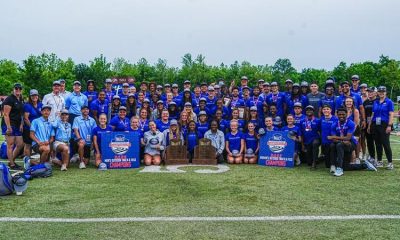
Members of the 2025 13U EBSA Orange Cats. Credit: Jessica Gilbert
Joe Knudsen manages the EBSA summer travel program and is an assistant varsity baseball coach at ETHS.
“I’ve been blessed, because so many of our high schoolers want to come back [and coach] and that’s pretty special,” Knudsen said. “I grew up in Niles, and they don’t have that. Also, coming from ETHS, where the baseball program does really well both academically and behaviorally, it’s ingrained in these kids. So, from a young age, they understand it’s about hustling and teamwork and making the people around you better.”
Adams emphasized that the synergy between EBSA’s travel and house league helps drive the quality of the programs across the board. All travel players are required to play in the house leagues, which compete in the spring and fall.
“Our travel players are ambassadors, and we need them playing house because they set the example,” Adams explained. “It demonstrates to the non-travel kids that this is how you can play if you practice. This helps inspire kids to want to participate at a higher level.”
The experience the travel coaches have as young players, starting as early as 5 years old, also helps instill in them an ability to manage excitable young players and the overall level of intensity down to a productive level, Adams added.
Inevitably, there will be conflicts and, sometimes, bad behavior by opponent spectators or even coaches. When that happens, Adams said, the travel coaches are trained to go directly to the umpires to resolve any controversy.
Parent coaches
As for the house league, most of the coaches are Evanston parents. Some have kids on the teams, and many are former players themselves, Adams explained. To coach in the house league, parents have to participate in workshops led by an outside organization about focusing on positivity, communication and team-building skills.
Finally, Adams said, having coaches, be they parents or college students, who truly understand the game is a huge benefit for EBSA players.
“You can frequently look at batters on deck or the batter at the plate and see how he’s swinging and predict where he or she’s going to go with the ball,” he said. “So, you’re positioning your defense to be in the right spot. That’s just such an advantage when you have savvy coaches who can see the whole game as it’s going on and see what’s about to happen next.”
But even more importantly, Adams said, is to have coaches who know how to manage a game, who know how to think strategically and share their thoughts with the kids so that they’re learning more than just how to catch the ball and make a good throw.
“The players are learning how to look at situations and how can they exploit what the defense is doing, or how can they exploit what the offense is trying to do to our advantage,” he said. “That’s a huge part of being competitive and knowing all aspects of the game.”
During a recent panel discussion at the California Journalism Symposium in Monterey, the speakers were asked to explain their origin stories, essentially, how each panelist first got into the news business. It got me thinking about how I first connected to the news so many years ago.
I was just a school kid when my hometown newspaper, The Fresno Bee, ran our baseball score in tiny 6-point type, listing the “batteries”—the pitcher and catcher. It read: “O’Brien and Boren.” Seeing my name in the paper hooked me instantly on the power of the printed word.
The Bee was covering everything, right down to local youth baseball games, which built a sense of place and identity in the community. Everyone from elected officials to youth league catchers could see themselves reflected in the paper. It was a place for a common community conversation.
Today, the landscape of local journalism looks very different. Decades of shrinking advertising revenue, consolidation, layoffs, and the rise of digital platforms have hollowed out many community newsrooms. Entire regions are becoming “news deserts,” where no one is consistently reporting on schools, neighborhoods, or even City Council meetings.
The watchdog role that local papers once played—monitoring power, tracking taxpayer dollars, holding leaders accountable—has weakened as staffs have thinned. Community features that once created connection and pride have disappeared as well.
The result is a less-informed civic life. When no one is regularly covering City Hall, residents know less. When youth sports, school board meetings, community events, and local milestones go unreported, people feel less connected to one another. And when fewer journalists are present to shine light on local issues, problems deepen while going unnoticed.
Communities blur into ghost towns. The shared sense of belonging that once came from seeing your name in the paper, even in 6-point type, slowly disappears.
I didn’t realize it at the time, but it was more than just my name in print. It was proof of a newsroom deeply rooted in its community. Today, that kind of commitment is harder to sustain, but it remains the clearest path back to relevance, trust, and connection.
Jim Boren is the executive director of the Fresno State Institute for Media and Public Trust, and former executive editor of The Fresno Bee.
Tyla Armendariz, Arbor Moran, Mackenzie Hardesty each won last weekend
Ignite Gymnastics’ Arbor Moran was the state champion on uneven bars at the state competition in Aurora on Dec. 6-7. (Courtesy Liz Herring)
Ignacio’s Ignite Gymnastics showed their gymnasts can compete with any in the state as Ignite returned from Aurora last weekend with three state champions.
Tyla Armendariz, 10, Arbor Moran, 8, and Mackenzie Hardesty, 8, became the latest state champions to come out of Ignite Gymnastics after impressive performances at the Colorado USA Gymnastics Level 2, XCel Bronze and Silver State Competition on Saturday and Sunday at Colorado Gymnastics Institute in Aurora.
“We had an incredible season,” Ignite coach Liz Herring said. “So we had high hopes for state, and it panned out.”
Armendariz was the silver state champion on balance beam in the Junior A Group 4 with a 9.65 score. Armendariz has been competing in gymnastics for the last seven years, and she has been competing with Ignite for the last 1.5 years.
Ignite Gymnastics’ Tyla Armendariz was the state champion on balance beam at the state competition in Aurora on Dec. 6-7. (Courtesy Liz Herring)
It was an especially impressive state championship for Armendariz because her routine was riskier than others. There are a wide range of skills the gymnasts can do, with some skills being easier than others. Some gymnasts in the competition group do easier skills perfectly, but Armendariz did a high-level skill perfectly, according to Herring.
Moran won the silver state championship in uneven bars in the Child Group 4, scoring 9.75. Moran lives in Pagosa Springs, but began her gymnastics journey in Alaska and has been competing with Ignite for about a year.
Herring said it’s not uncommon for young gymnasts to get nervous at the state competitions, and Moran has done a great job progressing in her first two state meets before this one.
Hardesty was the silver state champion on uneven bars in Child Group 2, scoring 9.725. She shared the top step of the podium with another gymnast with the identical score.
“Mackenzie is one of our babies,” Herring said. “I’ve been coaching her since she was 2 years old. She’s very experienced in a lot of ways; it’s so weird because she is young. But this year, every meet she went to, if she knew she had messed up the turn, she never even said a word about it. She just kept smiling.”
Ignite Gymnastics’ Mackenzie Hardesty was the state champion on uneven bars at the state competition in Aurora on Dec. 6-7. (Courtesy Liz Herring)
Ignite had eight XCel Bronze gymnasts and nine XCel Silver gymnasts qualify for the state competition. The difference between the bronze level and the silver level is the skill level of the gymnasts. Bronze is the beginner competition level for gymnastics.
Herring said 17 girls is a pretty high number for how little Ignacio is, compared to the Denver teams that have up to 40 girls per level, according to Herring. The Denver gymnasts also have an advantage because they get to wake up in their own bed and drive to the meet. The Ignite gymnasts have to leave their homes two days in advance to travel up and stay in a hotel.
“I have a kind of different philosophy for our area,” Herring said. “I try to expose them to those upper-level meets, do more things with them and have them travel. So they get more experience doing those things … so when they get to gold, they’re going to start going to places; the gold regional meet last year was in Arkansas, and then the year before that, the platinum regionals were in Dallas.”
Of the 17 gymnasts who qualified, Adeline Crouch, Henley Beck, Emerson Conroy, and Evelyn Gosney also came home as medalists.
St. Anthony Legend Darrick Martin Hosts Annual Books & Basketball Camp
Dating back to his playing days with the Los Angeles Clippers in the late 1990’s, St. Anthony alum Darrick Martin has provided a yearly Books & Basketball Camp for kids in the Long Beach area. What was once the highlight of his offseason continues to be a staple for Martin and his family each summer, […]
Josh Nichols and Marli Salmon were involved in training and gym work at London Colney on Friday, ahead of Arsenal’s first-team match against Wolves this weekend.
Photo via Premier League on Instagram
Arsenal youth duo Josh Nichols and Marli Salmon were both at London Colney on Friday, with the two players pictured doing gym work and then Nichols also snapped taking part in the first-team training session.
Advertisement
Salmon may also have featured in the training session, as the pictures aren’t comprehensive. At the very least, he was in attendance and working on his fitness.
Photo via Salmon on Instagram
The duo’s involvement is perhaps significant, as Nichols is a right-back and Salmon can play at right-back or centre-back, making his first-team debut on the right on Wednesday.
Arsenal are sweating on the fitness of Jurrien Timber, with Mikel Arteta saying his involvement “depends how he feels” during that training session on Friday. If the Dutch international is out of the Wolves match, perhaps one of Nichols and Salmon could be in line to replace him.
Advertisement
But we shouldn’t draw any firm conclusions, as it would be the wise thing to do to include Nichols and Salmon even if the expectation was that Timber would be fit. If there’s even a small chance he might be unavailable, the backup plan needs to be in place in advance.
Photo by Alex Pantling/Getty Images
More than that, Nichols and Salmon have earned their senior training opportunities, and it’s always good to have more bodies to fill out practice matches and so on.
For a proper update on Timber’s fitness, we’ll have to wait for Saturday night’s team news.
BATTLE CREEK — With the youth Battle Creek Central is putting on the court to start this year, the Bearcats know they are going to be better later in the season than they are now.
But, on Friday, Dec. 12, the young Bearcats were plenty good enough already.
The Bearcats started two freshmen and two sophomores in the varsity game and they all looked like they belonged. Battle Creek Central defeated Mattawan 55-52 in a Southwestern Michigan Athletic Conference boys high school basketball game at the BCC Fieldhouse.
Jacobs Entertainment has confirmed it will file for a permit for the demolition of the old Bonanza Inn along Fourth Street in downtown Reno.
This is a result of Jacobs’ analysis of the renovation costs of the Inn, to better serve their permitted project, adding youth athletic fields to downtown.
The fields are planned to be the first four in the J Resort’s “Reno Neon Line District” and will accommodate two fields for 7×7 soccer games and two fields for 9×9 games, as well as youth lacrosse.
“These new fields are going to help continue to transform downtown Reno,” said Jonathan Boulware, vice president of Nevada operations for Jacobs Entertainment. “We’re very excited to help bring youth sports to downtown Reno.”
After Jacob analyzed the costs to renovate the Bonanza, they came to the conclusion that it was not a viable path forward, due to rising construction costs. The demolition will allow for a larger scope of construction.
“Travel youth sports is a multi-billion-dollar industry,” Boulware said. “The average youth sports family spends nearly $1,500 a year on hotels and tournaments. These new fields will help us capture some of that revenue here in Reno.”
The timeline for future construction is still to be determined.