Connect with us
https://yoursportsnation.com/wp-content/uploads/2025/07/call-to-1.png

Rec Sports

Indy Bowl hosts annual youth football clinic in Shreveport | Sports

Published

on


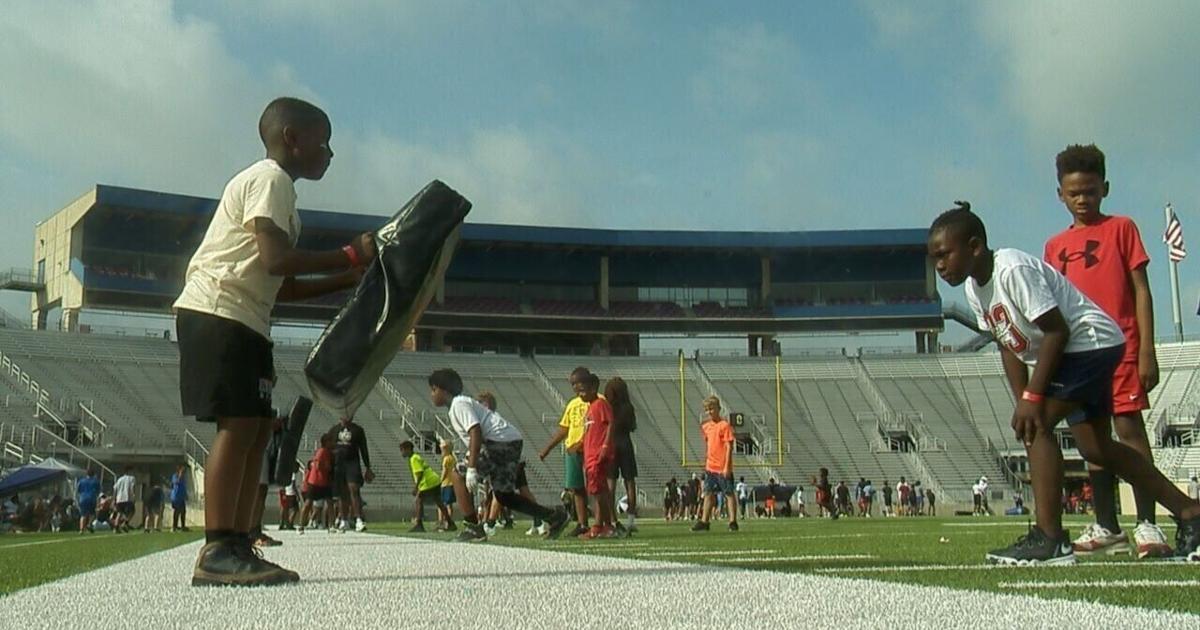
SHREVEPORT, La. — The Radiance Technologies Independence Bowl is always focused on making an impact in the community.

One aspect of that is their annual youth football clinic.

Saturday morning was the 14th edition of the free clinic, which is held for up to 400 children ages five through 13.

Campers receive instruction from regional college football coaches and players, which included several Louisiana Tech Bulldogs.

Indy Bowl Director of Communications Erik Evenson spoke about the clinic and what they wanted to get accomplished.

“It means a lot. You know, this is really cool… This is the 14th year and we just keep on coming back because it’s a great event, great event for the kids. We’re hoping that they get something today that they can use in their football seasons coming up and just have a good time and create some good memories,” Evenson said.

Louisiana Tech players Roy Brackins III, Zion Nason, James Predtechenskis and Jay Wilkerson were instructors for the clinic.


Link

Continue Reading
Click to comment

Leave a Reply

Your email address will not be published. Required fields are marked *

Rec Sports

Former Lawrence substitute teacher, basketball coach and community mentor dies at 79 – The Lawrence Times

Published

on


Share this post or save for later

Craig Butler was known for far more than the bass heard in the words he spoke. He also helped many Lawrence youths find their own voices.

Thomas Afful remembers Butler substituting in several classes when he was in middle school.

Afful, a Lawrence High Class of 2014 graduate, said other teachers would call on Butler to “kind of get some of us in order.” He described Butler as a disciplinarian but said his calm and assertive approach was effective, and he made learning fun.

“He commanded his respect indeed with his deep voice,” Afful said. “But he always brought some type of a lesson to be learned in those circumstances.”

Don’t miss a beat … Click here to sign up for our email newsletters

Click here to learn more about our newsletters first

Butler, 79, died the evening of Jan. 1 at the University of Kansas hospital. The longtime Lawrence resident had battled with a brief illness related to heart issues and diabetes, according to his daughter, Julia Butler.

His final request was fried catfish, barbecue and a Bud Light. Second to the sound of Butler’s voice – and of the TV inside his home blaring MSNBC – Julia said she’ll most miss her dad’s love for food.

Contributed photo Julia and Craig Butler at a restaurant

“When he would eat something good, you would know it,” she said, laughing.

The bulk of Butler’s career was in social work, Julia said, as he previously worked for the Kansas Department of Social and Rehabilitation Services. He then pivoted to substitute teaching for Lawrence Public Schools in the early 2000s before retiring around a decade ago.

Butler launched “Can We Talk?” in 2007 with a group of fellow Black men in Lawrence, including Willie Amison, Ed Brunt and Bud Stallworth.

Initially designed as mentorship for Black boys attending Lawrence and Free State high schools, the after-school club quickly expanded its reach to more students.

Afful said when he attended “Can We Talk?” meetings, the room was often packed with both students and staff, some standing in the doorway. Participants would discuss race and culture and work through their school and home life struggles. They’d mull over their futures.

“He brought unity amongst the students, especially minority students,” Afful said.

The club remains active today, largely focused on social justice, according to a Free State Free Press article. Free State security officer Dee Kemp took over for the former staff adviser, Charles Thomas, who died in 2021.

‘That way of connecting with people’

“Can We Talk?” served as a safe space as much as Butler himself did.

Jermaine Jackson, who graduated from Lawrence High in 1991, was an eighth grader at West Middle School when he met Butler. He played on Butler’s AAU (Amateur Athletic Union) basketball team and said Butler provided the representation he needed as a kid.

“He just always took me under his wing like a son,” Jackson said. “I grew up in the South and I came up here, and, you know, he gave me the confidence. That’s the guy that looked like me, dark skin like me, and he’s doing his big thing.”

Eventually, Butler became a client of Jackson’s. A barber who operates mostly out of Watson’s Barbershop inside the South Lawrence Walmart, Jackson pivoted to in-home cuts for Butler seven or eight years ago when it started to get harder for Butler to get around.

Contributed photo Craig Butler (left) and Jermaine Jackson

“He talked to me about life, or if he saw I needed some direction or something, he would always give me advice,” Jackson said.

Kim Moore, Lawrence High Class of ‘94, said Butler was her first basketball coach. She played under his instruction through a Lawrence Parks and Recreation program when she was in fifth and sixth grades.

Moore said Butler’s coaching style influenced her now 18-year coaching career in youth baseball. Butler coached youth basketball for more than 25 years, up until around 2006.

“I don’t remember him being harsh, but very positive, very encouraging, and pushed me, but not in a harsh way,” Moore said. “It made me want to just keep trying, keep trying. Even when I messed up, he was never discouraging.”

Growing up, Julia said she felt like her dad knew everyone everywhere they went. He cheered at his own children’s activities and supported other kids at theirs, helped students with their financial aid applications, connected folks with employment, and simply conversed.

Julia said she’s not sure how he was able to maintain so many relationships, but he appeared to do it with ease, as if it was second nature.

“He just had that way of connecting with people,” Julia said. “If you wanted to better yourself, he was going to find a way to help you do that.”

Please support
The Lawrence Times!
Subscribe here.

Butler was born in 1946 and grew up in Chicago. He obtained his undergraduate degree in history from Bethel College in 1972 and his graduate degree in education from the University of Kansas in 1990.

Lawrence Public Schools presented the “Can We Talk?” founders with its annual Outstanding Citizen Award for 2010-11. Free State recognized Butler and Amison in 2013 with the Friends of Education Award, another annual award thanking community volunteers in the district.

No formal service is scheduled for him at this time, but his family plans to hold a celebration of his life sometime in the near future. His obituary is online at this link.

Contributed photo Craig Butler (center) with his parents, Curtis and Hettie
Contributed photo Craig Butler (center) with his grandson Noah and son Aaron
Contributed photo Craig Butler and his grandson, Caden
Contributed photo Craig Butler (right) and his two grandchildren, Caden (left) and Noah (center)
Contributed photo Craig Butler
If local news matters to you, please help us keep doing this work.
Don’t miss a beat — get the latest news from the Times delivered to your inbox:

Click here to learn more about our newsletters first

Maya Hodison (she/her), equity reporter, can be reached at mhodison@lawrencekstimes.com. Read more of her work for the Times here. Check out her staff bio here.

Latest Lawrence news:

Cuyler Dunn/Lawrence Times

Share this post or save for later

Months after the building began to tease those passing by, the Olive Garden in Lawrence will finally open on Feb. 2. 


Share this post or save for later

Don’t let Fritz’s regal appearance fool you. He’s demonstrated that he’ll take a pup cup over a Douglas County staff meeting any day.


Share this post or save for later

Lawrence and Kansas City are eagerly waiting to learn where teams will set up their base camps for the 2026 World Cup. The locations would serve as a place where teams can practice and train.


Share this post or save for later

Here’s the general public comment for the Lawrence City Commission’s Tuesday meeting, as public comment is no longer being broadcast.

MORE …


Link

Continue Reading

Rec Sports

Gatorade Player of the Year Robinson donates grant to support local youth athletes  | Sports

Published

on


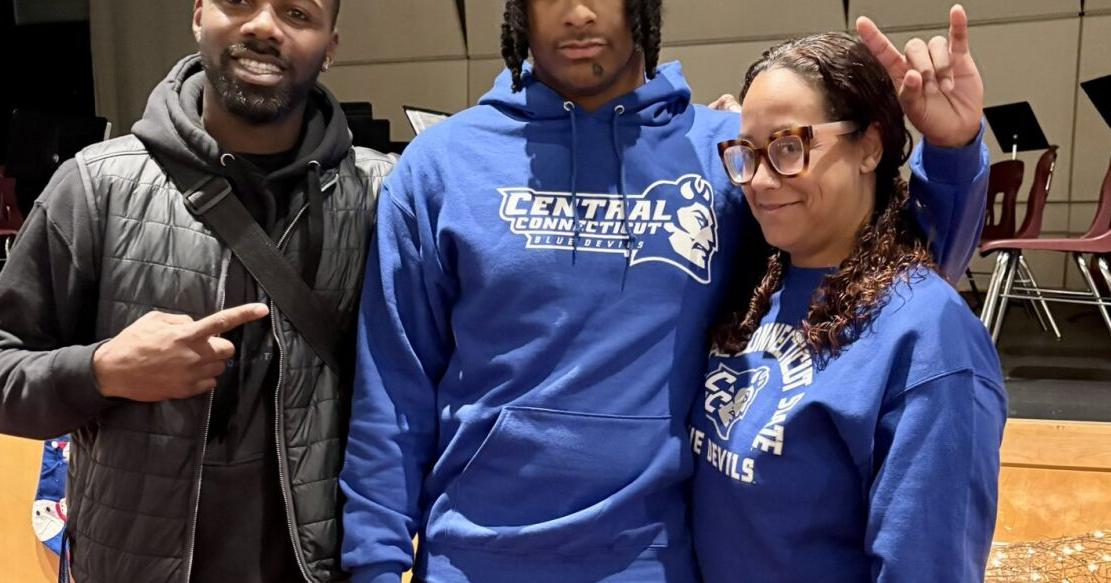
WINDSOR — Windsor High School quarterback and Central Connecticut State University football commit AJ Robinson is just as much of a leader off the field than he is on the football field.

Robinson led the Windsor Warriors to a 2025 Class MM football state title after finishing last season as runner-ups and along the way was named the Connecticut Gatorade Player of the Year. Upon being named the Gatorade Player of the Year in the state, Robinson received a $1,000 grant as part of the accomplishment. 


Link

Continue Reading

Rec Sports

Mountain Mentors allows youth to experience all Summit has to offer

Published

on


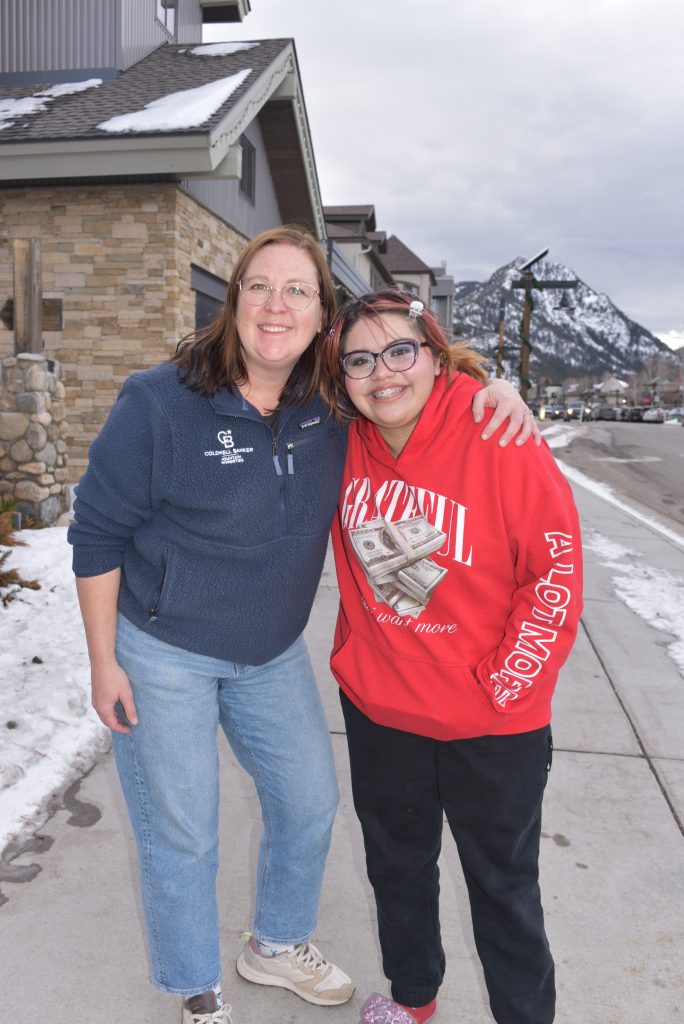
Annie Markuson, from left, smiles for the camera with her Mountain Mentors mentee, Ruby Valenceuela, after spending the afternoon together. The two say they’ve developed a wonderful friendship in the six years since being paired together through Summit County’s Mountain Mentors program. Community support for the program allows pairs like them to experience all the great activities Summit County has to offer.
Nicole Lantz/Summit Daily News

Fifteen-year-old Ruby Valenceuela sits next to her friend Annie Markuson, a Coldwell Banking real estate agent based in Frisco, at Summit Spa and Nails one dry December day for a pedicure. Their conversation is easy and constant. Valenceuela is a bubbly teenager full of smiles. Markuson is kind and straightforward with her thoughts, which all seem bent on encouraging her young friend. They’re headed to an optometry office afterwards so Markuson can help negotiate getting the girl’s frames fixed. “I told her, ‘you don’t have to walk around with tape on your glasses for six weeks,’” said Markuson.

Valenceuela and Markuson have been meeting almost weekly for years thanks to Summit County’s Mountain Mentors program. This branch of the public health department has worked for 38 years to match local youth between the ages of 8 and 16 with an adult in the community for at least one year of one-on-one mentorship. The pairs are encouraged to connect regularly and participate in either group activities arranged through the program or pursue interests in the county that suit them. For Valenceuela and Markuson, hitting the trails occupied most of their summer.

“She’s the one who got me into hiking,” says Valenceuela, who admits she hated doing it, or any sport, for years. Her family is “not the most active,” she said, so all those outdoor activities felt intimidating. She often skipped the outdoor adventure days at Silverthorne Elementary School when she was younger. 


Ruby Valenceuela, from right, and her mentor, Annie Markuson, hit the trails together after being matched by Summit County Mountain Mentors program.
Annie Markuson/courtesy photo

That’s all changing thanks to her mentor who, Valenceuela said, showed her how to have fun outside. When Markuson took her to Oro Grande trail in May 2025, it “sparked a hiking bug,” said Markuson. Valenceuela enjoyed the outing so much, she started asking to go on longer and harder hikes. “[It] helped that I wasn’t too embarrassed any more,” said Valenceuela. By the end of the summer, the teen pushed herself, with Markuson’s help and encouragement, to hike 1,500 feet up the Gore Range trail to Wheeler Lake. Valenceuela described feeling “so accomplished,” when she made it to the top, and Markuson added that her mentee ran almost all the way back down the trail from excitement. 

Now Valenceuela says she wants to try all the outdoor activities she skipped or disliked in elementary school like ice skating, snowshoeing and maybe Nordic skiing.


Bringing this positive outlook to new experiences is the biggest sign of growth Markuson has seen in her young friend since they were paired six years ago when Valenzuela was in fourth grade.

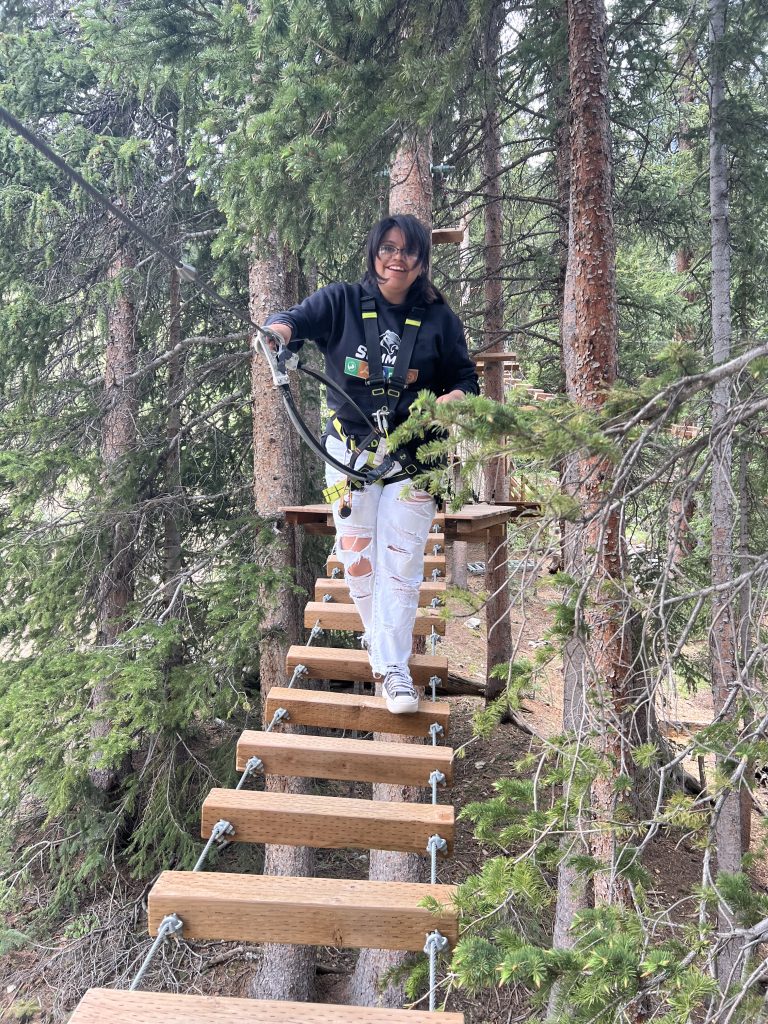
Markuson taught Valenceuela how to ride her bike, how to swim. They’ve gone kayaking together. They love doing crafts and cooking projects. They remember going to Arapahoe Basin Ski Area’s aerial adventure park one summer where Valenceuela was too terrified to try climbing up the ropes and ladders for the first 30 minutes. The teen was convinced she’d hate it. Once she began, however, Markuson said it was only a short time before she’d transitioned from the low-lying, beginner course to the most advanced course where she flew down the zip line. 

Ruby Valenceuela conquers her fears on Arapahoe Basin Ski Area’s aerial ropes course. Valenceuela credits the community partners for the Mountain Mentor’s program with allowing her to adventure to places in the county she didn’t even know existed.
Annie Markuson/courtesy photo

It’s the generous community partners that make the program invaluable for local families, said Markuson. It opens up the world to them. “Everyone who lives here deserves to experience all Summit has to offer,” she said. “Half the places we’ve gone to, I didn’t even know existed,” added Valenceuela.

There’s a lengthy list of discounts and free passes for participants in the Mountain Mentors program thanks to its community partners, said Helen Thompson, the director of the program. Partners include Breckenridge Outdoor Education Center, Rotary Club, 4H, The Summit Foundation, Vail Resorts, Breckenridge History, Friends of the Dillon Rangers District, and both the Breckenridge and Silverthorne Recreation Centers.

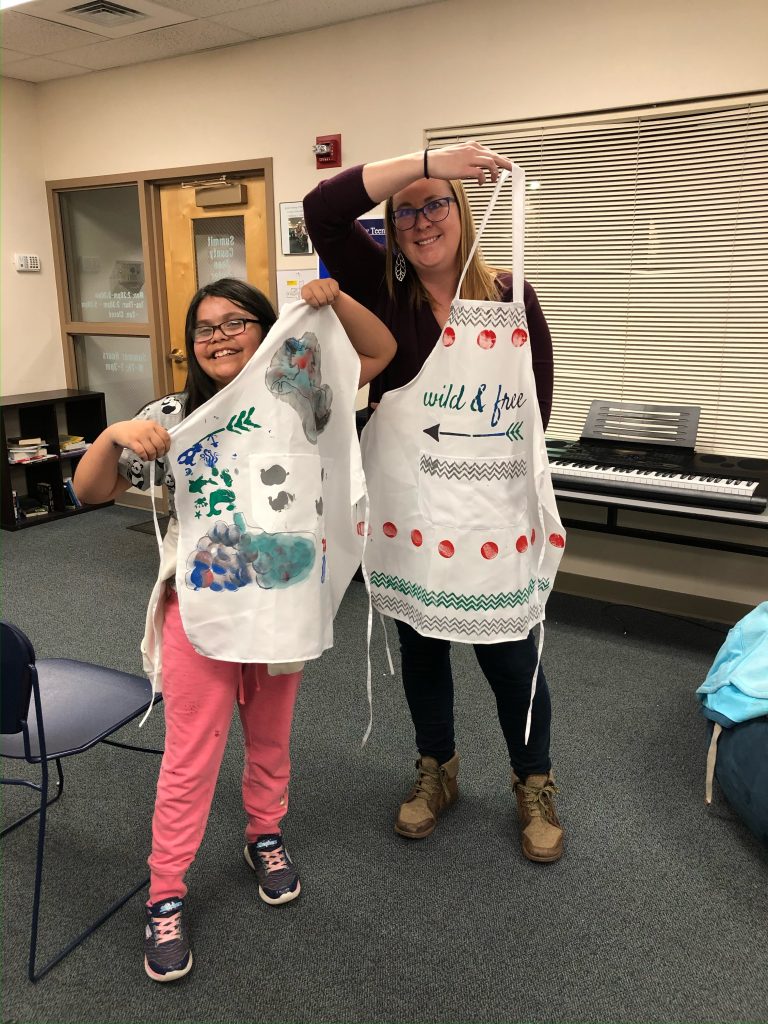
Mountain Mentors also organizes monthly group events in which members can participate. These include activities, like bowling and tubing, craft and science projects, like making slime or painting aprons with The Frosted Flamingo, and volunteering, for example serving at the Elk’s Lodge community dinners. 

Ruby Valenceuela, left, with her Mountain Mentor, Annie Markuson, decorate aprons at a program sponsored event with the Frosted Flamingo. The mentorship program matched Valenceuela with Markuson in 2018 when Valenceuela was in fourth grade.
Annie Markuson/courtesy photo

“It’s a really good way to connect with the community and the people in it,” said Thompson.

Thompson says there’s a great deal of research that’s been done that shows the benefits of mentoring youth. According to Mountain Mentor’s website, “Youth in a consistent mentoring relationship do better in school and are less likely to begin using drugs or alcohol. They are also more likely to have a higher self-esteem.” MENTOR, a national nonprofit that advocates for mentorship, has published a study with data showing youth with mentors are 92% more likely to volunteer regularly in their communities and 75% more likely to have held a leadership position in a club or sports team. According to a study by Big Brothers Big Sisters of America, mentorship can have significant economic impacts seeing youth with mentors are 20% more likely to attend college and earn 15% more over their lifetimes.

Summit County’s Mountain Mentors currently has 45 one-on-one pairs of youth and adults like Valenceuela and Markuson, plus 35 youth who are involved in the programming without a current mentor. There are 30 youth currently on the waitlist. The program is so popular that it cannot accept any more applications from youth until they have more mentors. Thompson says she is also working with a consultant from National Mentoring Resource Center to help figure out ways the program can support waitlisted youth.

Markuson remembers Valenceuela’s younger sister wanted to have a mentor relationship just like her big sister, Ruby, had with Markuson, but she had to wait a few years before she got off the waitlist. It was hard for the girl to wait seeing how much fun Valenceuela and Markuson were having together.

Adult volunteers go through a lengthy vetting process that aligns with best practices from the National Quality Mentoring System, says Thompson. The process includes a background check, an in-home interview, five references, a driving record check and training. Volunteers include people from many different walks of life: young and old, retirees and local business owners. For both the mentors and mentees, Thompson says the hope is an increased community connection, a feeling that you belong here. You’ll see the pairs almost anywhere in the county, says Thompson: skiing down the slopes, attending a cooking class, meeting at the library, walking along the recreation path, crocheting together. 

Markuson encourages any adults interested to, at the very least, investigate the program. “What do you have to lose?” she asks. “You don’t have to be perfect.” Mountain Mentors does a great job assessing kids to match them with the right adult, added Markuson. 

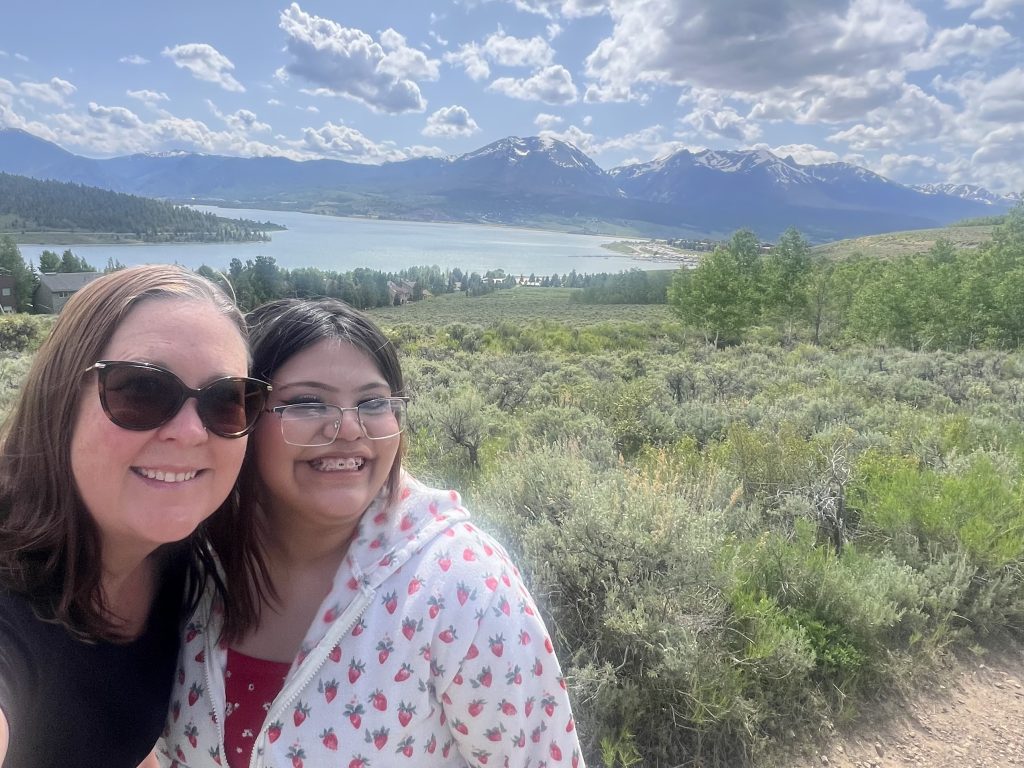
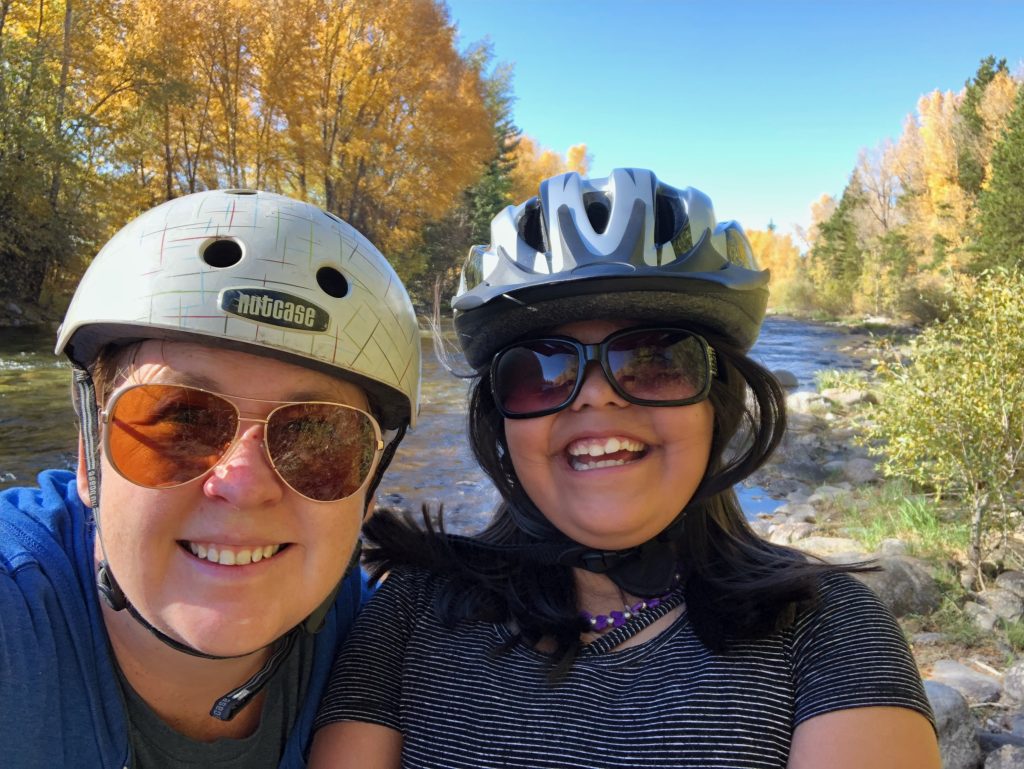
Annie Markuson, from left, with her mentee, Ruby Valenceuela, pause their bike ride to take a selfie. The two have enjoyed outdoor adventures together since being paired through Summit County’s Mountain Mentor program in 2018.
Annie Markuson/courtesy photo

Six years after being paired, Valenceuela sends Markuson her work schedule every week to get on her calendar. “She’s a really bright, conscientious young woman,” says Markuson, “fabulous to hang out with.” When asked what her favorite thing to do with her mentor is, Valenceuela says, “Honestly, everything.”

Thompson wants people to know the program aligns itself with best practices from the National Quality Mentoring System and that they’re established in the community. “We’re on year 38,” said Thompson.  

January is National Mentoring Month. To become a Mountain Mentor, visit the program’s website: SummitCountyCo.gov/services/health_human_services/youth_family/mountain_mentors/index.php, read the Mentor Position Description, and fill out an application. If interested readers wish to support the program in another way, donations go a long way, said Thompson, since all the activities organized for the youth are funded by grants and donations.


Link

Continue Reading

Rec Sports

Shots from the Hip: Cards basketball seeing success entering 2026

Published

on


By Cripe Olson

The Prescott Cardinals boys basketball team entered 2026 in grand fashion with a pair of impressive non-conference wins. Head Coach Nick Johnson and his charges easily disposed of La Crosse Logan last Friday by a score of 62-30 and followed with a convincing 71-47 road victory over Northwestern on Saturday. The Cardinals will host the Altoona Railroaders this Thursday who feature the dynamic junior guard combo of Grayson Becker and Owen Gunderson. Tipoff is scheduled for 7 p.m. 

There is a lot of regular season basketball to be played, but for my money some Cardinal cager fans have begun to follow the results of other teams in Prescott’s WIAA Division 3 tournament bracket. Undefeated Osceola (8-0) looms in the northern part of the bracket and the south, Gale-Ettrick-Trempealeau also heads into the new year at 8-0. Other teams to watch include Stanley-Boyd and Mosinee. 

The Prescott girls basketball team rebounded from a loss to Colfax on Friday with a 57-48 victory over Wausau Newman Catholic on Saturday. Violet Otto led the Cardinals with 27 points and senior Nora Boles also scored in double figures in the victory. Otto, a St. Cloud State recruit, is approaching 1,500 points for her career. 

When it comes to the girls basketball tournament sectional, Wittenberg-Birnamwood is the only team in the sectional bracket with an undefeated record at 10-0. Earlier this season the school defeated Shiocton by a score of 56-3. Add the Arcadia Raiders (9-2) as another team to watch in the bottom part of the bracket. In the north it’s familiar foe St. Croix Central (8-2), along with Northwestern (7-1) who enter 2026 with solid records.  The conventional wisdom is there is no clear favorite in the Division 3 Region I sectional. 

The Prescott Cardinal wrestling team finished fourth in the 12-team New Richmond Invitational on Saturday. Ninth graders Bryce Feran and Gunnar Doyle both finished atop the podium as did senior Addy Allsop. Trevor Lansing, also a ninth grader, finished second as did junior Emma Schmitz. Feran and Allsop finished third at the Northern Badger Invitational at River Falls late last month. 

Hundreds of area fans were glued to ESPN Sunday night as the University of Wisconsin-River Falls football won their first NCAA Division III National Championship, defeating deafening national champion North Central (Naperville, Ill.) The cheering of the Prescott Cardinal fans undoubtedly reached a crescendo when 2022 Prescott alumnus Jack Olson intercepted a North Central pass midway through the fourth quarter and all but guaranteed a national title for the Falcons. Olson finished the game with five tackles and most importantly wrapped up a very successful college career as a national champion. Bravo!

Congratulations to Kansas Jayhawk Reese Ptacek on being named American Volleyball Coaches Association (AVCA) Honorable Mention All-American. A 2023 Prescott alumnus, Ptacek was earlier named First Team All-Big 12, leading one of the league’s most efficient and balanced offenses. A sophomore, Ptacek earns her first career All-America honors after hitting .314 with 331 kills, 136 blocks and 27 service aces during the 2025 season. Ptacek was recently named to the AVCA All-Region Team and was named to the AVCA Player of the Year Watch List during the 2025 season. Ptacek became the 14th Jayhawk volleyball player in university history to be named All-American. 

Minnesota State distance runner Madison Matzek and the rest of her Maverick indoor track and field teammates are picked to win the Northern Sun Intercollegiate Conference this year. A senior, Matzek is expected to once again be a major contributor to both Minnesota State’s indoor and outdoor track and field’s seasons. 

Headshaker of the Week. The number of podcasts available is seemingly endless. From True Crime to Pop Culture, and Personal Finance to Sports, podcasts aim to educate, entertain, or inspire audiences through the on-demand audio platform. Recently I came across a particular podcast regarding the increase in poor behavior of fans, in particular parents, at youth sports events. One of the suggestions made was for high schools around the country to build “timeout boxes” to punish fans for unruly behavior, much like the penalty box in hockey. Offending fans would receive two minutes for typical tomfoolery like yelling at officials but would receive five-to-ten-minute major timeouts for using profanity or making threatening statements. It was quite comical. But then again, I thought, perhaps the WIAA should implement this rule as a way to mitigate the behaviors of today’s fans? I agree. It’s sad for me to consider such an action. It’s a headshaker. 

Shots from the Hip,


Cripe Olson,


Prescott Cardinals,


Prescott athletics,


headshaker of the week,


column


Link

Continue Reading

Rec Sports

Registration now open for spring sports at Dalton Parks and Rec: Baseball, softball, soccer among those offered

Published

on


With just one month left before the Dalton Parks and Recreation Department (DPRD)’s spring sports season begins in town, parents and students looking to register for upcoming seasons now have the opportunity to do so, said Victor Rodriguez, the department’s athletic manager.

In 2026, the DPRD will offer six sports for local students, including baseball, softball, soccer, volleyball, lacrosse, and track and field. For adults in the community, adult softball will also be available for registration.

To register, community members are instructed to visit the DPRD’s website at daltonparks.org and click on the “Registration” tab at the top of the page, or call (706) 278-5404.

Youth baseball

According to the department, youth baseball registration will be open from Jan. 1 to Feb. 19 this year and will have an entry fee of $25. Youth baseball season is scheduled to last from February until May, with games beginning on March 28. Both home games and practices will be held at Al Rollins Park and Baseball Complex at 521 Threadmill Road.

Youth baseball in 2026 will be open for children from ages 4 through 14, with the league age determination date being June 30 this year. Ages 3-4 is classified as tee ball, with 5-6 being tee ball/coach pitch, 7-8 being coach pitch, 9-12 being live arm Little League and 13-14 being strictly live arm.

Youth baseball classifications this year will include 4u (and under) co-ed tee ball, 6u baseball, 8u coach pitch, 10u kid pitch, 12u baseball and 14u baseball. According to the department, teams will be formed based on how many participants sign up for each age group, and are not formed by schools. Registered children may also move up by one age group with the consent of the department.

Youth softball

Similarly, youth softball will be open for local female students, with registration open from Jan. 1 to Feb. 19 and an entry fee of $25. The duration of the 2026 season is scheduled to last from February to May, with the first game set to begin on March 28. Both home games and practices will be held at Heritage Point Regional Park’s Softball Complex at 1275 Cross Plains Trail.

The age range for softball in 2026 is listed for children aged 4 years old to 12 years old, with the league age determination date being June 30. Much like youth baseball, softball teams will also be formed based on the number of participants who sign up for their certain age group and will not be formed by school.

Regarding parents who may want to move their child up one age group, students may move up with the consent of the department, but 7 year old participants may not move up to the 9-10 age group unless a parent is the head coach.

This year’s classifications for youth softball include 5-6 year old tee ball, 7-8 year old coach pitch, 9-10 year old live arm and 11-12 year old live arm.

Youth soccer

The DPRD will also be offering two forms of youth soccer in the spring, including team soccer and drafted soccer.

“Draft soccer is just like all of the other programs that we offer here at the recreation department,” said Rodriguez. “An individual can sign up online, over the phone or in person, and we’ll assign them a team with a coach. We also supply the uniforms.”

For team soccer, Rodriguez said the teams are “treated more like a travel baseball or basketball league, where the coach signs up a team already By Alander Rocha 

Georgia Recorder

put together that’s been playing tournaments or travel ball, and they sign up the team as a whole.”

“Team soccer plays every Friday night,” he said. “We don’t have permission to add or drop any players from their roster, as long as they’re the right age. We don’t supply the uniforms either, so all we do is pretty much schedule and run the league-scheduled games for them for Friday nights. Typically the team league tends to be a little bit more competitive than the drafted league because the team league is composed mostly of teams that are played in the academies here in Dalton or the surrounding areas like Rome or Chattanooga.”

Rodriguez said draft soccer’s season will take place February through May, with the registration window open from Jan. 1 to Feb. 19 and the entry fee being $25. The first draft soccer games are scheduled to begin on March 28 and will be played at the Heritage Point Regional Park’s Soccer Complex, the Durkan Soccer Complex at 310 Smith Industrial Blvd. and the Nix Complex at 904 Civic Drive.

According to the department, practices and games will be held on Tuesdays and Thursdays each week, while 4u will play once a week on either Mondays, Tuesdays or Thursdays. Age groups include a 3-4 co-ed league, 5-12 boys league, 5-12 girls league and 13-14 co-ed league, with an age control date set to Sept. 1 this year.

For team soccer, the season is set to last from February to June, with the first game set to begin on March 6. Registration for team soccer will be open from Feb. 16 to April 1, with an entry fee of $25. Age groups for team soccer range from 6-14 year olds, with an age control date set at Sept. 1. This year, team soccer will be played in Dalton at the Nix Complex, Heritage Point Regional Park’s Soccer Complex and the Durkan Soccer Complex.

“The reason team soccer starts at a much later age is because they don’t have a lot of travel teams for 6 and 7 year olds,” Rodriguez said. “So, around 8 years old is when you start seeing travel league soccer start to form. That’s the reason it starts a little bit later, and then it ends a little bit later on age because some of these kids are playing the 14-15 or even 16-17 teams at the travel league competitions.”

Youth volleyball

Youth girls volleyball registration will be open from Jan. 1 to Feb. 19 with a $25 entry fee. In 2026, the volleyball season will take place between February and May, with games set to begin on March 23.

In Dalton, games and practices will be held inside the Mack Gaston Community Center at 218 N. Fredrick St. and Dalton Junior High School’s auxiliary gym at 1250 Cross Plains Trail. According to the department, practices and games will be held twice a week once the season starts, taking place on either Mondays, Tuesdays, Thursdays or Fridays.

Youth volleyball age groups for the spring season include 8u girls (7 and 8 year olds), 10u girls (9 and 10 year olds), 12u girls (11 and 12 year olds), 14u (13 and 14 year olds) and 18u (15 through 16 year olds). The age control date is set as Sept. 1, 2026, and parents may put in a request to move their child up one age group prior to evaluations by emailing alangston@daltonga.gov.

Youth lacrosse

The department’s youth lacrosse program is set to begin in the spring, with the season officially lasting February through May. Registration for the sport is open from Jan. 1 to Feb. 19 with a $25 entry fee.

The date of the first game has not been decided by the department as of Monday evening, but Rodriguez said information will be emailed to registered families in the coming weeks. The first parent meeting for the sport will be held Feb. 19 at the Mack Gaston Community Center at 6 p.m., while the first practice will be held Monday, Feb. 23, at the Nix Complex in Dalton.

According to the department, players will need to provide their own lacrosse stick, gloves and shoulder pads, while the DPRD will provide helmets and uniforms. Youth lacrosse will be available to local students in third through fifth grade, with an age control date set at Sept. 1, 2026.

Youth track and field

The department has also opened registration for their spring track and field program, with registration lasting until Feb. 19 at 11:59 p.m.

The season is scheduled to begin in February and last until May, with the first meet beginning in early March. According to the department, the track and field team will compete on Saturdays in the Cobb County Youth Track League, with the $25 entry fee covering the registration into the league. Meets are scheduled to be held in the Cobb County area.

The age range for the youth track and field league this season is 5-14, with an age control date set at Dec. 31, 2026.

Adult softball

As in years prior, the DPRD will also be offering adult softball for the spring season this year, with registration opening Jan. 12 and lasting until Feb. 12.

Unlike youth sports, teams are registered into the league as opposed to individuals, with a $375 entry fee per team this year.

According to the DPRD’s Program and Athletic Coordinator Brandon Sane, the 2026 adult softball program includes a 10-game season with a tournament, and each team should include a minimum of 10 players each. The 2026 season is scheduled to last for 11 weeks from around Feb. 23 to April 17.



Link

Continue Reading

Rec Sports

What AI Means for College Sport Leaders

Published

on


As the Playoff nears its tempestuous conclusion, symbolically finishing off calendar year 2025, we wanted to speculate on what lies ahead. If you are an athletic director staring down 2026’s dark barrel, the job scarcely resembles what you trained for five years ago.

Budgets are tighter and more scrutinized. Rosters churn faster than ever. NIL collectives sit alongside compliance offices. Multiple transfer windows have turned year-round roster management into a virtual professional sport. Worse, every recruiting decision (coach or player) now carries six- or seven-figure consequences—financial, reputational and competitive.

In this environment, intuition isn’t enough. Relationships matter but no longer anchor the system. Contemporary college sport is a high-velocity marketplace where athletic directors must simultaneously lead with speed, precision and accountability.

Enter the dragon: artificial intelligence.

A recent Journal of Applied Sport Management piece by Lawrence Judge and Marshall Magnusen argued AI has suddenly shifted from optional support to a core competitive capability for recruiting operations. Their argument is persuasive but leaves a few important questions unanswered.

Judge and Magnusen suggest AI is rising within the twin disruptions reshaping college sport: the transfer portal and NIL. Together, these forces have turned recruiting into a transactional, mobile and financially risky enterprise.

Guaranteed scholarships mean mistakes linger. Misjudged NIL guarantees are costly. Entire rosters can—and do—turn over in a single offseason. Coaches now resemble portfolio managers, which has caused athletic departments to increasingly rely on general managers and analytics staff.

In this context, AI promises something every AD wants: fewer bad bets.

The JASM authors describe a recruiting ecosystem where AI tools increasingly shape how athletes are identified, evaluated and pursued. According to Judge and Magnusen, at its core, AI enables several major functions, including performance analytics based on biometric, GPS and data from wearables to enhance scouting; predictive and psychological modelling to help predict injury risk and a player’s fit within the system—both on the field and in the locker room; tools enabling better evaluation of international athletes and those in underserved areas; and administrative workflow automation.

The above implications are blunt. In a market defined by speed, scale and mounting cost, the authors say relying on human judgment alone is now inherently risky. Judge and Magnusen stop short of offering a formal playbook for athletic directors. They diagnose rather than prescribe.

We can extrapolate several leadership implications from their analysis (all interpretations and errors below are on us):

1. Treat AI as a strategic capability, not a gadget. AI cannot sit solely within recruiting operations. If AI is now central to recruiting accuracy and financial exposure, it becomes a strategic concern for athletic directors.

2. Invest in people, not just platforms. AI models suggests competence in recruiting increasingly depends on data literacy, interpretation and judgment—not just access to tech.

3. Establish ethical oversight. Bias, privacy and transparency are not technical issues—they are governance issues. ADs are urged to create guardrails, not just buy software.

4. Use AI to reduce risk, not chase perfection. The goal is not flawless prediction, but fewer catastrophic mistakes (i.e., fewer bad fits, costly transfers and misaligned investments).

5. Preserve the human core component of recruiting. Position AI as an input to decision-making, not a substitute for coaching judgment, relationships or contextual understanding.

The JASM article is sound, if not overdue. AI isn’t just a management problem (how to optimize decisions), it’s a leadership challenge (on how to live with contradiction, responsibility and uncertainty as technology reshapes judgment).

That distinction matters, because AI does not resolve the fundamental tensions athletic directors face—it sharpens them. Leaders must move faster while acting more deliberately, rely on data while honoring experience, automate decisions while maintaining human connection and, for job security, increase transparency while protecting competitive advantage.

These are not problems AI can solve; they are paradoxes leaders must embrace. In practice, it means knowing when to trust the model, when to override it and how to explain both decisions with credibility. In essence, AI changes who gets to speak with authority in the recruiting room.

While algorithms can produce rankings, forecasts or risk scores, they also inform decisions. They redistribute power among coaches, general managers, analysts and administrators. Who owns the final call when AI contradicts a head coach’s judgment? Whose accountability is engaged when a data-backed decision fails?

We can’t assume this tech evolution will be adopted with rational uptake and shared purpose. Athletic departments, after all, are fiercely political, with quantified results—scores, standings, ticket sales, sponsors procured, alumni engaged and collectives milked. AI adoption inevitably will create friction around autonomy, control and trust. Sport administrators had better understand their contexts—and who will resist them—before implementing.

Ethical AI isn’t just about bias audits or privacy policies; it’s about consequential ownership. When AI-informed recruiting decisions produce inequity, reputational harm or legal exposure, leaders—not algorithms—will be held responsible.

Athletic directors must decide not only how AI is used, but also who stands behind it when outcomes go wrong. Why? Because ethical aspiration without clear accountability is insufficient for those already under intense public scrutiny.

We already know adoption readiness will be uneven across NCAA programs. Not every athletic department has the data quality, governance capacity, cultural alignment or leadership bandwidth to integrate AI effectively. In some contexts, premature adoption may amplify bias, erode trust or create false confidence. It won’t be easy.

What’s missing is guidance on strategic restraint—when not to adopt, how to stage implementation and how to match technological ambition with organizational maturity. Timing will be as important as capability, nimble forecasting as historical bedrocks.

AI does not simplify leadership; it makes it harder. It raises the stakes, redistributes power and concentrates accountability. ADs must not only lead with better data, but also courageously own decisions made in partnership with machines.

That leadership challenge, not the technology itself, represents a new frontier for NCAA athletic directors. The best will master it. The worst will get singed by the dragon.

John Cairney is head of the University of Queensland’s School of Human Movement and Nutrition Sciences. He also serves as deputy executive director for the Office of 2032 Games Engagement and directs Queensland’s Centre for Olympic and Paralympic Studies. Rick Burton is an honorary professor at UQ, Syracuse University’s David B. Falk Emeritus Professor of Sport Management and co-host of the NIL Clubhouse on Spotify and Apple Podcasts.


Link

Continue Reading
Motorsports4 weeks ago

SoundGear Named Entitlement Sponsor of Spears CARS Tour Southwest Opener

Motorsports4 weeks ago

Donny Schatz finds new home for 2026, inks full-time deal with CJB Motorsports – InForum

NIL4 weeks ago

DeSantis Talks College Football, Calls for Reforms to NIL and Transfer Portal · The Floridian

Sports4 weeks ago

#11 Volleyball Practices, Then Meets Media Prior to #2 Kentucky Match

Motorsports4 weeks ago

Rick Ware Racing switching to Chevrolet for 2026

Sports4 weeks ago

Maine wraps up Fall Semester with a win in Black Bear Invitational

Rec Sports3 weeks ago

Stempien to seek opening for Branch County Circuit Court Judge | WTVB | 1590 AM · 95.5 FM

Motorsports4 weeks ago

Nascar legal saga ends as 23XI, Front Row secure settlement

Motorsports3 weeks ago

Ross Brawn to receive Autosport Gold Medal Award at 2026 Autosport Awards, Honouring a Lifetime Shaping Modern F1

Rec Sports3 weeks ago

Princeton Area Community Foundation awards more than $1.3 million to 40 local nonprofits ⋆ Princeton, NJ local news %

Motorsports4 weeks ago

Sunoco to sponsor No. 8 Ganassi Honda IndyCar in multi-year deal

NIL3 weeks ago

Downtown Athletic Club of Hawaiʻi gives $300K to Boost the ’Bows NIL fund

Rec Sports4 weeks ago

WNBA’s Caitlin Clark, Angel Reese and Paige Bueckers in NC, making debut for national team at USA camp at Duke

Motorsports4 weeks ago

North Florida Motorsports Park led by Indy 500 Champion and motorsports legend Bobby Rahal Nassau County, FL

Motorsports4 weeks ago

NASCAR, 23XI Racing, Front Row Motorsports announce settlement of US monopoly suit | MLex

Most Viewed Posts

Trending