ADVERTISEMENT


 Michael Cohen College Football and College Basketball Writer
LAS VEGAS — More than three years before the towering, 6-foot-6 quarterback Nico Iamaleava strode through the South Seas Ballroom at Mandalay Bay for his debut at Big Ten Media Days, where the financial paper trail of his highly scrutinized football career was among the most enthralling storylines for reporters, the soft-spoken kid from Southern California became a poster child for the freshly introduced Name, Image and Likeness (NIL) era in collegiate athletics while he was still in high school.
It was March 11, 2022, when The Athletic published a story outlining the details of a mind-twistingly lucrative NIL agreement for an unnamed five-star prospect from the 2023 recruiting cycle. The deal would net the player $350,000 almost immediately, according to the article, and include “monthly payouts escalating to more than $2 million per year once he begins his college career, in exchange for making public appearances and taking part in social media promotions and other NIL activities,” all of which fell under the umbrella of the school’s collective or a third party. At the time, industry experts labeled it the richest contract of the NIL era, a transformative period that was ushered in less than one year prior.
For internet sleuths and reporters alike, connecting the dots between that contract and Iamaleava, the No. 3 overall prospect and No. 2 signal-caller in the class, didn’t take long. News of Iamaleava’s commitment to Tennessee, for whom he became the highest-rated quarterback recruit in school history, broke later that same month. Eventually, it was confirmed that the document reviewed by The Athletic had detailed an agreement between Iamaleava and Spyre Sports Group, the Volunteers’ collective. And there’s been a general understanding that money is among the prevailing themes in Iamaleava’s career ever since.
That’s why it was so jarring to hear Iamaleava’s apparent naïveté amid his 25-minute media session in Las Vegas, where reporters peppered him with questions about another rash of NIL-related headlines that helped explain why he was at this event in the first place, proudly sporting a light blue suit, white dress shirt unbuttoned at the neck and large diamond earrings as the starting quarterback for UCLA.
ADVERTISEMENT
Three months had passed since the very public, very sudden and very messy divorce between Iamaleava and Tennessee rocked the college football universe in mid-April, all of it reportedly sparked by failed attempts to renegotiate the player’s compensation package ahead of the 2025 campaign. And yet here sat Iamaleava in late July, still a few months shy of his 21st birthday, looking to rebrand himself in front of a national audience as anything other than a money-hungry quarterback while likely knowing full well — at least on some level — that he’s never going to escape that label.
“My [decision] to leave Tennessee was around the time, you know, that I think the reports came out,” Iamaleava said. “Just false reports that made me not feel comfortable with the position I was in. But in the back of my head, I always wanted to come back home and be closer to my mom, be closer to my dad and just have my family, their support, at our games. In our Samoan culture, we’re always together, and that was the main thing for me, the driving factor for me to come back home.”
Though undoubtedly tinged with truth, Iamaleava’s comments seemed aimed at distancing himself from everything that happened in April, when what appeared to be a relatively successful partnership between quarterback and football program disintegrated not long after the Volunteers had reached the College Football Playoff for the first time in school history. In leading Tennessee to a 10-3 overall record and 6-2 mark in the SEC, Iamaleava threw for 2,616 yards with 19 touchdowns and only five interceptions as a redshirt freshman. He became the program’s first quarterback to win 10 games in a season since Casey Clausen in 2003, engorging expectations for what he might achieve across the remainder of his collegiate career.
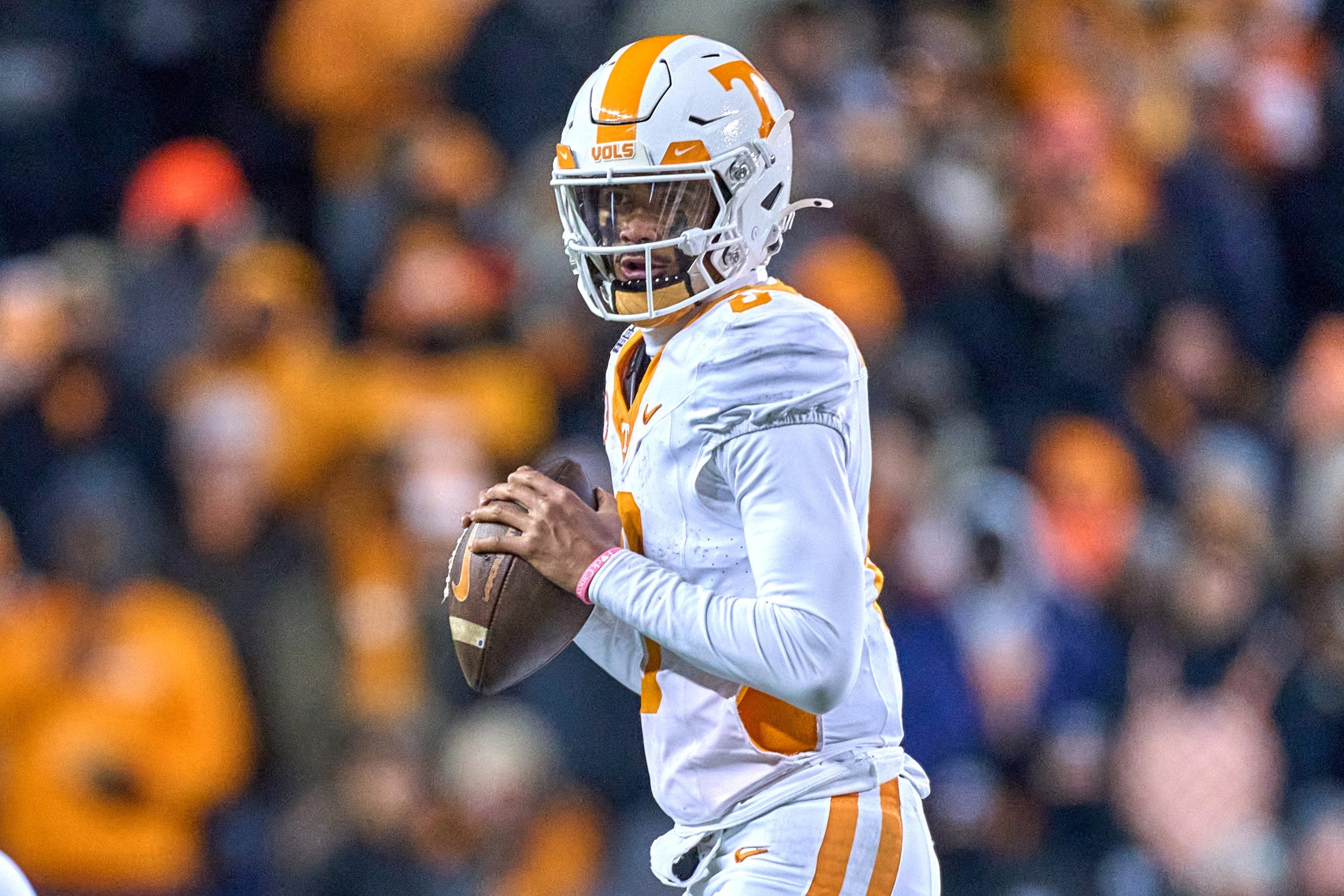
Nico Iamaleava #8 of the Tennessee Volunteers looks to throw the ball during a first-round College Football Playoff game between Tennessee and Ohio State. (Photo by Robin Alam/ISI Photos/Getty Images)
But beginning in early April, as the Volunteers navigated spring practice, a series of reports from national media outlets detailed some apparent friction between Iamaleava’s camp and Tennessee regarding the player’s financial compensation. Those representing Iamaleava were reportedly seeking a renegotiated package that would pay him approximately $4 million for the upcoming season rather than the $2.4 million he was expected to earn. The disagreement, which was also said to have included potential concerns about the quality of Tennessee’s offensive line, incited frustration in the locker room and among members of the school’s administration, ultimately coming to a head when Iamaleava skipped practice on April 11. The next day, head coach Josh Heupel told reporters that he was moving on from the star quarterback because “no one is bigger than” the program. Iamaleava entered the transfer portal shortly thereafter and committed to UCLA the following week.
“Just false stuff about whether it was a financial thing or not,” Iamaleava said. “My driving factor to come back home was my family. I hope every Tennessee fan understands that. It was really one of the hardest decisions that I ever had to make. But, you know, I had to do what was best for me and my family. Ultimately, I wanted to come back home and be closer to my family.”
It is difficult to reconcile the idea of someone who has been so thoroughly intertwined with the relatively brief history of NIL — from his record-setting agreement in high school to his highly-paid position as the starting quarterback at Tennessee — claiming to have separated himself from the financial apparatus that so clearly surrounds him, and many other elite players, in the sport’s modern era.
Time and again, Iamaleava told reporters in Las Vegas that “I don’t really focus on NIL,” because the only things he worries about are football and academics, with his parents and business representatives handling the rest. He reiterated that social media has never been a significant part of his daily life — “I’m a big YouTube guy,” he said — which meant that tuning out the rampant discussion surrounding his motives and reputation was fairly simple. He spent most of his time during the fallout with Tennessee playing video games and only learned about the various media reports when informed by his cousins, to whom he repeatedly said, “I don’t care.”
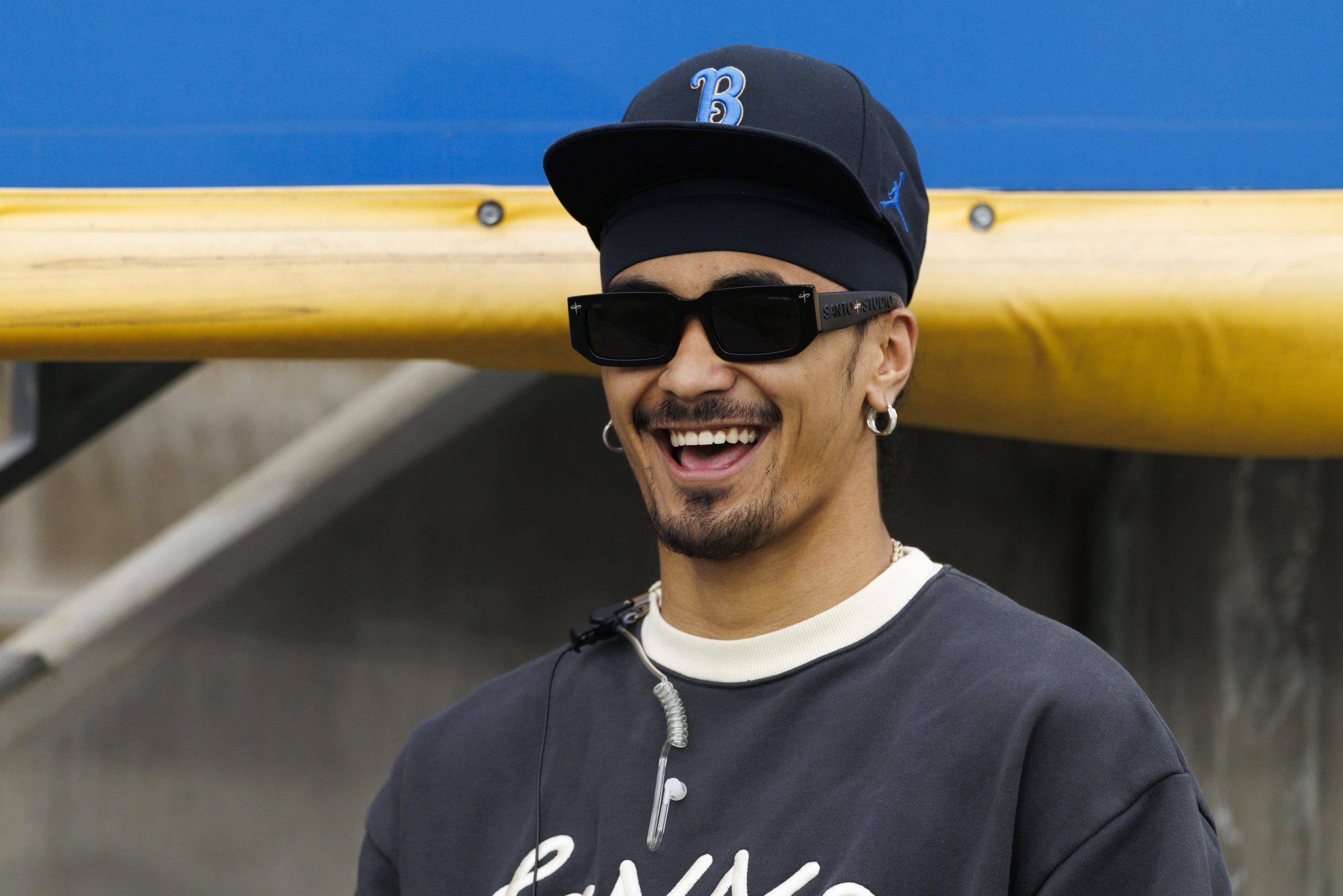
Nico Iamaleava is pictured on the sidelines during the UCLA Football Spring Showcase. (Photo by Ric Tapia/Getty Images)
Iamaleava maintained that posture in Las Vegas by declining to discuss the specifics of his new NIL agreement with UCLA, which will reportedly pay him just shy of $2 million this season. His new head coach, DeShaun Foster, vouched for that version of Iamaleava — rather than the more selfish ilk portrayed on the internet — when asked about his quarterback’s demeanor since joining the program after spring practice.
“I played with [Hall-of-Fame defensive end] Julius Peppers,” Foster said, “and they’re very similar, you know? Larger than most humans but kind of don’t want that attention. I just like that because, you know, he’s human and you can kind of tell he’s a team guy and a family guy. A lot of people kind of want that attention for themselves, and he’s not somebody that does that. It just felt good to know that we got the right type of quarterback.”
But what Iamaleava didn’t shy away from during his appearance at Big Ten Media Days was laying out the blueprint he hopes to follow at UCLA, which is entering Year 2 under Foster after finishing 5-7 overall and 3-6 as a Big Ten debutant last fall. If all goes well on a personal level for Iamaleava, whose commitment to the Bruins prompted presumptive starting quarterback Joey Aguilar, a winter transfer from Appalachian State, to re-enter the portal and take Iamaleava’s place at Tennessee, this will be his only season with the program before entering the NFL Draft. And if all goes well as a group for the Bruins, who have already landed verbal commitments from three blue-chip recruits and eight high school prospects rated among the top 500 players overall since signing Iamaleava, they’ll claw their way toward conference respectability after finishing 12th in 2025.
There’s a certain symmetry to Iamaleava’s continued rebrand unfolding in Los Angeles, the entertainment capital of the world, where scores of eyeballs will monitor his every move given everything he’s been through the last few years. It’s another juxtaposition for a player working to leave that chapter of his life behind.
“I can only speak for my game and how I am off the field, how I am as a person,” Iamaleava said. “I know I’m a great person. I know what I bring to the table. My thing is to go out there and perform on the football field.”
Michael Cohen covers college football and college basketball for FOX Sports. Follow him at @Michael_Cohen13.
What did you think of this story?
recommended

Get more from the College Football Follow your favorites to get information about games, news and more
Dec. 23, 2025, 6:07 a.m. ET
Arizona State football coach Kenny Dillingham says he was never offered the Michigan job. Never got to that point.
This, of course, isn’t the story nor the takeaway from Dillingham’s dalliance with the Wolverines.
The irony of the state of Arizona’s highest-paid public employee begging for private donations to compete at the highest level of college football is where this bizarre story begins.
“We live in Phoenix, Arizona. You’re telling me there’s not one person who could stroke a $20 million check right now?” Dillingham said after agreeing to a new contract worth more than $37 million over the next five years.
That’s right, the guy whose future could never be more secure, sees the immediate horizon line for the Arizona State football program. And frankly, it’s financially unstable at best — and a house of cards at worst.
It’s Arizona State today, but could be Kansas State or Colorado or North Carolina State or Virginia Tech or Boise State — or any of the other 100-plus Bowl Subdivision teams not protected by the golden parachute of the Big Ten and SEC.
Coaches at those 34 schools in the two big conferences — many of those institutions born on third base from long-term association with the leagues before the financial boom of television media rights — aren’t publicly calling out dignitaries and alums associated with their schools.
They’re not standing during a media availability and pleading for the next Cody Campbell to please step up. Or else.
Dillingham made it very clear that college football is about those who wish to spend money, and those who don’t. This isn’t about revenue sharing between schools and players, this is all about private NIL funding.
This is about the dirty underbelly of the sport that can’t be legally controlled. A growing vice that doubles and triples the obstacles faced by conferences chasing the Big Ten and SEC.
It’s bad enough that mega media rights deals give the Big Ten and SEC a huge competitive advantage over the rest of college football. It’s downright sinister that those same schools have deep pocket boosters willing to spend tens of millions in private NIL deals to eliminate all doubt.
Sam Leavitt led Arizona State to the Big 12 title and the College Football Playoff in 2024, and returned to Tempe this season for another run. A foot injury ended his season early, and now he’s headed to the transfer portal looking for a new home.
Not because he doesn’t think he can win big with the Sun Devils — he already proved that. He’s in the portal, like so many other players, to strike when its hot and score a deal before moving onto the NFL.
What are the odds he signs with a Big Ten or SEC school? A program which has boosters that can pay him an outrageous salary through a private NIL deal.
Do you really blame Leavitt?
Do you really blame Campbell, Texas Tech’s billionaire booster, who built a championship-level team with a $25 million roster — and the Red Raiders responded by winning the Big 12 and earning a first round bye in the CFP?
They’re just following the rules, and until a different set of rules is in place, they’ll take advantage of it.
That’s why Dillingham sounded like a panhandler last weekend, begging — literally begging someone, anyone, in The Valley to jump on board and throw money at the program. He even specifically called out school alums Phil Mickelson and Jon Rahm.
Hey, Kenny, while you’re at it, why not place a call to the sheiks in Saudi Arabia? See if their Public Investment Fund (PIF) is interested in sports washing with the second-most popular sport in America.
Because if you’re reaching out to Mickelson and Rahm, you’re reaching out to the Saudis — who own LIV Golf — by proxy. The only difference between the PIF and Utah’s new $500 million agreement with Otro Capital is one group of investors has a long line of human rights violations.
The other is a financial shark, whose only goal is to make money.
Any way they can.
“College football is absolutely chaotic right now,” Dillingham said. “You’ve got to be able to have a plan to be aggressive in this thing for three, four, five years down the road. If you don’t have that, you’re a ticking time bomb for failure.”
This nonsense isn’t going to end until players are considered employees, and players collectively bargain their best deal. Until FBS conferences go to market as one, and sell their games to make double or more than the current market value of $4 billion-plus annually.
That move will allow universities to restrict player movement through multi-year contracts, and find a fair and equitable postseason for all. One that doesn’t include charity for the Group of Five conferences, who have no business in a playoff unless invited based on merit (see: Boise State, 2024).
But that move also means players would go from earning about 20 percent of media rights revenue to likely 45-50 percent. NFL players currently make 48 percent of the media rights.
That’s why the Big Ten and SEC don’t want players collectively bargaining. It has nothing to do with the pollyanna idea sold by conference commissioners that players, “don’t want to be employees.”
If they’re going to earn 20 percent, who wants to deal with the headache of collectively bargaining? Move that number to 45-50 percent, and watch how many players say they’re all in.
Then maybe their coaches wouldn’t have to shamelessly beg for cash, mere hours after signing a new $37 million dollar contract. Or else.
Matt Hayes is the senior national college football writer for USA TODAY Sports. Follow him on X at @MattHayesCFB.

As Indiana prepares to host its first-ever College Football Playoff game as the No. 1 seed, the Hoosiers are quietly already planning for 2026.
Fernando Mendoza, a redshirt junior transfer who led the Hoosiers to a 13-0 regular season, won the 2025 Heisman Trophy after throwing 2,980 yards and a national-best 33 passing TDs and is widely seen as an early NFL first-round prospect.
Should Mendoza depart for the draft, Indiana would be tasked with replacing an elite, NFL-caliber starter, which explains why numerous quarterbacks expected to enter the transfer portal have been linked to the Hoosiers.
On a December 20 episode of “Hoosiers Football Tailgate,” host Coach Griff specifically named TCU quarterback Josh Hoover, who announced he will enter the transfer portal and skip the Alamo Bowl, as a name Indiana should watch.
“I like this guy as a definite target for Indiana,” Griff said. “So, Josh Hoover, keep an eye on him as a potential target… The one I think they’ll really try to get is Hoover.”

Hoover was a three-star recruit out of Rockwall-Heath (Texas) and initially committed to Indiana in 2021 before flipping to TCU after the school extended an offer.
He then redshirted in 2022 and became the starter in 2023, producing breakout numbers in 2024 with 3,949 passing yards, 27 passing touchdowns, and 11 interceptions with a 66.5% completion rate.
In 2025, Hoover threw for 3,472 yards and 29 TDs, with 13 INTs, and projects among the most productive returning QBs in 2026 on career totals of 9,629 passing yards, 80 total TDs, and a career passer rating of 147.8.
On3’s NIL valuations list also shows Hoover ranking among the most marketable college quarterbacks, with a valuation in the neighborhood of $2.1 million.
Hoover is an intriguing option for Indiana due to his proven production and Power Five experience, positioning him as a potential one-year, plug-and-play solution as Curt Cignetti prioritizes continuity.
There is also a “full-circle” aspect to his recruitment, as Hoover originally committed to Indiana before flipping to TCU in 2021.
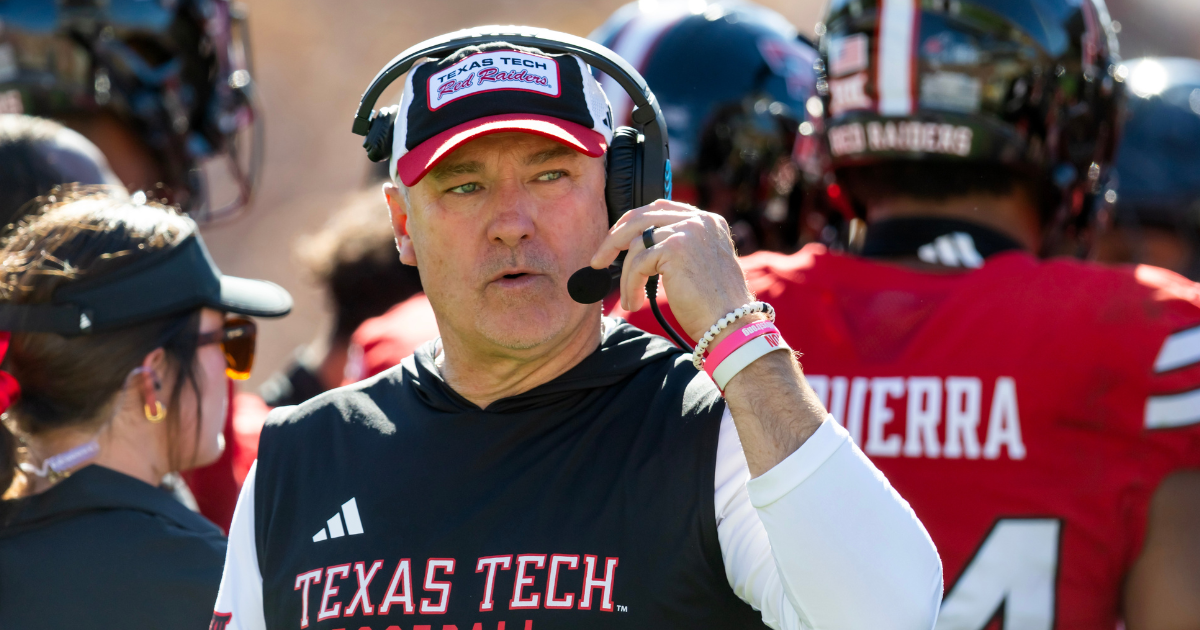
Two teams that have really embraced the NIL era are set to meet on New Year’s Day. Oregon‘s win over James Madison advanced them to the College Football Playoff quarterfinals, where Texas Tech was waiting on the other side. Now, it’s Dan Lanning vs. Joey McGuire in the Orange Bowl with a lot of resources put into rosters.
Oregon has been at the forefront of NIL since its inception, especially under Lanning. Texas Tech could be considered the new kid on the block after major investment from a few donors. Even so, McGuire sees some similarities between the two when it comes to winning at whatever cost.
SUBSCRIBE to the On3 NIL and Sports Business Newsletter
“They’ve got a great booster in Phil Knight that really said, ‘We’re going to go win at the highest level and there’s no excuse when it comes to finance.’ You turn around and I think that we’re showing that we’re doing that. I think we’re really comparable,” McGuire said.
“We’ve got guys that have stepped up and done a great job. I kind of call them the ‘Big Five’ whenever you talk about Cody and John, Mike, Dusty, and Gary. Those guys have, along with everybody else in Red Raider Nation, but those guys have really led the charge. So, we’re kind of comparable on and off the field in this team. They’ve just done it for a little bit longer. That’s what we’re trying to do.”
As he said, McGuire is looking to put together a run similar to Oregon. All four years since hiring Lanning have been a resounding success, finishing with double-digit wins in all of them. This is the program’s second College Football Playoff appearance in the 12-team format, just missing out in 2023 due to a Pac-12 Championship loss.
Oregon won the Big Ten in its inaugural season inside the conference. Texas Tech can check that box already though, winning the Big 12 for the first time in school history. Advancing in the CFP would be a sweet bonus.
No matter the result on Jan. 1, Texas Tech is positioning itself to be successful moving forward. The 2026 recruiting class ranked 20th in the country but No. 1 in the Big 12 per the Rivals Industry Team Rankings. This is all before raiding the NCAA transfer portal, something McGuire and his staff did so well with last offseason.

In the weeks leading up to the opening of the NCAA transfer portal, hundreds of college football players have announced their decisions to leave the schools they played for in 2025 for new horizons next season.
Some cases involve players transferring up from Group of Five or FCS programs to broaden their exposure. Others feature players following their coaches from one school to another due to the coaching carousel. In occasional instances, players are searching for the highest bidder on the portal.
Former Arizona State quarterback Sam Leavitt is a portal entry drawing the attention of high-bidding college football programs. He will enter the portal with two seasons of eligibility remaining.
On3 ranks Leavitt as the top available quarterback in the transfer portal. Chris Hummer of CBS Sports reported that schools are expected to offer Leavitt around $3 million.

“Sam Leavitt on the open market is going to command a significant amount of money,” Hummer said. “We’re talking $3 million plus most likely. Although, in all fairness, I think teams really do have questions about Sam Leavitt’s injury and what that means moving forward. It’s kind of like the Carson Beck situation a year ago.”
The 6-foot-2, 205-pounder began his college football career with Mel Tucker at Michigan State in 2023. He played in a maximum of four games that season to maintain his redshirt, throwing for 139 yards, two touchdowns, and a pair of interceptions.
Leavitt transferred to Arizona State in the 2024 offseason. The Sun Devils were 10-2 in the regular season and defeated Iowa State (45-19) en route to the program’s first-ever College Football Playoff appearance. Leavitt passed for 2,885 yards, 24 touchdowns and six interceptions and rushed for another 443 yards and five touchdowns.
Postseason honors for Leavitt included Big 12 Offensive Freshman of the Year and Second Team All-Big 12. His 2,885 passing yards are the most by a freshman quarterback in Arizona State history.
Leavitt’s season was cut short after the Sun Devils’ game against Houston due to a Lisfranc injury. He threw for 1,628 yards, 10 touchdowns and three interceptions while he ran for 306 yards and five touchdowns in seven games.
Arizona State will not start Leavitt in its bowl game. The Sun Devils (8-4, 6-3) will play ACC champion Duke (8-5, 6-2) in the Sun Bowl in El Paso, Texas (3 p.m. EST, CBS).
The NCAA transfer portal officially opens on Jan. 2, 2026, the final day of bowl games across the FBS ranks. It will remain open for the following two weeks.
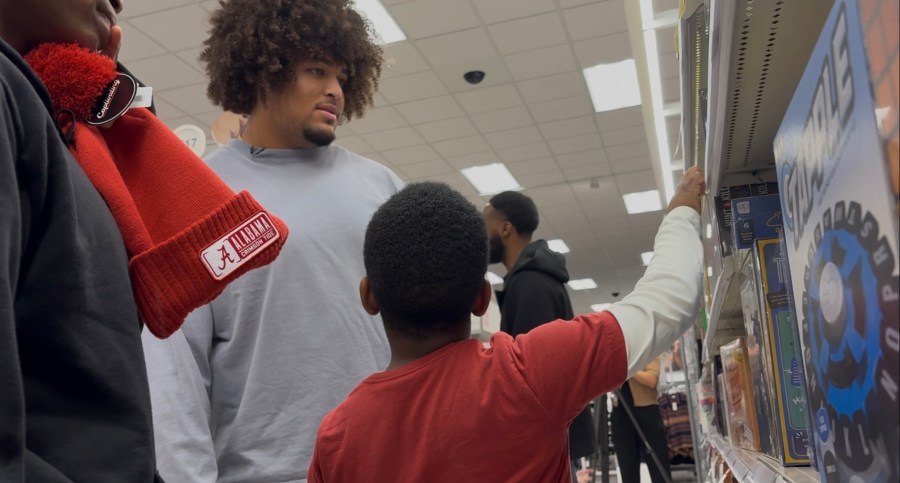

TUSCALOOSA, Ala (WIAT) – University of Alabama offensive lineman Parker Brailsford’s childhood experiences inspire him to help Tuscaloosa’s underserved youth.
Brailsford is an Arizona native, who has made a name for himself in the world of college football. But when he takes off the helmet and pads, his focus shifts to something else.
Advertisement
“Being able to give back to kids that don’t have – that’s something that fulfills me,” Brailsford said. “It’s my purpose.”
Brailsford took 10 children and their families from the Boys and Girls Club Christmas shopping on Monday.

Each child received a $100 Target gift card. All together it was $1,000 of NIL money.
Alabama moves up to No. 14, Auburn falls out of AP men’s college basketball rankings
“He just gave her a turkey for Thanksgiving, and now he’s taking her Christmas shopping,” Toniko Bryant said. “I’m very thankful because he doesn’t have to do that.”
Brailsford understands he doesn’t have to – but he wants to.
Advertisement
“As a kid, we didn’t have a lot but we had enough,” Brailsford said.
During Brailsford’s infancy years he was adopted.
“I never was in the foster care system, but one of my friends was,” Brailsford said.
Brailsford’s formative years were a stark contrast to what he saw other children experience. His parents gave him support and stability, while other children moved from home to home.
At the same time, his mother took him to homeless shelters and food pantries to volunteer. There he saw how poverty affects anyone of all ages, races, and gender.
“Sometimes you get caught in the what you’re living in right now – you think there’s not a place for you,” Brailsford said.
Advertisement
Brailsford found his place on the field, but his purpose is to help children find theirs.

“This is something God put on his heart,” John Nero said. “I appreciate every bit of it, not just for Oshae but for all the other kids.”
Brailsford relates to many of the children he serves. Whether it’s adoption, financial hardships, or empathizing with experiences his friend encountered years ago.
While Brailsford’s success in football gives him the financial resources and name recognition to coordinate outreach events, this is just the beginning even if his football career comes to an end.
“I’m working on my social work degree right now because I really want to be able to help kids, anyway I can,” Brailsford said.
Advertisement
Copyright 2025 Nexstar Media, Inc. All rights reserved. This material may not be published, broadcast, rewritten, or redistributed.
For the latest news, weather, sports, and streaming video, head to CBS 42.
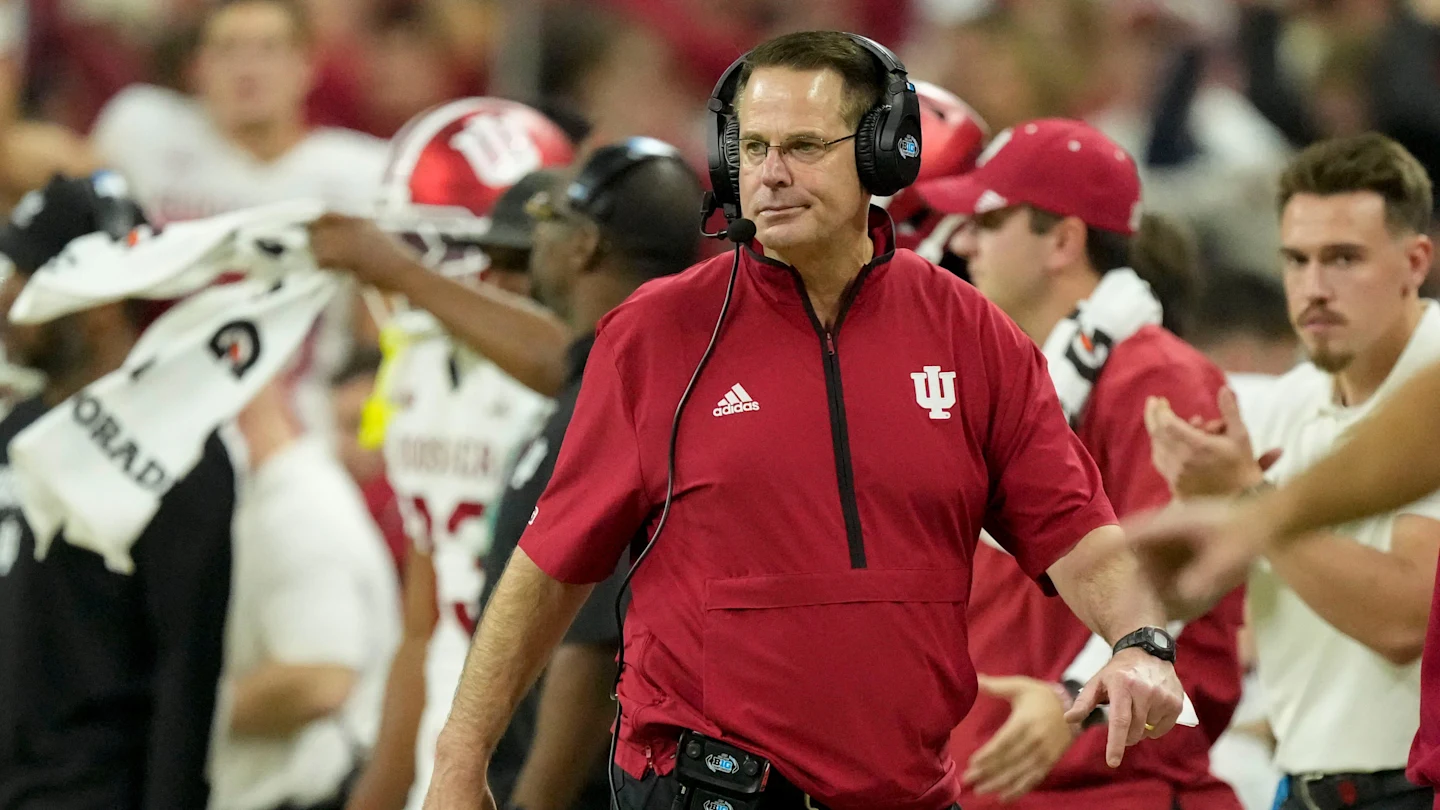
Indiana’s meteoric ascent to the top of college football has transformed the Hoosiers into a prime destination for transfer quarterbacks, and for a brief moment, that attention turned toward a familiar face.
Cincinnati signal-caller Brendan Sorsby, who spent his first two seasons at Indiana before moving on, formally entered the transfer portal on December 15 after a productive 2025 campaign with the Bearcats.
In 2025, Sorsby produced 2,800 passing yards, 27 touchdown passes, and five interceptions, plus 580 rushing yards and nine rushing scores.
Across his collegiate career, he has totaled 7,208 passing yards, 60 passing touchdowns, 1,305 rushing yards, and 22 rushing touchdowns, positioning him as one of the top dual-threat quarterbacks currently available in the transfer portal.
He is also one of the market’s most valuable quarterback assets, with an estimated NIL valuation of approximately $2.4 million and reports indicating that suitors have discussed packages exceeding $4 million.
Recent reports have tied Sorsby to several Power-5 suitors, notably Texas Tech and, in initial rumor threads, a potential reunion with the Hoosiers.
However, “Hoosier Tailgate” host Shannon “Coach Griff” Griffith pushed back on the speculation during a December 20 episode, suggesting that Indiana would not view Sorsby as a realistic target.
“I do not think Sorsby is anybody that Indiana would have any interest in,” Griff said. “I don’t necessarily think Sorsby is better than, other than playing, Alberto (Mendoza). I just don’t think that’s something that I can see them getting back in. He’s kind of linked to Texas Tech.”

The Hoosiers finished the 2025 campaign undefeated, captured the Big Ten title, and entered the College Football Playoff as the No. 1 seed.
Their offense was driven by Fernando Mendoza (2,980 yards, 33 TDs, six INTs), who swept national awards (Davey O’Brien, Maxwell, and the Heisman) and is widely discussed as a top prospect for the 2026 NFL Draft.
Head coach Curt Cignetti’s program has proven adept at integrating transfer quarterbacks, with both Fernando Mendoza (Cal) and Kurtis Rourke (Ohio) finding success after joining the Hoosiers.
For Sorsby, the portal still offers multiple paths, including a high-value college package or an NFL evaluation, but commentary from influential IU voices, such as Griff, has effectively taken a straightforward reunion scenario off the table.






SoundGear Named Entitlement Sponsor of Spears CARS Tour Southwest Opener

Black Bear Revises Recording Policies After Rulebook Language Surfaces via Lever

Donny Schatz finds new home for 2026, inks full-time deal with CJB Motorsports – InForum

How Donald Trump became FIFA’s ‘soccer president’ long before World Cup draw

David Blitzer, Harris Blitzer Sports & Entertainment

JR Motorsports Confirms Death Of NASCAR Veteran Michael Annett At Age 39
Elliot and Thuotte Highlight Men’s Indoor Track and Field Season Opener

Rick Ware Racing switching to Chevrolet for 2026
West Fargo volleyball coach Kelsey Titus resigns after four seasons – InForum

#11 Volleyball Practices, Then Meets Media Prior to #2 Kentucky Match