Connect with us
https://yoursportsnation.com/wp-content/uploads/2025/07/call-to-1.png

Rec Sports

Inside the NWSL’s first combine: Can the league create a more robust pathway for American talent development?

Published

on


BRADENTON, Fla. – The politely remixed Christmas music on the IMG Academy’s speakers was no match for the collegiate soccer players near the middle of the lacrosse field on Tuesday morning. The players only began convening in Florida two nights earlier, but they knew each other well enough to know that the best way to get through high performance drills at 10 a.m. was with a healthy dose of encouragement, their exuberant cheers for each other audible to the NWSL scouts watching in the distance and any other passerby.

It was an energetic start to the NWSL’s first-ever combine, the league’s method of making up a developmental gap after abolishing the college draft in a new collective bargaining agreement with the Players Association in August 2024, becoming the first major professional American sports league to do so. Forty-five players from across the NCAA landscape received an invitation to showcase their talents for the NWSL’s clubs, 15 of which sent technical staff to gather information. The event was a year-plus in the making for Karla Thompson, a veteran youth coach and scout who joined the league as the head of player development just weeks after the college draft became a thing of the past, the planning process continuing even as players made their way to the Sarasota metropolitan area.

“We were adding players until probably 48 hours from [the start],” Thompson candidly admitted. “Literally.”

The combine’s main goal is an obvious one — to provide prospective professionals an important avenue to make the leap and for their future clubs to have as much information as possible before offering those contracts. The tangential objectives, as Thompson laid them out, are almost too significant to be considered secondary — the NWSL executive hopes the combine can act as an incubator for female athletes and coaches alike, an important accelerant in a rapidly evolving women’s soccer landscape globally.

“We’ve got the men’s World Cup in 2026, we’ve got the Women’s World Cup in 2027,” she noted. “We’ve got the Olympics in ’28 [in Los Angeles]. We’ve got the Women’s World Cup again in ’31, here [in the U.S.], so the things that we do now is what’s going to affect us in 2031 so I think that we’re looking to try and be an impact in 2031.”

Filling in the developmental gaps

The U.S. is a historic superpower in women’s soccer, even amidst a real belief that the nation is still a sleeping giant in the world’s most popular sport. Six to eight percent of U.S. children aged six to 17 play soccer according to recent data and make up a player pool of several million, but scouring every pocket of a vast nation has been much easier said than done. There are multiple youth soccer set-ups girls can enter, from the Elite Club National League to the Girls Academy and the Olympic Development Program, and a wide network of college soccer teams they can join after the fact. Thompson wanted the combine to be a centralized meeting point for a wide variety of players and for the technical staff members that can offer them a pathway to turning professional.

“Right now I feel like our scouting is very myopic, that we only look at one area,” Thompson said. “I think most of our scouts are going to look at the Power Four, Division I [schools]. Can you look beyond that? There are some players — and there’s some players here – who play for mid-majors, who play for junior colleges, who play for smaller schools. There’s talent all over this country but if we don’t look to enhance that talent, we’re going to continue doing the same thing we are and we’re going to continue bringing in more and more international [players to the NWSL] that I think that we have here in this country so they can develop our domestic talent?”

The list of invitees changed as high profile college prospects landed professional contracts without the help of the combine but by the midway point of the three day event, there was already proof of concept.

“I think it just goes back to Karla’s why of making sure that there is enough platforms for enough of these high-level players and we scoured DI, DII,” Katie Ritchie, an ex-professional turned youth coach who helped facilitate things at the combine. “We weren’t just scouting the Power Fours, put it that way, and it was important to us that we got kids that weren’t necessarily the top ones that all of the clubs have identified. We brought in players that maybe were a little bit more under the radar, not playing in some of these quote-unquote top programs that now that we’ve seen them for two days, we’re like, nobody looks out of place. Do you know what I mean? And that’s what’s been the coolest thing for me is that we’ve found some players that maybe wouldn’t have had the opportunities and we’re providing that landscape for them to still be able to go and show that they deserve to be in this environment.”

The sentiment that valuable talent goes overlooked in the U.S. is pervasive, arguably the only thing stakeholders agree upon as they try to map out what exactly the solution to that issue is. Thompson and her colleagues are quick to admit that the combine is a fix, not the fix. There was some immediacy in the combine’s proceedings, though – the 15 clubs at the IMG Academy had the chance to schedule interviews with any of the 45 athletes on-site, at least a handful likely to earn professional contracts in time for the new season.

“I’ve got a handful of kids that I think that, one, weren’t on the radar at all and now should be on some radars, two or three that I know that some scouts are like, we would like you to come now,” Thompson said. “Now it’s just the decision of the kid, whether or not the player wants to come out of college early or fulfill their four years.”

A focus on humility

While the combine kicked off with high performance drills, the most anticipated events were the scrimmages, the first of which came after lunch on Tuesday. The scouts’ greatest learning opportunity came in settings that most resembled professional games, but there was just one issue as team news came in – the teammates had very little familiarity with one another.

Much like the first session of the day, the players were louder than any external noise. Shortly before kickoff, teammates stood in a circle introducing themselves one by one. The very first scrimmage was defined by a cacophony of instructions – players trying to work out their newly-formed team’s press, building defensive organization on the fly, asking for the ball to ensure there was no silence. They settled in eventually but not entirely – the ball was at a goalkeeper’s feet on Wednesday and just before play resumed, a very important question was clear for many to hear: “Who’s my left back?”

Adding to the hilarious confusion was the fact that the scrimmages served as full-throttled auditions, players receiving instructions to change positions at different times. It may have felt like a departure from a professional game but the takeaways were plentiful for the combine coaches and the scouts alike.

“Actually, I brought that up to a couple individual players because I said you could tell that at the beginning, you were a little hesitant, but you could see yourself get played into the game,” Thompson said. “We tried to do our best to put them into their primary positions but then we started moving players around and just kind of said, ‘Look, it’s just soccer. You dribble, you pass, you shoot, that’s the game, no matter where you are,’ and the willingness for them to just take that was fantastic, because we know when you go into the pro environment, you may be coming in as a winger, but you probably end up as a fullback so having that flexibility and that humility to say, ‘Yes, I’m willing to go wherever you put me,’ Is important, and it’s important that we show them that.”

Humility was a buzzword at the combine, one that was drilled into the prospective professionals by a batch of visitors. Retired player and current NWSLPA deputy executive director Tori Huster provided an introduction to the union, while current NWSL players Abby Smith and Messiah Bright hosted a question-and-answer session.

No query was off topic as combine participants asked about everything from the on-field transition to personal finances and managing free time, Bright and Smith especially offering a truthful and unvarnished outlook on a future that hopefully awaits some of the combine’s participants. They appreciated the insight on the ups and downs of the professional experience, as well as dealing with agents not settling for the first contract offer they see. The one takeaway that had most of the combine participants scribbling in a notebook gifted to each of them by Thompson, though, was about what rookies should do to serve as the best colleagues possible to the veterans on their new teams. Smith and Bright were straightforward – an open-mindedness and willingness to ask questions. Smith referencing U.S. women’s national team midfielder Sam Coffey as an example to follow, recalling with a laugh how Coffey always had a notebook with her during her rookie season with the Portland Thorns in 2022.

“Look at where she is now,” Smith concluded.

A marker for the NWSL’s evolution

The combine served as a crash course to professional soccer, especially when grouped with the youth combine that took place days earlier that served as a platform for high school-aged players. The jam-packed nature of the NWSL’s convention at the IMG Academy was by design, in part because recruitment pathways in a post-draft reality are not the only gaps the league needs to fill in.

“If you compare girls and boys playing football, boys enter into academies and these types of really systemized development programs a lot earlier than girls do,” Sarah Gregorius, a former New Zealand international and the NWSL’s senior sporting director, said. “Someone like a Jude Bellingham or a Phil Foden, taking an England example, they spend a much longer period of time in an environment like a Manchester City academy, not only just learning how to play football and all of the technical and tactical and physical things that need to be developed to do that, but also just having access to nutritionists, sport scientists, understanding loading, having their loading being tracked over an extended period of time. Girls just don’t have access to that at that same level just yet and I think what we’re trying to do in the NWSL is reach further down, make sure that we are giving girls who are developing, going through those pubescant and pre-pubescant years access to more opportunities to learn what is to be a professional so that by the time they arrive on the NWSL stage, on the professional stage, they just more equipped.”

The combine is merely one facet of a larger focus the NWSL has taken in the youth game, the league’s leaders frequently honing in on the importance of a pipeline to maintain a high product quality. The investments include a forthcoming Division II league, currently slated for a 2027 start, as well as additional tools for clubs who have finally begun to create full-fledged scouting departments. For some of them, the youth and adult combines were a fact-finding mission first.

“Through the lens of Gotham specifically, we have a scouting department, we have resources allocated to scouting so we’ve been working across the calendar year in both these spaces, identifying college players that are looking to go professional and young players to identify them for future as they go through their college journey,” Gotham scout Richard Gundy said. “For us, it’s very much about just broadening our knowledge of players. We have specific needs right but we also are maybe looking at tracking players for the future, et cetera, so no specifics from our standpoint.”

Thompson also used the combine as a pathway for female coaches at the early stages of their careers, hoping to provide clubs with a glimpse of their potential. Ritchie was joined by the likes of Gina Lewandowski and Sammy Jo Prudhomme, the pair formerly competing in the NWSL and now working as coaches at varying levels of the youth game. Creating that pipeline is vitally important – the NWSL will have 16 teams next season but there are just four female head coaches in the league, headlined by 2025 Coach of the Year Bev Yanez.

“My first priority was to make sure that we had a female staff,” Thompson said. “It was very important because I just feel like there needs to be a better pathway and pipeline of female coaches that we can present to our clubs that they are capable of coaching at a high level, so that was my first priority. Then my priority was like, now I need to go and find high level coaches, coaches that either coach pro, played pro or coached for the national team and surprisingly, that list is very small. I really didn’t have a big list. Luckily enough, I know a lot of them personally, so I reached out to them early, I think in June or July and said hey, can you put this on your schedule? And they were like, ‘I’d like to be a part of this.’ I think all of them were just like jumping at the chance because they understand the importance.”

It calls back to Thompson’s opening remarks the night before the combine began, anchored by a reminder to the players to have fun. That piece of advice may as well have been for everyone else on the premises, too.

“We’re still losing a lot of players out of the game because the game’s no longer fun,” Thompson said. “It’s just so structured and so [focused on] winning mentality that if you’re not enjoying it, you’re not going to continue doing it and whether or not they continue on in a professional life or career, or the length of the professional career, we still want to be fans of the game and still love the game so even if I get injured and I still love the game, then I’ll still want to be part of the game so I have to have fun and then on top of that, when you’re having fun, you play better.”




Link

Continue Reading
Click to comment

Leave a Reply

Your email address will not be published. Required fields are marked *

Rec Sports

Police Athletic League (PAL) reports engagement numbers are down, offers youth sports programs

Published

on


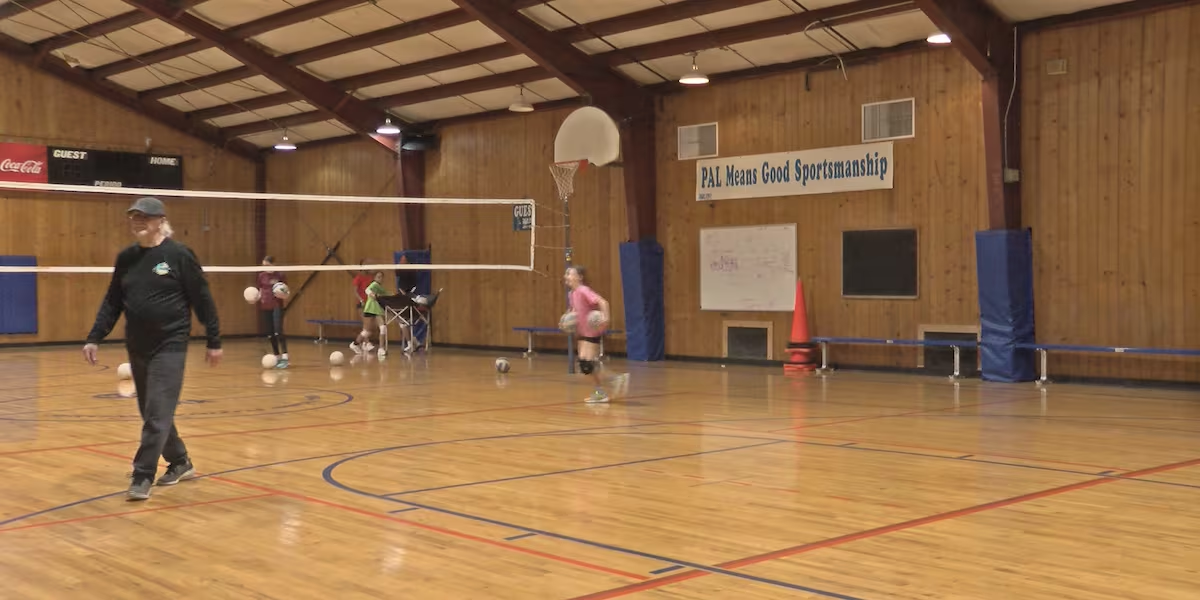
FORT WAYNE, Ind. (WPTA) – Leaders with Fort Wayne’s Police Athletic League, or PAL, say 2025 has been a difficult year for the program due to low attendance.

PAL offers youth programs in Football, Basketball, Boxing, and Girls’ Volleyball, but they say it goes beyond athletics.

”It’s more of a community. Our volunteers don’t just focus on athletics, but they get to the heart of the child, and they truly care and mentor them, and care about them as a person,” said PAL Coordinator Tristin Lichtsinn.

The program, established in 1956, “was founded with the vision of empowering the youth of Allen County. Through athletics, we aim to foster character development and create positive opportunities for young individuals in our community,” as written on their website.

Although football has long been their biggest draw, Lichtsinn says 2025 has been unusually slow due to more programs popping up in the community.

For the first time this year, they are offering a Spring football program, taking in registrations right now.

Her husband, Nicholas, is a police officer who has volunteered as a football coach for 5 years.

“I didn’t know that it would be something that I would truly enjoy. I thought it would just be exhausting. Watching the kids grow and learn, and accomplish new tasks, and watching them just mature into young men and women has been really rewarding,” he said.

The philosophy he brings into the gig is all about character development.

“I’m one of those horrible coaches who don’t really care if we win. I want the kids to truly enjoy it. I want them to grow up and really love this sport. Odds are they aren’t gonna grow up and play professionally, odds are they won’t even play college,” Lichtsinn said.

Boxing has recently become one of their biggest draws under Coach Alberto Lozada, who, in just a few weeks, already has a class of more than 40 people of all ages.

“The most important (thing is) they come here, try to do something, keep the kids out the streets, because the violence is more and more,” Lozada said.

To learn how to enroll your kids in PAL’s programs, you can visit their website and Facebook page through these links. You can also call them at (260) 432-4122.

Anyone interested in signing up to be a volunteer or mentor is encouraged to do the same.


Link

Continue Reading

Rec Sports

Youth Matters and the role of sport and physical activity

Published

on


Our sector already delivers experiences that young people value: inclusive activities, strong role models through coaches and volunteers, and environments where young people can feel safe, welcomed and supported to be themselves.

When done well, sport and physical activity can be a powerful protective factor in helping young people thrive, not just cope.

Inequality remains a barrier

Youth Matters rightly highlights the need to halve the participation gap between disadvantaged young people and their peers when it comes to enriching activities.

This is an area where urgency is needed.

Our latest Active Lives Children and Young People survey shows that while overall activity levels are rising, stubborn inequalities remain.

Young people from the least affluent families are still the least likely to be active, and too often face barriers related to cost, access, safety and whether opportunities feel designed for ‘people like them’.

Less than half of young people say they are happy with the activities and services in their local area, and even fewer feel those opportunities reflect their needs and expectations.

Addressing this must be a priority if the ambitions of the strategy are to be realised.

Alignment with Uniting the Movement

The emphasis in Youth Matters on putting young people and communities at the heart of decisions, shifting from fragmented to collaborative working, and empowering local delivery strongly aligns with our long-term Uniting the Movement strategy.

Our Place Partnership approach is already focused on tackling inequalities, working alongside local partners and investing in long-term, community-led solutions.

Youth Matters validates this direction and reinforces the importance of sustained, place-based action rather than short-term interventions.

Our commitment

Delivering the ambitions of Youth Matters will require coordinated action across Government, sectors and communities.

Sport England is committed to playing our part: working with partners nationally and locally to ensure sport and physical activity are accessible, affordable, welcoming and shaped by young people themselves.

By listening to young people’s voices, focusing on the places facing the greatest challenges and continuing to address inequality head-on, we can help ensure this strategy delivers lasting impact over the next decade.

We look forward to continuing to work with Government, the youth sector and partners across sport and physical activity to turn this ambition into action for young people.


Link

Continue Reading

Rec Sports

Female youth sports injuries on the rise in Michigan, doctors say

Published

on


Editor’s note: This story was produced for the ear and designed to be heard. If you’re able, WCMU encourages you to listen to the audio version of this story by clicking the LISTEN button above. This transcript was edited for clarity and length.

Gabe Schall: Doctors are seeing an uptick in ACL knee injuries in young athletes across Michigan.

WCMU’s Tina Sawyer recently sat down with Stefanie Mills, one of WCMU’s TV producers to learn more about this debilitating injury. Mills recently produced a TV segment of this story for WCMU’s Pressing Matters. She started the discussion by explaining what the ACL affects.

Stefanie Mills: It’s a band of tissue inside your knee that connects the femur thigh bone to the tibia or the shin bone to the knee joint. But as I discovered, I was hearing more stories about ACL injuries and tears, and it wasn’t just boys, and it wasn’t just a specific sport. It was all different sports. There is a lot of research that shows that girls are significantly more susceptible to injuries.

Tina Sawyer: In the episode of Pressing Matters, the topic was, you know, why girls? And they had brought up hormones are changing in younger people, younger women.

SM: Yeah, the incident rate, it depends on an activity. Boys versus girls, girls are actually 4 to 8 times more susceptible to ACL injuries. And again, depends on sports, but there’s other factors too. And one of those factors includes monthly cycles, hormone levels. It’s also about girls’ knees are built different. Biological factors and physical factors, right? Girls’ bone structures are not the same as their male counterparts.

TS: Why are they on the rise now as opposed to say 10 years ago? And I know that’s a very broad umbrella.

SM: I think there are many reasons. What I learned by talking with Dr. Crawford and Kyle Mason is that the seasons are longer, the expectations are just more demanding overall. But seasons are stretching year-round, right? And so there’s just more demands being put, especially on younger bodies that are still growing. So it’s all about finding balance and also nutrition, getting enough sleep, stretching, all those things. They’re pushing themselves more.

TS: The intensity is there.

SM: The athlete that was featured, her name is Grace. She’s a soccer player. And through her journey, I kind of learned more and more about ACL injuries. You know, oftentimes require surgery that’s going to keep you out of competition for at least a year.

TS: She was a soccer player. Now, are you seeing those tears in like basketball players as well?

SM: Absolutely. There’s basketball players, there are soccer players, there are volleyball players, there are football players. It’s no one. Sure, one, some sports might have higher risks of it, but it can happen to anybody. And I think the biggest part for me when I started doing the story and researching it was this information has been out there, but you don’t know what you don’t know until you’re really, you know, until you’re going through something like this, until you get injured.

TS: What are ways that people can get support, protection for these young people when they’re going into a certain sport?

SM: There’s no one way to prevent an injury, but here are some ways that could maybe help. One thing the doctors talked about was sports sampling. And that is basically, at younger ages, playing multiple sports, because that allows your body to use muscles in different ways, as opposed to using the same muscles over and over in the same sport. Now, not everybody may want to play extra sports, so that’s where it’s really important to focus on strength training, core training, that you can support your whole body.

TS: That makes sense. I understand also that another component of getting support is mentally, because they feel as though they’re starting back at square one or they don’t feel like a part of the team anymore. What did you learn from that?

SM: Yeah, that was a really important piece. I think mental health, especially for younger athletes, is so, so important right now. It’s also important to be active, right? But then the mental health aspect, especially when you’re injured, you can find yourself in really dark times. So that’s where the whole teamwork comes in. And I really like how a lot of teams, they include those injured players in some capacity, right? Like from team managers maybe. So that’s all really important to just feel that camaraderie with your teammates and your coaches and your family and your friends, you know, to have a good, strong, solid support system there.

TS: Stefanie Mills, thank you so much for joining us.

SM: Thank you so much for having me, Tina.


Link

Continue Reading

Rec Sports

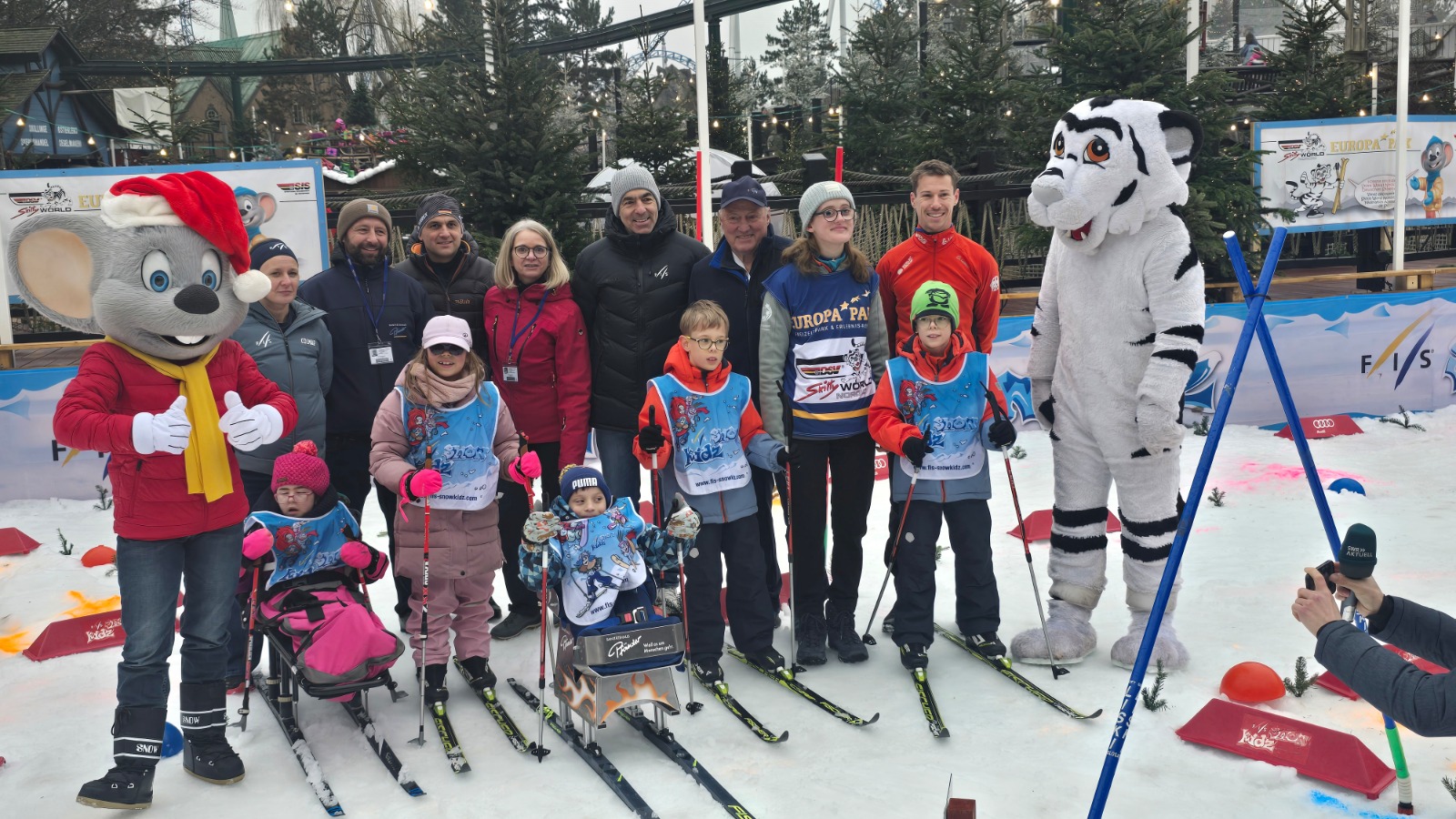
FIS encourages youth participation with Para Ski Nordic Action Day at Europa-Park

Published

on


Earlier this month, a special action day for Para Cross-Country skiing took place at Europa-Park–Germany’s largest theme park, suited for year-round activities.

On 14 December, children with disabilities were given the opportunity to experience Nordic skiing for the first time at the Skitty World Nordic, the course of the German Ski Association.  

A fixture of the park’s winter season since 2016, the Cross-Country course was specifically designed for introductory purposes to assist those with no prior experience by providing a low threshold to skiing.

It was developed by Georg Zipfel, former national coach and current FIS Race Director for the discipline, and Anja Haepp who was crucial to the organizing of this project. The idea was supported by and brought to life with the commitment of Europa-Park and the German Disabled Sports Association.

Over the course of the event, 14 children with visual impairments, arm or leg amputation, or young participants who rely on wheelchairs, were involved on the day. For many, it was their introduction to the world of snow sports.

With the guidance of experienced coaches, such as Markus Sommerhalter, those in attendance enjoyed their first experience in a safe environment with a focus on joy, movement, and inclusion.


Link

Continue Reading

Rec Sports

Baldwinsville’s 1st year boys basketball coach is working to build strong culture and pipeline

Published

on


Basketball has been a big part of Brian Montanaro’s life for as long as he can remember.

Montanaro had his fair share of playing days in high school and college, but his transition to coaching came quicker than expected in the mid-2000s.

Fast forward to today, and he’s currently in his first season as head coach of the Baldwinsville boys basketball team.

“It’s been a great experience so far,” Montanaro said. “From a strategic side of things, when you graduate seven seniors like we did last year, that’s never an easy stepping stone into the following season and filling roles in the process. But we have a lot of good returning players who have stepped into the role and have been buying into everything we’ve been doing and sharing. They’ve been working their butts off, which is awesome. Our goal is to continually improve, one step at a time. And as long as you put forth that effort, whether it’s on the core, in the classroom or later in your professional life, that’s the attitude that’s going to make you succeed. It might not always show up immediately, but you keep up that consistency and the results will follow. That’s kind of the mindset we have.”

Before Montanaro entered the coaching world, he played at Bishop Ludden. A 2001 graduate, he was part of a 2000-01 Pat Connelly-Gaelic Knights squad that made a run to the New York State Class B semifinals.

“Having Coach Connelly as my coach was awesome,” Montanaro said. “He was a great coach and mentor. I had a very good three-year career there, and Coach Connelly was a big reason for it.”

Montanaro went to play for Daemen College (Daemen University), an NAIA Division II program that recently moved to NCAA Division II.

“I had different offers or (Division I) coaches that reached out to me, but a lot of them were like Ivy League and Patriot League schools where there weren’t really academic or athletic scholarships,” Montanaro said. “I was trying to find the right fit that I thought made sense for me. When I visited Daemen, I visited Canisius on the same trip. Once I stepped onto the Daemen campus, I fell in love with it. I thought the coach was awesome. I got to meet some of the players, I got a tour, and I met some teachers on the visit. It was just the way everyone was so friendly, outgoing, upfront and honest with what they were looking for and how I’d fit into the program. I knew right when I left the campus that that’s where I wanted to go.”

Montanaro was a 6-foot-5, jack-of-all-trades player for Daemen. He played every position for the Wildcats, receiving All-America and conference player of the year honors near the end of his career.

Daemen reached the NAIA Division II Tournament two years in a row, including an appearance in the Elite Eight.

“(College basketball) was an amazing experience,” Montanaro said. “I lived and breathed basketball. I was in the gym all the time, working out, playing, helping, and breaking down game film with the coach. I loved being on the road and pushing the team. I had a great group of kids that I played with, and we pushed each other all the time.”

Montanaro had a chance to play basketball overseas, but the opportunity to coach was calling. That’s when he decided to stay with Daemen for the long haul and also graduated from the college in 2006.

“I had a few offers to coach college,” Montanaro said. “It seemed like most of the coaches in our conference that reached out to me at one point or another said, ‘If you want to coach, we’ll be happy to take you on. We’d love it.’

“Then I had my coach at Daemen say, ‘I think I’m planning on retiring in the next couple of years. I’d love for you to come on, be the assistant coach, and take over the program.’ That was kind of the path that I went toward. I got my master’s degree while I was coaching.”

Soon after coaching at Daemen, Montanaro realized he wanted to start a family with his high school sweetheart, Ashley.

“While I loved coaching, it was hard to justify being on the road all the time,” Montanaro said. “Coaching and not being able to be part of my kids’ lives was not the way I wanted it to be.”

Montanaro took a break from coaching, then got back into it when his kids started playing basketball.

He and his family moved to Syracuse in 2016. From there, Montanaro and his family became involved with the Baldwinsville Sting, a youth basketball program within the area.

“I got involved with it from there and then, with my knowledge and background and having both boys and girls in the program, it was a natural fit,” Montanaro said.

Montanaro coached some of the Baldwinsville Sting squads that his kids were on. In 2021, he took over as president of the entire program for a few years.

Right before the 2024-25 season, an opportunity arose to be an assistant under head coach Tom Brown for the Bees’ varsity squad.

Montanaro credits his time with the Baldwinsville Sting for his transition to coaching high school basketball.

In the midst of working on his physical education certification, Montanaro was already a substitute teacher within the Baldwinsville Central School District.

Coaching at the same time made sense for Montanaro.

“(The Baldwinsville Sting) kind of led its way into me getting into the school and the varsity program and a unique position to help build a basketball culture,” Montanaro said. “At B’ville, that hasn’t always been here and that’s our goal over the next few years here is to keep building that connection from the ground up with a youth level up through the high school program.”

When Montanaro stepped in as the next head coach at Baldwinsville for the 2025-26 season, the pipeline between the Sting and the high school program solidified even more than before.

“I think that pipeline is huge for helping with that culture and building it,” Montanaro said. “There are a lot of great parents who volunteer and help with coaching with the Sting program. Being able to be connected to them and all the players, knowing me from seeing me at Sting (games and practices) and seeing me at tryouts and summer camps, and now seeing me there and then coming to the games and seeing me coaching, they can see the same things I’m teaching (on varsity). There might be some tweaks and a little bit more advanced, but teaching them that this is what you’re building toward. It’s been extremely helpful teaching my own kids and their teams, and they see it at both levels and see that coaching style. I’m trying to bridge it all with that. I think it’s great for the program and something that’s only going to be beneficial in the long run.”

Montanaro’s own children are following in his footsteps. His oldest daughter, Lilly, is on the Bees’ JV girls basketball team. Maximus is one of Baldwinsville’s modified basketball squads, and some of his kids currently play for the Sting.

Montanaro’s varsity squad played in the Rome Free Academy Invitational over the weekend. As the Bees trek through the season and beyond, Montanaro will be there to guide them.

“There are a few things we talk about regularly in practice,” he said. “One is that it is all right to make mistakes. It’s just a matter of how you learn from those mistakes and how you keep building on them every day. It’s about a growth mindset and always getting better each day. As long as you bring a full effort every day, we’re going to get better. You’ve got to push yourself and the person next to you.

“We’ve been using the term ‘hive mentality,’ and as the Bees, we’re all in this together. We’re one team. We’re one hive and one drive. We have one singular goal, so it’s about us building together. It’s not about one person always standing out and only doing things. It’s about what can I do to make the player next to them better, which is going to ultimately make me better and the team better. Having that consistency is what you need to really improve and build over the course of the season or over the course of a few years in your career.”


Link

Continue Reading

Rec Sports

‘Batter Up!’ Dos Pueblos Little League Calling for Youth Baseball Umpires | Sports

Published

on


Dos Pueblos Little League is recruiting middle school and high school baseball players to umpire Little League games this season.

Prior umpiring experience is preferred, but not required. Dos Pueblos Little League has an Umpire Board member who will help with training, but baseball knowledge is a must.

Gear also provided and Little League umpires can earn $40 per game or receive volunteer service hours.

Umpiring Little League is “a great way to build leadership skills and stay involved in the game,” organizers said.

To apply, email presidentdpll@gmail.com.


Link

Continue Reading
Rec Sports3 minutes ago

Police Athletic League (PAL) reports engagement numbers are down, offers youth sports programs

Motorsports6 minutes ago

Big Machine Racing Welcomes Retina Surgeon Dr. Patrick Staropoli to the O’Reilly Auto Parts Series for Full-Time Competition Beginning at Daytona – Speedway Digest

Rec Sports10 minutes ago

Youth Matters and the role of sport and physical activity

Rec Sports18 minutes ago

Female youth sports injuries on the rise in Michigan, doctors say

Sports21 minutes ago

Volleyball Assistant Coach in Clinton, SC for Presbyterian College

Motorsports22 minutes ago

Greenville land use ordinance addition moved to June town meeting -Piscataquis Observer

Rec Sports26 minutes ago

FIS encourages youth participation with Para Ski Nordic Action Day at Europa-Park

Rec Sports35 minutes ago

Baldwinsville’s 1st year boys basketball coach is working to build strong culture and pipeline

Sports37 minutes ago

Wisconsin volleyball offseason off to crazy start

Motorsports39 minutes ago

CLIMBING: How the All-Time Win List Looks After 2025 – Speedway Digest

Technology40 minutes ago

PlayStation Market Accelerates Global Gaming Evolution:

NIL44 minutes ago

Four takeaways from the first weekend of the College Football Playoff

Sports53 minutes ago

Outside hitter Eva Travis signs with Wisconsin volleyball

Technology2 hours ago

How eSports Is Shaping Competitive Mindsets in Miami and Beyond – Five Reasons Sports Network

NIL2 hours ago

The Year Schools Paid Their Players

Most Viewed Posts

Trending