
Newfound swagger has awoken a side of Sacramento State never seen before. A cool, cowboy-hatted head football coach named Brennan Marion started the conversation. Then walked in former Sacramento Kings point guard Mike Bibby, who held the door open for the man they call Shaq.
NIL
Inside the rise of Sacramento State sports


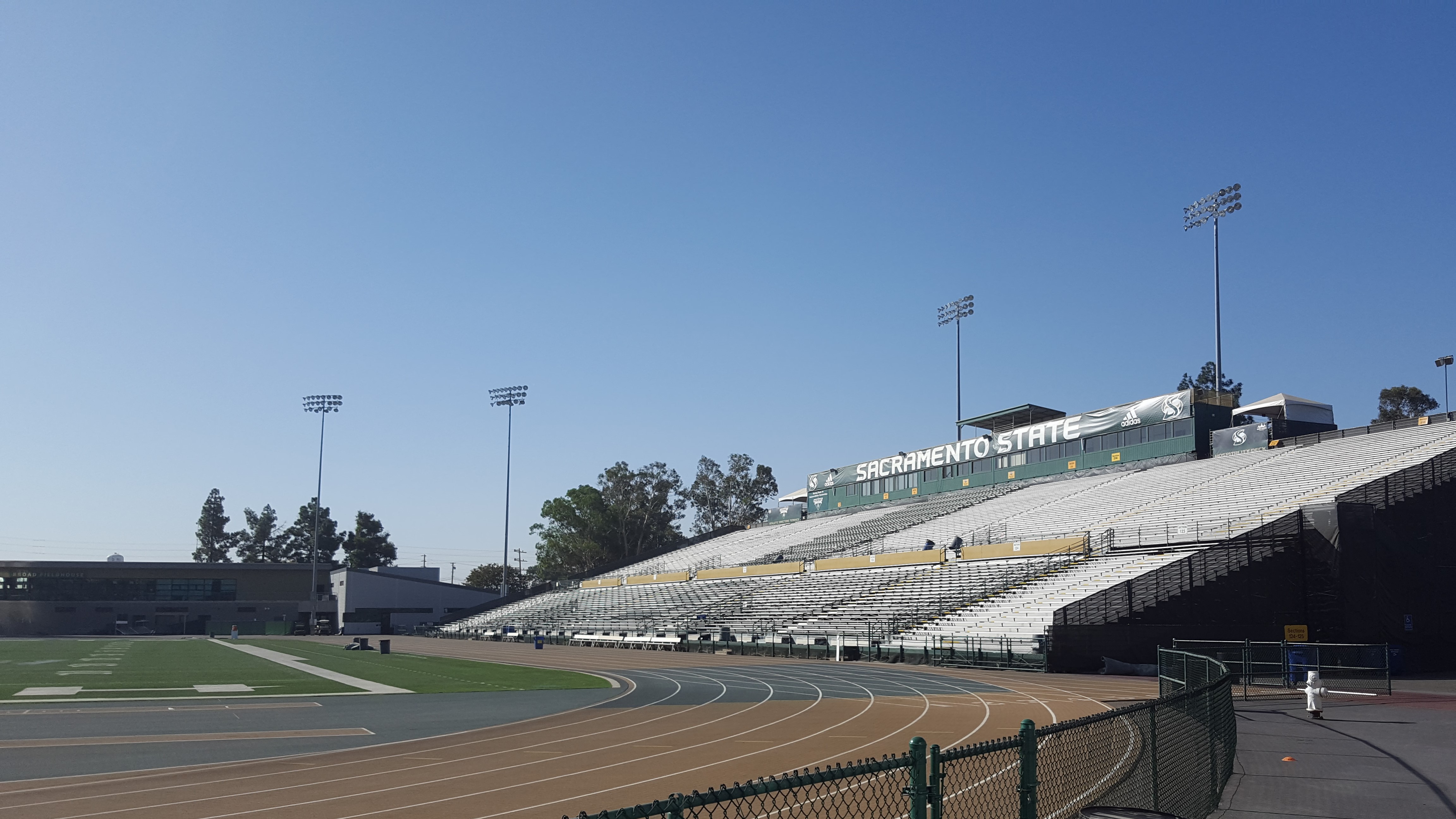

Sacramento State football head coach Brennan Marion is among those at the school with big dreams for the program.
Football recruiting visits accessorized by Mercedes-Benz GT photo shoots became commonplace, as if several years earlier the same program hadn’t proposed a fundraising project to subsidize player meals in summer school. A third-party name, image and likeness collective called the Sac-12 raised $50 million in conditional funds to prepare for a potential future in the rebuilt Pac-12 Conference.
The NCAA thought the Hornets bit off more than they could chew with a bid to join the FBS as an independent. Their application was promptly rejected earlier this summer for lack of a conference invitation. The notion that a long-standing FCS school could book a seat at the adult table so easily?
Article continues below this ad
More For You


Ambitious at best, exclaimed the FBS fraternity.
President J. Luke Wood, the youngest person to ever be appointed the role of university president at Sacramento State, swiftly appealed the decision. Wood, an Oakland native, told the Chronicle his FBS dream for a once innocuous alma mater was neither a matter of if nor when. He insisted his Hornets will play at that level in 2026.
At a time when mid-major programs helplessly watch the haves pocket their best players, Wood has launched an audacious pursuit to remove Sacramento State from among the have-nots. Three other programs within 100 miles of San Francisco compete at the FBS level: Stanford, Cal and San Jose State. With a $4 million football roster, Sacramento State already has more NIL money than San Jose State, per Marion, more national headlines than Stanford and Cal this year, and more nerve. The school’s athletic director, Mark Orr, a Cal football alumnus, hopes to see each of the Northern California schools on the schedule ASAP.
At last, the sleeping giant with more than 31,000 students wants all the smoke.
Article continues below this ad
“Our success, of course, is going to be determined upon when and how we become FBS,” Wood said. “But no matter what, in terms of what this was all about, we have been successful. Because the whole point of this was to raise the visibility of the institution. And there’s no question that we’ve succeeded in doing that.”
Ready or not
As a 19-year-old college freshman, Wood called his shot.
He told anyone who would listen that he was going to be president of Sacramento State. One pillar of his platform as a student leader then mirrored what he has set into motion over the past two-plus years on the banks of the American River: Athletics heals all wounds.
Such foresight came into full focus when Wood was the vice president for student affairs at San Diego State, where he had a front-row seat to the ripple effects of a thrilling March Madness run. Aztecs men’s basketball in 2023 notched its first Final Four and national championship appearance in program history. The profile of the university leveled up overnight.
Article continues below this ad
“I got to see what that did for applications, for students accepting admittance into the campus, for the increase of out-of-state students, and, of course, the additional revenue that comes to the university through that,” Wood said.
Wood at age 41 followed in the footsteps of former President Robert S. Nelsen, whom Wood credited for helping birth the FBS plan.

Sacramento State President J. Luke Wood, an Oakland native, is determined to elevate the Hornets football team to the FBS level by 2026.
Several months before he retired, Nelsen conducted a feasibility study (which Wood repeated a year later) that entailed a landscape analysis of FBS institutions to determine the internal improvements needed across facilities, staffing, physical therapy, sports psychology and overall athletics operations. A new stadium project had also already been drawn up. The problem, which Wood pointed out early on, was the stadium as originally imagined would not meet FBS requirements.
Wood called an audible, which led to Sacramento State’s announced plans to replace the 21,000-capacity Hornet Stadium with a 25,000-seat, multi-use football stadium, a vision that most recently went under renovation.
Article continues below this ad
Cal Expo, home to the annual California State Fair about 2 miles from Sacramento State’s campus, held a Thursday board meeting with an agenda that included a new business item titled, “Review for Approval-Agreement to memorialize activities for the Sac State Football Stadium.”
Wood reportedly proposed plans at the meeting to adapt Cal Expo’s horse racing grandstand into a college football facility by the fall of 2026, his FBS deadline.
A move to the FBS would open doors for “a football program that is revenue-generating to the point where it helps to support the academic side of the house,” said Wood. Being in the country’s No. 20 media market, according to Nielsen, certainly helps. A significant $23.5 million budget shortfall, in accordance with proposed $143.8 million in California State University funding cuts? Not so much.
Sacramento State’s initial projected shortfall was $31.2 million until the state reduced its initially proposed $375 million budget cut to the CSU system, which resulted in a number of course cuts and layoffs. The steps taken by the university to prioritize athletics amid a restrictive budget environment offers a striking contrast to Sonoma State, which eliminated its entire athletic department for the 2025-26 school year due to a $24 million budget deficit.
It isn’t exactly an apples-to-apples comparison. Sacramento State has an enrollment of 31,000, versus Sonoma State’s 5,700, a number expected to drop closer to 4,000, according to former longtime Seawolves golf coach Val Verhunce. Still, both schools represent compelling case studies on the perceived importance of athletics to the overall health of a university.
Article continues below this ad
“Obviously they’re investing in the future of athletics, where we’ve done just the opposite,” Verhunce said.
“When we see what’s happening at Sacramento State … I know great things can happen with great leadership. And that’s not a pun on anyone that’s ever been a leader (at Sonoma State). It’s just that there’s no stability there.”
One of Wood’s first orders of business: 92 “listening sessions” that lasted an hour and 15 minutes each and involved 1,500 students, faculty, staff, alumni and community members over the course of his first semester as president in the fall of 2023. Many outlined the need for Sacramento State to reduce the number of athletic conferences its sports compete in from five to one … two, maximum. Wood will have resolved as much by the fall of 2026, when the school’s 20 non-football sports join the Big West.
Marion recalled only one other university president he encountered in his career who was as invested as Wood in athletics: Jay Hartzell, former president of Texas, a school with “more money than God,” according to Marion.
“He told the players they didn’t have to go to class on the first day of school,” Marion said of Hartzell, who led Texas from 2020 to 2025.
The bigger and better thing
The direction of Sacramento State sports did not change overnight. Orr, hired as athletic director by Nelsen in 2017, retraced his steps to the first domino: the hiring of head football coach Troy Taylor.
The program had become accustomed to losing, marked by a measly 20-35 record and a .364 winning percentage under Jody Sears. His predecessors did not fare much better. Of the nine Hornets head coaches who came before Sears, Bob Mattos stood as the only one who finished with a winning record.
Together as Sacramento natives, Orr and Taylor raised the standard. Taylor in his 2019 debut season led the team to its first FCS playoff appearance, snapping a 31-year postseason drought, with a share of the program’s first-ever Big Sky Championship. The Hornets won three conference titles under Taylor’s direction, including two outright in 2021 and 2022.
At the peak of his hometown heroism, Taylor left. Stanford came calling.
His star running back, Cam Skattebo, a local Rio Linda product, followed suit. After two years at Arizona State, Skattebo found himself in the national spotlight. He became known as the workhorse who carried the Sun Devils to the College Football Playoff as a Cinderella, and Sacramento State was reduced to a passing mention in his player bio.
Wood was appointed Sacramento State’s president the summer of 2023, in the wake of such telling departures. He rooted for Skattebo as any alum would (Wood earned multiple degrees at Sacramento State and ASU). But mostly, he bemoaned the painful reality revealed by Skattebo’s journey, that Sacramento State was no more than a rest stop en route to the FBS.
“We had a lot of people who wanted to be able to be hometown heroes that felt like they couldn’t, or they would have to sacrifice, or they would take the path that Cam Skattebo did; they play here for a little bit, and then we would celebrate them as they went off to bigger and better things,” Wood said.
“But why can’t we be the bigger and better thing, too?”
Sacramento State has since checked some serious boxes in its efforts to transition from the Football Championship Subdivision to the Football Bowl Subdivision, despite being barred from entry the first go. ESPN reported in June that the university had hired prominent antitrust and sports attorney Jeffrey Kessler, who was “exploring legal avenues” in light of the NCAA’s decision.
“The perception of the NCAA was you’re not FBS unless a conference says you are,” said Wood, who had released a statement post-denial that Sacramento State had “met every meaningful benchmark for FBS membership.”
Table for two
At the spry age of 38, Marion had already been a college coach for the better part of a decade. He knew the drill. Interviews with Power Four and Group of Five schools taught Marion to expect the casual Zoom or phone call. The process often lacked creativity. Fortunately for him, an FCS athletic director didn’t know better.
Less than 48 hours after Orr got in contact with the UNLV offensive coordinator, the two sat down for lunch in Las Vegas. Marion had just helped lead the Rebels to their first 10-win season in Division I and first national ranking in program history. Orr was in search of a new head football coach. One meal with Marion made apparent the job was his to lose. The next night’s dinner with Wood only confirmed as much. Marion asked the right questions.
His first major coaching gigs came right around the time players could begin to profit from NIL. Marion was the wide receivers coach at Pittsburgh in 2021. Then the passing game coordinator and wide receivers coach at Texas in 2022. Both places taught Marion the outsized role that “real” boosters would play in college football for the foreseeable future.
When Marion gave Sacramento State brass the skinny, they effectively smiled and nodded.
“I was telling them, ‘This is what we need if we’re going to be a top-tier program,’ and they just kept saying yes,” Marion said.
With Wood and Orr on the same page, the money was there. From a $4 million player budget (NIL and revenue sharing) to Marion’s $750,000 base salary to a $2.7 million staff pool, Sacramento State leads the FCS in all three categories.
Cool, said Wood: “We don’t see ourselves as an FCS institution anymore. You don’t have an FCS mindset and apply for FBS. You have an FBS mindset you apply because you think that’s where you belong.”

Sacramento State quarterback Jaden Rashada prepares to throw a pass during practice in Sacramento on Monday.
Marion pulled together a recruiting class for the 2025 season that ranked No. 1 in the FCS, No. 3 among Group of Five schools, and No. 73 compared to 136 FBS programs, according to Hero Sports (FCS) and 247Sports (FBS). The team signed seven former four-star high school recruits, including quarterback Jaden Rashada, the Bay Area native who followed up his infamous NIL mishap at Florida with a season apiece at Arizona State and Georgia before returning to his home state.
Then you get to the 2026 class, currently ranked No. 54 nationally on 247Sports and headlined by Xavier McDonald, a four-star wide receiver who chose Sacramento State over SEC schools Alabama, LSU, Ole Miss, Arkansas and Auburn.
Marion said he and his staff can get three-star and junior college recruits “all day long without any compensation,” but it’s the four- and five-star guys who require the financial incentive. Even considering the appeal of Marion’s signature “Go-Go” offense, an up-tempo, triple-option scheme that averaged 35.4 points per game (15th nationally) at UNLV last season, money talks when it comes to top-tier talent.
Cutting checks
Sacramento State has committed to a floor of $2.5 million to $3 million in revenue-shared funds to be distributed to athletes directly, per Orr, who added that figure remains fluid and could grow in accordance with increased ticket sales, corporate sponsorships and the like.
Hiring Marion, Bibby and Shaquille O’Neal — forgoing a salary as basketball general manager — stirred a level of financial support unlike anything the university has ever witnessed. Orr said corporate partnerships have quadrupled since they were brought aboard.
The Sac-12 has collected more than $50 million of donations spanning the next decade to support a Pac-12 future for Sacramento State athletics. A majority of that money won’t be accessible unless the school actually joins the Pac-12, though Wood said a number of donors have sent gifts directly to the university in the meantime.
Hornets fans are also buying in. According to Orr, football ticket sales were up 65% from last season — in July.
“It’s a tough ticket to get,” Orr said.
Almost a full month before basketball season tickets officially went on sale, senior associate athletic director Andy Fiske said about 600 fans were on the waiting list. Is that supposed to be good?
Compared to the year before, “Yeah, we didn’t have one,” Fiske said. “How about that?”

Sacramento State basketball coach Mike Bibby and forward Shaqir O’Neal during practice in Sacramento on Monday.
Sacramento State basketball is set to retire the Nest, a 1,012-seat arena that has been around for nearly seven decades, and begin playing home games this season at the Well, a fitness and healthy facility on campus being adapted into an events center that will seat more than 3,000. Still not the endgame, but a better place to start for a men’s team that has never made the NCAA Tournament. (Women’s basketball made its March Madness debut in 2023.)
Former four-star high school recruits in USC transfer forward Brandon Gardner and Central Florida transfer guard Mikey Williams headlined the splashy signings that followed Bibby’s first commitment: Florida A&M transfer forward Shaqir O’Neal, Shaq’s son.
“We’re just not blending in anymore,” said Bibby, a first-time college coach. “Hiring a guy like me with no experience, but a big-time person in Sacramento, is going to open up a lot of eyes. And I’m able to get kids, a lot of these kids that are here would not probably be here if I wasn’t here.”
Marion mentioned a Bibby autograph is a common ask at his son’s flag football games. That and an unofficial visit, for 8-year-olds.
“The sports thing really does something to people in America,” Marion said, “when it comes to football especially.”
The school’s spring football game drew a record crowd of more than 7,000 fans, which dwarfed the turnout of 300 from the previous year. Now that people are paying attention, results will be expected, if not demanded. Football went 3-9 last season; men’s basketball was 7-25.
Time to see what Sacramento State’s big bucks can buy.
“We got to win,” Wood said.
“You can bring in an amazing coach, you can bring in amazing players, you can raise money, but nobody cares about it unless you win.”

Continue Reading

The new changes to the transfer portal window were put in place with the intention of making things easier for both coaches and athletes, but some haven’t viewed the changes as a positive.
Per The Athletic’s Stewart Mandel, one agent said, “nothing has changed, except kids aren’t able to take visits.” The agent added that “it’s the dumbest thing in the world.”
Previously, there were two transfer portal windows: one being a 20-day window in December and the other being a 10-day window in April. As of October, there is now just one transfer portal window, which is Jan. 2-16 this year.
Athletes playing on a team that undergoes a coaching change are given a 15-day transfer portal window that begins five days after a new coach is hired. Players who are participating in the College Football Playoff but choose to transfer during the January window are allowed to stay with their teams through the end of the season.
On the surface, the change would seemingly be a net positive for all parties, but apparently it still needs some tweaking.
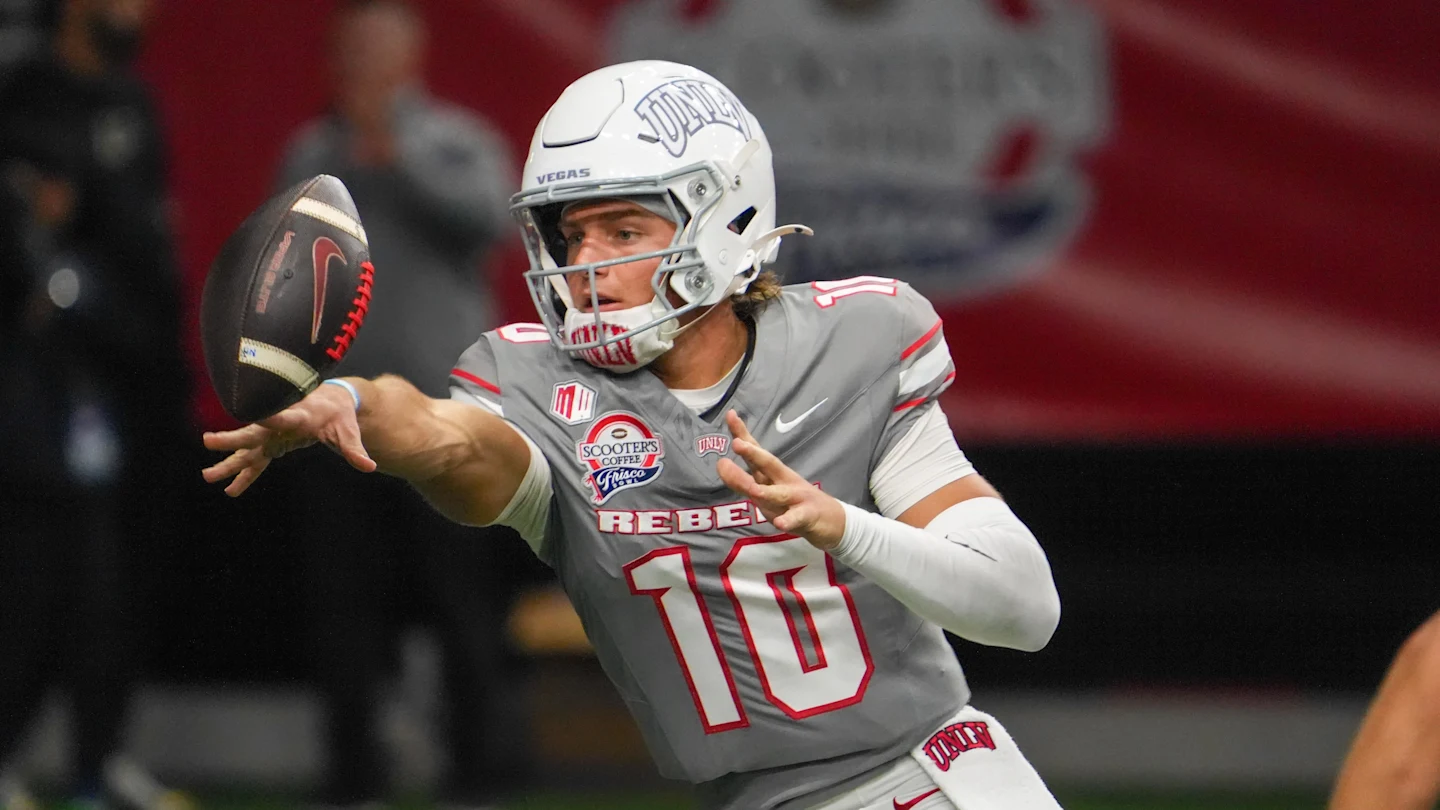
A shuffling of quarterbacks is coming to college football in 2026.
In the Power Four ranks, quarterbacks such as Rocco Becht, Josh Hoover, Dylan Raiola and Brendan Sorsby are looking for new schools to play for next season.
While the Power Four quarterbacks are dominating the spotlight, there are a number of Group of Five starters looking to increase their exposure at Power Four programs in 2026.
One quarterback who will depart from a Group of Five school when the transfer portal opens is UNLV starter Anthony Colandrea. He will have one season of eligibility remaining at his third school.
One school of interest that has emerged for Colandrea since he decided to leave UNLV is Florida State.
Pete Nakos of On3 reported that Florida State is interested in Colandrea as its starter in 2026.
Should Colandrea transfer to Florida State for the 2026 football season, he would join a growing number of quarterbacks who have transferred to the Seminoles in the last five seasons.
James Blackman was the last quarterback recruited out of high school to start at the beginning of a season for Florida State all the way back in 2020. Since Blackman, Mike Norvell has added Jordan Travis (Louisville), DJ Uiagelelei (Clemson and Oregon State), and Tommy Castellanos (Boston College) from the transfer portal to the Seminoles.

The 6-foot, 205-pounder began his college football journey with Tony Elliott at Virginia in 2023. Tony Muskett started that season at quarterback, but a combination of injuries and inconsistency gave Colandrea the opportunity to play in seven games. He threw for 1,958 yards, 13 touchdowns and nine interceptions while rushing for 225 yards.
Colandrea played in 11 of the Cavaliers’ 12 games in the 2024 season. He passed for 2,125 yards, 13 touchdowns and 11 interceptions while rushing for 277 yards and two touchdowns. He transferred to UNLV the following offseason.
The Rebels gave Colandrea the starting role over Michigan transfer Alex Orji after the first game. Colandrea passed for 3,459 yards, 23 touchdowns and nine interceptions while accumulating 649 yards and 10 touchdowns on the ground. He guided UNLV to a 10-win season, a Mountain West Championship appearance and an appearance in the Scooter’s Coffee Frisco Bowl.
Colandrea received Mountain West Player of the Year and All-Mountain West First Team distinction for his heroics in 2025.
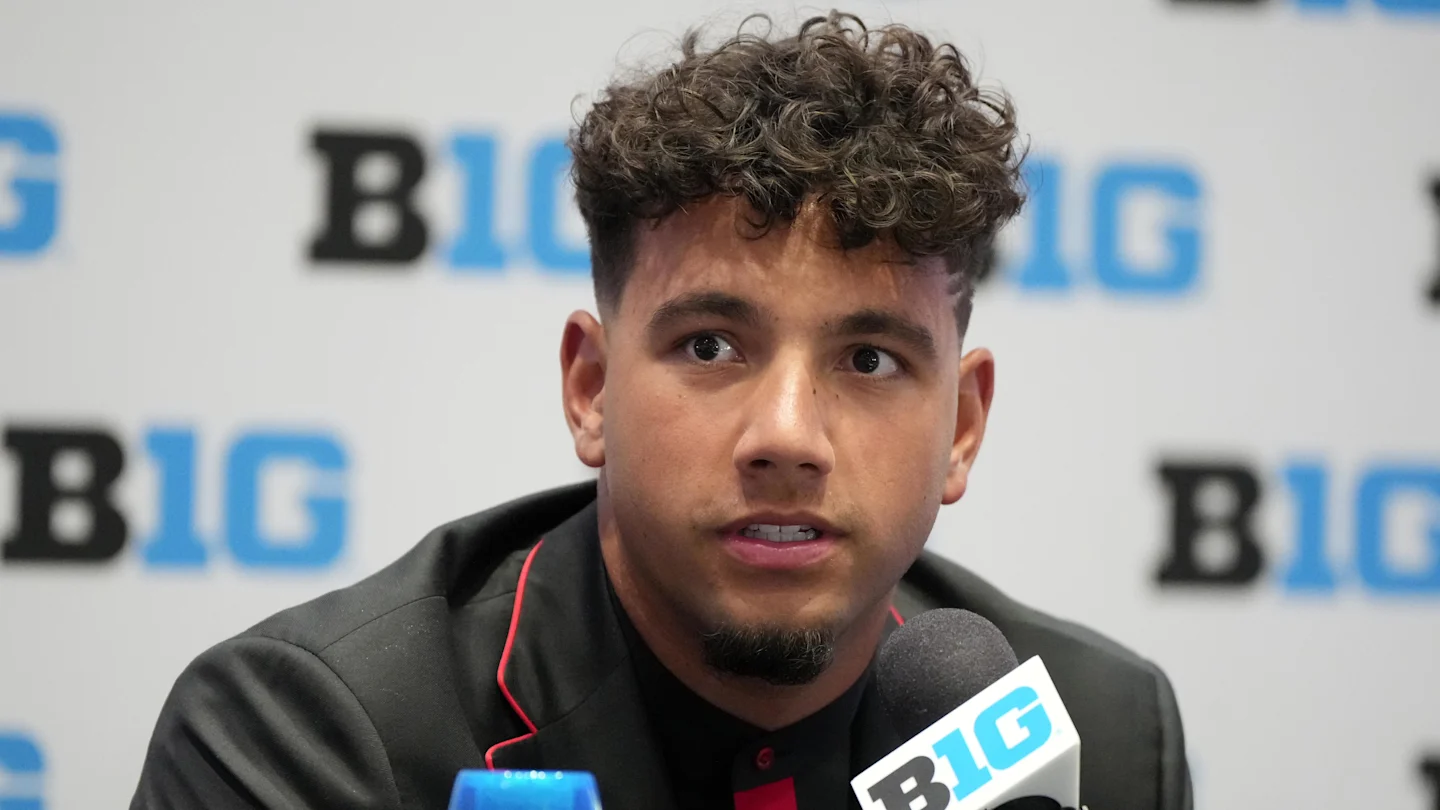
Fox Sports college football analyst RJ Young delivered a harsh assessment of a high-profile quarterback who holds a $2.5 million NIL valuation from On3. This signal-caller recently decided to enter the transfer portal, a move that sparked significant conversation regarding loyalty and team building in the modern era. Young suggests the decision transforms the player from a program cornerstone into a temporary asset.
The analyst noted that the athlete’s next destination will likely view him as a transient piece rather than a long-term solution. This contrasts sharply with the fanbase he is leaving behind because they believed he would play a central role in restoring their program to national title contention.
The quarterback had originally arrived with immense expectations and family ties that carried unique prestige at his former school.
Young argued that the player had everything he requested at his previous stop, including a relative on the coaching staff. By exiting the program now, the standout leaves behind an unfinished job regarding a College Football Playoff invitation despite helping the team reach its first bowl game in eight years.
Analyst details financial, competitive implications of transfer decision
The subject of this scrutiny is Nebraska Cornhuskers quarterback Dylan Raiola. He famously flipped his commitment from the Georgia Bulldogs and the Ohio State Buckeyes before landing in Lincoln. Young’s critique centered on the shift in how Raiola will be perceived moving forward.
“Wherever he lands next will greet him as a rental, unlike Huskers fans who believed he would play a large role in their return to national title contention,” Young said.
The analyst emphasized the unique situation Raiola abandoned.

“Raiola had everything he asked for at Nebraska,” Young said. “As a legacy with an uncle coaching the offensive line, his name carries a prestige in Lincoln that it does not anywhere else in the country.”
Fox Sports college football analyst Laken Litman also weighed in on the situation. She noted the massive expectations placed on the young passer when he arrived on campus.
“The 6-foot-3, 230-pound quarterback was supposed to be the star that would lead Nebraska’s resurgence alongside head coach Matt Rhule,” Litman said.
Raiola started as a freshman and threw for 2,819 yards in 2024. However, his second season did not go exactly as planned after he broke his leg against the USC Trojans. Litman pointed out that external factors likely influenced the departure.
“However, this year didn’t go as planned,” Litman said. “He broke his leg in a loss to USC that sidelined him for the rest of the season, and then couple that with Nebraska firing its offensive line coach, who is his uncle, and his brother de-committing from the 2026 recruiting class, and the decision starts making sense.”

Young added that the initial excitement blinded many to the quarterback’s history of movement.
“The admiration Cornhuskers fans laid on Raiola allowed many Nebraska fans to forget he transferred programs twice in high school and flipped his commitment three times as a prep player,” Young said. “Because his decision to play for the Huskers felt like the one that would stick.”
The Cornhuskers will face the Utah Utes in the SRS Distribution Las Vegas Bowl on Dec. 31 at 10:30 p.m. ET on ESPN.
Read more on College Football HQ
Let’s face it, college football in today’s day and age is nothing like it was even five years ago.
NIL and the transfer portal have introduced new wrinkles – and headaches – for coaches and programs to have to navigate, so building a roster is as complex as it has ever been.
READ: “College Football Is Sick” With NIL Buyouts And Beyond.
I have often found myself gnashing my teeth over the direction of the sport, but today I decided to focus that energy on how exactly to build a roster in this modern era of college football.
Let’s break this down into some key components.
Follow the NFL Model
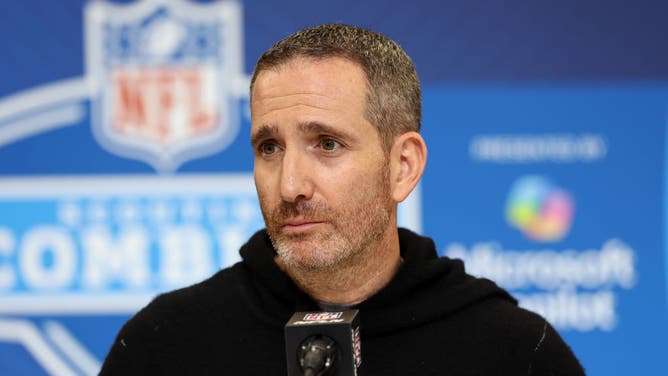
General manager Howie Roseman of the Philadelphia Eagles. (Photo by Stacy Revere/Getty Images)
It’s not a new development to say that college football is becoming more like the NFL.
With new roles like general manager being created to help deal with the transient and transactional nature of the college game, more and more schools are starting to treat their rosters like NFL operations.
That means abandoning the outdated idea of an 85-man scholarship roster and instead viewing it as a 53-man roster.
Gone are the days of stacking and shelving five-star talent just to keep them waiting in the wings. Most teams are realistically operating with a two-deep at most positions, with the occasional three-deep at high-attrition spots (think trenches).
In reality, you’re paying big money to roughly 35–45 players. Think of the rest as cost-controlled development.
Recruiting now functions more like a draft: cheaper, unproven talent you hope will provide depth and develop without immediately chasing a payday elsewhere.
Which brings us to money.
Budget Allocation and the Tier System
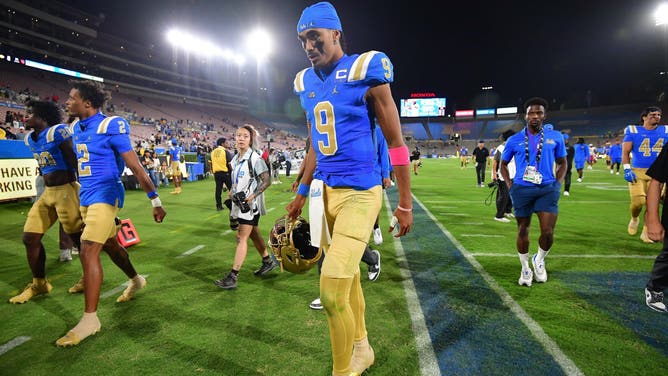
UCLA quarterback Nico Iamaleava. Mandatory Credit: Gary A. Vasquez-Imagn Images
The average Power Four football budget — combining revenue sharing, boosters, and collectives — now sits north of $25 million.
That number is only going up, but for now, it’s a clean baseline.
READ: NIL Wars Between SEC And Big Ten.
The question becomes how to allocate that money without overspending on one player or undervaluing another.
Many general managers use a tier system rooted in NFL positional value, and since college football is mirroring the pros more each year, it makes sense to adopt it.
Tier One
- Starting quarterback
- Edge rusher
- Left tackle
- Cornerback
- X receiver
You could argue WR1 and CB1 sit in a Tier 1.5, but the idea is simple: quarterback is king, and the next most important positions are those that protect your QB and hunt the opposing one.
Tier Two
- Starting running back
- Slot receiver
- Backup quarterback
- Interior offensive and defensive linemen
Linebackers and safeties likely fall into Tier 2.5, if we’re splitting hairs.
A note on running backs: unless you’re dealing with a truly special player (think Saquon Barkley), they sit near the bottom of Tier Two. Their positional value just isn’t very high in today’s game and they wear down quicker than most other positions.
Tier Three
This is a developmental and depth tier, and where a lot of your high school recruiting budget should be spent outside five-star or top-100 high school talent (think low four-star and high three-star players who could develop into quality starters).
Tier Three is where a staff that is great at identifying and evaluating talent earns its pay; anyone can tell you a five-star WR will be a monster, but can you pick out the three-star kid and make him the next Puka Nacua?
Spending Breakdown
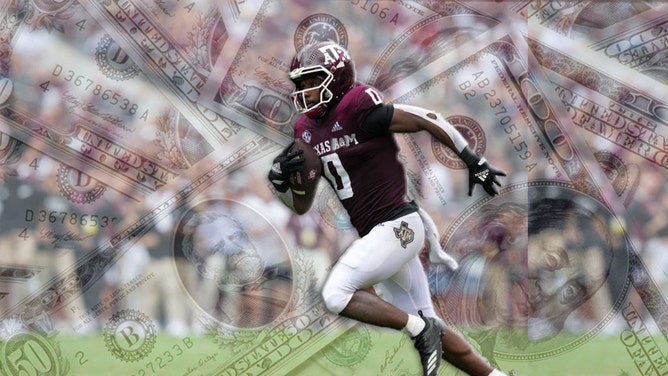
Now that we have our position groups identified, it’s time to breakdown where that money will go.
If we stick to the $25 million budget, it would look a little something like this:
Tier One is where roughly half of your funds will go ($11.25 million).
A QB gets 18% of the budget in the NFL, and it’s no different in college, as a high-level P4 starter will pull down a minimum of $3 million, more than likely 4.
Having an elite QB is almost a non-negotiable, but an elite edge rusher and left tackle is almost as important.
You’re probably going to end up spending $1.5 million on two game-wrecking edge rushers and a brick wall at left tackle.
A true WR1 that every defensive coordinator has to game plan for and lose sleep over will also fetch north of $1 million, as will a lockdown CB1.
From there, Tier Two gets a little under $9 million to play with, with your slot receivers and interior linemen eating most of the budget there just through quantity alone.
Tier Three is going to cost around $3–4 million and will be allocated to roughly 40% of your roster, so a lot of these guys will be cheaper depth pieces and younger developmental players.
It seems gross to breakdown college athletes based on what they are worth, but that is just the world we live in these days.
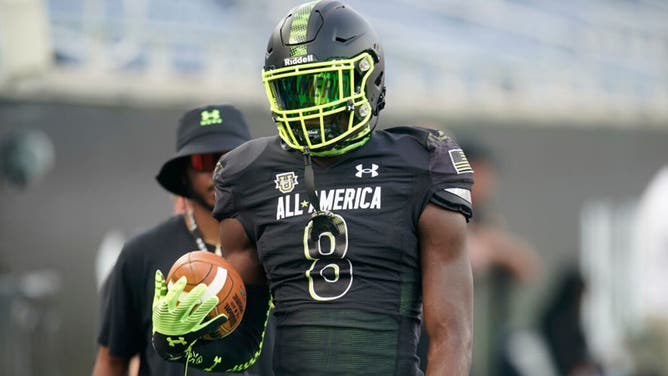
Recruiting vs. Transfer Portal
Finally, we get to my favorite part of the experiment: talent acquisition.
Those of you that are recruiting freaks like myself will be happy to know high school talent acquisition still plays a big role in building a roster, but the transfer portal is vital to any successful college program.
Your high school recruiting philosophy should prioritize Tier One players with super high upside, meaning you should spend on five-star and top-100 level quarterbacks, edge rushers, left tackles, and CB/WR1s.
Other players like interior linemen, safeties, and linebackers should still be recruited out of high school, but you shouldn’t reach for a high-priced talent when a kid who is 80% as good comes at half the cost.
When it comes to the transfer portal, treat it like free agency.
One-year rentals are fine, and you should never portal for depth. This should be to fill glaring holes on the roster.
Tier One is the priority in the portal, especially if you are deficient at a spot like tackle, edge rusher, or receiver.
By having a healthy balance of high school recruiting and the portal (probably a 70-30 split for programs with strong NIL), you can prevent your roster from hollowing out.
And there you have it!
NIL and the transfer portal have made college football almost unrecognizable, and I hate it, but if your team starts to adapt to the new model, they should be fine.
You will start to see more and more teams adapt a model that is similar to the NFL, and although that makes me sad to see, it doesn’t mean college football is mirroring the NFL, rather, it is just mirroring the NFL’s positional value structure.
Hang in there, college football fans. The sport is getting weirder by the day, so let’s all just weather the storm at this point.
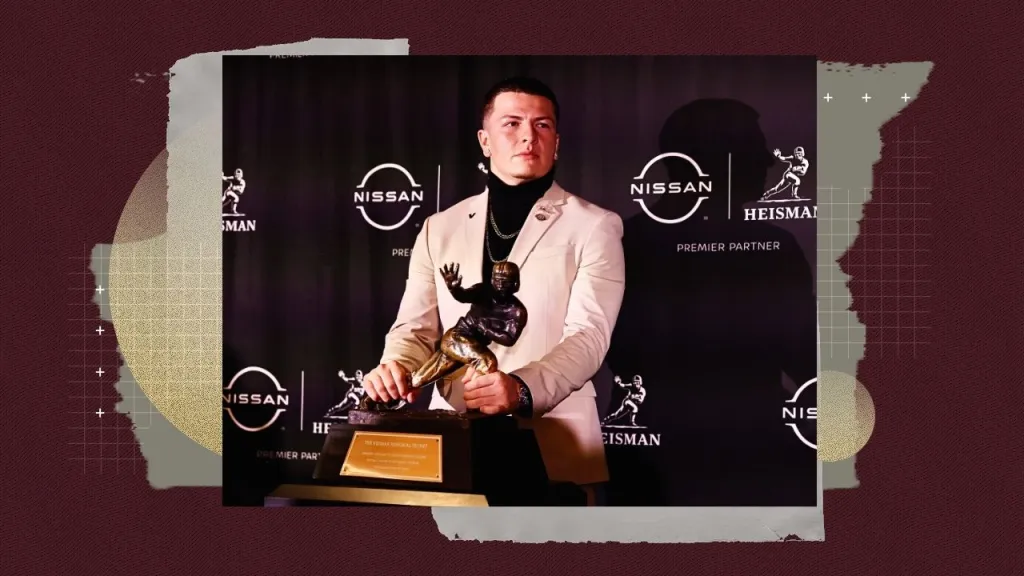
As he and the Vanderbilt Commodores prepare to play the Iowa Hawkeyes in Wednesday’s ReliaQuest Bowl, quarterback Diego Pavia and 26 other former JUCO football players on Friday asked a federal judge in Tennessee to let them play in 2026 and potentially 2027.
Through attorneys Ryan Downton and Salvador Hernandez, Pavia’s group wants Chief U.S. District Judge William L. Campbell Jr. to issue a temporary restraining order and preliminary injunction that would block the NCAA from enforcing applicable eligibility rules pending a final judgment in Pavia v. NCAA. Final judgment means the case would be completed at the trial court level and appealable; no trial date has been set yet for Pavia v. NCAA, with the two sides suggesting trial dates to Campbell ranging from June 2026 to February 2027.
Pavia’s group desires for former JUCO football players to be able to compete in D-I “without regard to years of eligibility or seasons of competition at junior colleges.” The NCAA limits eligibility in one sport to four seasons of intercollegiate competition—including JUCO and D-II competition—within a five-year period. It also generally restricts former JUCO players to three years of D-I football. Pavia has proposed that the D-I eligibility clock begin when a player first registers at an NCAA member school, not when they first register at a “collegiate institution,” which includes non-NCAA schools.
In a related antitrust litigation brought by Pavia’s attorneys, Vanderbilt senior linebacker Langston Patterson is among players suing the NCAA over eligibility rules, and in particular the ones that govern redshirt. Patterson argues that since redshirt players have five years to practice and graduate, there’s no persuasive reason to limit them to four seasons of D-I play. These players seek to expand their maximum number of D-I seasons from four to five. Patterson’s case is before the same judge, Campbell, who is weighing whether to grant a preliminary injunction to authorize a fifth season of play.
Pavia, 23, is a seasoned college football player. He’s playing in his sixth season of college football, with his first two seasons at JUCO New Mexico Military Institute and the last four at New Mexico State and Vanderbilt. Pavia is also one of the best quarterbacks in college football and recently finished second to Indiana’s Fernando Mendoza in the 2025 Heisman Trophy voting. Pavia is earning a great deal as a power conference QB, too. In June, he said he was offered $4-$4.5 million by other colleges to transfer.
Pavia has publicly indicated he intends to participate in the 2026 NFL draft. With more than two dozen other former JUCO players as co-plaintiffs, the case brought by Pavia against the NCAA could continue without him. The NFL’s deadline for underclassmen to declare is Jan. 14. If Pavia gains the choice to remain in college, it’s plausible he might stick around.
After all, Pavia’s NFL draft prospects are mixed. Listed at 6-foot and regarded as relatively slight, Pavia would be on the smaller side for an NFL quarterback. Although it is early for draft prognostications and the NFL combine isn’t until February, Pavia is generally regarded as a late-round draft pick or priority free agent. He also doesn’t project as a likely NFL starter, at least early in his NFL career. Those outlooks have financial implications. A sixth-round pick will sign a four-year contract worth in the ballpark of $4 million. With NIL and House settlement revenue share, Pavia could probably earn more, and potentially much more, by staying in college and dominating.
Last year at around this time, Campbell granted Pavia a preliminary injunction to play in 2025. Shortly thereafter, the NCAA issued a one-time waiver for the 2025–26 academic year that allowed qualified former JUCO players the chance to remain in school. Since that time, more than three dozen “Pavia lawsuits” have been filed by former JUCO and Division II players who want to keep playing in college. Also, in October, a three-judge panel on the U.S. Court of Appeals for the Sixth Circuit on Wednesday dismissed as moot the NCAA’s appeal of Campbell’s order on grounds that Pavia was already playing, and the NCAA had granted a waiver. The Sixth Circuit remanded the case back to Campbell.
In Friday’s court filing, Pavia describes this arrangement as unfair and unlawful under antitrust law. He notes how other categories of relatively older players receive five years of eligibility to play four seasons, a longer window than ex-JUCO players. Those categories include:
• A player who graduates from high school, then plays football at a prep school for a post-grad year before joining a D-I college.
• A player who plays another professional sport (Chris Weinke became a football player at Florida State in 1997 as a 25-year-old after a six-year pro baseball career).
• As of 2025, the NCAA allows former pro basketball players to play college basketball even though they are former pros in the G League and Europe. As noted by Pavia, former NBA draft pick James Nnaji, who grew up in Nigeria and has played professionally in Europe but not in an NBA regular season game, will soon join Baylor’s men’s basketball team. Sportico examined the topic of pro basketball players joining NCAA teams and its impact on Pavia v. NCAA in depth last summer.
Pavia insists that if the NCAA was worried about the impact that he and other seasoned college players have on competitive balance, “it would preclude other older athletes from competing in Division I NCAA sports.”
The antitrust argument leveled by Pavia depicts the NCAA and its member schools and conferences as engaging in a group boycott of former JUCO football players. By limiting how long these players can play D-I, those players are denied potential NIL and revenue-share compensation. Pavia’s expert witness, Dr. Joel Maxcy, is quoted as saying NCAA member schools enjoy a “financial advantage by moving older players out and replacing them with younger players,” since “an outgoing star would be considerably more costly to the school than an incoming player.”
The underlying logic is that football players of Pavia’s caliber, experience and fame can demand more in compensation from colleges than a teenage high school student who might not play a featured role in college until his sophomore or junior year. Pavia says by pushing “older, more experienced players” out of NCAA football, “schools will have the ability to bring in additional freshmen at a much lower cost.”
As Pavia tells it, D-I college football players constitute a labor market, meaning a group of players who seek to sell their (relatively) elite football services to colleges. Colleges, as competitors to buy players’ services, can run afoul of antitrust law by limiting how they compete.
To advance that point, Pavia draws extensively from former Ohio State football star Maurice Clarett’s antitrust litigation against the NFL. Clarett challenged an eligibility rule that requires players be three years out of high school. As a disclosure, I was one of the attorneys representing Clarett in the litigation.
Clarett argued that the relevant market for his case was the market for NFL players, with NFL teams as the buyer of players’ services. That market is distinct and there are no reasonable substitutes; no one would credibly say the XFL, UFL, CFL, AAF or any other non-NFL pro league is a credible substitute. Pavia analogizes that point to say that the market for his services is D-I football, especially since “more than 99% of NIL dollars are paid to those athletes.” Neither playing in JUCO nor playing in the NFL is a substitute to D-I football, Pavia insists. He cites data showing how “less than 1% of Division I football players get drafted into the NFL each year.”
An NCAA spokesperson responded to a request for comment on Pavia’s latest court filing by providing context on the Nnaji eligibility decision. As discussed above, Pavia contends the NCAA allowing Nnaji and other former pro basketball players to play D-I undercuts the association’s justification to limit the number of eligible seasons.
“Each eligibility case is evaluated and decided individually based on the facts presented,” the spokesperson said in a statement. “Schools continue to recruit and enroll individuals with professional playing experience, which NCAA rules allow with parameters.”
The spokesperson added that “as NCAA eligibility rules continue to face repeated lawsuits with differing outcomes, these cases are likely to continue, which underscores the importance of our collaboration with Congress to enable the Association to enforce reasonable eligibility standards and preserve opportunities to compete for future high school student-athletes.”
Attorneys for the NCAA will have the opportunity to try to rebut Pavia’s arguments.
Expect NCAA attorneys to argue, as they have in other court filings, that eligibility rules ought to fall outside the scope of antitrust law since they concern how long a college student can play a sport—a primarily educational, rather than economic, matter.
The NCAA will also assert that eligibility rules are designed to link an athlete’s athletic experiences with the normal trajectory of a college student. Usually after four years of college courses, athletes and non-athlete students graduate and move on to another phase of life, usually a job.
In addition, the NCAA will likely maintain that Division I college football is a unique product and the closer it resembles an inferior version of the NFL, the more it will seem like minor league football. Fans, consumers, broadcasters, media and others, so the theory goes, could then tune out.
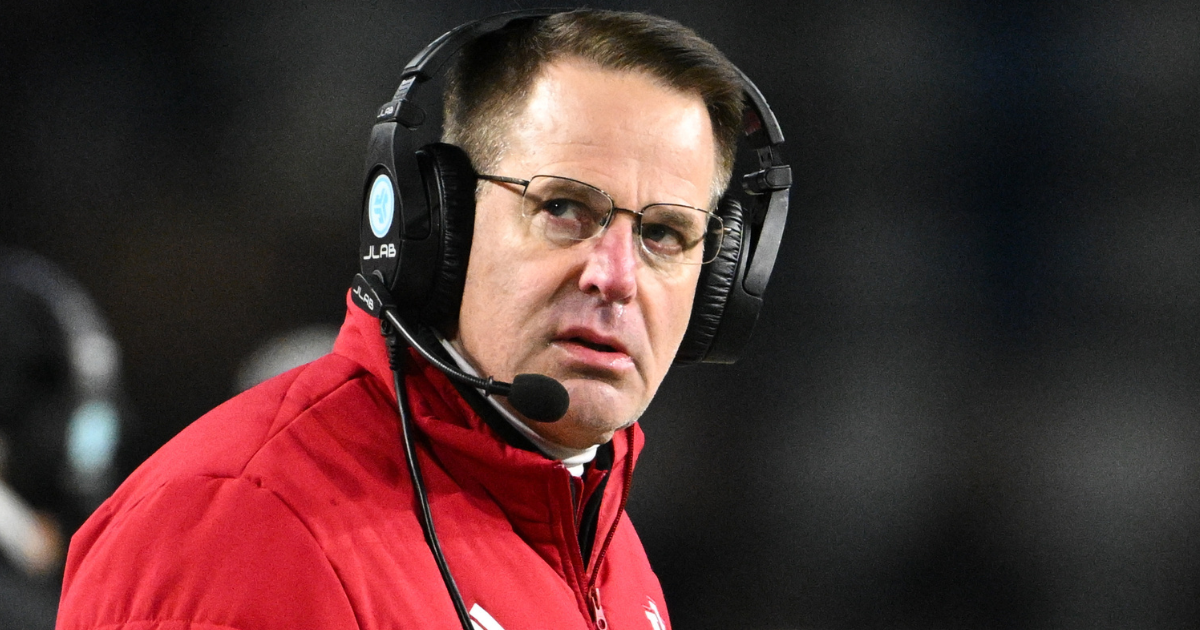
The eight teams still remaining in the College Football Playoff are going to see a quick turnaround following their games and the start of the NCAA transfer portal. The quarterfinals will be played on Dec. 31 and Jan. 1, and the portal opens on Jan. 2.
Indiana head coach Curt Cignetti is one of the several head coaches having to deal with CFP fallout, followed by the portal opening a few hours later. Ahead of the Rose Bowl, Cignetti expressed his frustration with the current schedule in college football.
“I definitely think the calendar could be improved,” Cignetti said. “And that would be unanimous amongst the coaches. Whether you got to move the start of the regular season up a week and start playing in the playoffs when the season ends so there’s a little bit better time to devote to high school recruiting and portal recruiting, we’re all looking, I think, for that solution.
“What you’re doing within college football is just you don’t have one guy in charge. If you had one person calling the shots, I think it would be a lot cleaner. So hopefully we’ll make some progress in that regard.”
In the Hoosiers’ case, they have a 4 p.m. ET kickoff vs. Alabama in the Rose Bowl. Regardless of the outcome, the transfer portal opens at midnight for both teams. Either Cignetti, or Alabama head coach Kalen DeBoer, will be dealing with major disappointment after a loss. The other will be starting bowl prep for the national semifinal.
The overlap has shaped the decision-making process in the coaching carousel following the regular season. Three head coaches — Lane Kiffin (Ole Miss–LSU), Jon Sumrall (Tulane–Florida) and Bob Chesney (James Madison–UCLA) –ended up taking their next job before their team played in the College Football Playoff.
Sumrall and Chesney wore two hats during their respective CFP preparation in order to build their staff and maintain recruits in time for the portal to open. Kiffin, who was not allowed to coach Ole Miss in the playoff, has had his sole focus on LSU since being hired earlier this month.
The NCAA transfer portal will be open for 15 days, closing on Jan. 16 — three days before the national championship on Jan. 19. Additionally, the transfer portal is open for five extra days for players competing in the title game.
Cignetti isn’t the first coach to take issue with the current college football schedule this season. That said, if changes aren’t made — he won’t be the last.

Motorsports1 second ago
William Byron 2025 season in review: Third-straight Championship 4 appearance caps another strong year

NIL35 minutes ago
‘Dumbest Thing in the World,’ CFB Agent Reacts to Transfer Portal Changes amid NIL

NIL1 hour ago
4,000-yard QB heavily linked to major college football program in transfer portal

Rec Sports1 hour ago
Joseph Studeny – Butler Eagle

Sports2 hours ago
LOVB Nebraska ready to serve up Season 2 in League One Volleyball

Rec Sports2 hours ago
‘It’s for everyone’: Phantoms youth program promotes girls’ involvement in the sport | Homepage Top Stories

Motorsports2 hours ago
Aaron Rodgers Gave This $20K Christmas Gift to Steelers’ Offensive Linemen

NIL2 hours ago
$2.5 million QB dealt reality check after decision to enter transfer portal

Sports2 hours ago
Texas A&M volleyball champion Logan Lednicky sets program record

Motorsports3 hours ago
Dale Earnhardt Jr.’s ex-rival shares hope after humbling – Motorsport – Sports

NIL3 hours ago
How To Build A Competitive College Football Roster In The NIL Era

Rec Sports4 hours ago
How the issue of dual participation created a rift in Alaska’s youth hockey community

Sports4 hours ago
Torrey Pines’ Finley Krystkowiak highlights All-CIF girls volleyball team

Sports4 hours ago
Aggies Wrap Up Nonconference Slate Sunday Against Southwest

NIL4 hours ago
Diego Pavia, JUCO Plaintiffs Seek Another Year of College Football

Motorsports2 weeks ago
SoundGear Named Entitlement Sponsor of Spears CARS Tour Southwest Opener

Rec Sports3 weeks ago
Black Bear Revises Recording Policies After Rulebook Language Surfaces via Lever

Motorsports4 weeks ago
Jo Shimoda Undergoes Back Surgery

Motorsports3 weeks ago
Donny Schatz finds new home for 2026, inks full-time deal with CJB Motorsports – InForum

NIL4 weeks ago
Bowl Projections: ESPN predicts 12-team College Football Playoff bracket, full bowl slate after Week 14

Rec Sports4 weeks ago
Robert “Bobby” Lewis Hardin, 56

Rec Sports4 weeks ago
How this startup (and a KC sports icon) turned young players into card-carrying legends overnight

Rec Sports3 weeks ago
How Donald Trump became FIFA’s ‘soccer president’ long before World Cup draw

Sports4 weeks ago
Men’s and Women’s Track and Field Release 2026 Indoor Schedule with Opener Slated for December 6 at Home
Sports4 weeks ago
Wisconsin volleyball sweeps Minnesota with ease in ranked rivalry win

Rec Sports3 weeks ago
David Blitzer, Harris Blitzer Sports & Entertainment

Motorsports4 weeks ago
Michael Jordan’s fight against NASCAR heads to court, could shake up motorsports

Motorsports4 weeks ago
Pohlman admits ‘there might be some spats’ as he pushes to get Kyle Busch winning again

Motorsports3 weeks ago
JR Motorsports Confirms Death Of NASCAR Veteran Michael Annett At Age 39

Motorsports4 weeks ago
Increased Purses, 19 Different Tracks Highlight 2026 Great Lakes Super Sprints Schedule – Speedway Digest





-
 Motorsports2 weeks ago
SoundGear Named Entitlement Sponsor of Spears CARS Tour Southwest Opener
-
 Motorsports3 weeks ago
Donny Schatz finds new home for 2026, inks full-time deal with CJB Motorsports – InForum
-
 Rec Sports3 weeks ago
David Blitzer, Harris Blitzer Sports & Entertainment
-
 Motorsports3 weeks ago
Rick Ware Racing switching to Chevrolet for 2026
-

 NIL2 weeks ago
DeSantis Talks College Football, Calls for Reforms to NIL and Transfer Portal · The Floridian
-
 Sports2 weeks ago
#11 Volleyball Practices, Then Meets Media Prior to #2 Kentucky Match
-

 Technology3 weeks ago
Wearable Gaming Accessories Market Growth Outlook
-
 Motorsports2 weeks ago
Sunoco to sponsor No. 8 Ganassi Honda IndyCar in multi-year deal
-
 Motorsports3 weeks ago
NASCAR owes $364.7M to teams in antitrust case
-
 Motorsports2 weeks ago
Nascar legal saga ends as 23XI, Front Row secure settlement