
NIL
Inside the Vols’ switch from Nike in 2026


University of Tennessee athletics will switch from Nike to Adidas in 2026 as its official apparel supplier in a blockbuster 10-year deal that plans to make the Vols the brand’s flagship college program while paying its athletes for their name, image and likeness.
In short, Tennessee will be to Adidas what Oregon is to Nike and Notre Dame is to Under Armour.
And Adidas has big plans beyond that. They include a broader collection of fan gear, stocking stores year-round with new team apparel, marketing campaigns featuring UT athletes and a line of Vols signature shoes.
“We’ve been trying to do this for the past decade, so it’s exciting that we’re finally here,” Chris McGuire, Adidas Vice President of Sports Marketing, told Knox News.
Adidas apparently made an offer too good for UT to refuse, and Nike didn’t counter.
“My best guess would be that Adidas’ offer was so strong that (Nike) chose not to (make a counter offer),” UT athletics director Danny White told Knox News on Aug. 13, the day the deal was announced.
Neither Adidas nor UT disclosed financial terms of the deal because its unique structure would provide a competitive advantage if revealed, a UT spokesperson said.
“It’s important for our fans to know that it’s not just about the money. It’s about partnering with the right brand,” White said. “But it’s one of the biggest deals in the history of college sports. We will be the flagship to Adidas.”
Adidas will become UT’s official footwear, uniform, apparel and sideline partner, beginning July 1, 2026. It had previously served as the Vols’ apparel provider from 1995 to 2015.
Now Adidas is back with its groundbreaking NIL program, which signs high school and college players for major marketing campaigns. The brand wants to feature UT nationwide and offer NIL opportunities for athletes in all 20 sports for the Vols.
“Tennessee has always been a priority for us,” McGuire said. “Knowing there was an opportunity to start conversations with them, we jumped on that immediately.”
Who will design Tennessee’s Adidas uniforms?
Nike will remain the Vols’ apparel and uniform supplier for the 2025-26 academic year while UT prepares for the switch to Adidas.
UT designs its own uniforms in house and collaborates with the brand to bring them to the field, the court and official team stores.
That doesn’t guarantee that fans will like every uniform design. But it does ensure that UT won’t be caught off guard by a color scheme or design that it did not intend. That independence was a precondition for any UT apparel provider.
“From day one of these conversations, Adidas has assured us that the existing design ethos of Tennessee athletics is critically important to their ambitions for our brand,” said Alicia Longworth, UT deputy AD/chief marketing officer.
How Adidas could pay Tennessee athletes for NIL
The change from Nike to Adidas could be a divisive decision among UT fans.
During the previous partnership, there were highs like the Vols wearing Adidas football jerseys during the 1998 national title season. And there were lows like the awkward uniform designs during sub-par football seasons late in the Adidas era.
But the lucrative Adidas contract will help fund UT’s revenue sharing pool to pay athletes.
Plus, Adidas prioritizes college sports, so it could open doors to national branding campaigns for elite UT athletes with signature NIL deals. At Nike, most of those opportunities were reserved for NFL and NBA players.
That’s a new concept in the NIL era, where schools can facilitate corporate contracts for their athletes. National campaigns then feature those college athletes in ways they couldn’t do in the previous era.
“Obviously, we’ll always have the big school relationship. But it’s great to use different marketing campaigns in and around campus (featuring UT athletes)” said McGuire, an Adidas executive for the past 26 years.
“Some will go national, depending on who they are. Some will be regional campaigns. And if it’s a new football jersey or basketball jersey that needs to be sold, we’ll use athletes there on campus, and they’ll be compensated.”
Vols signature shoes and other NIL opportunities
Adidas is a leader in NIL because it dove headfirst into the industry once it was adopted by the NCAA in 2021. And the company has remained aggressive in the NIL space.
Adidas is already working to land NIL deals with current UT athletes.
Once the partnership begins in July 2026, every UT athlete will be eligible to participate in Adidas’ NIL Ambassador Network, which touts more than 12,000 college athletes who earn a percentage of the sales they drive for key products and campaigns.
The NIL Ambassador Network is only available to athletes at Adidas-partnered Division I schools.
Adidas’ NIL approach is different for each school it partners with, and that’ll be the case for UT.
At Texas Tech, Adidas created “Team Mahomes,” an NIL squad featuring NFL MVP quarterback Patrick Mahomes of the Kansas City Chiefs alongside six high-profile athletes from different sports at his alma mater. That could provide a blueprint for Adidas’ NIL plan at UT.
Texas A&M, Miami, Nebraska, Mississippi State, Kansas, Washington, Indiana and Arizona State are among other Adidas schools. They were featured with school-specific signature shoes in Adidas’ College Collection, which will include Tennessee in a future design.
“Tennessee will be in that mix (in a signature shoe collection) in the future,” McGuire, the Adidas VP, said. “We do different renditions of footwear throughout the course of the year – some more lifestyle, some more performance driven.
“So believe me, Tennessee will have their fair share of everything we have to offer.”
How Lady Vols legend Candace Parker impacts Adidas deal
UT already has a signature former athlete at Adidas in Lady Vols legend Candace Parker, the president of its women’s basketball division. Before Parker earned two WNBA MVP awards and two Olympic gold medals, she led the Lady Vols to NCAA titles in 2007 and 2008.
Parker helped facilitate the Adidas deal with UT, and she will have a voice in the brand’s marketing strategy with her alma mater.
“Candace has been a great partner of ours, obviously, from her days at Tennessee. I hear from Candace a lot on the importance of the Volunteer nation and how it would be great if we were back to being partners,” McGuire said.
“We use Candace quite a bit in the background to help facilitate some different ideas that we can bring to the university. (She) was able to share some great insights for us across all (Tennessee) sports.”
How dropping Nike could impact Vols recruiting
Traditionally, athletes have considered the apparel brand when choosing a school. In fact, a decade ago, it was common for a recruit to have that as a top priority, and Nike was a popular choice.
That’s undoubtedly still true for some athletes, but those instances are dwindling.
In the NIL era, the school’s apparel brand has slid down the priority list in recent years. Instead, the highest priority is now player pay, and by a wide margin. Athletes want to know how much money they can earn in NIL and direct school-to-player pay.
In theory, UT should fund a more talented roster with increased revenue from Adidas or, at least, leverage the partnership to land touted prospects.
Adidas has been aggressive in signing some of the nation’s top high school athletes in hopes of continuing that relationship in college and the pros. UT recruits many of those same players.
How Tennessee let Nike go after 12 years
UT’s contract with Nike runs through June 30, 2026, according to the amendment provided by the university to Knox News.
The deal was initially set to run through 2023, but former AD Dave Hart signed an extension through the 2025-26 academic year.
Nike is scheduled to pay Tennessee $1.2 million in base compensation in 2025-26, with an annual product allotment of $4.5 million. UT gets an annual Nike ELITE credit of $100,000 for the athletics department and an additional $100,000 for football, men’s basketball, women’s basketball and administration.
Per the contract, UT and Nike began negotiations for extending the deal in late 2024. But that exclusive negotiating window ended March 30.
That’s when Adidas and other brands came into the picture. Nike could’ve matched the highest bid, but it balked on that opportunity.
The Vols are a popular brand in college sports. They have an enormous fan base and enjoy the widespread exposure of the SEC. That made UT a coveted client, and Adidas submitted a bid that wouldn’t be beaten.
Adam Sparks is the Tennessee football beat reporter. Email adam.sparks@knoxnews.com. X, formerly known as Twitter@AdamSparks. Support strong local journalism by subscribing at knoxnews.com/subscribe.
Get the latest news and insight on SEC football by subscribing to the SEC Unfiltered newsletter, delivered straight to your inbox.


Nick Saban might be done patrolling a sideline, but he isn’t done challenging the sport he helped define.
Now an analyst on ESPN’s College GameDay, the seven-time national champion is pushing a simple, sweeping idea: college football needs a real boss. Not a committee, not a loose alliance of conferences—a single commissioner with authority over the entire sport, backed by a competition committee that can standardize how the game is run.
‘We don’t have that right now’
In Saban’s view, the mix of NIL money, constant transfers and conference realignment has pushed college football into a gray area where everyone has power and no one has control. He argues that without a centralized voice setting rules and expectations, the sport drifts.
Saban contrasted the current setup with an earlier era in which scholarship agreements spelled out academic standards, transfer expectations and long-term commitments between players and schools. Those guardrails, he believes, have been eroded to the point that the sport is flirting with chaos. If you’re not backing stronger structure, Saban suggested, you’re effectively siding with “a little bit of anarchy.”
The focus and money surrounding the College Football Playoff, in his mind, have only masked deeper structural problems.
Is Saban the obvious choice?
Saban isn’t alone in calling for a commissioner. Last year, James Franklin—then at Penn State and now at Virginia Tech—publicly argued for exactly that role and even floated Saban as the ideal candidate, saying college football needs someone who wakes up and goes to bed thinking only about what’s best for the sport.
Whether the job ever exists, and whether Saban would actually want it, remains an open question. But his message is blunt: college football is at a crossroads. For the former Alabama coach, the next era can’t just be about bigger TV deals and a larger playoff. It has to start with someone finally grabbing the wheel.

The College Football Playoffs begin this week, and Dr. Pick’ Em–my favorite pigskin prognosticator, whose 83% success rate is as frightening as it is accurate–sent a postcard from the Caribbean to mark the occasion. On the front, a pristine beach. On the back, his verdict on the real winners scrawled in black Sharpie: “The Rich and Powerful.”
The bracket reveal is engineered to feel like the season’s crescendo, a pure celebration of merit. But Dr. Pick ‘Em, whose analytical precision is matched only by a cynicism grand enough to fill a stadium, sees the final rankings for what they are: the financial scaffolding of a system designed to protect two conferences, six high-rent bowls, and the owner’s box–the broadcast networks.
In the age of Name, Image, and Likeness (NIL) and the open transfer portal, college football finally has the ingredients for its own version of a magical tournament. Any ambitious program is now one phenomenal class of transfers away from being a true Cinderella, much like the teams that make March Madness so captivating. The overnight success of teams like Tulane, Vanderbilt, and Indiana demonstrates that NIL brings us closer to NFL parity, where a year-to-year talent infusion can spark a rapid ascent.
Yet, the CFP selection committee does its level best to discourage these potential Cinderellas. Instead of rewarding the magic, we have a system that awards a county fair’s blue ribbon based on the pig’s grandfather’s pedigree rather than the quality of its bacon. The committee favors the brand over the product, the résumé over the reality on the field.
The bowls, the networks, and the established power conferences act as the evil stepmother, using their structural power–television slots, scheduling prestige, and the subjective final vote–to ensure their favorites get the spotlight. The CFP, as currently constructed, discourages the glass slipper moment.
The transfer market and the conference shield
The inclusion of Indiana as a top seed is the perfect, living example of an NIL-fueled Cinderella story, but it comes with a massive asterisk that the committee ignores.
For decades, Indiana was the quintessential “potato cellar” program. When Coach Curt Cignetti was hired, he utilized the one-year blitz. He built a gritty foundation with over 30 transfers in his first season, then proved the model sustainable by reloading in year two with difference-makers like quarterback Fernando Mendoza. He and defensive anchors Mikail Kamara and Aiden Fisher transformed a perennial Big Ten bottom-feeder into a powerhouse.
But let’s be honest: Indiana’s Cinderella story only has a happy ending because of the logo on its jersey.
If this same scrappy, transfer-fueled squad were in the SEC – take Vanderbilt as a prime example – it would have faced Georgia, Texas, Alabama, and LSU. Instead of a pristine record and a No. 1 seed, the Hoosiers would be sitting at 8-4 or 9-3, likely watching the playoffs from home. A mid-major with the same talent would be fighting for the single “Group of Five” crumb left on the table. Indiana got the invite not just because it is good, but because the Big Ten provided a path protected by brand bias.
The Big Ten’s mirage vs. the SEC meat grinder
This year’s bracket has reignited the sport’s oldest feud, with arguments echoing from Columbus barbershops to Tuscaloosa BBQ joints. Big Ten fans point to the top of the board: their conference secured two of the top four seeds. It looks like dominance. But the illusion shatters upon inspection. The Big Ten placed only one other team, Penn State, in the 12-team field – a stark lack of depth.
Contrast that with the SEC, which placed five teams in the bracket but saw three more top-25 teams excluded. This isn’t about conference pride; it’s about the brutal physics of the schedule. Metrics like SP+, which measure dominance, show the SEC’s top tier dwarfing the Big Ten’s. For an SEC contender, a “break” means facing a Kentucky team full of future NFL draft picks. The bruises are cumulative.
The committee, in a rare nod to reality, tacitly admitted that surviving the SEC gauntlet with two losses is a more impressive feat than navigating a top-heavy Big Ten schedule unscathed, ranking a 10-2 Texas A&M ahead of an 11-1 champion from a weaker conference.
The Aggie anomaly: earning the slipper
Which brings us to the Texas A&M Aggies (11-1, No. 7 seed), the team Dr. Pick ‘Em believes is currently playing the best football in America. By any measure, the Aggies are surging. Their defense is suffocating, and their offense has found a ruthless rhythm. Their body of work was forged in the SEC’s fiercest fires.
Their single blemish came not in a sleepy September game, but in the final week against a desperate Texas Longhorns squad fighting for its playoff life. In the cold calculus of evaluation, A&M was penalized for the difficulty of its environment and denied a first-round bye, a classic case of the system favoring the “clean” résumé over the “hard” one.
Meanwhile, contenders like Notre Dame built cases on “Soft Landings.” The Irish touted a win over a dysfunctional Arkansas as proof of grit, while padding their schedule with scheduled convalescences against the likes of Stanford and Virginia. By excluding the Irish, the committee sent a powerful message: a glossy win total built on cupcakes is a liability.
Cathedrals, chapels, and a ray of hope
The current two-tiered ecosystem is patently unfair. The big winners are the Cathedrals of Revenue – the major bowls and networks. The dozens of other bowl games became Sidelined Chapels.
However, there is a sliver of hope. An expanded playoff system might actually rescue the very bowl ecosystem it appears to be decimating. By moving the first four CFP games to campus sites, the quarterfinal and semifinal rounds are now exclusively hosted by the New Year’s Six bowls. That guarantees those premier games remain significant and hugely profitable.
If the CFP were to expand again to 16 teams, more bowls would be absorbed into the playoff structure, providing guaranteed relevance and financial survival for more of the postseason. In this way, the CFP’s growth could offer a lifeline to the institutions it previously left floundering.
For now, though, the system implicitly tells fans of “Chapel” schools that their passion is secondary. Notre Dame’s reaction–a public sulk with players sprinting for the portal–taught us that for many, only the Cathedral matters.
Prediction: the gauntlet’s payoff
Despite the bias, Dr. Pick ‘Em is betting on the one asset the system can’t purchase: Momentum. He sees this bracket breaking for the battle-tested.
First Round: Oklahoma survives a slugfest against Alabama, while Texas A&M smothers Miami in College Station.
The Run: A&M’s physicality breaks the will of Texas Tech’s high-flying offense, followed by a defensive masterpiece against Georgia.
The Championship: The moneyed favorite, Ohio State, against the fire-forged Texas A&M.
Final Prediction: Texas A&M 31, Ohio State 27
The rich usually get richer in this sport. But this January, Dr. Pick ‘Em is wagering that a team forged in fire will prove that a champion can still be crowned by the scoreboard, not by pedigree.
But don’t hold your breath for a total revolution. The system makes sure the stepsisters get to the dance while the Cinderellas stay home.
Updated Dec. 13, 2025, 8:16 p.m. ET
Fernando Mendoza balked at entertaining the Heisman Trophy ceremony as an assured outcome Friday, even as he arrived in New York a comfortable betting favorite to win the award.
As of an afternoon press session, Mendoza hadn’t even finished his speech.
Yet even as he artfully sidestepped suggestions the award was already won, Mendoza did have a firm answer for where the 45-pound bronze trophy should live, if he is selected as its winner Saturday night.

NEW YORK — NEW YORK (AP) — Fernando Mendoza, the enthusiastic quarterback of No. 1 Indiana, won the Heisman Trophy on Saturday night, becoming the first Hoosier to win college football’s most prestigious award since its inception in 1935.
Mendoza claimed 2,362 points, including 643 first-place votes. He beat Vanderbilt quarterback Diego Pavia (1,435 points), Notre Dame running back Jeremiyah Love (719 points) and Ohio State quarterback Julian Sayin (432 points).
Mendoza’s Heisman win was emphatic. He finished first in all six Heisman regions, the first to do so since Caleb Williams in 2022. He was named on 95.16% of all ballots, tying him with Marcus Mariota in 2014 for the second highest in the award’s history and he received 84.6% of total possible points, which is the seventh highest in Heisman history.
“I haven’t seen the numbers yet,” said Mendoza, “but it’s such an honor to be mentioned with these guys (Pavia, Love and Sayin). It’s really a credit to our team. It’s a team award.”
Mendoza guided the Hoosiers to their first No. 1 ranking and the top seed in the 12-team College Football bracket, throwing for 2,980 yards and a national-best 33 touchdown passes while also running for six scores. Indiana, the last unbeaten team in major college football, will play a College Football Playoff quarterfinal game in the Rose Bowl on Jan. 1.
Mendoza, the Hoosiers’ first-year starter after transferring from California, is the triggerman for an offense that surpassed program records for touchdowns and points set during last season’s surprise run to the CFP.
A redshirt junior, the once lightly recruited Miami native is the second Heisman finalist in school history, joining 1989 runner-up Anthony Thompson. Mendoza is the seventh Indiana player to earn a top-10 finish in Heisman balloting and it marks another first in program history — having back-to-back players in the top 10. Hoosiers quarterback Kurtis Rourke was ninth last year.
With his teammates chanting “HeismanDoza” as he addressed the media, he said there felt like a realistic chance of winning the Heisman when the Hoosiers routed then No. 19 Illinois 63-10 on Sept. 20.
“At that point my boys (teammates) said we might make it to New York (for the award ceremony),” he said. “It was lighthearted at the time, but that’s when it started. “
Quarterbacks have won the Heisman four of the last five years, with two-way player Travis Hunter of Colorado ending the run last season.
Mendoza is the 43rd quarterback to win the Heisman and the second winner of Latin American descent to claim the trophy. Stanford’s Jim Plunkett was the first in 1970.
“Although I grew up in America, my four grandparents are all from Cuba,” he said. “I had the opportunity to go there and that was important to me. I credit the love to my grandparents and the Hispanic community.”
The Heisman Trophy presentation came after a number of accolades were already awarded. Mendoza was named The Associated Press player of the year earlier this week and picked up the Maxwell and Davey O’Brien awards Friday night while Love won the Doak Walker Award.
Mendoza and Pavia clearly exemplify the changing landscape of using the transfer portal in college football. Mendoza is the seventh transfer to win the award in the last nine years. Vanderbilt is Pavia’s third school.
Pavia finished second with 189 first-place votes. He threw for a school-record 3,192 yards and 27 touchdowns for the Commodores, who were pushing for a CFP berth all the way to the bracket announcement. He is the first Heisman finalist in Vanderbilt history.
Generously listed as 6 feet tall, Pavia led Vanderbilt to its first 10-win season along with six wins against Southeastern Conference foes. That includes four wins over ranked programs as Vandy reached No. 9, its highest ranking in The Associated Press Top 25 since 1937.
Pavia went from being unrecruited out of high school to junior college, New Mexico State and finally Vanderbilt in 2024 through the transfer portal.
Vandy next plays in the ReliaQuest Bowl against Iowa on Dec. 31.
The last running back to win the Heisman was Alabama’s Derrick Henry in 2015. Love put himself in the mix with an outstanding season for Notre Dame. He finished with 46 first-place votes.
The junior from St. Louis was fourth in the Bowl Subdivision in yards rushing (1,372), fifth in per-game average (114.3) and third with 18 rushing touchdowns for the Fighting Irish, who missed out on a CFP bid and opted not to play in a bowl game.
He was the first player in Notre Dame’s storied history to produce multiple TD runs of 90 or more yards, a 98-yarder against Indiana in the first round of last year’s playoffs and a 94-yarder against Boston College earlier this season.
Sayin led the Buckeyes to a No. 1 ranking for most of the season, throwing for 3,329 yards while tying for second in the country with 31 TD passes ahead of their CFP quarterfinal at the Cotton Bowl on Dec. 31.
The sophomore from Carlsbad, California, arrived at Ohio State after initially committing to Alabama and entering the transfer portal following a coaching change. He played four games last season before winning the starting job. He led the Buckeyes to a 14-7 win in the opener against preseason No. 1 Texas and kept the team atop the AP Top 25 for 13 straight weeks, tying its second-longest run.
Sayin follows a strong lineage of Ohio State quarterbacks since coach Ryan Day arrived in 2017. Dwayne Haskins (2018), Justin Fields (2019), C.J. Stroud (2021), and Kyle McCord (2023) averaged 3,927 passing yards, 40 TDs, and six interceptions, along with a 68.9% completion rate during their first seasons.
___
Get poll alerts and updates on the AP Top 25 throughout the season. Sign up here. AP college football: https://apnews.com/hub/ap-top-25-college-football-poll and https://apnews.com/hub/college-football
NIL
Here’s how much money Heisman Trophy finalists Mendoza, Pavia and Love made from NIL deals this season

By Weston Blasi
The Heisman Trophy award may not come with a cash prize, but these finalists have already scored millions through their name, image and likeness deals
Fernando Mendoza of the Indiana Hoosiers celebrates after defeating the Ohio State Buckeyes in the Big Ten Championship Game on Dec. 6.
It pays to be the Heisman.
The final voting for the 2025 Heisman Trophy will take place on Saturday, as the top players in college football compete for the game’s highest individual honor.
The Heisman Trophy, given to the most outstanding player in college football, doesn’t come with any cash prizes – just prestige. But while the Heisman finalists may not be paid for winning, they’re still among the highest earners in college sports when it comes to name, image and likeness (NIL) deals.
College athletes have been allowed to leverage their influence and make money from NIL deals since 2021, after decades of having to avoid any form of payment that could compromise their amateur status and NCAA eligibility. Now, many of the top student-athletes earn millions of dollars each year from NIL arrangements.
The four finalists for the Heisman this year are Fernando Mendoza, Diego Pavia, Julian Sayin and Jeremiyah Love.
Here’s at look at what the 2025 Heisman finalists are estimated to have made from NIL deals this year, according to On3’s deal tracker.
Fernando Mendoza, QB, $2.6 million
Fernando Mendoza of the Indiana Hoosiers runs the ball in a game against the Oregon Ducks.
Indiana University quarterback Fernando Mendoza was not a highly rated Heisman contender headed into the season – but Mendoza had a great 2025 campaign, leading Indiana to its first Big Ten conference title since 1967, a 13-0 record and the No. 1 seed in the College Football Playoff.
Mendoza won a separate Associated Press player of the year award, and is the betting favorite to win Heisman, according to DraftKings (DKNG) odds.
Mendoza has an NIL deal with sports-apparel giant Adidas (XE:ADS) (ADDYY).
“At the beginning of the year, I saw the list of the top 10 Heisman contenders, and evidently [my name] wasn’t there,” he said about the award.
But that didn’t discourage Mendoza. “I was like, ‘Wow, I want to make a goal for myself.’ I prayed about, like, if I could make it to the ceremony, how cool that would be,” he said. “Now that it’s come to fruition, I’m able to share that moment with people who appreciate it. It’s such a cool moment.”
Related: A $100 million NFL contract isn’t enough money to last a lifetime, says former football star Odell Beckham Jr.
Diego Pavia, QB, $2.5 million
Quarterback Diego Pavia on the Vanderbilt Commodores celebrates after defeating the Auburn Tigers.
Vanderbilt University quarterback Diego Pavia threw 27 touchdowns this season, leading his team to the eighth-best scoring offense in the country.
Pavia, who has the second-best odds to win the Heisman, behind Mendoza, is expected to declare for April’s NFL draft.
Pavia has NIL deals with AutoPro, Raising Cane’s and the NIL Store.
He also recently joked on “The Pivot Podcast” that he would donate his 2025 NIL money if one of the lower-ranked teams like Tulane or James Madison won the College Football Playoff this year.
Julian Sayin, QB, $2.5 million
Quarterback Julian Sayin of the Ohio State Buckeyes enters Ohio Stadium prior to a game against the Minnesota Golden Gophers.
Ohio State University quarterback Julian Saying led his team to yet another College Football Playoff bid this year, in addition to his Heisman-hopeful season. It’s the fifth time in the last eight years that an Ohio State signal-caller has been a Heisman finalist.
Sayin threw 31 touchdown passes this season, which was third in the nation. He has NIL deals with The Foundation (Ohio State’s collective), Panini and EA Sports (EA).
Related: Why Michigan’s Sherrone Moore probably won’t get paid the millions left on his contract – unlike other recently fired college football coaches
Jeremiyah Love, RB, $1.6 million
Jeremiyah Love of the Notre Dame Fighting Irish celebrates after a touchdown.
University of Notre Dame running back Jeremiyah Love is the only non-quarterback among this year’s Hesiman finalists.
Love was fourth in the nation with 1,372 rushing yards, and led Notre Dame to a 10-2 record. Unfortunately for the Fighting Irish, they narrowly missed out on the College Football Playoff.
Love has NIL deals with Samsung (KR:005930), Celsius (CELH) and New Balance.
The 2025 Heisman winner will be announced at 7 p.m. Eastern time on Saturday, Dec. 13, on ABC.
From the archives: The number of millionaire college athletes has tripled
-Weston Blasi
This content was created by MarketWatch, which is operated by Dow Jones & Co. MarketWatch is published independently from Dow Jones Newswires and The Wall Street Journal.
(END) Dow Jones Newswires
12-13-25 1439ET
Copyright (c) 2025 Dow Jones & Company, Inc.

US President Donald Trump’s dislike for the NIL system in college sports may end up bringing a major reform as he reportedly looks pursue federal measures to address NIL issues or regulate the system more strictly.
During his appearance honoring the 1980 U.S. Olympic hockey team at the White House, Trump said the current NIL system is “a disaster for college sports.” He added that it will highly impair the US’s ability to compete at the Olympics, as several universities are looking to shut down programs because they don’t result in good revenue, as football and men’s basketball do.
“I think the NIL is a disaster for sports. It’s horrible for the Olympics, and I think it’s actually horrible for the players,” Trump said. “Those sports don’t exist because they’re putting all their money into football, and by the way, they’re putting too much money into football.”
This is a result of the House v. NCAA settlement that allows universities to pay up to $20.5 million per year to their athletes. Because of this, the universities are largely using this sum to attract top talent in football and basketball through NIL money, resulting in the elimination of non-generating revenue sports.
“You can’t pay a quarterback $14 million to come out of high school. They don’t even know if he’s going to be a very good player,” Trump said. “Colleges cannot afford to pay the kind of salaries you’re hearing out there.”
In order to keep these NIL dealings in check or maybe even put a stop at it, Trump indicated a possible interference of the federal government.
“You’re going to have these colleges wipe themselves out. And something ought to be done and I’m willing to put the federal government behind it,” Trump said.
Donald Trump Fears the Worst For College Sports If NIL System Continues
Given the spike in NIL payments, US President Donald Trump thinks that this could wipe out some of the top programs in the country if nothing is done to control, regulate or eliminate.
“But if it’s not done fast, you’re going to wipe out colleges. They’re going to get wiped out, including ones that do well in football,” Trump said. “Colleges cannot afford to play this game, and it’s a very bad thing that’s happening.”
Overall, Trump thinks that this NIL payments are not for the betterment of the sports and are instead dragging the entire college sports ecosystem into the toilet.
Read More News:
“He Is Really Pissed”: Sherrone Moore Lashes Out on OnlyFans Model Hours After $25,000 Bail Amid Michigan Firing
“Cringe” “Hell Yeah”: Fans Divided As Dan Lanning Shows Off Wife Tattoo After Going Shirtless During College GameDay Appearance
Big Ten Injury Report Week 7: Who’s In And Who’s Out? Ft. Lorenzo Styles Jr, Tony Rojas, and More
College Sports Network has you covered with the latest news, analysis, insights, and trending stories in college football, men’s college basketball, women’s college basketball, and college baseball!

More than just a game: how rugby competitions help integrate young athletes into society
Pitt tops Purdue for fifth straight trip to NCAA volleyball Final Four

Personal Finance: What is umbrella insurance?

Durango boys basketball splits first two games at Marv Sanders, girls lose

Nebraska-Texas A&M Regional Final Will Be Pressure-Packed, Full of Fireworks

Lady Vikings basketball off to dominant 9-0 start behind young core, ‘Whatever It Takes’ mentality

Pitt Volleyball Advances To Fifth Straight National Semifinal

Nick Saban sounds alarm with 2-word condemnation of college football

Sunday Morning Quarterback: The gauntlet, the gold and the Aggie uprising

JuJu Watkins attends USA Basketball camp and focuses on leadership during ACL rehab

Football club to offer young women college pathway

1 injured, 1 arrested after shooting at youth football tournament in Collier County |

Orange County boys basketball highlights, final scores for Friday, Dec. 12 –

H.S. Basketball: Eight Schuylkill League teams off to hot starts in 2025 | Football

UAPB Track & Field Student-Athletes Among Top UAPB Chancellor’s Medallion Recipients at Fall 2025 Commencement

First Tee Winter Registration is open

Fargo girl, 13, dies after collapsing during school basketball game – Grand Forks Herald

CPG Brands Like Allegra Are Betting on F1 for the First Time

Volleyball Recaps – November 18

F1 Las Vegas: Verstappen win, Norris and Piastri DQ tighten 2025 title fight

Two Pro Volleyball Leagues Serve Up Plans for Minnesota Teams

Sycamores unveil 2026 track and field schedule

Utah State Announces 2025-26 Indoor Track & Field Schedule

Jo Shimoda Undergoes Back Surgery

Redemption Means First Pro Stock World Championship for Dallas Glenn

Texas volleyball vs Kentucky game score: Live SEC tournament updates

Robert “Bobby” Lewis Hardin, 56

How this startup (and a KC sports icon) turned young players into card-carrying legends overnight

Bowl Projections: ESPN predicts 12-team College Football Playoff bracket, full bowl slate after Week 14
Wisconsin volleyball sweeps Minnesota with ease in ranked rivalry win

 NBA Legend Michael Jordan to Join NBC Sports as Special Contributor
 Why a rising mid-major power with an NCAA Tournament team opted out of revenue-sharing — and advertised it
 Falcons mailbag
 Portal Update – Basketball and Gymnastics Take Hits
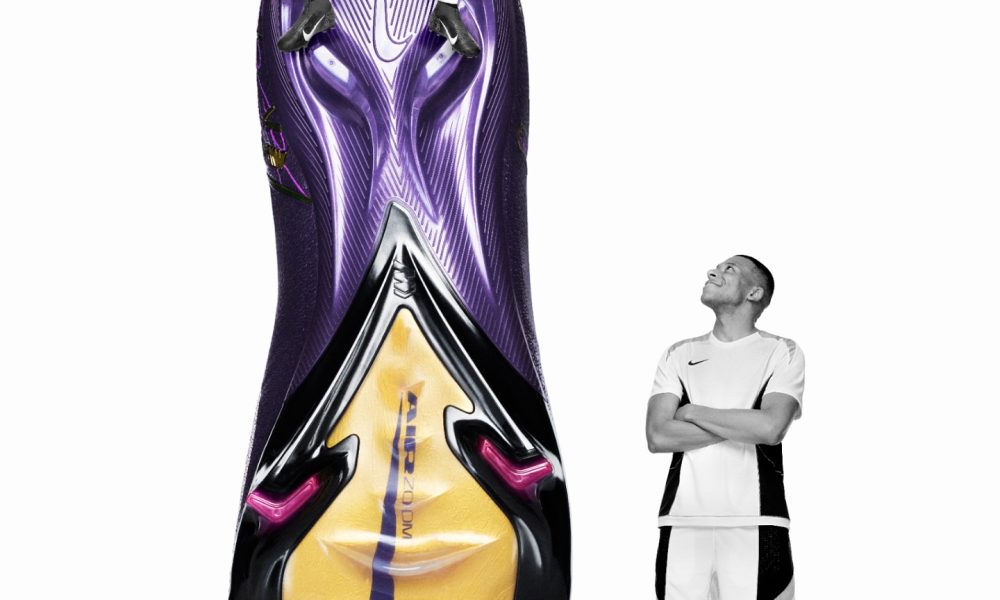 has always dreamed in Mercurial. Now his initials are on the boots.
The new Kyl…
has always dreamed in Mercurial. Now his initials are on the boots.
The new Kyl…
-
 Rec Sports3 weeks ago
First Tee Winter Registration is open
-
 Rec Sports2 weeks ago
Fargo girl, 13, dies after collapsing during school basketball game – Grand Forks Herald
-
 Motorsports3 weeks ago
CPG Brands Like Allegra Are Betting on F1 for the First Time
-
 Sports3 weeks ago
Two Pro Volleyball Leagues Serve Up Plans for Minnesota Teams
-
 Sports3 weeks ago
Utah State Announces 2025-26 Indoor Track & Field Schedule
-
 Sports3 weeks ago
Sycamores unveil 2026 track and field schedule
-
 Motorsports2 weeks ago
Jo Shimoda Undergoes Back Surgery
-
 Motorsports2 weeks ago
Redemption Means First Pro Stock World Championship for Dallas Glenn
-
 Sports3 weeks ago
Texas volleyball vs Kentucky game score: Live SEC tournament updates
-
 Rec Sports2 weeks ago
Robert “Bobby” Lewis Hardin, 56