Connect with us
https://yoursportsnation.com/wp-content/uploads/2025/07/call-to-1.png

Rec Sports

Is it safe for Lin Chin-Tse to throw 82 mph?

Published

on


play

SOUTH WILLIAMSPORT, PA — Chinese Taipei manager Lai Min-Nan has been planning for this moment.

Yes, he’s playing for a Little League World Series championship, but he has also managed to save his ace in the hole to throw it.

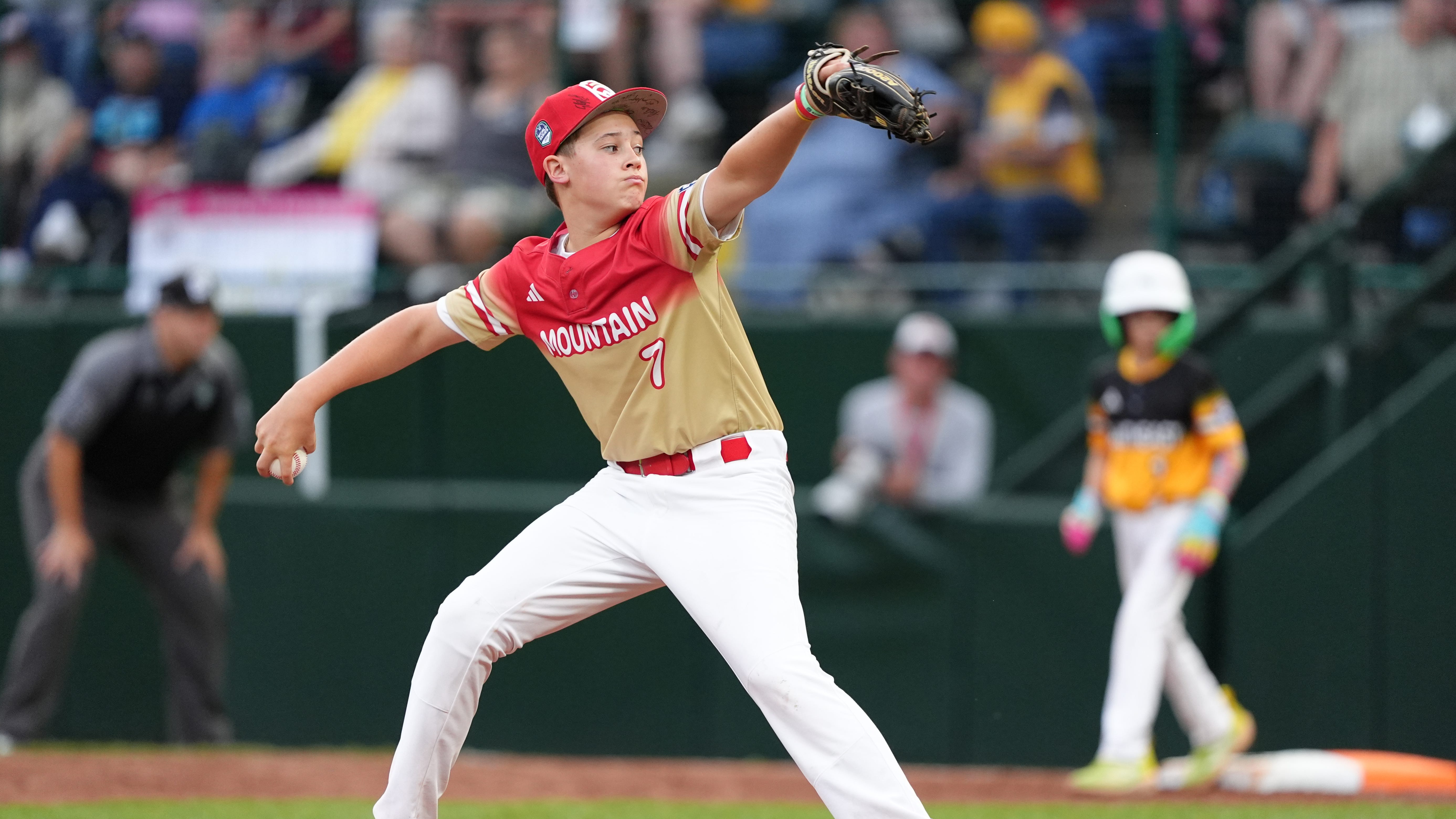
Lin Chin-Tse has overpowered opposing hitters all tournament, striking out 16 in six innings and dotting the strike zone with a fastball that has reached 82 mph.

Thanks to the efficient work of Liu Wei-Heng, a lefty who pitched a near-complete game to set down Aruba 1-0 in the international title game, Lin will start against (Las Vegas) Nevada in the Aug. 24 LLWS championship game.

It’s a strategy, and a sigh of relief, for which youth baseball coaches across the globe can relate.

“It’s not necessary to have him pitch but it’s nice to have a strong pitcher to stand by,” the manager said of Lin this week through a translator.

According to ESPN, Lin’s fastball seen from 46 feet away is the equivalent of a Little Leaguer facing 107 mph.

But how safe is it for a 12-year-old to throw that hard?

“Just throwing a baseball in general, when you really look at the velocity of the shoulder joint, it’s the most kind of violent action of a joint in any sport,” says John Kunkel, an orthopedic surgeon and the medical director for the Little League World Series.And just inherently throwing a baseball for a shoulder just puts a lot of stress on it.

“That’s why the period before the season, getting your body ready to throw is really important. And then building up, warming, all that kind of stuff. Your body really does adapt.”

As velocities are rising from youth sports to the majors, let’s consider how young pitchers can protect themselves.

Coach Steve: Why do kids play Little League? They live for the moment

Can throwing 82 mph hurt a kid? Monitor your max pitch count

Kunkel trained to be a sports medicine specialist with college and professional teams, including the Houston Astros and Texans.

Today, he sees athletes of all ages, including 45-50 year old men and women who are playing pickleball or pickup basketball. He has worked three Little League World Series.

“With different athletes, max effort is gonna produce different velocities,” he tells USA TODAY Sports. “And so that’s where you get some limitations of just your own biology, your own structure. Some people are born with the ability to be able to throw that hard, especially at a young age.

“There’s not necessarily inherently more risk for somebody like (Lin) who’s throwing 82. It’s more on what his max effort throws are over the course of a game, season, career.”

A trend across baseball is to throw as hard as you can in a game for as long as you can. The end result, says Nick Kenney, director of medical administration for the Kansas City Royals, is seen when those pitchers reach the major leagues.

Many of them, he says, are chasing velocity instead of trying to capture it.

Kenney points to a line from Vincent Key, the Royals’ team physician: You only have so much tread on your tires: if you’re gonna burn it off every time you come to a stop sign, and if you pop it, will you surprised?

Of the trend, Kenney says: “where the game is taking us, especially with the emphasis on extreme velo and extreme spin … it’s mind-boggling. It’s extremely frustrating, but we are trying to increase our ability to find risk factors.”

What’s an effective way for a 12-year-old to pitch?

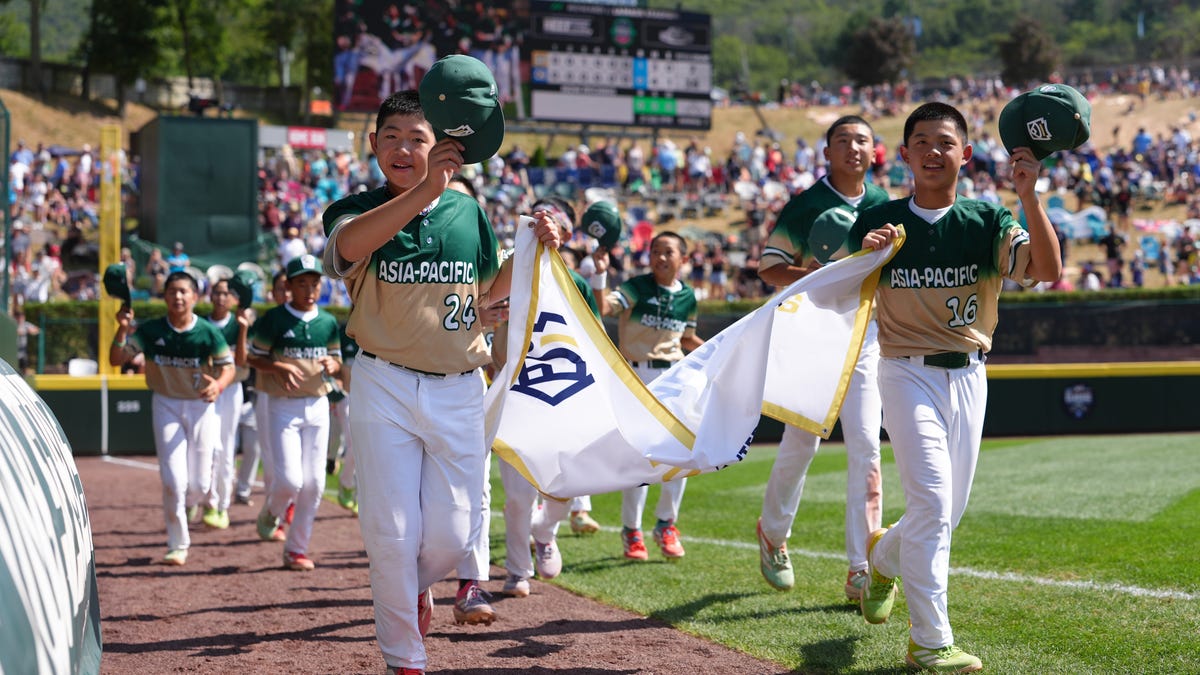
Chinese Taipei has won 17 Little League World Series titles. Lai Min-Nan, its current manager, builds his winning strategy around his pitchers controlling their fastball.  Only when they demonstrate that ability will he add a slider or curve to their repertoire.

Liu Wei-Heng, his starter in the international championship, drew confidence and energy from throwing 70% strikes (50 out of 71 pitches) against Aruba.

During the 1-0 win, he and closer Chen Qi-Sheng combined for one walk over six innings. Liu pitched with runners on base in four, but calmly kept pounding strikes and trusting his fielders to make plays.

The two pitchers touched the low 70s with fastballs a few times when ESPN flashed their velocity but only dialed it up when they needed it for a punchout.

By limiting his max effort pitch count this way, Kunkel says, a pitcher is protecting himself.

“Especially as you get into the older levels with bullpen specialization and guys are coming in saying, ‘Hey, if I can just throw max effort for five innings, somebody else is going to come in and throw max effort for an inning,” Kunkel says. “’Somebody else is going to do the same thing after that.’

“Whereas 3-4 years ago, he might be thinking, ‘Hey, I’m going to throw 85% effort to see if I can complete the game. And so then your max effort pitches are actually less than maybe they are today.”

There are precautions young players can take before it gets to that point.

When should we start throwing a curveball?

Talk to your orthopedist about when might be the right time for a curve or slider. Kunkel says there’s mixed data on when is the right time, as the technique for those pitches can differ from pitcher to pitcher.

Biology also comes into play.

“Especially at this age group, the difference in growth between a 10 and a 12 year old and then different 10 and 12 year olds is vastly different,” he says. “So it’s tough to standardize those things for a league. The data really shows us it’s just those pitch counts, kind of max effort pitches, if we can manage those, that’s probably our best bet as an organization trying to standardize things to keep pitchers safe.”

Why are pitch counts so important?

Little League World Series pitchers are limited to 85 pitches per day and require calendar days of rest after numbers of pitches thrown: Four days for 66 or more pitches, three for 51-65, two for 36-50 and one for 21-35.

The LLWS went to pitch counts over inning restrictions in 2007. Before that, Mike Ludwikowski, the event’s head athletic trainer, said kids were lined up at their office at 8 a.m., getting treated for their shoulders and elbows.

The push for pitch counts has come from American Sports Medicine Institute in Birmingham, Alabama, led by orthopedist James Andrews. We can track them across Little League and travel ball, where sometimes there aren’t restrictions despite pitchers throwing a number of high-stress innings.

Our risk of an arm injury greatly increases with fatigue. For example, Kunkel says the main stabilizer to the elbow when we’re throwing is not the ligament, but the muscles around it call the flexor pronator mass.

As it gets tired over the course of a game, you start to rely more and more on your ulnar collateral ligament. We know today that a torn UCL leads to Tommy John surgery.

Kunkel doesn’t think a young pitcher should be throwing all his pitches max effort a game. Rest, both in between games and in the offseason, is crucial.

“Are we playing baseball all year round? Do we play other sports? Are we picking up a basketball in the winter? Are we playing something else also in the summer?” he says. “If you’re throwing from mound max effort all year round, that’s going to set you up for arm issues.”

What can young pitchers do to avoid an injury?

Over the past two weeks here, we’ve seen kids lay out out all over Lamade Stadium for grounders in the hole and fly balls in the gap. Nevada manager TJ Fechser says he expects it of his players.

When you’re 12, Kunkel says, you quickly bounce back from the nicks and bruises and your body adapts. You can overcome physical things faster than even major leaguers might.

But everyone needs to take a step back from competitive play at some point during the year.

“That’s not inherent just to baseball, but specialization in any sport,” Kunkel says. “We know that leads to more chronic injuries. You’re using one movement pattern, one group of muscles over time, and that’s just going to set you up for those chronic overuse injuries, whereas if you vary it and you’re playing different sports in different seasons, you’re working on different movement patterns, different muscles.

“Not only does that decrease your risk of chronic overuse injuries, but it makes you a better athlete, because you’re learning to use your body in different ways.”

The American Academy of Pediatrics recommends kids take at least one day off a week and two months off from a sport per year. The later you can specialize, the better. You can put if off by playing one sport competitively, and others recreationally.

“Having some time throughout the year where you’re taking a break, playing different sports, those are different ways to kind of lower the volume of those max effort pitches over the course of a year and career,” Kunkel says.

If you have any pain while you’re playing, stop throwing and rest. And once you rest the amount of time a sports medicine physician recommends, understand it might take just as long to ramp yourself up to full speed.

Think about when big leaguers return from an injury, they go on rehabilitation assignments to the minor leagues, where they slowly increase their innings over a number of games.

“I always say that there’s really no way to prevent injury,” Kunkel says. “When you’re an athlete, you’re pushing your body to compete and win. And there’s no way to take the risk out of that. Athletes are always going to push their bodies and there’s going to be injury. So injury risk reduction is what we’re trying to do.

“And the best way to reduce risk is making sure that your body is ready to compete and then managing that overuse portion of it: not specializing, playing a variety of sports and then whether after injury or before the season, start slowly ramping up and making sure you’re ready to go.”

Steve Borelli, aka Coach Steve, has been an editor and writer with USA TODAY since 1999. He spent 10 years coaching his two sons’ baseball and basketball teams. He and his wife, Colleen, are now sports parents for two high schoolers. His column is posted weekly. For his past columns, click here.



Link

Continue Reading
Click to comment

Leave a Reply

Your email address will not be published. Required fields are marked *

Rec Sports

Redding named to Youth LEAD Georgia

Published

on


Redding named to Youth LEAD Georgia

Published 9:27 am Monday, December 29, 2025

ATHENS — A Colquitt County student is among 30 high school students who’ve been selected for the Youth LEAD Georgia 2026 cohort. 

Elizabeth Redding will join her peers for a transformative year-long leadership initiative facilitated by the University of Georgia’s J.W. Fanning Institute for Leadership Development in partnership with Chick-fil-A, according to a press release from Youth LEAD Georgia.

The program equips youth with the skills and knowledge necessary to tackle challenges that impact Georgia’s vitality as future leaders of the state, the press release said. A $1.5 million pledge from Chick-fil-A to the UGA Fanning Institute provides financial support for Youth LEAD Georgia. Thanks to this support, the program is available at no cost to participants. 

These 10th- and 11th-grade students, representing 27 different counties, were reviewed by an external selection committee from a record pool of nominations, reflecting growing interest and competitiveness in the program. 

Participants will take part in four weekend retreats held throughout the year in different regions of the state, a week-long summer bus tour visiting areas not covered in the retreats and a two-day statewide youth summit in Athens. Experiential learning is accompanied by dialogue on current topics facing the state, and interaction with business and community leaders. 

Alongside hands-on learning, participants can apply for Bullard Community Champions grants, using their newly acquired skills to lead impactful community service projects in their local areas. These grants are made possible through funding from Regions Bank and Rodney Bullard, CEO of The Same House.  

Programming will begin in January.


Link

Continue Reading

Rec Sports

Margaritas restaurant closed; Time Out Sports Bar to follow | News

Published

on


Margaritas has closed its doors in Liberty Hill.

Time Out Sports Bar has announced it will also cease operations at its current location, with its final day of business set for Sunday, Jan. 4, 2026. Notices posted at the bar invite the community to attend a “last day of business” event that day, with all bartenders scheduled to be on site from 3 p.m. until close. 

According to the notice, customers who have funds remaining on the bar’s sweepstakes machines will be given a two-week window to cash out. Management stated that specific times for cash-out availability will be posted. 

Time Out Sports Bar also indicated plans to relocate and said information about its new location will be shared on the business’s Facebook page. 

The building housing both Margaritas and Time Out Sports Bar has been sold to a new owner. As of publication, the identity of the buyer and any future plans for the property have not been publicly disclosed.

However, according to filings with the Texas Department of Licensing and Regulation, a new Denny’s restaurant will occupy one of two lease spaces attached to a new convenience store development called Q-Mart, which is set to be located at 10280 W. Hwy. 29–is the same address as Margaritas.

Plans for the Q-Mart include an 11,766-square-foot main building, two fuel canopies, and a second lease space that remains open for a future tenant. The privately funded project carries an estimated construction cost of $3 million. Work is expected to begin in March 2026, with completion anticipated by February 2027.

A commercial demolition permit for Margaritas’ playground, covered wood deck and canopies was approved in December 2025 to occur Jan. 5.

Follow The Independent for more information on this developing story.


Link

Continue Reading

Rec Sports

Highlights and top performers from the NEO Youth Elite Christmas Classic

Published

on


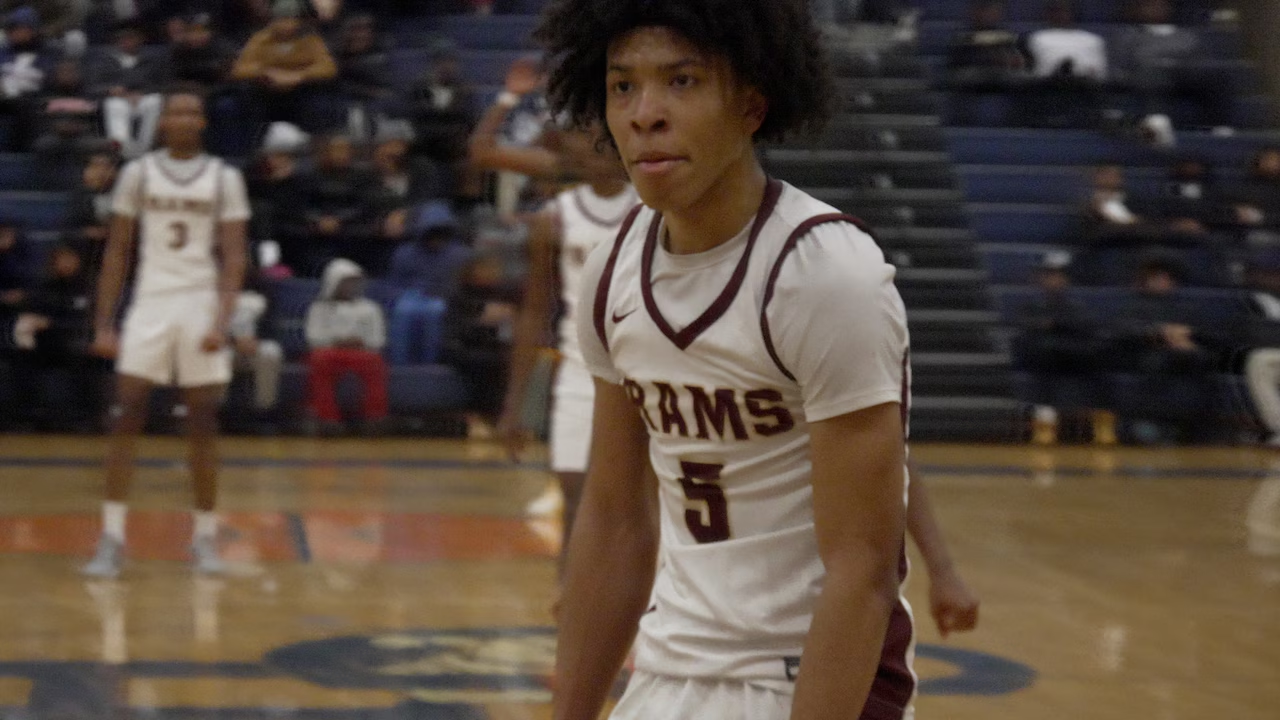
GARFIELD HEIGHTS, Ohio — Akron Garfield and Euclid stole the show Sunday during the NEO Youth Elite Christmas Classic at Garfield Heights High School with their double-overtime thriller.

It took two buzzer-beaters by the Rams’ Rayshawn Hamilton and Monty Thompson Jr. in both overtimes to lift Garfield to a 73-71 win against Euclid. Afterward, they were greeted in the locker room by the hosts from Garfield Heights ahead of the Bulldogs’ game with Glenville.

Both share the name, Garfield, and both are in Division III for OHSAA postseason play.

They could meet in March, but both put on shows Sunday during the five-game showcase. Here are the standout performances to go with the highlights in this post:


Link

Continue Reading

Rec Sports

Sports tourism is a top regional economic opportunity

Published

on


After arriving in Fayetteville, it doesn’t take long to realize that sports are woven into the city’s DNA. From Razorback game days to the cyclists on our trails to families filling fields and courts across the region, this is a community that moves.

And that movement represents far more than recreation. It is one of the strongest economic opportunities ahead of us.

Sports tourism has grown into one of the most powerful, reliable economic engines in the country. According to the Sports Events & Tourism Association, spectator sports tourism generated $47.1 billion in direct spending last year, supporting more than 665,000 jobs nationwide. Youth and amateur sports, everything from tournaments to camps to regional competitions, contributed even more, with $52.2 billion in travel-related spending. These visitors stay in hotels, eat in local restaurants, shop in stores, and explore outdoor assets, leaving a meaningful mark on local economies.

In Arkansas, that story is magnified. Outdoor recreation alone contributed $7.3 billion to the statewide economy in 2023, supporting more than 68,000 jobs. And tourism reached $17.4 billion in economic impact in 2024, with Northwest Arkansas playing a major role in that growth.

Ryan Hauck

At a time when leisure and business travel have softened nationally, sports-related travel has continued to rise, providing a level of stability and resilience that communities increasingly depend on. When communities like Fayetteville lean into their strengths — outdoor recreation, hospitality, accessibility and local culture — the returns are significant.

Fayetteville is uniquely positioned to lead the state and region in this space. We’re home to a thriving SEC city, incredible year-round weather, world-class outdoor recreation, a variety of indoor sporting facilities, and a welcoming culture that makes competitors and travelers feel instantly at home.

Our community has also invested intentionally in the infrastructure that makes sports tourism possible. Centennial Park is a perfect example. Purpose-built to host world-class cycling events, it has already welcomed the 2022 UCI Cyclocross World Championships and will host the USA Cycling Cyclocross National Championships this December, and again next year. These events don’t just bring athletes. They bring national attention, media coverage, and significant economic impact for our hotels and hospitality businesses.

And that momentum extends well beyond cycling. In the past year, organizations such as the Women’s Football League, Athletes Unlimited Softball League, and the Marshall Islands Soccer Federation have approached us about hosting events in Fayetteville. Their interest reinforces what the sports community already knows: Our city is emerging as a national-caliber sports destination.

But the value of sports tourism extends beyond visitor spending. It strengthens identity and builds civic pride. It brings families together. It activates public spaces and showcases the best of who we are. In my previous role in Cody, Wyo., I saw firsthand how powerful it can be when a community rallies around its strengths and invites the world to experience them. In Fayetteville, that same opportunity is in front of us, and we are already leaning in.

The path is clear: We need to continue investing strategically. That means purpose-built sports facilities and deeper partnerships across the region. If we continue investing with intention, collaborating across sectors, and telling our story with clarity and authenticity, Fayetteville can set the standard for what a modern, movement-driven destination looks like.

The momentum is already here. Our job now is to harness it and to make sure the world knows exactly why Fayetteville is a place worth traveling to, competing in, and coming back to again and again.

Editor’s note: Ryan Hauck is CEO of Experience Fayetteville, the city’s tourism marketing agency. The opinions expressed are those of the author.


Link

Continue Reading

Rec Sports

French movie star Omar Sy named ambassador for Dakar 2026 Youth Olympic Games

Published

on


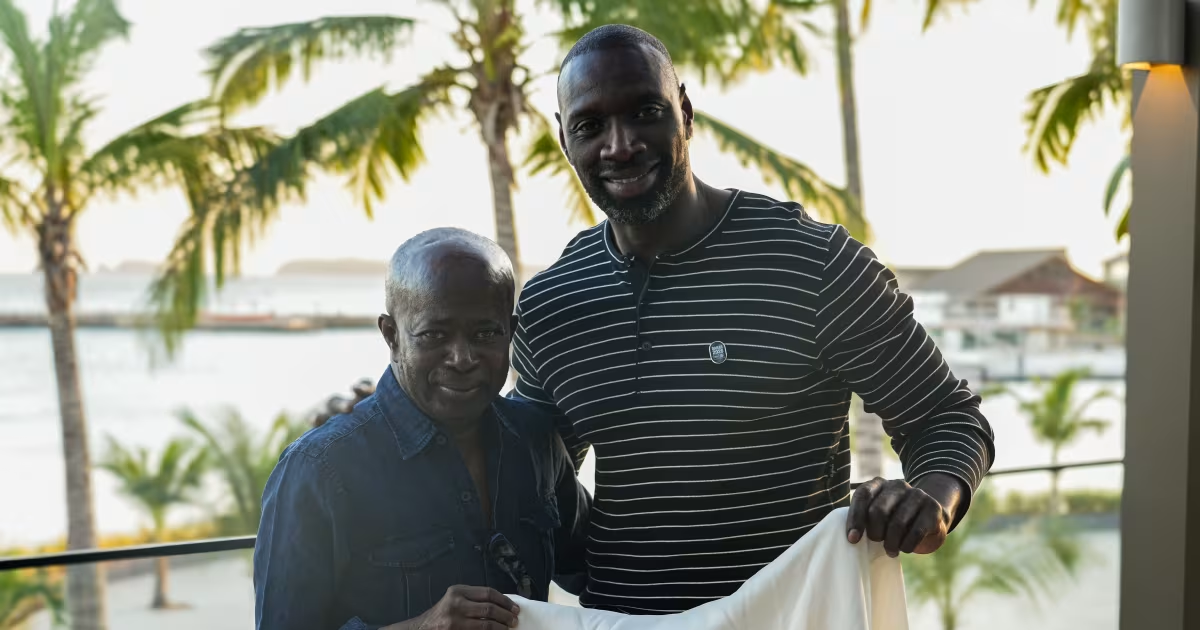
Omar Sy is one of those personalities who brings people together.

At 47, the internationally acclaimed actor is stepping into a new role – one firmly rooted in real life. 

Already the star of productions that have left a lasting mark on audiences worldwide, Sy will now become one of the faces of the Youth Olympic Games (YOG) Dakar 2026, the first Olympic event to be staged on African soil.

Known for his roles in hit films, the actor first established himself as one of the most popular figures in French-language cinema with The Intouchables in 2011. His global profile grew even further thanks to the Netflix series Lupin, which helped expand his audience well beyond Europe.

His appointment as an ambassador for Dakar 2026 YOG on Monday, 29 December, marks another step in his growing international influence. He shared his feelings upon the announcement of this new role.

“I am proud and honoured to be an ambassador for the Youth Olympic Games that will take place in 2026 in Senegal. These Games represent values that are close to my heart: sharing, solidarity, pushing beyond one’s limits, and intercultural encounters,” he said.

He also underlined the symbolic significance of the event: “Seeing the youth of Senegal and the entire world shine together on the land of Teranga is a powerful symbol of unity and hope.”

Born in France to a father from Senegal, Sy maintains a close personal connection with the country.

This bond has influenced some of his artistic choices, as reflected in his roles in Yao (2018) and Father & Soldier (Tirailleurs, 2022). In January 2025, he was also received by President Bassirou Diomaye Faye, further highlighting his commitment to Senegal and its youth.


Link

Continue Reading

Rec Sports

Why I started The Breakaway – The Dickinson Press

Published

on


DICKINSON — It’s no secret that hockey is a huge part of my life. I’d even say it is my life.

When I was interviewing for this job at The Dickinson Press in 2024, the editorial staff said that they’ve never had someone with a lengthy track record of covering hockey. From that conversation, I knew I would have a big role once the puck dropped.

When I returned to Dickinson from Thanksgiving that year, I was told that I was going to be getting a hockey show. I was stoked.

It took me some time to come up with a name. I even bounced around some name ideas with my mom. Let’s just say some of her suggestions weren’t ideal.

Once I settled on The Breakaway, I slated for it to start at the beginning of 2025. The first episode I did featured Kyndall Peterson and Sarah Menge taking on each other in a faceoff competition. I’ll never forget seeing one of the first comments on the video — “this is amazing!”

But this show is more than about me sharing my immense passion for hockey with the Dickinson community. It’s about showing off what these athletes are capable of on the ice. This year I plan on expanding the show beyond the on-ice skills.

I want to get to know them on a personal level and find out more about their hockey background. One of the biggest things I especially want to do this year is get more involved in the hockey community. Those ideas are currently in the works and you’ll have to stay tuned to find out more.

I hope everyone has enjoyed The Breakaway since this started and I can’t wait to see what this season holds.

See you on screen – and on the ice!

Jacob Cheris

Jacob Cheris covers a variety of high school and college sports. A graduate of Penn State University’s class of 2023, with a degree in broadcast journalism, he covered Penn State Men’s Hockey for three years. Jacob also covers Big Ten Hockey for College Hockey News.


Link

Continue Reading

Most Viewed Posts

Trending