
NIL
Is Tennessee




Nico Iamaleava’s name will go down in college football history as one that created a turning point for players in multiple ways.
Which part fans remember might depend on how the rest of his football career plays out. As Iamaleava prepares to enter the transfer portal amid a sudden public breakup with Tennessee about name, image and likeness re-negotiations, this first-of-its-kind NFL-style holdout situation was possible only because of what had come before it.
Advertisement
Iamaleava once again has brought college football a lot closer to … whatever its future will be. His NIL deal going public before enrolling at Tennessee and the legal defense of it led to more money for players. Iamaleava gave a lot more leverage to the players by knowing his value.
But his public breakup with Tennessee has given some leverage back to the schools. Had Tennessee and its collective blinked, more stars elsewhere might’ve started public holdouts. Instead, Vols fans have backed coach Josh Heupel, and players probably know the public won’t be on their side.
Josh Heupel was the first person off the team buses. Got a massive cheer from the fans.
— David Ubben (@davidubben) April 12, 2025
It started in 2022, when The Athletic first reported an $8 million multi-year contract for a football recruit who later became known to be Iamaleava. It was one of the first sets of public NIL numbers, a jaw-dropping sum for someone who hadn’t played a down of college football. When the NCAA eventually began looking into it, the state of Tennessee’s attorney general sued the organization last year, leading to an injunction and settlement that allows collectives and boosters to negotiate NIL before players enroll.
Both of those situations almost certainly led to millions of dollars more going to players. The public contract leak in 2022 reset the market for active players and recruits. The AG’s lawsuit opened the door to more direct NIL conversations with recruits. That is part of Iamaleava’s legacy.
But so is how it all appears to have ended in Knoxville.
The first thing to know in any negotiation is your leverage, and Iamaleava’s team appears to have overplayed its hand this time. He has been a good quarterback at UT, taking the Vols to the College Football Playoff last year, but he has not been a great quarterback. Eleven of his 19 touchdown passes last season came against Chattanooga, UTEP and Vanderbilt. He had three more years of eligibility and plenty of time to improve. Enough to increase his pay from $2.2 million next year to $4 million, as people briefed on the situation told The Athletic? It would appear not, at least not from Tennessee’s perspective.
Advertisement
When it all leaked, first at On3, and he skipped practice, Iamaleava was simply not good enough yet to have the Vols public in his corner.
That’s where leverage has swung back to the schools. Star players renegotiate their NIL deals all the time. Some stay, and some leave. But it doesn’t usually come out until it’s over. This leaked before spring practice ended, creating what essentially became a brief public holdout and a chance for Tennessee to look firm.
Not many college players would be able to hold out publicly, keep the fans on their side and have enough leverage. Ohio State wide receiver Jeremiah Smith might be one, as a potentially generational prospect. Florida quarterback DJ Lagway might be another, given his upside and the pressure on his coach. But the list is not long.
“I’m not as familiar with the situation, but if you started holding out, you just wouldn’t be on the team anymore,” SMU coach Rhett Lashlee told reporters after a practice on Friday. “We’re not doing that. You’re either on the team or you’re not.”
NFL holdouts with star players happen all the time, and fans support the players if they’re good enough. Cincinnati Bengals fans wanted the team to give star wide receiver J’Marr Chase his bag, even though the NFL has a salary cap.
Most college football fans don’t have that cultural mindset yet. Many fans, like coaches, say they’re happy players are finally getting paid. But the mood wobbles a bit when that money gets into the millions or players leave to take more money elsewhere.
Iamaleava was already one of the highest-paid players on his team, if not the highest. His initial $8 million deal was cheered by Vols fans. So was the AG’s attack on the NCAA for him. Let Tennessee’s collective spend what it wants! But as soon as it wasn’t enough for Iamaleava, fans turned.
Advertisement
That is why the whole idea of calling this “NIL” remains farcical. The millions and millions spent on players for NIL come from fans who want victories, rather than some advertising or charity work.
College football is a transient sport with players spending a short time on campus. Fans still root for the team more than a player. It’s why the NCAA was able to keep up amateurism for so long. It’s why the unionization of players is hard. Fans, more often than not, will show up on Saturdays no matter who’s on the field.
That reminder is the message coming out of Iamaleava’s impending divorce from Tennessee.
The story is far from over. Perhaps Iamaleava finds a new home and continues to succeed, for whatever amount of money the market determines he’s worth. Perhaps Tennessee can’t find an adequate replacement internally or in the portal and struggles in 2025. The Vols appear willing to live with the potential consequences, and the fans support it.
Players are worth what someone is willing to pay them. That’s basic business. The player empowerment era of sports was boosted in the college football ranks because Iamaleava and his family knew that. But this breakup is a reminder that it only goes so far.
(Photo of Josh Heupel: Caitie McMekin / USA Today Network via Imagn Images)










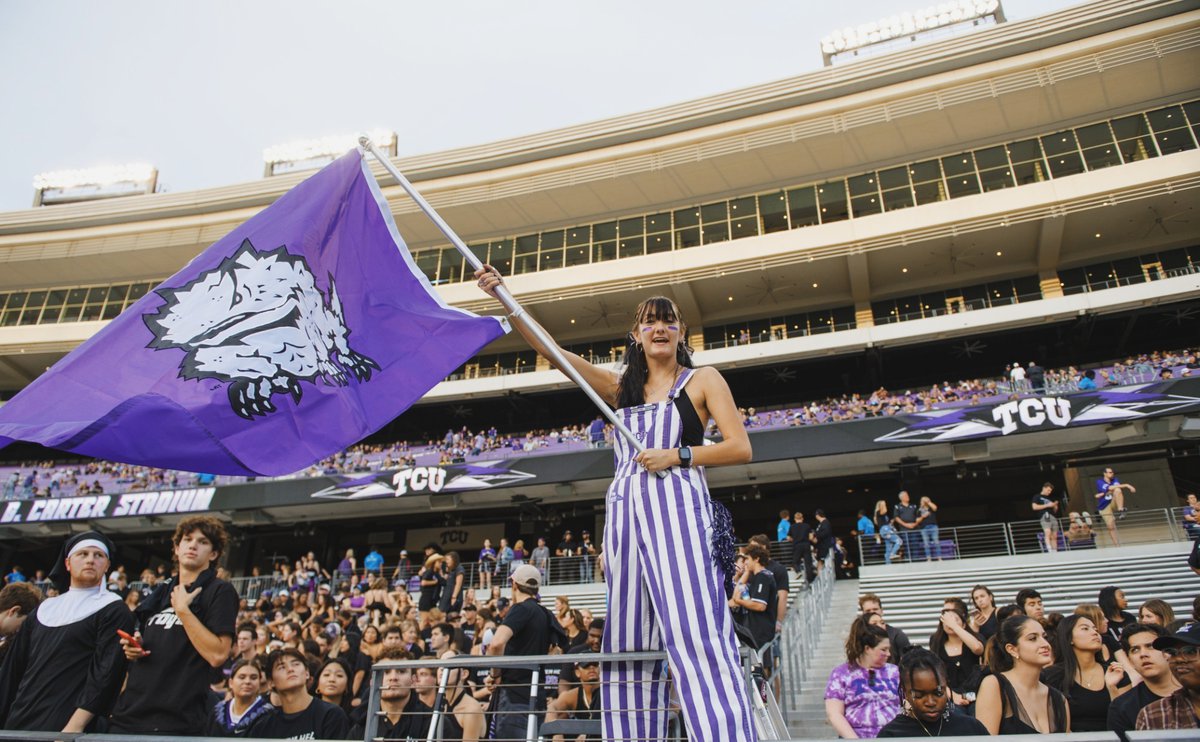
TCU’s just-passed 8-4 regular season had many in the purple people masses as angry as a tourist who just paid $40 to park, and for many others as disappointed as when Junior brought home an F in civics.
Many have expressed themselves in much the same way of our old friend, the frontier prospector Gabby Johnson of “Blazing Saddles” fame: No sidewindin’, bushwackin’, hornswagglin’ cracker croaker is gonna rouin me bishen cutter!
TCU Athletic Director Mike Buddie gets it.
“I think there were 11 teams in our league this year whose fan bases wanted their coaches fired,” Buddie said on Friday morning at the FIFA World Cup Draw party at Billy Bob’s Texas, the world’s largest honky tonk. “That’s the culture that we live in. You can win [against a] ranked opponent, [next week against] ranked opponent, [a third straight win against a] ranked opponent, and then lose — they want you gone.
“It’s a new day and age.”
Like the mood of Paris in 1793 — cheers in the morning, pitchforks and the guillotine by dusk.
TCU finished in the middle of a congested Big 12 at 5-4. To put some perspective on its season, Texas finished 9-3. Of course, many UT fans think the Longhorns should win every game, too. No. 25 Missouri, like TCU, finished 8-4. So, too, did Tennessee and Iowa, two teams receiving votes in the AP poll. In the end, after 12 regular-season games, only two teams finished undefeated — Ohio State and Indiana. One of those teams will lose this weekend; they play each other.
North Carolina — guided by renowned football genius Bill Belichick — stumbled to 4–8, taking a season-opening black eye from TCU.
Just last year, Ohio State fans wanted coach Ryan Day on the nearest interstate out of town after the Buckeyes took the worst kind of a second loss of the season — to Michigan. That was on Nov. 30. By the end of January, they wanted to elect him governor after winning the national championship.
The Horned Frogs will learn their postseason bowl destination on Sunday.
Dykes has gone 35-17 over four seasons at TCU, including 13-2 and a berth in the College Football Playoff championship game in his first season. That campaign included a victory over No. 2 Michigan in the Fiesta Bowl CFP semifinals.
TCU slipped to 5-7 in 2023 but went 9-4 last year and could do the same in 2025 with one last victory.
“We need to be better,” Buddie said. “We’re committed to getting better. I’m excited because nobody realizes that more than Sonny Dykes.
“He’s committed to addressing some needs that I think we have and more than ever before, what I do and how we strategically fundraise and approach people financially has a direct impact on your football program. I think Texas Tech showed us all that if you can build the most talented roster and develop them, really good things happen.”
Texas Tech, which is playing in the Big 12 Championship Game on Saturday against BYU, spent, according to reports and speculation, as much as $28 million on its football roster this season. The Red Raiders are No. 4 in the most recent CFP rankings.
Spending that kind of money is the result of a completely transformed landscape in college football. Colleges can now spend as much as $20.5 million on payroll for athletes in its various programs. That mostly impacts football and men’s basketball — those sports that generate the most revenue, the “revenue sports.”
Before that, each Division I school had an adjacent collective designed to allow athletes to cash in on their name, image, and likeness. That quickly evolved — devolved? — into merely paying athletes by writing checks out of the collective’s pool. Now completely legal after a U.S. Supreme Court case permitting athletes to receive compensation beyond traditional scholarships. The collectives simply became the mechanism to funnel those payments.
Most, if not all, of the collectives have now been merged with universities’ traditional athletics fundraising arm. NIL endorsement deals are now supposed to be just exactly that — an athlete endorsing a product, for example. I’m not exactly sure how all that sorts out.
“The landscape has changed, but we still have a ton of advantages in facilities and where we’re located and historical success,” said Buddie, who added that TCU also is “thoughtful and strategic in how we employ people.”
“We’re not in the business of paying $50 million buyouts for people to go away. And when you believe you’ve got the right person who’s already proven that he can win in the College Football Playoff, it’s incumbent on me to provide him every resource that he needs to be successful.”
Updated Dec. 5, 2025, 5:27 p.m. ET
- Leaked audio allegedly captures Penn State athletic director Pat Kraft criticizing the program’s recruiting and NIL strategy.
- Kraft is heard taking shots at rival programs like Oregon, Ohio State, and Michigan in the profanity-laced recording.
- The athletic director also questioned the effectiveness of NIL spending under former head coach James Franklin.
Athletics director Pat Kraft ripped Penn State football recruiting and NIL procedures under former coach James Franklin in an alleged team meeting.
“We probably need to (expletive) change the way we recruit. Because Alabama ain’t around (expletive). Oregon? Have you all been to Oregon? Ain’t (expletive) going on, it’s a bunch of (expletive) weirdos,” Kraft can be heard saying in audio that became public.
Kraft’s profanity-laced discussion with players before the regular-season finale at Rutgers was part of a purported audio recording of a team meeting that was leaked this week to the Dead Air Sports podcast. Kraft’s passionate discourse touched on a wide-range of topics — from taking shots at Big Ten opponents and his own program’s recruiting, to interim head coach Terry Smith, how NIL is allocated and the future of the program.
The recording, which features unidentified players speaking, was edited and does not feature the entire meeting, according to Dead Air Sports.
Recording and leaking the meeting without proper consent could be a felony under Pennsylvania’s wiretap laws.
Penn State officials did not immediately respond to a request for comment.

Kraft began his recruiting talk in the meeting by commenting on the 11 players in Penn State’s 2026 recruiting class who eventually flipped to Virginia Tech, where Franklin is now the head coach. The Lions, then, stunningly signed only two high school prospects during Wednesday’s early national signing day.
“All the guys that (were) on visits to Virginia Tech, they’re not even top-500 (ranked) kids that can help us win. You need help,” Kraft said, speaking to the players in the room. “You needed a wide receiver, but we couldn’t get a (expletive) dog to help open things up. Am I wrong? Would you have taken (Ohio State’s) Carnell Tate?
“Those are the things we have to get addressed if we are going to actually win a national championship, which is what we will do here. That’s what Ohio State, Michigan, as it pains me to (expletive) say, and Georgia, Bama and Oregon right now, although I think they’re frauds … think they’re not tough. That’s our edge, is the toughness.”

Kraft also made clear that he did not approve of Penn State’s NIL payment plan to players under Franklin — despite increased university investment.
“This is one of the highest-paid rosters in the country. … This roster that’s on the field right now, probably top four (in the nation). Now, how the money is spent is a different story. … it’s the strategy behind it that matters,” he said.
An unidentified player then described what believes is the NIL issue at Penn State: “The NIL with (Franklin) was kind of more like feed everyone and obviously pay the bigger guy. But I think with Terry (Smith), how he’s straight on with us … he’s going to pay who he needs to pay and not be a players’ coach and just pay everybody.”
Frank Bodani covers Penn State football for the York Daily Record and USA Today Network. Contact him at fbodani@ydr.com and follow him on X, formerly known as Twitter, @YDRPennState.

Article is about Phillip Bells High School experience and being shopped to different schools and 7 x 7 teams. Really sad situation.
A few quotes:
“Bell’s mother, who abused drugs, shopped him from school to school, demanding up to $72,000 a year, according to court filings, public records and interviews with relatives and others who knew the family. He also joined a club team that paid thousands of dollars a weekend.’
On his visit to OSU: “The hotel room where Bell’s mother and stepfather were staying was “trashed,” leaving an OSU coach with a bill for broken furniture, his high-school coach later told relatives. A Buckeyes coach subsequently informed Bell’s mother that the team wanted her son, but the “entourage” wasn’t welcome in Columbus, the high-school coach said.
OSU declined to comment.
Before they left Ohio, Barnes’ blood sugar spiked to life-threatening levels, she suffered a heart attack and was hospitalized for several days, according to public records.”
Hoping that with support from OSU that he can break the cycle and achieve great things!
This link is behind a paywall: https://www.wsj.com/us-news/football-high-school-nil-phillip-bell-81270bdf?mod=hp_lead_pos7
Definitely worth a read – there is definitely a downside to the money flowing to these athletes. Kinda makes me wonder about the Legend Bey situation.
NIL
Georgia sues Missouri edge rusher Damon Wilson for nearly $400K over NIL contract he signed with Bulldogs
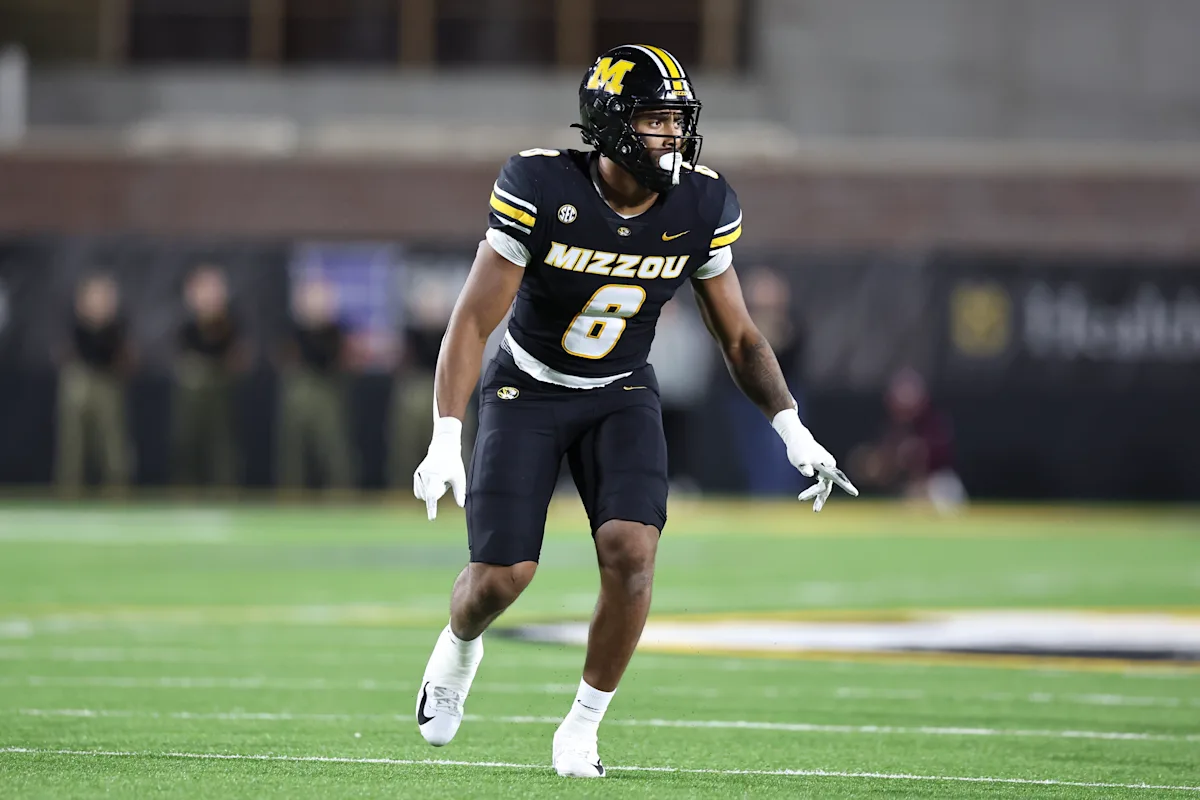
Georgia is attempting to get edge rusher Damon Wilson to pony up after his transfer to Missouri.
The school’s athletic association has filed a lawsuit against Wilson saying he owes $390,000 from the NIL contract he signed with the school’s collective in December 2024 ahead of Georgia’s College Football Playoff loss to Notre Dame. Wilson transferred after the 2024 season to Missouri and received one payment of $30,000.
Advertisement
Wilson, a junior, led Missouri with nine sacks and 9.5 tackles for loss this season. He had three sacks and 5.5 tackles for loss as a sophomore for the Bulldogs in 2024.
Georgia is claiming Wilson owes the balance of the base pay the contract stipulated he’d be paid via a liquidated damages claim. According to ESPN, Wilson’s deal with Classic City Collective was for $500,000 spread out over 14 monthly payments with two post-transfer portal bonuses of $40,000 and that he’d owe what was still set to be paid out to him if he left the team.
From ESPN:
“When the University of Georgia Athletic Association enters binding agreements with student-athletes, we honor our commitments and expect student-athletes to do the same,” athletics spokesperson Steven Drummond said in a statement to ESPN.
Georgia is not the first school to file a suit over NIL payments to a player who transferred. But the hard-line tactic is noteworthy, and may ultimately not work out in Georgia’s favor.
Advertisement
Schools typically do not ask coaches to pay out the balance of their contracts when leaving for another job. For example, Lane Kiffin did not have to pay Ole Miss what the school was scheduled to pay him over the rest of his deal with the school when he left for LSU. Instead, LSU paid Ole Miss $3 million for Kiffin to get out of his contract.
That situation happens all the time when coaches leave for new jobs. Their buyouts to get out of their contracts are far smaller than the buyouts schools owe when a coach is fired without cause.
And coaches are employees. Schools have long resisted that players be classified as employees and continue to do so even as the revenue-sharing era begins. The NCAA and its member schools have long clung to amateurism and that antiquated idea is why it took so long for players to get paid in the first place.
Dec. 5, 2025, 3:22 p.m. CT

Georgia athletics is taking Missouri football defensive end Damon Wilson II to court in a novel, nearly first-of-its-kind case over an NIL contract dispute.
The news was first reported by ESPN’s Dan Wilson on Friday, Dec. 5. The Tribune confirmed the news through a university source and court documents filed in Georgia by the Bulldogs.
UGA is attempting to take Wilson into arbitration and is seeking $390,000 in liquidated damages from the star edge rusher, who transferred to the Tigers in January 2025, over what the university views as an unfulfilled contract in Athens. The lawsuit is not against the University of Missouri, only Wilson.
According to the ESPN report, Georgia is arguing that Wilson signed a contract — a common practice in the NIL era — with what was then UGA’s main NIL and marketing arm, Classic City Collective, in December 2024.
That collective has since shut down, as UGA has partnered with Learfield to negotiate and facilitate NIL deals in the revenue-sharing era.
The report, citing documents attached to UGA’s legal filings, show that Wilson signed a 14-month deal worth $500,000 with the Bulldogs. He was set to earn monthly payments of $30,000 through the end of the contract, as well as two $40,000 bonus payments.
Before announcing his intention to transfer in January, he reportedly was paid $30,000.
The contract states that if Wilson left the team or transferred, which he ended up doing by transferring to Mizzou, then he would owe the collective issuing the payments a lump sum equal to the amount remaining on his deal.
The bonus payments seemingly were not included, which brings that total to the $390,000 that Georgia is now seeking in court.
Wilson, per the report, was only paid a fraction of that sum, but the university is arguing that he owes the full amount in damages. It’s unclear why Georgia is arguing it is owed the full amount in liquidated damages.
The Tribune has reached out to a Georgia athletics spokesperson for comment. At the time of publishing, UGA had not responded to the request for a statement.
According to documents viewed by the Tribune through the Georgia courts records system, UGA filed an “application to compel arbitration” on Oct. 17 in the Clarke County Superior Court, which includes Athens and the University of Georgia. Wilson was served with a summons to appear in court, according to documents, on Nov. 19, three days before the Tigers faced Oklahoma.
A similar case occurred at Arkansas last spring, when quarterback Madden Iamaleava transferred out of Fayetteville after spring camp. It’s unclear whether or not that case has been resolved.
Wilson spent his freshman and sophomore seasons at Georgia. He transferred to Mizzou ahead of spring camp in 2025 and has emerged as one of the top pass rushers in the SEC.
Per Pro Football Focus, Wilson generated 49 pressures on opposing quarterbacks this season, which was the second-most in the SEC behind only Colin Simmons at Texas. He’s listed at 6 foot 4, 250 pounds and could declare for the 2026 NFL Draft, where he would likely be a Day 1 or 2 pick.

The lawsuit raises a contentious point.
By suing Wilson for allegedly not fulfilling the terms of his contract, the school could be treading close to arguing that Wilson was paid to play. That’s not how NIL deals currently work. The deals and their payments are typically for an athletes’ likeness for brand deals and marketing. Think of it as advertising money, not salaries.
There’s a reason that’s the case. By paying players for play, there’s an argument that they are university employees. University and athletic department leaders are widely against making that distinction, because it would disrupt the amateurism model in place for college athletics.
Wilson’s contract likely includes “liquidated damages” language, which are intended to stop players from transferring.
Missouri currently has multiple players on two-year contracts. Part of that is in the hope that they do not move on after one season.
If Georgia’s arbitration case against Wilson is successful, that would be a groundbreaking ruling in college athletics that could give more weight to liquidated damages clauses in athlete contracts.
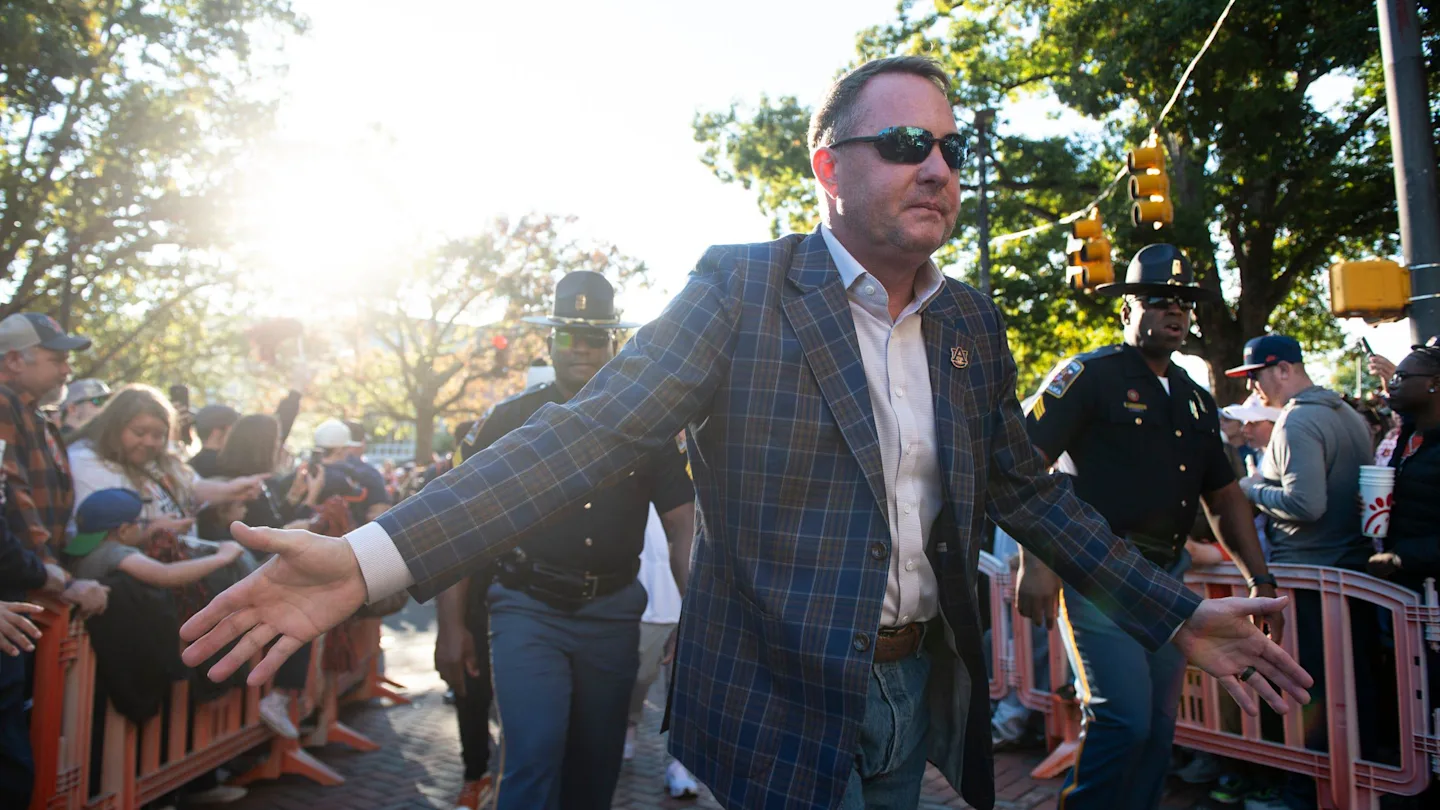
Fired Auburn football coach Hugh Freeze isn’t going out quietly.
Freeze was outspoken in the weeks before his dismissal, saying he and his staff were still the right fit to lead Auburn into the future, despite going 15-19 over two-plus losing seasons. Auburn athletic director John Cohen disagreed, firing Freeze on Nov. 2, taking on his $15.8 million buyout, and hiring South Florida head coach Alex Golesh last week.
Despite that nice payday on his way out, Freeze is still venting about his dismissal and blames quarterback Jackson Arnold for why he’s no longer Auburn’s head coach.
During an interview this week with AuburnSports’ Justin Hokanson, Freeze said, “Certainly, it didn’t work out to the level that he or I both expected for him and our team. And that’s why I’m sitting here.”
Freeze recruited Arnold out of the transfer portal from Oklahoma, where he passed for 1,421 yards, 12 touchdowns and three interceptions and rushed for 444 yards and three TDs as the Sooners’ starter in 2024. It seemed to be a mutual parting of the ways between Arnold and Oklahoma, which brought in the highly coveted Washington State transfer, John Mateer, at quarterback.
Arnold, who was a five-star prospect and the No. 4-ranked QB recruit in the 2023 class by 247Sports, looked for a fresh start as a junior at Auburn, but it was more of the same for him this fall as he passed for just 1,309 yards, 6 TDs and 2 INTs with 311 rushing yards and 8 TDs before being benched Oct. 25 vs. Arkansas after throwing an interception that was returned 89 yards for a touchdown.
Ashton Daniels, a senior and transfer from Stanford, took over and led Auburn back from an 11-point halftime deficit to a 33-24 win over the Razorbacks and finished the season as the starter.
Freeze tempered his comments on Arnold a bit, saying, “Let’s be clear, this is not a beat-up Jackson deal. It’s never always the quarterback. There are other factors. I mean, he missed a touchdown throw here at Oklahoma to a wide-open Cam Coleman.
“Those plays you’ve got to make to win games. And he would say that too. And there’s also the Missouri game, where we have what, eight drops? Then there’s moments in the Georgia second half where he misses open guys, or the protection is not great, so it’s a combination of all those things.”
Maybe it’s also partly the coaching. Freeze was given a six-year, $49-million contract at Auburn after having previous success at Ole Miss (on the field, at least) and Liberty, but he went 6-7 and 5-7 in his first two seasons before starting 4-5 this year and getting fired. He was 6-16 in SEC play during his tenure.
Purdue volleyball vs Baylor NCAA tournament final score, game result, next

Live updates, how to watch

Volleyball Falls at No.4 Pitt in NCAA Tournament

Buddie Defends Dykes as TCU Fans Fume Over 8–4 Season

Michigan Sweeps Xavier to Advance to NCAA Tournament Second Round

Men’s, women’s track & field unveil 2025-26 indoor schedule

Michael Annett, former NASCAR winner has passed at age 39

Phoenix Athletes Shine On Day Two At Liberty Kickoff

Lando Norris pips Max Verstappen to go quickest in FP1

Big day for Hillsdale’s throwers as Charger men kick off season at GVSU Holiday Open

Ex-NASCAR driver dead at 39 as JR Motorsports issues statement – Motorsport – Sports
Penn State football AD Pat Kraft rips recruiting, NIL in audio leak

Men’s Track & Field: Stefanowicz Tops Hurdles Record at M City Classic

Viking Motorsports Expands to Two-Car Operation for 2026 Season – Speedway Digest

Tigers Win Seven Events at Birmingham Icebreaker

First Tee Winter Registration is open

Fargo girl, 13, dies after collapsing during school basketball game – Grand Forks Herald

CPG Brands Like Allegra Are Betting on F1 for the First Time

Volleyball Recaps – November 18

F1 Las Vegas: Verstappen win, Norris and Piastri DQ tighten 2025 title fight

Two Pro Volleyball Leagues Serve Up Plans for Minnesota Teams

Sycamores unveil 2026 track and field schedule

Utah State Announces 2025-26 Indoor Track & Field Schedule

Texas volleyball vs Kentucky game score: Live SEC tournament updates

Bowl Projections: ESPN predicts 12-team College Football Playoff bracket, full bowl slate after Week 14

Redemption Means First Pro Stock World Championship for Dallas Glenn

Pohlman admits ‘there might be some spats’ as he pushes to get Kyle Busch winning again

Indiana’s rapid ascent and its impact across college football

How this startup (and a KC sports icon) turned young players into card-carrying legends overnight

Troy Football Need to Know; Gameday at The Vet — Georgia State Game

 Why a rising mid-major power with an NCAA Tournament team opted out of revenue-sharing — and advertised it
 NBA Legend Michael Jordan to Join NBC Sports as Special Contributor
 Falcons mailbag
 Portal Update – Basketball and Gymnastics Take Hits
 has always dreamed in Mercurial. Now his initials are on the boots.
The new Kyl…
has always dreamed in Mercurial. Now his initials are on the boots.
The new Kyl…
-
 Rec Sports2 weeks ago
First Tee Winter Registration is open
-
 Rec Sports1 week ago
Fargo girl, 13, dies after collapsing during school basketball game – Grand Forks Herald
-
 Motorsports2 weeks ago
CPG Brands Like Allegra Are Betting on F1 for the First Time
-
 Sports2 weeks ago
Volleyball Recaps – November 18
-
 Motorsports2 weeks ago
F1 Las Vegas: Verstappen win, Norris and Piastri DQ tighten 2025 title fight
-
 Sports2 weeks ago
Two Pro Volleyball Leagues Serve Up Plans for Minnesota Teams
-
 Sports1 week ago
Utah State Announces 2025-26 Indoor Track & Field Schedule
-
 Sports2 weeks ago
Sycamores unveil 2026 track and field schedule
-
 Sports1 week ago
Texas volleyball vs Kentucky game score: Live SEC tournament updates
-
 NIL5 days ago
Bowl Projections: ESPN predicts 12-team College Football Playoff bracket, full bowl slate after Week 14