Connect with us
https://yoursportsnation.com/wp-content/uploads/2025/07/call-to-1.png

NIL

Is WSU’s NIL collective making progress? ‘It’s starting to change’ | Washington State University

Published

on


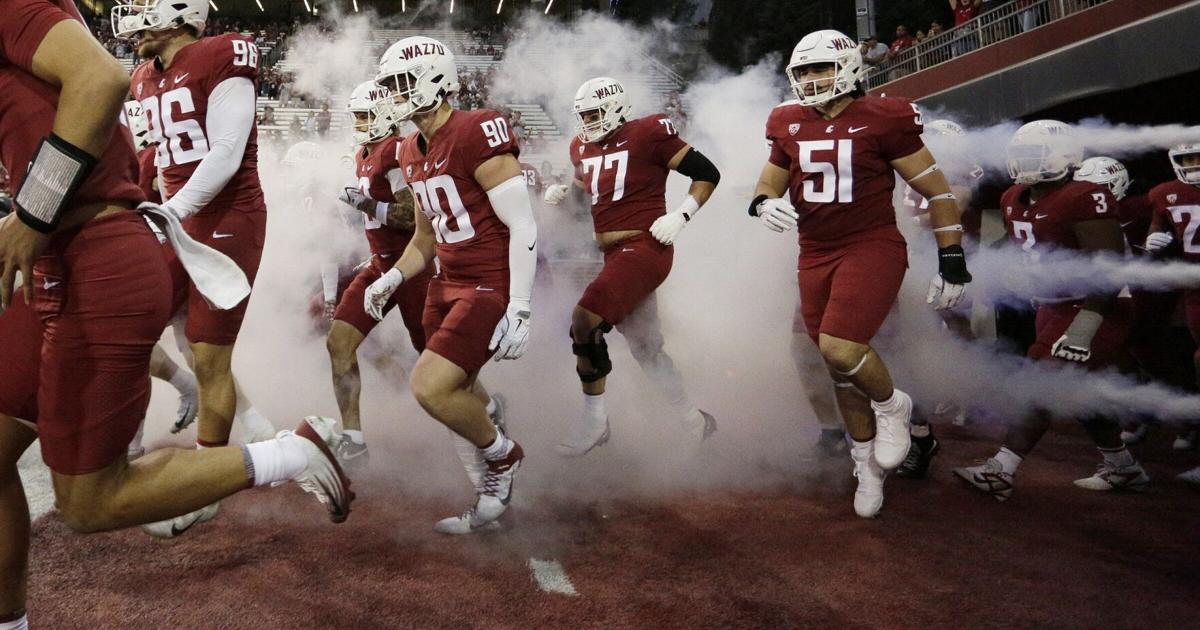
PULLMAN — Tim Brandle couldn’t believe his iPhone wasn’t buzzing a hole in his pocket. It was a sunny Saturday afternoon earlier this month, and he was sitting at his 8-year-old daughter’s soccer game, keeping one eye on the score of the Washington State football game.

The Cougars were getting pummeled in an eventual 59-10 loss to North Texas, which handed WSU its worst setback in more than a decade. Brandle is a WSU alum, so as a fan, he felt disappointed. But as the treasurer of the Cougar Collective, the main NIL arm for WSU’s athletics programs, he felt something even more important: concern.

In recent years, after the Cougars dropped similarly discouraging games like these, Brandle’s phone would light up with the worst kinds of notifications: Members of the 1890 Club, fans who committed to a monthly donation of $18.90 to support NIL at WSU, canceled their memberships out of frustration. They would do so during the game, or sometimes at the end.

So sitting at this soccer game on Saturday, Brandle was expecting several notifications alerting him that WSU fans were pulling their donations and uprooting critical momentum for the group, a key player for an athletics program already swimming upstream. If fans yanked their donations after WSU’s close losses to New Mexico and Wyoming last season, how many more would do so after this collapse?

As the game unfolded and the Cougars were getting blown out, Brandle hadn’t received a single email of the sort. He figured something was wrong on his end. He felt confused.

“I did check the settings on my phone to see if my Gmail was disconnected for some reason,” Brandle said.

Turns out, Brandle’s phone was in perfect condition. By the time the clock ran out on WSU’s loss, only one 1890 member had canceled their membership. Because of past patterns, Brandle was expecting more. Instead, the collective added more memberships that day — some even during the game itself.

As the days went by, Brandle began to understand the trend beginning to emerge: WSU fans were understanding the importance of NIL donations. Not just after huge wins, but also after bitter losses.

“The mindset of Cougar fans is starting to tilt. It’s starting to change,” Brandle said. “I think folks are realizing that the Cougar Collective is just this scrappy bunch of volunteers who are trying to give them everything they possibly could want: a wine, a beer, a cocktail, a coffee. We’re trying to give them things. We’re trying to give them all these different opportunities to help fund this fund that’s desperately needed. We’re not the problem. We’re the solution. And folks are finally starting to be like, oh, yeah.”

In this new era, Washington State needs NIL boosts more than ever. The Cougars have a home in the rebuilt Pac-12, which launches next year, but they’ve lost a lot along the way. They no longer receive funding from the traditional Pac-12, which handed each member school roughly $20 million annually, and athletics programs no longer have access to the recruiting advantages they enjoyed as a Power Five operation.

At WSU, that has spawned all manner of problems. In March 2024, when men’s basketball coach Kyle Smith left for the same job at Stanford, he said he might have thought twice about leaving had the conference stayed intact. Jake Dickert, who coached the football team from 2021-2024, put on a brave face for the Cougars — but even he often lamented the position his team found itself in, left behind by former conference allies.

But since then, some of the biggest issues facing WSU have involved the school’s NIL resources, or lack thereof. Last winter, the Cougar Collective put together a package of more than $1M in NIL to try and retain star quarterback John Mateer, a meaningful accomplishment for the organization, a sign that members could rally at the right time. But Mateer entered the transfer portal and took his talents to Oklahoma, where he accepted a package of around $2.5-$3M in NIL, according to several reports.

A few weeks later, Dickert left for Wake Forest and WSU hired coach Jimmy Rogers, who spent two years in the same role at South Dakota State. This fall, his Cougars have started 2-2. After their last loss, a 59-24 setback to archrival Washington in the Apple Cup last weekend, Rogers made headlines with one postgame quote.

“We don’t have the resources naturally to compete with $30 million and a roster that’s loaded,” Rogers said, referring to the Huskies’ advantages in recruiting and NIL funds.

Two days later, Rogers walked those comments back, saying he had never been one to complain and doing so wouldn’t get the Cougars anywhere. Maybe he had a point in his apology, but he also did in his first statement. It is true that Washington has access to tens of millions more NIL dollars than WSU, both in institutional dollars and alumni donations, which surely played a part in the Huskies’ win over the Cougars.

It’s also worth examining how WSU landed on Rogers as head coach. The Cougars are paying Rogers a five-year contract worth about $1.57 million annually, according to reports, which is $1M less than what Dickert earned in 2024. In the new Pac-12, Rogers’ annual salary appears to rank sixth of seven football coaches, ahead of only Fresno State’s Matt Entz.

But WSU gave Rogers $4.5 million to spend on an assistant coach salary pool, WSU athletics director Anne McCoy said earlier this year, which is $1M more than what brass had planned for Dickert before he departed.

In any case, WSU did well to stay within striking distance in the Apple Cup. In his first start of the season, quarterback Zevi Eckhaus totaled three touchdowns and helped the Cougars stay within one or two scores for about three quarters. The Huskies won the fourth, 28-0, in some ways a reflection of the state of both programs: A Big Ten member flush with NIL cash, UW could afford to build the depth over the offseason to pull away in the fourth quarter. A Pac-12 holdover with fewer resources, WSU could not.

Another illustration of how Washington won Saturday’s game: Over the offseason, when former WSU linebacker Buddah Al-Uqdah hit the transfer portal, he accepted a lucrative NIL offer and transferred to UW. He left the game early with an injury, but before then, he totaled four tackles, including 1/2 for loss.

“If you don’t want your rival to take advantage of you developing a player for three years,” Brandle said, “then we gotta step up, you know?”

In the last two football seasons, WSU has become well-acquainted with that reality. After the 2023 season, QB Cam Ward transferred to Miami, where he went on to win the Heisman Trophy and become the No. 1 overall selection in this spring’s NFL draft. Last winter, the Cougars lost Mateer, who was tied for the nation’s best odds to win the Heisman before suffering a hand injury last weekend.

In the WSU NIL orbit, those kinds of brutal departures have prompted some fans to rethink their approaches: Why donate when our quarterback is getting millions of dollars more to transfer elsewhere? Why donate when our team can’t beat Wyoming at home?

But the way Brandle sees it, the tide is turning. The development that helped turn things around: In 2024, the NCAA passed a new rule that allowed athletes to pursue NIL opportunities with little oversight. That allowed coaches and administrators to mention their schools’ NIL collectives in public, in front of cameras, in front of fans. No longer did the collective have to operate in the shadows, walking on eggshells to avoid breaking rules.

Last fall, Dickert began wearing hoodies with the Cougar Collective logo to news conferences and other events. Now Rogers and other WSU coaches do the same. Cougar assistant coaches wear shirts with the logo. They keep hats adorned with collective logos in their offices. That kind of visibility has made its way to Washington State fans, who can now buy collective merch: Shirts, hats, beer, cocktails, wine, coffee, you name it. It’s also helped the organization raise even more money, which it passes on to student-athletes in the form of NIL.

In truth, it’s made life easier on Brandle and the other board members at the Cougar Collective. In its infancy, even as recently as two years ago, the collective had to fight for credibility. Because the importance of NIL was still setting in around the country, it was doing the same to WSU donors, who preferred to give to the Cougar Athletic Fund, which finances things like scholarships, coaches’ salaries and facilities.

Brandle and other members had to strike a delicate balance: They had to emphasize to donors that their gifts to the CAF were invaluable, that they should continue to give. But they also had to educate them on the importance of their organization, which might have a more immediate impact on game results — but because of NCAA rules, coaches weren’t allowed to endorse it in public. As a result, donors felt pulled in several directions, confused about where their money should go.

“Whenever there’s donor confusion, obviously, you just get no donations,” Brandle said. “Donors are paralyzed if they’re not entirely sure what to do.”

Those days are in the past, Brandle said. He described the Cougar Collective, CAF and WSU athletic department as “aligned for the first time in a couple years.” This summer, McCoy said “we interact with them on a regular basis.” It’s clear that after an early period of mixed messages, brass at WSU and the Cougar Collective have come together and made things easier to understand for donors, who have responded in kind.

“The Cougar Collective, they’ve been amazing partners, and they continue to be amazing partners,” McCoy said. “I think that as we’ve been able to work more closely with them over the past year-plus, we’ll say, I think we’ve continued to brainstorm — all of us, the Cougar Collective and folks here at Washington State — on ways we can lean into our unique abilities and the things that we can each do.”

How much NIL is WSU working with? The numbers are a bit tricky to wrangle, a purposeful effort from McCoy and other school brass to maintain competitive advantages and prevent other schools from prying away Cougar athletes with lucrative NIL offers. At the beginning of the year, as schools across the country braced for the passage of House vs. NCAA and prepared to directly compensate athletes, McCoy said the WSU football team’s annual NIL pool would be $4.5 million.

That is a fraction of the maximum of $20.5, which only the deepest-pocketed schools are spending. But additionally, McCoy indicated that part of the $4.5 million goes to scholarships and stipends, making the true NIL figure lower. It’s unclear what it is. But because the Cougar Collective remains in operation, it can sprinkle additional NIL funds on top of athletes’ compensation from the university.

The organization has the funds to do so because of the memberships it keeps adding. The collective has about 2,100 active 1890 Club members, Brandle said. Do the math and that comes out to about $475,000 annually. The goal the collective is shooting for: 5,000 members, which would net around $1.2 million per year from those donations alone, which doesn’t account for additional funds from the Ol’ Crimson beer, cocktails and merch.

Is that goal feasible? According to the WSU Alumni Association, there are about 250,000 living WSU alumni.

“And there’s only 2,150 1890 Club members,” Brandle said. “Give you 10% of that, and we have enough resources to compete with any team in the country.”

In that way, officials like Brandle, WSU legend and collective board member Jack Thompson and others are still campaigning for more support from Cougar alumni. Trying to raise more awareness, trying to instill the importance of NIL to those who remain unaware — or who aren’t ready to commit.

They haven’t reached every goal they’ve set, Brandle acknowledged, but they feel palpable momentum. They’re continuing to push the charm of small-town Pullman, the sense of community athletes feel here. Can their NIL collective help keep WSU athletics competitive in the years ahead, help retain athletes who play well and fetch offers from other schools? So far, Brandle hasn’t gotten any iPhone notifications to the contrary.



Link

Continue Reading
Click to comment

Leave a Reply

Your email address will not be published. Required fields are marked *

NIL

How to make college football worse

Published

on


Dec. 26, 2025, 5:03 a.m. ET


Link

Continue Reading

NIL

Chiefs Stadium Deal Is Insane

Published

on


stl.pony said:

Feel like it’s largely being paid for by sales tax the new stadium development will generate.

Not in finance, so someone should absolutely check my math/analysis on this.

State of Kansas has an 8.25% sales tax. For the sales tax to generate 3 billion, the total sales would need to be about 36 billion. According to this article the Royals stadium and Arrowhead stadium collectively generate 55 million a year in tax revenue. (Don’t know what the analysis is to produce that; admit it could be wrong.) If you round it up to 60 million a year, the break even point is 600+ years.

If you take the numbers the Chiefs put out, 1 billion in economic impact for the region and 29 million in tax revenue per year. The break even point from tax revenue would be 1800 years?

I don’t know what is considered the region for the economic impact evaluation and how that changes based on if the stadium is on the Missouri side or the Kansas side of Kansas City. I also remember reading a report about the state fair of Texas that claimed that events like the state fair and sporting events don’t necessarily generate additional economic activity in a region, it just concentrates it into the event rather the wider community. (Admittedly, that could mean more tax revenue for one city in the region over another.) In my layperson’s opinion, a sports stadium deal like this doesn’t seem to be as smart of a decision as offering economic incentives to a Toyota or other non-entertainment business to move to your city.


Link

Continue Reading

NIL

Michigan urged to hire SEC coordinator over head coaches to replace Sherrone Moore

Published

on


As Michigan’s coaching search drags on, some overlooked possibilities could be floating back to the forefront. After apparently striking out on established head coaches like Kenny Dillingham and Kalen DeBoer, one SEC coordinator is exactly such a possibility for the Wolverines.

In a recent episode of Andy and Ari On3, Andy Staples and Ari Wasserman pointed out that the current coaching carousel has been virtually obsessed with established head coaches. Kentucky hired Oregon offensive coordinator Will Stein as its next coach, but otherwise, schools have passed on coordinators in favor of coaches with head coaching experience.

Both Staples and Wasserman singled out Georgia defensive coordinator Glenn Schumann as a strong coaching possibility who Michigan should consider. “Why hasn’t he been in the conversation,” asked Wasserman. “He’s been intereviewed by schools, they just haven’t hired him,” noted Staples. “Normally, multiple coordinators would have either gotten these jobs or been finalists for these jobs.”

“If I were Michigan, I would hire Schumann over all the others,” said Wasserman. “I feel like if you’re Michigan, you want to get the guy that reshapes how you do things. It’s not that Jedd Fisch wouldn’t or Jeff Brohm wouldn’t….Don’t you want to go get the younger coordinator from Georgia who recruits his ass off and has been around big builds and has he defense playing like this at the right time and try to build you program around that?”

Schumann

Having learned under Kirby Smart and Nick Saban, Georgia’s Glenn Schumann could be an intriguing possibility for Michigan. | Joshua L. Jones / USA TODAY NETWORK via Imagn Images

Schumann is only 35 years old, but has spent the last 17 seasons with either the Alabama or Georgia programs. He went to Alabama to be a student assistant coach under Nick Saban, then moved up to graduate assistant and then to Director of Football Operations.

When Kirby Smart left Alabama to take the Georgia head coaching job, Schumann went with him. First, he was the inside linebacker coach. In 2019, he added co-defensive coordinator to his responsibilities and ahead of 2024, he became the sole defensive coordinator

Georgia has historically been a very aggressive big-play-oriented defense, but Schumann has helped remake them on the fly. In 2025, the Bulldogs have held opponents to 15.9 points per game, second in the SEC, despite being near the bottom of the conference standings in sacks (tied for last), tackles for loss (next to last), and turnovers forced (13th).

Schumann was considered in 2023 for the Philadelphia Eagles defensive coordinator role, but hasn’t been significantly linked with another collegiate job. Despite his relative youth, his experience inside two of the foremost college football dynasties of recent vintage makes him an intriguing possibility, should Michigan decide to take a chance.


Link

Continue Reading

NIL

No easy fix for what ails college football, but it’s still fun

Published

on


As much as the state of college athletics these days drives people to distraction, coaches and administrators don’t have many options.

So, you don’t like players being paid? You don’t like players have the ability to transfer to another program anytime they choose? You don’t like lawyers and agents raking in huge amounts of cash? What can unhappy fans do about it?

You can stop supporting your favorite program. You can stop going to games or even watching games. If enough people do that, what they will accomplish is making it more difficult for their favorite programs to win. They will change nothing.

Despite all of it, coaches are expected to win. Athletics directors are expected to provide the resources for them to win. They have no choice but to play the game with the rules – or lack thereof – in place today.

Is it out of control? Of course it is, in football and basketball. Will there be efforts to mitigate the damage that is being done to the sports so many love? There will be. Will they be successful? Maybe, but so far we’re not seeing it. Yet, TV ratings are higher than ever. Stadiums are filled. It’s still fun, which is what it was always meant to be.

For sure, there are some misconceptions out there.

Players, in fact, can and do sign contracts. There is nothing to keep them from signing multi-year contracts, but those are iffy for both sides. Maybe a player turns out not to be worth what he is being paid. Or maybe he turns out to be worth more than he’s being paid.

None of this is simple. It is further complicated by agents who are neither qualified nor interested in much anything beyond making money for themselves.

Maybe, one day, someone will find a solution. Maybe Congress will step in and help, though there has been no indication that is close to happening.

Players and coaches are better-trained, better-informed and more knowledgeable than they have ever been. Players are not the spoiled, entitled young men they are accused of being. They are being pulled in all sorts of directions by family, agents, boosters and others with agendas of their own.

Almost every effort to find common ground has blown up.

The December signing period was meant to give players who had made up their minds opportunities to get the recruiting process over with. Previous to that move, it was rare for players to graduate early and enroll in time for spring practice. Now, it’s what every coach wants and most players want.

NIL was supposed to be about players having opportunities to earn spending money, maybe even get a car. It was never meant to make anybody wealthy. Along came collectives, and that changed.

Penalty-free transfers were supposed to be about players having opportunities to go in search of more playing time. Instead, added to NIL, it become a monster. Without penalty-free transfers, things would be different today.

For now, if people let this destroy their love for the game, they are letting the forces of chaos win. It’s still college students – yes, they are students – playing football. And they pay a fearsome price in blood, sweat and mental challenges to do it.

Once the portal has opened and closed and rosters begin to be set, things will calm down. The focus will return to where it should be, on those who play the game and the season ahead.

***

To all of you who do us the honor of coming here to read and comment and debate, and to Ron Sanders, Nathan King, Christian Clemente, Jason Caldwell and Patrick Bingham, my valued colleagues, I wish joy, peace and love on this day.


Link

Continue Reading

NIL

Oregon Ducks Could Steal Another Transfer Portal Player From USC Trojans

Published

on


The Oregon Ducks are in the middle of what hopes to be a memorable run to the National Championship after beating the James Madison Dukes 51-34 in the first round of the College Football Playoff at Autzen Stadium on Saturday.

But with the way the transfer portal calendar works, the coaching staff is still having to do its due diligence when it comes to targeting new additions for next year’s roster.

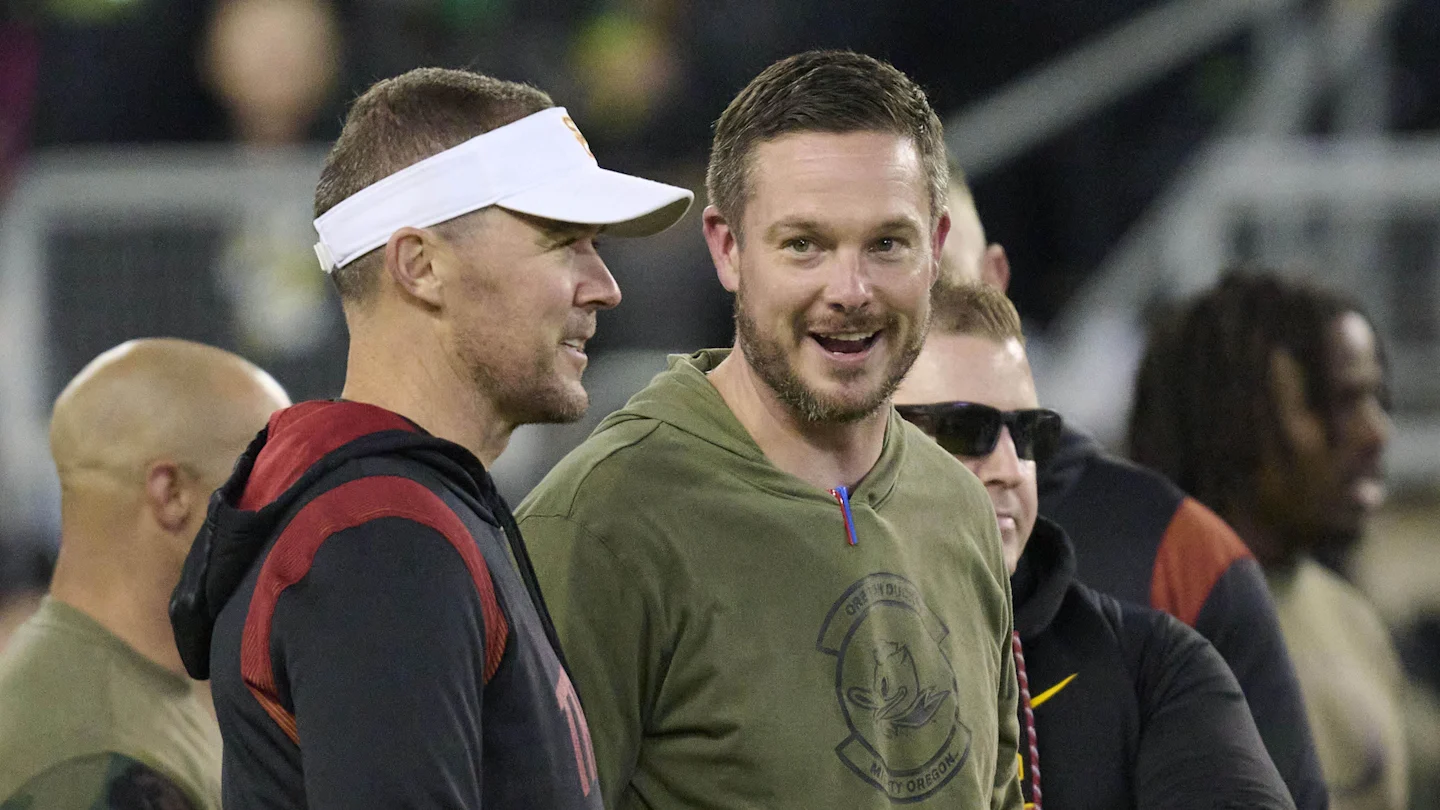
Oregon head coach Dan Lanning

Oregon head coach Dan Lanning walks off the field after a timeout as the Oregon Ducks take on the Washington Huskies on Nov. 29, 2025, at Husky Stadium in Seattle, Washington. | Ben Lonergan/The Register-Guard / USA TODAY NETWORK via Imagn Images

The Ducks have already been connected to some notable portal players, including Arizona State quarterback Sam Leavitt. More names will certainly be added to the list in the coming weeks, but one interesting player could be joining the mix.

Per reports from On3’s Pete Nakos, Oregon is a potential team to watch for USC Trojans defensive lineman Devan Thompkins. He spent the past three years with the Trojans and

This mirrors what Oregon did last offseason with defensive lineman Bear Alexander, who spent the 2023 and ’24 seasons at USC before transferring to Eugene. This proved to be a

MORE: Three Biggest Takeaways From Oregon’s Playoff Win Over James Madison

MORE: Oregon Coach Dan Lanning Is Turning Heads For Ducks’ Playoff Entrance

MORE: National Championship Betting Odds After Oregon’s Win Over James Madison

SIGN UP FOR OUR NEWSLETTER HERE

Alexander, who played his freshman season with the Georgia Bulldogs before joining USC, has already confirmed that he will be returning to Oregon for the 2026 season.

“I prayed for this moment. Grateful beyond words to be back on the field. Every doubt, every setback, every hard day led me back here. I am truly thankful for my staffs commitment to my growth both personally and professionally. Stepping back onto this field felt like breathing again and I’m forever grateful. Being away from the game last year was tough, I really missed this more than I can explain. Thankful for the strength, support, and grace that brought me back to this point in my life with all my dreams within reach,” wrote Alexander onto social media.

Alexander posted 45 total tackles and one sack during the regular season with Oregon. In his second-career CFP game against James Madison on Saturday, he had four total tackles (two solo).

Oregon Ducks head coach Dan Lanning

Oregon Ducks head coach Dan Lanning looks on during the fourth quarter against the James Madison Dukes at Autzen Stadium. | Craig Strobeck-Imagn Images

As for Thompkins, it’s a bit too early to know which team he will end up choosing, as the portal is set to open on Jan. 2 after the College Football Playoff Quarterfinals.

However, if he does end up choosing Oregon, the Ducks would be getting an experienced player on the defensive line while simultaneously snagging him away from a Big Ten rival.

This past season, Thompkins had 31 total tackles (18 solo), three sacks, one forced fumble and two pass breakups. He had 4.5 career sacks in three seaons with the Trojans.

But before looking too far ahead when it comes to the portal, the Ducks will look to keep their championship hopes alive on New Year’s Day at the Orange Bowl in Miami against the Texas Tech Red Raiders.

Recommended Articles


Link

Continue Reading

NIL

Report: Terry Smith’s lack of FBS head coaching prevented him from landing Penn State job

Published

on


Despite being one of the first major Power Four openings following the Oct. 12 firing of James Franklin six games into the season, Penn State was without a full-time head football coach for 58 days until Iowa State‘s Matt Campbell was formally hired on Dec. 5.

During the two-month-long coaching search, more than 10 candidates — from Alabama‘s Kalen DeBoer to Nebraska‘s Matt Rhule — were reportedly mentioned in connection to the Nittany Lions opening, even if most were never serious options. Several of those candidates — Rhule, Indiana‘s Curt Cignetti and BYU‘s Kalani Sitake — received lucractive contract extensions just for being mentioned in connection to Penn State.

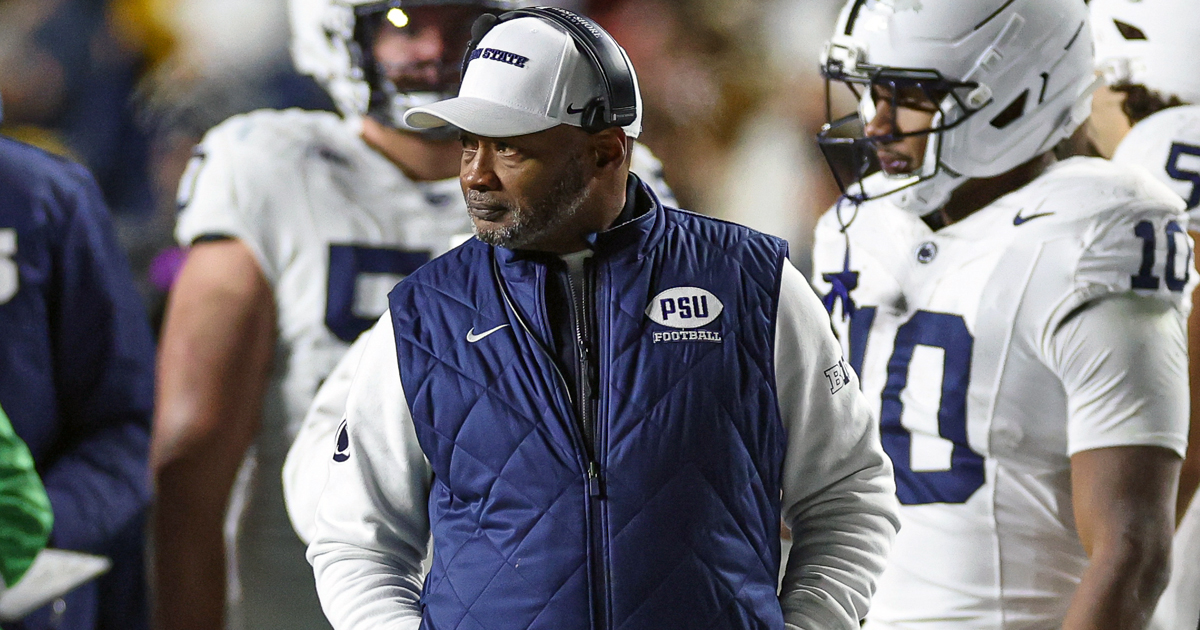
In the meantime, longtime assistant and interim head coach Terry Smith did his best to pick up the pieces of the once-promising season and closed out on a three-game win streak to secure bowl eligibility for Penn State (6-6). That late-season surge helped boost support for Smith to be promoted to full-time head coach, especially among current and former players.

During Penn State’s victory over Rutgers, multiple players held up signs that read, “Hire Terry Smith,” which showed the amount of support the veteran coach had built within the program. Former PSU star Michael Robinson also advocated for Smith to get the top job.

Terry Smith on support from PSU alumni: ‘It means everything’

“It means everything,” Smith said in late November. “Obviously, the support that the lettermen are giving me, especially Michael Robinson doing that, obviously it means we’re doing something right. Just trying to create a culture for our team to play hard, play tough, and for our fans to get behind us and support us and stay in our corner.”

Smith, a four-year letter winner between 1987-91 under legendary head coach Joe Paterno, was ultimately retained and will return as the associate head coach under Campbell. But the lengthy search left many wondering why the 56-year-old alum and longtime associate head coach wasn’t given more serious consideration.

Turns out Smith was a “legitimate candidate,” according to a detailed report from ESPN’s Adam Rittenberg, Max Olson and Eli Lederman released on Christmas Eve. The ESPN report revealed Smith was among five candidates that actually interviewed with PSU athletic director Pat Kraft, though he “ultimately lacked the FBS head coaching experience Penn State desired.”

Of course, prior to his interim gig this season, Smith has never led his own collegiate football program. The former collegiate receiver nicknamed “Superfly” has served as the Nittany Lions’ cornerbacks coach since 2014, adding the title of assistant head coach two years later in 2016 before becoming the associate head coach in 2021. Given that wealth of experience, Smith was a priority for Campbell and Penn State, which reportedly made him college football’s highest-paid non-coordinator, according to NFL insider Jordan Schultz.


Link

Continue Reading

Most Viewed Posts

Trending