
Motorsports
“It's Not Money”

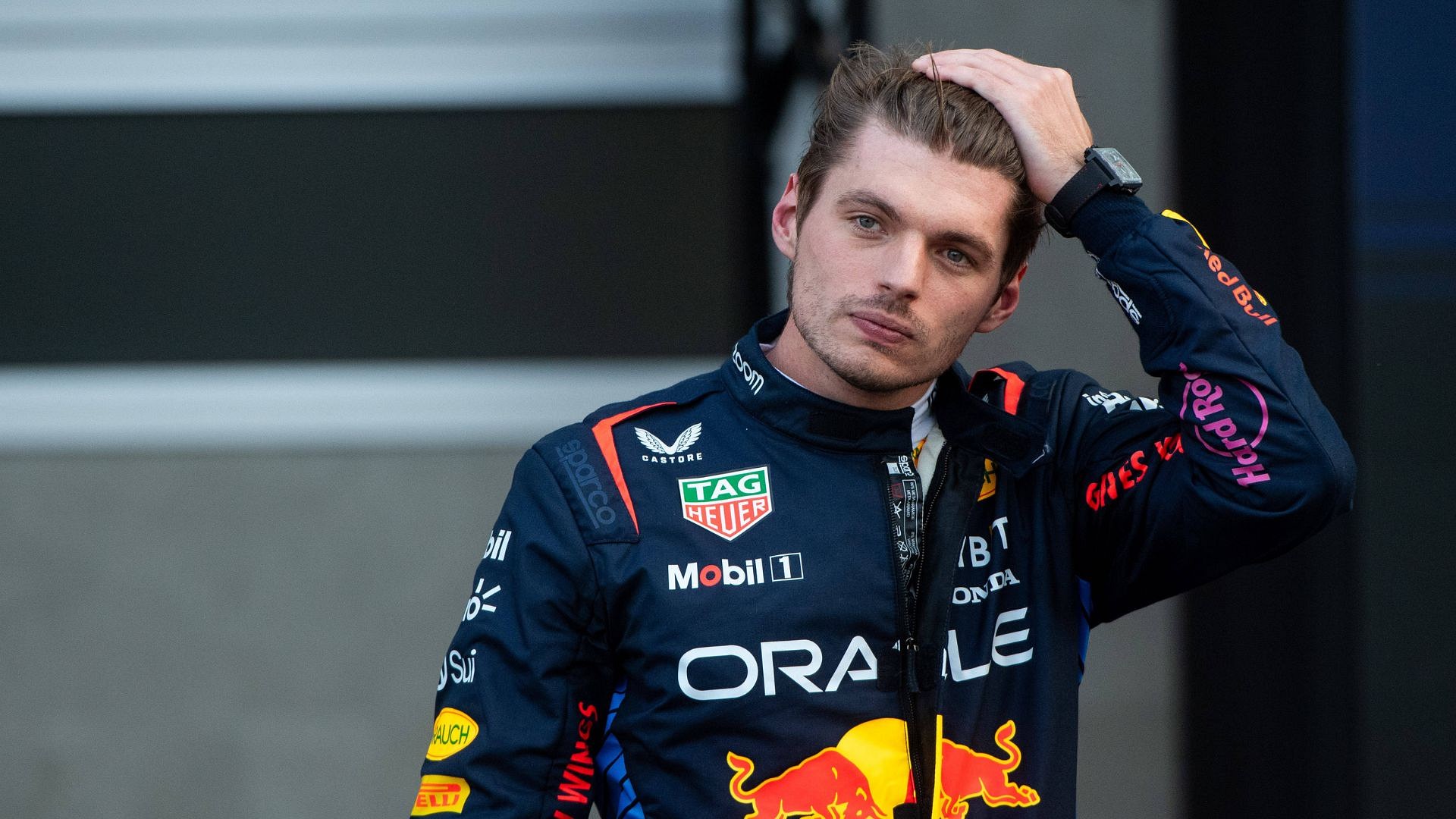
2024 came to a bitter end for Red Bull as they lost their grip on the Constructors’ championship. After winning the coveted trophy twice in a row, the Milton Keynes-based outfit fell down to third in the standings by the end of last season. While Max Verstappen somehow held onto his drivers’ title, Dutch F1 commentator, Nelson Valkenburg predicts an even rockier ride for the team next season.Valkenburg, who commentates for Viaplay, explained that next year the team might even struggle to latch onto their #1 driver. However, if they can keep Verstappen satisfied, they have a chance to fight with the 27-year-old on board into 2026 and beyond.
Red Bull seemingly have a simple task ahead — keep Verstappen in the championship fight. However, with the 2026 regulations reset just around the corner, the Bulls might have to make some tough decisions with the RB21.
Valkenburg explains that the team will want to focus on the 2026 car at some point in the season. This would mean leaving the development of the RB21 alone. However, if Verstappen finds himself in the title fight, Red Bull will have to decide what to prioritize — Verstappen’s fifth championship or their 2026 prospects.
Valkenburg sees only one possible solution to Red Bull’s woes. If they want to win, they need to have the best driver in their car which they already do. Now, it is only a matter of whether they can provide him with a competitive car or not.
Verstappen could leave Red Bull in 2025
“What happens when he fights for fifth place and has to choose between driving a car he hates or spending some extra time with family and spending the rest of the season and working on a deal that is better for him,” he wonders.
With Red Bull’s competitiveness in question, the team runs a real risk of losing the Dutchman, possibly even mid-season, according to Valkenburg. He cited Verstappen’s commitment to his family and his upcoming baby with girlfriend, Kelly Piquet to motivate his hand into retiring if he cannot win.
As things stand, that isn’t happening with the Dutchman raring to go for his fifth world title. As for Red Bull, they also want to avoid such a scenario and have Verstappen’s services secured with a long-term contract till 2028.
There have been reports of Verstappen looking to retire early, but it would be too much to assume that he may bow out as early as 2025. Some experts also pointed towards the 27-year-old taking a year off and then choosing the best possible destination after seeing which team has geared up well for the 2026 regulations.
Valkenburg said on The Race’s F1 podcast, “That will stimulate them even more to keep Max happy. And the only way you keep him happy is to give him a competitive car. It’s not money or anything else. It’s a competitive car.”









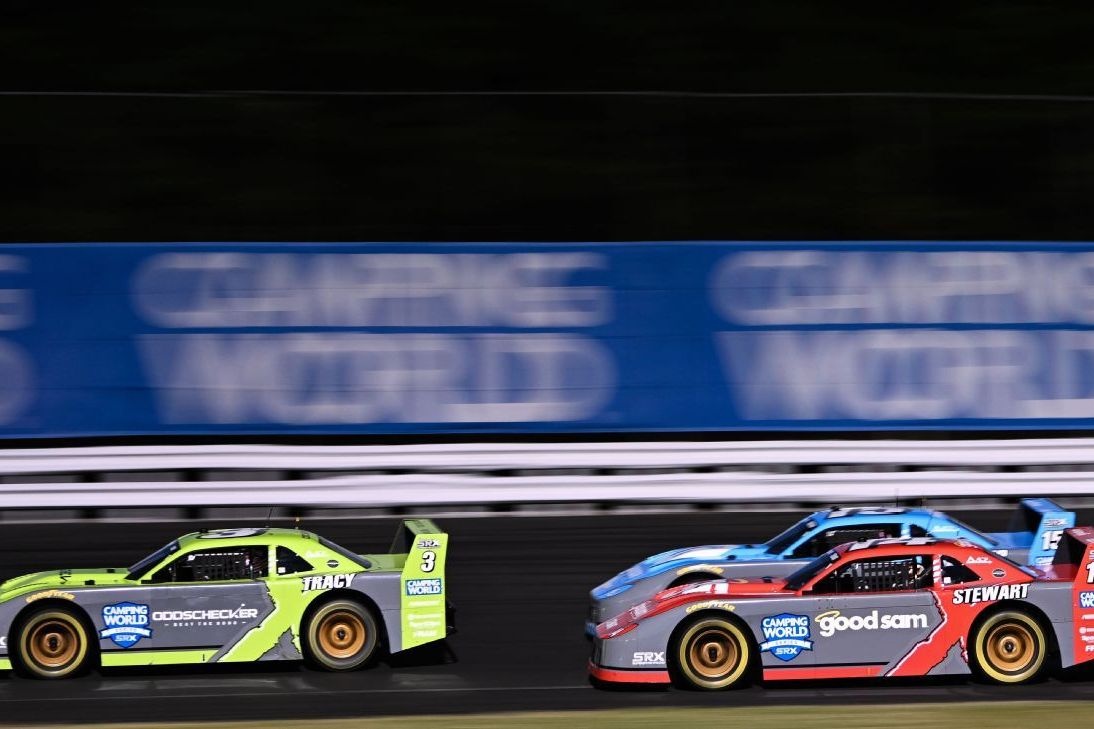
It’s becoming clear through four days of the 23XI Racing and Front Row Motorsports v NASCAR antitrust trial that the now defunct SRX series will play a role in determining in the outcome of the case in the eyes of the jury.
In questioning NASCAR executives (president) Steve O’Donnell and (EVP-strategy) Scott Prime over the past two days, 23XI and FRM attorney Jeffrey Kessler has started to paint a picture that the Sanctioning Body’s leadership became increasingly aware of a potential competitor series and reacted to it in tangible way.
This is important because this case, as decided by a jury, will answer in part if NASCAR is using its position as a monopoly in the premier Stock Car racing space to harm competition or those operating in the space, like the teams.
So the fact that Superstar Racing Series keeps coming up in the line of questioning is more signal than noise.
NASCAR started to show concern about SRX during the summer of 2022, during the second season of the midweek short track series, as it negotiated with teams over the terms of the charter agreement extension.
What would happen if teams ultimately rejected in large numbers a final NASCAR proposal? They asked themselves that as early in June 2022 because it was possible, as referenced by Prime, that teams and drivers could race in SRX.
This was especially a concern as NASCAR began to feel as though SRX started to infringe on its identity. For example, SRX started out in 2021 as a series that ran on three dirt tracks and three paved short tracks using a roster of retired legends and a local hero from each venue.
By the second year, races started to more frequently feature Cup Series drivers and the final year in 2023 saw Brad Keselowski run the entire season with cameo appearances from the likes of Kyle Busch and Chase Briscoe. Chase Elliott appeared in races.
“I recall we all became concerned with the look and the feel of the series, yes,” O’Donnell said while under questioning from Kessler.
However, O’Donnell pointed out that 2016-2024 charter agreement didn’t prevent drivers from participating in the series. But of concern to O’Donnell and his peers is that team owners like Hamlin and Justin Marks also made starts.
The series was also co-founded by a charter holding team owner, at the time, in three-time Cup Series champion Tony Stewart, which led to O’Donnell having a conversation with then Stewart-Haas Racing president Brett Frood that assuaged his concerns, but only temporarily.
“I learned from Brett Frood that the original plan was to not look like NASCAR, feature NASCAR drivers,” O’Donnell said, “but these are all things that ended up happening.”
How did NASCAR respond to that threat? Consider this June 29, 2022 discovered conversation between Prime, Phelps, Ben Kennedy and O’Donnell.
—
O’Donnell: Justin marks is racing srx?
Ben Kennedy: Saw that too. Disappointing.
Prime: They just don’t get it. I’m sure its cool for Justin to go get behind the wheel but there’s no regard for the bigger picture. And maybe that’s on us for not giving them that incentive, I don’t know. But you’ve got Marks, Chase (Elliott), Tony (Stewart) and (Ryan) Blaney racing on a network that competes against our rights holders. They outrated (on television) Xfinity and Trucks last weekend; it isn’t some local dirt track stuff.
O’Donnell: Actually you have one of the voices of FOX in Waltrip, an owner of Cup cars in Stewart, our most popular driver for years and one of our champs fathers etc. This is exhibit ‘a’ that nobody gives a shit about what got them their careers. Pay em some money and they are all in. The guy who cried about safety every single day is in a box car without SAFER Barriers and not a care in the world. And by the way, who does Curtis (Polk, 23XI co-owner) have hanging with (Michael Jordan) over the weekend in Nashville? Not Ben, not me or (Scott) Prime or anyone – Marty Smith from ESPN. Coincidence? Lots to get our arms around but sadly any ‘goodwill’ seems to be lost. So smiles all around but behind the scenes we scheme and we win.” Wait until (Dale) Jr. says he is running an event. Matter of time. They will go to North Wilkesboro with Jr. if we are not careful. We need to be the first back.
Prime: Agreed – North Wilkesboro and Bowman Gray next year with Jr and friends if we don’t make moves
O’Donnell: How about this for All Star – make it a combo – Bowman and Wilkes Fri/Sun
Prime: Sick! And flip it for 2024. We’ve got moves to make. Just need to sell them through. Should be a good working session Thursday
Phelps: That’s the key – we need to have everyone understand that this could turn into LIV if we don’t play our cards right. We are smarter than they are – but part of the issue is they don’t have the facts and don’t seem to want to take the time to learn or maybe they just don’t care. It’s all about the money and feeling like they have been heard and are respected. The SRX thing is just baffling to me. Why don’t they get it? Oh, they do get it, and it’s a huge FU to us.
—
This was an example of their concern, and NASCAR ended up adding both Wilkesboro (2023) and Bowman Gray (2025) to the Cup Series schedule in the years that followed.
Speedway Motorsports, which owns numerous tracks and dates on the Cup Series schedule, wanted to add an SRX date in 2024 for debt servicing purposes but was blocked by NASCAR, which has tracks sign an exclusion provision. NASCAR did not allow SM to schedule that race.
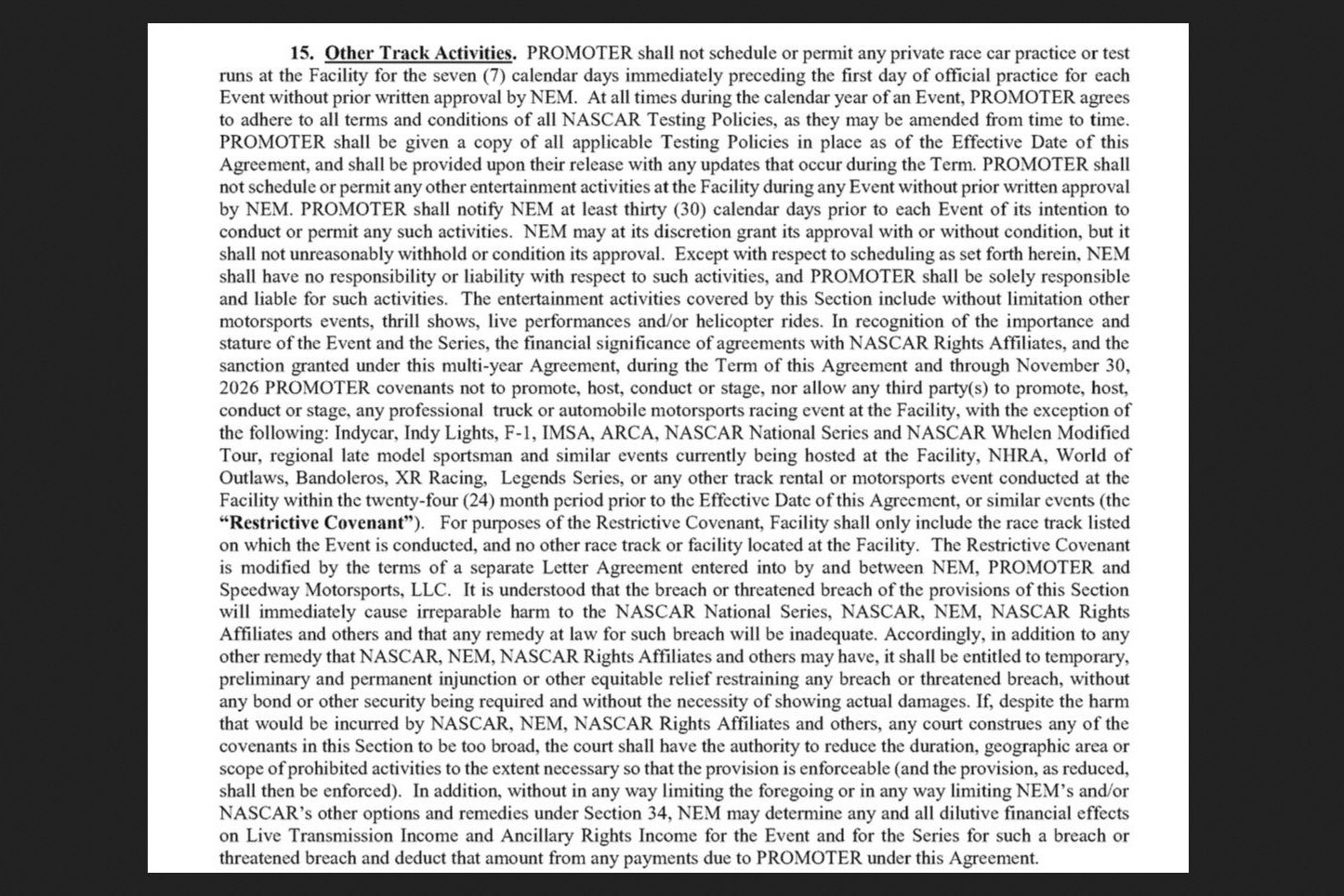
O’Donnell was asked why in his testimony by Kessler.
O’Donnell said NASCAR was in the middle negotiating a new broadcast rights agreement ‘and SRX started to look like NASCAR, so we said no.’ He added that ‘we (NASCAR) wanted to gain as much TV revenue for the teams and tracks as possible.’
Meaning: NASCAR felt like the existence of SRX, and an increasingly viable SRX on a major television platform, was a potential hurdle to NASCAR’s negotiations, to say nothing of what O’Donnell thought created confusion in the marketplace.
He said he felt like, given the state of TV negotiations, that everyone in the sport should have been, and wanted to be, all-in on NASCAR.
Then there’s this February 1, 2023 text exchange between Phelps and O’Donnell.
Phelps: Oh great, another owner racing in SRX
O’Donnell: This is NASCAR. Pure and simple. Enough. We need legal to take a shot at this.
Phelps: These guys are just plain stupid. Need to put a knife in this trash series.
Why did O’Donnell want legal to look at it, asked Kessler?
“I thought it looked more and more like NASCAR.”
Is it because he wanted SRX stopped?
“I just wanted legal to take a look at it.”
As for Wilkesboro and Bowman Gray being added to the Cup schedule, Kessler suggested this as anti-competitive behavior and O’Donnell said the promotional family at BGS, and the Frances, goes back generations.
This is true.
O’Donnell said that family wanted to sell their lease, and with NASCAR’s roots going back to the 50s there, and still sanctioning the weekly track program, the league was all the more welcome to pick up the lease. He said Speedway came to NASCAR wanting a Cup race at Wilkesboro, as they own it, and that request was merely granted.
Kessler hammered the point home one more time, before moving on, that these moves all came after these text exchanges specifically bringing up taking Cup to these tracks in response to the threat of the SRX series.
SRX’s 2024 season never materialized as it announced its closure in January 2024 for reasons that still haven’t been made clear.
O’Donnell conceded in his testimony that ‘he thinks about it every day’ about the possibility of a breakaway series and it’s in his job description to assess the landscape for adverse headwinds to the NASCAR business.
He and his fellow senior leadership peers expressed concern in an email chain after a meeting with the teams over charter negotiations in March 2022 that the teams could form or join a competitor series.
So, track agreements, with O’Donnell’s oversight, received more extensive non-compete clauses that extended two years plus another two years. O’Donnell says the second two-years only kicked in with agreement to terms after the first two years, despite what the discovered emails said, and that the extended agreements was merely about scheduling purposes.
But what does the non-compete apply to, given that it was implemented against SRX racing at a SMI facility?
“If it looked like it infringed upon our IP,” O’Donnell said.
Regardless, O’Donnell and Prime were so concerned that the teams could form their own series or partner with SRX and Speedway Motorsports and run two races at every SMI facility plus one at Eldora Speedway, owned by Stewart, and the Indianapolis Motor Speedway owned by fellow Cup Series team owner Roger Penske.
O’Donnell said he wanted track agreements finalized with Speedway Motorsports by that Saturday before the teams could explore that option.
Prime and O’Donnell also felt like the team owners could sell their charters to F1 owning Liberty Media and/or run this mid-week style series.
No matter what, LIV Golf and how it challenged the hegemony of the PGA Tour, created a degree of nervousness within NASCAR circles.
O’Donnell is pro team

Nascar President, Steve O’Donnell
Photo by: Jared C. Tilton / Getty Images
O’Donnell took notes during a meeting with team owners in 2022, the first time in which the two sides discussed the charter negotiations ahead of them, where the executive was told that the current model was ‘broken’ for the competitors.
He noted, literally, that teams could be one lost sponsors away from going out of business.
His notes read ‘the business model is broken for the teams,’ after being shown a compositive financial report that showed cars costing $20 million per entry per season, and O’Donnell taking that at face value.
“We knew the industry was challenged,” O’Donnell said when asked about his takeaways.
At the time, the charter agreement paid 65 percent of broadcast rights revenue to tracks, 25 percent to teams and 10 percent to the Sanctioning Body itself.
In that meeting, 23XI investor and eventual Teams Negotiating Committee chairman Curtis Polk told the NASCAR leadership team that the teams had three primary goals – maximize broadcast rights revenue, increase competition and introduce a spending salary cap.
During that meeting, Jeff Gordon of Hendrick Motorsports asked Ben Kennedy, the great grandson of NASCAR founder Bill France and nephew to Jim, if ‘the family was open to a new financial model’ to help the teams.
At the time, Kennedy said yes.
Kessler asked O’Donnell on Thursday if that was actually true.
“No.”
By February 14, 2023, O’Donnell said in an hand-written note that he hoped the future leadership would skew younger.
“I was hoping the future board would include the next generation and was hoping to see that change,” O’Donnell typed.
Jim France is 81.
O’Donnell said that the ‘legacy mindset’ in the NASCAR Board ‘inhibited growth.’
But through it all, O’Donnell did try his best, even in conversation with the elder France to make headway for the teams, but 21 of the 22 Amanda Chart issues remained either neutral or NASCAR wins.
“Mr. France was the brick wall in the negotiations,” Kessler suggested to O’Donnell referring to a text message line from Prime.
And the response?
“Those are your words, not mine.”
O’Donnell has been at NASCAR since 1996. And while he is very passionate, sometimes to the point of acrimony, Kessler did not get an emotional response out of the longtime executive who instead stuck to his broader points about trying to help the teams and NASCAR leadership all find a degree of commonality.
“My job every day is to grow the sport.”
He frequently spoke to the ‘stakeholders’ and said that growth applies to his bosses, but also the teams and the fans. And if that means making his bosses mad at him?
“The Frances have always told me that they don’t hire ‘Yes People’ and that sometimes his job is to speak up to the broader issues within the garage.
And while much of this case has been about the teams’ financial struggles, the basis for their arguments for more money in the charter negotiations, O’Donnell illustrated on Thursday that NASCAR frequently invests into the sport at great loss too.
For example, the three years spent racing in Downtown Chicago cost NASCAR $55 million, according to O’Donnell.
Why did NASCAR do it?
“It was a strategic investment because if not for that, Amazon would not have become a broadcast partner,” said O’Donnell.
NASCAR said it lost $6 million racing in Mexico City this year but did so because it was important to Amazon, who kicked in an addition $1 million in race purse.
For what it’s worth, Kessler could only do math to find $500,000 of that loss and O’Donnell couldn’t explain the rest of the $5+ million beyond ‘logistics.’
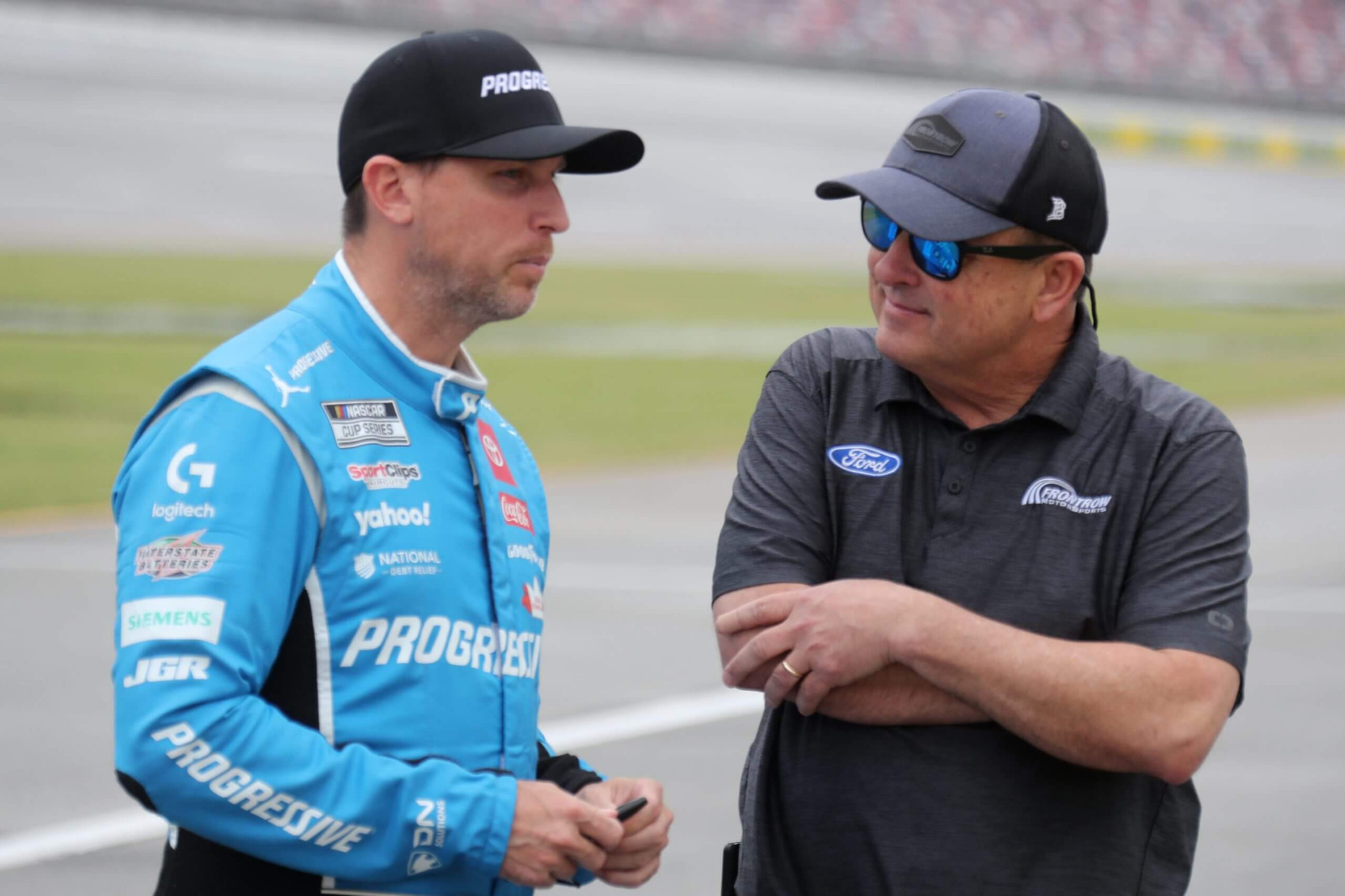
Jenkins cross-examined
The morning on Thursday opened with the rest of Front Row Motorsports owner Bob Jenkins cross-examination and re-examination.
NASCAR spent Wednesday evening and Thursday morning attempting to paint a picture, over the past two days that Jenkins has used his other businesses to misrepresent FRM’s financials.
Jenkins has testified that it costs $20 million per car to race in the Cup Series, but NASCAR attorney Lawrence Buterman produced discovery documents that showed the most Front Row has ever spent on a Cup car is $14 million.
Jenkins said the $20 million is the aggregate of multiple teams as used in a teams’ document.
“The median cost is $20 million; the fact I can do it for less helps me reduce my costs,” Jenkins told Buterman.
Buterman pointed to documents that showed part of what Front Row is asking for in damages matches a $1.2 million loss from his Truck Series team, which is unrelated to the lawsuit and the Cup Series charter system.
Jenkins conceded that Truck Series losses shouldn’t have been included.
Another point of the lawsuit is 23XI and Front Row suggesting that NASCAR’s characterized ‘take it or leave it’ final charter offer to the teams on September 6, 2004 was the behavior of a monopsonist acting anti-competitively.
That day, NASCAR sent the charter document to teams and told them they had by the end of the business day to sign it or lose their charters.
Buterman admitted evidence that Jenkins deployed the same approach in 2021 with 23XI Racing co-owner and co-plaintiff Denny Hamlin over a proposed merger between their two teams.
In the text, Jenkins told Hamlin ‘we can’t keep negotiating this forever,” Jenkins wrote in a text and that’s “…why we decided we had to have a deal by 5 p.m.”
Similar to Buterman trying to draw parallels to Hamlin and Jenkins having exclusivity clauses built into their contracts with drivers, despite drivers having options of where to drive, as similar to the track exclusivity clauses and charter goodwill provisions, Jenkins fended this off with a legal response too.
“This is another one of your analogies that doesn’t work,” Jenkins said, since Hamlin could also buy a charter from Starcom or Rick Ware Racing, which were on the market at the time.
Jenkins had a text message with President Jerry Freeze that said ‘tell Rick Ware he can charge whatever to Hamlin’ for a charter. Jenkins said that wasn’t him imposing a term on RWR and that he didn’t share privy financial information about the proposed 23XI, FRM merger.
That merger never happened, Jenkins said, because Toyota could only field one engine program and not two and the deal was for Jenkins’ two charters.
“I couldn’t run one Ford and one Toyota,” and the deadline he gave Hamlin was because Ford and Roush needed to know if Jenkins was leaving for TRD and Hamlin or not.
Speed it up
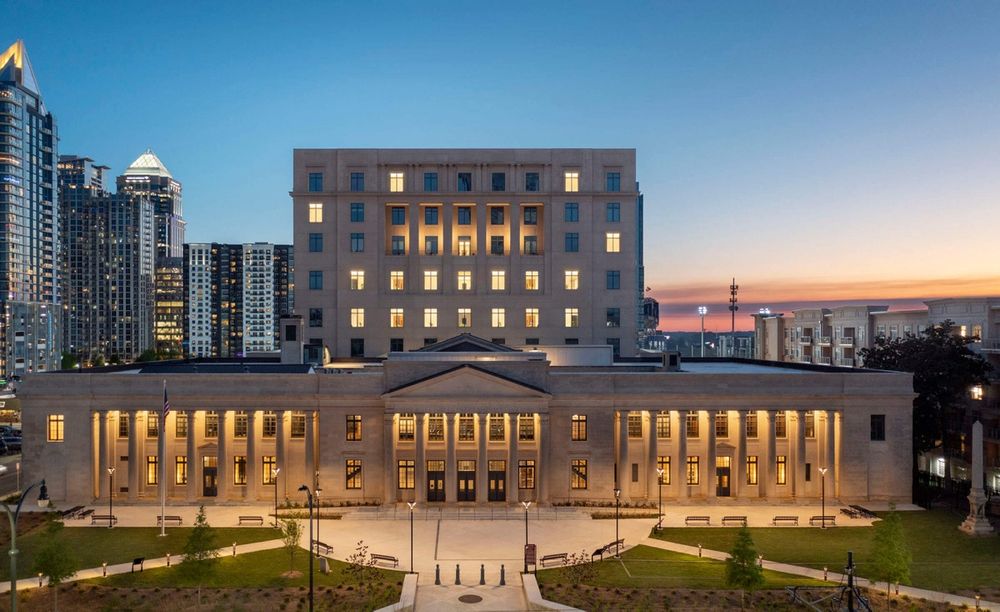
Charles R. Jonas
The day ended with Judge Kenneth D. Bell criticizing the pace of the trial to this point with just three witnesses in as many days.
“I get the impression that this is not moving along the way we all would like it to.”
Judge Bell said he was hesitant to introduce a chess clock to force both sides on a timer but says he wants future witnesses to answer ‘the most harmless of questions’ a little quicker with less dodging.
“There are uncomfortable texts and emails for both sides, so just acknowledge it as a bad look and get on with it,” Bell said.
And if they don’t, Judge Bell is going to start being the one to ask the witness to answer.
Bell says the jury is being subjected to redundancy ‘and they’re seeing a lot of trees and not a lot of forest’ and ‘they are seeing tree after tree.’
NASCAR had intended to call Roger Penske as a witness but is only available on Monday. Chris Yates, the lead attorney for NASCAR’s defensive, asked that Penske be allowed to testify on Monday even if out of order. Kessler objected because it would disrupt the story and order he intentionally is trying to present to the jury.
Bell agreed with Kessler and NASCAR was told to have Penske available when his time comes because ‘federal trials are an inconvenience.’
The jury was told this would be a two week trial, but now it’s looking to extend into the third-week, and Bell said the inconvenience on the jury would be unacceptable to increase that commitment by 50 percent.
“I would have a full blown riot,” Bell said of his jury, approaching the holidays.
We want your opinion!
What would you like to see on Motorsport.com?
Take our 5 minute survey.
– The Motorsport.com Team
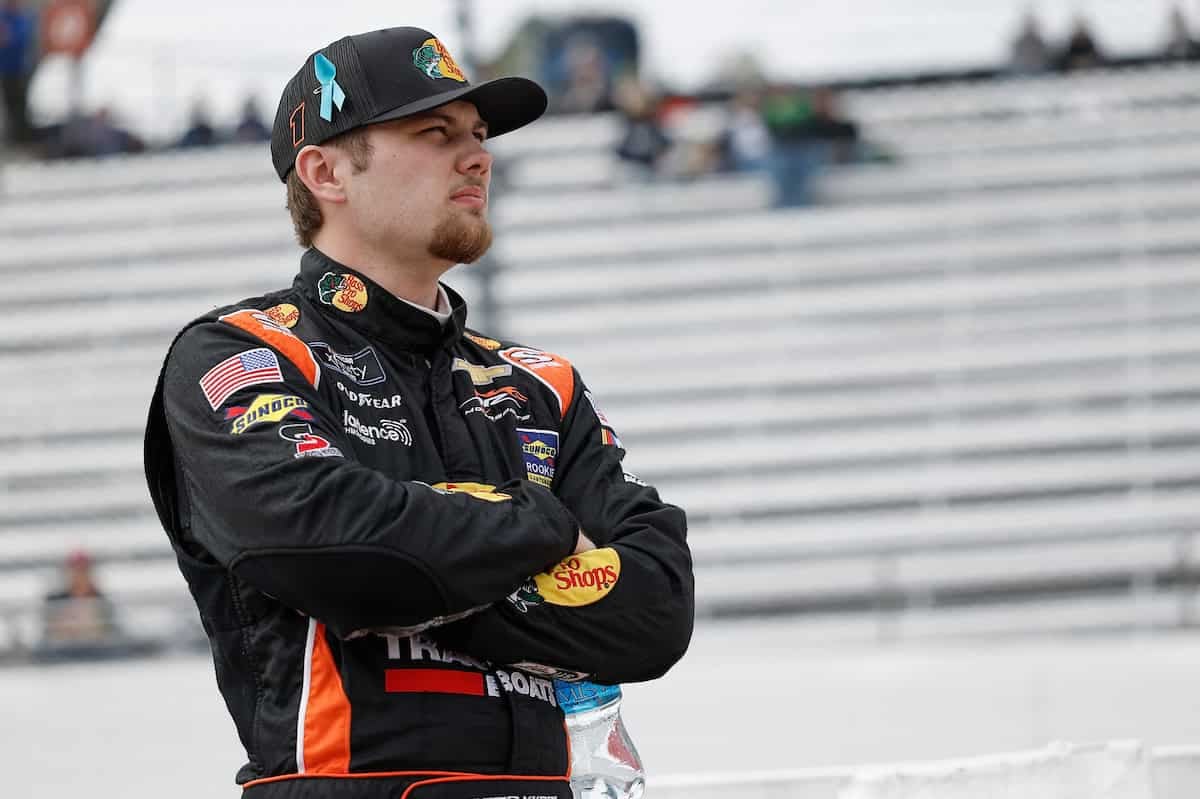
Champion Irrigation Products will sponsor Carson Kvapil in three NASCAR O’Reilly Auto Parts Series races in 2026, JR Motorsports announced Dec. 5.
Kvapil’s part-time schedule in the No. 1 will feature Champion colors beginning at Darlington Raceway in March.
Champion follows at Talladega Superspeedway in April and Phoenix Raceway in October.
Carson Kvapil Will Run Full Time in O’Reilly in 2026 After All
“We are thrilled to bring Champion Irrigation to the JR Motorsports family in 2026,” JRM CEO Kelley Earnhardt Miller said in a team release. “As an existing fixture in motorsports we are excited for the opportunity to help them make the leap into the NASCAR O’Reilly Auto Parts Series and are looking forward to a successful season for Champion Irrigation with Carson and the No. 1 team.”
Kvapil is running a full O’Reilly schedule in 2026, with many in the No. 1.
In 2025, his first full-time season with JRM, he scored seven top fives and 14 top 10s, finishing fourth in points.

Executive Editor at Frontstretch
Kevin Rutherford is the executive editor of Frontstretch, a position he gained in 2025 after being the managing editor since 2015, and serving on the editing staff since 2013.
At his day job, he’s a journalist covering music and rock charts at Billboard. He lives in New York City, but his heart is in Ohio — you know, like that Hawthorne Heights song.
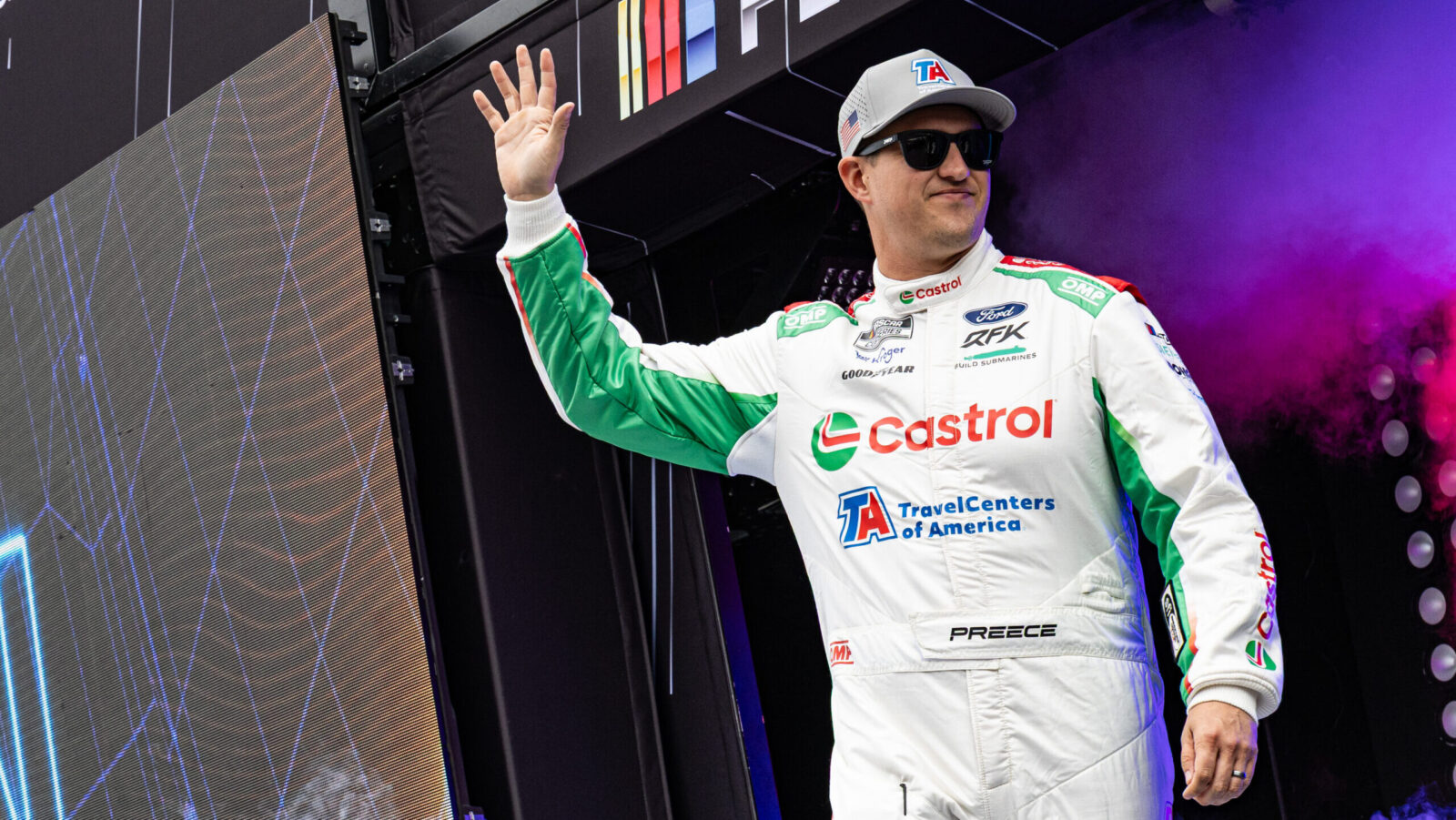
It’s been a little over a month since the 2025 NASCAR National Series campaign wrapped up at Phoenix Raceway, but for several drivers, that doesn’t mark the end of the racing season.
Many drivers from across NASCAR’s top-three divisions, as well as the three levels of the ARCA Menards Series, are heading down south to Pensacola, Florida, this weekend for the 58th annual Snowball Derby at Five Flags Speedway.
The entry list for this year’s Snowball Derby (at least from the NASCAR side of things) is quite star-studded this season, with four full-time NASCAR Cup Series drivers competing in the prestigious Super Late Model event.
Erik Jones (No. 4), Noah Gragson (No. 30 for Kasey Jones Racing), Kyle Busch (No. 51 for Bryson Lopez Racing), and Ryan Preece (No. 60) will all attempt to qualify for Sunday’s 300-lap main event.
Johnny Sauter (No. 5) and Ty Majeski (No. 91), both former champions of the NASCAR Craftsman Truck Series, will be competing in the prestigious event. Other full-time Truck Series drivers set to compete in the event include Kaden Honeycutt, Dawson Sutton, and Jake Garcia.
Cole Butcher, Conner Jones, Derek Kraus, and Treyten Lapcevich, all of whom took on part-time roles in NASCAR’s National Series this season, will also be competing in the event.
David Gilliland, co-owner of championship-winning NASCAR Craftsman Truck Series team TRICON Garage, will return to the Snowball Derby for a second straight year, driving his self-prepared No. 98.
Other entrants into the Snowball Derby from the NASCAR/ARCA world include Spire Motorsports development driver Tristan McKee, Joe Gibbs Racing ARCA driver Max Reaves, Nitro Motorsports ARCA driver Gavan Boschele, Kole Raz, Jake Finch, and Richard Childress Racing development driver Carson Brown.
In conjunction with the 58th Annual Snowball Derby for the Super Late Models, the Pro Late Models will also get to tackle Five Flags Speedway this coming weekend for the prestigious Snowflake 125. Like the Derby, this entry list is stacked, as well.
Tristan McKee, a development driver for NASCAR Cup Series team Spire Motorsports, is entered in the Snowflake 125 driving the No. 7 Chevrolet. He’ll be joined by fellow ARCA Menards Series rivals Max Reaves, Isaac Kitzmiller, Jade Avedisian, and Jake Finch.
NASCAR National Series drivers Alex Labbe and Kaden Honeycutt will also compete in the Snowflake 125, as will former NASCAR drivers Spencer Davis and Tony Cosentino, among others.
Additionally, Keelan Harvick, son of 2014 NASCAR Cup Series champion Kevin Harvick, will be competing in the event, driving the Hunt Brothers Pizza No. 62.
To see the qualifying draw for the Snowball Derby and Snowflake 125, visit RacingAmerica.com
It’s becoming clear through four days of the 23XI Racing and Front Row Motorsports v NASCAR antitrust trial that the now defunct SRX series will play a role in determining in the outcome of the case in the eyes of the jury.
In questioning NASCAR executives (president) Steve O’Donnell and (EVP-strategy) Scott Prime over the past two days, 23XI and FRM attorney Jeffrey Kessler has started to paint a picture that the Sanctioning Body’s leadership became increasingly aware of a potential competitor series and reacted to it in tangible way.
This is important because this case, as decided by a jury, will answer in part if NASCAR is using its position as a monopoly in the premier Stock Car racing space to harm competition or those operating in the space, like the teams.
So the fact that Superstar Racing Series keeps coming up in the line of questioning is more signal than noise.
NASCAR started to show concern about SRX during the summer of 2022, during the second season of the midweek short track series, as it negotiated with teams over the terms of the charter agreement extension.
What would happen if teams ultimately rejected in large numbers a final NASCAR proposal? They asked themselves that as early in June 2022 because it was possible, as referenced by Prime, that teams and drivers could race in SRX.
This was especially a concern as NASCAR began to feel as though SRX started to infringe on its identity. For example, SRX started out in 2021 as a series that ran on three dirt tracks and three paved short tracks using a roster of retired legends and a local hero from each venue.
By the second year, races started to more frequently feature Cup Series drivers and the final year in 2023 saw Brad Keselowski run the entire season with cameo appearances from the likes of Kyle Busch and Chase Briscoe. Chase Elliott appeared in races.
“I recall we all became concerned with the look and the feel of the series, yes,” O’Donnell said while under questioning from Kessler.
However, O’Donnell pointed out that 2016-2024 charter agreement didn’t prevent drivers from participating in the series. But of concern to O’Donnell and his peers is that team owners like Hamlin and Justin Marks also made starts.
The series was also co-founded by a charter holding team owner, at the time, in three-time Cup Series champion Tony Stewart, which led to O’Donnell having a conversation with then Stewart-Haas Racing president Brett Frood that assuaged his concerns, but only temporarily.
“I learned from Brett Frood that the original plan was to not look like NASCAR, feature NASCAR drivers,” O’Donnell said, “but these are all things that ended up happening.”
How did NASCAR respond to that threat? Consider this June 29, 2022 discovered conversation between Prime, Phelps, Ben Kennedy and O’Donnell.
—
O’Donnell: Justin marks is racing srx?
Ben Kennedy: Saw that too. Disappointing.
Prime: They just don’t get it. I’m sure its cool for Justin to go get behind the wheel but there’s no regard for the bigger picture. And maybe that’s on us for not giving them that incentive, I don’t know. But you’ve got Marks, Chase (Elliott), Tony (Stewart) and (Ryan) Blaney racing on a network that competes against our rights holders. They outrated (on television) Xfinity and Trucks last weekend; it isn’t some local dirt track stuff.
O’Donnell: Actually you have one of the voices of FOX in Waltrip, an owner of Cup cars in Stewart, our most popular driver for years and one of our champs fathers etc. This is exhibit ‘a’ that nobody gives a shit about what got them their careers. Pay em some money and they are all in. The guy who cried about safety every single day is in a box car without SAFER Barriers and not a care in the world. And by the way, who does Curtis (Polk, 23XI co-owner) have hanging with (Michael Jordan) over the weekend in Nashville? Not Ben, not me or (Scott) Prime or anyone – Marty Smith from ESPN. Coincidence? Lots to get our arms around but sadly any ‘goodwill’ seems to be lost. So smiles all around but behind the scenes we scheme and we win.” Wait until (Dale) Jr. says he is running an event. Matter of time. They will go to North Wilkesboro with Jr. if we are not careful. We need to be the first back.
Prime: Agreed – North Wilkesboro and Bowman Gray next year with Jr and friends if we don’t make moves
O’Donnell: How about this for All Star – make it a combo – Bowman and Wilkes Fri/Sun
Prime: Sick! And flip it for 2024. We’ve got moves to make. Just need to sell them through. Should be a good working session Thursday
Phelps: That’s the key – we need to have everyone understand that this could turn into LIV if we don’t play our cards right. We are smarter than they are – but part of the issue is they don’t have the facts and don’t seem to want to take the time to learn or maybe they just don’t care. It’s all about the money and feeling like they have been heard and are respected. The SRX thing is just baffling to me. Why don’t they get it? Oh, they do get it, and it’s a huge FU to us.
—
This was an example of their concern, and NASCAR ended up adding both Wilkesboro (2023) and Bowman Gray (2025) to the Cup Series schedule in the years that followed.
Speedway Motorsports, which owns numerous tracks and dates on the Cup Series schedule, wanted to add an SRX date in 2024 for debt servicing purposes but was blocked by NASCAR, which has tracks sign an exclusion provision. NASCAR did not allow SM to schedule that race.
O’Donnell was asked why in his testimony by Kessler.
O’Donnell said NASCAR was in the middle negotiating a new broadcast rights agreement ‘and SRX started to look like NASCAR, so we said no.’ He added that ‘we (NASCAR) wanted to gain as much TV revenue for the teams and tracks as possible.’
Meaning: NASCAR felt like the existence of SRX, and an increasingly viable SRX on a major television platform, was a potential hurdle to NASCAR’s negotiations, to say nothing of what O’Donnell thought created confusion in the marketplace.
He said he felt like, given the state of TV negotiations, that everyone in the sport should have been, and wanted to be, all-in on NASCAR.
Then there’s this February 1, 2023 text exchange between Phelps and O’Donnell.
Phelps: Oh great, another owner racing in SRX
O’Donnell: This is NASCAR. Pure and simple. Enough. We need legal to take a shot at this.
Phelps: These guys are just plain stupid. Need to put a knife in this trash series.
Why did O’Donnell want legal to look at it, asked Kessler?
“I thought it looked more and more like NASCAR.”
Is it because he wanted SRX stopped?
“I just wanted legal to take a look at it.”
As for Wilkesboro and Bowman Gray being added to the Cup schedule, Kessler suggested this as anti-competitive behavior and O’Donnell said the promotional family at BGS, and the Frances, goes back generations.
This is true.
O’Donnell said that family wanted to sell their lease, and with NASCAR’s roots going back to the 50s there, and still sanctioning the weekly track program, the league was all the more welcome to pick up the lease. He said Speedway came to NASCAR wanting a Cup race at Wilkesboro, as they own it, and that request was merely granted.
Kessler hammered the point home one more time, before moving on, that these moves all came after these text exchanges specifically bringing up taking Cup to these tracks in response to the threat of the SRX series.
SRX’s 2024 season never materialized as it announced its closure in January 2024 for reasons that still haven’t been made clear.
O’Donnell conceded in his testimony that ‘he thinks about it every day’ about the possibility of a breakaway series and it’s in his job description to assess the landscape for adverse headwinds to the NASCAR business.
He and his fellow senior leadership peers expressed concern in an email chain after a meeting with the teams over charter negotiations in March 2022 that the teams could form or join a competitor series.
So, track agreements, with O’Donnell’s oversight, received more extensive non-compete clauses that extended two years plus another two years. O’Donnell says the second two-years only kicked in with agreement to terms after the first two years, despite what the discovered emails said, and that the extended agreements was merely about scheduling purposes.
But what does the non-compete apply to, given that it was implemented against SRX racing at a SMI facility?
“If it looked like it infringed upon our IP,” O’Donnell said.
Regardless, O’Donnell and Prime were so concerned that the teams could form their own series or partner with SRX and Speedway Motorsports and run two races at every SMI facility plus one at Eldora Speedway, owned by Stewart, and the Indianapolis Motor Speedway owned by fellow Cup Series team owner Roger Penske.
O’Donnell said he wanted track agreements finalized with Speedway Motorsports by that Saturday before the teams could explore that option.
Prime and O’Donnell also felt like the team owners could sell their charters to F1 owning Liberty Media and/or run this mid-week style series.
No matter what, LIV Golf and how it challenged the hegemony of the PGA Tour, created a degree of nervousness within NASCAR circles.
O’Donnell is pro team
Nascar President, Steve O’Donnell
Photo by: Jared C. Tilton / Getty Images
O’Donnell took notes during a meeting with team owners in 2022, the first time in which the two sides discussed the charter negotiations ahead of them, where the executive was told that the current model was ‘broken’ for the competitors.
He noted, literally, that teams could be one lost sponsors away from going out of business.
His notes read ‘the business model is broken for the teams,’ after being shown a compositive financial report that showed cars costing $20 million per entry per season, and O’Donnell taking that at face value.
“We knew the industry was challenged,” O’Donnell said when asked about his takeaways.
At the time, the charter agreement paid 65 percent of broadcast rights revenue to tracks, 25 percent to teams and 10 percent to the Sanctioning Body itself.
In that meeting, 23XI investor and eventual Teams Negotiating Committee chairman Curtis Polk told the NASCAR leadership team that the teams had three primary goals – maximize broadcast rights revenue, increase competition and introduce a spending salary cap.
During that meeting, Jeff Gordon of Hendrick Motorsports asked Ben Kennedy, the great grandson of NASCAR founder Bill France and nephew to Jim, if ‘the family was open to a new financial model’ to help the teams.
At the time, Kennedy said yes.
Kessler asked O’Donnell on Thursday if that was actually true.
“No.”
By February 14, 2023, O’Donnell said in an hand-written note that he hoped the future leadership would skew younger.
“I was hoping the future board would include the next generation and was hoping to see that change,” O’Donnell typed.
Jim France is 81.
O’Donnell said that the ‘legacy mindset’ in the NASCAR Board ‘inhibited growth.’
But through it all, O’Donnell did try his best, even in conversation with the elder France to make headway for the teams, but 21 of the 22 Amanda Chart issues remained either neutral or NASCAR wins.
“Mr. France was the brick wall in the negotiations,” Kessler suggested to O’Donnell referring to a text message line from Prime.
And the response?
“Those are your words, not mine.”
O’Donnell has been at NASCAR since 1996. And while he is very passionate, sometimes to the point of acrimony, Kessler did not get an emotional response out of the longtime executive who instead stuck to his broader points about trying to help the teams and NASCAR leadership all find a degree of commonality.
“My job every day is to grow the sport.”
He frequently spoke to the ‘stakeholders’ and said that growth applies to his bosses, but also the teams and the fans. And if that means making his bosses mad at him?
“The Frances have always told me that they don’t hire ‘Yes People’ and that sometimes his job is to speak up to the broader issues within the garage.
And while much of this case has been about the teams’ financial struggles, the basis for their arguments for more money in the charter negotiations, O’Donnell illustrated on Thursday that NASCAR frequently invests into the sport at great loss too.
For example, the three years spent racing in Downtown Chicago cost NASCAR $55 million, according to O’Donnell.
Why did NASCAR do it?
“It was a strategic investment because if not for that, Amazon would not have become a broadcast partner,” said O’Donnell.
NASCAR said it lost $6 million racing in Mexico City this year but did so because it was important to Amazon, who kicked in an addition $1 million in race purse.
For what it’s worth, Kessler could only do math to find $500,000 of that loss and O’Donnell couldn’t explain the rest of the $5+ million beyond ‘logistics.’
Jenkins cross-examined
The morning on Thursday opened with the rest of Front Row Motorsports owner Bob Jenkins cross-examination and re-examination.
NASCAR spent Wednesday evening and Thursday morning attempting to paint a picture, over the past two days that Jenkins has used his other businesses to misrepresent FRM’s financials.
Jenkins has testified that it costs $20 million per car to race in the Cup Series, but NASCAR attorney Lawrence Buterman produced discovery documents that showed the most Front Row has ever spent on a Cup car is $14 million.
Jenkins said the $20 million is the aggregate of multiple teams as used in a teams’ document.
“The median cost is $20 million; the fact I can do it for less helps me reduce my costs,” Jenkins told Buterman.
Buterman pointed to documents that showed part of what Front Row is asking for in damages matches a $1.2 million loss from his Truck Series team, which is unrelated to the lawsuit and the Cup Series charter system.
Jenkins conceded that Truck Series losses shouldn’t have been included.
Another point of the lawsuit is 23XI and Front Row suggesting that NASCAR’s characterized ‘take it or leave it’ final charter offer to the teams on September 6, 2004 was the behavior of a monopsonist acting anti-competitively.
That day, NASCAR sent the charter document to teams and told them they had by the end of the business day to sign it or lose their charters.
Buterman admitted evidence that Jenkins deployed the same approach in 2021 with 23XI Racing co-owner and co-plaintiff Denny Hamlin over a proposed merger between their two teams.
In the text, Jenkins told Hamlin ‘we can’t keep negotiating this forever,” Jenkins wrote in a text and that’s “…why we decided we had to have a deal by 5 p.m.”
Similar to Buterman trying to draw parallels to Hamlin and Jenkins having exclusivity clauses built into their contracts with drivers, despite drivers having options of where to drive, as similar to the track exclusivity clauses and charter goodwill provisions, Jenkins fended this off with a legal response too.
“This is another one of your analogies that doesn’t work,” Jenkins said, since Hamlin could also buy a charter from Starcom or Rick Ware Racing, which were on the market at the time.
Jenkins had a text message with President Jerry Freeze that said ‘tell Rick Ware he can charge whatever to Hamlin’ for a charter. Jenkins said that wasn’t him imposing a term on RWR and that he didn’t share privy financial information about the proposed 23XI, FRM merger.
That merger never happened, Jenkins said, because Toyota could only field one engine program and not two and the deal was for Jenkins’ two charters.
“I couldn’t run one Ford and one Toyota,” and the deadline he gave Hamlin was because Ford and Roush needed to know if Jenkins was leaving for TRD and Hamlin or not.
Speed it up
Charles R. Jonas
The day ended with Judge Kenneth D. Bell criticizing the pace of the trial to this point with just three witnesses in as many days.
“I get the impression that this is not moving along the way we all would like it to.”
Judge Bell said he was hesitant to introduce a chess clock to force both sides on a timer but says he wants future witnesses to answer ‘the most harmless of questions’ a little quicker with less dodging.
“There are uncomfortable texts and emails for both sides, so just acknowledge it as a bad look and get on with it,” Bell said.
And if they don’t, Judge Bell is going to start being the one to ask the witness to answer.
Bell says the jury is being subjected to redundancy ‘and they’re seeing a lot of trees and not a lot of forest’ and ‘they are seeing tree after tree.’
NASCAR had intended to call Roger Penske as a witness but is only available on Monday. Chris Yates, the lead attorney for NASCAR’s defensive, asked that Penske be allowed to testify on Monday even if out of order. Kessler objected because it would disrupt the story and order he intentionally is trying to present to the jury.
Bell agreed with Kessler and NASCAR was told to have Penske available when his time comes because ‘federal trials are an inconvenience.’
The jury was told this would be a two week trial, but now it’s looking to extend into the third-week, and Bell said the inconvenience on the jury would be unacceptable to increase that commitment by 50 percent.
“I would have a full blown riot,” Bell said of his jury, approaching the holidays.
We want your opinion!
What would you like to see on Motorsport.com?
Take our 5 minute survey.
– The Motorsport.com Team

The North Carolina Motorsports Association (NCMA), a 501(c)(6) nonprofit trade organization dedicated to promoting, protecting, and growing the motorsports industry throughout North Carolina, today announced its Board of Directors’ Executive Officers for the upcoming year.
Beginning January 1, 2026, this slate of officers will play an important role in guiding the NCMA’s strategic direction and initiatives for the upcoming year.
● Chairman, Scott Lampe | President, Hendrick Motorsports Technical Solutions (Concord, N.C.)
● Vice Chairman, Winston Kelley | Executive Director, NASCAR Hall of Fame (Charlotte, N.C.)
● Treasurer, David Morton | Senior Vice President & Managing Director, Motorsports & Automotive Aftermarket, Fifth Third Bank (Charlotte, N.C.)
● Secretary, Wendy Stallings | President, TPI Event Solutions (New Bern, N.C.)
Board officers were elected at the NCMA’s fourth-quarter meeting on December 2, 2025.
NCMA serves as the unified voice of the industry at the state level, providing legislative and regulatory advocacy to ensure that the business interests of the motorsports community are recognized and supported.
The association also fosters collaboration and professional development through networking events, industry programs, educational seminars, and member engagement opportunities that benefit organizations of all sizes, from small enterprises to major corporations.
Through leadership, partnership, and industry alignment, NCMA works to strengthen North Carolina’s position as the state where motorsports means business.
Full Board of Directors
Chairman, Scott Lampe | Representing Hendrick Motorsports
Vice Chairman, Winston Kelley | Representing NASCAR Hall of Fame
Treasurer, David Morton | Representing Fifth Third Bank
Secretary, Wendy Stallings | Representing TPI Event Solutions
Immediate Past Chair, Greg Walter | Representing Speedway Motorsports Incorporated
Greta Ray Anderson | Representing BSCI, Inc.
Brad Bostick | Representing Wells Fargo
Tyler Bowery | Representing Truist
John Dodson | Representing Universal Technical Institute
Todd English | Representing Roush Yates Manufacturing Solutions
Greg Fornelli | Representing SRI Performance & Stock Car Steel & Aluminum
Rebecca Moffitt | Representing Petty Family Foundation
Boston Reid | Representing Boston Reid & Company
Phil Roberts | Representing RFK Racing
Patrick Rogers | Representing NASCAR
Les Rudd | Representing Bob Cook Sales
Ali Starnes | Representing Muddy Creek Experiential
Patrick Wood | Representing Rowan-Cabarrus Community College
NCMA PR
Motorsports
NASCAR chairman Jim France called ‘a brick wall’ in contentious revenue-sharing negotiations :: WRAL.com
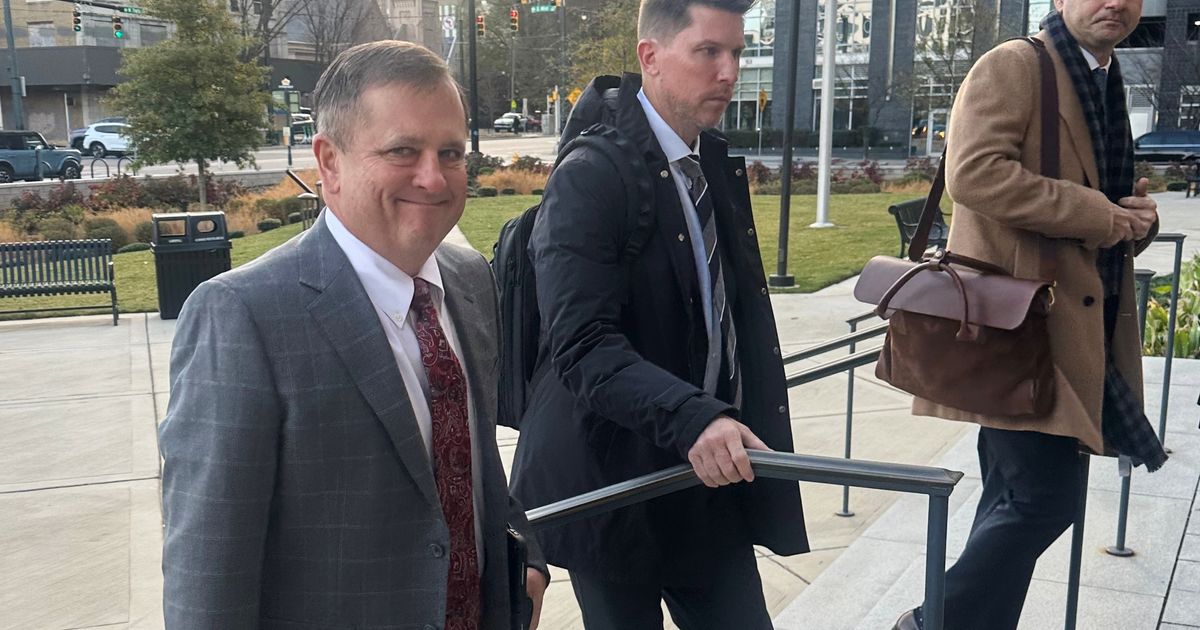
CHARLOTTE, N.C. (AP) — The attorney for the two teams suing NASCAR portrayed series chairman Jim France as “a brick wall” in negotiations over the new revenue-sharing model that has triggered the Michael Jordan-backed federal antitrust case against the top form of motorsports in the United States.
23XI Racing, owned by Basketball Hall of Famer Jordan and three-time Daytona 500 winner Denny Hamlin, and Front Row Motorsports, owned by fast food franchiser Bob Jenkins, were the only two organizations out of 15 that refused to sign extensions on new charter agreements in September of 2024.
A charter is the equivalent of the franchise model used in other sports and in NASCAR guarantees every chartered car a spot in all 38 races, plus a defined payout from NASCAR.
NASCAR spent more than two years locked in bitter negotiations with the teams over the extensions because the teams made specific requests in an attempt to improve their financial position. The deal ultimately given to the teams on the eve of the start of the 2024 playoffs lacked most of those requests and gave teams a six-hour deadline to sign the 112-page document.
Jeffrey Kessler, attorney for 23XI and Front Row, spent much of Thursday trying to portray France as the holdout in acquiescing to the teams. NASCAR was founded 76 years ago by the late Bill France Sr. and to this day is privately owned by the Florida-based family. Jim France is his youngest son.
Kessler questioned NASCAR President Steve O’Donnell for more than three hours in a contentious session in which the attorney at times was shouting at the executive. He used internal communications among NASCAR executives to demonstrate frustration among non-France family members over the slow pace of negotiations and Jim France’s refusal to grant the teams permanent charters. The charter system was established in 2016 as a means to create stability for the teams, and the charters are renewable.
One particularly tense exchange involved an impassioned letter sent by Heather Gibbs, daughter-in-law of team owner Joe Gibbs, in which she implored France to grant permanent charters to help secure the family business.
O’Donnell in a text message told Ben Kennedy, nephew of Jim France, “Jim is now reading Heather’s letter out loud and swearing every other sentence.”
Pressed by Kessler as to what France was saying as he read the letter, O’Donnell said the chairman never swore. Kessler tried to force O’Donnell to reconcile what he wrote to Kennedy, but O’Donnell maintained that his boss was not cursing.
“That’s what I wrote, but he was not doing that,” O’Donnell testified. “We were all taken aback by the letter. I think Jim was frustrated, as we all were.”
Kessler then demanded what sort of gestures or actions France made that led to O’Donnell to tell Kennedy he was swearing. A judge-ordered break in the session prevented O’Donnell from ever clarifying why he characterized France’s reaction that way.
But the internal communications among executives showed the mounting frustration over both the slow pace and direction of the negotiations. As O’Donnell, Commissioner Steve Phelps and others tried to find concessions for the teams, they all indicated they were met by resistance time and again by France and his niece, vice chair Lesa France Kennedy.
“Mr. France was the brick wall in the negotiations,” Kessler said to O’Donnell.
“Those are your words, not mine,” the executive replied.
Teams told NASCAR they were fighting for financial survival
Earlier Thursday, O’Donnell testified that teams approached the sanctioning body in early 2022 asking for an improved revenue model, arguing the system was unsustainable.
O’Donnell was at the meeting with representatives from four teams, who asked that the negotiating window on a new charter agreement open early because they were fighting for their financial survival. The negotiating window was not supposed to open until July 2023.
O’Donnell testified that in that first meeting, four-time series champion Jeff Gordon, now vice chair of Hendrick Motorsports, asked specifically if the France family was “open to a new model.”
Kennedy, great-grandson of NASCAR’s founder, told Gordon yes.
But O’Donnell testified that chairman France was opposed to a new revenue model.
The teams have maintained that the deal ultimately given to them was “take it or leave it.” 23XI and Front Row were the only teams that refused to sign and instead sued in federal court over antitrust allegations.
O’Donnell said the teams had very specific requests: maximized television revenue, the creation of a more competitive landscape, a new cost model and a potential cost cap.
NASCAR spent the next few months in internal discussions on how to approach the charter renewal process, said O’Donnell, who was called as an adverse witness for the plaintiffs. NASCAR acknowledged the teams were financially struggling, and worried they might create a breakaway series similar to the LIV Golf league.
In a presentation made to the board, O’Donnell listed various options that both the teams and NASCAR could take. O’Donnell noted the teams could boycott races, build their cars internally, and race at non-NASCAR owned tracks, or potentially sell their charters to Liberty Media, the commercial rights holder for Formula 1.
“We knew the industry was challenged,” O’Donnell testified.
As far as NASCAR’s options, O’Donnell told the board it could lock down an exclusivity agreement with tracks not owned by NASCAR, dissolve the charter system, or partner directly with the drivers.
The extensions that began this year upped the guaranteed money for every chartered car to $12.5 million in annual revenue, from $9 million. Hamlin and Jenkins have both testified it costs $20 million to bring a single car to the track for all 38 races. That figure does not include any overhead, operating costs or a driver’s salary.
Front Row owner details his frustrations with NASCAR
Jenkins opened the fourth day of the trial with continued testimony. He has said he has lost $100 million since becoming a team owner in the early 2000s — and that’s even with a 2021 victory in the Daytona 500. He said Thursday he “held his nose” when he signed the 2016 charter agreements because he didn’t think the deal was very good for the teams but a step in the right direction.
When the extensions came in 2024, Jenkins said the agreement went “virtually backward in so many ways.” Jenkins said no owners he has spoken to are happy about the new charter agreement because it falls short of so many of their requests. He refused to sign because “I’d reached my tipping point.”
Jenkins said he was upset that France refused a meeting the week before the final 2025 offers were presented with four owners who represented nine charters, only to learn France was talking to other team owners.
“Our voice was not being heard,” said Jenkins, who believes NASCAR rammed the 2025 agreement through. “They did put a gun to our head and got a domino effect — teams that said they’d never sign saw their neighbor sign.”
Jenkins also said teams are upset about the current Next Gen car, which was introduced in 2022 as a cost-saving measure. The car was supposed to cost $205,000 but parts must be purchased from specified NASCAR vendors and teams cannot make any repairs themselves, so the actual cost is now closer to double the price.
“To add $150,000 to $200,000 to the cost of the car — I don’t think any of the teams anticipated that,” Jenkins testified. “What’s anti-competitive is I don’t own that car. I can’t use that car anywhere else.”
___
This story has been corrected. A previous version misidentified Front Row Motorsports.
___
AP auto racing: https://apnews.com/hub/auto-racing

College Football TV Ratings: Top 10 most-watched games of Week 14
Tennessee volleyball vs Utah State, Lady Vols upset in first round

SRX’s threat to NASCAR takes center stage in antitrust trial

2025 DI women’s volleyball championship: Bracket, schedule, scores

Carson Kvapil Adds Champion Irrigation Sponsorship for 3 Races

Track & Field Opening Indoor Season with Split-Squad Weekend – Penn State

Women’s Volleyball vs University of Alaska Anchorage on 12/4/2025 – Box Score

Delaware, New Jersey face foster care shortage

#11 Creighton Volleyball Outlasts Northern Colorado to Advance to Second Round of NCAA Tournament

Several NASCAR Drivers Headed to Pensacola for 58th Snowball Derby

‘I just gambled our entire savings away’: Young adults in Mass. are hooked on online sports betting

Celebrating a culture of giving back
SRX’s threat to NASCAR takes center stage in antitrust trial

SUBARU: GEAR FOR GOOD INITIATIVE NAMES FIVE YOUTH SOCCER PROGRAM BENEFICIARIES TO HELP GROW THE GAME IN 2026

NCMA Announces Board of Directors Officers for 2026 – Speedway Digest

First Tee Winter Registration is open

Fargo girl, 13, dies after collapsing during school basketball game – Grand Forks Herald

CPG Brands Like Allegra Are Betting on F1 for the First Time

Volleyball Recaps – November 18

F1 Las Vegas: Verstappen win, Norris and Piastri DQ tighten 2025 title fight

Two Pro Volleyball Leagues Serve Up Plans for Minnesota Teams

Utah State Announces 2025-26 Indoor Track & Field Schedule

Sycamores unveil 2026 track and field schedule

Texas volleyball vs Kentucky game score: Live SEC tournament updates

Bowl Projections: ESPN predicts 12-team College Football Playoff bracket, full bowl slate after Week 14

Redemption Means First Pro Stock World Championship for Dallas Glenn

Pohlman admits ‘there might be some spats’ as he pushes to get Kyle Busch winning again

Indiana’s rapid ascent and its impact across college football

Troy Football Need to Know; Gameday at The Vet — Georgia State Game

How this startup (and a KC sports icon) turned young players into card-carrying legends overnight

 Why a rising mid-major power with an NCAA Tournament team opted out of revenue-sharing — and advertised it
 NBA Legend Michael Jordan to Join NBC Sports as Special Contributor
 Falcons mailbag
 Portal Update – Basketball and Gymnastics Take Hits
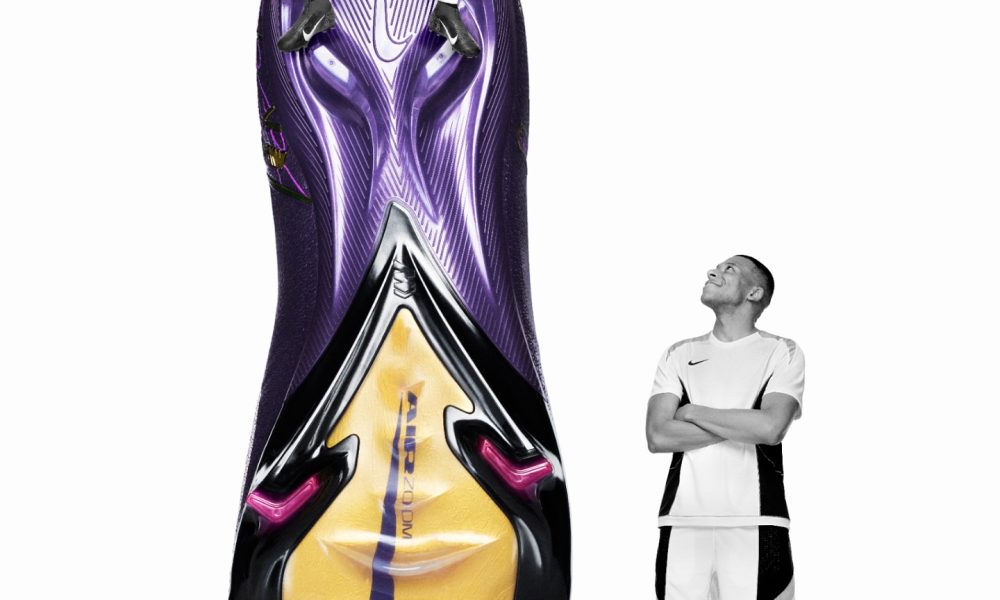 has always dreamed in Mercurial. Now his initials are on the boots.
The new Kyl…
has always dreamed in Mercurial. Now his initials are on the boots.
The new Kyl…
-
 Rec Sports2 weeks ago
First Tee Winter Registration is open
-
 Rec Sports1 week ago
Fargo girl, 13, dies after collapsing during school basketball game – Grand Forks Herald
-
 Motorsports1 week ago
CPG Brands Like Allegra Are Betting on F1 for the First Time
-
 Sports2 weeks ago
Volleyball Recaps – November 18
-
 Motorsports2 weeks ago
F1 Las Vegas: Verstappen win, Norris and Piastri DQ tighten 2025 title fight
-
 Sports1 week ago
Two Pro Volleyball Leagues Serve Up Plans for Minnesota Teams
-
 Sports1 week ago
Utah State Announces 2025-26 Indoor Track & Field Schedule
-
 Sports1 week ago
Sycamores unveil 2026 track and field schedule
-
 Sports1 week ago
Texas volleyball vs Kentucky game score: Live SEC tournament updates
-
 NIL5 days ago
Bowl Projections: ESPN predicts 12-team College Football Playoff bracket, full bowl slate after Week 14