
NIL
It’s Time for a College Sports Constitutional Convention

Amos Alonzo Stagg was one of THE established coaches in major college football at the University of Chicago. That university was one of the powerhouse programs in the Western Conference, which became the Big Ten.
In 1927 he published the book “Touchdown” covering the history and challenges of major college football at the time. Almost a century ago, Stagg cited the fear of football being a sport where 80,000 fans would generate a single-game gate of $500,000 (about $9.3 million in today’s money).
In the first 60 years of college football schools were doing all sorts of things that would seem right in line with the game today. Players were being paid by alumni to go to certain schools. Renegade programs had players that were not even enrolled in the school, or were enrolled but never really attended classes, or were enrolled in “snap” courses that required little or no work.
The NCAA was established during those first few decades to set national rules for player safety and to curb the excesses of these growing sports “franchises” on their campuses. Stagg’s own football power Chicago ultimately deemphasized football, as did the Ivy League.
Fans, coaches, administrators and media all see the excesses of this new era. And a settlement in one case will not fix what we’re facing.
College sports needs to convene a national constitutional convention that can present an entirely new governing structure. The range of issues goes well beyond just NIL and revenue sharing.
In the past two weeks I taped podcasts based in the UK and in Hong Kong. Part of the pre-taping conversation was a discussion of the big sports enterprises on our college campuses. The size and scope of college sports was eye-opening to these hosts.
This country has always been unique in that respect.
In 2025 we’ve just seen the latest jolt to the college sports system. Scholarship limits are out, roster size limitations are in. Pay to play is in, NIL is in provided it falls in line with “far market value.”
This system will have a new governing body that will enforce the rules regarding NIL and paying players. Note: the correct euphemism for paying players is “revenue sharing,” and remember the players are NOT employees.
It will also require athletes (we can drop the pretense of the term “student-athlete” now) to get approval for any NIL deal of $600 or more (a ridiculously low number) through a clearing house.
The proponents state that this new structure will have enforcement with real teeth. They believe the threat of strong sanctions will keep everyone in line. But we’ve seen this movie before. Rules that were set to level the playing field have been and will always be skirted or ignored by people who are willing to deal in cash and lie.
And this new structure only holds until future litigation derails it. Title IX lawsuits are on the way. Future athletes who were never part of this settlement will sue to assert their rights. It will face challenges because players may demand to be treated like employees and have collective bargaining.
What about the player who has exhausted his or her five-year eligibility limit and may be able to make more NIL and revenue sharing money by staying in college rather than playing overseas? How can the NCAA limit their careers; is that not a restraint of trade?
The point is that this thing is a long way from being settled. That’s generally how things end up when leadership allows events to overtake them through litigation rather than by asserting leadership.
The time has come for a true constitutional convention for college sports.
And this constitutional convention should include not only university presidents, athletic directors and coaches. Presidents, ADs and coaches all have agents, and they jump around every couple of years. Many of them are like NASCAR drivers wearing the team logo that puts the most money in their pockets.
It is also important to note that their financial interest often runs counter to what is best for a school. After all, management does not allow a union to unilaterally dictate how a company will operate.
Given the transient nature of these employees, a university’s decision on the foundational values of its athletics department should be decided at the governing board level. The core values of a university should be directed from the top down honoring long established beliefs.
In the Big Ten, television executives, presidents and ADs made the decision to take the league to the West Coast. The governing boards of the universities were informed when it was a fait accompli.
Now many schools may be poised to walk away from the NCAA in football.
Taking a university out of the NCAA is bigger than just the athletics department. At several universities, the shortcuts now being taken to try to rack up success in football and basketball would surprise you. They threaten the integrity of the university.
Anyone who knows my history can tell you that I am no fan of the NCAA. But they do require schools to enforce academic standards and limit eligibility by requiring progress towards graduation. They report Academic Progress Ratings for every school and sport so that potential athletes and their families can make informed decisions.
Indeed, lost in all the NIL/House Settlement/revenue sharing/transfer portal discussions has been any meaningful mention of what this means academically for players and for schools.
The governing boards of these major universities have been on the sidelines for much of this. None of these decisions have required approval by the governing boards. As we look to define the very core of what these sports entertainment enterprises will become, these are existential questions with answers that will stretch into the future.
As such, representatives of these governing boards should be part of shaping that future. It is too big to trust people who have a financial interest in winning at any cost.
To be sure, involving trustees in shaping the future is no guarantee that they will ensure the integrity of the mission. Anyone who has ever served on a board can tell that many of them are partially populated by “fan-boy” types who are more interested in winning than academics. Many boards don’t even have a standing committee or subcommittee to oversee an area that can do incalculable damage to the reputation or academic integrity of the school.
But on a national scale, the people who bear the greatest fiduciary responsibility at each university need to be part of the solution.
So why should there be a constitutional convention?
- The solutions for what is best for all of college athletics should not be dictated by two or three of four conference commissioners alone.
- To date, waiting on Congress to act has been fruitless. And there does not appear to be any solutions on the horizon.
- An executive order by the president will ultimately result in more litigation.
- It is time that schools across the country faced the issues, came to a consensus and then presented it to move forward.
- We need to define the academic structures that will govern this new world order. Or we need to decide that the academic part of athletics is not relevant and create a non-academic pro sports apprenticeship program for our players.
- Most importantly, the universities need to honestly define what exactly it is that we are doing. Are we here to educate our athletes? Or are we here to just entertain alums, fans and friends and hope that while we do that and rake in their money that some of our athletes will leave here with some kind of meaningful education?
In the absence of crafting a new national college sports constitution, there will be laws passed and legislation and litigation coming that will challenge this settlement reality. As such, it is time for a legitimate constitutional convention for college sports that includes all the stakeholders from the schools, and a players’ union.
From that assembly we as the universities that play college sports must issue a consensus that clearly and honestly addresses reality. Until we present a thorough plan for the future, the lingering uncertainty will only invite more litigation and continue the current era where we are overtaken by events rather than leading the way.

Money has always been an important factor in college football, but it feels paramount for any team that has aspirations of winning a conference championship in the near future.
Much was made about the price tag of Ohio State’s roster after the Buckeyes won a national championship last season. Even more has been made about the cash that Texas Tech infused into its program on the way to the College Football Playoff this season. It won’t be long before another big spender emerges.
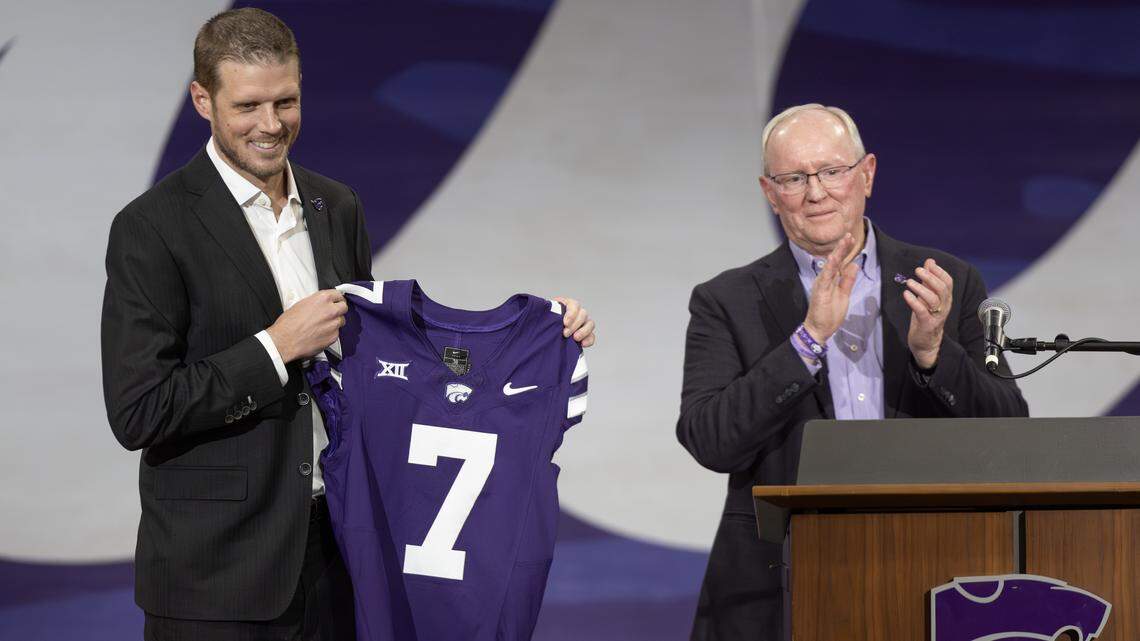
With that in mind, perhaps it shouldn’t come as a surprise that new Kansas State football coach Collin Klein found the time to attend a Chamber of Commerce party last week in Manhattan.
A meet-and-greet with local business owners was understandably on his to-do list, because boosting the financial outlook for K-State football is one of his top priorities … right up there with recruiting and the transfer portal.
“Even in the short time I have been here, we have made some really, really good strides,” Klein said when asked about K-State football finances. “I think everything is moving in the right direction.”
The changing landscape of college football demands that every team has money to spend.
A decade ago, it was important for teams to have elite facilities and coaches. Now, it is pivotal that schools have $20 million to share with student-athletes. The best football teams have access to roughly 75% of that number, but they also have even more waiting in reserve to sweeten the pot for players with NIL deals.
Klein spent the past two seasons as the offensive coordinator at Texas A&M. Money was never an object there and the Aggies recruited a roster that was talented enough to win 11 games during the regular season. Klein will continue calling plays for the Aggies in the CFP. When his time in College Station is over, he wants to enjoy similar resources in Manhattan.
He laid out his vision during a Q&A for the K-State Athletics website.
“Right now, it is bringing us up to speed with our competition,” Klein said in the interview. “From a roster management standpoint, there are steps and strides we need to take to be able to compete in today’s recruiting landscape. Some of that is financial, some of that is procedure and operation. That’s one of the biggest things.
“We’ve been blessed with amazing facilities and amazing infrastructure. Now we’ve got to catch up to the market from a staffing standpoint and make sure we have the resources required to put together the entirety of a staff that’s competitive in this league and across the country for where we want to go. Those are the two biggest things we need to catch up on.”
Klein is motivated to help make all of that happen. So much so that he has already met with key donors and business owners in the Manhattan area.
Former K-State football coaches Bill Snyder and Chris Klieman didn’t have to be quite so aggressive during their eras with the Wildcats. Things are different for Klein, and he knows it.
Kellis Robinett
The Wichita Eagle
Kellis Robinett covers Kansas State athletics for The Wichita Eagle and The Kansas City Star. A winner of more than a dozen national writing awards, he lives in Manhattan with his wife and four children.
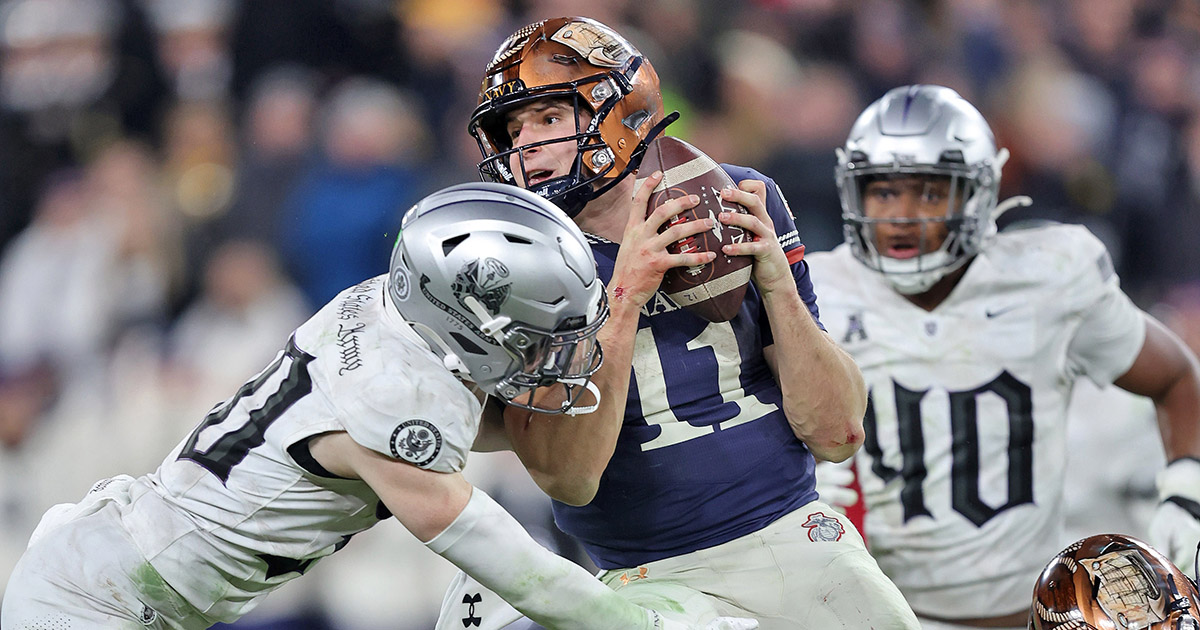
Once again in its standalone window, America’s Game came down to the wire last week. Ultimately, Navy got a second straight victory over Army, and it became CBS’ most-watched college football game of the season.
An average of 7.84 million people watched as Navy came away with the victory at M&T Bank Stadium in Baltimore. While it’s a 17% decrease from last year’s 9.4 million viewers – the best since at least 1990 – it’s still the second-best viewership for the game since 2018, according to Sports Business Journal’s Austin Karp.
SUBSCRIBE to the On3 NIL and Sports Business Newsletter
Last year’s Army-Navy game topped the previous high mark of 8.45 million viewers in 1992. In addition, it tops CBS’ slate of games this year, beating out the 5.6 million viewers who watched Indiana at Oregon in Week 7, according to data compiled by On3.
This year’s Army-Navy game also marked the last for CBS analyst Gary Danielson in the booth. He has worked 17 matchups between the two programs and will get ready for retirement following the Sun Bowl later this month. Charles Davis is set to join Brad Nessler in CBS’ lead booth starting next season.
With the victory, Navy extended its advantage in the all-time series against Army, which dates back to 1890. The Midshipmen have an all-time 64-55-7 record against the Black Knights.
How it happened: Navy defeats Army
Navy struck first in the first quarter of last week’s game, taking a 7-0 lead on a Blake Horvath touchdown. But Army responded with 13 points in the second quarter, including a rushing touchdown from Cale Hellums, to take the lead into halftime.
The two teams traded field goals in the third quarter as Army took a 16-10 lead into the final 15 minutes. That’s when Navy completed the comeback as Eli Heidenreich caught the 8-yard touchdown pass from Horvath, putting the Midshipmen back on top, 17-16. That held as the final, giving Navy a second straight win over Army in the historic game.
Horvath led the charge for Navy, rushing for 107 yards and a touchdown on the ground while adding 82 passing yards to go with the touchdown pass to Heidenrich. On the Army side, Hellums had 100 rush yards and a touchdown to go with 82 passing yards.
Both Army and Navy are now getting ready for their respective bowl games. The Midshipmen will head to the Liberty Bowl on Jan. 2, 2026 against Cincinnati while the Black Knights will square off against UConn in the Fenway Bowl on Dec. 27.
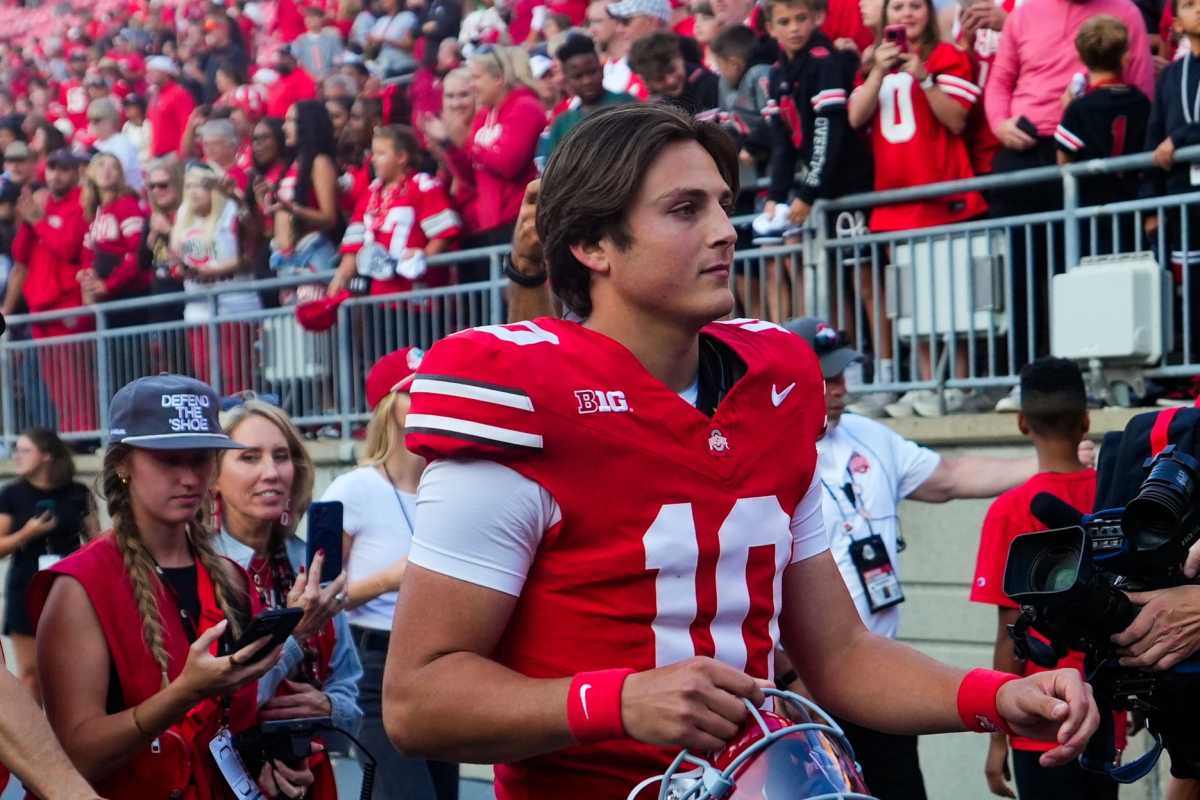
Julian Sayin is looking to lead the Ohio State Buckeyes to the national title alongside several other stars like wide receiver Jeremiah Smith.
Ohio State heads into the College Football Playoff with one of the best rosters in the country, starring Sayin and Smith along with wide receiver Carnell Tate, safety Caleb Downs and linebacker Arvell Reese.
Advertisement
They’re heading into the playoffs as the No. 2 seed after losing to Indiana in the Big Ten title game. The Buckeyes will have a bye week to begin the CFP.
Other teams that will benefit from the bye week include Indiana, Texas Tech and Georgia.
During his time off, Sayin shared some exciting news off the field. The Ohio State Buckeyes quarterback has partnered with Wingstop and Dr Pepper in his latest NIL deal.
“Postseason calls for big plays with @drpepper and @wingstop, had to get the play card out,” Sayin posted.
Advertisement
Sayin committed to Ohio State after spending some time with the Alabama Crimson Tide.
While he was planning his college football career at Alabama, he made the move to the Big Ten and finished his first season as the starting quarterback as a Heisman Trophy finalist.
Sayin was ranked as the No. 1 quarterback and the No. 6 overall player in the 2024 recruiting class, per 247Sports.

Ohio State Buckeyes quarterback Julian Sayin (10) Adam Cairns/Columbus Dispatch / USA TODAY NETWORK via Imagn Images
Before signing his latest NIL deal and sharing the news with fans online, Julian Sayin had inked deals with The Foundation, Dick’s Sporting Goods and JLab Audio.
Advertisement
Related: Alabama Reacts to Ty Simpson News Before College Football Playoff
Related: SEC Program Fires Coach After College Football Season
This story was originally published by Athlon Sports on Dec 16, 2025, where it first appeared in the College section. Add Athlon Sports as a Preferred Source by clicking here.
Dec. 16, 2025, 5:06 a.m. CT
Texas A&M’s 2025 offense finished the regular season ranked 19th nationally, while starting quarterback Marcel Reed threw for a career high 2,932 yards and 25 touchdowns, with 13 going to star wide receivers KC Concepcion and Mario Craver, who completely rejuvenated a passing attack that failed to move the needle in key games down the stretch last season.
While Craver is expected to return next season for his all-important junior year, Concepcion has a choice to make regarding his future, choosing between a final year in College Station or declaring for the 2026 NFL Draft, where he is expected to be a first or second-round selection.
Whatever choice he makes is entirely up to him and his family, and while those of us in the media have written numerous articles about his draft standing, returning for his senior season could benefit his NFL future. Still, Concepcion is as mature as they come and is entirely focused on facing the Miami Hurricanes this Saturday during the first round of the College Football Playoff.
On Monday, Concepcion took questions from the media ahead of the game and was asked about his potential return or a draft declaration.
“I have not made a decision yet.”
“Talking with my coaches, talking with my parents. We’re going to put our trust in God. Whatever He has in store for my future, we’re going to go like that.”
In today’s college football landscape, NIL deals have made returning for a final season much more appealing than the old structure, so a return in 2026 is not out of the question. However, Concepcion is viewed as one of the top prospects for his elite versatility as an NFL slot receiver and as a Day 1 punt return specialist.
This decision will be saved for the offseason, because defeating Miami and making it to the CFP Quarterfinals is all that matters right now.
Contact/Follow us @AggiesWire on X (formerly Twitter) and like our page on Facebook to follow ongoing coverage of Texas A&M news, notes and opinions. Follow Cameron on X: @CameronOhnysty.

FOX Sports analyst Joel Klatt found himself in a social media firestorm after comments he made about the Group of Five on a podcast appearance on Next Round Live. Clips of that interview quickly went viral with short snippets of some of the quotes.
The gist of those snippets suggested that Klatt was anti-G5, to the point of wanting the G5 kicked out of the College Football Playoff. Klatt intimated that the only thing keeping the G5 in the playoff currently is the threat of litigation.
College football analyst Josh Pate had his own thoughts on Joel Klatt’s take. He mostly came to the defense of the suddenly targeted analyst.
Pate first played a couple clips from Klatt’s appearance in their entirety. That offered more full context.
“Some of that was insane, I’m going to grant you that,” Pate said of Klatt’s points. “I just want to say the foundation of it I at least understand. The foundation of it is sound. Not all the parts of it. The foundation of it is sound.
“Couple of quotes there. No. 1, the G5 is in the College Football Playoff to avoid litigation is basically true.”
Pate lambasted the use of quote edits in condensing Joel Klatt’s much larger point into a few soundbites. He tried to explain how that’s misleading to his viewers.
“You know sometimes how you see a snapshot or a small soundbite of something and you get outraged by it and then you go on to learn the context of it two weeks later and you’re like, ‘Wow, I probably shouldn’t have gotten as outraged as I did over that,’ Pate said. “That is what is happening to Klatt. Admittedly he brought a lot of this on himself. …
“Now, what you probably saw was you probably saw quote edits like this or quote graphics like this. And if you’re listening on podcast just imagine scrolling through your social feed and there’s a picture of Klatt, looks like he’s somewhere sunny and happy and there’s a quote at the top, and it says, quote, ‘We don’t want Cinderellas. We want the best teams playing each other at the end. It’s the dumbest tournament and the least fair tournament in all of sports.’”
That part from Joel Klatt, obviously, was what many detractors latched onto. But it doesn’t take away from Klatt’s overall point about the G5, Pate pointed out.
So all the moaning over James Madison being in the playoffs is for naught. That’s just the way the current structure is set up.
“They are present in the playoff, they’re granted an auto bid in the playoff because if they are not then lawsuits will be filed immediately,” Pate said. “So that part’s accurate.
“Now whether or not you think it’s morally sound that they’re included in the playoff, that’s your own opinion. He’s got his, I’ve got mine, you’ve got yours. But he is right. Because in no other merit-based world where we just judged these teams on a static scale of quality, of resources and therefore what you do with the resources, and the results on the field and strength of schedule, in no world would James Madison be in the playoff. But the parameters of the playoff right now are that we take the five highest-ranked conference champs. So by every current rule James Madison is in the playoff and should be in the playoff. I don’t disagree with that. Tulane is in the playoff and should be in the playoff. I don’t disagree with the structure. I don’t disagree with the body of the playoff this year based on the current rules.”
So what’s the solution? Well, Joel Klatt also offered an answer for that. It just didn’t happen to go viral with the other stuff.
Klatt believes the G5 should effectively break off from the power conferences and host its own playoff. It would be a playoff tier between the FCS and the FBS.
“That’s been the same point that’s been made on my show,” Pate said. “So you notice if you really hated the G5 you’d just say, ‘Piss on the G5.’ That’s not what he did, despite the fact that that part didn’t get shared widely and it’s not what I’ve ever done on this show.
“Any time you have a problem with something, you ought to have a solution for it. So if your problem is, ‘Man, it makes little sense that we’ve got 136 teams pretending to play the same caliber of the sport’ you need to have a solution. That solution he just presented is the same one we’ve shared on this show, and that is a G5 playoff.”

JR Motorsports signs Arby’s as a primary sponsor for 2026 season

Hood Jr., Andrews, Garnett honored as MVC Track and Field Athletes of the Week

Collin Klein prioritizes K-State football fundraising & NIL

JR Motorsports, Dale Earnhardt Jr. Welcome Arby’s in Multi-Year Partnership

NASCAR Cup Series has six ‘new’ chartered cars for 2026

Top five roles on Motorsport Jobs this week

Earnhardt Jr.’s one way into NASCAR Cup after $150M regret – Motorsport – Sports

Youth Sports Dec. 17, 2025

Walla Walla area youth basketball team wins Tournament of Hoops title | Community
Congress addresses ‘The Crisis in American Youth Sports’

Street Soccer Park Opens to Expand Youth Athletic Opportunities
Search News Releases | American Heart Association

Las Vegas youth soccer coach arrested on child sex charges, Metro says | Sex Crimes

Gaming PC Market | Global Market Analysis Report
How three Taunton High athletes plan to lead through Hockomock LEAP

First Tee Winter Registration is open

Fargo girl, 13, dies after collapsing during school basketball game – Grand Forks Herald

CPG Brands Like Allegra Are Betting on F1 for the First Time

F1 Las Vegas: Verstappen win, Norris and Piastri DQ tighten 2025 title fight

Volleyball Recaps – November 18

Two Pro Volleyball Leagues Serve Up Plans for Minnesota Teams

Sycamores unveil 2026 track and field schedule

Utah State Announces 2025-26 Indoor Track & Field Schedule

Redemption Means First Pro Stock World Championship for Dallas Glenn

Jo Shimoda Undergoes Back Surgery

Texas volleyball vs Kentucky game score: Live SEC tournament updates

Bowl Projections: ESPN predicts 12-team College Football Playoff bracket, full bowl slate after Week 14

SoundGear Named Entitlement Sponsor of Spears CARS Tour Southwest Opener

How this startup (and a KC sports icon) turned young players into card-carrying legends overnight

Robert “Bobby” Lewis Hardin, 56

 NBA Legend Michael Jordan to Join NBC Sports as Special Contributor
 Why a rising mid-major power with an NCAA Tournament team opted out of revenue-sharing — and advertised it
 Falcons mailbag
 Portal Update – Basketball and Gymnastics Take Hits
 has always dreamed in Mercurial. Now his initials are on the boots.
The new Kyl…
has always dreamed in Mercurial. Now his initials are on the boots.
The new Kyl…
-
 Motorsports3 weeks ago
Jo Shimoda Undergoes Back Surgery
-
 NIL2 weeks ago
Bowl Projections: ESPN predicts 12-team College Football Playoff bracket, full bowl slate after Week 14
-
 Motorsports7 days ago
SoundGear Named Entitlement Sponsor of Spears CARS Tour Southwest Opener
-
 Rec Sports3 weeks ago
How this startup (and a KC sports icon) turned young players into card-carrying legends overnight
-
 Rec Sports2 weeks ago
Robert “Bobby” Lewis Hardin, 56
-
 NIL3 weeks ago
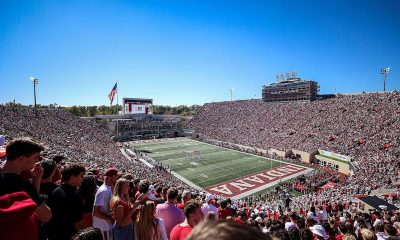
Indiana’s rapid ascent and its impact across college football
-

 Motorsports3 weeks ago
Pohlman admits ‘there might be some spats’ as he pushes to get Kyle Busch winning again
-
Sports2 weeks ago
Wisconsin volleyball sweeps Minnesota with ease in ranked rivalry win
-

 Motorsports1 week ago
Donny Schatz finds new home for 2026, inks full-time deal with CJB Motorsports – InForum
-
 Motorsports3 weeks ago
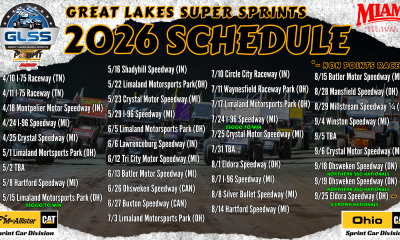
Increased Purses, 19 Different Tracks Highlight 2026 Great Lakes Super Sprints Schedule – Speedway Digest