
What’s Happening?
By far, the most important news story from this past week is Championship-winning Crew Chief Rodney Childers’s departure from…


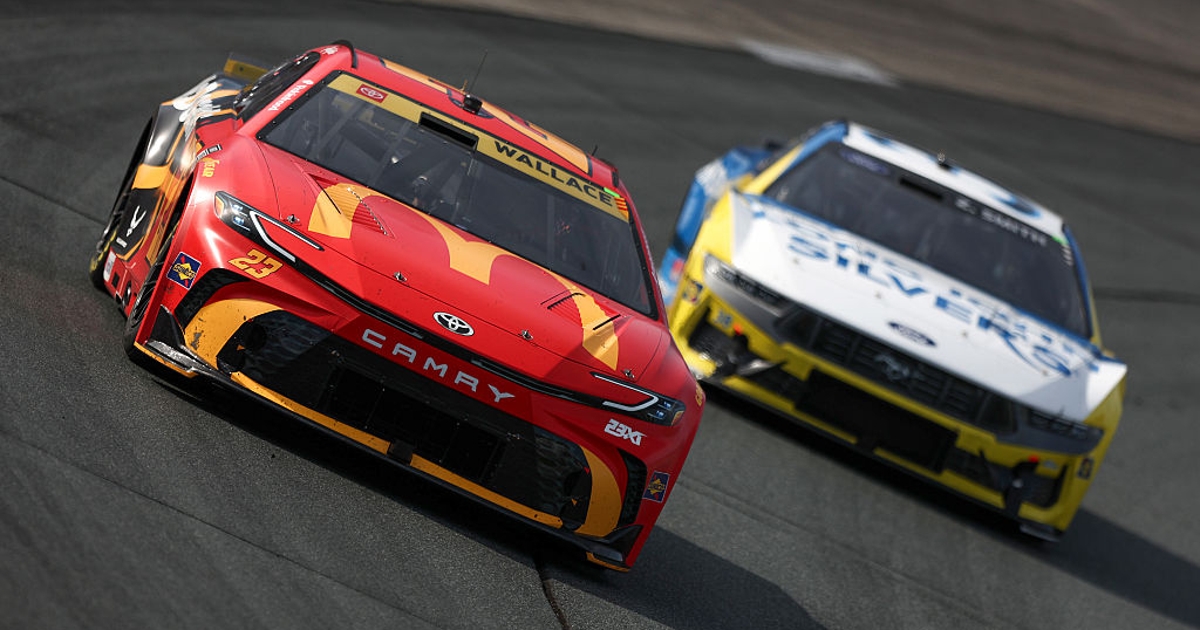
Though 2026 NASCAR Cup Series Silly Season has remained rather quiet, the gears are slowly starting to turn. Driver Justin Haley is on the hot seat in his new ride at Spire Motorsports, not even one year into his term with the team, according to a new report.

One of the biggest movers during the 2025 NASCAR Silly Season, Justin Haley, could already be on the skids in his first year at Spire Motorsports. Per a new report from Jordan Bianchi of The Athletic, Haley, in his first full-time season with Spire Motorsports, is currently on the hot seat.
This is no surprise, as Bianchi hinted at the developing situation during the latest episode of his and Jeff Gluck’s podcast, The Teardown, after Sunday’s race at Iowa Speedway. During that episode, Bianchi said that despite recent improvements for the No. 7 team, Haley still “needs to get better.”
Bianchi expanded on this in a new report Tuesday morning, saying that if the 26-year-old doesn’t show “considerable improvement,” the team could move on “before the season is out.”
While this would be shocking, it is, of course, how Haley landed this ride in the first place. Twenty-nine races into the season, Spire opted to move on from cornerstone driver Corey LaJoie, swapping Haley in for the veteran. This was part of a larger 2025 Silly Season from Spire, which hoped that Haley and 2014 Cup Series Champion Crew Rodney Childers would pair nicely this season.
Since the green flag dropped in Daytona, it has been anything but smooth sailing for Haley.
Justin Haley made his name in NASCAR racing for Kaulig Racing in the NASCAR Xfinity Series. Alongside those full-time starts in NASCAR’s secondary series from 2019 to 2021, Haley also made partial Cup Series starts with Spire Motorsports, winning the team its first and only race so far during the 2019 rain-shortened summer race at Daytona.
Haley would go full-time at the Cup Series level alongside Kaulig Racing in 2022. However, after back-to-back lackluster seasons, Haley bet on himself in 2024 and signed with Rick Ware Racing, which most consider to be the backmarker of all chartered teams in the Cup Series.
Through his 29 races in the No. 51, Haley put up never-before-seen numbers at RWR. This caught the attention of many teams, including Spire, which is in the middle of a major shake-up and preparing to take a big step in 2025. Alongside bringing in Michael McDowell and his Crew Chief, Travis Peterson, for 2025, Spire also signed Kevin Harvick’s longtime Crew Chief, Rodney Childers, to call the shots for the No. 7 team in 2025.
Though the 2025 season looks to be a fresh start for Spire, things remain the same in the No. 7 camp. Through the first nine races of the season, the team had one top-10 finish but failed to keep up with its Spire Motorsports teammates. Around this time, Childers and Spire announced a shocking mutual parting of ways on Apr. 23.
Since then, Haley‘s disappointing season has continued with the No. 7 team, which is failing to keep pace statistically with his Spire Motorsports teammates, including the worst average finish of all Spire entries.
While Haley’s performance has improved lately, the team still needs to take a more drastic turn. This silly season was expected to remain quiet, but if Spire moves on from Haley, this move could open doors for free agents such as Daniel Suarez.
What’s Happening?
By far, the most important news story from this past week is Championship-winning Crew Chief Rodney Childers’s departure from…
Let us know your thoughts on this! Join the discussion on Discord or X, and remember to follow us on Instagram, Facebook, and YouTube for more updates.

Parella Motorsports Holdings and SpeedTour, which is backed by Velocity Capital Management, has acquired Racing America, a digital-first motorsports media platform. No financial terms were disclosed.
Parella is an owner and operator of grassroots motorsports events in the US.
The combined business will operate under the Racing America brand and be headquartered in Charlotte, North Carolina.
Velocity acquired Parella in December 2023. Under Velocity’s ownership, the Parella has grown through strategic acquisitions, including MotorsportsReg.com and International GT. The Racing America acquisition marks Parella’s third strategic acquisition under Velocity’s ownership. Velocity’s strategic partner, the Texas Permanent School Fund Corporation, was instrumental in originating the opportunity to acquire Racing America,
“Racing America is uniquely positioned to accelerate fan interest and participation in grassroots and amateur motorsports,” said Erin Edwards, a partner at Velocity Capital Management in a statement. “Our goal is to make grassroots racing accessible to everyone while providing passionate fans with more ways to engage with the sport they already love.”
As part of the transaction, Jeffrey Wolf, Velocity operating partner and former media executive at E.W. Scripps and Sony Pictures, will become chairman of the board.
Racing America’s 2026 season kicks off at Sebring International Raceway on February 26, 2026.
23XI Racing and Front Row Motorsports should be awarded more than $360 million in damages, according to the testimony of the economics expert the teams called upon in their antitrust lawsuit against NASCAR.
Edward Snyder has a Ph.D. and is a professor of economics. He was called to the witness stand on Monday to kick off the second week of proceedings and underwent nearly three hours of questioning from lead counsel for the teams, Jeffrey Kessler, before being cross-examined by NASCAR. Those questions took up the final two hours of Monday and then continued for another 45 minutes on Tuesday before Snyder was finished as a witness.
In explaining his damages, Snyder broke it down to $215.8 million for 23XI Racing and $148.9 million for Front Row Motorsports. The amounts were determined by Snyder from three different categories: lost profits from reduced revenue (2021 to 2024), reduction in the team’s market value (the difference in market value due to NASCAR’s anti-competitive conduct), and additional lost revenues (competing as Open teams during the 2025 season).
The damages were one part of Snyder’s testimony. As an expert witness, he was asked to consider the allegations in the lawsuit brought by the teams, and during his testimony, he went point by point through a 58-page demonstrative (a visual aid for the jury that is not a document or exhibit entered into evidence) with Kessler, who explained those allegations.
To make his conclusions, Snyder reviewed financials, charter agreements, communication documents included in the case (text messages, emails, etc.), valuation data (from Forbes and Sportico), the NASCAR schedule, and the entry and exit history of teams in the series.
Snyder’s approach to making his determinations was to conduct an industry analysis, analyze NASCAR’s alleged anti-competitive conduct, identify how the market for premier stock car racing teams would operate absent NASCAR’s alleged anti-competitive conduct, and estimate the damages.
As a reminder, 23XI and Front Row alleged that NASCAR maintained its monopoly power through anti-competitive conduct and that they were injured by those anti-competitive acts. The lawsuit was filed Oct. 2, 2024, after 23XI Racing and Front Row Motorsports were the only two teams that did not sign the 2025 charter agreement.
Here is what Snyder testified:
• NASCAR’s anticompetitive conduct was done through exclusivity clauses with racetracks, teams, and cars.
• Snyder compared NASCAR to other sports leagues:
• Snyder used the PGA Tour and Formula 1 as examples of leagues that faced competition and turned around and created better financial terms for their participants.
• Snyder said the teams having exclusivity clauses with their drivers is not the same as NASCAR’s exclusivity clauses.
“This is common sense,” said Snyder, because the drivers have other options and teams want them committed. NASCAR has created no other options for teams and are protecting a monopoly.
• Snyder said that NASCAR made $311 million in net payments to racetracks in 2024 because “NASCAR pays tracks with exclusivity restrictions.”
• Snyder reiterated some previous testimony already heard in the case about there being no IP protections with previous generation race cars, which opened them up to a copycat series. Those protections were put into place with the Next Gen introduction. He said that the concept bothers him because teams are paying to buy the car but cannot use it elsewhere.
• There was also time spent on Snyder going through comparisons between NASCAR and Formula 1, which he said he did because he saw documents of NASCAR talking about Formula 1 being a benchmark.
• Snyder said Formula 1 does not have exclusivity clauses with racetracks or similar open-wheel competitors.
• The average revenue share to NASCAR teams during the 2016 charter agreement was 25%. But it was 45% to Formula 1 teams during that same term.
• On the churn of Cup Series teams (enter and exit rate), Snyder said that of the 19 teams that signed the 2016 charter agreement, 11 of them have exited the sport and did not race in 2025. Additionally, 13 teams left the Cup Series and sold their charters since 2016.
Here is what NASCAR countered on cross-examination of Snyder through its counsel, Lawrence Buterman:
• Formula 1 does have non-compete clauses with its teams against other open-wheel series.
Snyder admitted he did not look at Formula 1 track agreements to see if there were exclusivity clauses.
• Buterman said IndyCar is more comparable to NASCAR as it competes in the United States, has a charter agreement, occasionally shares tracks with NASCAR and has considered a cost cap. Snyder said the financial data for IndyCar was not available to do the analysis.
• NASCAR did not increase payments to the racetracks when they began the exclusivity clauses in the sanctioning agreements.
• Snyder said there could have been a viable potential entrant into stock car racing by 2021 without anti-competitive conduct, but NASCAR pushed back, saying that is his theory and a hypothetical. Additionally, there was never any other potential series that came along in the 50-plus years before the charter agreements began, and NASCAR has never prevented one.
• NASCAR pressed Snyder on the fact that he didn’t question any team owner about their interest in leaving the sport, but determined NASCAR is anti-competitive because of its contingency plans.
• NASCAR noted that Furniture Row Racing didn’t leave the sport because of NASCAR financial issues but because Joe Gibbs Racing doubled its price for a technical alliance after losing the championship to Furniture Row.
Snyder admitted he didn’t know the specifics but cited an ESPN story in his presentation that said they left because of “lack of necessary funding.”
• Buterman got Snyder to say that NASCAR should share its sponsorship money with the race teams, but the race teams don’t have to share their sponsorship money with NASCAR.
“Yes,” he said. “That’s how it should work.”
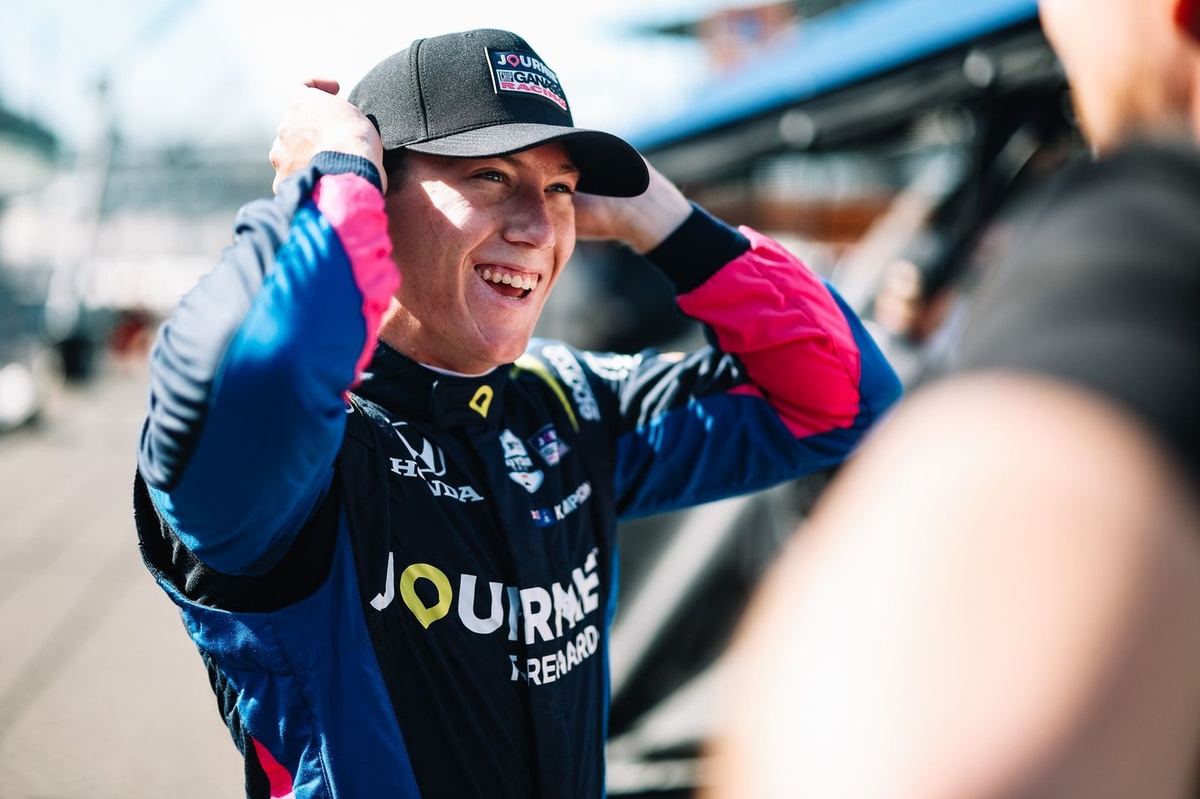
Kyffin Simpson will drive for Tower Motorsports in next month’s Rolex 24 at Daytona, the team confirmed via social media on Tuesday.
The 21-year-old Simpson, who is fresh off contesting a promising second season in the IndyCar Series with Chip Ganassi Racing that included a maiden podium on the Streets of Toronto, completes an LMP2 lineup in Tower’s No. 8 Oreca 07 Gibson that includes the full-time pairing of John Farano and Sebastien Bourdais, along with endurance add-on Sebastian Alvarez.
Advertisement
This will mark a reunion for Simpson, who previously raced with Tower for the endurance rounds in 2023 and 2024, taking a class win in the Twelve Hours of Sebring in the latter year with Farano and IndyCar star Scott McLaughlin.
Additionally, he won the European Le Mans Championship in Algarve Pro Racing’s LMP2 machine in 2023, teaming alongside Alex Lynn and James Allen to capture two wins and five podiums in six races.
Simpson, the 2021 Formula Regional Americas champion, last competed in IMSA’s crown jewel event in 2024 with DragonSpeed, finishing seventh in class and 48th overall.
Advertisement
Read Also:

Sting Ray Robb to continue with Juncos Racing for 2026 IndyCar season

Former Indy 500 winner Marcus Ericsson added to WTR Daytona 24 lineup

Mick Schumacher hails IndyCar racing as “the way it should be” after F1
To read more Motorsport.com articles visit our website.
U.S. District Judge had previously told Jeffrey Kessler, attorney for the two race teams, that he wants Kessler’s case completed Tuesday, the seventh day of the trial in the Western District of North Carolina. He also asked the nine-person jury to serve an additional hour for the remainder of the week in an effort to avoid using a full third week to complete the case.
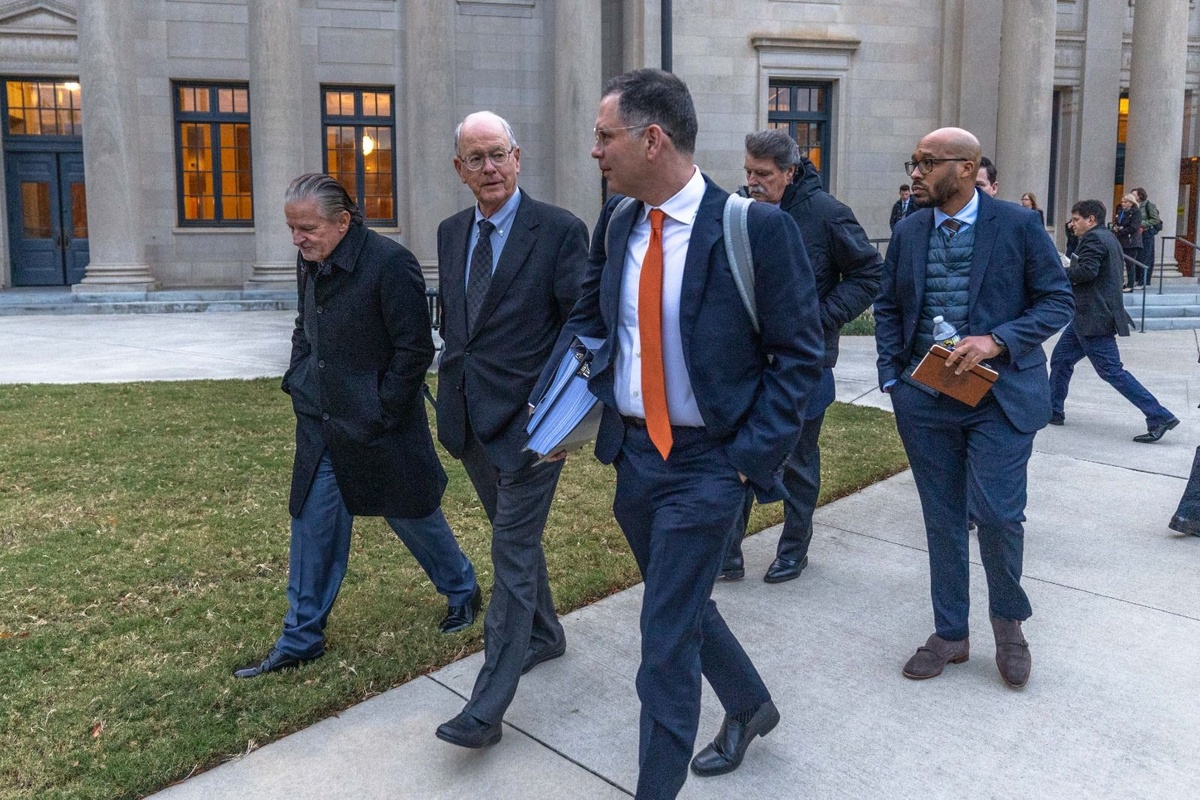
There has been a constant theme over the past week as it pertains to the testimony of senior NASCAR officials under examination from 23XI Racing and Front Row Motorsports lead attorney Jeffrey Kessler.
The official is asked a series of specific questions about their knowledge of something that should fall under their authority. The official then deflects with a ‘I don’t know’ or ‘I wasn’t there’ because the presumed answer would be legally disadvantageous.
Or, in the name of fairness, their memories are truly adversely affected by just how much is asked of them over the course of a season working at the highest levels.
Nevertheless, the response to this amnesia is Kessler asking an official how much he earns through salary and bonuses. His point is to illustrate just how unlikely it is that officials who draw over a million dollars a year wouldn’t have insight into how NASCAR operates.
This happened with president Steve O’Donnell and now it’s happened with commissioner Steve Phelps and CEO Jim France on Tuesday.
For much of the past week, Kessler has built a story on behalf of his clients that numerous NASCAR officials recognized that the race teams warranted more favorable terms during charter extension negotiations but were thwarted by France.
Even discovered emails that were clearly written by Phelps got a response of ‘I don’t remember this’ to so many questions that Kessler assured the executive that he would soon be cross-examined by his own attorney where his memory would likely improve.
To wit, Phelps remembered that the COVID shutdown began on March 13, 2020 and that NASCAR returned from it on May 18, 2020.
While O’Donnell came across as a ‘team guy,’ on Friday, which is also how he was labeled internally in the NASCAR front office, Phelps eventually got to the point where he fully needed to implement what France told him to do.
In an email with O’Donnell and Prime, Phelps eventually got to the point where he said there were ‘lots of options, but all have the same theme: Pick a date and they can sign or lose their charters. It is that simple.’ Prior to reaching that point, there were texts and emails where he was frustrated with France but by his testimony on Tuesday, he had forgotten a lot of the details around that.
Kessler has worked over the past week to paint France as unwavering in his commitment to not pay the teams more or give them permanent charters even as his top lieutenants suggested there were merits in doing so.
Phelps at one point emailed Rick Hendrick ‘we wish we could give you permanent charters but Jim doesn’t want that,’ but the now Commissioner doesn’t remember that either.
He was asked about why more extensive track exclusivity agreements were worked into Speedway Motorsports’ contracts around the time the Race Team Alliance started exploring running their own mid-week summer dirt racing series or the nascent SRX tour.
“No idea,” Phelps said.
But Phelps, who also had private texts unearthed from February 2, 2023 that suggested to O’Donnell and Prime that they ‘need to put a knife in this trash series.’
A series that is now dead, which Kessler points out is what happens when you stick a knife in something.
Phelps said he was just frustrated.
“Frustrated our owners were racing in a series using sponsors and colors and liveries that looked a lot like NASCAR,” Phelps said.
But it’s also true that he told then NASCAR president Brent Dewar that they would ‘fight to protect’ their space from any competitor when the Sanctioning Body first caught wind of the RTA’s plans.
The lead attorney for 23XI and FRM is trying to illustrate France as using his monopsony power to force unfavorable terms on the teams because they have nowhere else to compete at this level.
“Absolutely not,” Phelps said.
In the closing minutes of Steve Phelps’ re-examination, Kessler asked him if France was so opposed to giving the teams permanent charters because it would give them ‘more power’ in the sport’s political structure.
“He is not,” Phelps said.
Kessler said if teams had permanent charters, NASCAR couldn’t take them away or implement the ‘gold codes’ strategy of operating a series completely in-house.
“We couldn’t,” he said.
Phelps was asked by Kessler if teams should trust Jim France ‘to be a benevolent dictator,’ which solicited an objection by lead NASCAR attorney Chris Yates. Kessler withdrew the question but made his point nevertheless.
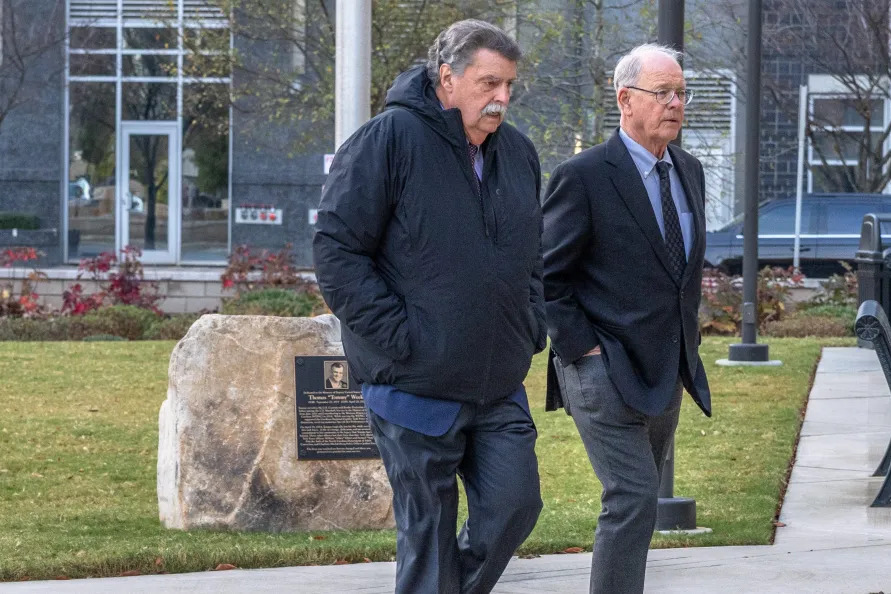
On the witness stand, the youngest son of NASCAR founder Bill France Sr. professes to have deep friendships with many of the most prolific owners in the Cup Series, but he denied each of them what they wanted most in the negotiations.
Permanent charters.
Rick Hendrick, Roger Penske, Joe Gibbs, Jack Roush and Richard Childress each wrote letters and/or personally spoke to France over the phone to express how transformative to their business ‘evergreen’ charters would be.
This is in addition to his top lieutenants expressing the same sentiment.
“They’re all telling you they need permanent charters and you said no,” Kessler said during examination.
In response, France said ‘We did not do evergreen or permanent charters, no,” but also said he doesn’t remember any of these owners ever expressing that sentiment to them. Kessler showed him the emails and France simply acknowledged that’s what the letters said.
How about the phone call Gibbs made on the deadline day, September 6, where daughter-in-law Heather Gibbs said Coach called France and pleaded ‘please don’t do this to us,’ with an offer he felt was unfair.
France says he couldn’t see himself telling the elder Gibbs ‘if I only get 20 charters back, I get 20 charters back,’ as Heather testified.
But did he deny it?
“I’m not sure I did.”
This was a theme of the France testimony as he couldn’t answer 90 percent of what Kessler asked.
One sequence read as follows:
JK: “Do you think NASCAR will have more or less revenue than last year?”
JF: “Not sure. I haven’t looked at it.”
JK: “How much in distribution money will you make this year?”
JF: “I’m not aware of that, I’m sorry.”
JK: “Does the France family own all the equity in NASCAR?”
JF: “I think so.”
JK: “Did Golman Sachs estimate NASCAR’s equity as $5 billion?”
JF: “I don’t recall.”
JF: Were you at the meeting on April 27, 2023 about acquiring Speedway Motorsports?”
JF: “I might have been. I don’t know.”
JK: “Do you have any reason to disagree with NASCAR’s equity being $5 billion?”
JF: “I’m not sure.”
Is deposition with Kessler went the same way as the lead attorney pointed out at one point in the conversation on the witness stand on Tuesday afternoon.
“I just don’t remember,” France said. “I’m sorry.”
As Kessler has done with every NASCAR executive who didn’t seem to know what he should commensurate to his job title, France was asked his salary and couldn’t even answer that question straight.
JF: “It’s around $3.5 million range.”
JK: “3.8.”
JF: “Pretty close. We’ll go with that.”
That’s just how it went between Kessler and France for the two hours they sparred.
There was also the matter of the emotional letter from Heather Gibbs that O’Donnell stated caused France to ‘swear’ out loud as he read it.
Kessler read every single word out loud back to France to see what could have drawn an emotional response. France said none of it made him upset. The CEO also said he didn’t remember reading this letter out loud at all.
O’Donnell said on Friday that he was exaggerating about France’s reaction but didn’t deny that it was read aloud in a meeting.
That wasn’t the only discrepancy that O’Donnell and France seemed to have as there was a 2021 meeting in which NASCAR senior leadership met to prepare for the upcoming charter negotiation process.
After that meeting, O’Donnell summarized the proceedings to his peers that France was not in favor of granting teams a ‘most favored nations’ clause, doing away with the three strikes (veto) rule and France’s desire to own charters.
These are all things NASCAR ultimately got ratified in the 2025-to-2031 agreement.
France says he didn’t remember being involved in this meeting. Then he was shown the O’Donnell email.
‘It appears that way,’ he said of his involvement.
Also in that email from O’Donnell to his peers: “Jim’s over-arching comment: WE ARE IN COMPETITION. WE ARE GOING TO WIN.”
Did France remember that?
“I don’t recall making those comments,” he said.
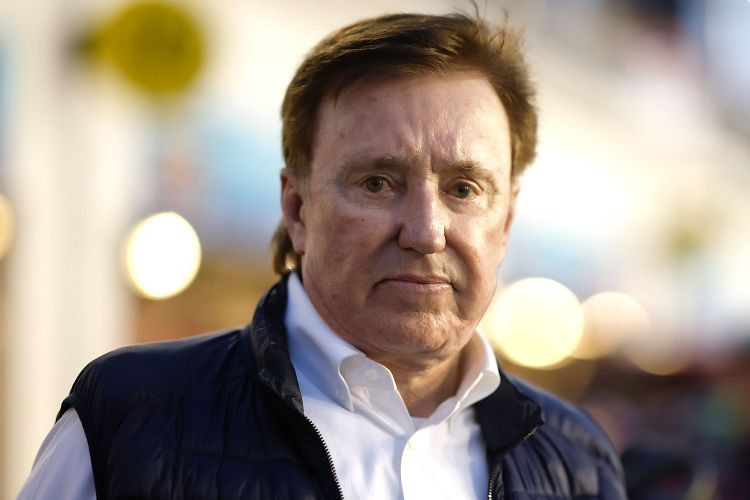
It was long-awaited that Richard Childress would make headlines if called to the witness stand during this trial, but instead, unexpected headlines were made about him.
Having testified earlier under questioning from friendly attorney Danielle Williams that he wanted permanent charters because he wanted to turn Richard Childress Racing over to grandsons Austin and Ty someday, Yates hit him with a surprise in cross-examination.
First, Childress was asked how much of the team he owns, and he didn’t want to answer that. Judge Kenneth D. Bell told him that he was required to under oath.
The answer is 60 percent and the other 40 is owned by private equity firm Chartwell Investments.
Yates asked him about the conversations Childress had with former NASCAR driver Bobby Hillin Jr. this summer about the latter exploring purchasing a part of the organization. The deal would have seen a group put together by Hill acquire shares owned by both Childress and his private equity partners.
“I don’t want to answer that,” Childress said with the same exact interjection from Bell that he was required to do so truthfully.
Childress said that Chartwell was looking to exit the sport and Hillin reached out with the inquiry. He also got agitated at NASCAR’s attorney for having that information and making it public in court.
“This isn’t what we are here for,” Childress said, noting that everyone involved in the discussions signed non-disclosure agreements.
The deal included, conceptually, a plan to purchase a third charter.
“He had talked about that,” Childress said. “I gave him a termination letter because because the way they wanted to do things, they didn’t have the money, period.”
Hillin’s group had also audited Richard Childress Racing financial statements that showed the team had turned a positive EBITA (Earnings before interest, taxes, depreciation and amortization) every year over its 55 years of existence.
That also agitated Childress because he also believed it protected by an NDA.
Yates asked if it was true about RCR’s constant profitability.
“I guess,” he said.
After Judge Bell had dismissed the jury for the remainder of the evening, the lawyers for 23XI and Front Row requested that NASCAR turn over the documents they have about Hillin’s claims and uncover the source who provided them.
Bell told both the plaintiffs and defendants to discuss the matter amongst themselves after court let out and present a solution to the court before 10 p.m. on Tuesday.
As for the company’s perpetual profit, Childress says all of the other businesses he operates out of the RCR campus subsidizes the race team.
“I have other businesses to pay our bills for NASCAR,” he said. “I’d be broke if I was just doing the Cup teams.”
Those entities include a manufacturing shop that does chassis work for Xfinity Series teams but also weapons and vehicles for the military. He owns ECR Engines which supplies powerplants for several teams across the industry. He also owns a successful vineyard off-site.
With all of that said, Childress said his other businesses shouldn’t exist to subsidize his NASCAR operations.
“That money should be going into my bank account (instead of) going to pay my NASCAR teams.”
We want your opinion!
What would you like to see on Motorsport.com?
Take our 5 minute survey.
– The Motorsport.com Team
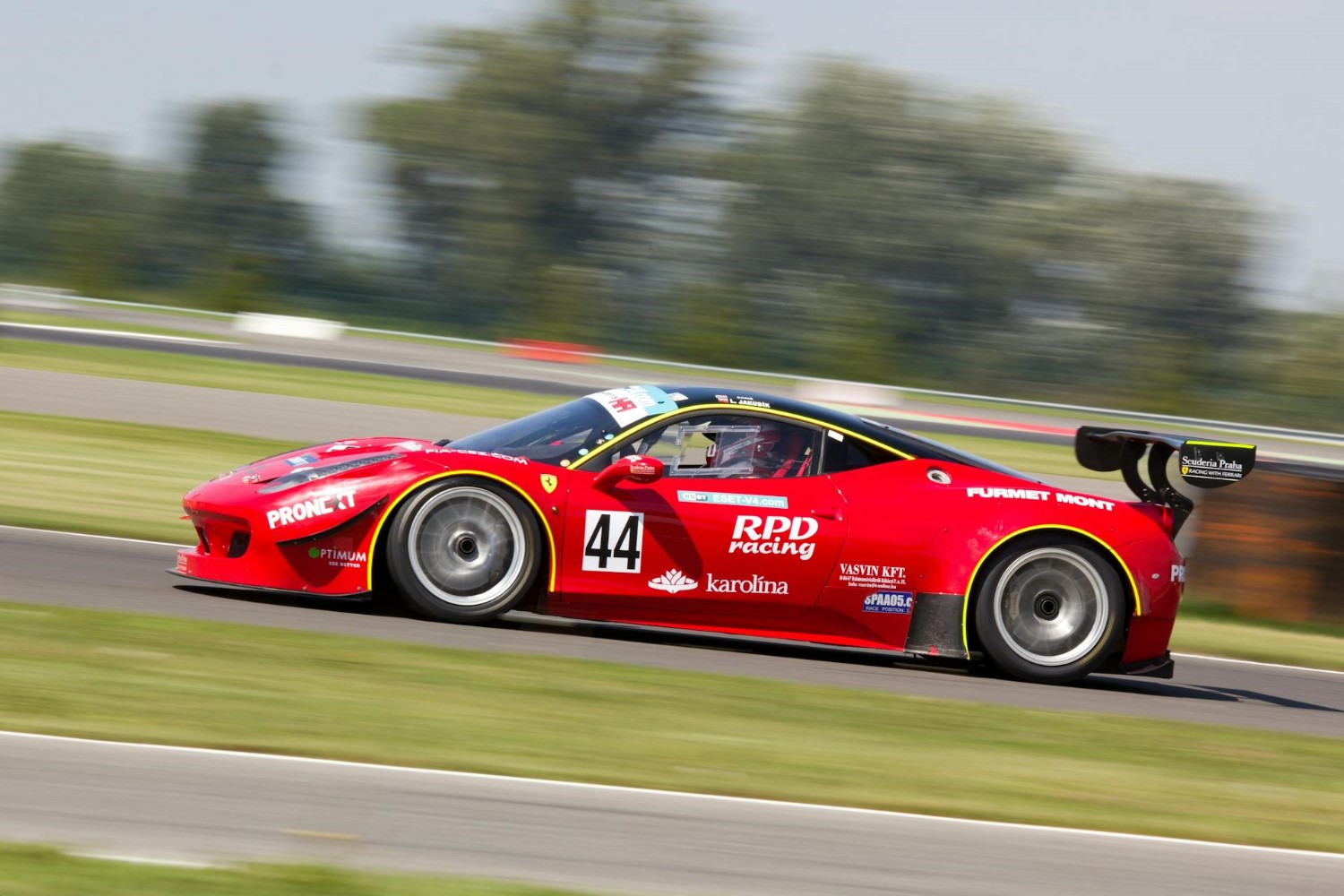
Motorsport has long been perceived as an elite pursuit, accessible primarily to those with substantial financial resources. The high costs of vehicles, track access, and inevitable repairs create formidable entry barriers, fostering criticism that the sport lacks diversity and inclusivity.
–by Mark Cipolloni–
However, in recent years, governing bodies, teams, and organizations have launched targeted initiatives to broaden participation, particularly among women and underrepresented groups. These efforts—spanning scholarships, mandatory gender-balanced lineups, and grassroots programs—signal a shift toward a more equitable future, though challenges like funding and geographic disparities persist.
Women remain significantly underrepresented in motorsport, comprising just 10% of global participants across all levels, according to a 2023 More Than Equal report. This figure drops sharply in higher tiers: from 13% in karting to 7% in Formula and GT racing, and a mere 4% among top talents. Off-track roles fare slightly better but still lag; in Formula 1, women held 37% of jobs in 2023, up from 28% in 2018, though team-specific disparities persist—Mercedes reported 13% female staff, Red Bull just 6%.
Pioneering foundations are driving change. More Than Equal, co-founded in 2022 by former F1 driver David Coulthard and entrepreneur Karel Komárek, aims to nurture the first female F1 world champion through data-driven development. In 2024, it launched its inaugural driver program, selecting six teenage talents (aged 13-14) from countries including Australia, Austria, and the UK for tailored coaching focused on gender-specific physiology and tactics. The initiative also released a free Driver Development Guide in partnership with F1 Academy and Well HQ, emphasizing menstrual cycle impacts on performance.
Series like Extreme E and its successor, Extreme H (debuting in 2025 with hydrogen-powered vehicles), mandate mixed-gender teams, ensuring equal driving duties. This policy has yielded tangible results: the average performance gap between male and female drivers narrowed by 70% over four seasons, from 4.5 seconds per lap in 2021 to 1.1 seconds in 2024. In Season 4, female drivers closed the gap by an additional 36.5%, with Andretti’s Catie Munnings finishing third-fastest overall in Saudi Arabia. Extreme E’s 2024 format revisions further balanced starting opportunities, while its workforce achieved nearly 50% female representation.
F1 Academy, launched in 2023, has boosted female entries in junior formulas: F4 saw a 105% surge in 2023 and another 40% in 2024, with 50 women competing across 20 series. Champion Marta García earned a fully funded seat in Formula Regional European Championship for 2024, highlighting pathways for progression. Complementary programs like FIA’s Girls on Track and Dare to be Different continue to inspire, with UK motorsport engineering enrollment for women doubling in the past five years.
Despite these advances, parity remains elusive. Female careers average 1-5 years versus over 10 for males, often due to funding biases and lack of role models. Initiatives must scale to sustain momentum.

Cost is the sport’s most insidious barrier, especially at the grassroots level. Karting—the typical entry point—can exceed $200 per tire set (lasting one weekend) and tens of thousands annually for competitive seasons, excluding travel and coaching. This disproportionately excludes youth from deprived areas, perpetuating homogeneity.
Targeted scholarships are countering this. The FIA’s 2022 Engineering Scholarship covers full tuition and living costs for underrepresented talents, with 2023 recipient Jesica Salvini pursuing an MSc in Advanced Motorsport Engineering at Cranfield University. In the US, Parella Motorsports Holdings’ Powering Diversity Scholarship provides grants, mentorship, and exposure for underrepresented karting drivers, enabling transitions like Hannah Greenemeier’s to Formula 4. Radford’s “Karts to Cars” and VMB Driver Development offer similar pathways, blending funding with coaching.
The FIA’s “Arrive & Drive” platform, rolled out in 2023, partners with tracks for low-cost rental karting events, supported by €121,000 in global grants for diversity projects. Clubs could adopt tiered incentives—much like seasonal promotions in other leisure sectors—tailoring discounts by demographics to widen access without diluting quality.
F1 Academy subsidizes €150,000 per driver annually, easing progression, though full sponsorship remains crucial. Broader investment, including from brands like PUMA and DHL, is vital to dismantle these walls.
While international teams lend global flair, domestic scenes often lack ethnic and socioeconomic diversity. NASCAR’s Drive for Diversity (D4D), marking its 20th year in 2024, exemplifies holistic inclusion by targeting minorities and women for driving, ownership, crew, and sponsorship roles. Graduates like Rajah Caruth (2024 Truck Series winner, third Black driver to claim a national victory) and Kyle Larson (first D4D alum to win a Cup championship) underscore its impact; four participants secured national wins in 2024 alone. The 2024 class, including debuts by Lanie Buice and LaQuan McCoy Jr., competes in ARCA and Weekly Series, with Ally Financial sponsoring awards to amplify visibility.
In the UK, participation has grown steadily. Sport England’s data shows motor sports engagement rising to 73,300 in 2023 (from ~122,200 in 2015-16), with urban hubs like Manchester (+26%) and Birmingham (+62%) leading. Motorsport UK’s 2023 licenses hit 68,764, up 11% year-over-year, though paid categories dipped slightly amid economic pressures. The challenge lies in extending this to rural “satellite towns” via subsidized local events. A great example of this can be found in the world of bingo promotions, particularly with their seasonal offers. These involve not just one, but a range of incentives with differing prize structures and time frames. Thus, it caters to a wider group of players. This could be done with karting clubs: personalizing and framing offers that lower the barrier for entry, but specifically tailored for given needs and demographics.
The US exemplifies motorsport’s surging appeal, fueled by Netflix’s *Drive to Survive* and three Grands Prix. F1 fandom reached 52 million in 2024, up 10% from 2023, with 70% of Gen Z engaging daily and 73% eyeing live attendance. ESPN viewership averaged 1.1 million per race (1.2 million in 2025), tying 2023 highs, while total attendance hit 6.5 million globally—a record, with Silverstone drawing 480,000.
Yet, sustained diversity requires addressing root issues: equitable funding, cultural shifts, and data-driven outreach. As Coulthard notes, “To enact lasting change, we must invest early and differently.” With initiatives like F1’s Diversity Charter and FIA grants, the sport is accelerating toward inclusivity—proving that when barriers fall, talent rises for all.


 Why a rising mid-major power with an NCAA Tournament team opted out of revenue-sharing — and advertised it
 NBA Legend Michael Jordan to Join NBC Sports as Special Contributor
 Falcons mailbag
 Portal Update – Basketball and Gymnastics Take Hits
 has always dreamed in Mercurial. Now his initials are on the boots.
The new Kyl…
has always dreamed in Mercurial. Now his initials are on the boots.
The new Kyl…
First Tee Winter Registration is open

Fargo girl, 13, dies after collapsing during school basketball game – Grand Forks Herald

CPG Brands Like Allegra Are Betting on F1 for the First Time

F1 Las Vegas: Verstappen win, Norris and Piastri DQ tighten 2025 title fight
Two Pro Volleyball Leagues Serve Up Plans for Minnesota Teams

Utah State Announces 2025-26 Indoor Track & Field Schedule
Sycamores unveil 2026 track and field schedule
Redemption Means First Pro Stock World Championship for Dallas Glenn

Bowl Projections: ESPN predicts 12-team College Football Playoff bracket, full bowl slate after Week 14

Texas volleyball vs Kentucky game score: Live SEC tournament updates

