Franchising was far from David Chang’s mind when he started teaching children’s martial arts from his garage.
A champion martial artist himself, Chang fell in love with the craft as a teenager—even if his parents had other aspirations for him.
“My parents had always dreamt—like a lot of Asian parents do—of their son growing up to become a doctor … but as I started going into high school and college, I really started falling in love with martial arts,” Chang said. “It was something I had watched on TV, and it was just fascinating. I love the movement. I love the exercise and everything about it.”
Chang competed in tournaments, traveled overseas for training during summers in college and later became a national Wushu, or kung fu, champion.
After he retired from competing, Chang pivoted to teaching Wushu out of a home studio in his family’s garage. Seeing the personal impact and increased demand led Chang and his wife, Elizabeth Chang, to open their children’s martial arts business in 2003, Wushu Central’s Kung Fu Kids.
The couple’s inspiration for Kung Fu Kids combines David Chang’s martial arts prowess with Elizabeth Chang’s business expertise.
“She’s truly a force of nature in this,” David Chang said of his wife. “So many of the critical ideas and concepts have come from her because she’s able to see things from a business perspective I wasn’t able to. … So if it wasn’t for her, we would not be anywhere we are today.”
The Changs opened four units in the San Francisco Bay Area, with more than 1,200 students enrolled in classes. The brand began franchising this year. The first two franchise units are set to open by the second quarter of next year, with a larger goal of opening 12 units in 2026.
Classes are organized by age, so students learn alongside their peers while progressing through belt ranks: “grasshoppers” for children ages 2 and 3; “little pandas” for 4- to 6-year-olds; “mighty tigers” for ages 7 to 9; “rising dragons” for 10- to 14-year-olds; and “spectrum stars,” a class for children on the autism spectrum.
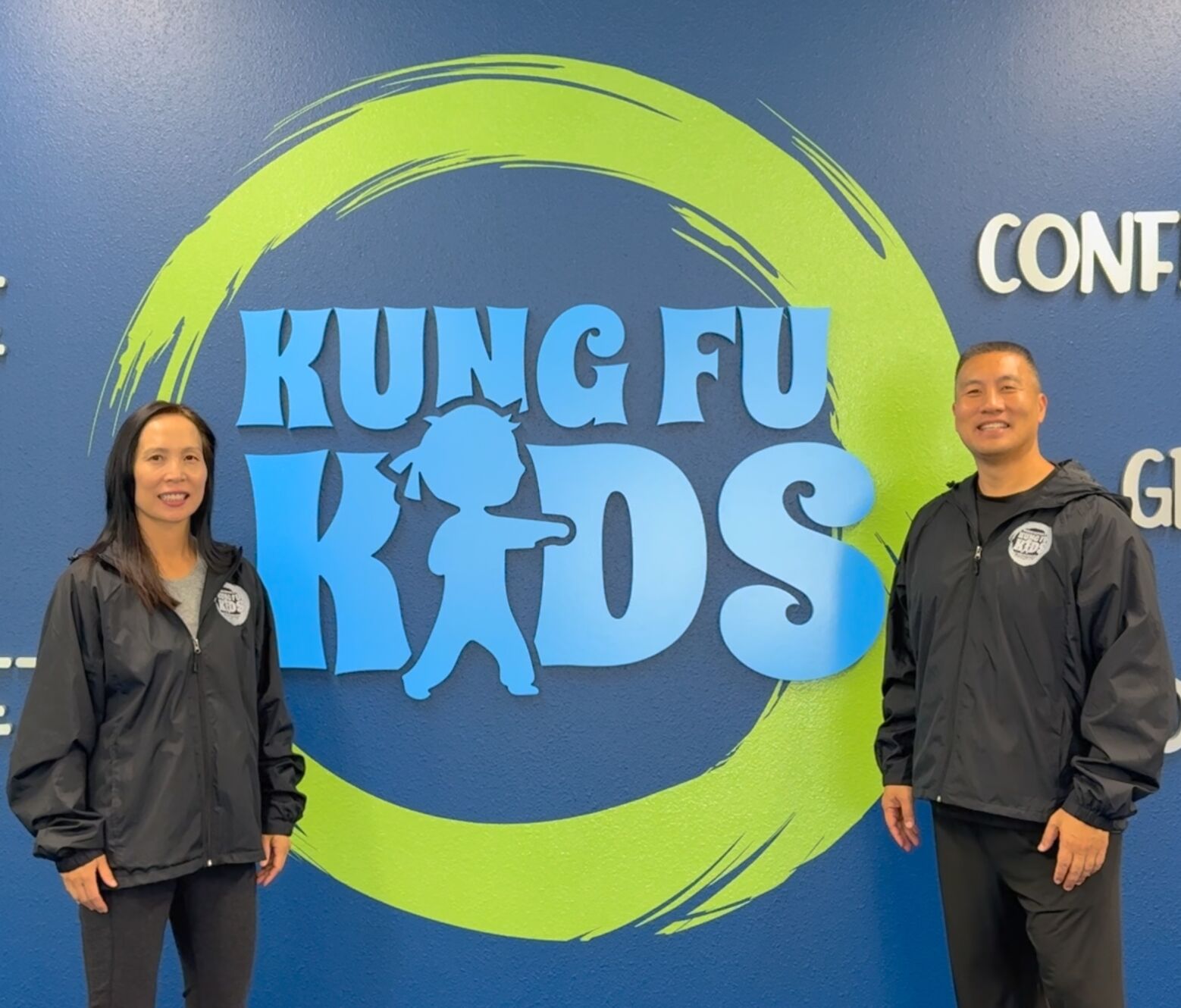
Elizabeth and David Chang started Kung Fu Kids in 2003. The couple’s inspiration for the brand combines David Chang’s martial arts prowess with Elizabeth Chang’s business expertise.
The brand also offers women’s self-defense classes, parties and events.
“I think we really fill the gap in kids’ development. School is important and they’re going to learn facts and information, but there’s this whole other dimension of being that a child doesn’t get a lot of times in school—that growth of confidence,” David Chang said. “There’s a lot that happens in school to shatter their confidence, and what we do is build it up. … There’s a physical component, of course, but I think our biggest impact is on changing their mindset and helping them grow up to become successful adults.”
The duo has found a rhythm over two decades and counting, with David Chang noting the importance of getting the brand’s marketing and operational systems down. But making the move to franchising comes with a healthy amount of humility.
“Marketing for a franchise is a whole new concept for me,” admitted Chang, who has looked to parents of students to be the brand’s first franchisees. This initial stage of franchise growth will keep Kung Fu Kids confined to California, but Chang has his eyes set on national expansion.
“When you go from running a martial arts academy to running a franchise, they’re two different businesses. They have different systems and processes that need to be developed out of that,” he said. “I wanted to make sure I could give our franchisees the attention and dedication they’re going to need and deserve for when we do eventually take it nationwide.”
Kung Fu Kids generated $2.8 million across its first three corporate locations in 2024, according to the brand’s franchise disclosure document. The cost to open a Kung Fu Kids ranges from $213,550 to $396,800.
“Our dream is that when people think about activities they want their kids to do, like enrichment activities, they’re thinking things like baseball, piano lessons, Kung Fu Kids,” Chang said. “We want to be in that whole stream of brands that help define a category.”


 Exciting changes ahead for Peanick Park!