Connect with us
https://yoursportsnation.com/wp-content/uploads/2025/07/call-to-1.png

Rec Sports

Little League helps father-son heal from kidney donation, transplant

Published

on


play

What’s Gavin Brown’s favorite part about having his Dad as his baseball coach?

“I always have someone to talk to after practice if I need to,” he says, “and he can help me with extra stuff at home if I miss it at practice.”

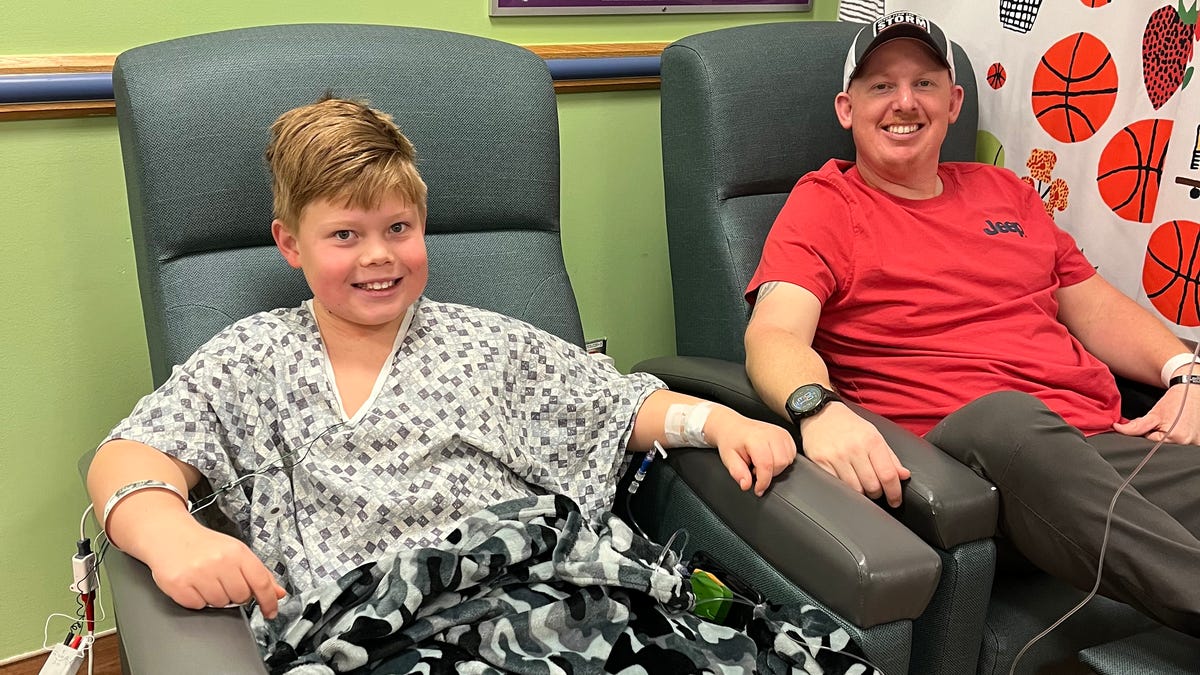
This past winter, Gavin and his father, Matt, spent extended time away from the field together. They sat next to one another in matching recliners. They even slept in them.

As our kids seem to advance so rapidly in age, we might say in passing how we’d give anything for an uninterrupted period with them like this. For this father-son duo, the time together came after Matt Brown gave his kidney, which saved his son.

Matt and Gavin will be together at the Angels-Orioles game on Father’s Day in Baltimore, and they are playing with Calvert (Maryland) American Little League All-Stars this summer as they attempt to advance out of their state. It’s the shot about which every Little Leaguer can dream.

In the meantime, the Brown family, which has managed Gavin’s chronic kidney disease since birth, has been renewed with a successful transplant and recovery.

“We were completely shocked,” says Gavin’s mother, Erin. “He went from he can’t sit up to, ‘Holy Moly, he’s playing baseball,’ three months later.”

USA TODAY Sports spoke with Gavin and his parents, as well as Yi Shi, a pediatric nephrologist at Children’s National Hospital and a member of Gavin’s care team, about their journey.

“Gavin was extremely brave throughout the entire process,” Erin says. “Even up until the time he went back for surgery, he was confident and reassuring, making sure to tell me everything was going to be just fine. Gavin has known this was coming his entire life, and by the time it got here, he was very ready to just get it over with and try to get back to normal life.” 

Their story also details the role sports can play in managing life’s obstacles, no matter how steep they are, and in bringing fathers and sons closer together.

Coach Steve: Cal Ripken’s father passed down these four lessons for youth athletes

‘I just kept going with it’: How a parent makes a kidney transplant work

According to the latest data from the Organ Procurement and Transplantation Network (OPTN), there have been 8,082 pediatric transplants performed through parent-child kidney donations since 1988, when national stats were first recorded.

Erin and Matt knew pretty much from Day 1 Gavin would need a transplant. Matt got tested and cleared to be a donor seven or eight years ago, and they waited.

In the meantime, Matt began helping out with the coaching on Gavin’s baseball team. He put his son directly into kid pitch, skipping tee ball and coach pitch. Gavin has come into his own and become a local All-Star.

But during adolescence, which is a kid’s highest period of physical growth, doctors see the steepest drop in kidney function, Shi says. That moment for Gavin came last fall, when he was 11.

“It was still kind of positioned that it was going to be a little ways away,” Erin says. “And then we saw a drastic decline. And they made the determination that we were, most likely, going to do the transplant.”

Shi says children usually do better with a living donor, and parents or other family members are the best matches: “We try to get donors less than 40 [years old] for kids, but we work around if the parents are older, for whatever reason.”

Matt, 38, was within the usual age range but there was one particular problem. “Healthy weight is a requirement for donation,” Shi says.

He weighed 238 pounds last summer.

“It wasn’t until I got out of the military that I just got soaked up with working shift work, and then kind of let myself go for a number of years,” says Matt, who served in the Army from June 2004 to October 2009, including stints in Iraq and Afghanistan.

Matt, who now works in security at Calvert Cliffs Nuclear Power Plant, had to lose 15 to 20 pounds from his 5-foot-9 frame. He hit the number, “and I just kept going with it,” he says. Today, he’s down to 200.

Pediatric transplant surgeon Jennifer Verbesey and a surgical team started Matt’s kidney removal surgery around 7 a.m. Feb. 10 at Washington’s MedStar Georgetown University Hospital. Verbesey was with Gavin and Erin at Children’s National across town by 11:30 a.m. that day.

Father’s Day can come early: The importance of spending time together

It was five days after his 12th birthday and still, his mom says, Gavin was smiling right up until the time he went into surgery, which took 4 to 5 hours.

Doctors recommended staying out of school and avoiding large crowds for the first three months, when his immune system would be the most suppressed.

“The main part of the recovery process is really the post surgical recovery, which takes about a week or so,” Shi says. “Generally, kids feel quite good after that, so it’s not a prolonged recovery process. … It is common that children recover quickly and can return to full activity within a month.”

Gavin had swelling and some minor complications that were quickly resolved, Matt says, though they made everything a little more uncomfortable for him.

At first, neither one of them could even lie flat. Gavin had a lot of pain and, after he spent a week in the hospital, he and Matt spent about two weeks, off and on, in those reclining chairs.

“It was really just getting used to it and living with it for the most part,” Gavin says. “We went on walks a lot after we could and went outside in general. It was really just hard to get used to.”

But there was familiarity, first in spending time with dad, and then, after an isolation period together had ended, he moved to practice with his Little League team (the Orioles) in late May.

At first, the activity was about supporting his teammates and feeling like he was part of the group. Being with his friends is one of his favorite parts of baseball.

He learned the shifts and the plays, he tossed the ball softly, stretched a little and took in all the energy of practice.

“That way, when he’s ready, he can hop back in with the team,” Matt says. “You know, crawl before you walk and run.”

Shi says a transplant kidney is usually placed in the front of the belly and is less protected than our regular kidneys. They marked the spot and helped Gavin fashion a shirt, through Zoombang, that provides padding for it under his jersey.

There was a therapeutic function to playing baseball, too.

“It’s not like major league baseball, or at that level where we expect high-force injury,” Shi says. “In general, we advocate for kids to exercise, play sports, do what they otherwise would be doing. I think it’s better for quality of life and just general recovery, but kids in general, after transplant tend to gain weight, and so things like exercise really do help with blood pressure and the weight gain.

“On top of that, it’s something that he really likes doing so we try our best to accommodate.”

Coach Steve: Keep the ‘team’ in team sports − even when your child is injured

Learning how to forge kids’ independence

Though he has been on medication since he was born, Gavin and his parents decided he is now responsible enough to manage the process on his own.

He takes an antibiotic (Bactrim), which he will stop at the six-month mark after his surgery. He also takes Tacrolimus and Cellcept, two anti-rejection medications that prevent the immune system from attacking transplanted kidneys.  

Gavin takes medications at 9 a.m. and 9 p.m., excusing himself momentarily from our video interview last week to do so.

“Timing is very important, as keeping his body regulated with the anti-rejection medications is the best way to prolong the life of his new kidney,” Erin says. “We get notifications (through an app) if he hasn’t marked them off, which allows us to monitor him without having to do the medication administration for him. Our goal with allowing him to do this is to start preparing him to be independent and understand the importance of taking his meds on time, without micromanaging.

“We also put all his medications into daily containers with his help each week. He’s been great about remembering to take them when he leaves the house and taking them on time. We’re really proud of how well he is doing.”

There have been unexpected hurdles, though. Just recently, for example, his white blood cell count was low and he missed school.

“Just things we weren’t necessarily prepared for that we’re kind of learning along the way,” Erin says. “He seemed fine, but his blood work wasn’t showing fine, so we had to make adjustments.”

When he plays baseball, he has been instructed to not slide headfirst. He was there, though, when the Orioles won their Little League’s championship.

“He’s hitting the ball well,” Matt says, “just not as far as he used to, which he understands. And mobility is a little bit slower … (He’s) still not back 100% but he’s able to compete.”

‘Doing something he loves’: Taking life and running with it

A point of emphasis for this season is recognizing not everyone on the team is at the same skill level.

“But we can always help people work to their strengths,” Erin says.

Gavin has an athletic stance. He puts the ball in play with a quick right-handed swing and sprints toward his dad urging him forward as a first base coach.

“Kidney donors should make a full recovery like any other surgery,” Shi says. “Matt has one kidney now compared to two, which means his one kidney has to work hard enough to take the place of two.”

He has helped his son avoid dialysis, a procedure that removes waste substances and fluid from blood that are normally eliminated by the kidneys.

“Dialysis generally has worse health outcomes than transplant, but also has worse quality of life,” Shi says. “Kids would either need to come to the hospital for dialysis three times a week or do dialysis at home every night. They have more dietary restrictions as well.”

Gavin will some day need another transplant. Shi says they last 10 to 15 years on average, sometimes longer.

Erin, who works in marketing for a software company, and Matt are hopeful that medical advances will give Gavin more options. Before his surgery, the family was introduced to the National Kidney Registry, a U.S.-based organization that aims to increase the quality, speed and number of living donor kidney transplants.

Transplant speed can increase when someone donates on behalf of a patient through programs like paired exchange or the voucher program.

Erin, 37, has had Type 1 Diabetes since 1999 and is automatically disqualified from being a donor.

“As a mom, this was very hard to accept,” she says.

She is looking forward to running a local 5K turkey trot with Gavin, and perhaps his younger brother, Connor, 11, on Thanksgiving. There could also be a winter family trip to Vermont to snowboard, which is Gavin’s other favorite sport and approved by Shi (if he wears his protective shirt).

In the more immediate future, there is lots of baseball.

“I just really enjoy it,” Matt says of coaching his son, “going out there and doing something he loves, just encouraging him, watching him grow.”

And to grow into someone who has learned to look to the future as an opportunity to seize what comes next.

“We spent time going through what the process would be like,” Erin says. “Gavin functions very well when he knows what to expect. Having a clear game plan for the day of surgery and a good idea what the post surgery recovery would look like was very comforting to him.”

Steve Borelli, aka Coach Steve, has been an editor and writer with USA TODAY since 1999. He spent 10 years coaching his two sons’ baseball and basketball teams. He and his wife, Colleen, are now sports parents for two high schoolers. His column is posted weekly. For his past columns, click here.

Got a question for Coach Steve you want answered in a column? Email him at sborelli@usatoday.com



Link

Continue Reading
Click to comment

Leave a Reply

Your email address will not be published. Required fields are marked *

Rec Sports

Kutztown Field Hockey to host youth and middle school summer camp

Published

on


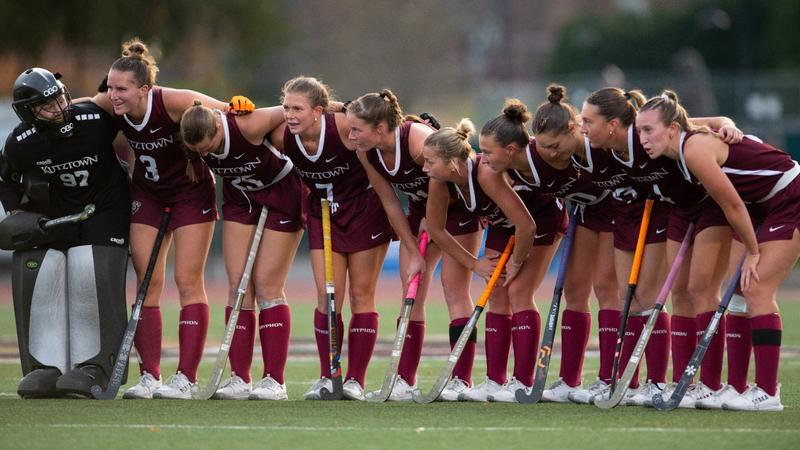
KUTZTOWN, Pa. – Kutztown field hockey is set to host a youth and middle school camp this summer from June 8th through the 10th at Andre Reed Stadium.
 
The camp is designed for grades K-8th. Each day the session will run from 5:30 p.m. to 8:00 p.m. The cost to attend is $150 pre-registration, which can be done prior to June 1.
 
Athletes should bring a stick, mouth guard, shin guards, turf shoes or sneakers and a water bottle. Goalies must bring their own equipment.
 
For additional information, contact camp director and KU head coach Marci Scheuing at scheuing@kutztown.edu, or by phone at 610-683-4378.
 
The Youth and Middle School Field Hockey Camp is designed to give athletes an opportunity to train with the National Champion Kutztown coaching staff and KU players. Our camp is open to any and all entrants, and will include learning both technical and tactical skills during multiple stations. We will separate groups by age and level of experience. You will also have the opportunity to compete in a series of games and fun competitions.


Link

Continue Reading

Rec Sports

Elmira area business owner, youth sports coach fondly remembered

Published

on


Updated Jan. 9, 2026, 7:44 a.m. ET


Link

Continue Reading

Rec Sports

Black Sports Moms is equipping, empowering parents and athletes

Published

on


Andrea Odom doesn’t hesitate when asked what sparked the idea she now hopes becomes a movement.

The moment arrived just before the 2023 Major League Baseball draft, as agents began recruiting her son, Dylan Campbell of the University of Texas, and it came with a hard lesson her family didn’t expect to learn.

“We had to fire an agent who didn’t deliver on what he promised,” said Odom, a mother of three, who manages public relations for The Odom Consulting Group in Houston. “But the beautiful part is that my son grew on a business level. He learned how to hold people accountable.”

That moment reshaped how Odom viewed the role of parents in sports, particularly Black mothers, who often find themselves navigating high-stakes decisions without access to the same information, networks, or protection afforded to others.

“And that’s what we want for Black Sports Moms,” Odom said. “Empowering ourselves and our children.”

Founded in March 2025, Black Sports Moms was created to equip Black mothers with the knowledge, resources, and confidence to navigate an often opaque and unforgiving sports industry on behalf of their children.

From youth sports to the professional level, the organization addresses issues ranging from Name, Image and Likeness (NIL) and contract negotiations to mental health, branding, and long-term financial planning — areas where families are increasingly expected to be savvy but are rarely taught how.

Odom sat with the idea until a phone conversation changed everything.

Unbeknown to her, attorney Lachauna Edwards was doing parallel work in Atlanta, educating “momagers” (mothers who serve as the business managers for their children). Edwards had spent years advising families in NIL, contracts, and athlete branding, and during Black History Month, she launched a Momager Series on Instagram, spotlighting Black mothers managing their children’s athletic careers behind the scenes.

“Andrea’s name was brought up as someone to feature,” said Edwards, 40, also a mother of three. “We talked about her background, and she saw what I was doing. She reached out again about doing an event, and she came up with the name Black Sports Moms.”

Black Sports Moms members Tammie Parker and Andrea Odom, Kim Stroud, mother of Houston Texans quarterback CJ Stroud; CJ Stroud and Chris Hollins, Houston City Controller, at a volunteer event.
From left to right: Black Sports Moms members Tammie Parker, Andrea Odom and Kim Stroud (mother of Houston Texans quarterback CJ Stroud) join CJ Stroud and Houston City Controller Chris Hollins at a volunteer event.

Andrea Odom

What started as a conversation quickly became a partnership. Edwards and Odom formed an LLC in March 2025 and moved fast, organizing their first conference in Houston in July 2025. They expected a local crowd. Instead, the event sold out with 175 attendees, many of whom traveled from across the country.

“In such a short amount of time, we were blown away by the response,” Odom said. “That’s when we realized this was bigger than we thought.”

The momentum continued in November 2025 with another sold-out conference in Atlanta, drawing 170 attendees. Mothers traveled from Florida, Texas, Georgia, and beyond — including a group of University of Florida Gator moms — underscoring a hunger for education and community that Edwards says has long gone unmet.

“Black women birth the greatest athletes in the world,” Edwards said. “For a long time, different entities in sports have been able to profit off our children’s talent while families are left trying to figure out how to support their kids and make informed decisions.”

Edwards, who has a civil rights background, sees Black Sports Moms as both education and protection. In many households, she notes, mothers are already doing the work by researching agents, negotiating schedules, managing finances, and supporting their children emotionally.

“That’s why athletes say, ‘My mom is the real MVP,’ ” Edwards said. “We nurture everything off the field and off the court. It made sense to empower the women who are already doing the work.”

The organization’s flagship offering, The Playbook, is a one-day educational summit designed specifically for mothers managing their child’s athletic journey. The conferences feature expert-led panels and interactive workshops covering NIL, contracts, branding, mental health, and financial literacy. Each attendee leaves with a personalized strategic plan and access to ongoing coaching and consultation.

“We’re intentional about making sure our moms are not only prepared, but confident enough to walk into any room on behalf of their child,” Edwards said.

That confidence will be on display again this month, when Black Sports Moms hosts a smaller, advanced “Mini Camp” in New Orleans. Limited to 50 attendees, the event is designed to go deeper, with mothers encouraged to bring real contracts they are negotiating.

“We’re breaking everything down clause by clause,” Edwards said. “Brand partnerships, tax strategies, investing, forming LLCs and nonprofits — this is advanced, hands-on work.”

The New Orleans gathering marks the next step in a rapidly expanding national footprint. In addition to regional panels tied to major sporting events, including Super Bowl week, the CIAA tournament, and the McDonald’s All-America Games, the organization plans its largest signature conference yet in Houston in July.

Despite its rapid growth, Edwards and Odom say the most powerful outcome hasn’t been business — it’s been community.

“Moms are forming group chats, supporting each other, showing up to games, baby showers,” Edwards said. “One mom helped another mom’s child land a marketing opportunity. That’s real.”

Odom agrees.

“We created this for empowerment and education, but the sisterhood has been the biggest surprise,” she said. “These women are forming lifelong bonds.”

Dylan Campbell rounds the bases
Dylan Campbell’s MLB draft experience reshaped how his mother Andrea Odom viewed the role of parents in sports.

Samuel Lewis/Icon Sportswire

The stakes, they say, are real. Odom points to moments when parents are intentionally sidelined during recruiting and negotiations — and how education changes those dynamics.

“One mom told us her son had 32 football offers,” Odom said. “After attending our conference, an assistant coach tried to separate her from her son and made a disrespectful comment. The family declined the offer and told the head coach exactly why.”

Another mother, whose son is preparing for the 2026 NBA draft, was told by an agency that starting a nonprofit was “too expensive.” At the upcoming conference, Black Sports Moms will walk families through how to set one up themselves — a process that costs less than $150.

“We’re teaching families who need to be in their ecosystem and how to protect their kids,” Odom said.

For Edwards, the urgency is only increasing as athletes are getting paid younger and younger, often before families are prepared for the attention and financial complexity that comes with it.

“If Black mothers don’t step into these roles,” Edwards said, “everybody else is making money off the success of these athletes. Universities, agencies, financial advisors. We want families to have a unified front so they aren’t taken advantage of.”

Chicago Bulls guard Coby White said his mother, Bonita, played a central role in guiding him through the recruiting process before he chose to attend North Carolina. He added that navigating today’s NIL landscape without that same level of parental support, and education, would be almost unthinkable.

“What they’re doing is needed,” White told Andscape about the co-founders of Black Sports Moms. “It can help a lot of families and a lot of mothers guide their kids through this, especially with the amount of money and attention involved now. It sounds like a dope organization.”

Odom said success will be measured not just by conferences, but by long-term impact – from chapters in cities across the country to a voice in conversations around NIL legislation and athlete rights.

“This is called Black Sports Moms,” she said. “But it’s a movement that’s touching families and communities.”

Branson Wright is a filmmaker and freelance multimedia sports reporter.


Link

Continue Reading

Rec Sports

Total bet on sports in North Carolina exceeds $7B in 2025 :: WRAL.com

Published

on


Bettors in North Carolina wagered more than $7 billion through legal online sportsbooks in 2025, the first complete calendar year since sports betting launched in the state.

In December, the state had more than $651 million in paid wagers, the fourth consecutive month that wagering activity in the state exceeded $650 million, according to information released by the North Carolina State Lottery Commission.

The state collected more than $14.6 million in taxes from the licensed operators, who pay an 18% tax on their gross wagering revenue as calculated by the commission. In 2025, North Carolina collected more than $132 million in taxes from the operators.

Some of the tax revenue goes to the state health department for gambling addiction education and treatment programs, two statewide youth sports organizations which distribute grants, a major events funds and the athletics departments at UNC System schools, though not NC State or UNC-Chapel Hill. The rest goes to the state’s general fund.

Paid wagers in December were up more than 6% over December 2024, continuing a trend. The commission doesn’t release more detailed data on betting, such as which sport attracts the most wagers or which operator has the most customers or bets each month.

Lawmakers approved legal sports betting in North Carolina in 2023 and it went live in mid-March 2024. The state now has seven legal operators.


Link

Continue Reading

Rec Sports

Safety in Youth Sports Act (HB 2042) Voting Meeting Scheduled

Published

on


Representative Tim Briggs has scheduled a voting meeting for January 27, 2026, at 10:00 am to review amendments to HB 2042, known as the Safety in Youth Sports Act, which established standards for managing concussions and traumatic brain injuries of students participating in athletic activities.

Representative Briggs introduced HB 2042 in 2011. This meeting will include discussion about proposed amendments to the original bill which will expand the scope of this Act to further provide for the proper management of brain injuries. The amendments include non-scholastic league and recreational sports and also provide information on Return to Learn. Representative Briggs will also be incorporating this bill into the Pennsylvania Consolidated Statutes so that it is no longer a freestanding act.

The meeting will be held in Room 205 in the Ryan Office Building and will be livestreamed from the House Committee website.

Melissa Dehoff is responsible for all medical rehabilitation and brain injury service issues. Ms. Dehoff attends multiple state-level meetings to advocate on behalf of members on brain injury and rehabilitation issues and is a member of the Department of Health Traumatic Brain Injury Advisory Board.


Link

Continue Reading

Rec Sports

National Girls & Women In Sports Day Celebration Set For Jan. 25

Published

on


Young Tar Heel fans are invited to join the North Carolina women’s sports teams for 2026 UNC National Girls & Women in Sports Day, an annual event to highlight women’s athletics at Carolina, brought to you by Blue Cross and Blue Shield of North Carolina (Blue Cross NC) and Carolina Athletics. The NGWSD celebration is set for Jan. 25 from 12-1:30 p.m. at the Bill Koman Practice Complex on the UNC campus.

The day’s event is intended for girls and boys pre-K through eighth grade. There is no charge to participate, and everyone (including parents/guardians) who registers in advance will receive a complimentary ticket to the UNC women’s basketball game against Syracuse that day at 2 p.m. at nearby Carmichael Arena.

https://goheels.com/form/90

Building on its commitment to support youth mental health, connectivity and resiliency, Blue Cross NC encourages participation in sports and an active lifestyle that supports physical and mental well-being. By partnering with youth, parents and community leaders like Carolina Athletics, Blue Cross NC believes there is opportunity to help reduce stigmas associated with mental health for young people in sports.

The NGWSD event includes mini-clinics with each sport, giving kids the opportunity to try out a variety of skills in a fun environment that’s appropriate for youths of all ages. The majority of the 15 UNC women’s varsity teams – cross country, field hockey, golf, gymnastics, lacrosse, rowing, soccer, swimming & diving, track & field and volleyball – will be represented at the event.

For more information, you can email uncngwsd@gmail.com or visit www.goheels.com

Information about check-in and parking will be emailed to registrants in advance of the event.


Link

Continue Reading

Most Viewed Posts

Trending