The spirit of youth baseball and the magic of the Little League Baseball® World Series take the spotlight this summer as ESPN rolls out the trailer for Big Dreams: Little League World Series 2024. The new documentary premieres Monday, August 12 at 9:30 p.m. ET on ESPN, with immediate streaming available on ESPN+.
Directed by Emmy Award-winner Rudy Valdez and produced by Imagine Documentaries, the same team behind Fight for Glory: 2024 World Series, the film captures the heart and soul of the world’s most celebrated youth baseball tournament. Set in the tradition-rich town of Williamsport, Pennsylvania, the documentary focuses on the highs and lows, unforgettable moments, and life-changing experiences that take place each August on youth baseball’s biggest stage.
The film is a collaboration with Cookie Jar & A Dream Studios, a DICK’S Sporting Goods company, in association with MLB Studios. While Big Dreams celebrates the fundamentals of baseball; hustle, skill, and resilience. It also honors the enduring impact of sports on young lives, families, and communities across the globe.
“There’s something truly special about Williamsport in the summer — a kind of innocence, joy, and unshakable hope for the kids and families,” said director Rudy Valdez. “This isn’t just a baseball film — it’s about the nerves, the triumphs, and the bonds that remind us how sports can shape people’s lives in incredible ways.”
A cornerstone of summer baseball tradition for nearly 80 years, the Little League World Series is more than a tournament. It’s a global gathering of young athletes chasing their dreams. Elizabeth DiLullo Brown, Executive Vice President of Little League Baseball, emphasized the tournament’s legacy. “This film brings back all the memories that teams feel when they make it to the biggest stage in youth sports. It’s a representation of millions of smiles, friendships, and sometimes heartbreak — all moments that have become lifelong memories for kids around the world.”
Featuring teams from 11 countries and 10 U.S. states, the documentary follows inspiring journeys from the 2024 champions Lake Mary (Fla.) LL, international standouts Kuei-Shan LL (Chinese Taipei), Matamoros (Mexico) LL, and Hinsdale (Ill.) LL. Their paths to Williamsport, full of grit, teamwork, and passion for the game, highlight how the LLWS continues to unite players through the common language of baseball.
Mark Rooks, VP of Creative, Entertainment & Sponsorships at DICK’S Sporting Goods, underscored the brand’s deep ties to the game. “Little League has been a part of the DICK’S story since our earliest days. Through Cookie Jar & A Dream Studios, we’re proud to bring meaningful sports stories like Big Dreams to life — because these kids, their determination, and their dreams truly inspire.”
Produced by Marc Gilbar, Meredith Kaulfers, Rudy Valdez, Tim Wheeler, and Marquis Daisy, the documentary brings together ESPN, Imagine, Cookie Jar & A Dream Studios, and MLB Studios to tell one of the summer’s most compelling stories.
Big Dreams: Little League World Series 2024 is set to deliver more than just baseball highlights — it’s a heartfelt look at the passion, purpose, and perseverance that define the youth baseball experience, echoing far beyond the field.
Gwen Vanderheyden of Rockton has turned into a bit of a star on the ice when it comes to speed skating, but she’s set to watch the Olympics with the rest of the country, beginning on Feb. 6.
The difference between Vanderheyden and the rest of the world? Most of us won’t ever get anywhere near competing in the Olympics. Watching is the closest the rest of us will ever get.
Vanderheyden may get there as a competitor someday.
“The Olympics would be great, that’s what you shoot for,” Vanderheyden, 14, said. “I’m pretty sure that in four years from now, I’m going to want that Olympic spot. That’s my dream.”
And Vanderheyden is on pace for just that.
Why speed skating?
A little over three years ago, Gwen was watching the Winter Olympics with her father and mother, Russell and Cari Vanderheyden, when she exclaimed that speed skating was “the coolest things I’ve ever seen.”
She quickly learned to skate at Carlson Ice Arena in Loves Park. She first tried the figure skating route, but then quickly pivoted back to speed skating.
“She kept saying: ‘I just want to go fast,'” her father Russell said. “We never pushed her, but we wanted to give her the chance to try things like that. So, we did.”
Quick learner
They spent two years driving to Madison, Wisconsin, 3-4 times a week, for Gwen to train at Madison Speed Skating Club on the short track. She was good right away.
But as she grew taller, she wanted to shift to long track, so they switched to the Wisconsin Speed Skating Club based out of Milwaukee. The Pettit National Ice Center is one of only six skating rinks with a long track of 400 meters.
She recently qualified for the USA Speed Skating Age Group Nationals in Roseville, Arkansas, on Feb. 14-15. She hopes to do well there and continue to grow in the sport. The next step up would be the American Cup racing series, followed by the Junior World Championships, the World Championships, and yes, we’re back to the Olympics.
“She practices next to Olympians, which is pretty cool,” Russell said, “but she’s got a way go to … It’s quite a commitment, that’s for sure. But if she wants to stick with it for four more years and try and get there, then we’re in.”
And just a fast skater
Gwen, who will be a freshman at Hononegah High School next year, has charged up the ranks and has racked up solid times along the way ― both in her short track days, and now in long track. She is practicing next to Olympian Jordan Stoltz, a world record holder on the ice, and she also practices alongside members of the Bonnie Blair Speed Skating Club in Milwaukee.
And usually beats them.
“She’s done really well up to this point,” Russell said. “It will be interesting when it’s time for her to move up to the next level, it’s pretty intense each move up from here.”
This round of Winter Olympics is in Milano Cortina, Italy, from Feb. 6-22, 2026. Other than speed skating, the Winter Games include sports like skiing, snowboarding, figure skating, bobsleigh and luge, curling and ice hockey.
The next Winter Olympics are slated for the French Alps in 2030.
Will there be a Rockton speed skater involved?
“Who knows,” Gwen said. “I just like going fast.”
She will have a time trial event sponsored by USA Speed Skating at the Pettit National Ice Center on Dec. 27, and then her and her family will return to The Pettit to watch the Olympic Trials in speed skating on Jan. 2-4, 2026.
Jay Taft is a Rockford Register Star sports reporter. Email him at jtaft@rrstar.com and sign up for the Rockford High School Sports Newsletter here at rrstar.com. Jay has covered a variety of sports, from the Chicago Bears and Blackhawks to local youth sports, since the turn of the century at the Register Star.
Youth sports are often celebrated as pathways to confidence, discipline, and teamwork. For many children, athletics begin as a source of joy and self-expression. However, as competition intensifies and expectations grow, passion can quietly transform into pressure. Burnout in youth sports has become an increasingly visible issue, raising questions about how early ambition, adult involvement, and institutional systems shape young athletes’ experiences.
What Burnout Looks Like in Young Athletes
Burnout in young athletes rarely arrives as a dramatic breaking point. More often, it develops quietly, masked by routine and normalized stress. What begins as dedication can slowly turn into emotional and physical exhaustion, leaving athletes disconnected from a sport they once loved.
One of the earliest signs is a loss of enthusiasm. Practices that once felt energizing begin to feel draining. Young athletes may express reluctance to attend training sessions or competitions, offering excuses or showing emotional withdrawal. This shift is often misinterpreted as laziness, when it is more accurately a response to sustained pressure without adequate recovery.
Emotional symptoms are frequently accompanied by physical ones. Chronic fatigue, recurring injuries, and unexplained aches become more common as the body struggles to recover. Performance may plateau or decline despite increased effort, further fueling frustration and self-doubt. Sleep disturbances and changes in appetite can also signal mounting stress.
Psychologically, burnout can manifest as irritability, anxiety, or a sense of hopelessness. Young athletes may become overly self-critical, fearing mistakes or judgment. The joy of play is replaced by a constant concern about outcomes, rankings, or approval from adults. In severe cases, athletes experience emotional numbness, feeling detached rather than disappointed.
Social withdrawal is another indicator. Burned-out athletes may pull away from teammates, friends, or family, particularly if their social world revolves around sport. When identity is tightly bound to performance, struggles can feel isolating and deeply personal.
Importantly, burnout does not mean a lack of talent or commitment. It is often the result of prolonged imbalance—too much demand, too little autonomy, and insufficient rest. Without recognition, burnout can lead to complete disengagement from sport, sometimes permanently.
Recognizing burnout early allows for meaningful intervention. When adults listen carefully to changes in mood, motivation, and behavior, they can help restore balance. Addressing burnout is not about lowering standards, but about protecting the well-being that allows young athletes to thrive both in sport and beyond it.
The Role of Early Specialization
Early specialization occurs when young athletes focus on a single sport year-round, often excluding other athletic activities at an early age. While this approach is sometimes promoted as a pathway to elite performance, it carries significant risks for burnout, particularly when driven by external expectations rather than a child’s intrinsic interest.
One major concern is physical strain. Repetitive movement patterns increase the likelihood of overuse injuries, especially in developing bodies. Without seasonal variation or cross-training, muscles and joints are subjected to constant stress, limiting recovery and increasing long-term injury risk. Physical pain can quickly erode enjoyment, turning participation into obligation.
Psychologically, early specialization narrows a child’s sense of identity. When one sport becomes the primary source of validation, setbacks feel disproportionately devastating. Losses, reduced playing time, or injury may be interpreted as personal failure rather than part of development. This pressure intensifies anxiety and undermines confidence.
Specialization also reduces opportunities for unstructured play, which is essential for creativity, social learning, and emotional resilience. Playing multiple sports exposes athletes to different coaching styles, peer groups, and movement skills, fostering adaptability and broader athletic literacy. Without this diversity, sport becomes repetitive, increasing mental fatigue.
Research increasingly suggests that early diversification does not hinder long-term success. Many elite athletes participated in multiple sports during childhood, specializing later when motivation and physical maturity were stronger. Delayed specialization allows passion to develop organically rather than being imposed prematurely.
Importantly, not all specialization is harmful. When athletes choose to focus on one sport out of genuine interest, with appropriate rest and support, specialization can be positive. The risk arises when choice is replaced by pressure, and development is measured solely by outcomes rather than well-being.
Understanding the role of early specialization requires nuance. Success in youth sports should prioritize growth, health, and enjoyment over early achievement. By allowing children the freedom to explore, rest, and decide for themselves, adults help protect long-term engagement and reduce the likelihood that passion will give way to burnout.
External Pressure from Adults and Systems
External pressure plays a significant role in youth sports burnout, often emerging from well-intentioned adults and institutional structures. Parents, coaches, schools, and competitive systems frequently emphasize performance outcomes, unintentionally shifting the focus away from enjoyment, learning, and personal growth. Over time, this pressure can distort a young athlete’s relationship with sport.
Parental involvement is one of the most influential factors. While encouragement and support are essential, constant evaluation, comparison, or future-oriented thinking can create emotional weight. Conversations centered on rankings, playing time, or scholarships may communicate that success defines worth. Even subtle cues—disappointment after losses or excessive praise tied solely to winning—can reinforce this message.
Coaching environments also shape pressure. Coaches operating within competitive systems may prioritize results to secure funding, recognition, or job stability. When training becomes rigid and mistakes are punished rather than used as learning opportunities, athletes may develop fear-based motivation. This atmosphere discourages risk-taking and undermines confidence, increasing emotional strain.
Beyond individuals, structural pressures intensify burnout. Year-round leagues, travel teams, early talent identification programs, and constant tournaments reduce recovery time and increase psychological load. The commercialization of youth sports further amplifies expectations, framing participation as an investment rather than an experience. Athletes internalize these stakes, feeling responsible for justifying time, money, and effort spent on them.
Social comparison, often fueled by social media, compounds the problem. Highlight reels, rankings, and public evaluations create a sense of constant scrutiny. Young athletes may feel they are always being measured, even outside competition.
The most damaging aspect of external pressure is the loss of autonomy. When athletes feel they cannot say no, rest, or explore other interests, sport becomes compulsory. Motivation shifts from internal enjoyment to external approval.
Reducing burnout requires adults to reassess their roles. Support should emphasize effort, learning, and well-being over outcomes. Systems must allow flexibility, rest, and athlete voice. When pressure is replaced with trust and support, young athletes are more likely to sustain both performance and passion.
Identity and Self-Worth
For many young athletes, sport becomes more than an activity—it becomes a central part of identity. While this can foster confidence and belonging, it also creates vulnerability when self-worth becomes tightly linked to performance. When success defines who an athlete is, setbacks can feel like personal failure rather than temporary challenges.
This identity fusion often develops subtly. Praise from adults, recognition from peers, and structured routines reinforce the idea that athletic achievement is the primary source of value. Over time, young athletes may internalize the belief that they are respected, supported, or noticed mainly because of how well they perform. This makes sport emotionally high-stakes.
When injuries, losses, or reduced playing time occur, the impact extends beyond disappointment. Athletes may experience shame, anxiety, or a sense of worthlessness. Because their identity is narrowly defined, there is little psychological space to absorb adversity. Stepping away from sport—whether temporarily or permanently—can feel like losing oneself entirely.
Burnout intensifies when athletes feel trapped by this identity. They may continue participating despite exhaustion or loss of enjoyment because quitting feels like letting others down or abandoning who they are supposed to be. This pressure often goes unspoken, particularly in environments that celebrate toughness and persistence above emotional well-being.
A strong athletic identity is not inherently harmful. Problems arise when it crowds out other aspects of self—friendships, academic interests, creativity, or rest. Balanced identity allows athletes to see sport as one meaningful part of life rather than its sole foundation. This balance acts as a protective factor against burnout.
Adults play a crucial role in shaping this perspective. When parents and coaches praise effort, character, and resilience rather than results alone, they help decouple self-worth from performance. Encouraging interests outside of sport reinforces the idea that value is multifaceted.
Supporting healthy identity development means affirming athletes for who they are, not just what they achieve. When young athletes feel secure in their worth, they are better equipped to face challenges, recover from setbacks, and sustain a positive relationship with sport over time.
Preventing Burnout
Preventing burnout in youth sports requires intentional balance between development, performance, and well-being. While competition and challenge are valuable, they must be paired with autonomy, rest, and emotional support to sustain long-term engagement. Burnout is not inevitable; it is often the result of misaligned priorities rather than excessive effort alone.
One of the most effective protective factors is athlete choice. When young athletes feel they have a voice in decisions about training intensity, competition schedules, and participation, motivation remains internal rather than imposed. Feeling heard fosters ownership and reduces the sense of obligation that fuels burnout.
Rest and recovery are equally critical. Physical recovery supports mental health, and both are often overlooked in youth sports structures. Scheduled breaks, off-seasons, and limits on year-round competition allow athletes to reset physically and emotionally. Encouraging unstructured play and time away from organized sport helps preserve joy and creativity.
Multisport participation remains a key strategy. Exposure to different sports reduces overuse injuries, builds diverse movement skills, and prevents monotony. It also reinforces the idea that athletic identity can be flexible rather than singular. Even for athletes who eventually specialize, early diversification supports healthier development.
The role of adults cannot be overstated. Parents and coaches set the emotional tone of sport. Emphasizing effort, learning, and teamwork over outcomes reduces performance anxiety. Open communication creates safe space for athletes to express fatigue or loss of motivation without fear of disappointment or punishment.
Education also matters. Teaching young athletes to recognize stress, set boundaries, and value rest empowers them to care for their own well-being. Normalizing conversations about mental health reduces stigma and encourages early intervention.
Ultimately, preventing burnout means redefining success. When success includes enjoyment, growth, and health—not just wins or rankings—sport becomes sustainable. By aligning systems with the developmental needs of young athletes, we ensure that passion is protected, resilience is built, and sport remains a positive force rather than a source of exhaustion.
Conclusion
Youth sports should cultivate resilience, joy, and lifelong movement—not exhaustion and fear. Addressing burnout means realigning priorities, preserving play, and remembering that passion thrives best when pressure is managed with care.
We’re looking back at some of our favorite stories from 2025. This story from August is one of Robert Chappell’s favorites.
Our “favorite” or most impactful stories are not always happy to report. This is a story about a small, mostly volunteer-run suburban soccer club, but has bigger things to say about racism and privilege in youth sports and other white-dominated spaces. – Rob
Monona Grove Football Club has dismissed the coach of its top Under-13 boys’ team, alleging incidents of unprofessional conduct and using club resources to promote her own business and nonprofit foundation.
The move set off a wave of frustration among parents, raised questions about the board’s transparency, and prompted the club’s director of coaching to resign in protest.
Ashante “Ziggy” Odogun said her removal as a volunteer coach for the growing suburban club was “100 percent” racially motivated.
In an email to parents Thursday, the club also said it has filed a report with the US Center for SafeSport, which investigates allegations of abuse by coaches and others in authority. The club said it had provided USCSS with “supporting materials” but has not provided those materials to Odogun or Madison365.
The club provided Odogun with a number of alleged violations of club policy five days after she was initially removed from her coaching position. The only one related to abuse of players, which the USCSS would investigate, is that Odogun “spent approximately 15 minutes chastising her players in a raised and critical tone. During this time, she stated she could “dismantle the team at [her] whim” if they did not play harder.” The parent of a guest player filed a complaint with the Madison Area Youth Soccer Association.
One parent who was present during the incident called the report to SafeSport “hogwash” designed to “cover the board’s asses.”
“Monona Grove Futbol Club is a volunteer-run, nonprofit organization dedicated to providing a safe, positive, and inclusive environment for youth athletes,” the club wrote to Madison365 in an emailed statement. “Like all clubs, we follow bylaws, MAYSA and WYSA requirements, and the standards established by the U.S. Center for SafeSport to guide expectations for coaches. While we do not comment on individual personnel matters, our focus remains on supporting players and families as we move into the fall season.”
Roots in southeast London
Ashante Odogun as a senior at Delta State.
Odogun, a native of southeast London with Nigerian and Jamaican parents, got her start with Long Lane Junior Football Club at 11 and went on to play for the women’s teams of some of London’s top clubs and academies, including Chelsea, Crystal Palace and Millwall (which has recently rebranded as London City Lionesses). She came to the United States in 2013 to play for Ohio Valley University before transferring to Delta State, where a torn Achilles tendon ended her playing career.
She spent several years coaching at high-level camps around the country and settled in Wisconsin, where she coached for Oregon Soccer Club until 2022. Working as a trainer for Basecamp Fitness and later a community outreach specialist for the Madison Black Chamber of Commerce, she thought her life with soccer was done.
That is, until her stepson joined Monona Grove Soccer Club and, she said, begged her to coach his team. She took on the Under 12 Blue team in August 2024 and even joined the club’s board of directors in January of 2025.
“I thought she certainly was doing a wonderful job in making her team a better soccer team,” said Andy Frisch, the club’s director of coaching, who resigned following the board’s decision to terminate Odogun’s volunteer coaching status.
“Ziggy is a disciplinarian,” Frisch said. “She’s a hard charger, but I would say I never saw anything wrong with her coaching style. If I did, I would have said something to her.”
“She’s the best coach we’ve had,” said one parent, who requested to remain anonymous to shield their son from potential retaliation by the club. “In the year that she’s worked with him, I’ve seen his skill set and understanding and strategies just phenomenally advance, like tenfold … She holds the kids to a very high standard, and if they don’t understand something, she takes time to break it down and help them understand it… every kid on that squad has improved, and every one of them loves it.”
“My son has been more motivated, more engaged. He’s learned more than he ever did on his previous team,” said another parent, who also requested anonymity. “Her intensity, her passion, I think, really works well for my son.”
“I wanted to build a culture where the kids feel like they’re part of something bigger, that they’re learning life skills as well as soccer skills,” Odogun said.
Around the same time she joined the board of MGFC, she launched Zinovae Foundation, a nonprofit organization with the mission of funding scholarships for youth players whose families could not afford registration fees and other expenses associated with youth soccer. It shares a name with Zinovae LLC, her consulting and coaching business.
She told the MGFC board that she hoped the foundation would bring more local youth into MGFC, but that she’d have to be mindful not to “poach” players from other clubs, which would be against Madison Area Youth Soccer Association rules. Text messages between Odogun and MGFC board chair Marissa Anders, who is also the paid administrator of the club, show that Anders was generally supportive of Zinovae Foundation in its early days.
Through the course of a number of fundraising meetings for Zinovae Foundation, Odogun captured the interest of Cottage Grove-based One Community Bank, and secured a $20,000 sponsorship over four years for MGFC, which would underwrite the cost of uniforms for players across the club in exchange for the bank’s logo on the front of the jerseys. In text messages reviewed by Madison365, board members agreed to move the club’s accounts to OCB and to accept the sponsorship.
The sponsorship, it was determined, would have to pass through Zinovae Foundation, at least this year, since Zinovae had status as a 501(c)(3) nonprofit organization and MGFC did not. Multiple people told Madison365 that MGFC has applied for but does not appear to have been granted status at the time of publication, according to a search of online records. MGFC officials did not respond to a message asking for clarification.
Odogun, still a member of the board of MGFC at this time, also proposed that Zinovae Foundation subsidize one player registration fee for $540, in hopes of subsidizing more as the foundation grew. In return for that, as well as for having secured the OCB sponsorship, Odogun proposed placing a small logo patch with the Zinovae logo on the sleeve of the club’s jerseys. OCB, Odogun said, approved of that addition.
When the board balked, however, Odogun rescinded the Zinovae proposal. The OCB sponsorship would go forward, however.
Odogun brought two more proposals to the board. First, she proposed increasing the compensation for coaches. All coaches with the club are parents of players and Odogun thought offering more compensation could entice licensed professional coaches to join the club. The board voted that proposal down, citing lack of adequate funding.
The second proposal was to purchase training jerseys – just for her team at first, and ultimately for the whole club. She estimated that the two training jerseys and a warm-up would cost about $200 per player. When the board declined, she asked whether Zinovae could buy the training jerseys just for her team, and secured another $1,500 commitment from OCB to defray the cost of warm-ups, with the understanding that $20 that would be asked from each family. In an email to parents reviewed by Madison365, she wrote that anyone who could not afford the $20 would not be required to pay it. Potential designs for the training jerseys had a heavy Monona Grove eagle presence with a large Zinovae logo on the lower back.
Neither of the parents who spoke with Madison365 had any reservations about the $20 or the Zinovae branding.
Odogun’s team manager and assistant coach, Mike Stiller, told Odogun, in a text message reviewed by Madison365, that the “$20 is fine, no problem.”
But on July 24, Stiller, who was also serving as a member of the Zinovae Foundation board of directors, sent a message to Anders, the MGFC board president, claiming that some parents were concerned about Zinovae’s logo appearing on team practice gear, and that their children might see reduced playing time if they didn’t pay the $20.
Odogun called that assumption “ridiculous.”
“I never threatened to kick a kid off the team for not paying. I said if there’s a problem with the fee, let me know and I’ll cover it,” she said.
Stiller asked Anders not to share his name; she forwarded the note with his name redacted to Odogun, but forwarded it with Stiller’s identity attached to Frisch, the director of coaching, who later shared it with Odogun. He instructed her to dismiss Stiller as her assistant coach, which she did on August 8, and she also removed him from the Zinovae board. She also resigned from the MGFC board of directors that day, but intended to stay on as a coach.
On July 30, in an email reviewed by Madison365, Anders told Odogun that “having Zinovae sponsor the (training) kits is great for your team,” if they were optional for players. However, since not every team had an individual sponsor, the training jerseys should not be branded with any MGFC logo. The entire board was copied on that email.
Photo by Robert Chappell.
“Digging a little further”
On August 10, MGFC board member and coach Rachel Fisch reached out to two of Odogun’s coaches from her days at Millwall in 2011-12. In an email reviewed by Madison365, she told them that she was the club’s director of coaching (which was not true; Andy Frisch still was the coaching director at that time) and that the club was “vetting” Odogun for a coaching position, which was also not true — Odogun had been coaching at the club for a year. She cited a June podcast interview in which Odogun said she’d scored the winning goal in the FA Cup final for Millwall. Odogun misspoke in that interview: the game she was referring to was the final game of the group stage of the FA Women’s Premier League Cup, a tournament that runs concurrently with the FA Cup. Madison365 has confirmed that Odogun scored in the 84th minute to win that match 2-1 over Brighton & Hove Albion, sending Millwall to the knockout stage of the tournament.
Fisch told Odogun’s Millwall coaches that the podcast statement prompted the club to “dig a little further” into Odogun’s playing experience. Both coaches confirmed that Odogun had played for Millwall; one of them also recalled the goal in question, though couldn’t remember which game it was in.
Both coaches immediately forwarded the correspondence to Odogun, who alerted Anders. Anders said Fisch had acted on her own without the board’s knowledge.
Still, the next day, August 11, the club emailed Odogun to tell her that the board had made the preliminary decision to revoke her volunteer status and gave her 48 hours to appeal the decision.
Coaching Director Andy Frisch resigned in protest that day.
“As this situation clearly escalated … to the point that the board decided to make a decision to remove Ziggy, and the way that decision was made, in good conscience … I can no longer justify my position here,” Frisch said.
In two emails reviewed by Madison365, Odogun asked the club to provide specific reasons for the decision, to which they responded asking for patience as they did “due diligence.”
The club provided a list of allegations on August 15. That list of allegations was marked as confidential, so Odogun did not share it with Madison365 at that time.
The list of allegations acknowledges that “certain incidents outlined in this report were not properly documented or formally reported to the Board at the time they occurred.”
It includes incidents as far back as October 2024, when Odogun asked Anders’ permission to have a photographer attend a practice to get photos of players for the Zinovae Foundation website, which was granted, according to text messages reviewed by Madison365. In an email to parents, Odogun wrote in bold type that any player could opt out of having their photo taken. Additionally, Odogun had players’ parents sign photo waivers. Requiring photo waivers of players was listed as a violation of club policy.
The allegations also include the dismissal of Stiller as assistant coach without board approval. Coaching Director Andy Frisch told Madison365 that he instructed Odogun to dismiss Stiller, thinking that the board approval policy did not apply to assistant coaches.
Other alleged violations involved the training jersey sponsorship and mentions of MGFC on radio and podcast interviews, which the club felt were intended “to build credibility for her private and non-profit Zinovae, creating confusion about the relationship between MGFC and her personal ventures.” Still other violations involved “belittling” remarks about opposing players, an argument with a referee, asking players to write positive Google reviews, inviting players to a Forward Madison game to promote Zinovae and MGFC, and emailing coaches to let them know she’d be on a WORT-FM radio show.
Odogun said the only alleged violation anyone spoke with her about before she was terminated was the complaint made by the guest player to MAYSA.
“It felt like the board was looking for reasons to get rid of me instead of actually talking to me about the concerns,” she said.
Following a hearing with the board on August 18, the board told Odogun on August 21 that its final decision was to terminate her as a volunteer coach.
What’s next?
Coaching Director Frisch was also a member of the Zinovae Foundation board, and has also stepped away from that position to avoid any conflict of interest, though he told Madison365 he supports the foundation and its mission.
Odogun and members of the Zinovae Foundation board of directors met with One Community Bank officials Thursday; Odogun said the executive she spoke with expressed support for Zinovae, and that she isn’t sure whether the $20,000 sponsorship for MGFC will go forward. Madison365 could not reach OCB officials for comment, as the meeting ended after business hours.
Two parents who spoke with Madison365 on the condition of anonymity said they would consider finding new clubs for their sons. But the fall season is very nearly underway, as practices for most Madison-area clubs are starting this week.
“Now comes the hard conversation with our children trying to explain why the coach they loved can no longer be their coach,” one coach said in a text message. “At this point the season is 2 weeks away and none of us know who is going to be the new coach and finding spots in other clubs will be a tall ask as they have all made their teams already. For us personally we’ll let our son decide what he wants to do. The only thing the board did was disservice the children because they allowed their egos to get in the way. They should be ashamed of themselves.”
Both parents were troubled by a lack of transparency from the board.
“We didn’t really have details from the board on why… we still haven’t even gotten a formal description of what exactly the issue was,” one parent said.
“They’re being very secretive as to what their problem is,” another said. “They’re transparent like a brick. There’s just no getting through to them.”
The board has scheduled a meeting with parents over the weekend to address questions.
“My gut tells me Ziggy was too ambitious and she wanted to contribute more to the club,” one of the parents said. “However, I think with the kind of existing board members building the club currently, I don’t think they wanted their contributions to be overshadowed … I think a lot of people get really excited when they meet Ziggy, or hear there’s a former pro player that’s coaching, and she’s got a whole organization. She’s securing sponsorships from big companies. I think there was some component of … maybe they didn’t want the Monona Grove Football Club to be overtaken, or their contributions to be overshadowed.”
That parent said that many other parents had reached out to the board, questioning the decision.
“I think there might be a touch of racism in this too,” the other parent said. “The board has flat-out told her, ‘you’re an angry Black woman.’ No, she’s British. She’s intense. I don’t know how many British people you’ve met in your life, but every one of them kind of sounds like they’re angry when they talk.”
Odogun said it’s “100 percent” about race.
“Everybody sees it,” she said. “They’re saying this wouldn’t be happening to me except that I’m Black.”
She said it’s not the first time she’s faced discrimination since she came to the US.
“I did not realize until coming to America that I was Black,” she said. “But then imagine being a woman, and imagine being gay, and then imagine being an immigrant who can’t even vote. And then on top of that, I’m highly educated. Oppression. Try it. You probably won’t be able to keep me down for long.”
Former Coaching Director Frisch said it’s time to refocus.
“At some point, can we take a step back and realize this is kids playing a game?” he said. “That perspective seems to have been lost by everybody.”
There is a certain magic around youth sports, a feeling that sticks around with those who’ve played far after their time on the team has passed. Whether they are indelible memories of the dirt swirling around a Little League field, mud squishing under cleats on the soccer field or the sharp crack of pads colliding in a Pop Warner game, those moments will live on in the hearts of those who have played. This December, the members of the Sarasota Sun Devils 14U football team made some memories that they will be sure to cherish forever.
From December 8-13, the Sun Devils—a youth football and cheer organization started in 1987—competed in the American Youth Football National Championships in Naples, Florida. The Sun Devils, which had secured a berth to the tournament by winning its regional championship in November, played against teams from New Jersey, Virginia and California in the All-American Division 2 bracket. Led by head coach Bill Weiser and assistant coach Joshua Smithers—the former head coach and a current assistant coach on Riverview High School’s football team—the Sun Devils overcame an initial 18-2 loss to the Toms River Warriors to win two successive games en route to placing third in the national championships.
“We had games on Monday and Wednesday of that week guaranteed, and depending on the outcome, we would play on Friday,” says Smithers, who served as offensive coordinator. “I’m not sure if our kids were just nervous, but we lost to Toms River on Monday 18-2 and I thought to myself, ‘this might be a long day on Wednesday.’”
The Sun Devils rallied, however, defeating Richmond’s RVA United 20-18 in the consolation bracket before squaring with San Francisco’s Bay Area Gators for a shot at third place. Despite the Gators being as physical and well-coached a team as the Sun Devils had faced all season, Sarasota was able to pull out the victory, 32-21. A strong receiving group and the complimentary skill sets of the Sun Devils’ two quarterbacks, Parker Taylor and Beckett Hill, allowed Smithers to scheme up a creative offense. “It was the most that I’ve ever done with a youth football team. We were throwing screens and play action passes, we took advantage of the quick game and were able to run the field as well as push it down the field through the air,” says Smithers. “These kids were able to handle a lot in terms of scheme and play design.”
For Smithers and the rest of the Sun Devils, the end of the season is bittersweet. 14U is the last stop before high school football and much of the team had been playing together for years. “It was a little sad, but I am excited to watch these kids grow into young men and do great things for our area high schools.”
The D.C. Futsal Cup is one of the district’s premier winter futsal competitions — a 5v5 futsal tournament for competitive teams played under FIFA futsal rules and regulations on hard court surfaces.
Teams from around the area will take to the courts to engage in one of the fastest-growing games in the country on Jan. 31 (U9-12 Boys & Girls) and Feb. 1 (U13-U19 Boys & Girls) at the Athletic Republic.
Register online at $399 per team.
5v5 Tournament
Bethesda Soccer Club Performance Center is hosting a one-day U9-U12 Boys & Girls tournament on MLK Day (Jan. 19) as part of its 5v5 Shootout Series.
Teams from around the area will play on 5v5-specific fields to engage in a bold and distinctive game of soccer that will be entertaining and competitive. This one-day tournament allows the unique opportunity to play and let it rip.








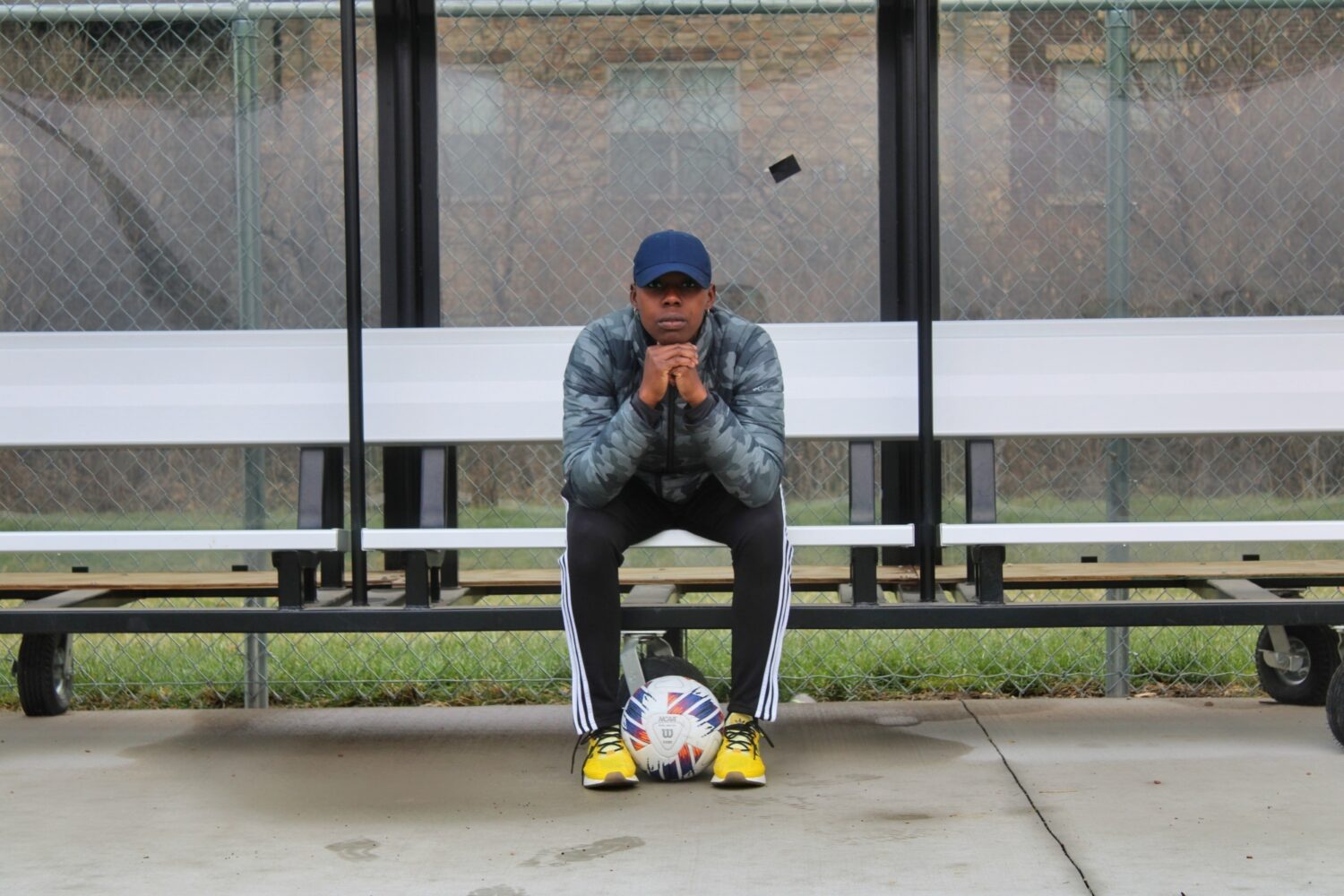

 Our “favorite” or most impactful stories are not always happy to report. This is a story about a small, mostly volunteer-run suburban soccer club, but has bigger things to say about racism and privilege in youth sports and other white-dominated spaces.