
NIL
Magic Johnson explains why Tom Izzo’s job has become so hard

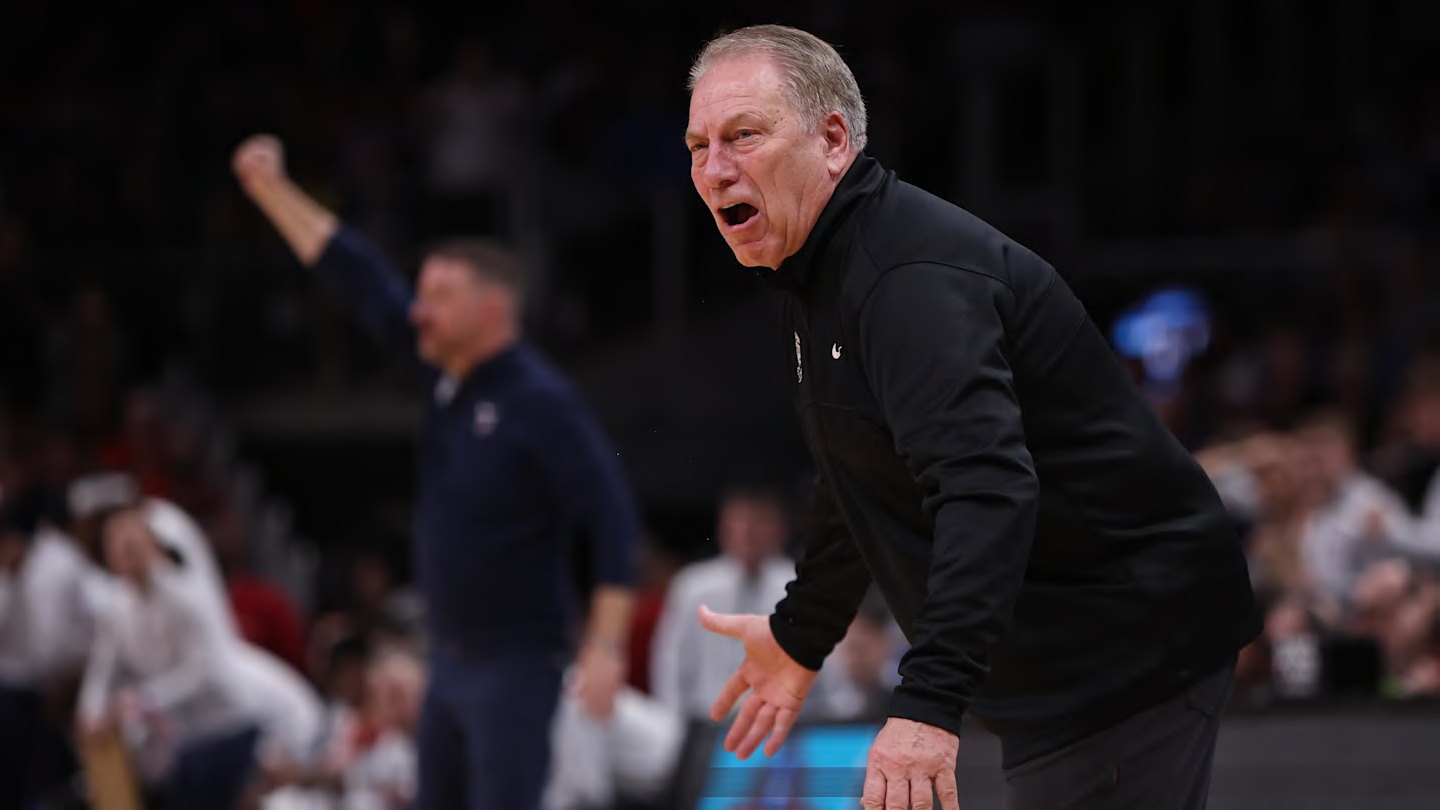
Tom Izzo is one of the most open and opinionated coaches that college basketball has to offer, so when the NIL and transfer portal eras kicked off, he wasn’t afraid to share his thoughts.
The Hall of Fame head coach seemed to have a difficult time adjusting to the new era of college athletics where money was more prevalent (at least no longer behind the scenes) than it had been for the first couple of decades of his career. He has since adapted, working more in the transfer portal to address needs, and using NIL to his advantage in certain situations.
Player retainment has become more difficult, so when Magic Johnson spoke to the media on Saturday during a visit to Michigan for his car show to honor his father, that came up.
Magic spoke candidly to Owen Oszust of WILX 10 about why Izzo’s job has become so hard.
“It’s so hard for him to enjoy it because his heart and soul is in it,” Magic said. “When you recruit a player so hard and then you know that you’re good for him and he’s good for you, and then somebody comes and offers him some crazy amount of money, then he goes, he chooses that school instead of Michigan State. Or, you develop a player, and then two years later, somebody comes and offers him some crazy amount of money, then he decides to leave. I can see how that can tear (Izzo) apart.”
Magic is right. Izzo has been doing things the right way for as long as he’s been coaching and he’s done it by the book, so when money gets thrown around, he’s out of his element.
It’s not like Michigan State doesn’t have the money, but he has to pick and choose his battles. What’s worth throwing money at? If you develop a player for 2-3 years, and then he wants to go somewhere else (Xavier Booker, Tre Holloman), it takes a lot out of you as a coach. He’s now learning that he has to recruit his current players. It never stops.
The Spartan legend went on to say that he hopes Izzo doesn’t lose his passion for the game, but he understands how that could happen.
Hopefully he sticks around to win No. 2.


Saint Peter’s Peacocks (5-5, 2-0 MAAC) at Fairfield Stags (8-5, 0-2 MAAC)
Fairfield, Connecticut; Monday, 7 p.m. EST
BETMGM SPORTSBOOK LINE: Stags -3.5; over/under is 138.5
BOTTOM LINE: Fairfield hosts Saint Peter’s after Braden Sparks scored 26 points in Fairfield’s 121-58 win over the City Tech Beavers.
The Stags have gone 5-1 in home games. Fairfield ranks second in the MAAC with 24.6 defensive rebounds per game led by Brandon Benjamin averaging 5.7.
The Peacocks are 2-0 in MAAC play. Saint Peter’s is fourth in the MAAC with 10.6 offensive rebounds per game led by Jahki Gupton averaging 1.8.
Fairfield averages 8.6 made 3-pointers per game, 1.7 more made shots than the 6.9 per game Saint Peter’s gives up. Saint Peter’s averages 8.7 made 3-pointers per game this season, 1.6 more made shots on average than the 7.1 per game Fairfield gives up.
The Stags and Peacocks meet Monday for the first time in conference play this season.
TOP PERFORMERS: Benjamin is averaging 12.8 points, 9.7 rebounds and 1.6 blocks for the Stags. Sparks is averaging 17.7 points over the last 10 games.
Brent Bland averages 3.4 made 3-pointers per game for the Peacocks, scoring 16.0 points while shooting 40.0% from beyond the arc. TJ Robinson is averaging 12.3 points and 3.2 assists.
___
The Associated Press created this story using technology provided by Data Skrive and data from Sportradar.
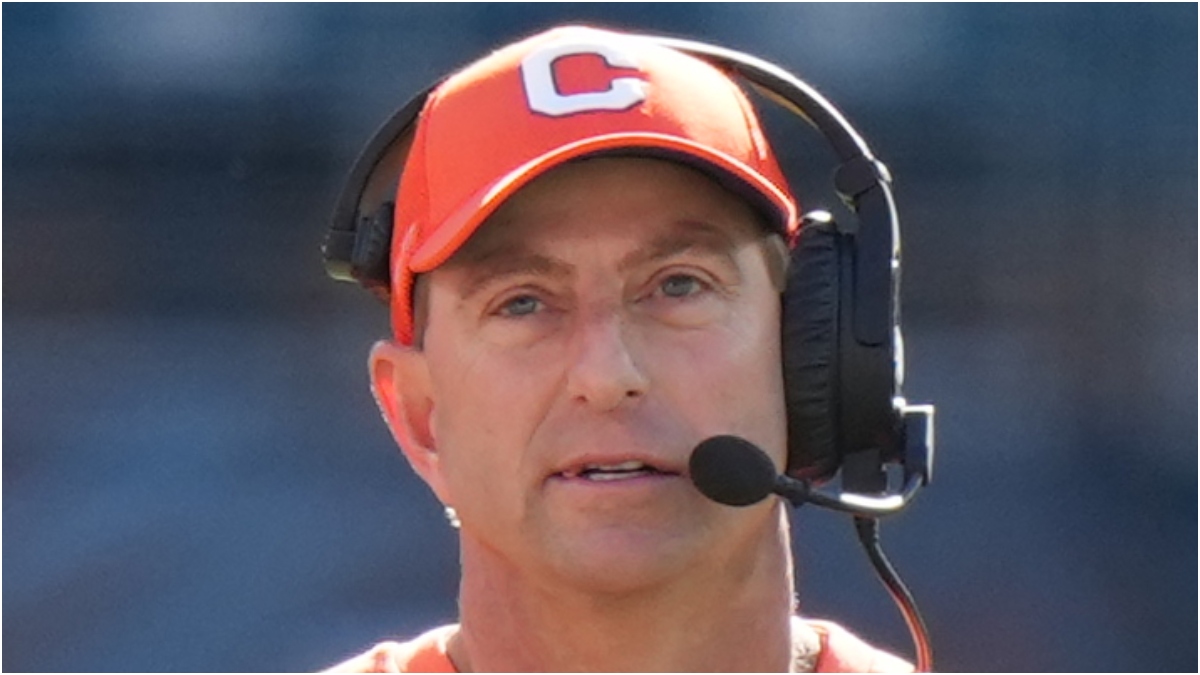
As usual, Pate is spot on here.
The landscape of college football is changing by the day, and the new mantra for any coach looking to stay in the game is “adapt or die.”
One coach that has been dragged kicking and screaming into the NIL and transfer portal era of college sports is none other than Clemson Tigers head coach Dabo Swinney.
And this weekend’s Pinstripe Bowl (aka The Disappointment Bowl) may have been the metaphorical death blow to Dabo’s reign as one of college football’s elites.
I’ve been on the “Dabo is done” train for a hot minute now, and one media personality who is with me (as he usually is) is Josh Pate.
Pate put it as bluntly as he could on the latest episode of his podcast, Josh Pate’s College Football Show.
“This was going to be the year that if the Dabo model still worked, it would be proven,” Pate explained, “and they went 7–6.”
This was about as disappointing a season for a College Football Playoff contender outside of State College, PA, but according to Pate, things could get a lot worse for Clemson before they get better.
“On paper, next year should be worse for Clemson.”
Brutal.
The “Dabo Model” Pate is referring to is the complete and utter dismissal of the transfer portal and reluctance to lean into NIL.
As I’ve said, an over reliance on the transfer portal can be just as damning as not using it at all (see Florida State), but there needs to be a healthy influx of talent from the portal if you want your program to survive in this day and age.
The truth is, even with Clemson’s relative success in the recruiting ranks, that well was starting to dry up, and there was no other source of talent being infused into the team.
Unfortunately for Tigers fans, Dabo isn’t willing to make the changes or adaptations to grow and evolve into a winning coach in 2025, a fact Pate knows all too well.
“Any sizable improvement at this point would require significant change, and I don’t expect Dabo Swinney to change.
“If you don’t adapt, you will die as a playoff contender,” Pate said, echoing my earlier sentiment.
Will Clemson force Dabo’s hand or let him ride off into the sunset as he dies on the hills of his old principles?
Time will tell, but Clemson fans have to be sick seeing the same man who built their program to such dizzying heights less than a decade ago be the very source of their downfall.
A cruel irony for a fanbase which deserves better.

“Jay Boulware brings years of successful experience as a highly respected coach and recruiter,” Rodriguez said. “His knowledge of the Big 12 Conference and ability to recruit high-level players and develop running backs make him a great addition to our program. I look forward to having him join our staff here at WVU.”
Boulware, a 29-year coaching veteran, comes to West Virginia after serving as the running backs coach and special teams coordinator at Kentucky for the past three years. He has coached running backs, tight ends and special teams at numerous Power 4 programs, has coached in 17 bowl games, including several BCS and CFP games and won a national championship. Programs that he worked for won seven conference championships, had numerous indviiduals named all-conference, All-American, national individual finalists and NFL Draft choices.
His resume includes working at Texas (2020-21, 1996-97), Oklahoma (2013-20), Auburn (2009-12), Iowa State (2007-09), Utah (2005-07), Stanford (2004-05) and Arizona (2000-04).
He also spent time assisting with the running backs with the Pittsburgh Steelers and did fellowships with the New Orleans Saints and the San Francisco 49ers. His first full-time coaching position was at Northern Illinois (1997-2000).
In 2023, Kentucky boasted a back who finished with 1,129 rushing yards and 14 touchdowns, in 2024 – two running backs had almost 600 yards each and in 2025, his top running back finished with more than 700 yards and 12 touchdowns.
This past season, the Wildcats finished No. 13 nationally in kickoff return defense. In 2024, UK was No. 6 nationally in punt return defense, No. 15 in net punting and No. 25 in kickoff return defense. In 2023, the Wildcats ranked No. 2 nationally in kickoff return yards, averaging 30.13 yards per return and scored a nation-leading three touchdowns.
At Texas, he helped the No. 19 Longhorns finish 7-3 overall and capture the Alamo Bowl title in 2020.
He spent seven years at Oklahoma as the special teams coordinator, five seasons as the running backs coach and two years with the tight ends. The Sooners’ special teams produced 10 touchdowns, a safety and three returned
two-point PATs.
Boulware guided six of his running backs at OU to 1,000-yard seasons and five of his running backs earned first or second-team All-Big 12 honors with three players drafted in the NFL.
Before Oklahoma, he spent four seasons (2009-12) at Auburn as the tight ends coach and special teams coordinator in 2008. Two seasons later, the Tigers posted a 14-0 record capped by a 22-19 win over Oregon in the BCS Championship Game.
Boulware spent two seasons (2007-08) at Iowa State coaching running backs and special teams under Gene Chizik. The Cyclones ranked No. 12 nationally in kickoff returns in 2008, set an NCAA FBS individual record with 319 kickoff return yards against Oklahoma State. ISU was also second in the Big 12 Conference in punting that year.
Prior to Iowa State, Boulware worked for two seasons as tight ends coach/co-special teams coordinator at Utah under coach Kyle Whittingham. While there, his special teams units were among the Mountain West Conference leaders, including a kickoff return unit that led the MWC in 2006.
Boulware spent three seasons at Arizona under coach John Mackovic as tight ends coach (2001), running backs coach (2002) and running backs coach/special teams coordinator (2003). During his tenure with the Wildcats, he mentored running back Mike Bell who finished his collegiate career with 3,163 rushing yards, the third-highest total in school history, and was named second-team All-Pac 10 as a sophomore.
An all-state selection at Nimitz High School in Irving, Texas, Boulware played on the offensive and defensive lines. He went on to play at Texas as an offensive lineman in 1991. After redshirting his first year and seeing action as a reserve in 1992, he was contending for a starting position before the 1993 season but was forced to end his career after being diagnosed with a health condition.
He began his coaching career at Texas, first as a student coach (1994-95) and then as a graduate assistant (1996). He helped UT win at least a share of three conference championships and made three bowl appearances in all three of his seasons working with the staff.
In 2024, he was inducted into the Irving ISD Athletic Hall of Fame.
Boulware graduated from Texas in 1996 with a degree in economics. He has one daughter, Jordin.
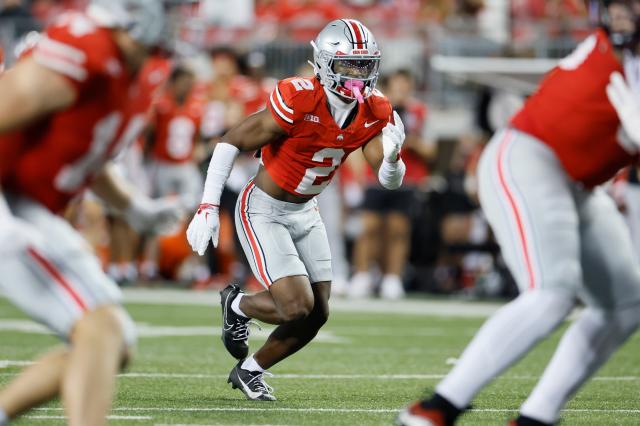
Something to watch in the College Football Playoff quarterfinals will be how sharp the teams that got first-round byes are early in their games.
No. 2 seed Ohio State will have had 24 days between games and No. 1 Indiana, No. 3 Georgia and No. 4 Texas Tech each will have had 25-day layoffs.
Last year was the first with a 12-team field, and the quarterfinals were nothing short of a disaster for the top four seeds, with extended time off the common denominator: No. 1 Oregon, No. 2 Georgia, No. 3 Boise State and No. 4 Arizona State all lost and were outscored by a total of 81-13 in the first halves. They had 14 punts, three turnovers on downs, three fumbles, two missed field goals, two field goals and two touchdowns on their first combined 26 drives.
No team struggled more than Oregon, which was unbeaten before its 41-21 loss to eventual national champion Ohio State at the Rose Bowl. The Ducks were down 34-0 in the second quarter, punting on five of their first six possessions (including four 3-and-outs) and turning the ball over on downs on the other.
The picks, with seedings and lines from BetMGM Sportsbook:
This game sets up as a showdown between two top-10 defenses at the Cotton Bowl. Ohio State scored just 10 points in its loss to Indiana in the Big Ten championship game and Miami managed just 10 in its CFP first-round win over Texas A&M.
With points at a premium, the Buckeyes will need to do a better job in the red zone. They’ve come away with touchdowns on just two of their last seven trips inside the 20-yard line. Julian Sayin also must get the ball out quickly against a front seven that sacked the Aggies’ Marcel Reed seven times. The Buckeyes’ offensive line had allowed just six sacks through 12 games before allowing five against Indiana.
Miami, which will be going against a defense allowing 213 yards and 8.2 points per game to lead the nation, needs another big game from RB Mark Fletcher and continue to find creative ways to get do-it-all freshman star Malachi Toney involved.
Pick: Ohio State 17-10.
Oregon seemed to lose interest after getting out to a 34-6 lead in a 51-34 first-round win over James Madison, and Dan Lanning and his staff were beside themselves. The Ducks should have no problem staying focused in the Orange Bowl.
Texas Tech will be their biggest challenge since Indiana went into Eugene and left with a 10-point win in October. Oregon’s Dante Moore could be the first quarterback taken in the NFL draft, and he will have ample opportunity to showcase his skills against a defense that has two AP first-team All-Americans in David Bailey and Jacob Rodriguez, a second-teamer in A.J. Holmes and a third-teamer in Lee Hunter.
The Red Raiders need to keep injury-prone QB Behren Morton upright and, like Ohio State, they need to get touchdowns instead of field goals when they get inside the red zone.
Pick: Texas Tech 27-24.
It’s the SEC vs. the Big Ten and the first Alabama-Indiana meeting ever. Old money vs. new money.
The Hoosiers’ rise under Curt Cignetti is the best storyline in college football in a long time, and the idyllic Rose Bowl setting would be just the place for it to continue with Fernando Mendoza playing his first game since winning the Heisman Trophy.
Alabama is more than capable of spoiling everything, but it can’t afford another start like it had against Oklahoma. The Crimson Tide trailed 17-0 and was out-yarded 118-12 in the first quarter before matching the largest comeback in CFP history and winning 34-24.
Indiana’s players took notice of the Tide’s perseverance and warned no lead would be safe. Cignetti will have his team playing with the pedal to the metal.
Pick: Indiana 28-17.
Mississippi beat Tulane 41-10 in the first round for Pete Golding’s initial victory as successor to Lane Kiffin, and now the competition ramps up at the Sugar Bowl.
The Bulldogs won the regular-season meeting 43-35 at home, part of their current nine-game winning streak and Mississippi’s only loss. Gunner Stockton’s two touchdown passes in the fourth quarter wiped out a 35-26 deficit; Trinidad Chambliss was just 1-of-10 passing for 1 yard over the final 15 minutes.
The Rebels will need a more even performance from Chambliss, who was terrific against Tulane, and they have to hope RB Kewan Lacy comes back after hurting a shoulder against the Green Wave.
Georgia played its best late in the season, and it will be interesting to see how much, if any, the layoff affects the Bulldogs.
Pick: Georgia 31-21.
First-round CFP games: Straight-up — 2-2; Against spread — 0-4.
Season straight up — 194-61; Against spread — 123-131-1.
____
Get poll alerts and updates on the AP Top 25 throughout the season. Sign up here. AP college football: https://apnews.com/hub/ap-top-25-college-football-poll and https://apnews.com/hub/college-football
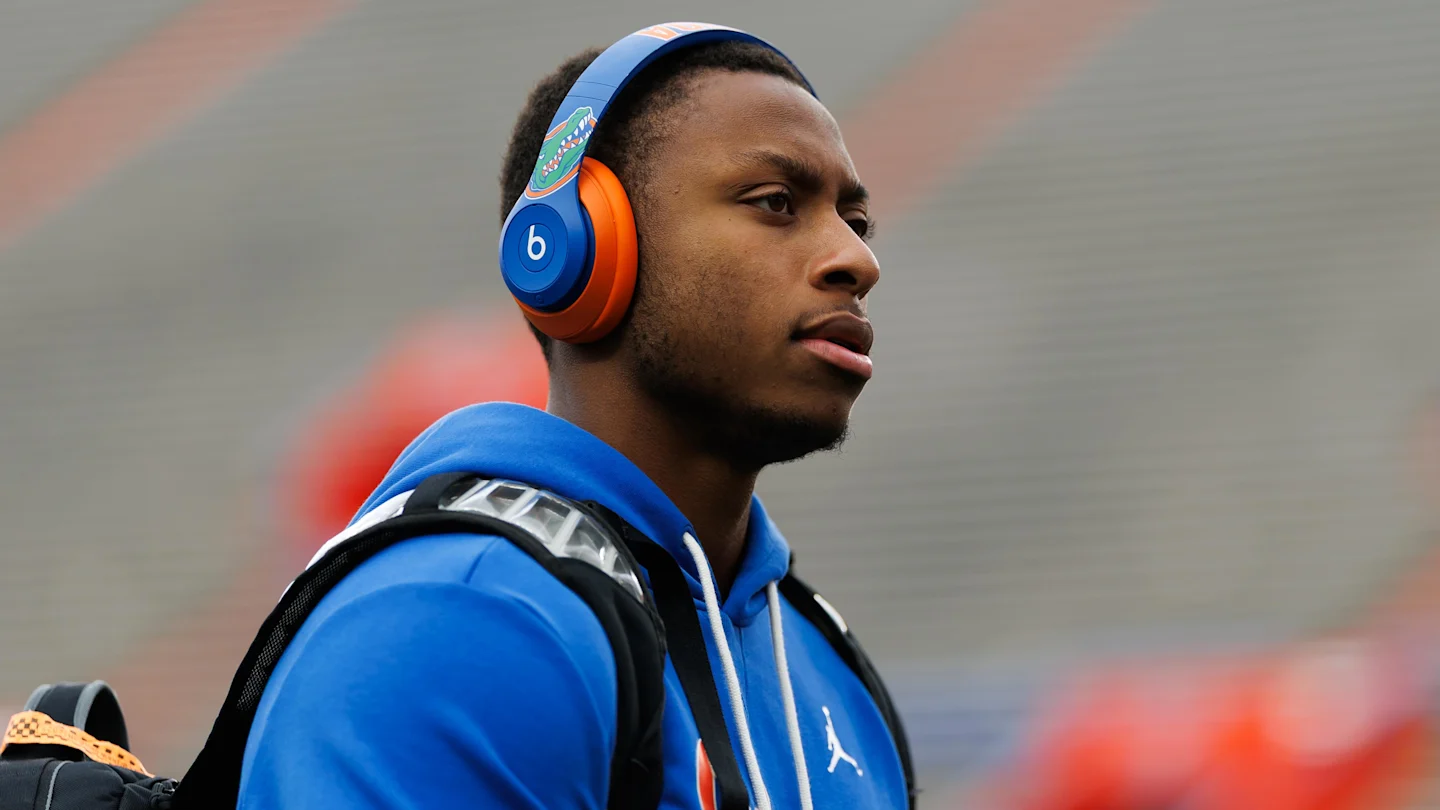
The NCAA has adjusted its transfer portal window following the 2025 college football season, creating just one transfer period compared to multiple windows in previous years. The next transfer portal window will open on Friday, January 2, 2026, and stay open until January 16.
Although the portal has not yet opened, players have been declaring their intentions to enter the portal for several weeks. Among those who have already made their intentions to transfer public are several players who were rated five stars, the highest recruiting rating possible, coming out of high school. Here are the former five-star prospects who are expected to enter the transfer portal when it opens on Friday.
DJ Lagway, QB, Florida

Expectations from the Florida faithful were high when DJ Lagway was named the starter entering the Gators’ 2025 season. Coming out of Willis High School in Texas, Lagway threw for 8,392 yards and 100 touchdowns in his prep career, earning Gatorade National Player of the Year honors as a senior. Ranked as the No. 2 overall prospect in the country by On3 and No. 3 by 247Sports, Lagway spent his true freshman season learning under veteran starter Graham Mertz before assuming the reins to the offense as a sophomore.
The 2025 season got off to a rocky start for Florida, however, with the Gators losing three of their first four games and head coach Billy Napier losing his job midway through the regular season. The issues that plagued Florida during its 4-8 campaign this past season ran deeper than just quarterback play, but Lagway’s performance did not meet expectations. The 6-foot-3, 247-pound passer threw 16 touchdowns against 14 interceptions while starting all 12 games
Dylan Raiola, QB, Nebraska

Among the biggest names entering the Transfer Portal this cycle is Nebraska sophomore quarterback Dylan Raiola. The son of former NFL offensive lineman Dominic Raiola, the younger Raiola was a five-star prospect out of Buford High School in Georgia, ranking No. 2 overall in the 2024 recruiting class according to Rivals and No. 7 overall according to 247Sports.
Raiola had an interesting recruitment, originally committing to his home-state Georgia Bulldogs before changing his commitment to his father’s alma mater, Nebraska, just before National Signing Day in December, 2023. Raiola would go on to start as a true freshman for the Cornhuskers, and has thrown for 4,819 yards, 31 touchdowns and 17 interceptions during his two seasons in Lincoln. His sophomore season came to an end with a broken leg suffered during Nebraska’s Nov. 1 game against USC. News of his plans to enter the Transfer Portal broke in mid-December, not long after Nebraska head coach Matt Rhule fired his uncle, Donovan Raiola, as the Cornhusker’s offensive line coach.
CJ Baxter, RB, Texas

One of four running backs from the Texas Longhorns’ 2025 roster to declare their intentions to enter the transfer portal, CJ Baxter Jr. was the most highly-touted of the group coming out of high school. Rated five-stars and ranked among the Top 32 prospects in the country by ON3, 247Sports and Rivals, Baxter committed to the Longhorns just before the start of his senior year of high school after a recruitment that drew interest from schools across the country.
The 6-foot-1, 227-pound Baxter flashed the potential early in his Texas career that earned him five stars as a recruiting prospect. He started six games his freshman season, rushing for 659 yards and five touchdowns en route to Big 12 honorable mention all-conference honors. A pre-season injury derailed Baxter’s sophomore campaign, however, and by the start of the 2025 season he found himself fighting for carries in a crowded Longhorn backfield, finishing the season with just 196 rushing yards and just one touchdown.
Cam Coleman, WR, Auburn

After announcing his intentions on Monday, former five-star wide receiver prospect Cam Coleman immediately became one of the biggest names expected to enter the Transfer Portal this week. In two seasons at Auburn, the 6-foot-3, 201-pound Coleman racked up 93 receptions for 1,306 yards and 13 touchdowns, leading the Tigers in receiving yards and receiving touchdowns this past season.
Coleman’s collegiate productivity was widely predicted coming out of high school, where he was ranked five-stars by all the major recruiting services, with Rivals (7th), 247Sports (5th) and On3 (3rd) all including the Phenix City, Ala., product in the Top 10 of the 2024 recruiting rankings. He committed to Auburn in December of his senior year after previously having been committed to Texas A&M. Auburn changed head coaches this year, firing Hugh Freeze in November and bringing in Alex Golesh right after the regular season concluded.
Tunmise Adeleye, DL, UNLV

The oldest player on this list, Adeleye was part of the same 2021 recruiting class that produced current NFL stars like Emeka Egbuka and Caleb Williams. Ranked as the No. 25 overall player and No. 3 strongside defensive end in that class by Rivals, Adeleye would go on to sign with Texas A&M, helping the Aggies to a Top 10 recruiting class ranking that cycle.
Adeleye would not stay long in College Station, however. In fact, the 6-foot-4, 275-pound prospect is now looking for his fifth collegiate home after spending time at Michigan State, Texas State and, most recently, UNLV thus far in his college career. This past season with the Rebels Adeleye earned honorable mention all-Mountain West honors while collecting 25 total tackles, including two sacks.
SAN ANGELO, TX — In the high-stakes world of college football, where talent is the ultimate currency, the introduction of Name, Image, and Likeness (NIL) deals in 2021 has transformed recruiting and roster-building into a financial arms race.
As the 2025 season winds down with the College Football Playoff (CFP) quarterfinals looming, one question echoes across the Lone Star State: Can pouring millions into NIL truly buy a national championship?
Texas (the entire state, not the university) provides a compelling case study, with four powerhouse programs—the University of Texas Longhorns (UT), Texas A&M Aggies (A&M), Texas Tech Red Raiders (TTU), and Southern Methodist University Mustangs (SMU)—each wielding significant NIL war chests but yielding varied results. From booster-fueled spending sprees to community-driven collectives, their approaches highlight the promise and pitfalls of this pay-to-play era.
As of today, the Texas Tech Red Raiders remain in contention for the national title, set to face the Oregon Ducks in the Orange Bowl CFB quarterfinals at 11 a.m. Central Time on January 1.
NIL is a Billion-Dollar Game Changer
Since the NCAA greenlit NIL, the market has exploded, projected to hit $1.7 billion for the 2024-2025 season, with over $1.1 billion funneled into football alone. Proponents argue it levels the playing field by compensating athletes fairly, while critics decry it as a system where deep-pocketed boosters “buy” rosters, eroding the amateur spirit.
Adding fuel to this evolution is NIL revenue sharing, stemming from the landmark House v. NCAA settlement approved in June 2025. Effective July 1, 2025, this system allows Division I schools to directly distribute a portion of their athletic department revenues—up to a cap of $20.5 million for the 2025-26 academic year—to student-athletes across sports. This cap is expected to increase by 4% annually, with potential exceptions, and is designed to compensate athletes more like professionals while maintaining some regulatory oversight through the new College Sports Commission.
Unlike traditional NIL deals, which involve third-party endorsements and sponsorships from brands or collectives, revenue sharing comes straight from school funds (e.g., ticket sales, media rights, and sponsorships), functioning more like a salary pool.
Schools opting in (most Power Four programs have) must report third-party NIL payments to ensure transparency, but the system coexists with NIL, allowing total athlete compensation to exceed the cap through combined efforts.
This has led to “payrolls” where revenue sharing covers base pay, and NIL handles bonuses or incentives, though critics argue it exacerbates inequities between resource-rich and smaller programs. In Texas, oil money and alumni networks have propelled programs to the forefront, yet success isn’t solely about the dollar amount—it’s about strategy, coaching, and execution.
Comparing the NIL Approach of Four Texas Teams
Texas’s college football landscape illustrates diverse strategies in blending revenue sharing with NIL. All four programs have opted into the settlement, leveraging the $20.5 million cap to boost recruiting and retention amid the expanded CFP.Team
This table compares the NIL approach of Texas athletic programs (it’s responsive, so use your mouse or finger to scroll right and left)
| Team | Revenue Sharing Cap Utilization | Key Approach Details | Integration with NIL | 2025 Impact Highlights |
|---|---|---|---|---|
| UT Longhorns | Full $20.5M, part of $35-40M total football payroll | Phasing out NIL collectives in favor of direct revenue sharing; focuses on structured contracts for efficiency. | Combined with Longhorn Sports Agency (launched June 2025) for brand deals and content creation; alumni/tech boosters fund extras. | Enabled 10-2 record and CFP berth; high-profile deals like Arch Manning’s $3.5M+ NIL boosted talent influx, though playoff exit showed limits. |
| A&M Aggies | Full $20.5M, with min. $2.5M to women’s sports; spread across six programs | Community-driven distribution tied to performance/academics; uses Teamworks for streamlined payments. | $39.1M in NIL support FY24-25 via Aggie NIL and Playfly; focuses on guaranteed contracts and retention. | Fueled 11-2 season and playoff spot; tripled NIL from prior year, but late losses highlighted distribution inefficiencies. |
| TTU Red Raiders | Full $20.5M integrated into $55M planned NIL + sharing for 2026 | Booster-led (e.g., Cody Campbell’s influence); one-year contracts for 97 football players; new corporate unit for growth. | Merged Matador Club into Red Raider Club; smashed NIL records with $28M football spend in 2025. | Powered 12-1 record, Big 12 title, and CFP quarterfinal; rapid escalation transformed program, though donor dependency raises sustainability questions. |
| SMU Mustangs | Full $20.5M via Student-Athlete Benefit Fund | Integrated revenue/NIL/brand unit; focuses on holistic athlete support and corporate partnerships. | Boulevard Collective and Mustang Partners (launched Dec. 2025) for deals; Scout platform streamlines earnings and education. | Boosted ACC debut with 10-2 record, playoff berth; historic revenue jumps (157% football tickets), portal success, but chaos concerns from NIL/portal dynamics. |
The Longhorns’ Corporate NIL Powerhouse
The Longhorns, now in their second SEC season, boast what many consider the nation’s top NIL budget: an estimated $35-40 million dedicated to their football roster for 2025.
Through the Texas One Fund and a partnership with Learfield’s Longhorn Sports Agency (launched in June 2025), UT has adopted a professionalized model, emphasizing brand-building, financial literacy, and high-profile endorsements. Star quarterback Arch Manning’s deals alone reportedly exceed $3.5 million annually, drawing transfers and blue-chip recruits.
This investment paid dividends with a 10-2 regular season, an SEC Championship Game appearance, and a CFP berth. However, playoff shortcomings—including a first-round exit—raise questions about ROI. A high-ranking UT source disputed the $35-40 million figure earlier this year, calling it “irresponsible reporting,” but insiders maintain it’s the benchmark for SEC elites.
“Texas is built for the long haul,” said one analyst. “NIL keeps them competitive, but championships require more than money—ask the Yankees in baseball.”
The Aggies’ “12th Man” Community Approach to NIL
About 100 miles east of Austin, in College Station, the Aggies have taken a more diversified tack via Texas Aggies United, amassing $51.4 million in total NIL revenue from July 2024 to June 2025—nearly tripling the previous year’s haul. An overwhelming 96% ($49-50 million) flowed to men’s sports, with football claiming the lion’s share through guaranteed contracts tied to performance and academics.
This “retain at all costs” philosophy, bolstered by alumni and corporate sponsors, has secured talents like quarterback Marcel Reed and wide receiver Mario Craver.
The result? An 11-2 campaign, a playoff spot, and early-season dominance, only to falter with late losses to rivals Texas and in the CFP first round.
Critics point to gender disparities (minimal funding for women’s sports) and question if the broad distribution dilutes football’s edge in the brutal SEC. Still, A&M’s model emphasizes sustainability, positioning them as a top-5 NIL spender nationally.
“It’s not just about the check—it’s about building a culture,” an Aggies booster noted, echoing the program’s “12th Man” ethos.
All of the Oil Money Funding Texas Tech’s NIL Program
In Lubbock, the Red Raiders represent the underdog story of NIL efficiency. Led by billionaire alum Cody Campbell’s $25 million donation to The Matador Club, TTU shelled out over $28 million on its football roster in 2025, with plans for $55 million in combined NIL and revenue sharing next year. This aggressive, booster-centric approach—often dubbed “buying the roster”—focused on portal acquisitions and defensive reinforcements, transforming a mid-tier Big 12 team into contenders.
The payoff was undeniable: a 12-1 record, Big 12 Championship dominance (34-7 over BYU), and a CFP quarterfinal berth against Oregon in the Orange Bowl on January 1. While detractors label it “money over culture” and warn of donor dependency, Tech’s rise suggests targeted spending can yield outsized results in a less stacked conference.
“We’ve proven NIL can accelerate success,” said head coach Joey McGuire post-title. “But it’s the relationships that seal it.”
With the Orange Bowl looming, TTU could prove NIL’s championship potential taking on another NIL powerhouse for a slot in the National Championships semi-finals in January.
Oregon Ducks: The Nike-Backed Contender
As Texas Tech prepares to clash with the Oregon Ducks in CFB Quarterfinal game at the Orange Bowl, it’s worth examining Oregon’s robust NIL framework, which has positioned them as a formidable CFP opponent. Backed by Nike co-founder Phil Knight, Oregon’s primary NIL collective, Division Street, was established in 2021 and has evolved into one of college football’s most efficient operations.
This booster-led model emphasizes innovative marketing and brand partnerships, leveraging Knight’s influence and Nike’s resources to attract top talent. In 2025, Oregon ranked fourth nationally in NIL spending for roster building, per an On3 survey of industry stakeholders, trailing only Texas, Texas Tech, and Ohio State.
Oregon has fully embraced revenue sharing under the House settlement, distributing the maximum $20.5 million cap while integrating third-party NIL deals to exceed it, potentially reaching $30 million or more in total athlete compensation.
Enhancements include adding a NIL partnerships manager and content producer in October 2025, partnering with Learfield Impact for technology and marketing support.
Key players like quarterback Dante Moore boast NIL valuations over $2.3 million, reflecting the program’s appeal.
This strategy has fueled Oregon’s undefeated regular season and top seeding in the CFP, but as offensive coordinator Will Stein noted, misconceptions about their NIL dominance overlook the program’s culture and coaching.
Facing TTU’s NIL-fueled surge, the Ducks’ approach tests whether corporate-backed innovation can outpace oil money in pursuit of a title.
SMU Mustangs: The Rising Contender Fueled by NIL
NIL has been a game-changer for the SMU Mustangs, particularly in their 2025 transition to the ACC after a strong Group of Five run. The program’s aggressive adoption—via the Boulevard Collective and new Mustang Partners initiative—has driven record revenues, with football season tickets doubling and overall income surging 157% in their inaugural ACC year. This financial boost enabled high-profile portal acquisitions and retention, contributing to a 10-2 record, ACC contention, and a CFP berth—their first as a Power Four member. Partnerships like Scout NIL provide tools for earnings management and life skills, empowering athletes beyond the field. However, NIL’s double-edged sword has sparked debates: While it fueled opportunity and structured pay via revenue sharing, it also introduced “chaos” through the transfer portal, with rapid roster turnover challenging team cohesion. Overall, NIL has elevated SMU from mid-major to contender, proving smaller programs can compete with strategic spending in the revenue-sharing era.
Does the Money Translate to Championships?
Comparing the quartet: UT’s $35-40 million bought SEC relevance but no hardware; A&M’s $51.4 million (heavily football-skewed) delivered consistency but exposed vulnerabilities; TTU’s $28 million-plus propelled them furthest, claiming a conference crown and deeper playoff run; SMU’s strategic NIL surge secured a playoff spot in their ACC debut. Halfway through 2025, fans throughout the state of Texas got their “money’s worth” with four in-state teams vying for glory, but NIL’s role sparks debate. As one Reddit user pondered in a hypothetical DIII scenario, “How much NIL would it take to build a champion?”—the answer seems: Enough to attract talent, but not without coaching alchemy.
NIL made college football mirror pro sports: Money helps, but doesn’t guarantee titles—look at MLB or the NBA. With the state of Texas’ new NIL rules looming for 2026 and the transfer portal opening January 2, the experiment continues. For now, NIL can buy contention, but championships? We’ll gain another clue on New Year’s Day at the #4 Texas Tech vs. #5 Oregon semi-final in the Orange Bowl at 11 a.m.

Saint Peter’s visits Fairfield after Sparks’ 26-point game

Spencer McLachlin Named Head Coach at UC San Diego

Defending Big West Regular Season And National Champion Long Beach State Chosen As 2026 Preseason Coaches’ Poll Favorite

Marcus Johnson’s 40 points lead Garfield Heights win; Lutheran East avenges loss to Warrensville at NEO Youth Elite Christmas showcase

NSU adds goalkeeper transfer – Northwestern State University Athletics

DeLuca, Padroff, Collins: Recent Death Notices From Brookfield

PERFECT GAME EXPANDS PRESENCE IN PACIFIC RIM, STRENGTHENING YOUTH BASEBALL DEVELOPMENT |

University of Nevada, Las Vegas

Josh Pate: ‘The Dabo Swinney Model Doesn’t Work Anymore’

Lauren Watson Becomes First Player in USD Beach Volleyball History

MWDRS Announces Schedule Adjustment, Added Payouts at US 131

Youth Soccer Coach’s Trademark Claim Against Nike Heads to 2026 Hearing

Spencer McLachlin named new women’s volleyball head coach – The UCSD Guardian

Hendrick Motorsports spending offseason fine-tuning pit crews, choreography

Volleyball Inks Four Highly Touted Transfers to 2026 Roster

SoundGear Named Entitlement Sponsor of Spears CARS Tour Southwest Opener

Donny Schatz finds new home for 2026, inks full-time deal with CJB Motorsports – InForum

Black Bear Revises Recording Policies After Rulebook Language Surfaces via Lever

Bowl Projections: ESPN predicts 12-team College Football Playoff bracket, full bowl slate after Week 14

Robert “Bobby” Lewis Hardin, 56

David Blitzer, Harris Blitzer Sports & Entertainment

Men’s and Women’s Track and Field Release 2026 Indoor Schedule with Opener Slated for December 6 at Home

How Donald Trump became FIFA’s ‘soccer president’ long before World Cup draw

Michael Jordan’s fight against NASCAR heads to court, could shake up motorsports
Wisconsin volleyball sweeps Minnesota with ease in ranked rivalry win

Rick Ware Racing switching to Chevrolet for 2026

DeSantis Talks College Football, Calls for Reforms to NIL and Transfer Portal · The Floridian
Elliot and Thuotte Highlight Men’s Indoor Track and Field Season Opener

JR Motorsports Confirms Death Of NASCAR Veteran Michael Annett At Age 39

#11 Volleyball Practices, Then Meets Media Prior to #2 Kentucky Match






-
 Motorsports3 weeks ago
SoundGear Named Entitlement Sponsor of Spears CARS Tour Southwest Opener
-
 NIL3 weeks ago
DeSantis Talks College Football, Calls for Reforms to NIL and Transfer Portal · The Floridian
-
 Sports2 weeks ago
#11 Volleyball Practices, Then Meets Media Prior to #2 Kentucky Match
-
 Motorsports2 weeks ago
Nascar legal saga ends as 23XI, Front Row secure settlement
-
 Motorsports2 weeks ago
Sunoco to sponsor No. 8 Ganassi Honda IndyCar in multi-year deal
-

 Motorsports3 weeks ago
Accelerating Inclusion: Breaking Barriers in Motorsport
-
 Rec Sports2 weeks ago
WNBA’s Caitlin Clark, Angel Reese and Paige Bueckers in NC, making debut for national team at USA camp at Duke
-
 Sports2 weeks ago
Maine wraps up Fall Semester with a win in Black Bear Invitational
-
 NIL3 weeks ago
Ed Orgeron: Paying players via NIL would only require a ‘minor adjustment’
-
Motorsports3 weeks ago
NASCAR, 23XI Racing, Front Row Motorsports announce settlement of US monopoly suit | MLex