
NIL
Making 7 rounds of selections for the Jaguars, with some big surprises



SPORTS
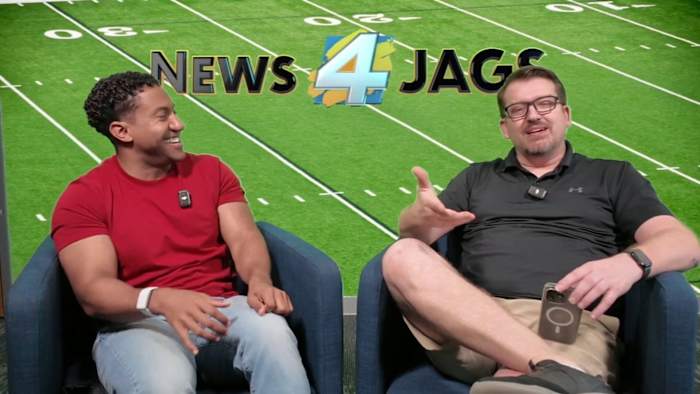
It’s mock draft season, and Justin Barney and Jamal St. Cyr are making the picks for the Jaguars in all seven rounds. Will it be offense or defense at pick No. 5? Will it be a player like Mason Graham or a player who drops, like a Travis Hunter? We make all the selections in this episode of the News4JAGs podcast.










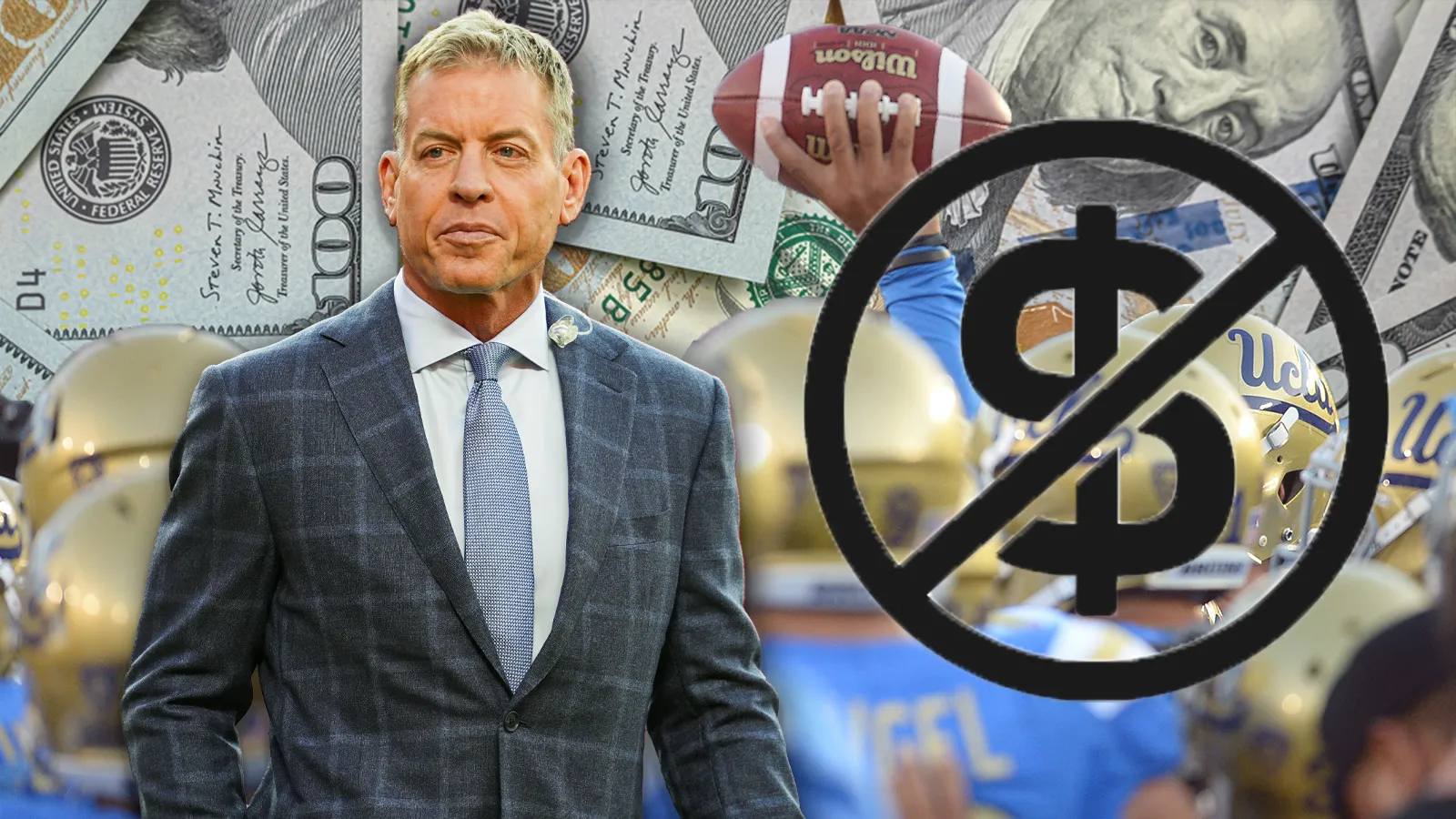
Troy Aikman will never give another dollar to UCLA for NIL. He gave money to a college football player who left the program after one season.
The Hall of Fame quarterback never met the player. The player never said thank you.
This is the reality of college football in 2025. A severe lack of regulation allows players to come and go as they please without any legitimate ties to one specific program or the financial compensation they received from that program.
Aikman, a three-time Super Bowl champion, played two years of college football at Oklahoma and two years of college football at UCLA. He himself is a former transfer. He is not against transfers.
However, the current system is very different from the 1980s.
Troy Aikman was forced to sit out the entire 1986 season because of the transfer rules from that era. Nowadays players can transfer willy nilly through the portal whenever they so choose, as many times as they want. They are (in most circumstances) immediately eligible to play that next season at their new school. And they are often getting paid along the way.
It was the correct decision to allow college athletes to profit from their Names, Images and Likenesses. Unfortunately, the decision to allow NIL opened the floodgates for unchecked financial inducements.
Recruiting used to be (more) about culture fit, facilities, playing time, coaching staff, etc. Now it’s (even more) about money.
Ed Orgeron recently said it best. The bag men walk through the front door instead of the back.
Everyone knows the SEC was paying players before paying players was legal
Coach O with an incredible response on @BussinWTB 😂😂 pic.twitter.com/PvHvQK3Bdp
— Will Compton (@_willcompton) December 9, 2025
Money was always involved to some extend but the numbers are inflated by multiple zeros. And it’s no longer just the top recruits.
Many of the top players in college football are making more than $1 million. Most Big Ten/SEC starters are making at least a few thousand. At least.
But if they do not like their current situation (or paycheck), they can just hit the portal in search of more money. There is nothing to stop them. They rarely have to return the money to the school at which they started.
Some schools are starting to fight back against this broken system. For example, Georgia recently filed a $390,000 lawsuit against Damon Wilson. Wilson transferred to Missouri. The Bulldogs want their money back.
Troy Aikman donated NIL money to UCLA.
This kind of lawsuit from Georgia is a newer thing. It is not the norm, yet.
Just ask Troy Aikman!
He recently spoke about his experience with Name, Image and Likeness during an appearance on the Sports Media podcast with Richard Deitsch. He will never donate money to an NIL fund again.
Aikman, a multimillionaire, gave money to the Bruins. It sounds like his donation was earmarked for a specific player.
The specific player said thank you for the money he received from Aikman. And then he left the program after one season. (For Aikman to be a quarterback makes me think it was Dante Moore but he wouldn’t say!)
“I gave money to a kid, I won’t mention who. I’ve done it one time at UCLA, never met the young man. He was there a year, he left after the year. I wrote a sizable check, and he went to another school. I didn’t even get so much as a thank you note. So, it’s one of those deals, to where I’m done with NIL. I want to see UCLA be successful, but I’m done with it.”
Aikman is all for player empowerment. As a former transfer himself, he sees the value of the portal and the opportunity to change your current situation if you are an athlete who is in need of a fresh start. Fine. It is the monetary aspect that he hopes will soon be fixed.
“There’s gotta be some leadership at the very top that kind of cleans all of this up,” Aikman said. “Starting with players that accept money. There’s gotta be some accountability and responsibility on their behalf, to have to stick to a program.”
Troy Aikman will not give another dollar for NIL until that happens. Sorry, Bruins.
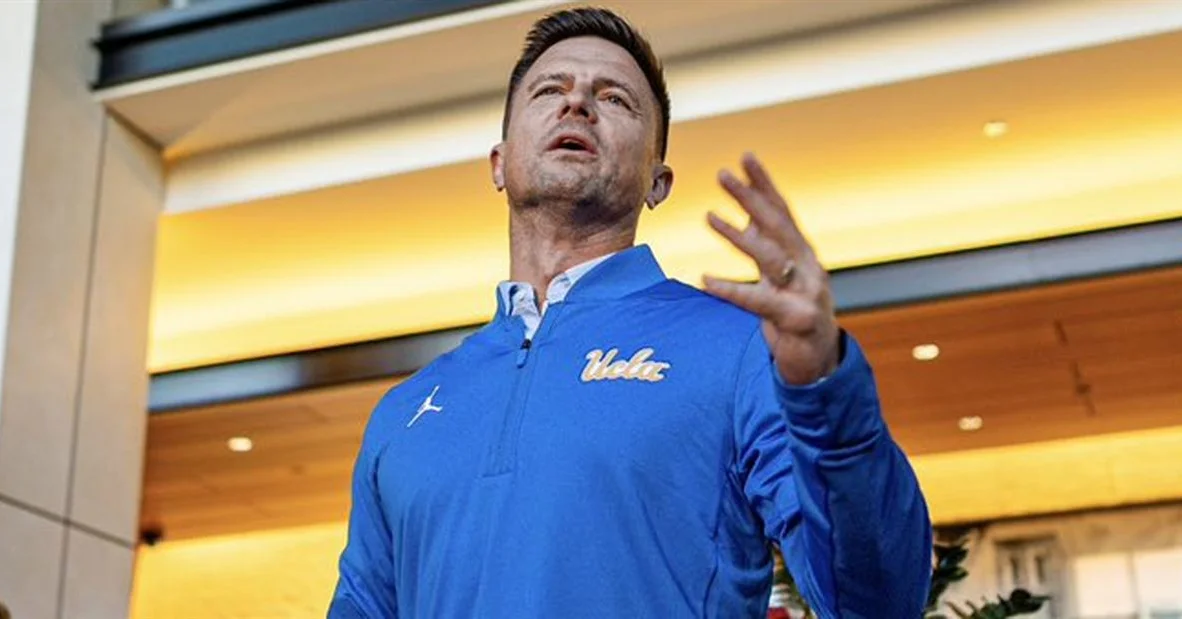
UCLA will pay its new football coach Bob Chesney $6.75 million per year, with his contract spanning five years.
Chesney could enhance his pay through incentives and escalators.
The 49-year-old was hired by UCLA from James Madison after its generational season in which it qualified for the College Football Playoff.
Chesney arrived in Los Angeles Monday afternoon and will spend two days on UCLA’s campus before having to return to James Madison to prepare to play No. 5 seed Oregon in the first round of the CFP Saturday, Dec. 20th at 4:30 p.m. PT.
UCLA announced the signing of Chesney as its coach Saturday morning (GO HERE). It followed a two-month search process.
Bruin Report Online has been your go-to place for everything Bob Chesney related. Here’s the BRO recent archive:
— UCLA Coach Bob Chesney and Family Land in L.A.
— The Timing of Bob Chesney Coming to UCLA and His Immediate To-Do List
— BROCast: More Bob Chesney Talk, Basketball Updates for Men and Women
— What could Bob Chesney accomplish in his first year?
— James Madison Makes CFP; Chesney’s UCLA Arrival Delayed
— What does new UCLA football coach Bob Chesney’s resume tell us about him?
— One of Chesney’s First Great Moves as UCLA’s Coach – Not Flipping to Penn State
— 10 most important players for Bob Chesney to retain at UCLA
— BROCast: James Madison’s Bob Chesney to UCLA
— Quick analysis of UCLA hiring Bob Chesney
NEWYou can now listen to Fox News articles!
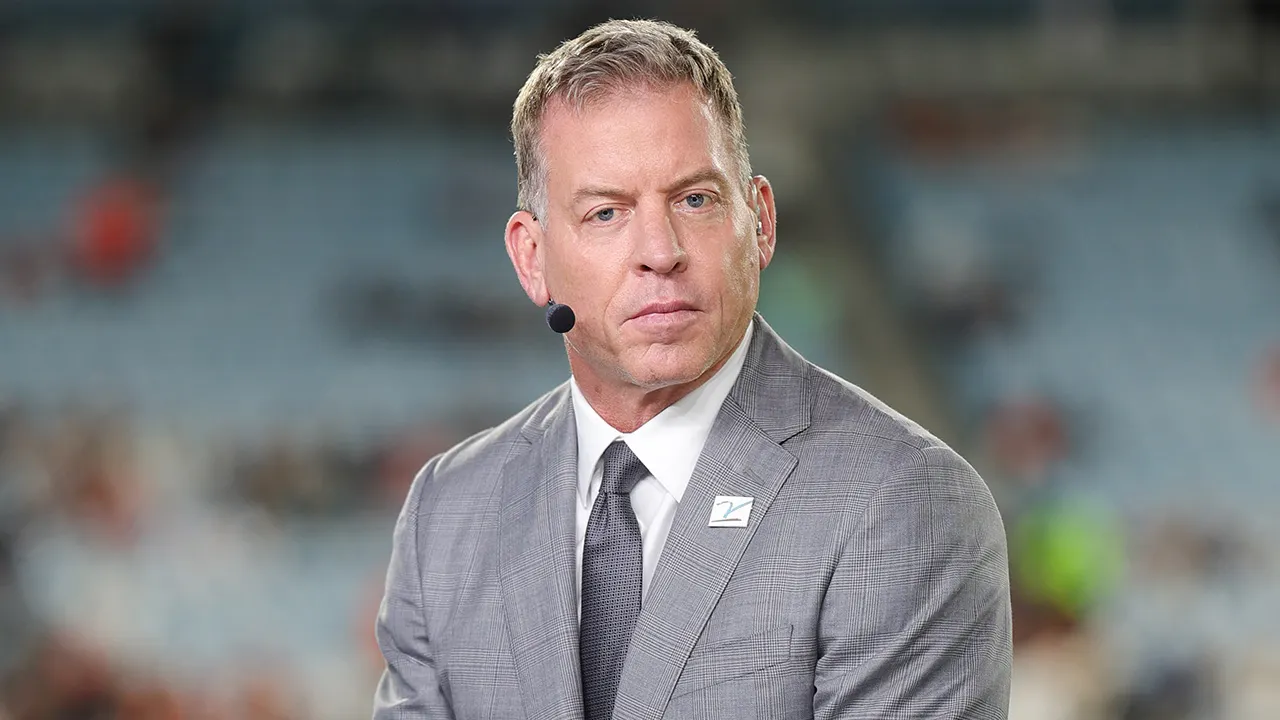
For the past couple of decades, former NFL star quarterback and Pro Football Hall of Famer Troy Aikman has shared his thoughts on what he’s seen during whichever game he and his longtime broadcast partner are calling.
The three-time Super Bowl winner is part of the “Monday Night Football” broadcast crew. Aikman has routinely given his take on a variety of football-related topics, from the state of NFL officiating to college football.
Some of Aikman’s latest thoughts about the college game centered on the growing number of players who have taken advantage of the transfer portal in today’s polarizing NIL landscape.
The former Dallas Cowboys quarterback and many others have referred to the state of today’s sport at the collegiate level as the “Wild West.”
CLICK HERE FOR MORE SPORTS COVERAGE ON FOXNEWS.COM

Hall of Fame quarterback Troy Aikman before a game between the Pittsburgh Steelers and New York Giants at Acrisure Stadium. (Barry Reeger/Imagn Images)
“College football has become the Wild West, as everybody knows. Forget about Lane Kiffin for a minute, but starting with NIL, there just has been no guardrails. I’m on the National Football Foundation Board, so I hear firsthand from a lot of the commissioners and athletic directors and the people involved in all of that. It’s gotta get cleaned up, first and foremost,” Aikman told The Athletic.
When asked about student-athletes’ mobility in today’s world, Aikman reflected on his personal choices during his time competing at the NCAA level.
NFL GREAT TROY AIKMAN FIRES BACK AT JERRY JONES’ TRADE PLAN AMID LOSING EFFORT: ‘HE MAY WANT TO CANCEL’
“I was a transfer. I went from Oklahoma to UCLA, and I’ve always felt that if a coach is able to pick up and leave, that a player should have the same opportunity if a coach leaves,” he continued.

UCLA quarterback Troy Aikman runs the ball against Arizona Oct. 2, 1988, at Arizona Stadium in Tucson, Ariz. (Mike Powell/Allsport/Getty Images)
“What’s happened obviously over the years since I got out of college football is that, in recent years with NIL, there’s been no accountability on the players,” Aikman continued. “So, the players pick up, and now they’re leaving all the time whereas before it was typically the coach. The player used to have to sit out a year. Now, the players can up and go regardless of whether or not they’ve been paid. It’s every man for himself.”
Aikman then dived into another college football hot topic — Lane Kiffin’s decision to leave Ole Miss in favor of LSU. The NFL analyst gave his best guess on what fueled Kiffin to make the leap.
“Lane Kiffin’s motivation? Is it his thoughts that it’s a better opportunity for him at LSU? Possibly. Is it money? Possibly. Is it lifestyle? Possibly. I can’t answer any of those questions.
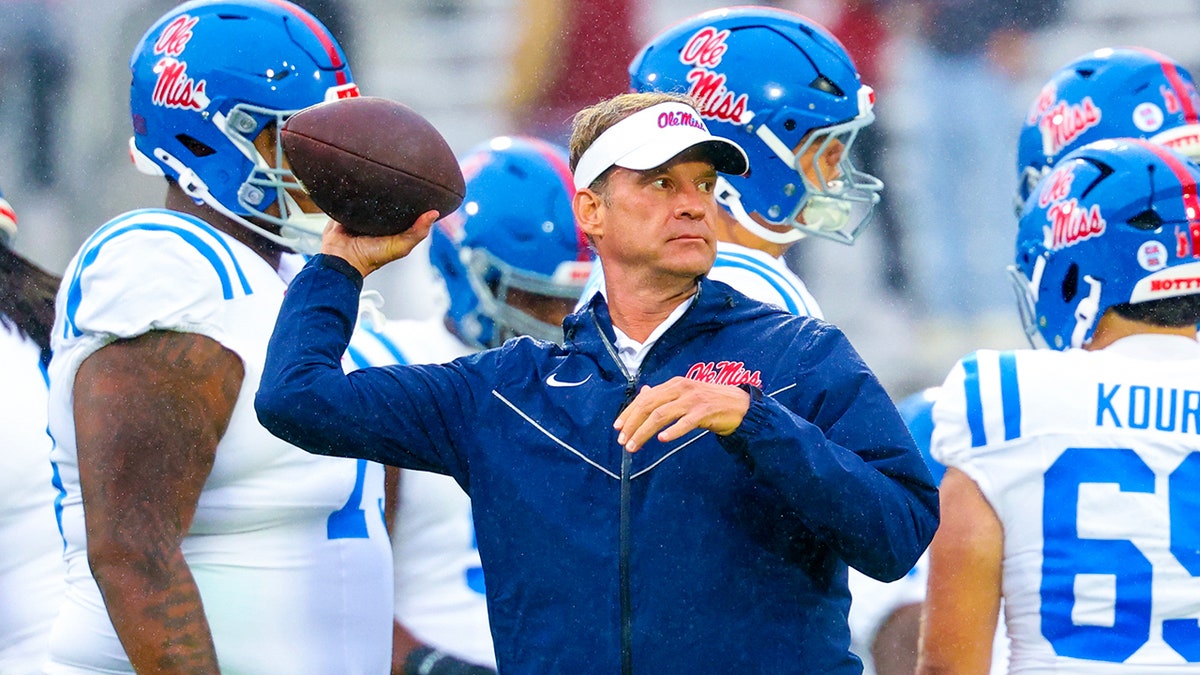
Ole Miss Rebels head coach Lane Kiffin throws a football before a game against the Oklahoma Sooners at Gaylord Family-Oklahoma Memorial Stadium Oct. 25, 2025. (Kevin Jairaj/Imagn Images)
“But whatever his motivation is, he feels like LSU is the right place for him. So, I don’t fault him for that at all. I know there’s always hard feelings. Ole Miss did not want to lose Lane Kiffin,” he said. “Once he made the decision to leave, now he’s a pariah. Let’s get this guy just as far away from us as we can. I understand that as well. Everybody gets a little bit jaded.”
CLICK HERE TO GET THE FOX NEWS APP
Aikman concluded that those in positions of power should ultimately take charge and focus on getting things in order.
“Where I’m at is I think there’s gotta be some leadership at the very top that kind of cleans all of this up. Starting with players that accept money, there’s gotta be some accountability and responsibility on their behalf to have to stick with a program,” Aikman said.
“I gave money to a kid. I won’t mention who. I’ve done it one time at UCLA. Never met the young man. He was there a year. He left after the year. I wrote a sizable check, and he went to another school. I didn’t even get so much as a thank-you note.”
Aikman is scheduled to be on the call for a Week 15 matchup between the Pittsburgh Steelers and Miami Dolphins Dec. 15.
Follow Fox News Digital’s sports coverage on X, and subscribe to the Fox News Sports Huddle newsletter.
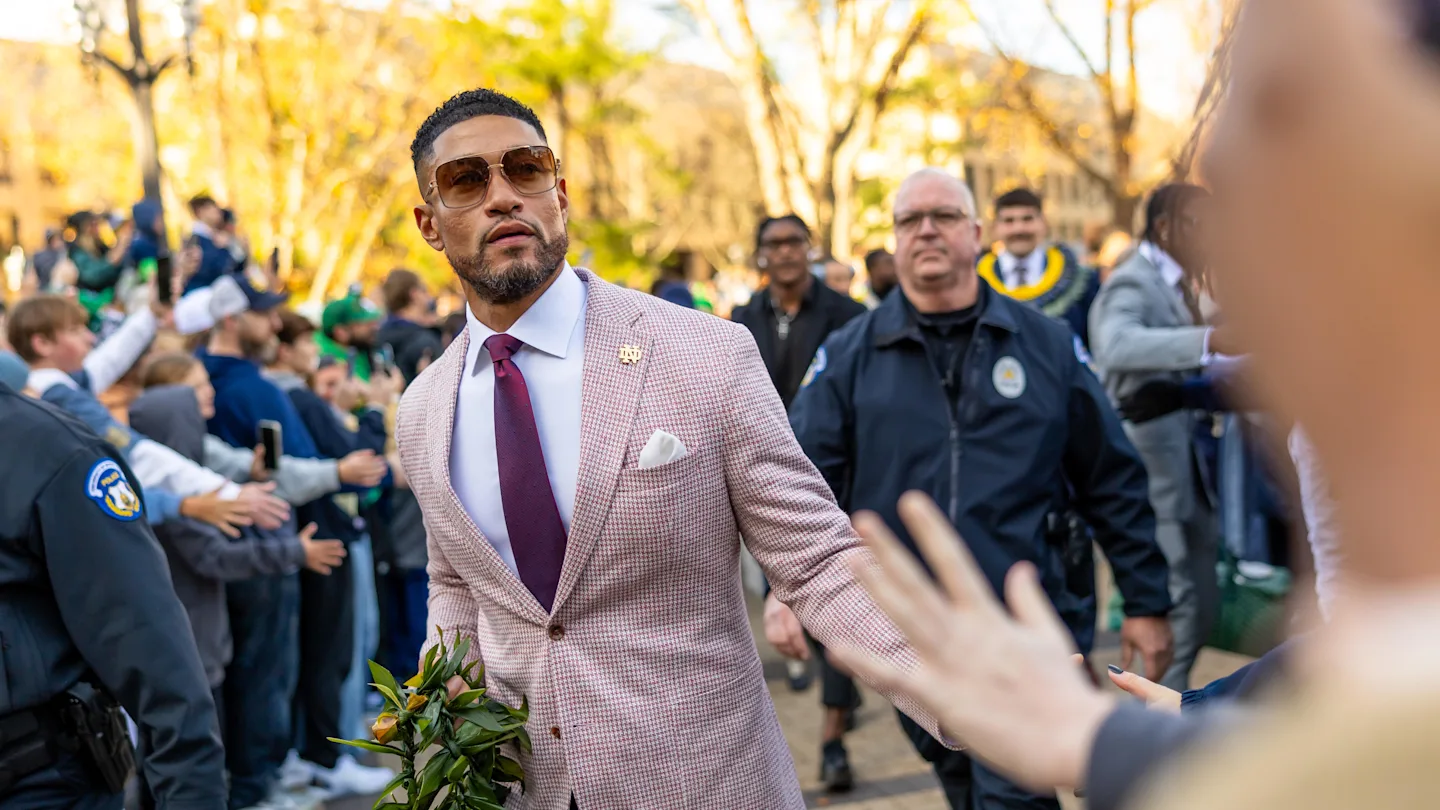
The Notre Dame Fighting Irish closed the regular season at 10-2, riding a 10-game winning streak and a dominant late surge that many felt would secure a playoff slot.
Instead, the College Football Playoff committee left Notre Dame out of the 12-team field, and the Irish finished No. 11. The program immediately announced it would decline further bowl consideration amid widespread frustration.
In the fallout, athletic director Pete Bevacqua publicly praised head coach Marcus Freeman and signaled that Notre Dame will move to keep him firmly in the sport’s financial elite.
Bevacqua reportedly told Notre Dame beat writer Pete Sampson that he wants Freeman “at the top, top, top tier” of college-coach compensation, a line that amounts to a clear warning shot to NFL teams and other suitors monitoring Freeman’s rapid ascent.
Pete Bevacqua on the possibility of Marcus Freeman departing for the NFL and matching other contract offers.
Said Notre Dame will make sure Freeman is at the “Top, top, top tier of college football coaches when it comes to compensation for college football coaches.”
— Pete Sampson (@PeteSampson_) December 9, 2025
Elevated to the head job in December 2021, Freeman guided Notre Dame to the 2025 national title game following a 2024 campaign that produced the program’s highest win total in modern history.
In five seasons, he has compiled an overall record of 43-12 through the 2025 regular season, a .782 winning percentage that ranks him among the top active coaches nationally.
That success explains why NFL outlets and front offices have repeatedly listed his name when vacancies appear.

Freeman’s scheduled 2025 pay is roughly $7.4 million, with the Irish coach set to earn up to $54 million by 2030.
By contrast, elite head coaches at some Power-5 programs are reporting compensation packages in the $10-$13 million annual range.
To truly land Freeman in “top-tier” territory, Notre Dame would need to craft a contract that meaningfully closes that gap. Higher base pay, performance bonuses, strong buyout protections, and NIL/incentive tie-ins could all be part of the offer.
For Freeman, the choice becomes remaining at a historic program promising increased resources and visibility, or testing the NFL pipeline that has been knocking for months.
Read More at College Football HQ
- All-conference OT enters college football transfer portal after head coaching change
- $2.3 million quarterback predicted to return to college football powerhouse
- Lane Kiffin sends clear message after Nick Saban’s comments on career move
- Jon Gruden rips College Football Playoff committee following controversial decisions
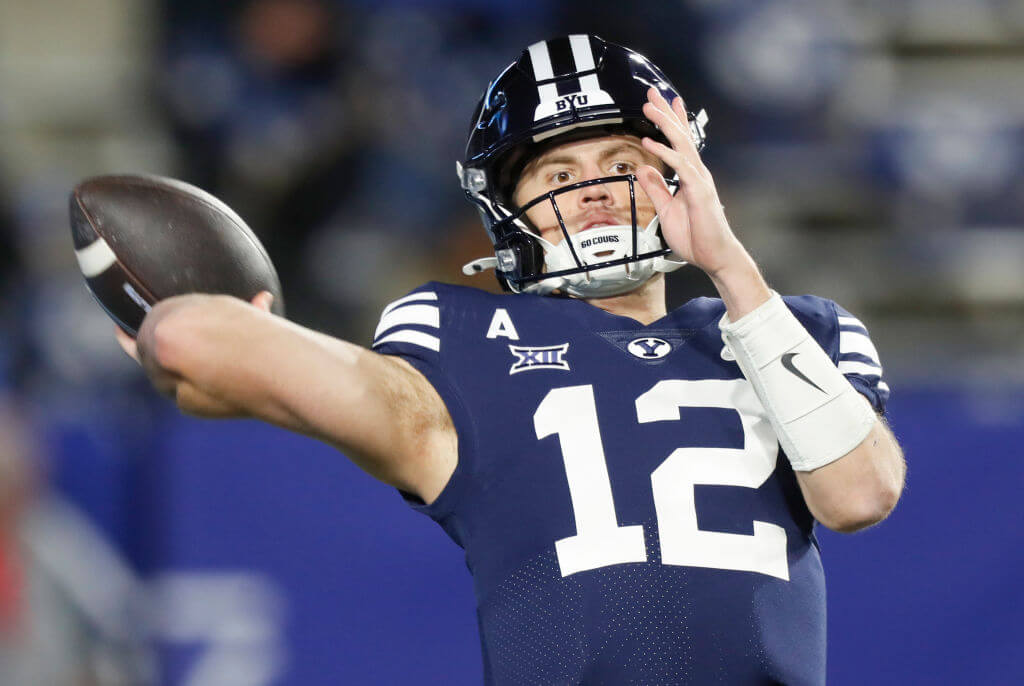
Jake Retzlaff, the BY-Jew Photo by Chris Gardner/Getty Images

By Noah Hirsch-Rechter
December 9, 2025
My favorite joke in the 1980 comedy Airplane! is, by the standards of a movie featuring a glue-inhaling Lloyd Bridges and an inflatable toy autopilot, one of its subtler gags. A passenger asks a flight attendant for some light reading; in return, she receives a pocket-sized leaflet of “famous Jewish sports legends”.
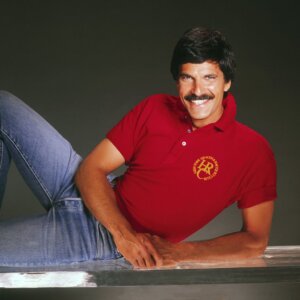
The vicious canard (just kidding, we’ve been called worse) that the so-called people of the book are ill-at-ease on the court or the gridiron contains a kernel of truth, of course. There’s a reason nearly all Jews know the names Koufax and Spitz — there are few other Jewish sports stars to choose from.
But the rapid growth of the country’s first Jewish NIL initiative, Tribe NIL, would suggest that, in the collegiate ranks at least, such stereotypes are baseless; in barely a year, it has accumulated a roster of nearly 200 athletes.
NIL, which stands for name, image and likeness, allows student-athletes to profit off of their fame and success, most often via endorsement deals requiring commercials, public appearances, paid social media posts and the like. (Here’s Arch Manning, star University of Texas quarterback, flinging a football downfield while wearing *checks notes* Warby Parker glasses.)
Until 2022, however, college athletes were barred from receiving any form of compensation for their services. So NIL initiatives — organizations that help connect students with funding opportunities — are a relatively new phenomenon. Most of the organizations bring together student-athletes with a particular unifying characteristic, usually a connection to a school or region; for instance, the University of Alabama, a college football behemoth, has two NIL initiatives, Yea Alabama and The Tuscaloosa Connection.
But Tribe is unusual in that it is not organized around geography, but around culture.
So co-founders Moses and Eitan Levine lean on a different kind of network: The Jewish professional one. “There are inherent advantages that the Jewish community has,” Moses told me over a Zoom call.
“I always joke that Jewish nepotism is a good thing,” he added.
Virtually none of Tribe’s athletes are able to command lucrative sponsorship deals, which, under the NIL system, are reserved for the very best Division I athletes in the so-called “revenue sports” — football and basketball. A good number of Tribe’s roster, by contrast, are Division III athletes, and few are in football or basketball. They’re still better at their chosen sport than nearly all other human beings, yet not good enough to be recompensed financially.
“That’s a problem,” said Moses. “A D-III field hockey player who doesn’t have inherent NIL value is still working a full-time job. It’s crazy they don’t get any compensation.”
With Tribe, then, Moses imagined other kinds of compensation. “The question we’re asking,” he said, “is how can our athletes use their name, image and likeness to get where they want to be in five or 10 years from now?”
Tribe’s answer is to cultivate closer ties with a myriad of institutions, and with their Jewish stakeholders in particular, in hopes of securing sponsorships, internships and jobs for its growing list of charges.
“Say I’m a big Jewish law firm,” Moses told me, “and I want to show that I support Jewish athletes. What if I hired a bunch of Jewish athletes for my summer internships, and then give them each an extra $1000 to allow us to advertise them on our Instagram?”
Moses and Levine pocket a fee for each deal, on top of whatever the athlete receives. Take the law firm example: In such a scenario, both men would be paid, by the firm, for giving that office access to the athletes — for “making the introductions,” Moses said.
The simple fact these athletes are Jewish is not the sole reason firms would hire them, Moses emphasized. “Like, they have a degree, and a full-time job as a basketball player on top of that, right? They’ve shown a level of commitment.” But Jewishness, Moses believes, can provide the proverbial foot-in-the-door. And he wants Tribe to be the intermediary.
“I wouldn’t ever tell a kid like they should only rely on the Jewish community to network,” he said. “But it’s a silver platter right there for you, and I promise you, it’ll work out for you if you lean in.”
For the tribe, by the tribe
Tribe is the brainchild of comedy writers Jeremy Moses and Eitan Levine. The pair met while working on Amazon’s short-lived sports TV show, “Game Breakers,” where they created a segment called “This Week in Jews.”
The duo, Moses said, quickly bonded over their shared cultural and sporting interests. Moses had a Conservative rabbi for a father and used to work for the site My Jewish Learning. Levine has a sizable social media presence as a comedian, which he often used to highlight Jewish sporting achievements in ways both heartwarming and acerbic.
In 2024, almost by accident, Levine helped broker the most significant Jewish NIL deal yet: A partnership between Manischewitz, of Matzoh fame, and Jake Retzlaff, Jewish quarterback at Brigham Young University. (Retzlaff was dubbed, entirely appropriately, B-Y-Jew.) Levine had worked with Manischewitz on his webseries, When Can We Eat, while Retzlaff had been the subject of one of Levine’s Instagram videos; he played matchmaker and made the shidduch to introduce the brand to the athlete.
Naturally, the photographs of a smiling Retzlaff holding up Manischewitz’s Potato Latke mix did not escape the attention of other Jewish student-athletes. Levine was soon inundated with requests for further kosher NIL deals, Moses told me.
This took both men by surprise; after all, they too had always subscribed to the notion that Jewish athletes were hard to come by.
“Our first thought was, ‘How many Jewish college athletes are there?’” said Moses. He decided to carry out a survey of sorts. “I went on the UCLA Athletics website — because I needed a school with a large population, a large Jewish population, and tons of sports programs — and looked at last names. If I was 75% sure they were Jewish, I counted it.”
His survey was unscientific, to be sure — Moses was a Jewish studies major, not a statistician — but it was effective: He counted 25 names.
“I was like, ‘Wait, that’s just at one school!” he said.
Moses realized that Jewish student athletes, far from being under-represented, were punching above their weight relative to the overall population. Thus was born Tribe NIL.
Schmoozing to success
Tribe’s yichus-heavy approach is premised on what Moses sees as one of American Judaism’s most enduring traditions: Rooting for Jews in sports just because they’re members of the tribe, whether they’re on your favorite team or not.
Moses offered up a choice example about Max Fried, the Yankees’ excellent pitcher. “Maybe you’re not rooting for the Yankees to win, but you’re still proud that the starting pitcher for the other team is a Jew.”
He acknowledged, however, that such an approach could limit Tribe’s appeal. It would be harder to pull off a paid appearance at a local synagogue, say, or a Q&A with Jewish partners at a business — with a view to potential employment down the road — if the athlete in question doesn’t feel especially Jewish.
So the collective is aimed squarely, and solely, at “proud” Jews, Moses said. “If they’re not comfortable talking about being Jewish out loud, then this is not the organization for them.”
Both Moses and Levine are holding out hope that Tribe will be spared the debates over Israel’s conduct in Gaza, and over competing definitions of antisemitism and Zionism, that have roiled so many Jewish-American institutions. “We really strive to be an apolitical organization,” Moses said. “Because the one time Republicans and Democrats sit together is at a college football game.”
Still, the fairly well-established pathway from U.S. college sports to the Israeli professional ranks is one Moses hopes to exploit, and he’s not afraid of upsetting anyone. “We want to help American Jews play in Israel,” he said. “If this is a political statement, then it’s a political statement. But I don’t think it should be.”
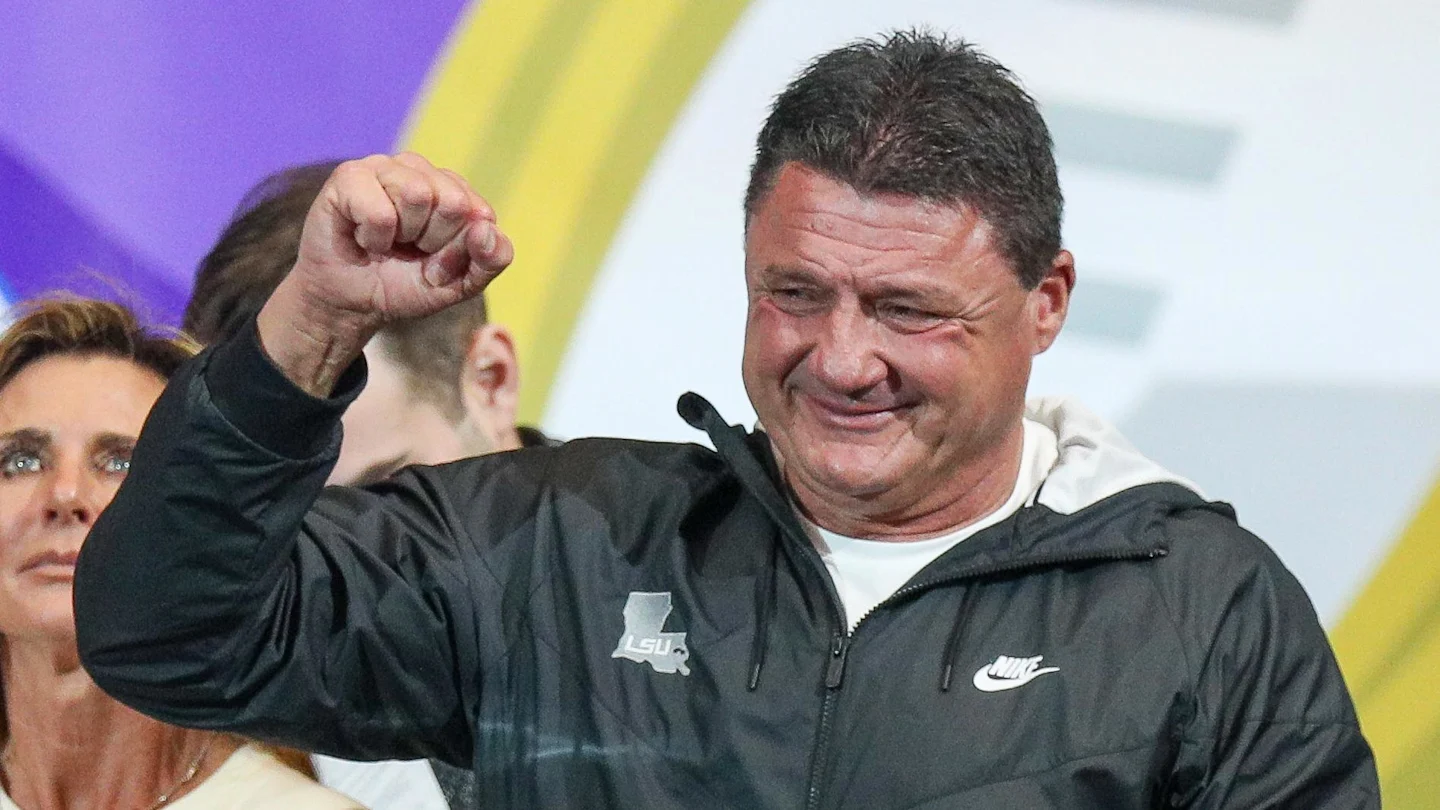
Former LSU national champion head coach Ed Orgeron has been in the news quite a bit lately.
First, it was Orgeron stating that he had interest in rejoining LSU as an assistant under good friend Lane Kiffin. On Tuesday, it was an entirely different topic—NIL in college athletics.
Orgeron joined the Bussin’ with the Boys podcast to discuss a host of topics, one of which included paying players before NIL. Podcast hosts Taylor Lewan and Will Compton joked that the SEC paid players before it was legal, and Orgeron chuckled before giving a classic response.
“Hey, you know… it’s all good. They say, ‘Hey Coach, you know, you’ve been out of coaching for a while. How are you going to adjust to NIL?’ I said, ‘Well, it’s a minor adjustment. … Back then, we used to walk through the back door with the cash. Now we just gotta walk through the front door with the cash!'”
Everyone knows the SEC was paying players before paying players was legal
Coach O with an incredible response on @BussinWTB 😂😂 pic.twitter.com/PvHvQK3Bdp
— Will Compton (@_willcompton) December 9, 2025
Nobody will ever admit that players were paid under the table prior to NIL, even though it was always considered one of college football’s worst-kept secrets. But it sounds like Orgeron is ready to embrace the NIL era if he ever gets an opportunity to return to the sidelines.
More College Football on Sports Illustrated

Troy Aikman Won’t Donate NIL Money To UCLA After Transfer Snub

Witherspoon Earns AVCA All- Region Honors

Hanson Wins Region Player of the Year, Cook Named Coach of the Year

Philadelphia youth football coach speaks out after teens arrested – NBC10 Philadelphia

Columbus Youth Sports Wins the Superbowl

Badgers Land Five on AVCA North All-Region Team

8 Philadelphia youth football team players charged with stealing from Dick’s Sporting Goods in Florida

$6.75 Million Per Year for Five Years

Women’s Volleyball Puts Three on AVCA All-East Coast Region Team – Penn State

Summit Racing Equipment | Error 410: Resource Gone

Ugolini Named AVCA All-Region – America East Conference

Kris Wright Joining MHR in 2026

Behrend sprinter wins at Houghton December Classic

Big West Trio Lands on AVCA All-Pacific Region Listings

Caldwell trustees select new board member after interviews

First Tee Winter Registration is open

Fargo girl, 13, dies after collapsing during school basketball game – Grand Forks Herald

CPG Brands Like Allegra Are Betting on F1 for the First Time

Volleyball Recaps – November 18

F1 Las Vegas: Verstappen win, Norris and Piastri DQ tighten 2025 title fight

Two Pro Volleyball Leagues Serve Up Plans for Minnesota Teams

Utah State Announces 2025-26 Indoor Track & Field Schedule

Sycamores unveil 2026 track and field schedule

Redemption Means First Pro Stock World Championship for Dallas Glenn

Bowl Projections: ESPN predicts 12-team College Football Playoff bracket, full bowl slate after Week 14

Texas volleyball vs Kentucky game score: Live SEC tournament updates

How this startup (and a KC sports icon) turned young players into card-carrying legends overnight

Indiana’s rapid ascent and its impact across college football

Pohlman admits ‘there might be some spats’ as he pushes to get Kyle Busch winning again

Robert “Bobby” Lewis Hardin, 56

 Why a rising mid-major power with an NCAA Tournament team opted out of revenue-sharing — and advertised it
 NBA Legend Michael Jordan to Join NBC Sports as Special Contributor
 Falcons mailbag
 Portal Update – Basketball and Gymnastics Take Hits
 has always dreamed in Mercurial. Now his initials are on the boots.
The new Kyl…
has always dreamed in Mercurial. Now his initials are on the boots.
The new Kyl…
-
 Rec Sports2 weeks ago
First Tee Winter Registration is open
-
 Rec Sports2 weeks ago
Fargo girl, 13, dies after collapsing during school basketball game – Grand Forks Herald
-
 Motorsports2 weeks ago
CPG Brands Like Allegra Are Betting on F1 for the First Time
-
 Motorsports2 weeks ago
F1 Las Vegas: Verstappen win, Norris and Piastri DQ tighten 2025 title fight
-
 Sports2 weeks ago
Two Pro Volleyball Leagues Serve Up Plans for Minnesota Teams
-
 Sports2 weeks ago
Utah State Announces 2025-26 Indoor Track & Field Schedule
-
 Sports2 weeks ago
Sycamores unveil 2026 track and field schedule
-
 Motorsports2 weeks ago
Redemption Means First Pro Stock World Championship for Dallas Glenn
-
 NIL1 week ago
Bowl Projections: ESPN predicts 12-team College Football Playoff bracket, full bowl slate after Week 14
-
 Sports2 weeks ago
Texas volleyball vs Kentucky game score: Live SEC tournament updates