Rec Sports
Making Floridians safer

When the thunderstorm rolled across Orlando’s Lake Fairview on Thursday afternoon Sept. 15, 2022, 11-year-old Langston Rodriguez-Sane was still in his trial period with a local rowing club. It was only his second week out on the water.


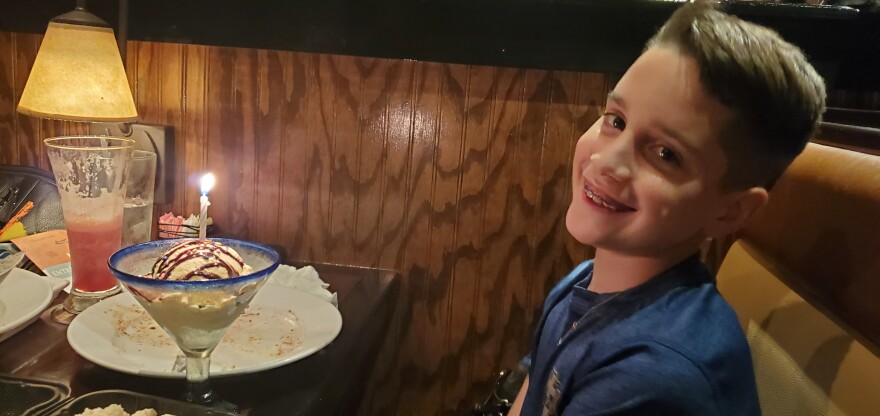
Langston was looking forward to his birthday on Sunday. As soon as they dropped him off to practice his new sport, his mom, Doreen Sane, and his big sister, Reese, headed out to shop for his birthday dinner.
“I will forever go back to that day when we were shopping at Walmart about how terrible the storm sounded,” Doreen Sane said. “My God, it sounded so terrible.”
On their way back to pick up Langston, Reese’s phone buzzed with a text.
“Are you okay? Yeah. Or, like, ‘Is your brother okay’ or something?” Reese Sane remembered. “And then you start to get information that something had happened, but we were told it wasn’t Langston.”
That wasn’t true. Langston’s boat, with five children rowing in open water during the storm, had been struck by lightning. He was rescued from the water and rushed to the boat house and then to a local hospital. He died there three days later, on his 12th birthday. “He had so much coming up for him and so much left to live,” said his sister, who is now 19.
“Langston was an 11-year-old, incredibly loving young man. He was a son. He was a brother. He was a friend. You know, he was an important part of our lives,” Reese said. “And he was taken from us because of negligence, because people aren’t aware of lightning safety.”
Florida, the nation’s lightning capital
Florida, the lightning capital of the United States, leads the nation in both the density of lightning strikes and deaths by lightning. Nearly all 53 victims killed by lightning in the state in the past decade were either recreating or working outdoors. Yet while Florida Statutes protect young athletes from allergy attacks, head injuries, heat illness and cardiac arrest among other threats, state laws do not govern lightning safety.
U.S. Rowing, the national governing body for the sport, offers lightning-safety procedures as a resource for coaches and administrators. The guidelines include constant weather monitoring, clear evacuation points and rules for getting boats off the water quickly when storms approach. They are meant to be adapted to each local rowing venue.
None of that, the family says, was followed by the North Orlando Rowing Club, which has since changed its name to the Orlando City Boat Club, on the day Langston and the other children were caught in the storm. A second child in the boat, 13-year-old Gavin Christman, was also killed; Orange County Sheriff’s Office marine deputies did not find his body until the following evening.
“You assume because you’re in this (organized-sport club) that things are being maintained,” Doreen Sane said. “You’re paying a premium. It’s got to be better.”
The Orlando City Boat Club did not respond to requests to comment or share its lighting-safety protocols.
When it comes to schools, Florida Statutes require Florida High School Athletic Association (FHSAA) member schools to have emergency action plans. Orange County Public Schools passed one of the strongest lightning safety plans in the nation after a 10-year-old girl died after getting off her school bus in a storm in 2004.
However, an informal survey of school plans by WUFT indicated that many of them do not address lightning, or even storms. The FHSAA’s Emergency Action Plan Template includes blizzards but not lightning. The Florida Department of Health’s Emergency Guidelines for Schools addresses frostbite but not lightning or storms in general.


The Dallas-based software company Perry Weather, a weather-technology company that provides real-time lightning detection, automated alerts, radar tools, and countdown timers to help schools make safer decisions during storms, helps stress lightning safety policies for Florida schools in its online guide in partnership with the FHSAA. The FHSAA’s own policies focus more on heat stress given Florida lawmakers’ passage of the Zachary Martin Act in 2020 in response to a football player’s death from heatstroke.
Perry Weather posts lightning guidance from the National Federation of State High School Associations. It includes continuous weather monitoring; stopping outdoor activity as soon as thunder or lightning is detected, moving athletes to safe shelter and waiting 30 minutes after the last observed lightning or thunder before resuming activity.
The national guidelines serve as a good common framework. But in Florida, they can be applied inconsistently depending on the school, district or club.
Trouble on the water
Langston’s mom said she assumed the club her children joined—Reese rowed with the same club—followed strict safety standards. What she learned later, she said, left her stunned.
“They had no lightning detectors or anything, so there was a big problem,” Sane said. “There was no one on the water with them either.”
Reese said it wasn’t the first time young rowers were unsafe.
“You learn in elementary school when your hair sticks up, like that’s dangerous,” Reese said. “We would go out in the water and our hair would be sticking up and they would say, this is normal.”
Lightning-safety experts said the risks in Florida are relatively high — and too-often underestimated. John Jensenius, a meteorologist who spent more than 40 years with the National Weather Service and now works with the National Lightning Safety Council, described lightning danger as a combination of “the amount of lightning, and where you are.”

He said youth sports programs may fail to take the necessary precautions—and emphasized that waiting for obvious signs of danger is too late.
“If you notice something, don’t wait. Keep an eye on the sky. Listen for any thunder,” he said. “If you see any signs of a developing or approaching storm, or if you hear thunder, you really need to get inside right away.”
Florida’s storms can be especially deceptive. According to Jensenius, a bright blue Florida sky could make it difficult for people to recognize they are in danger. Activities on water, such as boating or fishing, complicate matters further because background noise such as boat motors — or water, itself — can mask the sound of approaching thunder.
When lightning struck Langston’s boat, he was the coxswain sitting at one end. He and the boy at the opposite end, 13-year-old Gavin, both fell into the water. The three children sitting in the middle of the shell were rescued and survived without serious injuries.
Jensenius said water-based leisure activities make up the nation’s three highest lightning risks: Fishing, with 9% of deaths; the beach, with 7% of deaths; and boating, with 5%.
“All of those take extra time to get to a safe place,” he said.
Experts also stress that sports organizations must get actively involved in lightning safety education. The National Lightning Safety Council partners with programs like Little League Baseball to teach players and coaches about the risks.
Lessons never taught, now learned
According to Reese, she and Langston were never introduced to any lightning-safety resources.
“I never was taught that safety class,” she said. “Langston was never taught that safety class.”
Langston’s death underscores a gap between awareness, assumptions and action. Liability concerns have helped drive improvements, Jensenius said, but challenges remain.
Doreen Sane filed a wrongful death lawsuit against the rowing club, the property owner and the U.S. Rowing Association, alleging North Orlando Rowing Club did not have weather-alert devices or a working defibrillator on the day of the tragedy. Although the case was settled, she said no money can bring her son back.
For the family, lightning safety is no longer abstract.
“Now I have such respect for lightning warnings,” Sane said. “You just think it could never happen to you. Especially as Floridians — you just see lightning all the time, and it never strikes you.”
Her daughter stressed the importance of telling Langston’s and other victims’ stories.
“You think they’ll be fine because you’ve seen survival stories,” Reese said. “But you don’t hear enough death stories to understand the full gravity of this. Somebody you love can be taken like that by something you can’t control — and you could have controlled it by not being outside.”