College Sports
Mary Willis | SPH

An environmental epidemiologist by training, Willis received her MPH in epidemiology from the University of Rochester School of Medicine and Dentistry. She then went on to receive her PhD in environmental and occupational health from Oregon State University College of Public Health and Human Sciences. Since October 2020, she has been a postdoctoral research scholar at Oregon State University, as well as a visiting postdoctoral research associate in the Department of Epidemiology at SPH.
Much of Willis’s research centers on how complex environmental exposures affect local communities, as well as how epidemiology can inform effective policy decisions to improve public health. Her work uses big data and data integration techniques to derive spatial exposure metrics for environmental hazards, from both the energy sector, like oil and gas development and traffic-related air pollution, and the built environment, like green space and neighborhood deprivation. Her most recent work examines reproductive health outcomes and environmental pollutants, with the goal of informing health-protective policy decisions.
Willis shared more about her work, what brought her to the field of public health, and why she is excited to join the SPH community.
What brought you to the field of public health, and specifically, to the work that you do now?
I started off with a strong interest in environmental science and policy – I wanted to be involved in the process of determining how we could protect the ecosystems using regulations. However, I quickly realized that I was more concerned about filling the gaps on how different environmental pollutants affect population health, not just the ecosystems.
As I was sorting out what to do with this newfound interest, I was living in Rochester, NY as the intense debate was unfolding on whether fracking should be allowed in the state. It was clear that communities were desperate for clarity on what health concerns could be associated with the industry, but the scientific evidence simply did not exist at the time. I wanted to build skills that could be used to understand the effects of new industries like oil and gas development on local communities, and I’ve spent the majority of my career using epidemiologic methods to examine the influence of oil and gas development on population health.
Could you talk a bit more about the impact of oil and gas development on health as it relates to your work?
Oil and gas development is the industrial process by which fossil fuel resources are extracted from the ground, a subset of which is colloquially known as “fracking.” This resource extraction industry may affect communities along multiple dimensions of their daily lives. There is substantial economic promise from allowing this industry to enter a community, ranging from new job opportunities to increased tax revenue, and local demographics often change substantially due to this industrial boom. At the same time, communities are concerned that the oil and gas development may produces air pollution, water contamination, and excess noise or light at high levels. The complex confluence of these exposures has the potential to impact population health.
As an environmental epidemiologist, I’m interested in parsing apart these distinct exposure pathways into policy-relevant evidence that can be used to protect local communities. Most recently, I’ve conducted studies in the state of Texas to figure out the associations between residential proximity to oil and gas development and adverse pregnancy outcomes.
As you transition into your new role, what do you hope to get involved with in Boston and/or at SPH?
Boston is a metropolitan hub for my two favorite sports: rowing and ice hockey. I was a member of the crew team in high school and college – back in the day, I actually raced at the Head of the Charles, twice – and I usually played recreational ice hockey in the off seasons from rowing. I’m eager to get back involved in the vibrant communities related to these activities.
Why did you choose to come to SPH? What made the opportunity stand out to you?
I’ve met a lot of faculty from BUSPH over the years, and I’ve always been struck by the collective fearlessness that this school has in its work. This research community is incredibly willing to dive into difficult questions that are of the utmost importance to society, like tackling climate change or solving urban health equity. I am very excited to join this community, to build out new research directions and collaborations, especially those related to the health effects of our reliance on fossil fuels.
Looking forward, what are you most excited about with your new role?
I am excited to work with the student body at BUSPH. I love sitting down with students to hear about their research or career goals and help them think through the best strategies to get to where they want to be.
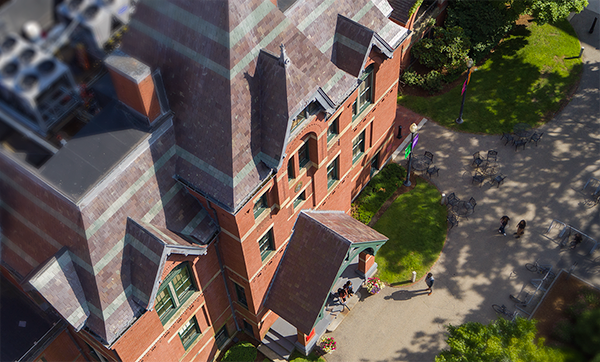

Sixteen new faculty members joined SPH in fall of 2022 across all six academic departments, bringing interdisciplinary expertise, diverse perspectives, and equity-oriented action to the school community.
Learn More