
NIL
Matayo Uiagalelei NIL: How Much Are the Oregon Defender’s NIL Deals Worth?

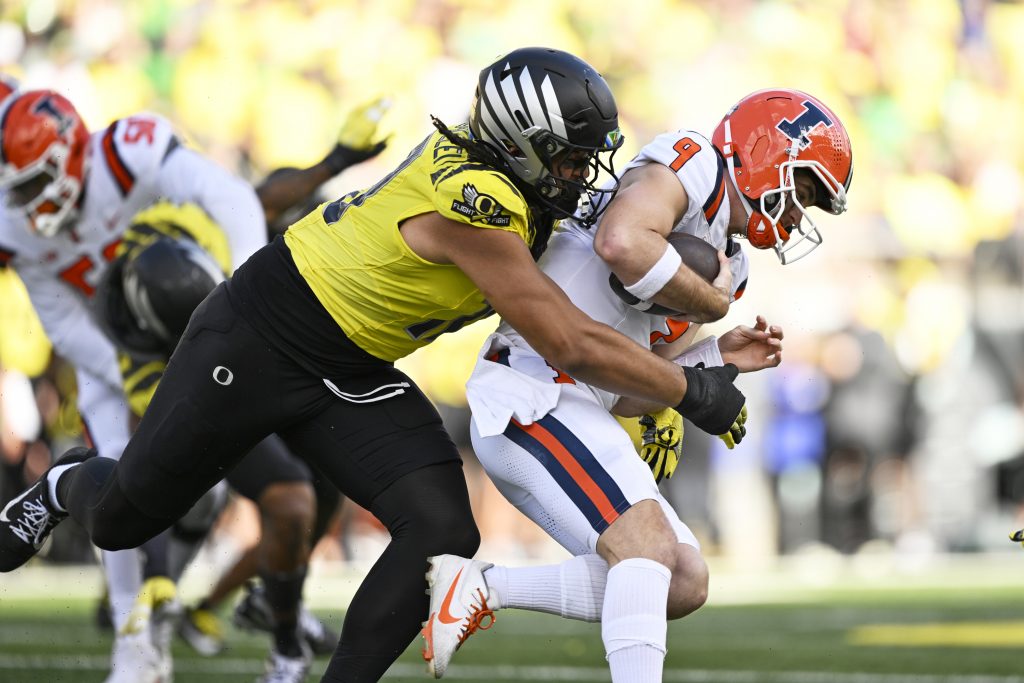
Oregon Ducks defensive end Matayo Uiagalelei has grown significantly in the past few years, boosting his recruiting and sponsorship opportunities. Uiagalelei is a sophomore, five-star, impact defender who has an explosive, aggressive, and well-rounded pass-rushing ability.
His sponsorship opportunities are on the rise due to the NCAA, which has expanded its guidelines around NIL transactions. So, what will be the worth of his NIL deals, and what is fueling his earning ability? Here’s everything you will need to know about Matayo Uiagalelei’s NIL contracts, net worth, and more.
The Value of Matayo Uiagalelei’s NIL Deals
As per On3’s NIL valuation, Matayo Uiagalelei’s NIL deals are valued to be $289,000 as of the end of October 2024. He is ranked No. 340 among college football players. This valuation is established based on all of the metrics that he has reached as a 5-star recruit, now 5-star defensive player.
Details about the player’s endorsement deals are not public yet, however, Uiagalelei is marketable because of his dominance on the field and the historic NIL reputation that the Oregon Ducks have established, which is further bolstered by the backing of Nike co-founder Phil Knight.
Oregon’s aggressive approach to NIL has built a “super squad,” with Uiagalelei among the beneficiaries. His valuation is comparable to teammates like Kobe Savage ($283,000) and Jestin Jacobs ($281,000), highlighting the Ducks’ deep investment in talent.
A notable deal includes a partnership with Pathway Sports and Entertainment for college football video game rights, which has become a great avenue for many Ducks players.
Matayo Uiagalelei’s Marketability
Uiagalelei’s appeal extends beyond stats. Born on July 2, 2005, in Bellflower, Calif., he was a top-20 recruit in the 2023 class, according to Rivals.com, and chose Oregon over Alabama, USC, and Clemson. His high school dominance at St. John Bosco, where he played both defensive end and tight end, gave a show of his versatility.
One of the most significant moments of his career came in 2023 when he sacked his brother, DJ Uiagalelei, then Oregon State’s quarterback, earning Pac-12 Freshman of the Week honors.
In 2024, Uiagalelei’s sophomore campaign solidified his star status. He recorded 37 tackles, 7.5 tackles for loss, 5.5 sacks, and three pass deflections, leading the Big Ten in sacks. His performance against Purdue, where he performed three tackles, two tackles for loss, and a sack, earned him Ducks Wire Player of the Game.
Despite his $289,000 valuation, Uiagalelei’s NIL earnings lag behind top-tier stars, reflecting his status as a defensive player in a quarterback-driven market. However, his youth, 19 years old with two years of eligibility, gives him more potential for growth.
KEEP READING: 2025 Way-Too-Early College Football Top 25 Power Rankings
Continued prime performance, especially in the College Football Playoff, could elevate his valuation significantly.
College Sports Network has you covered with the latest news, analysis, insights, and trending stories in college football, men’s college basketball, women’s college basketball, and college baseball!


Q4 3:13 – Ole Miss 27, Miami 24
Huge mistake by Miami again. Trinidad Chambliss fires incomplete toward Harrison Wallace III but Ja’Boree Antoine had a hand full of jersey, drawing a pass interference penalty.
Three plays later, after a 19-yard scramble by Chambliss, Ole Miss finds the end zone. Chambliss calmly connects with Dae’Quan Wright for a 24-yard touchdown to put the Rebels up by a point.
The two-point conversion is good too as Chambliss finds Caleb Odom wide open.

After witnessing Troy Aikman’s tribulations with NIL at UCLA, Joe Buck has no interest in funding Indiana football.
Last month, Aikman told Richard Deitsch he was a one and done with NIL, claiming he wrote UCLA a sizable check to secure a star recruit who ultimately left for another school after just one season. Aikman was further miffed by the fact that he didn’t even get a thank you note for his donation.
It has been widely assumed that current Oregon quarterback Dante Moore is the player Aikman was referring to. And according to UCLA, school protocol prohibits players from knowing which donors contributed NIL funds, thus making thank you notes difficult. Considering NIL has turned college sports into the Wild West, it is odd that a line is drawn at players learning where the money comes from. Protocol or not, Aikman didn’t like his foray into funding college players, and it seems to have rubbed off on Buck.
The Monday Night Football play-by-play voice joined The Morning After on 101 ESPN this week where they discussed his alma mater playing in the College Football Playoff semifinals this week. As a former Indiana University student, Joe Buck is now in the unprecedented position of seeing his favorite college football team morph into a football powerhouse. Unfortunately for Indiana, Aikman’s experience with NIL has already soured Buck on the idea of donating to their football program.
“Troy has talked to me about what went on at UCLA and kind of what he got for the money that he donated and that will not be something that I will be partaking in,” Buck said.
“He left!” Buck added of the UCLA player that supposedly received a sizable check from Aikman. “You don’t get the money back from what I understand…it doesn’t seem like a great program for the donor.”
The good news for Indiana University, who boasts Mark Cuban’s pockets as an alumnus, is that Buck also claims the local wealthy farmers are heavily involved in supporting NIL.
“I’m not being a smart aleck about it, I think there are a lot of farmers around Indiana that are making money,” Buck said. “It’s almost like everybody has come out of the woodwork and it’s like, ‘Let me have my little piece of this’ because it’s been so long and they’re willing to send money in, from what I hear.”
It’s hard to argue with Buck and Aikman. Where’s the incentive to spend big dollars on a recruit who can leave after one season? And we’re not even going to get into the fact those players are prohibited from offering a thank you note in return. But hopefully for Indiana, those hardworking farmers don’t start taking NIL advice from Buck the way he did from Aikman.
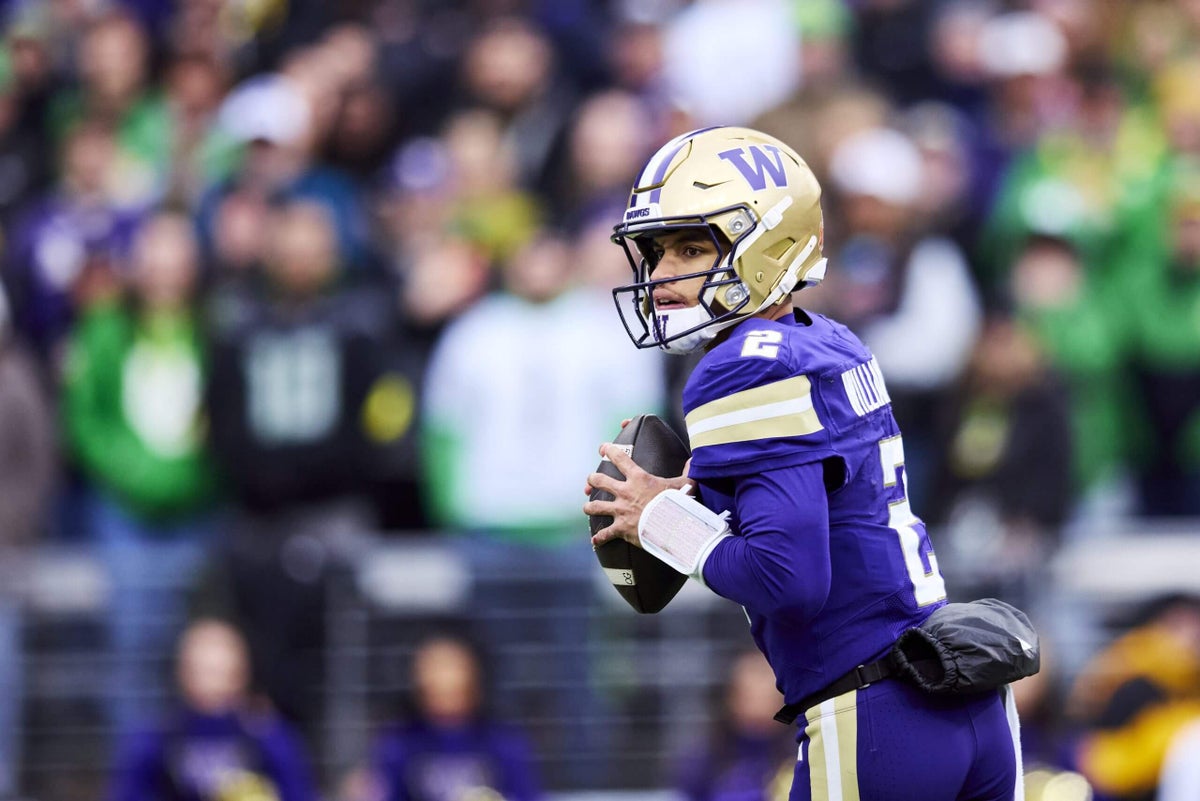
Demond Williams Jr.’s dalliance with the transfer portal has come to an end.
The Washington quarterback, who announced Tuesday that he planned to enter the portal despite signing a contract with Washington four days prior, wrote in an Instagram post Thursday that he is “excited to announce that I will continue my football journey at the University of Washington.”
Williams wrote that the decision came “after thoughtful reflection with my family.”
Williams’ return ends a two-day saga over the quarterback’s status.
Williams signed a contract agreeing to return to the Huskies in early January, a Washington source close to the negotiations told The Athletic on Tuesday night. Yet, Williams said in an Instagram post Tuesday that transferring was “best for me and my future.” Williams had not filed any paperwork with Washington compliance officers to have his name entered into the portal before making his announcement on social media.
Washington sources told The Athletic after Williams’ announcement that the program had “no intention” of releasing the quarterback from the contract he signed Jan. 2 and was prepared to pursue legal action to enforce the terms of the contract, according to a person briefed on the situation.
On Thursday night, ESPN reported that Williams was “leaning toward returning,” and a Washington source told The Athletic that the program was willing to “take back” its star.
Shortly after Williams posted that he was returning, Washington head coach Jedd Fisch and athletic director Patrick Chun also released statements on social media confirming Williams’ return.
Statements from Head Coach Jedd Fisch and UW Director of Athletics Pat Chun. pic.twitter.com/gq7wDL0cn5
— Washington Athletics (@UWAthletics) January 9, 2026
“Over the last few days, Demond and I have engaged in very honest and heartfelt conversations about his present and future,” Fisch wrote. “We both agree that the University of Washington is the best place for him to continue his academic, athletic, and social development.
“I appreciate Demond’s statement. I support him, and we will work together to begin the process of repairing relationships and regaining the trust of the Husky community.”
Chun wrote that the situation was “emblematic of the many current issues in college sports,” adding, “It is critical in this post-House, revenue-sharing environment that contracts with student-athletes are not only enforced but respected by everyone within the college sports ecosystem.”
Leaving Washington after signing a contract could have potentially been costly for Williams.
The Big Ten has a revenue-share contract template that its schools use, varying slightly based on different state laws or individual negotiations. Those contracts state that if a player intends to transfer before the end of a payment period, he owes the remaining amount on his contract, unless the school agrees to accept a buyout from the player or the player’s next school, according to multiple copies obtained by The Athletic. The contracts also state that the school is “not obligated” to enter a player into the portal.
In this case, Williams would likely have owed Washington $4 million for the one-year deal if his deal was based on those templates. The buyout also could have counted toward his next school’s revenue-sharing cap, according to Collegiate Sports Commission rules.
However, it’s unclear if such contracts would hold up in court. Williams obtained the services of noted NIL lawyer Darren Heitner earlier Thursday, but it doesn’t appear this will be challenged. Former Georgia defensive end Damon Wilson II last month sued Georgia’s athletic association over its attempt to get $390,000 from his decision to transfer last year. The case is ongoing.
Big Ten officials held a call with the conference’s athletic directors earlier Thursday to assure them that the league office would support Washington in its enforcement of the contract, according to a person involved in the meeting.
Williams followed Fisch to Seattle two years ago after committing to Arizona out of high school. However, before signing with Fisch at Arizona, Williams initially committed to Ole Miss and Lane Kiffin in late 2022. He de-committed the following summer. Williams started the 2025 season, with Fisch not holding back the hype for his quarterback entering the season.
“I would probably say, at this age, not even 19, he’s the best player I’ve ever been around,” Fisch said on the “Until Saturday” podcast last spring. “… My goal from when I started recruiting him in high school, and I told him this, we’re going to partner up and find a way to be in New York City when it’s time for the Heisman.”
Williams has thrown for 4,009 yards and 33 touchdowns against nine interceptions, adding 893 rushing yards and eight rushing touchdowns in 26 career games at Washington. In his first season as the starter, he passed for 3,065 yards and 25 touchdowns, earning All-Big Ten honorable mention honors.
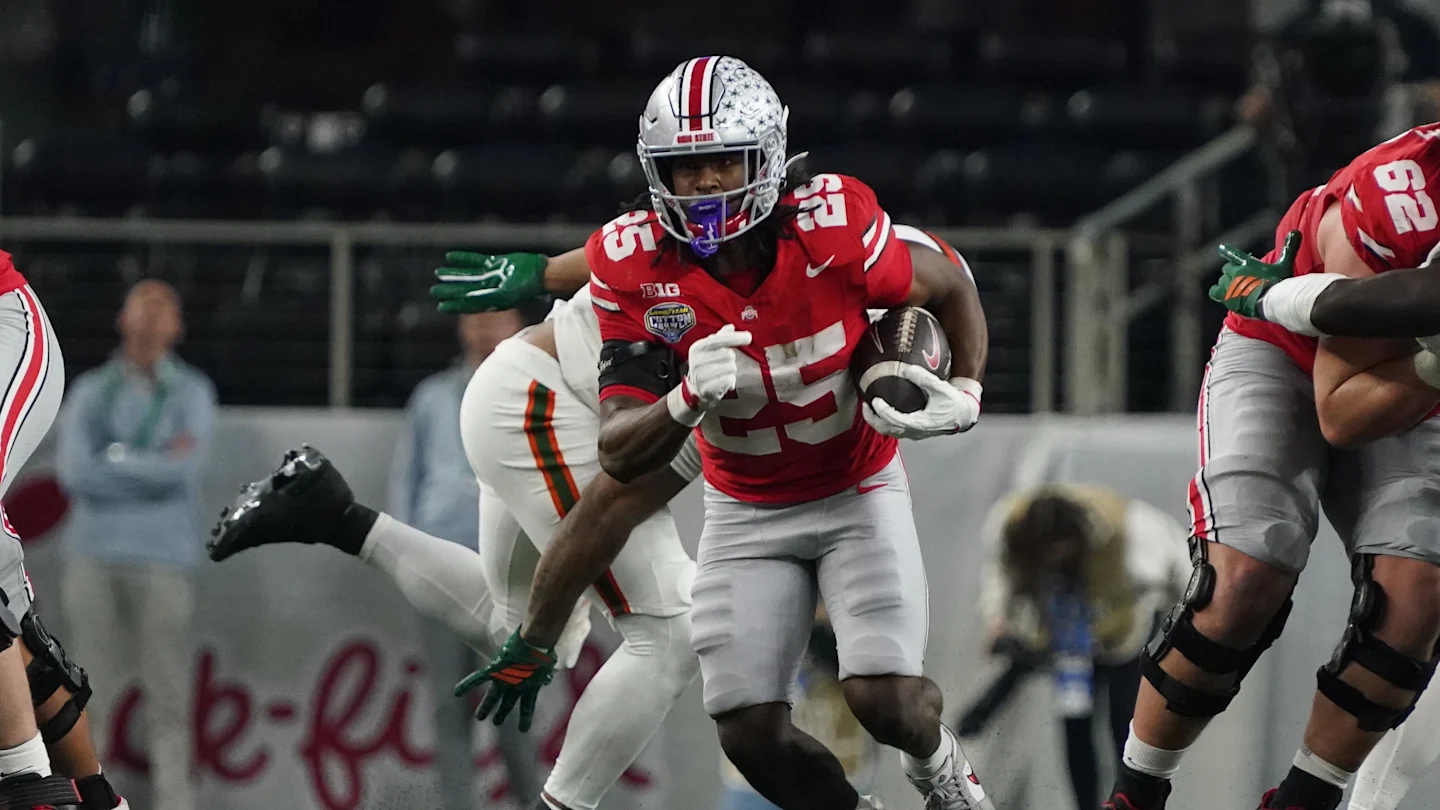
After Ohio State’s College Football Playoff exit at the hands of the Miami Hurricanes, the Buckeyes have been bleeding players to the transfer portal.
22 Buckeyes have entered the portal as of Wednesday afternoon, including two running backs, James Peoples and Sam Williams-Dixon.
Now, Ohio State may be at risk of losing a third, the program’s star freshman.
Ohio State portal entries so far, with 9 Days left in the portal:
– QB Lincoln Keinholz
– RB James Peoples
– RB Sam Williams Dixon
– WR Quincy Porter
– WR Mylan Graham
– WR Bryson Rodgers
– WR Damarion Witten
– TE Jaleni Thurman
– IOL Tegra Tshabola
– IOL Jayvon McFadden…— Swish (@swishxvibes) January 7, 2026
Ohio State running back Bo Jackson may be entering the transfer portal if the Buckeyes cannot meet the desired amount he and his camp are seeking. According to WBNS-TV, Jackson is seeking an NIL deal that would surpass what Ohio State’s running backs earned last season and rival some NFL rookie contracts.
“From what I understand, the request from [Bo Jackson] is more than what TreVeyon [Henderson]’s salary was for the New England Patriots this year,” Jeremy Birmingham said on The Beat with Austin & Birm Thursday morning. “And, more than both TreVeyon and Quinshon [Judkins] made in their final year at Ohio State, and maybe combined.”
Per reports from On3, Judkins’ NIL valuation at the end of his Ohio State career was $1.1 million. For Henderson, while less than his counterpart, reportedly made over $700,000 at the end of the 2023 season.
Additionally, Henderson’s contract with the New England Patriots is a four-year rookie deal valued at just over $11 million, with a $4.7 million signing bonus. Henderson’s rookie year base pay with New England is $840,000, with a $1.1 million signing bonus.
Based on those figures, it appears that Jackson and his camp may be requesting the Buckeyes to pay somewhere in the realm of $1.8 million to retain the freshman.
If all the rumors are true, Ohio State will have to decide whether spending a huge chunk of its NIL money to pay just one starter is worth not letting him slip into the transfer portal. A nearly $2 million NIL deal for Ohio State would cost around 10 percent of the program’s total NIL budget of last season, which Ohio State athletic director Ross Bjork said cost around $20 million.
Ohio State will have to decide if Jackson’s freshman performance is worth the high pay. During his first year as a Buckeye, Jackson rushed for 1,090 yards (No. 24 nationally) and six touchdowns (No. 120 nationally) over the span of 13 games. Jackson averaged 6.1 yards per carry.
In Judkins and Henderson’s final seasons with Ohio State, the running back duo both rushed for more than 1,000 yards each and combined for 24 rushing touchdowns in 16 games.
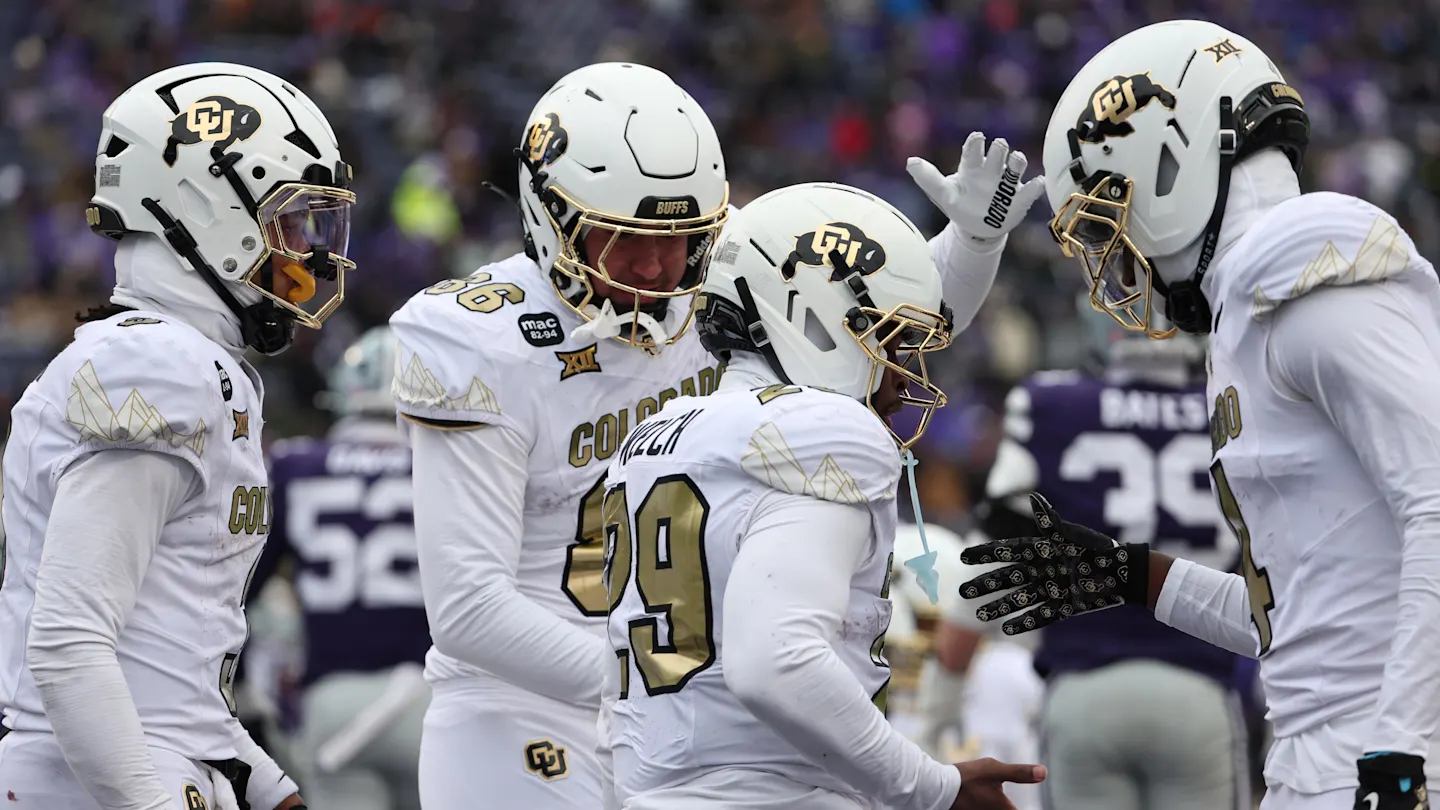
Just one year ago, Colorado was one of college football’s most talked-about success stories.
The Buffaloes finished 9–4 in 2024, riding national attention, high-profile transfers, and head coach Deion Sanders’ star power into bowl relevance and Big 12 respectability.
As a result, expectations entering 2025 were significantly higher, with the belief that continuity and experience would push the program forward.
Instead, the season collapsed: Colorado stumbled to a 3–9 record, managing just one conference win and struggling on both sides of the ball.
The Buffaloes routinely found themselves outmatched, and the optimism that defined the previous year slowly gave way to frustration as the team lost its final five games, including back-to-back conference losses to Utah and Arizona, both of which saw Colorado allow 50-plus points.
Adding insult to injury, former blue-chip recruit Kam Mikell announced his decision to enter the transfer portal on Wednesday, becoming the 34th Colorado player to leave the program since the end of the season.
A highly regarded, four-star recruit (No. 2 ATH in the 2024 class by 247Sports) when he arrived, Mikell was initially viewed as an offensive chess piece capable of contributing at wide receiver or in the backfield.
In 2025, Mikell’s role shifted primarily to the run game as Colorado searched for offensive answers, appearing in 10 games and totaling 75 rushing yards on 19 carries (3.9 yards per carry), along with two receptions for 5 yards.
Despite his athletic upside, a defined role never materialized, ultimately leading him to pursue another opportunity elsewhere.
More concerning, however, is that his exit reflects a broader exodus that has rapidly reshaped the roster.

More than 30 scholarship players have entered the portal, highlighted by leading receiver Omarion Miller (808 yards, eight touchdowns on 45 receptions) and leading tackler Tawfiq Byard (79 total tackles), along with several linemen and depth contributors.
The volume of departures is among the highest in the country this cycle.
This level of churn is not entirely new under Sanders, who, since arriving at Colorado in 2023, has aggressively leveraged the transfer portal to rapidly overhaul the roster with experienced college players and high-profile recruits.
To his credit, those exits have been paired with incoming talent, as Colorado has already added 22 transfers, including Texas linebacker Liona Lefau, Missouri offensive tackle Jayven Richardson, and Notre Dame cornerback Cree Thomas.
Still, the scale of departures following a losing season is far from ideal.
Read More at College Football HQ
- Three major college football programs battling for former 5-star recruit
- Nick Saban gives reality check to $87 million college football head coach
- $2.1 million QB turns down ‘lucrative NIL packages’ to enter transfer portal
- $2.1 million QB reportedly makes NFL decision amid transfer portal rumors

UCLA has landed a transfer who could hasten Bob Chesney’s rebuilding efforts.
Wayne Knight verbally committed to following Chesney from James Madison to Westwood on Wednesday, giving the new Bruins coach a high-quality running back to pair with quarterback Nico Iamaleava.
Showing what he could do on a national stage last month, Knight ran for 110 yards in 17 carries against Oregon in the College Football Playoff. It was the fifth 100-yard rushing game of the season for Knight on the way to being selected a first team All-Sun Belt Conference player.
Combining excellent speed with the toughness needed to break tackles, the 5-foot-6, 189-pound Knight led the conference with 1,357 rushing yards. He also made 40 catches for 397 yards and averaged 22.3 yards on kickoff returns and 9.5 yards on punt returns. His 2,039 all-purpose yards were a school record, helping him become an Associated Press second team All-American all-purpose player after ranking third nationally with 145.6 all-purpose yards per game.
Knight, who will be a redshirt senior next season in his final year of college eligibility, becomes the seventh player from James Madison to accompany Chesney to UCLA, joining wide receiver Landon Ellis, defensive back DJ Barksdale, tight end Josh Phifer, edge rusher Aiden Gobaira, right guard Riley Robell and offensive lineman JD Rayner.
UCLA also has received verbal commitments from Michigan wide receiver Semaj Morgan, Florida wide receiver Aidan Mizell, San Jose State wide receiver Leland Smith, Iowa State running back Dylan Lee, Boise State offensive tackle Hall Schmidt, Virginia Tech defensive back Dante Lovett, Iowa State defensive back Ta’Shawn James and California edge rusher Ryan McCulloch.
But no incoming player can match the production of Knight, whose highlights included a career-high 211 rushing yards — including a 73-yard touchdown — against Troy in the Sun Belt championship game, earning him most valuable player honors for the Dukes’ 31-14 victory.
Knight will join a group of running backs that includes senior Jaivian Thomas (294 yards rushing and one touchdown in 2025), redshirt senior Anthony Woods (294 yards rushing in 2025) and redshirt freshman Karson Cox (nine yards in two carries during his only appearance as a true freshman).
With Knight on board, the Bruins presumably have their starting running back in Year 1 under their new coach.

Samuel, Kosgei Named to Bowerman Preseason Watch List – New Mexico Lobos

Air Force Track & Field Announces 2026 Coaching Staff

Miami vs. Ole Miss score, live updates: Trinidad Chambliss puts Rebels ahead with TD pass

Former Maryland AD Dick Dull Passes Away

#SVLeague 🇯🇵: ONE TO WATCH FOR WOLFDOGS 🐺 In his first season with Wolfdogs Nagoya 🐺, Aymen Bouguerra 🇹🇳 adds flexibility to the Wolfdogs’ system, with impact at the net and from the back row 💥. One to keep an eye on as they face Tokyo Greatbears 🐻 this weekend. 🗓️ Jan 10 & 11 📺 LIVE on VBTV: https://bit.ly/3Bjc3Ui 🏐 #Volleyball

Four Big 12 Track and Field Athletes Named to The Bowerman Preseason Watch List

Troy Aikman convinced Joe Buck not to fund Indiana football

Six Gators Featured on MLV Rosters for the 2026 Season

Men’s Volleyball Opens 2026 Season Against Spartans

Demond Williams announces he’ll return to Washington for junior season

No. 3 Beach Begin 2026 Campaign with Home Matches Against Lindenwood, No. 15 McKendree

Panther alums show up against varsity

A Look Inside: Canton Citizen’s January 8 edition

UA beach volleyball to host 3 regular season home tourneys

Watsonville boys’ soccer extends win streak to three

SoundGear Named Entitlement Sponsor of Spears CARS Tour Southwest Opener

DeSantis Talks College Football, Calls for Reforms to NIL and Transfer Portal · The Floridian

#11 Volleyball Practices, Then Meets Media Prior to #2 Kentucky Match

Stempien to seek opening for Branch County Circuit Court Judge | WTVB | 1590 AM · 95.5 FM

Nascar legal saga ends as 23XI, Front Row secure settlement

Maine wraps up Fall Semester with a win in Black Bear Invitational

Ross Brawn to receive Autosport Gold Medal Award at 2026 Autosport Awards, Honouring a Lifetime Shaping Modern F1

Princeton Area Community Foundation awards more than $1.3 million to 40 local nonprofits ⋆ Princeton, NJ local news %

Sunoco to sponsor No. 8 Ganassi Honda IndyCar in multi-year deal

Downtown Athletic Club of Hawaiʻi gives $300K to Boost the ’Bows NIL fund

WNBA’s Caitlin Clark, Angel Reese and Paige Bueckers in NC, making debut for national team at USA camp at Duke
NASCAR, 23XI Racing, Front Row Motorsports announce settlement of US monopoly suit | MLex

Woods, Ogunribido Named CCIW Women’s Indoor Track & Field Student-Athletes of the Week

Rock sending small group to Akron Friday night

Beach Volleyball Unveils 2026 Spring Schedule – University of South Carolina Athletics





-

 Rec Sports6 days ago
Five Youth Sports Trends We’re Watching in 2026
-

 Sports2 weeks ago
Badgers news: Wisconsin lands 2nd commitment from transfer portal
-

 Sports3 weeks ago
Is women’s volleyball the SEC’s next big sport? How Kentucky, Texas A&M broke through
-

 Rec Sports3 weeks ago
NBA, Global Basketball Community Unite for World Basketball Day Celebration
-
 Sports2 weeks ago
Kentucky VB adds an All-American honorable mention, loses Brooke Bultema to portal
-
Rec Sports3 weeks ago
Inside the NWSL’s first combine: Can the league create a more robust pathway for American talent development?
-
 NIL3 weeks ago
$2.1 million transfer portal QB predicted to join College Football Playoff team
-

 Motorsports2 weeks ago
BangShift.com IHRA Acquires Historic Memphis Motorsports Park In Millington Tennessee. Big Race Weekend’s Planned For 2026!
-

 Motorsports3 weeks ago
NASCAR, IndyCar, and F1 Share These Race Days in 2026
-

 Sports2 weeks ago
Texas A&M volleyball’s sweep of Kentucky attracts record viewership