
NIL
Meet the 4-star recruit who is using NIL to promote adoption: ‘We hit the jackpot with him’

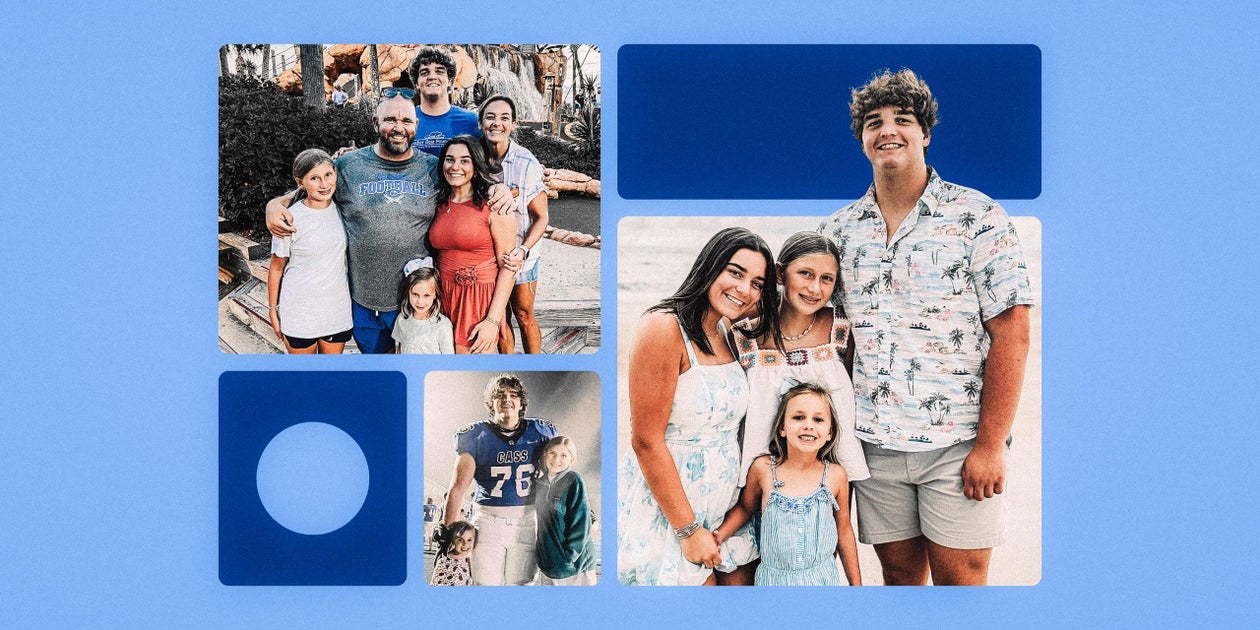
When Bear McWhorter was in the third grade, his mother, Vanessa, and father, Josh, sat him down alongside his sister to discuss an important family matter.
The McWhorters had two happy and healthy children and a nice life in Cartersville, Ga., about 40 miles northwest of Atlanta. But the more Vanessa and Josh thought about the future — leaning into their faith for clarity — the more passionate they felt about the possibility of adding to their family.
How would Bear and Lily feel about the McWhorters fostering, and potentially adopting, children in need?
Bear, now 17 and a four-star offensive lineman who is committed to Michigan, was initially in a bit of shock. He’d always been the baby of the family and had never thought about what it might feel like to add another sibling, let alone share his space with a stranger. But he supported his parents’ desire to open their home. And in September 2017, right as he was about to head out for football practice, he met 4-year-old Olivia for the first time.
“We ended up getting her and didn’t know how long we were going to have her or anything like that,” Bear said, “and ended up just having her forever. I love her.
“It just ended up being a great thing for our entire family.”
Seven years later, the McWhorters are a family of six. They formally adopted Olivia in 2019 and began fostering 4-month-old Lydia in early 2020, before finalizing her adoption in 2022.
Olivia is now 12 and the family’s best distance runner, hoping to eventually follow in her brother’s footsteps and compete collegiately. Lydia is 5 and learning new big-kid words every day.
Bear, who committed to Michigan in February over Clemson, South Carolina, Alabama and Florida, told every coach who recruited him over the years about his family’s story. And in March 2024 — after years of brainstorming with Josh about how he might be able to use his name, image and likeness for good — he launched a foundation to raise money and awareness for adoption and fostering.
The Brother Bear Foundation. Because every child deserves a family.
As some may know, I’m the proud big brother of two adopted sisters, and I couldn’t imagine life without them. With all the support I’ve received and the NIL opportunities I’ve been blessed with, I felt God has given me a platform to serve others.
We have taken the first steps to… pic.twitter.com/5R8DBx7qFJ— ʙᴇᴀʀ ᴍᴄᴡʜᴏʀᴛᴇʀ (@BearMcWhorter) March 11, 2024
“I got two new little sisters,” Bear said. “And (it) really changed my view on life.”
Vanessa McWhorter knew when she and Josh officially signed up to foster in the state of Georgia that reunification between a child and his or her biological family was the ultimate goal.
“But Olivia’s story was really hard,” Vanessa said. “When she came to us — and I won’t share much of her story — they kind of knew she most likely was going to need an adoptive home.”
Olivia, now a thriving, sassy preteen, was born in nearby Rome, Ga., about 15 minutes away from the McWhorters and had already bounced around multiple homes in the foster system before she started kindergarten. On the day she arrived at the McWhorter family home that fall 2017 afternoon, she walked through the doors and called Vanessa “Mom” right away. Shortly thereafter, the two met Josh for lunch at Chick-fil-A.
“She had never been around bigger men before,” Vanessa said of her husband, a former offensive lineman who played collegiately at Furman. “(She told him) ‘You’re as big as the sun.’”
Bear said hello for the first time before that football practice later that afternoon. The two talked for a few minutes and Bear went on his way — not remembering much else. But Vanessa and Josh paid close attention to how their biological children interacted with Olivia. They were touched by both Bear and Lily’s kindness.
“They took her on as a sibling super quick,” Vanessa said.
“They never treated her like she was any different,” Josh followed.
In hindsight, Bear acknowledges those first few weeks were an adjustment.
Olivia had different life experiences. Bear was shocked when she lashed out or snapped at his parents — something that never would have been tolerated from him or Lily. But even as a fourth grader, the more he learned about her past, the more he understood.
“It’s not all her fault,” he remembers thinking.
“Being in a great family, a great home, everything like that, where you’re taken care of, I think it’s definitely something that all of us take for granted.”
About two months into her stay with the McWhorters, Olivia turned 5.
As the new kid at school and church, she didn’t have many friends to celebrate with. So Bear and Lily jumped right in as built-in best friends when the McWhorter family took her to the local aquarium and commemorated her big day with a “Frozen”-themed birthday cake.
In March 2019, the whole family gathered in the courthouse when her adoption became final and Olivia legally became a McWhorter.
“It was awesome,” Bear said. “It was kind of surreal, adding somebody to the family like that. But it was really, really cool and definitely a very happy day.”
If he only knew the McWhorters were just getting started.
The McWhorter’s agency recommended that the family go “on hold” for six months after Olivia’s adoption became final. The idea is for family members to bond with one another and get accustomed to their new norm before introducing another child into the home.
Six months later, the agency called again: “Are y’all ready to reopen?”
Vanessa and Josh agreed to open their home once again, but decided the odds of adoption were slim this time around. They were happy to foster and be a resource for another family thinking about adopting, but their home was a little full. Adding a fourth child wasn’t part of their plans.
“Then it was in January, the end of January of 2020, it was right before COVID and I got a call for a 4-month-old little girl, and of course my heart just stopped,” Vanessa said. “Three hours later, we had a baby.”
Bear was confused when Vanessa picked him up from school that day with a baby seat in her car. Because of the quick nature of the call and how fast the situation unfolded, there was no time for the McWhorters to fill the children in on what was happening. Olivia initially thought her parents were surprising their children with a dog.
Bear saw the baby.
“Who’s this?” he asked.
“And that’s how he met Lydia,” Vanessa said.
A few weeks later, the COVID-19 pandemic broke out and the McWhorters’ initial plans of serving as short-term caregivers for Lydia changed.
With infants among those at the highest risk during the pandemic, Bear remembers how scared his family was about having a newborn in the home amid all of the uncertainty. Throw in the fact that he had almost no experience with newborns — “I never liked being around babies” — and his whole world shifted.
“But it ended up being really, really fun,” Bear said. “(Lydia) has the most personality, and she is the smartest little kid I’ve ever met. And so just being around her so much, it was really, really cool for me.”
While Bear navigated schoolwork and football throughout the pandemic, the now 6-foot-3 1/2, 293-pounder picked up a few new skills, too. He became a pro at changing diapers. He learned how to burp Lydia with ease and was happy to jump right in any time her tiny tummy got the best of her.
“Bless her heart, she spit up every bottle she took. She had awful, awful reflux,” Vanessa said. “But he’s just such a happy-go-lucky kid. He adjusted really, really well, and he had so much fun with her, especially in those baby months.”
Lydia provided some lightheartedness for the family, too.
“She’s just got an unbelievable personality,” Josh said. “Even as a baby, there was something different about her, and she’s sort of become the center of our family. She was the (pandemic) entertainment. That’s for sure.”
As Lydia aged from an infant to a toddler and soon was in need of a permanent home, the McWhorters got serious about officially adding her to the family.
In 2022, they gathered around the kitchen table to log into a Zoom call and sign some paperwork in front of the judge who virtually presided over Lydia’s adoption. Afterward, the family had a small get-together with their loved ones to celebrate their newest daughter and sister, two years in the making.
Last month, Vanessa walked into Lydia’s bedroom to tuck her youngest daughter in and read her a book, when Bear came in to join. He sat through story time, then stayed back after Vanessa left the room to tell his little sister goodnight. He’s constantly quizzing her on math problems or going over writing lessons, even teaching her a few of his and his teammate’s favorite potty-humor jokes along the way while she cracks up every time.
“I look at Bear,” Josh said, “and I just think, ‘Man, we hit the jackpot with him.’”
The idea for the foundation was born in Josh’s truck during the hour-long trip to and from Bear’s training sessions in Canton, Ga.
With two hours together three nights a week, father and son chatted about many of life’s bigger topics. When they started to think about how Bear might be able to use his platform as an emerging national recruit to make some sort of a difference, they kept coming back to adoption.
“It was part of our family’s story, it was a part of his story. He loved his sisters,” Josh said. “And he wanted to create a way for other people to be able to experience that same joy.”
High school athletes in Georgia are allowed to profit off their name, image and likeness, and through his foundation, Bear sells “Brother Bear” T-shirts for about $25, with 100 percent of the proceeds going directly toward helping families foster and/or adopt. During his recruitment, several coaches, including South Carolina’s Shane Beamer and assistants from LSU and Arkansas, snapped photos with their shirts.
The vast majority of the funds raised by The Brother Bear Foundation, for now, are coming from T-shirt sales, but the operation could grow considerably as Bear’s profile increases over the next few years.
“We’ve not gone out and asked for donations,” Josh said, “even though we’re legally able to, until we know exactly where we’re going with this and who’s doing what.”
Later this summer, if all goes according to plan, Bear will meet a baby girl from Ghana whom he helped bring to the States — his $2,000 contribution helping the family with the costs.
“Seeing all the hard work and everything I’ve done to get to this position in football and (to) have this platform and be able to turn around and use it for something like that, it’s really, really cool,” he said. “I just hope that people realize that they can do it, too. They can open their home.”
praise the Lord!
if new to my page i was blessed with NIL (big thx to Glenda Mitchell and J Mroczko !)we started the Brother Bear Foundation to help families adopt. today BBF gave $2k to the Gentry’s (first fam !) to adopt a baby from Ghana.
work hard – bless others. thats the… pic.twitter.com/9S0HG7ljZL
— ʙᴇᴀʀ ᴍᴄᴡʜᴏʀᴛᴇʀ (@BearMcWhorter) June 10, 2024
Josh, who works in finance, has made it clear that he and Vanessa will take care of the business side of things. It’s Bear’s job to use his platform to promote the foundation, invest in it himself and perhaps most importantly, do his part on the football field. The latter should be feasible for Bear, who is named after Josh but goes by Bear after Alabama legend Bear Bryant as a nod to his grandfather’s extreme Crimson Tide fandom. (Don’t worry, Grandpa has since come around on the Wolverines.)
In the meantime, Bear has one final summer at home, one last football season at Cass High before it’s off to Michigan. He plans to soak up every second and take what he has learned from his family with him to Ann Arbor.
Playing offensive line for the Wolverines, he said, may not be all that different from his role as brother to Lily, Olivia and Lydia.
“It’s a lot of protection and setting everybody straight,” he quipped.
“Opening up your home and your family to just welcome somebody that needs it — I just feel like it doesn’t get any better than that.”
(Illustration: Dan Goldfarb / The Athletic; Photos courtesy of the McWhorter family)

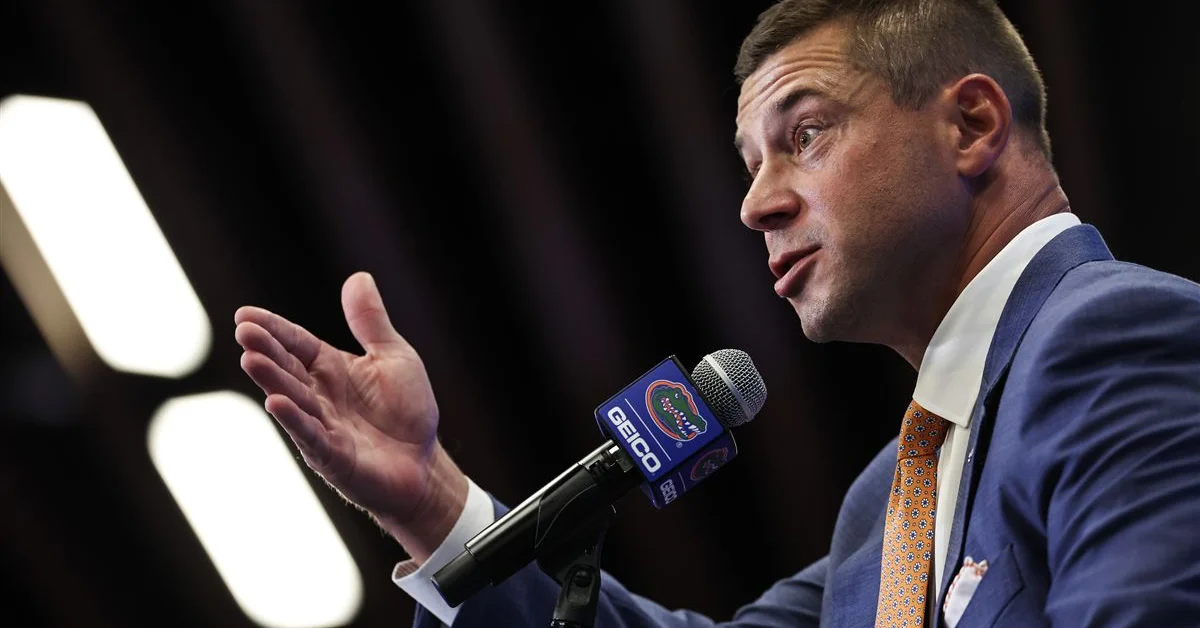
Florida’s newly hired head coach, Jon Sumrall, has made it clear he intends to leave the Tulane program in a better place than he found it.
After two seasons with the Green Wave, Sumrall is headed to Gainesville, though not before helping lead the program through the remainder of the 2025 season, with Tulane set to take on No. 6-seeded Ole Miss Saturday in Oxford in the College Football Playoff’s first round.
Along with continuing to coach his team, unlike former Rebels head coach Lane Kiffin, who’s now in Baton Rouge at LSU, Sumrall chose not to poach commits from Tulane ahead of Early Signing Day.
“I Zoomed with my signees or my commits at Tulane, and I told them to sign at Tulane because I’m not trying to poach their class,” Sumrall said at his introductory press conference in Gainesville. “I want those guys to go play there.”
Now, Sumrall has taken another step in ensuring the Green Wave remain competitive after he’s no longer in New Orleans.
Sumrall has donated $100,000 to the Green Wave Talent Fund in support of newly promoted head coach Will Hall.
The six-figure gift to the Green Wave Talent Fund, Tulane’s associated NIL collective, will aid Tulane’s ability to recruit, retain, and develop collegiate athletes.
“Tulane University and New Orleans are special to me and my family. Ginny and I are honored to support the Green Wave Talent Fund because we believe in the vision of Tulane Athletics and want to contribute to the continued success of its student-athletes. The future is incredibly bright, and we are excited for Will Hall and his family to be part of it,” Sumrall said. “Coach Hall possesses a keen understanding of Tulane University and its football program, along with a passion that greatly benefits the Green Wave. As a leader, he cares deeply about helping others reach their full potential and is dedicated to equipping them to achieve that goal in every way possible. He has our family’s full support, and we wish him nothing but success as he leads Tulane Football!”
It’s not the first time the Sumrall family has looked to invest in Tulane’s continued success; In 2024, they joined the Olive & Blue Society through a recurring philanthropic commitment to Tulane Athletics.
Sumrall’s high regard for the program is clear, and he’s taken another step to ensure the program won’t experience a significant decline now that he’s no longer leading the program.
“We are grateful to Jon and Ginny for this incredible gift,” David Harris, the Ben Weiner Director of Athletics Chair, said in a statement. “Their leadership and generosity will have a direct and lasting impact on our student-athletes as we continue to grow and elevate Tulane Athletics.”
Updated Dec. 15, 2025, 12:57 p.m. CT
Tennessee football coach Josh Heupel hasn’t announced that the Vols are in the transfer market for a 2026 quarterback, but there are strong indicators.
UT starter Joey Aguilar has exhausted his eligibility unless there’s movement in Diego Pavia lawsuit challenging the NCAA eligibility rules. Time is running out on that possibility.
Redshirt freshman Jake Merklinger is expected to enter the transfer portal, but he hasn’t announced his plans. Freshman George MacIntyre was a lauded recruit, but he barely played for the Vols this season. Five-star freshman Faizon Brandon will enroll in January, but starting a true freshman could be risky in the ultra-competitive SEC with College Football Playoff bids on the line.

If Aguilar can’t return and Merklinger enters the portal, Tennessee will need a transfer quarterback to fill at least a three-person position group. The question is whether the Vols would add a surefire starter or a optional starter to compete with MacIntyre and Brandon.
These quarterbacks have announced they’ll enter the portal when it opens Jan. 2 and could be options for the Vols.
Brendan Sorsby (Cincinatti)
Brendan Sorsby was a three-star recruit in the 2022 class, who has overachieved to become a productive dual-threat college quarterback. He spent two seasons at Indiana, including a redshirt year, and the past two seasons at Cincinnati’s starter.
In his college career, Sorsby has passed for 7,208 yards, 60 TDs and 18 interceptions. And he has rushed for 1,305 yards and 22 TDs. He has tossed more than one interception in only three of his 35 career games.
In the 2025 season at Cincinnati, Sorsby passed for 2,800 yards, 27 TDs and five interceptions. He ranked second in the Big 12 in passer rating. And he rushed for 580 yards and nine TDs.

Sorsby makes a lot of sense for Tennessee. He’s an accurate passer who rarely throws interceptions, and he can run the ball. Last summer, Sorsby told ESPN’s Greg McElroy that Tennessee’s Neyland Stadium is where he’d love to play a game because he watched a couple of games there as a kid.
He is reportedly exploring his NFL draft stock, but a sizable NIL payout likely could keep him in college. He has one season of eligibility remaining.
DJ Lagway (Florida)
DJ Lagway was a five-star recruit and the No. 2 quarterback in the 2024 class, according to 247Sports Composite. At Florida, he displayed flashes of elite talent but also inconsistency, a rash of turnovers and tendency for injuries.
Lagway completed 62% of his passes for 4,179 yards, 28 TDs and 23 interceptions over two seasons with the Gators. And he rushed for 237 yards and one TD. In the 2025 season, Lagway passed for 2,264 yards, 16 TDs and 14 interceptions, which led the SEC.
Lagway would be an intriguing project if Heupel can tap into his talent and reduce his interceptions. He has two seasons of eligibility remaining.

Dylan Raiola (Nebraska)
Dylan Raiola was a five-star recruit and the No. 3 rated quarterback in the 2024 class. He has spent the last two seasons at Nebraska. In November, he suffered a season-ending broken fibula, so any team picking him up must consider that.
Raiola has completed 69% of his passes for 4,819 yards, 31 TDs and 17 interceptions over two seasons. In the 2025 season, he completed 72% of his passes for 2,000 yards, 18 TDs and six interceptions.
Raiola has two seasons of eligibility. He is a five-star talent who appeared to turn the corner as an accurate, productive passer this season.

Kenny Minchey (Notre Dame)
Kenny Minchey, a native of Hendersonville, Tennessee, was a four-star recruit in the 2023 class out of Pope John Paul II. He signed with Notre Dame after initially committing to Pittsburgh.
Minchey showed promise at Notre Dame, but he was squeezed out of competitions for the starting job. In three seasons (including a redshirt year), he completed 23 of 29 passes for 212 yards. And he rushed for 96 yards and two TDs.
Minchey has played only 10 games and never started. He has two seasons of eligibility remaining. If Tennessee added him from the portal, he would not arrive as the surefire starter. Instead, he would compete with MacIntyre and Brandon for the starting job and round out the quarterback group.
Adam Sparks is the Tennessee football beat reporter. Emailadam.sparks@knoxnews.com. X, formerly known as Twitter@AdamSparks. Support strong local journalism by subscribing at knoxnews.com/subscribe.
Get the latest news and insight on SEC football by subscribing to the SEC Unfiltered newsletter, delivered straight to your inbox.
Dec. 15, 2025, 12:33 p.m. ET
Whenever Tulane’s run in the College Football Playoff comes to an end, so too will Jon Sumrall’s time at the school, with the second-year Green Wave coach headed to Florida.
Before he departs, though, he’ll be leaving something behind for his soon-to-be-former employer.
Sumrall and his wife, Ginny, are making a $100,000 donation to the Green Wave Talent Fund, a university initiative to expand NIL opportunities for Tulane athletes, the school announced on Monday, Dec. 15.
In two seasons with the Green Wave, Sumrall went 20-7, including an 11-2 mark this year that helped them win the American Conference and earn a spot in the playoff, where they’ll take on Ole Miss in the first round on Saturday, Dec. 20.
Though he was hired away by Florida late last month, he’ll be coaching Tulane throughout the playoff. That transition has been aided by the Green Wave hiring one of Sumrall’s assistants, pass game coordinator Will Hall, as his successor.
“Tulane University and New Orleans are special to me and my family,” Sumrall said in a statement. “Ginny and I are honored to support the Green Wave Talent Fund because we believe in the vision of Tulane Athletics and want to contribute to the continued success of its student-athletes. The future is incredibly bright, and we are excited for Will Hall and his family to be part of it.
“Coach Hall possesses a keen understanding of Tulane University and its football program, along with a passion that greatly benefits the Green Wave. As a leader, he cares deeply about helping others reach their full potential and is dedicated to equipping them to achieve that goal in every way possible. He has our family’s full support, and we wish him nothing but success as he leads Tulane Football!”
The money could be useful for Tulane, which has excelled under Sumrall despite losing talented players to bigger programs with more NIL resources. After the 2024 season, the Green Wave lost starting quarterback Darian Mensah and leading rusher Makhi Hughes to Duke and Oregon, respectively, with Mensah signing a deal worth a reported $8 million.
Since accepting the position at Florida, Sumrall has joked about balancing two FBS head-coaching jobs at once. His profile photo on X, the social media platform formerly known as Twitter, is a picture of him in half Florida attire and half Tulane attire. In a post last week, he wrote that “I’ve got 2 Phones, 2 Jobs & 2 hours of sleep.”
In four years as a head coach, Sumrall is 43-11. Prior to Tulane, he spent two years at Troy, where he went 23-4 and won a pair of Sun Belt championships. At Florida, he’ll take over a struggling program that has finished with a losing record in four of the past five seasons.

The University of Georgia Athletic Association (UGAA)’s NIL lawsuit against former linebacker Damon Wilson II, who transferred to Missouri earlier this year, could become a standard type of litigation as more and more athletes sign NIL deals with one school and then transfer to another.
The specific legal dispute is straightforward: UGAA claims that Wilson, 20, breached his NIL contract with Classic City Collective (CCC)—a Georgia-aligned former NIL collective—and failed to pay a liquidated damages provision that was triggered upon breach.
A four-star recruit from Venice High School (Fla.), Wilson played for the Bulldogs in the 2023 and 2024 seasons and, while on the Tigers in 2025, earned second-team All-SEC recognition as he amassed nine sacks—tied for third-best in the SEC.
According to litigation records at Athens-Clarke County (Ga.) Superior Court, Wilson signed a 13-month, $500,000 NIL deal with CCC on Dec. 21, 2024. The deal runs from Dec. 1, 2024, to Jan. 31, 2026 and was contingent on Wilson being enrolled as a student at Georgia and part of the football team. He was paid $30,000, his first monthly licensing fee payment, on Dec. 25, 2024. UGAA emphasizes that Wilson accepted this payment, meaning the contract went into effect. On Jan. 6, 2025, Wilson announced he was entering the transfer portal, a move that Georgia says constituted a breach of the NIL deal. About a week later Wilson withdrew from Georgia and began the process of transferring to Missouri. It’s unknown how much money Wilson received to transfer to Missouri.
Georgia moved to close CCC over the summer, when U.S. District Judge Claudia Wilken granted final approval of the House settlement, and has partnered with Learfield on NIL matters. Relevant to the school’s dispute with Wilson, CCC assigned its Wilson contract to UGAA, meaning the athletic association has the legal right to enforce the contract.
UGAA argues that under the NIL deal’s liquidated damages clause, Wilson, as the licensor, must pay all remaining license fees that would have been payable. The remaining value, according to court filings, is $390,000.
In May, attorney Spence Johnson wrote a demand letter to Wilson on behalf of CCC. The letter told Wilson that while CCC “does not want to unnecessarily undermine your financial future,” CCC also “insists that its student athletes be accountable for promises they make.” Wilson was told he had 14 days to pay or else CCC would “pursue legal action against you based on your breaches” of the NIL deal.
In August, Johnson wrote another letter to Wilson. Johnson said that UGAA had been assigned Wilson’s NIL deal with CCC. The letter indicated Wilson didn’t pay as demanded and that the NIL deal calls for arbitration to resolve disputes. In October, UGAA, through Johnson, filed a lawsuit to compel arbitration, with the complaint stating that Wilson hasn’t responded to demand for arbitration. There is no attorney listed for Wilson and it does not appear from the court docket he has responded to the litigation.
The actual legal controversy—alleged breach of contract—is ordinary, but the circumstances are extraordinary. A university, through its athletic association, is suing a former student athlete who transferred for reneging on his NIL deal.
A lawsuit like UGAA v. Wilson would have been inconceivable five years ago, but in the new college sports world, it’s the kind of case that could become more common.
Through antitrust litigation and accompanying settlements, college athletes can now transfer without sitting out of sports for a period of time. That approach is consistent with college students in general as they can transfer schools, but typical college students aren’t signing NIL deals.
There’s plenty of money to be made, too, for power conference football players to switch schools. University-aligned NIL collectives can pay athletes, some of whom also stand to benefit from the injunctive relief portion of the House settlement. Participating colleges can directly pay athletes a share of up to 22% of the average power conference athletic media, ticket and sponsorship revenue, with $20.5 million pegged as the initial annual cap. There are thus three buckets of money for some college athletes: revenue share, NIL deals and athletic scholarships.
And playing in college could become something of a career depending on the ultimate trajectory of antitrust litigation brought by Vanderbilt quarterback and former JUCO transfer Diego Pavia—the runner-up for the 2025 Heisman Trophy—and other seasoned college athletes. They wish to continue playing college football past the NCAA eligibility clock, which limits eligibility to four seasons of intercollegiate competition, including JUCO and D-II play, within a five-year period.
College sports, at least football at power conference schools, resembles professional sports—except without free agency restrictions and similar player restraints found in the NFL. Those restraints are lawful because the NFL collectively bargains them with the NFL players association. They are thus protected by the non-statutory labor exemption, which reflects U.S. Supreme Court decisions that provide antitrust immunity for bargained rules relating to wages, hours and other working conditions. The non-statutory labor exemption can’t apply in college football because the athletes are, for now at least, not recognized as employees and under labor law only employees can unionize.
Unless and until college football players are recognized as employees who in turn unionize, cases like UGAA v. Wilson could happen again and again. That’s not necessarily a bad thing, it’s just a reflection of the chaotic blend of pro and amateur sports known as modern day power conference football.
NIL
Billy Napier back in Sun Belt at James Madison. It’s a changed world from Louisiana-Lafayette days

Billy Napier thrived in the Sun Belt Conference before. Now he’s back in taking over at James Madison. But it’s a very different landscape since he won big at…
HARRISONBURG, Va.(AP) — Four years ago, Billy Napier walked away from a Sun Belt Conference powerhouse he had built at Louisiana-Lafayette. It was, in part, because he wasn’t sure how that program would handle the financial challenges of new rules allowing college athletes to profit from their name, image and likeness.
Four years later, Napier is returning to the league with James Madison. And the Dukes’ ability to compete financially was one of the main drivers behind his decision to become the successor to UCLA-bound Bob Chesney.
“This place has what it takes to dominate the competition for sure,” Napier said of a program ranked No. 19 in the AP Top 25 and headed to the College Football Playoff.
Napier went 40-12 in four seasons at Louisiana-Lafayette, dominating Sun Belt competition. His Ragin’ Cajuns won the Western Division all four years he was there and claimed league championships in his final two seasons. He was twice named the league’s coach of the year.
But after posting a 12-1 record and his second Sun Belt title in 2021, Napier left for Florida.
“I stayed at Louisiana after Year 2 when we had opportunities, after Year 3 when we had opportunities,” Napier said. “And we probably, truth be known, would have stayed longer if it wasn’t for NIL. Because we know that was coming. We knew that roster was going to be tough to keep together.”
Changed landscape
Napier went 22-23 at Florida, starting this season 3-4 when he was fired in his fourth year leading the Gators.
As he surveyed the landscape, considering his future, he thought a lot about how college football had changed since he first took over at Louisiana-Lafayette in 2018. The NIL rules allowing college athletes to cash in on their fame went live in summer 2021, while this year marked the arrival of revenue sharing following the $2.8 billion House antitrust settlement.
“It’s very different,” Napier said. “Obviously (revenue sharing) is ultimately a huge difference maker at the Group of Six level. Now, you evaluate jobs relative to alignment, resources — which basically means building infrastructure and hiring a great staff — and then the rev share that allows you to compensate really good players.”
Napier said that, the transfer portal and roster limits following the House settlement have changed the game since he last coached in the Sun Belt.
“But ultimately, football’s football,” Napier said. “We’re going to need to evaluate well. Basically going to recruit a high school cycle each year. Then you’re going to recruit a portal cycle each year. Then start over.”
Those changes aren’t something Napier is thinking about in the abstract.
He jumps right into one of the most awkward positions in the country — seeking to retain players of a CFP-bound team while their current coach presumably is hoping to take some of the Dukes’ top talent with him west to UCLA. (No. 12 seed JMU faces No. 5 Oregon on Saturday night.)
“I’m for transparency,” Napier said. “Let’s rip the Band-Aid off. Who are you taking? And who wants to go?”
Roster management
When Curt Cignetti left JMU for Indiana, he took 13 of the program’s top players with him. That group includes the Hoosiers’ leader in rushing touchdowns (Kaelon Black), its leader in receiving scores (Elijah Sarratt), its leader in pass breakups (D’Angelo Ponds) and its second-leading tackler (Aiden Fisher).
Nine former JMU players started multiple games this season for top-ranked Indiana, which beat then-No. 2 Ohio State for the Big Ten Conference title and is the top seed in the 12-team playoff.
Chesney had to rebuild JMU almost entirely from scratch. He brought in 58 new players his first season.
Athletic director Matt Roan said he and Chesney navigated the entire season with openness and honesty, starting with UCLA’s first inquiries about Chesney after Week 3. That gives him confidence that Chesney and Napier will be able to work simultaneously and professionally toward the future of both coaches’ programs.
“We were very transparent throughout,” Roan said. “The day that UCLA announced that DeShaun Foster was being removed as the head coach, they started calling. And every program in America started calling. And we would have those open, honest conversations about where things could go. We’ve been the adults in the room.”
JMU president Jim Schmidt expressed confidence the Dukes will remain successful under Napier no matter how the fight over players turns out.
“I have no doubt that we may lose some talented players to UCLA,” Schmidt said. “We certainly lost some talented players to Indiana. I believe that we will retain the right players and I believe Coach Billy will bring some great players to round that out.”
Get poll alerts and updates on the AP Top 25 throughout the season. Sign up here and here (AP News mobile app). AP college football: https://apnews.com/hub/ap-top-25-college-football-poll and https://apnews.com/hub/college-football

So much for the whole “taking out a full-page ad in the local newspaper” move. Future-former Tulane head coach Jon Sumrall and his wife Ginny have put their money where their mouths are, as on Monday they announced a $100,000 donation to the Green Wave Talent Fund.
The donation will give new Green Wave head coach Will Hall a head start on building upon Sumrall’s success.
“Tulane University and New Orleans are special to me and my family,” said Sumrall. “Ginny and I are honored to support the Green Wave Talent Fund because we believe in the vision of Tulane Athletics and want to contribute to the continued success of its student-athletes. The future is incredibly bright, and we are excited for Will Hall and his family to be part of it.”
“Coach Hall possesses a keen understanding of Tulane University and its football program, along with a passion that greatly benefits the Green Wave. As a leader, he cares deeply about helping others reach their full potential and is dedicated to equipping them to achieve that goal in every way possible. He has our family’s full support, and we wish him nothing but success as he leads Tulane Football!”
Sumrall, of course, has accepted the head coaching position at Florida, which will officially begin at the conclusion of Tulane’s College Football Playoff run. Sumrall is 20-7 with two berths in the American Championship in his two seasons atop the program, building upon the success of Willie Fritz, who went 23-4 with two berths in the American Championship, one conference title, a Cotton Bowl win and an AP No. 9 finish in his final two seasons with the program.
Tulane is one of three programs to play in four straight conference title games (Boise State and Georgia are the others), and the Sumralls’ gift helps Hall build a team that can make it five in a row.
“We are grateful to Jon and Ginny for this incredible gift,” said AD David Harris. “Their leadership and generosity will have a direct and lasting impact on our student-athletes as we continue to grow and elevate Tulane Athletics.”
Hall was Tulane’s offensive coordinator in 2019-20 and returned to New Orleans as passing game coordinator this season. He holds a career 70-50 record as a head coach, including a 25-11 run at West Alabama from 2011-13, a 31-9 mark with two Division II semifinal trips from 2014-16 at West Georgia, and a 14-30 mark over four seasons at Southern Miss.

Kiley to Hold Hearing on the Crisis in American Youth Sports — Tomorrow at 10:15

US Sports Camps Partners with NFL Veteran Anthony Newman to Launch Multi-Sport Programming in Portland

Texas falls short in Elite Eight loss to Wisconsin, 3-1
American Twins Cash & Roman Felber Target British F4 Success with Fortec Motorsport

Penn State earns commitment from Alexis Stucky | Penn State Volleyball News

PRI Show revs through Indy, sets tone for 2026 racing season

Florida coach Jon Sumrall donates $100,000 to Tulane’s NIL fund

Wisconsin volleyball stuns Texas to reach Final Four | Sports

BangShift.com NHRA Announces Great Lakes Nationals At U.S. 131 Motorsports Park!

“I’m in the Minority”: Joey Logano Does Not Care What the New NASCAR Format Will Look Like

NCAA releases volleyball Final Four schedule in Kansas City | Badgers

Sam Hunt Racing Adds Dead On Tools As 12-Race Primary Sponsor in 2026

Hendrick Motorsports adds 20 acres in Concord NC purchase

MIAC Athletes of the Week – December 15, 2025

New Petersen Automotive Museum Exhibit Features Famous Off-Road Vehicles

First Tee Winter Registration is open

Fargo girl, 13, dies after collapsing during school basketball game – Grand Forks Herald

CPG Brands Like Allegra Are Betting on F1 for the First Time

Volleyball Recaps – November 18

F1 Las Vegas: Verstappen win, Norris and Piastri DQ tighten 2025 title fight

Two Pro Volleyball Leagues Serve Up Plans for Minnesota Teams

Utah State Announces 2025-26 Indoor Track & Field Schedule

Sycamores unveil 2026 track and field schedule

Redemption Means First Pro Stock World Championship for Dallas Glenn

Texas volleyball vs Kentucky game score: Live SEC tournament updates

Jo Shimoda Undergoes Back Surgery

Bowl Projections: ESPN predicts 12-team College Football Playoff bracket, full bowl slate after Week 14

Robert “Bobby” Lewis Hardin, 56

How this startup (and a KC sports icon) turned young players into card-carrying legends overnight

SoundGear Named Entitlement Sponsor of Spears CARS Tour Southwest Opener

 NBA Legend Michael Jordan to Join NBC Sports as Special Contributor
 Why a rising mid-major power with an NCAA Tournament team opted out of revenue-sharing — and advertised it
 Falcons mailbag
 Portal Update – Basketball and Gymnastics Take Hits
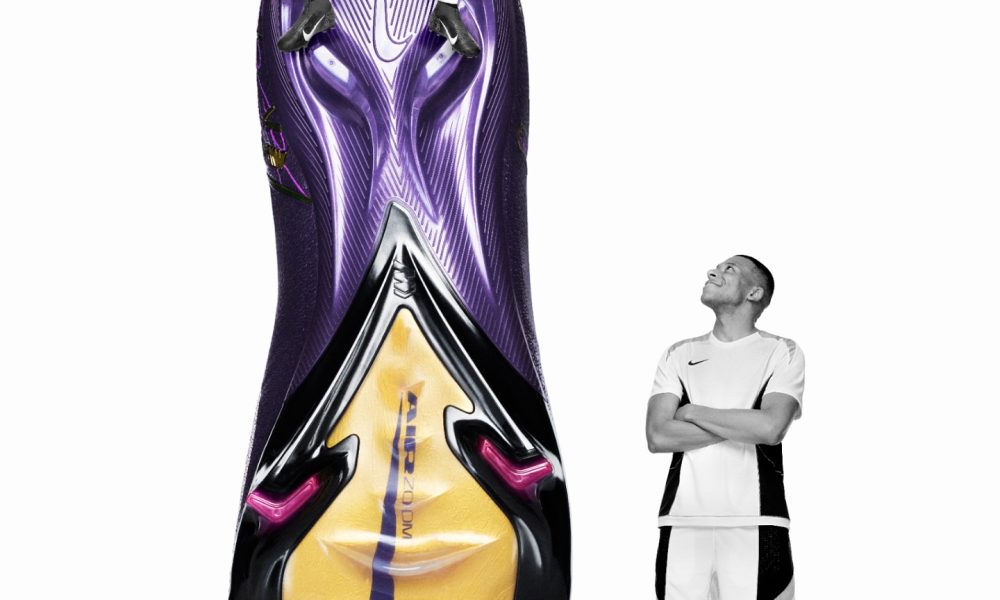 has always dreamed in Mercurial. Now his initials are on the boots.
The new Kyl…
has always dreamed in Mercurial. Now his initials are on the boots.
The new Kyl…
-
 Rec Sports3 weeks ago
Fargo girl, 13, dies after collapsing during school basketball game – Grand Forks Herald
-
 Sports3 weeks ago
Utah State Announces 2025-26 Indoor Track & Field Schedule
-
 Motorsports3 weeks ago
Redemption Means First Pro Stock World Championship for Dallas Glenn
-
 Sports3 weeks ago
Texas volleyball vs Kentucky game score: Live SEC tournament updates
-
 Motorsports2 weeks ago
Jo Shimoda Undergoes Back Surgery
-
 NIL2 weeks ago
Bowl Projections: ESPN predicts 12-team College Football Playoff bracket, full bowl slate after Week 14
-
 Rec Sports2 weeks ago
Robert “Bobby” Lewis Hardin, 56
-
 Rec Sports2 weeks ago
How this startup (and a KC sports icon) turned young players into card-carrying legends overnight
-
 Motorsports5 days ago
SoundGear Named Entitlement Sponsor of Spears CARS Tour Southwest Opener
-
 NIL3 weeks ago
Indiana’s rapid ascent and its impact across college football