Dante Moore has played himself into a top pick if he comes out for the draft. (CFP/Getty Images)

What makes a good job in college football?
It’s a question that is more relevant than ever as the coaching carousel spins, potentially to record heights in 2025 with 10 FBS coaches already axed and plenty more firmly on the hot seat.
In the past, it used to be pretty easy to answer.
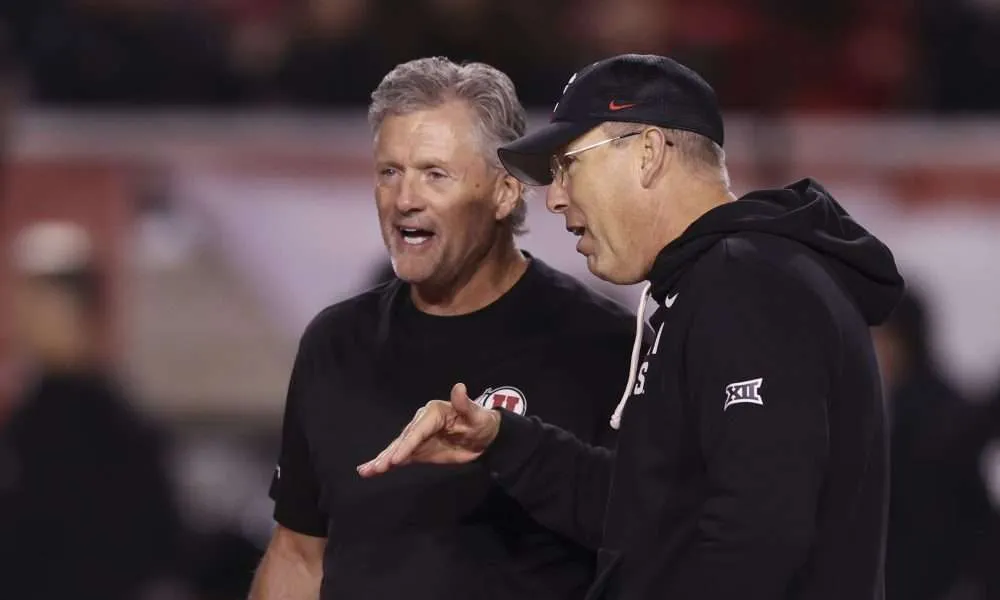
Draw a circle 200 miles around your school and see just how many four- and five-star recruits are in that radius. Factor in the trophy case. Count up the number of millionaires and billionaires who give regularly. See if there’s a dedicated football facility built within the past decade. Check if the athletic director knows what they’re doing and if there’s greater institutional alignment to support the football program.
That typically added up to a handful of the usual bluebloods, a select number of high-strivers.
Get SI’s College Football Newsletter. dark. FREE. SI College Football Newsletter
Nowadays though, it’s not quite as easy. Coaches—and their agents—are increasingly factoring in NIL and revenue-sharing support. Facilities and the recruiting base are not quite as prominent as they once were when it comes to building out a roster. Alignment with a school’s administration can now include a general manager.
Finally, there’s the matter of that paycheck.
In the past, a coach having success at a place like Indiana would have made them run to a bigger program before the calendar turned to December. Just last week though, Curt Cignetti signed a megadeal to remain in Bloomington, Ind., instead of seemingly even entertaining the idea of going to a place like Florida or Penn State. In the span of just a few months, a gig like Virginia Tech is viewed differently amid increased talk of investment from the school.
While not all things are guaranteed when it comes to winning in college football, the fewer obstacles there are on and off the field tend to make for a clearer path to success.
Here, we take a look at each of the Power 4 conferences and which jobs are better than others in a bit of a vacuum. Recruiting base, donor support, NIL, school leadership, staff salary pool, historic success and facilities were factored in. The result is the coaching job pyramid, from the best gig in each league down to the stepping-stone jobs that make up the base.
First is the ACC, which has a trio of jobs in a much different class, a number of spots that are aiming high in the College Football Playoff era and much of the league trying to eliminate roadblocks and start thinking football first instead of prioritizing basketball. We also ranked the Big 12 here.
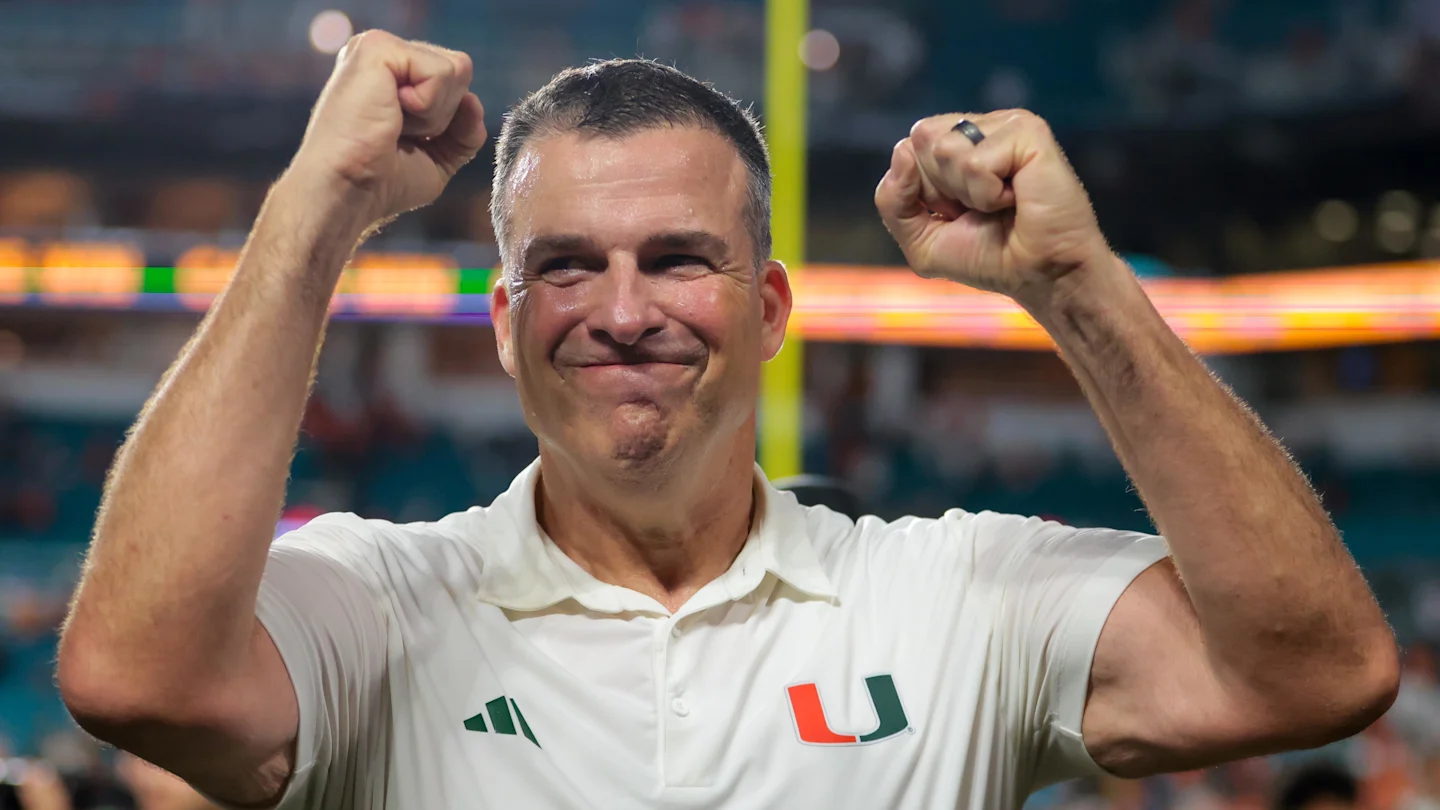
The Hurricanes have experienced plenty of hollow years on the field the past few decades, but there’s little question that this is a job where you can win a national championship. Even better, there’s enough talent to do so within a two-hour drive from campus. What is really beneficial for current coach Mario Cristobal is that it’s a job that is much better than it was just a few years ago. There’s significantly better alignment with the school, several facilities upgrades in the works and notable investment in NIL with donors. Putting it all together to actually achieve what Miami is capable of has been a challenge, but on paper this is a place where you can win and win big.
The ACC’s two most recent national championship programs are Clemson and Florida State, which are great jobs despite the current team’s on-field struggles. Each is one of the biggest spenders in the league in the coaching staff, roster and facilities (especially lately). There’s excellent access to talent, too, between Florida and Georgia. The Tigers, likewise, get plenty of players from the nearby Atlanta area, the state of Florida, the Carolinas, plus the typical national recruiting that has become more prominent under Dabo Swinney. Don’t overlook the appeal that Clemson has, were it to ever come open, for its stable leadership at the top, too.
These four programs are a perfect example of forward thinking that better allocates resources to the gridiron instead of the hard court as of late (though all still do plenty of that). The Cardinals have become one of the success stories of conference realignment from the past two decades and have parlayed a real history of winning on the field to keep elevating the program. You probably wouldn’t have found SMU, North Carolina or Duke anywhere near this spot five or six years ago. The Mustangs are in the middle of one of the most talent-rich areas in the country. Their deep pockets have not only gotten them an invite to the power conference, but allowed them to get to the playoff and keep building their roster. The Blue Devils have historically been pushing a boulder up the hill as one of the worst jobs, but have changed their tune on football to properly invest in the program. They benefit from a much better region to recruit high school and portal players. The Tar Heels have long been labeled a sleeping giant and, even amid diminishing returns on the Bill Belichick experiment this season, seem to have understood what needs to happen moving forward despite previous internal resistance.
This is basically the old ACC Coastal crew, with honorary member NC State, that traded the division title around all the time but never could quite break through a glass ceiling. Each spot has proven you can have a few good seasons but sustained success at a high level can be difficult unless you have a truly great head coach in charge. Many have also been slow to embrace the NIL era and whatever benefits they could have in terms of general access to talent have never been realized.
All of these jobs can occasionally produce a quality run of several successful seasons but more often than not have roadblocks that will ultimately balance out any positives. This includes everything from resources (Cal, Boston College), admissions (Stanford), small size (Wake Forest) or access to talent (Syracuse). Still, each spot is a place you can win at for stretches if you can get everything pulling in the right direction and ride a quality quarterback to success.
Listen to SI’s new college sports podcast, Others Receiving Votes, below or on Apple and Spotify. Watch the show on SI’s YouTube channel.

In the wake of the University of Georgia Athletic Association (UGAA) recently suing him for $390,000 over a breached NIL deal, Missouri defensive end Damon Wilson II—who played for the Bulldogs in 2023 and 2024—sued UGAA and others on Tuesday. Wilson insists his NIL deal wasn’t a contract and thus isn’t enforceable, and that UGAA falsely told other schools he had to pay a $1.2 million buyout to transfer.
Wilson’s complaint was filed in Boone County (Mo.) Circuit Court, a potentially friendlier forum for the Tigers star than Athens-Clarke County (Ga.) Superior Court, where UGAA sued him in October.
Advertisement
More from Sportico.com
As detailed by Sportico, UGAA seeks a court order to compel arbitration. On Dec. 21, 2024, Wilson signed what UGAA says was a 13-month, $500,000 NIL deal with Classic City Collective (CCC)—a Georgia-aligned former NIL collective that shut down after U.S. District Judge Claudia Wilken approved the House settlement. In that process, CCC assigned its Wilson contract to UGAA, meaning the athletic association has the legal right to enforce the contract.
Four days after he signed the original agreement—Christmas Day 2024—CCC paid Wilson $30,000. In early January, the player entered the transfer portal and then joined Missouri. UGAA contends that Wilson breached his NIL deal by entering the transfer portal and that the deal contains a $390,000 liquidated damages provision. In general, a liquidated damages provision is designed to clarify the amount of money a contracting party owes in the event of a breach.
Through Jeff Jensen, Bogdan Susan and other attorneys from Torridon Law and Holder Susan Slusher, Wilson offers a very different retelling of events.
Advertisement
Wilson argues he only signed a term sheet that “contained a non-binding list of key terms” that “would be used to create a legally binding document.” The term sheet, Wilson says, went so far as to say it “precedes” a “full License and Option Agreement” that would reflect a “full legal contract.” The term sheet also allegedly directs Wilson to “seek legal counsel” before signing a “full License and Option Agreement.” Wilson says CCC didn’t present him with the full agreement and thus he wasn’t in contract with CCC.
Wilson’s complaint implies he was surprised when, four days after signing the term sheet, he was paid $30,000. When CCC later demanded he pay $390,000, Wilson says that was part of UGAA’s “coordinated effort” to “strong-arm” the player and “punish” him for entering the portal. Wilson contends that UGAA has violated confidentiality provisions in the term sheet by leaking term sheet provisions “to sympathetic news outlets and affiliates to tarnish Wilson’s reputation.”
Further, Wilson claims that UGAA has no right to compel arbitration since—he says—he never agreed to mandatory arbitration. As described by Wilson, the term sheet ambiguously references “arbitration” and omits key details including the method for appointing an arbitrator, the applicable procedure for arbitration and a specific scope of topics subject to arbitration.
Wilson describes UGAA and by extension “sophisticated and prominent universities like Georgia” as “exploiting their bargaining power” in the aftermath of the House settlement. Among other features, the settlement allows participating colleges to directly pay athletes a share of up to 22% of the average power conference athletic media, ticket and sponsorship revenue. Wilson points out this new framework means schools can “directly enter into NIL agreements” with athletes and “thus no longer rely on a collective or similar intermediary to arrange NIL deals.” He contends schools are abusing this newfound power to convince athletes “to sign NIL agreements with unconscionable and unenforceable provisions that the universities can use to threaten a student-athlete who is considering transferring and prevent the student-athlete from realizing the benefits of free and open competition for their athletic services.”
Advertisement
Much of Wilson’s complaint rebukes the liquidated damages provision. Wilson claims UGAA “weaponized this provision” by “falsely representing” to coaches of at least three other schools where Wilson “actively discussed potentially transferring” that he would be liable for a $1.2 million buyout.” These alleged representations, Wilson argues, financially harmed him since it denied him a chance to realize “the benefits of free and open competition for his athletic services and his NIL licensing rights.”
The Missouri DE also attacks the structure of the liquidated damages provision. He argues it “makes no attempt” to connect what he would have to pay with a “reasonable estimate of the harm to CCC that would result from a breach.” In other words, Wilson describes the provision as imposing an excessive penalty that is more about punishing him than compensating CCC. Wilson says the provision is “masquerading” under the moniker “liquidated damages” when it should be better understood as an unconscionable “penalty provision” designed to retaliate against him for entering the transfer portal.
Wilson’s complaint seeks a judicial declaration that the term sheet is unenforceable, or if it is enforceable, the arbitration and liquidated damages provisions within it are unenforceable. Claims for tortious interference, civil conspiracy, defamation and breach of confidentiality are included, too.
“Damon never had a contract with them,” Jensen, Wilson’s attorney, said in a statement. “I don’t see how Georgia thinks intimidation and litigation will help their recruitment efforts—maybe players could bring lawyers with them to practice.”
Advertisement
In the coming days and weeks, expect attorneys for UGAA to raise several counterarguments.
They will assert the dispute should be heard in Georgia, not Missouri, since UGAA filed first and the center of the controversy arguably occurred in Georgia. UGAA attorneys will also contend that Wilson and CCC signed an enforceable contract that contains the basic elements of a contract, including offer, acceptance and, with Wilson accepting the $30,000 payment, a bargained-for exchange.
Similarly, UGAA will insist the arbitration and liquidated damages provisions are reasonable in the context of NIL at a power conference school and binding. To that end, expect UGAA to note that Wilson was an adult when he signed the NIL contract/term sheet—he was 19 years old and thus not a minor—and that CCC’s recommendation he hire an attorney didn’t create an obligation on the part of CCC to stop negotiating with him if he hadn’t secured an attorney.
Best of Sportico.com
Advertisement
Sign up for Sportico’s Newsletter. For the latest news, follow us on Facebook, Twitter, and Instagram.
Amateurism in college sports has all but disappeared. The speed at which the landscape has changed could give even the most die-hard fan whiplash.
In a new ESPN E60 special, “Paid to Play: Understanding College Sports in 2025,” Jeremy Schaap delves into how the idea of playing for school pride, tradition and the love of the game has morphed into a high-stakes name, image and likeness marketplace where athletes can play for the highest bidder — receiving direct payments from schools — and have the freedom to bolt through free agency in the form of the NCAA transfer portal.
Here are key facts about the new ESPN E60 special:
When will ‘Paid to Play: Understanding College Sports in 2025’ air?
The one-hour report debuts Sunday, Dec. 28, at 8:30 p.m. ET.
How can fans watch?
Fans can watch the debut on ESPN. The program will be available in the ESPN App immediately following the television premiere. Watch it and other reports in the E60 streaming hub.
Do you have what it takes to be an AD?
Related to the subject of the new E60 special, ESPN has an original interactive game that puts fans in the role of a college athletic director, guiding them through decisions around name, image and likeness, the transfer portal and more, and offering a dynamic and engaging look at the ever-evolving landscape of college sports.
What is ESPN E60?
Founded in 2007, E60 is ESPN’s storytelling brand that features a mix of revealing profiles, hard-hitting investigations and exclusive interviews. It has received numerous awards and accolades, including the Sports Emmy for Outstanding Hosted Edited Series for the fifth time in 2025.
How can fans access more college sports coverage from ESPN?
Check out the ESPN college football, men’s college basketball, women’s college basketball and college sports hub pages for more content.

With a spot in the College Football Playoff Semifinals on the line, No. 4 Texas Tech and No. 5 Oregon will clash in the Capital One Orange Bowl on Jan. 1. The Ducks are seeking their first appearance in the Semifinals since they made a run to the National Championship in the inaugural CFP (2014), while Texas Tech is seeking its first ever CFP victory.
Both programs are great success stories of the Transfer Portal era, as many players that will suit up for either Texas Tech or Oregon in the matchup began their careers elsewhere.
Advertisement
High-level players such as Oregon quarterback Dante Moore (UCLA), Texas Tech linebacker Jacob Rodriguez (Virginia), Oregon running back Noah Whittington (Western Kentucky), and Texas Tech wide receiver Caleb Douglas (Florida) have all made their way to their respective programs by way of the Transfer Portal and have been immediate impact pieces.
This past offseason, Texas Tech hauled in 21 players from the Portal, earning the No. 1 spot in On3’s 2025 College Football Team Transfer Portal Rankings. Their class boasted an estimated $7 million in adjusted NIL value, more than almost any other program in the sport.
Prior to the Ducks’ clash with Joey McGuire‘s Texas Tech program, Oregon head coach Dan Lanning commended him on building such a great roster with their strong NIL resources.
Advertisement
“He’s built a great roster,” Lanning said on Monday. “College football is about adapting. This is obviously a program that’s done an unbelievable job adapting and saying ‘let’s make our team the best it can possibly be’. They’ve done that this year. They deserve credit for how they’ve evaluated. There’s a lot of teams that take players out of the portal. There’s not a lot of those teams that necessarily have success evaluating that talent, getting them to play together, and creating a team that does that. This is a team that’s done that.”
As Lanning touched on, mastering the Portal is a very thin line. Five of the top-ten transfer classes this offseason helped their programs reach the College Football Playoff (No. 1 Texas Tech, No. 3 Ole Miss, No. 4 Oregon, No. 5 Miami, and No. 10 Ohio State), while three of the top-ten classes missed the postseason completely (No. 7 Auburn, No. 8 North Carolina, and No. 9 Rutgers).
The Orange Bowl matchup between No. 4 Texas Tech and No. 5 Oregon will surely be one of the most entertaining games in the entire College Football Playoff. Kick-off on Jan. 1 is scheduled for 12:00 PM on ESPN.
Dec. 26, 2025, 5:33 a.m. ET

BLOOMINGTON — On Sept. 14, 2024, Indiana University’s football team was scheduled to play UCLA in Pasadena. In a stadium called the Rose Bowl.
The week before, I sat at the bar in Binkley’s Kitchen in Broad Ripple and watched the Hoosiers blast Western Illinois 77-3. I pondered, should I book a flight to LAX to watch, perhaps for the only time in my life, the Hoosiers play in the Rose Bowl?
As a tormented sports fan, I had overcome dozens of forlorn seasons to witness my Chicago Bears and Indianapolis Colts win Super Bowls in 1986 and 2007, and in 2005, the seeming impossible, a World Series title for my winning ugly Chicago White Sox.
But IU’s football team? With at 715 losses the most in NCAA Division 1 history? C’mon, man.
The enduring pain of Hoosier fandom, spanning decades since IU’s only New Year’s Day Rose Bowl in 1968 when O.J. Simpson’s USC Trojans won 14-3, has been palpable. We share one of the smallest states in the Big Ten with Purdue and Notre Dame.
There were lingering ghosts. When legendary Ohio State coach Woody Hayes lost his first game to IU 32-10 in 1951, he vowed he would never lose to the Hoosiers again. He ended up going 22-0-1 since. IU didn’t defeat Ohio State again until 1987, after Hayes had died in March of that year. We watched Coach Lee Corso pose for a first half team photo with the scoreboard showing IU leading Ohio State, only to suffer yet another blow-out loss. Corso’s weekly TV show featured him rising out of a coffin, declaring to Sammy Terry vibe, “We’re not dead yet!”
There was IU’s most successful football coach, Bill Mallory, going 0-11 in his first season. There had been IU’s annual traipse through the Big Ten’s murderer’s row Eastern Division where we had to play Ohio State, Michigan, Michigan State and Penn State … every year. And then came a second wave of brutality, with USC, UCLA, Oregon and Washington joining what had been a Midwestern conference.
There was the year runningback Anthony Thompson was poised to win the Heisman Trophy, only to lose the Oaken Bucket game to Purdue, finishing with a 5-6 record. No Heisman.
The first time I thought I had a glimpse of an Indiana University Big Ten football title came in November 1987 when the Hoosiers invaded Michigan State with the winner destined for the Rose Bowl. I entered the packed stadium press elevator and it lurched into motion, only to come to a halt between floors. As the temperature escalated, we all glanced at the ceiling that had no escape hatch. About seven minutes later and with a hint of panic, the car began to move, and as the doors opened into the press box, we all sprang out to begin our reporting.
By dusk, Michigan State throttled the Hoosiers 27-3. A New Year’s Day Rose Bowl berth would have to wait another 38 years.
Coach Curt Cignetti was hired in November 2023, just weeks after IU’s legendary basketball coach Bob Knight died. Cignetti told fans at Assembly Hall, “Google me. I win.”
Coach Cig has created this IU phoenix with James Madison University and portal transfers, as well as NIL money, leveling the playing field with the SEC. Earlier this month, IU finally defeated Ohio State 13-10 to win its first Big 10 title since 1967. Quarterback Fernando Mendoza finally brought a Heisman Trophy back to B-ton. Cignetti unveiled his 2026 recruiting class that is studded with a half dozen four-star recruits.
Yes, IU could become a football power house.
“Great win; gutty game; hard-fought, physical football game,” Cignetti said after defeating Ohio State. “Wasn’t perfect by either team. We found a way to survive it, made the plays when we had to. And I thought, once again, when the game was on the line, you know, Fernando was throwing dimes and Charlie Becker was showing up making big plays and (Elijah) Sarratt with a big touchdown, our defense created a lot of issues.
“It’s another step we need to take as a program,” Coach Cig continued. “It’s a great win, obviously. And we’re going to go in the playoffs as the No. 1 seed. And a lot of people probably thought that wasn’t possible. But when you get the right people and you have a plan and they love one another and play for one another and they commit, anything’s possible. And I think that’s what you saw happen here.”
He added, “I’ve got three and a half weeks to get this team humbled for the playoffs.”
Yes, the playoffs, where the top-ranked Hoosiers are the No. 1 seed, scheduled to play Alabama’s Crimson Tide on New Year’s Day … in the Rose Bowl. The Hoosier Hundred Marching Band will be featured in the Tournament of Roses Parade.
It all is cascading around us like a dream, 50 years after Bob Knight led the undefeated Hoosiers basketball team to an NCAA championship.
The Hoosiers are now being mentioned in the same sentence with the words “national football title.”
IU a football national champion? Perhaps there’s as much a chance of that happening as the Chicago Bears building a stadium in northwest Indiana.
Brian A. Howey is a senior writer and columnist for Howey Politics Indiana/State Affairs.
It’s late December, and we still have nearly a month left of college football.
That means we still have a month to see which players will increase their draft stock in some incredible College Football Playoff matchups. FOX Sports Research has put together a mock for the 2026 NFL Draft ahead of the CFP quarterfinals.
The draft order below was determined by aggregating several projections for each team while still factoring in trades involving draft picks to account for teams with multiple selections.
Let’s take a look.
Note: Several players expected to declare for the 2026 NFL Draft have not because of their participation in upcoming CFP games; below is a projection of players who are expected to declare at the conclusion of their respective seasons.
This page may contain affiliate links to legal sports betting partners. If you sign up or place a wager, FOX Sports may be compensated. Read more about Sports Betting on FOX Sports.
1. New York Jets (from Giants): Fernando Mendoza, QB, Indiana
The Jets are in desperate need of a franchise quarterback, and Mendoza has exhibited all the tools you want to see in a top QB prospect: elite arm strength, the ability to throw into tight windows, and sneaky mobility for a 6-foot-5 signal caller. The Heisman winner leads all of FBS with 33 pass touchdowns this season, which is also the Indiana single-season record.
With a couple more clutch performances in the CFP, it’ll be tough for any team to pass on him with the first pick.
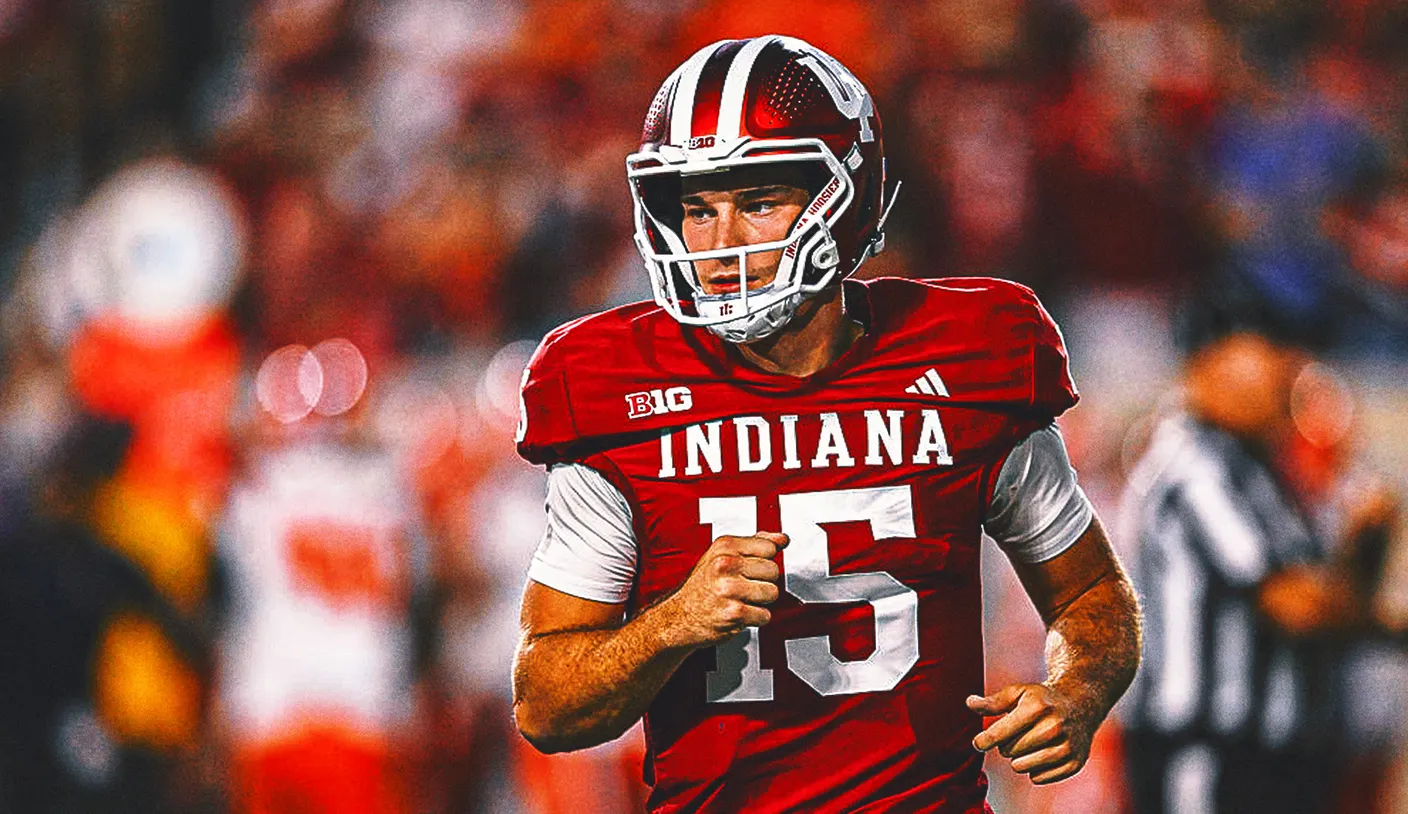
2. Las Vegas Raiders: Dante Moore, QB, Oregon
Geno Smith is 35 years old and hasn’t lived up to expectations in Las Vegas. Moore was the third-ranked QB in his high school class and fourth-ranked player in the country (according to 247Sports) and has shown flashes of brilliance all year.
Moore can escape the pocket, but he’s still an extremely accurate passer with a completion rate of 72.4% on the year. The Oregon Duck is one of three Power 4 quarterbacks to have completed over 70% of his passes, been responsible for 30 or more TDs, thrown for over 3,000 yards, and have less than 10 interceptions. The other two were Julian Sayin and Diego Pavia, both Heisman finalists.
Dante Moore has played himself into a top pick if he comes out for the draft. (CFP/Getty Images)
3. Cleveland Browns: Francis Mauigoa, OT, Miami
While Cleveland could really use a receiver, it has two picks in the first round and can get better value at that position later in the first round. Mauigoa is a blue-chip prospect with freakish tools for an offensive lineman. According to Pro Football Focus (PFF), he’s given up just three sacks in 1,015 pass blocking snaps over the past two seasons – and in 2023, he was a freshman All-America selection. He can also move into the interior with his frame and agility.
4. New York Giants (from Jets): Spencer Fano, OT, Utah
At 6-foot-6 and 308 pounds, Fano is another new-era offensive tackle with incredible athleticism for his size. In three seasons, he’s given up just three sacks and seven QB hits, highlighted by a 2025 campaign in which he didn’t allow a single sack in 382 pass blocking snaps (according to PFF).
With Jaxon Dart under center for the future, this is a step in the right direction for New York to build around him. Fano and Mauigoa are the 1A and 1B offensive tackles in this draft.
5. Tennessee Titans: Carnell Tate, WR, Ohio State
Easily the best receiver in this draft, Tate is next in the long line of pro Buckeye receivers. With a disappointing and injury-riddled season from Calvin Ridley, he would be the surefire top target for Cam Ward and the ultimate security blanket for the young QB.
At 6-foot-3, 195 pounds, he’s a big receiver who can dominate in the red zone while also serving as a deep threat. This year, he’s one of 10 Power 4 receivers to have nine receiving TDs and over 800 receiving yards.
6. Arizona Cardinals: Arvell Reese, LB, Ohio State
A big riser on draft boards over the past few months, Reese has cemented himself as the clear-cut best linebacker in this draft. Due to his elite speed for his size, he can drop back into coverage as an off-ball backer or line up on the edge and rush the passer. Reese has 6.5 sacks and two passes defended on the year, and 105 total tackles in two seasons for the Buckeyes.
Reese is an instant boost for a struggling Cardinals defense.
7. Washington Commanders: Caleb Downs, S, Ohio State
Downs might be the smartest football player in this draft, having lined up all over the field during his time at Alabama and Ohio State. This past season, he has played 34 snaps on the defensive line, 214 in the box, 134 at slot corner, nine at wide corner, and 226 at free safety. For his career, he’s totaled 248 tackles, 158 solo tackles, 10 passes defended, and six interceptions.
There is nothing Downs can’t do, and whatever team gets him is landing a perennial Pro Bowler.
8. New Orleans Saints: Rueben Bain, EDGE, Miami
Bain might have the best film of any edge player in this draft, dominating teams like Notre Dame, Florida and most recently Texas A&M. In that first round CFP game, he had a whopping three sacks against an Aggies offensive line that had given up just 12 in 12 games.
Bain is also an elite run stopper and can move inside when needed. According to PFF, he’s the only player in FBS to have over 400 pass-rushing snaps with a pass-rush grade over 90. The other five players to exceed 400 pass-rushing snaps didn’t break a grade higher than 78.9, and he also has a run defense grade of 86.7.
Bain is the perfect replacement for Cam Jordan.
9. Cincinnati Bengals: Peter Woods, DL, Clemson
While Clemson had a down year, Woods has too many tools for any team looking for a dominant defensive lineman to pass on.
At 6-foot-3, 315 pounds, he’s reported to have a lean muscle mass percentage of 77%. He’s also another player who was a freshman All-American in 2023 and posted a dominant follow-up campaign in 2024 while playing both defensive end and tackle for the Tigers. Woods finished 2025 with a career-high 30 tackles along with two sacks.
10. Kansas City Chiefs: Jeremiyah Love, RB, Notre Dame
The Chiefs rank in the bottom 11 of the league in rushing at 108 yards per game. Love has 35 rushing touchdowns since 2024, which is the most of any player in that span, and has averaged 6.9 yards per carry over the last two seasons with a whopping 2,497 rushing yards.
Love would be a massive boost for a KC team that will need to establish the run more as Patrick Mahomes returns from a torn ACL.
Jeremiyah Love will be a popular name on fantasy draft boards in 2026. (Michael Miller/ISI Photos/ISI Photos via Getty Images)
11. Miami Dolphins: Mansoor Delane, CB, LSU
No player in Power 4 had a higher pass coverage grade on PFF than Delane at 90.9. In 357 coverage snaps, he gave up just 13 receptions for 147 yards and no touchdowns with opposing QBs sporting a 26.7 passer rating when targeting him.
Miami needs immediate help at the position, with four cornerbacks on injured reserve at the end of the season. Delane should be an instant starter for them.
12. Los Angeles Rams: Kadyn Proctor, OT, Alabama
Matthew Stafford is the current MVP favorite with no signs of slowing down. At 37 years old, everything the Rams do from a roster construction standpoint should and will likely be with the intent of winning a Super Bowl immediately.
Proctor is a specimen at 6-foot-7, 366 pounds and has given up just five sacks in the last two seasons (according to PFF). Rob Havenstein is 33 years old and dealing with injuries, making this an ideal fit for Los Angeles.
13. Baltimore Ravens: Keldric Faulk, EDGE, Auburn
Faulk is a monster at 6-foot-6 and 288 pounds, and he displayed an incredible ability to blow past offensive tackles in the SEC over the past two seasons. He posted 11 tackles for loss, seven sacks and 45 total tackles for the Tigers in his true sophomore season in 2024.
Despite less production in 2025, he has Baltimore Raven written all over him, given his tools and athleticism.
14. Tampa Bay Buccaneers: Sonny Styles, LB, Ohio State
If it weren’t for Arvell Reese, Sonny Styles would be getting a lot more recognition as a Buckeye linebacker. In his past two seasons at Ohio State, he’s totaled 181 tackles, 94 solo tackles, eight passes defended, 6.5 sacks, and two forced fumbles. He hits like a truck and can move well in space.
Lavonte David is 35 years old and this is a good chance for Tampa to replace him.
15. Dallas Cowboys: CJ Allen, LB, Georgia
The heartbeat of Georgia’s defense this year, Allen is a tenacious tackler who thrives in the run game and can also cover receivers in the slot. Dallas has bolstered its defensive line with Kenny Clark and Quinnen Williams, but it needs an off-ball backer with a high IQ to prevent explosive plays at the second level.
In three seasons with the Bulldogs, Allen totaled 202 tackles, 115 solo tackles, 10 passes defended, 4.5 sacks, and two forced fumbles.
16. Detroit Lions: David Bailey, EDGE, Texas Tech
Bailey is second in all the FBS in sacks at 13.5 and leads all Power 4 players, as well. Even looking back at his three seasons at Stanford, he’s had consistent production, with totaling 28 sacks from 2022 to 2025, the third-most of any player in that span.
Bailey is a bit undersized at 6-foot-3 and 250 pounds, but there’s no denying his bend and burst off the edge. He should be a huge help to a Lions defense that has struggled all season.
17. Minnesota Vikings: Avieon Terrell, CB, Clemson
The brother of All-Pro corner A.J. Terrell, Avieon has had a ton of production in three seasons at Clemson, recording 25 passes defended, 125 total tackles, eight forced fumbles, four sacks, and three interceptions in 1,860 defensive snaps played in that span.
Avieon will be a great compliment to a secondary already featuring Byron Murphy and Isaiah Rodgers.
18. New York Jets: Jermod McCoy, CB, Tennessee
If he didn’t tear his ACL back in January and miss the entire 2025 season, McCoy would easily be the first corner taken in this draft. He was a first-team All-American last season, finishing with four interceptions and seven passes defended while also holding opposing QBs to a 53.6 passer rating (PFF).
With the departure of Sauce Gardner, McCoy would be a huge addition to New York’s secondary.
19. Carolina Panthers: Kenyon Sadiq, TE, Oregon
Sadiq is the best tight end in the draft, and it’s not close. He can run, block well and has great hands. His eight receiving touchdowns was the most of any tight end in FBS, making him a big-time red zone threat, as well.
Carolina could go with a defensive player here, but quarterback Bryce Young has taken a huge step this year. A lot of that progress has to do with the addition of wide receiver Tetairoa McMillan in last year’s draft. Expect the Panthers to continue to give their young QB offensive weapons.
Kenyon Sadiq is likely to be the first tight end taken in the 2026 draft. (Randy Litzinger/Icon Sportswire via Getty Images)
20. Pittsburgh Steelers: Ty Simpson, QB, Alabama
It’s still unclear if he’ll return to school, but Simpson is the clear No. 3 QB in this draft. He’s had a mix of incredible games along with some terrible ones, but his decisiveness and accuracy are tools teams can work with. On the year, he’s thrown for 3,500 yards, 28 touchdowns and just five interceptions. He also just took down a vaunted Oklahoma defense on the road in the first round of the CFP.
Regardless of whether the Steelers re-sign Aaron Rodgers, they’ll need to draft a quarterback at some point in this draft. Simpson would be a good pick, and Pittsburgh would be a solid landing spot.
21. Dallas Cowboys: Brandon Cisse, CB, South Carolina
Trevon Diggs and DaRon Bland both dealt with injuries this season, and the Cowboys defense is giving up 253.6 passing yards per game, which is the worst mark in the league.
Cisse is a tough corner who isn’t afraid to tackle and has 10 passes defended over the past two seasons, and he gave up just 18 receptions and one TD in 2025 (PFF).
22. Philadelphia Eagles: Caleb Lomu, OT, Utah
Yup, Fano isn’t the only stud offensive lineman for the Utes. Lomu gave up just two sacks in 807 pass-blocking snaps over the past two seasons and is a high-ceiling prospect, having just 28 collegiate games under his belt.
Despite Lane Johnson’s dominance, he’s 35 years old and likely doesn’t have too many years left. Lomu is a more game-ready version of Jordan Mailata, who the Eagles drafted in 2018 as a project player and made First Team All-Pro last season.
23. Houston Texans: Kayden McDonald, DT, Ohio State
Sheldon Rankins has been a surprising bright spot this season, but he’s 31 years old and on a one-year deal. McDonald has been an absolute monster in the middle of Ohio State’s defensive line, which is holding opponents to 8.2 points per game and 84.5 rush yards per game.
The 6-foot-3, 326-pound defensive tackle has three sacks and two forced fumbles on the year.
24. Buffalo Bills: Makai Lemon, WR, USC
It’s amazing what Josh Allen has done despite not having a go-to deep threat in Buffalo. While Keon Coleman has shown flashes, he hasn’t been consistent or reliable enough.
Lemon won this year’s Biletnikoff Award, which is given to the best wide receiver in college football. He can also play in the slot and is tough to tackle, having also rushed for two scores on the year. In fact, he’s the only player in all of FBS to have caught 10 touchdowns and have multiple rushing scores, as well.
Makai Lemon is coming off another stellar season for USC. (Luke Hales/Getty Images)
25. Los Angeles Chargers: Matayo Uiagalelei, EDGE, Oregon
Uigagalelei is an ultra-strong player at 6-foot-5, 270 pounds, and he posted a whopping 10.5 sacks in 2024 with five so far this year. He can play both inside and out, possessing all the tools to be a dominant run stopper and pass rusher.
He has “John Harbaugh player” written all over him.
26. San Francisco 49ers: A’Mauri Washington, DL, Oregon
Washington has quickly risen up draft boards after a dominant campaign with the Ducks in his first season as a full-time starter, exhibiting elite power and quickness for someone who’s 6-foot-3, 330 pounds. If he can continue to build on his season with some dominant run-stopping play in the CFP, he could find himself in the top 20 by April.
27. Cleveland Browns: Jordyn Tyson, WR, Arizona State
Tyson could easily go top 10 or 15 in this draft, depending on how badly teams want a receiver. Tate is the clear-cut No. 1 receiver, though, so expect Tyson to fall into the end of the first round as most teams need help in the trenches or on defense.
Tyson is a big-bodied receiver at 6-foot-2, 200 pounds, and he catches everything thrown at him, serving as just the type of explosive playmaker Cleveland so desperately needs. In two seasons with ASU, he’s caught 136 balls for 1,812 yards and a whopping 18 touchdowns.
28. Los Angeles Rams: Caleb Banks, DL, Florida
It’s not often you see an interior lineman lead your team in pressures, but that’s just what Banks did for Florida in 2024 with 29. He also added 4.5 sacks and two forced fumbles. He only played three games this season due to injury, but he has all the tools to dominate at the next level with his 6-foot-6, 330-pound frame. This would be a steal for the Rams to add to a defense that already features several young stars.
29. Chicago Bears: LT Overton, EDGE, Alabama
Overton fits the mold of all the past Alabama defensive linemen over the past decade in that he’s incredibly athletic, nasty, physical and relentless.
At 6-foot-5, 283 pounds, he can play inside and can thrive in multiple schemes. Chicago can go with an offensive player here, but Overton has the potential to be a game-wrecker for it if he’s available.
30. New England Patriots: T.J. Parker, EDGE, Clemson
Like most of Clemson’s stars this season, Parker had a less productive 2025, only finishing with five sacks and 37 tackles. His 2024 tape is undeniable, though, with 11 sacks and six forced fumbles. He’s showcased above-average bend during his time at Clemson and can also drop in coverage. Parker’s 12.5 tackles for loss in 2023 were also a school record for a true freshman.
Patriots head coach Mike Vrabel could very well fulfill all the potential scouts saw in him going into the season.
31. Seattle Seahawks: Cashius Howell, EDGE, Texas A&M
Howell ranks fourth in FBS in sacks since 2022 with 27 to his name in that span, but he’s a bit undersized at 6-foot-2, 248 pounds. Still, he has an incredible burst off the edge and would be a great supplement to 33-year-old DeMarcus Lawrence, who has two years left on his contract with Seattle.
32. Denver Broncos: Olaivavega Ioane, OG, Penn State
There isn’t much Denver needs, currently sitting at 13-3. But Ioane is easily the best guard in the draft and could be a steal for them, as Ben Powers only has one year left on his contract after 2025.
This season, Ioane was the only Big Ten guard to play 300+ pass blocking snaps, record a pass block grade of 87+ and not give up a single sack or QB hit.
Fernando Mendoza: -200 (bet $10 to win $15 total)
Dante Moore: +250 (bet $10 to win $35 total)
Rueben Bain Jr.: +750 (bet $10 to win $85 total)
Arvell Reese: +1400 (bet $10 to win $150 total)
Ty Simpson: +2200 (bet $10 to win $230 total)
Keldric Faulk: +5000 (bet $10 to win $510 total)
Jordyn Tyson: +8000 (bet $10 to win $810 total)
Francis Mauigoa: +10000 (bet $10 to win $1,010 total)
T.J. Parker: +10000 (bet $10 to win $1,010 total)
Spencer Fano: +10000 (bet $10 to win $1,010 total)
Peter Woods: +10000 (bet $10 to win $1,010 total)
David Bailey: +10000 (bet $10 to win $1,010 total)
Cashius Howell: +10000 (bet $10 to win $1,010 total)
Garrett Nussmeier: +10000 (bet $10 to win $1,010 total)
Drew Allar: +10000 (bet $10 to win $1,010 total)
Carson Beck: +10000 (bet $10 to win $1,010 total)
Carnell Tate: +10000 (bet $10 to win $1,010 total)
Caleb Downs: +10000 (bet $10 to win $1,010 total)
Want great stories delivered right to your inbox? Create or log in to your FOX Sports account, follow leagues, teams and players to receive a personalized newsletter daily.
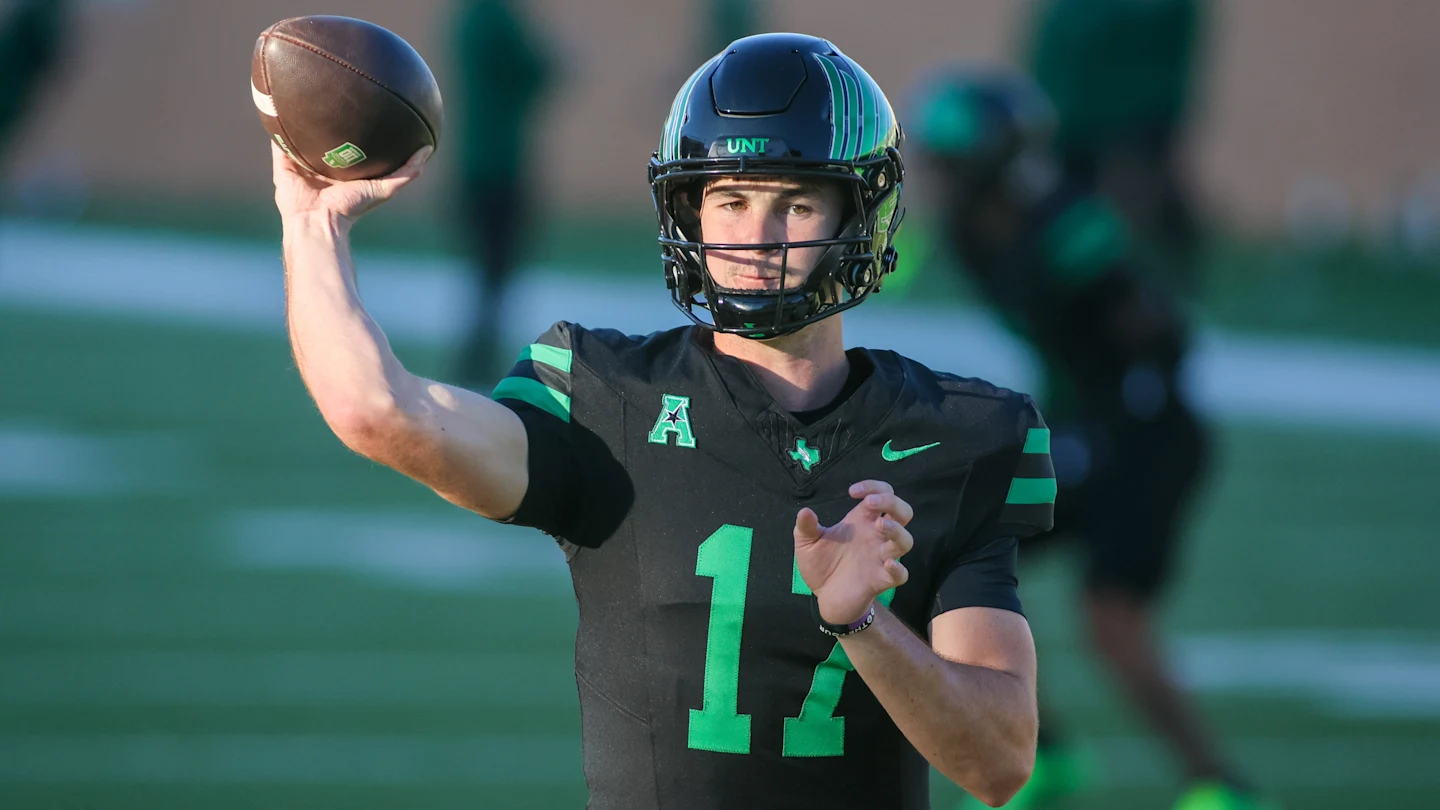
Drew Mestemaker finished this season as the most-productive single passer in college football, and now the former North Texas quarterback is poised to enter the transfer portal, setting off a bonanza to secure one of the nation’s most consequential players.
What college football programs are expected to be involved in the bidding? When considering an ideal matchup pairing, one major SEC program currently sticks out.
On3 Sports analyst Kaiden Smith outlined what he thinks is the best destination for both parties.
“If you’re Tennessee, you have this excellent track record with this offense, with transfer quarterbacks. Why not get a guy who you can get a couple years out of, as well?” Smith said.
“Parlay your offense and your transfer success with a guy who apparently is very early on his football journey in general,” he added.
Mestemaker led the FBS with 4,129 passing yards and was third in passer rating, placing behind just Heisman winner Fernando Mendoza and finalist Julian Sayin.
He completed 70 percent of his pass attempts with 31 touchdowns and only 7 interceptions, being named the American Conference Offensive Player of the Year, leading North Texas to an appearance in the league title game.
But head coach Eric Morris left the school and took the same position at Oklahoma State, so that program could emerge as a contender for the quarterback.
Recruiting transfer quarterbacks is something Tennessee has done well over the last several seasons, bringing on Hendon Hooker and then Joey Aguilar to lead productive offenses.
But both those players didn’t get to suit up for the Vols for too long. Bringing on Mestemaker would represent a longer-term investment in a very promising player.
“I think this is a guy that not only would fit perfectly with the scheme, with how quickly players have been able to understand the scheme,” Smith said.
He added: “You get a full offseason with him. But he can maybe build on that and build on that for years to come as just a redshirt freshman.”
Aguilar is about to exhaust his NCAA eligibility and with precious little experience remaining on its quarterback depth chart, Tennessee is very much in the market for a signal caller with proven experience as a starter.
Aguilar is likely on the way out and redshirt freshman Jake Merlinger is planning to enter the transfer portal.
That leaves George MacIntyre and Faizon Brandon on the Volunteers’ expected quarterback depth chart heading into 2026.
MacIntyre has played in just two games, going 7 of 9 passing with 69 yards, and Brandon was a five-star commitment in the 2026 class, but with no NCAA experience.
Tennessee could look at Mestemaker as a proven commodity worth going after now rather than waiting for their prospects to develop.
Mestemaker is only a redshirt freshman with three seasons of NCAA eligibility remaining. Tennessee going after him could potentially inspire both MacIntyre and ultimately Brandon to leave the program.
So the question for the Vols would be if he’s worth that risk.
College football’s transfer portal officially opens on Jan. 2, but that hasn’t stopped a flurry of players from entering their names for consideration at a new school right now.
The new 15-day transfer portal window from Jan. 2-16 and the elimination of the spring transfer period has condensed the timeline for players and programs to make their moves.
The NCAA Transfer Portal is a private database that includes the names of student-athletes in every sport at the Division I, II, and III levels. The full list of names is not available to the public.
A player can enter their name into the transfer portal through their school’s compliance office.
Once a player gives written notification of their intent to transfer, the office puts the player’s name into the database, and they officially become a transfer.
The compliance office has 48 hours to comply with the player’s request and NCAA rules forbid anyone from refusing that request.
The database includes the player’s name, contact information, info on whether the player was on scholarship, and if he is a graduate student.
Once a player’s name appears in the transfer portal database, other schools are free to contact the player, who can change his mind at any point in the process and withdraw from the transfer portal.
Notably, once a player enters the portal, his school no longer has to honor the athletic scholarship it gave him.
And if that player decides to leave the portal and return to his original school, the school doesn’t have to give him another scholarship.
(On3)
More college football from SI: Top 25 Rankings | Schedule | Teams
Follow College Football HQ: Bookmark | Rankings | Picks



SoundGear Named Entitlement Sponsor of Spears CARS Tour Southwest Opener

Donny Schatz finds new home for 2026, inks full-time deal with CJB Motorsports – InForum
David Blitzer, Harris Blitzer Sports & Entertainment

JR Motorsports Confirms Death Of NASCAR Veteran Michael Annett At Age 39
Elliot and Thuotte Highlight Men’s Indoor Track and Field Season Opener
West Fargo volleyball coach Kelsey Titus resigns after four seasons – InForum

Rick Ware Racing switching to Chevrolet for 2026


DeSantis Talks College Football, Calls for Reforms to NIL and Transfer Portal · The Floridian

Colleges ponying up in support of football coaches, programs

#11 Volleyball Practices, Then Meets Media Prior to #2 Kentucky Match