
NIL
Mike Vrabel responds to belief he could return to college football: ‘Not right now’

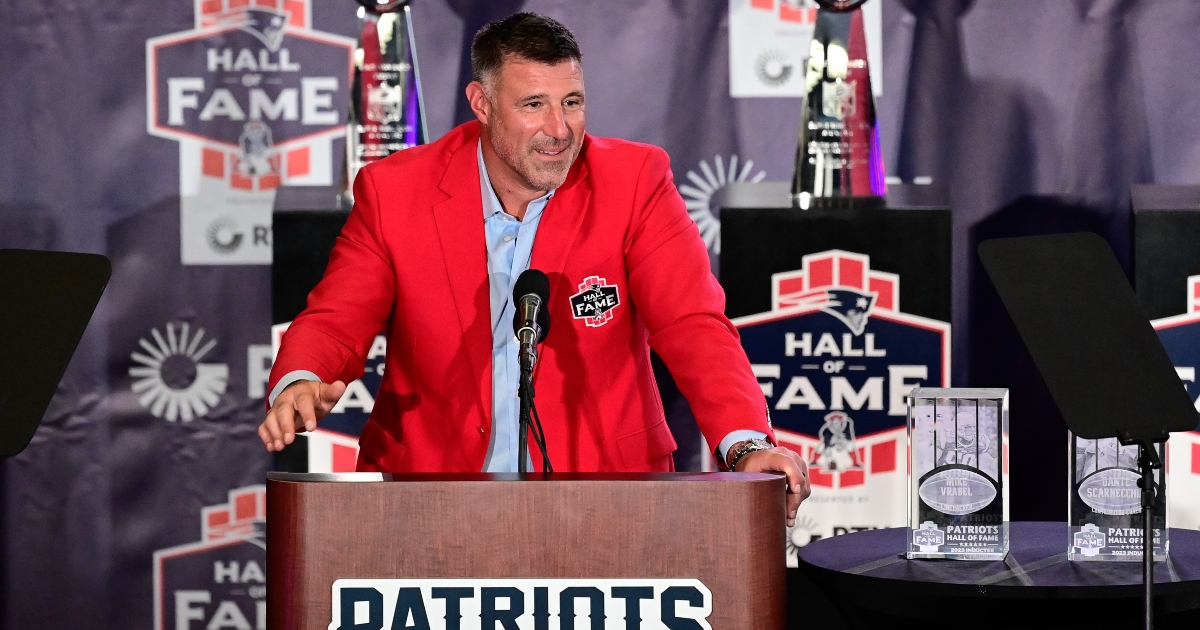
There are only 32 NFL head coaching positions and, right now, Mike Vrabel has one of them with the New England Patriots. So, it’s not a surprise that for the time being, he’s not considering a return to the college game.
The topic of the college game came up for Vrabel when he made an appearance on The Triple Option. There, he joked with Urban Meyer, whom he worked for when he was an assistant coach with the Ohio State Buckeyes.
“Three years in college was enough for me,” Vrabel said. “And I took off for the NFL and I’m sure Urban told you. Urban didn’t want to hire me. He’ll tell you, he didn’t want to hire me, or that was just his way of motivating me, and he did a good job because I learned a lot there, but I just felt like the pro game was where I wanted to be.”
Vrabel played his college football at Ohio State in the middle of the 1990s for John Cooper. He’d go on to play in the NFL for more than a decade, winning three Super Bowls for Bill Belichick and the New England Patriots. He has since been inducted into the franchise’s Hall of Fame.
After his playing career ended in 2010, Vrabel quickly got into coaching at Ohio State. At the time, he was the linebackers coach in 2011. That was the interim season for Luke Fickell between Jim Tressel and Meyer. He’d stay there through 2013 when his first NFL coaching opportunity opened up. By 2018, he’d be the head coach of the Tennessee Titans.
A bit ironically, Vrabel is now coaching the Patriots. Meanwhile, Belichick has made the jump to the college game at North Carolina. That’s something that he wishes Belichick luck with moving forward, but not something he necessarily wants for himself.
“If Bill feels like he wanted to go down to North Carolina and try to recreate that,” Vrabel said. “I wish him a lot of luck in the world, unless they’re playing Ohio State.”
It’s difficult to imagine an NFL head coach jumping to college completely on their own. Between recruiting, the Transfer Portal, and academics, there are a lot more off-the-field challenges to manage. On top of that, college jobs are generally less prestigious and while not every salary is publicly known, the NFL can almost always pay more, too. So, it’s no surprise that, for the time being, Vrabel is happy to continue leading the franchise he made his name playing for at the NFL level instead of returning to college.
“Not right now,” Vrabel said. “No. No. Not right now.”

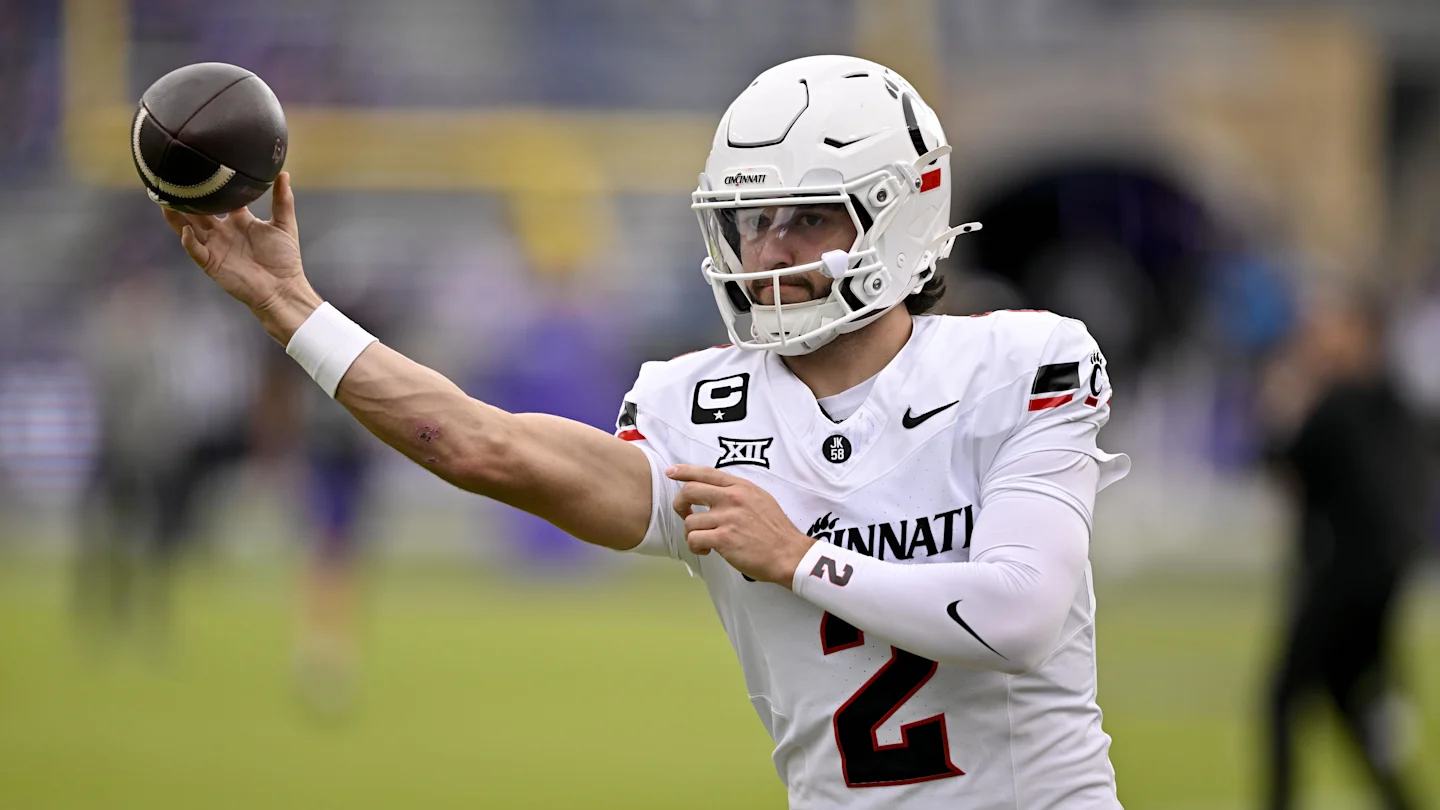
The NCAA transfer portal is officially open for all college football players seeking new schools next season. The portal is open for two weeks, officially closing on Jan. 16.
In the weeks following the conclusion of the 2025 college football regular season, thousands of players from all levels of the sport made the decision to enter the transfer portal. Some of the more marquee names in this cycle involve quarterbacks shifting the Power Four level.
One of these quarterbacks on the move is former Cincinnati signal-caller Brendan Sorsby. He will have one season of eligibility remaining at his third school.
The 6-foot-3, 235-pounder began his college football career under Tom Allen in 2022. He completed three of six passes for eight yards and an interception in a blowout loss to Penn State in his lone appearance that season.
Sorsby was featured in 10 of Indiana’s 12 games in the 2023 season. He finished the year with 1,587 passing yards, 15 touchdowns and five interceptions while rushing for another 286 yards and four touchdowns. Allen was fired that offseason, and Sorsby transferred to Cincinnati.
The Bearcats started Sorsby in all 12 games in 2024. He passed for 2,813 yards, 18 touchdowns, and 7 interceptions, while rushing for 447 yards and 9 touchdowns. Cincinnati finished that season 5-7, dropping each of its last five games.
Sorsby logged 2,800 pass yards, 27 touchdown passes and five interceptions to go along with 580 yards and nine touchdowns on the ground in 2025. He was named All-Big 12 Second Team by the Big 12 coaches. He opted out of the Liberty Bowl after deciding to transfer.
Schools searching for quarterbacks in the transfer portal are considering Sorsby a hot commodity. Pete Thamel of ESPN has reported that three schools have separated themselves in the hunt for Sorsby.
Texas Tech

One potential destination for Sorsby lies within the same conference as Cincinnati. The Red Raiders have been linked with Sorsby since he first announced his intention to enter the transfer portal.
Tyler Shough (Oregon) is the only starting quarterback for the Red Raiders to come from the portal in Joey McGuire’s tenure. With Behren Morton’s eligibility expiring and backup Mitch Griffis entering the portal, Sorsby could be the bridge Texas Tech needs between Morton in 2025 and Will Hammond in 2027.
LSU
Lane Kiffin has earned the “portal king” moniker for his work in acquiring players from the transfer portal during his time at Ole Miss. Quarterback is no exception, as Matt Corral and Austin Simmons were the only signal callers recruited by the Rebels from high school to start for Kiffin in six seasons at Ole Miss.
As a program, LSU has been very successful with transfer quarterbacks in the last decade. Joe Burrow and Jayden Daniels both won Heisman Trophies a year after transferring to LSU. Sorsby could be a strong fit in Kiffin’s high-octane offense.
Miami

Mario Cristobal has finished with no fewer than 10 wins when acquiring a quarterback from the transfer portal at Miami. The Hurricanes produced the No. 1 overall pick in the 2025 NFL draft with Cam Ward (Washington State).
The Hurricanes are one win away from appearing in their first national championship since the end of the 2002 season with Carson Beck (Georgia) at quarterback. Sorsby figures to be an option given Miami’s track record with portal quarterbacks.

After an exciting quarterfinal round filled with upsets and thrilling finishes, the College Football Playoff Semifinals are officially set, and the No. 5 Oregon Ducks are one of the four remaining teams with a shot at winning the national championship.
Following their dominating 23-0 win over the No. 4 Texas Tech Red Raiders in the CFP Quarterfinal at the Orange Bowl, Oregon will face the No. 1 Indiana Hoosiers in the Semifinal at the Peach Bowl in a rematch of the Ducks’ one loss of the season. The Hoosiers defeated the Ducks 30-20 at Autzen Stadium on Oct. 11.

The Hoosiers advanced to the CFP Semifinal with a dominating 38-3 win over the No. 9 Alabama Crimson Tide in the Rose Bowl. The No. 6 Miami Hurricanes and the No. 10 Ole Miss Rebels will match up in the CFP Semifinal at the Fiesta Bowl, after their stunning upsets in the quarterfinals.
Oregon Not Only Program Seeking First National Championship

Entering the Peach Bowl matchup against the Hoosiers, Oregon is two games away from securing its first national championship in school history, a milestone that generations of Ducks fans have been dreaming of after falling short on several occasions in the past.
The Ducks aren’t the only semifinal team that is looking to secure their first national championship. The Hoosiers are looking to complete one of the greatest turnarounds in college football history by becoming the first national champion to finish the season 16-0.
MORE: Dan Lanning Doesn’t Hold Back On Oregon Ducks’ Orange Bowl Performance
MORE: Betting Odds Released for Indiana vs. Oregon Playoff Semifinal
MORE: Oregon Ducks Make College Football Playoff History in Orange Bowl
SIGN UP FOR OUR NEWSLETTER HERE!
Before coach Curt Cignetti took over as coach of the Hoosiers, Indiana had the most losses in college football history before Northwestern surpassed them this season. The Hoosiers are one of three programs, along with Rutgers and Northwestern, that have 700-plus losses.

Ole Miss is also aiming to earn their first outright national championship in program history. The Rebels earned a share of the national championship in 1960 with the Minnesota Golden Gophers. Miami is the only CFP Semifinal team with multiple national championships, holding five titles, and is seeking its first since 2001.
Early Peach Bowl Preview Matchup vs. Indiana

Oregon enters the Peach Bowl matchup against Indiana currently as a four-point underdog, according to DraftKings Sportsbook. The Peach Bowl matchup between the Ducks and the Hoosiers has the potential to be an instant classic, as both teams are playing their best football of the season.
The quarterback duel between two of the top 2026 NFL Draft prospects, Indiana’s Fernando Mendoza and Oregon’s Dante Moore, will be a tremendous matchup and play a major role in which team advances to the national championship game on Jan. 19.
The defensive performance of both teams will also be critical in the Peach Bowl. In the Oct. 11 game at Autzen Stadium, Oregon and Indiana’s defense recorded a combined three interceptions in the game, with the Hoosiers forcing two takeaways compared to the one the Ducks recorded.
Coming away with takeaways could have a major impact on the Peach Bowl result, as one turnover may decide what many expect to be a close game. Oregon and Indiana will face off in the Peach Bowl on Jan. 9 at Mercedes-Benz Stadium in Atlanta, Georgia. The kickoff of the Peach Bowl is scheduled for 4:30 p.m. PT with the game broadcast on ESPN.
- Game odds refresh periodically and are subject to change.
- If you or someone you know has a gambling problem and wants help, call 1-800-GAMBLER.
Recommended Articles
Jan. 3, 2026, 2:51 p.m. CT
- The transfer portal and NIL deals are disrupting the traditional power structures in college sports.
- Historically dominant programs are no longer attracting recruits and transfers as they once did.
- Recent upsets, like Indiana beating Alabama in football, highlight a new era of parity.
- The concepts of “football schools” and “basketball schools” are becoming less relevant.
Evidence that college sports has been turned on its ear is everywhere. From schools boasting on social media that they’ve retained a player with a record-high salary (huh?) to Iowa State’s football roster being reduced to just a few dozen players in the wake of a coaching change, the center has not held. Basketball coaches are now recruiting international pros, football teams are declining bowl bids. From the lyrical genius of the Drive-By Truckers’ Mike Cooley, “What ought to be ought not be so hard.”
In a span of 48 hours, Alabama fans have gotten quite a taste of how things have changed.
Two days ago, one of the historical doormats of college football − Indiana − thrashed tradition-rich Alabama 38-3 in the Rose Bowl to reach the College Football Playoff semifinals. Then on Saturday, the Crimson Tide basketball team destroyed one of college basketball’s most storied programs, Kentucky, by an 89-74 score in front of a raucous Coleman Coliseum crowd.
Add this among the many impacts of NIL and the NCAA transfer portal: they’re fracturing the power of tradition in college sports. The historical greatness that schools have spent decades building in a given sport isn’t attracting recruits like it once did. It’s not attracting transfers like it once did, either.
More often, its the blueblood programs bleeding transfers. The entire notion of “football schools” and “basketball schools” is being undermined by a burgeoning parity that doesn’t care how many championship flags fly in your school’s stadium or how many banners hang from its arena rafters.

So here is Indiana, where football season, until two years ago, has rarely ever been anything but a distraction to pass the time before basketball starts. Generations of Hoosiers fans were more than happy to turn their backs on bad IU football in November to focus on the start of hoops season. Meanwhile, IU basketball finished ninth in the Big Ten last year, missed the NCAA Tournament and changed coaches. The football team in Bloomington? Two steps from immortality.
Here is Alabama, learning the hard way that helmets don’t matter in football like they once did. Learning the hard way that mystique isn’t worth five yards any more, despite an impressive 11-4 season that went two playoff rounds deep. And before the shoulder pads could even be stacked for the offseason, UA basketball drove home the very same lesson to Kentucky. Nate Oats’ squad beat UK for a program-record fourth time in a row, and it wasn’t close.
At one point, the lead swelled to 21 points as Aden Holloway piled up 26 points, most of it on six 3-pointers. After waves of mediocrity under previous coaches, Oats now has UA hoops basking in its glory years.
Nothing is what it was.
That’s a stark reality for Alabama football, but UA basketball is taking full advantage.

Tuscaloosa News columnist Chase Goodbread is also the weekly co-host of Crimson Cover TV on WVUA-23. Reach him at cgoodbread@gannett.com. Follow on X.com @chasegoodbread.
NIL
Why Rutgers football retaining K.J. Duff and Antwan Raymond is a significant win for Greg Schiano
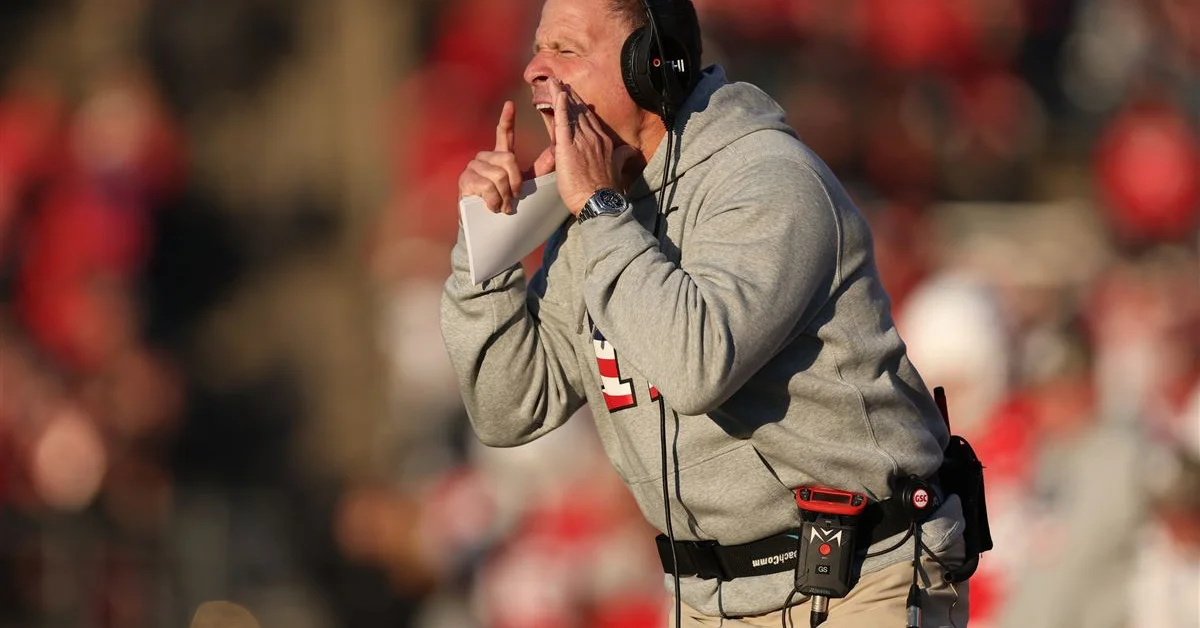
Let’s give Greg Schiano some credit (and a bit to Keli Zinn as well): This is a tremendous job so far in the transfer portal for Rutgers football. Simply retaining star wide receiver K.J Duff and running back Antwan Raymond shows that this isn’t the same old Rutgers.
Not by a long shot. Rutgers is all-in, something that Zinn has made clear in her five months on the job as athletic director. And the ability to keep Duff and Raymond means that Rutgers is finally a player in the Big Ten.
Retaining this duo shows that the Scarlet Knights have made tremendous strides on the NIL front. Simply keeping both players while some top-tier programs had wanted to sway Duff and Raymond away in the transfer portal – well, it is a clear indicator of how far this program has come.
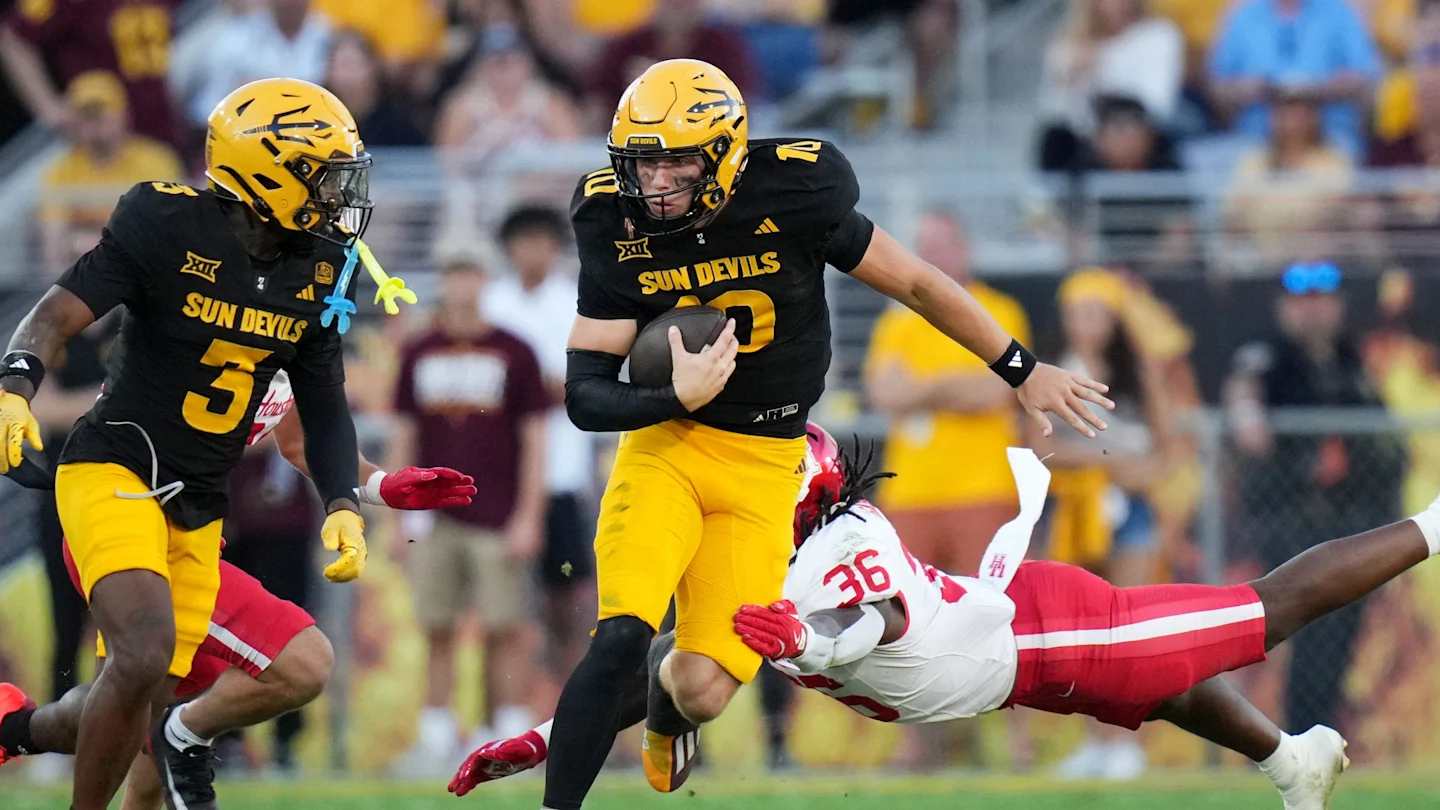
The NCAA transfer portal is officially open for any college football players seeking different destinations for the 2026 season. The portal is open for a two-week period, closing on Jan. 16.
Thousands of players chose to enter the transfer portal in the weeks after the 2025 regular season ended. At the Power Four level, these announcements have led to a realignment of starting quarterbacks.
The first quarterback that decided to search for a new school was former Arizona State starter Sam Leavitt. He will have two seasons of eligibility at his third school.
The 6-foot-2, 205-pounder began his college football journey at Michigan State under Mel Tucker in 2023. He appeared in the four games needed to keep a redshirt, completing 15 of 23 passes for 139 yards, two touchdowns and two interceptions.
Tucker was let go for cause in the middle of the season, and Leavitt entered the transfer portal the following offseason.
Leavitt started all 14 games for Arizona State in 2024. He passed for 2,885 yards, 24 touchdowns and six interceptions while rushing for 443 yards and five touchdowns. He guided the Sun Devils to a 12-2 overall record, Big 12 Championship victory and College Football Playoff appearance.
Leavitt was recognized as the Big 12 Offensive Freshman of the Year and received All-Big 12 Second Team distinction. His 2,885 yards are the most by a freshman quarterback in Arizona State history.
A foot injury limited Leavitt’s 2025 season to just seven games. He passed for 1,628 yards, 10 touchdowns and three interceptions and accumulated another 306 yards and five touchdowns on the ground.
While Leavitt is sure to draw plenty of interest in the coming weeks, he has entered the portal with a “do not contact” tag, meaning he likely has a destination in mind. Pete Nakos of On3 reported that four different schools were in the mix for Leavitt on Saturday.
Kentucky
The Wildcats are a team that has found itself in the mix for Leavitt since the portal opened. Kentucky figures to be a more quarterback-friendly offense now that it has hired Oregon offensive coordinator Will Stein.
Kentucky will have to address its quarterback depth in the transfer portal since Cutter Boley departed for the portal. The Wildcats are confident in incoming freshman Matt Ponatoski, but Leavitt could be the bridge they need to a potential multi-year starter.
Oregon

In the years between the end of Mario Cristobal’s tenure and the beginning of the Dan Lanning era, the Ducks have turned portal-heavy at quarterback. Anthony Brown (Boston College), Bo Nix (Auburn), Dillon Gabriel (UCF and Oklahoma) and Dante Moore (UCLA) have all started for Oregon from the transfer portal.
The other draw for Leavitt to Oregon is its proximity to his hometown. He is from West Linn, Oregon, a suburb just south of Portland and about an hour and a half north of Eugene.
Miami

Mario Cristobal’s approach at quarterback has featured a turn to portal acquisitions in his last two seasons with the Hurricanes. Miami has produced a No. 1 overall pick in the NFL draft with Cam Ward (Washington State) and is in the midst of a College Football Playoff run with Carson Beck (Georgia).
It would not be a surprise if the Hurricanes once again decided to take a look at the transfer portal in the 2026 offseason. Leavitt has been a target for Miami since before the portal opened.
LSU
Lane Kiffin has a reputation with successful transfer portal quarterbacks. Jaxson Dart (USC) was a first-round draft choice in the 2025 NFL draft, and Trinidad Chambliss (Ferris State) is in the midst of leading Ole Miss on a College Football Playoff run.
As a program, each of the last two quarterbacks to transfer in and start for LSU have Heisman Trophies to their names. Jayden Daniels transferred from Arizona State to LSU in 2022, a path Leavitt would take should he choose the Tigers.


In this era of college football, one of the most pressing questions facing Arkansas – and every program, for that matter – seems simple on the surface, but is actually quite complex upon closer inspection: How should teams spend their budget when it comes to building a roster?
The Razorbacks, in particular, are trying to sort this out as we speak. As things currently stand, they have just one scholarship quarterback, one semi-proven running back, two returning starting offensive linemen, one established defensive end, three scholarship linebackers and very limited experience in the secondary. (The partridge in a pear tree just entered the transfer portal.)
That’s a lot of holes to fill – a task made even more difficult by the fact that there is no centralized clearinghouse of contracts like in the NFL. That means college football programs are left trying to figure out how much each player and position is worth and how to keep talent contributing now and into the future.
It’s a question at the top of mind for every FBS staffer, as well as most fans, so Trey Biddy over at HawgSports took a stab at it last week, giving himself $25 million to distribute across the Razorbacks’ roster. It’s an interesting breakdown and one we strongly recommend reading for yourself.
Best of Arkansas Sports, though, wanted to take a slightly different approach to the topic, so they asked sports economist Parker Fleming to take a stab at it from an analytics perspective. Here’s what he came up with…
Using the NFL as a Guide
When building a college roster, many front offices look to the NFL, which has a centralized database of player contracts as part of its Collective Bargaining Agreement. Valuing a player in the NFL becomes as straightforward as looking at a few key metrics, seeing where that player ranks in those key metrics, and then slotting their earnings in accordance with their production.
Poll
Want to Get Paid for Following Arkansas Sports?
In fact, many college teams have hired directly from the NFL ranks to have someone with professional experience help with their cap and contract management. While the experience and general principles from the NFL have great value, there are still some unique realities in college football one must consider.
First, uncertainty around player quality in college football is dramatically higher than the NFL. New Arkansas general manager Gaizka Crowley mentioned this in a recent interview with The Athletic, citing college being distinct from the pros because there is “a ton of variance” among and between programs. College prospects are developmental, and that means the range of outcomes on a player are much larger than their more polished pro counterparts. Due to that uncertainty, investing all your resources in just a few players is going to increase your risk.
Second, and perhaps more important, is the fact that the NFL is a passing league, where college football features the run game much more prominently. In 2025, college football teams rushed about 15% more than an average NFL team, given down, distance and game state. That means we must recalibrate our positional value relative to the NFL: QB passing and WR/CB play become slightly less important, while the run game – running backs, offensive and defensive linemen, linebackers, blocking tight end – becomes more important.
Ryan Silverfield’s Memphis was a slightly pass-heavy team in 2025, passing 2.9 percentage points more than the average team (56th most-pass happy in the nation, per cfb-graphs.com), so for this specific example, we won’t over-indulge in the run game, but we do know that’s a clear difference from the NFL example.
Clearly, we can’t just map one for one the structure of the NFL and hope for the best with the rest of the roster. While a roster of 15 elite players and 90 replacement players would be a fun experiment, it also puts the team in a hole for recruitment (money you have to tie into players who need to develop to contribute), and at severe risk of an injury or bust derailing a season spectacularly.
What we can do, though, is use NFL benchmarks for elite talent and adjust for rush rates to get us guiding principles for position-by-position group allocation. For our rushing adjustment, we want to increase the value of the rushing positions by about 15% and decrease the value of the passing positions by about 15%.
Then, we’ll adjust by number of players: we need more linemen and more wide receivers than we do quarterbacks or running backs, so we’ll adjust the pools accordingly. At this point, we’re entering into art not science, and different teams will have strong opinions about this adjustment. But as a guiding principle, this illustrates the roster building challenge and ways to attack it.
Position-by-Position Breakdown
One place many programs have started is with the NFL franchise tag. The franchise tag is a tool teams have where they can retain a free agent player for one season at a premium salary, designated by the average annual value of the top five salaries at that position over the last four years.
In 2026, per overthecap.com, the franchise tag values are projected to look something like this:

This table essentially reflects how the league values elite talent at each position.
We can apply our rushing adjustment to these values to get guidelines for our position-by-position distribution. Applying the 15% adjustment to the positions as stated above, we get percentages and total amounts of a $25 million dollar budget as follows:

Following the Eagles’ Blueprint
Now that we have guardrails for positional value and overall spending, we need to think about how to distribute these amounts across players. In his article, Trey Biddy acknowledges this problem and articulates a reasonable solution:
Related Articles
“I’m capped at 105 roster spots, but instead of giving something to everyone, I’m going to focus on 75 players and no more. Everyone else will have to be happy with a scholarship. At least 20 of those 75 players will be elite recruits. However, there might be the possibility that a recruit fits into a starter, backup or reserve role. In that case it would be 20-plus recruits.
Essentially, I’m going for 55 players who are going to see the field or provide insurance in case of an injury, plus 20 more I’m invested in for the future. I also considered limiting it to as few as 47 players (the two-deep plus special teams) plus 20 or so recruits.”
Biddy was on the right track with that final statement.
The Philadelphia Eagles, one of the NFL’s most savvy front offices, invest about 80% of the salary cap in 55% of their roster, which equates to about 47 players we want to really invest in, some of whom will be recruits. Ideally, some of those recruits can contribute immediately, especially wide receivers, running backs and defensive backs. We’ll bump that up to a round 50 to include two specialists and a fourth quarterback for depth.
We’ll use the percentages above and allocate $20 million of our $25 million to those 47+3 players on the roster to give us a $5 million reserve for recruitment and portal – that’s money we want to spend every year, but reserve to allow us to go over slot or over positional numbers as the roster needs dictate based on eligibility and turnover.
To allocate this money within position groups, I’ll use a Pareto distribution to allocate the position budgets across players. Some of you may be familiar with the Pareto rule in business, where 20% of inputs yield 80% of outputs. In our context, what it means is simple: Top-end talent will have more influence on our results, and we want to pay accordingly. Using this Pareto distribution to spread money across position groups will allow us to invest our money in high-quality talent at the most impactful positions, yielding the best results on the field, both now and in the future.
Without further ado, let’s go position by position and allocate our 50 roster spots.
QUARTERBACK (4 Players)
- QB1: $2,500,000
- QB2: $647,775
- QB3: $254,000
- QB4: $150,723
RUNNING BACK (4 Players)
- RB1: $548,931
- RB2: $245,654
- RB3: $153,482
- RB4: $109,933
WIDE RECEIVER (7 Players)
- WR1: $1,022,607
- WR2: $457,629
- WR3: $285,922
- WR4: $204,795
- WR5: $158,090
- WR6: $127,000
- WR7: $107,003
TIGHT END (3 Players)
- TE1: $602,161
- TE2: $269,474
- TE3: $168,365
OFFENSIVE LINE (10 Players)
- OT1: $1,558,248
- OT2: $710,761
- OG1: $444,076
- OT3: $318,074
- C: $245,535
- OG2: $198,730
- OT4: $166,190
- OT5: $142,342
- IOL4: $124,164
- IOL5: $109,880
DEFENSIVE END (4 Players)
- DE1: $767,881
- DE2: $343,636
- DE3: $214,701
- DE4: $153,782
DEFENSIVE TACKLE (4 Players)
- DT1: $1,209,932
- DT2: $541,460
- DT3: $338,299
- DT4: $242,310
LINEBACKER (4 Players)
- LB1: $1,073,996
- LB2: $480,627
- LB3: $300,291
- LB4: $215,086
SAFETY (4 Players)
- S1: $795,899
- S2: $356,175
- S3: $222,534
- S4: $159,393
CORNERBACK (4 Players)
- CB1: $599,777
- CB2: 268,408
- CB3: $167,699
- CB4: $120,116
SPECIALISTS (2 Players)
TOTAL: 50 Players, $19,726,000
- OFFENSE: 28 Players, $11,010,000
- DEFENSE: 20 Players, $8,572,000
- SPECIALISTS: 2 Players, $144,000
RECRUITING BUDGET AND REST OF ROSTER: $5,418,000 ($235,565 per player for an average recruiting class of 23 players)
These are some of the key differences between mine and Trey Biddy’s methods:
- Less commitment to QBs: we want to keep the money on the field, and so while we want to entice backups to stay, we also need to walk a fine line between paying for players who aren’t contributing this season.
- Balance at the tails for premium positions: The value of a good running back is higher in college than the NFL, but we also know a couple things: Running Backs take a lot of wear and tear, and their success is dependent on their surroundings. The analytical approach would be to pay for an upper middle class veteran back, and play your young running backs as well, investing the rest of the top end money into the offensive line.
- Specialist numbers were too high. A good punting and kicking game is important, but ancillary to moving the ball well in the down-to-down business of football. We want to attract and retain talent without paying market premiums for positions that yield minimal influence on our overall success. I refrained from paying a long-snapper at all; long-snapping is a skill that can be taught, and I have faith in the coaching staff to find a walk-on who would be happy to have that role.
What we’ve done above is taken an analytical approach to framing ideal targets for roster spending. This approach, one of many potential successful approaches, emphasizes top-end talent on on-field contribution, while leaving substantial funds for coaching preference at depth or paying premiums for transfer portal talent.
When building a roster, the current money on the books will be the biggest constraint for coaches, as well as the natural evolution of the roster due to eligibility limits. The analytical approach above attempts to tie spending to on-field impact and position Arkansas to build a championship caliber roster.
***

***
More coverage of Arkansas football and the transfer portal from BoAS…
Related

Can Daniel Suarez save his NASCAR career with Spire Motorsports?

No. 1 transfer QB now linked to three major college football programs

A Dilemma Motorsports Must Face – Drag Bike News

Why This Year’s College Football Playoff Is The Most Exciting Yet

Demon Deacons Land Amina N’Diaye, Add to Core of Hitters

High-Performance Monitor Lineups : HKC Corporation
Alabama basketball surges vs Kentucky as football embarrassed by Indiana

Utah State announces Keith Smith as new volleyball coach | Sports

Why Rutgers football retaining K.J. Duff and Antwan Raymond is a significant win for Greg Schiano

As more youth sports professionalize, efforts around U.S. try to keep kids from burning out – The Press Democrat

Mercer County CYO basketball results – Trentonian

No. 1 transfer portal QB strongly linked to four college football programs

South Albany girls basketball team hoping to mirror success of championship volleyball team

Hawaii men’s volleyball overwhelms NJIT in season opener

Playing volleyball checks a lot of boxes for UAFS sophomore Morgan Creer

SoundGear Named Entitlement Sponsor of Spears CARS Tour Southwest Opener

Donny Schatz finds new home for 2026, inks full-time deal with CJB Motorsports – InForum

David Blitzer, Harris Blitzer Sports & Entertainment

How Donald Trump became FIFA’s ‘soccer president’ long before World Cup draw

DeSantis Talks College Football, Calls for Reforms to NIL and Transfer Portal · The Floridian
Elliot and Thuotte Highlight Men’s Indoor Track and Field Season Opener

JR Motorsports Confirms Death Of NASCAR Veteran Michael Annett At Age 39

#11 Volleyball Practices, Then Meets Media Prior to #2 Kentucky Match

Rick Ware Racing switching to Chevrolet for 2026
West Fargo volleyball coach Kelsey Titus resigns after four seasons – InForum

Maine wraps up Fall Semester with a win in Black Bear Invitational

Colleges ponying up in support of football coaches, programs

Nascar legal saga ends as 23XI, Front Row secure settlement

Ross Brawn to receive Autosport Gold Medal Award at 2026 Autosport Awards, Honouring a Lifetime Shaping Modern F1

Temple Begins Indoor Track & Field Season at UPenn This Weekend





-
 Motorsports2 weeks ago
Ross Brawn to receive Autosport Gold Medal Award at 2026 Autosport Awards, Honouring a Lifetime Shaping Modern F1
-

 Rec Sports3 weeks ago
Stempien to seek opening for Branch County Circuit Court Judge | WTVB | 1590 AM · 95.5 FM
-

 Rec Sports2 weeks ago
Princeton Area Community Foundation awards more than $1.3 million to 40 local nonprofits ⋆ Princeton, NJ local news %
-
 NIL3 weeks ago
Downtown Athletic Club of Hawaiʻi gives $300K to Boost the ’Bows NIL fund
-

 NIL2 weeks ago
Kentucky AD explains NIL, JMI partnership and cap rules
-

 Motorsports3 weeks ago
PRI Show revs through Indy, sets tone for 2026 racing season
-

 Rec Sports3 weeks ago
Teesside youth discovers more than a sport
-
 Sports3 weeks ago
Young People Are Driving a Surge in Triathlon Sign-Ups
-
 Sports3 weeks ago
Three Clarkson Volleyball Players Named to CSC Academic All-District List
-

 Sports3 weeks ago
Central’s Meyer earns weekly USTFCCCA national honor