
NIL
Money Matters, Part III – West Virginia University Athletics

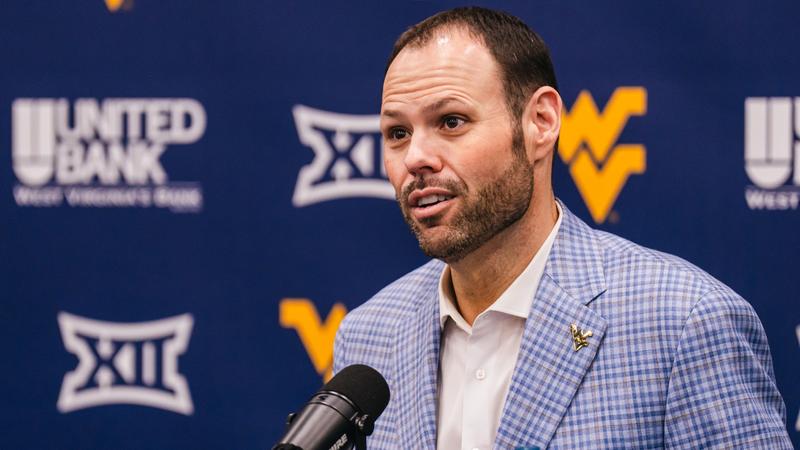
Intercollegiate athletics have entered a historic new era after judge Claudia Wilken recently granted final approval to the $2.8 billion settlement of the class-action antitrust lawsuit House v. NCAA. Over three Fridays, we have been examining the immediate and future implications of the House Settlement and what it means for WVU athletics. This is the final installment.
MORGANTOWN, W.Va. – Last month, the West Virginia University Department of Intercollegiate Athletics announced the creation of Gold & Blue Enterprises, which, according to the press release announcing it, “is designed to revolutionize the student-athlete experience and enhance the Mountaineers’ competitive edge in the evolving landscape of college athletics.”
The concept of name, image and likeness (NIL) in collegiate sports began on July 1, 2021, when a Supreme Court ruling and the introduction of state laws forced the NCAA to implement a system for student-athletes to profit from their NIL rights.
Schools around the country began establishing NIL collectives to help navigate this new terrain by connecting student-athletes with businesses and facilitating deals for endorsements, appearances and other promotional activities.
The recently created Gold & Blue Enterprises is designed to generate new and diversified revenue streams for Mountaineer student-athletes while harnessing and strengthening the visibility of the WVU brand.
With the recent settlement of the House v. NCAA lawsuit, approved by Judge Claudia Wilken, student-athletes are now permitted to receive direct compensation of up to $20.5 million per institution beginning on July 1, 2025. Now college athletics will have two paths of compensation – one from institutions up to the cap and the other based on market-based endorsement agreements.
Gold & Blue Enterprises looks to maximize WVU’s NIL opportunities with a full menu of features, including:
- Comprehensive NIL support with educational and compliance services and personalized brand development to help maximize NIL opportunities
- Facilitating strategic partnerships by collaborating with leading marketing and advertising agencies to connect student-athletes with corporate partners
- Establishing an innovative business structure using a private sector approach, integrating sales, media, marketing and business operations to help drive additional revenue to support the long-term sustainability of WVU athletics
- Leadership and governance to oversee Gold & Blue Enterprises, ensuring alignment with WVU’s mission and values while fostering a culture of innovation and excellence
According to WVU Vice President and Director of Athletics Wren Baker, Gold & Blue Enterprises will give the athletics department more flexibility in this new NIL environment.
“Lots of athletic departments function as either a 501(c)(3) or as an outside LLC, but we don’t,” Baker said. “When you look at the new world of intercollegiate athletics as we move into a more professionalized model, we are going to need to engage in a lot more commercial activity. By way of example, Country Roads Trust has a deal in town with the GOAT, a pub and grill, that a certain percentage of their revenue is used for CRT’s name, image and likeness, and a certain percentage of the sales goes back to CRT in the form of licensing.
Baker admits those are the types of commercial activities the athletics department needs to be exploring in this current climate.
“But that’s hard to do through a traditional higher education structure,” he noted. “And it’s really different from the fundraising focus of the WVU Foundation, so (Gold & Blue Enterprises) creates an opportunity for us to have an outside organization that is still very much connected and controlled by the University and is still very much connected to the WVU Foundation. We will still route all our giving through the WVU Foundation, but it will allow us to pay our athletes out of there, first and foremost, while not having all the cumbersome processes that a typical university system requires.”
Baker envisions Gold & Blue Enterprises potentially opening the door to some exciting new possibilities down the road.
“Does it make sense for us to develop some kind of entertainment district around our sports venues?” he said. “Is there enough space to do that? What would that take? Those are things that I think having this entity really allows us to live and breathe in an environment where commercial activity is important, and if we really want to be in a position to compete in the future, it’ something that we are going to have to explore.”
That’s just one aspect of Gold & Blue Enterprises.
Baker indicated it will also serve as sort of a matchmaker between WVU’s student-athletes and potential suitors for NIL deals.
“There may be student-athletes that get NIL deals on their own, and that’s fine, but we want to have an in-house agency to where if we have a student-athlete with considerable Name, Image and Likeness brand, then we can say, ‘Hey, Par Mar, Sheetz or Little General, here is this student-athlete who is available to really help promote your product,'” he mentioned.
Baker indicated there will likely be some sort of tracking function to the deals being made, although that’s yet to be determined.
“They are still trying to figure out how much of that data they can give you without running afoul of antitrust issues, but I think the aggregate gross date we should be able to see,” he said.
Establishing a flexible entity like Gold & Blue Enterprises has never been more important. Several Big 12 schools, led by Texas Tech, are aggressively developing their NIL efforts. The Red Raiders, for example, are projected to be one of the highest-paying programs because of the NIL resources for their student-athletes.
Tech signed nine of the 19 ESPN.com Top 100 football transfers entering the Big 12 this fall, and when it comes to NIL spending, it’s clear the Red Raiders are all in.
“To the best that we can, we have tried to put ourselves somewhere in the middle,” Baker said.
Baker admits his department’s current budgetary situation doesn’t afford him much flexibility, however.
“As I try to explain to our coaches sometimes, when you start off with a budget that’s in the lower third of the conference, anywhere that you spend at the middle of the conference is somewhere that you have to spend down at the bottom to balance it out,” he said. “All of the levers are connected.”
He continued.
“If we have a coach who has an extraordinary season, wins the conference, and they come in and say, ‘We finished first in the conference, and I’d like to be paid first in the conference.’ That’s a fair and reasonable ask. But what that means is somewhere else we’re dead last because all those levers are connected, and you are constantly and consistently assessing opportunities in all programs, understanding that it’s important that we try and have broad-based success, but also understanding that there are two programs (football and men’s basketball) that are profitable.
“You cannot put those two programs in a place where they can’t compete; that’s a non-starter,” he added.
As we move toward a more professionalized model for collegiate athletics, Baker believes it is possible to embrace the future while maintaining many of the traditional values to which fans have grown accustomed.
“This is different, and I know that change is not necessarily universally welcomed,” he admits. “Fans are getting to learn entirely new rosters. You look at our men’s basketball program and it’s been an entirely new roster for three consecutive years. That’s hard, and I recognize that, but if you go to practice, you will see people who are growing and developing as leaders through sports.
“They are having to mesh personal goals with team goals,” he continued. “They are having to take constructive criticism. They are getting picked up by their teammates and by their coaches and you are seeing people being developed as leaders through intercollegiate athletics. I still believe college athletics is one of the last remaining great systems to develop leaders.”
Baker used the example of his two daughters to drive home his point.
“I’m always amazed, but it’s like 70%, or maybe even higher, female CEOs today were former athletes, and I tell my kids all the time, it doesn’t have to be a certain sport, but by interacting in a setting that is similar to college athletics where you take constructive criticism, you have to get along with different personalities, it’s integral to your development as a person and to have a successful life,” he explained.
He maintains these things still exist in the current collegiate environment.
“Does it look different? Yes. Are we spending more time talking about the monetary value versus just being connected to an institution and its culture? Yes. Is the framework still the same? Can people still come here and care about West Virginia University, care about this state and develop as leaders while earning income? Yes, that can be done, and we’re working really, really hard to still have those core values in this new world.”
He concluded with a message to his coaches, “One of the challenges for our coaches is being the ambassadors of our culture. I think there is probably more of an onus now put on our coaches to be the ambassadors of our culture because of the continual churning of the rosters.”

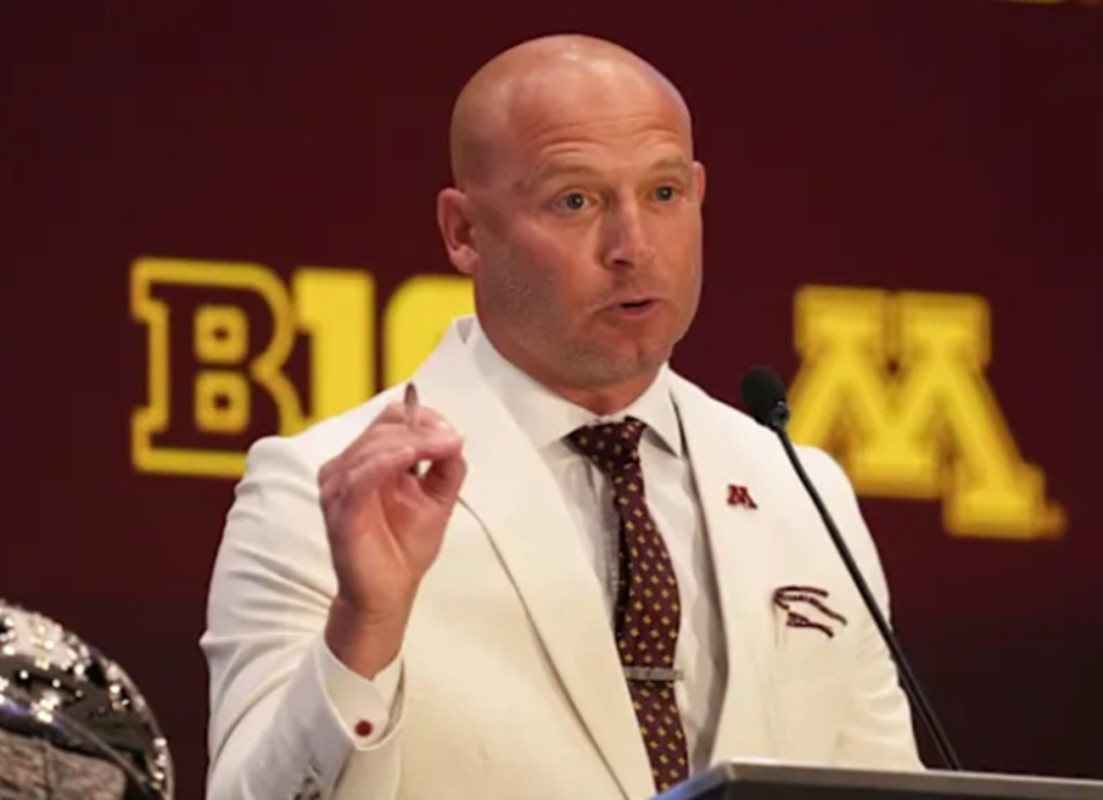
The Minnesota Golden Gophers are 7-5 this season following a season-ending home win over the Wisconsin Badgers with one final matchup left on Friday, Dec. 26 (4:30 p.m.) at Chase Field in Phoenix against the New Mexico Lobos in the Rate Bowl.
The Golden Gophers are led by charismatic head coach P.J. Fleck, known for his motivational slogans (‘Row the Boat’) and history of getting maximum effort and performance out of his oftentimes overmatched teams.
Advertisement
Fleck coaches in a brave new world of college football including NIL (Name, Image and Likeness) payments for college football players that are often set up by universities, granting lucrative opportunities for student athletes to earn off of sponsorship deals.
On Wednesday, Fleck spoke at a press conference during which he detailed the head spinning world of NIL payments and negotiations while stating that some offers used as bargaining chips by players are not real in his personal estimation.
Fleck’s Stunning NIL Admission
Fleck’s story on NIL was shared by Tony Liebert of ‘Bring Me the News,’ a media company based in Minneapolis.
Advertisement
“I don’t think the general public actually truly knows what college football truly looks like,” Fleck said.
He painted the picture of a complex process of negotiating contracts that lacks the structure of the National Football League’s professional contracts.
“I think that everybody has representation now,” Fleck said, with the goal of “getting the most money they possibly can.”
He spoke about the complex roles college coaches play in the process.
“The roles we’re in is like, you’re the head coach, you’re the president, you’re the owner, you’re the GM, you’re the director of player personnel, and you’ve almost got to be a negotiator as well of what you have in your budget…And you’re doing that without the systems that the NFL has in place,” Fleck added.
Advertisement
Fake NIL Offers Cloud Negotiation Process, Fleck Says
A media member commented on the lack of a salary cap in the sport, musing that it must be difficult for Fleck and other coaches to know how much each player is being offered by other schools before writing, proposing, offering and negotiating contracts.
“Sometimes those offers are real, sometimes those offers aren’t real,” Fleck added.
“It is a very unique environment to work in,” Fleck added.
“I truly believe…You could put a camera on somebody’s shoulder…You (could) do a reality show of what’s going on right now,” the Golden Gophers coach added, gesturing that it’s a wild, unpredictable situation.
Advertisement
“I don’t think the general public truly knows what college football looks like when you peel back the onion.”
Related: Penn State Fans Blast Nick Saban For Comments on New HC Matt Campbell
Related: Michigan’s Kenny Dillingham Chances Get Update From ESPN Reporter
This story was originally published by Athlon Sports on Dec 18, 2025, where it first appeared in the College section. Add Athlon Sports as a Preferred Source by clicking here.
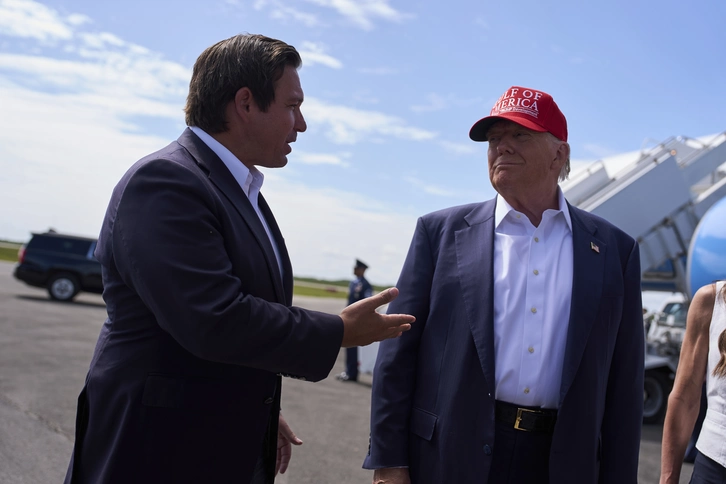
Gov. Ron DeSantis says college football is a “total mess” in light of athletes shopping around for better deals from programs, and that his efforts to reform it have been paused by Donald Trump’s White House.
Speaking in Sebring, DeSantis said he spoke to a bipartisan group of Governors “about a year ago” and said Governors on both sides of the aisle wanted to “come up with a framework.”
“Honestly, you really only need 10, 12 states, right? Because, you know, if you get Florida, Texas, Georgia, Alabama, Michigan, now you need Indiana, California,” DeSantis said, explaining that once states with “big-time programs” act, that would be enough to set up a workable structure.
But DeSantis said comments by Trump that the federal government planned to step in halted the state-led effort.
“So we’re like, all right, we’ll let the feds do it,” DeSantis added.

DeSantis said as early as last year that he wanted Governors to join him in some reform effort.
“I know they’re working on something, but I think it’s hit rock bottom just in terms of all the static that’s in the system,” DeSantis said.
He noted that “general managers” in college football make it “like a professional thing,” adding that many of the athletes recruited “haven’t even really produced that well.”
He also suggested that athletes are currently holding up programs for more money when they are performing.
“Now it’s like they have more rights than pro athletes,” he said.

“A quarterback will, you know, throw for four touchdowns. The third game of the season (he will) go, ‘Hey, coach, any more NIL money? Oh, I’m going to hit the transfer portal.’ And then you just go hop around schools. So you can play for four or five schools the way it goes now. And you can even play a few games, do very well, sit out and still get eligibility for the next year.”
Players’ mobility hurts programs, he argued.
“It’s hard to even know whether your teams are going to be good year after year because you don’t know who you’re going to lose. And then to do the transfer portal, right as we’re getting into the playoff, how does that make sense where these teams are going to have to make the decision?”
While the Governor stopped short of saying he regrets signing the name, image and likeness legislation that helped start the current cycle of professionalization of college sports, he does want a “happy medium” between athletes not being compensated and the current system.
But with time running out, reforms may not be realized before DeSantis leaves Tallahassee.
NIL
$64 million college football coach emerges as prime candidate to replace Sherrone Moore at Michigan

Less than a week after Michigan dismissed Sherrone Moore for cause, the Wolverines are navigating a condensed and high-pressure coaching search, with at least one prominent candidate already drawing serious consideration.
Michigan closed the 2025 regular season 9–3 (7-2 Big Ten) and will play No. 13 Texas in the Cheez-It Citrus Bowl on December 31 under interim coach Biff Poggi.
The program swiftly moved to remove Moore on December 10 after an internal probe concluded that there was an inappropriate relationship with a staff member.
While a cluster of candidates has emerged across national hot boards and analyst shows, college football analyst Josh Pate on Tuesday specifically singled out Missouri’s Eli Drinkwitz.
“I think Eli Drinkwitz’s name is involved here,” Pate said. “Names like Eli Drinkwitz get thrown out, and people are really quick to scoff at it… I have always been baffled by people who turn their nose up at Eli Drinkwitz. It’s well known in the SEC, he’s one of the better staffers in the country.”

A former offensive coordinator at Boise State and NC State who won a Sun Belt title at Appalachian State in 2019, Drinkwitz inherited Missouri in 2020 and built the program to back-to-back double-digit win seasons (2023-24) and an 8–4 showing in 2025.
That on-field progress led to a recent six-year contract extension in late November, which anchors him at roughly $10–10.75 million annually and includes significant buyout provisions.
Drinkwitz has also publicly pushed back on any rumors, calling coaching carousel speculation “just a distraction,” saying he loves Mizzou, is focused on the job, and recently signed an extension.
On the Michigan front, the program has indicated it hopes to finalize a hire before the end of December, a timeline that highlights how little margin the search affords.
In the next two weeks, expect intensified contact between Michigan’s search firm and top-tier candidates, a group many believe includes Drinkwitz.
Read More at College Football HQ
- $3.7 million college football head coach named clear candidate for Michigan vacancy
- College football program signs $1.2 million deal with NFL legend
- College Football Playoff team losing all-conference player to transfer portal
- $2.1 million college football QB announces return to Big Ten program

HELENA — It’s been a two-way relationship between the Carroll College and University of Montana football programs.
Some guys who didn’t quite stick with the Grizzlies — like current Carroll quarterback Kaden Huot — have had success in Helena. And on the other side of the equation, a standout few have jumped up from the NAIA level to the Division I FCS level.
Each of the past two seasons, Carroll has produced the Frontier Conference defensive player of the year. And each time, that player has subsequently transferred to Montana.
“It shows well for our ability to develop,” Carroll head coach Troy Purcell told MTN Sports, “where they didn’t have that opportunity, and now with our coaching and our structure here and our culture here, to develop fine young men and great football players.”
On Dec. 10, Saints cornerback Braeden Orlandi — the NAIA’s reigning tackles leader — announced he was leaving Helena for Missoula. And the year before, it was NAIA All-American Hunter Peck trading Purple and Gold for Maroon and Silver. And following his first regular season with the Griz, Peck made the Big Sky all-conference first team, something he credits his time at Carroll for making possible.
“They did a great job with taking me in, developing me not (just) into a football player, but a young man, as well,” Peck said of his four years at Carroll. “And so, those life lessons are ones that you take off the football field and are arguably the most important part of the game.”
So, in this transfer-portal-and-NIL-dominated era of college athletics, the Carroll coaching staff said they understand their position in the larger college football ecosystem.
“Let us develop you. Let us make you the best you can possibly be for two to three years, get some tape, get some good film out there,” Purcell said. “You get some great ball in along the way. And then when the time is right, and it looks good, you have an opportunity to go up, maybe put a little money in your pocket, and get to play at a higher level. So, maybe that kid could be a walk-on but now has an opportunity to play for us, and like I said, we can develop him.”
NIL
Ohio State standout pauses College Football Playoff prep to use NIL for good: ‘I want people to feel loved’
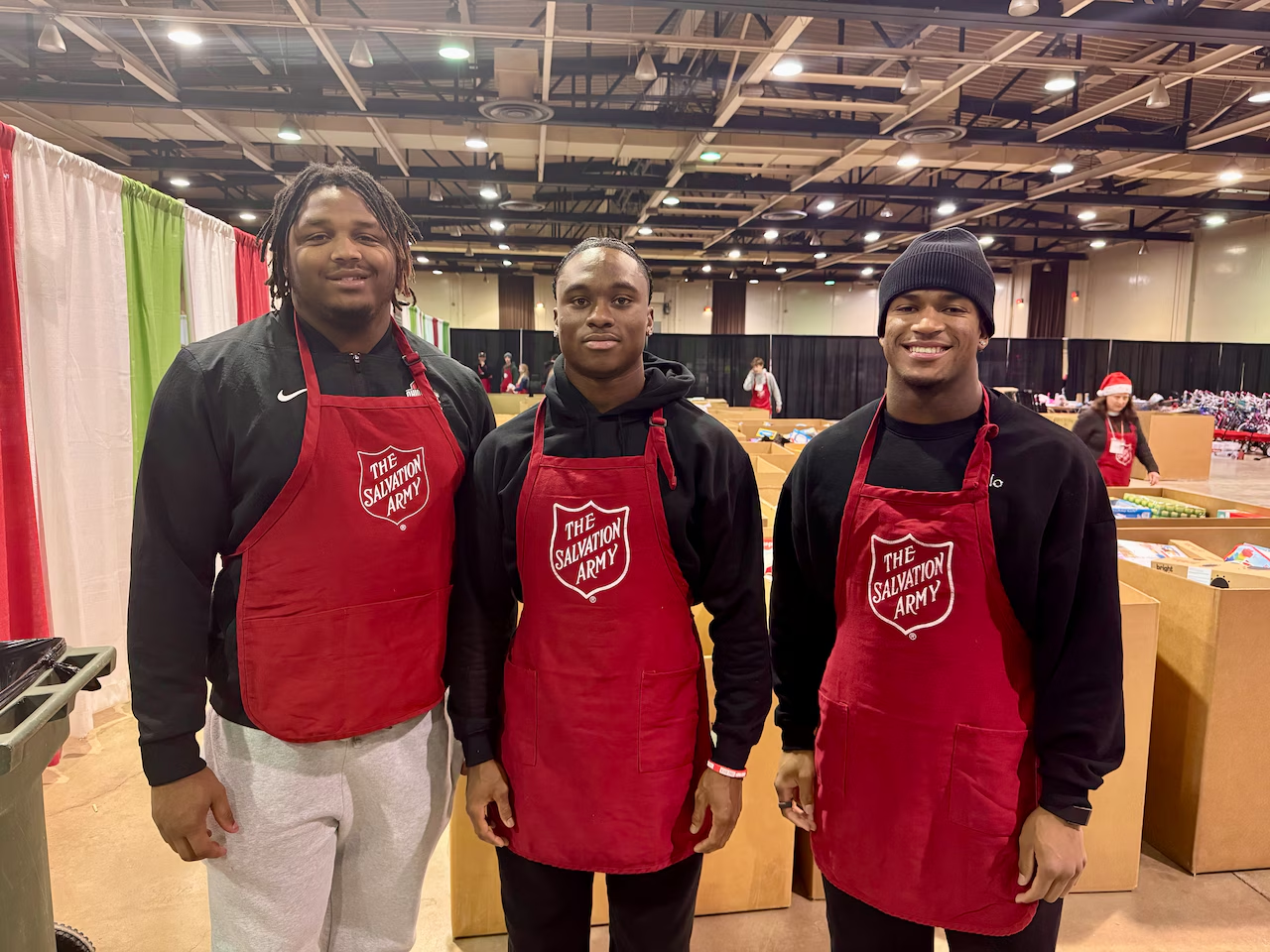
COLUMBUS, Ohio — They wore red aprons, waited their turn in a line of volunteers and carried bags filled with toys through the Lausche Building at the Ohio Expo Center & State Fairgrounds.
In their actions, they were unassuming, helping bring holiday joy to families in central Ohio. But these volunteers were far from unrecognizable in Columbus.
They were safety Jaylen McClain, defensive tackle Eddrick Houston, safety Caleb Downs and running back James Peoples — a collection of some of Ohio State football’s top contributors this season.
And they were there to fulfill a vision of McClain’s.
The McClain family recently launched Everyday Legends — a foundation created to, “honor and uplift individuals who demonstrate excellence in scholarship, service, and sportsmanship.”
One of its first initiatives came via a partnership with the Salvation Army in Central Ohio. Courtesy of opportunities presented through college football’s name, image and likeness rules, McClain started a virtual toy drive in which donors could purchase toys through an Amazon wish list put together by the foundation with gifts going directly toward Wednesday’s event.
With his teammates working alongside him, McClain — who went to Target the day after Ohio State’s loss in the Big Ten Championship Game to ensure enough toys were purchased — helped those in a community far from his home state of New Jersey.
“I didn’t have everything, but my parents provided so much support for me and made sacrifices for my life,” McClain told cleveland.com. “Now that I have a bigger platform for myself as a college football player and NIL, I’m able to give my blessings off to other people, other foundations and be able to recognize other people that also have the blessings.”
As the foundation’s name suggests, McClain co-founded this venture with intentions of helping everyday people in our lives. His goals range from toy drives to buying uniforms for his youth football team and helping his high school, Seton Hall Prep.
“The intended goal is to provide support for any initiatives in any of those pillars (athletics, scholastics and community),” said Syreeta McClain, Jaylen’s mother.
“Your influence really carries,” she later added. “It carries some weight, so people are willing to give and people are willing to donate and make an impact. It really helps to make an impact. That’s the intended goal in all this: to be able to transcend the sport.”
Jaylen grew up in a family familiar with football.
One of his brothers, KJ McClain, recently signed with Tennessee. Another brother, Cameron McClain, is in the 2028 class with offers trickling in.
His father, Maurice McClain, played at Syracuse (1998-2001) and overlapped with Matt Patricia — a former graduate assistant for the Orange who is now Ohio State’s defensive coordinator.
Athletes such as Maurice didn’t have NIL privileges to help get through college, but his sons are experiencing a new era in the sport. They’re leaning on those opportunities to grow their foundation.
“He’s just like, ‘You’ve got the platform. Use it. If you could do it, then you should be able to do it. It goes a long way and helps other people as well,’” Jaylen said.

Others in Ohio State’s locker room have taken a similar approach in utilizing their NIL privileges.
In July, Downs’ foundation held an event at Topgolf in Columbus to raise awareness for families experiencing homelessness. Many Ohio State players and coaches were present for it.
While helping those in need, Downs also provided a blueprint for how NIL should be used in Columbus.
“He’s a great role model for not just me, but a lot of other people on this team,” Jaylen said. “… Just to be around him every day, I get to soak in a lot of stuff and just learn so much from him. To see how he carries himself, how he moves in terms of community service and how he moves on the field – obviously, it means a lot to me.”
The willingness to help comes without a need to ask, Jaylen added.
When word started to spread about Everyday Legends working with the Salvation Army, players reached out to Jaylen with intentions of assisting.
“We’re not just all about football. We actually have a soul, too, and care about others,” Houston said.

The toy drive, in part due to the effort of Everyday Legends, will provide gifts for more than 4,000 families in the area during the holiday season.
Jaylen hopes it’s only the start of creating a larger legacy in Columbus, which is also fueled by his play as Ohio State prepares for the upcoming College Football Playoff.
“I just want to be able to give back,” Jaylen said. “I want people to feel supported. I want people to feel loved.”

After decades of milestone wins on its climb to college football powerhouse status, Oregon found itself on the other side of a signature victory this season.
As Indiana celebrated on the Ducks’ home field on Oct. 11, an Oregon staffer shook the hand of a Hoosiers assistant coach and congratulated him on a 30-20 win that helped validate IU as a national championship contender.
“We’re hard to beat,” the Oregon staffer said.
No doubt. Since joining the Big Ten last year, the Ducks are 17-1 in conference play and 24-2 overall, with a league title in their debut season. Since 2010, Oregon is tied for fifth in the nation in victories with Oklahoma at 161. Only Alabama, Ohio State, Clemson and Georgia have more.
“We’ve been building to a standard of what winning football looks like, regardless of conference,” head coach Dan Lanning said this week.
After the Ducks spent years breaking through barriers that previously required something akin to birthright status for entry, college football has met them where they are. Adaptability and innovation are cornerstones of the Oregon brand, so of course, no school was better prepared to succeed when NCAA amateurism crumbled and the ability to effectively pay players became a necessity for programs that aspire to win national championships.
Oregon football has never been better, but the Ducks are no longer college football’s gate-crashers.
“There’s been some great stories in college football, but it’s even harder to stay there, and (the Ducks) have found a way to stay there,” said Craig Pintens, who was a high-ranking administrator at Oregon from 2011 through ’18 before becoming athletic director at Loyola Marymount.
In this year’s College Football Playoff, Indiana, Texas Tech and Ole Miss are the new-money climbers, no longer constrained by their histories.
The Ducks? Heading into a first-round home game against 12th-seeded James Madison on Saturday, they are just another team trying to win a championship.
Well, maybe not just another team.
You see, Oregon is not quite a member of the establishment class, either. It has a lot more in common with Ohio State, Georgia, Oklahoma, Alabama and Miami these days than with the Hoosiers, Red Raiders and Rebels — with one notable exception.
That first group has combined for 13 national titles since 2000 and 34 in college football’s poll era, dating to 1936.
The Ducks are still seeking their first.
“They’ve built the entire sundae at this point,” Pintens said. “It’s just a matter of putting that cherry on the top. And it is inevitable. It’s going to happen.”
College football has never cultivated upward mobility. Past success is the best predictor of future success. Lineage and tradition are prized commodities.
The schools at the top of the food chain tend to stay there — or have an easier time getting back when they slip. Those toward the bottom generally get stuck.
There are outliers. Nebraska looks as if it may never recreate the glory days of the 1970s, ’80s and ’90s. Clemson went from good to elite under Dabo Swinney, but that era of dominance is increasingly looking like a moment in time rather than a permanent change.
And then there’s Oregon, the most obvious exception that proves the rule.
The Ducks didn’t have USC’s Heritage Hall, a shrine to a program that claims 11 national titles and eight Heisman winners. They didn’t have Touchdown Jesus, Notre Dame’s iconic monument to the program’s essential place in the history of college football.
“We didn’t have the kinds of things that Ohio State and Texas and all these legacy programs had, but we did feel like we had a chance,” former Oregon athletic director Pat Kilkenny said.
The first baby step toward Oregon shedding its history came in Shreveport, La., of all places, with quarterback Bill Musgrave leading coach Rich Brooks’ Ducks to a victory in the program’s first postseason game in 26 years, the 1989 Independence Bowl against Tulsa.
The mid-1990s featured trips to the Rose and Cotton bowls that signaled progress but also showed the Ducks still had a long way to go: Oregon lost those games to Penn State and Colorado by a combined score of 76-26.
Nike co-founder and Oregon alum Phil Knight’s involvement and investment in the program brought a grander vision in the early 2000s. Why not put up a billboard in Times Square to promote quarterback Joey Harrington as a Heisman Trophy contender in 2001?
“I think our optimism was more about Holiday Bowl and Top 25,” said Kilkenny, an Oregon native. “But somebody like Phil Knight gets involved, that doesn’t work for him. He doesn’t want to do anything unless he can be the best.”
Oregon football had no distinguishing characteristics, so Knight helped create them.
With Nike’s help, Oregon made uniforms a differentiator in recruiting, unveiling a fresh look almost weekly.
“Being fashion-progressive isn’t exactly indicative of a strong football program, but (Knight) saw it as brand-building,” Kilkenny said.
The Ducks were on the front end of the spread offense revolution under coach Mike Bellotti, then promoted Chip Kelly to head coach and changed the way the game was played by optimizing fast-paced football.
When the facilities arms race was escalating, Oregon built its so-called Death Star, a tinted-glass fortress with a barber shop, sleep pods and tech-integrated lockers. The $68 million Hatfield-Dowlin Complex, funded largely by Knight, opened in 2013.
The Ducks reached the national championship game in 2010 and 2014, losing each time.
They haven’t been back since, which suggests the ascent has stalled. That’s not the case. Through a whirlwind of coaching changes from Kelly’s successor, Mark Helfrich, to Willie Taggart to Mario Cristobal to Lanning in the span of only seven years, Oregon was still progressing.
“I think they’ve built a tremendous culture, and that culture has turned over through multiple coaches,” said Pintens, who credits his former boss, athletic director Rob Mullens, with overseeing the continued growth at Oregon.
Even with Knight’s backing, Oregon is not among the top revenue-generating programs in college football.
“Oregon is not as resourced as some of the other top powers in college football,” Pintens said. “They lack a population base. They don’t play in a huge stadium.”
Autzen Stadium’s gameday experience is one of the best in the country, but the place seats about 56,000, about half the capacity of the largest stadiums in the Big Ten and SEC.
When Oregon spends, it spends on what matters most.
“If you want to be a top-10 team in college football, you better be invested in winning,” Oregon’s Dan Lanning said earlier this season in response to then-Oklahoma State coach Mike Gundy’s comments about how much the Ducks’ roster costs. “We spend to win.”
In 2020, the NCAA lifted its ban on paying college athletes for their name, image and likeness. Quickly, those deals became a proxy for paying players, and Oregon was again an early adopter. Founded by Knight and other prominent donors, Division Street quickly became one of college football’s most well-run NIL collectives, groups that pool funds from boosters to license players’ rights.
Taggart and then Cristobal had already changed the nature of Oregon recruiting, turning the school into a destination for blue-chippers, despite the school’s limited number of those prospects within its geographic footprint.
Lanning was hired away from Georgia to keep that going in 2021. His ability to embrace a more transactional form of recruiting while still establishing a winning culture has allowed Oregon to narrow the gap between itself and the likes of Ohio State and Georgia.
NIL has been “an equalizing force,” Pintens said.
“You could have better facilities, you could have better coaching, better everything, but at the end of the day, if you don’t have any dollars to support that, it’s going to be really difficult to put together a team,” he said.
The transformation that took Oregon decades is happening much faster elsewhere, as paying players spreads talent around and gives the traditional have-nots a chance to become haves.
“The historical programs that weren’t able to compete, it did give them a chance to put a little jet propulsion into their football program, if that’s where they chose to invest,” Kilkenny said.
Fourth-seeded Big 12 champion Texas Tech, with a roster backed by billionaire booster Cody Campbell that reportedly cost more than $28 million, this season won its first outright conference title since 1955.
In the SEC, sixth-ranked Ole Miss has effectively mobilized its resources with the Grove Collective and ripped off three straight double-digit victory campaigns while LSU and Florida (with a combined six national titles) fired their head coaches this season.
In the Big Ten, Indiana, which started the year having lost more games than any other major college football program, has turned unprecedented investment into an unfathomable turnaround under coach Curt Cignetti. The Hoosiers kept rolling after the win in Eugene, knocked off Ohio State in the conference title game, and enter the Playoff as the No. 1 team in the country, boasting the program’s first Heisman Trophy winner in quarterback Fernando Mendoza. The Ducks are no longer the disruptors.
“The willingness and the belief in taking what had been done and saying, OK, we can be No. 1,” Kilkenny said. “We can win it all, and we can be a national brand, that has all happened.”
Oregon’s challenge now is not just to check the last box on the resume and join the blue bloods once and for all but to keep the new wave of gate-crashers from jumping ahead of them in line on the way to the top of the mountain.

Beach Volleyball Unveils 2026 Spring Schedule – University of South Carolina Athletics

NBA and YMCA Announce Year-Long Partnership to Expand Youth Basketball Access on World Basketball Day

Big Ten Coach Exposes Fake NIL Offers Ahead of Bowl Game

Four Huskers Named AVCA All-Americans – University of Nebraska

Hofstra’s Stedile Captures AVCA All-America Honorable Mention

Jimmie Johnson adds Daytona 500 to 2026 schedule

Through These Gates: December 2025 – University of Nebraska

Pitt volleyball has three players named AVCA All-Americans

Liberty cuts down sponsorship for William Byron to three races in 2026

Frustrated Ron DeSantis waits for Donald Trump to address college sports NIL issues

MSU’s Hargan Garners AVCA Honorable Mention All-America Honors
Sanford Sports Volleyball Academy gives back beyond the court
NCAA volleyball tournament Final Four: Schedule, scores, highlights

Blue Cross and Blue Shield Illinois and NASCAR Teaming Up to Help Future Nurses

B & B Indoor Foam Dart Arena fulfills dream

First Tee Winter Registration is open

Fargo girl, 13, dies after collapsing during school basketball game – Grand Forks Herald

CPG Brands Like Allegra Are Betting on F1 for the First Time

F1 Las Vegas: Verstappen win, Norris and Piastri DQ tighten 2025 title fight

Volleyball Recaps – November 18

Sycamores unveil 2026 track and field schedule

Utah State Announces 2025-26 Indoor Track & Field Schedule

Two Pro Volleyball Leagues Serve Up Plans for Minnesota Teams

Jo Shimoda Undergoes Back Surgery

Redemption Means First Pro Stock World Championship for Dallas Glenn

Texas volleyball vs Kentucky game score: Live SEC tournament updates

SoundGear Named Entitlement Sponsor of Spears CARS Tour Southwest Opener

Bowl Projections: ESPN predicts 12-team College Football Playoff bracket, full bowl slate after Week 14

How this startup (and a KC sports icon) turned young players into card-carrying legends overnight

Robert “Bobby” Lewis Hardin, 56





-
 Motorsports3 weeks ago
Jo Shimoda Undergoes Back Surgery
-
 Motorsports1 week ago
SoundGear Named Entitlement Sponsor of Spears CARS Tour Southwest Opener
-
 NIL3 weeks ago
Bowl Projections: ESPN predicts 12-team College Football Playoff bracket, full bowl slate after Week 14
-
 Rec Sports3 weeks ago
How this startup (and a KC sports icon) turned young players into card-carrying legends overnight
-
 Rec Sports3 weeks ago
Robert “Bobby” Lewis Hardin, 56
-

 Motorsports3 weeks ago
Pohlman admits ‘there might be some spats’ as he pushes to get Kyle Busch winning again
-
Sports3 weeks ago
Wisconsin volleyball sweeps Minnesota with ease in ranked rivalry win
-

 Motorsports1 week ago
Donny Schatz finds new home for 2026, inks full-time deal with CJB Motorsports – InForum
-
 Motorsports3 weeks ago
Increased Purses, 19 Different Tracks Highlight 2026 Great Lakes Super Sprints Schedule – Speedway Digest
-
 Rec Sports2 weeks ago
How Donald Trump became FIFA’s ‘soccer president’ long before World Cup draw