
NIL
Moving the Goalposts




As we reported last week, the College Sports Commission (CSC) issued initial guidance on how it would evaluate student-athlete NIL deals. As part of that guidance, the CSC promised to make available additional information “pending discussions with House class counsel.”
On July 31, the CSC made good on that promise, and in doing so, altered the initial guidance it previously issued. The CSC’s new guidance focused solely on the valid business purpose (VBP) criterion for evaluating NIL deals. It indicates that, in furtherance of the prohibition on “pay for play,” the House settlement allows the defendants to adopt the VBP test as a benchmark for reviewing NIL deals between associated entities and student-athletes. The CSC refers to the language of NCAA Bylaw 22.1.3, which states in relevant part:
[A]n associated entity or individual shall not enter into an agreement with or provide payment to a prospective student-athlete or student-athlete unless the agreement or payment terms, as determined by the name, image and likeness clearinghouse, are for a valid business purpose related to the promotion or endorsement of goods or services provided to the general public for profit . . . .”
The CSC guidance indicates that, to meet the VBP requirement — and satisfy NCAA Bylaw 22.1.3 — the NIL payment must be related to the promotion of goods or services that are sold “for profit.” The guidance clarifies that the inquiry focuses on whether the sale of the goods or services is for profit, as opposed to the profitability of the entity itself. It states that the CSC may require student-athletes or entities to provide “information and documentation” establishing the “entity’s efforts to profit from the deal.” It warns that refusal to supply such evidence may result in the CSC not clearing the NIL deal.
The guidance further reminds student-athletes that the existence of a VBP is not the end of the inquiry. Under Bylaw 22.1.3, the compensation must also be “at rates and terms commensurate with compensation paid to similarly situated individuals with comparable name, image and likeness value who are not prospective student-athletes or student-athletes of the institution.” Lastly, the guidance indicates that an associated entity or individual can serve as a marketing agent, matching student-athletes with businesses offering NIL opportunities.
Just as important as the additional, revised guidance the CSC provided are the deletions the CSC made from its prior guidance on VBP. The prior guidance described in greater detail the circumstances under which an associated entity such as a collective could not compensate student-athletes within the bounds of the VBP test. It indicated that an associated entity’s effort to compensate a student-athlete to appear at an event open to the general public (e.g., a golf tournament), would nevertheless likely fail the VBP test because the entity itself (the collective) exists primarily for the purpose of providing NIL compensation to student-athletes. The CSC has now jettisoned this guidance. Instead, it now focuses on the sale of goods or services for profit, and it makes no mention of the character of the entity.
The CSC’s citation to Bylaw 22.1.3 does create some lack of clarity with respect to its guidance. The CSC still requires that student-athletes report all third-party NIL deals that add up to or exceed $600, but Bylaw 22.1.3 does not reach all third-party NIL deals; by its name, it only addresses “involvement of associated entities or individuals in student-athlete name, image and likeness activities.” One interpretation of the CSC’s present citation to this bylaw is that there are certain NIL deals between associated entities (like collectives and booster organizations) and student-athletes that could satisfy the VBP test. This would be a stark departure from the CSC’s earlier guidance, which suggested that a collective or booster organization could never meet the VBP test because their primary purpose is to compensate student-athletes.
In a letter the CSC sent to the athletic directors of Division I institutions, the CSC indicated that it will be reevaluating NIL deals that were not cleared under the prior guidance. In a separate statement, CSC CEO Bryan Seely expressed that “[E]very NIL deal done with a student-athlete must be a legitimate NIL deal, not pay-for-play in disguise.”


The NCAA has reached a settlement in principle with several states, including Tennessee, surrounding a lawsuit of name, image and likeness. Tennessee attorney general Jonathan Skrmetti announced the settlement in a statement Friday.
The lawsuit began when Skrmetti sued the NCAA alongside Virginia attorney general Jason Miyares. It was filed Jan. 31 of last year following an NCAA investigation into Tennessee and Spyre Sports. Prior to the lawsuit, Tennessee athletic director Danny White and chancellor Donde Plowman responded in statements against the NCAA.
A federal judge gave the plaintiffs a preliminary injunction on Feb. 23, temporarily suspending the NCAA’s regulations on name, image and likeness. Nine days later, the NCAA decided to pause the investigation into Tennessee athletics and Spyre Sports.
“We’ve been fighting hard to protect Tennessee student-athletes,” Skrmetti said in a statement. “Last year, we blocked the NCAA’s unlawful enforcement against Tennessee students and schools, and now this settlement in principle lays the groundwork for a permanent solution.”
Per the statement, the settlement will allow students to retain rights from NIL and not allow the NCAA to ban NIL recruiting procedures. Finalization of the settlement is scheduled for March 17.
Prior to the most recent investigation, the NCAA investigated the Tennessee football program, finding several violations from September 2018 to November 2020. The violations, numbering in their hundreds, resulted in significant punishment against Tennessee football.
Required reading
Why Donde Plowman sent a letter to NCAA President Charlie Baker
State of Tennessee, NCAA conclude preliminary injunction hearing, expect decision in ‘short order’
Injunction granted in Tennessee vs. NCAA, court freezes NIL rules
Breaking down the state of Tennessee’s suit against the NCAA
Who is Jonathan Skrmetti? The Tennessee attorney general who isn’t scared
States of Florida, New York, District of Columbia join Tennessee’s antitrust suit against NCAA
Why adding Florida, New York, District of Columbia will benefit Tennessee in antitrust suit against NCAA
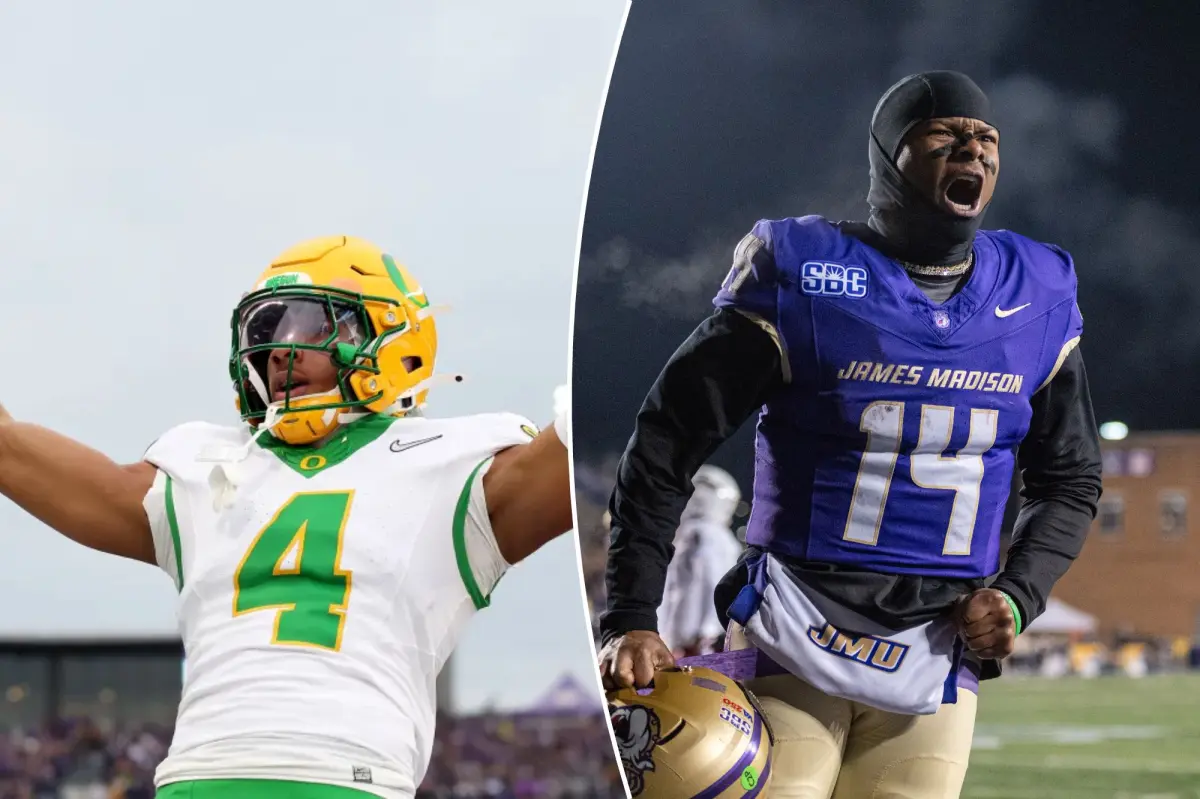
James Madison vs. Oregon. In the College Football Playoff. These are the weirdest of times.
When the field expanded to 12 teams, it meant we were eventually going to get a matchup like this.
On one side of the field stands Oregon, a juggernaut backed up by one of the most robust NIL budgets in the country, and on the other, James Madison, playing in just its fourth season at the FBS level.
James Madison now heads across the country to Eugene as 21-point underdogs, hoping to pull off one of the most profound upsets in the history of the sport.
James Madison vs. Oregon odds, prediction
The Dukes were unquestionably one of the best teams in the Group of 5 this season, but they also ranked 121st in strength of schedule, with their only loss coming against their lone Power 4 opponent — Louisville.
You can only beat the teams in front of you, however, and James Madison did that in style in 2025.

The Dukes had an average margin of victory of 21.5 points, went 8-5 against the spread and won eight games by at least three possessions.
James Madison hit the 45-point mark five times, including against a couple of decent sides in Old Dominion and Texas State.
That kind of scoring power certainly makes the Dukes a tough out as a 21-point underdog, especially since James Madison excels at controlling the clock.
Only two teams (Army, Miami) average more time of possession per game than the Dukes, who lean into the run more than just about anybody outside of the Service Academies.
Betting on College Football?
Whether or not the Dukes will be able to pull that kind of game plan off against an elite Oregon defense remains to be seen, but it bodes well for James Madison’s chances to cover a large spread that it is committed to the run. That should keep the clock moving, which is a great thing for underdog bettors.
Oregon is likely going to prove to be too much for James Madison over the course of 60 minutes, but the Dukes are uniquely set up to be a thorn in the Ducks’ side on Saturday night.
The Play: James Madison +21 (-110, bet365)
Why Trust New York Post Betting
Michael Leboff is a long-suffering Islanders fan, but a long-profiting sports bettor with 10 years of experience in the gambling industry. He loves using game theory to help punters win bracket pools, find long shots, and learn how to beat the market in mainstream and niche sports.

PHOENIX (AP) — Freshman Ebuka Okorie scored a season-high 32 points to help Stanford beat Colorado 77-68 on Saturday night in the Hall of Fame Series at Mortgage Matchup Center.
Okorie made 6 of 13 shots with two 3-pointers and 18 of 21 free throws for the Cardinal (10-2). He entered averaging 21 points per game.
Benny Gealer hit three 3-pointers and scored 13, adding three steals for Stanford in a third straight victory. Chisom Okpara scored 11 but made only 3 of 12 shots and 4 of his 10 free throws.
Barrington Hargress had 16 points and six assists to pace the Buffaloes (10-2). Sebastian Rancik totaled 14 points and eight rebounds, while reserve Isaiah Johnson scored 11.
Rancik and Hargress both had nine points by halftime to help Colorado build a 35-33 lead.
Hargress followed his 3-pointer with a fastbreak layup, and the Buffaloes took their largest lead at 29-22 with five minutes left. Gealer had 3-pointers on both sides of one by Ryan Agarwal, and the Cardinal used a 9-2 run to tie it 33-all. Felix Kossaras scored with 1:37 remaining for the final points of the half.
Gealer hit a 3-pointer to tie it 37-all, sparking a 9-0 run for a six-point lead, and the Cardinal led for the final 18:20. Oskar Giltay scored to give Stanford its largest lead at 65-49 with six minutes left.
Up next
Stanford: Hosts Cal State Northridge on Saturday.
Colorado: Hosts Northern Colorado on Dec. 28.
___
Get poll alerts and updates on the AP Top 25 throughout the season. Sign up here. AP college football: https://apnews.com/hub/ap-top-25-college-football-poll and https://apnews.com/hub/college-football

As many feared would happen, No. 6 seed Ole Miss completed dominated No. 11 seed Tulane 41-10 in its College Football Playoff First Round matchup Saturday night.
For weeks, college football fans have called for change to the CFP, which would keep Group of Five teams out. At the minimum, in still a rule that would prevent two Group of Five teams from making the College Football Playoff, which Tulane and James Madison both did this season.
The first game featuring a GO5 team was completely uncompetitive, as Ole Miss led 41-3 late into the fourth quarter until Tulane finally found the end zone with four minutes remaining. No. 12 seed James Madison will clash with No. 5 Oregon Saturday night in Autzen, providing one last chance for these such teams to prove they belong.
Late in the Ole Miss/Tulane broadcast Saturday night, ESPN’s Jesse Palmer pleaded with the sport of college football to limit GO5 schools’ inclusions into the Playoff.
“Listen, I’m all about inclusivity and I’m fine with one Group of Five team making it into the 12-team (Playoff),” Palmer said. “That team deserved to be Tulane. They won the best Group of Five conference and beat Duke, the eventual ACC Champion. But as a fan, I want to see the other 11 teams that have a legitimate chance of winning a National Championship.”
Jesse Palmer wants to cap the GO5 participation at just one team
“I think having seen Notre Dame in person this year, I think you (referring to broadcast partner Joe Tessitore) and I both feel that Notre Dame had a legitimate chance to compete for a National Championship,” Palmer continued. “I don’t know if James Madison really does. As we keep talking about and keep working towards getting the 12 best teams in the Playoff, I do think you have to cap the Group of Five participation at just one team.”
In the first iteration of the 12-team College Football Playoff last season, the Mountain West Conference’s Boise State earned the GO5 bid into the bracket. Unlike this season, the top four ranked conference champions earned a First-Round bye, before it was changed. The Broncos clashed with No. 6 Penn State in their Quarterfinals matchup and were blown out 31-14, adding even more fuel to the fire in the argument.
If James Madison is to get blown out Saturday night, chatter regarding the subject matter will continue to grow louder and louder. You can now add Jesse Palmer‘s name to the list of public figures calling for change to the College Football Playoff.
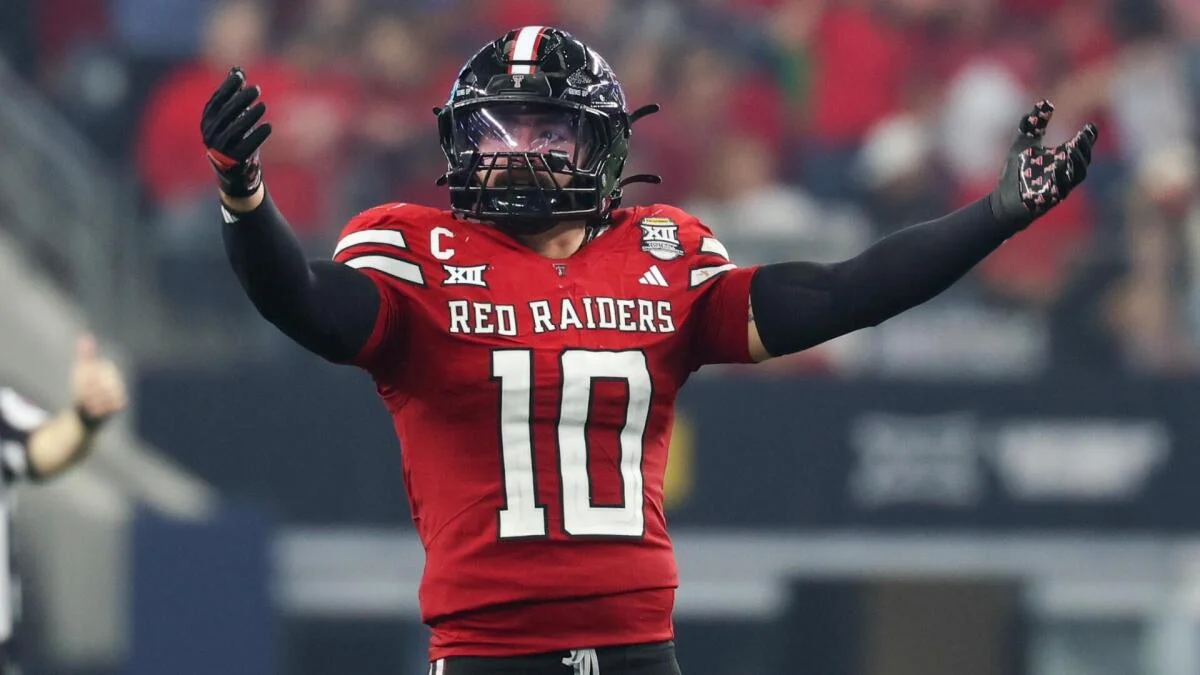
The quarterfinals of the College Football Playoff are upon us, which means the four top seeds will finally get their postseason campaigns underway after a lengthy break following conference championship weekend.
No. 4 Texas Tech waited the longest to officially learn its quarterfinal opponent. But given that No. 5 Oregon entered the first round as a three-touchdown favorite over No. 12 James Madison, the Red Raiders likely got a head start preparing for the Ducks. Despite a spirited effort from the Dukes, Oregon overwhelmed the Sun Belt champions to set up the expected Orange Bowl showdown with Texas Tech — a matchup that could be one of the best games of the entire Playoff.
There’s a fitting symmetry to the pairing. Oregon, once college football’s “new money” program, will face the NIL era’s fastest riser in Texas Tech. The Ducks have established themselves as a consistent national contender over the past two decades, while the Red Raiders poured major resources into their program and surged to the top of the Big 12 this season as a result.
In many ways, Oregon represents a blueprint for how a program like Texas Tech can build sustained excellence. On New Year’s Day in Miami, the Red Raiders will get a chance to show they’ve already closed that gap.
For two programs long defined by high-powered offenses, the defining trait of this season has been dominant defense. Both teams have been excellent offensively — they’re both top 10 nationally in scoring — but their defenses have been the engines of their success. As a result, both offenses will face a significant challenge trying to move the ball consistently in this matchup.
What to know about Texas Tech
The Red Raiders earned the No. 4 seed by riding one of the nation’s best defenses to a dominant season in the Big 12. Aside from a midseason stumble at Arizona State, Texas Tech bullied its way through the conference, including a pair of blowout wins over BYU that cemented a top-four finish in the CFP rankings and secured a first-round bye.
Texas Tech’s defense ranks among the elite nationally, finishing third in scoring defense at 10.9 points allowed per game — trailing only top seeds Indiana and Ohio State. All four of the Red Raiders’ AP All-America selections came on the defensive side of the ball, including first-team honors for linebacker Jacob Rodriguez and EDGE David Bailey.
That star-studded unit will be tasked with slowing an Oregon offense that found its rhythm in the second half of the season and finished ninth nationally in scoring at 38.2 points per game. When the Ducks have the ball, it will be a true strength-on-strength battle. Oregon ranked 14th in rushing offense at 218.4 yards per game, while Texas Tech finished No. 1 nationally in rushing defense, allowing just 68.5 yards per game.
Oregon faced two other top-10 defenses in 2025 and failed to crack 21 points against either — scoring 18 in a win over Iowa and 20 in a loss to Indiana. The Iowa game was played in a downpour, but Indiana held the Ducks to 81 rushing yards on 30 carries. Expect Texas Tech to study that film closely in hopes of replicating what the Hoosiers did up front with their own ultra-talented front seven.
The biggest question for Texas Tech is whether its No. 2 scoring offense can hold up against Oregon’s stout defense. The Red Raiders overwhelmed the Big 12, but in their biggest games — against Utah and BYU twice — the defense led the way. Oregon represents another step up in competition, and Behren Morton, Cameron Dickey and the rest of the offense will need to bring their A-game.
What to know about Oregon
The Ducks did what was expected in a convincing first-round win at home, overpowering James Madison to set up a heavyweight clash in the Orange Bowl.
The challenge for Oregon will be creating space for its playmakers against a hard-hitting Texas Tech defense. Against James Madison, the Ducks enjoyed a clear speed advantage and exploited it throughout the game. The margins will be far tighter against the Red Raiders.
Oregon typically sets up the pass with the run, but that approach may be flipped against Texas Tech. Quarterback Dante Moore could be asked to shoulder more of the load early, using the passing game to loosen the Red Raiders’ front and open opportunities on the ground.
Saturday night’s game against James Madison saw Oregon get almost anything it wanted offensively. That will not be the case on Jan. 1, but Moore looked sharp throwing the ball. His confidence and willingness to push it downfield will be critical if the Ducks’ offense is going to have success against Texas Tech.
Defensively, the question is whether Oregon can create negative plays to knock Texas Tech off schedule. The Red Raiders would prefer to lean on the run game and avoid putting too much on quarterback Behren Morton. Despite a strong overall defensive season, Oregon ranked near the bottom nationally in havoc metrics, finishing with 57 tackles for loss (113th in FBS) and 23 sacks (81st).
Texas Tech’s offense stalled early at times against Utah and BYU, largely due to backfield pressure. While both defenses eventually wore down after spending extended time on the field, the blueprint for slowing the Red Raiders is clear: generate pressure and speed up Morton’s decision-making.
Oregon has been steady defensively all season, but it may need to be more creative in manufacturing the disruption necessary to give Texas Tech problems.
Odds below via FanDuel Sportsbook.
Orange Bowl odds, prediction
I expect a highly competitive game in Miami between the Red Raiders and Ducks as I think there are a lot of similarities between these two teams. Both defenses are excellent and when at their best, the offenses can put up points in bunches. To me this game comes down to which offense can create more explosive plays in a variety of ways, because both defenses are so talented and so good at adapting in-game. I give the Ducks the edge in that department thanks to Moore and see him leading Oregon to a bit of quarterfinal revenge after last year’s dud in the Rose Bowl. PICK: Oregon -1.5
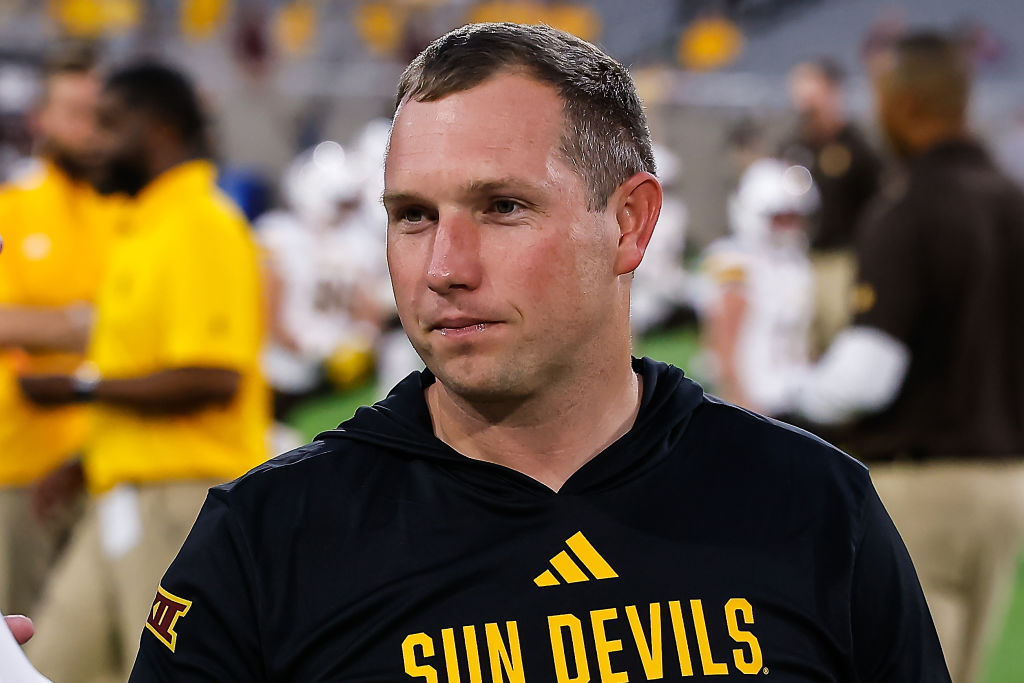
If Sun Devil fans want to stay competitive in the Big 12, they better pony up the big bucks.
Arizona State Sun Devils head coach Kenny Dillingham has enjoyed quite a successful tenure so far in Tempe.
After his first year in which his squad put up a dismal 3-9 record, Dillingham went to work and completely flipped the fortunes of the ASU football program, posting a 19-7 record over the last two seasons, including a Big 12 championship and a College Football Playoff berth.
For his efforts, Dillingham recently received a massive extension and larger salary pool for his assistants, fending off the circling Michigan Wolverines in the process.
Though I’m sure Dillingham is happy to be staying in the Valley of the Sun and is thrilled with his new paycheck, the 35-year-old head coach was recently chatting up the local media and stumping for a different kind of payday.
It’s easy to look at Dillingham saying these things and see him as greedy or ungrateful, but he’s spot on, and the sad reality is that this is the new norm for the sport of college football.
The name of the game is roster building and retention, and if you want to compete in the Power 4 leagues and consistently make the College Football Playoff, you had better pony up some serious dough.
A sum like $20 million might seem like a ridiculous demand, but that’s a pretty reasonable number in today’s NIL arms race.
The Texas Techs of the world are going to do whatever it takes to win, and if Dillingham wants the Big 12 to run through Tempe and not Lubbock, then he is doing the right thing by lobbying for some of those billionaires living in Arizona to stroke a check.
It’s disgusting and gross and goes against everything that college football used to be about, but this junk isn’t going anywhere, so you either adapt or die.
Dillingham is adapting, now we will see if the big money players will follow his lead.
Because if they don’t, things could get very dark very soon for the Sun Devils.

NCAA reaches settlement over NIL lawsuit with Tennessee, other states – The Daily Beacon

James Madison vs. Oregon prediction: Odds, picks, best bet for College Football Playoff

Freshman Ebuka Okorie scores season-high 32 to lead Stanford over Colorado 77-68

Jesse Palmer calls for changes to limit G5 schools’ inclusion amid Ole Miss blowout of Tulane

TWRA Youth Fish Art Contest Now Open

Oregon vs. Texas Tech set for Orange Bowl: Preview and odds for CFP quarterfinal

Centennial Cougars beat Champlin Park Rebels – The Rink Live

Dodge County falls to Proctor/Hermantown in a ranked Class A girls hockey game

“The Struggle Never Really Ends”: When Ross Chastain Revealed the Dark Reality of Funding in NASCAR

2025 All-Area Volleyball: Meet the complete team | Sports

After Signing Extension To Stay At Arizona State, Kenny Dillingham Sounds Off

Volleyball Wildcats face Texas A&M for national championship

2025-26 College Football Playoff: What’s next for each eliminated playoff team?

A-K Valley athletes of the week: St. Joseph’s Bella Bartolovic, Springdale’s Robby Simmen

The staggering NIL figure that transfer portal QBs are expected to cost

First Tee Winter Registration is open

Fargo girl, 13, dies after collapsing during school basketball game – Grand Forks Herald

CPG Brands Like Allegra Are Betting on F1 for the First Time

F1 Las Vegas: Verstappen win, Norris and Piastri DQ tighten 2025 title fight

Sycamores unveil 2026 track and field schedule

Two Pro Volleyball Leagues Serve Up Plans for Minnesota Teams

Utah State Announces 2025-26 Indoor Track & Field Schedule

SoundGear Named Entitlement Sponsor of Spears CARS Tour Southwest Opener

Redemption Means First Pro Stock World Championship for Dallas Glenn

Bowl Projections: ESPN predicts 12-team College Football Playoff bracket, full bowl slate after Week 14

Jo Shimoda Undergoes Back Surgery

Texas volleyball vs Kentucky game score: Live SEC tournament updates

Robert “Bobby” Lewis Hardin, 56

How this startup (and a KC sports icon) turned young players into card-carrying legends overnight

Indiana’s rapid ascent and its impact across college football






-
 Motorsports2 weeks ago
SoundGear Named Entitlement Sponsor of Spears CARS Tour Southwest Opener
-

 Motorsports2 weeks ago
Donny Schatz finds new home for 2026, inks full-time deal with CJB Motorsports – InForum
-

 Rec Sports2 weeks ago
Black Bear Revises Recording Policies After Rulebook Language Surfaces via Lever
-

 Rec Sports2 weeks ago
How Donald Trump became FIFA’s ‘soccer president’ long before World Cup draw
-
 Sports3 weeks ago
Men’s and Women’s Track and Field Release 2026 Indoor Schedule with Opener Slated for December 6 at Home
-
 Rec Sports2 weeks ago
David Blitzer, Harris Blitzer Sports & Entertainment
-

 Motorsports2 weeks ago
JR Motorsports Confirms Death Of NASCAR Veteran Michael Annett At Age 39
-
 Motorsports2 weeks ago
Rick Ware Racing switching to Chevrolet for 2026
-
Sports2 weeks ago
West Fargo volleyball coach Kelsey Titus resigns after four seasons – InForum
-
Sports2 weeks ago
Elliot and Thuotte Highlight Men’s Indoor Track and Field Season Opener