
NIL
MVFC Coaches Talk House Settlement, FCS Parity, Revenue

A new era of Division I college athletics is upon us as the House settlement has been finalized.
For schools that opt-in to the settlement, they can now directly revenue-share with players, no longer face scholarship limits but must adhere to new roster limits (with the ability to grandfather in roster spots this year and slowly move down to those roster limits), can move NIL deals in-house, and more.
In the FCS, 92 schools opted in for 2025-26 and 36 schools opted out. All 11 Missouri Valley Football Conference schools have opted in.
At MVFC Media Day last month in Sioux Falls, SD, HERO Sports was on site and talked to head coaches about the settlement, revenue-sharing, and parity in the FCS.
Will The House Settlement Create More Parity In The FCS?
The FCS national championship picture is top-heavy.
Dating back to the 2021 fall season, every title matchup has featured a combination of NDSU, SDSU, Montana State, or Montana, while teams from Montana and the Dakotas have taken up 75% to 100% of the semifinals. Even before the likes of James Madison, Jacksonville State, Sam Houston, Delaware, and more departed for the FBS, the FCS has had a small number of teams good enough to win a title, often being able to count them with a few fingers since the 2014 season.
Will the House settlement close the gap or widen the gap?
Some MVFC coaches think it could even the field. Some deflected. And some didn’t say yes or no, but their body language suggested they wanted to say it’ll widen the gap.
“I think it does level the playing field a little bit, depending on who you are,” South Dakota head coach Travis Johansen said. “I think for years, to generate revenue within programs, and maybe not affecting us as much, you have to be able to sell out your stadiums, have bigger venues, your brand had to push that quite a bit. Third-party NIL wasn’t going to be a part of moving programs necessarily. But at this point, there’s a way to generate revenue that can come from a lot of different ways, and I think if you have access to people and revenue like that, it’s going to inevitably help programs if you decide to go that route with it. So I think there are a lot of benefits. A1 for the student-athlete in a way that makes sense and doesn’t deter from the fabric of what we’re trying to accomplish. I think we’ve lost that to a certain extent. But now that those rules are kind of settling down and in place, and we all know there will be continued litigation with this thing. But ultimately, I think the spirit of what we tried to accomplish five years ago with name, image, and likeness is getting closer back to that, which will benefit student-athletes, not only monetarily, but give them a place where they can stay at home for four or five years.”
Youngstown State head coach Doug Phillips agreed when asked if more parity could be coming to the subdivision.
“I do,” Phillips said. “We all are going to have certain challenges. I always felt like there was a bubble over some of the states, and it really didn’t penetrate that bubble compared to what we had to face. If you put a circle around Youngstown State, about a 250-mile radius, there are a lot of FBS schools, there’s a lot of competition knocking at your door. So I do feel like the scales could be balanced a little bit. … We’ve been knocked down. Hopefully, we made the answers. Hopefully, we made the changes that we need to do to put us in a position to be able to compete, to be able to win the Missouri Valley Football Conference. That’s what we strive for every day, and that’s what we work for every day.”
There are two ways to think about the parity question.
One is that the FCS “rich” will just get richer.
In an era where schools can now directly pay players and move NIL fundraising in-house, the FCS programs with the most internal and external support are going to thrive. And with there no longer being scholarship limits, the FCS powers could be playing with 70, 75, 85, or more scholarships if they can/want to fund it, while others are still at 63, creating a big advantage. Conferences like the SWAC, Southland, CAA, OVC-Big South, and MVFC did not set league-wide scholarship caps. The Big Sky, SoCon, and Patriot League maintained their football equivalency scholarship cap at 63 for this year.
NDSU head coach Tim Polasek treaded lightly when asked about parity in the FCS post-House settlement. The Bison have certainly set a standard in funding, facilities, cost of attendance, and other areas, raising the FCS championship bar to new heights that some would argue is an unattainable bar for most of the FCS.
“My thoughts are, with the revenue-share and us fundraising or raising money for some things to keep our football team intact, I think North Dakota State’s going to be in a really good position. I’m not really that concerned with the rest of the FCS. I’m not sure on that. I can’t answer that for them. I don’t know if that’ll provide more…” Polasek said before pausing. “College football’s been college football for a long time, and there have been a lot of programs that have certain things that others don’t, and those things most certainly are important and can provide an edge. The one thing for us that I want to stay focused on, and [NDSU AD] Matt Larsen is focused on, is our kids’ experiences still has got to be at the forefront. Do we have enough in the refueling station? Do we have enough facility-wise? Do we have enough from a personnel standpoint that we can support these guys in their endeavor to be the best they can be? That’s still got to be at the forefront. And then we’ll figure out, OK, which guys need a little bit of reward, retention, and we’ll keep working towards it. I most certainly don’t have all the answers. But I like NDSU’s chances when it comes to, will our support, will BisoNation answer the bell and keep us competitive? I most certainly believe that will be the case.”
Another school of thought is that the House settlement will allow more FCS schools to catch that top tier — an exclusive group that arguably only contains NDSU, South Dakota State, and Montana State, with other schools rising up occasionally to challenge them.
For example, if a school had trouble getting support and donations into its third-party NIL collective, they were falling behind in trying to retain players. Now, by opting in, donors may feel more encouraged to provide money for revenue-sharing or in-house NIL for two reasons: 1) They are more comfortable giving to the school than a third-party collective. And 2) They get tax breaks for donating to schools, whereas donations to collectives do not get tax breaks.
And while mid-major schools aren’t operating on much extra cash, schools can get more creative by moving money around in their budgets to directly revenue-share with players.
In short, FCS football teams struggling to get cash to pay players in the NIL collective world now may have a smoother path to pay players for better retention.
Revenue-Sharing, Guardrails, & Resources
Mid-major athletic departments are operating on tight budgets. Every dollar they take in is spent on operations, scholarships, staffing, coach salaries, travel, nutrition, facilities, equipment, etc. There isn’t extra money lying around.
But schools can get creative.
And the strategies will vary.
Maybe some facility upgrades get halted, or ticket prices increase, or fans can tip extra at concessions, and that money goes into the revenue-sharing pot. Maybe some schools don’t add scholarships, but use that money to put into the pockets of their current scholarship players. Increasing student fees or university allocations is another way to find wiggle room in the budget to move money around. Increased fundraising efforts can help create more flexibility in the budget to increase the revenue-sharing pot. As mentioned above, donors may be more inclined to help pay players directly through school donations than third-party NIL collective donations.
“I think it’s a cool opportunity for us to be able to create revenue and generate revenue and be able to formulate a plan with some rules that we can control, that are things in-house that our university can have our hands in a little bit,” SDSU head coach Dan Jackson said. “… And as Kobe [Clayborne] mentioned, it’s kind of an exciting time. I think this is the best time in college football to be a first-year head coach, because it’s a level playing field for everybody. And you’re going to be able to formulate new ideas and new solutions and be able to tackle it with positive energy, which is really our stance on college football and the parameters set forth by the House settlement.”
The maximum revenue amount a school can share across all of its athletes is $20.5 million a year, a figure that will go up annually. Only some Power 4 conference schools will be able to share that amount of cash.
In the FCS, where most athletic budgets are between $15M to $30M, some schools will be happy to find $500,000 to revenue-share with players. Some schools may have opted in, but simply don’t have any budget leeway to share any money.
“I think that’s a question for the administrators,” Southern Illinois head coach Nick Hill said. “Last night, it was nice to go to dinner with all the coaches and just hang out. All of them are good guys. A lot of respect for everybody in the league. And it’s cool to be able to just talk about their season, about life, and family. And so I think we would probably have a different mindset if we could choose. I also understand, too, there’s a responsibility for your school. So if you’re a chancellor, or if you’re an athletic director, it’s a tough time right now to figure all this out. And there’s not a lot of revenue at mid-major sports to go around. You’re not in a big surplus. So how much do you want to go in debt and all those things? And so, I’ve always been like that. I’m not going to complain about any of that. We’ve always had lower budgets. We’re just going to put our head down with what we have, we’re going to go to work, and we’re going to try to create a place that guys in that year can become the best players that they can. I think that schools individually have to look at how are we going to keep up. There’s always all these things changing pretty quick, and so you have to be proactive. You have to be thinking in the future, two, three years from now, so you don’t get left behind, per se. But yeah, I think that the administrators have more of a say than we do as coaches.”
Another benefit of the House settlement for FCS teams is a new NIL clearinghouse that will prevent P4 schools from offering massive NIL contracts to entice FCS or Group of Five standouts to transfer up. The amount of money being thrown around during this last spring portal window was eye-watering as NIL collectives raced to beat the clearinghouse start date.
Now, there needs to be a legitimate business reason and reasonable market value for NIL deals.
P4 collectives can no longer pay an FCS All-Conference offensive lineman $250,000 to be a depth player and do a couple of community engagement events per semester.
“It’s kind of been the wild, wild West,” Murray State head coach Jody Wright said. “We really had a system where some billionaire could just give a kid a billion dollars, literally if they wanted to, to play college football. And I’m all for players getting compensated. I think that. I also think the spirit of football, what’s made it such a great game, is guys that really value being a good teammate wanting to come in and do some special things with other special young men and getting an education that’s going to pay off down the road. I hope young men aren’t making a decision off of what school can give me a little bit more money, $10 or $15,000, where you’re actually going somewhere where you can see yourself getting a degree and having those great experiences. At our level, talking to some other head coaches here, we’re probably not running into that quite as much. And I think there’s still a great spirit of football and all the good life lessons football teaches you. … So I think it goes back to just making sure you got guys that really love football, and hopefully everybody comes away as a better person. But it will make it a little bit equal. It will be nice that everybody’s kind of at least in the same neighborhood with everything.”
At the end of the day, as veteran Illinois State head coach Brock Spack put it, it’s all going to come back to resources.
“I wish I had the crystal ball, but all I know is once you open Pandora’s box and you start paying players, you’re not going back,” Spack said. “We all have to get with the program or get out of the profession. But I think if we can get some parameters around it a little bit. If you can find, I won’t say rules, but just some guardrails, would be helpful. I think we’re a little better towards that now than we were a year ago. But the hard part for us as players and coaches is when the rules change so much. And particularly, we have roster limitations now. I think the way they set it up with designated student-athletes made it easier for us to move into the next phase of 105 [football roster spots]. I guess we’ll see. Resources are tough out there right now. But if you’re going to be a really good football program, you’ve got to have resources. I don’t care what level you’re in, that’s never not going to be the case.”
And in the FCS, a few teams have FBS-level resources. Most have FCS-level resources. And some have sub-D1-level resources.
Will the gap close or will it widen between the FCS haves and have-nots in a new era where resources and revenue will be as important as ever?
There are arguments on both sides. Maybe the answer is obvious. Maybe it’s unknown. We’ll see if this new era off the field results in changes on the field in the FCS national picture.

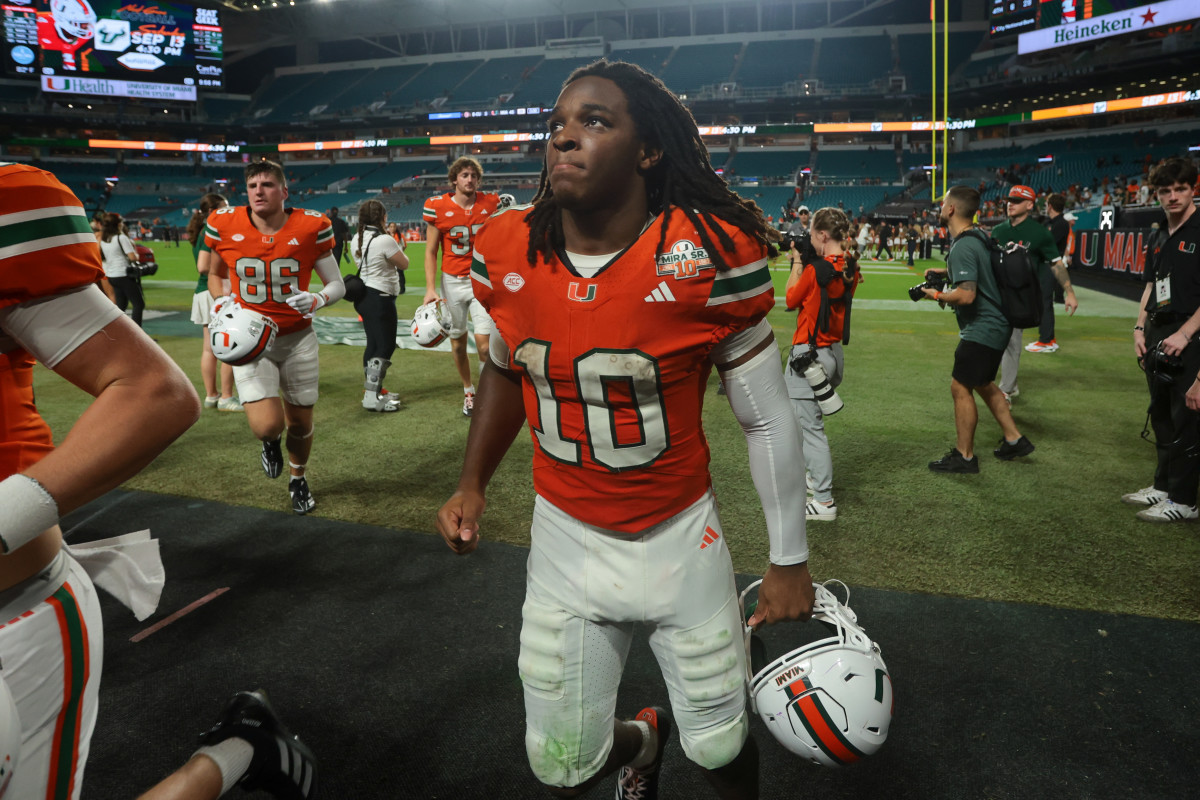
The No. 10 seed Miami Hurricanes defeated the No. 7 Texas A&M Aggies 10-3 in the first round of the College Football Playoff. It was a defensive battle, ultimately decided by a late fourth-quarter score and red-zone interception by Miami.
With the score tied at 3 and 1 minute, 44 seconds left in the game, Hurricanes wide receiver Malachi Toney scored on an 11-yard touchdown pass thrown by quarterback Carson Beck.
Advertisement
Up next for the Hurricanes is a Goodyear Cotton Bowl Classic matchup against the No. 2 Ohio State Buckeyes. It’s an uphill battle, as ESPN’s matchup predictor gives the Hurricanes a 29.5% chance of winning.

Miami Hurricanes wide receiver Malachi Toney (10).© Robert Myers-Imagn Images
Before his heroic performance, though, the wide receiver revealed an exciting Name, Image and Likeness (NIL) update. In a joint Instagram post, Toney revealed a new NIL partnership with Hellstar, a popular clothing brand that has a sports training component.
Advertisement
“We are so proud to announce our first Hellstar Sports College Athlete NIL signing – Malachi Toney🌟.,” the post caption read. “We had the privilege to coach @malitoney10 while he was apart of our high school 7 on 7 program, so now seeing him shine on the collegiate level we couldn’t be more proud.”
Toney’s On3 NIL valuation of $878,000 is the 12th-highest among college football wide receivers. Among players on Miami, it’s the fourth-highest, behind quarterback Carson Beck ($3.1 million), EDGE Rueben Bain Jr. ($1.2 million) and offensive tackle Francis Mauigoa ($1.1 million).
Advertisement
Through 14 games, Toney has been a major contributor to Miami’s success. He leads the team in receptions (89), yards (992) and touchdowns (eight).
With an exciting NIL opportunity under his belt, he and Miami look to stay hot against Ohio State. Kickoff is Dec. 31 at 7:30 p.m. ET at AT&T Stadium, airing on ESPN and streaming on the ESPN app.
Related: Texas Receives Clear Message From Nation’s No. 2 WR Amid Intense Recruiting Battle
This story was originally published by Athlon Sports on Dec 21, 2025, where it first appeared in the College Football section. Add Athlon Sports as a Preferred Source by clicking here.
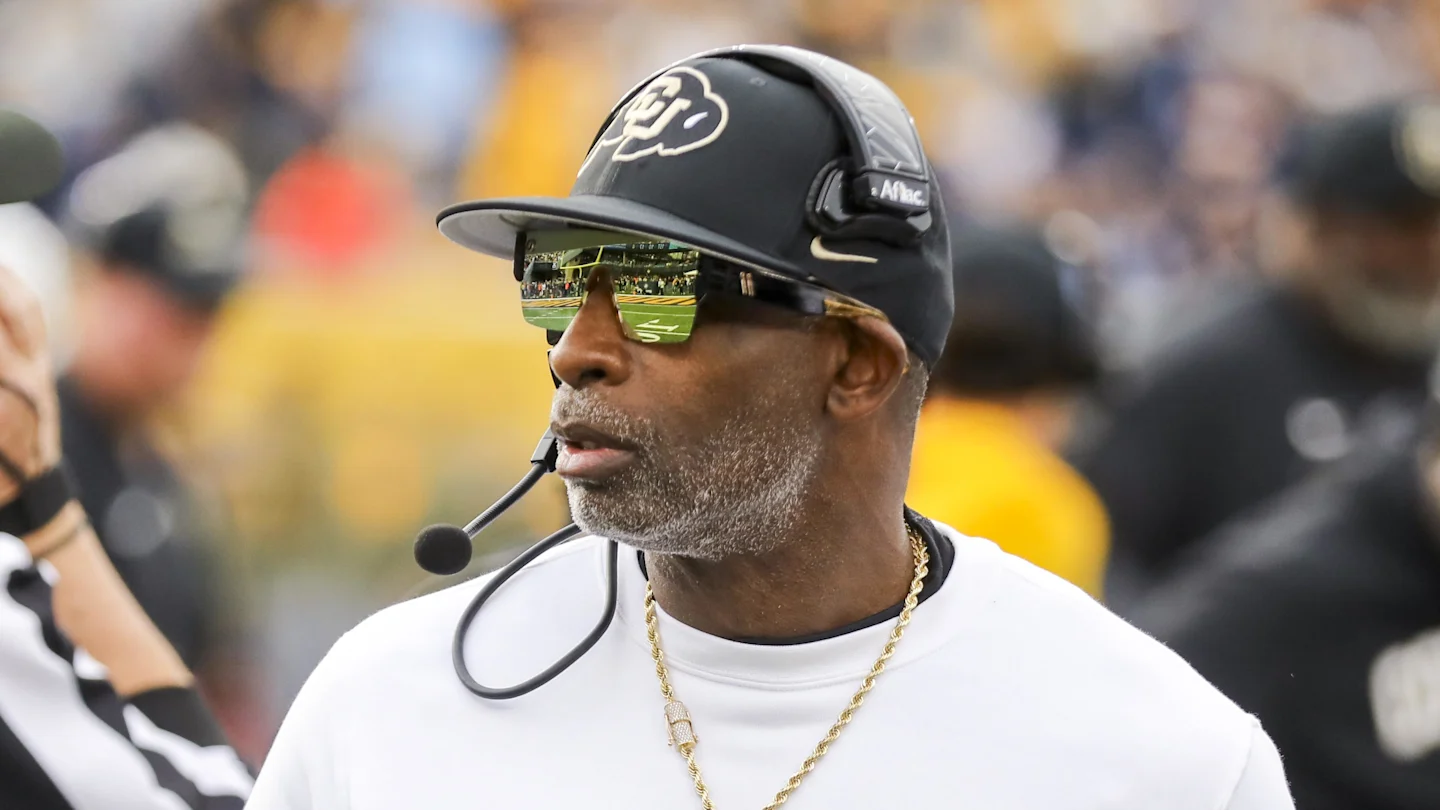
In the growing landscape of college athletics, Name, Image, and Likeness (NIL) deals play a vital role in sports. Some programs are set up better than others based on a program’s valuation. Programs with higher valuations can help some of the top-performing teams stay successful.
CNBC released its valuation rankings for the country’s athletic departments, showing their growth from the 2024 fiscal year. The Colorado Buffaloes are ranked No. 47 in the nation, a rise from No. 55 in 2024.

Breaking Down Colorado Buffaloes’ Valuation Ranking
Colorado’s 2025 valuation is $574 million, with a year-over-year value change of 22 percent. The program’s 2024 revenue is set at $147 million, with a 16 percent year-over-year revenue change.
A program’s valuation determines its monetary worth, and it is important to look at the growth, which shows that Colorado is trending in the right direction. It is also important to note that the valuation rankings are based on all of the athletics, not just the football program.
Where Colorado Ranks In The Big 12

When focusing on the Big 12 conference, several of the programs are in the same vicinity with their valuation ranking.
- No. 39 Kansas: $620M
- No. 41 Oklahoma State: $600M
- No. 42 Baylor: $585M
- No. 46 Iowa State: $575M
- No. 47 Colorado: $574M
- No. 49 Texas Tech: $570M
- No. 50 TCU: $568M
- No. 55 Arizona: $529M
- No. 57 BYU: $500M
- No. 58 West Virginia: $481M
- No. 60 Utah: $451M
- No. 62 Kansas State: $435M
- No. 63 Arizona State: $430M
- No. 68 Cincinnati: $280M
- No. 70 UCF: $262M
- No. 73 Houston: $222M
MORE: Colorado Gets Hit With Biggest Transfer Portal Loss Yet
MORE: Michael Irvin Gets Real On Blame Surrounding Shedeur Sanders
MORE: Deion Sanders Faces Recruiting Problem After Omarion Miller Transfer News
SIGN UP FOR OUR NEWSLETTER HERE
While from the top valuation of Kansas to the bottom, which is Houston is a significant difference in the Big 12, the conference teams are still in a similar vicinity overall. With it having to do with all athletics, the programs that have consistently strong teams, such as Kansas’ basketball team, make sense to have a higher valuation.

Looking at the Big 12 as a whole shows that the Colorado Buffaloes are in the top five for their valuation and trending upward.
Calling Back To Deion Sanders’ Comments On Fairness
While valuation is not the same as revenue, seeing the difference in the conferences does call back to Colorado coach Deion Sanders’ comments on the fairness between programs. The schools in the top five for their valuation are either in the Big Ten or the SEC, and all are in the billions.
“You talk about equality,” Sanders said during the Big 12 media day. “All you have to do is look at the playoffs and see what those teams spent, and you understand darn near why they’re in the playoffs. It’s kind of hard to compete with somebody who’s giving $25, $30 million to a darn freshman class.”

Although the valuation is on the programs’ overall athletics, Sanders has been outspoken about money when it comes to building the football program. With the Buffaloes facing a mass exodus through the transfer portal, Sanders has highlighted that several players are leaving because of money.
The positive side is that the Buffaloes’ valuation is growing with a 22 percent increase. This shows that the school’s athletics overall are being valued higher, and will help lead to more money poured into the program. With more money, the Buffaloes can put more of an emphasis on NIL as they look to build their roster and compete in the Big 12.
RECOMMENDED ARTICLES
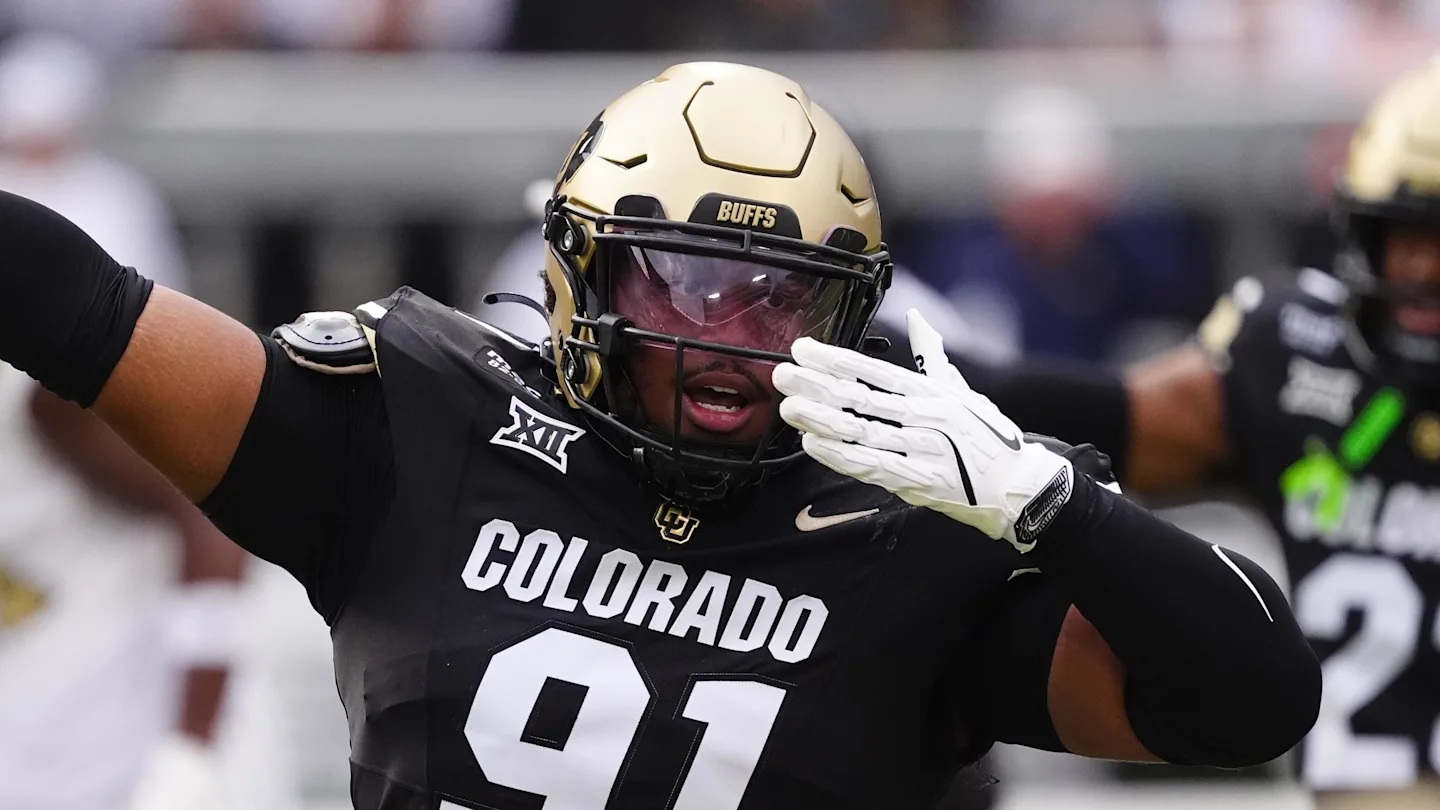
From a player retention standpoint, the first few weeks of the offseason haven’t been kind to the Colorado Buffaloes.
Several key Buffs have announced their intentions to enter the college football transfer portal when it opens next month, including wide receiver Omarion Miller, safety Tawfiq Byard and freshman defensive end Alexander McPherson. While every situation is unique, one Colorado insider believes money has been a common denominator among players’ reasons for leaving Boulder.

“The super majority of those people, I’m talking 95 percent, are going to be leaving for a bigger bag,” Thee Pregame Show’s Uncle Neely said on his YouTube channel. “This ain’t transferring in 1990. This ain’t transferring in the year 2000. This is 2025. This is business now. This isn’t, ‘Oh, I don’t like the coach. Oh, I don’t want to be treated the way they treat me.’
“This doesn’t mean something is wrong. These are business decisions now. But what we like to do is run with the narrative that woe is me, something must be wrong, something must be going on. How are all these people leaving?”

The NIL (name, image and likeness) era has rocked college football, and the depressing truth is that schools with more money will ultimately land the best players. In the Big 12, no school better exemplifies that trend than new conference champion Texas Tech.
Who’s Leaving Colorado?

As of Sunday, 16 Colorado players will enter the transfer portal next month. That group includes 12 defensive players, six members of the Buffs’ 2025 high school signing class and a few other Buffs who spent only one season in Boulder.
Below is an updated list of Colorado players who plan on entering the transfer portal:
- Safety TJ Branch
- Defensive lineman Jehiem Oatis
- Cornerback Noah King
- Cornerback Teon Parks
- Linebacker Mantrez Walker
- Safety Terrance Love
- Safety Tawfiq Byard
- Wide receiver Omarion Miller
- Defensive tackle Brandon Davis-Swain
- Offensive lineman Carde Smith
- Defensive end Alexander McPherson
- Offensive lineman Tyler Brown
- Defensive tackle Gavriel Lightfoot
- Defensive tackle Christian Hudson
- Defensive tackle Tawfiq Thomas
- Wide receiver Dre’lon Miller

Uncle Neely shared his take that Colorado’s losses should be replaceable via the transfer portal.
“Have you ever stopped to say, what am I actually losing by those people leaving?” Uncle Neely said. “Have you ever looked at the numbers production-wise of who has announced that they’re getting up out of here and what you’re actually losing by them leaving?… Is it replaceable via the portal? And in this business in college football, is it replaceable cheaper? I would wager to say the answer is yes in all regards.”
MORE: Colorado Gets Hit With Biggest Transfer Portal Loss Yet
MORE: Michael Irvin Gets Real On Blame Surrounding Shedeur Sanders
MORE: Deion Sanders Faces Recruiting Problem After Omarion Miller Transfer News
SIGN UP FOR OUR NEWSLETTER HERE

The college football transfer portal will open on Jan. 2 and close Jan. 16. Colorado coach Deion Sanders and his staff can begin adding players from the portal at the start of that period.
NIL
Report: LSU finalizes deal to hire Ole Miss’ Kevin Smith, puts him among highest paid RBs coaches
Lane Kiffin is bringing another Ole Miss assistant with him to LSU. According to Matt Zenitz of CBS Sports, the Tigers have finalized a deal to hire Rebels running backs coach Kevin Smith for the same role.
Smith is reported to have a salary of close to $1 million, which would make him one of the highest-paid running backs coaches in the country. He is the sixth Ole Miss assistant to follow Kiffin to Baton Rouge.
The other coaches joining Kiffin at LSU are offensive coordinator Charlie Weis Jr., tight ends coach Joe Cox, receivers coach Joe McDonald, inside receivers coach Sawyer Jordan and quarterbacks coach Dane Stevens. So far no defensive assistants from the Rebels have made the jump to Baton Rouge.
Smith worked with Kiffin as a running backs coach at Florida Atlantic form 2017-19 and joined his very first staff at Ole Miss in 2020. He stayed for the next two seasons in Oxford before leaving to take the running backs coach position at Miami in 2022.
Smith’s stint with the Hurricanes was a short-lived one as he returned to Ole Miss in 2023 and stayed through this season. Now he’ll look to continue the success he has enjoyed with Kiffin while building up the running backs room at LSU.
Smith helped to develop running backs such as Quinshon Judkins and Kewan Lacy during his time in Oxford. This past season, Ole Miss ranked fifth in the SEC with 185.6 rushing yards per game as Lacy led the conference with 21 rushing touchdowns and ranked second with 1,366 yards.
Ole Miss had its best season in program history this year to reach the College Football Playoff for the first time. However, Kiffin was not granted permission from the school to finish out the season with the Rebels after he accepted the LSU job.
Other assistants, including offensive coordinator Charlie Weis Jr., were allowed to complete the playoff run with Ole Miss. The Rebels defeated Tulane in the first round and will face No. 3 Georgia, which they lost to earlier this season, in the quarterfinals.
As of right now, it looks like most of the Ole Miss offensive staff will follow Kiffin to Baton Rouge. The defensive side keep defensive coordinator Blake Baker, who has been on staff at LSU since 2024.
The quarterback market is expected to be extremely competitive this offseason.
A ton of experienced signal-callers have announced their decisions to enter the NCAA Transfer Portal, including Arizona State’s Sam Leavitt, North Texas’ Drew Mestemaker, Cincinnati’s Brendan Sorsby, and TCU’s Josh Hoover, among countless others.
The right move can benefit young quarterbacks, as players such as USC’s Jayden Maiava and Oregon’s Dante Moore benefited from transferring early in their careers.
An offseason coaching change has led one former blue-chip recruit to explore his options in the portal.
Former Four-Star Quarterback Expected To Enter Portal
On Sunday, Memphis true freshman quarterback Antwann “AJ” Hill announced his plans to leave the program after one season, per On3.
Hill appeared in two games in 2025, earning a redshirt. His most extensive action came in a 31-24 loss to UAB on October 18. Hill entered the contest after starting quarterback Brendon Lewis went down with an injury. In roughly two quarters of action, he completed 13/25 passes for 176 yards with 1 touchdown and 1 interception.
On the season, Hill connected on 19/32 passes for 223 yards with 1 touchdown to 1 interception.
Hill is transferring after Memphis head coach Ryan Silverfield was hired away by Arkansas. The Razorbacks don’t have a ton of depth at quarterback. Redshirt freshman KJ Jackson holds the most experience on the roster with five appearances and one start last season.
It wouldn’t be a surprise if Arkansas is involved in Hill’s transfer recruitment.
Hill was one of the highest-ranked prospects in program history to sign with Memphis. He was regarded as the No. 15 QB and a top-200 recruit in the 2025 class. Hill chose the Tigers over Florida following official visits to both schools.
During his prep career at Houston County High School, Hill compiled over 11,000 passing yards and led his team to at least one playoff victory in all three seasons as a starter.
Overall, Hill completed 800-of-1239 passes for 11,020 yards with 123 touchdowns to 20 interceptions. He added six more scores on the ground.
The 6-foot-4, 215-pound quarterback is expected to have four seasons of eligibility remaining.
Read more on College Football HQ
• $45 million college football head coach reportedly offers Lane Kiffin unexpected role
• Paul Finebaum believes one SEC school is sticking by an ‘average’ head coach
• SEC football coach predicts major change after missing College Football Playoff
• Predicting landing spots for the Top 5 college football transfers (Dec. 17)

Former South Carolina wide receiver Matrick Belton is reportedly going to get a real shot on the main roster in the WWE. Belton, who goes by Trick Williams in the top professional wrestling and sports entertainment company, joined WWE in 2021 in the NXT brand. Now, he’s going to move up to either the Raw or Smackdown roster.
NXT is basically the developmental arm of WWE while Raw and Smackdown – shows on Mondays and Fridays, respectively – are considered the main roster. According to this report from PWInsider.com, Belton will make an appearance on the upcoming Smackdown, which was pre-taped.
Whether Belton moves to Raw or Smackdown is to be determined. Here’s the reporting from PWInsider:
Former WWE NXT and TNA Champion Trick Williams will debut on Smackdown on 12/26 with the storyline being he’s a free agent looking to sign with the brand. We are told Williams has not been officially listed internally on a brand yet, so he could appear on Raw in the upcoming weeks as well, but he’ll be moving to the main roster in 2026.
Belton is a two-time NXT champion and also held the TNA World Championship for 140 days earlier this year. Belton, a former SEC football player who was in the Philadelphia Eagles’ minicamp in 2018, recently got engaged to another former SEC athlete – women’s basketball player Anriel Howard, who played for three years at Texas A&M and her final year at Mississippi State.
Belton, a Columbia native who played for Keenan High School, joined the program in 2014 after spending his first two years out of high school at Hampton University. After sitting out due to NCAA transfer rules, Belton played in every game for South Carolina in 2015 and made five starts. He caught 11 passes for 121 yards his first season on the field.
As a senior in 2016, he played primarily on special teams, appearing in nine games. He played in 21 games over the course of his two-year career with the Gamecocks and made five starts.
Belton also spent time in training camp with Philadelphia Eagles. However, he decided to take a chance on pro wrestling and started training at the Combat Zone Wrestling Academy in New Jersey.

Poolesville High School Dedicates Gymnasium in Honor of Legendary Coach Fred Swick

President Trump Announces New ‘Patriot Games’ Showcasing Top High School Athletes From All 50 States

Annual Holiday Huddle connects Denver youth with professional sports teams – and toys

Miami WR Malachi Toney Announces Career News Amid College Football Season

What Colorado’s Athletic Department Valuation Says About Buffaloes’ Growth

Insider Reveals Biggest Reason Behind Colorado’s Transfer Portal Mass Exodus

Report: LSU finalizes deal to hire Ole Miss’ Kevin Smith, puts him among highest paid RBs coaches

Texas A&M tops Kentucky for first NCAA volleyball championship: ‘We sent a warning shot out to the world’

Kentucky vs. Texas A&M NCAA Volleyball Championship: How to watch, preview

NBA, Global Basketball Community Unite for World Basketball Day Celebration

Orange County boys basketball highlights, final scores for Saturday, Dec. 20 –

Texas A&M volleyball beats Kentucky to win national title

BigRock Motorsports retains its Championship title at ISRL Season 2 Grand Finale in Calicut

BIG EAST notebook: Conference newcomers make strides

NATIONAL CHAMPIONS! – Texas A&M Athletics

First Tee Winter Registration is open

Fargo girl, 13, dies after collapsing during school basketball game – Grand Forks Herald

CPG Brands Like Allegra Are Betting on F1 for the First Time

F1 Las Vegas: Verstappen win, Norris and Piastri DQ tighten 2025 title fight

Sycamores unveil 2026 track and field schedule

Two Pro Volleyball Leagues Serve Up Plans for Minnesota Teams

Utah State Announces 2025-26 Indoor Track & Field Schedule

SoundGear Named Entitlement Sponsor of Spears CARS Tour Southwest Opener

Jo Shimoda Undergoes Back Surgery

Redemption Means First Pro Stock World Championship for Dallas Glenn

Bowl Projections: ESPN predicts 12-team College Football Playoff bracket, full bowl slate after Week 14

Texas volleyball vs Kentucky game score: Live SEC tournament updates

Robert “Bobby” Lewis Hardin, 56

How this startup (and a KC sports icon) turned young players into card-carrying legends overnight

Indiana’s rapid ascent and its impact across college football






-
 Motorsports2 weeks ago
SoundGear Named Entitlement Sponsor of Spears CARS Tour Southwest Opener
-

 Rec Sports3 weeks ago
Black Bear Revises Recording Policies After Rulebook Language Surfaces via Lever
-

 Motorsports2 weeks ago
Donny Schatz finds new home for 2026, inks full-time deal with CJB Motorsports – InForum
-

 Rec Sports2 weeks ago
How Donald Trump became FIFA’s ‘soccer president’ long before World Cup draw
-
 Rec Sports2 weeks ago
David Blitzer, Harris Blitzer Sports & Entertainment
-

 Motorsports2 weeks ago
JR Motorsports Confirms Death Of NASCAR Veteran Michael Annett At Age 39
-
Sports2 weeks ago
Elliot and Thuotte Highlight Men’s Indoor Track and Field Season Opener
-
 Motorsports2 weeks ago
Rick Ware Racing switching to Chevrolet for 2026
-
Sports2 weeks ago
West Fargo volleyball coach Kelsey Titus resigns after four seasons – InForum
-
 NIL2 weeks ago
Colleges ponying up in support of football coaches, programs