The 2025 campaign will be remembered as a pivotal moment in the history of the Nascar Cup Series.
The new broadcast deal starting this season marked a new frontier for the series as Amazon Prime Video and TNT joined incumbent partners Fox and NBC, but first-year results have represented a step back in terms of audience numbers.
This has fuelled questions about what the on-track product is offering fans, especially after viewership struggled significantly during the end-of-season playoffs. The winner-takes-all finale provides high drama but little in the way of a truly justified victor – and many fans seem to have lost patience with the current format.
What is certain is that the postseason will change next year, though Nascar has not yet decided what this will look like. It is reportedly considering three options: an elimination format over a four-race final round instead of one, a return to the ten-race ‘chase’ format used between 2004 and 2013, or running a full 36-race season.
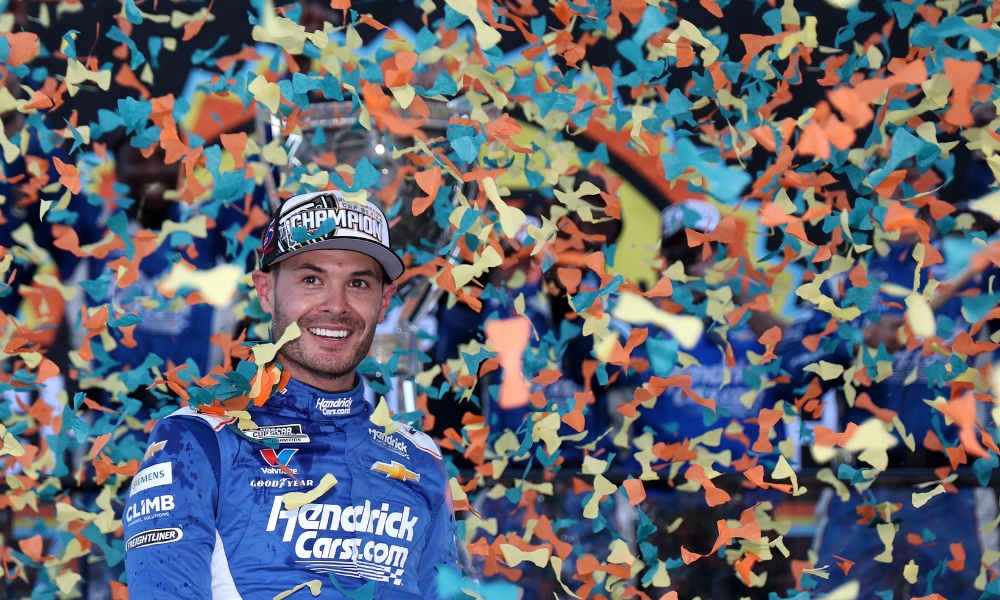
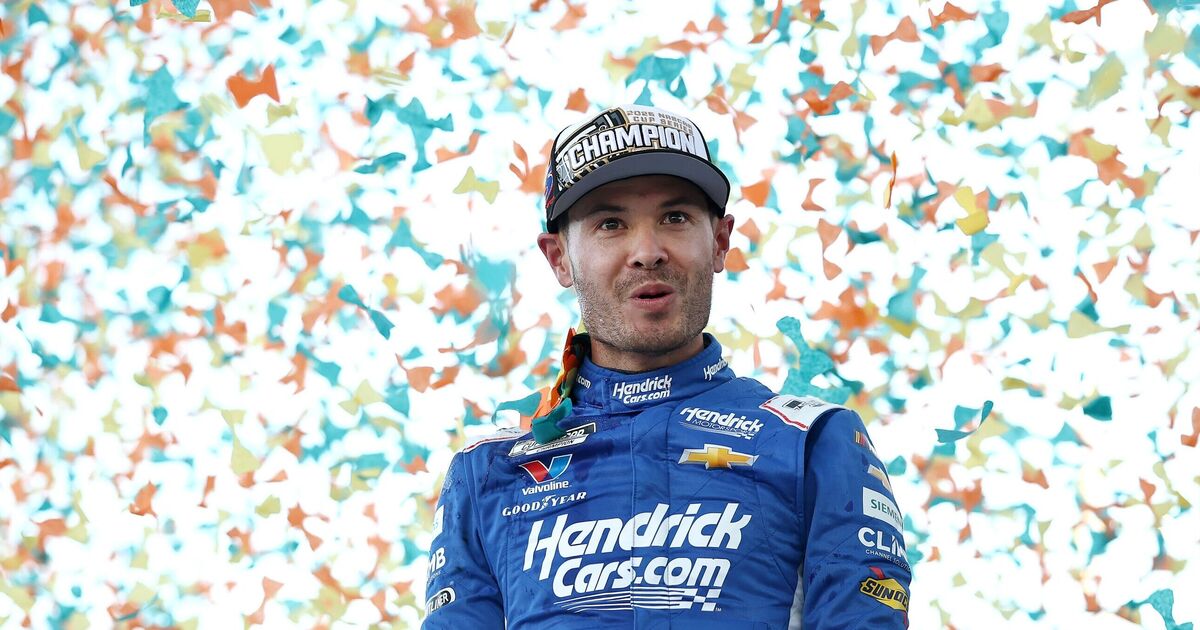
There’s a degree of irony in the fact that eventual champion Kyle Larson would have won the title on points anyway, but that will do little to ease the frustration of Denny Hamlin, who led 208 laps – a record for a championship finale – yet still came up short.
A similarly sour conclusion may await Nascar’s ongoing legal dispute, which is set for a court date on 1st December. At the time of writing, no settlement has been reached with 23XI Racing and Front Row Motorsports (FRM). The court most recently ruled that Nascar controls the stock car racing market, which is a significant victory for the teams.
Amid an unsettled period for Nascar, BlackBook Motorsport recaps the key facts and figures from another eventful season.
Four broadcasters
Nascar’s viewership has floundered this season but, according to commissioner Steve Phelps, that was entirely expected.
With four different broadcasters and the fewest number of races on network television in the series’ history, a decline in viewership was always likely. But what do the deeper figures actually show?
The 2025 season averaged 2.44 million viewers, the first time that Nascar has ever averaged below 2.5 million viewers for a season. This is also a 15 per cent decrease compared to last year.
The regular season averaged 2.66 million viewers, down 15 per cent year-on-year (YoY), and the playoffs averaged 1.77 million viewers, a YoY decrease of 23 per cent.
The big question is whether this was driven by the shift in broadcasters or if audiences are genuinely turning off from Nascar.
Amazon Prime Video and TNT made respectable debuts, averaging 2.1 million viewers and 2.06 million viewers respectively, which is roughly in line with what USA Network typically averages with its live Nascar broadcasts.
In fact, it was USA Network that particularly struggled this year. Its average audience of 1.64 million viewers was notably poor and reflected a broader apathy toward the playoffs.
That apathy contrasts sharply with the strong performance by Fox in the first half of the season, where viewership actually rose on both Fox and FS1. The former averaged 4.52 million viewers across five races, while the latter averaged 2.46 million, the second-highest figure for the channel since 2018.
Given early-season viewership tailed off so dramatically, it could suggest a degree of viewer fatigue. Six of the first 11 races exceeded three million viewers and none fell below two million. In the following 27 races, only one exceeded three million viewers and 13 dipped below two million.
Overall, a more fragmented broadcast structure combined with declining full-season engagement appear to have contributed to this year’s viewership downturn.
For Nascar, 2025 was always going to be about laying foundations for future growth. The success of this broadcast deal can’t be judged on year one. But next season will need to deliver greater consistency to show that things are heading in the right direction.
Three premier partners
There has been a lot of uncertainty around Nascar, both with the on-track product and the off-track politics. An unintended consequence of this has been the series’ relatively quiet commercial performance during 2025.
New chief commercial officer Craig Stimmel only began working for Nascar in December 2024, so there is an element of the new team still finding its feet.
This was also the first year since 2020 that Nascar has operated with just three premier partners following the departure of Geico at the end of the last campaign. That situation will be short-lived, with Freeway Insurance becoming the fourth premier partner from next season.
On a broader level, though, there hasn’t been much activity. The only major new deal saw Anduril come on board as Nascar’s official defence partner, as well as supporting the new race weekend in San Diego.
In February, Xfinity extended its position as a premier partner of the championship but chose not to continue as the title sponsor of the second-tier series. O’Reilly Auto Parts has secured those naming rights from next season.
Elsewhere, Arby’s was announced as a founding partner of the Chicago Street Race, although that event will not return in 2026. There were also short-term deals agreed with Krispy Kreme and Tide, but it remains unclear whether those will be revisited in the future.
Phelps even admitted prior to the season finale in Phoenix that Nascar has been “a little bit behind” on sponsorship compared to major US sports leagues.
Nascar will hope that the new commercial team led by Stimmel can now go from strength to strength as it approaches its first full year of operation.

Tide ran its branding down pit road at the season finale in Phoenix, which ended up playing host to the championship-deciding decision of Denny Hamlin switching all four tyres instead of two under a late caution (Image credit: Getty Images)
Two rebel teams
It’s hard to talk about the past season without mentioning its major off-track storyline. While we are still no closer to knowing the outcome of the long-running lawsuit between Nascar and its two rebel teams, the developments have dominated headlines throughout the year.
Most recently, settlement talks appear to have collapsed as neither side can agree on who should cover the legal fees. If no resolution is found, the case will go to court on 1st December. Although, the chances of a settlement being agreed have significantly increased after the presiding judge ruled that Nascar controls the stock car racing market.
What’s more, Judge Kenneth Bell has gone as far as to suggest that the entire charter system could be unlawful. If a settlement is not reached and the charter system is legally dismantled, the fallout would be seismic. In short, the value of the charter agreements would evaporate and teams’ investments could be rendered worthless.
An interesting by-product of this legal battle is that Nascar’s financial records, usually an area where the series is extremely secretive, have been made public.

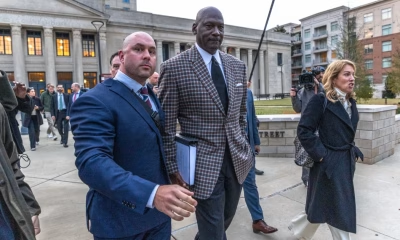
The presence of NBA legend Michael Jordan as co-owner of 23XI Racing has amplified media attention surrounding the ongoing Nascar lawsuit (Image credit: Getty Images)
According to the filings, the series generated net income of US$102.6 million in 2024, This was down considerably from US$536.7 million in 2023, though that figure was inflated by Nascar’s decision to sell the majority of the land at Auto Club Speedway in Fontana for nearly US$500 million.
The documents also revealed that the current payout model for teams is based on a two-year rolling average of finishing positions, rather than three years as under the previous charter agreement.
For example, Kyle Larson’s team received US$2.8 million this year, corresponding to a payout percentage of 8.423 per cent. The total payout fund for the 2025 grid is US$33.7 million, rising to US$39.1 million by 2030.
A similar structure applies to race payouts, albeit with smaller percentages across the grid. For instance, the season finale had a total purse of US$12.4 million, with Ryan Blaney receiving 5.16 per cent (around US$639,000).
The figures offer an intriguing peek behind the curtain but also highlight the fine margins within which teams must operate – something that 23XI and FRM are trying to change.
One eye on the future
Nascar feels a little unsteady on its feet at present. Indeed, viewership has taken a noticeable step backwards, sponsorship growth appears to have stalled, and all of this comes against the backdrop of an ongoing legal battle.
The series will also need to pay closer attention to Formula One’s expanding presence in the US – even if its competitor may slow its viewership gains by switching from ESPN to Apple next season.
On the 18 occasions Nacar and Formula One raced on the same weekend, 13 delivered an audience difference of fewer than one million viewers. The gap is closing and Nascar’s concern is evident – it has now started revising Formula One’s viewership figures in its own press releases.
Looking to next season, the loss of the Chicago Street Race and the visit to Mexico will be considered disappointing. Both events offered a refreshing twist to the traditional calendar and there will be hope they return in 2026 after just a one-year absence.
The addition of San Diego is a welcome one, while the championship finale moving back to Homestead-Miami looks to have been well received by fans.
Getting supporters onside is Nascar’s main priority right now, as many appear disillusioned with the series’ current direction. The first port of call will be revising the playoffs format, which could provide much-needed positive momentum heading into 2026.