NIL
New Michigan State AD J Batt’s priority list: build connections, funds




Tom Izzo feels ‘reinvigorated’ by Elite Eight run, MSU basketball
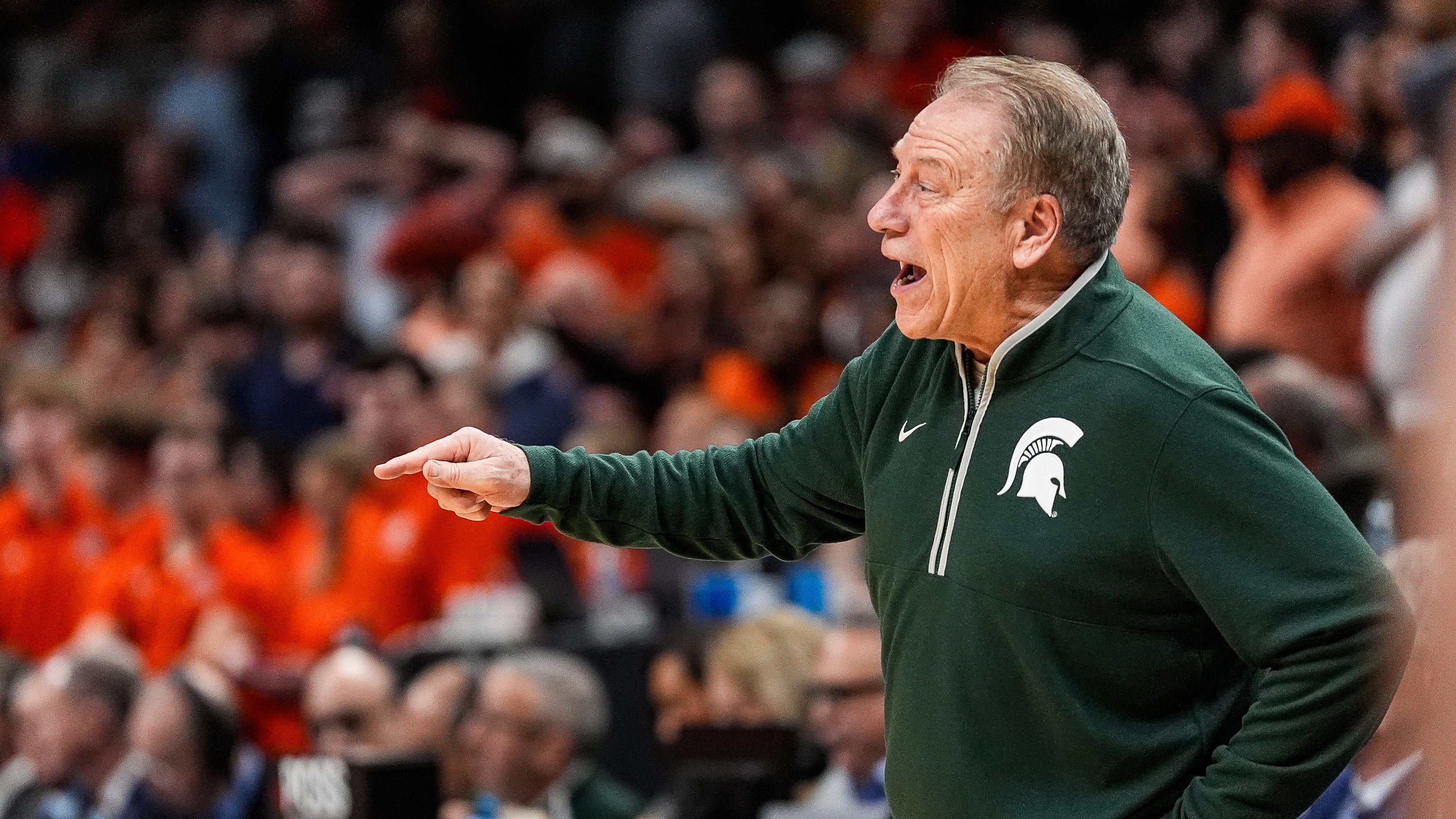
MSU head coach Tom Izzo fell to 8-3 in Elite Eight games in a night that was all Auburn from the start in March Madness, March 30, 2025 in Atlanta.
- J Batt, Michigan State’s new athletic director, faces navigating the university’s political landscape and uniting its power brokers.
- Batt’s financial priorities include boosting fundraising, enhancing the NIL structure, and exploring stadium naming rights.
- Stabilizing the athletic department’s budget, which has seen recent deficits, is another key task for the new AD.
To say Michigan State athletics is in a transitional and transformative period is an understatement.
It might be the most critical juncture for the school since the 1940s, when John Hannah, Ralph Young and Biggie Munn angled to get the Spartans into the Big Ten.
With college sports at a crossroad between their altruistic past and big-money present, MSU’s new athletic director J Batt arrives from Georgia Tech with a task list that will require a sharpened sense of prioritizing from a host of major needs to move the Spartans back to the forefront in the future.
Batt will be publicly introduced during a news conference at 3 p.m. Wednesday, June 4, inside Breslin Center. His contract is expected to be approved by MSU’s Board of Trustees at their next meeting June 13 in Traverse City.
But as Batt begins his job in East Lansing the week of June 16, there will be a litany of tasks on his agenda before the 2025-26 school year begins Aug. 25, with the football season kicking off four days later. Here is a list of five critical things on the to-do list for MSU’s 21st athletic director (and the school’s first outside hire to the position in 30 years).
1. Learn the political landscape
The prevailing belief is that Batt’s biggest tasks are increasing fundraising and enhancing MSU’s name, image and likeness structure — and they undoubtedly are high-ranking priorities — but none of that gets accomplished without the 43-year-old, who grew up in Virginia, first learning to navigate the tricky political ecosystem that has at times been the school’s biggest roadblock.
Save for a 10-year window of solace and success under Mark Hollis from 2007-17, the school’s internal powerbrokers and biggest benefactors externally often have displayed a bad habit of stunting progress with infighting and insolence. Hollis, along with then-president Lou Anna K. Simon, managed to get those forces pulling in one direction before everything was undone by the Larry Nassar scandal, leaving MSU in limbo and with flagging leadership since 2018. Before their abrupt resignations, Hollis and Simon two also gave the school and athletic program a seat at the head table of college sports with their ability to politic at the national and Big Ten levels while assuaging local political and campus leadership.
Both Hollis and Simon were MSU lifers who knew the history and potential landmines; Batt walks in as a complete outsider, as did current president Kevin Guskiewicz a little more than a year ago. They have known each other for about 25 years, Batt said Tuesday on the “MSU Today” podcast, from his time as a soccer player at North Carolina who participated in Guskiewicz’s concussion research projects before he ascended the ranks of academia.
Building relationships quickly in East Lansing is essential. They will rely on each other’s trust, though both new leaders must lean on Hall of Fame basketball coach Tom Izzo’s 40-plus years of experience at the university in navigating those sometimes-turbulent political waters. But pushing for change as an outsider also can create job-altering friction at MSU. Without the support of the right people, even with a visionary approach, the strongest-willed athletic director can wind up with his hands tied.
2. Touch hearts, open wallets
That also includes connecting with donors.
Finding a way to make both the external NIL collectives externally and internal Spartan Fund financially robust will be a major priority. Batt and Guskiezicz (who in March announced a $4 billion university-wide fundraising effort) are tasked with energizing the donor base that — as is the case at many other universities — is fatigued by the growing need for more money to keep major college athletics afloat.
One of Batt’s primary missions will be analyzing the future of Spartan Stadium and drumming up funds for upgrades or replacement. Departed athletic director Alan Haller this winter said MSU must explore selling naming rights to facilities, a move it previously balked at pursuing; Batt must also connect with the right corporate partners to give his new department as big a financial influx as possible.
3. Stabilize MSU’s spending
The athletic department has struggled to balance the books since before Hollis left and the coronavirus pandemic happened.
In 2023-24, MSU operated at a deficit for the fourth time in five years (under Haller and Bill Beekman before him), with nearly $180.5 million in total operating expenses to more than $163.7 million in total operating revenue, according annual documents filed Jan. 13 with the NCAA and obtained that month by the Free Press and the USA TODAY Network.
The more than $16.7 million shortall came a year after operating at an $11.2 million deficit in 2022-23. The athletic department had a $16.35 million surplus during the 2021-22 fiscal year, but its deficit was $17.8 million in 2019-20 and $15.4 million in 2020-21. The most recent fiscal year report puts the athletic department’s debt at nearly $91 million, up from $68.7 million the previous year.
While trying to get back in the black on the budget, Batt also will have to learn to fiscally manage more sports with the Spartans — 23, to Georgia Tech’s 17 — while being a “fiery athletic director that likes to win,” as he called himself Tuesday on the “MSU Today” podcast.
4. Restructure NIL
With change potentially coming nationally to college sports, getting MSU’s external donor groups on the same page will be essential. The biggest among them who have driven the direction — including Greg Williams of Acrisure, former Izzo player Mat Ishbia of United Wholesale Mortgage, Steve St. Andre of Shift Digital and those within the This is Sparta! collective — all possess financial clout individually. Reaching a higher plateau collectively will be Batt’s mission, using the current benefactors as a starting point to entice more to join, then uniting them all under a new umbrella to prepare for the next pivot when the House settlement kicks in and schools will essentially become distributors of funding.
Izzo understands the need for financing in the new world he’s adapting to, despite winning a Big Ten title while sticking to his principles. And in major college football, the market to pay the NFL-caliber players now required to compete for FBS championships is exploding. That’s just the two primary sports and not taking into account the money needed to pay players in non-revenue sports that Haller left in good position competitively.
5. Focus on future
MSU’s biggest revenue generator remains its football program, and the stadium and on-field product both need refreshing. The excitement of the Mark Dantonio era showed the Spartans still can walk among the giants in the sport, as did the one magical year with running back Kenneth Walker III under coach Mel Tucker that was the outlier of the past decade.
Then comes hard conversations about potentially cutting more sports after Beekman eliminated the men’s and women’s swimming and diving programs in 2021. It is an uncomfortable topic, particularly for a former non-revenue athlete like Batt, who was a goalie on North Carolina’s 2001 national champion men’s soccer team and said he believes in being “in the opportunity business” for student-athletes despite the trend toward professionalism.
And that barely scratches the surface of what lies ahead as Batt leaves the declining Atlantic Coast Conference to try and bring MSU back among the elite of the power-wielding Big Ten.
Contact Chris Solari: csolari@freepress.com. Follow him @chrissolari.
Subscribe to the “Spartan Speak” podcast for new episodes on Apple Podcasts, Spotify or anywhere you listen to podcasts. And catch all of our podcasts and daily voice briefing at freep.com/podcasts.
Michigan State athletic directors
- Charles Bemies: 1899-1900.
- George Denham: 1901-02.
- Chester Brewer: 1903-10, 1917, 1919-21.
- John Macklin: 1911-15.
- George Gauthier: 1916, 1918.
- Albert Barron: 1922.
- Ralph Young: 1923-54.
- Clarence “Biggie” Munn: 1954-72.
- J. Burt Smith: 1972-75.
- John D. Shingleton: 1975-76.
- Joe Kearney: 1976-80.
- Doug Weaver: 1980-90.
- George Perles: 1990-92.
- Merrily Dean Baker: 1992-95.
- Merritt Norvell: 1995-99.
- Clarence Underwood: 1999-2002.
- Ron Mason: 2002-07.
- Mark Hollis: 2007-18.
- Bill Beekman: 2018-2021.
- Alan Haller: 2021-May 1, 2025.
- J Batt: Hired June 2, 2025 (begins week of June 16).