
NIL
New tools help college coaches and GMs determine which players to acquire, which to keep and which to let walk


I’m asking Brian Spilbeler and Drew Borland a question that Boise State coaches, administrators and donors probably asked multiple times last offseason. How much will it cost to keep Ashton Jeanty?
But I want to tweak the question. What if Boise State had been in exactly the same situation — with the star back coming off an excellent sophomore season and expecting a transcendent junior season — but with the boosted dollar amounts for player pay that have come this offseason as schools prepare to start paying players directly based on the terms of the House v. NCAA settlement?
Borland taps his mouse a few times, and the living spreadsheet on my computer screen changes. I’m still looking at Boise State’s roster going into the 2024 season — and the evaluation of Jeanty is the one teams would have had going into last season — but Borland has adjusted the amount of money in the team budget to $20 million to simulate what a competitor trying to take away Jeanty might offer.
The total: $722,670.
Knowing what we know now — that Jeanty was the most dominant back in America as a junior — that number is still a bargain, even if it’s probably more than what Boise State had to pay to actually keep Jeanty last year. And it’s the kind of data crunching happening in every major college football program across the country as coaches and personnel officials try to manage their rosters going forward.
Spilbeler and Borland are showing me the product their companies have combined to create to help them manage all this data. Spilbeler works for Tracking Football, which began as a firm that matched documented track data with football recruiting data to help coaches find reliable information to judge players’ athleticism. Tracking Football has evolved into a much larger storehouse of data that builds platforms allow college personnel staffers to compare all manner of performance and evaluation data. Meanwhile, Borland works for SportSource Analytics, which provides data and analytics services to schools and professional teams in various sports.
The general manager tool they’re demonstrating has rolled out this spring, and it’s an evolution of the product the companies teamed up to create earlier this decade when the loosening of transfer rules created an explosion of demand for a way to quickly cut through the volume of data to identify which transfer portal players could be matches for schools.
It’s also not the only product in this space. Teamworks has created a general manager tool as well to help teams manage their payrolls in the revenue-share era. That product helps schools more on the financial side — allowing them to manage deals and even assisting in payroll services. The Tracking Football/SportSource Analytics collaboration is more of an evaluation tool designed to help schools that now need to run their personnel departments like NFL teams do but must be able to evaluate thousands more players on a smaller budget.
The tool uses Tracking Football’s data plus the FBS and FCS data compiled by SportSource. It also ties in data from subscription services all the schools use. Pro Football Focus data is included for schools that subscribe to PFF. Also, On3 and 247Sports recruiting evaluations are included as well as On3 NIL and roster valuations.
It’s a college football nerd’s dream, because it allows coaches and personnel staffers to customize the weighting of different data and factors to help them search for players who might fit in their programs. But now it also incorporates NIL valuation data to help those people answer three key questions:
- Who can we afford to get?
- Who can we afford to keep?
- Who can we afford to lose?
“None of what we do is intended to replace you using intuition, you evaluating tape,” Spilbeler said. “It’s a supplement. It’s providing a framework to provide a starting point and help you defend the spend.”
The process begins with deciding what matters. How do you want to spend your budget? Will it mirror an NFL team? Or will the split be customized to your coaching staff’s preferences? Will you bump up the percentage you give your running back room? And if you do, what position group do you take away from?
If you’re seeking players in the transfer portal, recent production probably should matter more. So you might bump up the weight of the recent PFF score over the career PFF score. If you need help at a position now — which is probably why you’re looking in the portal in the first place — you probably want to boost game experience and experience level and you also probably want to weight more heavily whether someone has been an all-conference performer.
Or maybe you have a deep position group and know you probably can’t afford to keep everyone on the roster. Spilbeler and Borland allowed me to play with Florida’s roster since that’s my alma mater, and one of the situations I wanted to examine was how the Gators’ coaches and collective leaders might have decided which edge rushers to keep.
Florida ended the 2024 season with a really deep room at a position most teams need. That meant it probably wasn’t going to be possible to keep everyone.
Tyreak Sapp led the Gators in sacks with seven. T.J. Searcy, Kamran James and Jack Pyburn looked as if they could be capable SEC starters in 2025. George Gumbs Jr. started his college career as a walk-on receiver at Northern Illinois and had moved to tight end and then defensive end. In his first season at Florida, while still fairly new to the position, he’d finished second on the team in tackles for loss (8) and sacks (5). L.J. McCray, a five-star recruit in the class of 2024, looked the part and made significant progress as a freshman. Justus Boone had logged solid snaps in 2022, missed 2023 because of injury and probably was a victim of the depth in front of him last year.
Most teams would love to have two or three players matching any of those descriptions, which meant some competitive offers were going to be coming for any player considering a transfer.
I asked Spilbeler and Borland to show me the edge rusher group at the end of the 2024 season. Sapp and Searcy were rated the highest, and McCray, James, Pyburn and Boone were clustered closely together. Gumbs ranked lower, dragged down by his initial recruiting rankings. (Walk-on receivers at Northern Illinois don’t come into college with much hype.) But knowing Gumbs’ story — as Florida coaches obviously do — probably allowed them to make an easy upward adjustment.
As I expected, the Gators probably had to make some difficult choices as the collective made offers for the 2025 season. They kept Sapp, McCray, James and Gumbs. Searcy likely will start at Texas A&M. Pyburn likely will start at LSU. Boone transferred to Arkansas.
This type of situation, Spilbeler said, is why it’s important for staffs to know exactly what matters to them and weight the factors accordingly. That way, when a tough decision has to be made, staffs can decide on the best way to spend their budget. It also helps when a player’s agent is using other offers to drive up the price.
“It’s super tempting to be overly concerned with what representatives are telling you other teams are willing to pay for somebody and let that drive your decision making because you want to compete and you want to win,” Spilbeler said. “But if that’s how you’re going to continue to develop your strategy, I don’t know how long that’ll last.”
Conversely, being able to compare all this data — including across multiple teams or portal entries — should allow staffs to narrow down who they might want to add. And Borland points out that if the tool says that linebacker you like should be worth $250,000 and his agent is only asking $200,000, that’s money saved that can be put toward another player.
“There’s your Moneyball right there,” Borland said.
General managers and coaches across the country are trying to find ways to win on those margins. The tools are coming to help them do it.

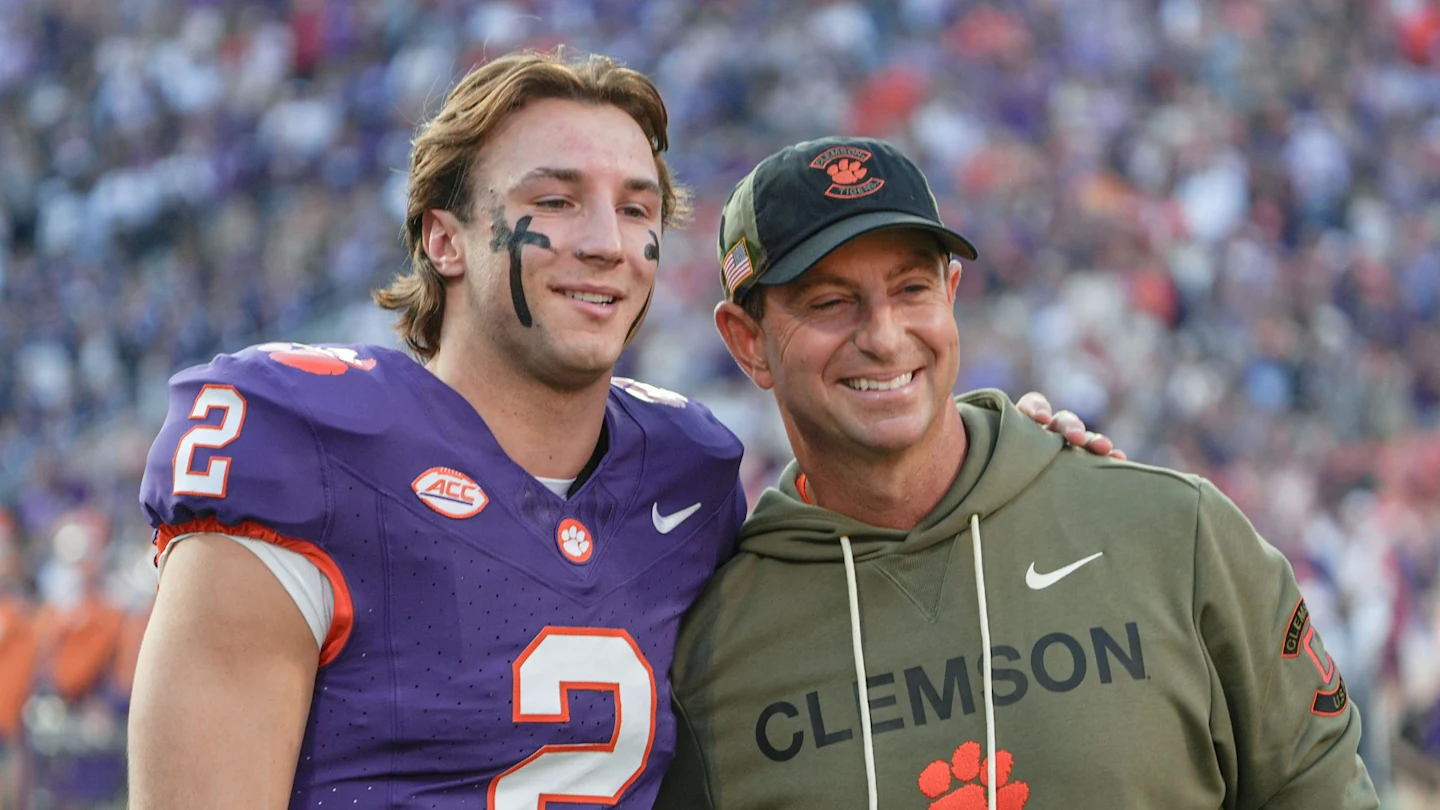
The Pinstripe Bowl was meant to serve as a bridge year moment for Clemson, a chance to reset expectations and evaluate younger talent with an eye toward 2026.
Instead, Dabo Swinney’s Monday media session revealed that 26 scholarship players won’t be available for the Tigers’ Dec. 27 Pinstripe Bowl against Penn State.
That tally, largely injuries, a cluster of transfer departures and a handful of early NFL opt-outs, compounds a season that started with top-five expectations and ended 7-5.
Swinney said 17 absences are injury-related, five players opted to transfer, and four declared for the NFL Draft; among those not playing are defensive stalwarts such as linebacker Wade Woodaz, defensive end T.J. Parker, and cornerback Avieon Terrell.
Offensively, Clemson still has quarterback Cade Klubnik, who threw for 2,750 yards and 16 touchdowns this season, but the Tigers will be without several key offensive linemen and skill-position contributors, including Antonio Williams and Bryant Wesco Jr., the team’s second- and third-leading receivers.

The 2025 campaign itself was already a disappointment by Clemson standards.
A series of close losses to LSU, Georgia Tech, and Duke left Clemson 7–5 and out of playoff contention despite opening the season ranked No. 4 in the preseason AP Top 25.
Those results eliminated any margin for error, and the loss of more than two dozen scholarship players now makes the bowl a significant test of depth.
Penn State enters at 6–6 amid a coaching transition, with roster questions of its own but fewer high-profile opt-outs reported so far.
Penn State will be coached by interim Terry Smith after James Franklin was fired midseason and later took the Virginia Tech job.
For Clemson, the situation has immediate implications for its bowl competitiveness and longer-term questions about roster depth, retention, and development.
The Pinstripe Bowl will be played at Yankee Stadium on Dec. 27 (Noon ET, ABC).
Read More at College Football HQ
- $2.1 million QB ranked as top quarterback in college football transfer portal
- $87 million college football coach predicted to accept Michigan head coaching job
- Top transfer portal QB reportedly receives ‘multiple offers’ over $4 million
- Kirby Smart sends strong message on Nick Saban before College Football Playoff
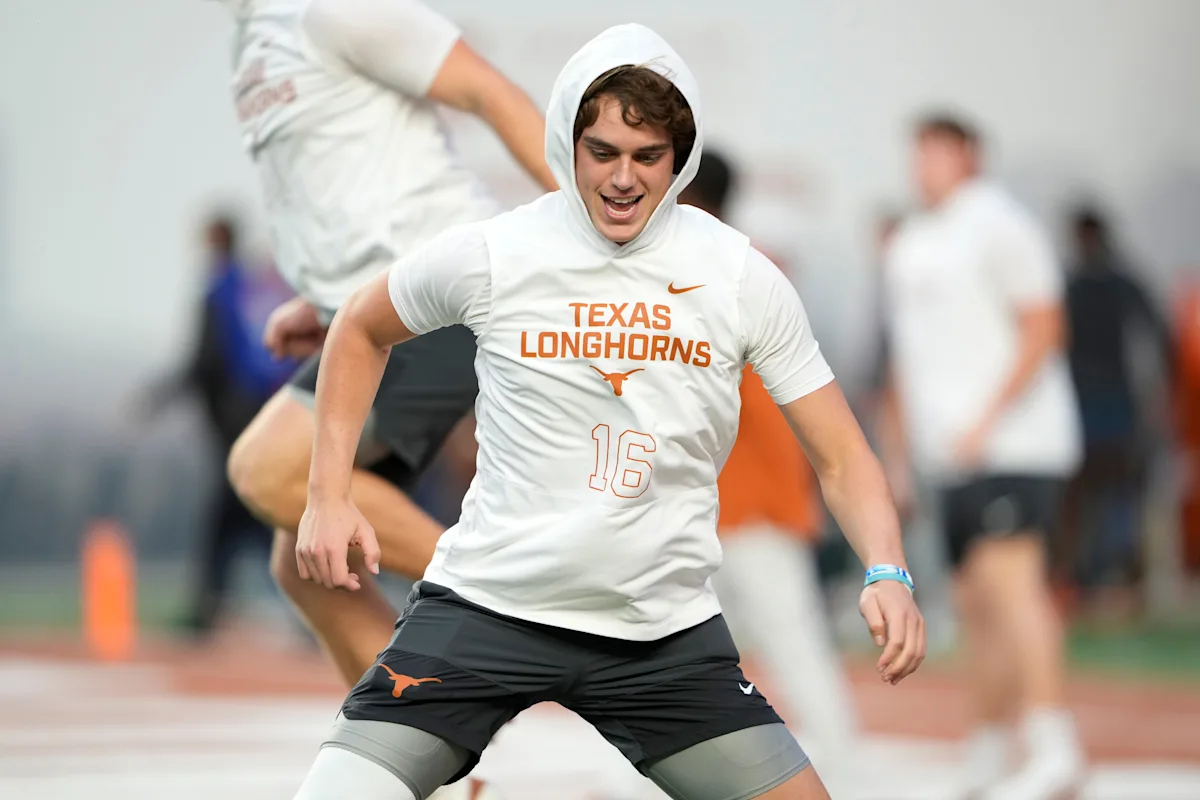
There are plenty of examples of a star in pro sports taking less money in order to help the overall roster. But it isn’t something that’s hit college football yet … until now, thanks to Arch Manning. Manning has asked to take a reduced portion of the Longhorns’ direct payout pool.
Manning’s aim at taking less NIL funds is to help improve the roster around him. Just like Patrick Mahomes, who regularly gives up millions to help the Kansas City Chief’s roster. Tom Brady did it with New England. Dirk Nowitzki, Tim Duncan, LeBron James, Kevin Durant, Jalen Brunson, Aaron Rodgers and Ben Roethlisberger have all helped the rosters around them by taking less.
Advertisement
In the pros, there are salary caps to negotiate. While college has no salary cap (yet), there is a finite amount in the NIL house pool. Texas can only spend what it has available. And while that pool is one of the biggest in the nation, Texas still follows a budget.
No doubt, Manning will be hoping the Texas coaching staff uses some of the freed up football revenue sharing funds on the offensive line. The line struggled in front of Manning all season and certainly inhibited his development early in the season.
Two offensive linemen are gone after the Citrus Bowl and Texas might lose a third. Left tackle Trevor Goosby was named first-team All-SEC is now contemplating going pro. Running back Jadan Baugh from Florida is also on Texas’ radar. The talented RB won’t be cheap.
Of course, it’s not like Manning will starve. The redshirt sophomore has one of the highest NIL valuations in nation. Manning has NIL deals with Red Bull, Panani, Uber and Warby Parker. Manning made north of $3.5 million in NIL deals in 2025, according to the Houston Chronicle.
Advertisement
With a big name that attracts major brands, Manning doesn’t need his big deals supplemented. But most college athletes are paid by the common pool of funds. Manning frees up some of that money for transfers.
This article originally appeared on Longhorns Wire: Manning Pay Cut: Texas QB asks for less NIL money to help boost roster
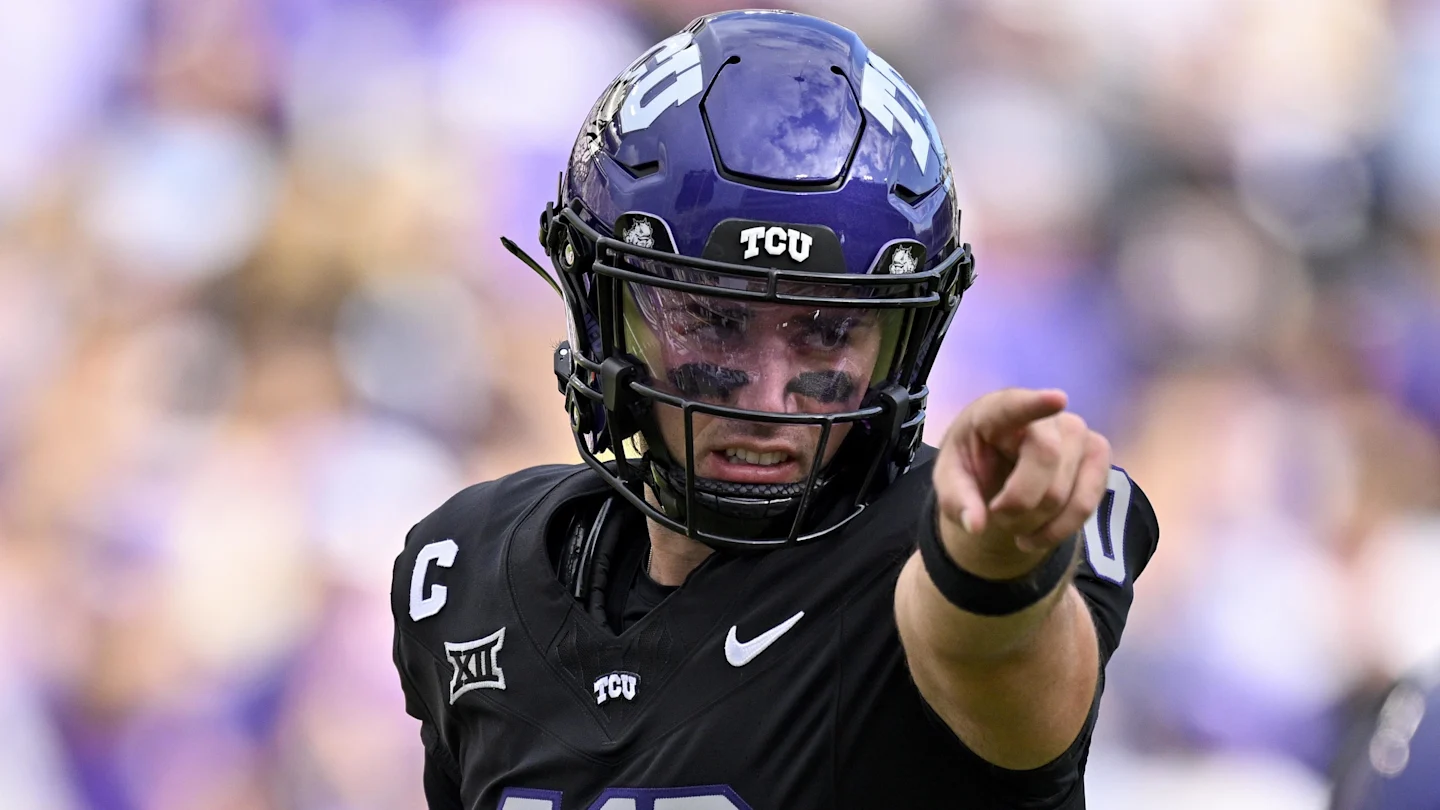
The NCAA Transfer Portal claimed another big name on Thursday night.
TCU star quarterback Josh Hoover has announced he intends to move on from the program. Hoover spent the last four seasons with the Horned Frogs, taking over as the starter midway through the 2023 campaign and putting up big numbers in each of the last two years.
In 36 career games, Hoover has completed 771/1183 passes for 9,629 yards with 71 touchdowns to 33 interceptions. He added eight more scores on the ground. There’s a very real likelihood that Hoover’s the most productive quarterback returning to the sport in 2026.
Hoover ranks in the top 5 in TCU program history in touchdown passes and total offense. He’s expected to be a coveted option in the portal.
Where are five landing spots that make sense for Hoover?
Indiana Hoosiers

Back in the College Football Playoff with a different starter for the second consecutive season, Indiana has put together one of the most impressive runs in the sport since Curt Cignetti took over the program.
The undefeated Hoosiers produced their first Heisman Trophy winner in school history last weekend as star quarterback Fernando Mendoza ran away with the award. Mendoza has another season of eligibility remaining, but is projected to be a top selection in the 2026 NFL Draft.
Indiana has already been linked to Hoover, per CBS Sports’ Chris Hummer.
Miami Hurricanes

Miami has lived in the transfer portal over the past few years, investing plenty of time and money into building a contender for Mario Cristobal. The moves finally worked out in 2025 as a massive financial commitment to secure Carson Beck from Georgia helped power the Hurricanes to the playoffs.
Though the conclusion of the 2024 season was a disappointment, former Miami quarterback Cam Ward was developed into the No. 1 pick in the most recent NFL Draft. Beck will likely get a shot at the professional level as well.
With little proven depth on the roster, it makes sense to bring in another experienced quarterback like Hoover to keep the Hurricanes on the right track. Miami has proven it’s willing to pay up.
Oregon Ducks

Oregon is a known quarterback factory, sending former stars such as Marcus Mariota and Justin Herbert to the NFL. That hasn’t changed since Dan Lanning took over the program in 2022.
The Ducks have had a quarterback drafted in back-to-back years, with Bo Nix going in the first round in 2024 and Dillon Gabriel being selected within the top-100 picks in 2025. Lanning could do it again next April with Dante Moore, who is nearing the end of a career year.
If Moore does leap to the professional level, Hoover would be a solid fit. Nix, Gabriel, and Moore all began their college careers at different schools and later transferred to Oregon, a similar path Hoover is embarking on.
Texas Tech Red Raiders

Suiting up for a playoff contender is pretty cool. Having a chance to win championships and staying home in the process might be even cooler.
Texas Tech has firmly entrenched itself as a program to reckon with in the modern age of the sport. The Red Raiders have plenty of money, and they’ve shown they’re willing to use it to pull in elite talent from the transfer portal and high school ranks.
With Behren Morton exhausting his eligibility following the playoff run, Texas Tech has to decide if it wants to turn the program over to another transfer or a homegrown talent like Will Hammond.
Either way, Hoover is from Texas and he’s already in the state.
Houston Cougars

An outlier among four other programs that have a chance to win it all, Houston is on the come-up. The Cougars haven’t been shy about writing checks, evidenced by the program signing five-star quarterback Keisean Henderson during the Early Signing Period.
Redshirt junior starter Conner Weigman does have one season of eligibility remaining and has stated he intends to return next season. Decisions are quick to change in this era, so never say never.
Would Houston bring in Hoover while Henderson develops for a season? Or should the program stick with Weigman as a veteran leader for Henderson?
Weigman just joined the program as a transfer last year. He was fine, but unspectacular this fall, and an upgrade could help the Cougars break their ceiling.
Read more on College Football HQ
• $45 million college football head coach reportedly offers Lane Kiffin unexpected role
• Paul Finebaum believes one SEC school is sticking by an ‘average’ head coach
• SEC football coach predicts major change after missing College Football Playoff
• Predicting landing spots for the Top 5 college football transfers (Dec. 17)

South Carolina Upstate Spartans (8-6) at Youngstown State Penguins (7-5, 2-1 Horizon League)
Youngstown, Ohio; Saturday, 1 p.m. EST
BOTTOM LINE: Youngstown State hosts South Carolina Upstate after Cris Carroll scored 31 points in Youngstown State’s 80-77 overtime loss to the Robert Morris Colonials.
The Penguins are 4-0 on their home court. Youngstown State scores 80.2 points and has outscored opponents by 10.9 points per game.
The Spartans are 2-5 on the road. South Carolina Upstate is fifth in the Big South scoring 79.6 points per game and is shooting 46.2%.
Youngstown State averages 10.4 made 3-pointers per game, 3.8 more made shots than the 6.6 per game South Carolina Upstate gives up. South Carolina Upstate has shot at a 46.2% rate from the field this season, 3.3 percentage points greater than the 42.9% shooting opponents of Youngstown State have averaged.
TOP PERFORMERS: Carroll averages 3.0 made 3-pointers per game for the Penguins, scoring 16.4 points while shooting 48.6% from beyond the arc. Rich Rolf is averaging 10.8 points over the last 10 games.
Mason Bendinger is scoring 16.1 points per game and averaging 3.1 rebounds for the Spartans. Carmelo Adkins is averaging 1.9 made 3-pointers over the last 10 games.
LAST 10 GAMES: Penguins: 6-4, averaging 81.3 points, 33.6 rebounds, 15.2 assists, 9.1 steals and 3.3 blocks per game while shooting 49.6% from the field. Their opponents have averaged 67.7 points per game.
Spartans: 5-5, averaging 75.4 points, 33.5 rebounds, 14.1 assists, 6.1 steals and 5.0 blocks per game while shooting 43.9% from the field. Their opponents have averaged 73.2 points.
___
The Associated Press created this story using technology provided by Data Skrive and data from Sportradar.
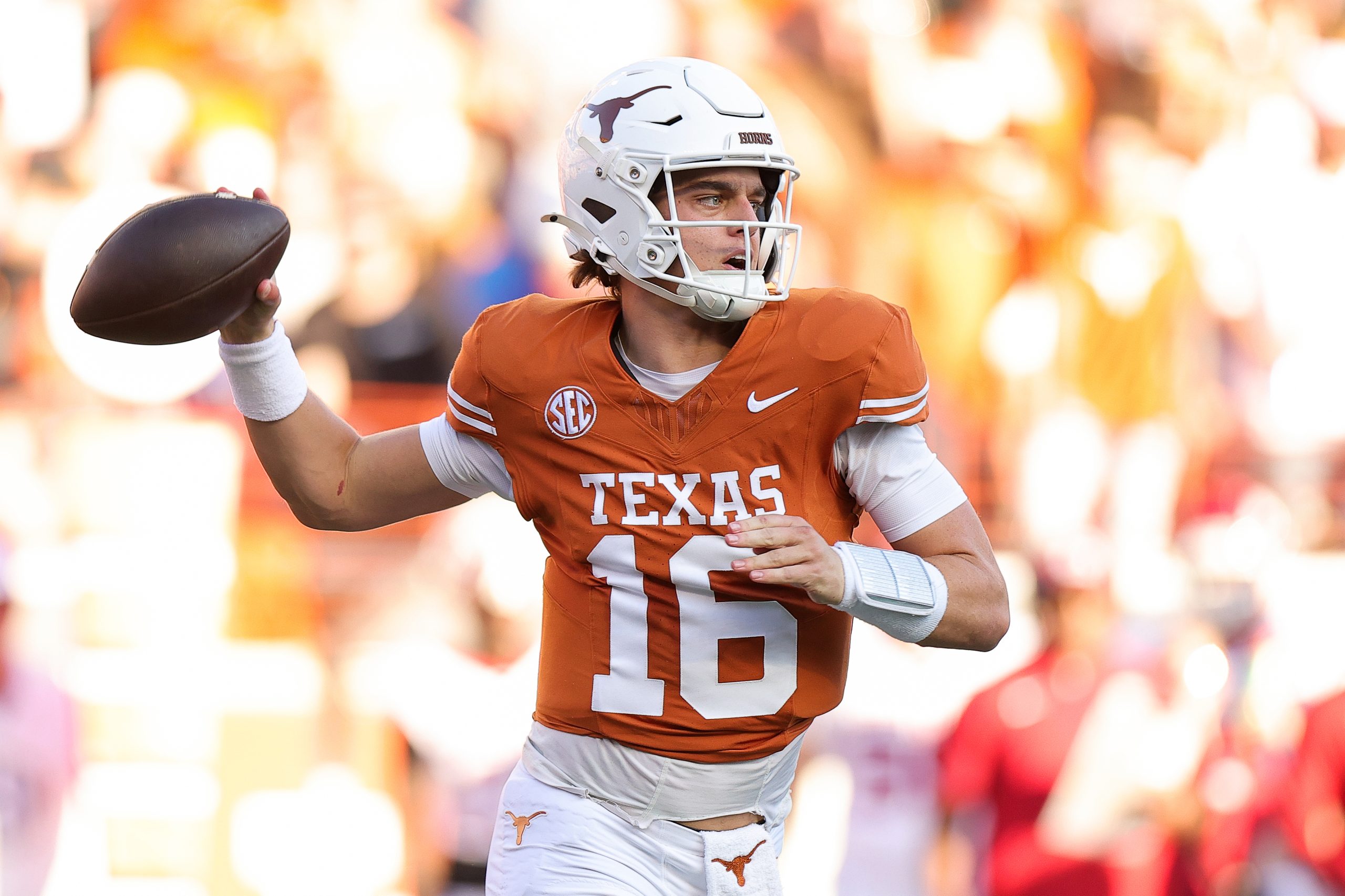
In a college football world where NIL numbers keep climbing, Arch Manning is going the other way.
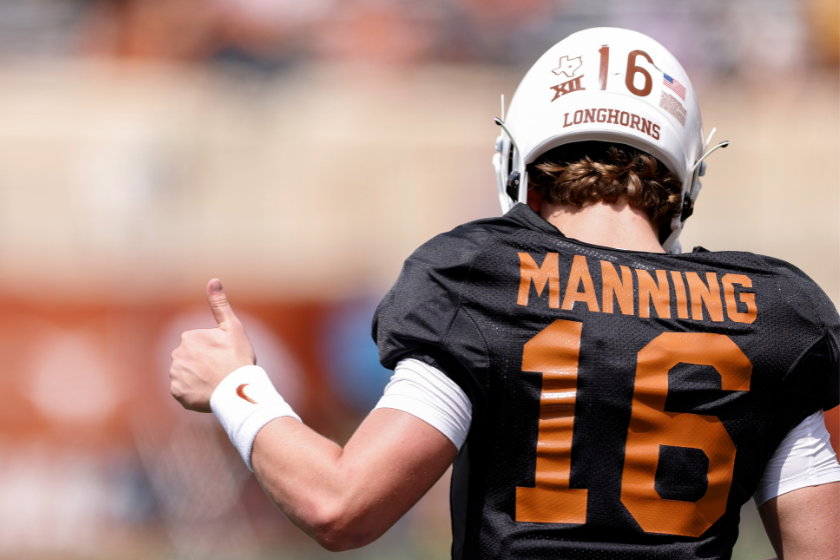
Photo by Tim Warner/Getty Images
The Texas quarterback has agreed to take a reduced share from the Longhorns’ revenue-sharing pool for the 2026 season, according to Justin Wells of Inside Texas. Manning was entitled to a full portion of the program’s revenue cap but opted to scale it back in an effort to give Texas more flexibility to strengthen its roster.
It is a move that stands out in the current landscape. It is also one Manning can afford to make.
Manning remains one of the most marketable players in college football and has a long list of endorsement deals that will continue to pay handsomely. Even with less money coming directly from the school, he is still expected to earn millions in 2026.
This is not the first time he has shown restraint, either. Manning has consistently been selective with his NIL opportunities since arriving in Austin.
The timing matters. The 2026 season is widely expected to be Manning’s last at Texas before he makes the jump to the NFL. From that perspective, the decision is straightforward. He wants the best possible team around him for one more run at a national championship.
Manning has already demonstrated his commitment to the program. He waited his turn behind Quinn Ewers for two seasons without entertaining a transfer and now is willing to sacrifice a portion of his compensation for the good of the roster.
On the field, the growth showed. After a shaky start in 2025, Manning finished with 2,942 passing yards and 24 touchdowns. Texas rebounded from a 3-2 opening to win six of its final seven games, punctuated by a decisive win over Texas A&M.
It is not a common move. It is a very Arch Manning one.

Ahead of the College Football Playoff opener, Malachi Toney added a notable NIL deal. The Miami wide receiver has inked a partnership with apparel company Hellstar.
Toney is Hellstar’s first NIL athlete, the Los Angeles-based brand said in an Instagram post. He became a crucial part of the Hurricanes’ offense during the regular season, helping lead the program to a College Football Playoff appearance as the last team in the field.
SUBSCRIBE to the On3 NIL and Sports Business Newsletter
It was part of a decorated freshman year for Toney, who’s emerging as one of the top young stars in the sport. Repped by NETWORK, he has a $878,000 On3 NIL Valuation.
“We are so proud to announce our first Hellstar Sports College Athlete NIL signing – Malachi Toney,” Hellstar wrote in its announcement. “We had the privilege to coach @malitoney10 while he was apart of our high school 7 on 7 program, so now seeing him shine on the collegiate level we couldn’t be more proud.
“We will continue to do our part to help these young athletes stay on the right path, and shine their light to the rest of the world. From Liberty City to the stars!”
It’s the latest notable NIL deal for Toney amid his freshman season. He also secured a partnership with Leaf Trading Cards in October.
More on Malachi Toney’s freshman season
Through his freshman year at Miami, Malachi Toney emerged as a top target for Carson Beck. He led the Hurricanes with 84 receptions for 970 yards, and his seven touchdown catches put him atop the ACC. Toney also added 89 rushing yards this year, as well as a rushing touchdown against Louisville.
Those numbers helped Toney become an On3 True Freshman All-American this year. In addition, he was a central figure in Miami’s run to the College Football Playoff.
“Toney’s quickness and playmaking instincts make him dangerous after the catch. He accounted for 350 yards after the catch with an average depth of target of 6.6, according to Pro Football Focus,” On3 | Rivals’ Charles Power wrote. “Whether working out of the slot or moving around the formation, the South Florida native has proven nearly impossible to contain. His playmaking ability was pivotal to Miami’s playoff push as he became the focal point of the Hurricanes’ passing attack.
“Given his play as a true freshman, it’s safe to say the Fort Lauderdale American Heritage product will enter next season as one of college football’s premier wide receivers. Toney’s performance as a true freshman is even more impressive considering that he should still be in high school, having reclassified into the 2025 cycle late in the recruiting process.”
HDMI Gaming Technology Lines : HDMI Licensing Administrator

Major college football program missing 26 players for bowl game

Trump health agency proposes rules to limit gender-affirming care for youth

VOLLEYBALL ADDS TRANSFER TO SPRING ROSTER

Greg Biffle remembered by NASCAR community
Accordion is part of Tom Izzo’s fabric, from home to hoops to holidays

Track & Field Elite Prospect Camp Set for Jan. 11

Daniel J. McGaffick | News, Sports, Jobs
Wisconsin volleyball’s Maile Chan decides to enter transfer portal

‘Lights, Camera, Action, a Hollywood Christmas’ draws thousands to Chino | Community News

Kain Wright signs with Ashland University Track and Field

US Treasuries Post First Weekly Advance Since Late November

Ruben Amorim speaks of youth ‘entitlement’ after Manchester United teens post photo responses to criticism
Boys coach Linda Martindale has secret to being a college player

TOYOTA GAZOO Racing Unveils 2026 Season Plans

First Tee Winter Registration is open

Fargo girl, 13, dies after collapsing during school basketball game – Grand Forks Herald

CPG Brands Like Allegra Are Betting on F1 for the First Time

F1 Las Vegas: Verstappen win, Norris and Piastri DQ tighten 2025 title fight

Sycamores unveil 2026 track and field schedule

Two Pro Volleyball Leagues Serve Up Plans for Minnesota Teams

Utah State Announces 2025-26 Indoor Track & Field Schedule

SoundGear Named Entitlement Sponsor of Spears CARS Tour Southwest Opener

Redemption Means First Pro Stock World Championship for Dallas Glenn

Jo Shimoda Undergoes Back Surgery

Texas volleyball vs Kentucky game score: Live SEC tournament updates

Bowl Projections: ESPN predicts 12-team College Football Playoff bracket, full bowl slate after Week 14

Robert “Bobby” Lewis Hardin, 56

How this startup (and a KC sports icon) turned young players into card-carrying legends overnight

Indiana’s rapid ascent and its impact across college football





-
 Motorsports1 week ago
SoundGear Named Entitlement Sponsor of Spears CARS Tour Southwest Opener
-
 NIL3 weeks ago
Bowl Projections: ESPN predicts 12-team College Football Playoff bracket, full bowl slate after Week 14
-

 Motorsports2 weeks ago
Donny Schatz finds new home for 2026, inks full-time deal with CJB Motorsports – InForum
-

 Rec Sports2 weeks ago
How Donald Trump became FIFA’s ‘soccer president’ long before World Cup draw
-
 Sports3 weeks ago
Men’s and Women’s Track and Field Release 2026 Indoor Schedule with Opener Slated for December 6 at Home
-

 Rec Sports2 weeks ago
Black Bear Revises Recording Policies After Rulebook Language Surfaces via Lever
-

 Motorsports3 weeks ago
Michael Jordan’s fight against NASCAR heads to court, could shake up motorsports
-
 Rec Sports2 weeks ago
David Blitzer, Harris Blitzer Sports & Entertainment
-
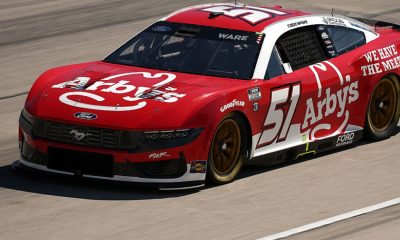
 Motorsports2 weeks ago
Rick Ware Racing switching to Chevrolet for 2026
-

 Motorsports2 weeks ago
JR Motorsports Confirms Death Of NASCAR Veteran Michael Annett At Age 39