
NIL
NFL Draft Fashion: Ashton Jeanty and Travis Hunter Stand Out

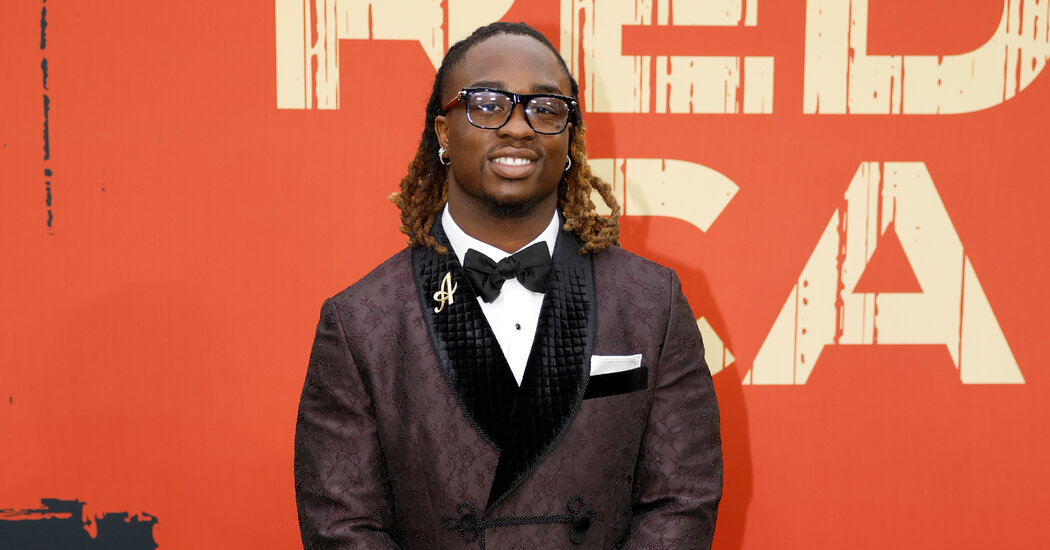
Hours before Ashton Jeanty, a running back with Sonic the Hedgehog speed, was selected by the Las Vegas Raiders with the sixth pick at Thursday’s first round of the N.F.L. draft, he clomped onto the red carpet in a pair of never-worn-before Crocs with shimmery Swarovski crystals across the toe.
The crystaled clogs were teased hours earlier on Crocs’s Instagram, accompanied by a droll caption: “yes, they’re real Swarovski.” Per the Crocs website, the Liberaced clogs aren’t available until May 6. Yet, if ever there was an occasion to introduce them, it was draft night.
In recent years the N.F.L. draft has mutated from an annual ritual with all the theatrics of a plumber’s convention, to a runway show for the freakishly fit.
It’s now taken on a new dimension in the post-N.I.L. era (referring to name, image, likeness, the 2021 change in N.C.A.A. policy that allowed college athletes to earn money). To watch the N.F.L. draft now is to detect just how adept these barely-20-somethings are at personal branding. If Deion Sanders (whose son Shedeur became the story of the night, falling out of the first round, well below his projection) was ahead of his time when he was drafted in 1989, challenging the league’s conservatism by wearing blocky sunglasses and several gold chains, that look-at-me tendency is all too pervasive now.
Today, college players that ascend to the N.F.L. enter the league with an acute understanding of themselves not just as players, but as brands — with all the promotional value that comes along from that.
“Every player is now realizing and learning that they’re their own big machine,” said Kyle Smith, the N.F.L.’s fashion editor, who helps the league and its players build relationships in the fashion industry. For top prospects, Mr. Smith said the draft “is the first time that the public really gets to see them and obviously they use fashion to express who they are.”
Often, that expression came through literally: Matthew Golden, who went to the Green Bay Packers with the 23rd pick, was Mr. Midas in a golden “G” necklace and a rococo-gilded suit as abashed as Versailles wallpaper. As he told a reporter from GQ, “My last name Golden, it just made too much sense to me.”
There was a “read my chest” theme emanating from the many players who brandished Hershey’s-bar-scaled gold chains etched with their nicknames. If nothing else, the pirate’s bounty of gold at the draft reflected the staggering amount of money sloshing around the college ranks, likely shepherded by the N.I.L. adjustments.
The evening’s self-marketing maestro was Shemar Stewart, who went to the Cincinnati Bengals with the 17th pick and wore not only a snowball-sized chain depicting an irate gorilla, but custom smoking slippers with the same menacing simian logo. A quick Google reveals that same emblem sitting at the top of his website: It is evidently never too early for a defensive end to mint his own Jordan-like logo in today’s N.F.L. If Mr. Stewart works out in Cincinnati, expect to see much more of that logo.
Occasionally, something more personal peeked through amid all this cocksure branding. There was something touching about Tetairoa McMillan, the Hawaiian wide receiver who went to the Carolina Panthers with the eighth pick, tossing a lei over his Joker purple suit. Will Johnson, one of just two players invited to attend the draft in person who did not get selected in the first round, showed off a ring made by his mother that he said contained the names of his deceased family members.
Within the cavalcade of tailored suits, Abdul Carter, who ended up being selected by the New York Giants with the third pick, stood out in his obsidian thobe, a traditional ankle-length garment. “Just paying homage to my religion,” Mr. Carter told a reporter on the carpet. “I wouldn’t be here without being a Muslim.” (Though it was his father’s oversized Adidas chain that really went viral online later in the night. The younger Mr. Carter has already landed a deal with the German sportswear company.)
The night though was conspicuously light on big luxury brands Gucci, Prada and Louis Vuitton, a signal that the globe-stomping industry remains oddly bearish on the N.F.L.’s marketing potential. Instead, the name mentioned most during the N.F.L.’s red carpet coverage was Brian Alexander, a Washington, D.C., tailor who has found his niche producing custom suits for football players, but who doesn’t have much of a profile beyond the sporting world.
“Some brands are really waking up,” said Mr. Smith. “Some brands, you know, take a little bit more time.”
Mr. Alexander is then at least partially responsible for the amount of achingly shrunken suits that hit the stage on Thursday. The fear of stumbling back into tarp-sized suits, a la say, Eli Manning at the 2004 draft, has players parking themselves too far in the other direction. And if fulsome pants are returning to fashion, that message certainly didn’t reach the draft, where bare ankles remained the norm.
There were also suits of shocking colors. The jolt from one of them was delivered by Travis Hunter, a player who hopes to break convention by playing offense and defense in the N.F.L. He tore onto the carpet in the exact shade of a Pepto Bismol bottle and told an interviewer before the draft that he didn’t want to pick a hue that might’ve hinted at his eventual destination later in the evening. The Heisman Trophy-winner was selected second overall by the Jacksonville Jaguars, his flamingo jacket pairing well with the teal brim of the team’s cap.
The strongest message of the night, though, was one made by doing the least. Cam Ward, the quarterback who, as predicted, was selected by the Tennessee Titans with the first overall pick, entered Lambeau Field humbly in a tan, single breasted suit with a white T-shirt underneath and a slight chain around his neck.
When you go first, who cares what you wear?

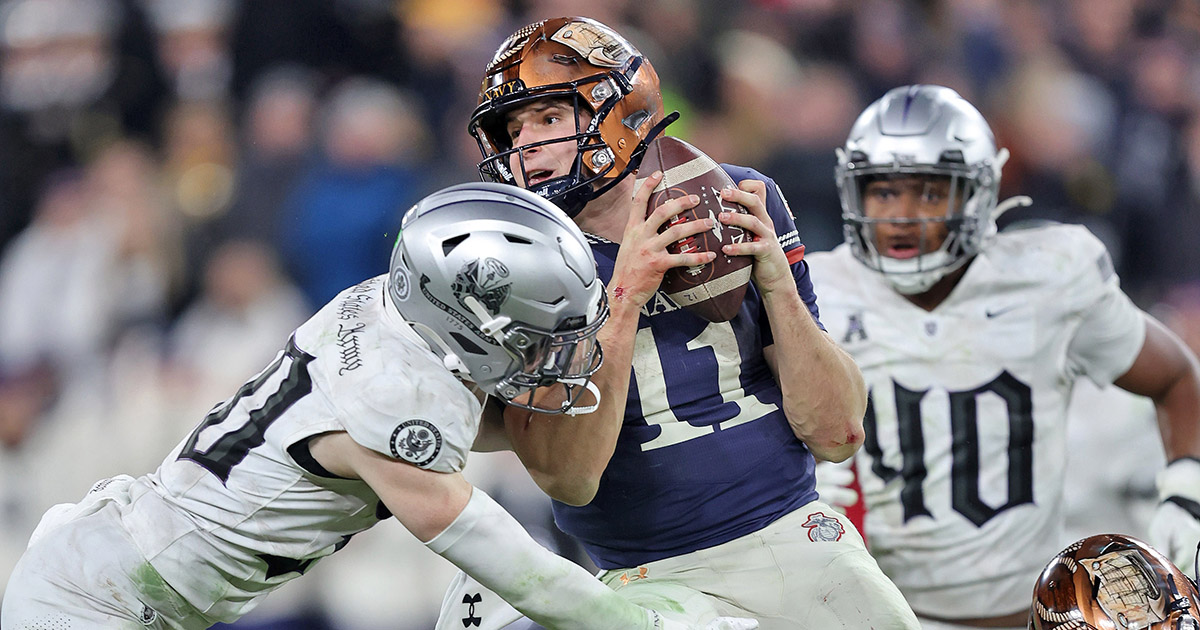
Once again in its standalone window, America’s Game came down to the wire last week. Ultimately, Navy got a second straight victory over Army, and it became CBS’ most-watched college football game of the season.
An average of 7.84 million people watched as Navy came away with the victory at M&T Bank Stadium in Baltimore. While it’s a 17% decrease from last year’s 9.4 million viewers – the best since at least 1990 – it’s still the second-best viewership for the game since 2018, according to Sports Business Journal’s Austin Karp.
SUBSCRIBE to the On3 NIL and Sports Business Newsletter
Last year’s Army-Navy game topped the previous high mark of 8.45 million viewers in 1992. In addition, it tops CBS’ slate of games this year, beating out the 5.6 million viewers who watched Indiana at Oregon in Week 7, according to data compiled by On3.
This year’s Army-Navy game also marked the last for CBS analyst Gary Danielson in the booth. He has worked 17 matchups between the two programs and will get ready for retirement following the Sun Bowl later this month. Charles Davis is set to join Brad Nessler in CBS’ lead booth starting next season.
With the victory, Navy extended its advantage in the all-time series against Army, which dates back to 1890. The Midshipmen have an all-time 64-55-7 record against the Black Knights.
How it happened: Navy defeats Army
Navy struck first in the first quarter of last week’s game, taking a 7-0 lead on a Blake Horvath touchdown. But Army responded with 13 points in the second quarter, including a rushing touchdown from Cale Hellums, to take the lead into halftime.
The two teams traded field goals in the third quarter as Army took a 16-10 lead into the final 15 minutes. That’s when Navy completed the comeback as Eli Heidenreich caught the 8-yard touchdown pass from Horvath, putting the Midshipmen back on top, 17-16. That held as the final, giving Navy a second straight win over Army in the historic game.
Horvath led the charge for Navy, rushing for 107 yards and a touchdown on the ground while adding 82 passing yards to go with the touchdown pass to Heidenrich. On the Army side, Hellums had 100 rush yards and a touchdown to go with 82 passing yards.
Both Army and Navy are now getting ready for their respective bowl games. The Midshipmen will head to the Liberty Bowl on Jan. 2, 2026 against Cincinnati while the Black Knights will square off against UConn in the Fenway Bowl on Dec. 27.
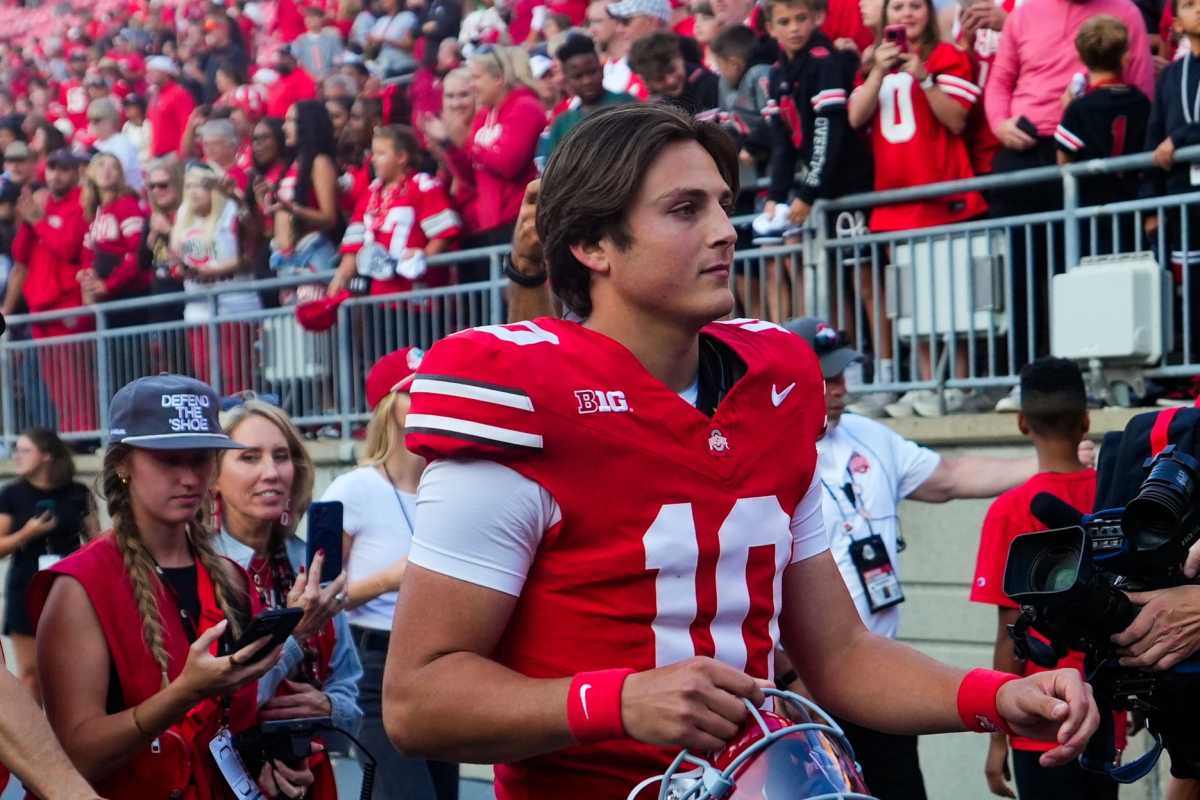
Julian Sayin is looking to lead the Ohio State Buckeyes to the national title alongside several other stars like wide receiver Jeremiah Smith.
Ohio State heads into the College Football Playoff with one of the best rosters in the country, starring Sayin and Smith along with wide receiver Carnell Tate, safety Caleb Downs and linebacker Arvell Reese.
Advertisement
They’re heading into the playoffs as the No. 2 seed after losing to Indiana in the Big Ten title game. The Buckeyes will have a bye week to begin the CFP.
Other teams that will benefit from the bye week include Indiana, Texas Tech and Georgia.
During his time off, Sayin shared some exciting news off the field. The Ohio State Buckeyes quarterback has partnered with Wingstop and Dr Pepper in his latest NIL deal.
“Postseason calls for big plays with @drpepper and @wingstop, had to get the play card out,” Sayin posted.
Advertisement
Sayin committed to Ohio State after spending some time with the Alabama Crimson Tide.
While he was planning his college football career at Alabama, he made the move to the Big Ten and finished his first season as the starting quarterback as a Heisman Trophy finalist.
Sayin was ranked as the No. 1 quarterback and the No. 6 overall player in the 2024 recruiting class, per 247Sports.

Ohio State Buckeyes quarterback Julian Sayin (10) Adam Cairns/Columbus Dispatch / USA TODAY NETWORK via Imagn Images
Before signing his latest NIL deal and sharing the news with fans online, Julian Sayin had inked deals with The Foundation, Dick’s Sporting Goods and JLab Audio.
Advertisement
Related: Alabama Reacts to Ty Simpson News Before College Football Playoff
Related: SEC Program Fires Coach After College Football Season
This story was originally published by Athlon Sports on Dec 16, 2025, where it first appeared in the College section. Add Athlon Sports as a Preferred Source by clicking here.
Dec. 16, 2025, 5:06 a.m. CT
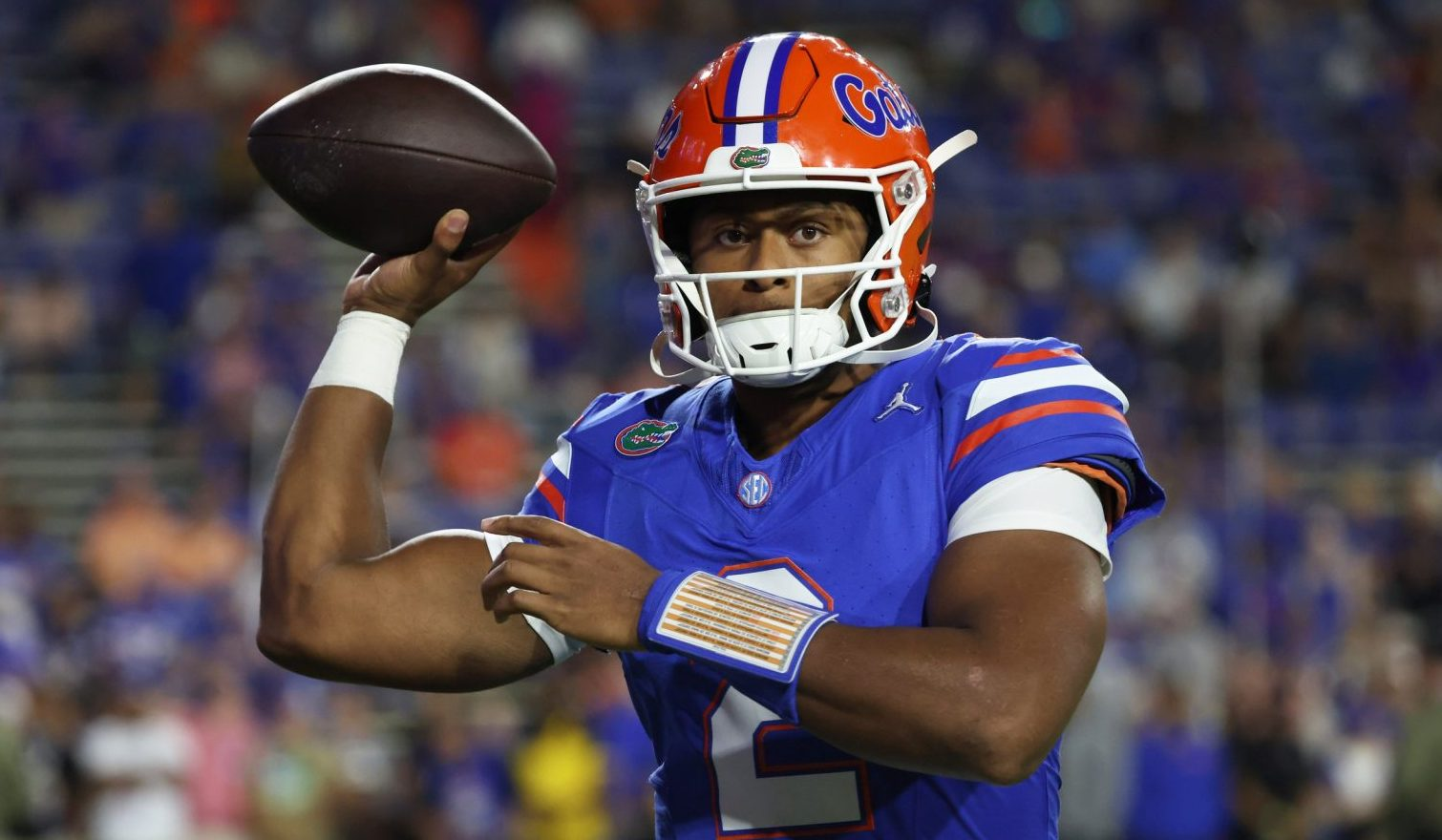
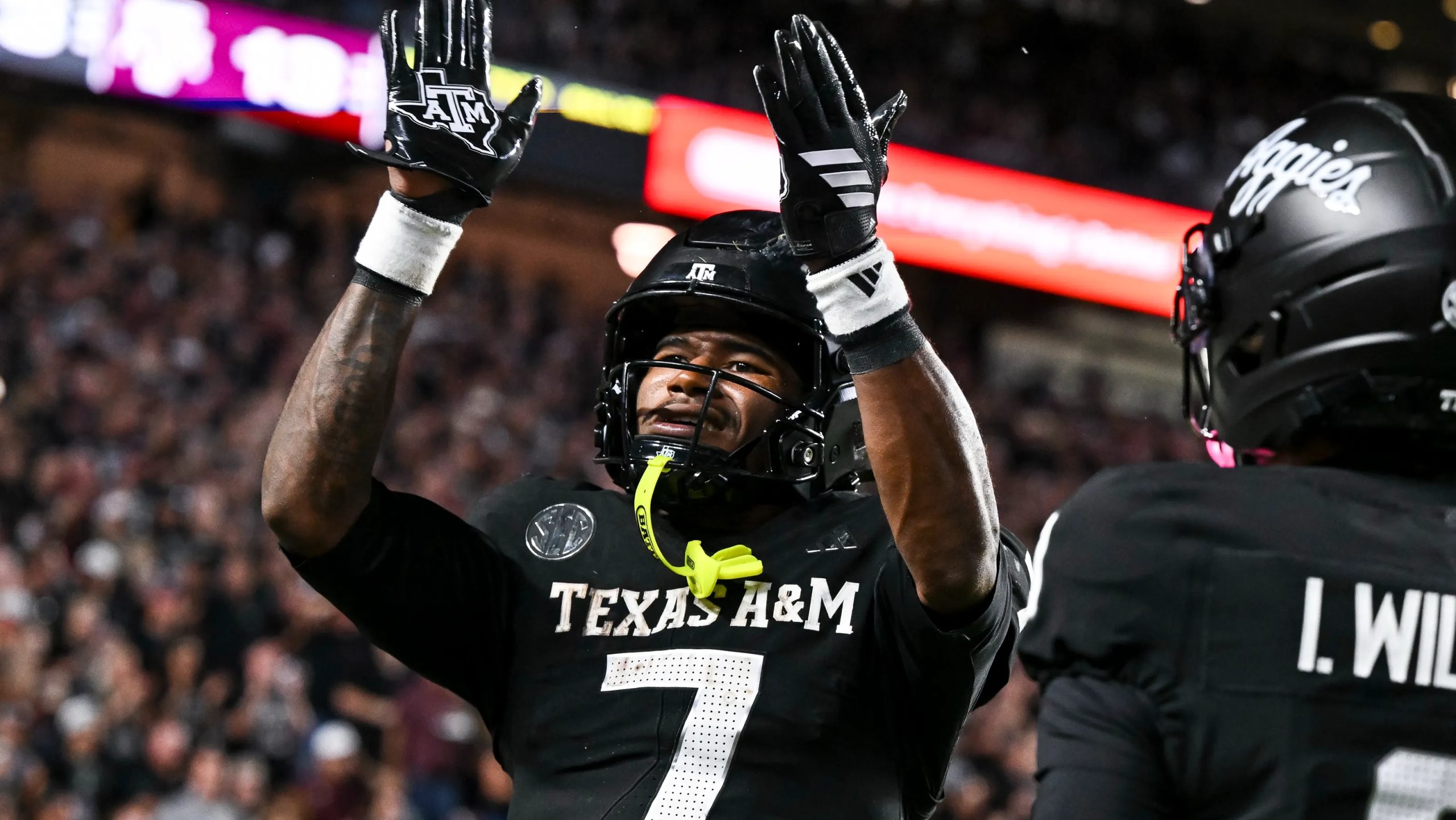
Texas A&M’s 2025 offense finished the regular season ranked 19th nationally, while starting quarterback Marcel Reed threw for a career high 2,932 yards and 25 touchdowns, with 13 going to star wide receivers KC Concepcion and Mario Craver, who completely rejuvenated a passing attack that failed to move the needle in key games down the stretch last season.
While Craver is expected to return next season for his all-important junior year, Concepcion has a choice to make regarding his future, choosing between a final year in College Station or declaring for the 2026 NFL Draft, where he is expected to be a first or second-round selection.
Whatever choice he makes is entirely up to him and his family, and while those of us in the media have written numerous articles about his draft standing, returning for his senior season could benefit his NFL future. Still, Concepcion is as mature as they come and is entirely focused on facing the Miami Hurricanes this Saturday during the first round of the College Football Playoff.
On Monday, Concepcion took questions from the media ahead of the game and was asked about his potential return or a draft declaration.
“I have not made a decision yet.”
“Talking with my coaches, talking with my parents. We’re going to put our trust in God. Whatever He has in store for my future, we’re going to go like that.”
In today’s college football landscape, NIL deals have made returning for a final season much more appealing than the old structure, so a return in 2026 is not out of the question. However, Concepcion is viewed as one of the top prospects for his elite versatility as an NFL slot receiver and as a Day 1 punt return specialist.
This decision will be saved for the offseason, because defeating Miami and making it to the CFP Quarterfinals is all that matters right now.
Contact/Follow us @AggiesWire on X (formerly Twitter) and like our page on Facebook to follow ongoing coverage of Texas A&M news, notes and opinions. Follow Cameron on X: @CameronOhnysty.

FOX Sports analyst Joel Klatt found himself in a social media firestorm after comments he made about the Group of Five on a podcast appearance on Next Round Live. Clips of that interview quickly went viral with short snippets of some of the quotes.
The gist of those snippets suggested that Klatt was anti-G5, to the point of wanting the G5 kicked out of the College Football Playoff. Klatt intimated that the only thing keeping the G5 in the playoff currently is the threat of litigation.
College football analyst Josh Pate had his own thoughts on Joel Klatt’s take. He mostly came to the defense of the suddenly targeted analyst.
Pate first played a couple clips from Klatt’s appearance in their entirety. That offered more full context.
“Some of that was insane, I’m going to grant you that,” Pate said of Klatt’s points. “I just want to say the foundation of it I at least understand. The foundation of it is sound. Not all the parts of it. The foundation of it is sound.
“Couple of quotes there. No. 1, the G5 is in the College Football Playoff to avoid litigation is basically true.”
Pate lambasted the use of quote edits in condensing Joel Klatt’s much larger point into a few soundbites. He tried to explain how that’s misleading to his viewers.
“You know sometimes how you see a snapshot or a small soundbite of something and you get outraged by it and then you go on to learn the context of it two weeks later and you’re like, ‘Wow, I probably shouldn’t have gotten as outraged as I did over that,’ Pate said. “That is what is happening to Klatt. Admittedly he brought a lot of this on himself. …
“Now, what you probably saw was you probably saw quote edits like this or quote graphics like this. And if you’re listening on podcast just imagine scrolling through your social feed and there’s a picture of Klatt, looks like he’s somewhere sunny and happy and there’s a quote at the top, and it says, quote, ‘We don’t want Cinderellas. We want the best teams playing each other at the end. It’s the dumbest tournament and the least fair tournament in all of sports.’”
That part from Joel Klatt, obviously, was what many detractors latched onto. But it doesn’t take away from Klatt’s overall point about the G5, Pate pointed out.
So all the moaning over James Madison being in the playoffs is for naught. That’s just the way the current structure is set up.
“They are present in the playoff, they’re granted an auto bid in the playoff because if they are not then lawsuits will be filed immediately,” Pate said. “So that part’s accurate.
“Now whether or not you think it’s morally sound that they’re included in the playoff, that’s your own opinion. He’s got his, I’ve got mine, you’ve got yours. But he is right. Because in no other merit-based world where we just judged these teams on a static scale of quality, of resources and therefore what you do with the resources, and the results on the field and strength of schedule, in no world would James Madison be in the playoff. But the parameters of the playoff right now are that we take the five highest-ranked conference champs. So by every current rule James Madison is in the playoff and should be in the playoff. I don’t disagree with that. Tulane is in the playoff and should be in the playoff. I don’t disagree with the structure. I don’t disagree with the body of the playoff this year based on the current rules.”
So what’s the solution? Well, Joel Klatt also offered an answer for that. It just didn’t happen to go viral with the other stuff.
Klatt believes the G5 should effectively break off from the power conferences and host its own playoff. It would be a playoff tier between the FCS and the FBS.
“That’s been the same point that’s been made on my show,” Pate said. “So you notice if you really hated the G5 you’d just say, ‘Piss on the G5.’ That’s not what he did, despite the fact that that part didn’t get shared widely and it’s not what I’ve ever done on this show.
“Any time you have a problem with something, you ought to have a solution for it. So if your problem is, ‘Man, it makes little sense that we’ve got 136 teams pretending to play the same caliber of the sport’ you need to have a solution. That solution he just presented is the same one we’ve shared on this show, and that is a G5 playoff.”
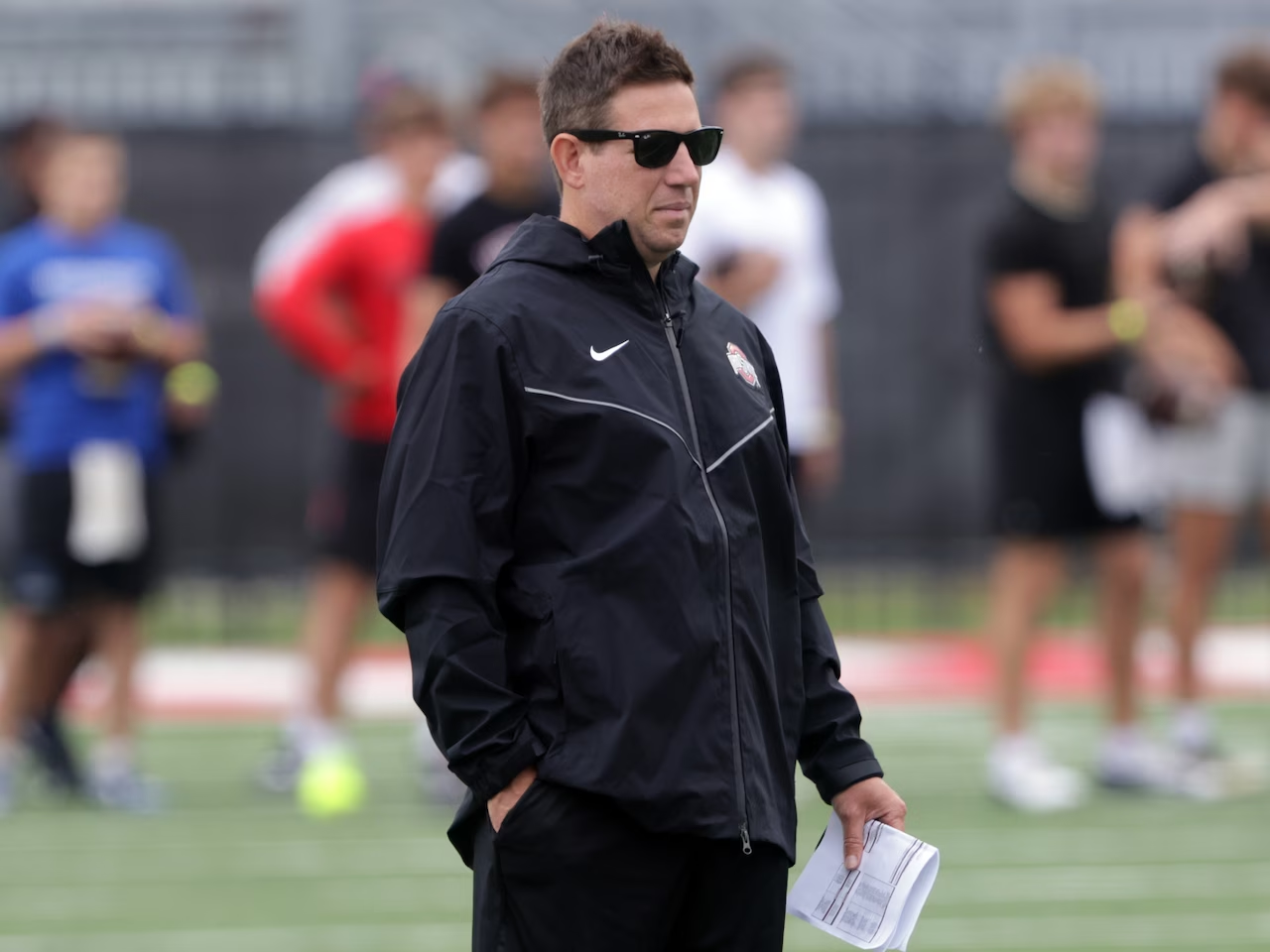
COLUMBUS, Ohio — The days of simply collecting as many five-star talents as possible in college football recruiting are over.
In a revealing Buckeye Talk podcast episode, Ohio State analysts Stephen Means and Andrew Gillis detailed how the program has shifted to a more sophisticated “roster construction” approach that mirrors NFL team building more than traditional college recruiting.
“I think that because the financial aspect has come into this but also just logical roster building that has become more of a focal point than star, star, star, star, stars,” explained Stephen Means. “Because for a long time, college football was like, get as much talent as you humanly can, develop it, cuz you were living in a world where the top 1% of college football had all the talent. And that’s not true anymore.”
This fundamental shift in philosophy is perhaps most evident in how Gillis described Ohio State’s running back recruiting needs for the 2027 class. While five-star David Gabriel Georgees tops their board, the approach is more nuanced than just stacking elite talent.
“If they got three five stars running backs, the odds that we got on this podcast and said that’s actually probably not that good is higher than it might seem because we were saying why is your asset management this? Like because hey, look at your your receiver recruiting was down. You couldn’t have spent some of that money on a receiver,” Gillis explained.
The financial component of recruiting has transformed how Ohio State approaches each position group and recruiting class. It’s no longer just about who’s the best player available, but whether investing heavily in one position might shortchange another.
“It is a math equation. It is a money equation at this point. You’re not going to go get three five stars at running back in a single class,” Gillis emphasized.
Means further elaborated on how NIL money has forced this change: “You can’t pay a fivestar recruit, fivestar recruit money and then have the guy sitting on the bench because there’s another guy with there’s only so much money to go around.”
This strategic approach has Ohio State looking at players through different lenses: “ready to go” immediate contributors (typically five-stars and top-100 recruits), “developmental” prospects (usually ranked 200-350 nationally), and “depth” pieces who might be ranked lower but fill specific roles.
The analysts identified several instances where this approach is evident in Ohio State’s 2027 planning. At quarterback, they’re content with a developmental prospect in Brady Edmonds rather than chasing another five-star. At wide receiver, despite already having five-star Jir Brown committed, they believe Ohio State needs another elite receiver plus two depth pieces to properly structure the room.
“Now we are talking about roster construction,” Means said. “And the reason why we structured it this way is okay, they went and got a devel they have a developmental quarterback in 2027. They probably need a ready to go quarterback in 2028 and they probably need a depth quarterback in 2029. And the cycle continues, right?”
This staggered approach ensures Ohio State will have players at different stages of development at every position, creating a sustainable pipeline of talent ready to contribute when needed.
“Everybody everybody’s running the same race, but they can’t be running it at the same pace or you’re not going to have a team to field every single year,” Means added.
The conversation revealed how Ohio State’s recruiting approach now more closely resembles NFL roster management, with considerations for “salary cap” (NIL budget), positional value, and development timelines all factoring into decisions that previously might have been simply about collecting the highest-ranked players available.
As college football continues to evolve in the NIL era, this strategic roster construction philosophy may become the new standard for elite programs looking to maintain sustainable success.
Here’s the podcast for this week:

Street Soccer Park Opens to Expand Youth Athletic Opportunities
Search News Releases | American Heart Association

Las Vegas youth soccer coach arrested on child sex charges, Metro says | Sex Crimes

Gaming PC Market | Global Market Analysis Report
How three Taunton High athletes plan to lead through Hockomock LEAP

Woman trying to find ‘guardian angel’ who saved her life after she suddenly stopped breathing

Competition gathers dozens of area youth | News, Sports, Jobs
Woman trying to find ‘guardian angel’ who saved her life after she suddenly stopped breathing

Beloved Cleveland youth basketball coach honored at Rhodes High School game

College Football TV Ratings: Army-Navy Game averages 7.84 million viewers
Youth hockey theft exposed by a Colorado mom. Then came the threats.

Detroit Pistons insiders gave thousands to Mary Sheffield’s campaign

Parks and Recreation Programs for Teens

Ohio State QB Julian Sayin Announces NIL News Before College Football Playoff

Virginia Tech Helmet Lab Releases First Independent Safety Ratings for Youth Hockey Helmets

First Tee Winter Registration is open

Fargo girl, 13, dies after collapsing during school basketball game – Grand Forks Herald

CPG Brands Like Allegra Are Betting on F1 for the First Time

F1 Las Vegas: Verstappen win, Norris and Piastri DQ tighten 2025 title fight

Volleyball Recaps – November 18

Two Pro Volleyball Leagues Serve Up Plans for Minnesota Teams

Sycamores unveil 2026 track and field schedule

Utah State Announces 2025-26 Indoor Track & Field Schedule

Redemption Means First Pro Stock World Championship for Dallas Glenn

Jo Shimoda Undergoes Back Surgery

Texas volleyball vs Kentucky game score: Live SEC tournament updates

Bowl Projections: ESPN predicts 12-team College Football Playoff bracket, full bowl slate after Week 14

SoundGear Named Entitlement Sponsor of Spears CARS Tour Southwest Opener

How this startup (and a KC sports icon) turned young players into card-carrying legends overnight

Robert “Bobby” Lewis Hardin, 56

 NBA Legend Michael Jordan to Join NBC Sports as Special Contributor
 Why a rising mid-major power with an NCAA Tournament team opted out of revenue-sharing — and advertised it
 Falcons mailbag
 Portal Update – Basketball and Gymnastics Take Hits
 has always dreamed in Mercurial. Now his initials are on the boots.
The new Kyl…
has always dreamed in Mercurial. Now his initials are on the boots.
The new Kyl…
-
 Motorsports3 weeks ago
Redemption Means First Pro Stock World Championship for Dallas Glenn
-
 Motorsports3 weeks ago
Jo Shimoda Undergoes Back Surgery
-
 NIL2 weeks ago
Bowl Projections: ESPN predicts 12-team College Football Playoff bracket, full bowl slate after Week 14
-
 Motorsports7 days ago
SoundGear Named Entitlement Sponsor of Spears CARS Tour Southwest Opener
-
 Rec Sports3 weeks ago
How this startup (and a KC sports icon) turned young players into card-carrying legends overnight
-
 Rec Sports2 weeks ago
Robert “Bobby” Lewis Hardin, 56
-
 NIL3 weeks ago
Indiana’s rapid ascent and its impact across college football
-

 Motorsports3 weeks ago
Pohlman admits ‘there might be some spats’ as he pushes to get Kyle Busch winning again
-
Sports2 weeks ago
Wisconsin volleyball sweeps Minnesota with ease in ranked rivalry win
-

 Motorsports3 weeks ago
What stands behind Ford’s commitment to becoming ‘the Porsche of off-road racing’