

Sign up for the Today newsletter
Get everything you need to know to start your day, delivered right to your inbox every morning.

Nike loves to market itself as a champion for women. The brand has launched entire campaigns celebrating female athletes — complete with inspirational slogans, slow-mo footage and narrations about “empowerment” and proving the naysayers wrong. But behind the polished ads and performative hashtags is a pattern that’s hard to ignore: Nike consistently fails to actually protect female athletes.
This alleged study on transgender-identifying youth is just the latest example.
The sports apparel giant is reportedly funding a five-year study on trans-identifying male children who are being given puberty blockers and hormone therapy — all to see whether suppressing male puberty early enough can make competition in girls’ and women’s sports more “fair.”
But let’s call this research what it is: disturbing.
The very premise of this study is an admission that biological males have an inherent advantage over females in sports. Of course, most sane people will admit that’s common sense. That’s why we have separate men’s and women’s divisions in the first place.
RELATED: Physicians Warn of Medical Risks In Trans Youth Study Allegedly Funded By Nike
Instead of acknowledging that boys shouldn’t be competing in girls’ sports, though, this study asks, “Okay, but what if we just chemically impair them first?” It’s like asking how many dizzy bat spins we need to give Aaron Judge before he starts hitting a baseball like a high school JV player.
Except much more insidious. Horrifying. Unethical.
Nike is reportedly funding a study involving transgender-identifying youth taking puberty blockers and cross-sex hormones.
(Photo by Li Hongbo/VCG via Getty Images)
Let’s also point out what isn’t being studied. This research isn’t about female-to-male transgender athletes. Nike isn’t funding research on how girls who take testosterone fare in boys’ sports. Because they already know how that goes.
Girls aren’t taking over men’s sports and locker rooms — and no one’s pretending they are. The only group asked to compromise, accommodate and surrender safety and competitive fairness is female athletes.
And that’s been Nike’s playbook for years.
Remember Mary Cain? An elite teenage runner, she was part of the Nike Oregon Project, founded in part by coach Alberto Salazar with the goal of making American distance runners competitive with the rest of the world.
Cain later filed a lawsuit, accusing Salazar of emotionally and physically abusing her, pushing her to become “thinner, and thinner and thinner.”
“I joined Nike because I wanted to be the best female athlete ever,” Cain told The New York Times in 2019. “Instead, I was emotionally and physically abused by a system designed by Alberto and endorsed by Nike.”
Cain says she was publicly shamed, underfed and ignored when she started breaking down — physically and mentally. In her words: “I was the fastest girl in America, until I joined Nike.” According to the lawsuit, the company was aware of the abuse but failed to intervene.
“Nike was letting Alberto weight-shame women, objectify their bodies, and ignore their health and wellbeing as part of its culture,” Cain’s lawyer, Kristen West McCall, said. “This was a systemic and pervasive issue. And they did it for their own gratification and profit.”
Sound familiar?
The Nike Oregon Project was disbanded in 2019 after the U.S. Anti-Doping Agency accused Salazar of three violations. The agency banned him from the sport for four years. The Nike-sponsored coach was later barred from the sport for life after multiple athletes accused him of sexual assault.
Nike never stepped in. Real champions for women.
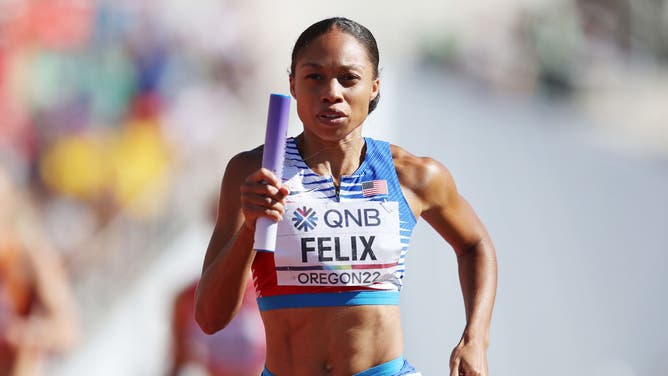
Nike was forced to change its maternity policy after seven-time Olympic gold medalist left the brand and publicly called Nike out.
(Photo by Patrick Smith/Getty Images)
Then there’s Allyson Felix, Alysia Montaño and Kara Goucher — world-class athletes who said Nike slashed their pay after they got pregnant. Felix asked for maternity protections. Nike not only denied her request and cut her pay by 70 percent, but an executive also reportedly told her, “Know your place and just run.”
Montaño had to keep training while hiding her pregnancy to avoid losing sponsorship.
And when Goucher got pregnant, Nike arranged a photoshoot where the company then edited out her pregnant belly and replaced it with fake abs — all while keeping her breasts, which she said had “grown significantly” during the pregnancy, as they were.
Goucher also later revealed she was pressured to race before she had healed from childbirth.
Nike eventually updated its maternity policy. But only after public shaming.
And in 2023, Nike handed a women’s sports bra endorsement to Dylan Mulvaney — a biological male with zero athletic credentials — days after Mulvaney sparked a boycott that nearly sank Bud Light. It was yet another slap in the face to female athletes: biological men modeling the gear women actually need to compete.
A costume intended to mock, not empower.
Nike can keep churning out glittery girl-power campaigns like “So Win,” producing ads with slow-mo shots of determined women crossing finish lines and sinking threes. But throwing pink glitter on something doesn’t make it female-friendly. Especially not when, behind the scenes, the company repeatedly undermines the very athletes it claims to celebrate.
You don’t get to plaster “So Win” across billboards while funding research that asks how much we need to medically stunt boys so they can take spots on girls’ podiums. That’s not empowerment. That’s exploitation. Erasure.
This alleged study is not an outlier. It’s the logical next step in a long pattern of Nike treating women like props — useful for marketing, disposable when inconvenient.

Nike should take its own advice here.
(Photo by Natalie Behring/Getty Images)
Despite what some activists might have you believe, this transgender research isn’t some noble quest for inclusion. It’s a science experiment using kids, and its only outcome is to clear the path for males to keep entering women’s sports. There’s no upside for female athletes. No consideration for their fairness, safety or scholarship opportunities. Just more sacrifices made in the name of “progress.”
Nike doesn’t support women. It sells the illusion of support to people who don’t look too closely.

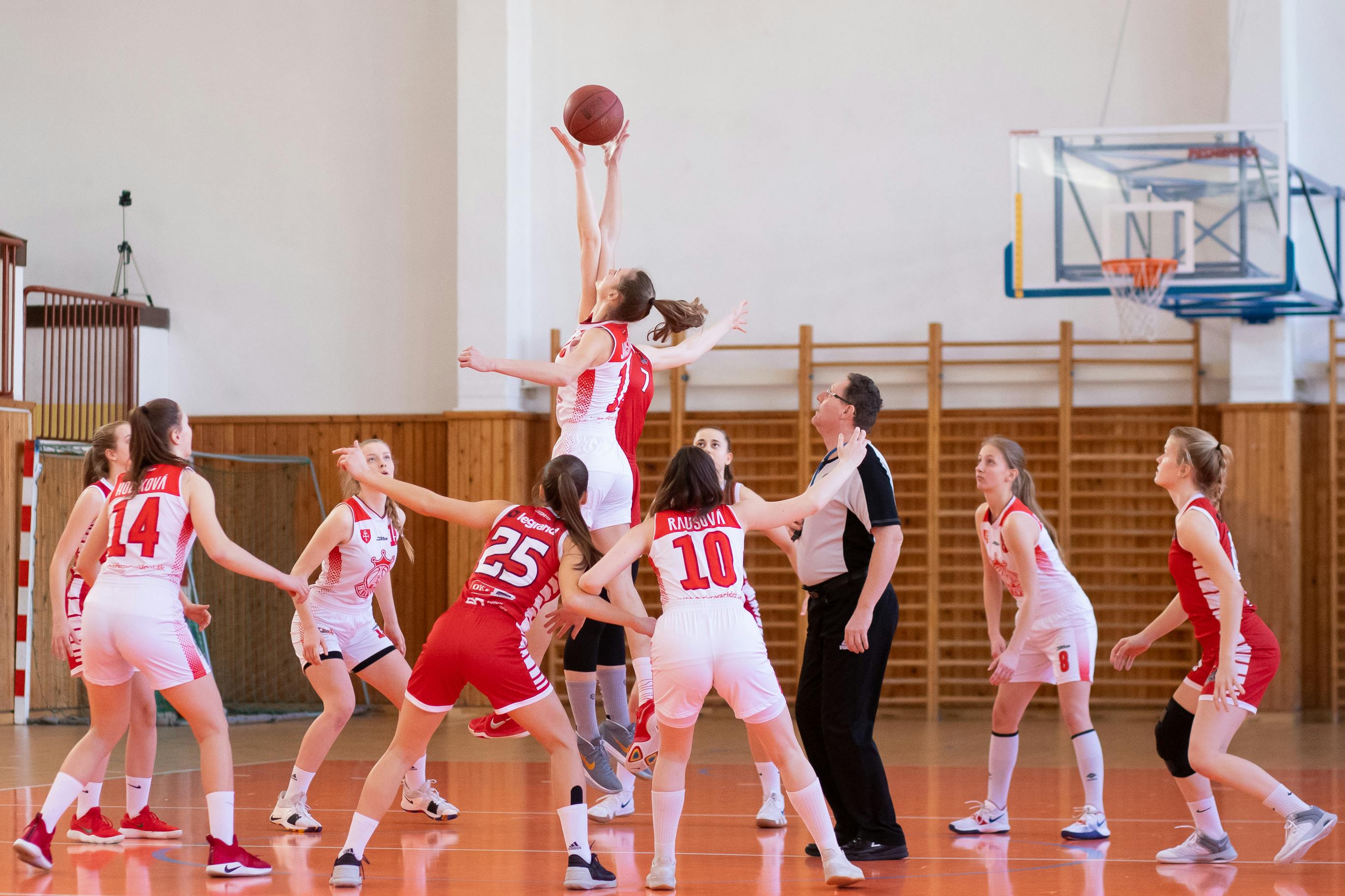
As winter settles in across the Finger Lakes, local sports programs are heating up, bringing packed gyms, competitive matchups, and a renewed sense of community pride. From high school basketball rivalries to college hockey action and grassroots youth leagues, the Finger Lakes sports scene continues to thrive during the heart of the winter season.
High school basketball has become the focal point of winter sports across the region, with boys and girls teams settling into league play. Schools in the Wayne Finger Lakes, Finger Lakes East, and Finger Lakes West divisions are already seeing early separation in the standings, while several traditional rivalries have delivered close, physical contests.
On the boys side, teams have emphasized disciplined defense and balanced scoring. Programs with experienced upperclassmen are using depth to maintain pressure throughout four quarters, while younger squads are relying on athleticism and tempo to stay competitive. Several games this month have been decided in the final minutes, a sign that league play may remain tight well into February.
Girls basketball has been equally competitive, with multiple teams leaning on strong guard play and full-court pressure. Coaches across the region have noted improved outside shooting compared to recent seasons, leading to higher-scoring games and faster pace. Crowds have responded in kind, with student sections growing as teams push toward midseason tournaments and postseason positioning.
Wrestling continues to be a point of pride for many Finger Lakes schools, particularly those with long-established programs. Early-season dual meets and invitational tournaments have highlighted the depth of talent across multiple weight classes.
Several schools have already seen multiple wrestlers qualify for podium finishes at weekend tournaments, while younger athletes are gaining valuable experience against strong competition. Coaches have praised the work ethic shown in practice rooms, noting that offseason training and youth wrestling programs are paying dividends at the varsity level.
With sectional competition still weeks away, teams are focused on consistency and conditioning, knowing that late-season stamina often determines postseason success.
At the collegiate level, Finger Lakes Community College continues to be a hub for regional athletics. The men’s and women’s basketball programs have shown steady improvement, with several conference wins highlighting disciplined execution and strong rebounding.
FLCC’s teams have leaned heavily on team chemistry, using ball movement and defensive rotations to stay competitive against larger programs. Coaches have emphasized development and resilience, particularly in close games where late possessions have made the difference.
Local colleges and SUNY schools across the broader Finger Lakes region are also contributing to the area’s sports identity, with athletes often drawing support from nearby hometowns when competing in conference matchups.
Hockey has been making a lot of headlines in the Finger Lakes, with many recent game day photos covering the local newspapers. Local rinks have been busy hosting league games, youth tournaments, and community skating events.
WFL teams have displayed strong goaltending and structured defensive play early in the season, keeping games competitive even against traditionally strong opponents. Coaches have pointed to improved puck movement and discipline as key factors in early success.
Youth hockey programs continue to grow, providing a pipeline for future high school teams and reinforcing the region’s long-standing hockey culture.
While basketball and wrestling often dominate headlines, several winter sports continue to build momentum behind the scenes.
Bowling teams across the region have started their seasons with impressive individual performances, including multiple high series and consistent team scores. Indoor track athletes are preparing for invitational meets, focusing on speed development and technical events during the colder months.
Swimming programs have also begun conference competition, with relay teams and distance swimmers standing out in early meets. Coaches emphasize the importance of depth, as dual meet success often depends on contributions across every event.
Beyond school athletics, community sports leagues remain a vital part of life in the Finger Lakes. Youth basketball, travel hockey, and recreational leagues continue to see strong participation, providing opportunities for skill development and community engagement.
Local gyms, community centers, and recreation departments have worked to expand programming, ensuring that young athletes have access to structured competition throughout the winter. These programs not only develop future varsity athletes but also strengthen the bonds between towns and school districts.
As winter sports move toward the midpoint of their seasons, the Finger Lakes region is poised for an exciting stretch of competition. League races are tightening, rivalries are intensifying, and athletes across all levels are finding their rhythm.
With tournaments, sectional qualifiers, and postseason play on the horizon, the coming weeks promise meaningful games and memorable moments. For communities across the Finger Lakes, sports continue to serve as a unifying force, bringing people together to cheer, compete, and celebrate local talent.

This content is brought to you by the FingerLakes1.com Team. Support our mission by visiting www.patreon.com/fl1 or learn how you send us your local content here.
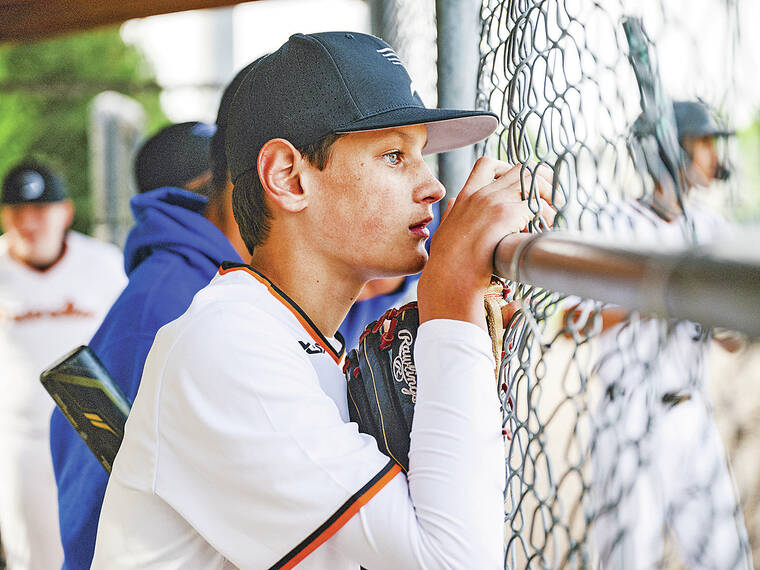
ESCONDIDO, Calif. — Like many mothers in Southern California, Paula Gartin put her twin son and daughter, Mikey and Maddy, into youth sports leagues as soon as they were old enough. For years, they loved playing soccer, baseball and other sports, getting exercise and making friends.
But by their early teens, the competition got stiffer, the coaches became more demanding, injuries intervened and their travel teams demanded that they focus on only one sport. Shuttling to weekend tournaments turned into a chore. Sports became less enjoyable.
Maddy dropped soccer because she didn’t like the coach and took up volleyball. Mikey played club soccer and baseball as a youngster, then chose baseball before he suffered a knee injury in his first football practice during the baseball offseason. By 15, he had stopped playing team sports. Both are now in college and more focused on academics.
“I feel like there is so much judgment around youth sports. If you’re not participating in sports, you’re not doing what you’re supposed to be doing as a kid,” Gartin said. “There’s this expectation you should be involved, that it’s something you should be doing. You feel you have to push your kids. There’s pressure on them.”
Youth sports can have a positive effect on children’s self-esteem and confidence and teach them discipline and social skills. But a growing body of recent research has shown how coaches and parents can heap pressure on children, how heavy workloads can lead to burnout and fractured relationships with family members and friends, and how overuse injuries can stem from playing single sports.
A report published by the American Academy of Pediatrics in 2024 showed how overuse injuries and overtraining can lead to burnout in young athletes. The report cited pressure by parents and coaches as additional risk factors. Another study, in the Journal of Sport &Social Issues, highlighted how giving priority to a win-at-all-costs culture can stunt a young athlete’s personal development and well-being. Researchers at the University of Hawaii found that abusive and intrusive behavior by parents can add to stress on athletes.
Mental health is a vast topic, from clinical issues like depression and suicidal thoughts to anxiety and psychological abuse. There is now a broad movement to increase training for coaches so they can identify signs and symptoms of mental health conditions, said Vince Minjares, a program manager in the Aspen Institute’s Sports &Society Program. Since 2020, seven states have begun requiring coaches to receive mental health training, he said.
Domineering coaches and parents have been around for generations. But their pressure has been amplified by the professionalization of youth sports. A growing number of sports leagues are being run as profit-driven businesses to meet demand from parents who urge their children to play at earlier ages to try to improve their chances of playing college or pro sports. According to a survey by the Aspen Institute, 11.4% of parents believe that their children can play professionally.
“There’s this push to specialize earlier and earlier,” said Meredith Whitley, a professor at Adelphi University who studies youth sports. “But at what cost? For those young people, you’re seeing burnout happen earlier because of injuries, overuse and mental fatigue.”
The additional stress is one reason more children are dropping out. The share of school-age children playing sports fell to 53.8% in 2022, from 58.4% in 2017, according to the National Survey of Children’s Health. While more than 60 million adolescents play sports, up to 70% of them drop out by age 13.
While groups like the Aspen Institute focus on long-standing issues of access and cost in youth sports, combating mental health problems in young athletes is an emerging area. In recent years, professional athletes like Naomi Osaka and Michael Phelps have shined a light on the issue. But parents who want to teach their children the positive parts of playing sports are finding that some of the worst aspects of being a young athlete are hard to avoid.
That was apparent to the parents who took their sons to hear Travis Snider speak at Driveline Academy in Kent, Washington, one Sunday last spring. Snider was a baseball phenom growing up near Seattle and was taken by the Toronto Blue Jays in the first round of the 2006 MLB draft.
But he finished eight unremarkable seasons as an outfielder and played his last major league game at 27. While attempting a comeback in the minor leagues, he worked with a life coach to help him make sense of why his early promise fizzled. He unearthed childhood traumas and unrealistic expectations on the field.
In a playoff game as an 11-year-old, he had had a panic attack on the mound and was removed from the game.
Though he reached the highest level of his sport, Snider felt as if distorted priorities turned baseball into a burden, something he wanted to help others avoid.
Last year, he started a company, 3A Athletics, to help children, parents and coaches develop healthier approaches to sports that include separating professional aspirations from the reality that most young athletes just want to get some exercise and make friends.
“We as a culture really blended the two into the same experience, which is really toxic for kids as they’re going through the early stages of identity formation,” Snider said. “You have a lot of parents who are sports fans that want to watch youth sports the same way they watch pro sports without recognizing, ‘Hey, the thing I love the most is out there running around on the field.’”
He added, “We’ve got to take a step back and detach from what has become normalized and what kind of vortex we get sucked into.”
Driveline Academy, an elite training facility filled with batting cages, speed guns, sensors and framed jerseys of pro players, might be the kind of vortex Snider would want people to avoid. But Deven Morgan, director of youth baseball at Driveline, hired 3A Athletics to help parents and young athletes put their sport in context.
“It’s part of a stack of tools we can deploy to our families and kids to help them understand that there is a structural way that you can understand this stuff and relate to your kid,” he said.
“We are going to get more out of this entire endeavor if we approach this thing from a lens of positivity.”
During his one-hour seminar, Snider and his partner, Seth Taylor, told the six sets of parents and sons how to navigate the mental roadblocks that come from competitive sports. Snider showed the group a journal he kept during the 2014 season that helped him overcome some of his fears, and encouraged the ballplayers to do the same.
“It’s not just about writing the bad stuff,” he said. “The whole goal is to start to open up about this stuff.”
Taylor took the group through a series of mental exercises, including visualization and relaxation techniques, to help players confront their fears and parents to understand their role as a support system.
His message seemed to get through to Amy Worrell-Kneller, who had brought her 14-year-old son, Wyatt, to the session.
“Generally, there’s always a few parents who are the ones who seem to be hanging on too tight, and the kids take that on,” she said. “At this age, they’re social creatures, but it starts with the parents.”
Coaches play a role, too. The Catholic Youth Organization in the Diocese of Cleveland has been trying to ratchet down the pressure on young athletes. At a training session in August, about 120 football, soccer, volleyball and cross-country coaches met for three hours to learn how to create “safe spaces” for children.
“Kids start to drop out by 12, 13 because it’s not fun and parents can make it not fun,” said Drew Vilinsky, the trainer. “Kids are tired and distracted before they get to practice, and have a limited amount of time, so don’t let it get stale.”
Coaches were told, among other things, to let children lead stretches and other tasks to promote confidence. Track coaches should use whistles, not starting guns, and withhold times from young runners during races.
“We’re trying not to overwhelm a kid with anxiety,” said Lisa Ryder, a track and cross-country coach for runners through eighth grade. “CYO is not going to get your kid to be LeBron.”
© 2025 The New York Times Company
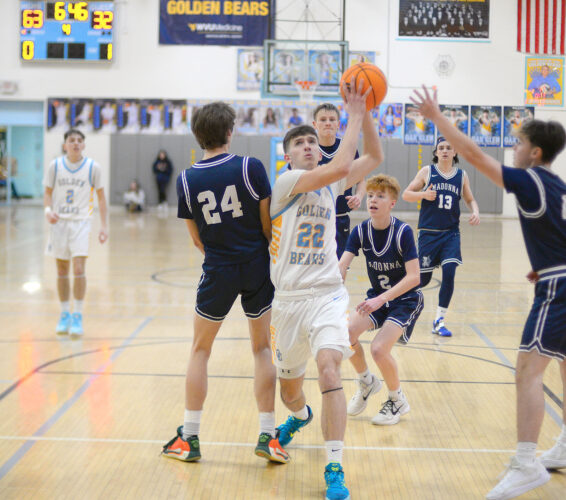
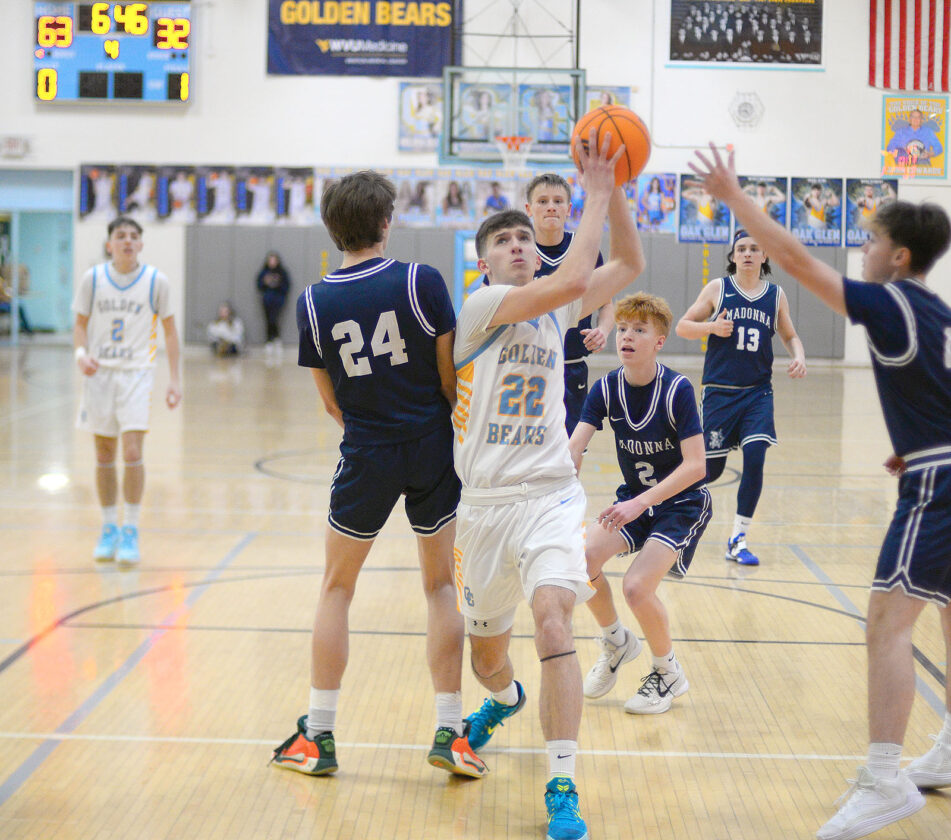
STRONG TO THE HOOP — Oak Glen’s Gavin Geisse drives to the hoop past Madonna’s Reno Fuscardo and Luke Wingett during Tuesday’s game. – Andrew Grimm
NEW MANCHESTER — Knowing his team had a big edge in experience, veteran Oak Glen head coach Jerry Everly wanted to see his group take care of business against Madonna in its last game before the new year.
His Golden Bears did just that, pulling away for an 80-34 victory over the youthful Blue Dons inside the Bears Den Tuesday night.
The victory sends Oak Glen into the new year above the .500 mark at 3-2.
“We played well against a team that we should beat,” Everly said. “They’re very young, their time will come, so we wanted to take care of business and get them while they’re young. We wanted to take care of ourselves, worry about our own game and execute, and I thought we did.
“I told them to take care of business and not take anything for granted, not come out sloppy and execute the things we work on in practice and I thought we did a good job of that. We still have some things to work on, but that’s good, we’ll keep working.

Madonna’s Tyler Dillon jumps against defense from Oak Glen’s Elijah Knisley. – Andrew Grimm
“It’s good to go into the new year above .500.”
Oak Glen had four players reach double figures — two of whom did so coming off the bench — and knocked down nine 3s in the victory.
Gavin Geisse netted 14 points to lead the way, while Mason Kell hit three of the triples to finish with 11. Colt Hissam also tallied three treys and finished with 11 points off the bench, while Tyler Evans came off the bench and also tallied 11.
All told, 10 of 11 players to see the floor for Everly’s team scored, all 10 contributing at least five points.
Oak Glen opened an 18-8 lead after one, then scored 25 points in the second quarter to push the lead to 24 at halftime, then continued to build it the rest of the way to the 46-point victory.
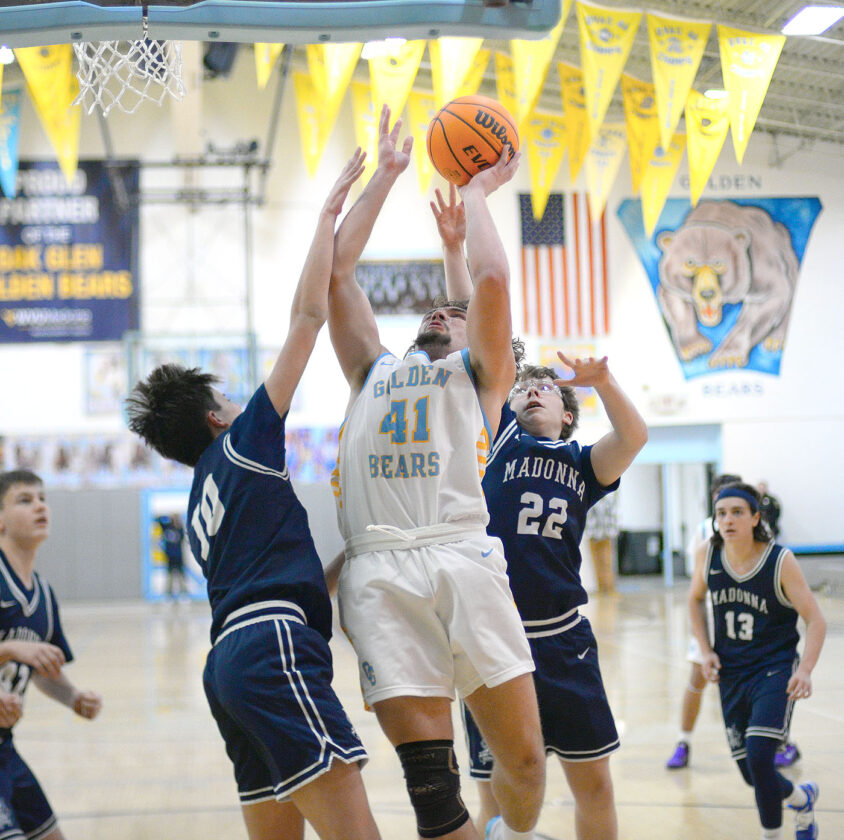
Oak Glen’s Kam Hebron puts up a shot past the Blue Dons Vinny Chiodi and Anthony DeCaria. – Andrew Grimm
For Madonna (1-6), which dressed a lineup of five sophomores, three freshman and a junior, the early season growing pains continued, though they continue to play hard for their veteran coach.
“We’re learning, there are growing pains,” Madonna head coach George Vargo said. “Our kids play hard, they just have to learn the game better. But they keep playing hard and they don’t give up. We start a freshman and four sophomores, so we know we’re going to go through the growing pains. We’ll get better as we go and keep learning and keep growing.
“We’ve seen a lot of improvements from Game 1 to Game 7.”
The Dons were led by 14 points from Reno Fuscardo and eight from Jake Druga.
UP NEXT
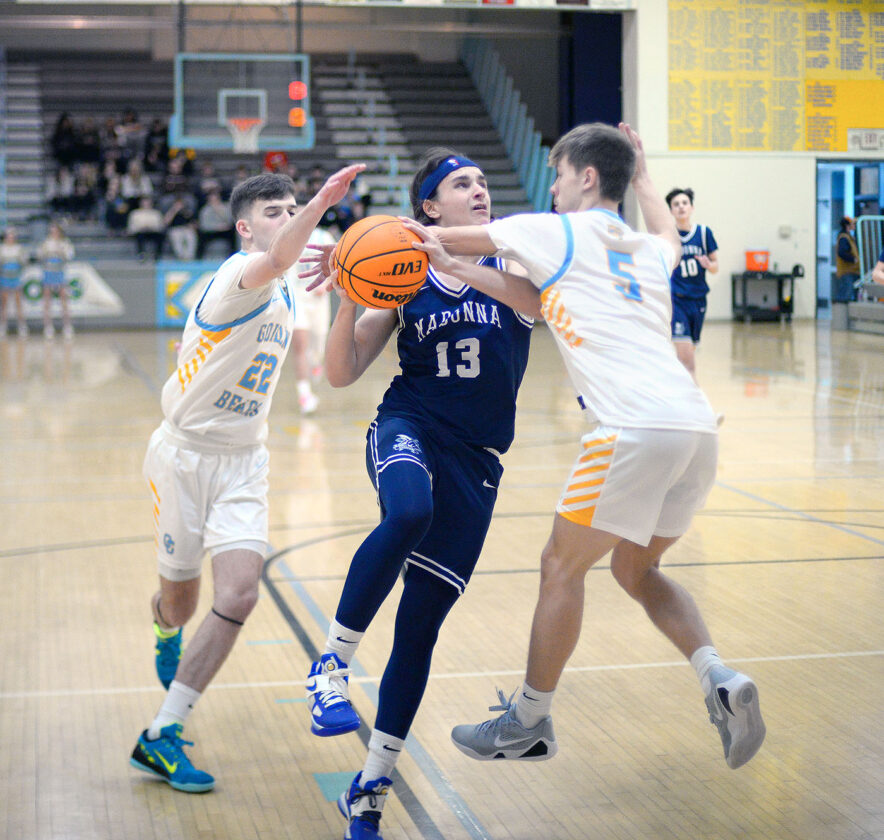
Madonna’s Jake Druga drives against Oak Glen’s Gavin Geisse and Will Weekley. – Andrew Grimm
Madonna: Has another tough match up Saturday when it travels to Toronto.
Oak Glen: Has a big game on the road Saturday night at Wellsville.
Oak Glen 80, Madonna 34
M 8-11-11-4 — 34
OG 18-25-18-19 — 80
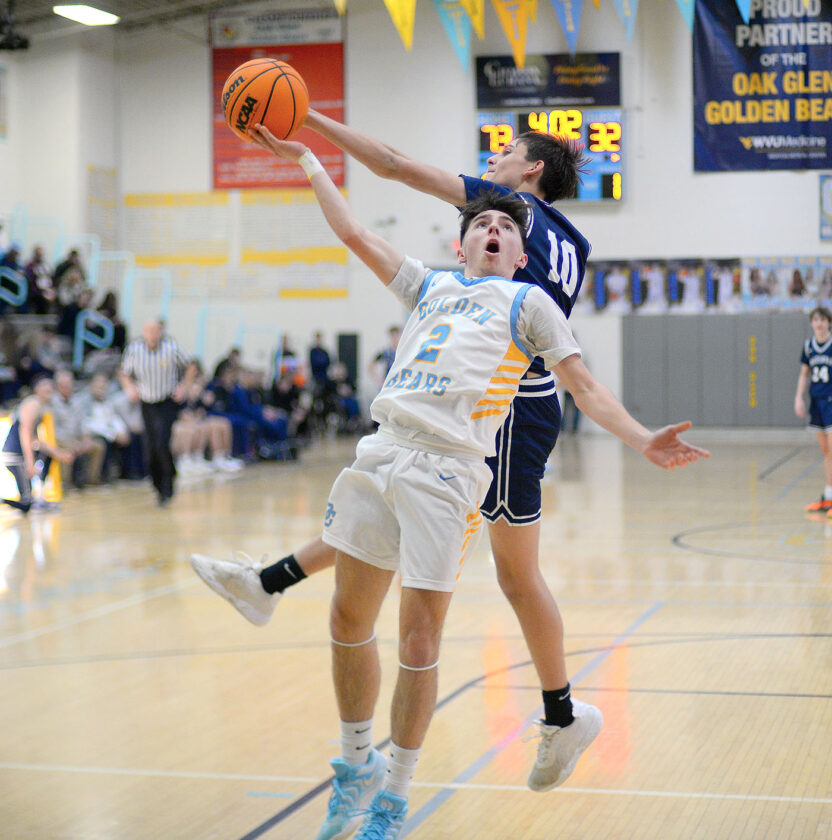
Below, Oak Glen’s Mason Kell shoots past Madonna’s Vinny Chiodi. – Andrew Grimm
MADONNA (1-6): Wingert 1 1-2 3; Dillon 1 2-2 4; Chiodi 2 0-0 5; Druga 4 0-0 8; Fuscardo 5 4-8 14; Gray 0 0-0 0; Welch 0 0-0 0; Decaria 0 0-0 0. TOTALS: 13, 7-12; 34.
OAK GLEN (3-2): Hartung 3 0-0 7; Kell 4 0-0 11; Weekley 2 0-0 4; Willey 3 0-0 6; Geisse 7 0-0 14; Evans 4 2-2 11; Ates 2 0-0 5; Herbock 2 1-2 5; Dawson 3 0-0 6; Hissam 4 0-0 11; Dittman 0 0-0 0. TOTALS: 34, 3-5; 80.
3-POINTERS: Madonna 1 (Chiodi); Oak Glen 9 (Kell 3, Hissam 3, Hartung, Evans, Ates).

New England Revolution
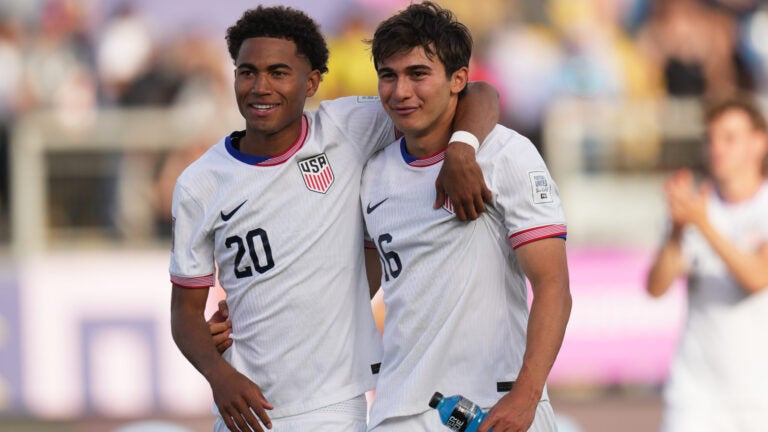
The Revolution have continued an offseason path of adding young players who have experience playing under new head coach Marko Mitrović.
On Wednesday, New England announced the acquisition of defender Ethan Kohler as a transfer signing from German club SV Werder Bremen. New England has signed Kohler to a contract through the 2028-29 season, with a club option for 2029-30.
Kohler, 20, is California native, and returns to the U.S. after signing with Werder Bremen in 2023. He appeared at both the U-19 and reserve team levels for the German club, helping Werder Bremen II win the Bremen-Liga title in 2023-24. Kohler also recently made nine appearances for another German club, SC Veri, during a loan stint.
Seen as a versatile defender by New England, Kohler — like fellow recent acquisition Brooklyn Raines — has experience playing under Mitrović at the 2025 FIFA U-20 World Cup. The now current New England head coach led the U.S. team during the tournament, guiding the Americans to a quarterfinal appearance.
Kohler started four games at the U-20 World Cup as a center-back, helping the U.S. achieve clean sheet wins over Italy and France.
“I met and worked with Ethan for the first time almost four years ago,” Mitrović said in the team announcement. “He is an elite professional and highly competitive player who loves to win. His work ethic and standards are very high, important qualities for our team and environment in creating a winning culture.
“Ethan’s strength on the ball can help us control the game in possession, though he is also one of those players who takes great pride in his defending. I am excited to have Ethan with us.”
New England will begin preseason training in January as the club tries to reverse a two-year trend of being shut out of the postseason. Mitrović, hired in November, will have some interesting choices to make as he reshapes the team in his image. The Revolution kick off the 2026 MLS regular season in Nashville on Feb. 21.
Get everything you need to know to start your day, delivered right to your inbox every morning.
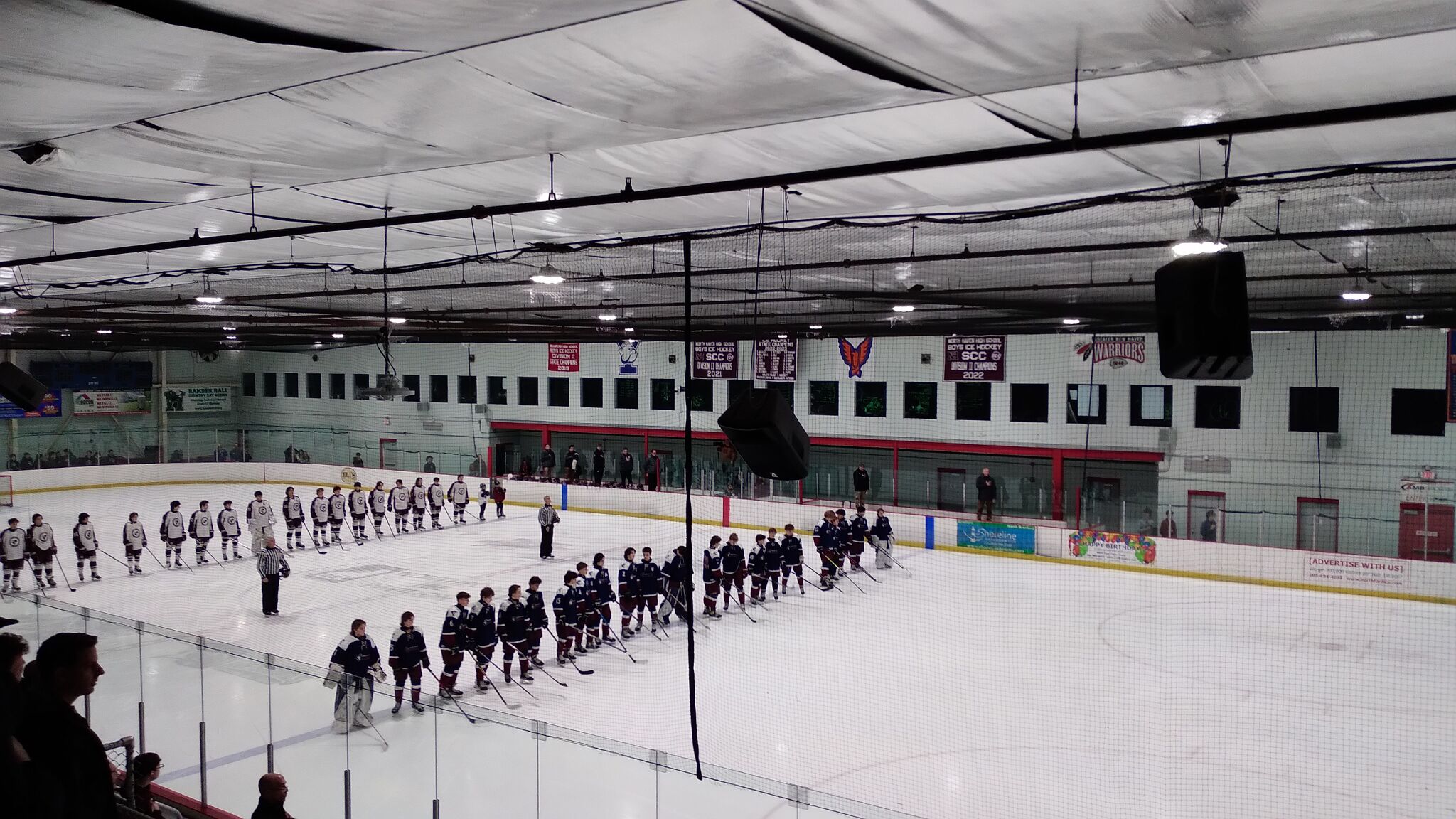
NORTH BRANFORD — A youth hockey coach and a parent both were arrested Monday after an argument over a child’s ice time during a game at the Northford Ice Pavilion escalated into a fight, North Branford police said.
The two Rhode Island men were taken into custody around 6:30 p.m. after officers responded to the Firelite Place facility for a report of a physical altercation, according to the North Branford Police Department.
Police said in a Facebook post that the fight took place in a hallway outside a locker room after the men began arguing over the amount of playing time the parent’s child had received during the game.
“The North Branford Police Department maintains a zero-tolerance policy for physical altercations involving parents and coaches at youth sporting events,” police said.
Police identified the individuals as Joseph Desmarais, 46, of Scituate, Rhode Island, and Brian Lacombe, 50, of West Warwick, Rhode Island.
Police said both men are charged with second-degree breach of peace and are scheduled to appear at state Superior Court in New Haven Jan. 13.


#11 Volleyball Practices, Then Meets Media Prior to #2 Kentucky Match

Nascar legal saga ends as 23XI, Front Row secure settlement


Sunoco to sponsor No. 8 Ganassi Honda IndyCar in multi-year deal

Maine wraps up Fall Semester with a win in Black Bear Invitational
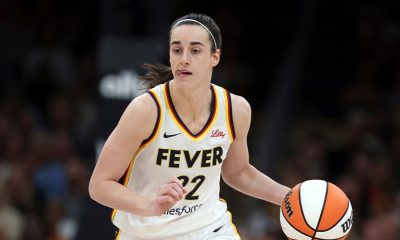

WNBA’s Caitlin Clark, Angel Reese and Paige Bueckers in NC, making debut for national team at USA camp at Duke


Ross Brawn to receive Autosport Gold Medal Award at 2026 Autosport Awards, Honouring a Lifetime Shaping Modern F1
NASCAR, 23XI Racing, Front Row Motorsports announce settlement of US monopoly suit | MLex


Rick Hendrick comments after the NASCAR lawsuit settlement


Nike Signs 10 LSU Athletes to NIL deals


Rock sending small group to Akron Friday night





