Connect with us
https://yoursportsnation.com/wp-content/uploads/2025/07/call-to-1.png

NIL

NIL in high school? Next-gen athletes balance books, brands in new era

Published

on


play

PHOENIX – In the evolving world of amateur sports, the three-letter acronym NIL has begun rewriting the rulebook.

Short for name, image and likeness, this concept has opened the door for monetization at all levels of athletics. A financial revolution once seemingly only available for college athletes is now trickling down all the way to the high school level. NIL is making its way into high school gymnasiums and fields with athletes across the U.S. growing their brand before stepping foot on a college campus.

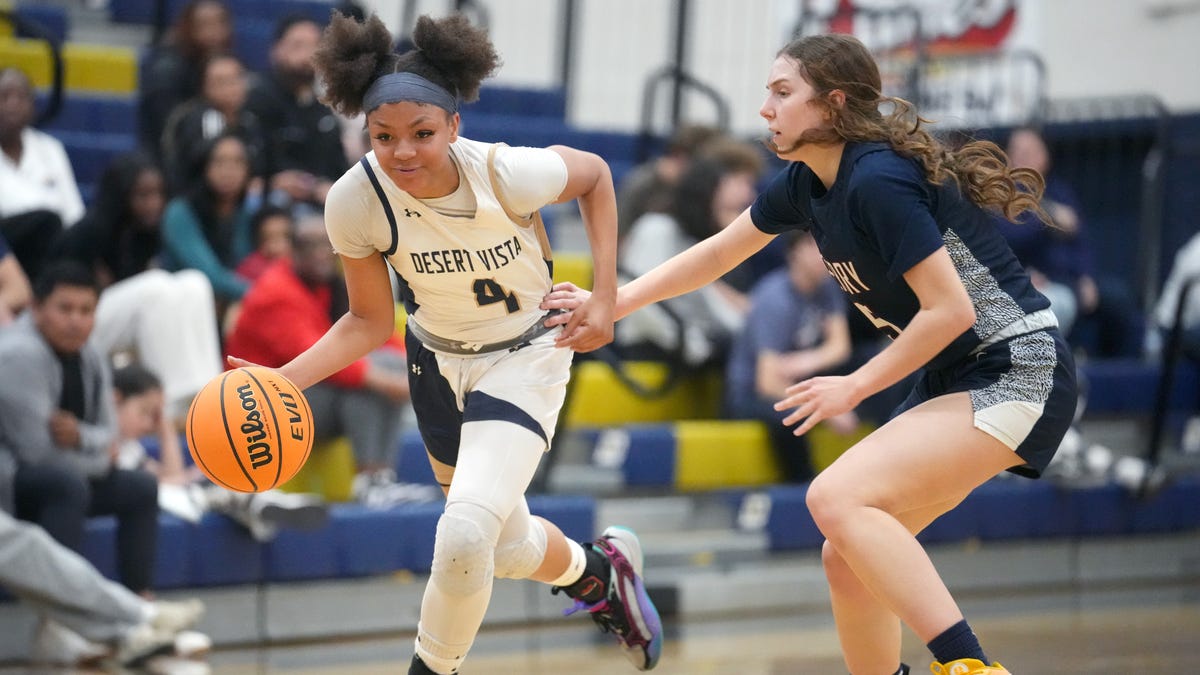
At the center of this shift in Phoenix is Zaire “Cherri” Hatter, a 14-year-old basketball star from Desert Vista High School who has already begun navigating the life of a high-profile athlete. Hatter is a representation of the new world of youth athletics – a world where Hatter can reach new heights while staying true to herself.

It’s terrain University of Arizona basketball player Jada Williams knows well. She was among the first female high school basketball players to sign a national NIL deal when she was at La Jolla Country Day School in San Diego and continues to reap the financial benefits from companies including Spalding and Gym Shark.

How we got here

To better understand NIL’s rapid growth, we have to look back to the origin. At the start, collegiate athletes competed for either pride or scholarships. But as collegiate sports evolved into a multi billion-dollar industry over time, the model began to shift.

In 2021, after years of legal battles among athletes and the courts, a landmark Supreme Court decision came in the NCAA vs. Alston case. As a result, the NCAA adjusted its rules to allow athletes to receive compensation through NIL deals.

One level lower, discussions began around NIL and high school athletes. As of 2025, at least 42 states and the District of Columbia allow high school athletes to profit from NIL.

Jon Kappes, an associate research professor at Arizona State’s Sandra Day O’Connor College of Law who recently hosted an event about NIL for young athletes, spoke to this and some of the risks that deals can pose in states where NIL is not permitted.

“I am aware that different states have been slower to change the high school policies, which have in some instances said high school students can lose eligibility,” Kappes said.

The Arizona Interscholastic Association officially approved NIL activity for high school students, allowing students the ability to profit under strict guidelines. Arizona’s high school students are prohibited from wearing school uniforms or logos or have any affiliation to the school in any NIL activities.

“It has added another layer of support and education we need to make sure we address these student-athletes, we have to make sure they are aware of the AIA bylaws,” said Jared Walther, the assistant principal of activities at Desert Vista. “We educate our coaches with the bylaws and help them navigate it with the kids.”

The support system

Hatter’s emergence as one of the top high school athletes, and the top girls state basketball athlete in the class of 2028 has placed the freshman guard at the forefront of the Arizona NIL youth movement. Hatter is already in line for NIL opportunities while also fielding Division I offers from programs like Alabama and Maryland. She recalled her excitement when she received that first offer.

“It was exciting, because it confirms that my hard work has paid off so far,” Hatter said. “I definitely still have a lot of work to keep getting better.”

While she enjoys the spotlight at a young age, Hatter is fully aware of the responsibility that comes with being a high-level athlete. The pressure of living up to the hype comes with its own challenges, but she keeps her mind focused.

“I still have three years left of high school, I am making sure I continue to get better each day,” Hatter said.

Maintaining a positive mindset on and off the court at times can be tricky and hard to manage for young athletes. Having her mother by her side has been one of the keys in her success so far.

With her mother working as an equipment manager for the Desert Vista team, the long afternoon sessions that extend into the evenings become easier with her mother’s sacrifices.

“It is a big time commitment, but I enjoy the process of juggling school, and basketball,” Hatter said.

Another piece of the puzzle is Desert Vista coach Erin O’Bryan, a former university of Arizona women’s basketball player, who understands Hatter is rare and provides guidance based on her own experiences.

“Cherri’s work ethic is unmatched, she puts in hours upon hours in the weight room, on the court, and in the training room. She is dedicated to becoming the best player she can,” O’Bryan said. “Cherri has a very high ceiling, and she has high expectations for herself. She could end up being the most highly sought after player in Arizona.”

The praise is consistent among all coaches, friends and family, but the admiration does not change Hatter’s personality. O’Bryan mentioned that the era of NIL has not changed any team dynamics.

Hatter’s acknowledgment extends beyond just the court for Walther, who sees how well she handles the pressure at her age.

“For being only a freshman and having these expectations placed on her, she has gone with the flow and not let any of it disrupt her usual day to day life,” Walther said. “She continues to do well in the classroom even with her basketball responsibilities.”

Beyond the court

The pressure of NIL reaches beyond just the financial aspects and collegiate recruitments – they also influence mental health. The feeling of starting early and standing out can at times train kids to not only train to like professionals but seemingly market themselves like that as well.

Lindsey Markwell, a lecturer at Arizona State University in the Movement Sciences Programs with expertise in sport psychology and mental performance, echoes those concerns.

“When sport becomes the only thing a youth athlete does or the only thing others talk to them about it can lead to single-performance based identity,” Markwell said. “Their self-worth becomes tied to how well they perform.”

In most cases, especially in Arizona, sports such as basketball are year-round due to school commitments and club or team commitments resulting in a situation where most do not get that break or that “offseason” away.

In Hatter’s case, it is vital to her success to have a strong environment surrounding her to ensure the road trips or the early practices are possible, and the enjoyment of being a kid isn’t lost.

play

See the top 10 high school stadiums in Arizona

The Republic’s high school sports reporter Richard Obert lists his 10 favorite stadiums around the state of Arizona.

The Republic

Luckily for Hatter that is exactly what she has from her mom by her side, to her sister, to all coaches and teachers, everyone in Hatter life is there to support her and see her grow not just as an athlete but as a person.

While the mental load for anyone at this age let alone a teenager is quite a lot, it is simply hard to put NIL or competitive sports at fault. For all athletes alike, positive mental health outcomes will always be possible when someone such as Hatter has the ability to be heard and feel valued past how they play on a given day.

“When supported well, early commitment can build resilience, discipline, and confidence,” Markwell said. “Balance, autonomy, and having a voice in their schedule makes all the difference.”

For Desert Vista girls basketball the show is not all just about Hatter instead she is the beacon that shines brightest for the team and inspires each person to give it their best. Ultimately, by serving as leader on the court, Hatter’s passion and love for the game echoes across the locker room and classroom.

“Cherri gives our team confidence, she is reliable and plays well every time she steps on the court,” O’Bryan said. “She upholds the culture of toughness and winning.”

A quick comparison

As the spotlight continues to grow on young athletes such as Hatter, it is brought to question that what we’re witnessing isn’t entirely new – it just looks different. NIL, with the branding and pressure to perform mirrors some of the experience of the youth entertainment culture of child stars in Hollywood.

“In terms of an age threshold, what comes to my mind is that this context of athletics and sports is not that different from young actors,” Kappes said. “So you’ve got child actors that are toddlers, that are babies, nine months old, two years old.”

Like child actors, NIL athletes tend to be thrusted into adult conversations and spaces while still developing as a person mentally and emotionally. In a lot of situations they are learning to market themselves and perform under pressure before they can even legally drive a car.

“Athletes are branding themselves at 14 or 15, constantly curating how they’re seen,” Markwell said. “That pressure to always perform – both in real life and online – is a lot for anyone, let alone a teenager.”

Though unlike child stars in Hollywood, students like Hatter are expected to attend school, take tests and homework like everyone else and in some situations to a higher degree.

When hearing from people close to her though, this is exactly what makes Hatter special — managing both lives – as a freshmen student and a high profile athlete. She is able to thrive as a person in the classroom and on the court.

A new era

The NIL era has unlocked untapped doors for young athletes to offer opportunities to profit from not only themselves but their passions. As time moves on, expectation starts to grow and the pressure to perform is more than just sport.

“The first thing for a young person to look at: Do they want to be engaged in sanctioned high school athletics, or do they not,” Kappes said.

Luckily for Hatter the decision is easy as becoming the best player she can be is a simple mindset that continues to take her places. Hatter is not just navigating NIL – she is acting as a pioneer in a world that is still unknown and fresh – serving as a representation of young athletes to come.

For more stories from Cronkite News, visit cronkitenews.azpbs.org.



Link

Continue Reading
Click to comment

Leave a Reply

Your email address will not be published. Required fields are marked *

NIL

QB Brendan Sorsby’s transfer to Texas Tech triggers $1M Cincinnati buyout: Sources

Published

on


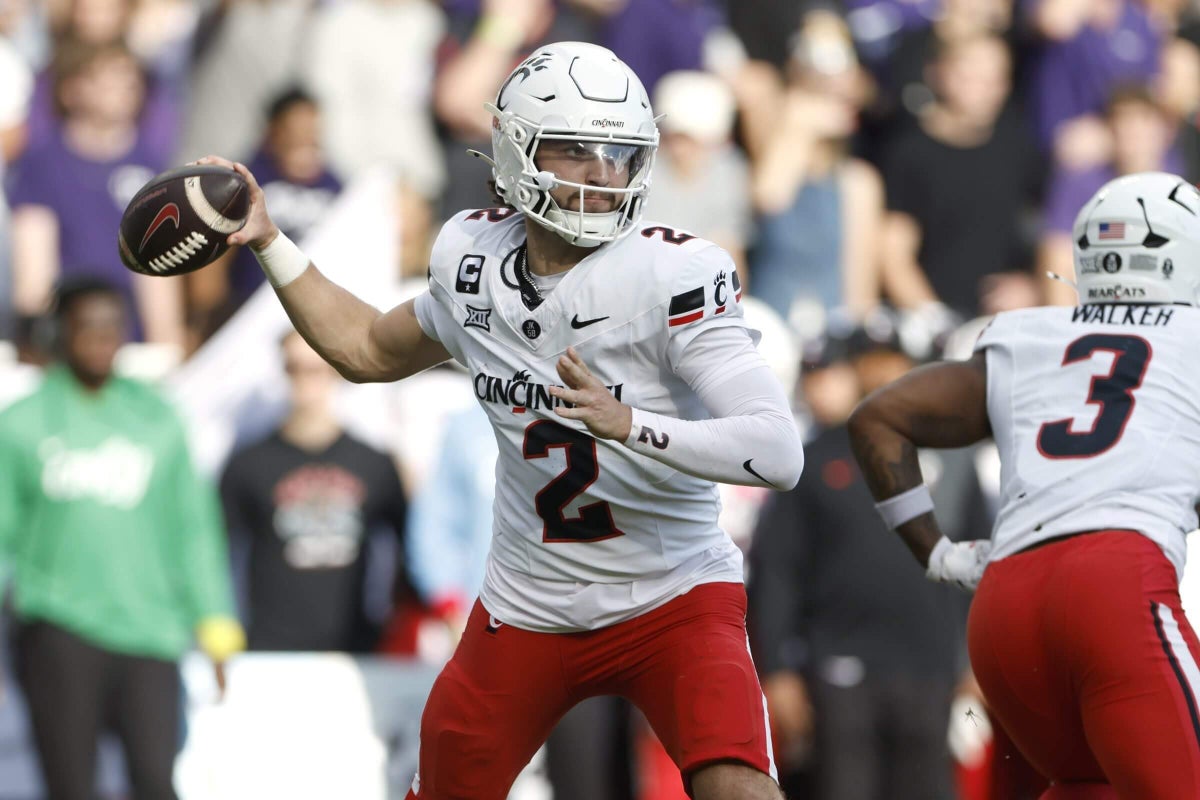
Brendan Sorsby, ranked No. 1 in The Athletic’s transfer quarterback rankings, transferred to Texas Tech earlier this week with one season remaining on a multi-year revenue sharing agreement with Cincinnati that includes a $1 million buyout clause, multiple people briefed on the deal told The Athletic. They were granted anonymity because they were not authorized to speak publicly about the terms of the deal.

The buyout payment is due to Cincinnati within 30 days of Sorsby’s transfer. It is not immediately clear how Sorsby’s buyout will be resolved.

Texas Tech was aware of Sorsby’s buyout, according to sources briefed on the transfer process, and factored it into his recruitment, as well as Tech’s own revenue sharing budget.

Ron Slavin, Sorsby’s agent with Lift Sports Management, declined comment.

Spokespersons for both Texas Tech and Cincinnati declined comment.

There have been questions about how revenue sharing contract terms might hold up under legal scrutiny, in part because college athletes are not employees and their rev share contracts are not typical employment agreements.

The full details of Sorsby’s agreement with the Red Raiders are not public, but the one-year deal is expected to pay him more than $4 million, according to people briefed on the terms. His signing was officially announced Tuesday by Texas Tech.

A redshirt junior with one year of eligibility remaining, Sorsby elected to enter the transfer portal and ultimately sign with Texas Tech rather than declare for the 2026 NFL Draft, where he is projected as a potential Day 2 pick.


Sorsby’s buyout is indicative of the new era of direct revenue sharing between schools and athletes under the House v. NCAA settlement, which was instituted last summer. Many schools have included buyout clauses in their rev share agreements that obligate athletes to redeem money to their previous school if they leave before the end of the agreement.

According to enforcement guidelines from the College Sports Commission, the organization that oversees revenue sharing, Sorsby’s $1 million buyout must be accounted for by Texas Tech within the school’s $20.5 million revenue sharing cap for fiscal year 2025-26. Texas Tech is not required to directly pay Cincinnati to cover the buyout costs.

Multiple power conference general managers told The Athletic they have either signed players who had buyouts with their previous schools or lost players with buyouts to other teams. The player or their representative will often handle paying the buyout to the previous institution, whether in full or at a negotiated rate.

“(Player buyouts are) happening this year. It’s not prevalent, but it’s happening,” said Darren Heitner, who specializes in sports law. “Typically there is a negotiation where a school starts at a specific number and then negotiates down, if the player has good counsel.”

Sorsby initially transferred from Indiana to Cincinnati as a redshirt sophomore, ahead of the 2024 season, signing an NIL agreement before revenue sharing began in July 2025. Last offseason, Sorsby signed a new two-year deal with Cincinnati’s NIL collective, a third-party group affiliated with the school, that later transitioned to a rev share contract with the university. The $1 million buyout was agreed to in both the multi-year collective deal and revenue sharing agreements. Sorsby earned roughly $1.5 million in 2025 from Cincinnati, according to people briefed on the previous terms.

There have been relatively few public disputes of NIL or rev share contracts between players, schools or third parties since college athletes could begin earning NIL compensation in 2021.

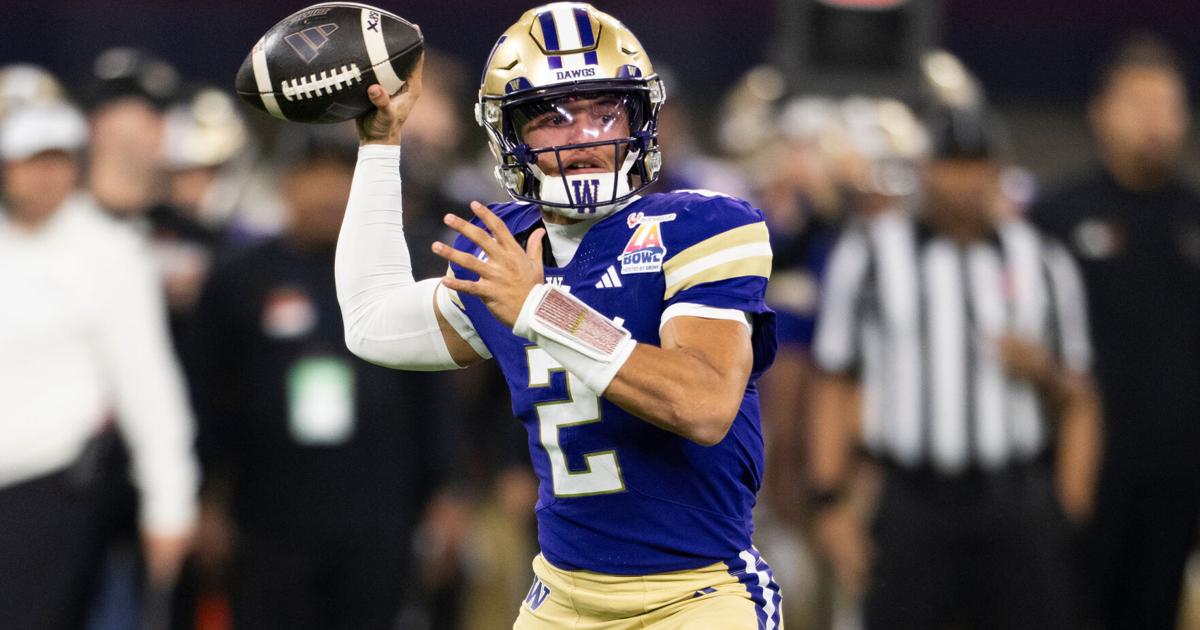
Earlier this week, Washington quarterback Demond Williams Jr. announced intentions to enter the transfer portal just days after signing a new contract with the Huskies that’s expected to pay him more than $4 million. The buyout would have likely factored into any protracted legal battle between player and school, but Williams never actually entered the portal and announced on Thursday that he will remain with Washington.

Late last year, the University of Georgia took former defensive end Damon Wilson II to court, with Georgia seeking arbitration and $390,000 in damages after the university claimed Wilson broke an agreement with Georgia’s NIL collective by entering the transfer portal in January 2025, prior to the onset of revenue sharing. Wilson, who transferred to Missouri for the 2025 season, later sued Georgia’s athletic association seeking his own damages for what the suit described as a “civil conspiracy” to interfere with Wilson’s business endeavors. It’s believed to be the first time a player and school have taken each other to court over an NIL dispute. Both proceedings are still ongoing. Wilson recently re-entered the portal.

Last summer, the University of Wisconsin and its NIL collective filed a lawsuit against the University of Miami for tampering with defensive back Xavier Lucas, who Wisconsin claimed had an agreement with their NIL collective and another “binding agreement” with the university that was contingent on revenue sharing being approved. The next hearing in this case is scheduled for March 2026.

In April 2025, a contract holdout by former Tennessee quarterback Nico Iamaleava ended with Iamaleava transferring to UCLA, but no legal action was taken.

Former Florida signee Jaden Rashada has a pending lawsuit filed against various parties, including former Gators coach Billy Napier, that stems from a 2022 NIL deal.

One Power 4 coach who spoke on the condition of anonymity, said that in some instances, unfulfilled buyout terms or the player attached might not be worth the time and effort to spark a legal battle, and some universities might be hesitant to pursue litigation against a college athlete.

“It’s less of a legal challenge and more of an optics challenge for institutions at this point,” said lawyer Paia LaPalombara, a former college athletics administrator who advises colleges, conferences and athletes on revenue sharing.

A 6-foot-3, 235-pound dual-threat quarterback, Sorsby averaged better than 2,800 yards passing and 500 rushing yards in his two seasons with the Bearcats, including 36 combined touchdowns passing and rushing in 2025, third-most in the FBS, with only five interceptions. He led Cincinnati to a 7-5 regular season record in 2025 and a spot in the Liberty Bowl, the program’s first bowl bid since 2022.

Sorsby opted out of the bowl game, announcing on Dec. 15 that he planned to enter the transfer portal. The native of Denton, Texas, was quickly linked to Texas Tech as a potential destination. He made recruiting visits to Tech and LSU.

The Red Raiders recently completed a 12-2 season in 2025, winning the Big 12 championship and earning a first-round bye in the College Football Playoff, where they lost to Oregon 23-0 in the quarterfinals on New Year’s Day. Starting quarterback Behren Morton has exhausted his college eligibility, and sophomore backup Will Hammond suffered an ACL injury in October. After making headlines for its portal additions last offseason, Tech has again been active early in this year’s transfer window.


Link

Continue Reading

NIL

College Sports Commission reminds athletic directors about NIL rules

Published

on


A transfer climate spiraling out of control prompted the new regulatory body for college sports to issue a memo to athletic directors Friday night saying it has “serious concerns” about some of the multimillion-dollar contracts being offered to players.

The “reminder” from the College Sports Commission came out about an hour before kickoff of the Peach Bowl semifinal between Indiana and Oregon in a College Football Playoff that has shared headlines with news of players signing seven-figure deals to move or, in some cases, stay where they are.

The CSC reminded the athletic directors that, according to the rules, third-party deals to use players’ name, image and likeness “are evaluated at the time of entry in NIL Go, not before, and each deal is evaluated on its own merits.”

“Without prejudging any particular deal, the CSC has serious concerns about some of the deal terms being contemplated and the consequences of those deals for the parties involved,” the memo read.

Under terms of the House v. NCAA antitrust lawsuit settlement that dictated the rules for NIL payments, schools can share revenue with their players directly from a pool of $20.5 million. Third-party deals, often arranged by businesses created to back the schools, are being used as workarounds to this de facto salary cap.

The CSC, through its NIL Go portal, is supposed to evaluate those deals to make sure they are for a valid business purpose and fall within a fair range of compensation for the services being provided.

The CSC did not list examples of unapproved contracts, but college football has experienced its share of seven-figure deals luring players to new schools since the NCAA transfer portal opened on Jan. 2.

One high-profile case involved Washington quarterback Demond Williams Jr., who initially sought to enter the portal and turn his back on a reported deal worth $4 million with the Huskies. Legal threats ensued, and Williams changed course and stayed at Washington, a decision the quarterback announced Thursday night.

“Making promises of third-party NIL money now and figuring out how to honor those promises later leaves student-athletes vulnerable to deals not being cleared, promises not being able to be kept, and eligibility being placed at risk,” the CSC letter read.

The commission listed two rules about contracts it evaluates, some of which have been termed “agency agreement” or “services agreement” in what look like attempts to bypass the rules.

First, “The label on the contract does not change the analysis; if an entity is agreeing to pay a student-athlete for their NIL, the agreement must be reported to NIL Go within the reporting deadline.”

Second, “An NIL agreement or payment with an associated entity or individual … must include direct activation of the student-athlete’s NIL rights.” This is a reference to the practice of “warehousing” NIL rights by paying first, then deciding how to use them later.


Link

Continue Reading

NIL

College enforcement group voices ‘serious concerns’ with spiraling transfer portal

Published

on


A transfer portal spiraling out of control prompted the new regulatory body for college sports to issue a memo to athletic directors saying it has “serious…

A transfer portal spiraling out of control prompted the new regulatory body for college sports to issue a memo to athletic directors Friday night saying it has “serious concerns” about some of the multimillion-dollar contracts being offered to players.

The “reminder” from the College Sports Commission came out about an hour before kickoff of the semifinal between Indiana and Oregon in a College Football Playoff that has shared headlines with news of players signing seven-figure deals to move or, in some cases, stay where they are.

The CSC reminded the ADs that, according to the rules, third-party deals to use players’ name, image and likeness “are evaluated at the time of entry in NIL Go, not before, and each deal is evaluated on its own merits.”

“Without prejudging any particular deal, the CSC has serious concerns about some of the deal terms being contemplated and the consequences of those deals for the parties involved,” the memo said.

Under terms of the House settlement that dictated the rules for NIL payments, schools can share revenue with their players directly from a pool of $20.5 million. Third-party deals, often arranged by businesses created to back the schools, are being used as workarounds this so-called salary cap.

The CSC, through its NIL Go portal, is supposed to evaluate those deals to make sure they are for a valid business purpose and fall within a fair range of compensation for the services being provided.

The CSC did not list examples of unapproved contracts, but college football has seen its share of seven-figure deals luring players to new schools since the transfer portal opened on Jan. 2.

One high-profile case involved Washington quarterback Demond Williams Jr., who initially sought to enter the transfer portal and turn his back on a reported deal worth $4 million with the Huskies. Legal threats ensued and Williams changed course and stayed at Washington.

“Making promises of third-party NIL money now and figuring out how to honor those promises later leaves student-athletes vulnerable to deals not being cleared, promises not being able to be kept, and eligibility being placed at risk,” the CSC letter said.

The commission listed two rules about contracts it evaluates, some of which have been termed “agency agreement” or “services agreement” in what look like attempts to bypass the rules.

—”The label on the contract does not change the analysis; if an entity is agreeing to pay a student-athlete for their NIL, the agreement must be reported to NIL Go within the reporting deadline.”

—”An NIL agreement or payment with an associated entity or individual … must include direct activation of the student-athlete’s NIL rights.” This is a reference to the practice of “warehousing” NIL rights by paying first, then deciding how to use them later.

Get poll alerts and updates on the AP Top 25 throughout the season. Sign up here and here (AP News mobile app). AP college football: https://apnews.com/hub/ap-top-25-college-football-poll and https://apnews.com/hub/college-football


Link

Continue Reading

NIL

The SEC is out of the College Football Playoff again. Now comes the adjustment

Published

on


The first step toward addressing a problem, as the saying goes, is admitting you have one. Good news for concerned SEC football fans: It does seem the conference admits it has a problem.

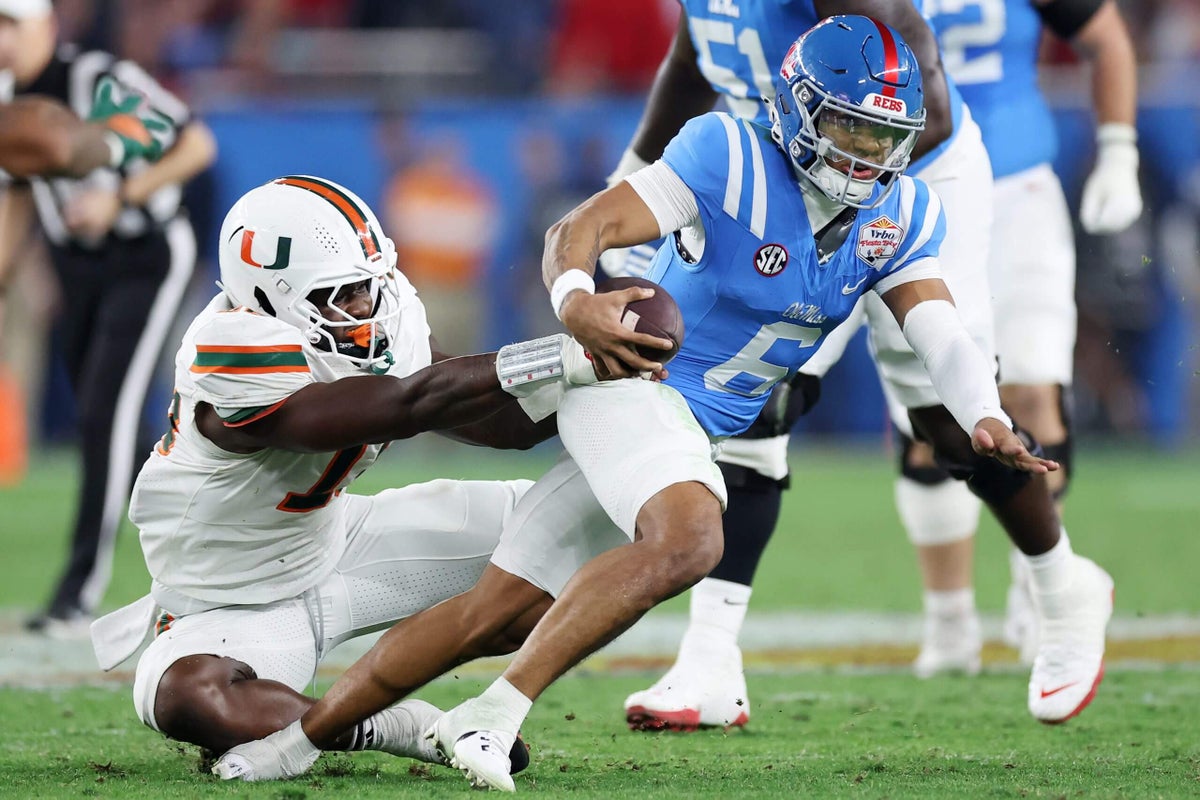
That was true even before Ole Miss lost to Miami on Thursday night, meaning the SEC was shut out of the national championship game for a third straight year. Ole Miss acquitted itself well, played a great game and almost got there. It deserves its flowers.

In fact, Ole Miss being the last SEC team standing was perfect symbolism. The rest of the conference should take heed.

As it is, the reality of the SEC’s situation set in this week among the conference’s defenders and within the league itself.

There was Paul Finebaum, voice of the SEC Network and basically the SEC, saying there was no defense for the conference’s 2-7 bowl record, including Alabama’s loss to Indiana in the College Football Playoff.

“There’s no way to defend the SEC. It’s been terrible,” Finebaum said on ESPN’s “First Take” on Tuesday.

There was Steve Spurrier, legendary former coach of Florida and South Carolina, not quite calling out his conference but also not downplaying things: “We got slapped in the face during the bowl season.”

And in my own conversations with people around the league, granted anonymity in order to be candid, there was none of the “everything is fine” meme.

“There’s no getting around the bowl results,” one conference source said, noting that SEC teams lost games they were favored to win. As elite teams faltered in the CFP, the SEC’s argument has been that it was still a deeper conference; Missouri losing to Virginia, Tennessee losing to Illinois, Vanderbilt losing to Iowa … not good.

Another SEC official maintained that the SEC is still the best league — as the NFL Draft has shown for years — but acknowledged that parity is here.

So will the SEC shrug and accept that? We all know the answer lies in a four-word slogan. The only question now is what the conference collectively will do about it.

To quote another saying: The answer to all your questions is money.

And a humbled SEC may become a desperate but smarter SEC. Because if the conference is going to get its mojo back, it will just need to mean more again. As in more money towards players.

Normally you could say the SEC was just due for a dip, this was cyclical, nothing to waste a column on. But the dip coincides with the other changes in the sport. The world is flat now, and too many SEC teams were slow to react.

Alabama and Georgia have been operating the past few years as if they got a discount because of their status. And that is the case for some recruits. But it isn’t for others, and that’s been enough to knock their talent down a notch.

Kirby Smart spent the early years of his tenure working donors for facility money, and it worked. When collectives became the focus, Smart did some lobbying, but perhaps with some restraint on the assumption they’d get that NFL Draft discount. Now that the difference appears to be third-party NIL deals, Smart may need to ratchet it up: There are big-money people working all around the Southeast who are Georgia fans and can probably arrange deals that will be approved by the authorities.

Or if not … well, anyway.

Georgia actually looks like it should be very good next year. Texas may be too. Alabama, on the other hand, has questions. Other teams are in transition, and then you have Ole Miss, the SEC program that most took advantage of the new rules. (Or lack of rules.) The other was Texas A&M a few years ago, but that was geared around traditional recruiting, not the portal. The programs that otherwise were the face of the era — programs desperate to win and willing to pay big to do it — tended to be outside the conference: Texas Tech, Miami and Ohio State.

That’s not to say SEC programs weren’t spending too; they were, which was part of the problem. SEC teams were picking off each other, whether it was top teams like Texas poaching Georgia and Alabama players or teams in the middle like Missouri. The SEC has been eating itself.

At the high school level, the SEC has still dominated recruiting:

• Last year, SEC teams signed 55 of the top 100 players, per the 247Sports Composite, including a remarkable 16 of the top 25.

• This year, it was only nine of the top 25, but still 53 of the top 100.

But while in the past it was the Georgias, Alabamas and LSUs signing most of those players, it’s now much more widely dispersed:

• Last year, 11 different SEC teams signed at least one top 100 player, and seven signed at least one top 25 player.

• This year, 13 different SEC teams signed at least one top 100 player, and five different teams signed at least one top 25 player. Vanderbilt, of all teams, swooped in and flipped the top-ranked recruit, quarterback Jared Curtis, from Georgia.

In the last year of the pre-NIL era, the 2021 recruiting cycle, teams that are now in the SEC signed a combined 18 of the top 35 players, but Alabama and Georgia signed 11 of them.

And of course, once you get players on campus, it’s harder to hoard the talent. Unlimited transfers provide a way for players to leave for immediate playing time rather than be stowed away on the bench, as Saban and Kirby Smart could do in the old days.

The world is flat. Parity is here. And throw in the CFP, which appears to be college sports joining the rest of the sports world with a postseason that’s a crapshoot. The best team doesn’t always win.

That is, if the SEC has the best team. Which it’s hard to say it has lately.

There can’t be any dismissing of the past: The SEC deserved the accolades it got for more than a decade leading up to 2023. The conference did win 13 national championships in 17 seasons, did have both teams in the national championship game three times in 12 years, did whip the Big Ten and other conferences in head-to-head matchups.

The SEC dominance was not a media creation.

But for the SEC industrial complex — media, administrators, whoever — to ignore the reality of the last three years would be foolish.

LSU is acting like a desperate program, committing the GDP of a small country not only to lure Lane Kiffin but to give him the resources to recruit. Texas, after a disappointing season, is also acting seriously about making amends. Even on the lower rung, Kentucky decided to pay coach Mark Stoops’ buyout, showing it wasn’t resigned to staying on that lower rung.

The signs are indeed there the SEC gets it. There’s a sense of urgency now. That doesn’t mean the old days will return: They’re probably gone, with super teams giving way to parity. That’s the new world.

The SEC isn’t doomed. It just has to adjust.


Link

Continue Reading

NIL

Top 5 Big 12 college football transfer portal additions

Published

on


The Big 12 did not have a team alive in the College Football Playoffs when the NCAA Transfer Portal opened on January 2, and that meant the conference was able to hit the ground running. The willingness of teams like Texas Tech to spend big in the portal has made the Big 12 one of the more popular destinations in the opening week.

The current transfer portal window, which will stay open until January 16, is the only opportunity this off-season for players not exempt because of specific circumstances to transfer to another program. Over 4,000 names were entered into the Transfer Portal in the first week that it was open. While most of those players remain available, several big names are already off the board. Here is a look at the biggest additions for Big 12 schools after the first week of the Portal being open.

1. QB Brendan Sorsby – Texas Tech

Brendan Sorsby has plenty to look forward to after signing a hefty NIL deal to join Texas Tech for the upcoming season.

Brendan Sorsby has plenty to look forward to after signing a hefty NIL deal to join Texas Tech for the upcoming season. | Aaron Doster-Imagn Images

Texas Tech is once again making big waves in the Portal, following a stellar 2025 campaign in which they finished 12-2, finally falling to Oregon in the College Football Playoff quarterfinals on New Year’s Day. Joey McGuire and his staff got to work immediately re-stocking the cupboard for a 2026 encore, and the guy they had to have right off the bat was Cincinnati quarterback transfer Brendan Sorsby.

This past season, Sorsby had a 27-5 touchdown-to-interception ratio for the Bearcats, both numbers ranking 16th best in all of college football despite Cincinnati going just 7-5 on the season. As soon as Sorsby announced he was going in, schools in need of a quarterback were moving him to the top of their boards, but with an NIL deal reported to be worth more than $5 million, Texas Tech earned his services for next season.

2. QB Drew Mestemaker – Oklahoma State

Quarterback Drew Mestemaker is following his head coach to Oklahoma State after leading North Texas to a 12-2 season.

Quarterback Drew Mestemaker is following his head coach to Oklahoma State after leading North Texas to a 12-2 season this past fall. | Danny Wild-Imagn Images

Oklahoma State is giving Texas Tech a run for its money, both figuratively and literally, in the Transfer Portal this cycle. After Texas Tech gave a massive payday to Sorsby, Oklahoma State reportedly bested that, at least from a total dollars standpoint, to land North Texas transfer quarterback Drew Mestemaker, who led all of the Football Bowl Subdivision with 4,379 passing yards this past season.

The issue isn’t that Mestemaker is not worth the investment. Oklahoma State, after all, may have been the worst Power 4 team in college football this past season, going 1-11 and firing head coach Mike Gundy. The Cowboys then went out and hired North Texas head coach Eric Morris to replace Gundy after the Mean Green’s impressive 12-2 season, and now Morris’ quarterback will be following him to Stillwater, attempting to recreate the magic of their 2025 campaign.

3. QB DJ Lagway – Baylor

Baylor won the race for former five-star quarterback DJ Lagway, who was the starter in each of his two seasons at Florida.

Baylor won the race for former five-star quarterback DJ Lagway, who was the starter in each of his two seasons at Florida. | Matt Pendleton-Imagn Images

Quarterback is a theme in the first week of the Portal for the Big 12 Conference. Sorsby, Mestemaker and former Florida quarterback DJ Lagway are three of the best quarterbacks to enter the Portal this session, and now all three will be playing in the Big 12. The NIL market is skyrocketing for players in this cycle, led by these Big 12 Conference programs who are paying big dollars to land their quarterbacks for next season.

Baylor landed the commitment of the 6-foot-3, 245-pound Lagway on Thursday, January 8. Lagway did not have the success of either of the aforementioned passers this past season, but the former five-star has a sky high ceiling and is looking for the right place to reach his potential. A starter in each of his first two seasons at Florida, Lagway has completed 62% of his passes for 4,179 yards and 28 touchdowns against 23 interceptions.

4. WR Omarion Miller – Arizona State

New Arizona State WR Omarion Miller caught 45 passes for 808 yards and eight touchdowns this past season at Colorado.

New Arizona State WR Omarion Miller caught 45 passes for 808 yards and eight touchdowns this past season at Colorado. | Ron Chenoy-Imagn Images

Wide receiver Omarion Miller went to Colorado as one of the Buffaloes’ top prospects in the 2023 recruiting class, ranking as a Top 100 prospect. In three seasons under Deion Sanders, Miller caught 66 passes for 1,258 yards and ten touchdowns, but the bulk of that production happened this past season when the 6-foot-2, 210-pound wideout also earned second team all-Big 12 accolades.

After a short stint in the transfer portal, Miller decided to stay in the Big 12, joining Kenny Dillingham’s Arizona State squad for the 2026 season. Although he has just one year of eligibility left, Miller will be a welcomed addition to an Arizona State offense that will be breaking in a new quarterback next season after Sam Leavitt’s decision to enter the Transfer Portal.

RB Caleb Hawkins – Oklahoma State

Caleb Hawkins ranked third in FBS nationally in total yards from scrimmage as a true freshman this past season.

Caleb Hawkins ranked third in FBS nationally in total yards from scrimmage as a true freshman this past season. | Danny Wild-Imagn Images

Oklahoma State has landed one of the best quarterbacks in the Transfer Portal, and is also bringing in one of the top running backs available in this portal session after running back Caleb Hawkins also decided to follow head coach Eric Morris from North Texas to Stillwater. This is more than a coach bringing over a player he knows fits his scheme; Hawkins was a bona fide breakout college football star in 2025.

A three-star prospect coming from North Rock Creek High School in Shawnee, Okla., Hawkins did not waste time making his impact felt on the collegiate level, emerging as the Mean Green’s starting tailback as a true freshman this past season. The 6-foot-2, 200-pound back rushed for 1,434 yards and 25 touchdowns while adding 32 receptions for another 370 yards and four more scores in his first collegiate season.


Link

Continue Reading

NIL

The transfer portal era and pursuit of NIL money are messy. Are there solutions? | Sports

Published

on


A quarterback reportedly reneging on a lucrative deal to hit the transfer portal, only to return to his original school. Another starting QB, this one in the College Football Playoff, awaiting approval from the NCAA to play next season, an expensive NIL deal apparently hanging in the balance. A defensive star, sued by his former school after transferring, filing a lawsuit of his own.

It is easy to see why many observers say things are a mess in college football even amid a highly compelling postseason.

“It gets crazier and crazier. It really, really does,” said Sam Ehrlich, a Boise State legal studies professor who tracks litigation against the NCAA. He said he might have to add a new section for litigation against the NCAA stemming just from transfer portal issues.

“I think a guy signing a contract and then immediately deciding he wants to go to another school, that’s a kind of a new thing,” he said. “Not new kind of historically when you think about all the contract jumping that was going on in the ’60s and ’70s with the NBA. But it’s a new thing for college sports, that’s for sure.”

Washington quarterback Demond Williams Jr. said late Thursday he will return to school for the 2026 season rather than enter the transfer portal, avoiding a potentially messy dispute amid reports the Huskies were prepared to pursue legal options to enforce Williams’ name, image and likeness contract.

Edge rusher Damon Wilson is looking to transfer after one season at Missouri, having been sued for damages by Georgia over his decision to leave the Bulldogs. He has countersued.

Then there is Ole Miss quarterback Trinidad Chambliss, who reportedly had a new NIL deal waiting while he asked the NCAA for approval to play another season after leading the Rebels to Thursday night’s Collge Football Playoff semifinal against Miami. The NCAA a day after Miami’s win denied his request.

On that Miami roster? Defensive back Xavier Lucas, whose transfer from Wisconsin led to a lawsuit from the Badgers, claiming he was improperly lured to Miami by NIL money. Lucas has played all season for the Hurricanes and now gets a chance at a national championship. The case is pending.

What to do?

Court rulings have favored athletes of late, winning them not just millions in compensation but the ability to play immediately after transferring rather than have to sit out a year as once was the case. They can also discuss specific NIL compensation with schools and boosters before enrolling. Current court battles include players seeking to play longer, without lower-college seasons counting against their eligibility, and earning NIL money while doing it.

Ehrlich compared the situation to the labor upheaval professional leagues went through before finally settling on collective bargaining, which has been looked at as a potential solution by some in college sports over the past year. Athletes.org, a players association for college athletes, recently offered a 38-page proposal of what a labor deal could look like.

“I think NCAA is concerned, and rightfully so, that anything they try to do to tamp down this on their end is going to get shut down,” Ehrlich said. “Which is why really the only two solutions at this point are an act of Congress, which feels like an act of God at this point, or potentially collective bargaining, which has its own major, major challenges and roadblocks.”

The NCAA has been lobbying for years for limited antitrust protection to keep some kind of control over the new landscape — and to avoid more crippling lawsuits — but bills have gone nowhere in Congress.

Universities have long balked at the idea that their athletes are employees in some way. Schools would become responsible for paying wages, benefits, and workers’ compensation. And while private institutions fall under the National Labor Relations Board, public universities must follow labor laws that vary from state to state; virtually every state in the South has “right to work” laws that present challenges for unions.

Ehrlich noted the short careers for college athletes and wondered whether a union for collective bargaining is even possible.

A harder look at contracts

To sports attorney Mit Winter, employment contracts may be the simplest solution.

“This isn’t something that’s novel to college sports,” said Winter, a former college basketball player who is now a sports attorney with Kennyhertz Perry. “Employment contracts are a huge part of college sports, it’s just novel for the athletes.”

Employment contracts for players could be written like those for coaches, he suggested, which would offer buyouts and prevent players from using the portal as a revolving door.

“The contracts that schools are entering into with athletes now, they can be enforced, but they cannot keep an athlete out of school because they’re not signing employment contracts where the school is getting the right to have the athlete play football for their school or basketball or whatever sport it is,” Winter said. “They’re just acquiring the right to be able to use the athlete’s NIL rights in various ways. So, a NIL agreement is not going to stop an athlete from transferring or going to play whatever sport it is that he or she plays at another school.”

There are challenges here, too, of course: Should all college athletes be treated as employees or just those in revenue-producing sports? Can all injured athletes seek workers’ compensation and insurance protection? Could states start taxing athlete NIL earnings?

Winter noted a pending federal case against the NCAA could allow for athletes to be treated as employees more than they currently are.

“What’s going on in college athletics now is trying to create this new novel system where the athletes are basically treated like employees, look like employees, but we don’t want to call them employees,” Winter said. “We want to call them something else and say they’re not being paid for athletic services. They’re being paid for use of their NIL. So, then it creates new legal issues that have to be hashed out and addressed, which results in a bumpy and chaotic system when you’re trying to kind of create it from scratch.”

Employment contracts would not necessarily allow for uniform rules with an athlete able to go to transfer when terms have been met. Collective bargaining could include those guidelines.

“If the goal is to keep someone at a school for a certain defined period of time, it’s got to be employment contracts,” Winter said.


Get poll alerts and updates on the AP Top 25 throughout the season. Sign up here. AP college football: https://apnews.com/hub/ap-top-25-college-football-poll and https://apnews.com/hub/college-football


Link

Continue Reading

Most Viewed Posts

Trending